
Buick Park Avenue FWD : Stk 15719 buyer's guide
Buick Park Avenue FWD : Stk 15719 -- the model's own buyer's guide: variants, values and what to check.
Years listed: 1991-1994 · Series: Full Size
Overview and history
The Park Avenue is the last of the traditional full-size Buicks: a big, soft, front-wheel-drive sedan built around one of the most durable engines General Motors ever made, the 3800 V6. As a standalone model it ran from 1991 to 2005 in two generations, but the name is older than the car. Park Avenue — named for the New York boulevard — first appeared in 1975 as an appearance and interior package on the Electra 225 Limited, became a formal Electra trim level in 1978, and spent the 1980s as the most luxurious Electra you could buy. When the Electra name was retired after 1990, Park Avenue stepped up and became the model itself, and Buick's flagship sedan.
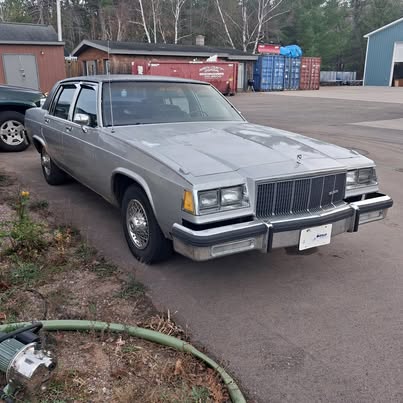
That heritage matters when you shop, because cars wearing this badge fall into three distinct families. The Electra Park Avenues of 1975–84 are rear-wheel-drive, V8-era cars on GM's big C-body. The 1985–90 Electra Park Avenues are the downsized front-wheel-drive cars that introduced the formula the standalone model would keep: transverse V6, four-speed automatic transaxle, six-passenger seating and a ride tuned for the interstate. And the 1991–2005 cars covered in most of this guide are the true Park Avenues — first the sleek C-body generation of 1991–96, then the larger, heavier G-body generation of 1997–2005.
The 1991 car was a genuine statement. Previewed by the 1989 Park Avenue Essence show car, it shared its C platform with the Cadillac DeVille and Fleetwood and the Oldsmobile 98, wore styling that period writers compared to contemporary Jaguars, and put the 3800 Series I V6 under the hood of every example. From 1992 the Ultra trim added something no one expected in a Buick flagship: an Eaton-supercharged version of the same engine, which by 1996 was making 240 hp. The second generation, launched for 1997 on the rigid G-body structure first seen under the 1995 Riviera, was bigger, quieter and more conventionally styled, and it carried the same two-engine formula — naturally aspirated 3800 Series II, supercharged 3800 Series II in the Ultra — all the way to the end of production in 2005. Buick replaced it with the Lucerne for 2006. The name surfaced once more from 2007 to 2012 on a Holden Caprice-based sedan built by Shanghai GM for China only; those cars are unrelated to anything in this guide and essentially never appear in the US market.
The Park Avenue's story in the market today is the opposite of the usual classic-car story. These were expensive, well-equipped cars bought new by older, careful owners, and huge numbers were garaged, dealer-serviced and driven gently. Supply of decent survivors is therefore better than for almost any other American sedan of the period — but so is the supply of neglected ones, because a Park Avenue that stops being maintained still runs, rides and looks presentable long after the bills have started queuing. The 3800's toughness hides deferred maintenance better than almost any engine ever made. Your job as a buyer is to find the garaged car, and to tell it apart from the one that has merely been coasting on the engine's reputation.
Nearly every Park Avenue you will find is an automatic, front-wheel drive, and powered by some version of the 3.8-litre V6 — the exceptions are the pre-1985 Electra-badged cars. Colours run to the period Buick palette of white, silver, grey and muted reds and blues, and the cars cluster where they were sold new and retired to: Florida listings are common, and rust-belt cars demand a much harder look underneath. Everything else in this guide follows from those facts.
The models
Every standalone Park Avenue is a four-door sedan — there was never a coupe or wagon — and the range is refreshingly simple: two trim levels per generation, one engine family, one gearbox type. The badge on the trunk tells you the trim; the engine code on the emissions label and the eighth character of the VIN tell you the engine, and on an Ultra that distinction is worth real money, so verify it rather than trusting the badges, which are held on with tape and optimism.
| Model | Years | Engine | Output | Character |
|---|---|---|---|---|
| Electra Park Avenue | 1975–1984 | V6 and V8, rear drive | varies | The ancestor: a trim level, not yet a model |
| Electra Park Avenue | 1985–1990 | 3.0/3.8 V6, front drive | varies | The downsized bridge to the standalone car |
| Park Avenue | 1991–1994 | 3.8 Series I V6 (L27) | 170 hp | The sleek first car; velour or leather, Dynaride |
| Park Avenue Ultra | 1991–1993 | 3.8 Series I V6 (L27) | 170 hp | Leather and equipment; supercharger not yet standard |
| Park Avenue Ultra | 1992–1993 | 3.8 supercharged (L67) | 205 hp | The blower arrives; a handful of 1991s have it too |
| Park Avenue Ultra | 1994–1995 | 3.8 supercharged (L67) | 225 hp | Stronger Eaton blower, the sweet spot of the first generation |
| Park Avenue | 1995–1996 | 3.8 Series II V6 (L36) | 205 hp | Series II power in the first-generation body |
| Park Avenue Ultra | 1996 | 3.8 Series II supercharged (L67) | 240 hp | One year only: new engine, old body, full power |
| Park Avenue | 1997–2005 | 3.8 Series II V6 (L36) | 205 hp | The big second-generation car |
| Park Avenue Ultra | 1997–2005 | 3.8 Series II supercharged (L67) | 240 hp | The flagship; 4T65-E HD transaxle, Gran Touring suspension |
The Electra years (1975–1990). Treat these as a separate purchase. The rear-drive cars to 1984 are conventional big GM sedans — most Park Avenues among them carry the Oldsmobile-built 307 cu in (5.0-litre) V8 — and they share their mechanical world with the Electra, LeSabre and Oldsmobile 98, not with the front-drive cars. The 1985 redesign moved the Electra to the front-drive C platform with V6 power, and the 3800 arrived in the Electra Park Avenue for 1988. The 1989–90 Park Avenue Ultra, still an Electra underneath, previewed the flagship formula: standard leather, 20-way power seats designed by Lear Siegler with Giugiaro's input, and a padded vinyl top. A 1989–90 Ultra is the connoisseur's oddity of the whole nameplate — the first Ultra, in the last Electra body.
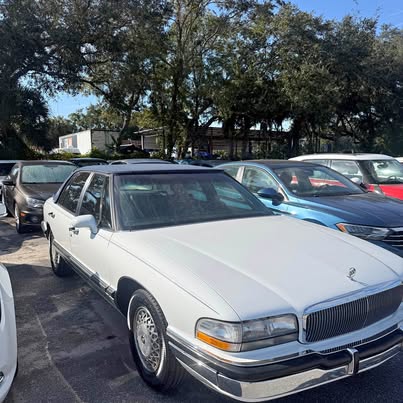
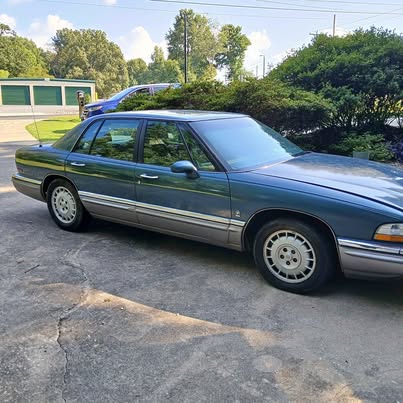
First generation (1991–1996). The base car is no hardship case: the L27 Series I 3800 makes 170 hp and 220 lb-ft, the cabin seats six with the standard split bench, and leather was a popular option. Dynaride — Buick's name for its softly tuned suspension with rear air-assisted levelling — was standard, with a firmer Gran Touring suspension optional and more common on Ultras. The Ultra story needs care by year. In 1991 most Ultras were sold with the naturally aspirated engine; the supercharged L67 became the Ultra's standard engine for 1992 at 205 hp, gained a more efficient Eaton blower with coated rotors and a larger inlet for 1994 (225 hp and 275 lb-ft), and the base car picked up the new Series II L36 (205 hp) for 1995. The 1996 Ultra, with the 240 hp Series II supercharged engine in the first-generation body, is the fastest and rarest of the line — a one-year combination.
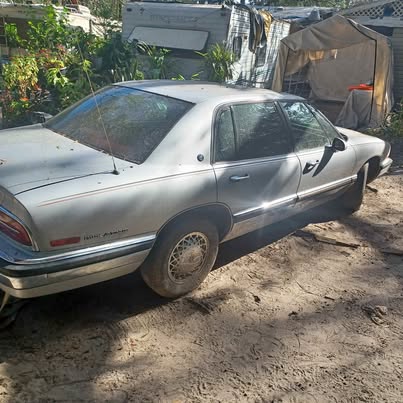
Second generation (1997–2005). The 1997 car is larger in every dimension, with a much stiffer body, seat-mounted belts, and a taller, more formal profile. The range stayed at two: Park Avenue with the 205 hp L36, Ultra with the 240 hp L67, Gran Touring suspension, larger wheels and the heavy-duty transaxle. Equipment crept up over the run — rain-sensing wipers and traction control were Ultra fare early on, and ultrasonic rear park assist arrived as an option from 2001 — and the final 2005 cars received the Ultra's grille and fender portholes across the range. There are no bad years in this generation; there are only maintained and unmaintained cars, and the later cars simply give you more equipment for the same mechanical risks.
One identity trap covers the whole range: because the base and Ultra cars look nearly identical and the supercharged engine is the valuable part, an Ultra badge on a naturally aspirated car is the commonest misdescription you will meet — sometimes fraud, sometimes a trunk lid swapped after a parking-lot tap twenty years ago. The VIN settles it: the engine character in the VIN differs between the L36 and L67 cars, the supercharger is obvious the moment you lift the hood (a cast Eaton blower sitting in the valley where the plastic plenum would be), and the emissions label under the hood names the engine family. Check all three before you discuss money.
Engines and gearboxes
There is only one engine family in the standalone Park Avenue, but it exists in two generations and two states of tune, and the differences between them decide what you will spend in ownership. The 3800 is a 3.8-litre (231 cu in), 90-degree V6 with an iron block and iron heads, pushrod valve gear and a balance shaft — a design whose roots go back to the Buick V6 of the 1960s, refined over decades into one of the most reliable engines in the industry. It is not powerful for its size, it is not quiet by modern standards, and it will outlast the car around it if the coolant stays inside it. That conditional is the whole ownership story.
The Series I: L27 and the first L67 (1991–1995)
The Series I engine in the 1991–94 base car (code L27) makes 170 hp and 220 lb-ft of torque, with sequential fuel injection and a distributorless ignition system using a crankshaft position sensor, a camshaft sensor and a coil pack assembly — no distributor, no timing to set. It is a simple, understressed engine. Its characteristic faults are age faults rather than design faults: the rubber ring in the harmonic balancer separates with age and heat, which first shows as a chirp or squeal on cold starts and a wandering timing mark, and ends with the balancer ring walking off its hub; the crank position sensor, which lives behind that balancer and reads interrupter blades on its back face, fails from heat and oil contamination and gives the classic Series I no-start — the engine cranks healthily, has fuel pressure, and produces no spark because the module never sees the signal. A car that cuts out hot and restarts when cool is describing this sensor or the ignition control module under the coil packs until proven otherwise.
The supercharged Series I (code L67, standard in the Ultra from 1992) adds an Eaton Roots-type blower — an M62 unit at first, replaced for 1994 by a more efficient version with epoxy-coated rotors, a larger inlet and a smaller drive pulley — driven by its own dedicated belt. Output was 205 hp for 1992–93 and 225 hp with 275 lb-ft for 1994–95. The engine underneath is strengthened for boost (a lower compression ratio and tougher internals than the L27), and in practice it is just as durable. The supercharger itself has its own oil supply, sealed in the nose drive, which almost nobody changes: at this age the oil is black and thin, and the plastic coupler between the drive pulley and the rotors wears its holes oval, which produces the model's most misdiagnosed noise — a rattle or gravelly clatter at idle that disappears as soon as you raise the revs. Sellers call it a timing chain or a lifter; it is a coupler, and the test is in the problem-areas section.
The Series II: L36 and L67 (1995–2005)
The Series II, which reached the base Park Avenue for 1995 and powered the whole second generation, is a thorough redesign wearing the same displacement: a stiffer, lighter block, cross-bolted main caps, a low-deck intake arrangement with much better breathing, and revised heads. The naturally aspirated version (L36) makes 205 hp and 230 lb-ft — Series I Ultra power, without the blower — and the supercharged version (L67, in the 1996 Ultra and every 1997–2005 Ultra) makes 240 hp and 280 lb-ft with an Eaton M90 blower. Both are smoother and more economical than the Series I, and both share the family's one genuine design weakness, which the Series I does not have in the same form: the intake and cooling-system plastics described at length in the problem areas. On the L36 the upper intake plenum is a composite plastic moulding; on the L67 the blower takes its place, which is why the supercharged cars dodge the plenum failure but not the lower intake gasket failure beneath it.
Diagnosis on a Series II starts with the same fundamentals as any 3800. A healthy one starts instantly hot or cold, idles with a slight pushrod lope, and pulls without hesitation. A misfire under load that moves between cylinders is usually ignition — coil towers corrode where the plug wires seat, and one coil in the pack serves two cylinders on a waste-spark system, so a single dead coil gives you two dead cylinders and a very sick-feeling engine from a cheap part. A misfire at idle with a lean code on one bank points at vacuum leaks, of which the throttle body gasket and cracked vacuum tees are the usual sources. Coolant loss with no visible leak is never "just topping up" on this engine — it is the intake story below, and it ends in a hydrolocked engine if you let it run long enough.
Fuel and ignition parts worth naming, because sellers' descriptions garble them: the fuel pressure regulator sits on the fuel rail and, when its diaphragm fails, leaks raw fuel into its vacuum hose — pull the hose off with the engine running and any fuel present condemns it. The mass airflow sensor, in the throttle body inlet, gets contaminated by oil vapour and under-reads, giving a flat, gutless car that owners blame on the transaxle; unplugging it (the computer substitutes a default value) is a legitimate roadside test — if the car runs better unplugged, you have found the fault. The idle air control valve carbons up and gives a stalling car at junctions. None of these is expensive. All of them are cheaper than the parts sellers will try to sell you instead.
Gearboxes: the 4T60-E and 4T65-E
Every standalone Park Avenue drives its front wheels through a four-speed automatic transaxle with overdrive and a lock-up torque converter, and there is no manual option at any point. The first generation uses the 4T60-E, an electronically controlled development of GM's long-running 440-T4/4T60 line. The second generation moved to the heavier 4T65-E, and the Ultra received the 4T65-E HD, with a stronger differential and drive components to handle the supercharged engine's 280 lb-ft. These are fundamentally sound gearboxes that die of two things: heat and neglect. The fluid was sold as long-life, owners believed it, and a transaxle that has done 150,000 miles on its factory fill is living on borrowed time regardless of how it shifts on your test drive.
Correct behaviour to judge against: engagement of Drive or Reverse within about a second, clean part-throttle upshifts you can feel but not hear, a 2–3 shift that does not flare (rev rise between gears), and a torque-converter lock-up on a steady cruise that drops the revs once and stays locked. The named faults are these. On the 4T65-E, the pressure control solenoid (PCS) wears and sticks, giving harsh, banging shifts at light throttle once the fluid is hot — the car drives sweetly cold and thumps its changes after twenty minutes, which is why a short test drive around the block is worthless on this model. The torque converter clutch solenoid and its valve bore wear gives lock-up shudder at 45–55 mph under light load, a vibration that feels like driving over a rumble strip and vanishes if you touch the brake pedal (which unlocks the converter) — that brake-tap test separates it from wheel balance and engine misfire in one second. On higher-mileage 4T65-Es the fourth-gear clutch hub splines wear until overdrive simply disappears; the car drives normally in the first three gears and revs on the highway, and the fix is a rebuild, not a solenoid. On the earlier 4T60-E, a sticking TCC solenoid produces the opposite party trick — the converter stays locked as you brake to a stop and stalls the engine like a manual car with the clutch forgotten; the engine restarts happily and stalls again at the next stop. Budget a full rebuild at a competent shop in the $2,200–3,500 range, a solenoid or valve-body repair at $400–900 if the gearbox is otherwise healthy, and treat a documented recent rebuild or a documented history of fluid changes as worth a real premium, because they are the difference between a cheap car and a dear one.
Fluid is the inspection you can do in the driveway: the dipstick is at the back of the engine bay, the fluid should be red and smell of almost nothing, and brown fluid with a burnt-varnish smell means the clutches have been hot. Metallic glitter in the fluid means the conversation is over — price the car as a rebuild.
Problem areas
The Park Avenue's problems divide cleanly into the ones that cost hundreds and the one that costs an engine. Read the coolant section first: on the Series II cars it is the only common fault that can destroy the car in an afternoon, and it is also the most reliably detectable. Everything else on this page is negotiable money.
The coolant leaks: intakes, gaskets and elbows
This is the 3800 Series II's signature failure, and it is actually two failures that share a symptom — a coolant level that falls with no puddle under the car.
The upper intake plenum (L36 cars only). The naturally aspirated Series II wears a composite plastic upper intake manifold. The EGR gases enter the plenum through a metal tube — the stovepipe — that passes through a coolant jacket in the plastic casting. The plastic around that hot tube degrades, hardens and eventually cracks or burns through, and coolant then leaks directly into the intake airstream. The engine drinks it: a falling coolant level, a sweet smell and white vapour from the exhaust, spark plugs on the affected cylinders steam-cleaned white, and in the terminal case enough coolant drawn into a cylinder on start-up to hydrolock the engine and bend a connecting rod. The supercharged L67 does not have this failure because its upper manifold is the aluminium Eaton blower — one of the few cases in motoring where the faster car is the safer buy. The fix for the L36 is a replacement plenum of the revised design with a metal-sleeved, reduced-diameter EGR passage, which addresses the root cause; a like-for-like second-hand plenum just restarts the clock. Parts and gaskets run roughly $200–350, and the whole job is a morning's work — $600–1,000 done at a shop.
The lower intake gaskets (all Series II cars, L36 and L67). Beneath the plenum or blower, the lower intake manifold seals to the heads with gaskets whose original carrier frame is plastic. Heat and age — the finger is usually pointed at the Dex-Cool coolant GM filled these cars with, but the mechanism is the brittle plastic carrier, not the colour of the antifreeze — crack the frame around the coolant ports, and coolant leaks externally into the valley and internally into the crankcase. The external leak pools on top of the engine and evaporates, leaving orange-white crust at the ends of the intake manifold; the internal leak shows as coolant in the oil — a dipstick that reads high, oil that looks like milky coffee on the filler cap, and bearing wear if it has been going on. The correct fix is the revised gasket set with an aluminium carrier frame (GM's updated part, or the Fel-Pro Problem Solver equivalent), done once and done permanently. Allow $700–1,400 at a shop for lower gaskets alone; done together with a plenum on an L36, the combined bill is the best money you can spend on one of these cars, and documented evidence of the job — with the metal-frame gaskets specified on the invoice — is worth paying a premium for, because it removes the model's biggest risk entirely.
The coolant elbows. Two small plastic 90-degree elbows carry coolant between the intake manifold and the belt-driven accessory bracket/heater circuit on Series II engines. They embrittle with age and snap — often while you are disturbing them during other work, occasionally on their own at a traffic light, at which point the engine loses its coolant in about a minute. The replacement parts cost almost nothing and the correct replacements are cast aluminium, not plastic. If there is no invoice showing aluminium elbows, assume plastic ones are fitted and price the job in: $150–350 at a shop, mostly labour, and a favourite DIY Saturday job. While you are in that corner of the engine, the water pump is a conventional belt-driven unit that weeps from its tell-tale hole before it fails ($250–500 fitted), and the belt tensioner pulleys on both the main and supercharger drives wear their bearings dry and squeal.
How to test on a viewing. With the engine cold, check the coolant level in the reservoir and look at the coolant itself — it should be clean orange (or clean green if converted), never rusty brown soup, which means years of neglect and overheating in the car's past. Look down into the valley at both ends of the intake manifold with a torch for crusty deposits. Pull the oil filler cap and look for emulsion; pull the dipstick and look for a level above the mark. On an L36, remove a front spark plug if the seller allows: a plug that is unnaturally clean and white compared with its neighbours is a coolant-drinking cylinder. Finally, a cooling system pressure test — any shop will do it for modest money — settles the question definitively, and on a Series II car it is as essential as the test drive.
The supercharger: coupler rattle and neglected oil
The Eaton blowers on the L67 are durable units with exactly one routine failure. Inside the nose drive, a plastic coupler connects the pulley shaft to the rotor drive pins; its holes wear oval, and the resulting slack makes a rattling, gravel-in-a-can noise at idle that disappears off idle as load takes up the play. The distinguishing test takes ten seconds: with the engine idling and rattling, slip the supercharger belt off (or simply listen while a helper blips the throttle) — coupler rattle is loudest at idle, vanishes by about 1,500 rpm, and is absent with the blower belt removed. A timing chain or valvetrain noise does none of those things. The coupler itself is a cheap part (around $40–60 with the special supercharger oil), the job takes a few hours because the blower nose has to come off, and a specialist will do it for $300–600. While it is apart, the supercharger oil — which has almost certainly never been changed — gets replaced; black, burnt-smelling oil and metal glitter mean worn nose bearings, a blower rebuild in the $600–1,200 range, and a negotiation. Boost itself is easy to check on the road: an Ultra should pull hard and cleanly from low revs with no hesitation; a car that feels no faster than a base model may have a failed boost bypass valve or actuator, which sticks the blower in bypass and quietly deletes 35 hp. That is a cheap fix and a fine negotiating lever — but only if you noticed.
Suspension, steering and the rust map
The Park Avenue rides on MacPherson struts at the front and an independent rear suspension, and the party piece is at the back: Electronic Level Control, standard on most of these cars, uses air-assisted rear struts and a small compressor to hold ride height regardless of load, over the top of the standard Dynaride soft tuning or the Ultra's firmer Gran Touring setup. The system fails in a fixed order. The rubber air bladders on the rear struts perish and leak; the compressor then runs longer and longer to keep up (listen for it cycling at start-up and after you get out of the car — a healthy system runs for a few seconds, a dying one groans on); finally the compressor burns out or the car sits tail-down every morning. Air struts run $250–450 a pair, a compressor $200–400, and a conventional conversion kit that deletes the air system for plain coil-over struts costs $150–300 and works perfectly well at the price of the self-levelling. Sagging alone does not condemn the system — check whether it pumps up. Front struts and their top mounts wear conventionally (knocking over bumps, a car that floats and porpoises at highway speed), wheel bearing hubs fail with a drone that changes note as you weave gently between lanes, and tie-rod ends and ball joints are ordinary service items at ordinary prices.
The steering is power-assisted rack and pinion, with variable-effort Magnasteer on later and higher-spec cars. Racks leak from their end seals into the bellows — squeeze the bellows; oil inside means the rack is on its way, $600–1,100 fitted for a rebuilt unit. On second-generation cars an intermittent clunk through the wheel over slow bumps is usually the intermediate steering shaft's sliding joint running dry, a known fault cured by lubricating or replacing the shaft for a few hundred dollars, and routinely misdiagnosed as a rack.
Rust, on a car of this construction, is a geography question before it is a condition question. The unibody is well protected by the standards of its day, and Florida or southern cars are frequently clean underneath at 30 years old. Salt-belt cars rot in predictable places: the rocker panels along their full length (hidden by trim covers, so prod, don't just look), the front subframe and especially its mounting points and bushings, where rust can eventually let the powertrain cradle shift; the rear strut towers and the trunk floor above them; brake and fuel lines along the driver's side; and the bottoms of the doors and the trailing edges of the front fenders. Subframe mount rot is the structural one — get the car on a lift and look where the cradle bolts to the body, because a car that is clean on top and rotten at the mounts is a parts car. Surface rust on the subframe itself is normal and treatable; perforation at the mounting pads is not a welding afternoon, it is a walk-away.
Electrics, climate and the cabin
The Park Avenue was an early adopter of electronic everything, and the systems have aged unevenly.
Climate control. The automatic climate system is the cabin's weak point. On cars with the electronic control head, the separate blower control module — a power transistor unit in the blower case — fails in the on position, and the fan then runs at full speed even with the ignition off until the battery is flat. A seller who mentions a battery drain, or a car whose fan roars the moment you connect a booster pack, is showing you this fault; the module is a $100–250 part and an hour's labour, but you must find it before it strands you. Blend-door actuators on second-generation cars strip their plastic gears and click from behind the dash, or stick you with heat on one side and cold on the other — each actuator is a cheap part, but some are a dashboard-deep job, so test every temperature and mode combination on the viewing. On first-generation cars the vacuum fluorescent display of the climate head dims and dies with age; the system still works blind, and rebuilt heads are available, but price it in.
Security and starting. First-generation cars use GM's Pass-Key II system: a resistor pellet in the key blade read by contacts in the ignition lock. The contacts wear, the system stops recognising the key, and the car will not crank, with the SECURITY light flashing. Owners bypass the system with a resistor of the correct value wired into the harness — a bypassed car starts fine and is worth no less in practice, but a car that intermittently refuses to crank with a flashing security light needs the cause found, not a jump pack. Second-generation cars moved to a transponder key (Pass-Key III), which is far more reliable; on either system, confirm the car comes with two working keys, because replacements on the early system require measuring the pellet value.
The rest of the electrics are period GM: alternators that wear their bearings and whine before they stop charging ($250–450 fitted), starters that are durable, power window regulators — the second-generation cable-type regulators snap their cables and drop the glass into the door ($200–400 per door fitted; a window that is slow or crooked is one already failing) — and seat and mirror memory modules that forget. Water leaks deserve a mention because they masquerade as electrical faults: the trunk seal and the rear window leak into the spare wheel well, door membrane seals fail and wet the carpets, and a blocked sunroof drain (on cars so equipped) drips onto the headliner and down the A-pillar onto the fuse box. Wet carpets in a Park Avenue are never just wet carpets; find the source.
Interior wear. The leather on Ultra seats is soft and cracks on the driver's bolster first; the base car's velour wears far better and a clean velour interior is a genuine selling point. Headliners sag — the foam backing disintegrates and the fabric drops, a $300–600 retrim at a trim shop. The simulated wood trim fades and cracks in sun-state cars, the steering wheel leather wears through at the top, and the 20-way Ultra seats of the early cars have pneumatic and electrical functions that fail one by one. None of this stops the car working. All of it is visible in the first minute, which makes the interior the fastest honest read on how the car has been kept: a Park Avenue whose cabin is clean, complete and working has usually been maintained everywhere else too.
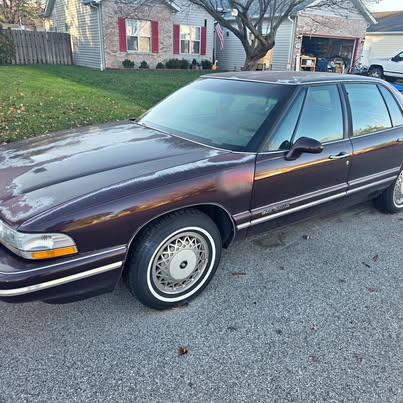
How to inspect one
Allow an hour, bring a torch, and insist on two things before you set off: the engine must be stone cold when you arrive, and the seller must agree to a drive of at least twenty minutes. A Park Avenue shows its expensive faults — intake leaks, hot-shift transaxle problems, level-control sag — only to a buyer who starts cold and drives long.
- Paperwork and identity first. Match the VIN on the title to the plate at the base of the windshield and the sticker on the driver's door. Read the engine character in the VIN and check it against the car: on an Ultra there must be a supercharger under the hood and the underhood emissions label must name the supercharged engine family. A naturally aspirated car wearing Ultra badges is priced as a base car, whatever the seller says.
- Cold start. Turn the key with the hood open and a helper watching the exhaust. Instant start, a brief fast idle, no rattle from the front of the engine (harmonic balancer and chain), no gravelly clatter from the top (supercharger coupler — see the problem areas), and no white vapour that keeps coming once the engine is warm. A car that needs cranking when cold, or that stalls at the first junction, is telling you about sensors and idle control.
- The coolant examination. Cold engine: reservoir level and coolant condition, oil filler cap off and inspected for emulsion, dipstick level and colour. Then torch into the valley at both ends of the intake manifold looking for crusty coolant deposits. This is the step that prices a Series II car — evidence of the metal-frame lower gaskets and a revised plenum already fitted (an invoice, not a claim) moves the car up your list; unexplained coolant loss moves it off.
- Under the hood, engine running. Listen at the supercharger nose on an Ultra at idle, then have your helper raise the revs gently: coupler rattle fades with revs, engine noises do not. Check the coolant elbows for weeping and brittleness — squeeze gently; a plastic elbow that feels chalky is a breakdown scheduled. Look at the belt side: tensioner pulleys quiet, alternator silent, no power steering groan at full lock. Pull the fuel pressure regulator's vacuum hose: any fuel inside condemns it.
- The driveway electrics test. Work everything: all four windows down and up (slow or crooked means a regulator is dying), both seat adjusters, mirrors, locks, lights, wipers, horn, radio. Then the climate system in every mode — heat to the floor, cold to the face, defrost — and change the temperature side to side on dual-zone cars while listening for clicking actuators behind the dash. Switch off, key out, and listen: a blower that keeps running is the failed blower control module and a flat battery by morning.
- Ride height and the level control. Before you drive, note how the car sits — level, or tail-down from overnight. Start the engine and watch the rear rise as the compressor runs; it should run briefly and stop. Load two people into the back seat or press down hard on the rear bumper and release: the system should recover height within a minute. A compressor that runs and runs, or a car that never rises, is the air struts or the compressor priced into your offer.
- Underneath. On a lift if the car has passed you so far, or at minimum on your back with a torch. Rockers along their full length — prod through the trim line. Front subframe mounts and bushings: perforation here ends the inspection. Brake and fuel lines for flaking rust, rear strut towers, trunk floor from below. Honest surface rust on a northern car is normal; fresh black underseal blown over everything the week before sale is a question, not an answer.
- The transaxle, cold. Engage Drive and Reverse in turn: engagement should take about a second, with no clunk and no flare as you pull away. Note how it shifts for the first five minutes — then file that impression away and judge it again hot, in step 10, because the 4T65-E's pressure control solenoid fault only appears with hot fluid.
- The road test, first half. In town: steering weight and centring, clunks over bumps (strut mounts, intermediate shaft), brake pedal feel and straight-line stopping, a drone that changes as you weave gently (wheel bearing hub — note which way you turn to make it louder; the loaded side is the bad one). On an Ultra, one firm acceleration from low speed: it should pull hard and immediately. A flat Ultra is a bypass valve or a tired blower, and a fine lever on price.
- The road test, hot half. Fifteen minutes in, with the fluid fully hot: light-throttle upshifts should still be clean — banging or hanging shifts now are the PCS fault from the gearbox section. At a steady 45–55 mph, feel for the rumble-strip shudder of converter lock-up, and touch the brake lightly: if the shudder vanishes as the converter unlocks, you have identified it. Confirm overdrive is present (a 4T65-E that has lost fourth gear revs busily on the highway). Let the car idle hot for two minutes: temperature gauge steady, no vapour, no new smells.
- The stall test and the park-up. Brake to a stop several times from low speed: a 4T60-E car whose converter clutch solenoid sticks will stall like a manual with the clutch left engaged. Then park, switch off, and watch the rear of the car over five minutes for level-control bleed-down, and look under the engine for fresh drips on clean ground — power steering and intake-valley coolant both announce themselves here.
- Interior and trunk, last. Sit in the driver's seat and judge the bolster and cushion; look up for headliner sag; check every seat function on an Ultra. Open the trunk, lift the spare wheel and the mat, and look for water staining and rust in the well — the trunk seal and rear window leak here, and a damp well in a "garaged" car means the garage story needs revising. A sound interior and a dry trunk on a car that has passed the coolant and transaxle tests is the car to buy.
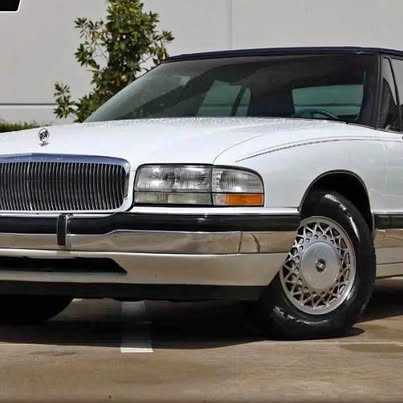
Values
The Park Avenue market is the friendliest corner of the classic hobby, because the car sits in a blind spot: too young and too front-wheel-drive for the traditional collector market, too old and too thirsty for the used-car market, and built in large numbers for owners who kept them well. The result is a market where condition, not rarity or specification, does almost all of the pricing work — and where the spread between the cheapest and the dearest example of the same model year is wider than for almost any comparable car.
Read that spread correctly. At the bottom of the market sit the cars with the model's known bills outstanding: a Series II car with no evidence the intake gaskets have been done, a hot-shifting transaxle, sagging level control and a rust belt history is not a bargain at any price, because the three repairs together approach the value of a good car. At the top sit low-mileage, garaged, documented cars — first-generation Ultras in the strong colours, final-year second-generation cars with every option — which command a real premium over the middle of the market and hold it, because the supply of genuinely excellent survivors shrinks every year while the supply of tired ones does not. The middle of the market, the honest 100,000-mile car with history, is where the value lives: most of the flagship experience for a fraction of the top money.
Asking prices and achieved prices part company on this model more than most. These cars are frequently sold by estates, by families on behalf of elderly owners, and by sellers who priced from sentiment rather than evidence; asking figures for ordinary cars are often optimistic and sit for months, while the good cars at fair money sell quickly and quietly. Auction results for the very best Ultras show what the ceiling looks like, but the typical transaction is a private sale negotiated on condition and on the repair file. Use the recorded-sales data in the market section below this guide as your evidence base, and negotiate from the invoices the car does not have: the intake job, the transaxle service history, the level-control repair are all quantifiable, and a seller who understands the model will accept arithmetic as an argument.
Two premiums are real and one is not. The supercharged Ultra premium is real — the engine transforms the car and the cars are scarcer — but it should be paid for a verified supercharged car with a quiet coupler and a healthy blower, not for badges. The condition premium for a documented, garaged, rust-free car is real and worth paying in full, because you cannot buy your way to that condition afterwards for the same money. The low-mileage premium is the trap: a 40,000-mile car that has sat for a decade needs every rubber component, every fluid and very likely the intake gaskets and tyres before it is a car again, while a 120,000-mile car in continuous use with a fat invoice file needs nothing. On this model, buy the maintenance history, not the odometer.
Project cars deserve one honest paragraph. A non-running Park Avenue is worth very little, because the market for them is thin and the recommissioning list — fuel system, brakes, tyres, intake gaskets, transaxle assessment — is long even when the engine itself is sound. Buy a project only if it is structurally rust-free and you are doing the work yourself; a project that needs welding as well as recommissioning is a parts car, and should be priced as one.
Parts and ownership
The Park Avenue is one of the cheapest flagship cars in the world to keep, for one structural reason: its mechanical core was shared across an enormous range of GM cars. The 3800 engine, in Series I and II forms, powered LeSabres, Rivieras, Bonnevilles, Regals, Grand Prixs, Impalas and more, and the 4T60-E and 4T65-E transaxles were just as widely spread. Production in the millions means the parts trade — new, remanufactured and used — is deep, competitive and mostly priced like ordinary car parts, because that is what they are.
Easy and cheap: service items, filters, plugs and wires, coil packs and ignition modules, crank and cam sensors, water pumps, alternators, starters, brake discs, pads, calipers and hoses, wheel bearing hubs, struts, control arms and every suspension wear item, radiators, fuel pumps, and the aluminium coolant elbows that should replace the plastic originals on every Series II car (a few dollars each — there is no excuse for a car still running plastic ones). Order today, fit this weekend.
The known bills, priced: lower intake gaskets with the metal-frame set, $700–1,400 fitted; revised upper plenum on an L36, $600–1,000 fitted, and less done together with the lowers; transaxle rebuild, $2,200–3,500, against $400–900 for a solenoid or valve-body repair when the gearbox is otherwise sound; supercharger coupler and oil service, $300–600, blower rebuild $600–1,200; rear air struts $250–450 a pair and a level-control compressor $200–400, or $150–300 to convert to conventional struts and be done with it; steering rack, rebuilt and fitted, $600–1,100; window regulators $200–400 a door fitted; headliner retrim $300–600. None of these figures is exotic, and a car that has had the big three — intakes, transaxle service, level control — documented is a car with its future largely paid for.
Harder to find: Park Avenue-specific trim and body parts are the thin end of the catalogue. First-generation brightwork, grilles and lamp units, Ultra-specific interior trim, the 20-way seat components of the 1989–90 Electra Ultra, climate control heads (rebuilt units circulate), and rust-free body panels for northern cars all take hunting through the used market and the marque clubs. Mechanical parts will never strand you; a cracked first-generation tail lamp might. If you find a cosmetically complete car, protect the trim — it is the part of the car you cannot simply order.
Running costs. A sorted Park Avenue is a realistic daily classic: fuel economy in the high teens in town and the high twenties on the highway for the naturally aspirated car, a little worse for the Ultra, which also asks for premium fuel to make its rated power. Insurance is ordinary, tyres are ordinary sizes on ordinary wheels, and any competent independent shop can service the car — the 3800 holds no secrets from anyone. The budget line that catches new owners is the first year: catching up a neglected car's deferred maintenance honestly runs into four figures before you improve anything, with the intake gaskets, a transaxle service, tyres, brakes and the level control queuing in roughly that order. Buy the car that has been in continuous use, keep the coolant fresh, change the transaxle fluid on a sensible interval rather than believing the lifetime-fill story, and the Park Avenue will do the thing it was built to do — cover distance in silence — for as long as you care to ask.
Which one to buy
- The all-rounder: 1997–2005 Park Avenue (base). The Series II L36 makes the same power as the early supercharged cars, the second-generation body is the stiffest and quietest, and parts support is the best in the range. Buy one with the intake gaskets documented and it is the cheapest luxury motoring there is.
- The enthusiast's pick: Park Avenue Ultra, 1994–95 or any second-generation year. The supercharged car is the one with a personality — 225 hp in the sleek first-generation body, 240 hp in the second — and it dodges the plastic plenum failure entirely. Verify the engine by VIN and by eye, listen for the coupler, and check the boost is real.
- The connoisseur's car: 1996 Ultra. One year only: the 240 hp Series II supercharged engine in the lighter, prettier first-generation shell. The rarest desirable specification in the range, and worth hunting — with the lower intake gaskets as your first question, because the L67 needs them too.
- The value buy: a high-mileage, well-documented base car. On this model the odometer is nearly meaningless next to the invoice file. A 140,000-mile car with metal-frame intake gaskets, transaxle services and a working level control will outlast a neglected 60,000-mile car and costs less to buy. This is the smartest money in the whole guide.
- The ancestor: Electra Park Avenue, 1985–90. If you want the nameplate's earlier life, the front-drive Electra cars share the later cars' character at lower prices, and the 1989–90 Ultra is a genuine rarity. The rear-drive cars to 1984 are a different hobby — buy those as an Electra, judged by Electra rules, not by this guide.
And the rule that overrides all of the above: buy the car with the coolant inside the engine and the invoices in the glovebox. On a Park Avenue, engines and gearboxes are fixable at prices you can plan for, but a car with documented intake gaskets, a serviced transaxle and a rust-free subframe is a car whose expensive questions have already been answered — and that, not the mileage, the colour or the badges, is what separates the bargain from the bill.
See the 2 Park Avenue FWD : Stk 15719 cars currently listed.
For sale now
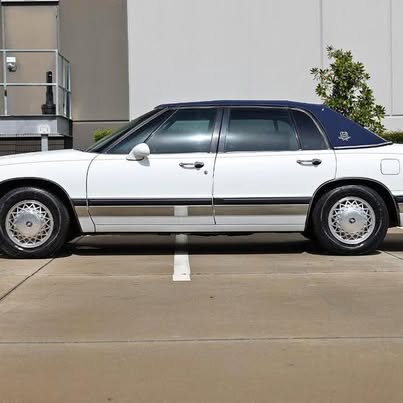 $10,900 · 127% above typical
Expand
What they sell for: Park Avenue FWD : Stk 15719 sale prices.