
Cadillac Series 60 buyer's guide
Cadillac Series 60 -- the model's own buyer's guide: variants, values and what to check.
Years listed: 1938-1939 · Series: Series 60
# Cadillac Series 60 — Buying Guide
Overview and history
The Cadillac Series 60 is the car that saved Cadillac in the Depression — and the one that teaches you the most about buying a pre-war car, because it combines genuine Cadillac engineering with a body and price structure that were deliberately built down to a market. Introduced for 1936 as the 36-60, and continued as the 37-60 and 38-60, it was the idea of Cadillac's general manager Nicholas Dreystadt, who saw a wide, empty price gap between the successful LaSalle below and the big Series 70 Cadillacs above, and filled it with a smaller, lighter Cadillac that a Buick or Packard Six buyer could almost reach. It worked immediately: the Series 60 became Cadillac's best seller in its first year, accounting for roughly half of everything the division sold, and it carried Cadillac through the worst decade in the industry's history.
Understand the formula, because every buying judgement follows from it. The body shell is GM's B-body, shared with LaSalle, Buick and Oldsmobile — that is where the money was saved. Almost everything else is Cadillac: a brand-new flathead V8 designed for this car, Knee-Action independent front suspension, hydraulic brakes, Cadillac trim and assembly standards. The persistent myth that a Series 60 is "just a LaSalle with Cadillac badges" gets the truth exactly backwards. In 1936 the LaSalle still ran a straight-eight; the Series 60 debuted Cadillac's new Monobloc V8, the engine family that would power every Cadillac V8 car until 1948 and, in twin form, American light tanks during the war. You are buying a real Cadillac that happens to share a bodyshell with lesser GM cars, and what wears, rusts and breaks divides cleanly along that line: Cadillac mechanicals, GM-volume body.
The three years divide into two mechanical generations. The 1936 car rides a 121-inch wheelbase and carries the first, 322-cubic-inch version of the Monobloc V8, rated at 125 horsepower. For 1937 the wheelbase stretched to 124 inches, the bodywork was restyled, and the engine grew to 346 cubic inches and 135 horsepower — the definitive form of the car. The 1938 car is a refined 1937: detail styling changes, the gear lever moving from the floor to the steering column, and — the complication that runs through this whole guide — a glamorous new stablemate, the Sixty Special, which is a Series 60 derivative but not a Series 60, covered in the models section below. After 1938 the plain Series 60 disappears: for 1939 the entry-level Cadillac becomes the Series 61, and any car advertised as a "1939 Series 60" is either a Sixty Special wearing a shortened name or a misdescription. Treat that as your first identity check, before you look at anything else on the car.
Survival follows the usual pre-war pattern, sharpened by the car's original position. Series 60s were bought by prosperous but not wealthy owners, used as everyday cars, and worked hard through the war years when nothing new could be bought. The open cars and coupes were saved early by enthusiasts; the four-door touring sedans — the bulk of production — were used up and scrapped in large numbers, which is why a genuinely good sedan is now harder to find than its original sales figures suggest. Most survivors have been restored at least once, many of them decades ago, and the standard of that restoration matters more than the car's paper history. These are also old cars in the fullest sense — 6-volt electrics, vacuum wipers, a structure in which timber still plays a part in the earlier bodies — but the mechanical design is famously durable, and you buy condition and evidence, not badges and shine.
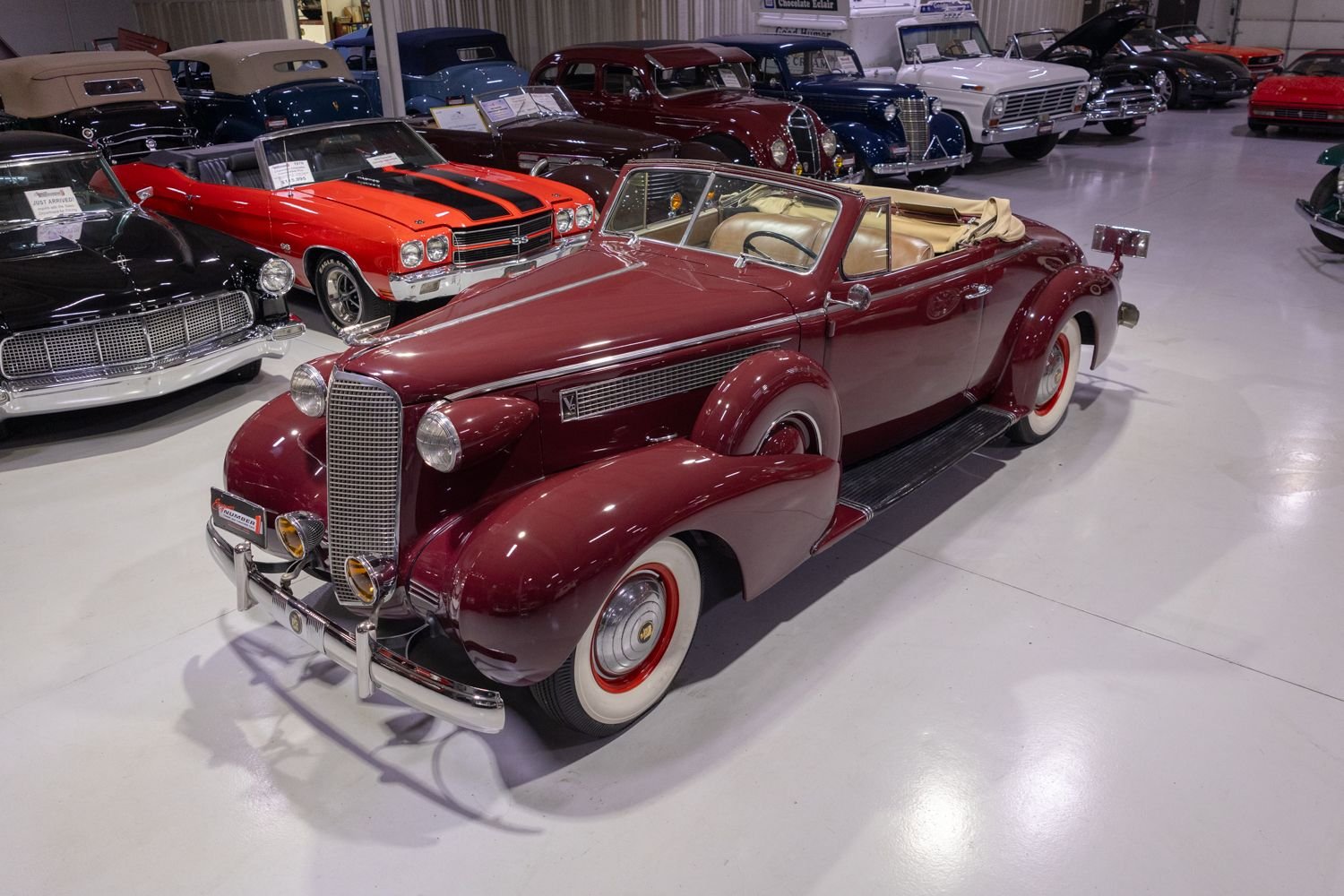
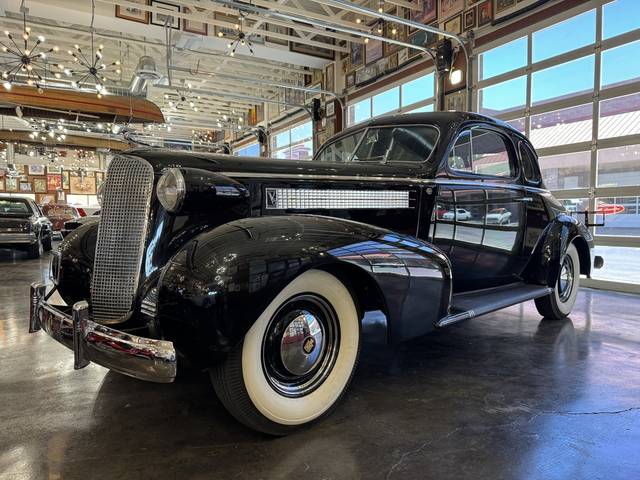
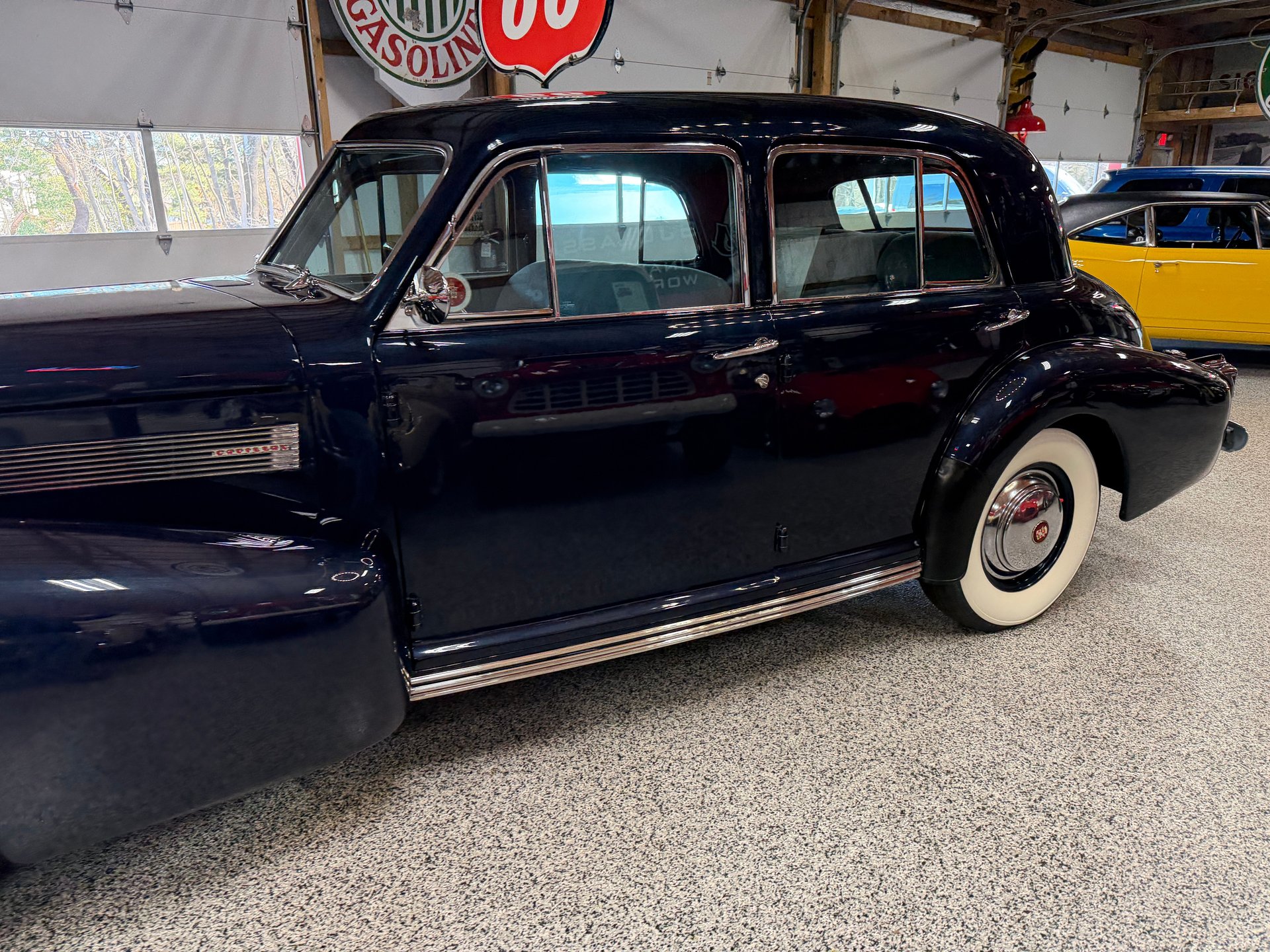
This site's own pool for the model is small enough to describe exactly: four Series 60 records in total, two offered for sale and two recorded as sold, all dealer-handled, spread across Minnesota, Nevada, Florida and New Jersey. Two are 1937 cars (a convertible coupe and an opera coupe), one is a 1938 car, and one is the 1939 car discussed above, whose photographs show the low, running-board-less profile of the Sixty Special rather than a standard Series 60. Every car in the pool is recorded with a three-speed manual gearbox, which is correct — no automatic was ever offered in this range — and the colours run to black twice, a Richelieu Maroon and a dark blue metallic. Four cars prove nothing statistically, and this guide does not pretend otherwise; but the mix is representative of what you will actually meet in the market: restored open and coupe body styles at dealers, presented well, priced on presentation.
The models
Every standard Series 60 is built on the same recipe: B-body Fisher bodywork, the Monobloc flathead V8, a three-speed synchromesh manual gearbox, Knee-Action independent front suspension, a live rear axle on semi-elliptic springs, and Bendix hydraulic drum brakes. What changes across the range is the year — which decides engine size, wheelbase and where the gear lever lives — and the body style, which decides rarity, value and most of your inspection workload. There are no engine options and no factory performance variant. The choices that matter are 1936 versus 1937–38, open versus closed, and standard car versus the Sixty Special derivative.
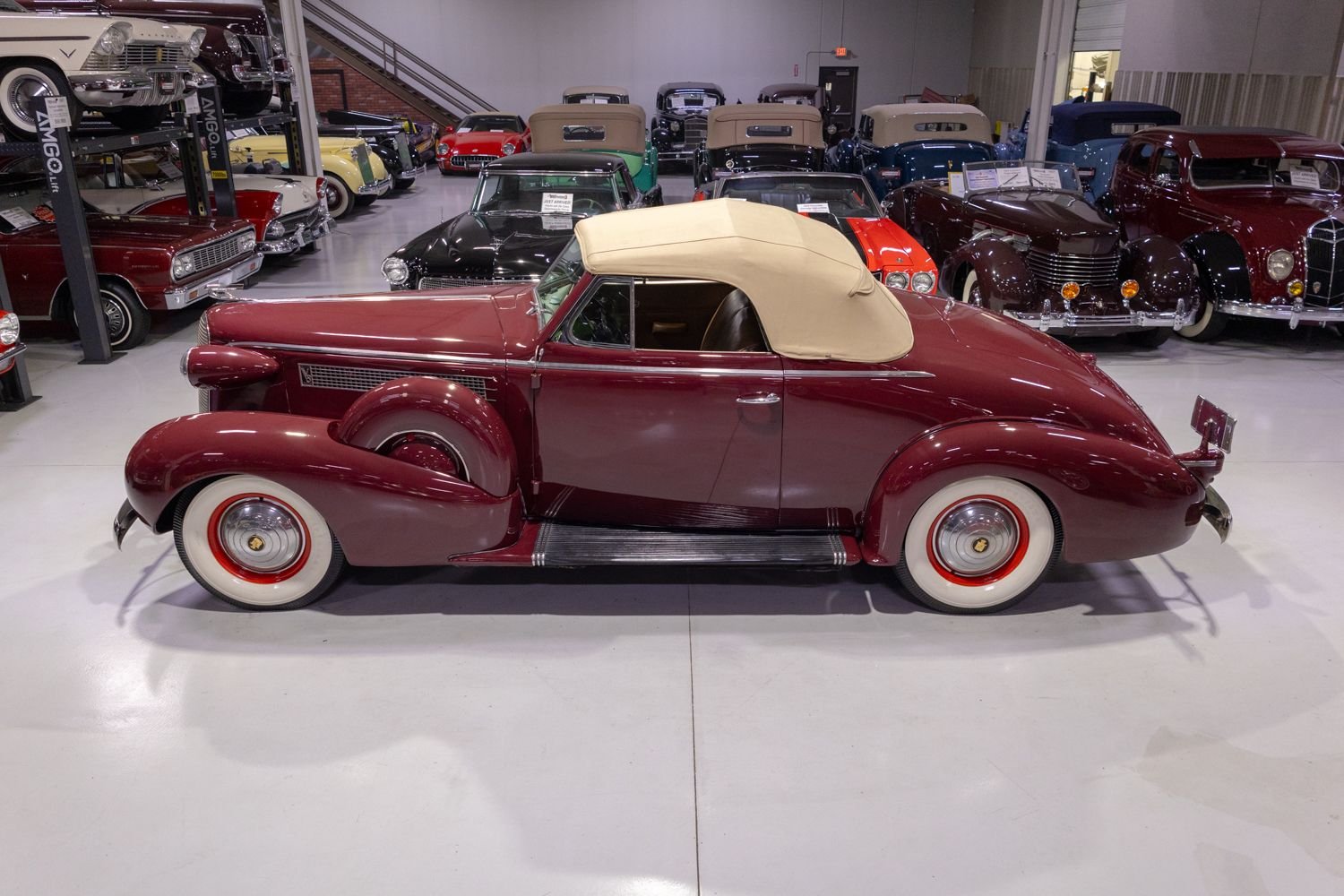
The body range across the three years covers the full period catalogue: a two-door coupe, the opera coupe with its small folding occasional seats in the rear quarters, a five-passenger four-door touring sedan (the volume seller, with an integrated trunk rather than the earlier tacked-on look), a convertible coupe with a rumble seat or enclosed rear compartment depending on specification, and a four-door convertible sedan in very small numbers. Sidemount spares in the front fenders were a period option that changes a car's look considerably — and a car wearing sidemounts it was not built with tells you the restoration followed taste rather than the build record. Wheelbase is your quickest year check from a photograph: the short 121-inch stance belongs to 1936 alone.
The Sixty Special needs its own paragraph because sellers and listings blur it into this guide's subject. Launched for 1938 alongside the standard car, the Sixty Special (60S) was a young Bill Mitchell's first landmark design at GM: a four-door sedan on a longer 127-inch wheelbase and a double-drop frame that let the body sit about three inches lower, with no running boards, an integrated trunk, slim chrome-framed windows, and a convertible-sedan look years ahead of Detroit practice. It shared the 346 V8 and running gear, but the body was its own — Fisher-built for 1938, Fleetwood-built from 1939 — and it was a separate, more expensive model that outsold the standard Series 60 in its first year, continuing to 1941 after the standard car was gone. A Special is a different purchase: unique panels and trim, a lower structure, its own rust and parts story. If the car in front of you has no running boards, thin chrome-framed windows and a 1939 date, you are looking at one whatever the headline says — price it, and inspect it, as one.
| Model | Years | Engine | Output | Built | Character |
|---|---|---|---|---|---|
| Series 60 coupe / opera coupe | 1936 | 322 cu in Monobloc V8 | 125 hp | Not separately recorded here | First-year car, short 121 in wheelbase, floor shift |
| Series 60 touring sedan | 1936 | 322 cu in Monobloc V8 | 125 hp | Not separately recorded here | The volume seller; the entry Cadillac in its purest form |
| Series 60 convertible coupe | 1936 | 322 cu in Monobloc V8 | 125 hp | Not separately recorded here | Rarest first-year form; top, wood and fit decide value |
| Series 60 coupe / opera coupe | 1937–1938 | 346 cu in Monobloc V8 | 135 hp | Not separately recorded here | The definitive mechanical spec; column shift for 1938 |
| Series 60 touring sedan | 1937–1938 | 346 cu in Monobloc V8 | 135 hp | 1938 Series 60 total: 2,052 (all styles) | Bigger, calmer, better equipped; the sensible closed buy |
| Series 60 convertible coupe / convertible sedan | 1937–1938 | 346 cu in Monobloc V8 | 135 hp | Not separately recorded here | The collector bodies; scarcity and condition set the price |
| Sixty Special (60S) sedan — derivative, not a standard Series 60 | 1938–1941 | 346 cu in Monobloc V8 | 135 hp | 3,703 in 1938; 5,513 in 1939 | Mitchell's landmark; unique low body, no running boards, 127 in wheelbase |
Read the table with the honest gaps left in it: per-body-style production for the standard Series 60 is not something this guide will invent, and any seller quoting a precise "one of only X built" figure for a standard body style should be asked for the source. What is solid is the shape of the market. Sedans were built in the largest numbers and survive in the smallest proportion; coupes and convertibles were saved at a far higher rate. The 1936 cars trade in their own small world, while 1937 and 1938 cars are close substitutes, 1938's column shift making it marginally the easier car to live with. The dark blue 1939 car in this site's pool is the standing lesson in why the boundaries matter: presented as a Series 60, it is shaped like the Sixty Special, and the difference is worth real money in both directions.
Engines and gearboxes
The 322 Monobloc V8 (1936)
The Series 60 exists because of this engine. Cadillac's earlier V8 dated to 1915 and was expensive to build, with a separate crankcase and cylinder blocks; the new engine cast the block and crankcase as one iron unit — hence "Monobloc" — cutting cost and weight while gaining stiffness. It kept the 90-degree vee and the L-head (flathead, side-valve) layout, with the valves in the block beside the cylinders, detachable cylinder heads, and — a Cadillac signature that mattered greatly in period and matters to you now — hydraulic valve lifters, which removed the regular tappet adjustments flathead owners elsewhere lived with and made the engine uncannily quiet when the oil system is healthy. In 1936 Series 60 form it displaces 322 cubic inches from a 3.375-inch bore and a long 4.5-inch stroke, runs a 6.25:1 compression ratio, and is rated at 125 horsepower at 3,500 rpm. The crankshaft runs in five main bearings, lubrication is full-pressure, and a single Stromberg dual-downdraft carburettor sits in the vee under a large oil-bath air cleaner and silencer assembly.
In service the 322's character is torque and calm rather than speed: peak output arrives low, the gearing is tall, and the car pulls from walking pace in top gear without complaint. Its weaknesses are the family's weaknesses (covered under the 346 below), plus two of its own. First, it is a one-year engine in this range, so some wearing parts — pistons in oversizes, for example — take more hunting than 346 parts. Second, a 1936 car offered with a 346 is not automatically a fraud — engines were swapped freely in period, and a later 346 is a usable upgrade — but it is no longer the matching car it may be priced as, and the engine number settles it. Budget-wise, treat the 322 as you would the 346: a full professional rebuild of a Cadillac flathead is a five-figure job — realistically $10,000–18,000 depending on region and how much bolt-on hardware needs rebuilding — and a car that needs it must be priced with that number in the room.
The 346 Monobloc V8 (1937–1938, and the Sixty Special)
For 1937 Cadillac standardised on the larger version: bore up to 3.5 inches, the same 4.5-inch stroke, 346 cubic inches, 135 horsepower at 3,400 rpm. This is the engine that made the family's reputation. It is massively understressed — 135 horsepower from 5.7 litres is a lazy state of tune — built heavy, and cooled and oiled with margin to spare, which is why the same basic engine could be trusted in pairs to power the M5 Stuart and M24 Chaffee light tanks and why a sound 346 in a road car feels unburstable. In the Series 60 it gives the car genuine long-legged performance by pre-war standards: relaxed cruising at modern secondary-road speeds, strong hill climbing in top, and the near-silence the hydraulic lifters and the big intake silencer were designed for. If a 346 makes mechanical noise — a rhythmic tick that follows rpm, a deep knock under load, a rumble on the overrun — something specific is wrong, because a healthy one does not.
Learn the layout before you inspect, because the engine bay of the pool's 1938 car, pictured below, shows it clearly. Both manifolds live high, in and around the vee: the intake sits in the valley under the carburettor, and the exhaust manifolds run along the top of each bank, with a crossover feeding exhaust heat to the intake for cold running. That layout also cooks everything near it for ninety years: exhaust manifolds crack with heat cycling, their gaskets blow (a chuffing tick under load, routinely misdiagnosed as a lifter), and the heat-riser passage carbons up, after which the car runs rich and flat. The Stromberg AAV-series dual-downdraft carburettor (the Aerotype family; the AAV-26 is the documented Cadillac fitment of the period) hides under the enormous oil-bath air cleaner — budget for a rebuild on any car that has sat, at roughly $400–800, and check the oil bath actually contains oil, because a dry one has been feeding the engine unfiltered air. The Delco-Remy distributor sits at the rear of the engine with the coil at the firewall; points and condenser are ordinary service items, but a worn distributor shaft bush shows as a scatter in the timing that no adjustment cures — a common cause of the "it never runs quite right" complaint. Timing matters disproportionately on a flathead: a few degrees retarded costs power and adds exhaust heat the manifolds must then shed.
The cooling system is where the "flatheads always overheat" myth needs correcting. A 346 with a clean radiator, a clean block, a sound water pump and correct timing does not overheat in normal use — the cooling capacity is generous. When one runs hot, the causes are accumulated neglect: a furred radiator core (rodding out or a re-core, roughly $600–1,200, restores it), scale settled in the block's water jackets, a slipping pump, a collapsed bottom hose, or retarded timing. Verify the gauge against a thermometer in the top tank first, because a lying gauge-and-sender pairing has condemned more good radiators than any blockage. Oil pressure is the other gauge to read literally: a hot idle figure that falls away year by year, with a rumble to match, is bearing wear announcing itself — and that is a rebuild, not an adjustment.
One more system belongs to the engine: the vacuum supply. The wipers are vacuum-operated, fed from the intake manifold with assistance from a combined fuel-and-vacuum pump of the period AC type, and their behaviour is a free engine-health test — wipers that stall on a hill are telling you manifold vacuum is low or the pump's vacuum section is perished. The fuel pump itself is a known service item: ethanol-blended fuel attacks old diaphragm material, so a pump rebuilt with ethanol-resistant parts (a few hundred dollars) is near-mandatory for a driven car, and hot-day vapour lock is managed by correct routing and insulation, not by the electric-pump conversions sellers sometimes fit and rarely declare.

Gearboxes: the three-speed Synchro-Mesh
There is exactly one gearbox in this guide's world, and the brief's records reflect that: every pooled car is a three-speed manual. Cadillac's Synchro-Mesh three-speed has synchromesh on second and top, a single dry-plate clutch (11-inch in the 1938 specification), and a layout that changed once: floor-mounted lever in 1936 and 1937, column-mounted lever — marketed as part of the Syncromatic control arrangement — for 1938, freeing the front floor and changing the linkage completely. Behind the gearbox, an open propeller shaft with Hotchkiss drive takes power to a hypoid rear axle (3.92:1 in the 1938 specification), the hypoid gears allowing the shaft line to sit lower in the car. No overdrive was offered, no automatic existed in the range — Hydra-Matic does not arrive at Cadillac until 1941 — and any Series 60 presented with an automatic transmission has been converted, which is a legitimate engineering choice by some past owner but a substantial originality deduction and a conversion whose quality you must judge from scratch.
In use, the gearbox is strong, slow and honest. The synchromesh works if you give it time; the standard test is a series of unhurried two-three and three-two changes at moderate rpm, listening for graunching that a slower hand cures (worn synchro cones) versus noise that nothing cures (chipped teeth or bearing wear, a gearbox-out rebuild). Whine in the indirect gears that disappears in top points at the layshaft and its bearings. The clutch tells its own story: judder from rest is oil on the plate or a tired driven plate; slip in top gear on a hill is a worn plate; and a dragging clutch that makes first hard to engage is usually linkage wear on the column-shift cars, where ninety years in a long, jointed linkage adds up to lost motion — budget time, not fortunes, for re-bushing it, but do the test, because a seller's "they all do that" is how a dragging clutch hides a warped plate. The rear axle should be silent at cruise: hypoid gears whine on drive or overrun when worn or wrongly set up, and since correct hypoid setup is specialist work, a noisy axle is a priced deduction (a specialist rebuild runs roughly $1,500–3,000) rather than a shrug. Oil misting is period-normal; drips that mark the floor from the rear main, gearbox tail or pinion are jobs — and on a suspiciously clean engine bay, look again after the test drive.
Problem areas
Rust and the body structure: the map
Rust is the purchase, on a Series 60. The mechanical parts are durable and rebuildable; the body is a large, complicated 1930s Fisher structure that rusts in a specific, learnable pattern, and the cost of putting it right exceeds the cost of any mechanical rebuild you will ever commission on the car. Start with the frame, because everything hangs from it: a stout X-member chassis that is generally robust but rusts where road dirt and moisture sit — at the rear kick-up over the axle, around the spring hangers, at the X-member's centre where mud packs, and along the side rails behind the front wheels where spray is thrown. Surface rust on a frame is cosmetic; flaking, thinning or perforated steel at the kick-up or hangers is structural, and repairing it properly means body-off work. Probe with a screwdriver, not a fingertip, and be suspicious of fresh underseal, which on a pre-war car hides more than it protects: underseal applied over active rust is the single most common concealment in this market.
The body's own map runs as follows. Floors first: front and rear footwells rust from both sides — water entering past perished window and cowl seals from above, road splash from below — and the trunk floor follows, fed by a leaking trunk seal. Lift every carpet and mat the seller allows; a seller who will not let you lift mats is telling you something. Sills and rocker panels rust along their whole length, hidden beneath the running boards on standard cars: the board's rubber mat traps water against the steel, and board and sill rust together. Doors rust at their bottoms, where the drain holes block and the door becomes a tank; open each door and look at the underside edge, then check the shut lines — a re-skinned or filled door often sits proud at one corner. The cowl sides and lower A-posts matter doubly because on the earlier bodies the structure here still involves timber (below). Front fenders rust at their trailing edges, around the headlamp mounts, and — on sidemount cars — inside the spare-wheel wells, which collect water and are almost never cleaned. Rear fenders rust along their bolted joint line, and the lower quarters behind the rear wheels take the full spray load. Finally, closed cars channel roof water into the pillars, so staining on headlining corners and rust weeping from the drip rails are not cosmetic marks — they are reports from inside the pillars.
Timber is the Series 60's special trap, and it divides by year. Fisher bodies of this period were in transition from composite construction — steel panels over a hardwood frame — to all-steel, and the earlier bodies retain structural wood in door frames, pillars and roof rails, decreasing as the decade advanced. The test is a thin screwdriver pressed into exposed timber in the door shuts, trunk and body-mount areas. Sound hardwood resists; rotten wood lets the point sink with a soft, fibrous give, and a door that drops on its hinges, or needs lifting to latch, is often announcing rotten pillar timber rather than a hinge problem. Replacing structural wood is coachbuilding, not panel beating — slow, skilled, and priced accordingly, with a single pillar repair easily running into four figures. This is why the inspection section sends you to the door fit before the paint: the structure speaks through the shut lines.
The Sixty Special derivative has its own version of the map, and the dark blue 1939 car in the pool is your reminder to apply it: no running boards to hide the sills (a genuine inspection advantage), but a lower body sitting closer to road spray, an integrated trunk whose floor and seal channel are unique to the model, thin chrome-framed window surrounds whose lower rails trap water against the door tops, and a one-model-only set of panels that cannot be replaced from a standard car's spares. On any Special, spend your time on the trunk floor, the rear quarters and the lower doors, and price any panel damage as fabrication, not replacement.
Engine: cooling, oil and the flathead's failure modes
The Monobloc V8's problem list is short but specific, and almost every item is a neglect item rather than a design flaw. Cooling first, because it is the one that ends engines: the flathead's exhaust passages run through the block, so the cooling system works harder than an overhead-valve engine's, and its margin is consumed by silt. A car that climbs steadily at speed, or boils after a short climb, has one or more of: a furred radiator core, a silted block, a failing water pump, retarded ignition, or a blowing head gasket pushing combustion gas into the water — distinguishable by bubbles and a combustion-gas test at the radiator neck. Head gaskets are a service item on a ninety-year-old flathead, and a weep at the head joint, rust staining down the block side, or mayonnaise under the oil filler all deserve a compression test before money moves. Cracked blocks are the nightmare scenario, usually frost damage on cars stored with plain water — treat a car with a known cracked block as parts-priced unless the repair is documented by a specialist.
Oil behaviour tells you the bottom end's story. Hydraulic lifters are fed from the oil gallery, so the first symptom of low pressure, dirty oil or a worn pump is lifter tick at hot idle that quiets with rpm — the engine giving you a gauge reading in sound. Worn bearings announce themselves differently: a deep knock under load at low rpm, pressure that falls as the oil warms, a rumble through the floor. Valve and guide wear shows as oil consumption and blue smoke on the overrun; the proper check is a compression test followed, if readings are low and uneven, by a leak-down test that separates rings (air at the oil filler) from valves (air at the carburettor or exhaust). Exhaust manifolds crack between the centre ports — inspect with a mirror and listen cold, when cracks are open and noisy; a replacement is a hunt for a sound used casting, and the studs that snap removing it make this a classic small job that becomes a big one. The ancillaries are rebuildable period Delco-Remy: budget $300–600 for a generator overhaul, and check the water pump's bearing play by rocking the pulley.
Fuel, ignition and the 6-volt electrics
Most "it won't run properly" Series 60s are suffering in these three systems, not in the engine's iron. Fuel: the tank rusts from inside, shedding scale that blocks the pickup and the pump's valves, so any car that starves at speed or after a few miles, then recovers after standing, is showing you tank debris until proven otherwise — a tank clean or replacement, plus an inline filter fitted discreetly, is the cure, and a car that has been run from a temporary container is confessing to it. The mechanical pump's diaphragm and the carburettor's internal leather and cork parts are ethanol casualties; the Stromberg's float needle, accelerator pump and gaskets all need to be modern-material parts in a driven car. Hot-start trouble and vapour lock trace to heat in the pump and line; cold-start trouble traces to the automatic choke's thermostatic control and to the heat-riser system that is supposed to warm the intake — both are checkable in minutes on a cold car, which is why the inspection insists on a genuinely cold start.
Ignition: points and condenser are consumables, but the system's age shows in the distributor's shaft wear, in perished cloth-braided plug leads that leak spark on damp mornings (watch the engine bay in the dark for the blue corona show), and in a coil that weakens as it warms — the classic pattern of a car that starts cold, runs twenty minutes and dies, then restarts when cool. None of these is expensive; all of them are misdiagnosed as carburation by sellers.
Electrics are 6-volt, positive earth (ground), and the whole system's health is a cable-and-connections story. Six volts means double the current for the same work, so resistance anywhere — a corroded earth strap, a undersized modern replacement cable, dirty terminals — shows up as slow cranking, dim lights and a generator that seems not to charge. The starter on a healthy 6-volt Cadillac spins the big flathead smartly; lazy cranking with a good battery is almost always cables and earths, and the fix is cheap, heavy cables and clean metal-to-metal joints, not a 12-volt conversion. Twelve-volt conversions exist in the wild and are not inherently bad, but they change bulbs, gauges, the clock, the radio and the fuel sender's behaviour, and an undocumented conversion is a wiring unknown you will be debugging for years — price it as such. Wiring itself is cloth-insulated and, where original, will be perished at every flex point and terminal; a full rewire with a correct-pattern loom is a known, bounded job (roughly $1,500–3,000 in parts and specialist labour for the loom and fitting on a car of this size), while a car with sound modern replacement wiring honestly done is a genuine plus. Check every light, the horn, the gauges and the wipers as the inspection directs — on a 6-volt car, the electrical test is a systems test, not a formality.
Suspension, steering and brakes
The Knee-Action front suspension — independent, coil-sprung, designed under Maurice Olley — rides beautifully when its many wear points are in order and wanders and wears tyres when they are not. The wear points are kingpins and their bushes, the threaded suspension pins GM used throughout the linkage, tie-rod ends, and the lever-arm hydraulic shock absorbers that leak with age. The standing test is in the inspection section: rock the jacked front wheel at twelve and six for kingpin play, at nine and three for steering play. Kingpin and bush work is ordinary press work but a full strip to do, so price a sloppy front end as a rebuild (realistically $1,500–3,500 with shocks rebuilt and alignment) rather than an adjustment. Rear suspension is simpler: semi-elliptic leaf springs that sag and occasionally crack a leaf, worn shackles, lever shocks again — and a lean can be a broken leaf hiding inside the pack, so look along each spring with a torch.
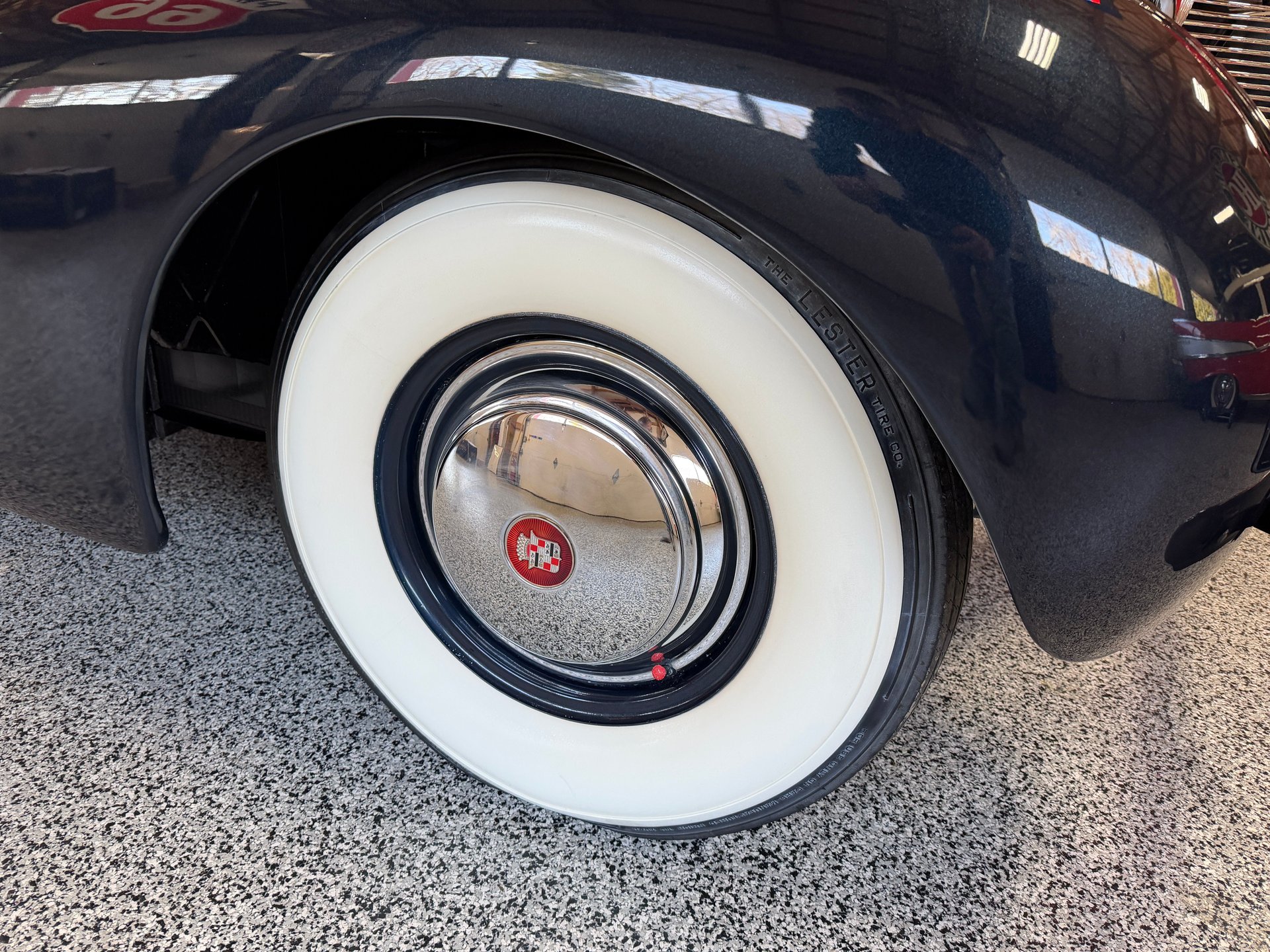
Steering is a worm-and-roller box; wear shows as free play at the rim, and while the box has adjustment, adjustment taken up to hide a worn worm just moves the tight spot — a box tight at lock and loose at straight-ahead is worn, not maladjusted. Brakes are Bendix hydraulic drums all round, perfectly adequate when the hydraulics are sound — and hydraulics are the whole story: wheel cylinders weep, the master cylinder bypasses internally (a pedal that sinks slowly under steady pressure), hoses perish and balloon, and steel lines rust. On any car without documented recent hydraulic work, a full overhaul is a safety-mandatory budget item at roughly $1,200–2,500 through a specialist, before cosmetics. Tyres close the section: 16-inch wheels in a period size around 7.00-16, reproduction whitewalls readily available — but check age codes, because a shiny, cracked, fifteen-year-old whitewall is a show tyre, not a road tyre, and a fresh set of five is a four-figure purchase.
Interior, trim and the convertible top
Interior work is where pre-war restoration budgets go to die quietly, because everything is big, much of it is wood and leather and wool, and correctness is judged by people who know. Closed cars wear wool broadcloth or Bedford cord and a headlining that sags and stains as the roof's water management fails; open cars and coupes were often trimmed in leather. A complete, correct retrim of a sedan — seats, door panels, headlining, carpets — through a trimmer who knows pre-war work runs well into five figures, and a convertible's interior, exposed to weather its whole life, is usually worse. Wood trim cracks its finish and rots where window leaks feed it; refinishing is skilled but bounded work, while replacing missing pieces is fabrication. Instruments are mostly rebuildable by specialists; the clock will not work, because they never do. Price all of this as a known schedule of work — and note that a sound, honest, slightly worn original interior is a better buy than a shiny incorrect retrim, because the original can be improved in stages and the wrong retrim has to be paid for twice.
Chrome and brightwork carry the same logic at higher unit prices. A Series 60 wears a large grille, heavy bumpers, headlamp shells, hubcaps and a forest of smaller die-cast pieces, and die-cast (pot metal) is the problem material: it pits from within as the alloy ages, and pitted pot metal cannot simply be polished — it must be stripped, repaired and replated by one of the few platers who will take it on, at prices that make a full car's brightwork a five-figure line item on a show restoration. Judge brightwork in raking light, and distinguish steel chrome (bumpers, usually sound under failed plating) from die-cast (grille surrounds, handles, lamp bodies), because their repair economics differ completely. On convertibles, the top mechanism adds its own account: frame joints wear and let the top sit crooked, wooden bows rot at their ends, and the top well rots the rear seat area and the floor beneath it when it leaks — which is why the inspection sends you under the rear seat of every open car. A new top, fitted, is a $2,500–5,000 job on a car of this size. Budget it, don't discover it.
How to inspect one
Inspect in this order, and do not let the seller rearrange it — the sequence is designed so that the cheap, decisive checks come before the test drive flatters you. Bring a torch, a magnet wrapped in cloth, a thin screwdriver for probing wood and suspect metal, a tyre gauge, and a thermometer or infrared reader if you have one. Allow two hours for a car you are serious about.
- Paperwork and identity first. Read the title against the car. The body plate is riveted to the firewall (visible in the engine-bay figure above): it carries the style and body numbers that identify year, series and body style. A 1936 style number begins 36-60, a 1937 37-60, a 1938 38-60 — and a car claiming to be a standard 1939 Series 60 fails this test by existing, because the standard car was replaced by the Series 61; a 1939 car should identify as a 61 or as a Sixty Special (60S). Then find the engine number stamped on the block and check it is a Cadillac Monobloc number of the right period — this is also how you catch a 322 car carrying a later 346, or a car carrying a post-war 346, which is a fine engine but a different value.
- Cold engine, cold start. Insist the engine is stone cold when you arrive; a warmed-up car is hiding starting, choke or oil-pressure behaviour. Watch the exhaust as it fires: a puff of blue that clears is valve-guide wear; continuous smoke is rings or worse. Note how the automatic choke behaves and whether the fast idle settles. Listen for lifter tick that fades as pressure builds — a few seconds is normal, a minute is a story.
- Oil and water evidence. Pull the dipstick: level, colour, and any emulsion. Look under the oil filler cap for mayonnaise (condensation on a short-run car, or coolant where it should not be). Check the coolant level and colour — rusty water is expected to a degree; oil in the water is not. Look at the radiator core through the filler and at the hoses for collapse and perishing, per the cooling discussion in the problem areas.
- The structure walk. Crouch and sight along both sides for ripples and door fit. Open and close every door: each should latch with the same modest pressure, without lifting. A dropping door sends you to the pillar timber and hinges with the screwdriver, per the rust section. Press the magnet along the lower doors, the fender trailing edges, the quarters behind the rear wheels and the sill line behind the running boards — where it falls off or feels dead, there is filler, and filler is a question, not yet a verdict.
- Underneath. On a lift if at all possible — pay for an hour on one if the seller agrees — work the frame from the rear kick-up forward: spring hangers, X-member centre, rails behind the front wheels. Then the floors from below, the trunk floor from above (lift the mat and the spare), and the running-board undersides. Probe anything that looks like underseal over rust. This step decides most purchases.
- Wood and water, inside. Lift the carpets and mats; smell for mildew. In a closed car, check headlining corners and drip rails for the staining that reports pillar rust. In a convertible, lift the rear seat and examine the top well and the floor beneath it, then raise and latch the top, checking bow alignment and window fit as the earlier figure shows. Probe exposed timber in the door shuts and trunk.
- Engine running, warm. With the engine at temperature, read the gauges: oil pressure at hot idle and at cruise rpm, temperature steady. Verify the temperature with your thermometer at the top tank if the reading worries you — the gauge check from the problem areas. Listen at the exhaust manifolds for the chuff of a blown gasket, at the top of the engine for lifter noise that persists hot, and underneath for bearing rumble under a light load applied against the brake in gear. Check for bubbles at the radiator neck.
- Compression, if the car passes so far. On a serious candidate, a compression test on all eight (plugs are accessible along the banks) with readings compared cylinder to cylinder tells you more than any seller narrative; follow with leak-down on any cylinder that is low. Even, healthy readings on a 346 forgive a great deal of cosmetic sin.
- The front end and steering, stationary. Jack each front wheel in turn. Rock at twelve and six for kingpin play, at nine and three for linkage play. Spin the wheel and listen for bearing roughness. Then, on the ground, measure steering free play at the rim at straight-ahead and again near full lock — the worn-worm pattern from the problem areas shows as a big difference between the two.
- Brakes and hydraulics, before the drive. Press the brake pedal hard and hold it for a full minute: any slow sink is master-cylinder bypass, and the car does not get driven until it is understood. Inspect every flexible hose and look behind each wheel for cylinder weep. Check the handbrake holds on a slope during the drive. Plan on the hydraulic overhaul from the problem areas unless receipts prove it recent.
- The test drive — gearbox and axle. Drive at least twenty minutes, including a hill. Work the gearbox slowly through second and top both ways, per the gearbox section: graunch cured by patience is synchro wear; noise in the indirect gears only is the layshaft; axle whine on drive or overrun is the hypoid set. Feel for clutch judder from rest and slip in top on the hill. Watch the wipers die or survive under acceleration — your free vacuum test. Note where the temperature settles at speed and in a two-minute idle at the end.
- Electrics, lights and the second look. After the drive, work everything: headlights (brightness is your charging-system report), horn, gauges, interior lights, radio if present. Slow cranking on the hot restart is the classic 6-volt cable-and-earth examination — do it while the symptom is in front of you. Finally, walk the car once more in different light, check brightwork in raking light for die-cast pitting, re-check tyre age codes on all five tyres, and write down every fault with a rough cost from this guide's ranges. That list, totalled honestly, is your negotiating position and your walk-away line.
Values
Read this market by condition first and body style second, and never by year alone. The spread between the best and worst Series 60 wearing the same badge is enormous — wider than the spread between models — because the car's value lives in its body structure, its brightwork and its trim, all of which are expensive to renew and none of which shows in a headline price. A structurally sound, honestly presented sedan with tired cosmetics is worth more, in any rational accounting, than a gleaming car whose shine is a decade-old restoration over filled sills, because the first car's costs are scheduled and visible and the second car's are concealed and compounding. When you compare asking prices — including the computed listings summary that accompanies this guide — sort by evidence: documented structural work, documented mechanical rebuilds, and completeness of trim and brightwork move a car up the scale far more reliably than fresh paint.
Body style sets the ceiling. The convertible coupe is the range's blue-chip body: scarce, glamorous and eligible for everything, it carries the strongest premium and the strongest scrutiny, because top, wood and body-flex checks all bear on it at once. Coupes, and especially the opera coupe, follow; the convertible sedan is rarer than all of them but serves a narrower audience, and rarity without an audience is not the same as value. The touring sedan is the value end of the range and the one where condition bargains genuinely exist, because sedan asking prices are anchored by cars that were restored in a cheaper era and have been maintained since — a good sedan at sedan money is the cheapest seat in a real pre-war Cadillac that exists. The Sixty Special complicates comparisons and should be compared only with itself: it is a distinct model with a design-historical premium, and a Special priced against standard Series 60s (or a standard car priced against Specials) signals a seller who has not done the identification work in step one of the inspection — which itself is information about how the car has been kept.
Asking and achieved prices part company in predictable places. Pre-war cars sit for sale a long time, and the cars that sit longest are the ones priced on restoration invoices — the market does not reimburse restoration, and a seller who has spent show money on a sedan will usually have to choose between keeping the car and meeting the market. Project cars are the opposite trap: an incomplete Series 60 looks cheap against a finished one until you price the missing brightwork, the retrim and the structural wood, at which point the gap turns out to have been the honest price of the work all along. That project-versus-driver gap is the cost of the body-and-trim schedule, not the mechanical one: engine and gearbox rebuild for bounded, knowable money, while body, wood, chrome and interior costs are open-ended. Buy the car whose open-ended work is already done. Negotiation, finally, is evidence-based: the totalled fault list from your inspection, with this guide's cost ranges, is a stronger instrument than any percentage-off opening, because every deduction you claim can be pointed at.
Parts and ownership
Ownership is easier than the car's age suggests, because the Series 60 sits inside two support worlds at once. Mechanically, the 346 engine's long production life — Cadillac used the design until 1948, and the armed forces used it in quantity — means that bearings, pistons, gaskets, valve-train parts and rebuild services are available through the established pre-war Cadillac specialists and the Cadillac & LaSalle Club's network, and the 322 shares most of that support with a little more hunting for year-specific pieces. Service parts are ordinary period GM: the Stromberg carburettor has rebuild kits and specialists, Delco-Remy ignition and charging parts are standard shelf items in the pre-war trade, brake hydraulic components are available or rebuildable by sleeving, and kingpin, bush and shock-absorber work is routine for any shop that does pre-war front ends. The club scene is a real asset here: the Cadillac & LaSalle Club and the CCCA-era touring community hold the collective knowledge — torque figures, timing marks, which repro part fits and which does not — that no manual fully records.
Body and trim are the harder half, exactly as the problem sections predict. Standard-car panels are not reproduced in any meaningful range; repair sections, used panels from donor sedans, and skilled fabrication are the supply chain — a rotten sedan is the parts bank for a coupe. Brightwork reproduction is limited to small items; the grille, bumpers and die-cast pieces are restored, not replaced. Sixty Special body and trim parts are model-specific and correspondingly harder. Glass can be cut; seals and weatherstrip are reproduced for the common body styles; correct-pattern wiring looms, period broadcloth and leather, and top materials are all obtainable from the pre-war trim trade. None of it is next-day, and a realistic ownership rhythm plans work over winters rather than weekends.
Running one is a matter of rhythm rather than expense. The car wants regular use more than anything: fuel goes stale, brake hydraulics absorb moisture, and flatheads that sit develop the sticking valves and rings that regular heat cycles prevent. Budget for time-based oil changes, grease at the many chassis points on the period schedule (skipping them is how kingpins wear), and a cooling system flushed before summer. Storage should be dry, with the top up on convertibles and the battery on a tender — a 6-volt battery maintained lasts, and one left flat does not. The driving experience — quiet, torquey, high-geared — rewards the owner who uses the car as the touring machine it was built to be.
Which one to buy
- The all-rounder: a 1937 or 1938 touring sedan with a sound body. The 346 engine, the long wheelbase, closed-car weatherproofing and sedan prices. Buy the best structure you can find and improve cosmetics in stages; this is the most Cadillac per unit of money in the whole pre-war catalogue.
- The enthusiast's pick: a 1937–1938 coupe or opera coupe. The prettiest standard bodies, a size smaller in trim and brightwork bills than the open cars, and strong club and event appeal. Verify the rear-quarter structure behind the opera seats before anything else.
- The blue-chip buy: a 1937–1938 convertible coupe. The range's value leader and its best-looking car — and the one where top frame, wood, door fit and the top well decide whether you bought a treasure or a project. Buy only with the full convertible inspection done, ideally by someone who has owned one.
- The historian's buy: a 1936 car. The first year, the 322 engine, the floor shift and the shortest wheelbase make it the most distinct Series 60 to drive and own. Accept the one-year parts hunt as part of the charm, and pay for originality only when the engine number supports it.
- The design buy: a Sixty Special (1938–1941) — knowingly. If the car in front of you is a Special, buy it as a Special: Mitchell's design landmark, a separate model with its own parts and value story, and in 1939 form the car most often mislabelled as this guide's subject. A correctly identified Special at a fair Special price is a genuinely significant car.
- The value buy: the honest, complete, slightly tired car in any closed body. Completeness beats shine at this age: every piece of trim, brightwork and interior present and restorable is worth more than fresh paint over missing parts.
The overriding rule: buy the body and the structure, and let the mechanicals be negotiable — a Series 60's engine, gearbox and axle can all be rebuilt for bounded money by known specialists, but rusted structure, rotten timber, missing die-cast brightwork and a wrong interior are open-ended costs that no purchase discount reliably covers.
See the 2 Series 60 cars currently listed.
What they sell for: Series 60 sale prices.