
Cadillac Series 60 buyer's guide
Cadillac Series 60 (1936–1939) — Series 60, 60 Special, Sixty: what's listed, and what they sell for.
Years: 1936–1939 · Models: Series 60, 60 Special, Sixty
Overview and history
The Series 60 is the car that saved Cadillac in the Depression — not by being cheap in any absolute sense, but by being a real Cadillac at a price a successful professional could reach without stepping up to the big Series 70 and 75 cars, and without stepping down to a LaSalle. It arrives for 1936, runs as the 36-60, 37-60 and 38-60, and is then replaced for 1939 by the Series 61, which is a development of the same idea rather than a clean break. That last point matters when you are shopping, because sellers, listings and even some reference works blur the 1939 cars into the Series 60 story. Cadillac's own naming does not: a genuine Series 60 is a 1936, 1937 or 1938 car. Treat any car described as a 1939 Series 60 as a car whose paperwork, data plate and engine number need reading before its badge is believed — in most cases you are looking at a Series 61 wearing a looser description, which is not a disgrace, but it is a different car and should be bought as one.
The man behind it was Nicholas Dreystadt, who took over Cadillac in 1934 and understood that the division could not survive on a few hundred hand-finished V-12s and V-16s and a thin layer of large V-8 sedans. LaSalle, Cadillac's companion make, sold in volume at the lower end; above it sat the big Cadillacs, far more expensive. Between them was a hole exactly the size of the buyers trading down from Packards, or up from Buicks, who found nothing with a Cadillac crest in their reach. The Series 60 filled it by sharing hardware intelligently rather than cheapening the car visibly: a B-body structure shared with LaSalle, Buick and Oldsmobile lines, Fisher bodies, and a new, simpler, cheaper-to-build V-8 — the Monobloc — that was nevertheless a genuine Cadillac engine in character: quiet, torquey, unstressed and built to be serviced.
It worked immediately. The Series 60 accounted for roughly half of all Cadillacs sold in its first year and became the division's best seller, which is why it is not a rare car in period terms even though survivors feel scarce today. Cars that sell in volume as working luxury transport get used up as working luxury transport, and were run until something expensive failed and then parked. Attrition, not low production, makes a good one hard to find now.
Three model years, three distinct personalities. The 1936 car is the pioneer: 121-inch wheelbase, the 322 cubic inch version of the Monobloc, a tall, narrow grille, a split vee windscreen, and Fisher's all-steel Turret Top roof, which was still news in 1936. The 1937 car is the Series 60 grown up: the wheelbase stretches to 124 inches, the engine grows to 346 cubic inches, the grille becomes the die-cast eggcrate that defines the year, and the whole car looks lower, longer and more settled. The 1938 car keeps the 124-inch chassis and the 346, gains a horizontal-bar grille treatment and column shift, and shares its year with the debut of the car that would eclipse it — the Sixty Special.
The Sixty Special needs its own paragraph in any Series 60 guide because it is, mechanically and genealogically, a Series 60 derivative, and because buyers constantly cross-shop the two. Designed by the young Bill Mitchell under Harley Earl, it took the Series 60's mechanical package, stretched the wheelbase to 127 inches, dropped the body three inches lower on a special double-drop X-frame, deleted the running boards, integrated the trunk into the body as a proper third volume, framed the glass in slim bright metal instead of thick painted pillars, and hinged all four doors at the front. Almost every one of those decisions became industry standard within a decade, and in its debut year the Special outsold every other Cadillac model. If the ordinary Series 60 kept Cadillac alive, the Sixty Special showed the industry what a sedan would look like for the next forty years.
What you are buying, in any of them, is a pre-war luxury car of the most usable kind: all-steel bodies, hydraulic brakes, independent front suspension, synchromesh gears, and an engine that pulls from walking pace in top gear. A sorted Series 60 will hold modern secondary-road speeds, stop straight, and cover a day's touring without drama. An unsorted one will do none of those things, and the difference is almost never visible in photographs. That is what the rest of this guide is for.
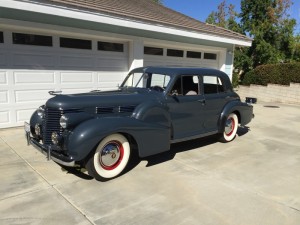
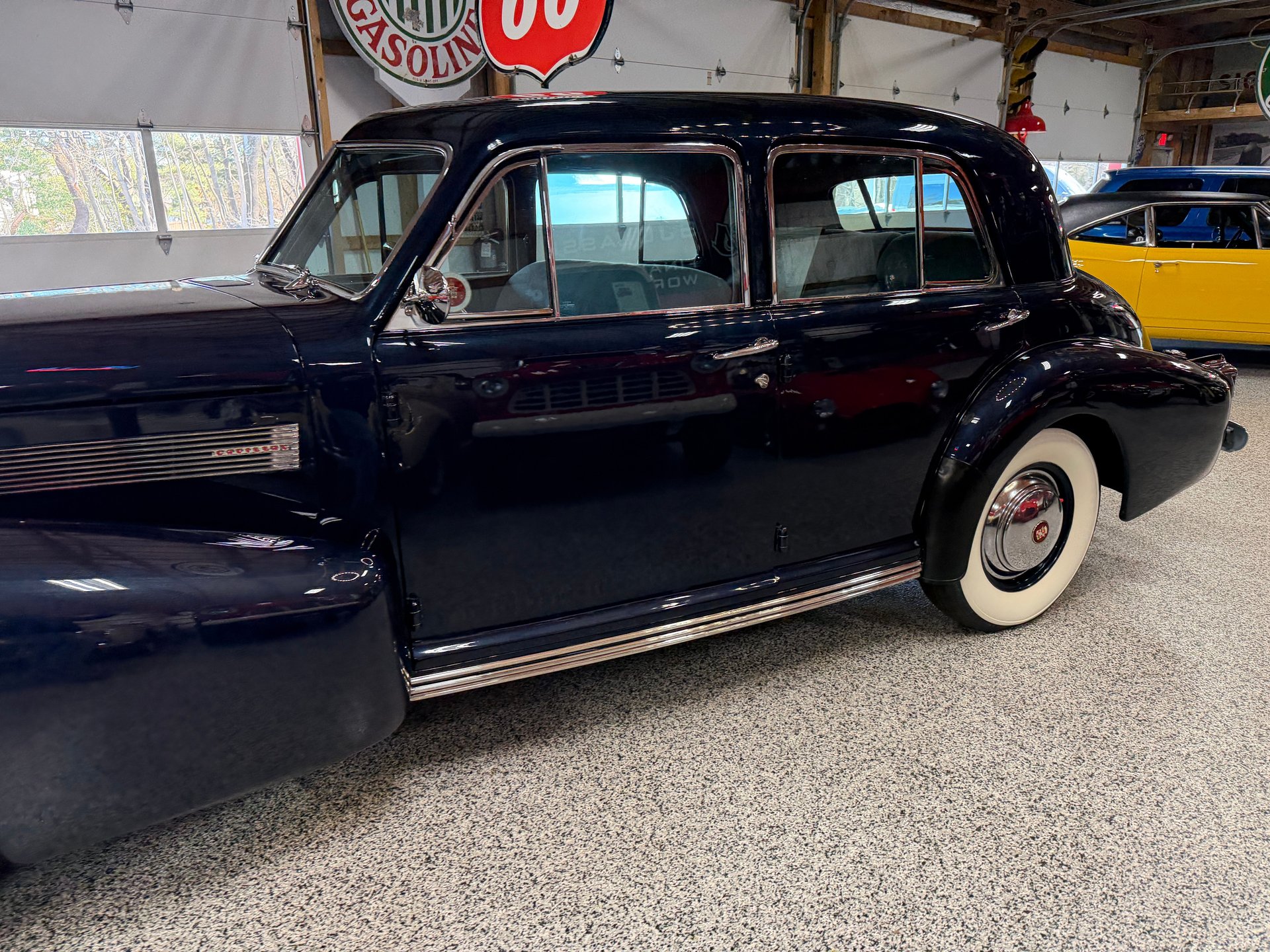
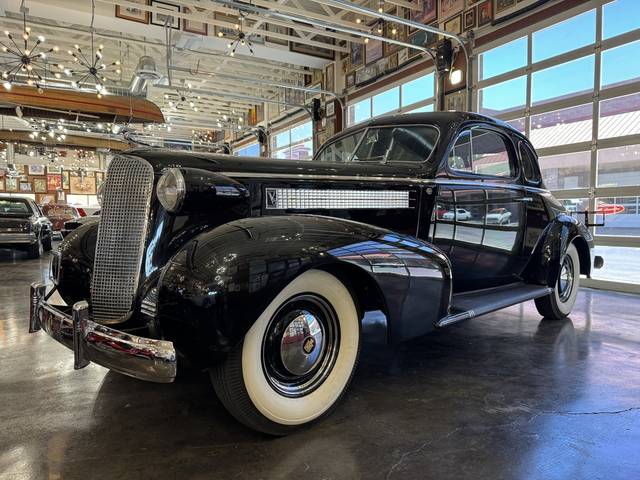
A note on the sample behind this guide. Classic Listings' own pool for this series is small — six cars in total, three currently offered and three recorded sold — spanning 1937 to 1939 as filed, all six through dealers, in black, Richelier Maroon and Blue Metallic among the cars whose colour is recorded. Read those six as a flavour of what reaches the open market, not as a census of survivors. The buying advice that follows is built for the wider market you will actually search: club classifieds, auctions and estate sales.
The models
Cadillac's numbering is year-prefixed and body-coded, and once you learn to read it, half the misdescriptions in the market evaporate. A 1937 car is a 37-60; its body style number is a four-digit code beginning with 60 — 6019 for the five-passenger sedan, 6027 for the sport coupe, and so on. The body plate on the firewall carries the style number, the body number and the trim and paint codes. Photograph that plate before you photograph anything else. It settles the year, the original body style, the original colour and the original upholstery in one glance, and it is the first thing a knowledgeable seller will show you and the first thing a vague seller will fail to mention.
| Model | Years | Engine | Output | Built | Character |
|---|---|---|---|---|---|
| Series 60 (36-60) | 1936 | 322 cu in Monobloc V-8 | 125 hp | About half of Cadillac's 1936 output; the division's best seller in year one | The pioneer — shortest wheelbase, tallest grille, the purest Depression-era statement |
| Series 60 (37-60) | 1937 | 346 cu in Monobloc V-8 | 135 hp | The bulk of the roughly 7,000 Series 60s a period-correct 1937 source attributes across the run's early years — treat single-year splits with caution | The grown-up car — longer, stronger, eggcrate grille, the best all-round standard model |
| Series 60 (38-60) | 1938 | 346 cu in Monobloc V-8 | 135 hp | 2,052 recorded for the standard Series 60 line in 1938 | The final year — column shift, horizontal grille, overshadowed from birth by the Special |
| Sixty Special (60S) | 1938 (first year of the 1938–41 design) | 346 cu in Monobloc V-8 | 135 hp | 3,703 in 1938; about 17,900 across 1938–41 | The landmark — Mitchell's low, board-less, integrated-trunk sedan; an owner-driver's car, not a chauffeur's |
A word of honesty about the production column, because you will see confident numbers elsewhere that do not agree with each other. Cadillac's period reporting makes clean per-year, per-body splits hard to reconstruct, and secondary sources repeat each other's errors. The figures above are the ones that can be stated with support: the Special's 3,703 debut-year deliveries and roughly 17,900 for 1938–41 are consistently documented, as is the standard car's 2,052 for 1938 — the Special outsold its parent nearly two to one in the year they shared a showroom. For individual body styles, trust only figures tied to a style number, such as the 438 Opera Coupes recorded for 1938; rarity claims without one are sales talk.
The standard bodies: sedans, coupes and convertibles
The volume body was the five-passenger sedan, style 6019 and its variants, and it is the car you will find most often: a handsome, formal, upright car with a separate trunk bustle, running boards, rear-hinged back doors on the earlier cars, and a cabin in broadcloth or Bedford cord with wood-grain garnish mouldings. As a buy, the sedan is the rational Series 60 — the most car, the most weatherproof, and the one whose restoration costs are best understood. Check the style number on any sedan described as something grander: a 6019 is a sedan whatever the advert says, and a sedan with a division window or a sunroof is a specific, rarer variant whose suffix letters carry that information — decode them rather than accepting a verbal upgrade.
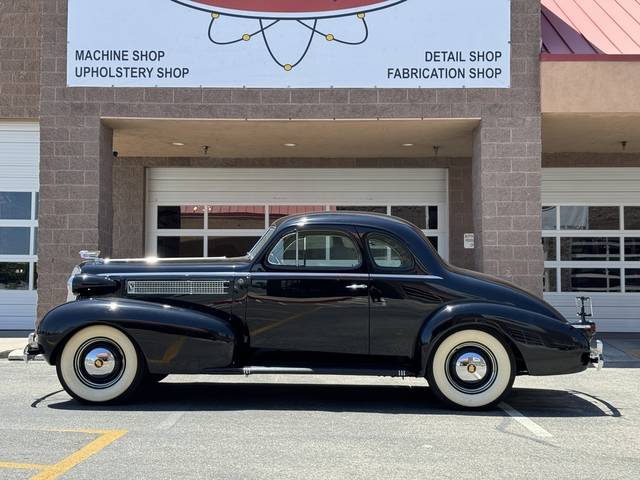
The coupes split into two characters. The sport coupe, style 6027, is a close-coupled two-door with a rumble seat on many examples — charming now, provided you accept that the rumble seat is a fair-weather novelty and the cabin snug for two tall adults. The Opera Coupe, with small folding occasional seats in place of a rear bench, is rarer — 438 built in 1938 — and trades practicality for theatre. On both, the traps are the same: coupe doors are long and heavy, so a door that drops as it opens is telling you about hinge pins and the structure behind them; and rear quarters rust where sedan owners never look, because water sits in the rumble-seat well and around the occasional-seat compartment.
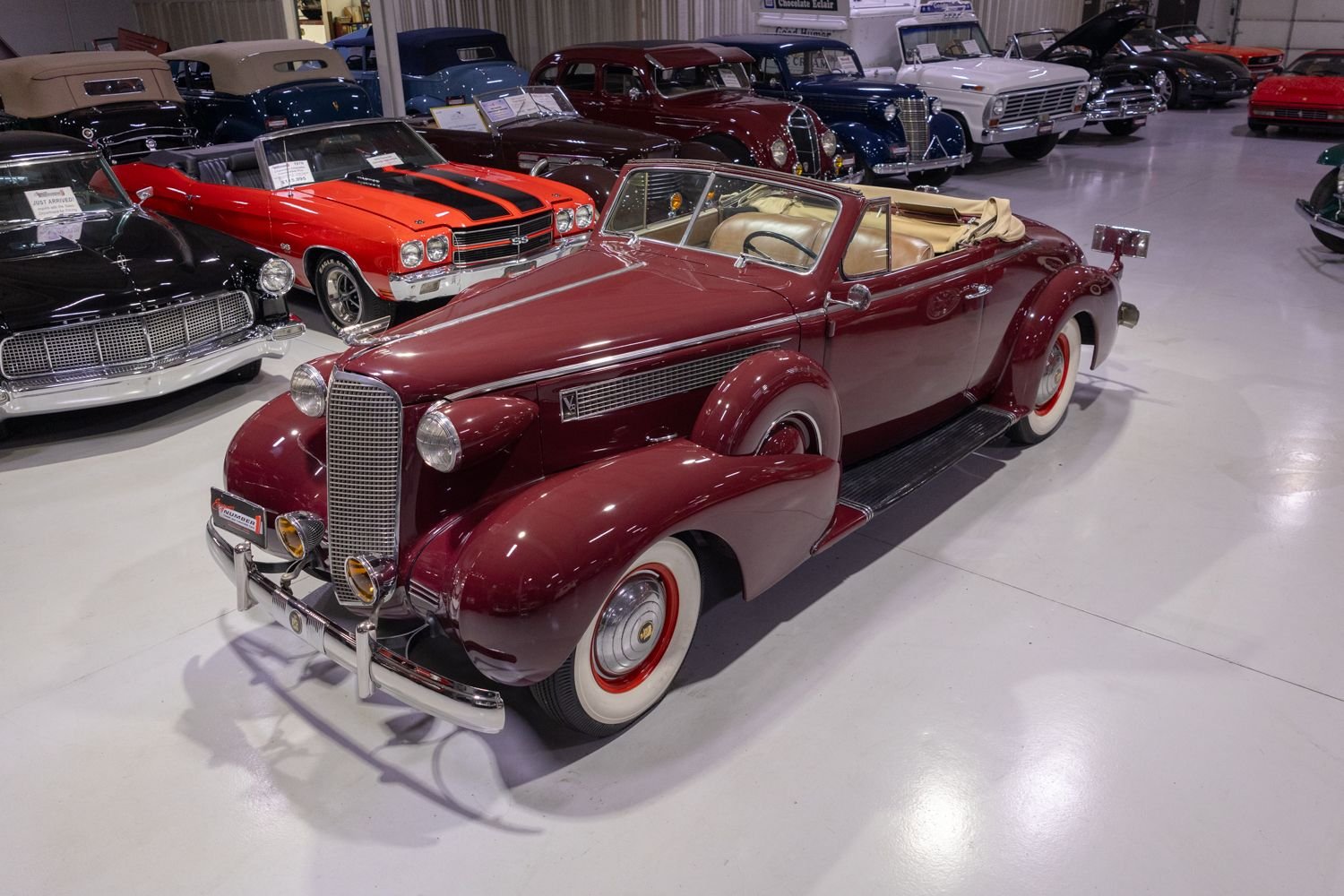
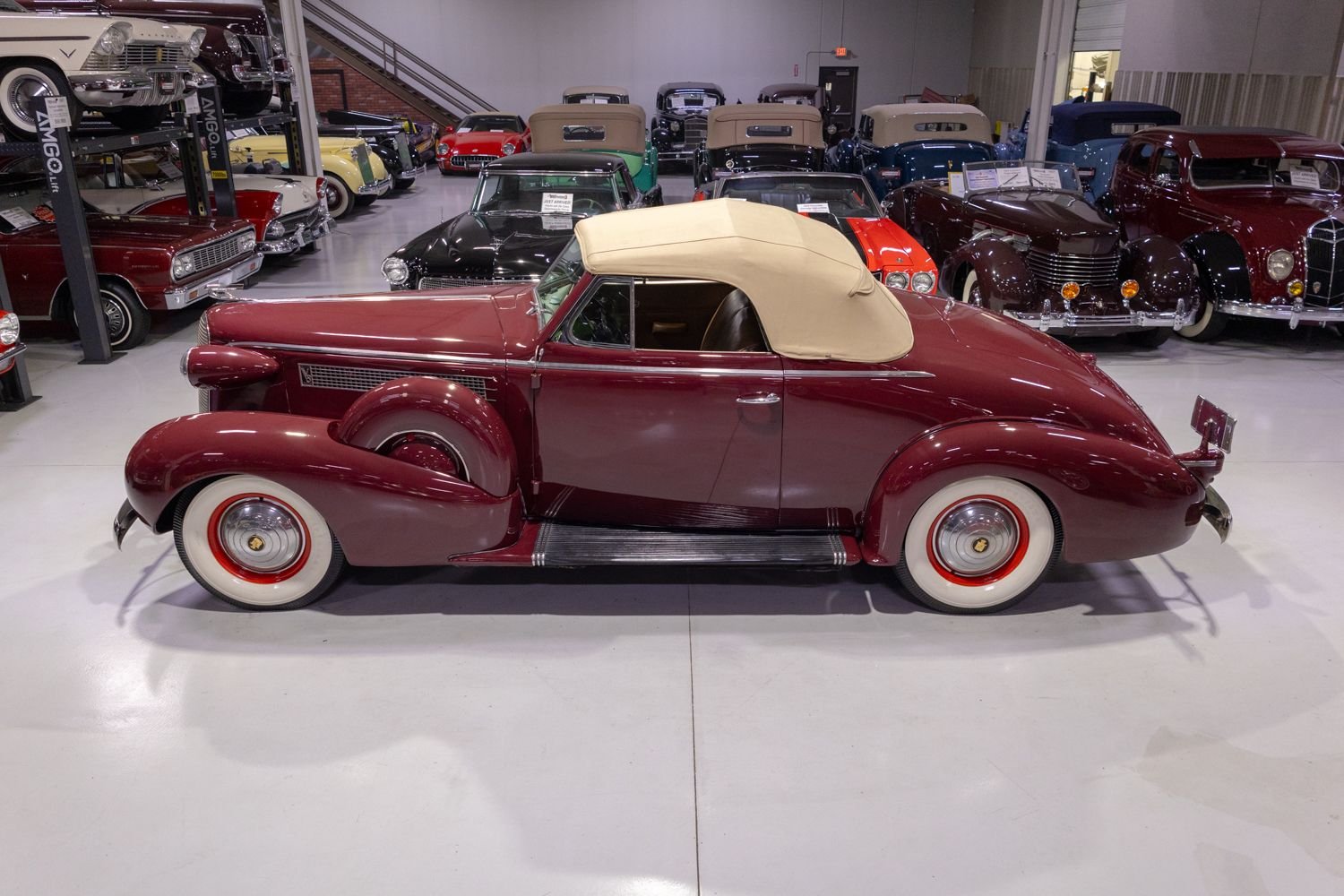
The convertible coupe is the glamour model of the standard range and the one in our first photograph: a two-door soft top with a rumble seat, an integrated trunk treatment on the 1937 car that confuses people who think integrated trunks began with the Special, and a manual folding top you must operate by hand before you buy — never accept a convertible shown only with the top down, or only with it up. You need to see it do both, and the well it folds into, dry. The convertible sedan is the rarest standard body and the most structurally demanding: with no fixed roof, the body relies on sills, pillars and frame for stiffness, so everything the rust section says about sills applies double, and one that shimmies or rattles its door latches over bumps is describing its structure, not its character.
The Sixty Special
The Special is treated here as what it is for a Series 60 buyer: the top of this family, sharing engine, gearbox and most running gear, differing in frame, body and intent. Its tells are unmistakable — no running boards, a trunk that is part of the body, slim chrome window frames, front-hinged rear doors, a roofline like a convertible sedan's with the top up. Its traps are equally specific. The low double-drop frame sits closer to road salt. The bright window frames corrode from inside and are far harder to restore than a standard car's painted frames. The integrated trunk makes the rear structure one large pressing: rust there is bodywork, not panel replacement. And because the Special is famous, it attracts both the best restorations in the family and the most optimistic descriptions. A Special with a standard car's engine number, a standard frame or running boards added later is a car to walk away from.
Years, and the 1939 question
For 1936, learn the tall grille, the 121-inch wheelbase and the 322 as a set — a 1936 car offered with a 346 is an engine swap until the numbers prove otherwise. For 1937, the eggcrate grille and 124-inch wheelbase define the car. For 1938, the column gear lever is the quickest cabin tell, the horizontal grille bars the quickest external one. For 1939, remember the rule from the overview: the standard car is a Series 61, with its own style numbers, while the Sixty Special continues and is a legitimate 1939 member of this family. A 1939-dated standard car is therefore not automatically a fake — it is most often a 61 loosely labelled — but you buy it, value it and insure it as a 61, whatever the heading said.

Engines and gearboxes
There are two engines in this family, and they are the same engine in two sizes. Everything else — the fuel system, the electrics, the cooling, the gearbox — is shared thinking, so learn the family once and apply it to every car you inspect.
The 322 Monobloc V-8 (1936)
The Monobloc was Cadillac's answer to an engineering and accounting problem at once. The earlier V-8 had been built up from separate castings in the old, expensive way. The Monobloc cast block and crankcase as one unit — hence the name — using thin-wall casting, and put the valves in the block, in L-head flathead fashion, with the intake and exhaust manifolding arranged in the vee between the banks. That last feature startles everyone who opens the bonnet for the first time: there are no exhaust manifolds on the outer sides where your hands expect them. The exhaust lives in the centre of the engine, which keeps the flanks clean and plug access good, and concentrates great heat in the valley — a fact that explains several classic behaviours, from cooked valley wiring to fuel vaporisation in traffic, and which you should keep in mind through the whole problem-areas section.
In 322 form — 3.375-inch bore by 4.5-inch stroke — it produces 125 horsepower, only ten less than the big Cadillacs of the day, and it produces it in the flathead way: maximum torque low down, a long, even pull, and no reward whatsoever for revving it. This is an engine that does its work between idle and about 3,000 rpm and sounds, when healthy, like almost nothing at all. Silence is a diagnostic: a healthy Monobloc at idle is one of the quietest pre-war engines made, so valvetrain clatter, a single-cylinder tick or a deep rhythmic knock is not period charm, it is information.
Its specific weaknesses are few but real. The long stroke and modest bearing sizes mean oil pressure and cleanliness are the whole game; an engine run on infrequent changes shows it in the bearings first. The flathead layout means valve work requires head removal, and heads repeatedly removed, or overheated, warp and crack between the valve seats and water passages — the classic flathead failure, found by magnaflux and pressure testing, not by optimism. The centre-exhaust layout cooks the valley manifold castings, which after eighty-plus years crack and seize their studs; budget for manifold work on any engine not apart in living memory. A full rebuild by a shop that knows flatheads — that qualifier matters, flathead experience is now a specialism — runs $9,000–16,000 depending on machining, seat and manifold work; a top-end refresh with heads skimmed, seats cut and valves ground runs $2,500–4,500 if the bottom end genuinely passes.
The 346 Monobloc V-8 (1937–38, and the Sixty Special)
For 1937 Cadillac enlarged the Monobloc across the range by increasing the bore to 3.5 inches, giving 346 cubic inches and 135 horsepower at 3,400 rpm. Everything said about the 322's architecture applies: same block philosophy, same valley manifolding, same flathead layout, same silence when right. The 346 is the engine this family is remembered by — it went on to power Cadillacs through the 1940s and, in twin-engine form, the M5 Stuart and M24 Chaffee light tanks, which tells you what the Army thought of its durability under abuse by nineteen-year-olds. In a Series 60 it is usefully stronger than the 322, particularly in the middle of the range where a heavy car on a long grade needs it, and parts support is better because the production run behind it is so much longer.
Do not let a seller blur the two engines. A 1936 car should carry a 322; a 1937 or 1938 car a 346. The engine number is stamped on the block, and Cadillac's records — build sheets survive through the marque's historical services — tie engine numbers to cars. A mismatch is not automatically a disaster: a correct-type replacement fitted in 1952 is part of a car's history. But a mismatch you discover is worth money off, and one a seller conceals is worth a walk. Note the trap in the other direction: because the 346 served so long, later 346s from 1940s cars turn up in earlier bays. They fit, they run, and they are wrong in detail. A correct-for-year engine is a real asset; verify it by number and detail, not displacement alone.
Fuelling is by a single downdraft carburettor — Stromberg Aerotype units are the familiar fitment on the 1937–38 cars — fed by a mechanical pump, with an automatic choke whose behaviour, when wrong, produces the family's most misdiagnosed fault. A Monobloc hard to start hot, stalling after a heat soak, or needing choke when warm is usually suffering one of three things: a choke not coming fully off, fuel percolating in a carburettor above a very hot valley, or a tired pump whose output falls as it gets hot. None is an engine rebuild; all three are covered, with the tests that separate them, in the problem areas. A specialist carburettor rebuild runs $450–900 and a pump rebuild $150–300; treat both as routine recommissioning on any car that has sat.
Cooling copes perfectly well with modern traffic provided the radiator core is actually clean, the block's passages actually clear, and the belt actually drives the water pump without slipping. Overheating in these cars is almost never a design verdict; it is a maintenance backlog presenting itself. The radiator is a large brass-and-copper unit a traditional shop can recore for $800–1,500 — a once-in-decades job, and cheaper than the warped heads that follow a season of boiling.
Electrics are six-volt, period practice, with a generator and regulator arrangement that will not support modern accessories and does not need to. The system works when its earths are clean and connections bright; it fails, mysteriously and intermittently, when they are not. An electronic regulator conversion and an auxiliary electric pump for hot restarts are the two modernisations the club world accepts without blinking, being invisible and reversible. A full rewire with a correct-pattern harness runs $1,800–3,500 — on a car with original 1930s insulation, that is not an upgrade, it is fire prevention.
Gearboxes
All standard Series 60s and the 1938 Sixty Special use Cadillac's three-speed selective synchromesh manual gearbox — synchromesh on the upper gears, a sliding first, and a reputation, earned over decades, for being one of the strongest and sweetest-shifting three-speeds of the pre-war era; hot rodders prized these gearboxes for a generation afterwards, which is why good used units have never been worthless. The lever is on the floor on 1936–37 cars and moves to the column for 1938, Cadillac calling the column arrangement Syncromatic control. Neither is better in use; the column shift simply dates the car and changes what wears. On a floor-shift car, wear shows as slop at the lever pivot and a gate you have to stir. On a column-shift car, wear shows in the linkage rods and bellcranks between column and box, and a column car that baulks at second gear is usually describing tired linkage, not tired synchromesh — adjust and bush the linkage before condemning the box.
The box's real enemies are the clutch and neglect. The clutch is an 11-inch single dry plate, heavy by modern standards and reasonable in period; replacement is an engine-or-gearbox-out job in practice and runs $1,200–2,200 with the flywheel skimmed and the release mechanism rebuilt while access is open — never replace the plate alone, because the labour to return for the bearing next year costs more than the bearing. Gearbox internals are durable: whine in first only is usually normal, whine in top is not, and a box that jumps out on the overrun has worn dogs or a bent fork and needs a rebuild at $1,500–3,000 by a shop that has done one before. The rear axle is a hypoid unit, ratio around 3.92:1 on the standard cars, well chosen for the engine's torque; its inspection is backlash, noise on drive versus coast, and the state of its oil, which on many cars has not been changed since before the war. Budget an axle rebuild at $1,200–2,500 if it howls; check the simple things first.
There is no automatic in this family as covered here. Hydra-Matic arrives in Cadillac's world in the 1940s, and on later Sixty Specials, but any 1936–38 car presented with an automatic is a conversion, full stop, and should be priced as one.

Problem areas
Rust: the map
These are Fisher all-steel Turret Top bodies on a separate frame, and the steel was good — which is why the survivors survive — but no 1930s body was rustproofed in any modern sense, and the map of where they rot is consistent enough to walk around with. Start at the sills. The rocker panels and the inner sill structure beneath them carry the body's stiffness, collect road splash through their drain paths, and rot from the inside out; by the time a blister shows on the outer rocker, the inner structure is usually worse. Press hard along the full length of each sill with the heel of your hand and a torch in the other: softness, crunching, or filler that sounds dull where the other side rings is a structural conversation, not a cosmetic one. Proper sill repair — cutting out, fabricating inner and outer sections, and finishing — runs $1,500–3,500 per side at a shop that does pre-war work, and it is the single most common big bill in this family.
Work upwards and outwards from there. Front fenders rot at their rear lower edges where they meet the running boards and trap mud against the cowl, and around the headlamp mountings. Running boards are steel under their rubber covering, which hides corrosion until the board flexes under your weight — stand on each board, at its middle and both ends. The cowl sides and lower A-posts collect water from the windscreen frame and vent; floor pans rot above the frame rails where the factory underfelt held moisture; the trunk floor and spare well rot from leaks at the lid seal and rear window. On sedans the rear window frame is a classic trap — check the parcel shelf and rear seat top for staining, because the leak announces itself inside long before the frame looks bad. On the Special, add the lower rear quarters around the integrated trunk and inspect the bright window frames for bubbling, which means the pot metal beneath is expanding and will crack the chrome and the frame with it; a set of Special frames properly repaired and replated can run $2,000–4,000, which is why a Special with sound original frames earns its premium.
The frame is a sturdy X-member design on standard cars, a double-drop X on the Special, and rarely rots except at the rear crossmember, around the spring hangers, and wherever mud has sat for decades. Surface rust is normal and honest; scale that flakes away under a screwdriver at a spring hanger is not. Distinguish a car restored underneath from a car merely painted underneath — on a pre-war car the paint is often the only thing that has happened under there in forty years. Fresh black underseal over everything is a reason to inspect harder, not to relax.
Engine: heat, cracks and the valley
The Monobloc's failure modes cluster around heat and age. The valley between the banks runs hot by design, and it ages everything that lives there: the exhaust manifold castings, their gaskets and studs, the ignition wiring, and the carburettor sitting above it all. A ticking that rises with rpm and is loudest in the first minute from cold is usually an exhaust leak at a valley manifold joint — soot tracking at a joint confirms it — and the repair ranges from $300 for gaskets with studs that come out willingly to $1,500 or more when studs snap, castings are cracked and a machine shop becomes involved. Do not let anyone sell you a head gasket for a noise that a stethoscope and a cold start identify as a manifold joint in ten minutes.
Head and block cracking is the serious flathead disease. The mechanism is thermal: years of heat cycles, one bad overheat, or a freeze in a car stored with weak antifreeze, and cracks open between valve seats, from a seat to a water passage, or along the deck. The symptoms are the classic triad — unexplained coolant loss, a misfire that clears as the engine warms and the crack closes, and oil or coolant appearing where the other should be — plus the definitive test: a pressure test that will not hold, followed by magnafluxing with the heads off. There is no cheap version. Crack repair by stitching or welding, with heads skimmed and seats recut, runs $2,000–4,000 on top of strip and rebuild labour, and a block cracked into a water jacket in a structural place is a replacement-engine conversation. This is why the inspection section insists on a cold start, a pressure test and a long drive: you are pricing the single largest risk in the purchase.
Oil pressure tells the bottom end's story. A healthy engine holds steady pressure hot at cruising rpm and does not flicker at idle. A gauge that sinks as the car warms, recovers with revs and comes with a low rumble under load is describing worn main and big-end bearings — a bottom-end rebuild at $3,500–6,000 with the engine out, assuming the crank grinds within limits. Distinguish that from a faulty sender the honest way, with a mechanical test gauge screwed into the gallery. Never accept a seller's word for which it is; the test takes fifteen minutes and settles a four-figure question.
Stuck valves and low compression follow long storage. Flatheads that sit accumulate varnish on valve stems and rings that stick in their grooves, and an engine turned over enthusiastically after a decade asleep can bend what patience would have freed. Compression should be even across all eight within a narrow spread; one low cylinder that rises on a wet test points at rings, one that does not at a valve or a crack, two adjacent lows at the gasket or deck between them. Each is a different bill, which is the entire reason for doing the test rather than listening to the engine idle and pronouncing it sweet.
Fuel, cooling and the hot restart
The hot-restart failure is this family's signature nuisance, and it is almost always a system, not a component. Modern petrol vaporises more readily than 1930s fuel; the carburettor sits above a hot valley; the mechanical pump sits low and gets hot; and the result is percolation and vapour lock that leave the car cranking uselessly at a fuel station ten minutes after a hot stop. The tests are simple: if the car restarts instantly on a sniff of fuel introduced directly, the ignition is innocent; if it restarts after twenty minutes cooling with the bonnet up, heat is convicted; if fuel delivery, measured by cranking into a container, is weak hot and strong cold, the pump and its valves are the culprits. The fixes are practical — pump rebuild, carburettor rebuild with attention to float level and needle seating, heat insulation of the fuel line's hot section, and, if you tour seriously, a discreet auxiliary electric pump for priming and hot restarts. The full cure typically runs $600–1,200, which is why you should never accept — or make — a large discount demand based on a hot-start fault alone.
Cooling faults separate into capacity and circulation. Capacity: a radiator core furred internally will pass water and still not cool — test the temperature drop across the core with an infrared thermometer on a hot engine; a healthy core shows a clear gradient, a blocked one patches and dead zones. Circulation: a slipping belt, a worn pump, a thermostat stuck partly shut, or silted rear block passages each overheat the car in a different pattern — at idle, at speed, or on grades — and the pattern is the diagnosis. Retarded timing and a weak mixture both add heat and are free to check, so they are checked before any money is spent on castings.
Suspension, steering and brakes
The front suspension is GM's Knee-Action independent layout — coil springs and lever-arm or early telescopic damping depending on year and specification, with kingpins and bushes that wear in the usual pre-war way. The tests are physical: jack the front, grip each wheel at top and bottom and rock for kingpin play, then at the sides for linkage play, with a helper turning the wheel while you watch each joint to find where the lost motion lives. A car that wanders, needs constant small corrections and wears its front tyres on one edge is describing worn kingpins, tired springs or disturbed alignment, in some combination. Kingpin and bush renewal runs $800–1,600 for both sides; springs $400–800 a pair fitted; lever-arm damper refurbishment $300–600 the pair. None of it is exotic, all of it is heavy work, and a car whose front end has been done drives so differently from one that has not that you should drive both kinds before buying either.
Steering is worm-and-roller, and its wear concentrates in the straight-ahead position where the car has spent its life. Play at the rim beyond a couple of inches, wheels straight and linkage proven tight, is box wear; adjustment takes up some of it, a rebuild at $600–1,200 the rest. The Special's lower stance makes its steering heavier at parking speeds — judge a Special against another Special before calling its steering heavy.
Brakes are hydraulic on all four wheels — Bendix-type duo-servo drums — good brakes in period, which means adequate brakes now if every part is working. The failure modes are hydraulic age: wheel cylinders weeping past perished seals, a master cylinder that lets the pedal sink under steady pressure, flexible hoses collapsing internally to act as one-way valves, and linings contaminated by the leaks. A full overhaul — cylinders and master cylinder rebuilt or resleeved, hoses replaced, linings renewed, drums skimmed within limits — runs $1,200–2,500 and is not optional on any car whose brake history is a shrug. The handbrake is a separate mechanical system and must hold the car on a grade; one that does not is an inspection failure in most places and a runaway on a hill in all of them.
Interior, trim and the convertible top
Interiors fail by sun, by mice and by water, in that order on closed cars and reversed on open ones. Broadcloth and Bedford cord go threadbare on the driver's cushion edge and the rear seat top where sun cooks them; correct-pattern retrims in proper cloth run $4,000–8,000 for a sedan, and leather in a car that should have cloth is a value error, not an upgrade. Wood-grain garnish mouldings refinish at $800–2,000 a set; peeling mouldings are cosmetic, but the water that peeled them came from a window or windscreen seal you now get to hunt. Instruments are mechanical and repairable — a full cluster restoration runs $800–1,800 — and a dead fuel or temperature gauge is not a small thing on a car where both readings matter this much; budget the repair rather than planning to guess.
Brightwork is the family's quiet money pit. The 1937 eggcrate grille, the 1938 horizontal bars, the goddess mascot, the headlamp shells and dozens of smaller die-cast pieces are pot metal and plated steel, and pot metal pits from beneath the chrome in a way polishing cannot fix. Replating a full car to show standard runs $3,000–7,000; most owners do it piece by piece. On a viewing, look at the grille first and the mascot second: they are the most exposed, the most expensive, and the truest guide to whether a restoration was funded to the end or stopped where the money ran out.
On convertibles, the top is a system: irons that must fold without binding, a header rail that meets the windscreen evenly, side rails that seal against the door glass, fabric neither shrunk nor split. A new top in correct material, fitted by a trimmer who has done pre-war work, runs $2,500–5,000; new irons are a fabrication conversation, not a purchase. Operate the top twice and look in the well — a convertible that leaks in a showroom will drown in a rainstorm.

How to inspect one
Inspect in this order, cold car first, and do not let the order be rearranged for you. A warm engine, a car presented already running, or a viewing that begins with a drive is a viewing in which the most expensive questions have been answered for you by someone else.
- Papers and plate before paint. Read the firewall body plate: style number, body number, trim and paint codes. Confirm the car is the year and body it is sold as — a 1936 should be a 36-60 with a 322, a 1937–38 a 124-inch car with a 346, and any 1939-dated standard car should resolve, on its plate, into the Series 61 it almost certainly is. Note the engine number for comparison with the build record. A car whose identity is exactly right is worth more; a car whose identity is a story is worth less, in proportion to the story.
- The cold start. Insist the engine is stone cold — touch the exhaust manifold in the valley if you are in any doubt. Watch for choke behaviour, oil pressure rising promptly on the gauge, and the sounds the engine section warned you about: manifold tick, valvetrain clatter, deep knock. Note how long it cranks. A Monobloc that needs endless cranking cold has a fuel-delivery or choke fault you have just been given for free.
- Oil pressure, hot and cold, on a gauge you trust. If the dash gauge behaves oddly — sinking hot, flickering at idle — ask for the mechanical-gauge test from the engine section, or do it yourself with permission. This fifteen-minute test separates a sender fault from a bottom-end rebuild, and no purchase should proceed on an unresolved version of that question.
- Compression, if the car is a non-runner or a project. Even numbers across all eight, interpreted by the rules in the engine section: wet test for rings, adjacent lows for gasket or deck, a single dry low for valve or crack. On a running car you intend to drive first and restore later, this test is the difference between a plan and a surprise.
- The sill and structure walk. Heel of the hand along both sills, torch along the floor edges, the cowl sides, the lower A-posts, the trunk floor and the spare well. Stand on both running boards on a standard car. On a Sixty Special, spend the same time on the lower rear quarters, the integrated trunk seams and every bright window frame, looking for the bubbling that means pot-metal expansion underneath.
- Fenders, boards and the rear window path. Rear lower edges of the front fenders, headlamp mountings, the parcel shelf and rear seat top for water staining, the trunk lid seal channel. You are tracing the water routes from the rust section, and every stain is a route that is still open.
- The cooling system under pressure. With the engine warm, a pressure test that holds is the single best evidence against the head-and-block cracking described in the problem areas. Check the radiator core with an infrared thermometer if you can: a clear top-to-bottom gradient is health, patchy dead zones are a recore in your future. Squeeze the hoses; look for the fan belt's condition and tension.
- The hot restart. Drive the car, get it fully hot, switch off, wait ten minutes, and restart it. This reproduces the fuel-section fault exactly as you will meet it in ownership. A car that restarts cleanly hot has had its fuel system sorted or was never afflicted; a car that does not has a known, bounded, fixable fault — provided the rest of this checklist is clean.
- The drive itself. From cold, through town, onto a fast road, up a grade. Listen for the gearbox: synchromesh that works on the way down into second, no jumping out on the overrun, whine in first forgiven and whine in top not. Feel the clutch take-up and judge its weight against the knowledge that replacement is an engine-out-scale job. Let the car pull from low speed in top — a healthy 346 does this without shudder or pinking.
- Steering and front suspension on the move and on the jack. On the road: wander, shimmy and the need for constant correction. On the jack afterwards: the rock tests from the suspension section, wheel at top and bottom for kingpins, at the sides for linkage, with a helper turning the wheel so you can watch where the play lives. Measure straight-ahead steering play at the rim only after the linkage is proven tight.
- Brakes, twice. Once from moderate speed in a straight line — the car must pull up square, without a grab, a pull or a pedal that sinks under steady pressure — and once on a quiet grade with the handbrake alone, which must hold the car. Then look at every wheel for the damp dust that means a weeping cylinder, and ask when the flexible hoses were last changed. Unknown brake history is a full overhaul already spent in your head.
- Top, trim and brightwork, last, with the car warm and the light good. On a convertible, raise and lower the top twice and inspect the well dry. On any car, read the grille and mascot for pitting, the garnish mouldings for peeling, and every instrument for function — above all the temperature and fuel gauges. Then ask the question that summarises the other eleven: is this car's condition one story, told consistently by its plate, its structure, its engine and its trim — or four different stories that happen to share a garage?

Values
Read the market block beneath this guide first, because it is built from the site's own recorded listings and sales and it is current in a way no printed figure in a guide can be. What this section gives you is how to interpret what you find there — and in the wider market — for a family of cars whose prices are driven by body style, by design significance and by restoration arithmetic more than by year or mileage.
The spread within the family is wide, and it is structured. At one end sit the standard sedans: honest, handsome, mechanically identical to everything else in the family, and built in the largest numbers, so supply is steady and no sedan buyer needs to overpay out of fear that another will not come. At the other end sit two premiums that overlap. The open cars — convertible coupe above all, convertible sedan at the extreme — carry the open-car premium that applies across the whole pre-war market: fewer built, fewer survived, and a roof that goes down on the right evening. And the Sixty Special carries a significance premium that is not really about Cadillac at all: it is one of the most influential sedan designs ever built, and its buyer pool includes design collectors who do not look at standard Series 60s at all. When a Special and a standard sedan of equal condition sit far apart in price, that gap is mostly the design market talking, and it has been durable across decades rather than a fashion spike.
Condition spreads in this family are brutal, and they are the main thing headline figures conceal. The restoration arithmetic is unforgiving: a full, correct restoration of a pre-war Cadillac costs more than the finished value of all but the most desirable variants, so the market pays properly for cars already done and discounts projects far below the sum of their parts. A project sedan is not a cheap route to a restored sedan; it is a cheaper route to a project. The driver-quality middle — mechanically sorted, cosmetically honest, presentable at twenty paces — is where this family's value genuinely lives, and it is the band the market block's figures describe best if you read them against condition rather than year.
Asking and achieved prices part company in predictable places. Long-term private sellers of standard cars tend to ask restored money for driver cars, and those listings sit; dealers with a reputation in pre-war Cadillacs price closer to the achieved level and turn cars over. Auction results for the open cars and the Special are the most honest public evidence, because the room decides. The comparables that matter are same body style, same genuine condition band, and — for the Special — same originality of frame, body and engine, in that order. A year either way is worth very little; a body style up or down the desirability ladder is worth a great deal; a matching engine number and correct body plate carry a real, if modest, premium that grows as the messed-about examples accumulate.
Two cautions close the section. First, rarity claims: trust only figures tied to a style number, and pay for documented rarity — an Opera Coupe with its production figure behind it — rather than for adjectives. Second, the 1939 labelling question cuts both ways: a Series 61 sold honestly as a 61 is a perfectly good car at its own level, while a car bought as a supposed 1939 Series 60 at a Series 60 premium is money given away to a misunderstanding. Buy the car the plate describes, at the price that car's market supports.
Parts and ownership
Ownership is a club-and-specialist proposition, and a good one. The Cadillac & LaSalle Club is the centre of gravity: its technical advisors know these cars individually, its classifieds are where the best standard cars change hands without reaching the open market, and its judging standards define what correct means, from fasteners to fabric. Join before you buy, not after.
Mechanical parts support is better than the car's age suggests, for a structural reason: the 346 engine served Cadillac into the late 1940s and the Army beyond that, so bearings, gaskets, pistons, valvegear and ignition components remain obtainable through the pre-war Cadillac specialists, and the 322 shares most service items with its bigger brother. Budget routine service parts at ordinary classic-car levels — a full gasket set, ignition service kit and filters together run a few hundred dollars — and keep a shelf stock of the consumables: plugs, points, condenser, belts, hoses and a carburettor kit, because the car will invariably want one of them on the weekend you planned to drive it. A specialist engine rebuild, when its turn comes, is the $9,000–16,000 figure from the engine section; gearbox and axle work at the $1,200–3,000 level; none of these numbers is a surprise if you have read the car honestly before buying it.
Body and trim are where support thins. Mechanical interchange across the B-body GM family helps with some hardware, but Series 60 sheet metal is Series 60 sheet metal: good used fenders, running boards and trunk lids surface through the club and the Hershey-style swap meets rather than through catalogues, and a missing or rotten panel is a fabrication job at $75–125 an hour for a metalworker who does pre-war shapes — which is why the inspection section weights structure so heavily. Brightwork is restorable rather than replaceable: replating at the $3,000–7,000 full-car level, or piecemeal as most owners do it. Sixty Special window frames, as noted, are the family's scarcest trim problem; a Special missing its correct frames is missing something genuinely hard to replace, and should be priced accordingly. Interior materials are well served — correct broadcloths and Bedford cords are reproduced by the yard at prices that make a proper retrim a matter of the trimmer's labour, $4,000–8,000 for a sedan, rather than a hunt for unobtainable cloth.
Running one is straightforward and ritual-based. The car wants regular use more than anything: monthly exercise that gets the oil fully hot, the brakes swept clean and the tyres turned prevents more faults than any additive. Oil changes are cheap insurance on a flathead and should be frequent by modern standards; valve clearances, timing and carburettor idle are periodic checks, not events. The six-volt system rewards clean earths and punishes neglect with dim lights and lazy cranking that owners misdiagnose as a dying starter. Modern unleaded fuel is tolerated without drama by the low-compression flathead; hardened valve seats are a sensible inclusion at any head rebuild rather than a standalone emergency. Storage wants a dry building, a battery maintainer, fuel stabilised or drained for long lay-ups, and the handbrake left off with wheels chocked — a handbrake left on for a winter is a pair of seized rear brakes in the spring.
Insurance is painless by the standards of the class: agreed-value policies are routine, and the documentation that supports value — build sheet copy, body-plate photograph, engine-number record, restoration invoices — is the same file this guide told you to gather for buying reasons. Keep it. The next buyer will pay for it.
Which one to buy
- The all-rounder: a 1937 Series 60 sedan. The 346 engine, the longer wheelbase, the eggcrate grille and the largest surviving population of any variant, which means choice, comparables and parts knowledge. If you want one Series 60 to tour, show locally and keep for a decade, this is it.
- The value buy: a 1938 standard sedan or sport coupe. Mechanically the equal of the 1937 car, with the column shift and the final-year detailing, but permanently in the Special's shadow in its own model year — and priced like it. The coupe adds style for a modest premium; the sedan adds room for none.
- The purist's car: a 1936 36-60, coupe or convertible coupe. The first year, the 322 engine, the tall grille and the shortest production story. Buy it for what it is — the original Dreystadt concept — and accept the 322's slightly softer performance and thinner parts shelf as the price of authenticity.
- The glamour buy: a 1937–38 Convertible Coupe. The open car the family is photographed by. Buy the best top, the driest well and the straightest doors you can find, in that order, and let colour and accessories fall where they may.
- The landmark: a 1938 Sixty Special. The design-history car, the Mitchell car, the one the museums want. Buy originality — correct frame, correct bright window frames, correct engine — ahead of shine, because the market for Specials pays for the genuine article and discounts a compromised one without mercy.
- The project to avoid: any variant, at any price, whose cheapness is explained by its sills, its heads or its identity. Those are the three bills and the one argument that never get smaller after purchase.
The overriding rule: buy the car whose body plate, engine number and structure all tell the same story, in the best condition your budget reaches — because in this family condition and correctness are the value, and no variant premium survives a rotten sill, a cracked head or a story that changes between viewings.
Listed now
On Classic Listings today: 3 cars are listed here; 0 for sale and 0 marked sold.
See the 3 Series 60 cars currently listed.
The market — recorded sales
No dated sales recorded for this series yet — as sales are recorded, they will appear here with their dates and prices.