
Cadillac Series 75 buyer's guide
Cadillac Series 75 (1936–1949) — Series 75: what's listed, and what they sell for.
Years: 1936–1949 · Models: Series 75
Overview and history
The Cadillac Series 75 is the formal Cadillac: the longest, heaviest and most expensive regular-production car in the range, built to be driven in from the back seat as often as from the front. Where a Series 62 is a rich man's car, a Series 75 is an institution's car — the limousine of bank presidents, studio heads, bishops, funeral directors and families who keep a chauffeur. That original purpose defines everything about buying one today: enormous presence, a back seat like a club room, construction quality from the last years when Cadillac still built like a coachbuilder — and running gear that has spent eighty years moving well over two and a half tons of motor car.
The series arrives for 1936, in the depths of the Depression's long shadow, as Cadillac consolidates. The great multi-cylinder cars that made the marque's reputation are fading — the V-12 is in its last seasons, and the V-16 continues separately, in tiny numbers, until 1940. What replaces them as the working flagship is a simpler formula: one strong V8, the longest wheelbase in the catalogue, and bodies by Fleetwood, General Motors' in-house coachbuilder, whose name on a body plate still means the best-finished Cadillac of its year. The Series 75 takes that formula from the start. You sit on a wheelbase far longer than any other Cadillac passenger car, in a body that is taller, more upright and more formal than the junior series, with room in the back for occasional jump seats and, in the Imperial division cars, a glass partition between you and your driver.
Correct one myth before you go any further, because it distorts prices and conversations alike: a Series 75 of this era is a V8 car, not a V-16. The sixteen-cylinder cars are the separate Series 90, built in handfuls to 1940. Sellers occasionally let the fog of "big prewar Cadillac" imply more cylinders than the car has. The car in front of you has eight, and eight is correct — open the hood and count the spark plug leads if anyone tells you otherwise.
The prewar run divides into two characters. The 1936–38 cars are the last of the upright, separate-fender era: running boards, sidemounted spare wheels in metal covers, a tall Fleetwood silhouette, and detailing — wood garnish rails, division glass — that belongs to the coachbuilt world. The 1939–42 cars streamline steadily: headlamps move toward the fenders, the grille widens, and the Hydra-Matic automatic arrives as an option for 1941. Civilian production stops in February 1942 and the plant goes to war work — Cadillac's flathead V8 spends the war in quantity production for military vehicles, proving the engine your car depends on.
Production resumes for 1946 with the prewar design carried over, because that is what every American maker has to sell. The postwar Series 75 keeps the tall body, the running boards and the separate rear fenders that the junior Cadillacs abandon in 1948 — a limousine's buyers do not chase fashion, and the tooling serves the commercial-chassis trade as well. The run, and this guide, ends in 1949, and it ends with a bang: Cadillac's new overhead-valve V8, the 331, replaces the flathead across the range. A 1949 Series 75 is therefore two cars in one decision — the old formal body with the first modern Cadillac engine in it.
What defines a Series 75 today is the arithmetic of survival. These cars were expensive, so they were garaged, maintained by professionals and kept long after cheaper cars were scrapped; survival is good by prewar standards. But they were also working cars — limousines and funeral cars earn their keep — and a cheap Series 75 is usually a car whose size defeated its last three owners. Everything on it is bigger: the chrome bill, the trim bill, the upholstery bill, the garage it needs. Buy the condition, because on this series, condition is the car.

The models
The Series 75 range is a body catalogue, not a model ladder. Underneath, every car in this guide is the same proposition: the long-wheelbase chassis, the same V8 as the rest of the Cadillac range, a three-speed manual gearbox or, later, Hydra-Matic. What you choose is what Fleetwood builds on top of it — and the differences that matter are the division partition, the open top, and whether the car spent its life as a private limousine, an owner-driven sedan, or a commercial vehicle.
| Model | Years | Engine | Output | Built | Character |
|---|---|---|---|---|---|
| Series 75 Touring Sedan | 1936–1942, 1946–1949 | 346 cu in flathead V8; 331 cu in OHV V8 for 1949 | 135 hp, rising to 150 hp; 160 hp for the 331 | Low-volume flagship production; Cadillac published by series, not reliably by body style | The owner-driven formal sedan; no division, the simplest way in |
| Series 75 Imperial Sedan / Limousine (division) | 1936–1942, 1946–1949 | As above | As above | As above | Glass division, jump seats, leather in front and cloth behind; the chauffeur-driven car |
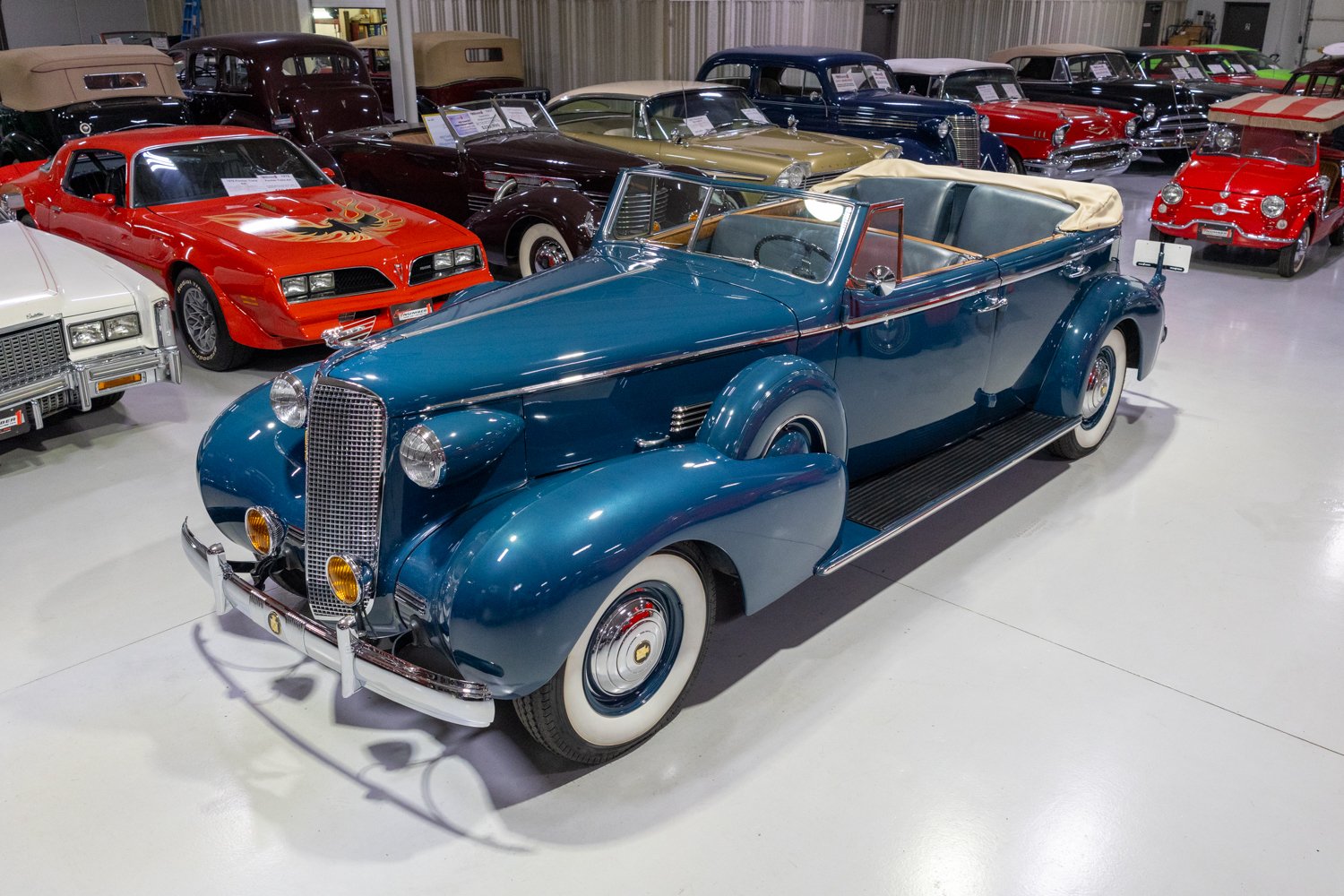
| Series 75 Convertible Sedan | 1936–1940 | 346 cu in flathead V8 | 135–150 hp | The scarcest regular body style of the run | Four-door open Fleetwood; parade car and collector flagship |
| Series 75 Commercial Chassis | 1936–1942, 1946–1949 | As above | As above | Supplied as a chassis to professional coachbuilders | Hearses and ambulances by outside builders; a different ownership proposition entirely |
(Outputs are Cadillac's period gross ratings. The built column is honest rather than decorative: Cadillac's surviving published figures are by series and year, and anyone who quotes you an exact production figure for a single prewar Fleetwood body style is working from a secondary source you should ask to see.)
The sedans. The plain Touring Sedan is the Series 75 without the theatre: a big sedan, no division glass, the rear seat a single broad bench. It is the car a wealthy family drives itself, and today it is the easiest Series 75 to live with — no partition to rattle, no jump-seat hardware, the full presence at the lowest complication. The Imperial or division sedan adds the glass partition behind the front seat, folding jump seats that disappear into the partition or the floor, and the traditional trim split: hard-wearing leather in the chauffeur's compartment, fine wool broadcloth in the owner's compartment behind the glass. That trim split is an identity check as much as a luxury — a genuine division car wears different materials front and rear, and a car trimmed identically throughout has either been retrimmed or was never a division car.
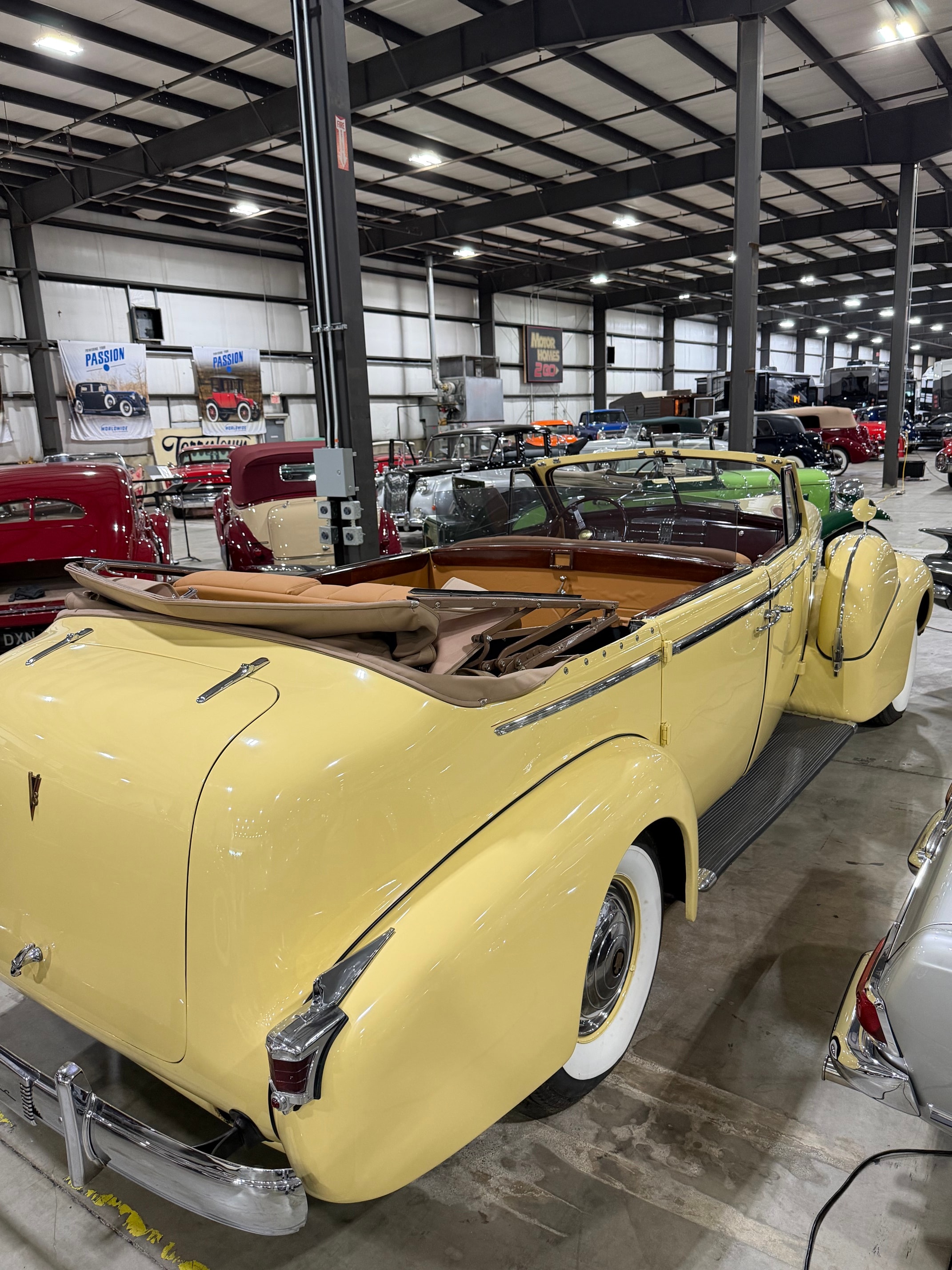
The convertible sedan. The open car, built only in the prewar years: a full four-door convertible with a folding top, proper side windows and the long rear compartment intact. It is the rarest regular body, the most valuable, and the most demanding — the top mechanism is a piece of machinery in its own right, the body flexes in ways the sedans never do, and every convertible-specific part is Fleetwood-only. The yellow 1938 and the grey 1940 photographed for this guide show both states of the car: top up, a formal sedan's silhouette; top down, the folded bows and stack sitting behind the rear seat where a sedan's roof would be.
The commercial chassis. Cadillac sells the Series 75 chassis, on an even longer wheelbase, to the professional-car trade, and outside coachbuilders turn it into hearses, ambulances and flower cars. These are Series 75s mechanically and something else entirely as purchases: bodies by another maker, interiors built for work, and a life of professional use. Go in knowing the body parts support is the coachbuilder's, not Cadillac's, and that a hearse is a hard car to sell on.
The 1949 cars. One model year, one big difference: the 331 overhead-valve engine under the same tall, running-boarded body the series has worn since before the war. If you want the postwar driving experience — easier starting, stronger performance, the engine architecture Cadillac builds on for the next decade and a half — in the formal body, this is the only year that offers it.

Engines and gearboxes
The 346 Monobloc flathead V8 (1936–1948)
Every Series 75 from 1936 to 1948 runs the same engine: Cadillac's 346-cubic-inch Monobloc V8, a side-valve (flathead) design with the valves in the block beside the cylinders, an iron block cast in one piece with the crankcase — the "Monobloc" of the name — and a downdraft two-barrel carburettor, by Stromberg or Carter depending on year, under an oil-bath air cleaner. Output starts at 135 hp in the first cars and rises to 150 hp in the final prewar and postwar versions, through compression and tuning changes rather than any change of architecture. Torque is the real specification: this engine is tuned to move a very heavy car at low revs, in near silence, and it does. Hydraulic valve lifters keep the valve gear quiet and free of routine adjustment — advanced stuff in 1936, and one reason these engines idle with a smoothness that surprises people raised on other flatheads.
A healthy 346 starts on the button, hot or cold, once the fuel system is right; idles almost inaudibly; and pulls the car away from rest in top gear at speeds where a lesser engine would demand second. Oil pressure is modest by modern standards, and the gauge tells you more by change than by absolute reading. The engine's virtues are torque, quietness and durability — the same basic engine powers Cadillac-built military vehicles through the war — and its vices are all children of its layout and its age.
The first vice is heat, and it is structural. In a flathead, the exhaust passages run through the block to reach the manifolds, so the coolant is heated by the exhaust on its way out as well as by combustion. The system copes when it is clean and sealed; it has no margin when it is not. Eighty years of hard water leave scale and sediment in the water jackets, worst at the back of the block where circulation is laziest, and a radiator that looks adequate can be half-choked with solder bloom and rust. The result is the classic flathead pattern: fine at forty, creeping on the gauge at sixty, boiling in traffic after a run. Treat any 346 that runs hot as a cooling-system diagnosis to be made — radiator core, block sediment, water pump, fan belt, timing retarded by a worn distributor — not as character. Overheating is also the great engine-killer here, because a boiled flathead warps, cracks around its exhaust seats and blows head gaskets, and a car with a history of boiling carries that history in its castings.
The second vice is the exhaust side. The manifolds live a hard life of heat cycles, and they crack; the studs and bolts that hold them seize and snap when disturbed; and the heat-riser valve in the exhaust crossover — the little flap that sends exhaust heat under the carburettor for warm-up — seizes in one position or the other. Seized shut, it cooks the carburettor and the fuel in it; seized open, the car is gutless and thirsty when cold and slow to warm. Listen for the manifold tick-tick of a crack or a blown gasket that quiets as the engine warms, and budget accordingly: manifold work on a 346 is a specialist job with the engine's age in every fastener, realistically $800–2,000 a side once snapped studs are drilled and the faces are trued, and more if a manifold itself has to be sourced and welded or replaced from stock.
Fuelling faults follow a pattern too. The mechanical fuel pump and the carburettor both predate modern fuel: ethanol blends attack old diaphragms, needle valves and gaskets, and a car that has sat grows varnish in the carburettor and rust in the tank that feeds it a steady diet of grit. Vapour lock is the period fault that still bites — fuel boiling in the pump or lines on a hot restart, in traffic, on a grade — and the cure is diagnosis (heat shielding, line routing, pump pressure, an auxiliary electric pump fitted discreetly) rather than the crank-until-the-battery-dies ritual. A rebuilt carburettor from a specialist runs $400–800 exchanged or rebuilt to order; a fuel pump rebuild is $150–350; neither fixes a rusty tank, which is a $600–1,200 clean, seal or replacement exercise and the real cause of half the "carburettor trouble" in the classifieds.
Ignition is Delco-Remy points and coil on a six-volt system. The distributor lives where exhaust heat and old age harden its advance mechanism; a car that pings under load, runs flat at speed or is hard to start hot often needs the distributor's centrifugal and vacuum advance rebuilt and the timing set properly, not a tune-up in a can. Budget $300–700 for a distributor rebuild with the advance curve restored. Valve gear is the last item: hydraulic lifters that bleed down after standing make a cold-start clatter that should fade within seconds as oil pressure builds; a lifter that ticks on, hot, at idle, is worn or starved of oil, and burnt exhaust valves — the flathead's other old-age disease, from overheating and from hard use — show as a rhythmic miss and low compression on one cylinder. A compression test, dry and then wet, is the distinguishing instrument for almost everything in this paragraph: even readings across all eight with a hot miss point at ignition or fuel; one or two low cylinders point at valves or rings, and the wet test separates them.
The 331 overhead-valve V8 (1949)
The 1949 car changes the engine room completely. The 331 is Cadillac's new overhead-valve V8 — pushrods, rocker shafts, valves in the head where they belong, a short stroke and a compression ratio high for its day, rated at 160 hp. It is lighter than the flathead, revs more freely, starts better, runs cooler, and it is the ancestor of every Cadillac V8 of the fifties. In the Series 75 it transforms the car's manners: the same formal body, with an engine that feels a generation younger, because it is one.
Its faults are the faults of an early overhead-valve engine, and they are cheaper faults than the flathead's. Hydraulic lifters tick when worn or when oil pressure at idle falls; rocker shafts and arms wear and starve the top end of oil; the rope-type rear main seal weeps with age, as every rope seal does, and marks its territory on the driveway. Timing chains stretch and retard the valve timing into a general flatness. Water pumps wear and weep from the tell-tale hole. None of this is exotic, and a full rebuild of a 331 by a shop that knows the engine runs $6,000–10,000 — real money, but the parts support is the best of any engine in this guide, because the architecture continues in production for years. The trap with a 1949 is identity, and it is absolute: a 1949 Series 75 has an overhead-valve engine with rocker covers on top of the heads; a "1949" car with a flathead in it is a 1946–48 car, an engine swap, or a title error — the engine settles the year, whatever the paperwork says. Run the same check in reverse on a car sold as a '48: a 331 under its hood is a swap, to be priced as one.
Gearboxes: the three-speed manual and Hydra-Matic
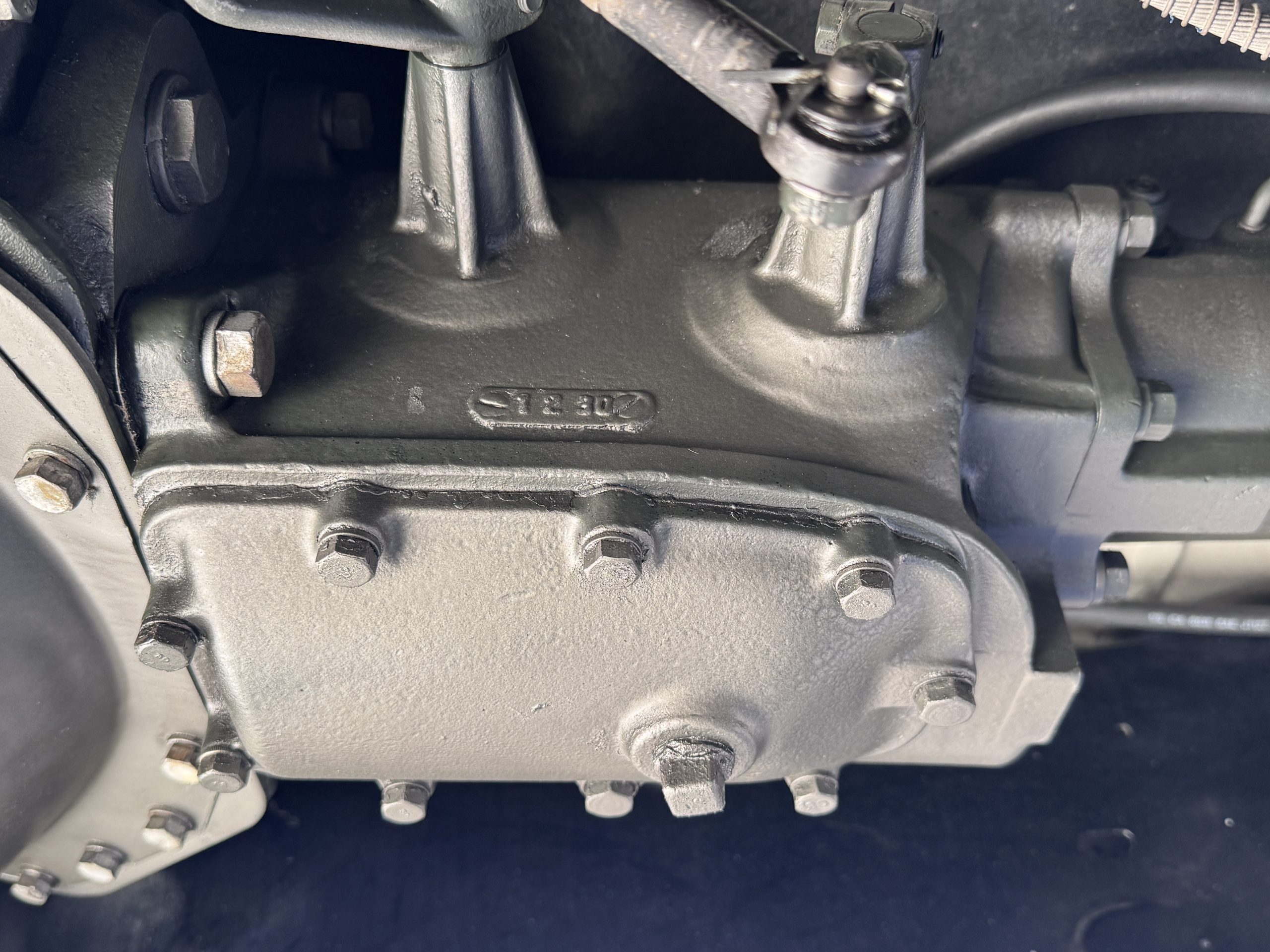
The standard gearbox is Cadillac's three-speed manual, synchromesh on second and top, with the lever on the floor in the earliest cars and on the column in the later ones. It is a strong, simple box in a heavy car, and its wear shows in the usual order: second-gear synchromesh first (a crunch on the fast upchange, baulking on the downchange), then bearing noise in the indirect gears that goes quiet in top, where the box runs straight through. The clutch is a big single dry plate; judder on take-up means oil on the plate (find the leak — rear main seal or gearbox input seal) or a tired driven plate and cover, and a clutch replacement on a car this size is a $1,200–2,200 job at a shop, mostly labour and access. Judge linkage before box: column-shift linkages wear at every bush and bell-crank, and a sloppy, vague change is usually the linkage describing its age, not the gearbox dying. A gearbox rebuild, when it is the box, runs $1,500–2,500 plus the clutch work it would be foolish not to do while it is out.
Hydra-Matic arrives as an option for 1941 and takes over after the war — the majority of postwar Series 75s are Hydra-Matic cars, and formal cars suit it perfectly. This is the original four-speed automatic: a fluid coupling rather than a torque converter, two planetary gear sets, and changes made by bands and clutches under hydraulic control. It has no Park position — you leave the car in Reverse with the engine off as the parking lock, which is correct period practice and confuses every modern driver who borrows the car. Its health is all in the adjustment and the fluid: bands out of adjustment give flaring, slipping changes; low or burnt fluid gives delay and shudder; and a box that has been "rebuilt" by someone who does not know the type is worse than a tired original, because the settings are the rebuild. Drive it from cold through every change, up and down, and feel for flare on the 2–3 change especially. A specialist Hydra-Matic rebuild runs $2,500–4,500, and the list of shops that genuinely know the early unit is short — factor travel into the price of a bad one. The manual car is no poor relation: rarer in postwar cars, simpler to keep, and immune to the automatic's specialist problem.
Problem areas
A Series 75 divides into three cars wearing one coat. The chassis is a separate, immensely strong frame, and it rarely decides a purchase. The mechanical car — engine, gearbox, axles, brakes — is heavy-duty Cadillac engineering with good parts support, and almost everything wrong with it has a knowable price. The body and its fittings are the opposite: a huge Fleetwood structure, part timber-framed in the early years, trimmed with acres of chrome, die-cast zinc, wool, leather and wood, whose restoration bill is the difference between a bargain and a bonfire. Learn the body first; it decides what every other fault is worth.
Rust and structure: the map
A body-on-frame car forgives differently from a unitary shell. Panel rust is coachwork; frame rust and body-mount rust are structure. Check both, in this order.
The frame. The deep channel frame, cross-braced, rusts where road dirt and water sit: inside the rails at the rear kick-up over the axle, around the body-mount outriggers, at the front crossmember under the radiator, and wherever a previous repair has plated over a problem instead of cutting it out. Surface scale is normal at this age and honest; perforation, flaking layers and a frame that rings dull instead of clean under a hammer tap are not. Frame repair on a car this size is a body-off conversation, realistically $3,000–8,000 and up once the body is lifted, mounts renewed and rails fabricated — which is why a rusty-framed Series 75 at a tempting price is a parts car wearing a limousine's clothes.
Floors and mounts. The steel floors rust above the frame, fed from below by road spray and from above by every leak the car has ever had — and a formal car leaks into its carpets for years before anyone lifts them. Lift every carpet you are allowed to lift. The front floors go at the toe boards and around the body mounts; the rear compartment floor goes around the jump-seat mountings and at the edges under the rear seat; the trunk floor goes over the fuel tank and at the spare-wheel well. Press hard with your thumb along every seam. A floor repair done properly — cut out, fabricated, welded, sealed — runs $800–2,000 a section; a car needing floors throughout is again a body-off decision.
Doors, cowl and quarters. Door bottoms rust from inside, because the drain holes block and the window channels pour water into the door every time it rains. Sight along the door bottoms for bubbling, open and close every door and feel for drop — a long, heavy Fleetwood door on worn hinges and a softened cowl pillar drops, and the cowl sides at the front door hinges are a structural rust point on the timber-framed cars especially. The lower rear quarters behind the rear wheels, the rear fender skirts' mounting edges where fitted, and the running-board aprons and their brackets all trap mud against steel and rot quietly behind bright paint. Running boards themselves rust from underneath; stand on one, gently, with permission, and listen.
The sidemount wells and the trunk. On cars with fender sidemounts, the wells under the spare-wheel covers are water traps that rust out invisibly — the cover looks perfect while the well beneath it is lace. Lift the spares out if you can. The same applies to the rear-mounted spare and the trunk: water enters past perished seals, sits under the mat, and eats the floor and the lower rear panel. A seller who will not open the trunk is telling you something; a seller who will not let the sidemount covers come off is telling you more.
The convertible sedan's extra map. The open car adds the top well — the trough behind the rear seat into which the folded top disappears. It collects every drop that gets past the top and the boot, its drains block, and it rusts the rear seat structure and the floor beneath it. Add the windshield frame and header rail, which rust and rot where water sits in the top's front seal, and the cowl, which works harder on a car with no roof to stiffen it. On a convertible sedan, the top well is the single most important rust check on the car.
Body framing, timber and the convertible top
The early Fleetwood bodies are composite construction: steel skin over framing that still uses timber in places, in the coachbuilding tradition. Sound timber is strong and silent. Rotten timber is the hidden catastrophe of the prewar formal car, because it announces itself indirectly — doors that will not stay adjusted, a body that creaks over driveways, window frames out of square, a division partition that rattles, gaps that wander from panel to panel. Prod accessible framing at door pillars and around the body mounts with an awl, where the seller permits; soft, dark, crumbling wood is rot, and structural timber replacement is coachbuilder work at $150–250 an hour with no fixed menu — a car needing its framing rebuilt is a restoration project at restoration prices, whatever its paint looks like. Later bodies move toward all-steel construction, which swaps the rot problem for the rust problem above; neither is free, but steel is easier to price.
The convertible top is machinery: a frame of bows and links that must fold symmetrically, latch evenly and pull the canvas down square on the windshield header. Work it yourself, twice, with the seller's help — never buy a convertible sedan on photographs of the top in one position. A top that needs a push on one side, latches that need force, bows that sit unevenly when raised, and side windows that no longer meet the top frame all describe bent or worn mechanism and tired body alignment underneath it. A new top, fitted properly with pads and tacks by a trimmer who knows prewar work, runs $3,500–6,500; mechanism straightening and rebushing is time on top of that. The canvas is the cheap part of a bad top.
Die-cast trim is its own disease. Grilles, lamp housings, door handles, ornaments and division hardware are largely zinc die-casting — "pot metal" — which pits under its chrome, swells, cracks and eventually crumbles, and cannot be welded like steel. Re-plating pitted die-cast is specialist work, piece by piece, filling and coppering and polishing; a full brightwork bill on a Series 75 — bumpers, grille, lamps, handles, window frames, hubcaps — runs $8,000–20,000 done properly, and the grille alone can take a four-figure slice of it. Walk the car and count the chrome with that number in your head. Straight stainless and steel chrome well; pitted die-cast is forever, and missing Fleetwood-only trim pieces are found at swap meets and in other people's stashes, not in catalogues.
Suspension, steering and brakes
The front suspension is Cadillac's independent coil-spring layout with kingpins, and the rear is a live axle on semi-elliptic leaf springs, with lever-arm hydraulic shock absorbers at both ends. Everything is built for weight and for grease: the front end has a battery of grease points, and its life depends on someone having used them. Kingpins and their bushings wear into camber wobble and vague steering; lever-arm shocks lose their oil and their damping, leaving the car to float and pitch on its springs; rear springs sag and crack leaves, and a Series 75 that sits low at the back or leans is telling you about its springs, its shocks, or a life of heavy loads — professional cars carry weight for a living. Jack the front end up and rock each wheel top and bottom for kingpin wear, side to side for steering wear, and price a front-end rebuild at $1,500–3,000 in parts and labour before you forgive it.
Steering is a worm-type box driving a linkage of drag link, tie rods and idler, every joint of which adds its wear to the free play at the wheel. An inch or two of play at the rim is period-normal on a car built for a chauffeur's arms; a quarter-turn of nothing, wander that needs constant correction, and a groan or notchiness from the box are not. Have a helper rock the wheel while you watch each joint from underneath: the joint that moves late is the worn one, and the test costs nothing. Steering box rebuilds run $600–1,200; linkage joints are ordinary parts; the expensive answer is the one where the wear is in the box, the linkage and the kingpins all at once, which is the usual answer on a neglected car.
Brakes are four-wheel hydraulic drums, and they are the safety system you must be hardest about. The hydraulic system is a single circuit: one failed hose, one blown wheel cylinder, one rusted line, and the pedal goes to the floor with nothing behind it. At this age you do not assess the brakes, you renew the hydraulics — master cylinder, wheel cylinders, hoses, and any line that shows rust — as a condition of using the car, at $1,200–2,500 in parts and labour for the full job with the drums machined or replaced and new linings. Then judge the rest: drums scored or oversize, a pedal that pumps up (air or adjustment), a car that pulls (a seized cylinder, contaminated linings, a collapsed hose acting as a one-way valve). The handbrake must hold the car on a slope by itself; on a Hydra-Matic car with no Park, it is not a courtesy, it is half your parking system. Budget the hydraulic renewal into every purchase price without negotiation — it is not the seller's discount to argue about, it is the car's entry fee.
Tyres deserve a sentence of their own: a formal Cadillac on old bias-ply tyres with cracked sidewalls is a heavy car on borrowed time. Read the date codes, and price a correct set as another entry fee if the fitted tyres are old, whatever their tread looks like.
Electrics: the six-volt system
Every car in this guide is six-volt, with a generator, a voltage regulator, points ignition and, on the later prewar cars, sealed-beam headlamps (the earlier cars use reflector-and-bulb lamps, and their light is worse). Six volts is not a defect — the system works perfectly when it is healthy — but it is unforgiving of resistance, because at six volts every corroded connection costs twice the share of your voltage it would at twelve. The classic Series 75 electrical fault is slow, laboured cranking, and the classic misdiagnosis is a new starter motor. The mechanism is almost always voltage drop: tired battery cables, a corroded earth strap between engine and frame, dirty terminals, a worn starter drawing excess current. The distinguishing test is a voltmeter during cranking: measure at the battery, then at the starter, and the difference is the wiring's confession. Cleaning, correct heavy cables and a sound earth strap — $100–300 in parts — cure most "starter failures," and a rebuilt starter, when it really is the starter, runs $300–600.
Beyond cranking: generator brushes and regulator points wear, and a car that discharges at idle with the lamps on is describing them; wiring insulation of this age crumbles, especially in the engine bay's heat, and a car with a patched harness is a fire risk you rewire, at $2,000–4,500 for a correct reproduction harness fitted. Test everything electrical on a division car — the division glass mechanism where powered, the heater fans, the clock — because each dead accessory is either a fuse, a wire, or a small motor nobody makes any more. Twelve-volt conversions are common and work, but they change every bulb, gauge and accessory; a converted car is worth converted-car money, and a half-converted car is a wiring diagram nobody drew.
Interior, division fittings and trim
The interior is where a Series 75's restoration economics bite hardest, because there is so much of it and because the materials are the expensive ones: wool broadcloth in the rear compartment, leather in front on division cars, wool carpet, a cloth headliner, wood garnish mouldings around the windows, and a dashboard finished to furniture standard. Judge it in the rear compartment first, because that is the car's reason to exist.
Moth and mice do more damage than wear. Broadcloth that looks sound can be moth-eaten at the folds and under the cushions; lift the rear cushions, look at the underside and the floor beneath, and smell the car with the doors shut — mouse nests in the seats and headliner announce themselves. A full retrim in correct materials by a trimmer who knows formal cars runs $12,000–25,000 and up; a front compartment alone is a third of that; and a car with a sound, original, unmolested interior is worth a large premium precisely because this bill is so hard to shrink. Original and worn beats new and wrong: vinyl where broadcloth belongs, and velour where leather belongs, cost real money to undo and subtract value while they are there.
The division fittings are a checklist of their own. The glass must rise and fall smoothly and sit square in its frame — hand-cranked on most cars — without rattling when down. The jump seats must fold and latch, their springs and hinges intact; they are Fleetwood hardware, effectively irreplaceable except from a donor car. The rear compartment's small luxuries — the footrests, the grab handles, the robe cord, the vanity fittings, the speaker grille or intercom on late cars, the heater outlets — are the details a restoration never gets around to, so a car that still has them all working carries a premium you should pay gladly. Wood garnish mouldings split, lose veneer and delaminate at the window edges where water has reached them; refinishing a full set runs $1,500–3,500 at a woodworker's bench, and missing pieces are carved, not bought.
Water is the enemy behind most interior damage: perished window and division seals let rain into the doors and the rear quarters, where it rots timber, stains trim and rusts floors from above. If the interior smells of damp, the car has been wet, and you go back to the rust map and start again with that knowledge in hand.

How to inspect one
Inspect a Series 75 in the order that kills bad cars cheapest: identity, body, then machinery. Bring a torch, a magnet in a cloth, an awl, a voltmeter, a compression gauge if the seller agrees, and a helper. Allow two hours. A seller who will not allow the inspection is the inspection's result.
- Settle the identity first. Find the body plate on the cowl and read it: it carries the style number, body number, trim and paint codes. The first digits of the style number give the year, the 75 identifies the series, and the remaining digits identify the body style — decode them against the Cadillac-LaSalle Club's published tables, not the seller's say-so. Then find the engine: a car sold as a 1949 must carry the overhead-valve 331 with rocker covers; every earlier car must carry the flathead 346. Engine and plate that disagree with the title end the viewing until the paperwork explains them.
- Check the car against its story. Division cars wear leather in front and broadcloth behind; convertible sedans carry a Fleetwood convertible body style on the plate. A "convertible sedan" whose plate says sedan is a cut-down car. A "limousine" trimmed identically front and rear has been retrimmed or was never one. Let the car contradict the advertisement before you spend emotion on it.
- Walk the chrome and die-cast. Count the brightwork piece by piece — grille, bumpers, lamps, handles, window frames — grading each for pitting as you go, using the re-plating arithmetic from the problem areas. Missing Fleetwood-only pieces are a negotiation on their own; note them by name.
- Do the rust map, in order. Frame rails and outriggers first, then floors under every carpet you can lift, door bottoms and cowl pillars, rear quarters and running-board undersides, the trunk floor, and the sidemount wells. On a convertible sedan, finish in the top well behind the rear seat. Use the awl on anything that looks like underseal over trouble, with permission. Any structural finding reprices the car as a project, whatever the paint says.
- Prod the timber and shut every door. On prewar cars, test accessible body framing for rot at the pillars and mounts. Then open and close each door twice: a sound Fleetwood door shuts with a vault's finality and even gaps; a dropping, springing or grinding door describes hinges, timber or cowl trouble from the problem areas.
- Work the top on a convertible sedan, twice. Raise and lower it fully, with help, watching for one side leading, latches needing force, and windows meeting the frame. Inspect the canvas, pads and rear window, then look again in the top well with the top down — the rust check and the mechanism check are the same check.
- Sit in the back and audit the interior. Lift the rear cushions; look for moth, mice and damp; work the division glass up and down; fold and latch both jump seats; test every rear-compartment fitting by name. Then the front: seat adjustment, all instruments, every switch. Price what does not work as trim-shop time, not as character.
- Start it cold — insist on cold. A car warmed up before you arrive is hiding its cold behaviour. Watch for lifter clatter that fades (normal) or stays (not), smoke on start-up and what colour and how long, and cranking speed: laboured cranking on a six-volt car sends you to the voltmeter test from the electrics section before anyone blames the starter.
- Run it to full temperature and watch the gauge. A flathead car must hold temperature at idle after a run and in slow traffic. Creep on the gauge is the cooling-system diagnosis from the engines section, priced before you buy, not discovered after. Check for manifold tick when cold, leaks at the water pump, and fuel smells anywhere along the line from tank to carburettor.
- Do the compression test if you are serious. Dry, then wet, all eight cylinders, engine warm, throttle open. Even readings clear the engine's internals for negotiation purposes; one or two low cylinders, and the wet result, separate valves from rings exactly as the engines section describes — and convert a vague worry into a priced repair or a walk-away.
- Drive it at length, and brake it hard. Thirty minutes minimum: steering free play and wander at speed, kingpin wobble over bumps, every gear change (second-gear synchromesh on a manual; flare on the 2–3 change and delay into gear on a Hydra-Matic, from cold), clutch take-up, and three firm stops from speed — straight, hands-light, pedal firm and not pumping up. Finish with the handbrake alone on a slope; on a Hydra-Matic car it must hold, because it is half the parking system.
- Get it on a lift. Gearbox and axle leaks, the state of the brake lines and hoses (you are renewing the hydraulics anyway — confirm the drums and backing plates deserve to survive), exhaust condition, spring leaves, shock absorber leakage, and the frame from below with the dirt brushed off the suspect places. The lift confirms or kills everything the driveway suggested.
- Audit the paper. Title against body plate and engine, club registry or prior appraisal where they exist, restoration invoices that name the work rather than the total, and photographs of any body-off work. On this series the file is part of the car: documented structural and engine work is worth money, and an undocumented "full restoration" is a colour and a trim until proven otherwise.

Values
The Series 75 market is thin, slow and honest, and you read it differently from a market in ordinary classics. Very few cars change hands in any season, the spread between the best and the worst is enormous, and advertised asking prices are the opening of a negotiation both sides expect to be long. The listings and recorded sales gathered beneath this guide give you the current shape of the market; this section teaches you how to read them.
Body style is the first divider, and it is not close. The convertible sedan is the collector car of the range — open, rare, Fleetwood-built, eligible for the lawns and tours that set prewar values — and it trades in a different conversation from the closed cars. Among the closed cars, the division limousine carries the formal-car premium when its division fittings are complete and working, and the plain sedan is the value of the range: the same chassis, engine and presence, bought by people who intend to drive rather than display. Commercial cars sit outside this ladder entirely, valued by a small professional-car world of its own.
Condition is the second divider, and on this series it outweighs originality of specification almost every time. The market pays for three things, in order: a sound body and frame with documented structural work, a complete and correct interior in good materials, and mechanical sorting by a shop whose name the Cadillac world recognises. It discounts, savagely and correctly, for the opposites — because every one of those cures costs more on a Series 75 than the discount usually offered. A car priced keenly with a tired interior and unknown structure is not cheap; it is an instalment plan. Conversely, a genuinely sorted car at a strong price is often the cheapest Series 75 you can buy, because its bills are behind it. Asking and achieved prices part company on slow cars. A formal prewar limousine is a purchase a buyer makes once, for a purpose — a collection, an events business, a museum, a love of the type — so sellers wait, and the cars that sell are the ones priced where the next custodian's arithmetic works. When you compare recorded sales, compare like with like down to the division glass and the top: a convertible sedan's result tells you nothing about a sedan's value, and a professionally restored car's result tells you nothing about a survivor's. Year matters less than either, with two exceptions: the first-series prewar cars carry the classic-era premium of the upright, separate-fender silhouette, and the 1949 cars draw a distinct following for the overhead-valve engine — drivers pay for the 331 in a way they do not pay for a 1948.
The project-versus-driver gap is the widest in the Cadillac world. A driving, presentable car and a stalled restoration of the same body style are separated not by a percentage but by the whole cost of the work described in this guide — structure, trim, chrome, engine — which is why projects change hands quietly, cheaply, and usually to people who already own a finished one. Buy the finished end of the market and let someone else's completed restoration be your bargain.

Parts and ownership
Owning a Series 75 is an exercise in belonging to the right world. The mechanical parts situation is genuinely good: the 346 flathead is the standard Cadillac engine of its era, shared across the range, so bearings, pistons, gaskets, water pumps, ignition and carburettor parts are reproduced, stocked by the prewar specialists, and understood by any engine shop with flathead experience — a full rebuild runs $8,000–14,000 depending on machining and how much of the ancillaries you renew while it is apart. The 331 is better still, an engine family in production for years afterwards, with the strongest parts support in this guide. Gearbox parts come through the transmission specialists, and brake, steering and suspension wear parts are ordinary catalogue items once you know the interchange — which is the first thing the club teaches you.
The body is where the support thins. Fleetwood panels, convertible-sedan top parts, division hardware, jump seats, garnish mouldings and the long list of Series 75-only trim are not reproduced in any depth, because the production numbers never justified the tooling. You source them used — from the Cadillac-LaSalle Club's network, from the specialist breakers who part out professional cars and sedans, from swap meets — or you have them made: a panel beater can build you a fender section, a machinist a division fitting, a woodworker a garnish rail, at craftsman prices. This is why the inspection section weighs completeness so heavily: a missing jump seat is not a discount, it is a research project.
The Cadillac-LaSalle Club is not optional equipment for this car. Its authenticity manuals settle identity questions, its membership knows where the parts and the honest shops are, and its classifieds are where the good cars and the unobtainable trim actually change hands. Join before you buy, and use the marque specialists for the jobs this guide prices — flathead cooling and manifolds, early Hydra-Matic adjustment, prewar trim and top work — because each of those is a trade within the trade.
Running the car asks three disciplines. First, use it: a Series 75 that sits grows fuel varnish, flat-spotted tyres, seized heat risers, sticky lifters and damp in the division seals, and every system is happier for a monthly twenty-mile run to full temperature. Second, grease it: the chassis has the grease points of its era and expects them attended to on a schedule measured in thousands of miles, not in years. Third, house it: the car is very long, very tall and very heavy, it does not fit a modern garage bay by assumption — measure before you buy — and it must live dry, because the timber, the broadcloth and the top well all punish a damp building. Drive gently on a cold engine, and the flathead in particular rewards the patience.
Budget honestly and the car is not ruinous: an annual service at a specialist, $600–1,200; insurance on an agreed value through a classic policy; the brake renewal and tyres as entry fees, already counted. What ruins budgets is not running a Series 75 — it is restoring one by accident.
Which one to buy
- The all-rounder: a postwar Touring Sedan or Imperial, 1946–1948. The flathead at its most developed, the formal body at its most available, Hydra-Matic if you want it, and the deepest pool of survivors to choose from. This is the Series 75 to buy first and learn the marque on.
- The driver's pick: the 1949 car. The overhead-valve 331 transforms starting, pace and parts support, in the same tall formal body. Buy it if you tour seriously — and verify the engine matches the year before paying the 1949 premium, because the engine is the premium.- The collector flagship: a prewar convertible sedan, 1937–1940. The rarest body, the greatest presence, the strongest following — and the largest bills in chrome, top and trim. Buy the best one offered, not the cheapest; the arithmetic of the problem areas is cruelest here.
- The classic-era statement: a 1936–1938 division limousine. Upright, separate-fendered formality from the last years of the coachbuilt manner, at sedan money. Leather in front and broadcloth behind is the Series 75 idea in its purest form.
- The value buy: a sound plain sedan, any year. No division, no top, no theatre — the whole long-wheelbase Cadillac experience at the lowest entry and lowest complication, bought on structure and interior alone.
- The specialist's choice: a commercial-chassis car. Hearse, ambulance or combination, bought knowingly from within the professional-car world, for its own sake — not as a cheap way into a limousine.
The overriding rule: buy structure, completeness and interior, and let everything else be negotiable — a Series 75 with a sound frame, honest timber and steel, a complete division or top, and a good original interior is a car you can improve forever, while a shiny car missing any one of those is a restoration you have not priced yet.
Listed now
On Classic Listings today: 4 cars are listed here; 3 for sale and 0 marked sold; average asking price $139,330; asking range $124,995 to $164,995.
See the 4 Series 75 cars currently listed.
The market — recorded sales
No dated sales recorded for this series yet — as sales are recorded, they will appear here with their dates and prices.
For sale now
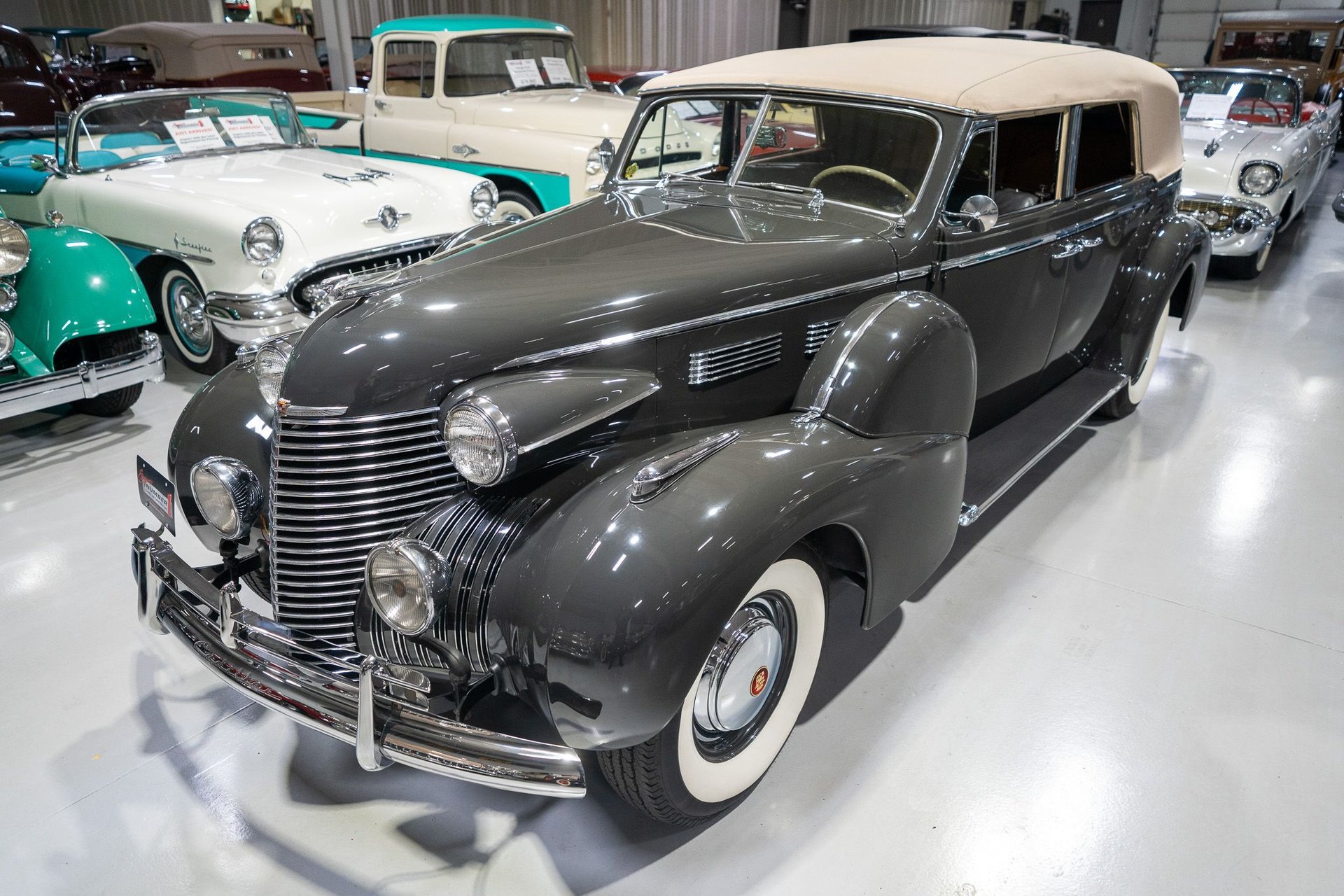 $124,995 · 5% below typical
Expand
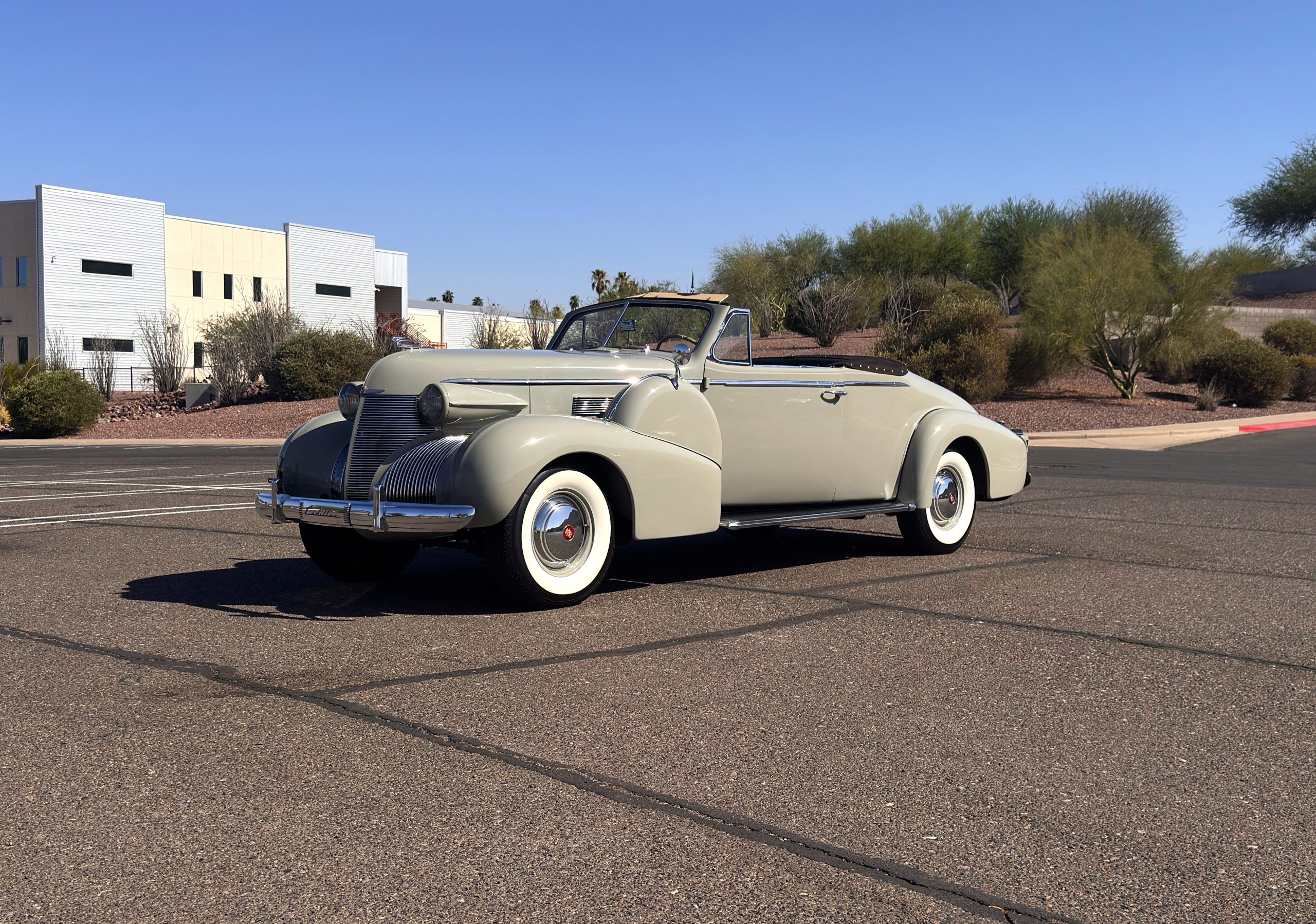 $128,000 · 3% below typical
Expand
 $164,995 · 25% above typical