
Cadillac Model 30 buyer's guide
Cadillac Model 30 (1909–1914) — Model 30: what's listed, and what they sell for.
Years: 1909–1914 · Models: Model 30
Overview and history
The Cadillac Model 30 — Model Thirty in period spelling — is the car that turned Cadillac from a respected Detroit maker of single-cylinder runabouts into the company it still claims to be: the self-styled Standard of the World. It was Cadillac's only model from 1909 through the end of production in the autumn of 1914, and it carried the firm through the most consequential six years in its early history: purchase by William C. Durant's young General Motors in 1909, the first closed bodies offered by an American manufacturer in 1910, and, in 1912, Charles F. Kettering's Delco electric starting, lighting and ignition system — the first integrated electrical system on a production car, and the innovation that killed the starting handle. In September 1914 the line gave way to the Type 51, Cadillac's first V8.
Understand what Cadillac was selling, because it explains how you should judge a survivor. Founder Henry M. Leland came from precision machining, and he built Cadillac's reputation on interchangeability: parts made so accurately that any one fitted any car without hand-filing — proven in 1908, when three dismantled Cadillacs were reassembled from scrambled parts under Royal Automobile Club supervision, all ran, and Cadillac won the Dewar Trophy. The Model 30, a developed version of the 1907 Model G four, was that philosophy at volume: annual output rose from 5,903 cars in 1909 to 15,018 in 1913 and 14,003 in 1914 (published figures vary slightly by source). It matters a century later: parts from one Model 30 genuinely fit another.
It also matters that the car changed substantially under one name. A 1909 and a 1914 Model 30 share a concept — a large L-head four, three-speed sliding-gear transmission, shaft drive, right-hand steering, rear-wheel brakes only — and little else you can take for granted. Displacement grew in three steps, from 226.2 cubic inches to 365.8; the wheelbase stretched from 106 inches to 120; acetylene gave way to electricity; and the 1912 electrical revolution divides the run into two ownership propositions as distinct as any model change. Treat "Model 30" as a family name and pin the car in front of you to its year before applying anything said about another year.
Set your expectations now. This is a tall, narrow car on wooden artillery wheels and narrow clincher tyres, with steering on the right (every Model 30 was built right-hand drive; Cadillac did not move the wheel to the left until the V8 era), brakes on the rear wheels only, and a cruising gait of 40 to 45 mph it will hold all day on a club tour if properly sorted. It demands period technique: braking distances in multiples of modern ones, a double-declutch on every downward change, a machine you operate rather than a car you merely steer. Bought well, it is one of the most usable and best-supported Edwardian tourers in America. Bought badly, it is a very old assembly of wood, copper, babbitt and leather whose restoration costs obey no ceiling — and the difference is entirely in the condition of specific components, which this guide is organised around naming.
A note on evidence. Classic Listings' own pool for this series is small — 10 cars in total, evenly split between cars listed for sale and cars recorded sold, all dealer-handled and nine of the ten located in Rhode Island. That is effectively one dealer's flow of cars, not a market sample; several figures below come from its 1911–1914 listing photographs. Everything else here is accumulated marque knowledge: published specifications, documented development, and a century of recorded failure behaviour.
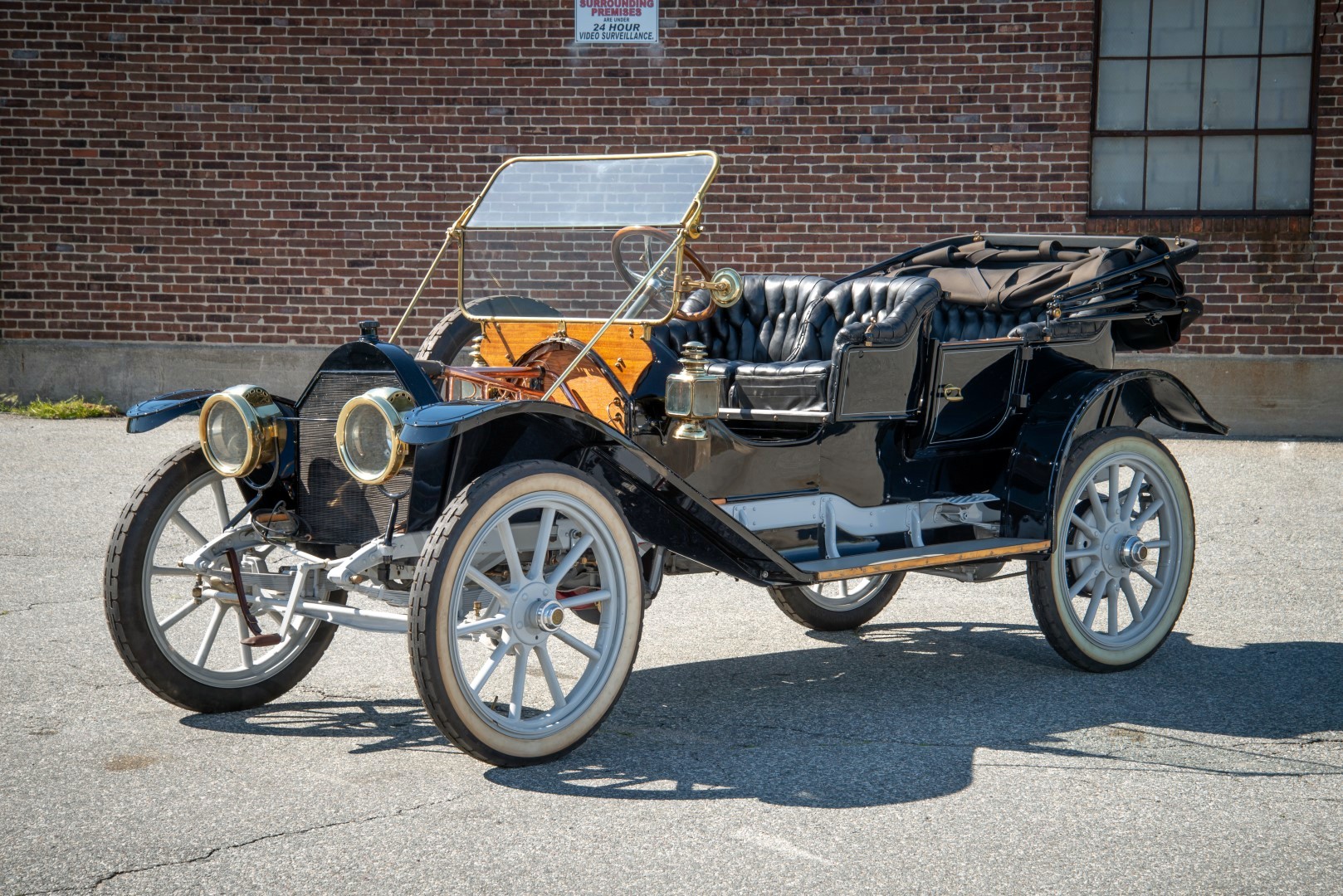
The models
There is one chassis concept and one engine family, varied by year and by body. Shop in two passes: first choose your year-group, because that fixes the engine, the wheelbase and — decisively — whether the car hand-cranks or self-starts; then choose your body, because that fixes how much wood, leather and top mechanism you are volunteering to maintain. Buyers who shop body-first routinely end up with a crank-start car they cannot live with, or a formal closed body on a car they bought to tour.
| Model | Years | Engine | Output | Built | Character |
|---|---|---|---|---|---|
| Model 30, first series | 1909–1910 | 226.2 cu in L-head four (1909); 255.4 cu in (1910) | 30 hp advertised; 33 hp rated for 1910 | 5,903 in 1909; about 8,000 in 1910 (annual totals, all bodies) | The original: 106-inch wheelbase, open bodies at first, crank start, acetylene lamps |
| Model 30, 286 series | 1911–1912 | 286.3 cu in L-head four | About 32 hp rated; period claims higher in service | About 10,000 in 1911; about 14,000 in 1912 (annual totals) | The growth car: longer wheelbase, torpedo and four-door bodies; 1912 adds the Delco self-starter |
| Model 1913 / Model 1914 | 1913–1914 | 365.8 cu in long-stroke L-head four | 40–50 hp in period listings | 15,018 in 1913; 14,003 in 1914 (annual totals) | The mature car: 120-inch wheelbase, six-volt electrics, 1914 optional two-speed rear axle |
Three cautions about that table. First, the outputs are period ratings, not dynamometer results: makers quoted formula-based ratings for licensing purposes, and Cadillac if anything understated its early engines — judge a car by how it pulls, never by comparing quoted horsepower across years. Second, production was never published split by body style, so the Built column gives annual totals for the whole line (the Model 30 was Cadillac's only model, so the two numbers are the same). Anyone quoting an exact figure for 1911 torpedoes is inventing it. Third, from 1912 the cars were officially sold by model year — Model 1912, Model 1913, Model 1914 — but they are the same lineage.
The open touring bodies
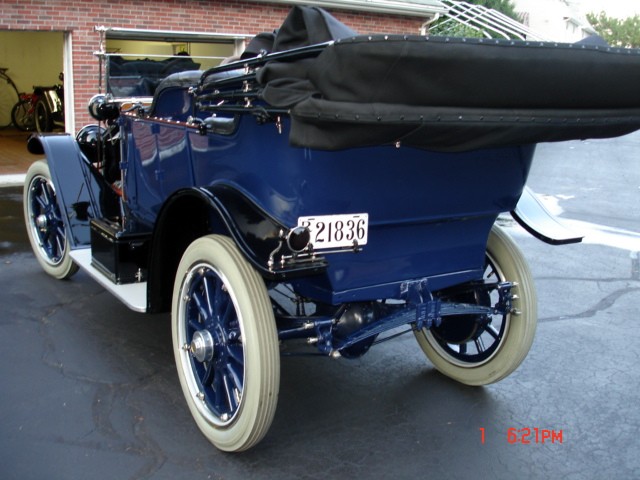
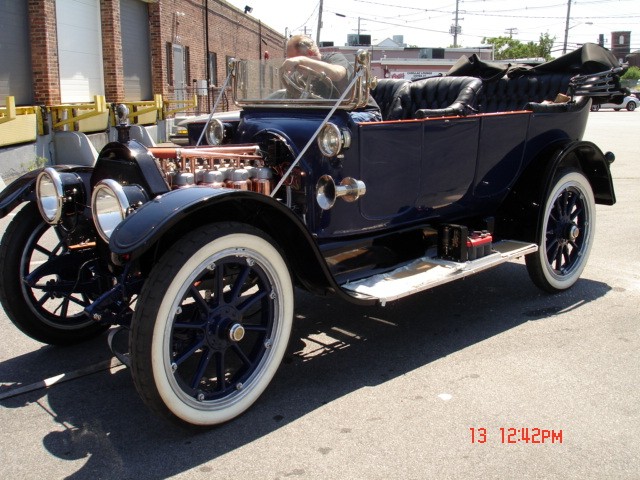
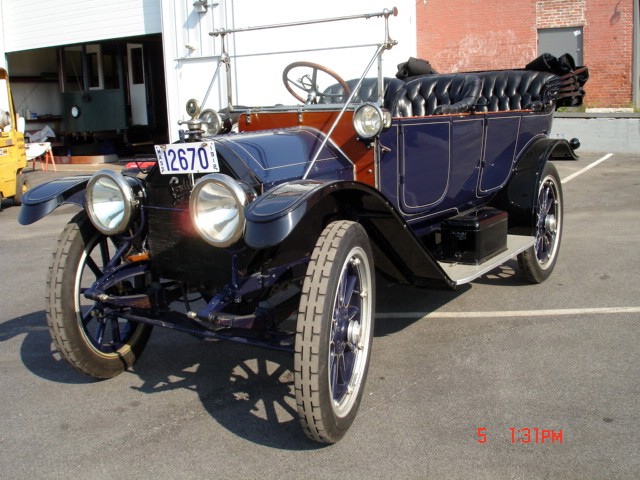
The five-passenger touring car — increasingly called a phaeton in the later years, and listed both ways in the Classic Listings pool — is the Model 30 in its natural state and the body most survivors wear. Two-door in the early manner, four-door from 1911 and defining the 1912–14 cars, it is a big, upright open tourer with a folding top, side curtains rather than windows, and room for five adults and luggage at a 40 mph gait all day: the tour car the clubs are built around, the easiest Model 30 to live with and to sell on. On a touring car, your inspection effort goes to the wood framing, the top and curtain set, and the mechanicals.
The demi-tonneau — Cadillac's name for what other makers called the toy tonneau — seats four, with a smaller, detachable rear tonneau behind a two-seat front compartment. It is the sporting open body of the early years and the prettiest of the 1909–11 cars; the pool's 1911 example shows the form exactly. The trap is originality of the tonneau itself: tonneaus were removable, were removed, and were lost, and a car missing its tonneau, or wearing a later replica, is worth materially less than a complete car — the joinery and hardware are how you tell. The three-passenger roadster is the lightest and simplest body: two seats, a deck behind, minimal weather equipment, the purest driving experience of the range. Roadsters were worked hard and survived in smaller numbers; check any roadster twice as hard for a touring-car past, because bodies were swapped in period and since. The torpedo, added for 1911, is the transitional fashion body — flush-sided, doorless in early form — and now among the most sought-after of the early bodies because so few survive intact.
The closed bodies
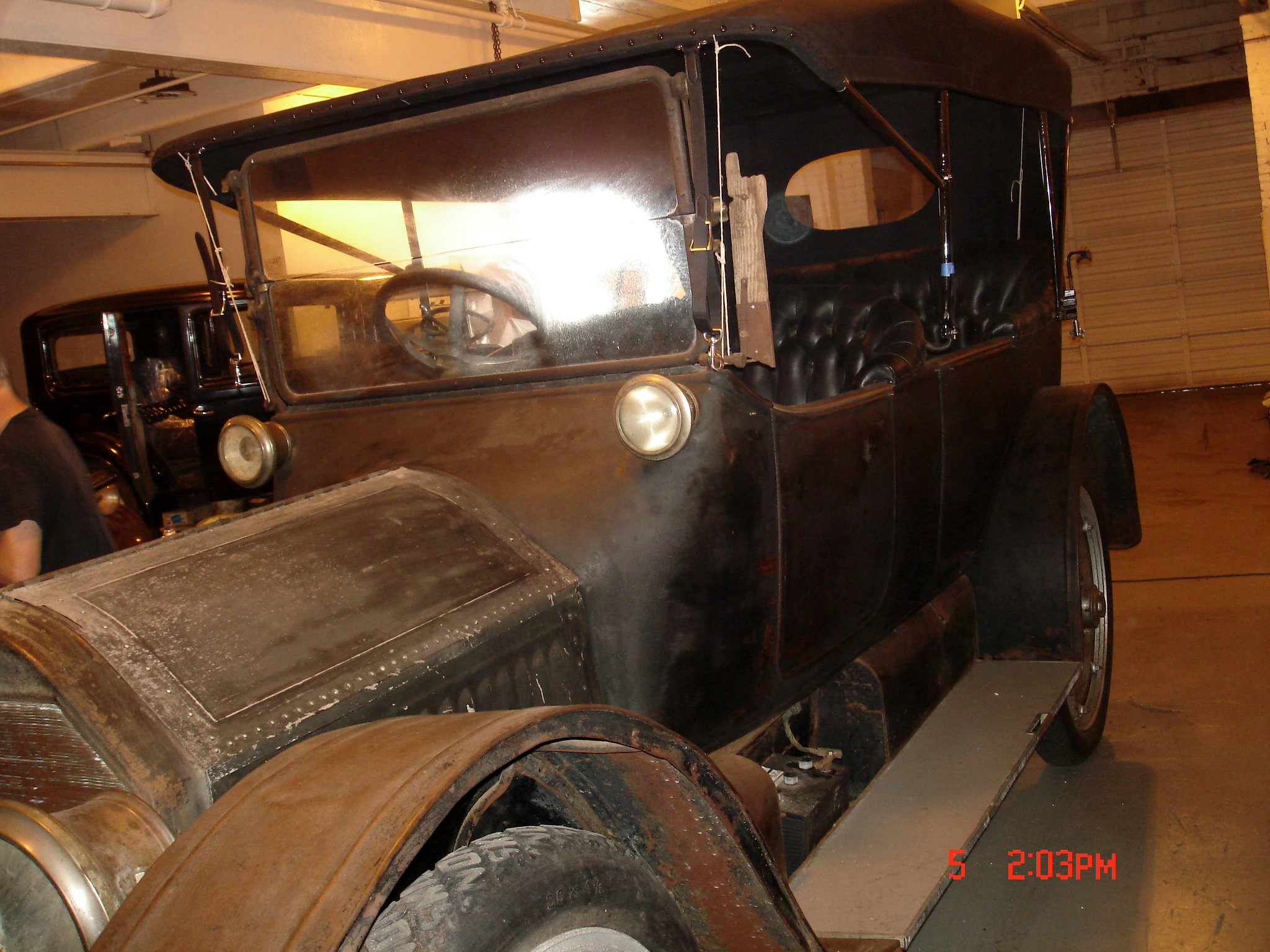
Cadillac's genuine claim on history here is that the 1910 Model 30 was offered with a closed body — coupe and limousine — the first time an American manufacturer catalogued closed coachwork as a regular offering rather than a special order. The coupe is a two-door closed car of great dignity and considerable rarity; the limousine, on the longer wheelbase (the 1914 formal cars used a 134-inch chassis), is a chauffeur's car that changes the ownership proposition completely: a car you display and exercise gently, whose vast wood-framed coachwork is the most expensive bodywork on any Model 30 to restore honestly. Buy a closed car for its rarity and presence, eyes open about the joinery bill if the framing is soft — never as a cheap way into the model, because a cheap closed Model 30 does not exist, only a deferred one.
Year-groups: what actually changed
For buying purposes the run divides into three. The 1909–10 cars are the elemental Model 30: smallest engines, 106-inch wheelbase, hand cranking, acetylene headlamps, kerosene side and tail lamps, battery-and-coil ignition with magneto provision — the lightest, simplest, most purely brass-era cars, and the most demanding to start and to drive after dark. The 1911–12 cars are the growth years: the 286.3 engine, a wheelbase grown toward 116 inches, four-door and torpedo bodies, and then the divide within the divide — the 1912 car, with Kettering's Delco system and a starter motor, is a different ownership proposition from the 1911 car that shares its engine. The 1913–14 cars are the finished article: the long-stroke 365.8 engine, a 120-inch wheelbase, simplified six-volt electrics, and the optional 1914 two-speed rear axle giving six forward ratios and a relaxed high-speed gait. Tour seriously and far, and you are shopping in the third group; want brass motoring in its original discipline, and the first group has a purity the later cars traded away. Buying the wrong group for your purpose is the only wrong answer.


Engines and gearboxes
One engine architecture serves the whole run: a four-cylinder L-head (side-valve, flathead) inline four, built to Leland's interchangeable standard, with a five-main-bearing crankshaft — an advanced specification when most rivals ran three bearings — and cylinders with copper water jackets, a construction Cadillac inherited from its single-cylinder practice and kept to the end of the four-cylinder era. The valves sit beside the cylinders in the block, the head is a flat plate, and the whole engine is designed for torque at low revolutions: long, slow, elastic engines that pull from walking pace in top gear and do their best work between 800 and 2,000 rpm. What changes across the years is size, and size changes character.
The 226.2 and 255.4 cubic-inch fours, 1909–1910
The 1909 engine is the Model G unit carried over and refined: 226.2 cubic inches (3.7 litres) from a 4.0-inch bore and 4.5-inch stroke, advertised at 30 horsepower — the figure that named the car. Detail development for 1909 included gear drive, rather than belt drive, for the water and oil pumps — a belt failure on the earlier cars stopped coolant and lubricant together. Fuel feed is by a single updraft carburettor — a Schebler Model L is the documented fitment on 1910 cars — and each cylinder carries priming cups, through which you dose fuel directly to coax a cold engine to fire on the crank. For 1910 the bore grew to 4.25 inches, giving 255.4 cubic inches (4.2 litres) and a 33-horsepower rating, and ignition became a Delco four-coil low-tension system. In service these engines are sweet and willing rather than strong, and ask the driver to use the gearbox on hills. An early engine that feels gutless is usually not worn out — it is usually running on a maladjusted Schebler, a weak coil, or timing retarded by an owner afraid of the crank. A full rebuild of a small-bore four by a brass-era specialist typically runs $18,000–30,000, which is why the state of the engine matters more than the state of the paint on an early car.
The 286.3 cubic-inch four, 1911–1912
For 1911 Cadillac bored the engine again, to 4.5 inches, keeping the 4.5-inch stroke: 286.3 cubic inches (4.7 litres), square dimensions, rated at about 32 horsepower by formula and plainly stronger in the car than the rating implies. This is the engine of the classic Model 30 image, and the point at which the car stops feeling like a grown-up runabout and starts feeling like a full-size touring car. Torque is the story: the 286 pulls its heavier bodies without complaint and holds top gear on grades that send the 226 down a ratio. Mechanically it is the same architecture, with the same service needs: valve clearances set by hand, decokes as routine maintenance, and oil treated as a consumable changed by the few hundred miles. Budget the same rebuild territory if the worst has happened, $20,000–32,000, with one warning: the copper water jackets add a specialist operation general shops cannot do. Jacket removal, cleaning of the waterways behind them, and re-sealing is skilled work, and a botched jacket is a perpetual leaker.
The 365.8 cubic-inch long-stroke four, 1913–1914
The last development is the most significant mechanically. For 1913 Cadillac kept the 4.5-inch bore and lengthened the stroke by an inch and a quarter, to 5.75 inches: 365.8 cubic inches, a full 6.0 litres, listed in period at 40 to 50 horsepower. Nothing about the headline architecture changed, and everything about the drive did. The long-stroke engine is a torque engine in the full sense — it pulls away in top gear at speeds where the earlier cars need second, climbs in top where they climb in first, and cruises at 45 mph in a lazy, understressed gait that is the secret of these cars' touring durability. It is also a bigger, heavier engine: the crankshaft is a more serious forging to repair if cracked, and a full rebuild sits at the top of the four-cylinder range, $24,000–38,000 done properly with crank work. Against that, a sound 365 is the least stressed engine in the range in normal use and the most likely to be found still on standard dimensions, because it so rarely needed to be thrashed. Later cars are found with a Zenith-type updraft carburettor in place of the earlier Schebler; either is correct for its year.
Ignition, starting and the Delco system
You cannot assess a Model 30 without understanding which electrical era it belongs to, because the systems fail differently and cost differently. The 1909–11 cars are dual-ignition cars in period practice: battery-and-coil ignition for starting and low-speed running, with magneto ignition — driven from the accessory shaft — as the running system on many cars, the changeover made by switch; two spark plugs per cylinder on the documented 1910 installation serve the two systems. The failure logic is symmetrical: a car that starts on battery and dies when switched to magneto has a magneto problem (worn points, a failing condenser, a cracked distributor cap — original caps are Bakelite and now fragile enough that restorers have had reproductions injection-moulded); a car that will not start but runs once cranked into life has a battery, coil or wiring problem. Vibrator-type coils need their points dressed and adjusted; a coil rebuild runs $400–900 per unit and a magneto overhaul $800–1,800.
The 1912 car is the revolution and the complication. Kettering's Delco system integrated starting, generating, ignition and lighting in one installation, and to get enough cranking torque from a compact motor it ran the starter on 24 volts — four six-volt batteries in series for starting — while lighting and ignition ran at six volts, with a controller switching between the two states. The starter motor doubled as the generator, driven by shaft and chain, and engagement was made by pushing the clutch pedal forward. It won Cadillac its second Dewar Trophy and made the 1912 the first car a driver of ordinary strength could start from the seat. It is also the most demanding electrical system in the range to keep correct: four batteries in the running-board box, a controller whose contacts must be clean and correctly sequenced, and wiring that must match the owner's-manual diagram rather than a modern electrician's instincts. A correct, working system rebuilt by a Delco specialist is a $3,500–7,500 undertaking; a 1912 converted to a bodged single-battery system has lost both value and the point of the car. For 1913 Cadillac simplified to a compact six-volt starter-generator and a single-voltage system — the easiest Model 30 electrics to live with. On any 1912–14 car the test is total: from cold, on the button, does it crank briskly, fire, and show charge? Everything else is negotiation.
Starting a pre-1912 car deserves one paragraph of plain instruction, because the hand crank is the component that injures buyers. The technique: retard the spark fully, set the throttle, prime if cold, and pull up sharply with the thumb held alongside the fingers — never wrapped around the handle — so a backfire tears the handle out of an open grip instead of breaking a wrist or an arm. An engine that habitually kicks back is not "characterful"; its timing is over-advanced at cranking or its coil is firing on the wrong stroke, and both are fixable. Have someone teach you the technique in person before you buy a crank-start car.
Gearboxes, clutch and rear axle
The transmission throughout is a three-speed selective sliding-gear gearbox, carried over from the Model G and refined in its mounting. There is no synchromesh, and the gears engage by sliding toothed wheels into mesh — the driver's timing is the synchroniser. Changes are made with a deliberate pause in neutral going up and a blip-and-double-declutch going down; a box that crunches in practised hands has worn dogs, worn teeth or a dragging clutch, and a box that crunches in your hands on a first drive proves nothing either way. Learn the technique before you judge the box. The clutch is a leather-faced cone clutch, transmitting drive by friction over a large area: smooth and strong when the leather is supple and correctly dressed, grabbing, juddering or slipping when it has dried, glazed or soaked up oil from a leaking rear main seal. Relining and refacing is a $900–1,800 specialist job; chronic slipping that has overheated the cone costs more.
Drive passes by shaft — no chains on the Model 30 — to a rear axle Timken-supplied from partway through 1910, with final-drive ratios chosen from a short early menu (3.00:1, 3.50:1 or 4.00:1 at the start of the run). The ratio shapes the car's gait: a 4.00 axle makes a hill-climber busy at 40 mph, a 3.00 axle a relaxed tourer. The 1914 option is the headline: an electrically engaged two-speed direct-drive rear axle, giving high and low ranges and therefore six forward ratios. It transforms the long-stroke car at speed — top gear in high range is a genuine overdrive gait — and it is rare and a system unto itself: test both ranges repeatedly under load, because an axle stuck in one range or jumping out of engagement is a specialist rebuild, $3,000–6,000, on a component with no modern substitute. Rear axles are full-floating in the later years, so a broken half-shaft does not strand the wheel.
Problem areas
A Model 30 does not fail like a modern classic. There is almost no rust in the modern sense to fear — the chassis is heavy steel and the bodies are wood-framed — and almost nothing electronic to diagnose. What kills these cars is the slow degradation of organic and soft materials — wood, leather, cork, babbitt, copper, Bakelite, rubber — compounded by decades of storage and by maintenance done to modern instincts. Work through the systems in this order: engine first (the largest cheques), fuel and electrics second (most roadside failures), chassis and brakes third (the safety risk), body last (the restoration-cost risk).
Engine internals, lubrication and cooling
The core wear items are the babbitt bearings — the crankshaft's five mains and the connecting-rod big ends are babbitt-lined shells, poured and scraped to fit, not modern insert shells you swap on a bench. Babbitt fails by fatigue and by oil starvation: the surface cracks and wipes, clearances open, oil pressure (such as it is in a period low-pressure system) falls away at hot idle, and a deep knock develops under load that disappears at cruise. The distinguishing test is a hot engine, fully warmed after a real road run, listened to at idle and under gentle load with a stethoscope on the crankcase, backed by the oldest test of all: drain a sample of hot oil and look for the grey metallic sheen of bearing metal in suspension. A cold engine that sounds sweet proves nothing — cold thick oil fills worn clearances and silences them. A repour and line-bore of mains and rods runs $3,500–7,000 as part of a rebuild; a crankshaft found cracked at the journals starts a search for a replacement forging, a months-long club-network problem, not a catalogue order.
Cylinder wear presents as oil consumption, blue smoke on the overrun after a climb, and low compression that improves markedly on a wet test (a spoonful of oil down the plug hole). Bores were often taken out oversize in period and re-sleeved in later life; neither is a sin, but you need to know which state the engine is in, because pistons for the next oversize may not exist off the shelf. A compression test across all four — expecting evenness within about ten percent rather than any absolute modern figure — plus the wet/dry comparison separates ring and bore wear (wet improves it) from valve leakage (wet does not). The L-head layout makes valve work accessible: valves sit in the block beside the bores, guides wear and let oil down into the ports, and seats pit with age and storage corrosion — an age problem, not a fuel problem, since these low-compression engines tolerate modern unleaded petrol. A valve grind with guide work is a $1,500–3,000 job in situ, more with the block out.
The copper water jackets are the engine's signature vulnerability. Each cylinder is surrounded by a copper jacket forming the waterway, sealed to the casting; a century of thermal cycling, hard water, freeze events and galvanic action between copper and iron works on those seals and on the copper itself. Symptoms are coolant weeping at the jacket seams that worsens hot, unexplained coolant loss with no hose leak, waterways choked with rust, and — worst — water in the oil from an internal breach. The distinguishing test is a pressure test, held for twenty minutes on a cold engine with the seams dried and dusted with chalk or talc: a leak prints itself exactly. Overheating is almost never a head-gasket story (the flat head and its gasket are simple and robust); it is a flow story — scaled waterways, a honeycomb radiator core furred internally, an eroded pump impeller or a pump gland leaking air, or timing retarded by an owner compensating for kickback. Budget $2,500–5,000 for jacket removal, waterway cleaning and resealing by someone who has done it before, and $2,000–4,500 for a correct honeycomb radiator recore; a car that boils on a ten-minute run needs that money spent, whatever the seller says about the weather.
Lubrication failures are behavioural as much as mechanical. These engines predate oil filters; oil is expected to be changed frequently, oiler points want regular attention, and an engine run for years on extended modern intervals sludges its oilways and starves its far bearings. Ask when the oil was last changed and look inside the filler: black treacle and a varnished valvetrain mean the engine has lived as a museum piece — started for shows, never run hot and long — the most common life pattern of a surviving Model 30, and the reason so many need engine work within a year of returning to touring use.
Fuel, ignition and the electrical system
The Schebler Model L and its period contemporaries are simple updraft instruments whose faults are wear faults: a throttle spindle worn oval in its bushings admits air below the venturi and makes idle mixture unadjustable; a cork or composition float, saturated or attacked by modern ethanol-blended fuel, sits at the wrong height and floods or starves the engine; needle valves groove and dribble. The distinguishing test for spindle wear is to spray a little carburettor cleaner at the spindle ends at idle — a change in idle speed confirms the air leak and acquits everything else. Ethanol is the modern enemy throughout the fuel system: it attacks cork floats, leather pump leathers where fitted, soldered tank seams and old flexible lines. A car that has sat on blended fuel for a year will develop fuel faults in your first season; a carburettor overhaul with ethanol-resistant float and needle runs $600–1,200, and a fuel tank clean, seal and repair $800–2,000. Starvation on a climb usually traces to a blocked tank outlet screen or a perished line, not to the carburettor everyone blames first.
Ignition diagnosis follows the dual-system logic of the engines section, with two additions. First, the vibrator coils: each coil's points must buzz evenly when the engine is cranked, and a coil that buzzes weakly or not at all under a plug lead that sparks from its neighbour's coil has told you the fault is in the coil box, not the plugs, wiring or timing. Swap leads before you swap parts. Second, condensers fail with heat: an engine that runs cold and dies at twenty minutes, restarting when cool, is a condenser (or a coil breaking down hot) until proven otherwise, and the proof is substitution, not debate. On 1912–14 cars, add the Delco starter-generator: brushes wear, the drive chain stretches and slaps, commutators score, and on the 1912 the controller's contacts pit and mis-sequence, giving the classic symptom of a car that lights its lamps but will not crank, or cranks but will not charge. Test the full cycle — crank, start, charge, lamps — three times in succession; intermittent Delco faults hide from a single demonstration. Allow $1,200–2,500 for a starter-generator overhaul, and treat correct 1912-pattern batteries and cables as short-life consumables.
Wiring deserves its own warning. Original wiring is rubber-insulated, cloth-braided and a century old; much will have been replaced piecemeal, sometimes in modern plastic cable of wrong colours and routing. The risk is not originality points — it is short circuits in a system with minimal fusing, on a car carrying petrol and dry wood. Brittle or amateur-rewired looms need a correct-pattern harness, $1,500–3,500 fitted: safety money, not cosmetics.
Chassis, steering, wheels and brakes
The chassis frame itself is the least of your worries: a heavy pressed-steel ladder that cracks mainly at spring-hanger rivets after accident damage or overloading — and many Model 30s spent the 1920s cut down as trucks or farm wagons, so ask about a commercial past and sight along the rails for straightness. Suspension is semi-elliptic leaf springs at the front and, on early cars, a platform rear arrangement — longitudinal semi-elliptics shackled to a transverse spring. Springs sag, leaves crack at the centre bolt hole, and shackle bushes wear oval, giving a car that wanders and clunks. Measure spring arch height side to side; a spring rebuild runs $1,200–2,800 across the car. Steering is worm and gear to a solid front axle on kingpins: wear shows as free play at the rim beyond a couple of inches, shimmy at 30 mph, and heavy low-speed effort. Kingpin renewal is $800–1,600; a worn steering box is a specialist $1,500–3,000 problem — and play must be apportioned between box, pins and track-rod ends by an assistant rocking the wheel while you watch each joint, never by replacing parts in hope.
The wooden artillery wheels are a safety system, and they are inspected like one. Each wheel is a built-up structure of hickory spokes tenoned into a wooden felloe (the rim segment ring) and a hub, carrying a steel tyre rim. Wood shrinks, spokes loosen, felloes crack at the joints, and a wheel merely tired on a show field is a collapse risk at 45 mph under a tonne and a half of Cadillac. Test every wheel: grip each spoke, tap round the felloe listening for the dead note of a crack or loose joint, shake the jacked-up wheel for play, and sight for rust dust at the hub — the classic sign of movement at the spoke feet. Epoxy injection of loose spokes is a recognised temporary repair; a professionally rebuilt wheel with new wood runs $1,200–2,500 per wheel, and a car needing four is a car whose price must move by that amount. Tyres are clincher-type on most cars, and a set of correct new tyres with tubes and flaps is $2,500–4,500 fitted. Check the age of what is fitted: a Model 30 on twenty-year-old tyres is not a driver at any price until they are replaced.
Brakes are the system's hard limit, to be assessed as a period artefact, not a defect to be wished away. There are no front brakes, ever. The rear drums carry two independent mechanical systems: the foot brake, an external contracting band on the drum, and the hand brake, internal expanding shoes in the same drum. Stopping power is a fraction of a modern car's and depends heavily on adjustment, lining condition and drum truth. Failure modes are oil contamination of linings from leaking axle seals (the classic cause of one-sided grabbing), worn or glazed bands, out-of-round drums, and linkage lost motion at every clevis. The distinguishing test is a series of stops from 30 mph on a quiet, level road: straight, even, repeatable, with the hand brake alone holding the car on a moderate grade. A full brake service — relining, drum truing, linkage overhaul — runs $1,200–2,500, and even done perfectly it buys you period braking, honestly adjusted — never believe a seller who says his Model 30 "stops like a modern car."
Body, wood framing, trim and weather equipment
A Model 30 body is a wooden structure — ash framing, panelled in wood and, increasingly through the run, in steel or aluminium sheet over the frame — and its enemy is water standing where the design sheds it slowly: bottom rails, door bottoms, cowl pillars, tonneau floor, and the framing under the seat boxes. Rot here is structural, not cosmetic: doors drop because their hinge pillars are soft, bodies flex because the sill rails are punky, tops misalign because the bows' sockets are loose in rotted wood. Probe — with the seller's permission, a thin awl at the known water traps — expecting resistance like a pencil into hardwood, not into cork; squeeze each door pillar's bottom, look under the floorboards, check the body bolts for crush in soft timber. Localised frame-wood repairs run $2,000–6,000; a body needing its framing substantially renewed is a $15,000–35,000 coachbuilding programme and reclassifies the car from driver to project regardless of paint, which will in any case be a repaint — what matters is what is under it.
Upholstery is leather on the open cars — deep-buttoned, horsehair-padded in period — failing by split seams, hide dried to cracking, and later foam replacements changing the seat shape. A correct retrim of a touring car in leather runs $8,000–15,000; a serviceable older retrim with patina is a positive on a tour car. Tops and side curtains are the completeness test: bows, sockets and irons all present and straight, top material sound, curtains present and supple with isinglass clear enough to see through. A full new top with curtains runs $4,000–8,000; missing top irons are a fabrication problem, not an order. Brass is judged by completeness: cracked lamp bodies, or a missing acetylene generator on a pre-1912 car, change the car's correctness and its night usability; on 1912–14 cars the electric lamps are part of the Delco system and judged with it. Finally, instruments — the speedometer (Warner Auto-Meter is a documented period fitment), the dash clock, the Boyce MotoMeter on the radiator — are small, stealable and expensive to replace correctly: inventory and photograph them on inspection.
How to inspect one
Inspect in this order, and do not let a seller rearrange it. The sequence runs from identity to internals to the road, because each stage can end the purchase cheaply, and the road test — the stage sellers steer you toward first — is only meaningful once you know which car you are driving. Bring a torch, an awl, a compression gauge, a notebook, and a friend to rock the steering while you watch. Allow half a day: a Model 30 bought in forty minutes is a lottery ticket.
- Settle the identity first. Record the engine number and any chassis and body numbers, and check them against the year's specification: displacement class must match the claimed year (226 or 255 cubic inches for 1909–10, 286 for 1911–12, 366 for 1913–14), wheelbase must match the tape (106 inches early, 116 for 1912, 120 for 1913–14, longer for formal cars), and electrical equipment must match the era — no electric lamps or starter as original equipment before 1912, no acetylene generator after it. A car whose numbers describe a different year from its title is not necessarily dishonest — engines were swapped in period — but it is priced as what it is, not as what it is called.
- Read the paperwork as evidence, not as story. Invoices, club records, tour logs and old photographs tell you which expensive systems have genuinely been opened, and when. Weight recent, itemised invoices from known specialists above undated claims; a car with no paper trail is bought on the inspection alone, at a project's margin of safety.
- Cold-start the car yourself, or watch it done. Insist the engine is stone cold when you arrive — a warmed-up Model 30 hides babbitt knock, weak compression and reluctant ignition, as the engine section warns. On a crank-start car, watch the full priming and cranking drill and note any kickback; on a 1912–14 car, run the Delco cycle — crank, start, charge, lamps — three times, as the electrical section specifies. An engine that will not start cold for its owner will not start cold for you.
- Listen hot, not cold. After the road test, with the engine fully warm, listen at idle and under gentle load for the deep, load-dependent knock of worn babbitt, and look at a drained oil sample for the grey sheen of bearing metal. This is the single most valuable ten minutes of the inspection: it separates a tour-ready engine from a rebuild with a car attached.
- Run the compression test, dry and wet. Even readings across all four, with the wet test improving a low cylinder, point to rings and bores; a low cylinder the oil does not help points to valves. Either way you now know which engine job, if any, you are buying — see the engine-internals section for what each result commits you to.
- Pressure-test the cooling system. Cold engine, system pumped to pressure, twenty minutes, jacket seams dried and dusted so a weep prints itself, exactly as the cooling section describes. Then, on the road test, watch the MotoMeter and the radiator for boiling or loss.
- Test fuel and ignition by substitution logic. The carburettor-cleaner spray at the throttle spindle settles the air-leak question; a coil that buzzes weakly while its neighbour sparks settles the coil question; an engine that dies hot and restarts cold indicts the condenser. Work the dual-ignition changeover on pre-1912 cars — battery and magneto proven separately, as the ignition section sets out.
- Interrogate the clutch and gearbox on the move. From rest, the leather cone clutch should take up smoothly without grab or judder; slipping under load in top on a grade means the leather or its adjustment, per the gearbox section. Make every change both ways, double-declutching on the way down, and listen for worn dogs and jumping out of gear on the overrun. Judge the box only once your own technique is blameless.
- Test the brakes as a system, twice over. From 30 mph on a quiet level road, the foot brake's contracting band must pull the car up straight and repeatably; then the hand brake's expanding shoes alone must hold it on a grade and stop it from walking pace. One-sided pulling means oil on the linings from an axle seal until proven otherwise — the brake section's classic fault.
- Shake down the front end and the wheels. With an assistant rocking the steering, watch each joint in turn — steering box, kingpins, track-rod ends — and apportion the play before condemning any one of them. Then jack each wheel: shake for bearing play, grip every spoke, tap round every felloe, and look for rust dust at the hub, applying the chassis section's wheel tests spoke by spoke.
- Probe the wood. Awl at the sill rails, door pillar bottoms, cowl and tonneau floor — the body section's water traps — expecting hardwood resistance. Check door shut lines and top alignment as symptoms of framing movement, and look under the floorboards. Soft framing reclassifies the car instantly; everything else here is secondary to this step and step 4.
- Inventory the completeness items. Top bows, sockets and irons present and straight; side curtains present, supple, with usable isinglass; lamps correct for the year and complete (generator or tank on early cars, electric lamps on 1912–14); speedometer, clock and MotoMeter present and photographed; spare wheel, tools and jack accounted for. On a brass car, every missing item is a fabrication or a years-long hunt, not a parts order.
- Drive it for distance, at touring pace. Twenty miles minimum, at a sustained 40 mph, up a real grade, through slow running. You are testing cooling under load, oil behaviour hot, top-gear pulling, steering shimmy, brake repeatability when warm, and — on a 1914 with the two-speed axle — both ranges, repeatedly, under load. Most Model 30 faults are heat-and-distance faults.
- Finish underneath and with the oil. On a lift or over a pit, sight the frame rails for straightness and a cut-down commercial past, check spring leaves and shackle wear, look for axle-seal oil on the brake backplates, and read the oil's state for the maintenance pattern described in the lubrication section. Then write down every fault against the problem-area headings and price the car from that list — not from the shine you saw when you arrived.

Values
The market block beneath this guide carries the current numbers — the cars listed now and the recorded sales — refreshed from the listings themselves, so this section deliberately carries no figures. What it can teach you, durably, is how Model 30 value is built: this market prices structure and proof rather than shine, and a buyer who understands the structure will read the live numbers correctly.
The first driver is year-group, and within year-group, originality of the defining system. The 1912 car occupies a special place as the first production self-starter, and a 1912 with its correct 24-volt Delco installation intact and working carries a significance premium that a 1912 converted to a simplified modern starting arrangement has surrendered — the conversion makes the car easier to live with and worth less, permanently, because the car's historical claim was the system. The 1913–14 long-stroke cars carry a usability premium: the strongest, the easiest electrically, the most capable on modern tours. The 1909–10 cars trade on brass-era authenticity — acetylene, crank, the elemental experience — to a smaller, more specialised audience. It is three overlapping markets wearing one model name, and comparing asking prices across groups is the beginner's error.
The second driver is the condition spread, which on a Model 30 is wider than on almost any later classic, because the cost of moving a car from one condition class to the next is so large relative to the car's value. At the top sit documented, tour-proven cars: known babbitt, correct electrics, sound wheels and framing, complete weather equipment, and a record of recent long-distance use — tour entries and invoices, not trophies. In the middle sit honest drivers: serviced, cosmetically aged, complete, used. At the bottom sit projects and stored cars, and the gap between a project and a driver is not a discount, it is a chasm — because the work that separates them, at specialist rates, routinely exceeds the finished car's market value. The market knows this, which is why projects change hands at a small fraction of driver money. Never offer the mean of the spread for a project on the argument that it is "nearly there"; on a Model 30, nearly there is measured in years of specialist invoices.
Body style moves value within each group. Complete open touring cars are the liquid centre of the market — always wanted, always saleable. Demi-tonneaus with original tonneaus, torpedoes, and the rare closed coupes carry scarcity premiums when complete and correct, and lose them abruptly when the defining component is missing or remade. Limousines are the illiquid end: magnificent, rare, wanted by a handful of buyers, so they can sit unsold at prices that look low against a touring car and still be correctly priced. Roadsters sit between: prized when provably original, discounted when their history suggests a body swap.
Two negotiation realities close the section. First, asking prices here are opening positions anchored on restoration money spent, and restoration money spent is not value — the achieved prices in the recorded-sales block below are the evidence, and the ask-to-achieved gap is widest on freshly restored cars offered by sellers recovering a build, narrowest on long-owned tour cars priced to move within the club community. Second, the Classic Listings pool for this series is very small and drawn overwhelmingly from one dealer's stock in one state; treat its figures as individual cars, not as a market index. In a market this thin, the comparable that matters is the last recorded sale of the same year-group and body in the same condition class — and your own inspection list, priced honestly, beats any asking price on the internet.
Parts and ownership
Ownership of a Model 30 is a relationship with a small, knowledgeable specialist world — and with a calendar. Almost nothing is available from a general parts counter, almost everything is available somehow, and the difference between frustrating and satisfying ownership is learning the channels before you need them, not after a failure on a tour.
The channels. The Cadillac-LaSalle Club and the Horseless Carriage Club of America are the twin pillars: their members own these cars, tour them, reproduce unobtainable small parts in batches, and hold the collective knowledge of which specialist does what. Club classifieds and the autumn Hershey swap meet are the primary market for used components — engines, gearboxes, Delco units, lamps, instruments. Specialist suppliers cover the consumables: correct clincher tyres, tubes and flaps are made in small runs by the vintage-tyre houses (a full set fitted runs $2,500–4,500, ordered ahead of need, because sizes sell out between runs); leather, top material, isinglass and trim come from the period-trim trade; babbitt work, coil and magneto rebuilding, Delco overhaul, radiator recoring, wheel rebuilding and coachbuilding each belong to a handful of craftsmen whose waiting lists, not their prices, are the real constraint. Plan major work a season ahead: a wheel rebuild at $1,200–2,500 per wheel, a recore at $2,000–4,500, or a babbitt repour at $3,500–7,000 will each take its place in a queue — the owners who tour every year booked the previous winter.
Running maintenance is frequent, light, and entirely your own responsibility — there is no service network, and the car expects the regime it was designed for. Oil is changed in hundreds of miles, not thousands; oiler points, valve gear and chassis grease points want attention measured in touring days; valve clearances, coil points, clutch leather dressing, brake adjustment and spoke checks are standing rituals, not repairs. Budget consumables and small services at $800–1,500 a year for a car in regular tour use, excluding tyres and major work, and keep the period spares kit: plugs, a coil or points, tubes and tyre irons, pump packing, leather dressing, and the tools to use them at the roadside — roadside fettling is not a failure of ownership, it is the ownership, and club tours are organised around mutual aid for exactly this reason. Fuel is modern unleaded petrol, which the low-compression L-head tolerates readily, with two disciplines: an ethanol-aware routine (fresh fuel, stabiliser for storage, carburettor and tank internals inspected for the attack described in the problem areas), and never storing the car wet with blended fuel over a winter.
Storage and housing shape costs more than mileage does. The car is tall — measure your garage door against a touring car with the top up before you buy — and it wants dry, airy, rodent-defended storage: mice eat horsehair and leather, damp rots body wood and felloes, and a car stored under a plastic sheet in a damp barn degrades faster than one toured monthly. Insurance is agreed-value through the historic-vehicle insurers and modest for the car's worth; registration in most states is straightforward under antique plates, though some jurisdictions restrict use under them — check your state's terms against your touring intentions. Transport means an enclosed trailer with the height and winch for a car that may not be running; open-carrier quotes are a false economy against one weather-damaged top and interior.
The honest summary: a sorted Model 30, bought right, is not an expensive car to run — its costs are dominated by tyres, insurance, club life and your own time. An unsorted one is among the most expensive cars in the hobby to put right, because every system on it is a specialist system. That asymmetry is the whole case for the inspection discipline above, and for buying the best car you can find rather than the cheapest you can imagine improving.
Which one to buy
- The tourer, first choice for most buyers: a 1913 or 1914 five-passenger touring car with the long-stroke 365.8 engine, the simplified six-volt electrics, documented engine work and a recent record of actual touring.
- The historically significant buy: a 1912 touring car with its original 24-volt Delco system intact, complete and demonstrably working through repeated cold starts. You are buying the car that changed motoring; buy the system, not just the year, and walk away from a 1912 whose electrics have been modernised, however convenient the seller calls the conversion.
- The brass purist's buy: a 1909 or 1910 car — demi-tonneau for preference, roadster if provably original — with its acetylene equipment complete, its small-bore engine sweet, and its crank-start drill demonstrated to you in person.
- The value buy: a 1911 286 touring or torpedo in honest driver condition. It misses the self-starter and the long-stroke engine, and the market prices that miss in your favour; for local and regional touring it gives most of the experience for a materially smaller commitment.
- The specialist buy: a closed coupe or a 1914 car with the two-speed rear axle, bought only with verified completeness — the coupe's interior woodwork, the axle's electric shift proven in both ranges under load. Magnificent when right, a fabrication programme when not.
- The project buy, with a warning: a complete, unmolested stored car with tonneau, top irons, lamps and instruments present is a legitimate long-term restoration. A dismantled or incomplete project is a parts source wearing a car's price.
The overriding rule: on a Model 30, completeness and documented mechanical condition are the value — buy the car whose engine, electrics, wheels and wood you have verified, in the year-group that matches how you will actually use it, and let every other car, however shiny or however cheap, belong to somebody else.
Listed now
On Classic Listings today: 6 cars are listed here; 1 for sale and 0 marked sold; average asking price $125,000; asking range $125,000 to $125,000.
See the 6 Model 30 cars currently listed.
The market — recorded sales
No dated sales recorded for this series yet — as sales are recorded, they will appear here with their dates and prices.
For sale now
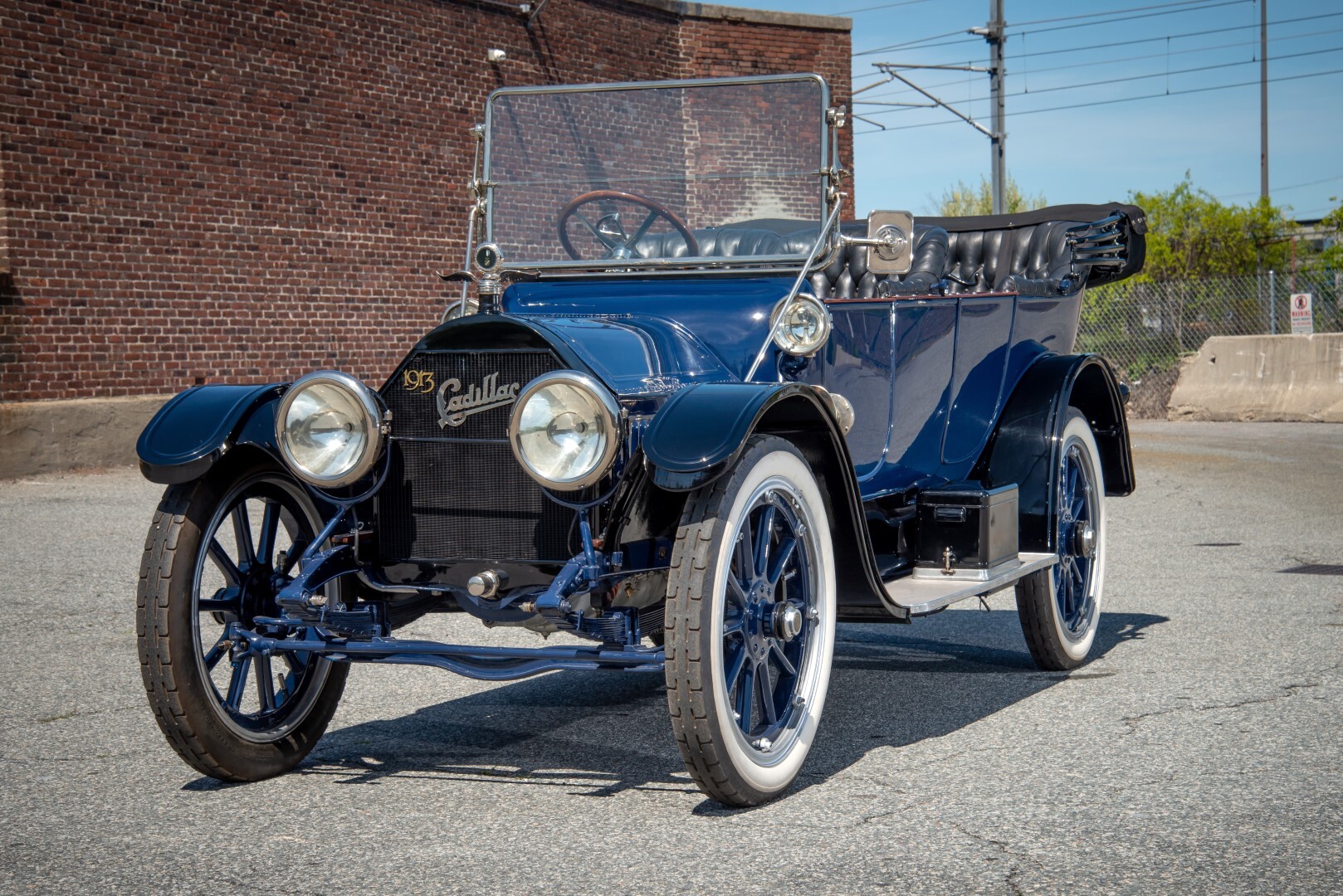 $125,000 · 40% above typical