
Cadillac XLR buyer's guide
Cadillac XLR -- the model's own buyer's guide: variants, values and what to check.
Years listed: 2004-2005 · Series: XLR
# Cadillac XLR (2004–2009) — buyer's guide
Overview and history
You are looking at Cadillac's one attempt at a modern flagship roadster, and you need to understand what it is before you judge the specific car in front of you. The XLR grows out of the Evoq concept shown at Detroit in 1999, the car that launches Cadillac's sharp-edged Art and Science styling. The production car arrives for the 2004 model year with the concept's folded-steel looks largely intact: vertical lamps front and rear, a wide egg-crate grille, and surfaces that look cut rather than sculpted. It is the spiritual successor to the Allanté of 1987–1993, but where the Allanté is front-wheel drive and Italian-bodied, the XLR is engineered in-house as a proper rear-drive grand tourer aimed squarely at the Mercedes-Benz SL, the Jaguar XK and the Lexus SC 430.
The engineering address matters. The XLR is built at Bowling Green, Kentucky, on its own assembly line alongside the Chevrolet Corvette, and it shares the Corvette's Y-body architecture: hydroformed steel perimeter frame rails, composite body panels, a floor made from a balsa-wood composite sandwich, a rear-mounted transmission for near-even weight distribution, double-wishbone suspension with transverse composite leaf springs, and Magnetic Ride Control dampers as standard. Correct the myth you hear at every viewing, because it decides how you value the car: the XLR is not a Corvette in a suit. It shares the architecture and the factory, but it has a different engine — Cadillac's own Northstar V8, never an LS — a different body, a power folding hardtop the Corvette never offers, a longer list of luxury equipment, and suspension and steering tuned for touring rather than lap times. It reaches the market a year before the C6 Corvette that shares its platform generation, which is why early cars mix late-C5 and early-C6 thinking underneath. Treat it as a close cousin, not a rebadge, and you price and judge it correctly.
What you get as standard still reads well. Every XLR has a power retractable aluminium hardtop that folds into the boot in roughly half a minute, Magnetic Ride Control, a head-up display, instruments designed with Bulgari, heated and cooled leather seats, DVD navigation, Bose audio, keyless entry and push-button start, and — on the standard car — radar adaptive cruise control, a rarity at the time. The car is a two-seater with a small boot that becomes very small indeed with the roof folded, and no spare wheel; you run on run-flat tyres. None of that is a defect. It is the brief the car is built to.
Cadillac plans for 5,000 to 7,000 cars a year and never gets close. Sales peak in the first full years and fall away steadily, and production ends on 31 March 2009 as General Motors slides toward bankruptcy. Total production across 2004–2009 is 15,460 cars, of which 2,188 are the supercharged XLR-V. That rarity cuts both ways for you now. The XLR is uncommon enough to feel special and to draw a crowd, and common enough that mechanical knowledge and a used-parts trade exist. But it is a low-volume, electronics-heavy flagship whose maker discontinues many of its unique parts early, and that fact — not the engine, not the chassis — is what governs ownership. You buy an XLR with your eyes open about the roof mechanism, the dampers and the modules, or you do not buy one at all. The sections that follow give you the order to check them in.
The models
The range is simple to say and easy to get wrong at a viewing, because sellers describe trim, colour editions and the V as if they were interchangeable. They are not. There are two mechanical identities — the naturally aspirated XLR and the supercharged XLR-V — and everything else is equipment, gearbox year and limited-edition dress. Learn the split by engine and transmission first, then worry about editions.
| Model | Years | Engine | Output | Built | Character |
|---|---|---|---|---|---|
| XLR | 2004–2009 | 4.6 Northstar V8 (LH2) | 320 hp | 13,272 | The grand tourer as intended: quiet, well equipped, adaptive cruise standard |
| XLR Platinum | 2007–2009 | 4.6 Northstar V8 (LH2) | 320 hp | Not published separately | Richer trim, chrome wheels and grille, the luxury flagship of the base range |
| XLR-V | 2006–2009 | 4.4 Northstar V8 supercharged (LC3) | 443 hp | 2,188 | The performance car: bigger brakes, firmer tune, no adaptive cruise |
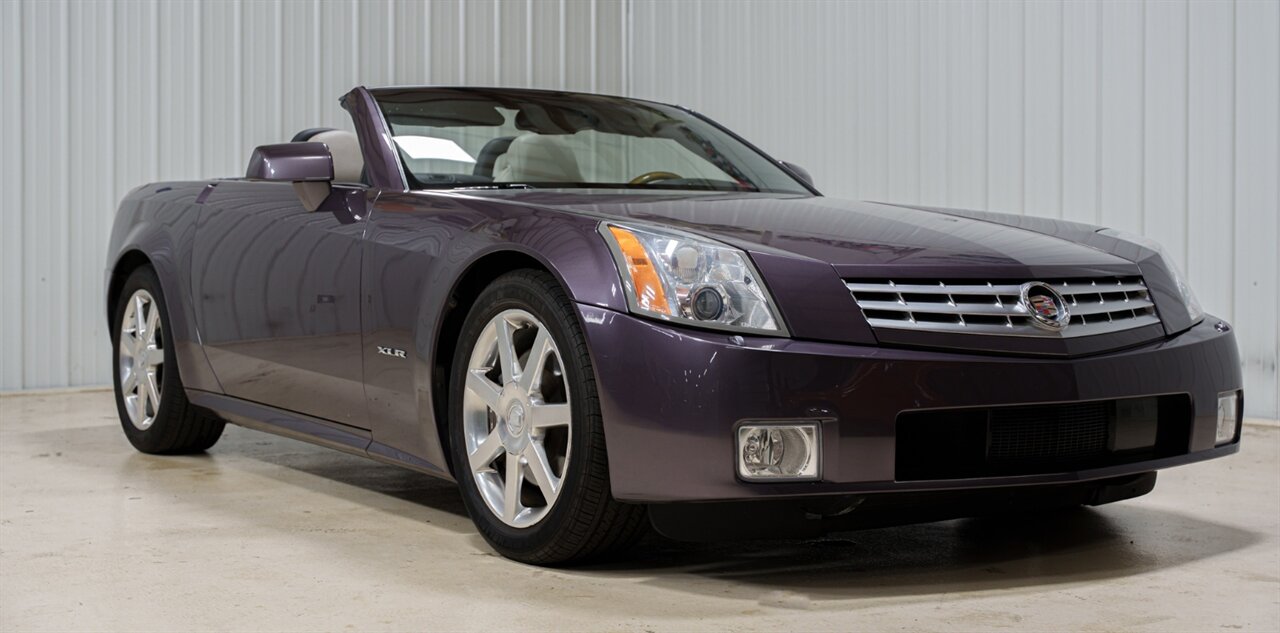
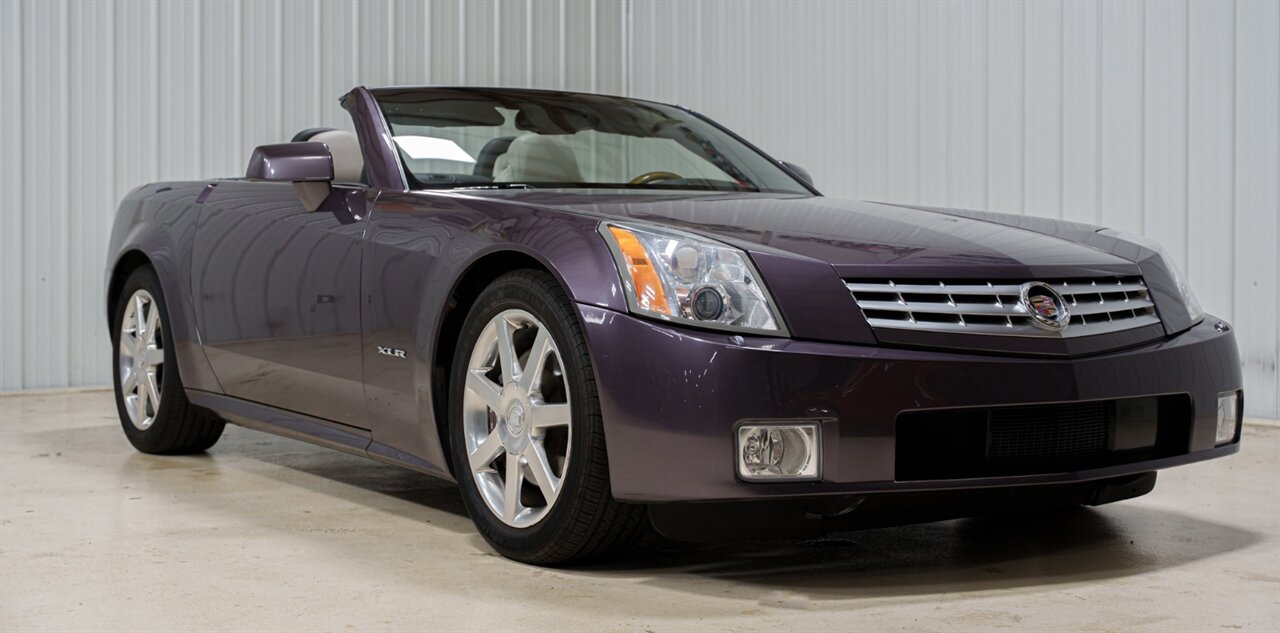
| XLR Neiman Marcus Edition | 2004 | 4.6 Northstar V8 (LH2) | 320 hp | 101 | Launch special in Ultra Violet with numbered sill plates, sold through the Neiman Marcus catalogue |
The built figure for the standard car is the documented total of 15,460 minus the documented 2,188 XLR-Vs; Cadillac does not publish a separate Platinum count, and you should distrust any seller who quotes you one. Within the standard car, the year splits that matter are these. The 2004–2006 cars pair the 4.6 with the five-speed automatic. For 2007 the base car gains the six-speed automatic and the Platinum trim level arrives with a chrome mesh grille, chrome wheels, upgraded leather and wood, and from 2008 a revised steering tune and new wheel designs. The Passion Red special edition appears for 2007 and the Alpine White limited edition for 2008, the latter also offered on the V. For 2009, the final year, both models get revised front and rear fascias, chrome side vents, a new bonnet treatment on the V, and an Alcantara headliner — the rarest and most finished cars, but also the last of a dying line, so you check parts-dependent items on a 2009 exactly as hard as on a 2004.
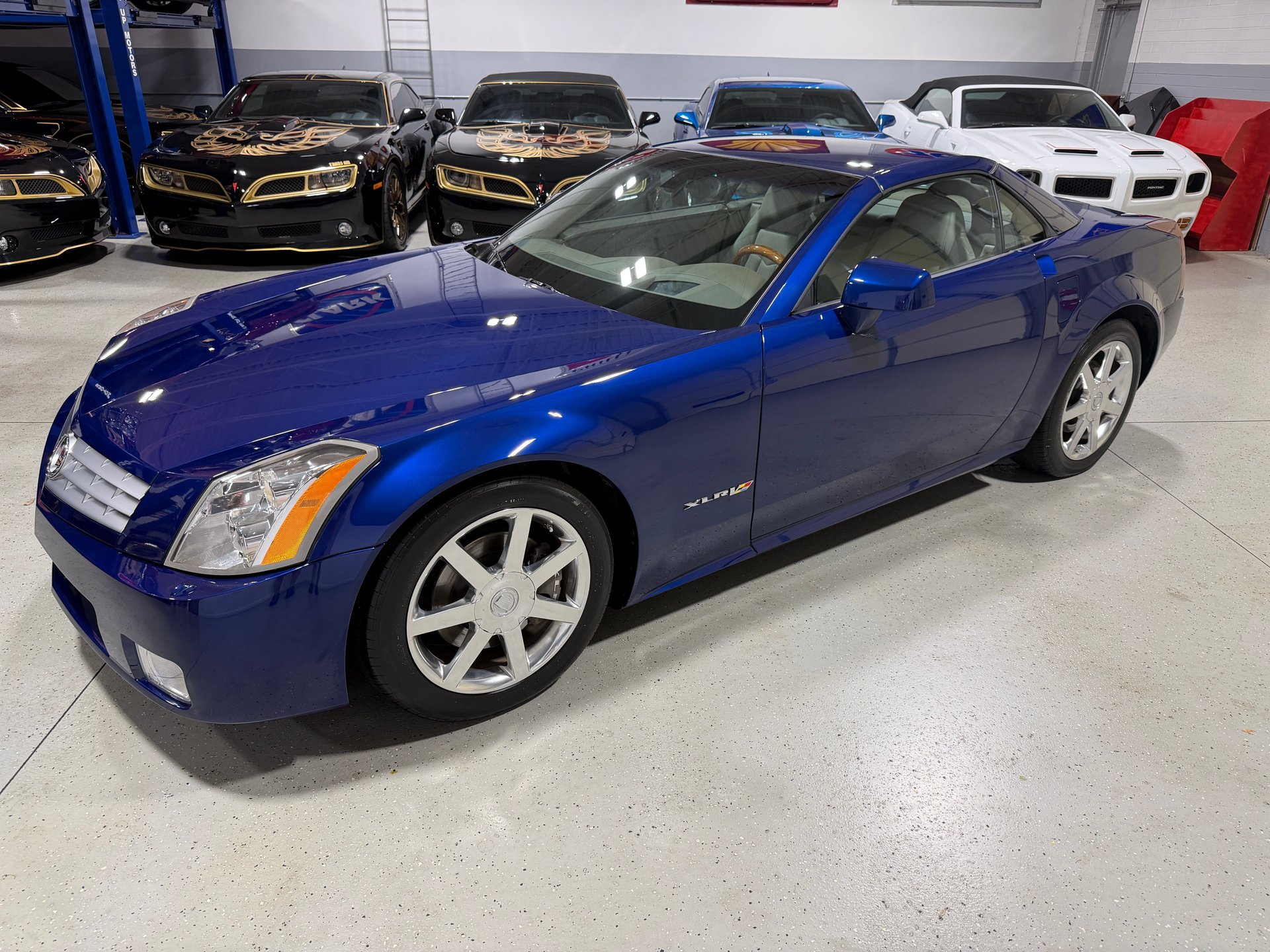
The XLR-V, launched for 2006 alongside the CTS-V and STS-V as part of the first V-Series wave, is a mechanical package, not a trim pack. You get the supercharged 4.4, the six-speed automatic from the start, larger brakes using Corvette Z51 hardware, a firmer Magnetic Ride calibration, 19-inch wheels, a wire-mesh grille, a domed bonnet to clear the supercharger, suede seat inserts and aluminium interior trim in place of wood. And you lose something: the V has no adaptive cruise control. The radar unit lives behind the grille badge on the standard car, and the V's mesh grille and cooling demands delete it. That difference is one of your best identity checks, and the traps section below returns to it.
Now the identity traps, because this model attracts them. First, a standard car wearing V badges, a mesh grille and 19-inch wheels is still a standard car: badges and grilles unbolt in minutes. The V is settled by what does not swap easily — the supercharged engine under the bonnet with its intercooler plumbing, the domed bonnet itself, the larger brake hardware, and the car's build records. Open the bonnet before you discuss price; if you see a naturally aspirated 4.6 with its plain intake, the conversation is over whatever the boot badge says. Second, the Neiman Marcus car: 101 built for 2004 in Ultra Violet, each with engraved, individually numbered sill plates. A purple 2004 without the numbered plates is a purple 2004 — Ultra Violet is a launch colour story, not proof — and the plates, the documentation and the colour together make the edition, never the colour alone. Third, adaptive cruise: if a car sold to you as a V demonstrates adaptive cruise, or a car sold as a standard car has no trace of the system, ask why, because one of those facts does not belong. Fourth, model-year claims drift on low-volume cars that sit in dealer stock; the car in front of you is the year its VIN and build plate say it is, not the year it is first registered or first sold, and unsold XLRs are still being retailed well after production ends.
Equipment is generous and largely standardised, which helps you: a car missing its head-up display function, its cooled seats or its navigation is not a low-spec car, it is a car with faults, because these systems are fitted across the range. The one structural fact to carry into every viewing is that there is no manual gearbox, no fixed-roof version and no four-seat version. Anyone offering you one is offering you a story.
Engines and gearboxes
The 4.6 Northstar V8 — LH2
Every standard XLR runs the LH2, the rear-drive, variable-valve-timing version of Cadillac's Northstar. You are dealing with a 4,565 cc all-aluminium V8, bore and stroke of 93 mm by 84 mm, double overhead camshafts per bank, four valves per cylinder, coil-on-plug ignition, electronic throttle and variable valve timing — a sophisticated, high-revving touring engine, not a truck motor. Output is 320 hp at 6,400 rpm and 310 lb-ft of torque at 4,400 rpm, and the character matches the figures: smooth and muted below 3,000 rpm, genuinely eager above it, and happiest in long, fast running. It is the most powerful naturally aspirated Northstar Cadillac sells in a production car of the period, and in LH2 form it benefits from a decade of Northstar fixes, a point the problem-areas section treats in full.
Running one is conventional if you respect three specifics. First, oil: the Northstar carries a large sump, uses oil at a rate that alarms owners raised on Japanese cars — a quart between services on a hard-used example is within the engine's known behaviour — and carbon builds on rings and valves on cars that are only ever idled to the shops. The period advice still holds: the engine wants regular full-throttle exercise to keep the rings free, and a car that has been babied into carbon trouble shows it as oil consumption and cold-start knock rather than as a fault code. Budget $120–$250 for a proper oil and filter service with the correct oil, and check the level yourself at the viewing, because a seller who never checks it hands you a dry-sump reading and a story. Second, cooling: the system is sealed with a pressurised surge tank, the thermostat and water pump live at the front of the engine, and the coolant crossover casting with its gaskets is a known seep point as the car ages. Coolant is long-life Dex-Cool, which is fine when it is changed on schedule and corrosive trouble when it is left for fifteen years or mixed with the wrong top-up. Ask when it was last changed; if nobody knows, you change it. A coolant service runs $150–$300, a water pump $600–$1,100 fitted, and crossover gaskets $500–$900, most of it labour. Third, the top end: three timing chains with hydraulic tensioners do the cam drive, and they are durable, but a cold-start rattle that lasts beyond a second or two on a high-mile car is tensioner wear introducing itself, and chain work on this engine is an engine-out conversation at $2,500–$4,500. Spark plugs are long-life items; a misfire on a test drive is more often a coil or oil in a plug well from a leaking cam cover than a plug, and cam-cover gaskets are a $400–$800 job. None of this is exotic. All of it is cheaper bought already done.
The supercharged 4.4 Northstar — LC3, in the XLR-V
The V's LC3 is not the 4.6 with a blower bolted on, and you should not let a seller describe it that way. Displacement drops to 4,371 cc with a smaller bore, specifically to thicken the cylinder walls and strengthen the block for boost. The engine is hand-finished in the same spirit as the STS-V unit it shares its design with, with strengthened internals, multi-layer steel head gaskets, an improved water jacket, and an Eaton Roots-type supercharger sitting in the valley, driven by belt, feeding the engine through a liquid-to-air charge cooler with its own electric circulation pump and front-mounted heat exchanger. Output is 443 hp at 6,400 rpm and 414 lb-ft at 3,900 rpm, with 90 percent of that torque available from 2,200 to 6,000 rpm — which is exactly how the car feels: not peaky, just emphatically strong everywhere.
What you check on an LC3 is the forced-induction hardware layered over the Northstar basics. The supercharger itself is durable, but its drive coupler and bearings wear and announce themselves as a rattle at idle that changes with load; a supercharger service or exchange unit is a $1,500–$3,500 event, not a belt-and-pulley bill. The charge-cooler pump is the quiet killer: when it fails, intake temperatures climb, the engine management pulls timing, and the car simply feels flat on a hot day or after repeated full-throttle runs — no dramatic warning, just missing performance you have paid a V premium for. A healthy car pulls as hard on the third run as the first; test exactly that on the drive, and budget $400–$800 for a pump and coolant service if it does not. The intercooler circuit wants its own coolant checked separately from the engine circuit, and a car whose records never mention it is a car whose records are incomplete. Belts and idlers on the supercharger drive are wear items at $300–$600 fitted. Underneath, the head-gasket story is better than on any earlier Northstar: the LC3's gaskets and clamping are designed for boost, and failures are rare in service. You still do the same cooling checks as on the base car, because an overheated LC3 is an expensive engine to put right, at $4,000–$7,000 for a proper top-end repair with thread inserts if the worst has happened.
Gearboxes — 5L50 and 6L80, both rear-mounted
There is no manual XLR, and the automatic is not where you expect it. Following the Corvette layout, the transmission sits at the rear axle as a transaxle, connected to the engine by a torque tube, which is how the car achieves its weight distribution. On 2004–2006 standard cars you get the Hydra-Matic 5L50-E, a five-speed electronically controlled automatic with Driver Shift Control manual override. The XLR-V uses the Hydra-Matic 6L80 six-speed from its 2006 launch, and the standard car adopts the 6L80 for 2007. Both are strong, well-proven GM units; the six-speed is the nicer drive, with closer ratios, better motorway economy and more decisive manual shifts, and it is one of the two real reasons — the other is trim — to prefer a later base car.
Neither gearbox gives much trouble if the fluid is serviced, and both suffer when it is treated as sealed for life, which is how period schedules present it. At this age you want evidence of at least one fluid and filter change; a car with none gets one in your ownership at $300–$550, complicated slightly by the rear-mount layout and the need to check the level at the correct temperature with the car level. Symptoms to hunt on the test drive are a flare or delay engaging drive from rest, a shudder under light-throttle lock-up at cruising speed, and harsh downshifts when hot — each points to fluid condition, solenoids or the torque-converter clutch, in roughly that order of cost, from a service to $1,200–$2,000 for internal electrical work to $3,000–$4,500 for a rebuilt unit fitted. The differential shares the rear housing's hard life and wants its oil changed with the gearbox service; a whine on a trailing throttle that changes with road speed is the diff or a wheel bearing, and you distinguish them by weaving gently — a bearing changes note as you load and unload it, a diff does not. The torque tube itself is a Corvette-pattern part and rarely troubles the XLR, but its rubber couplings age, and a driveline vibration that arrives at one specific road speed on an otherwise smooth car earns a proper inspection before you blame the tyres.
Problem areas
The folding hardtop — sensors, hydraulics and the price of a stuck roof
This is the system that decides whether an XLR is a car or a project, and you give it more time than the engine. The roof is an electro-hydraulic folding hardtop built around a mechanism supplied by Car Top Systems. Press the button and a choreographed sequence runs: the boot lid opens backwards, the header latches release, the roof folds in sections, the tonneau covers it, the boot closes. A folding top control module runs the sequence by reading position sensors — rotary potentiometers on the pivots — and microswitches on the latches, and driving a hydraulic pump and a set of cylinders and latch motors in the right order. The full cycle takes roughly thirty seconds. Every stage must report the expected position before the next begins. That design is why the failures feel so disproportionate: one sensor reporting nonsense stops a fundamentally sound mechanism dead, often with the roof half-folded and the boot open.
Learn the failure modes by mechanism, because the diagnosis is the cost. The commonest stoppage is a position sensor drifting out of range with age and heat. The module sees a roof section where it cannot be, refuses to continue, and stores a fault. The cure ranges from a relearn procedure with a Tech 2 scan tool — the module re-learns each sensor's end positions — to replacing the offending potentiometer, at $250–$700 for diagnosis and relearn at a specialist, and $600–$1,200 if a sensor and its calibration are involved. The second mode is hydraulic: the pump lives in a compartment in the left side of the boot, and its cylinders and hoses age. A slow cycle, a pump that strains audibly, or oil misting in the boot compartment points here, and a pump or cylinder rebuild runs $800–$1,800 depending on how many components are involved. The third mode is the latch and switch layer: header latch microswitches and the boot's cargo divider switch. That last one catches every new owner — the folding boot partition must be in place and its switch made, or the car refuses to start the cycle because it thinks luggage is where the roof needs to go. A refusal with no movement and no noise is the divider, a dead battery or a blown fuse until proven otherwise; do not let anyone quote you for a pump on a car that has not first had its divider checked.
The fourth mode is the expensive one, and it is water. The boot compartment that houses the hydraulic pump also houses the folding top control module and the suspension control module. Boot seal leaks and blocked drains let water into that compartment, and the modules sit where the water collects. A car with a damp boot, tide marks in the side compartment, or green corrosion on module connectors is a car whose roof and ride faults may both be water damage, and module replacement with programming runs $800–$1,500 per module when used or remanufactured units can be found — new stock is effectively exhausted, so availability, not labour, is the risk. This is also why a car with several unrelated electrical faults is not a bargain with gremlins; it is often one wet compartment expressing itself through every system wired into it.
Two structural checks complete the roof. The roof panel itself is bonded construction, and there are documented cases of the outer panel's bonding failing, announced by wind whistle at speed and a visible gap or lift at the front edge of the roof panel. Run your eyes and a fingertip along that seam at the viewing: a panel that moves under hand pressure needs re-bonding by a body specialist at $600–$1,400, and a panel that has already separated at speed is a car you walk away from. Then the seals: perished or compressed roof and boot seals let in the water that starts the module story, and a full seal refresh is $400–$900 in parts when the parts can be sourced. Your summary test is simple and non-negotiable: the roof must complete at least two full cycles, up and down, smoothly, without hesitation, warning messages or assistance, on the seller's driveway, on a battery you have confirmed is healthy. Anything less and you price the car as a roof project, because the diagnostic path alone — before any part is changed — is $300–$800 of specialist time on a system most general workshops will not touch.

Magnetic Ride shocks — what worn dampers really cost
Every XLR rides on Delphi Magnetic Ride Control: dampers filled with magnetorheological fluid, whose viscosity the suspension module changes almost instantly by applying a magnetic field, reading the road through position sensors at each corner. When it works, it is the car's best trick — soft over broken surfaces, controlled when you press on, and a large part of why the XLR rides better than its Corvette cousin on real roads. When it fails, it fails in ways you can test for, and the replacement reality is the second-biggest ownership fact after the roof.
The dampers themselves wear two ways. They leak — look for wet, oily residue on the damper body rather than the dry dust of age — and they lose damping internally, which you feel as float over undulations, a corner that bounces twice after a sharp input, or a car that crashes and thumps because the module can no longer soften the stroke. There is no rebuild service for these units; a worn Magnetic Ride damper is replaced, at $700–$1,200 per corner for the correct AC Delco unit when available, which makes a full set a $2,800–$4,800 decision before labour. That figure explains the market's two escape routes, and you need to recognise both at a viewing. The first is fitting conventional non-magnetic dampers with electronic simulators or resistors to keep the warning light off, at $800–$1,500 for a full set: cheaper, competent, and a permanent change to the car's character and originality that must be declared in any honest sale. The second is one new damper and three tired ones, which gives you a car that rides unevenly corner to corner. Ask which dampers have been changed, when, and with what, and bounce each corner yourself; mismatched corners show immediately.
The electronics around the dampers fail separately from the dampers. A suspension module damaged by the boot-compartment water described above defaults the system to a firm, unyielding state — owners describe a car that rides like a truck almost overnight — and that symptom, arriving suddenly on all four corners at once, is module or power supply, not four dampers failing together. Position sensor linkages seize and break, giving one corner's worth of wrong data and a service suspension message, at $200–$500 to put right. Your test protocol: start the car and confirm no suspension warning, drive over the worst surface you can find at town speed listening for knocks, then find an undulating road at speed and feel for float, then stop and bounce each corner. A healthy car settles in one movement, rides quietly, and shows no message. Budget honestly from there.
The rest of the chassis is Corvette-pattern and reassuring. The transverse composite leaf springs front and rear do not sag like steel coils, but their end adjuster pads wear and the springs themselves can crack or fray at the edges after impacts — inspect them on a lift, because a cracked spring is a $600–$1,100 replacement, not a negotiation point. Bushes and ball joints wear at normal luxury-car rates. The run-flat tyres fitted from new are now old technology: a set of aged run-flats rides harshly enough to make a healthy car feel broken, and you should check tyre dates before you condemn the dampers, because fresh modern tyres transform these cars for $900–$1,600 a set. Brake discs and pads are standard GM fare on the base car and Corvette Z51 sizes on the V, at $400–$900 per axle fitted, and the V's larger hardware is one of its genuine running-cost premiums.
The Northstar head-gasket question — the LH2 era, treated factually
You cannot buy an XLR sensibly until you have this history straight, because the Northstar name carries a reputation the XLR's engines only partly deserve. The mechanism first: the Northstar is an aluminium-block engine whose steel head bolts thread directly into the aluminium. On the 1993–1999 engines the bolts are fine-thread M11 by 1.5, and over years of heat cycles and coolant-side corrosion the aluminium threads lose their grip. Clamping force fades, the head lifts microscopically under combustion pressure, the head gasket breaches, and combustion gas enters the cooling system. The gasket is the victim; the pulled threads are the disease, which is why a simple gasket change on an affected early engine does not last, and why the proper repair machines the block for steel thread inserts or studs with the engine out, at $3,500–$6,000 on the front-drive cars where the legend is made.
Now the chronology that matters to you, because the XLR arrives after the fixes. For 2000, GM lengthens the head bolts. Late in the 2002 model year, the thread start in the block is raised and the engagement revised. For 2004 — the XLR's first year — the bolts change to a coarser M11 by 2.0 thread, the strongest revision of all, and every LH2 and LC3 is built this way from the start. The supercharged LC3 adds multi-layer steel gaskets designed for boost. The factual result: head-gasket failure on XLR engines is uncommon in service, a fraction of the early-engine rate, and the XLR does not belong on the avoid lists written about 1990s Northstars. But uncommon is not impossible, and the trigger that remains is overheating from any other cause — a failed water pump, a split radiator end tank, a stuck thermostat, coolant neglected until it turns acidic. One serious overheat can pull threads even on the coarse-thread block, and the seller's phrase you never accept is that it overheated once but seems fine now.
Your tests are cheap and decisive. From cold, check the surge tank: coolant at the correct level, clean and the correct colour, with no oily film and no exhaust smell. Start the car and watch for a rapid, rhythmic bubbling in the tank or hoses that pressurise rock-hard within a minute of a cold start — combustion gas, not warm-up. A chemical block test on the tank vapour, done by any competent workshop for $50–$120 as part of a pre-purchase inspection, settles doubtful cases by detecting combustion gases in the coolant. Unexplained coolant loss with no visible leak, white exhaust vapour that persists on a warm engine, and a temperature gauge that climbs in traffic complete the picture. A car that passes all of these and has documented coolant changes is a car you buy without losing sleep; a car that fails any one of them is a $4,000–$6,500 engine-out decision, and you price it that way or walk away. Other Northstar seepage — cam covers, the crankcase half-case joint, the rear main area — is the ordinary oil weeping of an ageing aluminium V8, worth $500–$1,500 to chase properly and worth negotiating over, but it is not the head-gasket story and you should not let a seller merge the two.
Electronics, modules and lights — obsolescence is the real wear item
The XLR is a networked car from the era when General Motors builds flagship electronics faster than it commits to supporting them, and at twenty years old the electronics, not the metal, are what wear out. Start with the lights, because they are the clearest example. The headlamp units are XLR-specific, styled into the car's vertical signature, and discontinued. The daytime running lamp and indicator share a bulb whose socket is the subject of a period recall for premature failure, and heat from that lamp crazes and melts the inner lens on many cars — look through the outer lens at the viewing for milky, bubbled or melted reflector areas. A damaged unit cannot be rebuilt with new parts; you are in the used market at $800–$1,800 per side when a good unit surfaces, and a car with two clear, undamaged lamps owns something genuinely scarce. The LED tail lamps are similarly specific and similarly finite. Price lamp condition into the car in front of you, because you may not be able to improve it later at any sensible cost.
Access and starting are fully electronic. The doors have no conventional handles outside or mechanical latches inside in normal use: a touch pad releases the door electrically, push-button start authorises through the remote control door lock receiver, and a dead battery or a failed receiver leaves you using the emergency key, the boot release and the manual door release lever on the floor beside the seat — find that lever at the viewing and make the seller show you it works, because the day you need it is not the day to learn it is seized. Fob recognition faults, intermittent no-crank episodes and passive-entry failures are usually receiver, fob battery or low car battery before they are anything deeper, and diagnosis is $150–$400, but a car that strands its owner electrically once a month is telling you about battery drain: modules that fail to sleep, a boot or glovebox lamp staying live, or the OnStar hardware waking the network. A healthy car sits for two weeks and starts. Ask directly how long this one can sit, and believe the answer only if the battery is recent and the car starts crisply after standing during your inspection.
Inside, work through every system because each is a module with a finite supply behind it: the head-up display's focus and brightness, the Bulgari instruments and their backlighting, the navigation screen and its DVD drive — the maps are frozen in time and the drive itself is the failure point, not the disc — the Bose amplifier, which fails into silence or crackle on one channel group at $400–$900 for repair or used replacement, heated and cooled seat elements and their control module, and the dual-zone climate's blend actuators, whose clicking behind the dashboard is a $300–$700 labour-heavy fix. Adaptive cruise on the standard car deserves its own test on the drive: the radar sits behind the grille emblem, a replaced grille or badge from a minor front-end knock can misalign it, and a system that reports unavailable on a clear road with a clean badge is a diagnostic bill, not a quirk. None of these systems is unreliable in the sense of being badly made. They are simply old, networked and increasingly unsupported, and the correct buying response is to test all of them, on the day, and treat every dead one as a priced deduction rather than a promise.
How to inspect one
Work in this order. The sequence puts the systems that can write the car off — roof, cooling, dampers, water damage — before the cosmetics sellers polish, and it cross-references the problem areas so you test each known weakness at the moment you are standing next to it.
- Start with identity, before you admire anything. Confirm the car is what it is sold as: open the bonnet and identify the engine — a plain naturally aspirated intake for the standard car, a supercharger with charge-cooler plumbing and a domed bonnet for a genuine XLR-V. Check for the adaptive cruise difference the models section explains: present on a standard car, absent on a V. On a purple 2004, look for numbered sill plates before anyone charges you for a Neiman Marcus car. Record the VIN and build information and compare them with the paperwork and the claimed model year.
- Interrogate the paperwork for the four histories that matter. You want coolant changes for the head-gasket question, gearbox fluid service, damper replacements with part types named, and any roof work — sensors, relearn, pump, modules. Receipts that name the system beat a stamped book that names nothing. A thick file on a high-mile car is a better sign than a thin file on a low-mile car.
- Do the cold-start cooling checks from the problem areas before the engine warms. Surge tank level, coolant colour and cleanliness, oil film or exhaust smell in the tank, then start from cold and watch for rhythmic bubbling or hoses going rock-hard within a minute. Note the oil level on the dipstick at the same time, and look under the engine for cam-cover and half-case weeping.
- Inspect the boot compartment for water before you touch the roof button. Lift the trim, look into the left side compartment that houses the hydraulic pump and the control modules, and feel for damp, tide marks and corroded connectors. This is the check that predicts roof and suspension faults together. Confirm the folding cargo divider is present and seated — the roof will not cycle without it.
- Run the roof through two complete cycles, down and up, without interruption. Time it loosely, listen to the pump, and watch each stage: boot lid, latches, roof sections, tonneau. It must finish both cycles with no hesitation, no warning message and no helping hand. Then examine the roof panel's front seam for lift or movement under hand pressure, and run a fingertip along every roof and boot seal. Any failure here re-prices the car as a project, whatever the paint looks like.
- Work the electronics end to end while the engine idles. Both fobs, passive entry, push-button start, the manual door release lever beside the seat, head-up display, instruments, navigation screen, Bose sound on every speaker group, heated and cooled seats, climate in both zones listening for actuator clicks, and every window and mirror. Note each dead item separately; on this car each one is a module, a price and a parts search.
- Examine the lamps as the scarce parts they are. Look through the headlamp lenses for crazing, milkiness or melted areas around the running lamp, confirm every lamp function including the indicators, and check the LED tail lamps segment by segment. Photograph anything doubtful — you compare against the used market later, not from memory.
- Get the car on a lift if the seller allows it, and read the chassis. Damper bodies for wet leaks, composite leaf springs for cracks, fraying and worn adjuster pads, bushes and ball joints for play, brake disc condition — Z51 sizes on a V — and the rear transaxle area for fluid weeping. Check tyre dates on all four corners before you judge the ride; aged run-flats condemn good dampers unfairly.
- Drive it long enough to get everything hot, and drive the gearbox as much as the engine. Engagement from rest, light-throttle lock-up shudder at cruising speed, downshifts when hot, and manual mode in Driver Shift Control. On a V, make three full-throttle runs separated by steady driving: the third must pull like the first, or the charge-cooler pump question from the engines section is open.
- Test the chassis systems on the drive. Find broken town surfaces for knocks, an undulating road for float, and settle each corner with a bounce test when you stop. On a standard car, engage adaptive cruise on a clear road and confirm it acquires and holds a target. A suspension warning, a car that rides firmly on all four corners at once, or one corner that bounces twice each tells its own story from the problem areas.
- Bring it back hot and repeat the cooling observation. Temperature steady in traffic on the return, no persistent white vapour from the exhaust of a warm engine, no fresh coolant smell, and the surge tank level where it started. Book a pre-purchase inspection with a combustion-gas block test if anything in steps 3 or 11 leaves you unsure; it is the cheapest certainty this model offers.
- Finish with the roof one last time and the sitting test. Cycle the roof once more now the car is hot and the battery has worked, then switch everything off and ask how long the car can stand unused and still start — and weigh the answer against the battery's age and how crisply the car has started all day. A car that passes the roof, cooling, damper and water checks is a car you negotiate on condition and cosmetics. A car that fails one of them is a negotiation about that system, in writing, before it is a negotiation about anything else.
Values
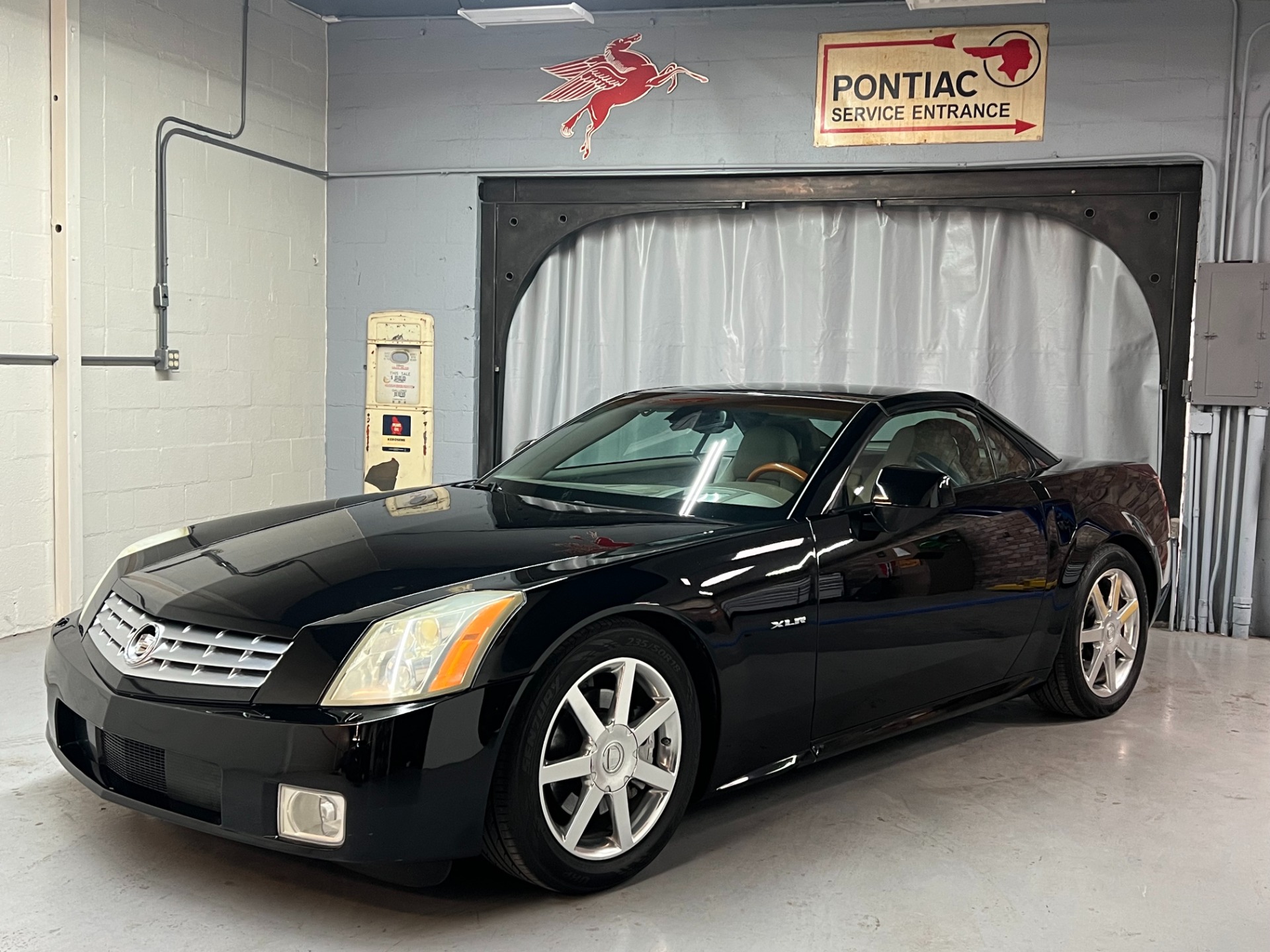
The XLR market rewards one thing above all else, and it is not mileage. It is demonstrated function. A car whose roof cycles perfectly, whose dampers are correct and matched, whose cooling history is documented and whose lamps are clear sells as a finished flagship, and a car missing any one of those is read by every informed buyer as a project wearing good paint. That single fact explains most of the spread you see between asking prices, and it is why two cars of the same year and similar mileage can sit far apart in value with both sellers convinced they are right. Learn to sort listings by evidence of function — roof shown cycling, service records naming the systems, dampers accounted for — before you sort them by miles or colour.
Within the range, the hierarchy is stable. The XLR-V carries a clear and durable premium over the standard car, earned by rarity, by the supercharged engine's performance and by its stronger long-term following, and the premium is largest for late, well-documented cars and smallest for early cars with needs. Genuine limited editions sit above their mechanical equivalents when — and only when — the edition is proven the way the models section describes: numbered plates and paperwork for the Neiman Marcus car, documented identity for the Alpine White and Passion Red cars. An unproven edition claim adds nothing, and you should pay nothing for it. Among standard cars, the later six-speed cars and the Platinum trim hold a modest edge over the early five-speed cars, condition being equal, which it rarely is: a sorted early car is worth more than a neglected late one every time, because the cost of sorting is concentrated in systems whose prices do not care what year the car is.
Mileage works differently here than on a mass-produced car. Very low mileage on an XLR often means years of standing, and standing is what kills roof seals, damper seals, tyres and batteries, and what lets coolant age undisturbed. A moderately driven car with continuous records is frequently the better buy at the same money, and the market is slowly learning to price it that way. Colour matters at the margins — the launch colours and the strong reds and blues draw more interest than the pale metallics — but colour never rescues a car with a dead roof, and it never should.
Asking prices and achieved prices part company most widely on the cars with stories. Sellers of project cars anchor on the finished-car market and wait; buyers who understand the roof and damper bills anchor on the cost to finish and bid accordingly; and the cars sit until one side moves. Auction results, where the roof is demonstrated on video and the records are photographed, are your most honest guide to what the market actually pays, because that format forces the evidence into the open. When you negotiate, negotiate from the systems: a car needing damper work, roof diagnosis or lamp replacement has a calculable distance to finished, and a seller who has maintained those systems has earned the right to hold firm. The computed market summary beneath this guide gives you the current numbers; this section gives you the order to apply them in — function first, variant second, mileage third, colour last.
Parts and ownership
Own an XLR as two cars sharing a garage. The first is a Corvette-architecture GM performance car, and it is easy: brake consumables, many suspension hard parts, filters, belts and a good deal of drivetrain hardware follow GM patterns, are understood by any competent Corvette or Cadillac specialist, and cost ordinary money — $400–$900 per axle for brakes, $300–$600 for belt and idler work, $150–$300 for routine servicing items beyond the oil service priced in the engines section. The second car is a low-volume Cadillac flagship wearing unique body, roof, lamp and interior hardware, and it is the one you plan around. Headlamps, tail lamps, roof mechanism components, control modules, trim and the Bulgari instrument cluster are XLR-specific, discontinued in many cases, and traded in a used market of dismantled cars, old dealer stock and specialist hoards. A used headlamp at $800–$1,800 and a programmed module at $800–$1,500 are the going reality, and some items — certain roof sensors, certain trim pieces — are effectively find-them-when-you-can parts at $250–$700 when they surface.
Your strategy follows from that split. Join the owner community and the XLR registry early; on a car this rare, the forums know which yard has a dismantled car, which specialist rebuilds Bose amplifiers and hydraulic cylinders, and which part numbers interchange with STS, CTS and Corvette applications — and a surprising amount does interchange once someone has done the homework, particularly switches, sensors and electrical hardware. Buy spares opportunistically: if you intend to keep the car, a good spare headlamp, a set of roof sensors or a tested control module bought when available at $200–$600 is insurance you cannot purchase later at any price. Keep the car on a battery tender whenever it stands more than a few days, both to protect the battery and to keep the modules asleep and happy, and exercise the roof regularly even in winter — the mechanism that cycles monthly is the one that keeps cycling. Use a workshop with a Tech 2 or equivalent GM scan capability for anything touching the roof, suspension or body modules; general code readers cannot relearn a roof or interrogate the folding top module, and paying a generalist to guess at $100–$150 an hour is the most expensive diagnostic route this car offers.
Running costs beyond parts are civilised. Insurance on agreed-value classic terms suits the car's rarity and the lamp problem — a front-end claim settled at ordinary repair logic can strand you waiting for parts, so agree the value and the salvage terms while the car is whole. Tyres in the correct sizes are ordinary premium-car money, brakes and fluids are as above, and fuel consumption is what a large V8 grand tourer promises: plan touring economy in the low twenties per gallon on a run and considerably less in town, with the V thirstier when you use what you paid for. Annual ownership, driven regularly and maintained by the book, is a four-figure commitment in a quiet year and a larger one in a damper or roof year; the owners who enjoy these cars are the ones who budget for the large year in advance instead of being surprised by it.

Which one to buy
- The all-rounder: a 2007–2009 standard XLR — you get the six-speed automatic, the mature electronics, the full adaptive cruise and touring equipment, and a car whose roof, dampers and cooling you have verified with the inspection sequence above. This is the XLR most buyers should own.
- The luxury buy: a 2007–2009 XLR Platinum — the same mechanical package with the richest trim, chrome detailing and the quietest cabin specification. You pay for condition and finish, not performance, and you buy it when a perfect standard car and a perfect Platinum sit side by side and the nicer interior is worth a modest premium to you.
- The performance buy: a 2006–2009 XLR-V — the supercharged LC3, the bigger brakes and the rarity are real, and so is the missing adaptive cruise and the higher cost of every V-specific system. You buy the V for how it drives, after testing the charge cooler across repeated full-throttle runs, and you accept its parts prices as the cost of the badge being genuine.
- The collector buy: a documented Neiman Marcus car, a proven Alpine White or Passion Red edition, or a 2009 final-year car — you buy these on paperwork first and condition a close second, because the premium lives in the proof and evaporates without it.
- The value buy: a higher-mileage standard car with continuous records, a cycling roof, matched correct dampers and documented coolant care, bought at project-adjacent money because the market over-reads the odometer. On this model, maintained miles are cheaper than standing still.
The overriding rule: buy the car whose roof cycles twice without complaint, whose boot compartment is dry, and whose cooling history is documented — variant, year, colour and mileage all rank below those three facts, and no XLR that fails them is cheap at any price.
See the 7 XLR cars currently listed.
For sale now
 $29,499 · 27% above typical
Expand
What they sell for: XLR sale prices.