
Cadillac XLR buyer's guide
Cadillac XLR (2004–2009) — XLR: what's listed, and what they sell for.
Years: 2004–2009 · Models: XLR
Overview and history
You are not buying a soft Cadillac that happens to have two seats. You are buying the most technically ambitious car Cadillac built in the 2000s, a car that shares its bones with the Corvette, was built on the same line at Bowling Green, Kentucky, and then diverges from the Corvette in almost every system that costs money to fix. Understand that divergence before you fall for the shape, because the XLR rewards an informed buyer and punishes a romantic one.
The story starts with the Evoq concept shown at Detroit in 1999, which announced Cadillac's Art and Science design language — sharp creases, vertical lamps, a chiselled grille — and proposed a front-engined, rear-drive luxury roadster to sit above everything else Cadillac sold. The production XLR, unveiled at Detroit in 2003 for the 2004 model year, kept the concept's stance with remarkable fidelity. The hydroformed Y-platform underneath came from the Corvette programme, evolving alongside the C6 Corvette that followed a year later: hydroformed perimeter rails, a central backbone, composite floor panels with balsa wood cores, aluminium and magnesium castings, and sheet-moulded composite body panels. There is almost no conventional steel bodywork to rust in the classic sense, which reshapes the whole inspection: on an XLR you hunt for delamination, cracked composite, failed bonding and corroded sub-structure, not for bubbling wings.
What Cadillac changed over the Corvette donor matters more than what it kept. In place of the pushrod LS V8 you get Cadillac's own Northstar — a 4.6-litre, quad-cam, 32-valve aluminium V8, and a hand-built supercharged 4.4-litre version in the XLR-V. In place of a manual option you get automatic only, mounted at the rear as a transaxle through a torque tube, exactly as on the Corvette, for near-even weight distribution. In place of a fabric roof you get a powered retractable hardtop that folds in sections into the boot. And layered over all of it sits the full early-2000s flagship technology stack: Magnetic Ride Control dampers, radar adaptive cruise control, a head-up display, heated and cooled seats, keyless access with push-button start, adaptive forward lighting, and a Bulgari-styled instrument cluster on early cars. The XLR was the first production Cadillac with radar adaptive cruise.
That ambition explains both the appeal and the ownership reality. Cadillac targeted the Mercedes-Benz SL directly and priced and equipped the XLR as a peer. Period reviewers respected the result without quite crowning it: the XLR rode better than a Corvette and felt calmer and more luxurious, but the interior plastics never fully matched the exterior's promise, boot space with the roof folded shrank to a token gesture, and the Corvette next door offered more speed for markedly less commitment. Sales told the story. Cadillac hoped for several thousand cars a year; the total across six model years, 2004 to 2009, was 15,460 cars, with the XLR-V accounting for 2,188 of them from 2006 to 2009. Production ended on 31 March 2009, in the depths of General Motors' collapse, and no successor followed. The XLR remains Cadillac's last roadster.
Rarity cuts both ways today: 15,460 cars is enough that you have a choice at any given moment, but few enough that parts, roof knowledge and Northstar experience concentrate in a small number of workshops. On this site the pool is smaller still: the Classic Listings store currently holds 10 XLR records, split evenly between 5 cars listed for sale and 5 recorded as sold, and every one of those 10 is a 2004 or 2005 car. That is a narrow, early-car sample, not a cross-section of the 2004–2009 run — it tells you nothing reliable about how often a 2008 Platinum or an XLR-V appears, because in this sample they do not appear at all. Buy the car in front of you, on its roof cycles, its cooling-system history and its fault codes.
Who should buy one? The driver who wants a genuine grand-touring roadster — roof-up refinement close to a coupé, roof-down ease at a button press, and a V8 that rewards revs — and who accepts that a low-volume flagship's roof module, dampers and headlamps will never be as cheap or as available as Corvette equivalents. If you want a sports car first, buy the Corvette. If you want the Cadillac interpretation, done properly, read on.
The models
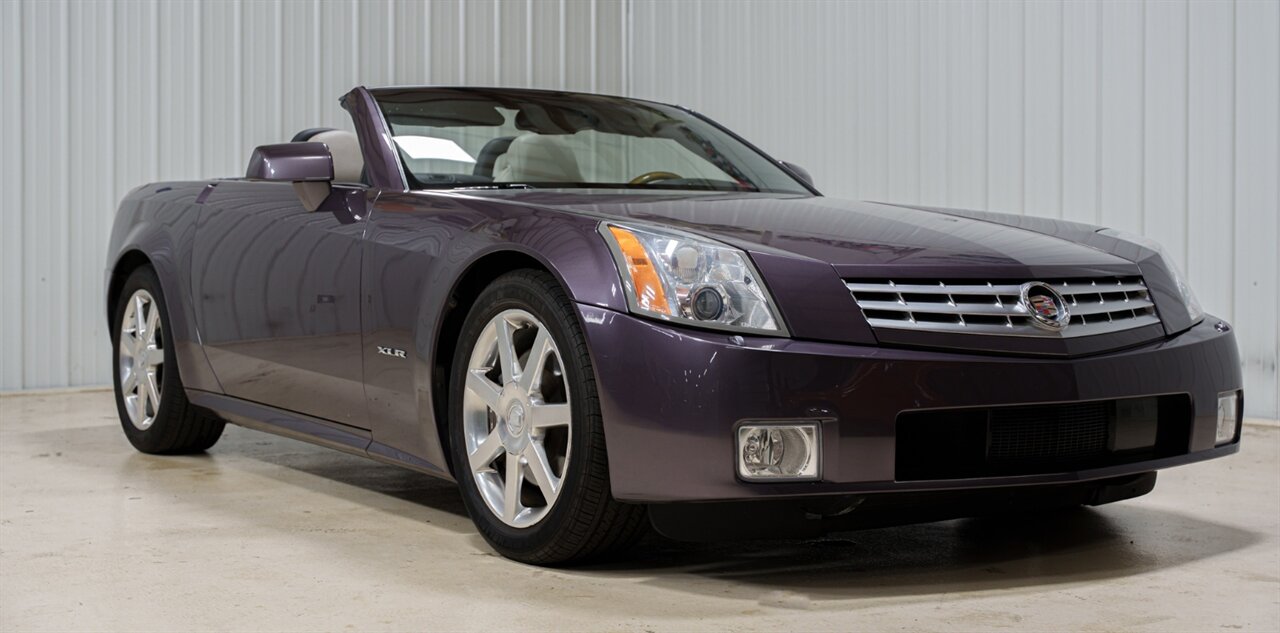
The XLR range looks simple — one body, two engines — and then complicates itself with a mid-life gearbox change, a luxury trim that becomes the standard car, and a final-year facelift. There was only ever one bodystyle: a two-seat roadster with a powered retractable hardtop. No coupé, no fabric-roof version, no manual gearbox. Every XLR is rear-wheel drive with the rear transaxle layout. What you are choosing between is power, gearbox, trim and model year — in that order.
| Model | Years | Engine | Output | Built | Character |
|---|---|---|---|---|---|
| XLR | 2004–2006 | 4.6-litre Northstar LH2 V8 | 320 hp | Included in 13,272 standard cars | The original: five-speed automatic, full flagship equipment, the purest statement of the concept |
| XLR | 2007–2008 | 4.6-litre Northstar LH2 V8 | 320 hp | Included in 13,272 standard cars | Six-speed automatic sharpens response and cruising; the mature standard car |
| XLR Platinum | 2007–2009 | 4.6-litre Northstar LH2 V8 | 320 hp | Included in 13,272 standard cars | Ultra-luxury trim — richer leather, wood and finish; from 2009 the only standard XLR offered |
| XLR-V | 2006–2009 | 4.4-litre supercharged Northstar LC3 V8 | 443 hp | 2,188 | Hand-built supercharged flagship: bigger brakes, firmer tuning, mesh grille, power-dome bonnet |
| XLR Neiman Marcus Edition | 2004 | 4.6-litre Northstar LH2 V8 | 320 hp | 101 | Launch special in Ultra Violet with exclusive trim, sold through the Neiman Marcus Christmas catalogue |
Total production was 15,460 cars. Subtract the 2,188 XLR-Vs and the standard-engine cars — base, Platinum and specials together — account for 13,272. Treat any more granular per-trim production claim from a seller with suspicion unless it comes with a registry or factory source: tidy splits circulating in adverts are often copied from each other rather than from Bowling Green records.
The standard XLR, 2004–2006
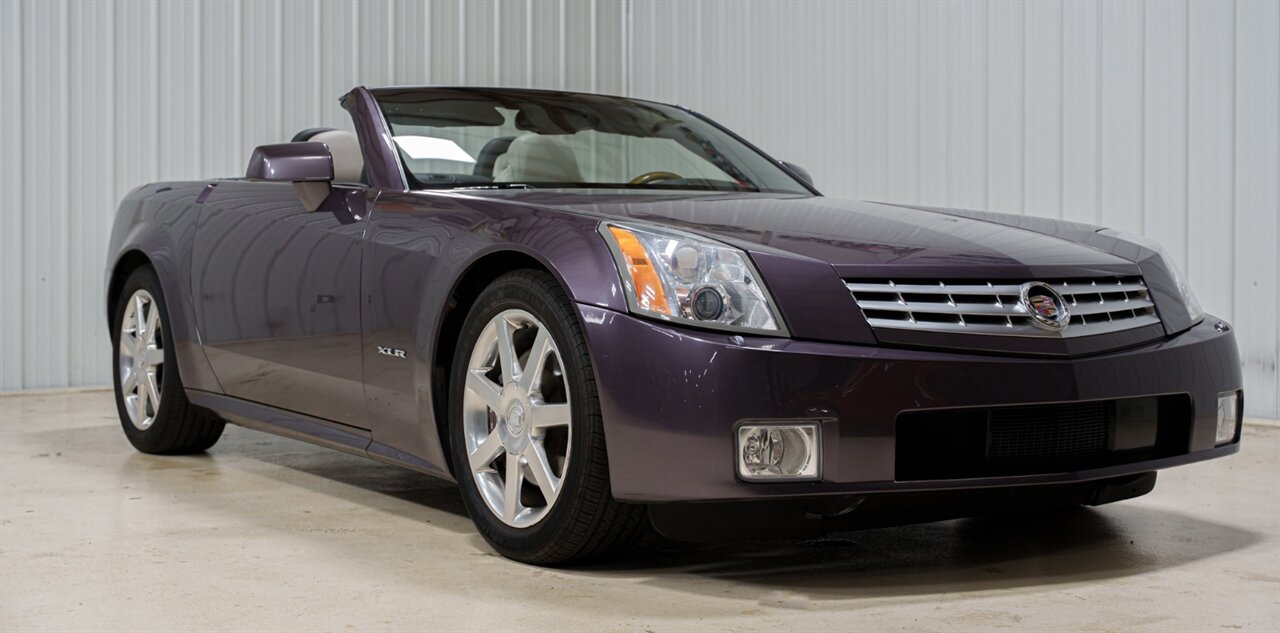
The launch car is the one most buyers will meet first — it dominates the early listings, including all 10 cars in this site's current pool. You get the 320 hp LH2 Northstar, the Hydra-Matic 5L50 five-speed automatic, Magnetic Ride Control, adaptive cruise, head-up display, heated and cooled perforated leather seats, DVD navigation, Bose audio, xenon adaptive headlamps with washers, and the full powered roof. Equipment was generous from the start because the XLR had one job — flagship — and options were few, which simplifies buying: a 2004 and a 2006 differ mainly in detail refinements and colour availability, not in fundamental specification.
One launch footnote is worth knowing so a seller cannot inflate it. The 2004 Neiman Marcus Edition — Ultra Violet paint, exclusive interior treatment, offered through the retailer's Christmas catalogue — sold out within minutes and only 101 were made, so a genuine one is a real collectible subset; verify it by documentation and trim, not by purple paint alone, because any XLR can be repainted. Other limited colour-and-trim specials followed in small numbers, including Star Black and Alpine White editions. They change nothing mechanical. Pay for condition first and the edition second.
The six-speed and Platinum cars, 2007–2008
The most consequential change in the standard car's life arrives for 2007: the five-speed gives way to the Hydra-Matic 6L80 six-speed automatic the XLR-V had introduced a year earlier. An extra ratio, tighter spacing and better electronic control make the car keener at part throttle and more relaxed at a cruise. At the same time Cadillac layers the Platinum trim over the range — upgraded leather, genuine wood, distinctive wheels and badging — aimed at buyers cross-shopping a Mercedes SL550 who cared more about cabin richness than pace. Mechanically a Platinum is a standard XLR; buy it for the interior you will touch every mile.
On merit alone, the 2007–2008 six-speed cars are the sweet spot: the gearbox improvement is real and the cars benefit from three years of production fixes. That does not make a well-kept 2005 a bad buy. It makes a neglected 2007 a worse buy than a cherished 2005, every time.
XLR-V, 2006–2009
The V changes the car's centre of gravity as a proposition. Under a bonnet with a raised power dome sits the LC3: a 4.4-litre Northstar, hand-assembled at GM's Performance Build Center in Wixom, Michigan, with a smaller bore than the LH2 to thicken the cylinder walls, lower-compression pistons, an Eaton Roots-type supercharger and a Laminova intercooler system, producing 443 hp and 414 lb-ft. Drive goes through the 6L80 six-speed from the outset. Brakes grow to Corvette Z51 specification, wheels to 19 inches, the grille becomes polished mesh, and suspension and steering are retuned for a firmer car. It is not a Corvette Z06 in Cadillac clothes — it is heavier, automatic only, tuned for cross-country pace rather than lap times — but the performance gap over the standard car is large and immediately obvious.
Only 2,188 were built, so you wait longer for the right V and verify more carefully when you find it. The V-specific risks are concentrated and knowable: supercharger and intercooler cooling health, heavier brake and tyre consumption, and the same roof and electronics as every other XLR at a far higher entry commitment.
The final cars, 2009
For 2009 the range narrows to XLR Platinum and XLR-V only, both wearing a facelift: revised fascias, side fender vents, new grille, the V's power-dome bonnet across the range, new colours, richer trim including an Alcantara headliner on the V, and updated OnStar with Bluetooth. Production stopped at the end of March 2009, so the cars are few. A 2009 is the most developed XLR, but rarity here is a tiebreaker between two equal cars, not a reason to excuse a tired roof, cloudy headlamps or a missing history.
Engines and gearboxes
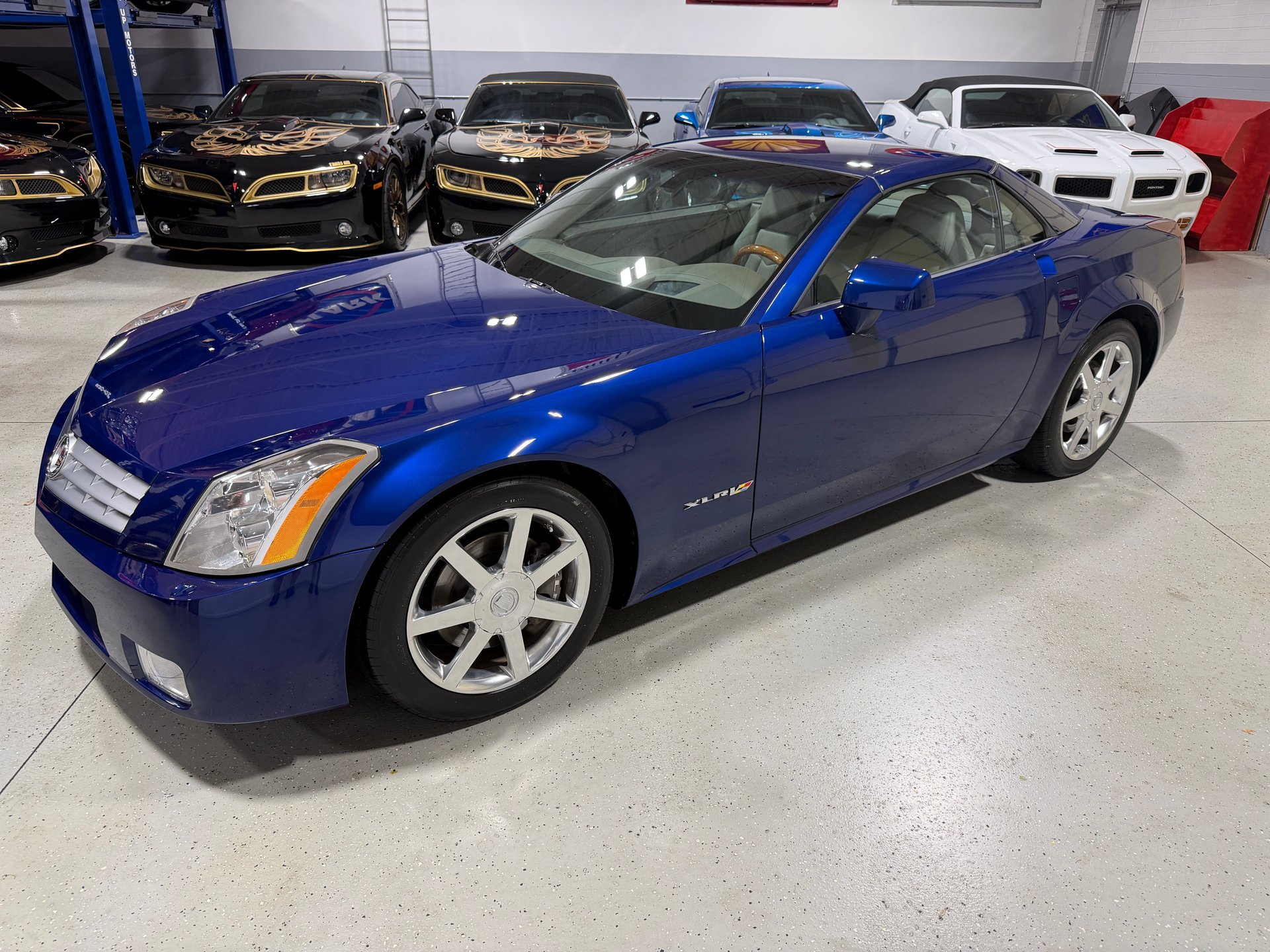
Two engines, both Northstars, both quad-cam aluminium V8s, and yet two quite different ownership experiences. Learn the codes — LH2 for the standard car, LC3 for the V — because parts catalogues and workshop advice organise themselves around those characters, and a seller who cannot tell you which engine his car has is telling you something about its care.
The 4.6-litre Northstar LH2
The LH2 is the rear-drive evolution of the Northstar family that had powered front-drive Cadillacs since the 1990s, reworked for longitudinal installation with variable valve timing on all four camshafts, electronic throttle, coil-on-plug ignition and a 10.5:1 compression ratio. It displaces 4,565 cc and produces 320 hp at 6,400 rpm and 310 lb-ft at 4,400 rpm — strong, smooth, high-revving power delivered with a cultured note that suits the car perfectly. It runs happily to its redline in a way that surprises drivers expecting a lazy traditional V8; in normal use it is the refinement, not the output, that stays with you.
Servicing the LH2 properly is unglamorous and specific. Oil quality matters, and oil level matters more than owners expect: Northstars of this family can consume oil at a rate that alarms drivers raised on engines that never move on the dipstick, through low-friction ring design and fine cross-hatch bore honing. A quart over a long interval on a hard-driven car is not a death sentence; rapidly increasing consumption, blue smoke on overrun, or oil fouled with coolant is. Check the level yourself at inspection and ask for top-up history without embarrassment. Budget $150–300 for an oil and filter service at an independent, and do it on time: the variable valve timing mechanisms and timing-chain tensioners both depend on clean oil at correct pressure.
The cooling system is the LH2's life insurance, as on every Northstar. Pump, thermostat, radiator, expansion tank and hoses are all age items now, and overheating is the trigger for the head-gasket and head-bolt story covered in Problem areas. Keep the system pressure-tested, the coolant fresh and the radiator clear of debris, and the LH2 is a durable engine. A cooling refresh with pump, thermostat, hoses and radiator as needed runs roughly $900–2,200; treat it as planned maintenance on a newly bought car with no records, not as bad luck.
Accessories give the usual used-flagship warnings. Alternator and starter replacement are labour-heavy by packaging; the starter lives in the valley under the intake on Northstar practice, so a $250–450 part can carry a $700–1,200 fitted bill. Crankshaft and camshaft position sensors fail with age and heat, causing stalling, long cranking or a no-start that mimics fuel faults — a $300–700 episode per sensor, and a classic reason to insist on a fault-code scan rather than guessing. Belts, tensioners and idlers are straightforward at $200–500 fitted. Spark plugs are long-life items but due by age on any car without records; budget $250–500 fitted, and note that an ignored misfire quickly becomes a catalyst bill several times larger.
The 4.4-litre supercharged Northstar LC3
The LC3 diverges from the same architecture where boost demands it. Displacement falls to 4,371 cc through a reduced bore, thickening the cylinder walls — the dimension that matters when cylinder pressures rise. Compression drops to 9.0:1, pistons and crankshaft are specified for supercharged loads, and each engine was hand-built by a single technician at Wixom. The Eaton supercharger sits in the valley, force-feeding through Laminova intercooler cores cooled by a dedicated low-temperature circuit with its own pump and heat exchanger. Output is 443 hp at 6,400 rpm and 414 lb-ft across a broad plateau — which is why the V feels effortless rather than peaky.
In ownership the LC3 adds three disciplines. First, heat management doubles: you maintain two cooling circuits, and the intercooler circuit's electric pump is a known wear item whose failure quietly costs power before it sets warnings — the car feels flat and the engine protects itself by pulling performance. A replacement pump fitted runs about $400–900, and testing it belongs in any V inspection. Second, supercharger drive and bearings: listen for rattle at idle from the blower snout and coupler; a supercharger service or replacement escalates into the $1,500–3,500 range. Third, consumption of everything rises — fuel, rear tyres, brakes — because 443 hp used as intended consumes consumables. A V brake renewal runs roughly $800–1,600 an axle. None of this should deter a V buyer. All of it should be priced into the offer.
One myth to retire here: the LC3 is not immune to the Northstar cooling and head-gasket conversation merely because its block is stronger, and the LH2 is not doomed by it merely because earlier front-drive Northstars suffered. The XLR engines benefit from the later block and fastener revisions, and their failure rate in service is far better than the 1990s reputation suggests — provided the cooling system has never been allowed to cook the engine. History, not folklore, decides each individual car.
Gearboxes: 5L50 five-speed and 6L80 six-speed
Every XLR drives its rear wheels through an automatic transaxle at the back of the car, connected to the engine by a torque tube enclosing the propshaft. The layout is pure Corvette: it moves weight rearward, which is why the XLR feels balanced rather than nose-heavy, and it means gearbox work is rear-of-car work, shaped by the subframe, exhaust and fuel-tank packaging around the unit.
Launch cars use the Hydra-Matic 5L50-E, a five-speed electronically controlled automatic with Driver Shift Control manual override, developed from the 5L40 family and uprated for the Northstar's torque. In good health it shifts smoothly and suits the standard car's touring brief. Its weaknesses are those of any early-2000s electronic automatic at twenty years old: tired fluid never changed because it was sold as long-life fill, solenoid and valve-body wear showing as delayed engagement, flared shifts or harshness when hot, and electronic faults that present as gearbox faults until a scan proves otherwise. A fluid and filter service — insist on it, whatever the sealed-for-life folklore says — runs about $300–600 and is the cheapest gearbox insurance you can buy. A valve-body or solenoid repair sits in the $800–1,800 range; a full rebuild or exchange unit, fitted, is a $3,500–6,000 conversation, which is why a hot, extended test drive matters more than a cold shuffle around a dealer's lot.
The 6L80 six-speed, fitted to the XLR-V from 2006 and to the standard car from 2007, is a heavier-duty clutch-to-clutch design with a wider ratio spread. It is the better gearbox in every operational respect — keener response, a taller cruising ratio, stronger torque capacity — with a strong durability record across the GM range. Its service needs are the same discipline: fresh fluid on a sensible interval at $300–650, and any shift flare or shudder treated as an early symptom, not a character trait. A rebuild fitted runs roughly $3,800–6,500. Torque-converter faults on either gearbox announce themselves as shudder at light load in a high gear or debris in the fluid; do not let a seller call converter shudder a road-surface effect without a drive that reproduces it on a smooth road.
There is no manual XLR and no worthwhile conversion. If a car is advertised as anything other than 5L50 five-speed or 6L80 six-speed according to its year and model, the advert is wrong, not the car rare — walk back to the model table in the previous section and check the pairing before you travel.

Problem areas
An XLR rarely fails in one dramatic way. It erodes: a roof that cycles a fraction slower, a damper that weeps, a gauge that lies a little, a headlamp that clouds — until the combined bill frightens the owner into selling. Your job is to find the erosion while it is still individually priced, because almost every system below is fixable at a knowable cost and almost none is fixable cheaply once it has taken a neighbouring system with it. Work through them by system, and insist on seeing each one demonstrated, not described.
The retractable hardtop: hydraulics, sensors and the roof skin
The roof is the XLR's defining mechanism and its defining risk. A powered sequence moves the boot lid, folds the multi-section hardtop, stows it, and closes the deck again, choreographed by a folding-top control module reading a network of position sensors and microswitches, driven by an electro-hydraulic pump and cylinders, and interlocked with the boot cargo divider — move the divider out of position and the roof correctly refuses to operate, which catches out sellers who do not know the car as often as faulty cars. Any single sensor reporting an implausible position stops the sequence mid-travel, sometimes with the roof neither up nor down. Age attacks every element at once: hydraulic fluid darkens, cylinders weep, sensor switches stick or drift, and wiring flexes at the hinge points until conductors tire.
Test it exactly as the inspection section prescribes: multiple complete cycles on level ground, engine running, watching for hesitation, uneven movement, grinding or clicking, warning messages, and hydraulic dampness around the pump and cylinders in the boot. A roof that completes the cycle slowly but cleanly may need fluid, adjustment and lubrication — a $300–900 specialist service. A roof that stops mid-cycle needs diagnosis before parts: a single position sensor or switch fitted and calibrated runs roughly $400–1,100, a hydraulic cylinder $600–1,400 per cylinder, and a pump $900–1,800 fitted. A roof relearn with a GM Tech 2 or equivalent scan tool is part of almost every repair, so a workshop without the tooling cannot finish the job. A roof that has been forced, repeatedly overridden, or left stalled mid-cycle in damp storage can need sensors, hydraulics and module work together, and $2,500–4,500 disappears quickly. Never buy an XLR with an inoperative roof on a promise that it is just a fuse.
Separate from the mechanism is the roof panel itself. The outer skin of the front roof section is a sheet-moulded composite panel bonded to a magnesium frame, and the bond can fail with age and heat cycling: the skin lifts at an edge, sounds hollow or drummy when tapped, ripples visibly in reflected light, and in the worst documented cases separates further. This became the subject of a federal safety investigation focused on 2004–2005 cars after reports of panels detaching, which is directly relevant here because this site's entire current pool is 2004–2005 cars. Tap and inspect the roof panel on every early car as a matter of routine. Rebonding or panel repair by a composite specialist runs roughly $800–2,000 depending on how far separation has spread; a replacement panel, painted and fitted, costs substantially more and depends on finding one. A lifting roof skin is not a cosmetic footnote. It is a structural bonding failure on a panel above your head at motorway speed, and it prices accordingly.
Seals and water management complete the roof picture. Perished or compressed seals admit water into the boot and rear electronics areas, and water running off the opened boot lid can fall into the boot itself — a known XLR quirk that soaks cargo and, worse, conditions you to accept a wet boot as normal. It is not normal for the electronics bays to be wet. Lift the boot floor, look for tide marks, connector corrosion and a musty smell, and treat any of them as evidence of a long-standing leak. Seal renewal is fiddly rather than ruinous at $300–900 for the worst sections, but tracing which seal leaks takes a hose test, not guesswork.

Northstar cooling, oil sealing and the head-gasket question
Every Northstar conversation eventually reaches head gaskets, so have it properly. On 1990s front-drive Northstars, fine-thread head bolts pulling out of the aluminium block after overheating became a notorious failure, requiring the engine out and the block's bolt holes repaired with inserts. The XLR's LH2 and LC3 belong to the later, revised generation — coarser fasteners, revised block — and their record is markedly better. What has not changed is the trigger: an overheating event. A failed water pump, a silted radiator, a stuck thermostat, a burst hose, a fan fault in traffic — any of these starts the overheating that then tests every head bolt in the block. On an XLR you do not maintain the cooling system to protect the radiator. You maintain it to protect the engine.
Distinguish causes with tests, not opinions. A cold-start pressure rise, bubbles in the expansion tank, coolant loss with no external leak, or sweet-smelling steamy exhaust all justify a block test for combustion gas and a pressure test before money changes hands — a $100–250 step that separates a $900 cooling repair from a $4,500–7,500 engine-out head-gasket job. Do not accept a seller's diagnosis either way without those tests; external leaks from pump, radiator, hoses and crossover gaskets mimic internal failure and are comparatively cheap. Radiator replacement fitted runs about $600–1,200, a water pump $500–1,000, crossover gaskets $600–1,200 in labour-led bills.
Oil sealing is the Northstar's other signature. Cam-cover gaskets, the front cover, the oil pan and the lower crankcase half — the block is a two-piece construction with a bedplate — all seep with age, and a dry engine bay is the exception worth paying for. Grade what you find: misting that never reaches the undertray is monitoring, not repair; drips on the exhaust are a $600–1,500 reseal depending on which joint; a lower-crankcase leak is engine-out territory at $2,000–3,500 and belongs in the negotiation in full. Oil in the plug wells points to cam-cover seals and causes misfires sellers blame on coils. Get the car on a lift and find the highest, furthest-forward source of any oil trail before pricing it.
On the LC3, add supercharger-circuit vigilance: intercooler pump failure, low-temperature radiator damage from road debris low in the front fascia, and supercharger coupler rattle, all covered in the engine section, plus a lower threshold for investigating any temperature anomaly, because a boosted engine punishes overheating faster.
Fuel system: the saddle tanks and the lying gauge
The XLR inherits the Corvette's split fuel-tank arrangement: two tanks joined by a crossover, with a jet transfer system moving fuel between them and senders reporting level from both sides. It packages brilliantly and services expensively, because access means dropping tanks with the transaxle and exhaust in the neighbourhood. The characteristic failures are sender faults — the gauge reading three-quarters when full, or showing range remaining when the tank is effectively empty, stranding drivers who trusted the needle — and crossover or pump leaks presenting as a fuel smell after filling, strongest with a full tank. Sulfur contamination of sender contacts was a period GM issue across this tank family and can cause erratic readings a sender replacement definitively fixes.
Price the risk honestly. A sender or pump job requiring tank removal is a $1,200–2,500 fitted bill, which is why a fuel smell or a demonstrably lying gauge is never a shrug on this car. Test by comparing gauge, range estimate and trip distance against the last fill, and smelling around the rear arches after a drive. Difficulty filling points to venting or filler faults. Any active fuel leak ends the inspection until it is fixed; that is the only safe position with tanks straddling a hot exhaust and transaxle.
Suspension, steering and brakes: Magnetic Ride and its supporting cast
Magnetic Ride Control was a headline technology — dampers filled with magnetorheological fluid whose viscosity changes in milliseconds under computer control — and when it works, the ride and body control still impress. When a damper fails it leaks its specialised fluid, loses damping, and knocks or floats over broken surfaces; there is no cheap rebuild path, and replacements are model-specific. Budget roughly $700–1,300 per corner fitted, and expect age to make a pair on the same axle the sensible unit. A drive over genuinely broken pavement tells you more than a bounce test in a car park. Cars that sit unevenly, show damper-body wetness, or carry suspension warnings need the corner identified and priced before purchase.
The rest of the chassis is Corvette-derived and conventional: double-wishbone suspension with transverse composite leaf springs, ball joints, wheel bearings, links and bushes that wear like any twenty-year-old performance car. Front-end clunks over sharp edges are usually joints or links at $300–900 an axle's worth of renewal, not the dampers — distinguish them on a lift rather than replacing the expensive part first. Wheel bearings hum and change note with steering load at $350–750 per corner fitted. Tyre wear is diagnostic: inner-edge wear points to alignment and worn joints, and the staggered fitments mean a car needing four tyres and an alignment has a four-figure need hiding in plain sight.
Steering brings one specific, well-documented fault: the steering wheel position sensor and its connector in the telescoping column. Fretting corrosion in that connector was a GM-wide issue of the era, addressed in service by fitting a retaining comb to stabilise the connection, and its symptoms are distinctive — a Service Stability System message, a steering-position code, clicking from the column, and in the worst reports unintended brake intervention by the stability system acting on false steering data. Any XLR showing stability warnings needs this circuit investigated first, before anyone sells you a control module: repair runs about $300–800. Power-steering leaks at the pump's high-pressure hose connection and reservoir seepage are simpler age faults at $200–600. Test every direction of tilt and telescope travel at inspection.
Brakes are strong and conventional, larger on the V, with the usual faults made pricier by low-volume specification: scored discs, seized caliper sliders on cars that sit, corroded pipes on northern cars, and a soft pedal from moisture-laden fluid. A full fluid change is $120–250 and overdue on most cars you will view. An ABS or traction warning with a wheel-speed code is usually a sensor or hub at $300–700 a corner, not a module.
Electrics, electronics and the low-voltage trap
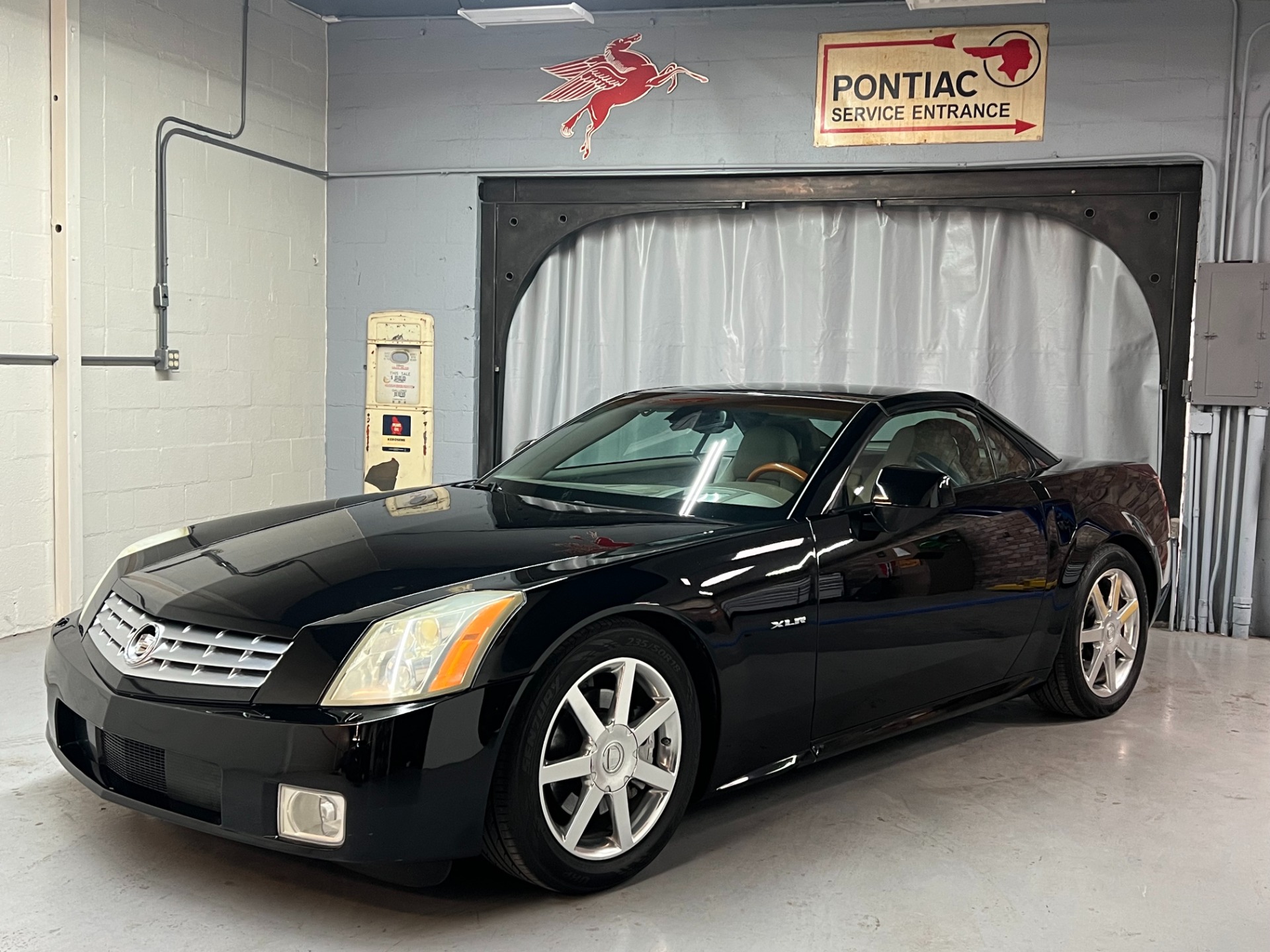
The XLR's electronics were flagship-dense for 2004 and are now twenty years old, which produces a characteristic pattern: most individual functions are reliable, the total system is unforgiving of low voltage, and a tired battery manufactures faults across unrelated modules. Parasitic drain on stored cars is widely reported — modules that fail to sleep, an OnStar or audio unit waking the network — and a car that needs a jump after a few days parked has a fault to find, not a quirk to accept. A battery and charging test, plus a parasitic-draw measurement if the history suggests drain, costs $100–250 in diagnostic time and prevents months of chasing ghost codes. Keep a stored XLR on a quality battery maintainer; it is the cheapest reliability upgrade in this entire guide.
Work through the known weak points one by one. Keyless access depends on fobs, antennas and the door lock receiver: a car that intermittently fails to recognise its fob, or requires the fob in the glovebox emergency slot to start, is showing antenna, fob or receiver wear — $250–800 to diagnose and repair, and always test both fobs, the boot release and the fuel-door release, not just the start button. Door entry uses touch pads rather than conventional handles; intermittent response points to pad or latch wear at $250–700 a side. The head-up display can dim or fail — and a car wearing a cheaper non-HUD replacement windscreen shows a blurred double image, whose correction means the right screen at $800–1,500 fitted. Adaptive cruise depends on the radar behind the grille panel: stone damage, misalignment after front-end repair, or a failed radar shows as cruise unavailable, and replacement with calibration is a $900–2,000 specialist job — test it on the drive rather than accepting that the button lights up.
Headlamps combine three XLR truths: they are complex, specific to this car, and finite in supply. The adaptive xenon units suffer lens crazing, cracking and heat bubbling around the daytime running lamp area — the lamp's heat degrades the polycarbonate from inside, showing as yellowing, bubbles and cracks on the upper lens — plus swivel and ballast failures. Polish restores a hazed surface but cannot repair heat damage within the lens. A single good used headlamp can run $600–1,500 before fitting; verify clarity, DRL function, dip and main beam, swivel and washers at inspection, and price any visible heat damage as a forthcoming replacement, not patina. Rear LED units are similarly sealed: failed segments mean a replacement unit at $400–1,000 used, so check every lamp function.
Inside, test the touchscreen navigation and Bose audio, heated and cooled seats on both sides, dual-zone climate including any clicking from blend-door actuators behind the dash ($300–900 per actuator depending on access), the power column, memory functions, window indexing as each door opens and closes, and every stored warning message on the driver information centre rather than accepting a clear dash at idle. None of these faults alone should kill a purchase. Three or four together describe a car whose electronics have been neglected as a system, and that car will keep presenting bills in the same rhythm.
Body, composite panels and interior trim
The composite body does not rust like a steel car, but it records its life differently: parking impacts crack rather than dent, repaired panels show as waviness and colour mismatch under raking light, and panel gaps around the roof and boot deck betray hinge wear or past adjustment. Work around the car in daylight, sighting down each flank and checking the header fit, deck seams and front fascia fit. Accident repair must be checked underneath as well: the hydroformed rails, backbone and subframes are steel and aluminium and do corrode and do bend, so a lift inspection for rail damage, non-factory welds and overspray is part of buying any XLR. Front radiator support and lower fascia damage from parking stops is common — the car is low — and a cracked support or undertray at $300–900 to renew is a bargaining point you will only find by looking underneath.
Interior wear is honest: the leather, especially the driver's bolster and perforated cooled-seat centres, creases and cracks if never fed; wood and metal trim lifts or clouds; dashboard rattles from aged foam and clips are cured by patient trim work rather than parts. Bulgari branding on early clusters disappeared later — a model-year detail, not special equipment, whatever a seller claims. Musty carpets return you to the water-leak hunt above. Retrimming to flagship standard costs flagship money — $1,500–4,000 for seat leather work done properly — so grade the cabin as you find it.

How to inspect one
Inspect an XLR in this order, because the order protects you: the expensive, disqualifying systems first, while you still have the discipline to walk away, and cosmetic grading last, when it can only adjust the price. Take a GM-capable scanner, a torch, a tyre-depth gauge and a lift. Two complete roof cycles and a long hot drive are not favours to request — they are the inspection.
- Start with paperwork and identity. Match the VIN on the windscreen plate, door label and title, confirm the engine matches the model and year — LH2 standard, LC3 supercharged V — using the model table, and read the service history specifically for cooling-system work, roof repairs, gearbox fluid changes and battery replacements. Gaps in history do not end the inspection; they raise the standard of proof for everything that follows.
- Cold start, from cold. Insist the engine is stone cold on arrival. Listen for timing-chain rattle, supercharger coupler rattle on a V, exhaust leaks and accessory whine; watch for smoke — blue on start or overrun points to oil consumption, white and sweet-smelling points you toward the cooling tests in the head-gasket section. A car presented already warm has had its most revealing thirty seconds hidden from you.
- Cooling system before the drive. Check coolant level and colour in the expansion tank, look for crusty deposits at the water pump, crossover, radiator end tanks and hose joints, squeeze hoses for perishing, and note any sign of stop-leak products. Arrange a pressure test and a combustion-gas block test if anything in steps 2–3 or the history raises the question — this is the test sequence the Problem areas section prescribes to separate a cheap external leak from an engine-out repair.
- Oil state and leaks, top and bottom. Pull the dipstick yourself, note the level and ask about top-ups without leading the seller. Inspect cam covers, front cover and plug wells from above; then, on the lift later, grade pan, lower-crankcase and bellhousing weeps exactly as the oil-sealing section describes — highest and furthest-forward source first.
- The roof: cycle it twice, completely. With the cargo divider correctly positioned, engine running, on level ground, run two full down-and-up cycles. Time them, listen, watch for hesitation or uneven travel, read every driver-information message, and stop the purchase conversation — not just the roof — if it stalls mid-cycle. This is the roof test from Problem areas, and it settles more about the car's value than everything else on this list combined.
- Roof panel and seals by hand. With the roof up, tap across the front roof panel listening for a hollow, drummy patch against the solid note of bonded areas, sight along it for ripples, and press gently at the edges for lift — the roof-skin bonding check, essential on 2004–2005 cars. Then examine roof, header, door and boot seals for compression and splits, and lift the boot floor to look for tide marks, damp and connector corrosion from past leaks.
- Fuel system sanity check. Compare the fuel gauge, the range estimate and the trip mileage against the seller's account of the last fill, smell around the rear arches and under the rear for fuel odour — strongest suspicion attaches to a smell after filling, per the saddle-tank section — and ask directly whether the gauge has ever misread or the car has ever run dry while showing range. A lying gauge on this car is a tank-out bill, so treat evasion as an answer.
- Electrics sweep, every function, both fobs. Work the full list from the electrics section without skipping: both fobs and emergency-slot starting, door touch pads, boot and fuel-door releases, head-up display clarity, headlamps and washers, touchscreen and audio, heated and cooled seats, climate actuators listened to in silence for clicking, power column and memory, window indexing, and stored warning messages. Ask how long the car sits between uses and whether it lives on a maintainer.
- Headlamps and lamps in detail. In shade or against a wall, examine both headlamp lenses for crazing, yellowing and the internal heat bubbling described in Problem areas, then prove dip, main beam, daytime running lamps, indicators, swivel action and washers. Check every rear LED segment and the number-plate and boot lamps. Price any failed lamp as a unit replacement, because that is what it is.
- The long drive: gearbox hot, dampers working, cruise engaged. Drive at least twenty minutes, including broken pavement, a fast road and stop-start traffic. Feel the gearbox cold and then fully hot for flare, delay or harshness — tired units hide their faults cold — listen for damper knock versus joint clunk, test adaptive cruise following a car ahead, brake firmly from speed, and note any stability or suspension message the moment it appears.
- Steering and stability check. On the drive and at rest, exercise the telescoping column through its range, listen for column clicking, and treat any Service Stability System message as the steering-position-sensor investigation from Problem areas until a scan proves otherwise. Check power-steering fluid, hose joints at the pump and reservoir for the known seepage points.
- On the lift: structure, tanks and the underside. Inspect rails, subframes and floor structure for corrosion, bending and repair; radiator support and undertrays for grounding damage; brake pipes for corrosion; damper bodies for leaks; wheel bearings by rocking each wheel; and the transaxle and tank area for fuel or oil traces. This is where composite-body cars hide steel-structure stories.
- Scan it, all modules. A full-module fault scan — engine, gearbox, folding top, body, suspension, steering and restraint systems — not just an engine-code read. Stored and history codes for roof sensors, steering position, wheel speed and cooling fans are negotiation facts. Clear nothing before recording the codes; a seller who has just cleared everything has removed your evidence.
- Grade the cabin and cosmetics last. Leather bolsters and cooled-seat perforations, trim lift, dash rattles on the drive, panel colour match in daylight, wheel kerbing, tyre ages and depths across both staggered sizes. Only now, with the mechanical verdict settled, decide what the condition is worth against the asking figure — and keep the roof, cooling and scan results at the top of that negotiation, where they belong.
Values
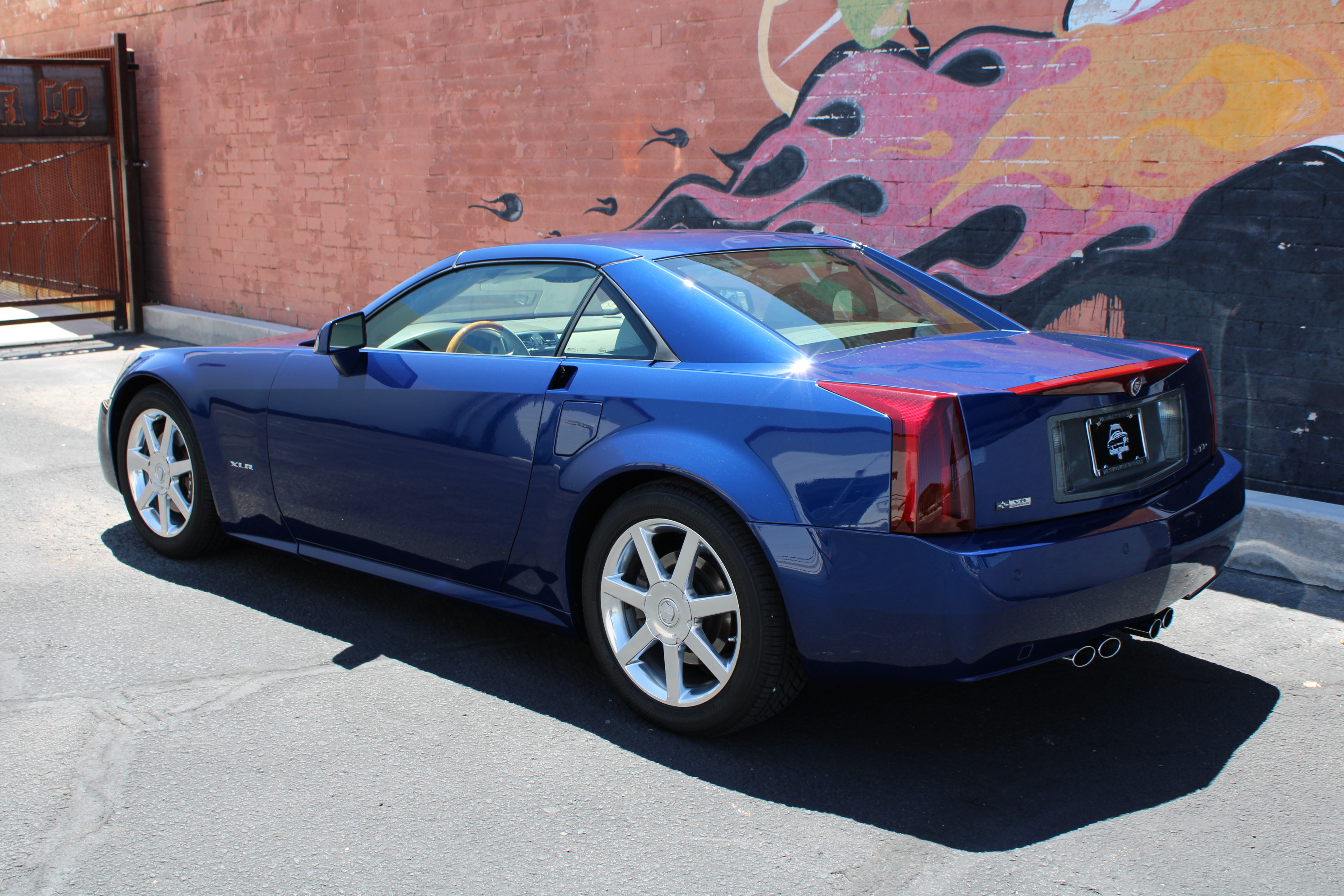
Read the market block that follows this guide first, and read it as a small market behaving like a small market. The XLR was built in low numbers, the cars for sale at any one moment are few, and a handful of exceptional or distressed results can move the apparent centre of the market more than any real shift in worth. On this site the recorded pool is smaller still — a handful of cars, all early standard models — so treat any figure drawn from it as a description of those cars, not a valuation of the model. The durable skill is learning what separates the top of the spread from the bottom, because on the XLR that spread is driven by verifiable condition more than by model year or mileage alone.
Condition dominates in a specific order. A fully cycling roof with documented sensor and hydraulic health sits at the top of the value stack. Documented cooling-system renewal and a clean bill on the head-gasket tests come next, followed by clear headlamps, healthy Magnetic Ride dampers and a complete service history. Mileage matters less than the trade expects: a higher-mileage car with continuous specialist care and a roof that cycles crisply is a better proposition than a low-mileage car that has sat for years on a flat battery with perished seals and no records, and the market is slowly learning to price them that way. Storage is not preservation on a car this electronic and this hydraulic. Use is.
Variant premiums are real but uneven. The XLR-V carries the clearest premium, earned by genuine rarity and hand-built supercharged performance — but the premium belongs to complete, healthy Vs with cooling circuits, brakes and supercharger documented, not to any car wearing the badge and carrying deferred work. Late six-speed and Platinum cars attract a smaller premium for the gearbox and the cabin rather than for scarcity, and final-year facelift cars draw interest out of proportion to their numbers. Early cars trade on condition and originality: a genuine, documented Neiman Marcus Edition interests collectors, while an ordinary early car needing roof and cooling work anchors the bottom of the market no matter how the advert is written. Colour helps at the margins, but colour has never rescued a car that failed the roof test.
Understand the asking-versus-achieved gap before you negotiate. Flagship Cadillacs of this era attract optimistic asks from sellers who remember the original window sticker, and cars sit when the ask prices in rarity without pricing in the roof service, dampers or lamp renewal the car visibly needs. Achieved figures follow the inspection: buyers who can name the systems in this guide, and show what each fault costs, tend to buy well; sellers holding documented, freshly serviced cars tend to hold their figures and get them. The project-versus-driver gap is correspondingly wide. A cosmetically tired but mechanically sorted driver is the value centre of the market. A project with an inoperative roof, cooling doubts and electrical neglect is not a cheap XLR — it is the full price of an XLR paid in instalments to workshops, plus the purchase figure. Negotiate from the inspection list, item by item, and let the seller keep the rarity speech. You are buying roof cycles, coolant history and fault codes.
Parts and ownership
Owning an XLR well is an exercise in sorting its parts into three honest categories before you need them: Corvette-shared mechanical items that are plentiful, GM service items that remain obtainable with patience, and XLR-specific items that are finite and should shape what you pay for the car in the first place.
The plentiful category is larger than newcomers expect. Y-platform underpinnings, much of the braking and hub hardware, many sensors and switches from the wider GM range, filters, belts and routine Northstar service items all draw on production volumes far larger than the XLR's own. A Corvette-literate independent will recognise the transaxle layout, torque tube and chassis hardware immediately, and routine servicing there sits in the $150–600 range per visit depending on scope, with major work and fluid changes across engine and gearbox together reaching $800–1,500. The GM Tech 2 generation of tooling the roof, body and suspension modules expect is held by dealers and good independents — confirm your workshop actually has it before you need a roof calibration, not during one.
The obtainable-with-patience category includes Northstar internals and gaskets, gearbox rebuild components for both automatics, Magnetic Ride dampers, roof hydraulics and sensors, and most suspension joints and bearings. Prices reflect low volume rather than unobtanium: dampers at $700–1,300 a corner fitted, roof parts in the ranges given in Problem areas, a gearbox fluid service at $300–650. Lead times stretch and superseded numbers need cross-referencing. The specialist ecosystem is small but real: XLR owner communities and registries hold hard-won knowledge on roof relearns, sender faults and lamp sourcing, and joining them is a parts-and-knowledge strategy, not a lifestyle choice.
The finite category is short and decisive: headlamp assemblies, rear LED lamp units, roof panels and certain roof components, exterior composite panels and trim, adaptive-cruise radar units, and unique interior trim. These were made for 15,460 cars, the tooling is gone, and every heat-damaged lamp permanently reduces the stock. A used headlamp at $600–1,500 and a rear lamp unit at $400–1,000, when available, are the market telling you the truth about supply. The consequence is practical: insure the car on a valuation that reflects replacement reality, protect the lamps and front panel where you can, and never buy a car with lamp or roof-panel damage discounted as cosmetic — you may be buying a search, not a repair.
Running one day to day is otherwise straightforward flagship motoring. Fuel consumption is heavy in town and respectable on a cruise; premium fuel is recommended for full performance on the LH2 and expected on the LC3. Tyres in the staggered fitments are a recurring renewal as a matched set of quality rubber at $900–1,600 fitted, with alignment alongside. The car asks for a battery maintainer in storage, an annual roof inspection and lubrication folded into its service at $150–350, coolant discipline, and gearbox fluid changes on a real interval rather than a lifetime promise. Budgeted that way — planned maintenance plus contingency for one age-related system per year — the XLR is a sustainable classic flagship. Budgeted as though it were a Corvette with cheaper panels, it will correct you within the first year.

Which one to buy
Buy on roof health, cooling history and documentation, and let model year and badge settle what is left. The picks, in the order most buyers should consider them:
- The all-rounder: a 2007–2008 standard XLR. The six-speed gearbox, three years of production learning, full flagship equipment and none of the final-year scarcity pricing. In Platinum trim if the cabin matters to you — and in this car, it should.
- The value buy: a cherished 2004–2006 standard XLR with records. The five-speed cars are the most available and the most honestly priced, and a documented cooling refresh plus a crisp roof makes one a better car than a neglected later example at the same money. Inspect the roof-skin bonding with particular care on these years.
- The performance buy: an XLR-V, 2006–2009. A genuinely different pace and the rarest regular-production XLR, worth its premium only with supercharger, intercooler-circuit and brake health proven. Walk from a cheap V with cooling or blower questions; there is no such thing as a cheap V for long.
- The collector buy: a 2009 Platinum or XLR-V, or a documented Neiman Marcus Edition. The final facelift cars and the 101-car launch special are the subsets a future market will sort first. Buy them only in the condition collectors will later demand — original, documented and complete.
- The one to avoid: any XLR, of any year, with an inoperative roof, an untested cooling system or a freshly cleared fault memory. The year, colour and mileage cannot compensate for the three systems that decide what this car costs to own.
The overriding rule: buy the car whose roof cycles twice without hesitation, whose cooling system passes its tests, and whose history is written down — a plainer XLR that passes all three beats a rarer, faster or cheaper one that fails any of them.
Listed now
On Classic Listings today: 7 cars are listed here; 1 for sale and 1 marked sold; average asking price $29,499; asking range $29,499 to $29,499; sold cars average $26,995.
See the 7 XLR cars currently listed.
The market — recorded sales
Recorded-sale figures: 1 recorded sale · median $26,995 · range $26,995 to $26,995 (Nov 2024 – Nov 2026)
Based on 1 recorded sales — too few for a benchmark value.
| Date | Car | Sale price | Source |
|---|---|---|---|
| Nov 19, 2026 | 2005 Xlr | $26,995 | Dealer |
Dates are the sale date where the source states one; otherwise the date the sale was recorded here.
For sale now
 $29,499 · 27% above typical