
Chevrolet 3600 buyer's guide
Chevrolet 3600 -- the model's own buyer's guide: variants, values and what to check.
Years listed: 1948-1957 · Series: 3100 Trucks
Overview and history
You are looking at the working truck of the Advance Design and Task Force generations, and the one most buyers get wrong before they start. The Chevrolet 3600 is the three-quarter-ton pickup in Chevrolet's post-war truck line, built from 1947 through 1959 across two distinct generations — the Advance Design trucks of 1947 to 1955 and the Task Force trucks of 1955 to 1959. It is not a half-ton 3100 with a different badge.
Correct the first myth before you spend anything. There is no single "3600" to learn, because the number covers two trucks that share almost nothing you can see. An Advance Design 3600, built from mid-1947 through the first series of 1955, is a tall, narrow truck with a split windshield, a flat dashboard, a torque-tube rear axle and a six-cylinder engine whose architecture traces to the 1930s.
The Advance Design story starts in June 1947, when Chevrolet replaced its wartime-era trucks with a clean-sheet post-war design: wider, taller and more comfortable than anything Chevrolet had built before, with a one-piece cab, a foot-operated starter and a bench seat wide enough for three. The numbering system is the key to the whole line: the last two digits are the payload class in hundreds of pounds, so a 3100 is a half-ton truck, a 3600 is a three-quarter-ton truck and a 3800 is a one-ton truck.
The 216 cubic inch Thriftmaster six that powered the early trucks was not powerful — ninety horsepower in a truck weighing well over two tons empty — but it was honest, it would run on poor fuel, it would pull a loaded trailer at walking pace in low gear, and a farmer could fix it with hand tools. In 1950 the five-window Deluxe cab, with its small corner windows in the rear of the cab, became the desirable option it still is today.
The changeover year, 1955, is the trap year for the whole range. Chevrolet built Advance Design trucks for the first half of 1955 — the First Series — and Task Force trucks for the second half — the Second Series. Both are titled as 1955 models, both are called 3600, and they share almost nothing else: different cab, frame, front suspension, steering, electrical system and engines.
The Task Force generation, from late 1955 through 1959, is the truck that made the modern pickup.
Why does the 3600 matter today, when the 3100 is more common and easier to sell? Because the 3600 is the honest truck. The 3100 was bought by people who wanted a pickup; the 3600 was bought by people who needed one, and the survivors carry that history.
The pool this guide is built from is small, and it is honest about that. At the time of writing the store holds seven 3600s: six for sale and one sold, spanning 1948 to 1957, with one truck from each of 1948, 1950, 1952, 1953, 1955, 1956 and 1957. There is no 1947 truck in the pool, no 1949, 1951 or 1954, and no 1958 or 1959 — the last two years of Task Force production are absent.
The models
The 3600 range is simple once you lay it out by generation, and confusing only because Chevrolet reused the number across two different trucks and sold the truck in more body configurations than most buyers remember.
| Model | Years | Engine | Output | Built | Character |
|---|---|---|---|---|---|
| 3600 Advance Design pickup | 1947–1955 (First Series) | 216.5 cu in Thriftmaster six; 235.5 cu in six from 1954 | 90 hp (216); 112 hp (235) | Part of Advance Design production of over 2.5 million trucks across all series; no clean per-model 3600 figure is published | The working farm truck: long bed, split windshield, torque tube, six volts |
| 3600 Advance Design chassis-cab / flatbed | 1947–1955 (First Series) | 216.5 cu in Thriftmaster six; 235.5 cu in six from 1954 | 90 hp (216); 112 hp (235) | As above; chassis-cab trucks are a minority of surviving 3600s | The hauler: ordered as a bare chassis, bodied by the buyer or a local builder |
| 3600 Advance Design panel | 1947–1955 (First Series) | 216.5 cu in Thriftmaster six; 235.5 cu in six from 1954 | 90 hp (216); 112 hp (235) | Rare; panel trucks are a small fraction of 3600 production | The enclosed work truck; survivors are scarce and usually rough |
| 3600 Task Force pickup (Stepside) | 1955 (Second Series)–1959 | 235.5 cu in six standard; 265 V8 optional 1955–1956; 283 V8 optional 1957–1959 | 123 hp (235); 145–162 hp (265); 170–185 hp (283, truck tune) | Part of Task Force production of roughly 1.5 million trucks across all series; no clean per-model 3600 figure is published | The modernised work truck: wraparound windshield, twelve volts, V8 option |
| 3600 Task Force chassis-cab / flatbed | 1955 (Second Series)–1959 | 235.5 cu in six; 265 / 283 V8 optional | As above | As above; chassis-cab trucks are a minority of surviving 3600s | The farm flatbed: dual rear wheels appear on some trucks and need verifying |
A note on the Built column, because this guide does not invent figures. Chevrolet published truck production in aggregate by series and year, not in the clean per-model breakdown a buyer would like, and the figures repeated on forums are usually guesses, or whole-range figures mislabelled as 3600 figures. What is reliable is the ordering: the 3100 was built in far larger numbers than the 3600, the 3600 in larger numbers than the one-ton 3800, and within the 3600 the pickup is the common body, the chassis-cab less common and the panel genuinely rare.
The Advance Design 3600 pickup is the truck the pool represents best. It rides a 125.25-inch wheelbase — nine and a quarter inches longer than the 3100's 116 inches — and that extra length sits between the cab and the rear axle, which is why the bed is eight feet long and why the truck looks stretched in profile. The cab is the same cab as the 3100, so cab parts interchange, but the frame, rear axle, springs, brakes and wheels do not.

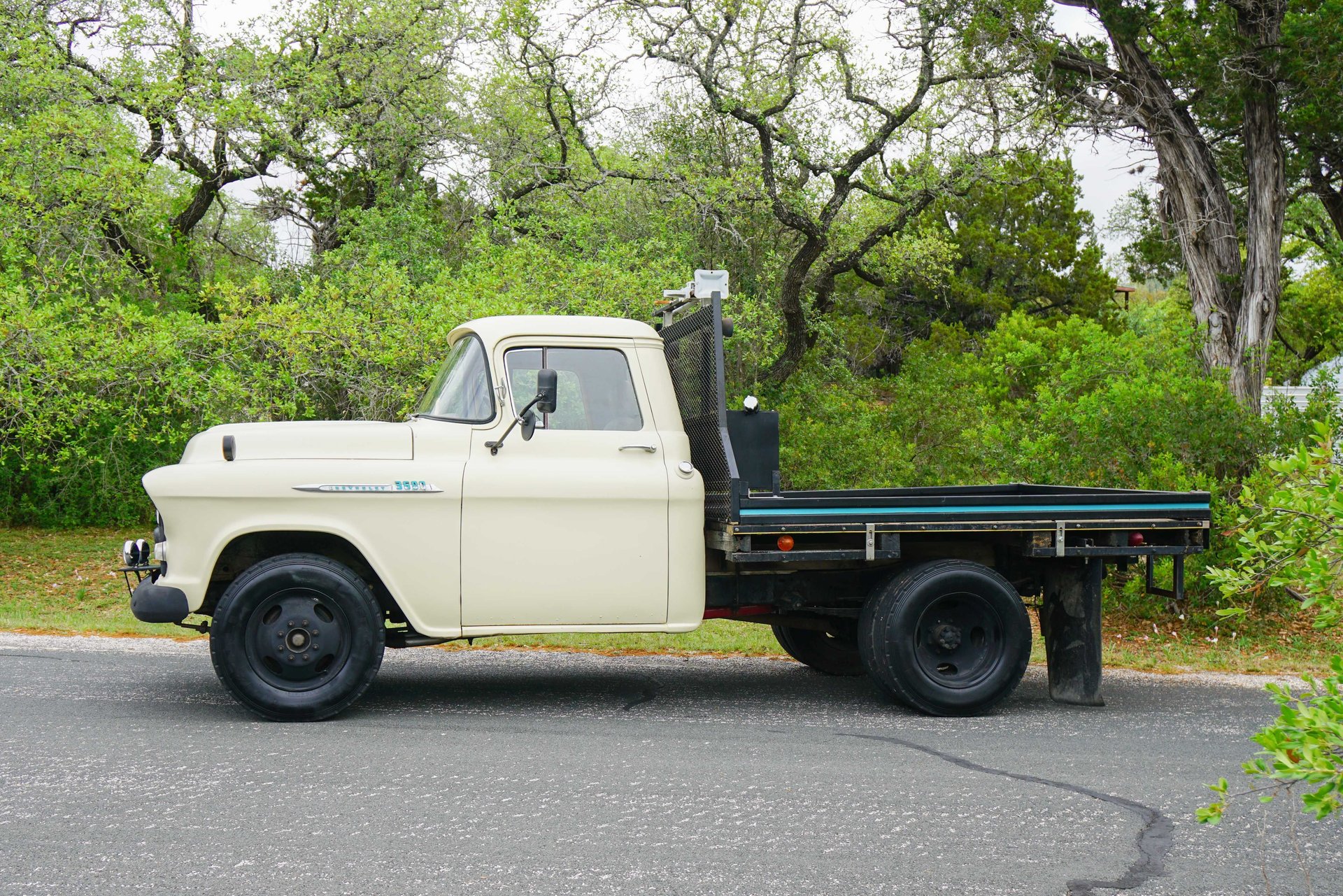
The Advance Design chassis-cab is the same truck without a pickup bed, and the version most likely to have lived a genuinely hard life. Chevrolet sold the chassis-cab to farmers, lumber yards, feed stores and small businesses, who fitted a flatbed, a stake body, a grain body or a utility body according to their trade. The flatbed that survives today may be the original body, a period replacement or a modern fabrication, and each is a different thing with a different value. An original wooden flatbed with steel rub rails and a headache rack is a survivor feature; a modern steel flatbed built from box section makes the truck more useful and less original. Neither is wrong, but you should know which you are buying.
The Task Force 3600 pickup is a different truck in a way that matters every time you drive one. The wheelbase is 123.25 inches — slightly shorter than the Advance Design 3600's, because the whole truck was repackaged — but the cab is wider, the seat is wider, the windshield wraps around the corners and the driving position is lower and more car-like. The standard bed is the Stepside, with exposed rear fenders and running boards, and it is the bed you should expect on a 3600.

The Task Force chassis-cab and flatbed is the version where the dual-rear-wheel question appears. A standard 3600 leaves the factory with single rear wheels on eight-lug hubs. Dual rear wheels are a one-ton 3800 feature, or a later conversion, and a truck wearing them needs a careful look at its axle, frame and serial number before you accept it as a 3600. The pool's 1956 truck is a flatbed on dual rear wheels: filed as a 3600, wearing a flatbed, running duals.
The model-year changes within each generation are small individually and decisive in combination, because they are how you date a truck and how you spot one assembled from parts. On the Advance Design trucks: 1947 and 1948 trucks have a fuel tank under the seat and a grille with horizontal bars; 1949 trucks gain a fuel filler on the cab side; 1950 trucks gain vent wings and the five-window cab becomes more common; 1951 trucks gain vent windows as standard; 1953 trucks gain a new grille and the serial plate moves to the door post; 1954 trucks gain the 235 engine and a revised grille; 1955 First Series trucks are the last of the line and match 1954 in most respects.
Engines and gearboxes
Four engine families cover the 3600's thirteen years, and they divide cleanly by generation. The Advance Design trucks run the Chevrolet Stovebolt six in two sizes — the 216 and the 235 — and the Task Force trucks run the later 235 six as standard, with the small-block V8, the 265 and then the 283, as the option that changes the truck's character completely.
The Stovebolt six: 216 Thriftmaster and 235 Thriftmaster
The 216.5 cubic inch Thriftmaster six powers every Advance Design 3600 from 1947 through 1953. It is an overhead-valve inline six — Chevrolet's Stovebolt, named for the exposed bolts holding its valve cover — with a cast-iron block and head and a single downdraft Rochester carburettor.
The 216 has one defining weakness, and it is the most important check on any early 3600: its oiling system. The 216 feeds its connecting rods by splash and scoop — the rod caps carry small dippers that scoop oil from a trough as they pass — combined with pressure feed to the main bearings and valve gear. It works perfectly at the low engine speeds the truck was designed for. It does not work well at sustained high engine speed, which is why a 216 run hard on a modern highway wears its rod bearings faster than a later engine.
The 235.5 cubic inch Thriftmaster six replaces the 216 for 1954 on the Advance Design trucks and is standard on every Task Force 3600. Same basic architecture — overhead valves, cast iron, single Rochester carburettor — grown in bore and stroke, and crucially carrying full-pressure oiling to the connecting rods.
Distinguishing a 216 from a 235 matters, because sellers confuse them and because a 235 in a 1950 truck is a swap that changes the truck's value. The engines look almost identical from above, and the valve cover will not tell you. The reliable checks are the block casting numbers, on the passenger side above the starter, and the engine serial number stamped on a pad behind the distributor; any Stovebolt reference chart decodes both in a minute.
The 261 cubic inch Jobmaster six deserves a paragraph, because sellers occasionally claim it for a 3600. The 261 is a 235 grown again, with full-pressure oiling and output around 148 horsepower in truck tune, offered primarily on the heavier series and the one-ton 3800 in some years. It is not a standard 3600 engine.
Both Stovebolt sixes share the service needs of an old, simple engine that has usually been neglected rather than worn out. The valve clearances are mechanical — solid lifters, adjusted with a feeler gauge to 0.006 inch intake and 0.013 inch exhaust, hot, on the 216, and similar figures on the 235 — and a Stovebolt whose valves have not been adjusted in twenty years runs rough, loses power and burns exhaust valves. The job is an hour's work and $100 to $200 at a shop, and it transforms a rough-running truck.
One more Stovebolt check belongs here, because it decides between a service bill and a rebuild: the cylinder head. The cast-iron head cracks between the valve seats when the engine has been overheated repeatedly, and it warps when a head gasket fails and the driver keeps driving. The symptoms overlap — coolant loss with no visible leak, a misfire on the cylinder next to the failure, bubbles in the radiator's top tank with the engine running — and the distinguishing test is a cooling-system pressure test combined with a compression test, both of which any pre-purchase inspection should include. A head gasket replacement on a six is a $600 to $1,100 job at a shop; a cracked head adds the cost of a good used casting, $200 to $500, plus machining. Neither fault condemns the engine, but both condemn the seller's description if he called the truck a driver.
The small-block V8: 265 and 283
The small-block V8 is the option that turns a Task Force 3600 from a work truck into a truck you can drive anywhere, and it is the option the market pays for.
The 283 cubic inch V8 replaces the 265 for 1957 and runs to the end of the Task Force line in 1959. It is the 265 bored out, with the same 3.0-inch stroke, and in truck tune it makes 170 to 185 horsepower depending on year and carburettor — the two-barrel trucks at the lower figure, the four-barrel trucks at the higher one. Most 3600s that carry a 283 carry the two-barrel version, because the four-barrel was a car option few truck buyers ordered.
Identifying a genuine V8 truck matters, because the small-block is the easiest swap in the classic truck world and the most commonly performed.
The V8's specific weaknesses are few and well known. The Rochester two-barrel floods on a hot restart when its float level is high or its needle valve is worn, giving you the classic small-block hot-start crank with the smell of fuel; the fix is a carburettor rebuild at $200 to $400.

Gearboxes: three-speed, four-speed and Hydra-Matic
Three gearboxes cover the range, and the choice between them defines how the truck drives more than the choice of engine does. The standard gearbox on most 3600s is the three-speed manual with a column shift — "three on the tree" — fully synchronised on second and third with a non-synchronised first, built by Muncie or Saginaw depending on the year.
The four-speed manual is the working gearbox, and the one you want in a 3600 you intend to use. It is the SM420, the heavy-duty four-speed with a cast-iron case, a floor shift, and a first gear so low, at 7.06 to 1, that it is called the granny gear and is used only for starting a heavy load or creeping in a field. Second, third and fourth are the driving gears, and fourth is direct drive.
The Hydra-Matic automatic arrives for 1954 on the Advance Design trucks and continues through the Task Force years, and it is the rarest and most misunderstood gearbox in the range. It is the four-speed Hydra-Matic — a true automatic with a fluid coupling, not a torque converter, and four forward speeds — adapted for truck use. It gives you a truck genuinely easy to drive in traffic, and for a buyer who cannot or does not want to drive a manual truck it is the only choice.
The rear axle and driveshaft complete the drivetrain, and they divide by generation in the way that matters most for ownership. The Advance Design trucks use a torque tube: the driveshaft runs inside a steel tube rigidly attached to the rear axle housing and the gearbox, and the tube carries the torque reaction. The system is strong and sealed, but the gearbox, tube and axle form a single assembly — you cannot remove one without supporting the others.
Problem areas
A 3600 does not fail in the ways a car of the same age fails, because it did not live the way a car lived. It worked.
Rust: the map
Rust ends more 3600s than any mechanical failure, and it follows a map so consistent across both generations that you can walk it on any truck in ten minutes. These trucks rust from the inside out and from the bottom up, the rust you can see is a fraction of the rust that is there, and the places that rust worst are the places that trap mud and water against steel that was never well protected in the first place.
Start at the cab corners. The rear lower corners of the cab are the classic failure on both generations: the cab's inner structure traps water that enters through the rear window seal and the cab seams, the water sits in the closed corner, and the corner rots from inside until the outer skin blisters and then holes. Press each cab corner firmly with your thumb. Solid steel resists; a corner that flexes, crunches or has been filled moves under your thumb and feels dull rather than sharp.
The doors rust at their bottoms on both generations, for the same reason: the door is a steel shell with a drain hole at the bottom, the drain hole blocks with dirt, and the door fills with water to the depth of the blockage every time it rains. Open each door and look at its bottom edge and lower inner skin. A door solid on its outer skin but bubbled along its bottom seam has rot inside it, and the repair — a lower door skin and an inner repair panel — runs $600 to $1,400 a door fitted and painted.
The bed is the 3600's special case, because its bed is longer and more likely to have carried wet, heavy and corrosive loads than a 3100's. The bed floor is wood — oak or pine boards with steel skid strips — and the wood rots from underneath, where it sits on the steel crossmembers and traps water against them. A bed floor that looks sound from above can be rotten underneath, and the crossmembers beneath it rot with it. Get under the truck and look up.
The frame rusts last and matters most. The 3600 frame is a heavy ladder frame of channel steel, and it rusts at its spring hangers, its crossmembers, the rear kick-up over the axle, and anywhere a previous repair has welded a plate over a crack. Surface rust is normal and harmless.
The Task Force trucks add two rust areas of their own. The wraparound windshield seals against a channel that traps water at the lower corners of the glass, and the cowl and windshield frame rot there in a way the flat-glass trucks do not. Look at the lower corners of the windshield from inside the cab and feel the cowl panel below the glass for softness.
Chassis, suspension, steering and brakes
The 3600's chassis is heavier than the 3100's in every component, and that weight is both its strength and its inspection burden: everything is bigger, everything costs more to replace, and everything was worked harder. Start with the front axle. Both generations use a solid front axle on leaf springs, located by semi-elliptic springs and steered through a drag link from a frame-mounted steering box. The kingpins connecting the steering knuckles to the axle wear, and worn kingpins are the most common cause of the vague, wandering steering sellers describe as "they all do that." They do not all do that.
The leaf springs sag, crack and lose leaves, and on a 3600 they have usually done all three. A truck that sits level at its correct height has springs that are at least serviceable. A truck that sits low at the front, leans to one side, or whose rear springs have flattened until the axle sits against the bump stops has springs that are done. Look at each pack for a cracked leaf — usually at the centre bolt or at the eye — and for leaves shifted sideways in the pack, which tells you the centre bolt has sheared.
The steering box is a recirculating-ball or worm-and-sector unit depending on the year, and it wears at its centre position, where the truck has spent its life. The test is free play at the steering wheel with the front wheels straight: an inch of movement at the wheel rim before the road wheels respond is acceptable on a truck of this age; three inches is a worn box, worn linkage ends, worn kingpins, or all three, and you must separate the causes before you price the truck.
The brakes are where the 3600's age and weight combine most dangerously, and they are the system to budget for first on any truck you buy. Both generations use hydraulic drum brakes on all four wheels — the Advance Design trucks use the Huck brake design on the earliest trucks and the Bendix design from 1951, a distinction that matters because Huck parts are scarcer and its adjustment is different — and the 3600's drums are larger than the 3100's. There is no servo assistance on most trucks and no dual-circuit master cylinder on any of them from the factory: a single brake line failure on a factory-spec truck means no brakes. That fact is the strongest argument for the most worthwhile modification on these trucks, a dual-circuit master cylinder conversion at $250 to $600 fitted, and you should treat a truck still running its original single-circuit system as a truck that needs that conversion before it is driven in modern traffic. The inspection itself is methodical.
The wheels and tyres deserve their own paragraph, because the 3600's original wheels are a trap for the unwary. The 3600 runs eight-lug wheels, and the earliest trucks run split-rim wheels — two-piece or three-piece rims locked together with a ring — which many tyre shops will no longer service, because a split rim assembled incorrectly can separate violently under pressure. If the truck wears split rims, budget for a set of modern one-piece eight-lug wheels at $400 to $900, and do not have split rims serviced by a shop that does not know them.
The rear axle itself wears in ways that announce themselves if you listen on the test drive described later in this guide. A whine that rises with road speed and changes on the overrun is pinion and ring-gear wear or a low oil level — and the oil level is the first check, because a 3600 axle that has run low wears its gears in a pattern no adjustment will quiet. The pinion seal leaks onto the front of the housing and flings oil under the bed; a replacement seal is $20 to $50 in parts, but fitting it means disturbing the pinion nut, and the bearing preload must be reset by someone who understands it, so budget $200 to $400 fitted. The axle shaft seals leak gear oil into the rear brake drums, and oil-contaminated rear shoes are a classic cause of a truck that pulls under braking and fails its inspection: the shoes grab, the drum scores, and the fix is seals, shoes and a drum skim together at $300 to $600 a side. The wheel bearings on the 3600's full-floating rear axle are large, durable and routinely forgotten; a bearing that rumbles when you spin the raised rear wheel by hand is a bearing to replace before it damages the hub, at $80 to $180 per side in parts. On the torque-tube Advance Design trucks, add the tube's centre bearing and the universal joint enclosed at its front: a driveline vibration that peaks at cruising speed and a clunk on taking up drive are the symptoms, and the joint is reached only by separating the tube, which is why the job runs $400 to $800 fitted despite the joint itself being cheap.
Cab, bed and trim
The cab is where a 3600 restoration spends its money after the rust is cut out, and where the difference between a truck that was restored and a truck that was painted is most visible. The Advance Design interior is painted steel, a bench seat, a rubber floor mat and a dashboard with a speedometer, fuel gauge, oil pressure gauge, ammeter and temperature gauge.
The window mechanisms and door hardware are the cab's mechanical weak points. The window regulators wear at their gear teeth and pivot rivets, giving you a window that rises crookedly, drops an inch overnight, or needs a hand on the glass to close. A regulator runs $80 to $180 per side and is a fiddly hour's work inside the door. The vent windows on the Advance Design trucks have rubber seals that perish and pivots that seize; a vent window that whistles at speed and leaks in rain needs a seal, at $30 to $70 a pair, not a window.
Exterior trim divides these trucks by value more honestly than almost anything else. The Advance Design trucks carry a stainless or painted grille, stainless window surrounds on the Deluxe cab, chrome or painted bumpers, and the hood-side badges carrying the model number — the 3600 badge on the hood side is the badge you verify, because it tells you what the truck claims to be. Grille bars dent and their finish fails; a reproduction grille runs $400 to $900 depending on year and finish, and an original grille in good condition is worth more than a reproduction.
The bed's wood, covered above for its structural role, is also a trim item, because the bed floor is the largest visible surface on a pickup and the one every photograph shows.
Electrics, cooling and fuel
The electrical systems divide absolutely by generation, and confusing them is expensive. The Advance Design trucks are six-volt — positive-ground on the earliest trucks, negative-ground on the later ones, so check which your truck is before you connect anything — with a generator and a mechanical voltage regulator. The Task Force trucks are twelve-volt, negative-ground, with a generator on the early trucks and an alternator on the later ones. A six-volt system in good condition starts a Stovebolt six perfectly well; a six-volt system with corroded grounds, thin replacement cables and a tired battery does not, and almost every six-volt starting complaint is cables and grounds, not the system.
The wiring itself is cloth-insulated on the early trucks and early plastic on the later ones, and it is sixty to seventy-five years old. The insulation hardens, cracks and falls off where it passes through the firewall and where it runs along the frame, producing the intermittent fault every old-truck owner knows: a light that works until you hit a bump, a gauge that dies when the cab gets hot.
Cooling is the six-cylinder truck's quiet risk and the V8 truck's loud one. The Stovebolt six cools through a tall, narrow radiator on the Advance Design trucks and a wider radiator on the Task Force trucks, with a belt-driven fan and no shroud on most trucks. The system works when it is clean and fails when it is not, and it is usually not: radiator cores silt up with decades of rust and scale, water pump impellers corrode, and the thermostat — a 160 or 180 degree unit — sticks.
The fuel system is simple and its faults are the faults of age and modern fuel. The fuel tank on an Advance Design truck sits inside the cab — beneath the seat on the 1947 and 1948 trucks, with the filler inside the cab, and behind the seat on later trucks — and the Task Force trucks carry the tank in the cab behind the seat. An in-cab tank is a period feature modern buyers either accept or relocate, and a relocation — a new tank under the bed at $300 to $700 fitted — is a common and sensible modification to be judged on its execution. The tank rusts from inside when the truck sits with stale fuel, and the rust blocks the fuel filter, the fuel pump and the carburettor in succession.
How to inspect one
Inspect a 3600 in the order below, and do not reorder it to suit the seller. The sequence puts the checks that can end the purchase first — identity, frame, rust — and the checks that merely price the truck later.
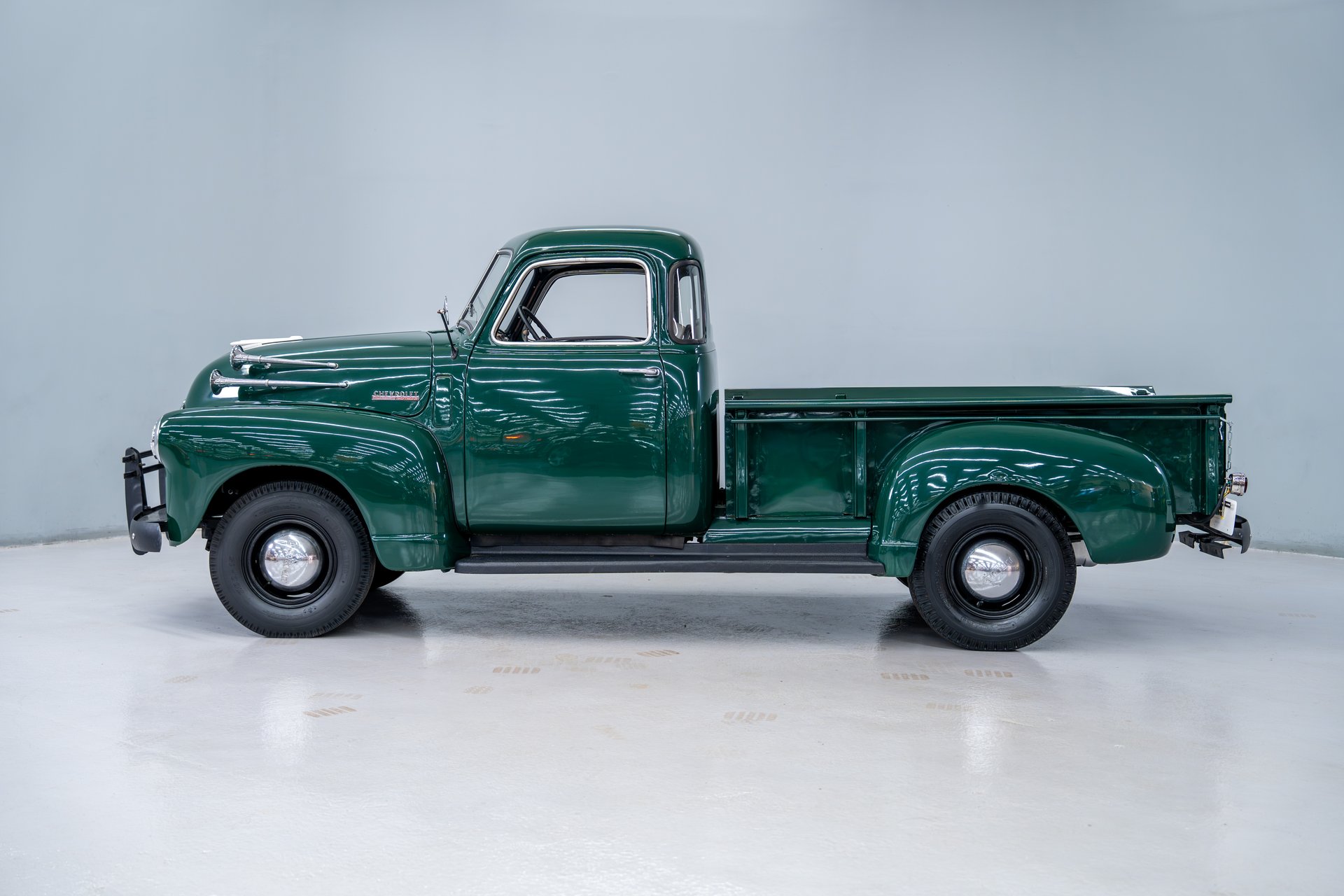
- Start with identity, before you look at condition. Read the serial number on the door post or cowl plate and the frame stamping, decode the series and the year, and compare both with the title. Confirm the truck is a 3600, the three-quarter-ton series, and confirm which generation it is: split windshield, six volts and torque tube for Advance Design; wraparound windshield, twelve volts and open driveshaft for Task Force.
- Measure the wheelbase and look at the bed. Run a tape from the centre of the front wheel to the centre of the rear wheel: an Advance Design 3600 measures 125.25 inches, a Task Force 3600 measures 123.25 inches, and a truck that measures 116 or 114 inches is a 3100 wearing a 3600 badge. Look at the bed length and the space between the cab and the rear fender. A short bed on a claimed 3600 is a 3100 bed, a swapped bed, or a 3100 truck, and each of those is a different purchase.
- Walk the rust map, in the order given in the rust section. Cab corners first, with your thumb. Then the cowl and lower front fenders from behind the front wheel. Then the door bottoms, the footwells with the mat lifted, and the cab mounts. Then under the bed, to the bed floor and crossmembers. Then the frame rails with the hammer, concentrating on the spring hangers and the crossmember under the cab. On a Task Force truck add the windshield channel's lower corners. Write down every area that fails, because the list you make here is the list you price in step 13.
- Check the cab for straightness and drop. Open and close both doors. They should latch with a firm push, sit flush and keep an even gap. A door that drops as it opens, that must be lifted to close, or whose gap is wide at the top and tight at the bottom is telling you the cab has dropped on its mounts, the hinges are worn, or the cab has been repaired crookedly.
- Start the engine from cold, and insist that it is cold. A seller who has warmed the truck before you arrive is hiding a cold-start fault, a choke fault, low oil pressure or a rattle, and you should say so and come back another day if you must. On an Advance Design truck the starter is a foot pedal on the floor to the right of the accelerator; on a Task Force truck it is a key or a button depending on the year.
- Work through the engine bay with the engine running. Find the engine's identity: the block casting number above the starter and the serial pad behind the distributor on a six, or the suffix pad at the front of the passenger-side head on a V8, and decode both. Look at the fan-to-radiator clearance on a six — a fan almost touching the radiator suggests a 235 swapped into a 216 truck. Test the distributor's vacuum advance with your hand pump: it must hold vacuum.
- Test the cooling system on the road, not at idle. An old truck will idle at a steady temperature with a half-blocked radiator. Drive it for at least twenty minutes, include a hill or a sustained run at the fastest speed the truck is comfortable doing, and watch the temperature gauge throughout. It should rise to its normal position and stay there.
- Drive the gearbox through every gear, under load. On a three-speed, check that second and third engage without a crunch and that the column shift's linkage is not so worn that you hunt for gears — worn column linkage is a common, cheap fault, at $50 to $150 in bushes and pins, that makes a good gearbox feel like a bad one.
- Test the steering and front axle the way the problem section describes. On the road, note the free play at the wheel with the wheels straight, and whether the truck wanders or pulls.
- Test the brakes as if you will drive the truck home, because you might. Press the pedal hard and hold it: it must stay firm and high and must not sink. Drive the truck and brake firmly from 30 mph in a straight line on a quiet road: the truck should stop straight, without a grab, a pull or a grinding noise.
- Check the wheels, tyres and the split-rim question. Count the wheel lugs — a 3600 has eight — and look at each rim for the locking ring that identifies a split rim. Note the tyre sizes, their age from the date code on the sidewall, and their condition. A set of old tyres on split rims is a four-figure replacement before the truck is safe to use, and it belongs in your negotiation, not in your surprises. Check the spare, and check whether the truck carries a jack that will actually lift a three-quarter-ton truck.
- Test every electrical item, and identify the system. Establish whether the truck is six-volt or twelve-volt, whether it has been converted, and whether the conversion was done completely — bulbs, coil, gauges and starter all considered. Test the headlights on both beams, the tail lights, the brake lights, the indicators, the horn, the gauges and the heater fan.
- Price the truck from your lists, not from the seller's story. Add up the rust repairs from step 3, the brake work from step 10, the tyres and wheels from step 11, the steering and spring work from step 9, and the engine and gearbox findings from steps 5 to 8. That total is the truck's real cost to put right.
Values
The market content beneath this guide — the trucks listed now and the recorded sales — carries every current figure for the 3600, refreshed at every build, and this section teaches you how to read it. Read it with the generation split in your mind at all times, because the 3600 market is really two markets sharing a badge, and a figure that averages them tells you almost nothing about either.
The first thing the figures will show you is a wide condition spread, and on a 3600 that spread is wider than on most classic trucks, for a reason rooted in the model's working life. At one end sit the project trucks: complete or nearly complete trucks that have sat for years and need rust work, brakes, tyres and an engine recommissioning before they move under their own power. At the other end sit the restored trucks and the well-executed customs, trucks on which a previous owner has spent the cost of the rust repairs, the brake overhaul, the engine rebuild and the paint, and which can be driven home and used. The gap between those two ends is not a gap in badges or years.
Within that spread, certain features carry durable premiums, and they are worth knowing because they are the features you cannot add later without spending more than the premium. An original V8 in a Task Force truck — a truck born with a 265 or a 283 and still carrying a correct engine — carries a premium over a six-cylinder truck and a larger premium over a truck with a swapped engine, because the V8 changes the truck's usability and because originality in the engine bay is the hardest thing to restore once it is gone. The five-window Deluxe cab on an Advance Design truck carries a premium over the three-window cab, smaller than the V8 premium but consistent, because the cab cannot be converted convincingly.
Other features sellers present as premiums deserve a colder eye. A recent paint job adds little if the rust beneath it was not cut out, and the inspection in this guide exists largely to make that distinction.
The asking-versus-achieved gap on these trucks follows the usual classic-truck pattern, with a 3600 twist. Dealer trucks are priced for the buyer who wants a finished truck; private and auction trucks are priced by the market on the day.
Negotiation on a 3600 is most effective when it is built from the inspection list rather than from opinion. The rust you found with your thumb, the brakes the seller cannot document, the tyres past their date codes, the kingpins you felt move — each is a costed item with a figure attached in this guide, and a seller faced with a costed list negotiates differently from a seller faced with a low offer and no reasons.
Parts and ownership
Owning a 3600 is easier than owning almost any other three-quarter-ton truck of its age, and harder than owning a 3100, and both halves of that sentence come from the same fact: the 3600 shares its cab and much of its trim with the high-volume 3100, and shares almost none of its running gear with it. Plan your ownership around that split and you will rarely be stuck. Ignore it and you will order 3100 parts for a 3600 chassis and learn the difference at the cost of return shipping.
The good news first. The reproduction parts supply for the Advance Design and Task Force trucks is one of the best in the classic truck world, because the 3100 market is large enough to support it and the 3600 shares the visible half of the truck. Cab repair panels — cab corners, floor sections, cowl panels, door bottoms, step panels — are in current production for both generations, at $60 to $300 per panel depending on size. Glass, rubber seals, window regulators, door hardware, seat covers, headliners, wiring harnesses, grille reproductions, bumpers and bed wood kits are all catalogue items from several competing truck suppliers, and competition keeps both prices and quality honest.
The harder half is the 3600-specific running gear. The heavier rear axle's bearings, seals and brake drums, the eight-lug hub components, the heavier springs, and the torque-tube components on the Advance Design trucks are all thinner on the ground than their 3100 equivalents. None of it is unobtainable — the truck suppliers stock the common items, the axle specialists stock bearings and seals by dimension, and the used-parts network for these trucks is deep — but lead times are longer, prices are higher, and the part that fits is identified by measurement and casting number rather than by clicking the model name. Learn to shop the way the truck's first owners did: by dimension, by casting number and by axle type.
Running a 3600 day to day is a matter of respecting what the truck is. The Stovebolt six wants its oil changed every 2,000 to 3,000 miles, its valves adjusted every 10,000 to 15,000 miles, its kingpins and steering joints greased every 3,000 miles, and its points checked at every service; none of that is expensive, and all of it is the difference between a truck that feels tight and a truck that feels old. The six-volt Advance Design trucks want their battery cables and grounds kept clean and their generator brushes checked. All of the trucks want their brake fluid changed every two years — a job old trucks rarely get, and the reason so many wheel cylinders fail from internal corrosion — and their wheel bearings repacked at the intervals the manual gives.
The ownership community is a genuine asset. The Advance Design and Task Force trucks have large, knowledgeable owner communities, active forums, and a deep archive of factory manuals, service bulletins and parts catalogues, much of it scanned and freely available.
Which one to buy
Buy on generation first, engine second, condition always. The generation decides what the truck is; the engine decides how it drives; the condition decides what it costs you after the purchase price. The picks below assume you are buying a truck to drive and use, which is what a 3600 is for.
- The all-rounder: a Task Force 3600 with the 235 six and the SM420 four-speed. Twelve volts, an open driveshaft, full-pressure oiling, the granny gear for loaded starts and the best all-round parts supply in the range. It cruises at modern speeds without complaint, tows and hauls as a three-quarter-ton truck should, and asks for nothing exotic in return. If you buy one 3600 to do everything, buy this one.
- The classic choice: an Advance Design 3600 five-window pickup with the 235, which means a 1954 or 1955 First Series truck. You get the Advance Design looks, the desirable cab and the better six in one truck, without the 216's splash-oiling limits on modern roads. The six-volt system and the torque tube are the prices you pay, and both are manageable if the truck's wiring and brakes have been attended to.
- The highway truck: a 1957 Task Force 3600 with the 283 V8. The best engine in the range in the most collected year, with the grille and the stance to match. Verify the engine's suffix code and the truck's V8 origins carefully, because this is the combination most often assembled from parts, and pay the premium only for a truck whose numbers support it.
- The value buy: a Task Force 3600 flatbed or chassis-cab. The market prices pickups, and the flatbeds — the same chassis, the same engines, the same cab — trade at a discount for want of a bed. If you want a working truck rather than a show truck, the flatbed is the honest bargain in the range, and a good wooden flatbed has a working beauty of its own. Verify any dual-rear-wheel truck's axle and serial number before you pay.
- The early truck, bought knowingly: a 1947 to 1953 Advance Design 3600 with the 216. The purest form of the model and the slowest, with splash oiling, a foot starter and six volts. Buy it for what it is — a farm truck from the immediate post-war years — drive it at the speeds it was built for, and do not buy it as your only route to highway cruising.
- The project to avoid at a driver price: any 3600, of either generation, with cab-mount rust, a plated frame or a shortened bed. Each of those faults attacks the thing the truck is — its structure, or its identity as a long-bed three-quarter-ton — and each costs more to put right than the truck's premium over a sound example. Walk past it and wait for the next one.
The overriding rule: buy the truck whose serial number, wheelbase and badge agree, whose frame and cab mounts are solid, and whose brakes you can document or afford to renew — and let every other virtue, including a V8, a five-window cab and fresh paint, rank below those three.
See the 4 3600 cars currently listed.
For sale now
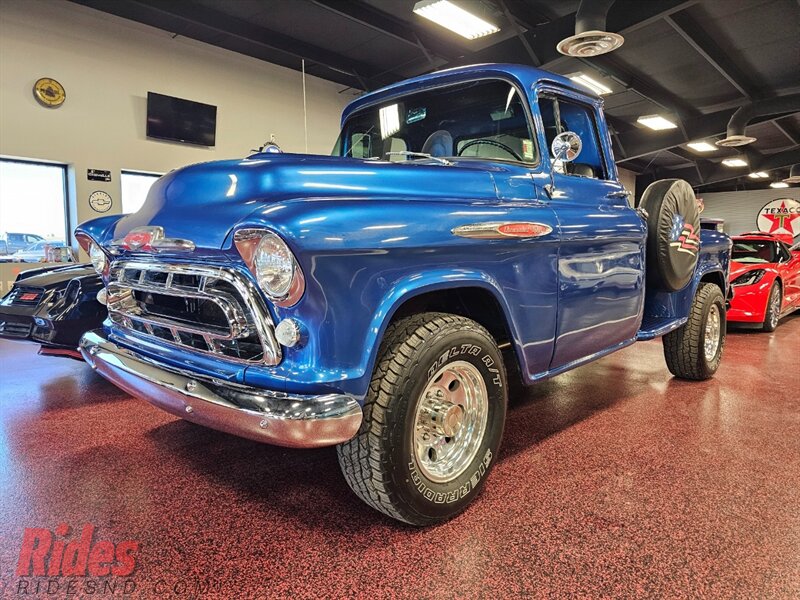 $37,900 · 52% above typical
Expand
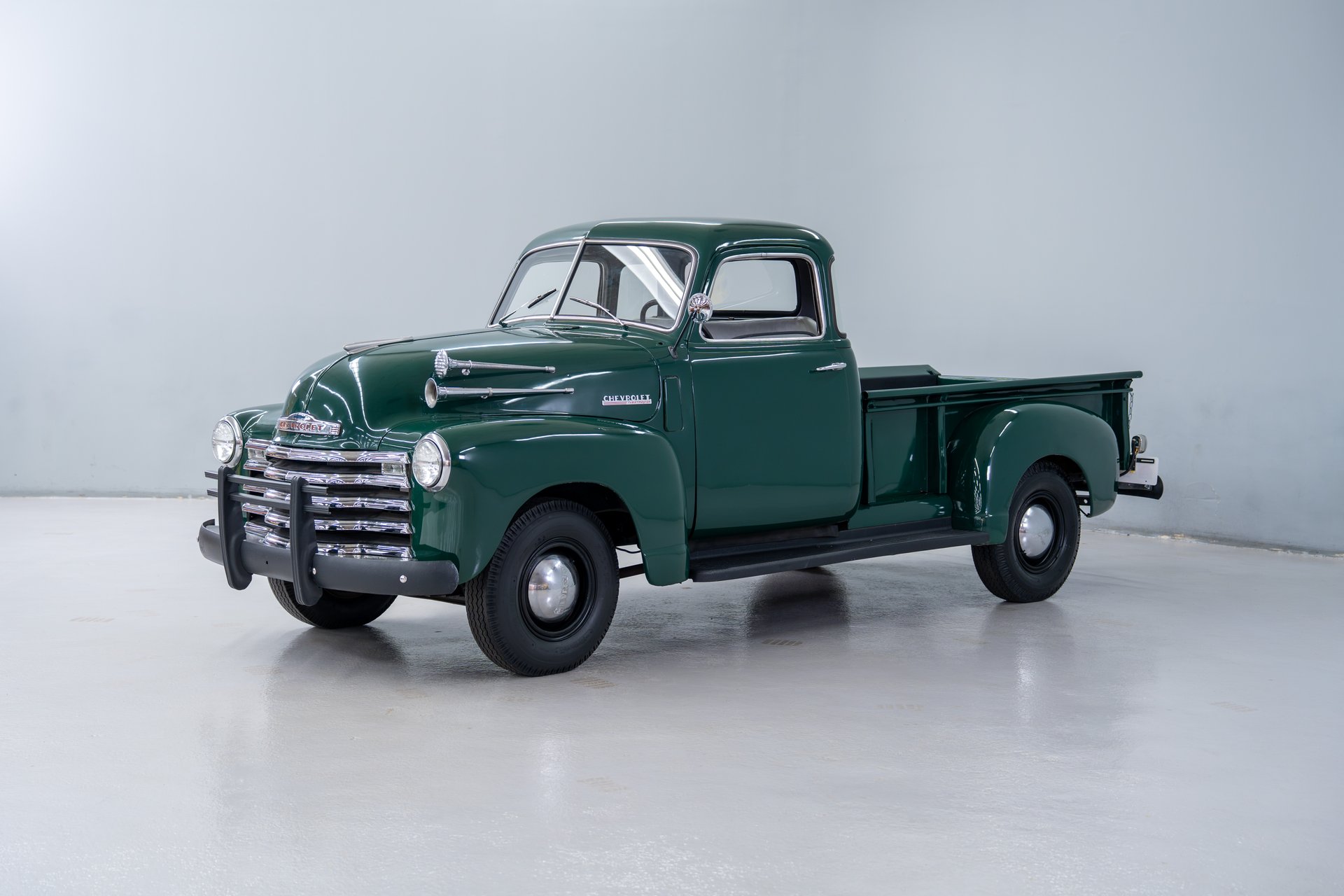 $26,995 · 8% above typical
Expand
What they sell for: 3600 sale prices.