
Chevrolet Cameo buyer's guide
Chevrolet Cameo -- the model's own buyer's guide: variants, values and what to check.
Years listed: 1956-1958 · Series: 3100 Trucks
Overview and history
The Chevrolet Cameo Carrier is the truck that invented the idea of the pickup as a personal, styled vehicle — a decade and more before the industry decided that was where the money was. It arrived in March 1955 as the flagship of Chevrolet's all-new Second Series "Task Force" trucks, catalogued as Model 3124, and was built for just four model years, 1955 to 1958, before Chevrolet replaced its party trick with an all-steel Fleetside bed that did the same visual job for far less money.
Underneath, a Cameo is a completely ordinary half-ton Chevrolet: the 3100-series chassis on a 114-inch wheelbase, a 6½-foot bed, a 5,000 lb gross vehicle weight rating, the 235-cubic-inch Thriftmaster six as standard or the new small-block V8 as an option, a solid front axle on leaf springs and drum brakes all round. Nothing about the running gear is exotic — and that is precisely the problem for today's buyer. What makes a Cameo a Cameo is a set of body components bolted over that ordinary truck: outer bed sides and a tailgate skin moulded in fibreglass-reinforced plastic by the Moulded Fiberglass Company of Ashtabula, Ohio — the same firm that built the early Corvette bodies — laid over a conventional steel Stepside box so the bed ran smooth and flush from cab to tail, exactly like a passenger car. Add chrome bumpers, two-tone paint, full fluted wheel covers, car-style taillights adapted from the 1954 Bel Air, a deluxe Custom Cab with the big wraparound rear window, and a spare wheel hidden in a carrier behind the hinged centre section of the rear bumper, and you had a truck a man could take to a job in the morning and to dinner in the evening. Stylist Chuck Jordan, later GM's vice-president of design, had originally sketched a one-piece cab-and-bed body; worries about frame flex killed that, and the fibreglass skins were the production answer.
It was an expensive answer. The Cameo listed at roughly thirty per cent more than a standard 3100, and the market of 1955 was not ready to pay car money for a truck, however handsome. Production tells the story: 5,220 built in the debut year, then 1,452 in 1956, 2,244 in 1957 and just 1,405 in 1958 — about 10,320 in total, a rounding error beside the hundreds of thousands of ordinary Task Force trucks sold in the same period. Ford's cheaper Styleside of 1957 and Chevrolet's own steel Fleetside of 1958 finished it: the Cameo was dropped partway through the 1958 model year, its idea absorbed into the mainstream. (GMC built a counterpart, the Suburban Carrier, in even smaller numbers — a different truck with a different badge, and do not let a seller blur the two.)
That history defines this guide. Because the valuable parts are bolt-on panels and trim over a common truck, a Cameo can be — and very often has been — manufactured out of a 3100 Stepside and a set of panels, some now reproduced. Because the genuine article is rare and significant, the premium for a real one is large. So this is the one classic truck guide where the central skill is not judging condition but proving identity: the fibreglass, the spare-wheel carrier, the tailgate hardware, the trim and the paperwork have to convict or acquit the truck before its engine, paint or price matter at all. Get the identity right and a Cameo is a simple, tough, well-supported old truck. Get it wrong and you have bought the world's most expensive 3100.
Our own store gives a sense of the population you will be shopping in: we currently track 12 Cameos — eight offered for sale and four recorded sold — spanning 1955 to 1958, with 1955 and 1957 the most numerous years in that small sample and just one 1958, all sitting, as every one should, inside the 3100 Trucks series. Those dozen also show the modern reality: alongside column-shift three-speeds and period automatics sit later overdrive automatics and non-factory colours, because a large share of surviving Cameos have been restored, restomodded or rebuilt at least once in seventy years. Originality is a spectrum on these trucks, and pricing it correctly is most of the buying skill.
The models
There is only one Cameo model — Model 3124, a half-ton, short-wheelbase pickup — sold across four model years. What changes year to year is the Task Force face around it, the engine options, the palette and the trim details, and those changes are your first dating evidence on any truck you view: a Cameo wearing the wrong year's front end is a truck with a story, and on a model where identity is money, stories need documents.
| Model | Years | Engine | Output | Built | Character |
|---|---|---|---|---|---|
| Cameo Carrier 3124 (1955) | 1955 | 235 six / 265 V8 | 123 hp / 145 hp | 5,220 | The debut; one colour scheme, the purest form |
| Cameo Carrier 3124 (1956) | 1956 | 235 six / 265 V8 | 140 hp / 155 hp | 1,452 | The rarest of the common years; colours open up |
| Cameo Carrier 3124 (1957) | 1957 | 235 six / 265 V8, 283 in period listings | 140 hp / 155 hp and up | 2,244 | The collector favourite; one-year grille |
| Cameo Carrier 3124 (1958) | 1958 | 235 six / 283 V8 | 140 hp / about 160 hp | 1,405 | Quad lamps, Apache era, built only part of the year |
(Outputs are period gross ratings for the standard truck tunes; period sources differ on some V8 figures and on the exact point the 283 reached light-truck buyers, which is why the engine section tells you to verify the engine in the truck rather than trusting the year on the title. Production figures are the commonly documented factory totals; they sum to 10,320 or 10,321 depending on the source.)
1955 — the debut. Every first-year Cameo left the factory in the same livery: Bombay Ivory with Commercial Red accents — the contrasting band on the bed sides and cab, red steel wheels behind the full covers, a two-tone interior to match. A 1955 in any other colour today has been repainted out of its factory scheme: common, not a crime, but the price should reflect that its most recognisable feature has been edited. The face is the original Task Force face: single headlamps in hooded pods, a wide eggcrate grille, the wraparound Sweep-Sight windshield and the big Full-View rear window. Standard equipment beyond a normal 3100 included the Custom Cab trim, foam-rubber seat padding, dual sun visors, a driver's armrest, a cigarette lighter and a colour-keyed steering wheel — small things that matter enormously when auditing a claimed original, because clones are usually built to the level of the bed panels and stop there.
1956 — the quiet year. Production collapsed to 1,452, making the 1956 the hardest year to find in honest condition. The palette opened beyond ivory and red, the front end was lightly revised, and both engines gained power — the six by a compression rise, the 265 to a quoted 155 hp. Visually closest to the 1955 and easiest to mis-date, which is why the serial number, decoded in the inspection section, does the dating on these two years and the grille does not.
1957 — the favourite. The 1957 Task Force face is a one-year design — a flatter, more open grille and revised front sheet metal — and it is the year collectors picture when they picture a Cameo. Production recovered to 2,244. The small-block story gets complicated here: the bored-out 283 arrived in Chevrolet's range for 1957, period feature cars show Cameos with 283 power, and other factory references keep the light-duty truck V8 as the 265 for the year. Treat any 1957 V8 truck as unproven until the block casting and stamping have been read — the difference between a born-265 truck, a factory 283 and a later swap is real money, and the fender badge proves nothing.

1958 — the last and the rarest. For 1958 the light trucks were renamed Apache, the front end gained quad headlamps and a new grille, and the fibreglass bed sides gained a sculpted flourish along their length. The 283 was now the truck V8. But Chevrolet also launched the all-steel Fleetside in 1958 — a bigger, cheaper bed that looked almost as smooth — and the Cameo's reason to exist evaporated. Production stopped partway through the year at 1,405, the lowest of the run. A genuine 1958 is therefore both the rarest Cameo and the one most often faked, because ordinary 1958 Apache Stepsides are comparatively plentiful. Everything in the authenticity section applies double to a 1958.

Trim and options. The options list still matters to identity and value: the V8, the Hydra-Matic, power steering, power brakes, a heater, a radio, E-Z Eye tinted glass and whitewall tyres were all extra-cost items, and a truck documented with them from new is worth more than one retrofitted. The big rear window and Custom Cab furniture are part of the Cameo package — a small-window, plain-cab truck wearing fibreglass panels is a contradiction that needs explaining, because clone builders start with the cheapest 3100 they can find, and the cheapest 3100s were standard-cab work trucks.
Engines and gearboxes
A Cameo offers exactly two engine families, both among the best-understood engines America ever built: the 235 overhead-valve six Chevrolet had been refining for decades, and the small-block V8 that was brand new in 1955. Neither is a reason to fear a truck. Both carry identity traps, because seventy years of swaps mean the engine in the bay is very often not the engine the truck was born with — and on a Cameo, born-with is where the money is.
The six: the 235 Thriftmaster "Stovebolt"
The standard engine in every Cameo, every year, is the 235.5-cubic-inch Thriftmaster six — the final, best form of Chevrolet's overhead-valve "Stovebolt" line. By Second Series production it was thoroughly modernised: full-pressure lubrication, replaceable insert bearing shells rather than the poured babbitt of its ancestors, a single one-barrel Rochester carburettor, and a gear-driven camshaft. Period gross ratings were 123 hp with 207 lb-ft of torque for 1955, rising to a quoted 140 hp from 1956 when compression went up to 8.0:1. It is not fast, in any tune. It is, however, one of the most durable engines of the twentieth century when it has had oil, and its long, low-revving pull suits the truck perfectly.
A healthy 235 starts readily, idles with a slight lope that is normal for the type, pulls cleanly without a flat spot just off idle, and shows steady oil pressure. Judge it by these known behaviours and failure modes:
Oil pressure and bearings. The gauge should show a healthy reading at road speed and a lower but present reading at a hot idle. A needle sinking towards zero hot, with a deep rumble from the bottom end under load, is worn bearings — an engine-out rebuild, realistically $4,500–7,500 at a specialist with the crank ground and the head done. Do not let a seller raise the idle to hide it; set it back down and watch the gauge again.
The Rochester one-barrel and flooding. The single-barrel carburettor is simple, but its float and needle valve are intolerant of modern fuel, dirt and age. A truck that starts hot badly, smells of petrol after a run, or dribbles fuel from the carburettor throat at rest has a needle valve held off its seat or a saturated float — a rebuild kit and an afternoon, a few hundred dollars at a shop, not an engine problem. The distinguishing test: look down the throat after switching off a warm engine — fuel appearing where it should be dry is the carburettor confessing. The exhaust heat-riser valve matters as much: the flap in the manifold that routes heat under the carburettor when cold seizes with age — shut, which cooks the carburettor and causes vapour-lock hot running, or open, which gives a cold engine that spits and stalls for its first miles. A riser that will not move freely by hand when cold is a known bill, usually freed off during a manifold job rather than a disaster.
Cracked manifolds. The cast-iron exhaust manifold cracks and warps with heat cycles, announcing itself as a ticking loudest cold that quietens as the metal expands. A replacement manifold and gaskets fitted is a $400–900 job; studs snapping in the head is what turns it into a longer one.
Valve gear and timing gear. A valvetrain that ticks uniformly is usually adjustment, not death. More specific to the design is the fibre camshaft timing gear: when its teeth strip — and after seventy years an original gear is on borrowed time — the engine stops dead and cranks without any sign of life, the distributor rotor stationary with the cap off. That rotor test distinguishes a stripped gear from an ignition failure in two minutes. A gear set replaced is a $600–1,200 job, mostly labour.
The V8s: the 265 and 283 small-blocks, Trademaster tune
The optional engine was Chevrolet's new overhead-valve small-block, in truck form called the Trademaster. For 1955 and 1956 that meant the original 265 — bore 3.75 in, stroke 3.00 in — quoted at 145 gross hp in 1955 and 155 hp in 1956, fed by a two-barrel carburettor and detuned from passenger-car specification with a milder cam and lower compression for truck duty. The 283 — the 265 bored out to 3.875 in — took over at the end of the run and is the correct engine for a 1958; its status in 1957 light trucks is the muddle described in the models section. In truck tune the 283 is generally quoted around 160 hp. What matters is not which figure a brochure printed but which engine is in front of you, because the small-block's interchangeability is legendary: blocks, heads and whole engines have been swapped between cars and trucks for seventy years, and a Cameo's bay today can hold anything from its born-with 265 to a 327, a 350 or a car-specification 283 wearing Corvette-style finned valve covers — a popular dress-up that proves nothing except that someone liked the look.
Identifying what you have. Small-blocks carry their evidence in three places: the casting number and date on the flange at the back of the block, behind the driver's-side head; the stamped code on the pad at the front of the block, passenger side, whose suffix letters encode the engine's original application, displacement and transmission pairing; and the casting numbers under the valve covers. A correct truck engine decodes as a truck application of the right displacement and period; a pad decked smooth during a rebuild removes the stamp — and with it the strongest single piece of engine provenance, which should be priced as such. A 1955 265 has a further tell: the first-year small-block had no full-flow oil filter provision, relying on an optional bypass canister, so a neat spin-on filter low on a claimed-1955 block means a later engine or a conversion.
Behaviour and failure modes. A healthy small-block starts instantly, idles evenly, and pulls without smoke. A blue puff at start-up after standing is valve stem seals — a known, modest job, $500–1,000 with the heads on. Blue smoke that thickens under load is rings and bore wear: budget $5,500–9,500 for a proper rebuild with machine work. Hydraulic lifters tick when the engine has sat; a tick that does not fade within a minute, localised to one cylinder, is a collapsed lifter or a worn cam lobe — a vacuum gauge on the manifold shows the rhythmic flick a dead lobe gives. Rear main seals leak with age and mark every driveway; budget it as a nuisance, not a negotiation lever. Check the fan shroud is present: a small-block idling in traffic without it will climb the gauge no matter how good the radiator is.

Gearboxes: three-speeds, a four-speed, and the Hydra-Matic
The standard gearbox is Chevrolet's three-speed manual, shifted from the steering column — "three on the tree" — with synchromesh on the upper gears. It is pleasant when the linkage is tight and a vague, graunching puzzle when the column bushes and rods are worn, which they usually are: most "worn gearbox" complaints on these trucks are $150 of linkage bushes and an afternoon's adjustment, and the test is whether the graunch follows a gear (synchromesh wear, worst into second) or wanders with the lever's mood (linkage). Heavy-duty three-speed and four-speed manuals were optional — the four-speed's compound first is a load-starting crawler, not a road gear — and a three-speed with overdrive was also offered. On any manual, judge the clutch by bite point and by judder pulling away uphill: judder is oil on the plate or a warped cover, a clutch job at $800–1,500. Check an overdrive actually engages, because a dead solenoid turns the option into dead weight.
The automatic option causes the most confusion, so be clear: the Cameo's automatic is the Hydra-Matic — a four-speed, fluid-coupling automatic built by GM's Detroit Transmission division, the design Oldsmobile and Cadillac had used since 1940 — and it is not the two-speed Powerglide of Chevrolet's passenger cars. Sellers who describe a Cameo as "Powerglide automatic" are usually repeating a guess, but the distinction matters, because the Hydra-Matic drives and is serviced differently. With a fluid coupling rather than a torque converter it has no multiplication at stall, so pull-away is deliberate; its four ratios (period figures: 3.82, 2.63, 1.45 and 1.00:1) shift with a firmness a modern driver reads as harshness, and a degree of that is correct. What is not correct is flare between gears, a long delay engaging, or thumping with burnt-smelling fluid. Its adjustments — throttle linkage and band settings — are specialist knowledge now, and a full rebuild by one of the shrinking number of shops that know the box runs $2,800–4,800. A documented rebuild is a genuine selling point; a silent box is a contingency to price in.
Finally, the modern reality: many Cameos today, including trucks in our own listings, run later transmissions — the 700R4 overdrive automatic appears among our twelve trucks — usually as part of a restomod build with a later small-block. Such a truck can be a genuinely relaxed cruiser, but it must be priced as a modified truck: "automatic" in a listing can mean born-with Hydra-Matic, period-correct replacement, or a twenty-first-century drivetrain — three different values wearing the same word.
Problem areas
Everything in this section follows one rule: on a Cameo, identity comes before condition, and the bed comes before everything. A rusty genuine Cameo is a restoration project with a floor under its value. A shiny clone is a 3100 with a story, worth 3100 money however well it is finished. So the problem areas are ordered the way you should work through a truck: authenticity first, then the fibreglass, then the steel underneath it, then the chassis, then the cabin. A note on our own evidence: our photo-note sample for this model is small — of the 12 Cameos we track, just 3 have had their sellers' photo sets examined in detail so far — so treat what follows as the model's known behaviour rather than a statistical claim about our listings. Even in that tiny sample of 3, rust was noted in 2 trucks and visible damage in 2.
Authenticity: proving a Cameo is a Cameo
Start with the uncomfortable fact that shapes the whole market: the serial number does not certify a Cameo. A Task Force serial, on the plate in the driver's door jamb, decodes the series (a 3100), the model year, the assembly plant and — by a V prefix — whether the truck was built with a V8. Model 3124 was Chevrolet's catalogue designation for the Cameo Carrier body on that chassis, and the Cameo equipment was a package of panels, trim and cab specification applied to the truck. There is no single magic digit to point at. That is exactly why clones exist: take a sound 3100 Stepside of the right year, add the fibreglass bedsides and tailgate skin, the spare carrier, the chrome and the badges, and you have built something that photographs identically to the real thing. Reproduction fibreglass bedsides are openly sold today, complete with the front bed cap, so even "it has the fibreglass" proves nothing except that the panels are present.
Authenticity on a Cameo is therefore a cumulative case, built from evidence that is tedious to fake convincingly all at once:
The panels' age and fit. Original Moulded Fiberglass panels are seventy years old, and they show it: gelcoat crazing and star-cracking around mounting points, a hand-laid mat texture on the unpainted back face, factory hardware with decades of undisturbed oxidation, paint aged at the same rate as the cab beside it. A new reproduction panel is not a disqualification — originals get broken and replaced — but a truck whose every panel is new, on a cab presented as an unrestored original, is a story that does not hang together. Ask which panels are original and listen to whether the answer is specific.
The steel box underneath. The Cameo treatment was applied to a conventional Stepside box: steel inner sides, a wood-plank floor with steel skid strips. The skins cover the outside only. A "Cameo" whose bed is wrong underneath — a later Fleetside bed adapted to fit, or a homemade box — fails at the foundation. Get inside the bed and confirm the architecture is Stepside steel wearing skins.
The spare-wheel carrier. This is the Cameo's signature mechanism and the component clone builders most often skip or fake badly. The spare rides in a carrier concealed behind the rear bumper: the bumper's centre section, carrying the number plate, hinges downward and the carrier lowers with the spare in it. On a genuine truck the hinges, latch, carrier frame and seventy years of wear marks are all there, and the mechanism works — stiffly, usually, but it works. On a clone you will commonly find a fixed bumper, a spare slung under the bed in the ordinary way, or a carrier welded shut. Operate it. A missing carrier is not automatically fatal — carriers were removed, spares relocated — but its absence removes the single hardest-to-fake piece of evidence and must move the price.
The tailgate. The Cameo tailgate wears a fibreglass outer skin, is supported by retractable cables rather than a work truck's exposed chains, and latches from inside. Chains on a claimed Cameo are wrong; a steel-skinned tailgate is wrong; a fibreglass skin with cable supports and correct latching is a strong mark in the truck's favour.
The trim set. Work through the full list, because clones are usually partial: chrome bumpers; the stainless trim outlining the contrasting band on the bed sides; the chrome-trimmed taillights adapted from the 1954 Bel Air, at the bed's rear corners; full fluted wheel covers over painted steel wheels; Cameo badging; and inside, the Custom Cab specification — big rear window, foam-padded seat, two-tone trim, armrest, dual visors, colour-keyed wheel. Any one missing item can be loss or damage. A systematic pattern of missing items, all of them expensive, is a build sheet: the truck was assembled to a budget from a plain 3100 — and plain 3100s were usually standard-cab, small-window work trucks, so check the cab hardest of all, because upgrading a cab convincingly is the part of a clone that costs real money and is most often skipped.
Paperwork. With no serial digit to lean on, documents carry unusual weight: a period invoice describing a Cameo Carrier or Model 3124, old registrations carrying the description, dated photographs of the truck in earlier decades wearing its panels, restoration invoices naming Cameo-specific parts. A continuous paper trail describing the truck as a Cameo since long before the values made faking worthwhile is the strongest evidence of all — a clone built in 1995 to fool a 1995 buyer at 1995 prices is a much rarer thing than a clone built last year.
The myth to bury here is the mirror image of the usual one: not "every Cameo is fake" but "a good restoration is as good as an original." Financially, it is not. Two trucks identical in photographs can sit a full value class apart because one has the paper and the aged, coherent component set and the other has a clean story and new panels. Price the evidence, never the shine.
The fibreglass: bedsides and tailgate skin
Fibreglass does not rust, and that fact has misled two generations of buyers into thinking a Cameo bed is maintenance-free. It is not. Seventy-year-old fibreglass fails in its own ways, and a Cameo's panels live outdoors, carry load vibrations, and get leaned on, loaded over and backed into things.
Gelcoat crazing and star cracks. The coloured gelcoat embrittles with age and ultraviolet exposure. Fine crazing — a network of hairline cracks — is cosmetic and nearly universal; star cracks, radiating from a point, are impact damage, and each is a place where water has entered the laminate. Run a palm over the panels: crazing you can feel with a fingernail but not a palm is surface work; cracks you can feel as ridges need grinding out and re-laminating before paint, not filler skimmed over them. Budget a competent repair and refinish at $800–2,000 per panel; a full bed set properly repaired and painted is a $3,500–7,000 conversation.
Stress cracks at the mounts. Every bolt hole is a stress concentration. Cracks radiating from mounting holes, and elongated holes where a panel has worked loose and fretted, tell you the panel has been moving — usually because its mounts or the steel behind them have deteriorated. Flex a panel gently at its lower edge: movement or creaking means the fixings need rebuilding, and until they are, every mile adds cracks.
Delamination and soft spots. Where water has entered through cracks and freeze-thaw cycles have worked on it, the laminate separates into layers and loses stiffness. The test is the tap test: work across the panel tapping with a knuckle or a coin — sound laminate rings sharp and hard; delaminated areas answer dull and hollow. Soft spots that deflect under thumb pressure need cutting back to sound material. Any good boat or Corvette fibreglass shop can do this work — the skills are identical to early Corvette repair, which is your best route to a competent repairer — but it is skilled labour priced by the hour, and a bed with widespread delamination is a replacement-panel calculation instead.
Rust: the steel the fibreglass hides, the cab, and the frame
The fibreglass may not rust, but almost everything it is attached to does, and the Cameo's cruellest trick is that its prettiest panels conceal a standard steel Stepside box that rots in the standard places — invisibly, from behind the skins. Judge a Cameo's steel as forensically as any Task Force truck, then add the hidden bed structure on top.
The bed's steel structure. The inner bed sides, front panel and cross-sills are steel, and the wood floor planks rot, holding moisture against the sills and the bottom of the inner sides. Inside the bed, check the lower inches of the inner walls, the corners and the front panel; underneath, get a torch on the cross-sills and the strips where the skins mount. A bed floor renewed in fresh varnished hardwood tells you nothing either way — the sills beneath it are the evidence. Steel bed repair ranges from a few hundred dollars of patches to $2,500–4,500 for sills, sections and a floor done properly, before the fibreglass goes back on.
Cab corners, steps and floors. The Task Force cab rots in a predictable map. The cab corners behind the doors trap mud thrown up by the rear wheels and perforate from inside; the concealed step and rocker area below the door take road blast and salt; the floor pans collect whatever the windshield seal and cowl vents let in; the toe boards and lower hinge pillars follow. Press and prod all of it, lift the floor covering, and check the cab mounts underneath — a cab sitting unevenly on collapsed mounts shows up as doors that will not shut cleanly, and sellers love to blame the hinges. Individual cab-corner and floor repairs are $600–1,500 a side fitted and painted; a cab needing corners, floors, steps and pillars is a $5,000–10,000 metalwork programme, and the most common way a "cheap" Cameo stops being cheap.
Chassis, steering and brakes
The Task Force chassis is pre-war in concept: a solid I-beam front axle on leaf springs, located by kingpins, a leaf-sprung live rear axle with an open propeller shaft — the new Hotchkiss drive that replaced the old torque tube for the Second Series. It is all rebuildable with hand tools, and all of it wears.
Kingpins and front axle. Worn kingpin bushes give play you can feel rocking a front wheel top-to-bottom with the truck jacked up, and show on the road as wander, shimmy and uneven tyre wear. Grease first, as with any kingpin front end: joints starved for a decade feel worn and recover once lubricated, so grease, re-check, and only then condemn. A kingpin and bush rebuild is $700–1,400 both sides, the cost in the reaming and fitting. Check for broken spring leaves (usually the short lower ones, hidden under the main leaf), worn shackle bushes and linkage play — drag link and tie-rod ends are cheap parts whose combined wear makes these trucks steer like a boat.
Steering box. The recirculating-ball box wears at its centre position, where it spends its life, giving free play at the straight-ahead that adjustment never fully removes. The distinguishing test is free play at the wheel rim, straight ahead versus at half lock: much worse in the middle is box wear, even all round is linkage. A rebuilt box fitted runs $600–1,100. Power steering was an option worth having; check for leaks and for even assistance both ways.
Brakes. Four-wheel drums through a single-circuit master cylinder — the period standard and the system's real weakness today. Everything hydraulic on a truck that has sat will need renewal: wheel cylinders weep, hoses perish internally and act as one-way valves (the classic symptom is a brake that drags and releases when the bleed nipple is cracked), and the single circuit means one failure is all the failures. A full hydraulic refresh — master and wheel cylinders, hoses, lines where needed, shoes, drums skimmed or renewed — is $900–2,000 with labour and is non-negotiable without documented recent brake work. Many owners convert to a dual-circuit master cylinder; it is invisible, reversible and the one safety modification nobody should argue with.
Interior, trim and electrics
The Cameo's cabin was its second sales pitch — a truck interior trimmed like a car's — and it is where a clone's budget shows and where restoration costs hide in plain sight.
The Custom Cab evidence. The cabin should present the deluxe specification: big wraparound rear window, foam-padded bench seat in two-tone trim, armrest, dual visors, colour-keyed steering wheel. Period vinyl splits at the seams; the foam beneath crumbles and the seat becomes a hammock long before the cover looks terrible, so sit in it. A correct retrim runs $2,500–5,000; a plain work-truck interior in a claimed Cameo is an authenticity deduction first and a retrim bill second.
Instruments and electrics. The Second Series went to 12-volt electrics, so bulbs, batteries and accessories are all ordinary. Failures are the usual fifty-plus-year list: corroded earth connections, the fuel gauge sender in the tank behind the seat, alternator conversions of varying quality, wiring repaired with household connectors. A truck where everything works — lights, gauges, wipers (vacuum wipers that stall under acceleration are period-correct and maddening), heater blower, horn, radio — has been used and maintained, the best general sign there is. Test the heater in July anyway: cab heat is how you will drive the truck home in November.
A 1955 in any colour but its factory ivory and red — and you will meet them in burgundy, yellow and everything else — is a fork in the road: it can be a handsome, honest driver, but it cannot be sold to you as a factory-correct 1955, and the difference between those two descriptions is a value class.
How to inspect one
Allow two hours, not one — a Cameo inspection is a 3100 inspection plus an authenticity trial, and the trial comes first, because there is no point falling in love with the condition of a truck whose identity you have not proved. Bring a torch, a magnet wrapped in cloth, a mirror, a coin for tap-testing fibreglass, and a notebook. If the truck passes you, pay for a lift inspection before money changes hands.
- Paperwork and serial first. Match the title to the serial plate in the driver's door jamb. Decode what the serial tells you — 3100 series, model year, assembly plant, and a V prefix if the truck was built with a V8 — and check its year against the front end the truck wears (single lamps for 1955–57, the one-year grille for 1957, quad lamps for 1958). Remember what the serial cannot do, from the authenticity section: it does not certify a Cameo, so from here on the components and documents do that work. Ask for every paper that names the truck a Cameo Carrier or Model 3124, and photograph the file.
- Operate the spare-wheel carrier. Work the signature mechanism: the rear bumper's centre section should hinge down and lower the carrier with the spare in it. A fixed bumper, a missing carrier or a spare slung under the bed is the single loudest clone alarm there is.
- Audit the tailgate and bed architecture. Confirm the fibreglass tailgate skin, the retractable cable supports and the inside latches — chains are wrong. Then climb in: underneath, the bed should be a steel Stepside box, with steel inner sides, a wood-plank floor and steel skid strips. A Fleetside-style or fabricated bed under Cameo panels ends the authenticity conversation.
- Tap-test and flex the fibreglass. Work both bedsides and the tailgate skin with the coin tap test from the fibreglass section, listening for delamination's dull note; feel for star cracks around the mounts; flex each panel gently at its lower edge for loose fixings; check the back faces you can reach for the gloss of previous repairs. The two-tone band and its trim should run against the cab in one unbroken, flush sweep.
- Count the trim set. Walk the authenticity checklist physically: chrome bumpers, bed side trim complete, the chrome Bel Air-derived taillights, full fluted wheel covers, Cameo badging, and inside, the big rear window and Custom Cab furniture — padded two-tone seat, armrest, dual visors, colour-keyed wheel. A pattern of missing expensive items prices the truck as the 3100 it may be.
- Cold start. Insist the engine is cold. A six should start with choke and settle to its lope; a V8 should fire at once. Watch for the blue puff of valve stem seals, listen for lifter tick that outstays its welcome, and on a six note any manifold ticking that fades as it warms — the cracked-manifold signature from the engine section.
- Read the engine, not the badge. Find a V8's block casting number and date at the rear flange and its stamped pad at the front, and decode the suffix against the claimed year and specification. On a six, check the Rochester one-barrel, the heat riser's freedom, and oil pressure hot at a true idle. An engine that decodes as a later or car-specification unit does not disqualify the truck — it reprices it, on the spot, in your notebook.
- Under the truck. On the lift or on your back: cab corners, steps, floor edges and cab mounts; the steel bed cross-sills and inner sides the fibreglass hides; the frame at the steering box, spring hangers and rear kick-up; brake lines and hoses; rear axle seals. Prod where the seller permits. Structural perforation in cab or frame is the walk-away line; everything else is arithmetic.
- Front end and steering. Jack the front and rock each wheel top-to-bottom for kingpin play — then remember the grease-first rule from the chassis section and do not price a rebuild until the joints have been greased and re-checked. Measure steering free play at the rim, straight ahead versus at half lock, to separate box wear from linkage wear.
- The test drive. Fifteen minutes minimum, including a climb and a stretch at highway speed. A manual should change cleanly into second without a graunch once warm, the clutch biting without judder. A Hydra-Matic should pull away deliberately — that is the fluid coupling, not slip — and shift firmly through its four ratios without flare; judge it by Hydra-Matic behaviour, whatever the listing called it. Brake firmly from speed: the truck should stop straight without pedal pulse, and a dragging brake that frees when a bleed nipple is cracked means perished hoses, as the brakes section explains.
- Heat, electrics and the small print. Let it idle hot and watch temperature and oil pressure. Run the heater and blower, wipers, every light, the gauges and the horn. Check both panes of panoramic glass for cracks and edge clouding, and shut both doors from a few inches: a cab that needs a slam is telling you about its mounts and hinges.
- Step back and score it in the right order. Photograph the truck square from both sides; judge the stance and the bed-to-cab alignment. Then write your verdict in this guide's order: identity proved or not proved; fibreglass sound or wanting; steel sound or wanting; mechanics documented or unknown. A truck that scores badly on the first line does not get rescued by the other three.
Values
The computed market block beneath this guide carries the current numbers — what is listed now, and what our recorded sales show — refreshed as the market moves, so this section deliberately carries no figures of its own. What it can teach you, durably, is how to read those numbers, because the Cameo market is one of the easiest classic-truck markets to misread, and one of the most expensive to misread wrong.
The first driver of value is not condition — it is proof. Most classic markets price condition first and provenance second; the Cameo inverts that. Because a convincing-looking truck can be built from a common 3100, the market sorts Cameos into classes by evidence before it asks about paint: documented, coherent, original-panel trucks at the top; honest restored trucks with their paperwork in order below them; trucks whose identity rests on appearance alone below those; and acknowledged tributes priced as what they are — nicely finished 3100s. When you compare a listing against the recorded sales, first ask which class the comparable sales belonged to, because a price achieved by a documented truck tells you nothing about the value of an undocumented one, in either direction.
Within a class, the year spread is real but modest. The 1958 carries a rarity premium as the lowest-production year; the 1957 carries a popularity premium as the year collectors picture first; the 1955 carries the debut's significance and the discipline of its single factory colour scheme, so a first-year truck still in correct ivory and red is worth more than the identical truck repainted, in a way that does not apply to later years. The scarce 1956 tends to be the quiet one — overlooked between debut and favourite — and experienced buyers treat it as the value year for exactly that reason. No year spread is as large as the spread between identity classes, or between a truck with its original fibreglass, carrier and trim intact and one without.
Originality of the drivetrain is the third axis. A born-with engine and, where fitted, a documented Hydra-Matic place a truck in the original class; a period-correct replacement is a smaller deduction than a later small-block swap; and a full restomod — later engine, overdrive automatic, modern colours — leaves the collector market entirely and enters a different one, priced as a finished custom against other customs. Restomod prices can look strong in listings, but they are not comparable to collector prices: the buyer pool is thinner, the taste personal, and the recorded sales beneath this guide should be sorted by specification before anyone averages them.
Asking prices and achieved prices part company on these trucks. Cameos are low-volume, emotionally bought vehicles, and sellers anchor on the best publicised result for the best truck; the typical honest truck changes hands below the typical asking figure, and the gap widens the weaker the identity evidence is, because that is where negotiation lives. Read the recorded sales, not the listings, for your ceiling. A truck that has sat unsold at a headline figure for a long season is the market giving evidence about itself — believe it.
Projects are priced by the panels. The usual logic — a project is worth the finished value minus the restoration cost — needs one Cameo adjustment: what survives determines which value class the finished truck can ever enter. A derelict truck with its original fibreglass, carrier, trim and paperwork can finish in the top class, and the market prices that potential. A derelict missing its carrier and wearing reproduction panels has a fixed ceiling however much is spent on it, and should be bought at a figure that respects the ceiling. There is no cheap Cameo that stays cheap if the steel is rotten — but there is such a thing as a cheap Cameo that was never a Cameo, and it stays exactly that forever.
Parts and ownership
The Cameo's great ownership advantage is that it is two vehicles in one, and the common one is very well served. Mechanically it is a Task Force 3100 — one of the best-supported American trucks of its era, with an enormous reproduction industry behind it. The Cameo-specific layer on top is smaller, thinner and dearer, and managing the boundary between the two is the whole art of owning one sensibly.
Easy: everything the truck shares with the 3100. Engine service and rebuild parts for both the 235 six and the small-blocks, carburettor kits, ignition parts, water pumps, radiators, clutch components, brake drums, shoes, cylinders and hoses, kingpin and steering wear parts, springs and bushes, cab repair panels (corners, floors, steps, door skins), glass rubbers and most seals, bed wood kits and skid strips. Order today, fit this weekend, at ordinary classic-truck prices. Both engines are units any competent machine shop in America can rebuild without a manual open on the bench.
Harder and dearer: everything with the Cameo name on it. Fibreglass bedsides and tailgate skins are reproduced, which keeps a damaged truck repairable, but original panels in sound condition are finite and priced accordingly — and a reproduction panel, however good, is a provenance deduction as well as a part. The spare-wheel carrier mechanism, its hinges and latch, and the hinged bumper centre section are the hardest hardware on the truck to source: Cameo-only, low-production and routinely discarded, so carriers are hunted used parts, priced like it. Stainless bed trim, the chrome Bel Air-derived taillights and the full fluted wheel covers sit in the same category — findable, but you will wait and you will pay. The Hydra-Matic is the mechanical equivalent: a strong box with a shrinking specialist base. Chrome replating, priced per piece, is a budget line of its own on a truck wearing this much brightwork.
Running costs. A sorted Cameo is simple to keep: fuel consumption in the low-to-mid teens for a V8, a little better for a gently driven six; servicing any classic-literate independent can perform; insurance in line with other classics of similar value, with an agreed-value policy that reflects the identity class you actually bought, supported by your paperwork. The first-year budget catches new owners, as on every old truck: catching up deferred maintenance on a running example — brakes, hoses, tyres of unknown age, fluids, the fibreglass mounts nobody has checked — honestly runs into the low thousands before you improve anything, and recommissioning a truck that has sat for years costs several times that, because sitting is what kills Hydra-Matics, brake hydraulics and fuel systems. Buy a truck in regular use over a sleeping beauty at the same money, every time.
Living with it. The Cameo asks two habits ordinary 3100s do not. Treat the fibreglass like the Corvette panels it is related to: wash it, wax it, watch the gelcoat, repair chips before water enters the laminate, and never let anyone lean a ladder or a load against a bedside. And work the spare carrier a couple of times a year whether you need the spare or not — hinges that move do not seize, and the day you need the wheel is the wrong day to discover seventy years of stillness.

Which one to buy
- The all-rounder: a documented 1957 V8. The favourite year, the strongest market in both directions, and the best chance of finding a truck whose paperwork, panels and engine all agree. If you want one Cameo to own, drive and sell without a story, this is it.
- The value buy: a 1956. The overlooked year — scarce, correct, and priced gently because it sits between the debut and the favourite. Nearly the rarest truck in the range, bought at the range's quietest prices.
- The purist's truck: a 1955 in Bombay Ivory and Commercial Red. The debut year in its only factory scheme, red-accented interior to match. The moment a 1955 leaves its factory colours it leaves its class, so buy one that never has — or buy a repainted one at repainted money and enjoy it without apology.
- The collector car: a documented 1958. The rarest Cameo and the end of the fibreglass story, quad lamps and all. Buy it only with the fullest evidence — paper, carrier, panels, trim — because the 1958 is also the most-cloned year, and an undocumented 1958 is a suspicion, not a rarity.
- The driver's truck: an honest restomod. A later small-block, an overdrive automatic and a sound body make the Cameo you will actually use on modern roads. Buy it as a finished custom, priced against other customs — never as a collector car.
- The project to buy: the derelict with its evidence intact. Original fibreglass, working carrier, trim present, paperwork alive, steel rotten. That truck can be restored into the top class. The shiny project missing its carrier and wearing new panels cannot, at any budget.
And the rule that overrides all of the above: buy the evidence first, the condition second, and the shine last. On every other classic truck, condition is king. On a Cameo, identity is — because condition can be bought back with money and time, and a Cameo's identity, once separated from its panels, its carrier and its paper, cannot be bought back at all.
See the 6 Cameo cars currently listed.
For sale now
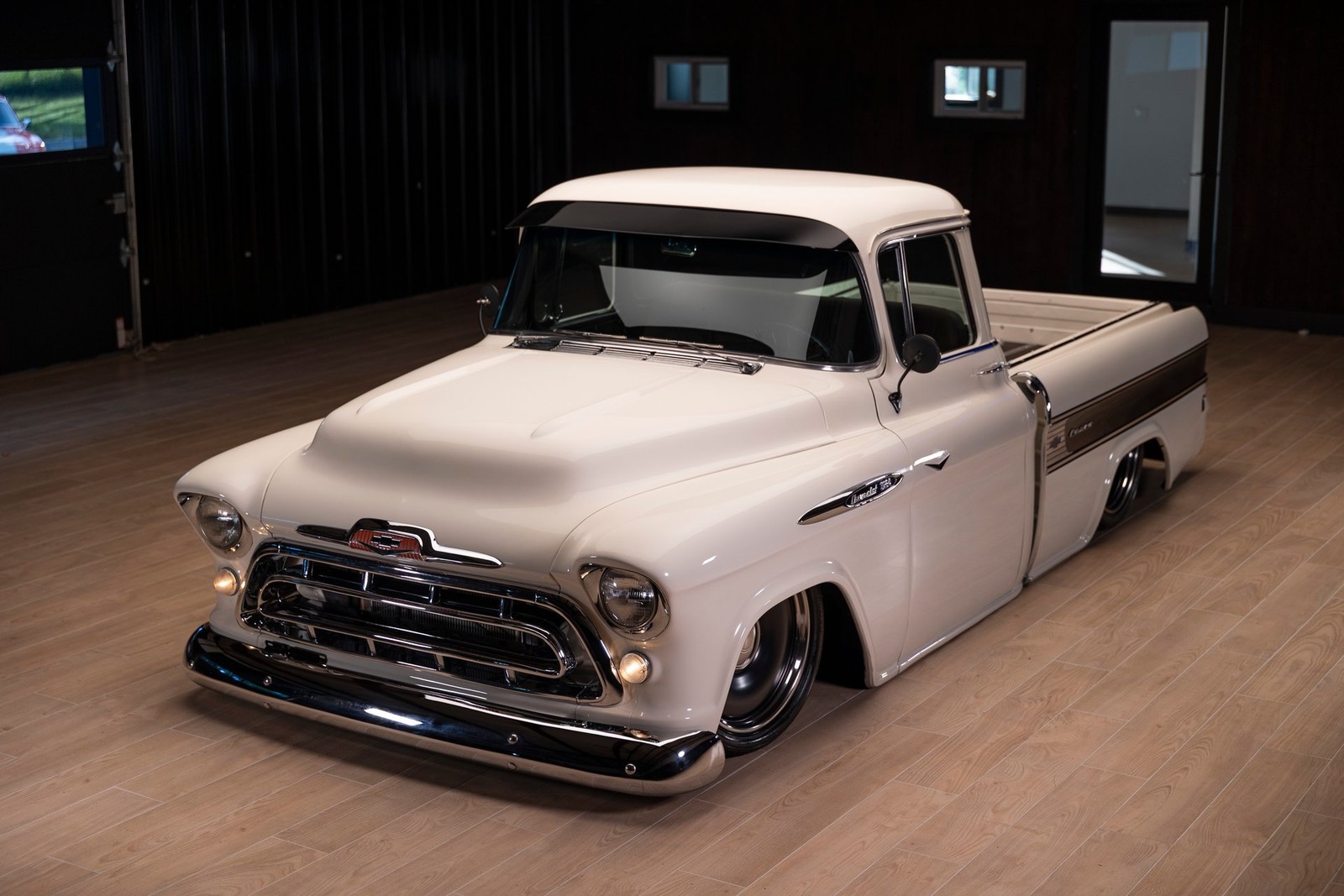 $139,999 · 23% above typical
Expand
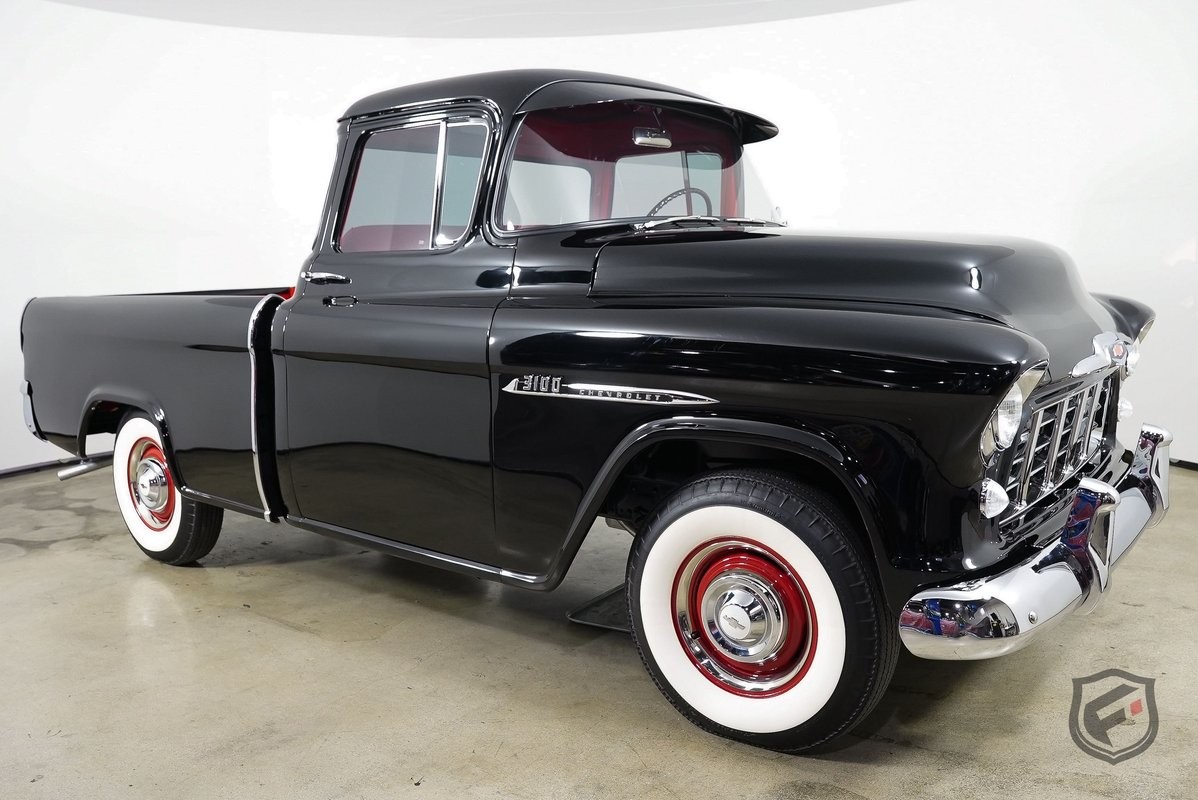 $79,950 · 30% below typical
Expand
What they sell for: Cameo sale prices.