
Chevrolet Malibu Hardtop buyer's guide
Chevrolet Malibu Hardtop -- the model's own buyer's guide: variants, values and what to check.
Years listed: 1965-1970 · Series: Chevelle
# Chevrolet Malibu Hardtop — Buyer's Guide
Overview and history
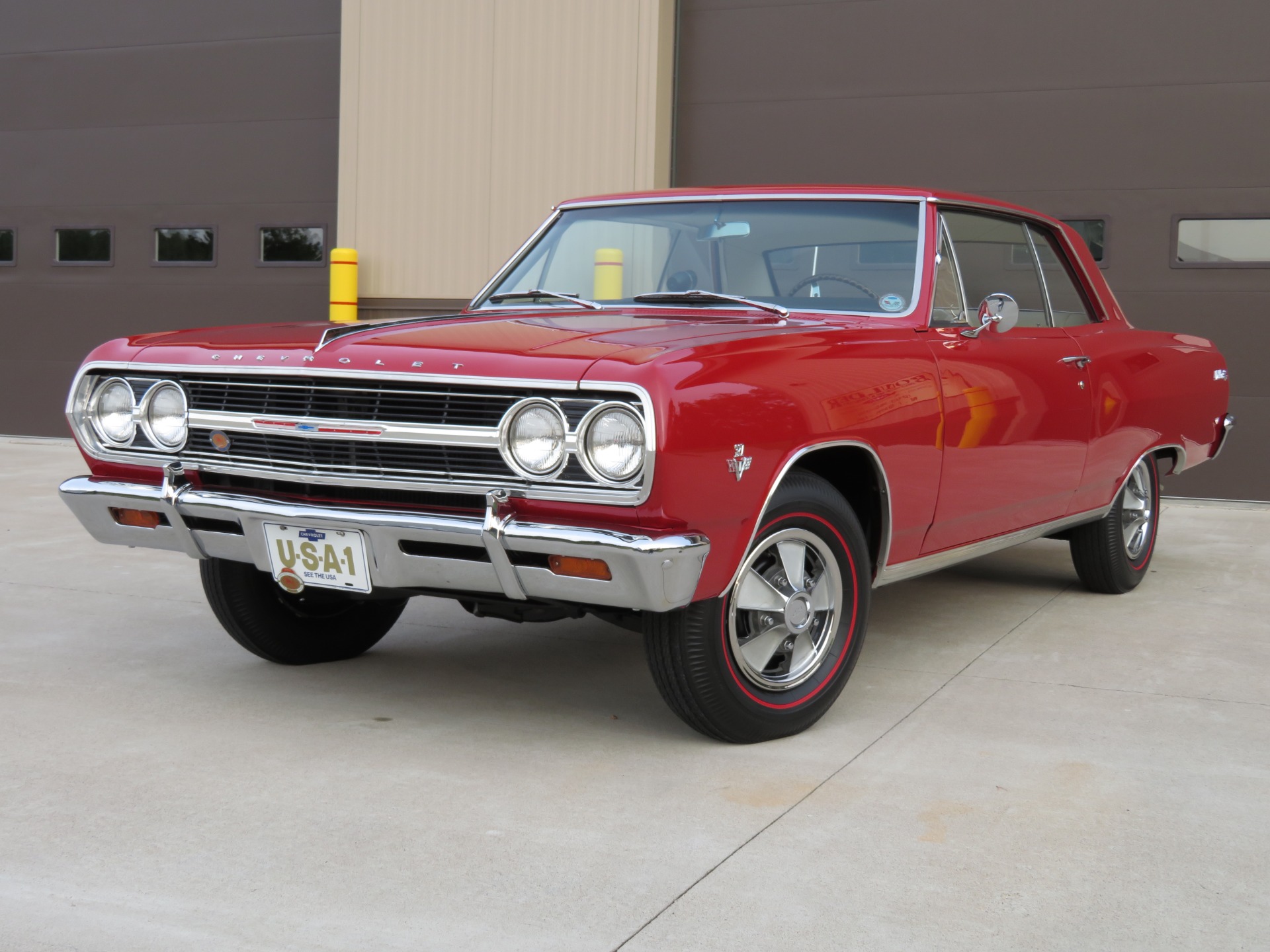
The Malibu hardtop is the car Chevrolet built by the hundreds of thousands to be ordinary — and that is precisely why you need to buy one carefully. Malibu is not a model in its own right in this era; it is the top trim series of the Chevelle, General Motors' intermediate A-body, launched for 1964 to fill the gap between the compact Chevy II and the full-size Impala. The hardtop — Chevrolet calls it the Sport Hardtop — is the pillarless two-door (and, in some years, four-door) body that sits at the glamorous end of that range: no B-pillar, frameless door glass, and a roofline that turns a family car into something you would park at the front of the house.
Three generations concern you. The 1964–65 cars are compact-looking, upright and simple, on a 115-inch wheelbase, with the Malibu SS as a separate, identifiable series. The 1966–67 cars grow longer hoods, flowing "Coke-bottle" rear quarters and stacked headlights for 1966, and this is where the muscle era properly takes hold: from 1966 the Super Sport becomes the SS396, a big-block car with its own VIN series. The 1968–72 cars are the ones most buyers picture — a shorter 112-inch wheelbase for two-doors, a fastback-style roof, hidden wipers and, by 1970, the option of the 454-cubic-inch LS6, the high-water mark of the whole muscle-car era. Through all of it, the Malibu hardtop remains available with everything from a 194-cubic-inch six and a column-shift three-speed to a solid-lifter big-block and a Muncie four-speed, and the badge on the fender tells you almost nothing about which combination a given car left the factory with.
That breadth is the opportunity and the trap. The opportunity: a plain 307 or 350 Malibu hardtop is one of the cheapest, easiest ways into a handsome, usable sixties American coupe, with every part reproduced and every problem understood. The trap: because the SS hardware bolts straight into a plain Malibu shell, the market is full of ordinary hardtops wearing SS badges, domed hoods and big-block engines they were not born with. Some are honest tributes priced as tributes. Some are priced as the real thing. Your job, armed with the VIN, the cowl tag and the engine stampings, is to know which you are standing in front of before money moves.
Two more facts frame everything that follows. First, these are body-on-frame cars, and the frame is a structural part of your purchase: a beautiful hardtop on a rotted perimeter frame is a parts car with good paint. Second, survival has been selective. Six-cylinder and small-V8 hardtops were used up as family transport and winter beaters across the Rust Belt, so the cars that survive skew heavily toward V8s, warm climates and later, more valuable years — and toward cars that have been modified. Originality, where it survives, is the exception, and it is worth paying for only when you can prove it.
The models
Read the range as three generations of the same idea, with the SS sitting across the top of it rather than inside it. In 1964 and 1965 the performance car is the Malibu SS, a trim-and-bucket-seat package with its own series numbers, available with engines up to the 327 and, for 1965 only, the near-mythical Z16 396. From 1966 the SS396 splits away as a separate model in everything but name: its VIN starts 138, it comes only with the 396 big-block, and the Malibu hardtop continues beneath it as the smart, well-trimmed everyday car with sixes and small-blocks. From 1969 the SS reverts to being an option package (RPO Z25) on the Malibu, which means a 1969–72 "SS" is a Malibu with options — and its VIN, which starts 136 like any other Malibu V8, cannot prove the options were fitted at the factory. Hold that thought; it drives half the fraud in this market.
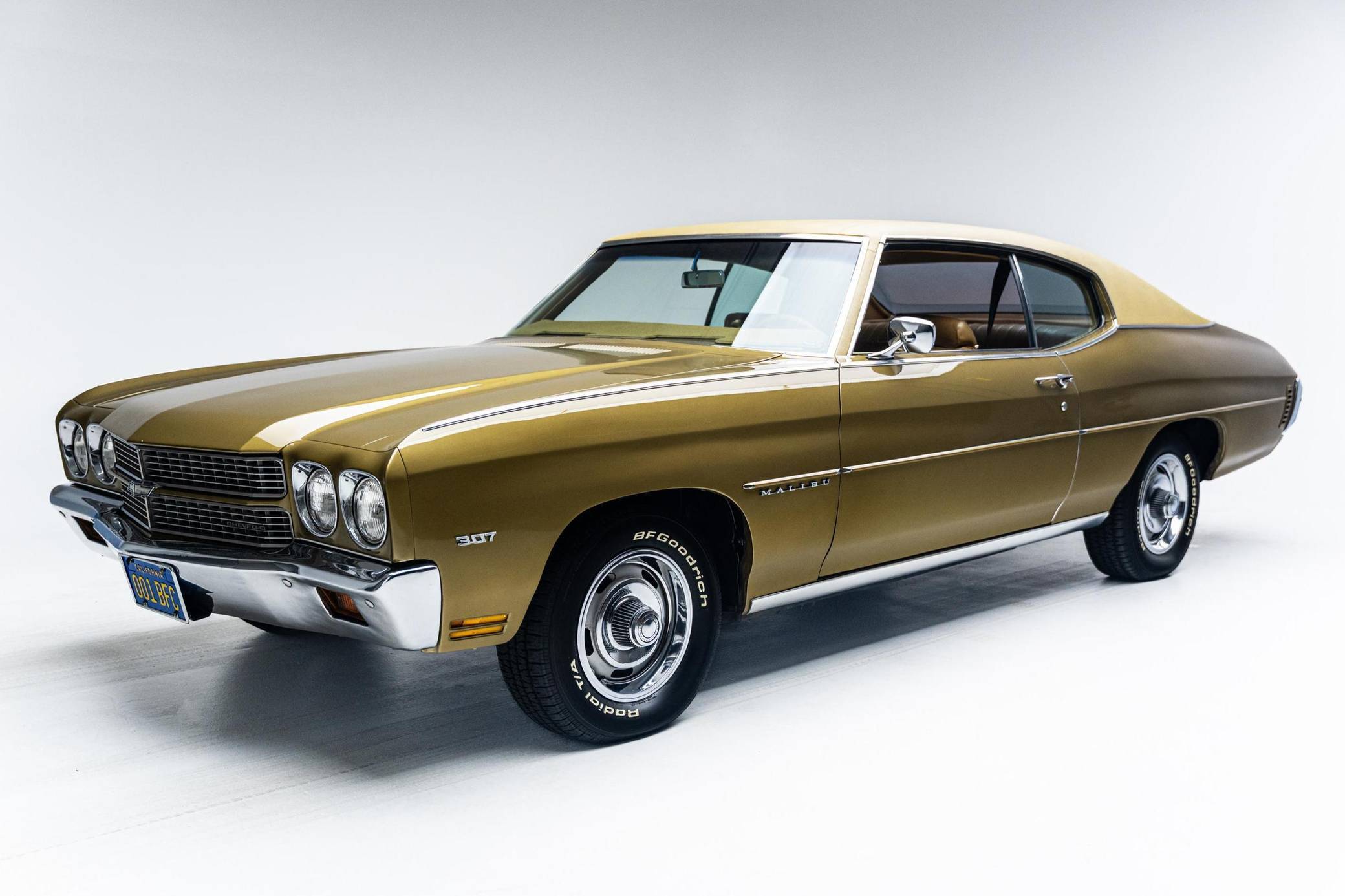
Within the Malibu hardtop line itself, the differences that matter are engine, gearbox and paperwork, not trim. A 1967 hardtop with the L79 327 and a four-speed is a sharper, rarer and more valuable car than a 1970 hardtop with a 307 and a Powerglide, even though the 1970 car looks meaner. Four-door hardtops (Sport Sedans) exist in most years and trade at a discount to the two-door despite sharing every mechanical part; if you want the shape and the drive rather than the silhouette, they are the quiet value in the range. Vinyl roofs were fitted to a large share of hardtops and matter more than sellers admit: the vinyl traps moisture against the roof skin and the rear-window channel, so a vinyl-roof car needs a harder rust inspection, not a softer one.
| Model | Years | Engine | Output | Built | Character |
|---|---|---|---|---|---|
| Malibu Sport Hardtop (six) | 1964–72 | 194 / 230 / 250 six | 120–155 hp | Volume seller | The family coupe; honest, slow, cheapest way in |
| Malibu Sport Hardtop 283 | 1964–67 | 283 V8 | 195–220 hp | Volume seller | Sweet, simple small-block driver |
| Malibu Sport Hardtop 327 | 1964–68 | 327 V8 | 250–300 hp | Common | The period all-rounder; strong and understressed |
| Malibu SS / L79 | 1965–68 | 327 L79 | 350 hp (1965–66), 325 hp (1967–68) | Low thousands | The connoisseur's small-block; revs, rare, verify the suffix |
| Malibu SS Z16 | 1965 | 396 L37 | 375 hp | 201 | The first big-block Chevelle; museum money, paperwork is everything |
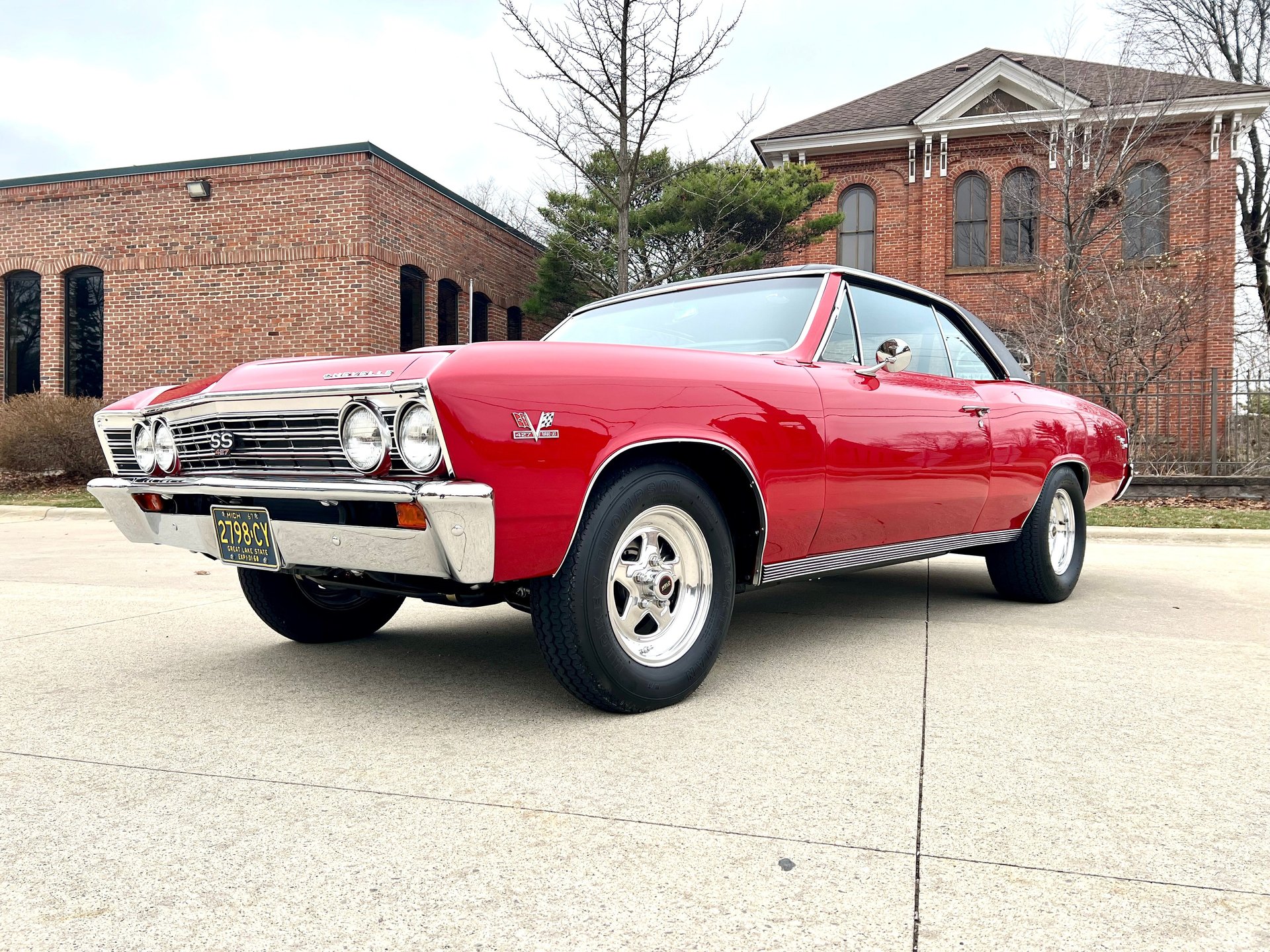
| SS396 hardtop | 1966–68 | 396 L35 / L34 / L78 | 325 / 350–360 / 375 hp | 72,272 (1966) | The real muscle Malibu; VIN starts 138, identity provable |
| Malibu Sport Hardtop 307 / 350 | 1968–72 | 307 / 350 V8 | 200 / 250–300 hp | Volume seller | The modern buyer's driver; plentiful, cheap to run |
| Malibu SS (Z25 option) | 1969–70 | 396 (402) / 454 | 325–375 hp; LS6 450 hp | LS6: 4,475 (1970, all Chevelles) | Peak muscle; VIN proves nothing — build sheet or walk |
| COPO 427 hardtop | 1969 | 427 L72 | 425 hp | 323 | Dealer-ordered sleeper; expert authentication only |
A word on the numbers in that table. Period outputs are SAE gross figures, measured on a test stand without accessories; from 1972 Chevrolet quotes net figures, which is why a 1972 350 looks feeble on paper next to a 1970 one while being broadly the same engine. Judge a car by how it drives, not by the brochure war. Production figures are given only where they are firmly documented; Chevrolet built Malibu hardtops in such volume, across so many plants and series splits, that anyone quoting you an exact build count for an ordinary variant to the last digit is guessing.
Engines and gearboxes
Every engine in this guide is a pushrod Chevrolet unit of known character, and none of them is exotic. What separates a good buy from a bad one is not the engine family but the specific variant, its state of tune, and whether the stampings support the story. Work through the families in ascending order.
The sixes: 194, 230 and 250
The base hardtop carries Chevrolet's third-generation inline six in 194-cubic-inch form (120 hp) in the early cars, with the 230 (140 hp) and later the 250 (155 hp) above it. These are seven-main-bearing, overhead-valve engines of legendary durability, fed by a single-barrel Rochester carburettor, and they suit the hardtop better than snobbery suggests: the car is light by modern standards, the six is torquey at low speed, and a six-cylinder hardtop has usually lived an easier life than a V8 car that spent the seventies being raced between traffic lights. Weaknesses are age rather than design: the integral intake manifold cracks, the single-barrel carburettor's automatic choke sticks and causes rich running and bore wash, valve stem seals harden and give the classic puff of blue smoke on start-up after a hot soak, and the points ignition drifts out of tune and gets blamed on the carburettor. A six that starts cleanly, idles evenly and shows steady vacuum around 18–20 inHg is a healthy engine. Budget for a carburettor rebuild and an ignition overhaul on any car, and check that the engine is the one on the paperwork — six-cylinder cars are the usual donors for V8 swaps, and a swapped car is worth swapped-car money, not original money.
The small-blocks: 283 and 327
The 283 (195 hp with the two-barrel Rochester 2GC, 220 hp with a four-barrel) is the original small-block in its sweetest, shortest-stroke form. It is smooth, willing and almost impossible to kill, but it is working hard in a hardtop with an automatic and air conditioning, and most buyers who try both prefer the 327. The 327 is the engine this chassis deserves in everyday form: the L30 at 250 hp and the L74 at 300 hp are torquey, hydraulic-lifter engines that run happily on modern fuel with hardened exhaust seats or a lead substitute, pull the car without strain and return their power without drama.
The L79 is a different animal wearing the same block. Available in the Malibu SS and then the Malibu line for 1965–68, it pairs an 11.0:1 compression ratio with the famous "151" hydraulic camshaft, a Holley four-barrel on an aluminium intake, and a 350 hp rating in 1965–66 (325 hp in Chevelle tune for 1967–68). It idles with a lope, wants revs, and transforms the car. It is also the most faked small-block in the range, because an L79 is externally almost indistinguishable from an L30 once the air cleaner is off. The proof is in the stamp pad on the front of the right-hand cylinder head deck: the assembly stamp ends in a suffix code that identifies the engine's original specification, and a genuine L79 car should also carry the matching partial VIN stamping and a tachometer, four-speed or correctly specified automatic on its paperwork. If the pad has been decked smooth during a rebuild — a common and legitimate machining operation — the evidence is gone, and you price the car as a 327 driver, however good the story is.
Small-block failure modes are consistent across both engines. The nylon-toothed timing sprocket fitted to many original engines sheds its teeth with age and heat; the debris blocks the oil pump pick-up and the first symptom can be a flickering oil light at hot idle. Any original-timing-set engine you buy should get a steel double-roller set as preventive maintenance — a $400–700 job done at home with the front cover off, far more at a shop if the engine has to come out. Rear main seals leak (two-piece rope or rubber seals weep onto the clutch or the converter), valve seals harden as on the six, and the pressed-in rocker studs on high-mileage heads can pull under a performance cam. Flat-tappet cams deserve a specific warning: modern oils carry far less zinc (ZDDP) than these engines were designed for, and a fresh cam run on low-zinc oil can wipe a lobe in the first thousand miles. Ask what oil the car runs on, and use a high-zinc classic oil or additive from day one.
The 307 and 350: the later small-blocks
From 1968 the 307 (200 hp) replaces the 283 as the bread-and-butter V8, and from 1969 the 350 joins the Malibu list — the L65 at around 250 hp and the L48 at 300 hp in 1970 form. The 307 is a stroker 283 in character: unstressed, economical and unfairly maligned, though its two-barrel carburettor and mild cam make it the least exciting engine here. The 350 is the pick of the everyday engines — parts are everywhere, every machinist knows it, and a 300 hp L48 hardtop with a Turbo Hydra-Matic is the car most buyers actually want once they have driven the range. Watch for the same timing-set, seal and cam issues as the earlier small-blocks, plus one era-specific trap: 1971–72 engines run lower compression and, from the factory, retarded ignition curves for emissions. They feel flat not because they are worn but because they are strangled; a distributor recurve and correct timing wake them up, and you should not let a seller charge you a "matching numbers premium" for an engine whose numbers merely match a smog specification. The Rochester Quadrajet fitted to most 350s is an excellent carburettor when rebuilt properly and a misery when the throttle shafts wear and admit air at idle — the test is in the problem-areas section.
The big-blocks: 396, 402, 427 and 454
The Mark IV big-block arrives in the Chevelle for 1965 in the 201 Z16 cars (396, L37 tune, 375 hp, solid-lifter cam, heavy-duty everything) and becomes the SS396 range for 1966: the L35 at 325 hp for the automatic-and-air-conditioning buyer, the L34 at 350–360 hp as the mainstream performance choice, and the L78 at 375 hp with solid lifters, an aluminium intake and a Holley carburettor for the serious. The same three-tier structure runs through 1969. For 1970 the "396" in an SS is actually bored to 402 cubic inches but still badged and sold as a 396 or "Turbo-Jet 400" — a genuine quirk, not a swap, and one of the identity checks below. Alongside it for 1970 only, the 454 arrives: the LS5 at 360 hp is the strong street engine, and the LS6 at 450 hp — solid lifters, 11.25:1 compression, aluminium intake, 780 cfm Holley, deep-groove pulleys — is the most powerful engine Chevrolet put in a production Chevelle and the single most cloned specification in this entire guide.
The 1969 COPO cars sit outside the catalogue: through the Central Office Production Order system, dealers ordered the L72 427 (425 hp, iron block and heads) in plain Malibu hardtops, 323 of them, mostly for drag racing. They look like nothing. That is the point, and it is why no COPO claim should ever be believed without factory or dealer documentation examined by someone who authenticates these cars for a living.
Big-blocks fail differently from small-blocks. Weight is the first enemy: a 396 adds well over 100 lb over the front axle compared with a 327, so front springs sag, ball joints wear faster and the car steers with its nose. Heat is the second: the big-block fills the engine bay, the stock four-blade or clutch fan and two-row radiator are marginal in traffic, and a car that creeps toward the red at a long light usually needs the radiator rodded out or replaced and the fan clutch renewed, not a head-gasket panic — though repeated overheating does warp heads and kill gaskets, so ask how long it has run hot. Solid-lifter L78 and LS6 engines need their valve lash set (roughly every tune-up; budget it as routine), and they punish owners who skip it with burnt valves. Oil consumption through hardened valve seals is endemic. And every big-block claim needs the same stamp-pad discipline as the L79, squared: the casting number at the back of the block (a 396/402 casting cannot be a 454, whatever the seller says), the casting date, the assembly suffix, and the partial VIN. A "454" built on a 402 casting is a 402 with a story.
Gearboxes and rear axles
Manual cars start with a three-speed (column shift standard, floor shift rare), usually a Saginaw unit; it is strong enough for sixes and small-blocks and was never offered behind the serious big-blocks. The four-speeds are Muncie aluminium-case units and they are excellent: the M20 wide-ratio suits street cars and big-blocks, the M21 close-ratio suits the L79 and L78, and the M22 "Rock Crusher" — straight-cut-ish whine, heavy duty — was the low-volume choice behind the strongest engines. Identify a Muncie by its aluminium case, seven-bolt side cover and the stamped code on the main case; a Saginaw four-speed (iron case, fitted to lesser cars and swapped in later) is worth less and handles less torque. Worn synchromesh on second gear, a jumping-out-of-gear habit under load (worn engagement teeth or a tired shifter, not "character"), and a noisy input bearing are the standard faults; a full Muncie rebuild with bearings, synchros and seals runs $1,200–2,000 at a specialist, less if you bench it yourself.
Automatics divide into the two-speed Powerglide (aluminium case from 1962 on; simple, robust, and it makes any engine feel lazier than it is), the three-speed Turbo Hydra-Matic 350 behind small-blocks from 1969, and the Turbo Hydra-Matic 400 behind big-blocks and SS cars. The TH400 is one of the strongest automatics ever built and its failure mode is usually neglect — burnt fluid, a failed vacuum modulator (look for transmission fluid being drawn into the intake and white smoke that gets misdiagnosed as engine wear), or a worn governor gear causing late or missing upshifts. A TH350/400 rebuild is a $1,800–2,800 job at a general shop. Powerglide cars are worth less and drive worse; many have been swapped to TH350s, which is a fine modification and a negotiating point, not a defect.
Rear axles are the 10-bolt (8.2-inch ring gear) under sixes and mild V8s and the 12-bolt under SS and high-performance cars, with Positraction (RPO G80) optional across the range. A 12-bolt under a car claimed to be an original SS is supporting evidence, not proof — they swap in an afternoon. Axle tramp on hard launches is a bushing problem (see below), whine on the overrun is worn ring-and-pinion setup or bearings, and a Positraction that chatters in tight turns usually just needs the correct limited-slip additive in fresh oil before anyone condemns the clutches.

Problem areas
Rust: the map
Start where the water goes, because on a hardtop the water goes everywhere a sedan's does not. The pillarless body deletes the B-pillar and asks the roof, the floor and the frame to do its work, and the rear window sits in a channel that collects every drop the roof sheds. That channel — the lower rear-window surround, hidden under the trim and, on vinyl-roof cars, under the vinyl — is rust location number one. The seal perishes, water sits in the channel, the steel perforates, and the leak then runs down inside the rear quarters into the trunk floor and the rear seat pan. A car can show a perfect trunk mat and be holed beneath it: lift the mat, lift the spare, and press the trunk floor extensions and the drop-offs behind the rear wheels with a screwdriver handle. Bubbling at the bottom rear corner of the rear window, a damp rear parcel shelf, or a musty smell after rain all point the same way. Repair means glass out, channel sections fabricated or cut from a donor, and paint: $1,500–4,000 done properly, and it recurs if the channel is not rustproofed and the drain path cleared.
Work forward from there. The trunk floor itself rots over the rear frame rails and around the body-mount points. The rear quarters rust in three places: the lower edge behind the wheel (road spray thrown up inside), the wheel-arch lip where the inner and outer skins meet, and — on 1968–72 cars — the bottom of the quarter ahead of the wheel where the rocker meets it. Doors rust along the bottom skin fold where the drain holes block; open each door and look at the underside seam, then check the drain slots are clear. Front fenders go behind the wheel at the bottom (the famous "fender heel," where mud packs against the cowl) and around the headlamp eyebrows on 1964–65 cars. The cowl and windshield frame rust where the windscreen seal fails, and the evidence is inside: wet front carpets, a rusted fuse box, and water streaks down the inner kick panels. Windscreen-frame repair is glass-out fabrication work and it is expensive for the amount of metal involved.
Floor pans rust from the inside out. These cars leak — at the cowl vents, the windscreen, the rear window, the door seals — and the water sits under the carpet and sound deadener for decades. The front pans go first under the driver's feet and at the toe boards; the rear pans go under the back seat where the rear-window leak delivers its water. Prod with a blunt tool, not a sharp one, and look from underneath on a lift: a pan that is one colour of fresh underseal from below and scaly from above is hiding, not repaired. Individual pans are cheap panels ($100–250 each) but the labour to cut, weld and refinish a full floor is a $2,000–4,500 job, and a car needing floors, trunk, quarters and a rear window channel is a restoration project whatever the paint looks like.
The frame is the deciding item, and it is where you slow down. The A-body uses a perimeter frame with a torque-box structure at the cowl. Rust concentrates at the rear kick-up over the axle, at the rear crossmember and trailing-arm mounts, at the body-mount holes along the rails (the mounts trap moisture against the frame and the rubber biscuits perish, letting the body sit down and hold more water), and at the front crossmember under the engine where oil and road salt mix. Surface scale is normal and harmless. Perforation at a body mount or a suspension pickup is a structural repair: frame sections can be welded by a competent fabricator ($800–2,500 per area), a badly rotted frame means a donor frame swap ($3,000–6,000 in labour and parts before paint), and either way the car is priced as a project. Take a torch, a mirror and a small hammer, tap along both rails, and walk away from any seller who will not let you. Body mounts themselves are a consumable: a full rubber mount kit is a few hundred dollars in parts, and sagging, split mounts explain door gaps that wander and a body that sits visibly low on one side.
Front suspension, steering and brakes
The front suspension is conventional double-wishbone with coil springs, and it wears like it. Upper and lower ball joints, tie-rod ends, the idler arm and the centre link all develop play; the standard test is to jack the car under the lower arm, grip the wheel at six and twelve o'clock for ball-joint play and at three and nine for steering play, and have a helper rock the steering while you watch each joint for movement before the wheel responds. The idler arm is the most common single cause of the vague, wandering steering these cars are accused of — it is a $60–120 part and an hour's work, so do not let a seller talk you into a steering-box rebuild until the linkage is proven tight. Steering boxes (manual and power, Saginaw recirculating ball) wear at the centre of travel; a box that is tight off-centre and loose straight ahead is worn, not maladjusted, and tightening the lash screw to hide it makes the steering bind at the locks. Budget $350–600 for a quality box rebuild.
Springs sag, and big-block cars sag faster and lower on the left where the battery and driver sit. A car that sits nose-down with the bump stops polished has tired springs; a car that sits level on obviously new springs but still crashes over bumps has dead shock absorbers. Neither is expensive — a full front-end refresh of joints, bushes, springs and shocks is $800–1,500 in parts — but it transforms the car, and a seller who has skipped it has usually skipped the other invisible jobs too. Rear suspension is a four-link coil-spring layout located by upper and lower control arms, and its rubber bushes are the source of the axle tramp and the sideways "crab" feel under power on worn cars. Perished upper-arm bushes let the axle rotate and hop; replacing all eight rear bushes (polyurethane if you accept a little more harshness, rubber if you do not) is a weekend job that cures behaviour owners blame on the differential.
Brakes need era-appropriate respect. Cars before 1967 carry a single-circuit master cylinder: one failed hose or wheel cylinder means no brakes at all, and a dual-circuit conversion is the first safety job on any early car you intend to drive — a few hundred dollars in parts, and no originality judge will mark you down for surviving. Front discs were optional from 1967 and standard-fit thinking by 1970 on SS cars; drum-brake cars stop adequately when everything is new and adjusted, and poorly when the self-adjusters are seized and the drums are bell-mouthed, which is most of them. Pull the car up firmly from 40 mph on the test drive: pulling to one side is a seized caliper, a collapsed flexible hose (they delaminate internally and act as one-way valves — the wheel that drags and gets hot after a short drive is the clue) or contaminated shoes. A full brake overhaul — discs or drums, hoses, cylinders, master — is $600–1,200 in parts and is non-negotiable money on any car that has sat.
Engines in service: leaks, smoke and noise
Beyond the family-specific issues in the engines section, judge any of these engines by four observations. Cold start: a puff of blue that clears in seconds is valve seals ($300–600 to renew with the heads on, using air pressure to hold the valves); blue smoke that persists under load is rings or bores, and that is a rebuild. Hot idle oil pressure: a mechanical gauge screwed into the gallery should show a healthy small-block or big-block holding roughly 25–35 psi hot at idle and 45–60 psi at cruise; the factory warning light and tired senders lie in both directions, so never condemn or clear an engine on the dash gauge alone. Coolant: brown, oily or exhaust-smelling coolant, bubbles in the radiator with the cap off, or a cooling system that pressurises hard within a minute of a cold start all point to combustion gas crossing a head gasket or a cracked head — the chemical block test (fluid that changes colour in the presence of CO₂) settles it in five minutes for a few dollars. Noise: a light top-end tick that fades as the engine warms is usually a lifter or an exhaust manifold leak (the tick that is loudest cold and quiet hot, at one corner of the engine, is the manifold gasket, and manifold bolts on these engines seize and snap — budget the extraction, not just the gasket); a deep knock that follows load is bottom-end, and you walk away unless the price assumes a rebuild.
Rebuild economics frame every negotiation. A quality small-block rebuild — machining, pistons, cam, timing set, oil pump, gaskets — runs $4,500–8,000 depending on specification and whether you remove and refit the engine yourself; a big-block is $6,000–10,000, more for an LS6-correct build with the right heads. "Rebuilt" without receipts is a word, not a fact: ask who machined it, what the bore size is, and what cam is in it, and watch whether the answers exist.
Cooling deserves its own paragraph because it kills more of these engines than wear does. The systems are simple — a copper/brass radiator (aluminium replacements are common and fine), a belt-driven pump, a clutch or fixed fan and, on better-specified cars, a shroud. The shroud is not decoration: without it the fan pulls air around the radiator instead of through it, and the car overheats at idle while cruising cool. A car that runs hot in traffic but cool at speed has an airflow problem (shroud missing, fan clutch free-wheeling when hot — test by spinning it with the engine off and hot; it should resist and stop within a turn or two). A car that runs hot everywhere has a flow problem: blocked radiator core, collapsing lower hose (the internal spring rusts away), a thermostat stuck partly shut, or retarded ignition timing, which is the most overlooked cause of all. Set the timing before you buy parts.
Gearbox, clutch and axle faults
On manual cars, work every gear under load and on the overrun. Second-gear synchromesh goes first (a crunch on a hurried downshift), fourth gear jumping out on the overrun points to worn engagement teeth or a worn shifter mechanism rather than the gearbox itself, and a clutch that bites at the very top of the pedal with a slipping flare on a hard third-gear pull is at the end of its life — a clutch kit is $250–450 in parts but the labour is the same gearbox-out job as everything else, so price it as a $900–1,400 fitted job. The mechanical clutch linkage wears at every pivot and makes the pedal heavy and vague; the Z-bar bushes are pennies and nobody replaces them. On automatics, check the fluid first: pink and sweet-smelling is fine, brown and burnt is a transmission living on borrowed time, and milky fluid means the cooler in the radiator has failed and coolant is in the gearbox (and ATF in the coolant) — a radiator and a transmission rebuild in one fault. Slipping or flaring shifts on a TH350/400 with good fluid are often just the vacuum modulator or its hose; delayed engagement into Drive on a cold morning is hardened internal seals, and that one is a rebuild.
At the back, listen for a whine that changes with throttle (ring and pinion), a constant hum that changes with speed but not throttle (wheel bearings), and a clunk on taking up drive (universal joints, or worn control-arm bushes letting the axle shift). Check the pinion seal and the axle seals for leaks, and confirm the ratio suits the story: a car sold as a highway cruiser that turns 3,500 rpm at 60 mph has drag gearing in it, whatever the seller says.
Interior, trim and electrics
Hardtop interiors suffer two specific attacks: sun and water. The pillarless glasshouse admits more sun than a sedan's, so dash pads crack along the speaker grille and defroster vents, rear parcel shelves crumble, and the tops of the rear seat back bleach and split their stitching. The water arrives from the rear window and cowl leaks described above and rots the carpet underlay, the rear seat springs and the floor beneath them. Lift the rear seat cushion (it unclips) on every car: you are looking at the floor, the seat frame and, on many cars, the broadcast/build sheet, which Chevrolet often tucked into the rear seat springs — the single most valuable piece of paper that can come with a 1969–72 car.
Trim is the cost trap. The hardtop's brightwork — window frames, drip-rail mouldings, the wide rocker mouldings, wheel-arch trims — is model- and year-specific, much of it is stainless or anodised aluminium that dents rather than rusts, and good used pieces trade hands at shows for real money. Reproduction coverage for Chevelle trim is among the best in the hobby, but "available" and "fits like the original" are different claims, and a car with all its original trim in honest condition is worth more than a shinier car wearing ill-fitting reproductions. Vinyl roofs hide rust (again: press along the rear pillars and the roof rails for crunching under the vinyl) and a replacement roof is a $600–1,200 job before any metal repair underneath. Glass is mostly reproduced; the hardtop's frameless door glass and its regulator mechanisms wear and drop out of adjustment, so check that each door glass meets the roof rail and the quarter glass evenly with the door shut — misalignment is usually worn rollers and guides, but it is also how a bent door or a repaired quarter announces itself.
Electrics are simple and therefore fixable, but they are also fifty years old. The engine-bay harness cooks above the manifolds and goes brittle; the bulkhead connector corrodes and produces intermittent everything; and the fusible links and the horn relay (which is also a power distribution point on these cars) are common no-charge and no-start culprits. A charging system that shows 13.8–14.4 volts at the battery with the engine running is healthy; one that shows battery voltage only has a dead alternator or regulator, and one that shows 15+ volts is cooking the battery. Heater cores leak into the passenger footwell (sweet smell, greasy mist on the windscreen) and are a miserable dashboard-out job on air-conditioned cars — $800–1,500 at a shop — so run the heater hot on the test drive and smell for it.
How to inspect one
Work in this order and do not let the seller rearrange it. You are testing identity first, structure second, cosmetics last — the reverse of how cars are usually sold.
- Read the VIN before you look at the car. On 1964–67 cars the plate is on the driver's front door hinge pillar; from 1968 it is on the driver's side of the dashboard, visible through the windscreen. Decode the series: a 1966–68 SS396 starts 138; a 1965 Malibu SS V8 also starts 138 but carries a 5 as the year digit — read the whole number. A 1969–72 car starting 136 is a Malibu V8 and proves nothing about SS equipment either way. If the VIN's engine digit and the engine in the bay disagree, the car has been swapped or re-engined; price accordingly.
- Read the cowl tag. The trim tag on the firewall gives build week, plant, body style, paint and trim codes. Check the paint code against the colour in the door shuts, under the trunk mat and behind the rear seat — the places resprays miss. A tag with disturbed rivets or a style number that does not match the body in front of you ends the negotiation until explained.
- Check the engine stamp pad. Front of the right-hand head deck, cleaned with a rag and solvent, not a wire brush. Record the assembly date and suffix and the partial VIN; decode the suffix against a published code list for the claimed engine (L79, L34, LS6 and friends). A smooth, decked pad or a pad with ground and restamped numbers converts the car to a driver-grade price on the spot.
- Check the block casting number and date at the rear of the block by the bellhousing flange. A claimed 454 on a 396/402 casting is a misdescription, full stop. Casting date should precede the car's build week by a plausible margin.
- Do the rear-window and trunk circuit. Press around the lower rear-window channel, lift the trunk mat and spare, prod the trunk floor extensions and drop-offs, and look for daylight and tide marks. This is the hardtop's signature rust; the problem-areas section explains why it starts here.
- Get underneath. Torch, mirror, small hammer: both frame rails, the rear kick-up, the trailing-arm mounts, every body-mount hole, the front crossmember. Then the floors from below. Perforation at a mount or pickup point reprices the car as a project; surface scale does not.
- Run the panel circuit. Magnet (a weak fridge magnet in a cloth) along the lower quarters, door bottoms and fender heels for filler; sight down each flank for ripple; check door gaps with the doors shut and the car on its wheels, then operate each frameless door glass and confirm it seals against the roof rail and quarter glass.
- Cold start, yourself, engine stone cold. Insist on it. Watch for the blue puff that clears (seals) versus smoke that stays (bores), listen for the cold tick of a manifold leak, and watch the oil light and the idle quality as the choke comes off.
- Block-test and pressure-check the cooling system if anything smells sweet, the coolant is discoloured, or the seller's story includes "it just runs hot." Five minutes here saves an engine.
- Drive it for at least twenty minutes, including a hot restart. Work every gear or every automatic shift, brake firmly from speed and note any pull or dragging wheel, take your hands nearly off the wheel on a flat road to expose linkage wear and alignment drift, and use full throttle once in a high gear to test the clutch or converter. Note the revs at a true 60 mph and compare them with the claimed axle ratio.
- Hot-soak test. Park, switch off for ten minutes, restart. Hard hot starting on these cars is usually heat-soaked starter solenoid, tired cables or a vapour-locking fuel line — all cheap — but it is also how a tight, worn engine announces itself, and you want to know which before you own it.
- Audit the paper. Title in the seller's name matching the VIN, receipts for the claimed rebuild (who, when, what bore, what cam), and for any 1969–72 SS, COPO or LS6 claim, the build sheet, Protect-o-Plate or dealer invoice. No paper, no premium: the rule has no exceptions, because the cars with paper exist and they are the ones that hold value.

Values
The Malibu hardtop market is really three markets wearing one name, and reading the figures below this guide sensibly means knowing which one a car belongs to. The first market is the ordinary hardtop — sixes, 283s, 307s and mild 350s — where you are buying condition, not rarity. These cars were built in huge numbers and survive in large numbers, so there is always another one; the spread between the cheapest and the dearest ordinary hardtop is almost entirely a spread of rust, paint and interior condition, and a car needing floors and quarters is worth a small fraction of a sound one because the repair bills are fixed regardless of the car's badge. In this market, patience is worth more than knowledge: the right car at a fair price appears regularly, and overpaying for a shiny one is the only real mistake available.
The second market is the documented performance car: the L79, the 138-VIN SS396, the LS6 with its build sheet, the COPO with authentication. Here the value lives in the paperwork and the stampings, not in the driving experience — a tribute car delivers the same noise and the same acceleration for a fraction of the money, and the premium for the genuine article is a premium for proof. That is why the price gap between a documented car and an identical undocumented one is so wide and so stubborn: the undocumented car can never become documented, while the documented car can always be verified again. If you are buying in this market, you are buying an asset as much as a car, and the inspection discipline in this guide — VIN, cowl tag, stamp pad, casting numbers, build sheet — is not pedantry; it is the entire valuation.
The third market is the modified car: the restomod, the pro-touring build, the plain hardtop with a crate engine and modern suspension. Value here follows the quality and coherence of the build and the receipts behind it, and it is the most volatile of the three — a well-sorted modified car is worth real money to the buyer who wants exactly that car, and very little to anyone else. Across all three markets, a few drivers recur. Originality of sheet metal matters more than originality of engine in the ordinary market, and the reverse in the documented market. Four-speed cars carry a premium over automatics in the performance years and a smaller one elsewhere; air conditioning adds value in the Sun Belt and complication everywhere. Colour matters at the margins — the period reds and blues sell fastest — but a colour change done to a high standard hurts an ordinary car far less than it hurts a documented one, where the cowl tag contradicts the paint. Asking prices in dealer listings sit above achieved auction prices for equivalent cars as a matter of structure, not dishonesty: the dealer is selling convenience, warranty of description and time. The recorded-sales figures that follow this guide are your anchor; compare like with like — same generation, same engine family, same documentation level — and treat any car priced as though it belongs to a higher market than its paperwork supports as a car in the lower market with an optimistic seller.
Finally, the project-versus-driver gap. For ordinary hardtops the gap is wide and honest: a running, driving, structurally sound car costs its premium because the alternative — a project — consumes the difference in metalwork, paint and trim before it turns a wheel, and usually more. For documented performance cars the gap narrows and can invert, because a genuinely rare car is worth restoring even from a poor state. Know which logic applies to the car in front of you, and do not let a seller apply the rare-car argument to a common car.

Parts and ownership
Ownership is where the Malibu hardtop makes its strongest case, because the A-body Chevelle sits at the centre of the best-supported ecosystem in the American classic hobby. The reproduction industry covers this car almost completely: full floor pans, trunk floors, quarter panels, door skins, fenders, and frame repair sections; complete interiors in the correct grain and colours, from seat covers and foam to dash pads and headliners; weatherstrip kits, glass, and bright trim; and every mechanical wear part, usually in a choice of stock or upgraded specification. Specialist suppliers (the Chevelle-focused houses such as OPGI, Ground Up and National Parts Depot, plus the generalists) list thousands of parts for these years, and the used-parts network at swap meets remains deep because so many cars were built and so many were parted out. The realistic exceptions are year-and-model-specific trim in perfect condition, some 1964–65-only pieces, and low-production performance hardware — correct L78 and LS6 heads, intakes and carburettors trade in a specialist market of their own, at specialist prices, which is another reason the documented cars cost what they cost.
Mechanical parts are the easy half. Any competent general machine shop can rebuild a small-block or big-block Chevrolet; Muncie parts and specialists are plentiful; TH350 and TH400 cores are everywhere; and the 12-bolt axle has a full aftermarket behind it. Consumables are modern-car cheap: brake components, suspension joints, bushes, mounts, hoses, belts and ignition parts are all next-day items. Budget your running costs around fuel and tyres rather than parts: a big-block hardtop on period gearing drinks fuel at a rate that surprises owners arriving from small-blocks, and even a 350 car is a 15–18 mpg proposition driven gently.
The ownership disciplines that matter are few and specific. Run a high-zinc oil for the flat-tappet cam, and change it on time rather than mileage if the car sits — short trips and storage contaminate oil faster than touring does. Keep the cooling system on a two-year coolant cycle and treat the radiator as a service item, not a lifetime part. Exercise the car: these cars deteriorate by standing (brake cylinders corrode, clutch plates stick, carburettor gaskets dry and shrink, tyres flat-spot and age out) far faster than by being driven, and a car used monthly needs a fraction of the recommissioning budget of a car used annually. Store it dry and ventilated, with the rear-window channel and cowl drains checked clear each autumn, because the rust map in this guide is drawn by water that was allowed to sit. Insurance is straightforward agreed-value territory through the classic insurers, and club support — national Chevelle clubs, marque forums with decades of archived build threads, and factory literature including assembly manuals and Fisher body manuals — is as good as it gets for any car of the era. One caution about upgrades, because every owner is offered them: front disc conversions, dual master cylinders, electronic ignition conversions hidden in the stock distributor, and modern radial tyres in a period size are the four changes that make the car safer and better without costing it identity or value. Beyond those, modify with your eyes open — a modified car is worth what the next buyer thinks of your taste, and the market section above has already told you how that usually ends.
Which one to buy
- The all-rounder: a 1966–67 Malibu hardtop with a 327 (L30 or L74) and a four-speed or Turbo Hydra-Matic swap. The prettiest shape, the sweetest everyday engine, full parts support, and no SS premium to protect — buy the best body you can find and drive it everywhere.
- The value buy: a 1968–70 hardtop with the 307 or 350 that everyone walks past on the way to the SS cars. Same silhouette, same interior room, a fraction of the money, and the cheapest running costs in the range. A four-door Sport Sedan in this specification is the cheapest honest A-body motoring there is.
- The connoisseur's pick: a documented L79 car, 1965–68. The high-revving 327 is the best engine ever fitted to this chassis for a driver who enjoys engines, and the paperwork discipline is manageable because the stamp pad and suffix tell the truth. Pay for proof, never for the story.
- The muscle-car statement: a 1966–68 SS396 with a 138 VIN, ideally an L34 four-speed car. The VIN does the authenticating that 1969-onwards cars cannot, the big-block delivers the full experience, and you avoid LS6 money and LS6 fraud exposure.
- The long-distance driver: a 1970–72 350 automatic with air conditioning and a disc-brake conversion already done. The least collectible specification and the most usable one — the car you will actually take on the trip instead of trailering to the show.
- The brave: a Z16, a documented LS6 or a COPO 427. Buy only with expert authentication, factory or dealer paperwork, and a price agreed after both. These are wonderful cars and a specialist market; treat the purchase like buying a painting, with provenance first and enthusiasm second.
- Avoid, at any price that assumes otherwise: an undocumented 1969–72 "SS," a car with a decked or restamped engine pad sold as matching-numbers, and any hardtop — however shiny — with perforation at the frame's body mounts or rear kick-up sold at driver money.
The overriding rule: buy the frame, the floors and the paperwork, in that order — engines, gearboxes, paint and trim are all buyable later at known prices, but a rotted structure is a restoration you did not budget for and an undocumented identity is a premium you can never recover.
See the 6 Malibu Hardtop cars currently listed.
For sale now
 $74,900 · 23% above typical
Expand
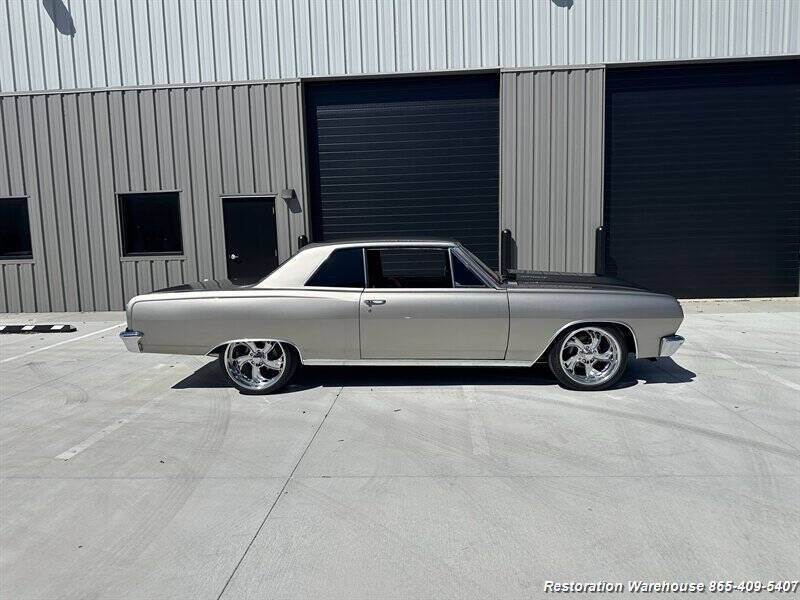 $72,500 · 19% above typical
Expand
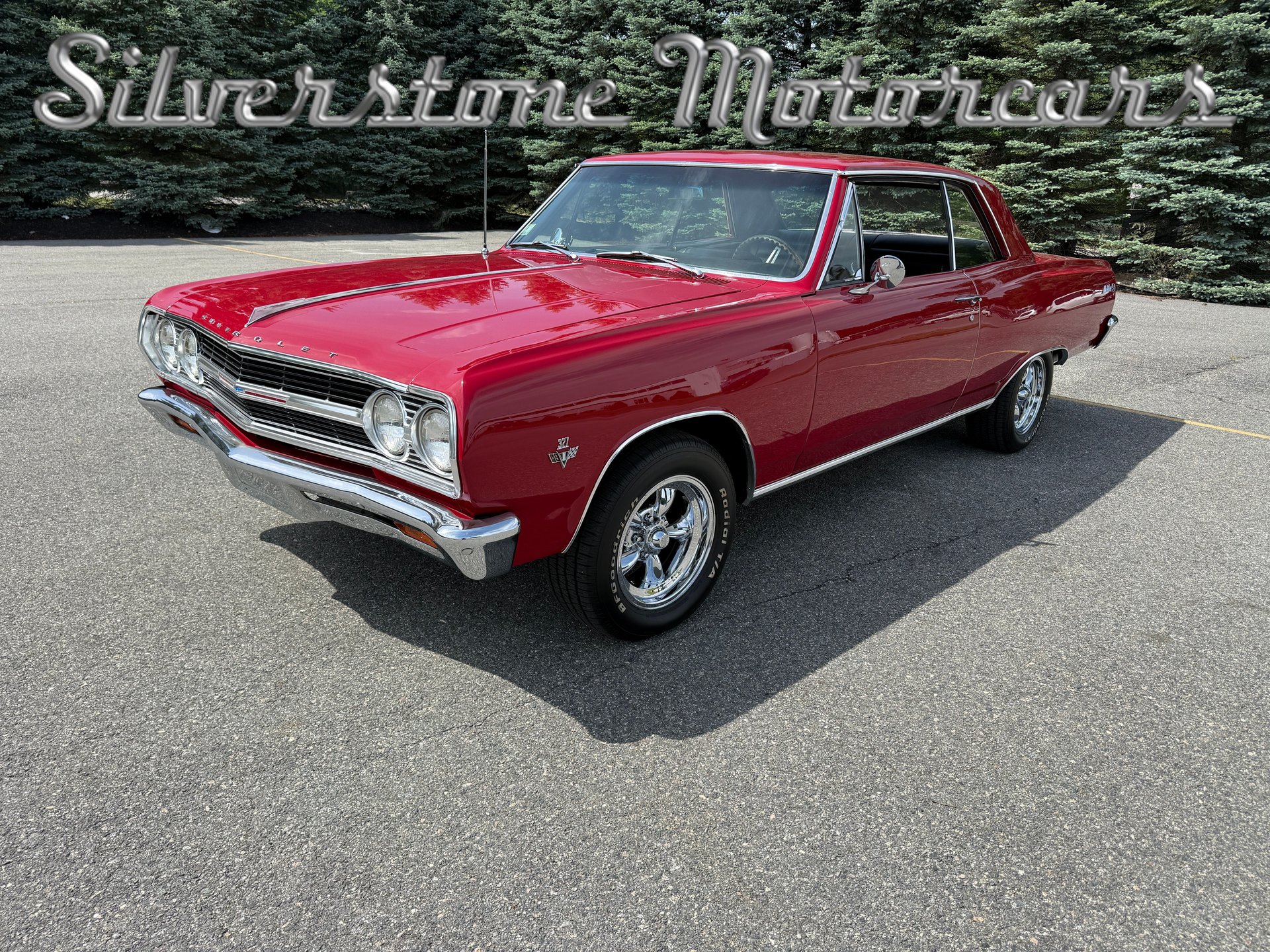 $45,000 · 26% below typical
Expand
What they sell for: Malibu Hardtop sale prices.