
Datsun 240Z buyer's guide
Datsun 240Z -- the model's own buyer's guide: variants, values and what to check.
Years listed: 1971-1973 · Series: Z
Overview and history
The Datsun 240Z is the car that proved a Japanese manufacturer could beat the Europeans and the British at their own game — and beat them on price at the same time. Launched in Japan in October 1969 as the Nissan Fairlady Z and in North America as a 1970 model, the 240Z (chassis code S30) offered the recipe buyers had always wanted and rarely been offered in one car: a long bonnet, a short deck, a smooth overhead-cam straight six, independent suspension at both ends, front disc brakes and a hatchback rear — for roughly the money of an MGB GT, a car with a four-cylinder engine, a live rear axle and a design that was already old. The Z was faster, more comfortable, more reliable and better equipped. Dealers had waiting lists, early cars sold for over list price, and the S30 stayed in production, through the 260Z and 280Z evolutions described below, until 1978.
The man behind the car in America was Yutaka Katayama — "Mr K" — Nissan's US president, who understood that the American market wanted a proper sports car rather than the small, underpowered Fairlady roadsters Datsun had sold through the 1960s. In Japan the project was led by Yoshihiko Matsuo's styling team, and the shape they produced — long nose, cabin set well back, fastback roof falling to a chopped Kamm tail — has worn better than almost anything else of its era. (You will still read that Count Albrecht von Goertz designed the 240Z; he consulted for Nissan in the mid-1960s, but the production S30 was styled in-house.)
Underneath, the engineering was sensible rather than exotic, and that is why these cars survive and can still be run today. The structure is a steel monocoque; the suspension is MacPherson struts at the front and Chapman struts at the rear; steering is rack and pinion; brakes are front discs and rear drums. The engine, the L24, is a 2.4-litre single-overhead-cam six from Nissan's L-series family — cast-iron block, alloy head, and a reputation for taking abuse that few engines of any nationality can match.
The Z also won where it counted in competition — the East African Safari Rally outright in 1971 and 1973, and SCCA national championships year after year in the United States — which proves the engineering, but also means many surviving cars were raced, modified, crashed or used up, and many more were modified in imitation. Finding an S30 still substantially as Nissan built it is harder than the production numbers suggest.
What defines the market now is the arc the cars followed. They were cheap used cars for a very long time — bought by young owners, driven hard in salt-belt winters, parked outside, and repaired on a budget. The monocoque is thin steel and it rusts, structurally and enthusiastically, as the problem-areas section sets out. Attrition was enormous. The result is a market with a brutal condition spread: at one end, restored or exceptionally preserved Series 1 cars that are now serious collector property; at the other, rusty shells wearing shiny paint and a seller's optimism. Almost everything in between is priced by the state of the shell and the originality of the mechanicals, in that order.
A note on names. In Japan the car was the Fairlady Z, with a 2.0-litre L20 six for Japanese tax rules, and in rare twin-cam Z432 form — a car that needs factory-level documentation, not badges, if one is ever offered to you. In North America the car was simply the Datsun 240Z, and this guide covers it with its direct S30 successors, the 260Z (1974) and the fuel-injected 280Z (1975–78), in proportion. The 280ZX of 1979 onwards is a different chassis (S130), mentioned only where you need to tell one from an S30 — or spot its engine under an S30 bonnet.
The models
Every North American S30 is a two-seat hatchback coupe except the 260Z 2+2, a longer-wheelbase car with token rear seats that arrived for 1974. The badge progression — 240Z, 260Z, 280Z — tracks engine capacity, but not desirability in a straight line: the earliest car is the lightest, purest and most collectible, the 260Z is the transitional car the market values least, and the 280Z is the heaviest but also the most usable, with fuel injection and the widest choice of gearboxes.
| Model | Years | Engine | Output | Built | Character |
|---|---|---|---|---|---|
| 240Z (Series 1) | 1969–early 1971 | 2.4 six (L24), twin Hitachi SU-type carbs | 150 hp (SAE gross) | First portion of the 240Z run; low chassis numbers | The purest and most collectible S30; lightest, rawest, round-top carburettors |
| 240Z (Series 2) | 1971–1973 | 2.4 six (L24), twin Hitachi SU-type carbs | 150 hp (SAE gross) | The bulk of roughly 150,000-plus 240Zs sold in North America across the run | The mainstream early Z; 1973 cars carry the troublesome emissions carburettors |
| 260Z | 1974 (US) | 2.6 six (L26), twin Hitachi carbs | about 140 hp (SAE net) | One US model year, coupe and 2+2 | The overlooked middle car; stroked engine strangled by emissions tuning in early form |
| 280Z | 1975–1978 | 2.8 six (L28E), Bosch-type L-Jetronic injection | 149 hp (SAE net) | The volume late S30, coupe and 2+2 | Heavier, softer, far easier to live with; injection and five-speed options broaden the appeal |
| 280ZX | 1979–1983 | 2.8 six (L28E / L28ET turbo), injection | 135–180 hp (SAE net) | A different chassis (S130), listed here only as a boundary marker | Not an S30: a GT successor whose engines and parts migrate backwards into earlier cars |
(Outputs mix period rating systems because the industry changed systems mid-run: the 240Z's 150 hp is an SAE gross figure, measured with the engine stripped of accessories; the net figures for the 260Z and 280Z are measured as installed and are not directly comparable. In real terms a healthy 240Z and a healthy 280Z make similar power at the wheels; the 240Z feels quicker because it carries considerably less weight. Nissan did not publish production totals in a form that separates cleanly by variant, so the table gives honest scale rather than false precision — anyone quoting you an exact build figure for a single S30 variant should be asked for their source.)
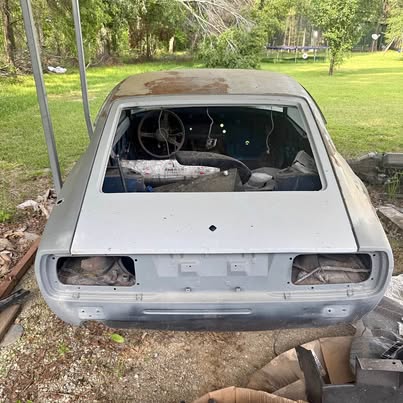
The Series 1 240Z (to about January 1971). The earliest cars are a distinct sub-model and the market treats them as one. Chassis numbers (HLS30 prefix for left-hand-drive North American cars) run from the start of production up to roughly the low twenty-thousands. Identifying features: fresh-air vents in the rear sail panels, worked into the Z emblems; a choke lever and a hand throttle side by side on the centre console; storage compartments behind the seats rather than under the rear deck; and lighter, simpler trim throughout. They also carry the desirable E31 cylinder head casting and the round-top carburettors in their best form. Series 1 cars are the lightest 240Zs and the most sought after — and, because they are the oldest and were the cheapest for longest, often the most worn. A genuine low-number car with its original engine is the blue-chip S30; a "Series 1" claim on a car with a mid-range chassis number is a claim to check against the firewall stamping, not the seller's description.
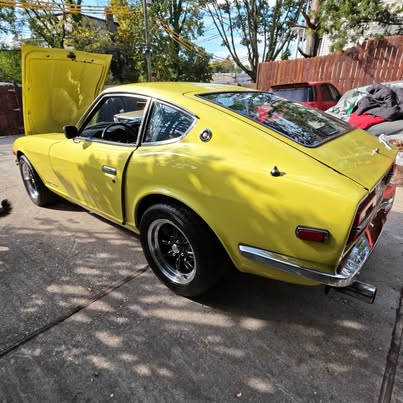
The Series 2 240Z (1971–73). Running changes through 1971 moved the ventilation to flow through the hatch area, deleted the hand throttle, revised the console and seats, and moved the tool and jack storage under the rear deck. The 1972 cars gained retractable seat belts and detail changes; they are in many ways the sweet spot of the carburetted cars — sorted details, still light, still on the good round-top carburettors. The 1973 cars are the trap year: emissions rules brought the flat-top Hitachi carburettors described below, an air pump and larger bumper overriders, and they are noticeably less pleasant to drive and to tune. Many have since been back-converted to round-tops by owners — a modification to welcome in a driver and to price carefully in a car sold as original.
The 260Z (1974). One US model year, two body styles. The L26 is an L24 with a longer stroke — more capacity, but in early US form so encumbered by emissions carburation and tuning that it gives little away to a good 240Z on the road and can be worse-mannered. Cars built later in the year (the so-called 1974½) gained the heavy impact bumpers that would define the 280Z's looks. The 2+2 stretched the wheelbase and added a longer, higher roofline most eyes find less elegant; it is also the cheapest way into an S30-shaped car. The 260Z's saving graces are real: it kept the slim early interior feel, it is the rarest of the three in North America simply because it sold for one year, and the market's indifference makes it the value buy of the family — see the final section.
The 280Z (1975–78). The 280Z answered the two criticisms of the late carburetted cars — drivability and emissions compliance — with Bosch L-Jetronic-pattern fuel injection on the enlarged L28 engine. It starts, idles and pulls in a way no smog-era carburetted Z manages, and it is the easiest S30 to live with day to day. The costs are weight and softness: the federal impact bumpers are big and heavy, there is more sound deadening and equipment, and the suspension tuning moved toward comfort. A five-speed manual arrived as an option from the 1977 model year and transforms motorway use; the 2+2 continued alongside the coupe, and air conditioning is far more common than on early cars. Because the 280Z sold in large numbers and lived an easier life, good survivors are easier to find than good 240Zs — the flip side being that it does not carry the early car's collector premium.
Markets and impostors. All North American cars are left-hand drive, HLS30 for coupes and GHS30 for the 2+2; Japanese Fairlady Zs are right-hand drive with the 2.0-litre engine and are personal imports here. The real impostor risk is a misdescribed car — 240Zs wearing 280Z engines, 280Zs wearing early bumpers, 260Zs badged as 240Zs all exist in numbers. Pay for the car actually in front of you; the inspection section's identity checks establish what that is.
Engines and gearboxes
The L24: the original 2.4
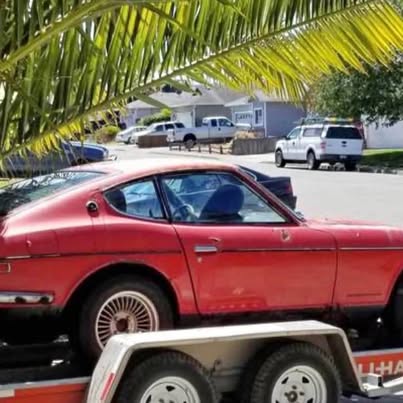
The L24 is a 2,393 cc single-overhead-cam straight six: cast-iron block, alloy crossflow-ish head with the camshaft carried in towers above it, a chain-driven valvetrain, two valves per cylinder and a seven-main-bearing crankshaft that explains much of its smoothness and durability. In North American 240Z form it was rated at 150 hp (SAE gross) at 6,000 rpm with 146 lb-ft of torque, figures that flatter it slightly against later net ratings but reflect a genuinely willing engine: a good L24 pulls from 2,500 rpm, revs cleanly past 6,000 and makes the right noise doing it. The redline is 7,000 rpm, and the engine will take it — which is one reason so many were thrashed.
What to listen and look for is covered mechanically in the problem-areas section; the identity points belong here. The engine number is stamped on a machined pad on the block, on the right-hand side at the rear, and on North American cars the original engine number is also recorded on the car's data plates — which makes genuine matching-numbers verification possible on an S30 in a way it often is not on Japanese cars of the period. The head casting number matters to enthusiasts: early cars carry the E31 head, with smaller combustion chambers and a higher compression ratio, while most later 240Zs carry the E88. An E31 on a late car, or an E88 on a claimed early car, is evidence the engine has been apart or exchanged, and it should start a conversation the seller can finish with paperwork.
The carburettors. All North American 240Zs and 260Zs breathe through a pair of Hitachi HJG46W side-draught carburettors — SU-type constant-depression instruments built under the same principle as the British SU, with a piston that rises and falls with airflow and a tapered needle metering fuel. The early "round-top" version, named for its domed suction chambers, is simple, well understood and genuinely good: set up correctly, with the right needle, fresh damper oil and balanced airflow between the pair, a round-top car starts well, idles evenly and pulls without flat spots. The design's known wear point is the throttle shafts: after fifty years the shafts wear in the carburettor bodies, admit air the needles never metered for, and produce the classic symptoms — an idle that will not settle, a mixture that cannot be set at idle yet runs acceptably at speed, and endless inconclusive tuning. The test is physical: with the engine off, grip each throttle shaft and feel for side play. Worn shafts are a rebuild with re-bushed bodies, realistically $600–1,200 for the pair properly done by a specialist, not a "tune-up."
The 1973 "flat-top" carburettors — flatter suction chambers, extra emissions plumbing, a thicket of vacuum connections — are the opposite: widely and fairly disliked, difficult to keep in tune, and short of specialists willing to touch them. A 1973 or early-260Z car that runs badly on flat-tops is not necessarily a bad car; it is a car whose correct fix, in most owners' judgement, is a pair of round-tops from an earlier car, a conversion so common it has its own parts trade. Budget $500–1,000 for a good used round-top set plus fitting and tuning if the car still wears flat-tops, and treat a seller's claim that the flat-tops "just need a tune" with the scepticism it has earned.
Two running faults belong to the fuel system rather than the carburettors themselves, and both are endemic. The first is heat soak and vapour lock: the fuel pump and lines live in a hot engine bay, and modern ethanol-blended fuel vaporises more readily than period fuel, so a hot Z that cranks without catching after a short stop is often boiling its fuel rather than suffering a carburettor fault. Electric pump conversions, insulated lines and heat shields are common owner fixes — judge them on workmanship, not existence. The second is the fuel tank, covered in the problem areas because it is really a corrosion story: a rusting tank feeds the carburettors rust particles that no amount of tuning cures.
The L26 and L28: the succession
The L26 (2,565 cc) is the L24 with a longer-stroke crankshaft — same architecture, same strengths, same service needs. In early US 260Z form it was hobbled by the same flat-top carburettor and emissions package as the 1973 240Z, and a badly set-up L26 can feel slower than an L24 despite the extra capacity. Freed of that equipment, as many have been where local rules allow, it is a torquier, lazier engine that suits the 2+2 well. Every L24 check applies to it unchanged.
The L28 (2,753 cc) arrived in the 280Z with electronic fuel injection built to Bosch's L-Jetronic pattern under licence — Nissan called it EGI. An airflow meter with a moving flap meters the air, an electronic control unit fires all six injectors in groups, and a cold-start injector, thermotime switch and auxiliary air regulator handle warm-up. It is 1970s electronics at their most tractable: analogue, well documented, and diagnosable with a multimeter and the factory manual's resistance tables. The failure points are age rather than design — perished vacuum hoses upsetting the airflow meter's story, corroded connector terminals (the injector and sensor plugs are notorious for green pins and broken locking clips), a worn track in the airflow meter giving a flat spot at one throttle opening, and fuel pressure wandering because the pump or regulator is fifty years old. The system wants roughly 36 psi at the rail with the vacuum hose off the regulator; test pressure before condemning electronics, because half of all "injection faults" on these cars are pressure faults. A sorted injected car is the most usable S30 of all.
The L28 also matters to 240Z buyers for a second reason: it is the most common engine swap in the S30 world, because it bolts straight in, looks nearly identical, and gives a real performance gain. Head castings tell the tale — N42 and N47 heads belong to the earlier L28s, P79 and P90 (including the turbo P90A) to the later 280ZX engines — and the block will be stamped L28 rather than L24. An L28 in a 240Z is not a bad thing; it is simply not the original engine, and the car must be priced as modified, not as matching-numbers. The same logic applies, harder, to the wilder swaps the Z attracts: L28 turbos, Nissan RB sixes, small-block Chevrolet V8s and LS conversions. Engine swaps are endemic to this model, and a swapped car stands or falls on the quality of the installation — cooling, mounts, wiring, whether the rest of the drivetrain was upgraded to match — and on whether it can be registered and insured where you live. Never pay original-car money for a swapped car, however fast it is.
Gearboxes, clutch and final drive
The standard gearbox in the 240Z is a four-speed manual — early cars use the 71A-series box, later production the stronger 71B; both are pleasant, direct boxes whose weak point is second-gear synchromesh, worn by fifty years of hurried downchanges. Test it as you would any old manual: a brisk 3–2 downchange at moderate revs, several times, hot and cold. A box that crunches only when stone cold is tired; a box that crunches warm is a rebuild, realistically $1,500–2,500 at a specialist before fitting labour. Clutch judder on take-up usually means an oil-contaminated or worn plate; a clutch kit is ordinary money ($300–600 in parts) but the labour is gearbox-out labour.
The five-speed buyers want arrived as a 280Z option from the 1977 model year and is also the most common gearbox swap into earlier cars, since it fits with minimal drama and drops cruising revs usefully. Check a claimed five-speed car by driving it, not by counting the knob pattern — knobs are ten dollars, gearboxes are not. (The Borg-Warner T-5 from the 280ZX Turbo also migrates into S30s; a good box, but its presence marks the car as modified.)
The three-speed Jatco automatic was a low-take-up option across the range. It suits the 280Z's GT character better than the early car's sporting brief; automatics are worth less than manuals in this market as a rule, and a manual conversion is possible with a donor pedal box, flywheel, gearbox and propshaft — a known job, but count its parts-and-labour total before buying an automatic "to convert later."
The final drive is a separate differential unit — an R180 in most 240Zs, with the stronger R200 appearing in later and automatic cars and commonly swapped in — driving the rear wheels through jointed half-shafts, with ratios clustering around 3.36:1 to 3.70:1. The famous S30 driveline noise is the differential clunk on take-up: the front differential mount and its limiting strap wear and tear, letting the nose of the diff rise and thump. It is a mount, not a differential — $150–400 in parts and an afternoon — but it has been misdiagnosed as a failing diff on thousands of cars, and a seller who has priced a car down for a "bad diff" that clunks once on take-off may be handing you a bargain. Worn half-shaft universal joints give a cyclical vibration and clicking on lock instead; both checks are in the inspection sequence.
Problem areas
Everything else in this guide is secondary to this section, because the S30's mechanicals are strong, simple and well supported, while its body is thin, old and was never well protected against corrosion. Buy the shell. An S30 with a sound structure and a tired engine is a good purchase at the right price; an S30 with a beautiful engine and a rotten structure is a parts car wearing a price tag. Work through the car in the order below — structure first, then the mechanical systems in the order they cost money.
Rust: the map
Rust on an S30 follows the water and the road salt, and the factory helped neither: the steel is thin, the original rust protection was minimal by modern standards, and the design traps mud and moisture in exactly the places that carry structural load. Assume any car that has lived in the north-eastern or mid-western United States, or anywhere roads are salted, has rust somewhere until you have personally proved otherwise. Dry-state cars — California, Arizona, the high desert — are worth a genuine premium for this reason alone, and a car's geography is evidence: a car listed in the north-east needs its underside photographs before it needs anything else.
Frame rails and floor pans. The most important check on the car, and the one sellers' photographs most often avoid. The floor pans and the box-section rails beneath them are a structural unit: the rails are notoriously thin — thin enough that careless jacking crushes them, and thin enough that they rot through from inside while the floor above still looks presentable. Lift the carpets and look at the floors from inside; get under the car (or get it on a lift) and look at the rails, the seat mounting areas and the seat-belt anchorages from below. Surface rust is treatable; perforation of the rails, holes around the seats, or soft metal at the belt anchorages are structural repairs. Replacement pans and rail sections are available and the work is well understood — $1,500–3,500 a side fitted and painted is a realistic planning figure for floors and rails done properly — but a car needing both sides, plus the areas below, is a restoration project and must be priced as one. Beware the freshly undersealed car: a uniform coat of new black stone-chip over the whole underside, seams, bolts and brake lines alike, is a cover-up until proved otherwise, exactly because nobody re-underseals a sound car the week before selling it.
Rockers, doglegs and rear arches. The outer rocker panels rot from the inside out, fed by water entering at the front and by blocked drains; press hard along their full length and look for paint bubbling low on the panels. Behind the doors, the short panel ahead of the rear wheel — the dogleg — is one of the S30's signature rust spots, and bubbling there usually means the inner structure behind it is worse. The rear wheel arches rust at the lip and where the inner and outer skins join; run a cloth-wrapped magnet along the arch lips and lower quarters, because these are also the most commonly filled panels on the car. Rocker and dogleg repairs run $800–2,000 a side fitted and painted, but their real significance is diagnostic: a car rotten here is rarely sound in the floors and rails.
The front structure: battery tray, inner wings and tension-rod mounts. Open the bonnet and go straight to the battery. The tray rots from the top down under the battery, invisibly, and the acid and water track down onto the inner wing and the frame structure beneath it — on a bad car the metal under the battery is lace. Lift the battery out, or at minimum rock it and shine a torch at the tray edges and the panel below. The inner front wings generally, and the area around the front crossmember and the tension/compression rod mounts that locate the front suspension, are structural and load-bearing: rust here is fabrication work, priced per car, and a legitimate walk-away on anything but a rare early car bought as a project. The lower radiator support panel rots early; it is replaceable, but treat it as another marker of how the car has lived.
Hatch, tail panel and spare wheel well. The rear hatch rusts along its lower edge and around the glass, and the tail panel below it rusts where water sits in the seams. Open the hatch and lift the spare wheel: the well collects water from perished hatch and light seals, and a rusted-through well is common enough that repair sections exist. Check the rear panel from inside the car as well as outside. None of this is as structurally grave as the rails, but hatch and tail repairs involve glass-out work and paint, and $1,000–2,500 disappears quickly.
Doors, cowl and the smaller traps. Door bottoms fill with water when their drain slots block, and rot from the inside — feel along the bottom edge of each door for bubbling and check the drains are clear. The cowl and windscreen frame rust where the screen seal perishes, letting water into the front footwells and starting the floor rot described above; wet front carpets in a "dry-stored" car mean the seal and probably the frame need attention. Front wings rust at their lower rear edges and around the headlamp buckets. Individually these are small jobs; collectively they are how you grade a shell, and a car that fails on six small areas is telling you the same story as a car that fails on one big one.
Engine and fuel system
The L-series six is one of the toughest engines of its era, and most of what stops one is bolted to it rather than inside it. Judge the engine itself on four things. Cold starting and smoke: a healthy L24/L28 starts readily, idles evenly and shows at most a puff of smoke after standing; blue smoke under load is rings or bores, blue smoke on the overrun and at start-up after a run is valve stem seals — a known, fixable job ($600–1,200 with the head on at a specialist, more if guides are needed) rather than a rebuild. Timing chain noise: the single-row chain and its tensioner wear, and a rattle from the front of the engine at start-up that persists, or a slap at idle, means chain, guides and tensioner — budget $800–1,500 fitted, and do not ignore it, because a jumped chain on an L-series bends valves. Oil pressure and leaks: these engines leak modestly from the front cover, the cam cover and the rear main seal with age; budget for resealing rather than being surprised by it, and be more concerned by low hot oil pressure on the gauge with a known-good sender — the senders themselves fail so often that a low reading is a question to verify mechanically, not a verdict. Cooling: the cooling system is adequate when clean and marginal when neglected; a car that creeps up in temperature in traffic usually has a silted radiator, a tired viscous fan coupling or a failing water pump rather than a head gasket, but a car with combustion gas in the coolant or mayonnaise under the oil cap has the head-gasket conversation coming — $1,200–2,000 fitted including a head skim and pressure test.
The fuel system, beyond the carburettor notes in the engines section, has one endemic S30 problem: the tank. Fifty years of condensation rust fuel tanks from the inside, and the symptoms masquerade as everything else — filters clogging repeatedly, fuel starvation at sustained speed or on hills as rust flakes cover the pick-up, carburettors that will not stay clean, an injected car whose pump screams and whose pressure wanders. Look in the filter: orange-brown sediment is the tank's confession. A tank clean and seal, or a replacement tank, runs $400–1,000 depending on route, and a car with a documented tank job has had one of the model's signature faults actually fixed. On injected cars add the fuel pump (external, at the rear, noisy when dying) and the state of every rubber fuel hose: ethanol in modern fuel attacks period rubber, and any S30 still on ancient fuel lines is a fire risk that a $100 hose set cures. Treat original-looking fuel hoses as a defect, not as originality.
Suspension, steering and brakes
The strut suspension is simple and its wear points are cheap — which means a car that drives badly is usually a car nobody has spent $500 on, and that tells you about the ownership. Worn strut inserts give a crashy, uncontrolled ride; a full set is $300–600 in parts. The rubber bushes — front tension-rod bushes above all, then anti-roll bar and rear arm bushes — perish and split, producing vague turn-in, tramlining and clunks; a full re-bush is $400–900 in parts and transforms the car. Ball joints and track-rod ends are ordinary wear items. The steering rack is durable; play is more often in the column coupling and rod ends than in the rack, and a rack rebuild is a specialist job at $600–1,000 when genuinely needed.
One S30-specific point deserves emphasis here: the half-shafts. Early cars use universal-jointed shafts whose joints wear and click or vibrate; later and swapped cars may have CV shafts. Neither is expensive, both are diagnosable on the drive, and neither should be confused with wheel bearings, which hum rather than click and change note as you load them side to side. (The other signature noise, the differential clunk on take-up, is a mount rather than a differential — it is covered in the gearbox section above.)
Brakes are front discs and rear drums (280ZX rear discs appear only as swaps). The parts are cheap and the enemy is standing time: seized front calipers, perished flexible hoses, a tired master cylinder and corroded rear wheel cylinders are the standard recommissioning list, $700–1,800 for a full hydraulic refresh with labour. Judge the discs for a rust band and a wear lip, check the handbrake holds on a slope (it works on the rear drums and is its own small job when it does not), and treat any car that pulls under braking as a car with a caliper or hose fault until proved otherwise.
Interior, electrics and trim
The S30 interior is simple, handsome and unusually well served by reproduction parts. The bad news is concentrated in a few places. The dashboard cracks, always, in sun states: your choices are a moulded dash cap ($150–300, looks like what it is), a re-skin, or a reproduction or new-old-stock dash at many times the cap's price — price a cracked dash according to which outcome you can live with. The seats wear at the driver's bolster and the foam collapses; re-trim kits and new foams are available ($600–1,200 a pair in materials, plus fitting), so seats are a budget line rather than a deterrent. Carpets and panels are reproduced; the centre console cracks around its fixings; early choke and hand-throttle hardware goes missing. What is genuinely hard is bright trim, some switchgear, good original steering wheels and uncracked early interior plastics — check them piece by piece on an early car, because that originality is what the Series 1 premium buys.
Electrics fail the way all 1970s electrics fail: at the earths, the connectors and the fuse box, rarely in the middle of a wire. The fuse boxes are a known weakness — the clips lose tension, resistance builds, plastic melts, and circuits die intermittently; a melted or bodged fuse box is common and fixable, and a car with several dead circuits often needs an afternoon with a multimeter rather than an auto-electrician's invoice. Fusible links in the main feed corrode and cause total, intermittent power loss that mimics a dead alternator. The alternator and starter are conventional and rebuildable. The test is functional: a car where everything works — lights, wipers on all speeds, washers, heater blower on all speeds, gauges, horn, interior light — has been used and maintained, the best character reference an old car can give you. Budget $300–800 of sorting for the usual handful of dead circuits.
How to inspect one
Allow at least an hour, bring a torch, a cloth-wrapped magnet, a small screwdriver for prodding (with the seller's permission) and a friend to work the pedals and lights. If the car passes you, pay for a lift inspection before money changes hands — on an S30 the underside is where the money is. Insist on a cold engine when you arrive; a warmed-up car is a car whose cold-start story you will never hear.
- Start with the paperwork and the identity. Match the chassis number in three places: the stamping on the firewall, the plate on the door jamb or dash (dash-mounted VIN plates appear on later cars), and the title. North American coupes are HLS30, 2+2s are GHS30. Read the engine number off the pad on the block and compare it with the number recorded on the car's plates — a match proves the matching-numbers claim; a mismatch means the engine has been changed, whatever the seller says. Note the head casting (E31, E88, N42, P79) and the block stamp (L24, L26, L28) on a car sold as original.
- Cold start. From stone cold, a carburetted car should start with the choke and settle to an even idle as it warms; an injected car should start at once and idle cleanly without throttle. Watch the exhaust: blue smoke that clears in seconds is stem seals; smoke that persists is deeper. Listen at the front of the engine for timing-chain rattle that does not fade.
- The floors from inside. Lift the carpets in both footwells and behind the seats. Look for water tracks from the cowl and windscreen base, surface rust you can treat, and holes you cannot. Prod around the seat mounts and the seat-belt anchorages. Wet carpets in a car described as dry-stored mean leaking seals and rust already started.
- Under the car. This step decides whether you continue at all. Torch along both frame rails under the floors, looking for crushing from careless jacking and for perforation; check the floor seams, the rocker inners, the front crossmember area and the tension-rod mounts. Read the underseal as you go — thin, patchy and honest is factory age; a fresh uniform black coat over everything is a question, not an answer. Perforation in the rails or at the belt anchorages is structural, and it reprices the car as a project on the spot.
- Rockers, doglegs and arches. Press hard along both rockers. Run the magnet along the rear arch lips, the lower quarters and the dogleg panels behind the doors, feeling for the weak pull of filler. Look for bubbling low on the doglegs — on an S30 it almost always means worse behind.
- The battery corner. Lift the battery out if the seller allows; if not, rock it and torch the tray edges and the inner wing below it. Acid staining, lifted paint and soft metal here are common, and the repair is in the structure, not in a bolt-on tray.
- Hatch, tail and spare wheel well. Open the hatch, lift the spare and the boards. Look for water staining, rust in the well corners and perforation in the tail panel, and check the hatch's own lower edge and the panel around the rear lights from inside and out.
- Engine bay honesty. Check the oil: level and colour, and on any car a smell of fuel in the oil means the fuel system needs finding. Check the coolant for rust and for oil. Look in the fuel filter for the orange sediment that convicts the tank. Note the carburettor type — round-top or flat-top — on any 1973 or 260Z car, and feel the throttle shafts for side play. On an injected car, look at the injector and sensor connectors: green pins and cracked plugs are the car's future electrical gremlins, visible today.
- Suspension and steering by hand. With the front jacked or on the lift, rock each front wheel top-to-bottom and side-to-side: top-to-bottom play is ball joints and bearings, side-to-side is steering joints and the column coupling. Bounce each corner — a corner that bounces twice needs strut inserts. Check the tension-rod and anti-roll-bar bushes for splitting.
- The test drive. Fifteen minutes minimum, including a sustained faster stretch. A six should pull cleanly from 2,500 rpm to 5,500 without hesitation — flat spots mean carburation on a carburetted car, airflow-meter or pressure trouble on an injected one. Test the 3–2 downchange several times for second-gear synchromesh. Listen on take-up for the single rear thump of a tired differential mount, and on lock for half-shaft clicking. Brake hard from speed: straight, no judder, no pull.
- Heat and electrics at idle. Let it idle hot after the drive. Watch the temperature gauge settle, check the oil pressure story, and work everything: heater blower on all speeds, wipers, washers, lights, indicators, horn, every gauge, the interior light. A handful of dead circuits is normal negotiating material; a melted fuse box explains them and is fixable, but price the afternoon it takes.
- Stance and shutlines. Stand back and look. An S30 should sit level and even, arches at matching heights. Look down each flank for ripples, check the bonnet and hatch gaps for accident history, and feel the bottom edge of each door for bubbling. Take a photograph from twenty feet — stance and panel faults you talked yourself out of in person are obvious in a picture.
- Interior last. Sit in the driver's seat and feel for collapsed foam; check the dash top for cracks and decide which of the cap, re-skin or replacement outcomes you can live with at this price; operate the choke and (on a Series 1) the hand throttle; check the console and bright trim piece by piece on an early car, because that trim is what the early-car premium buys.
Values
The build below this guide carries the current market figures for the S30 — the cars listed now and the recorded sales — refreshed as the market moves. This section is about how to read those numbers, because on this model the spread between the cheapest and the dearest car wearing the same badge is wider than on almost any other classic of the era, and a single median figure will mislead you in both directions if you do not understand what drives it.
The first driver is the shell, and it is not close. The difference between a rust-free dry-state car and a salt-belt car with perforated rails is not a percentage adjustment; it is the difference between a car and a restoration project, and the market prices it that way. When you compare a listing against the figures below, compare it against cars of the same structural condition before anything else — same model year, same engine, same colour is all secondary. A cheap S30 is almost never cheap because the seller has misjudged the market; it is cheap because the floors, rails, doglegs or battery corner have already been judged by someone who looked.
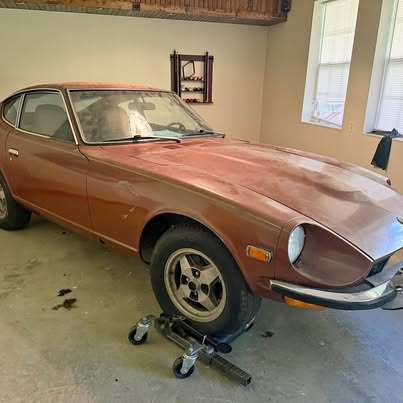
The second driver is position in the family. Series 1 240Zs carry the collector premium — low chassis numbers, the early details, the E31 head — and the premium is real only when the car is verifiably what it claims to be, which is why the identity checks in the inspection section are worth money. Ordinary Series 2 240Zs form the core of the market. The 260Z sits at a discount to both neighbours for reasons of reputation rather than merit, and the 280Z trades at its own level, supported by usability: injection, the five-speed on later cars and air conditioning widen its buyer pool beyond collectors to people who simply want an S30 to drive. The 2+2 discounts against the coupe in every model year — the market prefers the original shape — which makes a good 2+2 the rational buy for someone who wants the car more than the silhouette.
The third driver is originality, and here the S30 market is more forgiving than most — up to a point. The market distinguishes sensibly between reversible, sympathetic upgrades (a five-speed in a 280Z, round-top carburettors on a 1973 car, an R200 differential, sensible suspension refreshing), which cost little or nothing in value, and fundamental changes — engine swaps away from the L-series, V8 conversions, wide-arch bodywork, stripped interiors — which move the car into the modified market, priced on build quality and taste rather than comparability with original cars. A matching-numbers car, documented by the plate-versus-block check, earns its premium in the early cars especially. A swapped car should be priced against other modified cars, never against the original-car figures.
Asking prices and achieved prices part company on this model in a predictable pattern. Sellers of early cars ask collector money for driver-condition cars, and the auction record — where the bidding is public and the result final — is the corrective: read the recorded sales below alongside the asking prices, and weight the sales more heavily, especially for the car you are actually looking at, which is usually a driver rather than a show car. Project cars show the widest gap of all between ask and worth: the arithmetic of S30 restoration is unforgiving, because structural repair and repaint, an engine rebuild and an interior can together exceed the finished value of all but the best early cars, so a project is worth its price only when the entry cost leaves that arithmetic survivable — or when the car is early and original enough that the finished value genuinely clears it.
Finally, the project-versus-driver gap in one line: on this model, the most expensive car to own is usually the cheapest one to buy. Buy condition, buy documentation, and let someone else buy the bargain.
Parts and ownership
The S30 is one of the best-supported Japanese classics in the world, for three reasons: Nissan built the S30 family in large numbers over nine years, the cars have an enormous and organised enthusiast following in North America, and the L-series engine family was used across Nissan's range for years, so mechanical parts interchange widely. A buyer coming from a rarer classic will find the parts situation a pleasant shock.
Easy: service items, filters, plugs, ignition consumables, brake discs, pads, calipers and hydraulics, clutch kits, water pumps, alternators and starters (new or rebuilt), suspension bushes, strut inserts, ball joints, exhaust systems, carburettor service parts and needles for the round-top Hitachis, fuel pumps, and most engine gaskets and seals. The specialist Z trade in the United States — firms that do nothing but these cars — stocks most of it on the shelf, and Nissan's own heritage parts programme has remanufactured selected items that were once unobtainable.
Available, at a price: body panels. Floors, rails, rockers, doglegs, rear arches and lower quarters are reproduced by the specialist panel makers, which is why structural repair is a costing exercise rather than an impossibility — panel prices plus fitting and paint are the numbers used in the problem-areas section. Interior trim kits, seat foams and covers, carpets and dash caps are reproduced, and glass is available. Reproduction weatherstrip sets exist and vary in quality; a full re-rubber is a four-figure job in parts and patience.
Harder and dearer: good original bright trim and early-car interior plastics, uncracked dashboards (re-skins and reproductions exist; originals are prized), flat-top carburettor expertise (the market's answer is usually conversion to round-tops), and the injected cars' control units and airflow meters in tested condition. None of it stops a car being used; all of it rewards buying a complete car over an incomplete one, because the missing trim on a cheap car is exactly the trim that costs the money.
Running costs. A sorted S30 is a realistic regular-use classic. Fuel consumption sits in the low-to-mid twenties mpg in mixed use for a carburetted car driven gently. Servicing is within the ability of any competent classic-car mechanic and of most home mechanics — the factory manuals are widely available and the cars were designed to be worked on. Insurance is mainstream classic-car money. The budget lines that catch new owners are the ones flagged throughout this guide: the first-year catch-up on a car with deferred maintenance — fuel hoses and tank attention, brake hydraulics, bushes, a carburettor or injection service — realistically runs into the low thousands at shop rates before you improve anything, and recommissioning a car that has sat for years costs more, because everything rubber, hydraulic and in the fuel system needs attention at once, and the tank and lines need cleaning end to end. Buy a car in regular use over a sleeping car at the same money, every time.
Club and knowledge support is as good as it gets for a Japanese classic: national and local Z clubs, an active preservation scene that documents original specification in detail, and fifty years of accumulated workshop knowledge in print and online.
Which one to buy
- The collector car: Series 1 240Z. Low chassis number, vents in the sail panels, E31 head, matching engine number verified against the plate. The blue-chip S30 — buy the best-documented, least-rusty example you can find, because originality here is the asset and it cannot be retrofitted.
- The all-rounder: Series 2 240Z, ideally a 1972. The early car in its sorted form: light, carburetted on the good round-tops, free of the 1973 emissions equipment. If you want one S30 to drive, show and keep, this is the centre of the market for a reason.
- The value buy: 260Z. One year only, priced below both neighbours on reputation rather than merit. A late car, or one already converted to round-top carburettors, gives you the early-Z experience for the least money in the family — and the 2+2 version is cheaper again.
- The daily driver: 280Z, 1977–78 with the five-speed. Injection that starts and idles in all weathers, a gearbox that cruises, and the widest choice of good survivors. Heavier and softer than a 240Z, and easier to live with in every other respect.
- The modifier's base: a sound-shell 260Z or 280Z 2+2. If your plan is an L28 turbo, a five-speed conversion or a fast road car, start with the cheapest sound shell in the family rather than cutting up an original early car.
- The one to avoid at any badge: the rusty car with fresh paint. Whatever the model year, whatever the engine, a shiny S30 with perforated rails and filled doglegs is a restoration bill wearing a costume.
And the rule that overrides all of the above: buy the least rusty car you can find, in the specification you can live with. Engines, carburettors, gearboxes, bushes and brakes are all fixable at prices you can plan for, and the parts trade will sell you everything you need. A rotten shell costs more to put right than the finished car will usually be worth — and it is the one thing about an S30 that can never be made original again.
See the 12 240Z cars currently listed.
For sale now
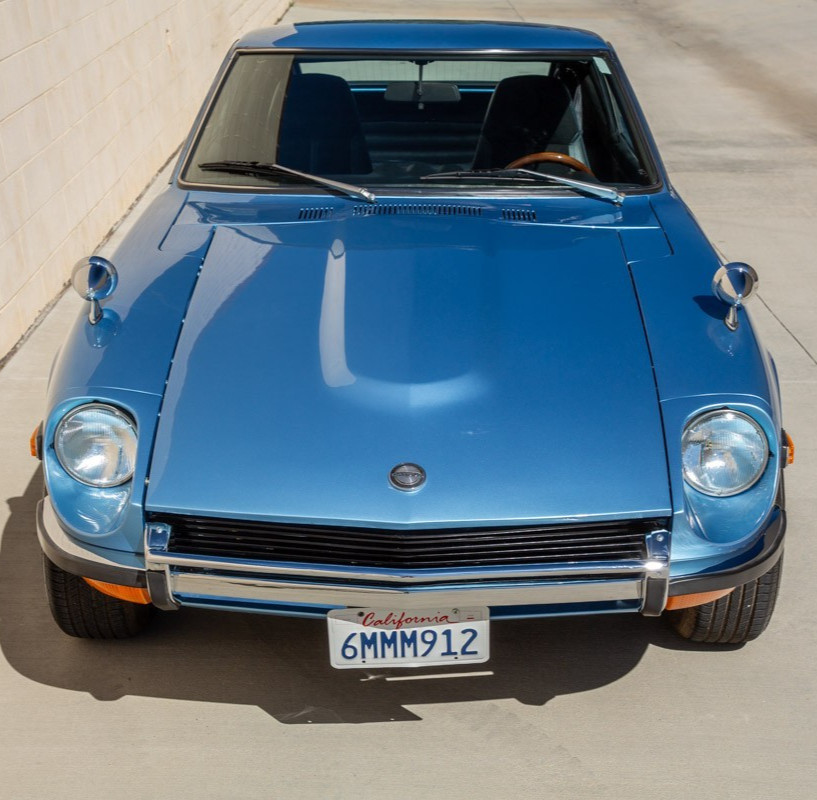 $44,999
Expand
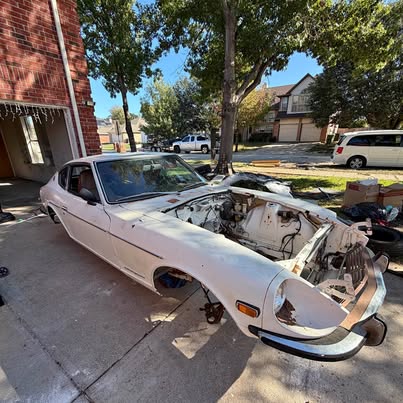 $2,000
Expand
What they sell for: 240Z sale prices.