
Datsun 280ZX buyer's guide
Datsun 280ZX -- the model's own buyer's guide: variants, values and what to check.
Years listed: 1979-1983 · Series: Z
Overview and history
The Datsun 280ZX is the second-generation Z-car, and the car where the Z changed its mind about what it was for. The original 240Z of 1970 had been a sports car first — light, simple and cheap for its performance. The 280ZX, internal code S130, launched in Japan in 1978 and sold in North America as a 1979 to 1983 model, kept the long bonnet, the rear-drive layout and the straight-six engine, but wrapped them in a bigger, softer, far better-equipped grand tourer. Cross-shopping a 240Z and a 280ZX expecting the same experience in a newer shell is a mistake: they are related, but they drive like cousins, not twins.
That shift was deliberate, and it was commercial. By the late 1970s the American buyers who had made the Z a phenomenon wanted air conditioning that worked, a quieter cabin, power equipment and an automatic option that did not feel like a compromise, and federal safety and emissions rules were adding weight to every car sold in the United States anyway. Nissan — still badging its exports Datsun in this period — answered with a car longer, wider and more aerodynamic in its detailing than the outgoing 280Z, with a semi-trailing-arm rear suspension, a much more finished interior, and a trim ladder that climbed from a plain two-seater to a leather-trimmed, digitally instrumented luxury coupe. Period testers praised its refinement, comfort and value, and criticised, gently, the edge it had traded away for them. Both judgements were fair then and both are fair now.
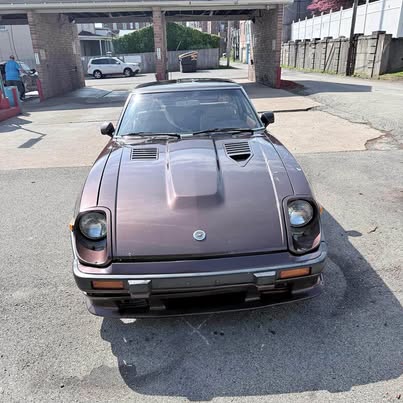
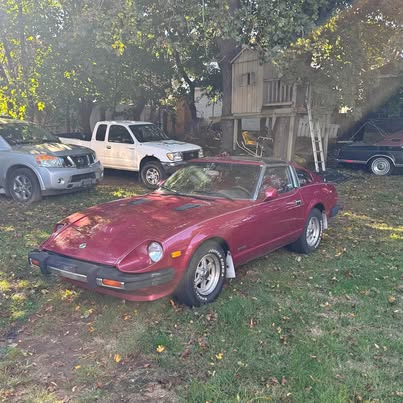
A scope note, stated plainly because it shapes everything that follows. This is the model-level companion to our broader Datsun Z series guide, and it covers only the S130 280ZX. The pool it is scoped from is small: 8 cars in total in the brief supplied for this guide, all 8 listed for sale and none recorded as sold, all 8 filed under the Z series and all 8 sourced from Facebook Marketplace listings. The years in that pool of 8 are narrow — three cars from 1979, two from 1981 and three from 1982 — so there is no 1980 or 1983 car in the pool to generalise from, and no trim or gearbox conclusion should be read off such a small sample. Of the 8 cars, 4 are recorded as manual and 3 as automatic, with the remaining car's transmission not recorded. Where this guide talks about the wider 1979–1983 production run — the 1980 T-top arrival, the 1981 turbo, the 1982 facelift, the 1983 turbo manual — that is model history, not a claim about those 8 cars. Where it talks about the pool itself, it says so and gives the sample size every time.
Production ran for five North American model years, 1979 through 1983, and in total more than 400,000 S130s were built across all markets and body styles — a large number that matters today, because it is why mechanical parts support is as good as it is. The shape stayed recognisably the same throughout: a long nose with retractable headlamps, a fastback roofline falling to a short deck, and, on most US cars, impact bumpers and the heavy brightwork of the period. Two body styles were offered from the start — a strict two-seater and a longer-wheelbase 2+2 — and the 2+2 is not simply a two-seater with seats added: its roofline is higher and longer, and most buyers who want the classic Z silhouette want the two-seater. Know which one you are looking at before you compare prices, because the market treats them as different cars.
The arc of the five years is easy to remember. The 1979 and 1980 cars are the purest S130s: naturally aspirated only, simpler equipment, closest in spirit to what came before. For 1980 Nissan added the option buyers now hunt for most — removable T-top roof panels — and marked a decade of Z production with a limited 10th Anniversary edition. For 1981 the range gained its headline act, the turbocharged 280ZX Turbo, which restored the straight-line performance the heavier car had been missing. For 1982 the whole range was facelifted — revised bumpers, tail lamps, bonnet detailing and interior trim — and the gadget era arrived, with an optional digital dashboard and a voice warning system that talked to the driver. For 1983, the final year, the turbo was at last offered with a manual gearbox, and the Datsun name itself was disappearing in favour of Nissan badging. The replacement 300ZX was a clean-sheet V6 car, which makes the 280ZX the last Z built around the L-series straight six that had powered the line since 1969.
Why buy one now? Three honest reasons. First, character per dollar of running cost: the L-series six is one of the most durable Japanese engines of its era, and a sorted 280ZX is a usable, comfortable classic you can drive across a state without heroics. Second, distinctiveness: its period details — T-tops, two-tone paint, digital instruments, a voice that tells you a door is open — are exactly the early-1980s flavour no earlier Z can offer. Third, the turbo: a genuine, original 280ZX Turbo is a genuinely quick car for its year and the most collectible S130 by a clear margin. Against all of that, set the fact that governs this entire guide: a 280ZX is a unibody coupe built to a price more than forty years ago, never rustproofed to modern standards, and most examples spent years as cheap used cars. The engine will forgive neglect that the body will not. Buy the shell first, the specification second and the story last.
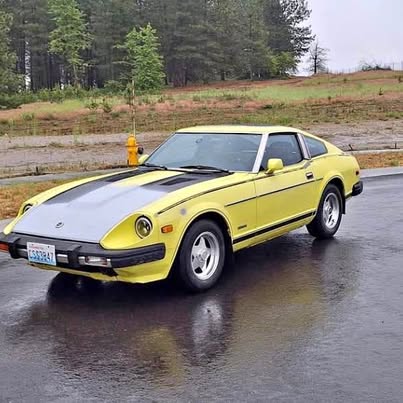
The models
Every 280ZX is an S130, every North American 280ZX has the 2.8-litre L28 straight six, and the differences that matter are body style, induction — naturally aspirated or turbocharged — model year, and trim. Learn those four axes and you can place any car in a listing photograph in ten seconds. Get one wrong in a purchase and you will overpay for a badge or walk past the right car.
| Model | Years | Engine | Output | Built | Character |
|---|---|---|---|---|---|
| 280ZX 2-seater | 1979–1983 | 2.8 six (L28E), injection | 135–145 hp | Part of 400,000+ S130s total | The classic shape; the default buy |
| 280ZX 2+2 | 1979–1983 | 2.8 six (L28E), injection | 135–145 hp | Part of 400,000+ S130s total | Longer, roomier, softer market |
| 280ZX Turbo 2-seater | 1981–1983 | 2.8 six turbo (L28ET) | 180 hp | Smaller share of production | The performance and collector pick |
| 280ZX Turbo 2+2 | 1981–1983 | 2.8 six turbo (L28ET) | 180 hp | Smaller share of production | Turbo pace, family compromise |
(Outputs are period US SAE net figures: 135 hp for the earliest naturally aspirated cars, 145 hp from 1981 onward, 180 hp for the turbo throughout. No tidy, universally agreed per-variant production split exists that a buyer can safely quote, so this table gives the honest total — more than 400,000 S130s across all variants — rather than invented per-variant figures. Treat a seller quoting suspiciously precise production numbers for a specific trim combination as a reason to check everything else they say.)
Two-seater versus 2+2. The two-seater rides on the shorter wheelbase — about 91 inches — and has the low, clean fastback line of the launch photographs. The 2+2 stretches the wheelbase to about 98 inches, raises and lengthens the roof to make the rear seat usable by children and tolerant adults on short trips, and gains weight in the process. In period the 2+2 sold on practicality; today it sells at a discount to an equivalent two-seater, and that discount is the point. If you genuinely need the rear seat, or your budget will only stretch to a sound shell in 2+2 form, it is the rational buy — same engine, same gearboxes, same rust map, same parts. If you do not need the seat, do not pay two-seater money for a 2+2, and do not let a seller blur the distinction with "the four-seat version is rarer": rarity is not the same as demand. Tell them apart from the side: the 2+2's roof stays high much further back, and its rear side window is longer.
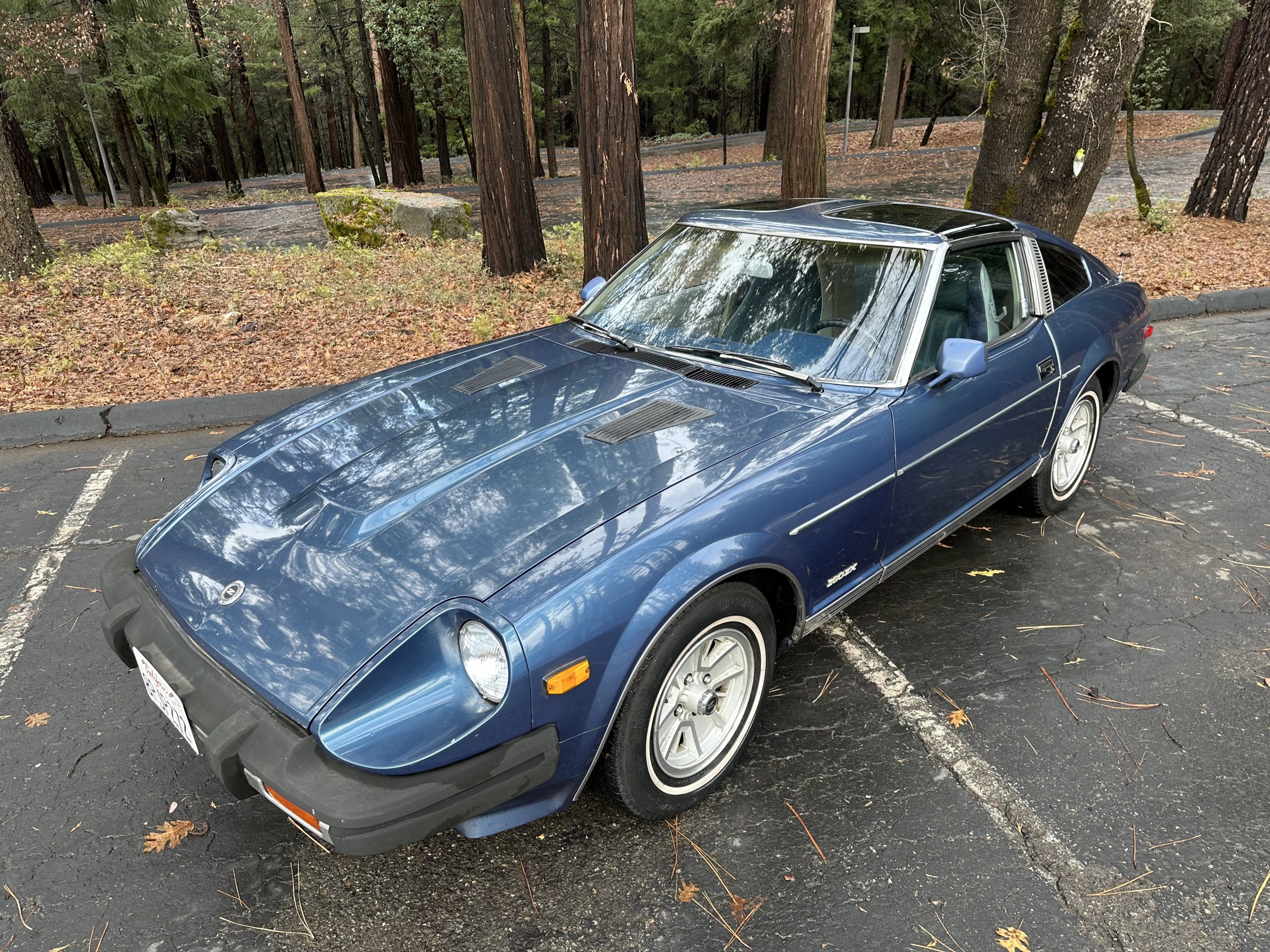
Trim: base, Deluxe and GL. The naming shifted slightly by year and market, but the ladder is consistent enough to use. The plain cars — listed variously as base or Deluxe — have cloth or vinyl trim, steel or simple alloy wheels, manual windows on early cars and the least equipment to go wrong. The GL, sold in its fullest form as the Grand Luxury, is the top trim: plusher velour or optional leather, power windows, power steering, cruise control, upgraded audio, and, on later cars, the options that define the model's period charm — the digital instrument pack and the voice warning system. One of the 8 cars in this guide's pool is explicitly listed as a Grand Luxury — a blue 1982 car — which is a reminder that GLs are a real and visible part of the surviving US fleet, not a footnote. As a buying proposition the GL cuts both ways: a working GL with its equipment intact is the most charismatic 280ZX to sit in, while a tired GL is a list of electrical and trim jobs priced in unavailable parts. The base car has less to charm you and far less to bill you. Condition and completeness decide.
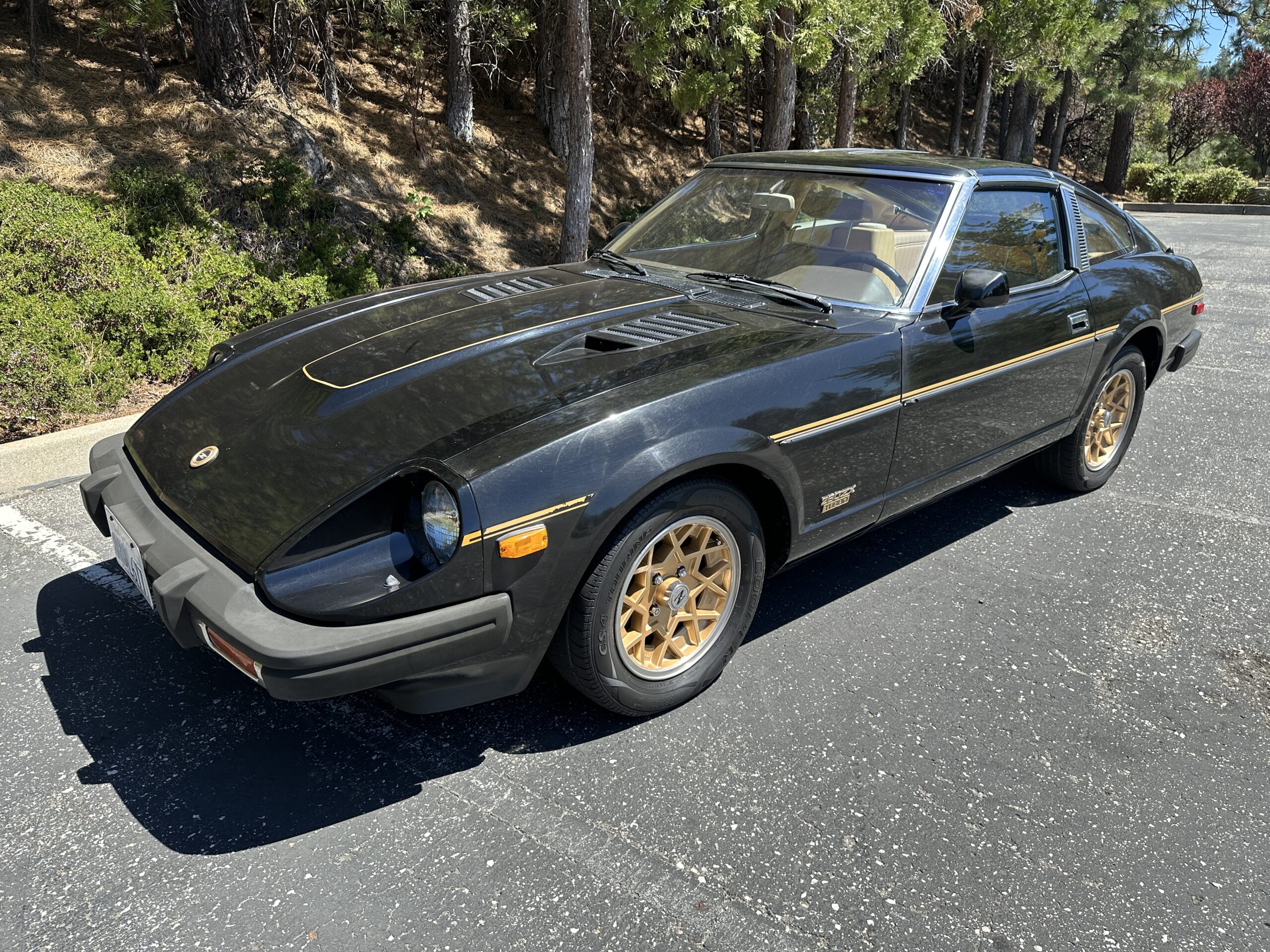
The year-by-year changes that matter. The 1979 car is the launch specification: naturally aspirated only, no T-top option, the simplest equipment, and styling details at their cleanest. For 1980 the T-top arrived as an option on the two-seater and quickly became the most specified feature on the car — a T-top car has two removable glass roof panels, a central roof bar, and a set of seals and drain paths that will dominate its inspection, as the problem-areas section explains. The 1980 10th Anniversary edition, offered in black-and-gold or red-and-black two-tone schemes, was built in limited numbers — commonly quoted as 3,000 cars — and is worth verifying properly rather than paying for on paint alone: two-tone paint is easy to apply to a car that never left the factory wearing it, so paperwork matters more than the colour scheme. For 1981 the naturally aspirated engine's US rating rose to 145 hp and, far more importantly, the Turbo joined the range, initially with an automatic gearbox only. For 1982 came the facelift: restyled bumpers with integrated trim, revised tail lamps, new bonnet vent detailing, updated wheel designs and B-pillar trim, a revised interior, and the availability of the digital dashboard and voice alert system on GL cars. Three of the 8 cars in this guide's pool are 1982 cars, and two of those three are listed as turbos — a neat illustration of where surviving-car interest now concentrates, and, with a sample that small, nothing more than an illustration. For 1983 the headline change was mechanical rather than cosmetic: the Turbo could finally be ordered with a five-speed manual gearbox, a stronger Borg-Warner unit rather than the standard Nissan five-speed, and those cars — turbo, manual, final year — sit at the top of most want lists.
T-tops, roofs and colours. Most US 280ZXs you will meet are T-top cars, because American buyers ordered them that way; the fixed-roof coupe — often called a slick-top — is plainer, structurally simpler, and actively preferred by some experienced buyers for the leak and rust reasons covered later. Neither roof justifies a premium on its own. Two-tone paint was a factory fashion of the facelift years, but paint is the easiest thing about a 280ZX to change and the hardest to verify without documentation, so never let a colour carry a valuation argument by itself. In this guide's pool of 8 cars the recorded colours are blue on 2 cars, and brown, yellow, gold, red and grey on 1 car each, with one car's colour not recorded — a spread that shows how varied surviving cars are, and, at n=8, nothing about factory colour popularity.
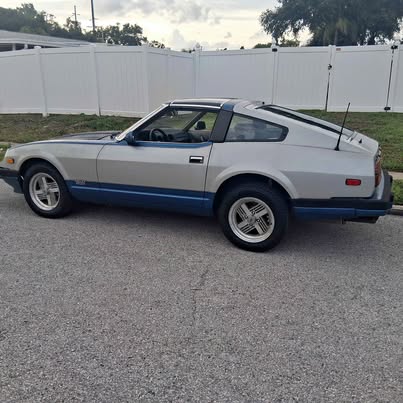
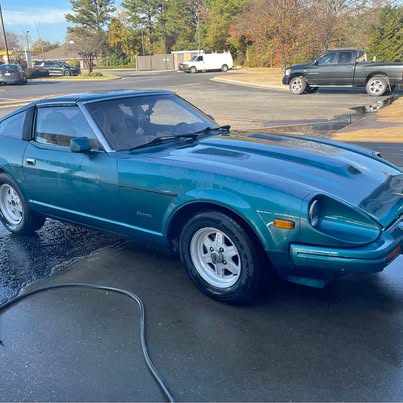
Engines and gearboxes
The L28E: the naturally aspirated six
All the work of understanding a 280ZX engine starts with one fact: the L28 is a development of the L24 that powered the original 240Z, from one of the most thoroughly understood engine families in the Japanese classic world. It is a 2,753 cc single-overhead-camshaft inline six — cast-iron block, aluminium head, seven main bearings, chain-driven camshaft, two valves per cylinder. Nothing about it is exotic, highly strung or short-lived. Fed with oil, kept cool and not revved cold, an L28 will run to mileages that embarrass many younger engines, and a tired one usually announces itself politely — oil consumption, a noisy timing chain, tired valve stem seals puffing blue smoke on start-up after standing — long before it stops.
In the 280ZX the L28 wears electronic fuel injection and is coded L28E. US-market output was rated at 135 hp for the earliest cars and 145 hp from 1981 onward, with torque in the region of 145–150 lb-ft; period figures vary slightly by year and by the standard quoted, so use them as orientation, not as a dyno promise for a forty-year-old engine. Performance is brisk rather than fast: the six is smooth, torquey in the middle of its range and happy cruising at freeway speed all day, which is precisely the job the 280ZX was repositioned to do. If a seller describes one as a relaxed, characterful tourer, they are telling the truth.
The injection system is where most running faults live, and where the worst misdiagnosis happens. Nissan's system on the L28E derives from the Bosch L-Jetronic pattern: an air-flow meter with a spring-loaded flap measures incoming air, an electronic control unit meters fuel through solenoid injectors accordingly, and supporting sensors — coolant temperature, throttle position, cold-start enrichment — trim the result. It is a good system, now more than forty years old, and its failure modes are electrical and pneumatic rather than electronic in the modern sense.
Work through them by mechanism. The air-flow meter (AFM) is the classic suspect: its flap pivot wears, its carbon resistance track wears where the wiper spends its life at cruise, and the result is a flat spot, a surge or hesitation at a particular throttle opening that no amount of plug-changing cures. The test is to sweep the flap slowly by hand with the meter connected and watch for drop-outs in the signal; the cure is a rebuilt or known-good meter, not random adjustment of the spring tension by a previous owner — an AFM with its sealed cover prized off and its spring re-indexed is a part that has been used to mask some other fault, and you should price the car accordingly. Vacuum leaks are the second great cause, and the cheapest: the large rubber intake boot between the AFM and the throttle body cracks with heat and age, typically in folds you cannot see without removing it, and every split admits unmetered air that leans the mixture at idle. Squeeze and flex the boot on any car that idles lumpily; a boot costs tens of dollars, while the misdiagnosis it causes has sold many owners an ECU they did not need. The cylinder head temperature sensor and its connector are the third: the ECU enriches the mixture based on this sensor, the connector lives in a hot, wet corner of the engine bay, corrodes green, and an open or high-resistance circuit tells the ECU the engine is stone cold forever — so the car runs rich, soots its plugs, drinks fuel and fails emissions, all from a two-pin plug. Clean contacts and a resistance check against the manual's temperature table settle it in minutes. Injector connectors corrode the same way, and the injectors gum up on cars that have sat; a car recommissioned after storage wants its tank cleaned, filter changed and injectors professionally cleaned before any deeper diagnosis begins. Finally, the fusible links — the short sacrificial wire links in a small box near the battery that protect the main circuits, including injection power — are an S130 signature fault. They corrode internally, overheat, melt their insulation and fail intermittently, producing a car that cuts out or refuses to crank, then behaves perfectly in front of a mechanic. Any electrical gremlin on a 280ZX starts at the fusible links and battery terminals, not at the expensive components. A modern fuse conversion is a common, sensible upgrade; melted link insulation means budget for electrical tidying, not necessarily walk away.
Two mechanical checks complete the L28E picture. Timing chains stretch and the tensioner and guides wear, giving a start-up rattle that should fade as oil pressure builds; a rattle that persists is a front-cover job in the region of $600–1,200 at an independent shop. And compression: evenness across all six cylinders matters more than the absolute number. One low cylinder is an engine-out conversation; six evenly modest readings on a smooth, oil-tight engine that pulls well is a car you can buy and monitor.
The L28ET: the turbo engine, 1981–1983
The turbo engine is the same L28 architecture with the changes a factory turbo conversion of its era required: a lower compression ratio achieved with dished pistons, a turbo-specific camshaft profile, an uprated oil pump and oil supply to the turbocharger, a different engine management calibration to fuel under boost, and a Garrett T3 turbocharger blowing through the standard-style intake without an intercooler, at boost in the region of 7 psi. Output was rated at 180 hp with torque around 200 lb-ft — figures that transformed the heavier ZX's performance and still feel respectable today, delivered with unmistakable early-turbo character: modest response off boost, then a strong, swelling surge as the turbo spools. There is no intercooler, no electronic boost control and no knock-sensor sophistication of the modern kind to hide behind, which is why the turbo engine's condition and originality matter so much more than the naturally aspirated car's.
Turbo-specific buying rules follow directly. Heat is the turbo car's biography. The T3 sits in a hot engine bay, cooks its oil feed and return lines, hardens every rubber hose near it and stresses the exhaust manifold, which cracks with thermal cycling — listen for a ticking exhaust blow from cold that quietens as the manifold expands, and look for soot tracking at the manifold joints. A turbo shut down hot without an idle-down period cokes oil in its bearing housing over years; shaft play is the test, checked by removing the intake pipe and feeling for movement — a trace of side-to-side play is normal on a journal-bearing turbo, but in-and-out (axial) play means a rebuild or replacement, realistically $800–1,800. Boost control is simple and therefore often tampered with. The wastegate actuator sets boost; a car fitted with a manual boost controller or bleed valve has been run harder than Nissan intended, on an engine with no intercooler to protect it, and detonation damage is the hidden price. Ask directly what boost the car runs and look for the hardware. Originality is verifiable, so verify it. A genuine factory turbo car is not a naturally aspirated car with a turbo kit, and the distinction is worth thousands. Check, in this order: the engine block stamp — the engine number pad on the block should identify an L28ET turbo engine rather than an L28E, and a car whose block says it started life naturally aspirated is a conversion whatever its badges say; the hardware — factory turbo manifold, Garrett T3 in the factory position, factory oil feed and cooler plumbing, turbo intake tract and badging all present and consistent, not a mixture of aftermarket pipes; the instruments and details — turbo cars carried a boost gauge and turbo-specific trim and badging, and while gauges and badges can be added, their absence on a claimed turbo is a question that needs an answer; and the paperwork — a build record, original window sticker or long ownership history that consistently describes a turbo settles arguments that photographs cannot. In this guide's pool of 8 cars, two — both 1982 cars — are explicitly listed as turbos, which underlines the practical point: turbo is the word sellers know buyers search for, so it is the word to verify hardest.
Gearboxes
Three gearboxes cover the range, and the pool reflects the split honestly enough: of the 8 cars in the brief, 4 are recorded as manual and 3 as automatic. The standard manual is Nissan's five-speed, a development of the boxes used in earlier Z-cars, with a light, slightly long throw and synchromesh that wears first on second gear — test it with a brisk cold change into second, up and down, because a box that crunches cold and quietens warm is a box with a rebuild in its future, roughly $1,200–2,500 at a specialist depending on parts. Clutch operation should be progressive without judder; a high biting point and slip under load in a high gear is a clutch kit, a few hundred dollars in parts and half a day's labour. Five-speed naturally aspirated cars are the keen driver's default and the easiest manuals to live with.
The automatic is a three-speed Jatco unit, smooth, lazy and entirely in keeping with the car's GT brief. For 1981 and 1982 the turbo was automatic-only from the factory, a fact that doubles as an identity check: a claimed 1981 or 1982 factory turbo wearing a manual gearbox is either a 1983 car misdescribed, a gearbox-swapped car, or not a factory turbo at all, and each explanation has a different price. Judge any automatic on fluid colour and smell (dark, burnt-smelling fluid is neglect), prompt engagement of drive and reverse, and clean, unflared shifts under load. A rebuild is a $1,800–3,000 conversation, so a vague, slipping automatic on an otherwise cheap car can quietly make it the dearest one you looked at.
The exception is the 1983 turbo manual, which used a Borg-Warner T-5 five-speed — a stronger box sourced because the standard Nissan five-speed was not rated for the turbo's torque in this application. T-5 cars are the most sought-after drivetrain combination in the range. Verify one as you would the turbo itself: the T-5 is visually and mechanically distinct from the Nissan box, and a standard five-speed fitted behind a turbo engine in a home conversion is not the same car, mechanically or in value. Whichever gearbox a car has, check the differential and half-shafts on the test drive: a whine that rises with road speed, clonks on taking up drive, and perished mount rubber are all common at this age and negotiable rather than fatal — provided the body underneath them is sound, which is where the next section takes you.
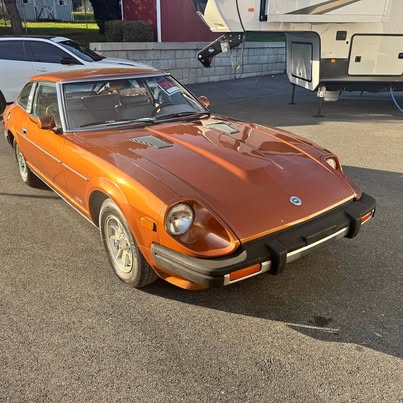
Problem areas
Everything mechanical on a 280ZX can be fixed with parts that mostly still exist, at prices you can estimate in advance. The body cannot — not economically, and not to original condition. That asymmetry organises this section: rust first, longest and in most detail, because rust is what writes these cars off; the systems that follow decide what a sound car will cost you in its first year.
Rust: the map
Rust on an S130 follows water, sun and road salt, and it attacks a unibody, so almost none of it is merely cosmetic. Work through the car in this order, because the order is also the order of financial seriousness.
Frame rails. The front and rear frame rails are the spine of the shell and the first place a serious inspection goes — ideally on a lift, at minimum on ramps with a torch and a screwdriver to prod with. The front rails run under the engine bay and collect water, battery acid from above and road spray from below; they rot at their seams, around the suspension crossmember mountings and where they sweep up at the firewall. The rear rails and the rear suspension mounting areas carry the same risk. Surface scale that brushes back to clean metal is a preservation job. Perforation, layered flaking or metal that dents under firm screwdriver pressure is structural welding: fabricating rail sections is skilled work, realistically $1,500–4,000 a side, and a car needing both front rails and floors is a parts car or a project at project money, whatever its engine does. Sellers' photographs almost never show the rails — ask for lift photographs of any car you cannot inspect in person, and treat an inability to provide them as information.
Floor pans. The floors rot from both sides: from underneath where underseal fails and traps moisture against the steel, and from above where water leaking past the windscreen seal, the heater box and — on T-top cars — the roof apertures sits under the carpets, sometimes for years. Lift every carpet; a seller who will not allow it is asking you to buy the car's most expensive unknown unseen. Prod the pans along their seams and around the seat mountings and seat-belt anchorages — the anchorages are safety-critical, and corrosion there is an inspection failure in many jurisdictions. A competent welder can fit a replacement pan for roughly $800–1,800 a side finished, but floors rarely rot alone: budget on the finding, then look harder at everything adjacent.
Rocker panels, wheel arches and lower wings. The rockers below the doors trap mud thrown up by the front wheels and rot from inside; press hard along their full length and look for paint bubbling low on the doors and at the arch lips, which is the inside announcing itself outside. Rear arches go at the lip and where the arch meets the sill, front wings at their bottom rear edge. None of these alone condemns a car, but together they draw the map of how it has lived, and four corners done properly — cut out, welded, sealed and painted — comfortably runs into four figures. Fresh, thick underseal blown uniformly over rockers, rails and floors the week before a sale is a cover-up until proved otherwise: honest forty-year-old underseal is patchy, chipped and dirty in a way that matches the rest of the underside.
The hatch, the rear panel and the spare wheel well. The big rear hatch is the car's signature and one of its water traps. The hatch seal perishes, the glass surround corrodes, and water runs down into the spare wheel well, where it sits under the spare wheel itself. Lift the spare on every viewing. Staining and surface rust is a clean, treat and reseal job; a perforated well or a rear panel rotted behind the tail lamps is panel work and paint, $800–2,000 done properly, and a marker to check the rear rails underneath with extra care. Check the hatch struts and hinges while you are there: a hatch that will not stay up is a small bill, and a useful sign of whether small bills on this car get paid.
T-top apertures. On a T-top car — which, in the US market, means most cars you will view — the roof deserves its own inspection. Remove both panels (they should release, lift and refit cleanly; a panel a seller says is "better left in place" is a panel whose seal or frame you need to see). Examine the aperture frames and centre bar for corrosion, the seals for perishing, and the drain paths for blockage: water that cannot drain goes into the roof structure, the A-pillars and eventually the floors, so a T-top car with wet carpets has a named suspect before you look anywhere else. Replacement seals are available but fiddly to fit well, and a car that leaks onto its seats has had a wet interior and wet floors — price the whole chain, not just the rubber. The glass panels are increasingly hard to replace if cracked or missing, so a complete, undamaged pair is a genuine asset.
The smaller traps. Battery tray and the firewall and inner wing beneath it (acid tracks down from a tray that rots under the battery, invisible until the battery is lifted out — rock the battery and look at the tray edges with a torch). Front strut towers and the tops of the inner wings, where corrosion around the strut mounting is structural, not cosmetic. Windscreen surround, where a perished seal both leaks and rusts the aperture it sits in. Door bottoms, where blocked drain slots let doors hold water — run a fingertip along every door's bottom edge for bubbling. The fuel tank and its straps, especially on cars from salt states, and the seams around the rear side windows on the 2+2. And the cowl and heater intake, where debris holds moisture against hidden seams. None of these alone kills a car; three or four together describe a shell in general decline, and general decline is the thing to walk away from.
Suspension, steering and brakes
The 280ZX's chassis is conventional — MacPherson struts at the front, semi-trailing arms at the rear, disc brakes at the front and, on the earliest base cars, drums at the rear, with all-disc the norm on later and higher-trim cars — and its faults at this age are the faults of rubber, fluid and standing still. Bushes perish and split, giving knocks, vague lane-keeping and uneven tyre wear; a full rebush is a $600–1,400 job with labour and transforms how the car drives, so a loose-feeling car with a sound shell is a negotiation, not a rejection. Strut inserts tire and leak; check for a car that bounces twice after a firm push on a corner, and for oil on the strut bodies. Ball joints and track-rod ends wear and are cheap individually, tedious in aggregate — price a front-end refresh into any car with no evidence of one.
Power steering, where fitted, leaks from the pump, the hoses and the seals, in roughly that order of cost; a groan on full lock and a low reservoir tell you the system wants attention. Judge steering on the move: light, direct and free of a dead band at the straight-ahead. A dead band plus knocks over bumps is wear stacked on wear, and it prices as a system refresh, not a single part.
Brakes suffer most from storage. Calipers seize, rear caliper handbrake mechanisms on disc cars stick, flexible hoses perish internally and master cylinders weep past their seals into the servo. A car that has sat wants a complete hydraulic refresh — calipers rebuilt or replaced, hoses, fluid, pads and discs inspected for the rust banding and lipping that standing produces — at $800–1,800 with labour. On the test drive the car must stop straight and hard without judder or a long, soft pedal; a pedal that sinks slowly at a standstill is a master cylinder telling the truth. This is the standard price of recommissioning any early-1980s car — and why a car in regular recent use is worth more than a lower-mileage car that has slept for a decade.
Interior, electrics and the period gadgets
The cabin is where the 280ZX's GT ambitions live, and where restoration costs hide in plain sight, because trim parts — not mechanical parts — are the scarcest things on the car. Dashboard tops crack in the sun, predictably on cars from hot states; a crack-free original dash is genuinely valuable, a cracked one is either a $300–600 cover, a specialist repair, or a hunt for a good used dash everyone else is also hunting. Seat bolsters wear through on the driver's entry side, seat foams collapse, and velour GL trim fades unevenly; a professional retrim of a pair of seats runs $800–2,000 depending on material, so judge the interior from the driver's seat — that is the one that prices the job. Carpets that are damp, or smell damp, send you straight back to the leak hunt in the rust section — in a 280ZX, interior water is a body problem wearing a trim disguise. Plastic trim embrittles: consoles crack, switch surrounds break, door cards warp and split at their tops. Every missing or broken trim piece should be priced as a used-parts search measured in months, not a catalogue order measured in days.
Electrically, start where the engines section told you: fusible links, battery terminals and earth points cure more 280ZX electrical faults than any component replacement. Beyond those, work the whole electrical inventory on any viewing — windows, mirrors, locks, aerial, wipers, heater fan on every speed, air conditioning, cruise control, all lamps and the instrument cluster — because a car where everything works has usually been used and maintained, the best single predictor of a good purchase there is. Air conditioning deserves its own sentence: most cars were fitted with it, few systems on cars for sale today blow cold without work, and a recommission runs $800–2,000 at a shop, so "air needs a charge" should be priced as "air needs a system overhaul until proved otherwise."
The two famous period systems need specific tests. The digital dashboard, offered on GL cars in the facelift years, replaces conventional dials with electronic displays that were futuristic in 1982 and are a specialist repair now: displays fade, segments drop out and the power supply and sender units fail. Test every function — speedometer, tachometer bar graph, fuel and temperature, warning displays — and treat a partially dead digital dash as a specialist bill of several hundred dollars and a scarcity problem, not a fuse. The voice warning system, the "talking car," announces a short list of warnings — lights left on, door ajar, keys in the ignition and similar — in a recorded female voice, and it is the single most quoted party trick in the model's history. Failure is usually mundane: its control unit, its connections, or a previous owner's disconnection because they found it irritating. A working system is a delight and a selling point; a silent one is a diagnostic afternoon. Neither system should make or break a purchase — the shell does that — but both should be tested, priced honestly if dead, and never taken on trust from a listing description.
How to inspect one
Allow ninety minutes, bring a torch, a cloth-wrapped magnet, a screwdriver for prodding (with the seller's permission) and a notebook. If the car passes you, pay for a lift inspection before money changes hands — on a unibody car of this age it is the best money in the whole purchase.
- Paperwork and identity first. Match the VIN on the title to the car's plates and stampings. Confirm the body style (two-seater or 2+2), year and trim from evidence, not from the listing text. Ask for the history file: invoices, previous titles, any documentation of turbo or anniversary specification. A thick, consistent file is worth money; a thin file on a car with a thick story is a warning.
- The turbo question, settled early. If the car is claimed to be a factory Turbo, do the verification from the engines section now, before emotion gets a vote: engine block stamp identifying an L28ET, factory turbo hardware in the factory positions, boost gauge and turbo details present, and — for a claimed 1981 or 1982 car — the factory-correct automatic gearbox, or a documented explanation. A conversion can be a fine car; it is priced as a conversion.
- Cold start. Insist the engine is cold on arrival. An injected L28 should start promptly and settle to an even idle. Watch for blue smoke at start-up (valve stem seals, or worse if it persists), listen for timing-chain rattle that outlasts the first seconds, and note any hunting — then work the engines-section suspects in order: intake boot, temperature-sensor connector, AFM, fusible links.
- Under the car: the decision step. Torch and prod both frame rails front and rear, the floor seams, the seat-belt anchorages, the rear suspension mountings and the rocker panels. Read the underseal as you go — patchy and honest is age; a fresh uniform coat over everything is a question. Perforation in rails or anchorages ends the inspection at any price above parts-car money. This step, not the test drive, decides whether you continue.
- Floors from above. Lift all the carpets. Look for water tracks from the windscreen base, the heater box and, on a T-top car, down the pillars. Prod the pans and smell for damp. Wet carpets in a "dry-stored" car mean active leaks and rust in progress.
- The T-top routine. Remove both panels, inspect the aperture frames, centre bar and seals, check the drains are clear, and examine the panels for cracks and chips. Refit them and check alignment and latching. Then look at the headliner and seat tops for water staining that tells you how the seals have really performed.
- Hatch and spare wheel well. Lift the spare wheel. Staining is a clean-and-seal job; perforation is panel work. Check the hatch seal, the glass surround, the hinges and whether the struts hold the hatch open unaided.
- Body and gaps. Run the magnet over the rockers, arch lips, lower doors and the bottoms of the front wings — filler announces itself. Check door bottom edges for bubbling, the battery tray area for acid damage (lift the battery if allowed), the strut towers for corrosion, and the panel gaps for accident history. Count the trim pieces that are cracked, faded or missing and price them as searches, not orders.
- The gadget audit. Work every electrical item, then the two period systems: every digital-dash function and segment if fitted, and the voice warnings — open a door with the lights on and listen. Note air-conditioning honesty: "needs a charge" is priced as a system overhaul until a gauge proves otherwise.
- Suspension and steering by hand. Push each corner hard and watch the rebound; rock each front wheel for bearing and joint play; look for split bushes, leaking struts and perished hoses. Check power-steering fluid level and look under the front of the car for its leaks.
- The test drive. Fifteen minutes minimum, including a freeway stretch and some broken pavement. A manual should take second gear cleanly, cold or warm; an automatic should engage promptly and shift without flare. The engine should pull cleanly through its range — flat spots point to the AFM and vacuum side on a naturally aspirated car; on a turbo, listen for exhaust-manifold ticking from cold, feel for boost arriving smoothly, and watch for smoke under boost, which is turbo seals until proved otherwise. Brake hard from speed: straight, no judder, no sinking pedal afterwards.
- Heat and idle, last. Let the car idle hot while you talk. Temperature should stabilise, the fan and heater should work on every speed, and the idle should stay even with the air conditioning and lights loaded. Then make your offer from the list you have written — shell first, then turbo identity if claimed, then the first-year recommissioning total — not on how the car made you feel at step 11.
Values
The figures that matter for this model are computed from this site's own listings and recorded sales, and they sit below this guide — the listed-now summary and the market block are refreshed every time the site rebuilds, so use them rather than any number quoted elsewhere. What follows is how to read them, and it matters more than usual here, because this guide's brief pool is small: 8 cars, all 8 for sale and none recorded as sold. A pool with no sold cars can tell you what sellers ask; it cannot tell you what buyers pay. Treat every asking figure on a small sample as an opening position, and lean on condition — which you can inspect — rather than on medians from a handful of listings.
The 280ZX market is really three markets wearing one badge. At the bottom are the project cars: runners with rust, parts cars, and long-stored cars whose photographs flatter them. These change hands cheaply and should — the gap between a project and a finished car is almost never recoverable in welding, paint, trim and recommissioning costs, so a project only makes sense at project money, bought by someone who welds or who wants the parts. In the middle is the honest driver market, where most naturally aspirated two-seaters and 2+2s live: sound shells, presentable interiors, ordinary mechanical needs. This is where value sits. At the top are two overlapping groups: the best-preserved, best-documented naturally aspirated cars — low-mileage GLs, clean anniversary cars with paperwork — and the turbos, which carry a clear premium, with the 1983 turbo manual at the top of the tree.
Within those markets, the premiums are rational and predictable. A genuine, original turbo is worth materially more than a conversion and more than a naturally aspirated car in the same condition — which is precisely why turbo identity is faked, blurred and misdescribed, and why this guide spends so much space on verifying it. A two-seater is worth more than an equivalent 2+2. A working T-top with good seals is worth more than a leaking one, but a fixed-roof car is not automatically worth less — buy the shell, not the roof fashion. GL equipment adds value only when it works: a GL with a dead digital dash, silent voice system and tired velour is worth less than a plain car in better order, because its deficits are the expensive kind. Colour moves individual buyers, not the market; never pay a documentation-free premium for paint.
The negotiation reality is that asking prices are routinely optimistic, set by sellers who have seen the best turbo results and applied them to ordinary cars. Your correctives are the condition spread and the inspection list: price the car in front of you as shell, identity, and a written first-year bill — welding, brake refresh, injection sorting, air conditioning — and let that arithmetic, not the seller's comparable, set your offer. There is no such thing as a cheap 280ZX that stays cheap, but there is such a thing as a fairly priced one.
Parts and ownership
The 280ZX splits its parts story cleanly in two, and knowing which half a part falls into is most of ownership wisdom. Mechanically, it is one of the best-supported Japanese classics of its era: more than 400,000 S130s were built, the L-series family was shared across the Z line for years, and the specialist Z trade in the United States is mature. Trim, glass and model-specific body parts are the opposite story: made for five model years, in many variants, and never reproduced in depth.
Easy: engine service items and internals for the L28 — filters, plugs, gaskets, water pumps, timing-chain kits, clutch kits; injection service parts such as fuel pumps, filters, regulators and rebuilt air-flow meters through the Z specialists; brake discs, pads, calipers and hoses; suspension bushes, struts, ball joints and steering wear parts; exhaust systems; radiators and cooling parts; gearbox service parts for the common boxes; and used mechanical parts generally, because production volume means donor cars still surface. Order today, fit this weekend, at ordinary-car prices is a fair summary of the mechanical half.
Harder and dearer: T-top glass panels and good T-top seals fitted well; crack-free dashboard tops; GL velour and leather trim in the right colours; digital dashboard components and their senders; the voice warning control unit; turbo-specific parts in original form — correct manifolds, turbochargers, turbo engine internals and the small hardware that distinguishes a factory installation; 10th Anniversary trim pieces; rust-free body panels, especially rear quarters and hatch assemblies; and bright trim in undamaged condition. None of this is unobtainable, but it is obtained by patience and used-parts hunting rather than by credit card, and a car complete in these areas is worth a premium over a mechanically identical car missing them.
Versus the 240Z — the comparison every buyer asks about — the earlier car now enjoys the deeper reproduction market, because its values justified the tooling: you can buy more new body and trim parts for a 240Z than for a 280ZX. The 280ZX counters with cheaper donor cars and lower purchase prices for equivalent condition. Do not buy one assuming the 240Z's reproduction catalogue will rescue its trim; buy one whose trim is already there.
Running costs. A sorted 280ZX is a realistic regular-use classic: fuel consumption in the low-to-mid twenties mpg on a gentle freeway run for a naturally aspirated manual, less around town and less again for a turbo automatic; servicing any good independent Japanese-car or Z specialist can handle. The budget line that catches new owners is the first year: catching up deferred maintenance on a running car honestly costs $1,500–4,000 before you improve anything, and recommissioning a car that has sat for years runs $3,500–7,500 at shop rates — fuel system cleaned end to end, brakes inspected, all fluids, belts, hoses and seals renewed, tyres replaced on age regardless of tread. Replace tyres older than about seven years without debate; on a turbo, add oil-feed inspection and a strict warm-up and idle-down habit. Store a T-top car dry, exercise it monthly, keep its drains clear, and the ownership experience is the one the car was designed for: comfortable, characterful and dependable.
Which one to buy
- The all-rounder: a naturally aspirated two-seater, five-speed manual, 1981–1983. The best balance of the classic shape, the simpler engine, facelift-era equipment and parts support. If you want one 280ZX to drive and enjoy, this is it.
- The value buy: a sound 2+2. Same engine, same gearboxes, same rust map, family practicality included — at a persistent discount to the two-seater. If its shell is the best you can afford in either body, it is the rational purchase.
- The collector car: a genuine 280ZX Turbo, 1983 manual if you can find and verify one. The performance flagship and the top of the market. Verify the L28ET identity ruthlessly, because the premium rides on originality and a conversion wearing turbo badges is worth a fraction of a correct car.
- The period charmer: a GL with its digital dash and voice system working. The full early-1980s experience, T-tops out, the car talking to you at the lights. Buy it only with every gadget tested and working — restoring them is a scarcity hunt, not a service job.
- The special edition: a documented 1980 10th Anniversary car. Worth its premium with paperwork proving the specification left the factory that way; worth no premium at all as two-tone paint alone.
- The project: any cheap car — bought only at parts-car or welding-project money, with your eyes open. The rust map is your pricing tool. A project bought as a project can be a joy; a project bought as a driver is the most expensive 280ZX of all.
And the rule that overrides all of the above: buy the least rusty car you can find, in the specification you can live with. Engines, gearboxes, injection faults and brakes are all fixable at prices you can plan for. A rotten shell costs more to put right than the finished car will be worth — and it is the one thing that can never be made original again.
See the 11 280ZX cars currently listed.
For sale now
Expand
Expand
$15,900Expand
What they sell for: 280ZX sale prices.