
Dodge Challenger R/T Coupe buyer's guide
Dodge Challenger R/T Coupe -- the model's own buyer's guide: variants, values and what to check.
Years listed: 1970-1970 · Series: Challenger
# Dodge Challenger Coupe — Buyer's Guide
Overview and history
You are looking at the last car to arrive at the muscle-car party, and in some ways the most honest one. Dodge launches the Challenger for the 1970 model year, six years after the Ford Mustang invents the pony car and three years after the Camaro and Firebird answer it. Stand in front of a coupe today and you read it differently: Chrysler has watched everyone else's mistakes, has a mature shelf of engines and gearboxes to pick from, and builds exactly the car the market asks for in 1970 — long bonnet, short deck, a hardtop roofline with no B-pillar, and an options list that runs from a slant-six shopping car to a 426 Hemi street racer on the same order form.
The Challenger is an E-body. It shares its basic unibody engineering with the 1970 Plymouth Barracuda, but it is not a Barracuda with Dodge badges, whatever you read on forums. The Challenger rides a 110-inch wheelbase, two inches longer than the Barracuda's, with almost all of that extra length in the rear seat and footwell area. Underneath, the recipe is pure Chrysler of the period: torsion-bar front suspension, a live rear axle on leaf springs, unibody construction, and power — when you order it — through the TorqueFlite automatic or the A833 four-speed manual that Chrysler men already trust behind big-blocks in Chargers and Road Runners.
Timing does the rest of the history for you. The Challenger arrives for 1970 and sells 76,935 cars that first year across all body styles; then the market falls off a cliff — insurance surcharges on performance cars, tightening emissions and safety rules, compression ratios dropping for low-lead fuel. For 1971 Dodge builds 27,377 Challengers in total. The coupe — the two-door hardtop, body code 23 — is the volume body style in both years and the one you shop for now. The convertible and the formal-roof SE matter to this guide because they share the coupe's structure, engines and problems, but the hardtop is the Challenger in its purest form: no vinyl roof necessary, no folding top to leak, just that long, clean pillarless profile.
The models
The range looks complicated because Dodge sells you a trim level, a performance model and two packages that blur into models in their own right, all on the same hardtop shell. Untangle it by starting with the VIN, because the factory already did the untangling for you. The first characters tell you the car line and price class: JH is a standard Challenger, JS is a Challenger R/T — the S stands for Special price class — and the next two digits, 23, tell you the car is a two-door hardtop. A convertible is 27. If a seller describes a car as a factory R/T and the VIN starts JH, you are not looking at a factory R/T, whatever badges, stripes and bonnet are fitted. That single check, done before you discuss money, settles more Challenger arguments than any other.
The base Challenger hardtop is the volume car. You can order it with the 225 Slant Six, the 318 small-block, the 340, or the 383 big-block in two-barrel form, and thousands of buyers do exactly that, using the car as stylish daily transport rather than a street racer. The SE — Special Edition — is an option package rather than a separate model in engineering terms, but treat it as a model when you shop because it changes the car you inspect: a smaller, more formal rear window set into a vinyl-covered roof plug, leather-and-vinyl trim, and an overhead console with warning lamps. That small rear window is the instant visual tell — and it creates inspection work the standard coupe does not need, because the vinyl and the plug trap moisture, as the rust section explains.
The R/T — Road/Track — is the performance model proper. In 1970 the standard R/T engine is the 383 Magnum four-barrel at 335 horsepower, with the 440 Magnum, the 440 Six Pack and the 426 Hemi as the options that built the legend. You get heavier-duty suspension, upgraded brakes in most configurations, the Rallye instrument cluster, and the visual theatre: bonnet scoops, stripes, badges. For 1971 the formula survives but the world has moved: the standard 383 is detuned to 300 horsepower on lower compression, the four-barrel 440 disappears, the Six Pack and Hemi carry on for one final year, and — a detail sellers get wrong in both directions — the 340 four-barrel becomes available in the R/T for 1971 only. An R/T SE combines performance model and formal luxury package, and a genuine 440 Six Pack R/T SE is among the most heavily optioned, and most faked, Challengers you will meet.
The T/A is the special you must understand separately. Built for 1970 only to homologate parts for the SCCA Trans-Am championship, the Challenger T/A uses the 340 small-block with three two-barrel carburettors — the 340 Six Pack — a matt-black fibreglass bonnet with a large scoop, side-exit exhausts, staggered tyre sizes with larger rubber at the rear, quick-ratio steering and heavy-duty suspension. The race cars use a destroked 305-cubic-inch version to meet the five-litre limit; the street car keeps the full 340, which is why the old claim that a T/A is a detuned racer is backwards — on the road, the street engine is the bigger one. A T/A is a JH-series car with a specific option package, not a JS R/T, so you verify it from the fender tag and broadcast sheet, not the VIN prefix alone. At the opposite end sits the Deputy, offered briefly in 1971: a stripped, cheap coupe with fixed rear quarter windows and minimal trim, built to hit a price.
| Model | Years | Engine | Output | Built | Character |
|---|---|---|---|---|---|
| Challenger hardtop | 1970–71 | 225 six / 318 / 340 / 383 2bbl | 145–330 hp | 53,337 in 1970; 23,088 in 1971 (base series) | The honest coupe; daily-driver specification, most with automatic |
| Challenger SE | 1970–71 | As base, V8s usual | As ordered | Option package on the hardtop | Formal small rear window, vinyl roof, overhead console; luxury over speed |
| Challenger R/T hardtop | 1970–71 | 383 Magnum standard; 440, 440 Six Pack, 426 Hemi optional; 340 added 1971 | 300–425 hp | 12,747 in 1970; 4,630 in 1971 | The performance model; the car the stripes actually belong on |
| Challenger R/T SE | 1970–71 | As R/T | 335–425 hp | 3,679 in 1970 (R/T SE coupe) | R/T pace with SE formality; rare, desirable, and the most cloned specification |
| Challenger T/A | 1970 only | 340 Six Pack | 290 hp | 2,142 | Trans-Am homologation special; small-block balance, side pipes, matt bonnet |
| Challenger Deputy | 1971 | 198 / 225 six, 318 | Modest | Small part of 1971 base production | The stripped price-leader; fixed rear windows, minimal trim |
Read the outputs in the table as period SAE gross ratings — measured without the full production exhaust and accessories, optimistic at the top of the range and occasionally diplomatic, as the Hemi's famous 425 shows. Use them to place engines relative to each other, never as a promise of what a fifty-year-old engine on modern fuel puts out today.

Engines and gearboxes
You choose a Challenger by its engine more than by any other single thing, because the engine decides the car's character, its running costs, the gearbox and axle behind it, and — bluntly — most of its value. Chrysler offers three families across 1970–71: the Slant Six, the LA small-blocks, and the big-blocks in B and RB form, topped by the 426 Hemi, a family of its own in everything but the catalogue. Learn the VIN engine letter — the fifth character — and you identify what a car was born with in seconds: C for the 225 six, G for the 318, H for the 340 four-barrel, J for the 340 Six Pack in the T/A, L for the 383 two-barrel, N for the 383 four-barrel, U for the 440 four-barrel (1970), V for the 440 Six Pack, and R for the 426 Hemi. A car whose badges claim an engine its fifth character denies is a car with a swap. Swaps are not sins, but you pay for a swap as a swap, never as a birthright.
The Slant Six and the 318: the working engines
The 225 Slant Six, VIN letter C, is Chrysler's famous leaning six, canted in the bay to lower the bonnet line and make room for its long intake runners. In the Challenger it is the base engine, rated at 145 horsepower, and it does what it has done in Darts and Valiants for a decade: starts, runs, tolerates neglect, and moves the car without pretending to be quick. Neither six belongs in a discussion of performance, but both belong in a discussion of honesty: an unmolested six-cylinder coupe is a clean shell with a simple engine. Check valve-cover and pushrod-cover oil leaks, a worn timing chain giving a rattle and retarded valve timing, and exhaust-manifold cracks. Nothing here is expensive, and nothing here should frighten you.
The 318, VIN letter G, is the small-block V8 most ordinary Challengers carry: an LA-series engine — the lightweight, thin-wall evolution of Chrysler's small-block line — with a two-barrel carburettor and a period rating of 230 horsepower. Its weaknesses are age weaknesses, not design flaws: a stretched timing chain (the factory uses a nylon-toothed cam sprocket on many of these engines, and the teeth shed with age and heat), leaking valve-cover gaskets, a tired Carter two-barrel with a worn throttle shaft, and freeze plugs rusting inside a neglected cooling system. A 318 car is the cheapest Challenger to run in this guide, and the engine least likely to have been thrashed, because nobody street-raced one on purpose.
The 340: the driver's small-block
The 340, VIN letter H, is the engine the connoisseurs argue for, and you should understand why before a big-block's noise settles the argument for you. A high-winding performance small-block, the 340 combines a 4.04-inch bore with a short 3.31-inch stroke, free-breathing heads with 2.02-inch intake valves in its early performance form, and a willingness to rev that no big-block in this guide matches. Rated at 275 horsepower with a single Carter AVS four-barrel, it puts a hardtop within sight of a 383 car on the road while carrying far less weight over the front torsion bars: the car steers lighter and feels like a pony car rather than a cut-down muscle car.
In the T/A, the 340 becomes the 340 Six Pack, VIN letter J for 1970: three Holley two-barrel carburettors on an Edelbrock aluminium intake, rated at 290 horsepower, with the centre carburettor doing the cruising work and the outboards opening under vacuum at full throttle. It is a superb system when set up and a frustrating one when it is not — the failure mode, outboard carburettors that stick, leak at their base gaskets or never open, is covered in the problem areas, because it is mechanical and diagnosable, not mysterious.
The 383 and 440 big-blocks: B and RB
The 383 is a B-series big-block: low deck, 4.25-inch bore, 3.38-inch stroke, and a reputation as the sweet spot of the Chrysler big-block range. In two-barrel form, VIN letter L, it is a base-model engine rated at 290 horsepower, torquey and unstressed. In four-barrel Magnum form, VIN letter N, it is the standard R/T engine: 330 horsepower in base-model tune, 335 horsepower as the R/T fits it, with a Carter AVS, a performance camshaft and dual exhausts. For 1971 the same engine is rated at 300 horsepower as compression falls for low-lead fuel. What matters is originality and condition, not the last digit of a period rating.
The 440 is an RB engine — raised block, taller deck, longer 3.75-inch stroke — and it is the big-block most buyers picture. The 440 Magnum, VIN letter U, offered for 1970, runs a single Carter four-barrel, a performance cam and dual exhausts, and is rated at 375 horsepower with torque that arrives low and stays: a magnificent road engine that needs neither revs nor nursing, and in front of a TorqueFlite makes a Challenger feel unstoppable in ordinary driving. The 440 Six Pack, VIN letter V, adds three Holley two-barrels and raises the rating to 390 horsepower for 1970 and 385 for 1971, with the same vacuum-operated outboard carburettor logic as the 340 Six Pack and the same set-up sensitivity.
The 426 Hemi: the elephant in the room
The 426 Hemi, VIN letter R, offered for 1970 and 1971 only, is the engine that defines the top of this market, and you need a clear head about it. A 426-cubic-inch engine with hemispherical combustion chambers, huge ports, dual Carter AFB four-barrels on an aluminium intake, and a period rating of 425 horsepower that everyone in the period understood to be a diplomatic number. In 1970 a few hundred Challenger hardtops are built with it across the R/T coupe range; for 1971 the figure drops to a few dozen R/T coupes, which is why a documented 1971 Hemi hardtop is such a serious car.
Mechanically, a street Hemi is not a fragile racing engine, but it is a specialised one. It is wide — wider across the heads than any other engine here, which is why the brake booster and steering arrangements on a Hemi E-body are specific, and why a Hemi dropped into a non-Hemi shell usually betrays itself in clearance and bracketry details. Its price is regular, exact maintenance: valve clearances, dual-carburettor synchronisation, and ignition timing that must be right, because a Hemi with a lazy tune feels disappointingly ordinary — and sellers exploit that both ways, since a flat-running Hemi may simply need a tune, or may be hiding low compression on one bank. Judge it by compression figures, hot oil pressure and the stampings, never by ear alone. Hemi parts and machining cost multiples of 383 or 440 work, and a full rebuild by a shop that knows the engine runs $15,000–30,000 depending on what the crank, heads and block need — so the difference between a proven Hemi engine and an unproven one is the whole negotiation, not pedantry.
One myth to kill here, because you will hear it at every show: the street Hemi does not automatically outrun a well-set-up 440 Six Pack in ordinary road driving. The 440 makes its torque lower, asks less of the driver, and in an automatic coupe on street tyres is the easier, often quicker-feeling car to the speeds you actually use. The Hemi's case is revs, presence, racing pedigree and scarcity. Buy one for those reasons, with your eyes open, not because you believe a badge guarantees a result.
Gearboxes: TorqueFlite, A833 and the shifter that tells the truth
Most Challenger coupes are automatics, and the automatic is a good one. The TorqueFlite comes in two sizes: the A904 behind sixes and small-blocks in lighter duty, and the A727 behind big-blocks, Hemis and heavy-duty small-block applications — one of the strongest three-speed automatics of its era, whose behaviour is your diagnostic. A healthy 727 shifts firmly and promptly, engages drive and reverse without a long pause, and does not flare — revs rising between gears — on the 2–3 shift. Flare, delayed cold engagement that improves as the box warms, or fluid that smells burnt and looks brown rather than red points to worn clutch packs and seals; a proper 727 rebuild is typically $1,800–3,500. Check the fender tag transmission code — D32 is the heavy-duty A727 — against the car in front of you.
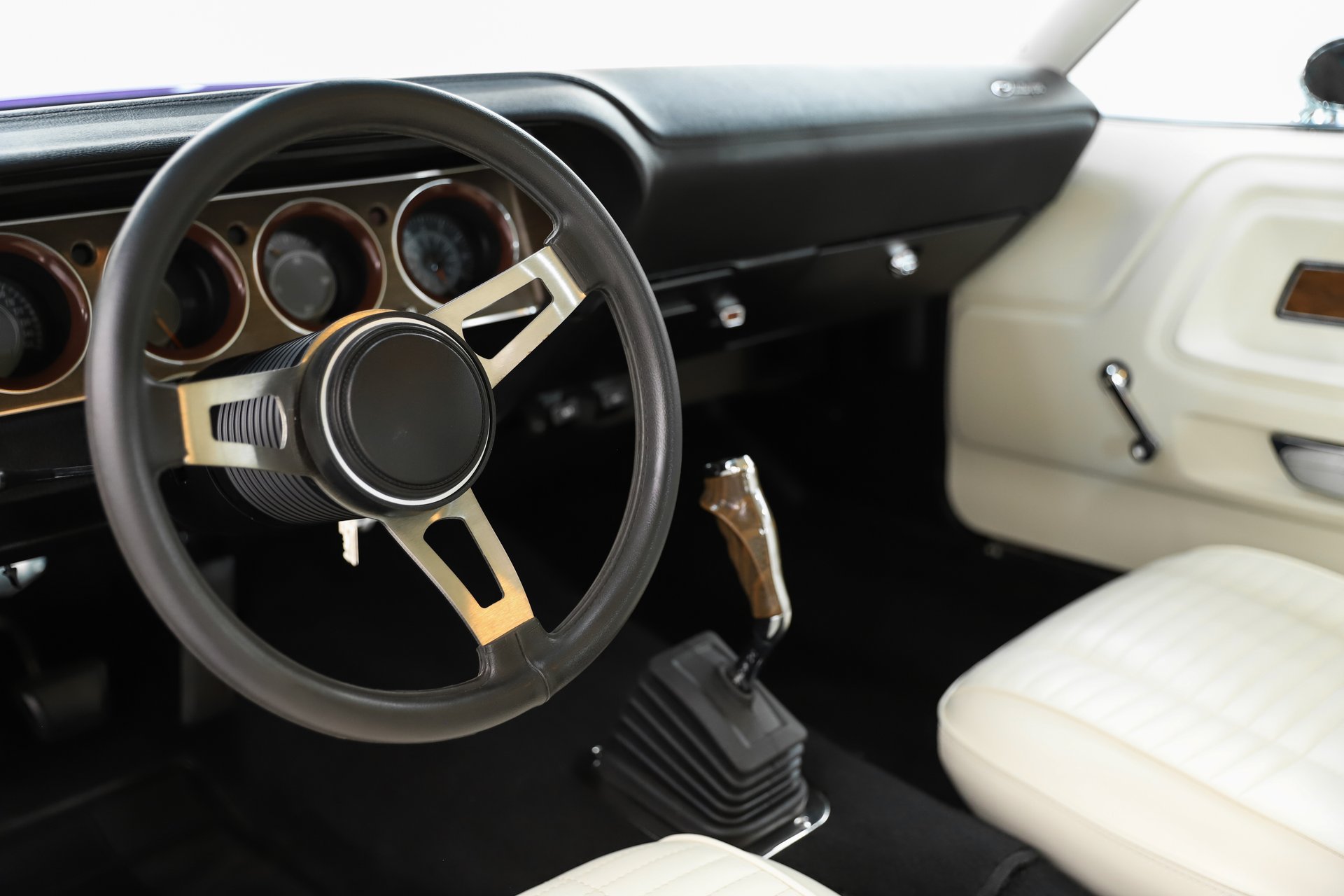
The manual is the Chrysler A833 four-speed, and on a performance Challenger it transforms the car. In Hemi and Six Pack service you get the heavy-duty version with the 18-spline input shaft; ordinary small-block and 383 four-speeds use the 23-spline version. That spline count is a real identity check, not trivia: a car sold as an original Hemi four-speed whose gearbox is 23-spline has the wrong gearbox, whatever the story. The Hurst shifter, with the famous Pistol Grip handle, is correct factory fitment on 1970–71 E-bodies. A833 faults are honest: worn synchronisers, worst on second gear, that crunch on a fast downchange; a mechanical clutch linkage whose Z-bar and rod pivots wear into a vague, heavy pedal; and shifter bushings that turn a precise gate into a stir. A rebuild is typically $1,200–2,500 plus clutch work — no reason to reject a car whose numbers are right. Any five-speed manual you meet is a modern conversion — Chrysler never fits one to an E-body — so you price that car as a restomod, however nicely it cruises.
Problem areas
Every Challenger coupe is now more than fifty years old, and most have lived at least three lives: daily car, cheap fast car, and collectible. Each life leaves a different kind of damage, and your job is to separate the damage that costs money from the damage that costs the car's identity. Work through this section in order — structure first, identity always, mechanicals after — because no engine fault in this guide matters on a car whose floors and rails are gone, and no restoration turns a re-bodied clone into the car its badges claim.
Rust: the map
The Challenger is a unibody car, with no separate chassis frame to save it, so rust in the floors, rails and crossmembers is structural work, not cosmetic work — and on an E-body it follows a map so consistent that you can walk it with a torch and a magnet in fifteen minutes once you know it. Start at the front. The torsion-bar crossmember — the transverse member under the front floor into which the rear ends of the torsion bars anchor — is the single most important structural check on the car. It lives in road spray, traps mud against the floor above it, and rots from the inside out, so a crossmember that looks sound in shiny underseal can be paper-thin around the torsion-bar sockets. Push hard, look for swelling and laminate rust at the ends, and treat a holed crossmember as a major repair: reproduction members exist, but fitting one properly, on a jigged car, is typically $2,000–4,000, and it is not a driveway job.
Move outward and upward. The front inner wings trap water where the outer wings bolt on; the cowl and firewall rot where leaves block the cowl drains and water sits in the plenum, then leaks into the front footwells and rots the floor from above while road water rots it from below — a front floor holed at the front is very often a cowl problem that has already happened, so find the leak, not just the hole. The sills carry structural load on a unibody hardtop with no B-pillar, and a coupe whose doors drop when you open them, or whose door gaps close at the top rear corner, is telling you about sill and hinge-pillar strength, not door adjustment. Rearward, check the under-rear-seat floor, the rear rails where the leaf-spring hangers mount, and the rails' kick-up over the axle; a spring hanger pulling out of a rotten rail is a car that cannot be driven safely, full stop. The boot floor is a classic E-body failure: the boot seal and rear window channel leak, water sits in the spare-wheel well and under the tank, and the floor rots in a ring you only see fully from underneath on a lift. Budget $1,500–3,500 to replace a boot floor and well properly with paint, more if the rot has reached the rear panel and rail ends. And remember: fresh underseal underneath is evidence of work, not of condition — ask what was done, when, and whether photographs exist from before the coating went on.
The outer skin has its own map: lower rear quarters behind the wheels, where inner and outer panels sandwich mud; the bottoms of the front wings behind the wheels; door bottoms, along the folded seam where the drain holes block; and the channel below the rear window, especially on an SE, where the vinyl roof and small-window plug hold moisture against the steel for decades. Bubbling at the base of an SE's rear window is not a paint defect, it is a roof-plug repair waiting, priced as metalwork at $1,500–4,000 depending on how far the rot has travelled under the vinyl. Vinyl roofs on ordinary coupes do the same damage more slowly across the whole roof skin, so a car that has worn vinyl since new deserves a magnet pass and a knuckle-tap over the roof and C-pillars, listening for the dead note of filler. Reproduction E-body panels are good and widely available, which cuts both ways: almost any rust is repairable, but the repair only makes financial sense in proportion to what the car verifiably is. A documented R/T justifies a crossmember and floors; a base 318 coupe with the same rot is a parts-priced project, and you offer accordingly.
Identity, stampings and the clone problem
This is a problem area in its own right because the money at stake is larger than any mechanical repair in this guide. Challenger value lives in the codes, and codes can be transferred, reproduced and invented. Your defence is that the factory stamps the car's identity in several places, and a genuine car agrees with itself everywhere. The VIN plate sits at the driver's side of the dash, visible through the windscreen. The fender tag, screwed to the driver's side inner wing, carries the option, engine, transmission, paint and trim codes, the build date and the vehicle order number, and repeats the VIN's core identity. The broadcast sheet — often tucked in the rear seat springs, under a seat, behind the glovebox or under the carpet — is the fullest paper record of how the car was built. Original paperwork of that kind is worth real money on a rare car, and its absence on a car priced as rare is a legitimate reason to discount.
The body itself carries partial VIN stampings — the radiator support and cowl carry sequence stampings on these cars — and the engine carries its own numbers. The ID pad and the stamped partial VIN near the oil pan rail are what you compare with the dash VIN: a matching-numbers big-block carries a partial VIN stamping that agrees with the car. A correct casting number and a casting date preceding the car's build date by a plausible few weeks or months supports the story; a casting date after the build date ends it. Fender tags are reproduced as a service for restorers who have lost theirs, which is legitimate — and means a crisp, new-looking tag on a car with no other paperwork proves nothing by itself. Read a tag's bottom line first for the engine code — E55 is the 340 four-barrel, E63 the 383 four-barrel, E65 the 440 four-barrel, E87 the 440 Six Pack, E74 the 426 Hemi — then the transmission code, then the VIN block, and check all three against the dash plate and the metal in the bay. The myth to correct, explicitly: a fender tag is evidence, not a certificate. It records what the plant intended to build that week; it says nothing about the fifty years since. The combination — dash VIN, tag, body stampings, engine stamping, broadcast sheet — is what makes a car proven, not any one item alone.
The common fakes follow patterns. A base JH car re-badged as an R/T, betrayed instantly by its VIN. A genuine R/T whose original 383 has been replaced by a 440 and which is now described in Hemi-adjacent language — the engine is real, the implication is not. An SE rear-window plug and vinyl roof fitted to a standard coupe. T/A bonnets, stripes and side pipes fitted to an ordinary 340 car — which is why T/A verification runs through the tag and broadcast sheet option codes, not the car's appearance. And the outright re-body, where a rusted rare car's tags migrate to a sound common shell: the stampings on the shell are how you catch it, which is why you never skip them however good the seller's story is.
Engines: wear, leaks and heat
Assume any engine in a car you are viewing is tired until it proves otherwise, and make it prove it in a specific order. Cold start first — insist on it, and treat a pre-warmed engine on your arrival as information in itself. A puff of blue smoke that clears in seconds is hardened valve stem seals, common on 340s and big-blocks alike: a top-end refresh item, typically $800–1,500 if the heads come off for seals, guides and a valve job. Blue smoke that continues under load is rings and bores, and that is a rebuild. Listen at idle for the exhaust-manifold tick, for timing-chain rattle from the front cover, and for a deep knock under light load that fades as you lift off — bearing wear introducing itself, and it does not get better or cheaper. Oil pressure is your second witness, and the factory dash gauge is a suggestion, not a measurement: a serious viewing includes a test gauge in the sender port, read at a hot idle. Low hot pressure with clean oil is worn bearings and a worn pump; good pressure with filthy oil is neglect you can price. Emulsion under the filler cap on a short-trip car may be condensation, but the same emulsion with a falling coolant level means coolant and combustion mixing — and the cooling-system pressure test and chemical block test distinguish them before anyone sells you a thermostat.
Heat kills more E-body big-blocks than rpm ever does. The radiator is the first suspect: original cores silt and scale, and a radiator that looks fine from the cap can have half its tubes blocked. The fan clutch is the second: one that freewheels when hot gives an engine calm on the road and boiling at a standstill. The shroud is the third, and the most commonly missing, because engine work often loses it and nobody notices until July. A big-block car that runs hot needs all three proven, in that order, before you accept any deeper diagnosis; a quality replacement radiator with a correct shroud is typically $600–1,200 fitted — cheap insurance next to a warped head.
Carburetion and fuel delivery cause more 'engine problems' on these cars than engines do. The Carter AVS and AFB four-barrels wear at the throttle shafts, leak air, and give you an idle you cannot set and a flat spot you cannot tune out; a vacuum gauge that dances at idle on an otherwise healthy engine is often shaft wear, not valves. The Six Pack systems concentrate the trouble in the outboard carburettors: they sit idle for most of the car's life, their fuel goes stale, their linkage and vacuum diaphragms age, and then they either never open — the car feels strangled at full throttle — or they dribble and flood. The distinguishing test is simple: confirm the outboards actually open, progressively, as demand rises, on a test drive or with the linkage worked by hand. A Six Pack set-up and rebuild by a shop that knows Holley two-barrels runs $900–2,000. Ignition completes the picture: worn distributor bushings scatter the timing — a mark that will not sit still under the strobe — and a car that pings on modern fuel may simply be running its full period advance curve on petrol that cannot support it, cured by a recurve set for the fuel you actually buy. A distributor rebuild or quality electronic conversion is $250–700, but do the diagnosis: ignition faults masquerade as carburetion faults on these engines more often than the other way round.
Suspension, steering and brakes
The front suspension is torsion bars, upper and lower control arms, and a sway bar on performance models, and its condition decides how the car feels more than any other system. Torsion bars rarely break, but their rear anchors rot with the crossmember covered above, their adjusters seize, and a car sitting low or uneven at the front is telling you about adjustment, tired bars or crossmember trouble, in ascending order of cost. Ball joints, bushings and tie-rod ends wear as a set; perished rubber gives wandering under braking, a wheel that will not centre, and inner-edge tyre wear. A full front-end rebuild is $1,200–2,500 in parts and labour plus an alignment, and it transforms a Challenger, so price a sloppy car as a car that needs it. Steering boxes develop play at the centre: rock the wheel with a helper watching the linkage, and you separate box wear from joint wear. A rebuilt or replacement box runs $400–900 plus fitting.
At the rear, leaf springs sag, most visibly on big-block cars that have sat on the same springs for decades, showing as a tail-down stance and axle tramp under hard acceleration. The 8¾ is strong and well supported, with a drop-out centre section, and gear noise on a steady cruise that changes on and off the throttle is pinion depth and backlash work, typically $800–1,800 set up properly. Sure-Grip limited-slip units wear their clutches and stop limiting anything — test that both rear wheels drive on a loose surface. Hemi and some Six Pack manual cars use the Dana 60 axle, identifiable by its large ten-bolt rear cover: a genuine heavy-duty fitment, and another identity detail that should agree with the car's specification.
Brakes are where period specification and modern expectation collide hardest. Many coupes, including early R/Ts, left the factory with drum brakes all round, and front discs are an option you verify rather than assume. A drum-braked big-block coupe is a heavy, fast car whose brakes fade on a long downhill and pull if the drums are oval or the wheel cylinders weeping — check inside every drum for fluid, the flexible hoses for cracking, and the master cylinder and hard lines for the corrosion fifty years guarantees somewhere. A front disc conversion with quality parts and a correct proportioning valve is $1,500–3,000 and the single most worthwhile safety upgrade on a drum car; done cheaply, with mismatched parts, it is worse than honest drums. Judge the car by a firm pedal, a straight stop from speed with your hands light on the wheel, and no fluid anywhere it should not be.
Electrics, interior and trim
Chrysler electrics of this era are simple, and their faults are correspondingly honest: resistance, corrosion and heat. The bulkhead connector, where the engine-bay harness passes through the firewall, is the classic Mopar failure point — its terminals corrode, resistance rises, and you get flickering lights, a lazy starter, gauges that lie, and in the worst case a melted connector. The ammeter circuit carries full charging current through the dash, and a hot or discoloured ammeter connection is a known fire risk experienced owners bypass or uprate; check behind the cluster on any car you are serious about, and budget $300–800 for a competent auto-electrician to sort a tired bulkhead and charging circuit properly. None of it is expensive; all of it strands you if you ignore it.
Inside, the dash pad cracks in the sun, and on a Challenger it almost always has: a perfect original pad is rare, reproductions exist, and fitting one is a dash-out job at $800–1,800 in parts and labour. Rallye cluster gauges fail individually, the tachometer first. Seat foam collapses so you sit on the frame springs, covers split along their seams, and the SE's overhead console lamps and leather trim age worse than the standard car's simpler vinyl. Trim is the quiet budget-eater: brightwork, badges, grille pieces and the one-year-only front-end parts are reproduced unevenly, and a car missing its correct-year grille or SE pieces can cost $1,000–3,000 to make whole in trim alone. Inventory the trim before you buy, with the same seriousness you give the engine: 'complete but tired' beats 'shiny but missing the irreplaceable bits' every time.

How to inspect one
- Decode the VIN before you look at anything else. Read the dash plate through the windscreen: J for Challenger, H or S for price class, 23 for the hardtop, then the fifth character for the engine the car was born with. Write it down. Every claim the seller makes from this point is tested against those characters.
- Read the fender tag, bottom line first: engine sales code, transmission code, VIN block, then paint, trim and build date. Photograph it. Check that the tag's identity agrees with the dash plate, and that the paint and trim codes match the car you are standing in front of — or that any difference is an admitted, documented colour change.
- Find the body stampings on the radiator support and cowl and compare their sequence numbers with the VIN. Disagreement here is the re-body test from the problem areas, and it ends a premium-priced viewing on the spot.
- Check the engine's identity. Find the ID pad and the partial VIN stamping by the oil pan rail, read the block casting number and casting date, and confirm the date precedes the car's build date. On a car sold as a Hemi or Six Pack four-speed, confirm the heavy-duty details — the 18-spline gearbox among them — rather than trusting the engine's appearance.
- Walk the rust map from the problem areas, in order: torsion-bar crossmember, cowl and firewall, front floors, sills and door shut-lines, under-rear-seat floor, rear rails and spring hangers, boot floor and spare-wheel well. Use the magnet on the lower quarters, door bottoms, rear-window surround and — on an SE or vinyl-roof car — the roof and C-pillars. The sill and crossmember findings settle what this car is worth more than anything the engine does later.
- Lift the carpets where you can and look at the floors from inside. Damp carpet, a musty smell or fresh carpet over unpainted new metal all tell a story; ask for the metalwork photographs if a seller says the floors were replaced.
- Cold-start the engine, having confirmed beforehand that it is genuinely cold. Watch for the blue puff of valve seals, listen for manifold tick, timing-chain rattle and bearing knock, and watch the exhaust colour as the engine warms. Note how it idles once the choke comes off — an idle you cannot trust is carburetion, ignition or vacuum, and each has a different price.
- Check the fluids and the pressures. Oil condition on the dipstick and under the filler cap, coolant level and colour, automatic transmission fluid colour and smell. On a serious car, fit the test gauge and record oil pressure at a hot idle, then run the cooling-system pressure test and block test if any emulsion or coolant loss has raised the head-gasket question from the problem areas.
- Work the gearbox on the spot. An automatic should engage drive and reverse promptly and without a clunk that rocks the car; a manual should select every gear cleanly at a standstill, clutch bite point mid-pedal, no graunch into reverse. On a Six Pack car, arrange to confirm the outboard carburettors open — this is the test that separates a set-up fault from an engine fault.
- Inspect the running gear. Rock the steering and watch the linkage to separate box play from joint play, bounce each corner for damper response, look at tyre wear patterns for alignment and bushing evidence, and check inside the drums or behind the discs for brake fluid. Confirm whether the car actually has the front discs its description implies, and whether the rear axle is the 8¾ or, on a car that should have one, the Dana 60.
- Test-drive for at least twenty minutes, including a hot restart. You want a straight, hands-light brake stop from speed, no flare on the automatic's 2–3 shift or a clean second-gear downchange in the manual, no axle whine that changes on and off the throttle, and a temperature gauge that stabilises in traffic rather than climbing. Park hot, switch off for ten minutes, and restart — heat-soak faults and a lazy hot starter declare themselves now or not at all.
- Finish with the paperwork and the trim inventory. Broadcast sheet, tag, title history, restoration photographs and receipts, in that order of importance, and a written list of missing or wrong-year trim — grille, badges, SE pieces — priced against the parts section below. A car that passes steps 1–11 and fails here is a negotiation. A car that fails steps 1–5 and passes here is a story, and you do not pay rare-car money for stories.

Values
Read this section as the method, not the numbers: the listings and recorded-sales summary that accompanies this guide on the site carries the current figures, and what follows is how to interpret them — because in this market, the interpretation is where buyers lose or save the money.
Start with the spread, because the spread is the story. Between the cheapest coupe you can buy and the dearest sits a wider condition-and-identity gap than almost any comparable American car of the period, and both ends wear the same silhouette. At the bottom are projects and honest base cars: six-cylinder and 318 coupes needing metalwork, cars with engine swaps and no paperwork, cars whose rust map you have already walked and priced. At the top are documented, matching-numbers performance cars in the right specification — R/T SE Six Packs, T/A cars with their sheets, and above everything the Hemi coupes, where 1971 scarcity turns a rare car into a headline. The middle is where most transactions happen: presentable 340 and 383 coupes, genuine R/Ts with replacement engines honestly described, and restored base cars that drive beautifully and will never be anything but what they are. When you compare two asking figures, your first question is never which car is cheaper. It is which of those markets each car genuinely belongs to — and the inspection sequence in this guide is how you answer it.
Asking and achieved are different numbers on Challengers, and the gap is widest exactly where the claims are largest. A dealer asking a documented-car figure for an undocumented car is not evidence that undocumented cars are worth that figure; it is evidence that the asking figure is negotiable, and the cars that sit unsold season after season are usually priced one identity above their evidence. Recorded sales reward paperwork brutally: a broadcast sheet, consistent tag and stampings and a photographic restoration record move a car up a market; their absence moves the same physical car down one, and no quantity of detailing closes that gap. Colour works the same way. The high-impact colours — Plum Crazy, Sublime, Hemi Orange and their kin — carry a real premium when they are the car's born colour on the tag, and a much smaller one when they are a respray over something else, because the buyer after you will make exactly that distinction.
The project-versus-driver gap deserves your respect, because Challenger restoration costs do not scale down with the car's specification. A crossmember, floors, a boot floor, paint, a big-block rebuild and an interior cost roughly the same on a base coupe as on an R/T, so a cheap project is only cheap if the finished car, in its verified specification, is worth comfortably more than the purchase plus the work. That arithmetic makes an R/T project rational and a six-cylinder project with the same rust a labour of love — enter it as one, eyes open, rather than as an investment that will come right. Conversely, the driver-quality genuine car — used, maintained, slightly imperfect, honestly documented — is persistently the best value in this market, because you are buying the driving the car exists for, at a figure that leaves room for the rolling work every fifty-year-old car needs.
Negotiate from evidence, not from enthusiasm. Every defect you find with a cost attached in the problem areas is a number in the negotiation; every identity item you cannot verify is a discount you are entitled to ask for and a seller of a genuine car will understand. And remember that rarity cuts both ways at sale time as well as at purchase: the rarer and more specific the car, the smaller the pool of buyers who can verify and fund it, so allow time — as a buyer, that patience is leverage; as a future seller, it is a reason to buy the car you actually want to keep.

Parts and ownership
Owning a Challenger coupe is easier than owning most cars of its performance, for one structural reason: the E-body sits at the centre of a large, competitive reproduction industry, and the mechanical parts underneath it are shared with the whole Chrysler family of the period. Engine parts for the 318, 340, 383 and 440 are ordinary catalogue items — gaskets, timing sets, water pumps, carburettor kits, ignition parts — and a competent general machine shop can rebuild any of them without specialist drama. The Slant Six is simpler still. The Hemi is the exception: parts and expertise exist, and both are priced as the low-volume speciality they are, so a Hemi owner budgets differently and chooses a machinist by reputation rather than distance. TorqueFlite and A833 parts are similarly well supported, and the 8¾ axle's drop-out centre section makes gear changes and rebuilds a bench job rather than an axle-out ordeal.
Body and trim are the ownership costs you plan around. The reproduction panel industry covers the structural map in this guide — floors, boot floors, crossmembers, quarters, wings — in steel that fits well by reproduction standards, which means rust is a budget question rather than an impossibility verdict. Glass, rubbers, weatherstrips and interior soft trim are all reproduced, including seat covers and door cards in factory patterns, and dash pads are available. Where you still hunt is the year- and model-specific brightwork: correct 1970 versus 1971 grille assemblies, SE pieces around the formal rear window and overhead console, T/A-specific items, and good original chrome.
Running one is a matter of rhythm rather than expense. These are simple cars that reward regular use and punish storage: carburettors gum, fuel goes stale, brake cylinders weep and tyres flat-spot on a car that sits, while a car driven monthly keeps its seals swollen, its bores oiled and its faults announced early and cheaply. Service it as a period car — oil and filter every 3,000 miles or annually, coolant renewed on a two-year cycle because the block and radiator are old iron and old copper, brake fluid changed rather than topped up, and a grease and inspection pass over the front suspension and steering joints at every service, when you catch bushing and joint wear while it is still a parts bill and not a handling complaint. Run the timing and carburetion for the fuel you can actually buy, keep a spare ballast resistor in the glovebox, and insure the car at an agreed value based on its verified specification, with the decoding evidence in the file — because in a total-loss argument, the paperwork you assembled when you bought the car is the paperwork that pays.
Which one to buy
There is no single best Challenger coupe, because the range runs from a slant-six cruiser to a Hemi in the same body, and 'best' depends entirely on what you intend to do on a Saturday. Buy from this list, in this spirit:
- The all-rounder: a 340 coupe, four-speed or TorqueFlite. The lightest, sweetest-driving performance Challenger, quick enough to be fun, cheap enough to run without anxiety, and honest in a way a cloned big-block car never is. A genuine 340 car with its numbers in order is the connoisseur's Challenger.
- The classic muscle buy: a genuine R/T with its 383 Magnum. The standard R/T recipe — big-block torque, Rallye gauges, the stripes the car earned — without the Six Pack's set-up demands or the Hemi's prices and anxieties. Verify the JS VIN, accept a replacement engine only at a replacement-engine figure, and drive it everywhere.
- The value buy: a 318 or 383 two-barrel base coupe in good metal. You give up the badges and keep the shape, the sound and most of the experience, in the cars least likely to have been thrashed or faked. A rust-free base car is a better purchase than a rusty R/T at the same money, every single time.
- The event car: a 440 Magnum or 440 Six Pack R/T, documented. Effortless torque in Magnum form, theatre and a genuine set-up project in Six Pack form. Buy the paperwork as much as the car, and have the outboard carburettors demonstrated working before you complete.
- The collector's car: a T/A with its broadcast sheet, or a verified Hemi coupe. The T/A is the handling special with a real racing reason to exist; the Hemi is the summit of the range and of the market. Both are purchases you make with a specialist beside you and the stampings checked twice — at this level you are buying evidence that happens to have a car attached.
- The brave buy: a rusty project in a verified desirable specification. Rational only when the identity is proven and the finished car's market comfortably exceeds purchase plus metalwork, paint and mechanicals. The same rust in an unverified or base specification is not brave, it is simply expensive.
The overriding rule: buy the car's evidence and its metal, in that order — a Challenger's VIN, tag and stampings decide what it is, its crossmember, floors and rails decide what it will cost, and no engine, colour or stripe fitted later changes either answer.
See the 5 Challenger R/T Coupe cars currently listed.
For sale now
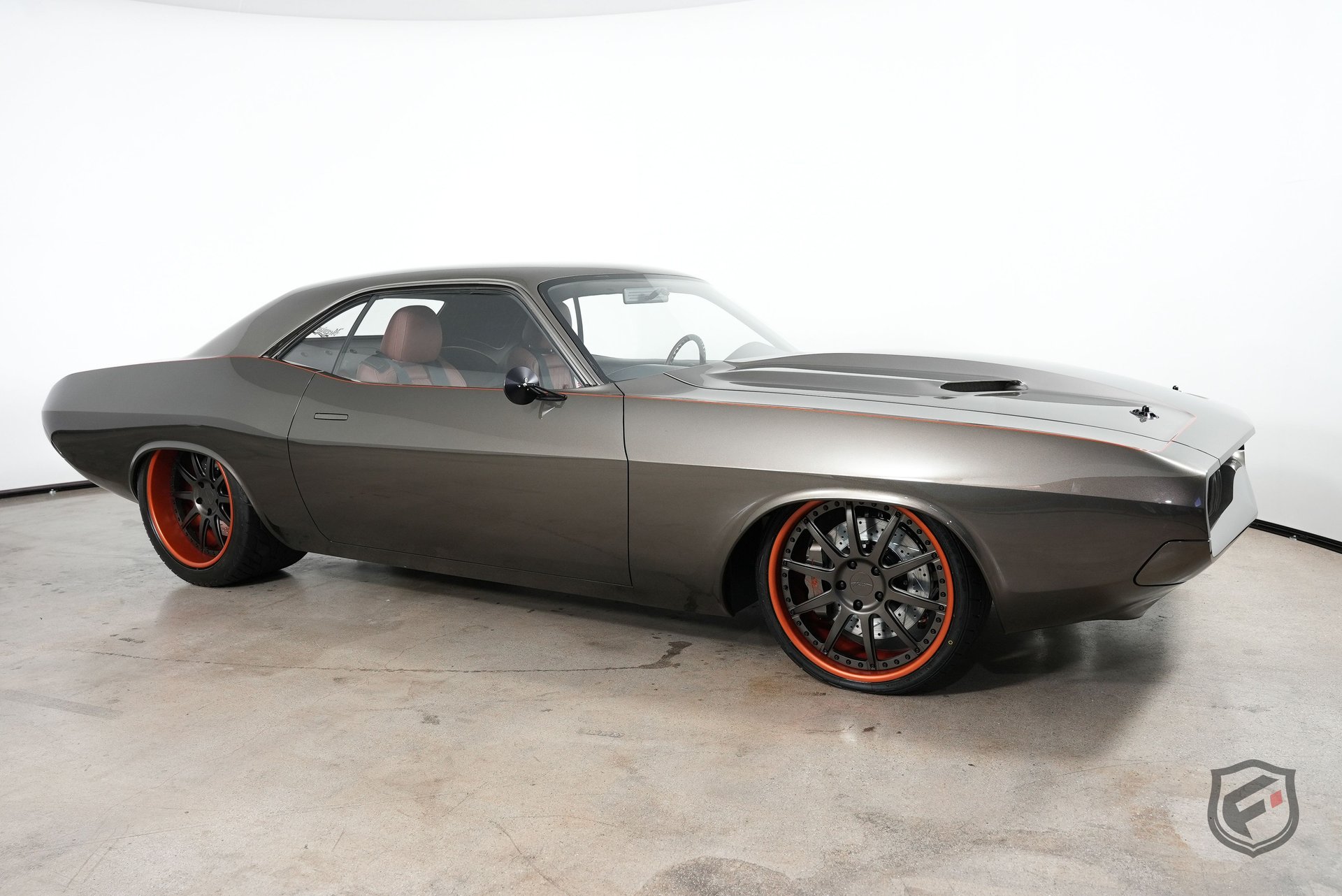 $3,775,000 · 253% above typical
Expand
 $155,998 · 85% below typical
Expand
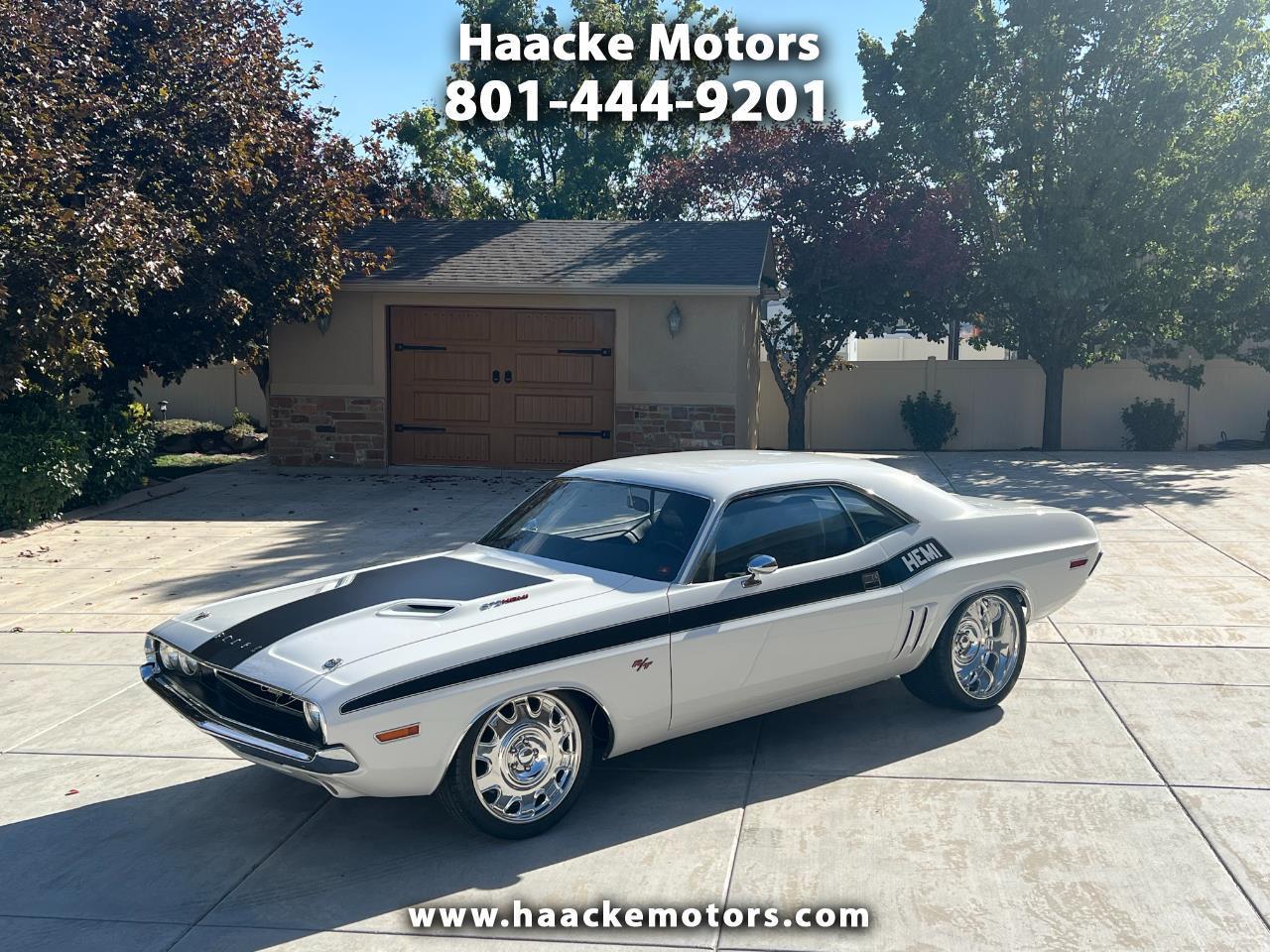 $270,000 · 75% below typical
Expand
What they sell for: Challenger R/T Coupe sale prices.