
Dodge C Series Custom Regal Pickup buyer's guide
Dodge C Series Custom Regal Pickup -- the model's own buyer's guide: variants, values and what to check.
Years listed: 1956-1956 · Series: Full Size
# Dodge Custom — Buying Guide
Overview and history
Start with the warning that shapes everything else in this guide, because getting it wrong costs money: at Dodge, Custom is a trim and equipment level, not a model, not a platform and not an engine. The word was pinned to passenger cars in the nineteen-fifties, to pickups in the nineteen-fifties, and to pickups again in the nineteen-seventies, and the vehicles that carry it share a badge philosophy rather than a single set of panels, frames or parts. A buyer who searches for a Dodge Custom and assumes he is looking at one kind of vehicle will misread listings, misorder parts and, worst of all, pay a premium for a word that meant quite different things in different showrooms.
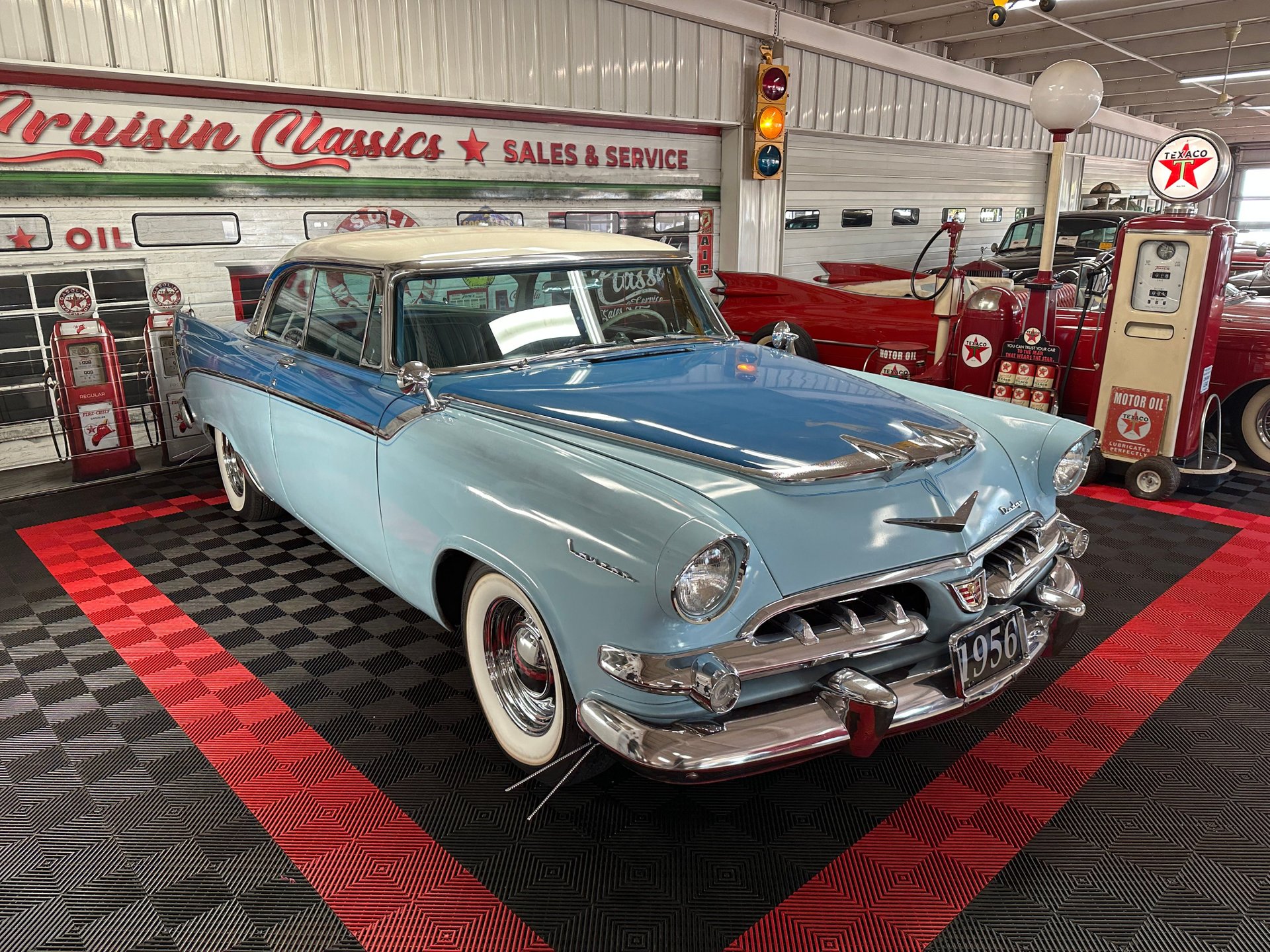
You can see the problem — and the opportunity — in the site's own current pool. Of the four cars and trucks filed under this name at the time of writing, three are from 1956 and one is from 1978. The 1956 group itself splits two ways: a C Series pickup with the tall, upright Custom cab, and Custom Royal Lancer passenger cars, including a car described as a D-500. The 1978 car is a Custom 100 pickup, a D-series truck from a completely different generation. Two are automatics, one is a three-speed manual with its lever on the steering column — the famous three on the tree — and one is a two-speed push-button automatic. That spread is not a filing error you should ignore. It is the honest shape of the name, and this guide is organised around it: first the nineteen-fifties cars that most buyers mean, then the nineteen-fifties trucks that shared their showrooms, then the later trucks that revived the badge, with the inspection advice kept separate wherever the vehicles themselves are separate.
The passenger-car story begins just before the period covered here. In the immediate post-war years Dodge's better-equipped line was simply called Custom, on the D24 series of 1946 to 1948 and its successors, at a time when a heater, richer cloth and extra brightwork were genuine selling points. By the early nineteen-fifties the hierarchy had settled into Coronet at the volume end and Royal above it. For 1955 Virgil Exner and his studio gave Dodge its first properly modern post-war styling under the Forward Look banner, and the range was recast as Coronet, Royal and, at the top, Custom Royal. The Custom Royal was the car Dodge used to show what it could do: deeper two- and three-tone paint schemes divided by a bold side spear, more stainless and chrome, plusher interiors with jacquard and vinyl combinations, and first call on the V8 engines. The Lancer name, borrowed from a medieval horseman and used across Chrysler's divisions in this period, denoted the pillarless hardtop bodies — two-door Lancer and four-door Lancer — whose unbroken side glass and low roof gave a Custom Royal the silhouette of a convertible with the security of a steel top.
For 1956, the year that dominates the pool, the formula was refined rather than reinvented. The fins grew a little taller and more confident, the grille and side trim were revised, push-button controls arrived for the PowerFlite automatic transmission, twelve-volt electrics replaced the old six-volt system, and at the very top of the range Dodge offered the D-500 performance package, built around the 315 cubic inch Hemi V8. A 1956 Custom Royal Lancer is therefore not a curiosity trim on an ordinary car. Properly specified, it is Dodge's flagship hardtop in the first flush of the horsepower race, styled by the most influential American studio of its decade, and it should be inspected, valued and negotiated for as exactly that — no more, because thousands were built, and no less, because a good one is a genuinely charismatic car.

The models
| Model | Years | Engine | Output | Built | Character |
|---|---|---|---|---|---|
| Custom Royal sedan | 1955–1956 | 270 / 315 cu in Hemi V8; 230 cu in six | V8 outputs varied by carburation; six modest | Part of a large full-size Dodge run; exact Custom Royal split not reliably published | The flagship family Dodge: four-door room, top trim, the safe show-and-use choice |
| Custom Royal Lancer two-door hardtop | 1955–1956 | 270 / 315 cu in Hemi V8 | As above | As above | The glamour car: pillarless roof, two/three-tone paint, the one people photograph |
| Custom Royal Lancer four-door hardtop | 1955–1956 | 270 / 315 cu in Hemi V8 | As above | As above | Hardtop looks with four-door practicality; check the pillarless seals hardest |
| D-500 (on Custom Royal / Coronet bodies) | 1956 | 315 cu in Hemi V8, higher tune | Period-quoted around 260 hp in single-carburettor form; dual-carburettor D-500-1 higher and rare | Low; genuine cars need documentary proof | The performance flagship; also the most faked identity in this guide |
| C Series pickup, Custom cab | 1954–1956 | 230 cu in flathead six; 241 / 259 / 270 / 315 cu in V8 by year | Working outputs, tuned for torque | Part of the Job-Rated truck run | The Forward Look working truck; charm plus a bed you can still use |
| D-series Custom 100 / 150 pickup | c. 1972–1980 | 225 cu in slant six; 318 / 360 / 400 / 440 cu in V8 | Varied widely by year and emissions tune | Very large truck run | The seventies survivor: simple, square, fixable, increasingly collectable |
Start with the 1955 cars, because they set the pattern. The Custom Royal sat above the Royal and the Coronet, and it was identified less by one badge than by accumulation: the depth of the two-tone paint work, the full-length side treatment, the standard of the interior cloth and vinyl, the extra instruments and brightwork, and the ease with which a buyer could specify the larger V8, PowerFlite automatic transmission, power steering and power brakes. Body styles were the four-door sedan, the two-door Lancer hardtop, the four-door Lancer hardtop and, at the glamorous margin, the convertible. The convertible is the rarest and most valuable body in the family and also the one with the most places for water to enter and stay; nothing in the pool is a convertible, and if you go looking for one, take the inspection section's rust advice and double it.
The D-500 deserves its own paragraph because it is the identity most often borrowed. Offered for 1956, the D-500 package centred on the 315 Hemi with a higher compression ratio, a hotter camshaft, a heavy-duty driveline and suspension and, in the rarest D-500-1 form, dual four-barrel carburettors. It was Dodge's answer to Chevrolet's fuel-injected glamour and Ford's supercharged cars, and a genuine D-500 is a serious, fast, valuable nineteen-fifties American performance car. It is also, inevitably, the specification a seller reaches for when an ordinary 315 car needs a story. Hemi heads alone do not make a D-500. The package lives in the car's build records, its engine stamping and its specific components, and the Which one to buy section returns to the proof standard you should demand. Buy a claimed D-500 as an ordinary Custom Royal until the paperwork promotes it, and price it that way too.
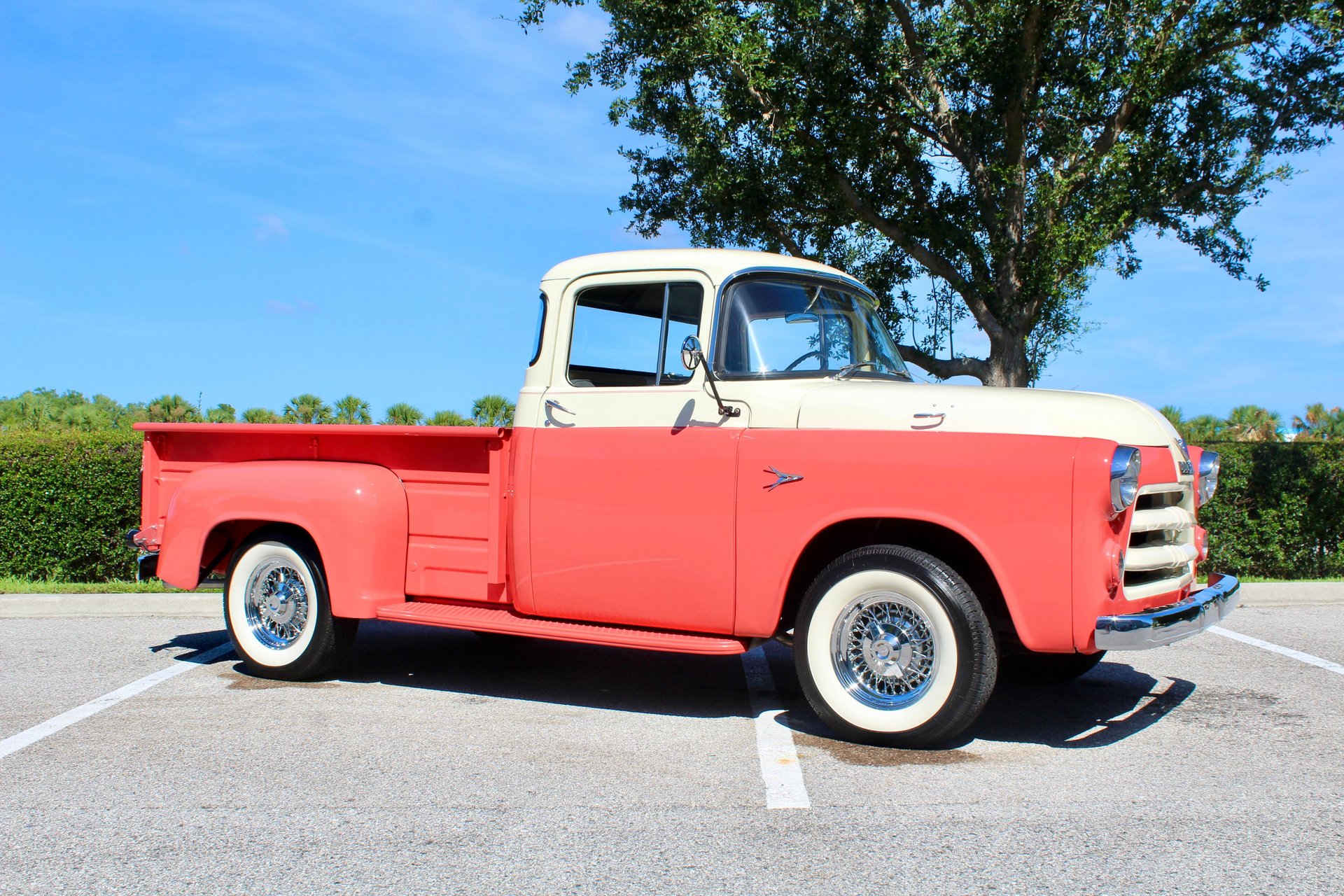
Now cross the showroom to the trucks. The C Series of 1954 to 1956 replaced the B-series pilot-house trucks with a cab that sat lower, gave the driver a far better view and, from 1955, offered the wraparound windscreen that gives the coral pickup in our photographs its distinctive glasshouse. Half-ton C-1 trucks are the collectable mainstream; three-quarter and one-ton versions exist and are tougher, rarer and harder to trim. Engines began with the faithful 230 flathead six and grew through a succession of V8s as Dodge put its car engines to work, and gearboxes were three- and four-speed manuals or, increasingly, automatics. The Custom element here is the cab and its appointments: a standard C Series cab is a spartan place of painted metal and vinyl, while a better-trimmed cab adds padding, colour, brightwork and glass area that transform how the truck feels. When you inspect one, remember that you are buying two vehicles at once — a simple, durable ladder-chassis work truck, and a nineteen-fifties styled cab and bed whose panels and trim obey classic-car rules and classic-car prices.
The seventies trucks are a different proposition wearing a related name. Dodge's D series, restyled for 1972 into the square, handsome shape it kept for two decades, sold as the D100 and later D150 half-ton, in Custom, Adventurer and Adventurer SE trim, with regular and Club Cabs and short and long beds. The green 1978 Custom 100 in the pool is the type specimen: a working-grade truck, probably a slant six or a 318 V8 under the bonnet, vinyl on the bench, rubber on the floor, and its value in its straightness, its originality and the absence of the rust that consumed so many of its brothers in salt-belt service. These trucks were built in very large numbers and used hard. Survival, not rarity, is what you are paying for, and a genuinely unworked, unrotted Custom is now harder to find than the production figures suggest.
Engines and gearboxes
The 230 flathead six — the Getaway engine in cars, the workhorse in trucks
The six-cylinder engine you will meet in a nineteen-fifties Dodge Custom, car or truck, is Chrysler's long-lived flathead six in 230 cubic inch form, known in the cars as the Getaway engine. It is a side-valve engine, which tells you almost everything about its character: the valves sit beside the cylinders in the block rather than above them, the cylinder head is a flat slab you can lift with one hand, and the engine trades top-end power for low-speed torque, simplicity and a tolerance of neglect that borders on the heroic. In a sedan it gives adequate, unhurried progress. In a C Series pickup it is entirely in its element, pulling from walking pace in a way that makes the truck feel stronger than its paper output suggests.
Mechanically there is very little to frighten you and a great deal to check simply because of age. The engine is lubricated conventionally, cooled by a belt-driven pump and a generous radiator, fed by a single-barrel carburettor — Carter Ball and Ball types are typical — and sparked by a conventional distributor with contact-breaker points. Its known weaknesses are the weaknesses of any seventy-year-old flathead. The exhaust manifold cracks and warps, and a ticking that rises with engine speed and fades as the engine warms is usually a manifold or its gasket, not a death rattle; prove it with a length of hose used as a stethoscope before you let anyone sell you a rebuild. The side cover and rear main seals weep. The water pump bearing wears and announces itself with a rumble and a wobble at the pulley. Carbon builds in the flat head's combustion chambers and raises the effective compression until the engine pinks on modern fuel; a decoke is cheap, satisfying work. Most importantly, a flathead that has overheated repeatedly can crack its block around the exhaust valve seats, a fault no additive cures. The test is behavioural: a healthy 230 starts readily, idles to a slow, even thump, pulls without hesitation and holds its temperature on a long climb. One that boils, pressurises its hoses hard within minutes or shows mayonnaise emulsion under the oil filler cap needs its cooling system and its block investigated in that order, and priced as a suspect engine until cleared.
The early Hemi V8s — 270, 315 and the Red Ram family
The V8 story is the reason the Custom Royal matters. Dodge's first-generation Hemi V8, introduced at 241 cubic inches for 1953 and grown to 270 for 1955 and 315 for 1956, carries hemispherical combustion chambers with the valves splayed across the chamber and opened by rocker shafts on each head. In period language you will meet Red Ram for the standard Dodge Hemi and Super Red Ram for the higher-performance versions with a four-barrel carburettor and, on the larger engine, higher compression. The D-500 tune of the 315 sits above both. These are not the 426 Hemi of the nineteen-sixties, and the first service any guide owes you is to kill that confusion plainly: the 270 and 315 are smaller, earlier, heavier for their size and entirely different in parts, character and value from the later engine, and a seller who trades on the unqualified word Hemi without the cubic inches is selling you fog. That said, a 315 in good tune is a magnificent road engine — torquey, smooth and with a deep, unhurried exhaust note that suits the Custom Royal's character perfectly.
Understand what a Hemi head means for maintenance. Each head carries two rocker shafts, and the valve gear lives under long cast covers whose gaskets harden and leak oil onto the exhaust manifolds, where it burns off in a smell every early-Hemi owner knows. Rocker shaft wear and tired hydraulic lifters give a top-end clatter that is usually adjustment and wear, not catastrophe, but you distinguish it from bottom-end trouble by its location and its rhythm: top-end noise is light, fast and loudest with a stethoscope on the rocker cover, while a worn big-end bearing knocks deeper, slower and louder under load. Oil pressure is your other witness. These engines should show healthy pressure hot at cruising speed and a respectable figure at idle; a hot idle figure that falls away as the engine warms, accompanied by that deep knock, is a crankshaft and bearings conversation, and a rebuild of an early Hemi is a specialist, four-figure-to-five-figure commitment in dollars depending on how much machining and how many new pistons, bearings and valve-train parts it needs. Price a suspect engine accordingly, or walk.
Carburation divides the range. Standard cars use a two-barrel carburettor — Stromberg and Carter types both appear — and Super Red Ram and D-500 cars use four-barrel Carter WCFB carburettors, with the rare dual-quad D-500-1 using two of them on a cast manifold. The failure modes are shared and diagnosable. Ethanol in modern fuel attacks old accelerator-pump cups and needle valves, so a car that sat for years will flood, hesitate or refuse to idle until the carburettor is rebuilt with modern-resistant parts; budget a few hundred dollars per carburettor for a professional rebuild. Heat soak after a hot shutdown boils fuel in the bowl and makes restarting a long-crank embarrassment — cured or eased by correct insulators, fuel-line routing and, on a car you intend to tour, an electric priming pump. The automatic choke, whether electric or hot-air, sticks in both directions: shut, and the car runs rich and sooty; open, and a cold engine spits and stalls. Test it from stone cold, watching the choke plate as the engine warms, before you blame the ignition for a cold-running fault.
Ignition itself is points and condenser on these cars, with a dual-point distributor on the hotter tunes. Worn points, a tired condenser and a perished vacuum advance diaphragm between them account for most of the flat spots, pinking and hard starting blamed on Hemi mystique. The vacuum diaphragm test is the exemplar test of this section: disconnect the vacuum pipe, suck or apply a hand vacuum pump, and confirm the advance plate moves and holds. If it will not hold vacuum, the diaphragm is perforated, the timing is retarding itself under load, and no amount of carburettor adjustment will cure the hesitation. A full ignition service — points, condenser, rotor, cap, leads, plugs and a timing set with the advance verified — is inexpensive, transformative and the first money you should spend on any car in this guide.
The seventies engines — slant six, LA small-blocks and big-blocks
The 1978 Custom pickup in the pool belongs to a simpler and, in parts terms, easier world. Its base engine is the 225 cubic inch slant six, Chrysler's inclined overhead-valve six, named for the thirty-degree tilt that made room for a long intake manifold under a low bonnet. The slant six is one of the most durable engines ever put in an American truck. Its solid or hydraulic lifters (depending on year) need their clearances respected, its exhaust manifold cracks like every other engine in this guide, and its single-barrel Carter or Holley carburettor suffers the same ethanol and neglect faults as the fifties units — but a slant six with oil pressure and no bottom-end knock will usually respond to a service, a carburettor rebuild and an ignition overhaul with years of work. Above it sit the LA-series small-block V8s, the 318 and the 360, thin-wall castings with wedge heads, hydraulic lifters and electronic ignition by 1978. The 318 is the sweet spot in a working Custom: strong, smooth, cheap to feed with parts and almost impossible to kill except by overheating or oil starvation. The 360 gives more torque for towing at the cost of fuel. Big-block 400 and 440 engines appear in heavier trucks and are magnificent and thirsty in equal measure; in a half-ton Custom they are uncommon enough that you should verify the truck's data plate rather than a seller's claim.
Gearboxes — column manuals, PowerFlite push-button and TorqueFlite
Three transmissions appear in the brief's own transmission list, and each maps to a branch of this guide. The three-speed manual with a column change — three on the tree — serves six-cylinder cars and the trucks. It is a simple, fully mechanical gearbox whose faults are honest ones: worn synchronisers on second gear that crunch a hurried change, a sloppy column linkage whose bushes have turned to dust so that selecting first and reverse becomes a matter of faith, and, on trucks, a clutch that has done a working life of work. Drive any column-change car through every gear, up and down, and feel for the change quality rather than merely noting that the car moves. Linkage bushes and adjustment cure most sloppiness for small money; a gearbox that jumps out of gear under load is an internal job and should be priced as one.
The TorqueFlite, which serves the seventies trucks as the three-speed A727 behind V8s and larger sixes and the lighter A904 family behind smaller engines, is by common consent one of the finest automatic transmissions ever built. In a 1978 Custom it should change cleanly, kick down willingly and show clean red fluid. Its classic faults are a worn front pump and converter seal weeping at the bellhousing, tired bands and clutches in a truck that has towed beyond its rating, and a neutral safety switch that intermittently prevents starting. A TorqueFlite rebuild is a known, bounded cost in the low thousands of dollars with a competent shop, and parts and knowledge are everywhere. Of every major component in this guide, it is the one whose failure should least frighten you — provided you have budgeted for it rather than discovering it.

Problem areas
Rust: the map — fifties cars first
Rust decides the value of every nineteen-fifties Dodge in this guide, and it decides it in a predictable geography, because these cars were built of good steel with almost no factory rust protection and drainage that assumed a shorter life than the seventy years you are now asking of them. Learn the map, walk it in order and let the worst panel you find — not the best — set the price. Remember the small photo-note sample behind this guide: of two pool cars photo-examined, rust was noted on one and damage on both. That is not a statistic to quote, but it is exactly the expectation you should carry into a viewing: assume there is damage somewhere, and make the car prove where.
Start at the sills, called rocker panels in American usage, because they are structural, they trap mud thrown up by the front wheels, and they are expensive to do properly. Crouch and look along the sill's full length for bubbling at its lower edge and around the jacking points, then press firmly with your thumb along its underside; sound steel resists, and a sill that crunches or flexes under thumb pressure is perforated behind its paint. The honest test, with the seller's permission, is the sill-jack test: jack the car by its proper sill point and watch and listen. A sound sill takes the car's weight silently. A rotten one crackles, deforms and lets the door gaps change as the shell flexes. Budget in the region of $1,000 to $2,500 per side for proper sill replacement with the rot cut out and new metal let in, and treat any car needing both sills, floors and mounts as a body restoration, whatever its paint suggests.
The front wings carry two classic traps. The first is the headlamp area and the wing top above it, where a double-skinned construction holds moisture and bubbles appear through the paint in a crescent you can learn to recognise at ten paces. The second is the lower rear edge of the front wing, behind the wheel, where mud packs against the A-post and the sill's front end and the whole corner rots as one assembly — a repair that looks like a wing patch and turns out to be wing, post and sill together. Doors rot along their bottom edges where their drain holes block; open each door, look at its underside edge, and check that the drain holes are holes and not rust blooms. On a Lancer hardtop, add the roof and its gutters, the base of the rear window and every pillarless glass seal to your list, because the hardtop's beauty is an unbroken glass line and its weakness is that every seal on that line is now old rubber asked to keep water out of a structure with no B-pillar to stiffen it. Water that enters a hardtop goes to the floors and the rear quarters, and it goes quietly.
Rust and wear: the trucks, fifties and seventies
A C Series pickup rots in the places a working truck lives. The cab corners, behind the doors at the cab's rear lower edges, collect everything the road throws and rot outwards from a closed section; the cab steps, which you stand on every time you climb in, thin and perforate under their tread plates; the floor under the rubber mat stays wet for the same felt-and-leak reasons as the cars; and the front of the bed, the bed floor's cross-members and the lower tailgate carry the scars and the rust of seventy years of loads. Wooden bed floors on step-side trucks rot and are replaceable as a kit, which is honest work; a steel structure under them that has gone with them is a fabrication job. Check the frame itself with particular care behind the cab and around the spring hangers, tapping with a small hammer where the seller permits: a ladder frame tolerates surface rust indefinitely and section loss not at all. A bent frame announces itself in the profile test of our second truck photograph — bed and cab lines that do not agree, uneven panel gaps and a truck that crabs, driving down the road at a slight angle with its rear axle visibly out of line with its front.
The 1978 Custom's rust map is the seventies version of the same story, written by thinner steel and, in northern states, road salt. Cab corners and rocker panels again, floor pans under the mats, the bottoms of the doors, the wheel arches of the bed where an inner lip traps mud against the outer skin, the bed floor above its cross-members, and — the structural one — the frame around the steering box and the rear spring hangers, and the core support that carries the radiator and the front clip. Seventies Dodge trucks also rust in the cowl, so that water entering at the windscreen and the cowl vents emerges through the dashboard and the front floors; a 1978 truck with wet front carpets and a good windscreen seal is showing you cowl rot, and cowl repair is awkward, dashboard-out work that should be priced as such. On any seventies truck, also lift the bed mat if one is fitted. A bed mat is the truck equivalent of fresh underbody coating: it may be innocent, and it is always worth the thirty seconds it takes to look underneath it.
Front suspension, steering, brakes and the rear axle
The fifties cars ride on independent front suspension with coil springs and kingpins, a layout that is strong, rebuildable and entirely dependent on grease and on the condition of its wearing parts. Kingpins and their bushes wear and give a characteristic play you test by jacking the front wheel, gripping it at top and bottom and rocking: movement at the kingpin, felt with a helper's finger on the joint to confirm the source, means a kingpin overhaul, a few hundred dollars in parts plus machining to ream the new bushes honestly. Ball joints are not fitted to these cars, so do not let a modern mechanic's vocabulary confuse the diagnosis. Wheel bearings, tie-rod ends and the steering box complete the picture. The manual steering box wears at its centre, straight-ahead position, giving free play at the wheel rim that you measure in inches; an inch or two is period character, a quarter of a turn is a worn box, and a rebuilt or good used box is the cure. Power steering, where fitted, is a Chrysler system whose pump and control valve seals harden and leak; a groaning pump is usually low fluid from a leak, and the leak, not the groan, is what you are buying.
Brakes on the fifties cars are drums all round, single-circuit on the earlier cars, and they demand respect and a full audit on any car you buy. The failure mode is not drama but accumulation: wheel cylinders weep behind their dust seals until a shoe is contaminated, flexible hoses perish internally and act as one-way valves holding a brake on, the master cylinder bypasses internally so the pedal sinks slowly at a standstill while the fluid level never falls. That last test costs nothing and tells you a great deal — hold firm pressure on the pedal for a full minute with the engine running and feel whether it creeps to the floor. A full brake overhaul with cylinders, hoses, shoes and a master cylinder is in the region of $800 to $1,800 in parts and labour depending on how much is renewed, and it is not optional money: it is the first spend on any fifties Custom, before chrome, before tyres, before anything. The handbrake matters doubly on a PowerFlite car for the reason given in the gearbox section, so test it on a slope and have its cables and linkage freed or renewed as part of the same job.
Interior, trim and electrics
A Custom Royal's interior is a large part of what you are paying for, and it is the part least available off the shelf. The jacquard cloths, vinyl combinations and door-card patterns of 1955 and 1956 were specific, colourful and short-lived in production, and while a good trimmer can recreate a correct interior beautifully, the cost is that of bespoke work — several thousand dollars for a full, correct retrim — not that of a seat-cover kit. Judge an interior by its originality and completeness as much as its condition: a worn but complete and correct interior is a better buy than a shiny incorrect one, because the incorrect car's owner has already spent the money wrongly. Check the headlining for water staining that betrays the seal leaks described above, the dashboard pad and painted metal for sun damage, and every piece of interior brightwork and switchgear for presence, because the small cast and plated parts are the hardest to source. On the trucks, interiors are simpler and more reproducible, which is part of their ownership charm; a C Series cab or a 1978 Custom bench can be retrimmed well for a fraction of a Custom Royal's cost, and you should not pay a car-sized interior premium for a truck.
Electrics divide by the 1956 line. Six-volt cars — 1955 models and the earlier trucks — start more slowly, light more dimly and demand excellent earths and heavy cables in perfect condition; a six-volt car that cranks lazily is usually a cable and earth problem, not a starter problem, and the test is voltage drop measured along the cables while cranking, not parts thrown at it. Twelve-volt cars from 1956 onwards live in a kinder world, but both share the period Chrysler weaknesses: a ballast resistor that fails and stops a later electronic-ignition truck without warning, ammeter and bulkhead connections on the seventies trucks that corrode, overheat and, in neglected cases, melt — the bulkhead connector on a 1978 Dodge is a known inspection point, and you should look at it for discolouration and feel its wires for heat damage before you trust the truck's electrics at all — and generator or alternator charging that fades at idle with the lights on. Work every electrical consumer on any vehicle in this guide, one by one, including the heater fan, the wipers, the horn, every lamp and, on a Lancer, every window mechanism, manual or electric. A window that will not move on a pillarless hardtop is not a small fault; it is the car's signature feature failing, and its regulator and channels are hardtop-specific parts.
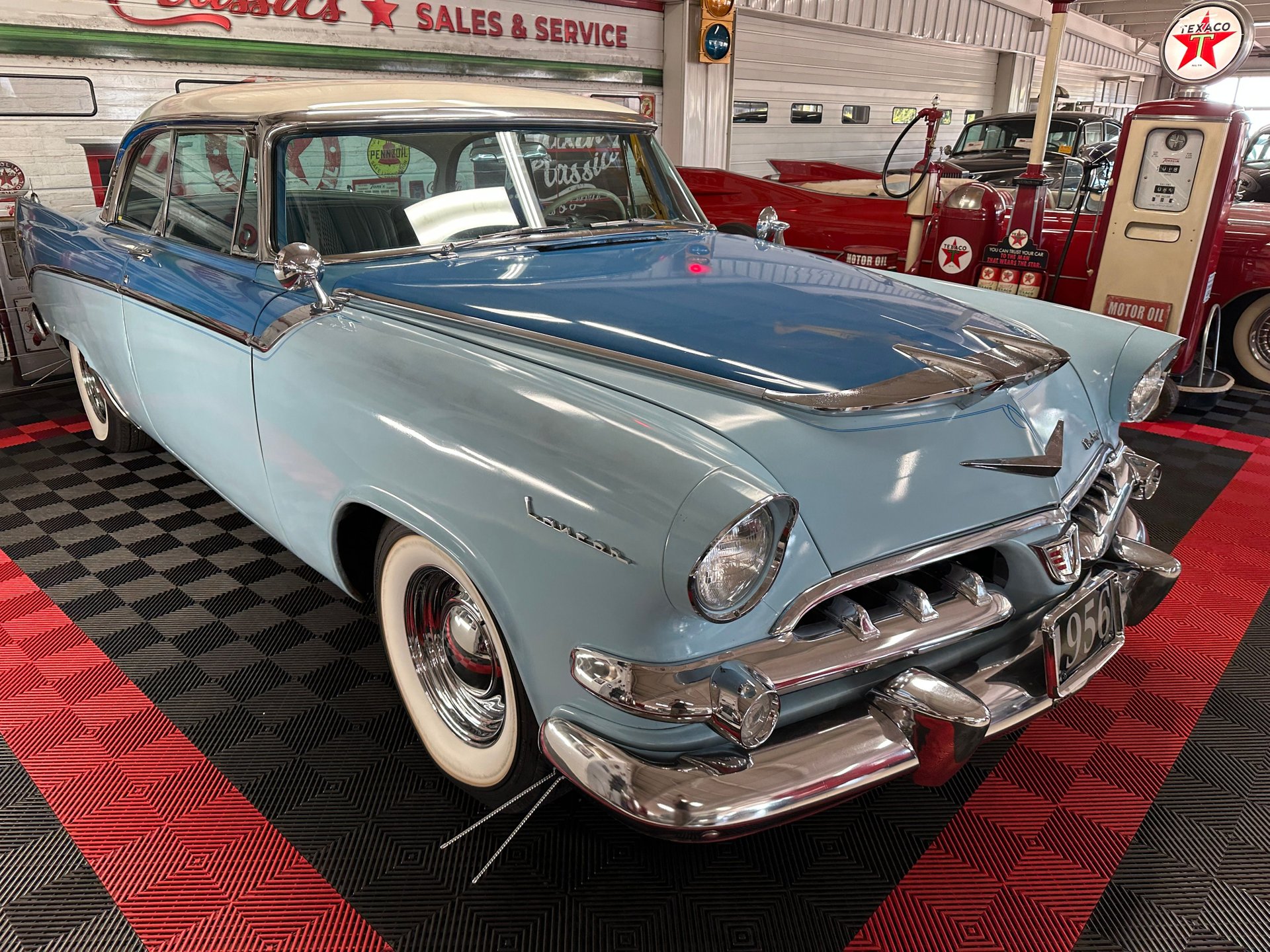
Close this section with the myth that does the most financial damage in this corner of the market, stated plainly so you can use it: a shiny nineteen-fifties Dodge is not thereby a sound one. These cars respond beautifully to cosmetic restoration — the paint schemes are broad and flat, the chrome is magnificent, the interiors photograph like a diner booth — and a car can be made to look like our blue Lancer in the photographs while its sills, floors and wing bottoms are filler and hope. The photographs in this guide show you what the cars should look like. The inspection section that follows exists to make sure the car in front of you is that car all the way through, and not only on the surfaces a camera sees.
How to inspect one
- Paper and identity first. Before you touch the car, read its title and its plates. On a fifties car, find the serial plate and the engine stamping and confirm that the vehicle in front of you is the vehicle the paper describes: a Custom Royal rather than a Coronet with Custom Royal trim, a 315 rather than a 270, a D-500 claim supported by build documentation rather than by badges. On a seventies truck, read the door and dashboard plates for the model, engine and trim codes and compare them with the engine actually fitted. Identity is the cheapest thing to check and the most expensive thing to get wrong, and every later step in this list is wasted on a car that is not what it is sold as.
- Cold, and only cold. Insist on a cold start, and arrive early enough to put your hand on the radiator and the exhaust manifold to prove the engine is stone cold. A warm engine hides flathead and Hemi starting faults, choke faults, piston slap and oil-pressure problems that a cold engine confesses in the first ten seconds. Watch the exhaust as it starts: a puff of blue that clears is valve-stem oil on an old engine; continuous blue is burning oil; white that smells sweet and persists is coolant, and on a flathead it sends you straight to the block-crack checks in the engines section.
- The walk-around, at three distances. From twenty paces, judge stance and profile — the truck test from the photographs: cab and bed in line, car sitting level, fins and spears running straight. From five paces, read the paint for colour match between panels, because a Custom Royal's two- and three-tone scheme makes a mismatched panel shout. From one pace, with the magnet, test the known filler ground: sill ends, lower wings, door bottoms, wheel-arch lips and the headlamp crescents from the rust map. A magnet that falls or weakens is not proof of rot, but it is an instruction to look underneath that exact spot.
- Underneath, before underneath is negotiated away. Get the car on a lift or get yourself on the ground with the torch, in this order: sills, front floors, body mounts, boot floor and spare-wheel well, rear valance, wing bottoms. On a truck, add cab corners, steps, bed cross-members, tailgate bottom and the frame at the spring hangers and steering box. Tap suspect frame and sill metal with a small hammer where the seller permits. You are applying the rust map from the problem areas section panel by panel, and the worst panel sets the price.
- The sill-jack test. With permission, jack a fifties car at its proper sill point and watch the door gaps and listen for the crackle of rotten metal taking weight. This is the single most decisive thirty seconds of a fifties Dodge inspection, and a seller who refuses it has given you the answer it would have given.
- Engine, running and warm. With the engine at full temperature, check oil pressure hot at idle and at cruising revolutions, listen with your hose at the rocker covers for top-end clatter and at the block's side for the deep knock of a big end, watch the temperature gauge through a period of idling after a run, and check for emulsion under the oil filler cap and bubbles in the radiator header that would betray combustion gas in the coolant. Test the vacuum advance by the hand-pump method from the engines section. A Hemi that passes all of this is a Hemi you can buy with confidence; one that fails on pressure and knock together is a rebuild you must price in full.
- Carburation and choke, from cold behaviour to hot. You have already seen the cold start; now, warm, check for a hesitation as you open the throttle briskly, black richness at the exhaust, fuel weeping at any joint and the hot-restart behaviour after a five-minute heat soak with the bonnet closed. Heat-soak hard starting on a fifties V8 is common, diagnosable and negotiable; flooding that soaks the plugs and will not clear is a carburettor rebuild you should have priced before you arrived.
- Gearbox, every selection, both directions. On a column manual, drive every gear up and down, feel second-gear synchromesh with a deliberately brisk change, and check for jumping out of gear on the overrun. On a PowerFlite car, work every push-button from rest and on the move, feel for flare, delay and shudder, and smell the fluid. On a TorqueFlite truck, do the same and add a firm kickdown test. In every case, end with the fluid itself on the dipstick, judged by colour and smell as the gearbox sections describe.
- Steering, suspension and the straight road. On a straight, quiet road, centre the wheel and measure its free play; feel for kingpin and linkage play as shimmy or vagueness over bumps; listen for the axle's whine changing between drive and overrun and for the take-up clunk that prices universal joints or axle backlash. A car that wanders, shimmies and whines is showing you three separate bills, and you should write all three down separately rather than letting them merge into a vague discount.
- Brakes, including the minute test. Hold firm pedal pressure for a full minute at a standstill and feel for the slow sink of a bypassing master cylinder. Then brake firmly from speed, twice, feeling for pull, judder and a pedal that changes its height between applications. Test the handbrake on a slope — remembering that on a PowerFlite car it is your parking safety, not an accessory. Any failure in this step is not a negotiation detail; it is a full brake overhaul from the problem areas section, budgeted before the car moves under its own power in your ownership.
- Interior, trim and every switch. Sit in the car and work everything: every window — above all on a Lancer hardtop, where the pillarless glass is the car's signature — every lamp, the wipers, the heater, the horn, the instruments. Note every missing or incorrect piece of trim by name, because on a Custom Royal those pieces are the hardest and dearest part of the whole car to put right, and a list with names on it negotiates better than a general complaint about the interior.
- The second viewing rule. If the car passes steps 1 to 11 and you still want it, view it again on a different day, ideally in different light and, if the seller agrees, in the rain or after a wash, when seal leaks announce themselves in wet carpets and a misted boot. Fifties two-tone paint hides its sins in bright showroom light and confesses them under a grey sky. The cars that survive a second viewing are the cars this guide is trying to put in your garage; the ones that do not were never bargains at any price.
Values
Read the market for a Dodge Custom as three markets wearing one name, because that is what it is, and because averaging them produces a number that describes no vehicle anyone is actually selling. The market block beneath this guide gives you the current listings and recorded sales for the name as filed; your job is to sort what you find there by branch — fifties passenger car, fifties truck, seventies truck — before you let any figure influence you, and then to sort again by body style and specification within the branch you are buying.
Within the fifties cars, the condition spread is the whole story, and it is wider than for most classics of the period. At the bottom sits the project: complete or nearly so, structurally honest or honestly described, but needing the sill, floor, brake, engine and trim work this guide has priced section by section. In the middle sits the driver: sound underneath, mechanically sorted, presentable in its paint and chrome, with an interior that is correct even if it is worn. At the top sits the show car, whose value rests on the depth of its brightwork, the correctness of its two- or three-tone paint and the quality of a restoration you could not reproduce for the asking figure. The gap between a project and a driver is not a fixed step; it is the sum of the specific jobs the project needs, which is why the inspection checklist is a valuation tool and not merely a buying ritual. Add up the car in front of you, job by job, and you will know which third of the market it belongs in more accurately than any guide figure can tell you.
Variant premiums in the fifties cars follow glamour and proof. The Lancer hardtops carry a premium over the sedan because the pillarless roof is the period's defining silhouette and because fewer survive in good order. The convertible, when one appears, stands above the hardtops. A V8 car stands above a six, and a larger V8 above a smaller one, but the steepest premium of all — the one for a D-500 — is payable only against documentary proof, for the reason the models section gave: the package is valuable precisely because it is rare, and it is faked precisely because it is valuable. An unprovenanced D-500 claim should move the price by nothing at all. You are buying the car that is documented, not the car that is described.
Two negotiation realities close this section. The first is that in a market this thin — a handful of cars under the name at any one time, as the pool for this guide shows — there is no true average to hide behind, for buyer or seller. Every transaction is a negotiation about one specific vehicle's documented condition, and the party with the better list wins it. Arrive with your inspection notes, your job-by-job costing and your branch correctly identified, and you are that party. The second is that the cheapest Custom is very often the most expensive one: a fifties car bought below the driver tier for want of a sill, a floor and a brake overhaul will consume the difference and then some, in money and in the years it spends in a workshop instead of on the road. Buy the condition, in the branch you actually want, and let the name look after itself.
Parts and ownership
Ownership of any vehicle in this guide is a tale of two parts supplies, and knowing which shelf a part sits on before you buy will save you both money and despair. Mechanical parts for the engines, gearboxes, axles and brakes in this guide are, by classic-car standards, good to excellent. The flathead six and the slant six were built in enormous numbers for cars, trucks and industrial use, and their bearings, gaskets, ignition parts, water pumps and carburettor kits remain in ordinary production or deep stock. The LA small-block V8s in the seventies trucks are among the best-supported engines in the American hobby. The early Hemi V8s sit one shelf down: everything serviceable is available, including pistons, bearings, gaskets and valve-train parts, but from specialists rather than from every motor factor, at prices that reflect smaller production runs, and sometimes with a wait. The TorqueFlite and PowerFlite transmissions both enjoy strong specialist support, with overhaul kits, converters and knowledge in ready supply.
The other shelf holds trim, brightwork and body panels, and it is bare in places you need to know about. Correct 1955 and 1956 Custom Royal interior cloth, hardtop-specific window regulators and channels, pot-metal castings such as the bonnet jet and the grille teeth, and good used side spears are the scarce goods of this guide, sourced from donor cars, old stock that surfaces irregularly, and the small firms that reproduce short runs for the Forward Look Chrysler family as a whole. This is why the inspection section told you to value a complete, correct interior and brightwork so highly: you cannot simply order what a Custom Royal is missing. Truck trim is kinder — C Series cab parts and seventies D-series panels, glass and trim are reproduced and salvaged in quantity by a large truck hobby — but even there, the better-trimmed cab pieces and unrusted beds are the parts everyone wants and no wreck seems to have.
Running one is straightforward, old-fashioned motoring, and it rewards a rhythm rather than a budget for surprises. Keep the kingpins and steering joints greased at the short intervals these chassis were designed for — a few thousand miles, not a modern service schedule — because a greased kingpin lasts indefinitely and a dry one wears in a season. Change engine oil more often than a modern car asks, use an oil with adequate zinc protection for flat-tappet valve gear or an additive that provides it, and keep the cooling system in first-class order, because every engine in this guide tolerates hard work and none of them tolerates overheating. Feed a fifties car fresh fuel and use it regularly; more carburettor and fuel-system trouble in this hobby comes from storage and stale, ethanol-laden petrol separating in a vented tank than from any design fault, and a car driven monthly needs a fraction of the fettling of a car driven annually. Store any of them dry, ventilated and on a battery conditioner, with the handbrake off and the clutch exercised, and the spring recommissioning shrinks to an hour's checks.
Which one to buy
- The all-rounder: a 1956 Custom Royal sedan or four-door Lancer with the 315 V8 and PowerFlite. Twelve-volt electrics, the larger Hemi, room for a family, the full Forward Look presence and the widest choice of cars to buy from. If you want one fifties Custom to use, tour and enjoy without a speciality to maintain, this is it.
- The glamour buy: a 1955 or 1956 Custom Royal Lancer two-door hardtop. The pillarless roof, the two- and three-tone paint and the profile from our photographs, in the body style people cross a show field to look at. Buy the best brightwork and the soundest roof and seals you can find, because those, not the engine, are this car's expensive parts.
- The value buy: a six-cylinder or 270 V8 Custom Royal in honest driver condition. The same styling, the same interior and the same road presence without the premium the larger engine and the hardtop roof command. A flathead six car is slow and entirely charming; a 270 car is the thinking buyer's Hemi.
- The performance buy: a documented 1956 D-500. Only with build paperwork, matching stampings and the specific components in place — bought, as this guide has insisted throughout, as an ordinary Custom Royal until the documents promote it. A proven D-500 is a serious piece of nineteen-fifties American performance history.
- The working classic: a C Series pickup with the Custom cab, like the coral truck in this guide. Forward Look charm, a bed that earns its keep, simple mechanicals and a cab you can retrim without a bespoke budget. Judge it as a truck first and a showpiece second, frame, cab corners and bed before paint.
- The usable survivor: a 1978 Custom 100 or 150 with the 318 V8 and TorqueFlite. The simplest, cheapest-to-run vehicle in this guide to live with daily, supported by the best parts supply of any branch and valued, correctly, on survival rather than specification. A slant six car is nearly as good and even harder to kill; buy the straightest, least rusty truck, whichever engine it carries.
The overriding rule: buy the branch you actually want, identified from its plates and stampings rather than its badges, and within that branch buy condition — structure first, brightwork and trim second, mechanicals third — because a Custom of any year is cheap to make run, dear to make whole, and impossible to turn into a different Custom from the one you bought.
See the 2 C Series Custom Regal Pickup cars currently listed.
For sale now
 $14,995 · 71% below typical
Expand
 $49,950 · In line with typical
Expand
What they sell for: C Series Custom Regal Pickup sale prices.