
Ford Crown Victoria buyer's guide
Ford Crown Victoria (1980–2001) — Crown Victoria, LTD Crown Victoria, LTD: what's listed, and what they sell for.
Years: 1980–2001 · Models: Crown Victoria, LTD Crown Victoria, LTD
Overview and history
The Ford Crown Victoria is the last of a kind: a full-size, rear-wheel-drive, V8 sedan built on a separate frame, at a time when almost everything else in America had gone unibody and front-wheel drive. It is the car most people picture when they picture a police car or a taxi, and that is not an accident — for the last fifteen years of its life, fleets were nearly the only reason it existed. But the line is much older and broader than the black-and-white patrol car. It starts as a formal flagship sedan and a wood-panelled wagon, passes through the downsized-car era of the 1980s, gets a complete aerodynamic rebody in 1992, and ends, in 2011, as a fleet-only special that private buyers could no longer order new.
Scope first, because the name is older than the car. Ford first used Crown Victoria in 1955 and 1956, on a pillarless Fairlane hardtop with a stainless band over the roof. That car is a completely different machine from everything in this guide, and it is out of scope here except as the origin of the name. This guide covers the Panther-platform line: the LTD Crown Victoria of 1979 to 1991 and the Crown Victoria of 1992 to 2011, including the Country Squire wagons, the Police Interceptor, and the civilian LX cars that make up most of what you will actually find for sale.
The Panther platform arrived for 1979, Ford's answer to General Motors' downsized 1977 full-size cars. Compared with the enormous 1978 LTD it replaced, the new car was shorter, narrower and several hundred pounds lighter, yet it kept the formula intact: body on a separate perimeter frame, a V8 at the front, a live axle at the back, a column-shifted automatic, six seats and a trunk you could lose luggage in. LTD Crown Victoria sat at the top of the full-size range, and the line included two- and four-door sedans and the Country Squire wagon, with simulated woodgrain sides and a rear-facing third row. Through the 1980s the shape barely changed while the engines quietly modernised underneath, from carburettors through throttle-body injection to sequential port injection in 1986.
In 1991 the wagon and the two-door were gone, and for 1992 Ford rebodied the sedan completely. The new Crown Victoria — the LTD prefix dropped — was rounded, aerodynamic and unmistakably influenced by the Taurus. Underneath it was still Panther: same frame concept, same live axle, but with an all-new overhead-cam V8, the 4.6-litre Modular, the first application of that engine family in a Ford car. A restyle for 1998 squared the car off again, and a major chassis revision for 2003 brought rack-and-pinion steering and a substantially revised frame. Retail sales wound down after that: the car became effectively fleet-only in the United States from 2008, and the final Crown Victoria, a white export car, left the St. Thomas, Ontario plant in September 2011. The last Interceptors worked patrol for years afterwards, and ex-taxi and ex-police cars are still everywhere.
That history defines today's market. These were working cars. A civilian LX owned by a retired couple in Arizona and a Police Interceptor that did 130,000 miles of patrol work in Michigan are nominally the same model and entirely different purchases. Mileage alone tells you almost nothing — a police car's idle hours can equal a second lifetime of engine wear — and condition, provenance and specification do nearly all of the pricing. The good news is that the car underneath is one of the toughest Ford ever built, parts are everywhere, and almost every weakness it has is known, documented and fixable at prices that will not frighten you.

The models
For its first thirteen years the car is an LTD Crown Victoria; from 1992 it is simply a Crown Victoria. Trim walks up from a base car through LX to, on the early cars, top trim packages with padded vinyl roofs and every power accessory Ford could fit. Two body styles matter to buyers now: the four-door sedan, which is nearly everything, and the Country Squire wagon, which was dropped after 1991 and has become the collectible end of the early range. Two-door sedans were built until 1987 and are now scarce. From the late 1990s the range splits three ways that matter more than trim: the civilian car, the Police Interceptor, and the long-wheelbase commercial car built mainly for taxi work.
| Model | Years | Engine | Output | Built | Character |
|---|---|---|---|---|---|
| LTD Crown Victoria sedan | 1979–1991 | 5.0 or 5.8 V8 | about 130–160 hp | High volume | The formal flagship; two-door to 1987 |
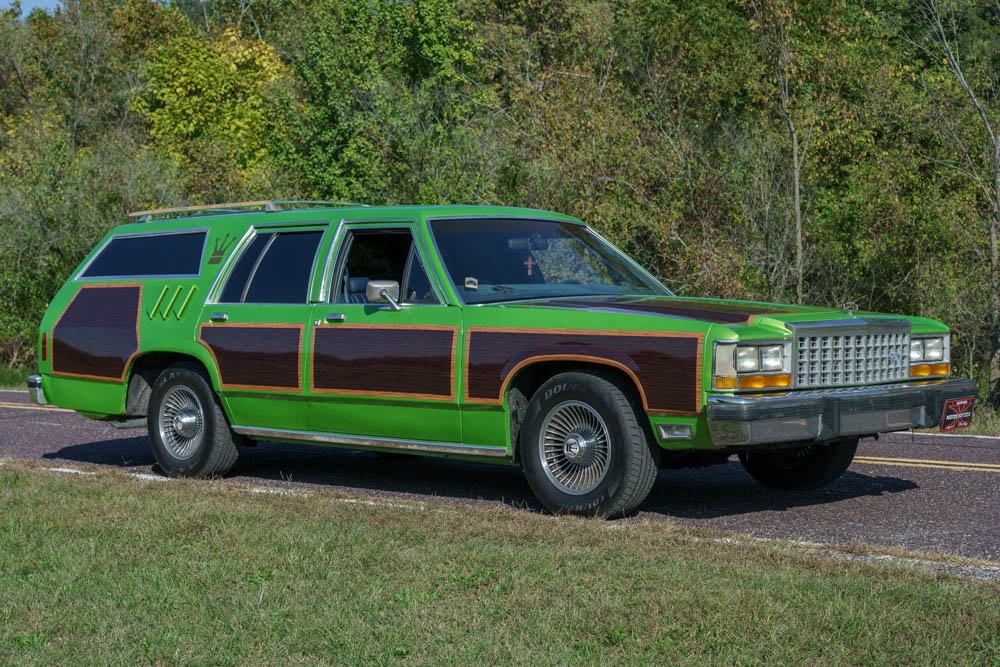
| LTD Country Squire wagon | 1979–1991 | 5.0 or 5.8 V8 | about 130–160 hp | Moderate volume | Woodgrain, third row; the collectible early car |
| Crown Victoria (aero) | 1992–1997 | 4.6 Modular V8 | 190–210 hp | High volume | Rounded Taurus-era body, first Modular V8 |
| Crown Victoria | 1998–2002 | 4.6 Modular V8 | 200–235 hp | High volume | Squared-off restyle; plastic-intake years |
| Crown Victoria | 2003–2011 | 4.6 Modular V8 | 220–250 hp | Fleet-weighted | Rack steering, revised frame; best chassis |
| Police Interceptor (P71/P7B) | 1993–2011 | 4.6 Modular V8 | 215–250 hp | Fleet only | Heavy-duty everything; worked for a living |
| LX Sport | 2002–2003 | 4.6 Modular V8 | 239 hp | Low volume | Floor shift, buckets, monochrome trim |
(Outputs are period Ford ratings and vary by year, market and single- or dual-exhaust specification; the table gives the honest range rather than a single figure for a range that was built for 33 years.)
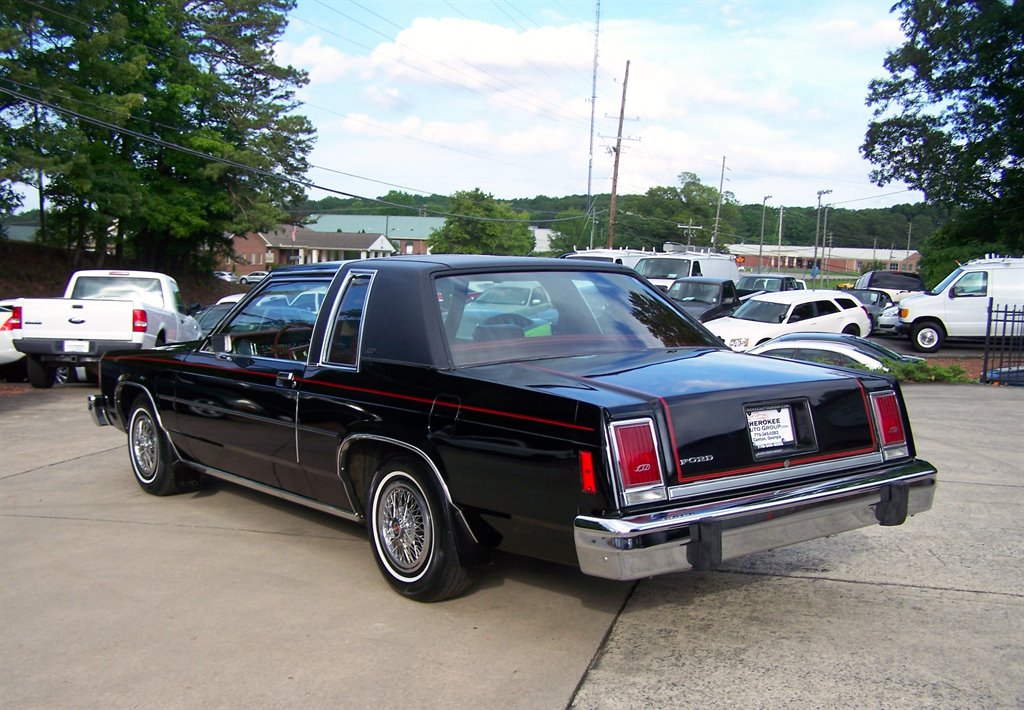
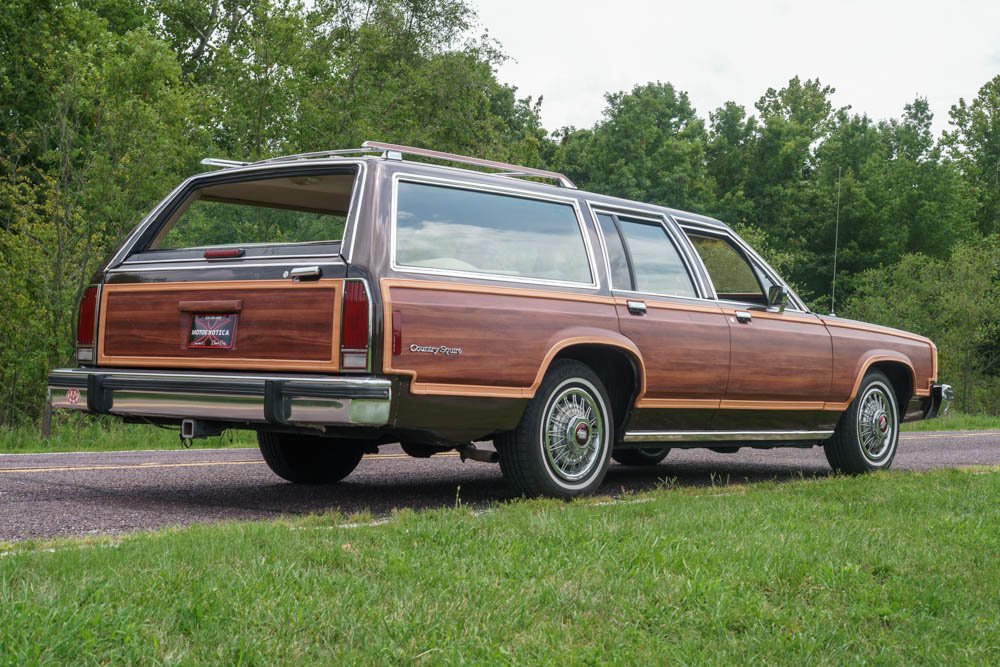
The LTD Crown Victoria (1979–91). The early car is a traditional American flagship: vinyl roof options, deep buttoned seats, wire wheel covers and a ride tuned for straight highways. Base and LX trims cover most survivors; the wagon is the Country Squire, with woodgrain appliqué that was standard-issue suburbia in 1982 and is now the whole point of the car. Two-doors exist and are handsome, but they are a small minority of survivors. Engines are the pushrod 5.0-litre (302) small-block in the overwhelming majority, with the taller-deck 5.8-litre (351 Windsor) concentrated in wagons, trailer-tow cars and early police packages. Everything in this generation is simple, heavy and understressed — which is why so many are still running.

The aero car (1992–97). The 1992 rebody kept the frame and changed almost everything you touch: the Modular V8, a new interior, available rear air suspension, and from 1993 the police package, given its own Police Interceptor name and badging later in the decade. Civilian cars are base and LX. These are the cheapest Crown Victorias to buy and, intake manifold aside (see Problem areas), mechanically generous cars.
The 1998–2002 car. The 1998 restyle is mostly skin — bigger lamps, a formal grille, a new tail — over the same structure. Power crept up, the Performance and Handling package brought dual exhaust and firmer suspension to civilian cars, and the LX Sport of 2002–03 added bucket seats, a floor shifter and body-colour trim: the closest Ford came to a factory sporting Crown Victoria, and a genuinely rare car now. These years carry the plastic intake manifold in its most failure-prone form — a known, budgeted fix rather than a reason to walk away.
The 2003–11 car. The 2003 revision is the one that matters mechanically: a hydroformed frame front section, rack-and-pinion steering, aluminium front crossmember, revised suspension geometry and better brakes. It is the best-driving Crown Victoria by a wide margin and the one to buy if you intend to cover miles. Retail LX cars were sold to the public through 2007 in the United States; after that, American production was fleet-only. The long-wheelbase version — six inches added, all in the rear doors — was built for taxi and commercial fleets and is a curiosity rather than a target for most buyers.
The Police Interceptor (P71, later P7B). From 1999 the police car carried Police Interceptor badging and its own identity in the VIN: the P71 code in the fifth to seventh characters, restyled P7B for the final years. It is not a trim level. The package brought a higher-output calibration, dual exhaust, an external engine oil cooler, heavy-duty frame and suspension components, a 140 mph speedometer, cloth front seats with stab plates in the seatbacks, a vinyl rear bench in most cars, and gearing and cooling chosen for pursuit and idling work rather than comfort. Everything about that specification is double-edged, and the fleet section of Problem areas works through it in full. What matters here is identity: a genuine Interceptor declares itself in the VIN, and a civilian car with police stickers, a spotlight and a push bumper is a civilian car wearing a costume. Price it as one.


Engines and gearboxes
Two engine families cover the whole 33 years, and they could hardly be more different in character: a pushrod small-block that traces its ancestry to the early 1960s, and an overhead-cam Modular V8 designed to replace it. Both are durable. Both have exactly one famous weakness each — and in both cases the weakness is not the engine itself but something bolted to it.
The pushrod small-blocks: 5.0 and 5.8 Windsor (1979–91)
The 5.0-litre (302 cubic inch) Windsor V8 powers almost every first-generation car. It is an iron-block, iron-head, hydraulic-lifter pushrod engine making modest power — roughly 130 to 140 hp in the early carburetted years, rising to about 150 hp with sequential injection — and enormous low-speed torque for its output, delivered through gearing chosen for quiet cruising. It is understressed to the point of comedy: these engines routinely outlast the cars around them, and a healthy one starts instantly, idles at a murmur and shows no smoke beyond a puff of condensation on a cold morning. Oil consumption on a high-mile engine is usually valve stem seals — blue smoke at start-up after sitting, and under deceleration — which is an afternoon's work with an air line to hold the valves up, not a rebuild.
Fuel delivery is the generation map. Cars from 1979 to 1982 use carburettors, including Ford's Variable Venturi design on many applications — a clever, unloved carburettor whose mixture behaviour confuses tuners to this day and which is covered in Problem areas. Central (throttle-body) fuel injection, Ford's CFI, arrived for 1983 to 1985: it looks like a carburettor, behaves like a very simple injection system, and is reliable once its fuel pressure and its handful of sensors are right. The step change is 1986, when sequential electronic fuel injection (SEFI) with a proper mass-air-era management approach — actually speed-density on these cars — gave the 5.0 its best manners and its best economy. An injected 1986-to-1991 car is the early Panther to buy for regular use; the earlier systems are for enthusiasts who enjoy them.
The 5.8-litre (351 Windsor) is the same family with a taller deck and more torque. You will find it in wagons, tow-package cars and early police applications, and in most years it kept the Variable Venturi carburettor long after the 5.0 had moved on. It is not meaningfully faster in normal driving, but it tows better and feels lazier still. Parts support is total. Timing chains stretch with age and retard the cam timing gently rather than failing dramatically; a sluggish, thirsty 5.0 with no other fault is often a chain and a tune-up away from itself again. Distributors carry the TFI ignition module on many of these cars, famous across 1980s Fords for heat-related failure that cuts the engine dead when hot and lets it restart when cool. A car that dies at operating temperature and restarts twenty minutes later is describing that module until proven otherwise; a replacement is cheap, and carrying a spare is period-correct behaviour.
The Modular 4.6 SOHC (1992–2011)
The 4.6-litre Modular is a single-overhead-cam, two-valve-per-cylinder iron-block V8 with aluminium heads, and the Crown Victoria was its first home in a Ford-badged car. In single-exhaust civilian form it made 190 hp in 1992; dual exhaust, standard on police cars and handling-package civilian cars, was worth about 20 hp more. Ratings climbed steadily: around 200 to 215 hp after the 1998 restyle, then a useful jump for 2001 when the Performance Improved (PI) cylinder heads and intake raised civilian output to roughly 220 to 235 hp, and the final Police Interceptors reached about 250 hp. Torque is the point of the engine — a broad, flat curve peaking in the mid-3,000 rpm range — and in a two-ton car it delivers relaxed rather than rapid performance. Expect a civilian car to feel adequate and an Interceptor to feel willing; neither is fast by modern standards, and neither was meant to be.
This is one of the most durable engines Ford has ever built, and the fleet world proved it at mileages no private owner will approach: taxi Interceptors routinely passed 300,000 miles on original engines. The design reasons are simple — a deep-skirt block, generous bearing sizes, a chain drive with no belt to change, and conservative tuning. Its known weaknesses are specific. The plastic intake manifold of 1996 to 2001 is the famous one and gets its own section below. Timing chain tensioner arms and guides wear on very high-mile engines, announced by a rattle from the front cover for a few seconds at cold start that lengthens as the wear grows; the chains themselves rarely fail. Coil-on-plug ignition from 1998 puts a coil on every plug, and single-cylinder misfires on a high-mile car are usually one tired coil — cheap, and diagnosable by swapping coils between cylinders and watching the misfire move. Spark plugs deserve respect rather than fear on the two-valve engine: the aluminium heads have modest thread engagement, so plugs are changed on a cold engine, torqued correctly, and never forced; a plug that has been cross-threaded or over-tightened is a thread-repair job, not a disaster. Oil use past 150,000 miles is again most often valve seals. The PCV system and its grommet in the valve cover are small, cheap and responsible for a surprising number of vacuum leaks and rough idles on neglected cars.
Cooling and charging were specified for fleet abuse, which benefits you now. Interceptors add an external oil cooler in front of the radiator — check its lines for weeping. A 4.6 that runs hot has a cause you can find — a clogged radiator, a failing fan, a thermostat — because the system in health has capacity to spare. Never accept overheating as character on this engine; on a car you are buying it is a negotiating fact or a walk-away.
Gearboxes
Almost every Crown Victoria ever built is an automatic, and there was never a factory manual option in the Panther line — any manual car you meet is a conversion, judged entirely on the quality of the work. The first-generation cars use Ford's AOD, a four-speed overdrive automatic introduced for 1980 (very early cars use a three-speed), and the AOD has one quirk every buyer must understand: its overdrive is engaged by a throttle-valve (TV) cable, not a vacuum modulator or electronics, and if that cable is disconnected, misadjusted or its small nylon bushing at the throttle linkage has crumbled — a common failure — line pressure falls and the transmission can destroy itself in a remarkably short distance. On any AOD car, find the TV cable, confirm the bushing is present and sound, and treat a car that has been driven with the cable adrift as a car that needs a transmission, whatever the seller says about how it shifts today. A rebuild runs roughly $1,800 to $3,000. In health the AOD shifts softly and early, hunts little, and its overdrive makes the early cars relaxed highway cruisers.
The Modular cars use the electronically controlled descendants: the AOD-E from 1992, then the 4R70W from the mid-1990s, and the strengthened 4R75E and 4R75W in the final decade. These are strong, well-understood gearboxes with one famous mannerism: a light shudder under gentle acceleration at 35 to 45 mph as the torque converter clutch applies, which is usually tired fluid rather than a failing converter. The correct first response is a fluid and filter service with the specified fluid — realistically $200 to $400 at a shop — and on a great many cars that ends it. Shifts should otherwise be clean and unhurried; flaring on the 2–3 change, delayed engagement of drive or reverse when cold, or fluid that is brown and smells burnt all price a rebuild, roughly $2,200 to $3,500 fitted, into the car. Fleet cars will have had fluid services on schedule or not at all, and the colour and smell of the fluid on the dipstick of pre-2000s cars — later cars deleted the dipstick — is a fair summary of the maintenance the whole car received. Final-drive gearing tells the car's story too: civilian cars cruise on tall ratios around 2.73:1 or 3.27:1, Interceptors commonly carry 3.27:1 or 3.55:1 for acceleration, and the axle code on the door-jamb sticker, checked against the tag on the differential cover, settles what is actually fitted.
Problem areas
Everything in this section comes from marque knowledge of how these cars age — the failure patterns specialists and fleet mechanics know by heart. The Crown Victoria's great virtue is that its problems are a short, known list, and almost none of them is the engine or gearbox core. Work through it in this order: the intake manifold on the middle years, because it is the one failure that can strand you; the structure, because these are frame cars that rust differently from unibodies; the suspension systems, steel and air; and then the fleet wear that separates a retired patrol car from a retired person's car.
The plastic intake manifold: the famous failure
On 4.6 cars built from 1996 to 2001 — and you must include some very early 2002 production in your suspicion until you have looked — the intake manifold is a composite plastic part, and its front coolant crossover passage is plastic too. With heat cycles and age the crossover cracks, typically around the thermostat housing and alternator bracket area, and the car begins to lose coolant: first a weep and a sweet smell after a run, then a drip onto the alternator and the valley of the engine, then a sudden and complete failure that empties the cooling system in minutes. Ford extended warranty coverage on the part after litigation, but that is ancient history now; what matters on a car you are buying is which manifold is fitted today. The fix that lasts is the revised manifold with an aluminium coolant crossover, sold by Ford and by the aftermarket (Dorman's version is the one you will meet most often), and fitting one is a straightforward top-of-engine job: budget roughly $600 to $1,100 parts and labour at an independent shop, less if you do it yourself in a long afternoon.
Identifying what is fitted takes thirty seconds and should be step one on any 1996-to-2001 car. Look at the front of the intake manifold, just behind the alternator, where the upper radiator hose and thermostat housing meet it. Aluminium crossover: a cast metal section, dull grey, visibly separate from the black plastic behind it — that is the revised part, and the problem is already solved. All-plastic crossover: black composite running unbroken across the front, with the thermostat housing moulded in the same material — that is the original design, and on a 25-year-old car it is not a question of if but of when. Run a fingertip under the crossover and look for the crust of dried coolant, and check the coolant level and the valley below the manifold for residue. A seller who tells you the manifold has been done should be able to show you the aluminium crossover itself — believe the metal, not the invoice folder. Pre-1996 cars have an aluminium manifold and are exempt; 2002-on cars left the factory with the revised design. Note also that an overheating episode caused by a sudden crossover failure is how otherwise immortal 4.6 engines get hurt, so a middle-years car with a history of running hot wants its head gaskets interrogated — coolant in the oil, oil in the coolant, or bubbles in the expansion tank on a cold start are the tells.
Rust and the frame: a different map from a unibody
A Panther rusts like a truck, because underneath it is one. The body can look presentable while the frame, the mounts and the hidden seams are deciding the car's future — and the reverse is also true: surface rust on a frame is normal, expected and mostly harmless, where the same appearance on a unibody sill would be structural. Learn to separate the two.
The frame. The perimeter frame is heavy-gauge steel and tolerates a lot, but in salt-belt cars it scales and thins, worst at the rear kick-up over the axle, around the spring and shock mounts, at the front crossmember area on pre-2003 cars, and anywhere mud packs and stays wet — inside the boxed sections where the factory drain holes have blocked. Prod with a screwdriver, with permission: sound frame steel rings and resists; rotten steel crunches and flakes in layers. Frame repair is welding work, priced per car, and a frame that is perforated in several places ends the conversation on a common sedan — walk away and buy the next one, because supply is not a problem. On 2003-on cars the front frame section is hydroformed and generally fares better, but check the same places.
The body. The classic Panther body rust is the dogleg and rear wheel arch, the bottoms of the front fenders behind the wheels, the lower door skins, the rocker panels under their trim, and the trunk floor and its side wells, where water entering past a tired trunk seal sits under the mat. Wagons add the tailgate and spare-wheel well, and the woodgrain appliqué traps moisture against the rear quarters — bubbling under the appliqué is rust announcing itself, and removing the trim to repair it properly is the expensive version of that job. Door bottoms fill with water when their drain slots block: run a fingertip along every door's lower edge and feel for bubbling. Floor pans rot from inside when window seals leak and carpets stay wet; lift the carpets where you can and press hard. None of this is exotic — a rocker or arch repair with paint runs roughly $600 to $1,800 a side depending on how far the rust has travelled — but add up four corners and a trunk floor on a cheap car and you have spent the price of a good one. Salt-belt fleet cars live the hardest life of all, retired with rust in the brake and fuel lines as well as the body. Check steel brake lines along the frame rail on any northern car; a set of lines is a few hundred dollars in parts and a long day of labour, and a line that lets go is the one rust failure that is a safety event rather than a bill.
Body mounts. Between frame and body sit rubber mounts that perish with age. A car that groans over driveway entrances, whose doors have dropped slightly out of alignment, or that feels loose and thumpy over broken pavement may simply need its mounts — a kit is inexpensive, fitting is a lift-and-patience job — but sagging mounts also let the body sit down onto rust traps, so treat the two checks as one.
Air suspension, steering and the running gear
Civilian LX cars with the handling package, and a number of high-trim cars, carry rear air suspension: air springs in place of coils, a small compressor under the hood, a height sensor at the rear axle and an on-off switch in the trunk. In health it is lovely — self-levelling, so the car sits right with a full trunk or a trailer. In age it fails in a predictable sequence, and the failure is worth understanding because sellers describe it badly in both directions. The air springs' rubber bladders crack where they roll over their pistons, the car sinks overnight — classically down at the rear by morning, pumped back up by the compressor when you start it — the compressor then runs longer and longer to keep up, overheats, and eventually dies, leaving the car sitting on its bump stops with the warning light on. Diagnose in that order: a car that sinks has leaking springs or lines until proven otherwise (soapy water on the bladders finds the leak as bubbles), a car that does not rise with a silent compressor wants the compressor and its relay and dryer checked, and the switch in the trunk — turned off for jacking and routinely forgotten — is the free fix you check before any of it. Replacing a pair of air springs runs roughly $400 to $800 fitted; a compressor, $300 to $600 fitted. The alternative most owners choose is a coil-spring conversion kit, roughly $300 to $600 fitted, which deletes the system permanently: it rides slightly less well, never levels itself, and never breaks again. A converted car is not a defective car — but the conversion should be declared, the warning light should be dealt with rather than taped over, and the price should reflect that a feature has been removed.
Steel-sprung cars are simpler: sagging rear coils on a high-mile or ex-taxi car are cheap and obvious, and the car should sit level side to side. Front suspension on pre-2003 cars is a traditional double-wishbone layout with a steering box; on 2003-on cars the rack-and-pinion system transformed the steering feel, and a 2003-on car with vague, heavy or notchy steering has a fault — rack wear, a tired pump or dry joints — rather than a characteristic. Across all years the wear items are ball joints, tie-rod ends, the idler and Pitman arms on box-steered cars, and sway-bar links, and a full front-end refresh with alignment runs roughly $800 to $1,800. The test is the drive: wander, shimmy, a clunk over bumps at parking speed, or steering that does not self-centre all point at the same short parts list. Brakes are conventional discs; fleet cars eat pads and rotors on schedule and that is maintenance, not damage, but a car that has sat wears rust-lipped rotors and seized caliper slide pins, and a full brake refresh runs roughly $600 to $1,200. One specific warning belongs here: the 2003-to-2005 cars were subject to a recall concerning the lighting control module, whose failing solder joints can take the headlights out without warning — ask whether the recall work was done, because on these cars the paperwork matters.
Fleet wear: reading a worked car
A Police Interceptor or a taxi is not a worn-out civilian car; it is a different used-car species, and it is read differently. Start with idle time. Police cars idle for hours at scenes, on traffic stops and through whole shifts in winter and summer, and the engine wears at idle while the odometer does not move. Ford recognised this directly: from 2006 the Interceptor carries an engine hour meter in the instrument cluster, and the fleet rule of thumb treats an idle hour as roughly equivalent to 25 to 33 miles of driving wear. A 120,000-mile car showing 8,000 engine hours has lived far longer than its odometer claims, and priced correctly that is fine — priced as a 120,000-mile civilian car, it is a trap. On pre-2006 cars there is no meter, so you read the proxies: wear on the driver's seat bolster and the pedal rubbers out of proportion to mileage, a shiny steering wheel rim, and a service history printed on fleet letterhead if you are lucky.
Then read the holes. A worked car is full of them: drilled holes in the roof or trunk lid for antennas and light bars, in the dash and console for radios and computers, in the A-pillars for spotlights, and screw holes through the floor and trunk from equipment mounts. Most are cosmetic. The ones that matter let water in — roof holes sealed with silicone rather than proper plugs rot the headliner and the floor from above — and the wiring matters most of all. Fleet equipment is removed in a hurry at decommissioning, and the standard of that work varies from careful to a pair of cutters: look under the dash and in the trunk for cut and taped looms, abandoned splices and non-standard fusing. Electrical gremlins on an ex-fleet car are almost always decommissioning damage, not design faults, and they are findable with patience — but budget the patience. Check also the consumables of comfort: rear doors fitted with locks that only open from outside (a taxi and patrol feature, reversible), a vinyl or even moulded plastic rear seat you will want to replace, and front seats whose foam has done double shifts for a decade. Mechanically, the same life cuts the other way: fleets service on schedule, and the Interceptor's heavy-duty specification means the hardware is usually sound. Buy the ex-fleet car for its mechanical specification and its price, expect to spend on cosmetics, seats and wiring tidying, and never pay a civilian-car price for one.
Early cars have their own, smaller list. The Variable Venturi carburettor on 1979-to-1985 applications (and most 5.8s) meters fuel with a moving venturi that confuses anyone raised on fixed-venturi carburettors: drivability complaints — hesitation, surging, poor economy — are usually adjustment, perished diaphragms and vacuum leaks rather than a worn-out carburettor, but the pool of mechanics who know the unit is small and shrinking, and a car that runs badly on one wants a specialist. CFI cars add throttle-body injector and pressure-regulator age to the same vacuum-leak story. On all early cars, budget for the rubber ecosystem — vacuum hoses, belts, coolant hoses, weatherstrips — before any single component, because forty-year-old rubber fails as a system. Air conditioning on early cars was built for R12; most survivors have been converted to R134a, well or badly, and a conversion with the receiver-drier replaced and the system properly charged is a plus worth paying for, while a top-up conversion is a summer of warm air waiting to happen.
Interior, electrics and trim
The civilian interior is a comfortable place upholstered in cloth, velour or leather over deep foam, and its enemies are sun and the driver's seat. Dash pads crack on sun-belt cars, leather dries and splits on the driver's bolster first, and the foam underneath collapses with mileage exactly as fleet use predicts. None of it is structural and all of it is visible in photographs, which makes interior condition the most honestly advertised part of any listing. Seat motors, window regulators and door lock actuators fail one at a time across the whole range — a window that is slow or crooked in its frame is a regulator announcing itself, roughly $150 to $350 a door fitted — and the blend-door actuator behind the dash clicks and then sticks on one temperature; the part is cheap and the access ranges from awkward to dashboard-deep depending on year, so a car stuck blowing hot or cold air only is a known bill, roughly $300 to $900, not a mystery.
Temperature control head units lose their displays; the lighting control module issue on the 2003-to-2005 cars is covered above; and the digital clusters fitted to some 1990s civilian cars dim and drop segments with age. On early cars the failures are earths, tired switches and forty-year-old wiring insulation in the engine bay. Charge voltage at the battery with the engine running should be a healthy 14 volts or so on any of these cars; less is an alternator, a cable or a regulator, all cheap, all findable. On wagons, check the third-row mechanism works, that the tailgate opens both ways — down as a gate and sideways as a door — and that the rear window in the gate still winds or powers down, because gate repairs are trim-and-patience work that sellers rarely do.

How to inspect one
Allow an hour, bring a torch and a cheap code reader for the 1996-on cars, and inspect cold: a Crown Victoria that starts cleanly from cold, with no rattle, no smoke and no lingering warning lights, has passed its first examination before you have driven a yard. If the car passes you, a lift inspection is still worth paying for — the frame check in step 4 decides what the car is.
- Start with identity and paperwork. Match the VIN on the title to the plate at the base of the windshield and the sticker on the driver's door jamb. If the car is claimed to be a Police Interceptor, check the VIN itself: a genuine car carries the P71 code — P7B on the final cars — in the fifth to seventh characters. A civilian car with police equipment added is priced as a civilian car, whatever the seller calls it. Read the service history for fleet letterhead, manifold replacement and transmission services; on this model, paperwork is worth real money.
- Cold start and the first minute. From cold, listen for timing-chain rattle from the front of a 4.6 that lasts more than a second or two, watch for blue smoke at start-up (valve seals) or under load (rings — rare), and confirm the oil pressure and charging behave. On an early pushrod car, a hot-restart problem or a cut-out when hot points at the ignition module story in the engines section.
- The intake manifold check (1996–2001 cars). Do the thirty-second crossover test from Problem areas: aluminium crossover fitted, problem solved; all-plastic crossover, look and feel for coolant crust around the thermostat housing, check the coolant level, and price the revised manifold into the car on the spot.
- Under the car: frame first. Torch along both frame rails, the rear kick-up over the axle, the spring and shock mounts and the crossmembers. Prod suspect areas — sound steel resists, rotten steel crunches. Then the body: rocker panels, rear arches and doglegs, trunk floor and wells, floor pans. Perforation in the frame in several places ends the inspection on a common sedan; body rust is priced, panel by panel. Check the steel brake and fuel lines along the frame rail on any salt-belt car.
- The stance test, and the air suspension verdict. Stand back and look at the car level, side on. A rear end sitting low is either tired coils or air suspension at fault. If the car has air springs, note the height, leave the car an hour if you can — or ask directly — and check whether it has sunk; start it and watch the compressor raise it and, just as importantly, stop. Confirm the suspension switch in the trunk is on before condemning anything. Sinking overnight plus a hard-working compressor is the bladder-and-compressor sequence from Problem areas, priced as springs, a compressor, or a declared coil conversion.
- Fleet forensics, if it is an ex-fleet car. Read the engine hour meter on a 2006-on Interceptor and do the arithmetic against the odometer. Then count the holes: roof, trunk, A-pillars, dash. Look under the dash and in the trunk for cut looms and abandoned splices. Check the rear doors open from inside, the rear seat is a seat you can live with, and the driver's seat foam and bolster match the hours the car has worked, not just the miles it shows.
- The AOD cable check (1980s cars). On any AOD-equipped car, find the throttle-valve cable at the throttle linkage and confirm its nylon bushing is present and the cable is connected and sensibly adjusted. A missing bushing means the gearbox may already have been damaged by low line pressure; treat the transmission as an unknown and price accordingly.
- Body, gaps and trim. Walk the car for panel alignment, overspray and mismatched paint — fleet cars are repainted at decommissioning, often in a hurry, and white-over-black-and-white is the classic tell on a car sold as a civilian example. On a wagon, judge the woodgrain appliqué, work the tailgate both ways and the rear window, and fold the third row. Count tired chrome and trim honestly; on early cars it is a real part of the bill.
- The test drive. Fifteen minutes, mixed roads. The automatic should engage drive and reverse promptly and change cleanly; note any converter shudder at light throttle around 40 mph (fluid first, per the engines section), and on the AOD, that overdrive engages and the kickdown works. The car should track straight, brake straight and sit composed over bumps — wander, clunks at parking speed and poor self-centring are the front-end wear list from Problem areas.
- Heat, cooling and air conditioning. Let the car idle hot after the drive. A 4.6 with a healthy cooling system does not creep in temperature; if it does, find the cause before you buy, and remember what a sudden coolant loss does to these engines. Run the heater and the air conditioning through every setting — a blend door stuck on one temperature, or an early car with a lazy refrigerant conversion, is a priced job from Problem areas, and July is not when you want to discover it.
- Electrics, all of them. Every window up and down, locks, seat motors, lights — including, on a 2003-to-2005 car, asking for evidence of the lighting module recall — wipers, washers, horn, cruise control and every warning light on and then off. On an ex-fleet car, test twice: decommissioning splices fail intermittently, and a second pass catches what the first missed.
- Interior last, and the verdict. Sit in every seat. Feel for collapsed foam, look at the driver's bolster, the dash pad and the headliner — including, on an ex-fleet car, for water staining that betrays a badly sealed roof hole. Then tot up the priced jobs your inspection has found and compare the total, plus the asking price, against a better car. On a Crown Victoria the arithmetic, not the emotion, should make the decision: supply is deep, and the next car is always coming.
Values
The figures that matter for this series are computed from this site's own listings and recorded sales, and they sit below this guide — the listed-now summary and the market block are refreshed every time the site rebuilds, so use them rather than any number quoted elsewhere. What follows is how to read them.
The Crown Victoria market is really two markets sharing a badge, and nearly every pricing mistake comes from confusing them. The first is the civilian market: LTD Crown Victorias and Country Squires from the 1980s, and retail LX cars from the 1990s and 2000s, bought as classics, cruisers and comfortable old cars. Here, condition and provenance do the pricing — a dry-state, low-mile, garaged LX or a presentable Squire wagon sits in a different world from a rusty sedan of the same year, and the spread between the cheapest and the dearest civilian car of a given year is the widest in this guide. The second is the fleet market: Interceptors and taxis, priced as used equipment, where the car is valued on remaining life — hours, rust, and how much of the decommissioning was done properly — and where the same model year can be worth very little as a tired taxi and a solid premium as a low-hour, unmarked supervisor's or detective's car that never carried a light bar.
Three cautions apply to every figure. These are asking prices, not achieved prices, and at the fleet end especially, asking prices are optimistic: ex-police cars trade in volume at auction, and achieved figures there are the honest benchmark for a worked car. The sample for early cars and wagons is small, so a single exceptional listing moves the apparent numbers for the whole variant; read the range, not the headline. And mileage is the least trustworthy number on this entire page: read it alongside engine hours on a late Interceptor, seat and pedal wear on everything else, and the rust map, because a low-mile salt-belt car can be a worse buy than a high-mile desert one.
Read any individual car against the condition spread within its own market, never across the two. The cheap cars at the bottom of the civilian rows share a story — rust, a dead interior, or a plastic manifold and a cooling system that has already been cooked. The cheap fleet cars share a different one — hours and holes. A car priced in the middle of its band with a sound frame and a documented manifold and transmission history is almost always better value than the cheapest example of a dearer variant. There is no such thing as a cheap Crown Victoria that stays cheap if it needs welding; there are a great many that stay cheap if all they need is servicing, because the mechanical car underneath is that tough.
Parts and ownership
The Crown Victoria is one of the easiest classic-era cars in America to keep, for a simple reason: Ford built them in enormous numbers for three decades, fleets kept them in service for two more, and the parts industry followed the fleet money. Almost everything mechanical is available new, much of it over the counter at a general parts store, and the salvage-yard supply of used panels, trim and interiors is deep — though it thins every year as the cars leave service, which is an argument for buying the trim-complete car now rather than the project you intend to complete from yard parts later.
Easy: every service item, filters, belts and hoses; brake pads, rotors, calipers and lines; suspension wear parts and complete front-end kits; water pumps, alternators, starters and radiators for both engine families; automatic gearbox rebuild parts and complete rebuilt units; Windsor engine parts of every description; Modular timing components, coils and gaskets; the revised aluminium-crossover intake manifold, a stocked aftermarket part rather than a hunt; air springs, compressors and coil-conversion kits. Prices are ordinary-car prices, and the fleet aftermarket means quality tiers exist — buy the severe-duty grade of wear parts where it is offered, because it was engineered for exactly this car.
Harder and dearer: Country Squire woodgrain appliqué and wagon-specific trim and glass; early LTD brightwork, vinyl-roof trim and model-year-specific grilles and lamps; good dash pads for sun-belt cars; LX Sport-specific interior pieces; the long-wheelbase car's unique rear doors and glass; and original-style upholstery materials for the 1980s cars. None of it is unobtainable, but it is found by patience and by joining the Panther community — the model's forums and owner groups are large, technically deep and generous with interchange knowledge, including which Mercury Grand Marquis and Lincoln Town Car parts cross straight over, which is a great many of them. The Town Car connection matters: the Lincoln shares the platform, much of the running gear and a good deal of trim engineering, and its parts support lifts the whole family.
Running costs. Fuel consumption is the honest price of the format: expect figures in the mid-to-high teens in town and the low-to-mid twenties on a highway run for a Modular car, a little worse for an early car. Insurance is generally kind — the car's fleet safety record and low theft appeal work in your favour — and servicing is within the ability of any competent general shop. The budget line that catches new owners is the first year of catching up: on a running, driving car, deferred servicing, tyres, fluids everywhere and the small failures of age honestly run to a four-figure sum before you improve anything; on an ex-fleet car, add seats, tyres and the wiring tidy. Buy a car in current use over one that has sat, even at a higher price — a Panther that has sat needs its fuel system cleaned, its brake hydraulics gone through and its tyres replaced regardless of tread, and the bill arrives all at once.
Which one to buy
- The all-rounder: a 2003–2007 civilian LX. The revised chassis, rack steering and the best brakes, in the car that lived the quietest life. If you want one Crown Victoria to drive everywhere, this is it.
- The value buy: a 1998–2002 civilian car with the manifold already done. The squared-off body, PI-engine power from 2001, and a discount in the market for a fault that the aluminium crossover in the parts receipts proves is behind it.
- The classic: a 1986–1991 LTD Crown Victoria. Sequential injection, the formal first-generation shape, Windsor simplicity and the last of the chrome-era flagship Fords. The injected cars are the ones to use; the earlier cars are the ones to tinker with.
- The wagon: a Country Squire, any honest year. The collectible Panther. Buy on appliqué, gate and quarters, accept the mechanical bill, and remember that supply only moves in one direction.
- The worker: a low-hour Police Interceptor, 2006-on so you can read the hour meter. Bought on hours, frame and wiring rather than mileage, it is the toughest cheap car in America — provided the price reflects the holes and the life it has lived.
- The rarity: an LX Sport. Floor shift, buckets and 239 hp in the squarest body. Rare when new, rarer now, and worth seeking — verified by its specification, not its badges.
And the rule that overrides all of the above: buy the car whose frame, hours and paperwork you have actually verified, in the specification you can live with. Manifolds, front ends, air springs and interiors are all fixable at prices you can plan for. A perforated frame, an engine cooked by a failed manifold, or a fleet car whose hours turn out to be double its miles are the purchases that cannot be unmade — and on a car built in these numbers, the right one is always still out there.
Listed now
No Ford Crown Victoria cars are listed on Classic Listings yet — the collection is being gathered, and market figures will appear here as cars arrive.
The market — recorded sales
Recorded-sale figures: 2 recorded sales · median $8,595 · range $7,290 to $9,900 (Nov 2024 – Nov 2026)
Based on 2 recorded sales — too few for a benchmark value.
| Date | Car | Sale price | Source |
|---|---|---|---|
| Nov 19, 2026 | 1996 Crown Victoria | $9,900 | Dealer |
| Nov 19, 2026 | 2000 Crown Victoria LX | $7,290 | Dealer |
Dates are the sale date where the source states one; otherwise the date the sale was recorded here.