
Ford Maverick buyer's guide
Ford Maverick -- the model's own buyer's guide: variants, values and what to check.
Years listed: 1971-1976 · Series: Torino
# Ford Maverick — Buyer's Guide
Overview and history
You are looking at the simplest honest car Ford built in the 1970s, and that simplicity is the whole reason to buy one now. The Maverick arrives in April 1969 as an early 1970 model, pitched as a plain, cheap, easy-to-keep compact at a moment when the imported Volkswagen Beetle is teaching American buyers that a small car does not have to be a penalty box. Ford does not answer with anything clever or new. It answers with the mechanical package it already knows best: the Falcon's unit-body engineering, straight-six engines it has been building for a decade, leaf springs at the back, coil springs at the front, and a parts bin shared with the Mustang, the Falcon and later the Granada. That deliberate lack of novelty, which makes the car easy to dismiss when new, is exactly what makes it easy to own fifty years later. Almost everything on it is understood, almost everything interchanges with something else, and almost nothing requires a specialist to fix.
The shape helps. The two-door has a long bonnet, a short, fast-sloping rear deck and a semi-fastback roofline — a budget compact with a small pony car's proportions, and the trick still works at a fuel stop today. The four-door, from 1971, is more upright, and the Grabber turns the same shell into a compact muscle car in miniature. The engineering underneath barely changes, which is why this guide treats the whole 1970–77 run together.
Production runs for eight model years and totals a little over two million Mavericks, plus the Mercury Comet twin sold from 1971 to 1977. That volume matters now: used parts exist in quantity, reproduction panels are worth making, club knowledge is deep, and there is always another car to compare against the one in front of you. On this site the pool is small and typical: nine cars listed at the time of writing, all for sale rather than recorded as sold, spanning 1970 to 1975 — two 1970 cars, one 1971, three 1972s, and one each from 1973, 1974 and 1975. Six come through Facebook Marketplace sellers and three through dealers, spread across Kentucky, Georgia, North Carolina, Pennsylvania, New York and Utah. Six of the nine are described with an automatic gearbox, matching the wider market: the C4 dominates survivors, and a manual car is the exception you search for. Colours in the pool — white twice, and single cars in red, bronze, gold, blue and green — are a fair sample of the period palette.
The run divides into two eras, and the split changes both look and value. The 1970–72 cars are the slim-bumper originals: small chrome bumpers tucked close to the body, the lightest weight, the least emissions equipment, the cleanest lines. For 1973 the front bumper grows to meet the federal 5-mph impact standard, and for 1974 both ends grow, along with the full mid-seventies emissions and safety load. A solid 1975 is still a better buy than a rotten 1971, every time — but the early cars are the ones collectors picture, and the market treats them accordingly.
Ford replaces the Maverick with the Fairmont for 1978. Your job is not to find a rare car — Mavericks are not rare. Your job is to find an honest one: identity matching paperwork, structure intact under the paint, previous owners who fixed causes rather than symptoms.
The models
Ford builds essentially one car in two body styles, with one sporty package layered on top, and changes it slowly. At launch, for 1970, there is a single offering: a two-door sedan on a 103-inch wheelbase, with a choice of the 170 or 200 six, and a specification so plain that a heater and full wheel covers are about as far as the standard equipment list stretches. A larger 250 six joins during the first year. There is no wagon and no hardtop at any point in the run — if you see a Maverick described as a hardtop, the seller means the two-door's roofline, not a separate body, because no such body exists.
For 1971 the range becomes the range. A four-door sedan arrives on a longer 109.9-inch wheelbase, buying real rear legroom. The 302 V8 becomes available, transforming the car's character without changing anything else about it. And the Grabber package arrives as the sporty flagship of the two-door line. The Mercury Comet mirrors the expansion the same year, with the identical mechanical package under different grille, tail and trim — worth remembering when you search for parts, and when a seller prices a Comet badge as though it were a different car underneath. It is not.
From 1972 to 1975 the formula settles. The Grabber continues to 1975 and is then dropped; for 1976 a Stallion package offers a similar blackout-and-stripes treatment, and front disc brakes become standard. The 1977 cars are the last. Trim across the run is simple: a standard car, better-trimmed cars with vinyl roof and upgraded interior, a Luxury Decor Option in the mid-seventies, and the Grabber. No trim level changes the structure or the rust map, so you buy trim for pleasure, never for soundness.
| Model | Years | Engine | Output | Built | Character |
|---|---|---|---|---|---|
| Two-door sedan, six | 1970–77 | 170 / 200 / 250 six | 105–155 hp (gross, early) | The bulk of just over 2.1 million total | The original: lightest, simplest, cheapest to run |
| Four-door sedan, six | 1971–77 | 200 / 250 six | 120–155 hp (gross, early) | Substantial minority of total | Longer wheelbase, real rear seat, the family car |
| Two-door / four-door, V8 | 1971–77 | 302 V8 | 210 hp gross (1971), falling on paper under net ratings | Minority of total | The same car with real pace; the drivetrain donor everyone wants |
| Grabber (two-door only) | 1971–75 | 200 / 250 six or 302 V8 | As engine fitted | Small minority of total | Stripes, spoiler, blackout trim; six-cylinder Grabbers exist and are genuine |
| Stallion (two-door) | 1976 | 200 / 250 six or 302 V8 | As engine fitted | One year only | The Grabber's successor treatment: paint and stripes, no extra power |
| Mercury Comet (twin) | 1971–77 | As Maverick | As Maverick | Sold alongside, smaller numbers | Same car, different face; a legitimate cross-shop |
Two cautions belong with that table. First, outputs: Ford quotes gross horsepower until the industry switches to net ratings for 1972, when the same engine in the same tune appears to lose a third of its power overnight. A 302 quoted at 210 hp in 1971 and one in the low 140s in 1972 are much closer in real performance than the numbers suggest; the genuinely softer engines are the mid-seventies versions, with lower compression, single exhausts and emissions calibration. Never pay a premium on a quoted figure without asking which rating system produced it. Second, built figures: the total is well established, but reliable splits by body, engine and package are not something a seller can quote precisely. Distrust any rarity claim not backed by a Marti Report or equivalent factory documentation — for a Maverick, rarity claims are a sales tool far more often than a fact.
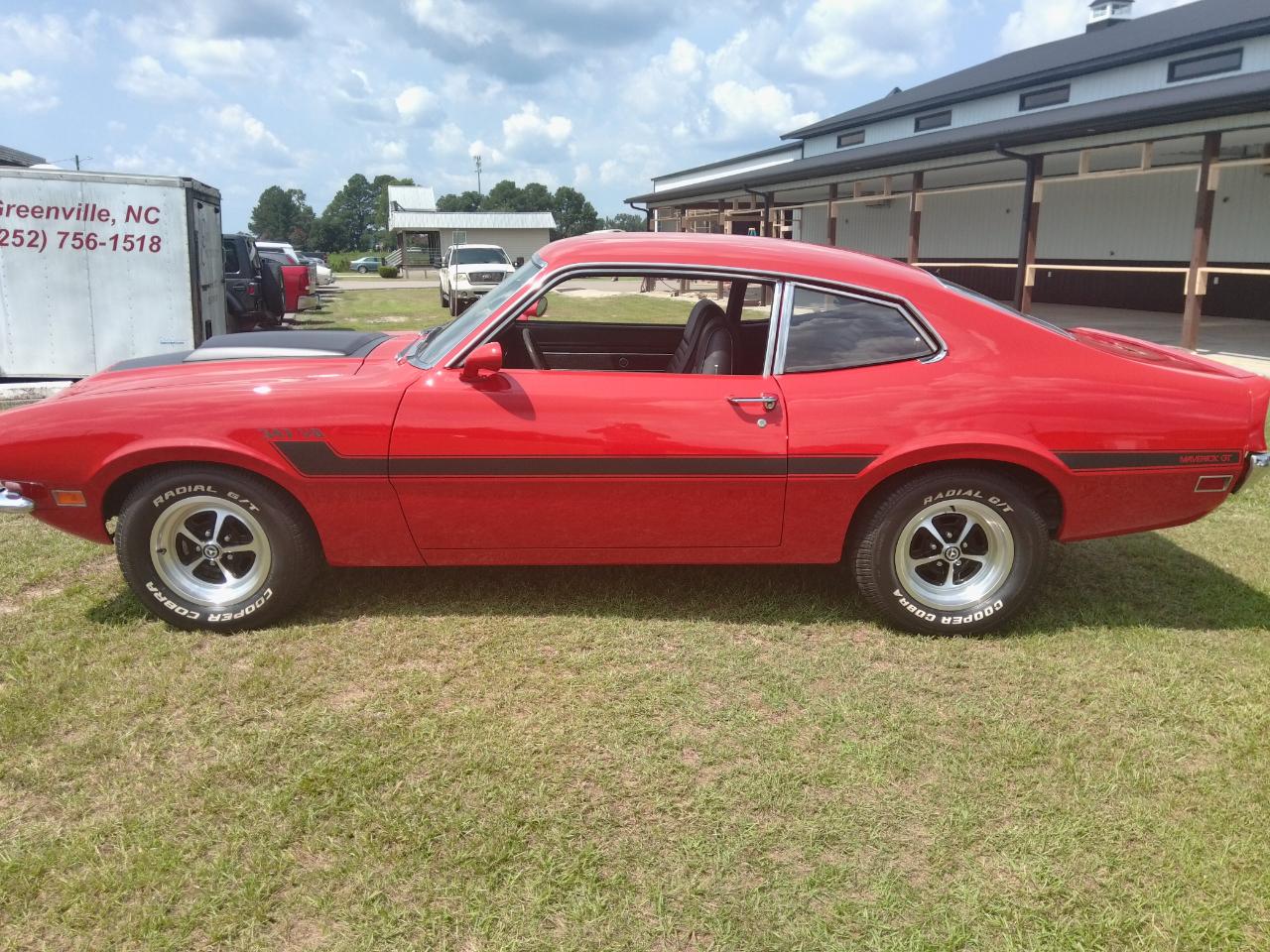
The Grabber needs its own paragraph because it is the model most often misrepresented. A genuine Grabber is a trim and appearance package, not an engine. Most Grabbers are six-cylinder cars, and a six-cylinder Grabber is not a fake — it is what Ford mostly built. The package brings dual racing mirrors, blacked-out grille and tail panel, side stripes with Grabber lettering, a rear deck spoiler, styled wheels depending on year, and on many cars the hood with twin non-functional scoops. What settles identity is never the stripes: stripes, spoilers and hoods bolt or stick onto any two-door in an afternoon, and decades of owners have done exactly that. What settles it is the paperwork — the VIN and door data plate record the body and trim the factory built, the Grabber has its own coding, and a Marti Report from the VIN states the options the car left the factory with. Pay Grabber money only for a car whose codes say Grabber, and standard-car money — cheerfully — for everything else, however convincing the stripes look in photographs.
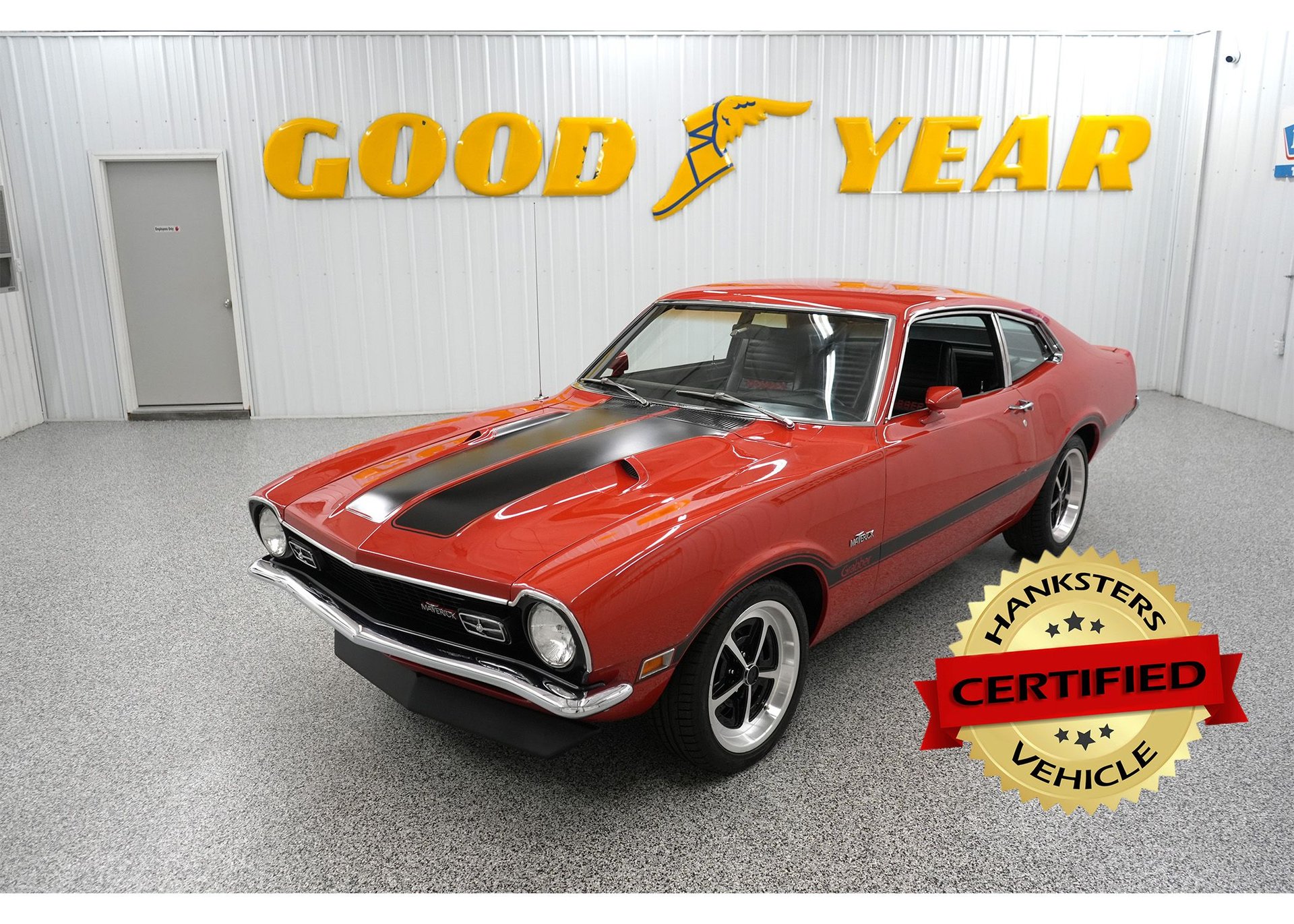
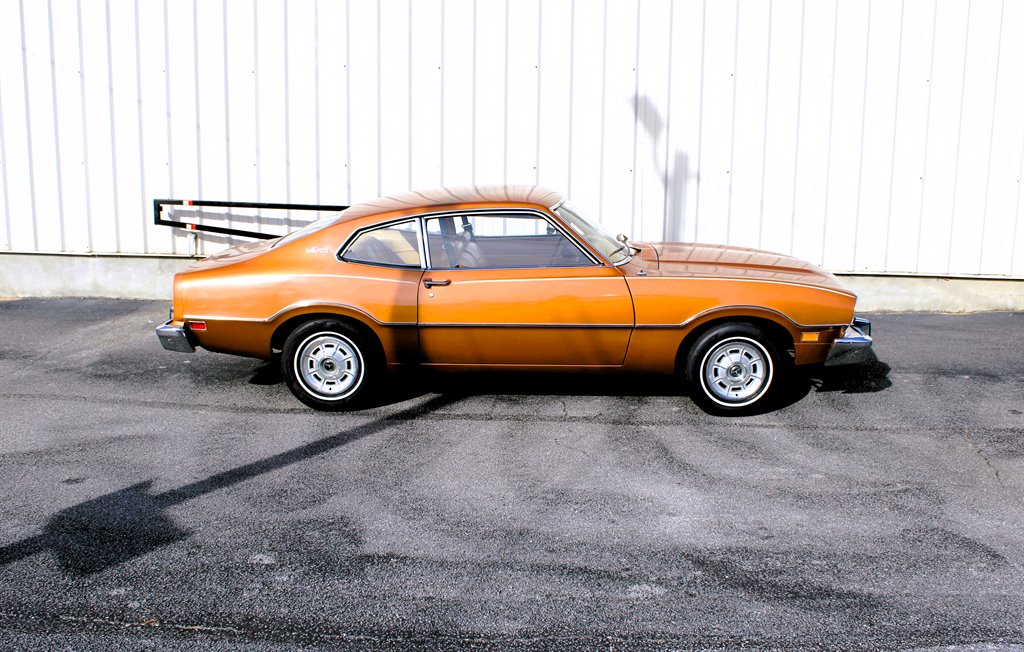
The other identity split is the bumper change, visible from across a car park and more reliable than a seller's memory. A 1970–72 car has slim chrome bumpers held close to the bodywork. A 1973 car has the enlarged front bumper only — a transitional look that is correct for that year, not evidence of a mismatched car. A 1974 or later car has the large energy-absorbing bumpers at both ends, with filler panels between bumper and body. Sellers occasionally fit early bumpers to late cars to chase the early look; the swap is well known and not dishonest in itself, but it must be declared and priced as a modification, and a casual conversion shows in uneven gaps and improvised brackets. Conversely, a supposedly early car wearing big bumpers has either the wrong year in the listing or replaced structure you need to investigate. The bumpers are your first dating test, before you open a door.
Equipment is modest throughout. Air conditioning is desirable in the southern states where so many of these cars survive. Power steering and power brakes are options on most years; front discs are optional from the mid-seventies and standard by 1976, and a disc-braked car is worth a preference. Vinyl roofs deserve suspicion: vinyl traps moisture against the steel beneath it. No option is rare enough to rescue a rotten car, and none is essential enough to reject a sound one. You buy the shell first, the engine second and the options last.
Engines and gearboxes
Four engines power every Maverick ever built, and all four are among the best-understood engines in the American industry. Three are versions of one straight-six family and one is the small-block V8 that powers half the Fords of the era. There are no bad choices here, only different characters and running costs.
The inline sixes — 170, 200 and 250
Ford's small six — the Thriftpower family that begins life in the 1960 Falcon — is a cast-iron, overhead-valve, seven-main-bearing design of unusual smoothness and durability for a budget engine. In the Maverick it comes in three sizes sharing almost everything except bore, stroke and character. The 170 cubic-inch (2.8-litre) engine is the launch base engine, quoted at 105 hp gross, and it is adequate rather than willing: it holds motorway speed and returns the best economy of the three, but works hard up long grades with a load aboard. The 200 cubic-inch (3.3-litre) engine, at 120 hp gross, is the sweet-tempered middle choice and the commonest six in early cars — noticeably more relaxed than the 170 for no real penalty in economy. The 250 cubic-inch (4.1-litre) engine, added during 1970, is a stroked development with more torque everywhere; it is the six that feels unstressed, suits the automatic and air conditioning best, and powers most later six-cylinder cars.
All three share the family's defining feature: the intake manifold is cast integrally with the cylinder head. The log-shaped manifold runs along the side of the head, and a single-barrel carburettor — an Autolite or Motorcraft 1100-series on the smaller engines, a Carter or Motorcraft single-barrel on the 250 — sits on top of it. The design is cheap, impossible to misalign, and a genuine restriction on breathing, which is why these engines respond so little to conventional tuning without head work. It also means a cracked manifold surface is a head problem, not a manifold swap, and an exhaust leak at the head face — a ticking that rises with load and fades as the engine warms — is cured by machining and gaskets, not by tightening bolts that are usually already seized or snapped. Budget for drilling out at least one broken exhaust stud on any six that ticks; it is the norm, not bad luck.
The sixes' virtues are longevity and tolerance. The bottom end is strong, the valve gear is simple with hydraulic lifters needing no routine adjustment, and the engines run acceptably on modern unleaded fuel, though you should watch valve-seat condition on a high-mileage head never rebuilt — hardened seats are a standard part of any competent head overhaul and settle the question. The weaknesses are age items. The single-barrel carburettors wear their throttle shafts and leak air, producing a hunting idle and a flat spot just off idle that owners misdiagnose for years; spray a little carburettor cleaner at the shaft ends on a running engine — if the idle changes, air is entering where it should not, and a rebush or replacement carburettor, not another afternoon of mixture adjustment, is the cure. Expect a few hundred dollars for a properly rebuilt carburettor, fitted and set up. Heat soak after a hot shutdown vaporises fuel in the small bowl and makes hot restarts crank long; a phenolic spacer, correct fuel-line routing and a healthy cooling system reduce it. Distributor shaft bushings wear and scatter the timing — you see a timing mark that dances under the strobe instead of holding still. Points ignition is standard on early cars; Ford's Duraspark electronic ignition arrives on mid-seventies cars, and its modules fail with heat and age, so a car that dies when hot and restarts when cool accuses its module or pickup first. A spare module in the glovebox is cheap insurance.
Oil leaks on a six are routine: the rocker cover warps and weeps, and the rear main seal seeps. What matters is consumption and pressure, not seepage. A six that holds good oil pressure hot, does not smoke blue on the overrun after a long downhill — the worn valve-guide and seal signature — and does not rattle from the bottom end cold is a sound engine whatever its odometer claims. Timing chains stretch into a slapping rattle at the front cover; replacement parts are in the low hundreds of dollars, often combined with the water pump, whose bearing play you check by rocking the fan.
The 302 V8
For 1971 Ford offers the 302 cubic-inch (5.0-litre) Windsor small-block, and it changes the Maverick from an economy car into something genuinely quick for its size and price: cast-iron block and heads, hydraulic lifters, a Motorcraft 2100 two-barrel carburettor, and a single exhaust on most cars. In 1971 form it is quoted at 210 hp gross; under net ratings the figure falls on paper through the early seventies, and the mid-seventies emissions-era versions are softer still, with lower compression and milder calibration. Do not let the paper decline mislead you in either direction: a 1971 car is not a rocket and a 1975 car is not a slug, and a well-kept late 302 in a light two-door still feels brisk today.
The engine's strengths are the small-block's strengths everywhere: a deep parts supply, universal mechanic familiarity, and a bottom end that tolerates mileage and mild neglect. Its Maverick-specific points are about installation and survival. The bay is tight: manifolds sit close to the shock towers, plug access is a knuckle-scraping exercise, and heat builds in traffic, ageing leads, hoses and ignition modules. V8 cars also carry the parts everyone wants — the engine, the stronger 8-inch axle, the five-lug running gear — so a V8 has often lived a harder, more modified life than a six. Inspect one as a modified car until proven otherwise: headers fitted with varying competence, carburettor and intake swaps, a four-barrel conversion done without attention to jetting or cooling, evidence of racing. None of that is disqualifying, but all of it must be visible in the price.
Mechanical checks mirror the sixes with V8 emphases. The 2100 two-barrel's characteristic faults are a perished accelerator-pump diaphragm, which produces a stumble the moment you open the throttle, and a warped air-horn or leaking power valve that richens the mixture and soots the plugs; both are rebuild-kit items. The timing chain stretches — a slack chain shows retarded, wandering timing and lazy response — and the factory single exhaust strangles the engine enough that a properly made dual system is the most rewarding change you can make to a late car, where inspection rules allow it. Cooling deserves respect: a V8 with a marginal radiator, missing shroud or slipping fan will overheat in traffic, and overheating warps heads. A full cooling overhaul sits in the mid hundreds of dollars in parts and is money spent before your first long trip. A full rebuild of a tired 302 costs in the low-to-mid thousands for a quality stock job; that is why a sweet-running original engine is worth real money over a freshly painted unknown one.
One myth needs correcting plainly: the Maverick is never sold with the Boss 302, the 351 or any big-block from the factory, whatever a seller's grandfather is said to have ordered. The 302 two-barrel is the largest factory engine of the run. Cars exist with later swaps — 351 Windsors, four-barrel 302s, fuel-injected 5.0 conversions — and a well-executed swap can be a fine car, but it is a modified car, valued on workmanship, never on a factory story. The VIN's fifth character states the engine the car was built with. A car born a six and converted to a V8 is worth converted-car money, less than factory-V8 money: factory cars carry the correct ancillary hardware throughout, while conversions vary from thorough to dangerous.
Gearboxes — the 3-speed manual and the C4 automatic
Two gearboxes cover almost the entire run, and most survivors are automatic. The standard gearbox is a three-speed manual, column-shifted on plain cars and floor-shifted on sportier ones, fully synchronised and light in action. It suits the sixes well and the 302 adequately. Its age faults are linkage faults more than gearbox faults: the column shift's bushings and rods wear until the change becomes vague and baulky, with first and reverse hard to find and a rattle through the lever at cruise. Rebuilding the linkage with new bushings — parts in the tens of dollars and an afternoon's patience — transforms a car owners were blaming on synchromesh. Inside the box, listen for bearing whine that follows road speed and for jumping out of gear on the overrun, which points to genuine internal wear; a rebuild is a specialist job in the high hundreds to low thousands of dollars, and good used boxes remain findable because so many cars have been converted to automatic or later overdrive gearboxes.
The optional gearbox, and the one in most cars you will view, is Ford's C4 Cruise-O-Matic: a three-speed automatic fitted behind every engine in the range, and one of the most durable, best-supported automatics ever made. A healthy C4 shifts cleanly, engages drive and reverse without a long pause or a thump, and does not flare — revs rising without drive — on the change from second to third. Its failure progression is usually gentle and legible. Old fluid and a clogged filter cause lazy shifts that a service sometimes fully cures. Worn clutch packs flare under load. A converter that shudders at light throttle in top is asking for replacement. Hard seals, shrunk by age and heat, cause the classic cold-morning delay: the car sits for seconds before engaging drive when cold, then behaves all day as the seals soften with warmth. That is a rebuild announcement, not an immediate breakdown, but price it as one: a quality C4 rebuild sits in the low-to-mid thousands of dollars fitted, while a fluid and filter service is a hundred-dollar-scale job to treat as a diagnostic, not a cure-all. Check the fluid on every viewing: red and sweet-smelling is right; dark and burnt in a box that still shifts well means a service gap, and the same fluid in a box that flares means the rebuild is already due.
Driveline details deserve a minute on any test drive. The rear axle is a Ford 8-inch unit on most cars — strong, quiet, with a drop-out carrier — and its age faults are a pinion-seal leak, wheel-bearing rumble that changes with cornering load, and a clunk on taking up drive from worn universal joints or excess backlash. Universal joints are cheap; a worn axle is a rebuild in the high hundreds. Five-lug wheels accompany the V8 and most later applications, while early sixes may carry four-lug hubs — a quick clue to whether a car matches its claimed specification. Engine and gearbox mounts sag and split with age, producing a thump on take-off; mounts are cheap, and fresh ones make an old car feel a class tighter.
Problem areas
A Maverick rarely dies from its engine or gearbox. It dies from water — water that enters where Ford's sealing fails, sits where Ford's drainage is marginal, and eats a unit body with no separate chassis to fall back on. Read the rust sub-section as the price-setting part of the guide: mechanical faults are bounded and fixable for known money, while structural rust is open-ended, and the difference between a car that needs floor pans and one that needs a cowl, torque boxes and rails is the difference between a project and a parts car.
Rust — cowl, floors, torque boxes and the structure
Start at the cowl, the Maverick's signature failure and the one most often hidden by fresh carpet. The plenum chamber at the base of the windscreen collects air for ventilation and the heater through the vent grille in front of the screen. Leaves and pine needles fall through that grille, lodge in the plenum's corners, hold moisture against thinly protected seams, and rot the cowl sides from the inside out. The first symptom is water on the front floor in rain or after washing, dripping from under the dash. The consequence most buyers notice is front floor pans rusted through, because every leak ends up under the front carpets, where matting holds the water against the steel indefinitely.
The test is simple and non-negotiable. Pour a jug of water slowly into the cowl vent grille while a helper watches under the dash on both sides with a torch. Water should run out through the drains onto the ground behind the front wheels. Water inside — at the cowl sides, down the kick panels, dripping from the heater box — proves cowl rot or blocked drains, in that order of expense. Blocked drains clear with wire and compressed air. A rotted cowl is one of the most labour-intensive repairs on the car, because access means removing the dash, the heater assembly and, for a proper job, the front wings; professional repair runs well into the thousands of dollars, and many decent Mavericks have been scrapped over exactly this. Inside, lift the front carpets and underlay — do not accept glued-down carpets as a reason to skip this. Look for original pressings and spot welds, for patches pop-riveted or fibreglassed over rot, and for the mildew smell that says the leak is active. A car with new front pans has had the symptom repaired; your cowl test tells you whether the cause was repaired with it.
From the floors, work outward to the torque boxes: the boxed reinforcements where the front structure and rear spring hangers tie into the floor and sills, and the load path that keeps a unit body stiff and its doors aligned. They rot from the inside, fed by road spray and blocked drains, hiding behind underseal until the box is soft. Prod them — with permission, with the blunt end of a screwdriver — and watch for flex and crunching. Gone torque boxes show in the panel gaps: doors that drop beyond what hinge pins explain, a bonnet that no longer sits square, looseness over bumps. Floor pans alone are a known job — reproduction pans are available, and professional replacement of both front pans sits in the low thousands of dollars. Torque boxes, sills and rails together are a different conversation: a car needing all three is a restoration candidate for someone with a welder and a winter, not a driver you buy at driver money.
Continue the circuit. The rear wheel arches trap mud at the lip and rot from the inside out; bubbles at the arch lip mean the metal behind is already perforated, because paint blisters from the back. The trunk floor and its drop-offs collect water from perished boot seals and failed tail-light gaskets; lift the mat and spare wheel and check the seams where the drop-offs meet the quarters. The battery tray and the apron beneath it rot from decades of acid spills, and the front aprons and shock towers need care: the towers carry the upper arms and the coil springs' loads, so cracking or rot there is structural in the truest sense. Look for factory spot welds, amateur plating, and towers that lean — a car that cannot be aligned to specification often has a tower problem or a history of impact, and an alignment printout is worth asking for. Door bottoms, lower front wings and the rear valance rust cosmetically and are available as repair panels; they matter to value, not safety, so rank them accordingly — visible and honest, unlike the hidden structure above.
A word on underseal and fresh paint, because Mavericks attract both. Thick, fresh underseal applied just before sale hides exactly the seams and boxes this section tells you to inspect, and traps moisture against thin metal. Fresh paint with no photographic record is the same problem one layer up. Treat "rust-free" as a claim your screwdriver, magnet and cowl test verify. Structure first, cosmetics last.
Fuel tank, filler and vapour problems
The fuel system is conventional — a steel tank at the rear, a mechanical pump on the engine, a single line between them — and its problems are age and layout. The tank rusts in two directions. From the outside, the top face and straps collect road dirt and moisture, especially on cars that have sat on grass or gravel. From the inside, decades of fuel, condensation during long storage and modern ethanol-blended fuel, which absorbs water and attacks old materials, produce scale that sheds into the line and blocks filters and jets in a cycle owners mistake for a carburettor fault. The test is embarrassingly simple: look at the fuel filter. A filter that fills with rust-coloured debris within a few hundred miles of being changed is reporting a dying tank, and no carburettor rebuild will outrun it. A replacement tank is a few hundred dollars in parts and a straightforward fit; sealing an original tank is worthwhile only where the steel is genuinely sound, because sealer over active rust is a postponement, not a repair.
The filler and venting cause the characteristic vapour complaints. The filler neck and its rubber connections perish and weep, particularly after a tank removal done without renewing them, and a fuel smell at the rear after filling points here first — and to the vent line and, on emissions-era cars, the charcoal canister and its hoses, which crack until the system vents under the bonnet instead of through the canister. Vapour lock is the hot-weather companion fault: fuel vaporising in the line or pump, so the car fades and dies in traffic and restarts after a cooling pause. The usual contributors are a fuel line routed too close to exhaust heat, a weak mechanical pump, and under-bonnet temperatures raised by a missing shroud or marginal radiator. The test that separates vapour lock from ignition failure is timing and temperature: ignition failure is usually sudden and total, hot or cold; vapour lock builds with heat soak and load, and the engine often fires immediately on a splash of fuel down the carburettor. Cure the causes in order — pump output, line routing, cooling health — before reaching for an electric pump, which masks a dying mechanical pump if fitted blindly.
Two safety notes. Any fuel smell in the cabin or boot is a stop-and-fix fault, not a characteristic: the sender seal, filler-neck hose and line unions are the usual sources, all cheap. And on a car that has sat for years, replace every flexible fuel hose as a matter of course — ethanol-aged rubber that looks acceptable can weep under pressure.
Suspension, steering and brakes
The front suspension is the Falcon pattern: coil springs acting on upper control arms, with spring load carried into the shock tower, lower arms located by strut rods, and an anti-roll bar on most cars. Ball joints wear and, on a car whose grease history is unknown, must be checked with the suspension loaded and unloaded as the design requires, because a joint checked the wrong way can feel tight while it is not. The upper-arm inner shafts and bushings are the known wear point: lubrication depends on grease actually reaching the shaft, and a dry, worn shaft creaks and groans over bumps in a way owners misattribute to springs. Bushings throughout perish and split, adding clonks and an imprecision that makes the car wander. A full front-end rebuild with quality parts sits in the high hundreds to low thousands of dollars and transforms the car; budget for it on any example that has not demonstrably had it, and for an alignment afterwards, always.
At the rear, leaf springs carry the 8-inch axle. Springs sag — measure ride height side to side, because a car low on one corner shows a tired spring, a bent mounting or structural movement — and spring and shackle bushings perish into a looseness you feel as rear-end steer over bumps and in crosswinds. Shock absorbers are cheap; a car that bounces twice after a firm push on each corner needs them. Steering is recirculating ball, manual or power-assisted, and wear shows as free play at the rim before the road wheels respond — a couple of inches is the outer limit on a manual car, and more means the box, idler arm, centre link or tie-rod ends are worn, each testable by watching where movement is lost while a helper rocks the wheel.
Brakes divide the range. Most early cars have drums all round, which work adequately when adjusted and fade and pull when they are not: a car that pulls under braking has a contaminated shoe, a seized wheel cylinder or an out-of-round drum, and each wheel must be checked rather than the system blamed. Front discs, optional later and standard by 1976, are preferable — simpler to live with, better in the wet, easier to inspect. On any car, steel lines corrode along the rear axle and under their floor clips, flexible hoses crack, master cylinders leak internally — the pedal that sinks slowly at a standstill with no external leak — and a car that has sat will have seized cylinders and callipers. A complete brake overhaul, in the mid hundreds to low thousands depending on how much hard line must be replaced, is not optional on a car with unknown history: you do it before the car carries your family, and price a car that needs it accordingly.
Interior, trim and electrics
The interior is where a Maverick's budget origins show most, and where completeness matters more than condition, because trim is the hardest part of the car to replace exactly. Seat vinyl splits along its seams and embrittles in sun; the foam beneath collapses on the driver's side first, so you sit in a hollow and blame the springs. Door cards warp, headlinings sag, and the padded dash top cracks in the sun so thoroughly that a good uncracked original is a genuinely valuable part of a car. Reproduction seat covers, carpets and headlinings are available and reasonably priced; correct door cards, small trim pieces, switches and brightwork are the hunt. So inspect trim as you inspect structure: a complete, shabby interior beats an incomplete, tidy one, because shabby is a cleaning and recovering bill while incomplete is a parts search measured in months. Check that both window winders work and the glass runs true — regulators and rollers wear, and a window that drops into the door is a small job you would rather price than discover. On a Grabber, check the specific trim is present and correct, remembering the identity rules: trim proves nothing without codes, but missing correct trim on a coded Grabber is real money off.
The heater ties back to the cowl problem: a leaking core fogs the windscreen with a sweet-smelling mist and soaks the passenger floor — easily confused with a cowl leak, which is why the cowl water test and a cooling-system pressure test settle which water is which. Core replacement is a dash-out labour job with a cheap part, so "it just needs a core" is worth several hundred dollars of negotiation.
Electrics are simple and mostly robust, and the wiring suffers the usual fifty-year insults — corroded earths, chafed looms, amateur additions. The characteristic presentation is dim, flickering or one-sided lights and gauges that lie, and the cure is almost always cleaning and remaking earth points before replacing components. The fuel gauge deserves a warning: senders fail and repro senders are not always accurate, so a gauge reading low is a sender question, not an invitation to run the tank dry. Ignition switches wear until the car cuts out over bumps; the test is a gentle wiggle of the key on a running engine, watching for a stumble. Air conditioning, where fitted, usually needs seals, hoses and a refrigerant conversation; price a non-working system as absent, because recommissioning is a specialist bill in the high hundreds and up, and a working system is worth a genuine premium in a southern car.
How to inspect one
Inspect in this order, and do not let the seller's tour reorder it for you. The sequence runs from identity to structure to mechanics, because a car that fails an early step does not need the later ones, and a warm, freshly washed car presented engine-first is arranged to make you fall for the parts that are cheapest to fix. Take a torch, a cloth-wrapped magnet, a screwdriver, a jug for water and a helper. Allow an hour. A seller who resists any step is giving you the result of that step for free.
- Start with identity, cold and unstarted. Read the VIN plate at the base of the windscreen and the data plate on the driver's door. The first character gives the model year, the fifth — the engine code — states the engine the factory fitted, and the body codes state body and trim. Photograph both plates. A car whose VIN year contradicts its bumpers — slim bumpers on a claimed 1974, big bumpers on a claimed 1971 — needs the discrepancy explained before anything else.
- Settle the Grabber question on paper, if it arises. If the car is sold as a Grabber, the door-plate codes must support the package, and ideally a Marti Report from the VIN confirms the factory options. Stripes, spoiler, scoops and mirrors prove nothing, because they all bolt on. If the codes do not support it, reprice the car as the standard two-door it is and continue — it may still be a good car at the right money.
- Do the cowl test before anything cosmetic. Pour water slowly into the cowl vent grille while your helper watches under the dash with the torch, as set out in the rust section. Water inside means cowl rot or blocked drains; water running cleanly out behind the front wheels is one of the best signs a Maverick can give you.
- Lift the front carpets and underlay. Check the front floor pans for original pressings, patches and active damp, and smell for mildew. Then lift the boot mat and spare wheel and inspect the trunk floor, drop-offs and seams. A glued-down carpet you cannot lift moves the car to the reject pile unless the price already assumes the worst.
- Get underneath, or get the car on a lift. Work the structure in order: torque boxes, sill inners, floor edges, rear spring hangers, front aprons and shock towers, rear sections around the tank. Prod with the blunt screwdriver end, look for fresh underseal hiding exactly these areas, and check the brake and fuel lines while you are there. This step, with step 3, decides whether the car is a driver, a project or a parts car.
- Walk the outside with the magnet. Arch lips, sill ends, lower wings, door bottoms and around any vinyl roof. Note filler by the magnet's weakening pull and by ripples in the reflections. Check panel gaps and door drop, and read the bumpers against the claimed year again.
- Start the engine from cold — insist on cold. A six or a 302 should fire readily, settle to a steady idle and show no blue smoke beyond a puff, no bottom-end rattle, and no timing-mark dance under a strobe if you have one. Watch the exhaust on a long downhill later for the overrun smoke that marks worn valve guides and seals, and listen at the exhaust manifold for the ticking of a leaking joint or snapped stud.
- Interrogate the carburation and fuel system. A hunting idle and a flat spot off idle point to throttle-shaft wear — confirm with the cleaner-spray test at the shaft ends from the engines section. Ask when the fuel filter was last changed and look at it: rust debris in a fresh filter is the tank reporting itself, per the fuel section. Smell for fuel at the filler, the sender and under the bonnet.
- Check the gearbox the way it will actually be used. On a manual, work the change at a standstill and on the move; vagueness is usually linkage bushings, jumping out of gear is not. On a C4, check the fluid's colour and smell, then note engagement from rest — a long cold delay is the hard-seal warning from the gearboxes section — and feel for flare on the second-to-third change under load and converter shudder at light throttle in top.
- Drive it long enough to get it fully hot. Twenty minutes minimum, including a hill, a stretch at motorway speed and some low-speed manoeuvring. You are testing for wander and clonks from worn front bushings and ball joints, rear-end steer from perished spring bushings, steering free play, brake pull and fade, overheating in traffic after the fast run, and the hot restart at the end — the vapour-lock test a short drive never reaches. End with the parking brake on a slope.
- Run every electrical and interior item. All lights, wiper speeds and washers, the heater blower on every speed, the horn, the gauges — treating the fuel gauge as a claim, not a measurement — and both windows up and down. Smell for the sweet fog of a leaking heater core with the heater on, and wiggle the ignition key gently on the running engine to test the switch. Note missing trim as money: complete and shabby beats incomplete and tidy.
- Close with the paperwork. Compare the title VIN with the plate you photographed in step 1, character by character. Ask for the maintenance record, the during-work photographs behind any restoration claim, and an alignment printout if the car has had front-end work. Only then weigh cosmetics and options, because by now you know what the car is, and cosmetics are the cheapest part of a Maverick to change.
Values
There are no prices in this section, deliberately: the listings and recorded results carried with this guide show you the current numbers, refreshed as the market moves, and your job is to learn how to read them. What follows is the structure underneath those numbers.
Condition is the first and largest driver, and on this model condition means structure before anything else. The spread between a genuinely solid car and a cosmetically similar one with cowl, floor and torque-box repairs ahead of it is not a percentage adjustment; it is a difference of kind, because the structural work costs more in labour than the finished car may justify, and the market knows it. At the top sit cars combining a sound shell with a verified identity and a history file. At the bottom sit the projects, and the project-to-driver gap is wider here than for a scarcer car, for a simple reason: sound drivers exist in reasonable numbers, so nobody has to buy a rotten one, and the rotten ones are priced by their parts. Compare shells first and photographs second.
Variant is the second driver, in a clear order. Factory 302 V8 cars carry a premium over equivalent sixes, and within the V8s the early slim-bumper two-doors carry the strongest following, combining the lightest shell, the best performance and the cleanest looks. The Grabber premium is real but conditional: it attaches to cars whose codes prove the package, and largely evaporates for a striped standard car once a buyer does the check this guide describes — which is why the check matters, because asking prices are frequently set by the stripes rather than the codes. Four-doors sit below equivalent two-doors despite being more usable every day, a familiar market illogic that makes a good four-door the value route into the model. The Mercury Comet twin trades at a small discount to the equivalent Maverick for no mechanical reason at all. Late big-bumper cars sit below early cars of like condition, excepting well-preserved final-year cars bought by people who simply prefer them.
Originality and modification pull in opposite directions. A matching, unmolested car with its factory engine is the easiest car to value and to sell on. A six-to-V8 conversion or a four-barrel and header package is worth what its workmanship is worth to the person in front of it, usually less than the factory car and occasionally, for a beautifully executed restomod, more; listings show both kinds, and descriptions rarely distinguish them as carefully as your inspection must. Asking prices run ahead of achieved prices across this market, because sellers price from optimism, from money spent, or from the best car they have seen advertised rather than the car they own. Money spent is not value recovered — a structural welding bill is the cost of making the car saleable, not an addition to its worth — and recorded results, where they exist, are the corrective. Negotiate from the inspection: a list of costed faults is a firmer basis for an offer than any percentage off the asking figure.
Parts and ownership
Owning a Maverick is one of the least demanding ways into a 1970s American car, because the model sits inside the largest parts ecosystem in the hobby. Mechanically, the sixes and the 302 share service items and most wear parts with the Falcon, Mustang, Granada and a generation of Ford trucks and sedans, so filters, ignition parts, water pumps, brake components, suspension joints and C4 gearbox kits are ordinary motor-factor stock. Body and trim are tighter: good used panels are hunted, but the reproduction industry covers the predictable rot and wear — floor pans, carpets, seat covers, headlinings, weatherstrips and much of the brightwork — and the Comet twin doubles the pool of used trim and panels except for its unique grille and tail treatment. The parts that genuinely take searching are the model-specific small items covered in the interior section, which is why completeness matters more here than on a Mustang, where everything is reproduced.
Running costs are modest. The sixes are economical for their era and gentle on tyres and brakes; the 302 costs more in fuel and rear tyres if you use the performance, and no more in maintenance. Insurance through the classic market is straightforward, and agreed-value cover is worth arranging because market values and structural repair costs can part company. Servicing suits a competent home mechanic: the engines predate engine management, and the factory manuals and club knowledge base are deep. Budget annually for age items — hoses, belts, bushings, seals, fluids — and budget once, early, for the safety set if the history is unknown: brake overhaul, flexible fuel hoses, tyres by date code rather than tread depth, and a cooling refresh on a V8. Fresh tyres are the cheapest handling improvement there is.
Storage decides how much of the problem-areas section you ever meet. A garaged car used regularly asks for little beyond servicing; a car stored damp manufactures the cowl, tank and brake faults this guide describes, because every one is a moisture-and-stagnation fault. If you buy a car that has sat, treat recommissioning as a defined project — fluids, fuel system cleaned end to end, brakes overhauled, hoses renewed — rather than a series of roadside discoveries. Keep the history file you inherit and add to it, because the file is part of the car's value at the other end.
Which one to buy
- The all-rounder: a 250 six automatic two-door, 1971–73. The torquiest six with the C4 is the easiest Maverick to live with — relaxed, economical, simple — and the early cars keep the slim bumpers and lightest weight. For the buyer who wants to drive rather than tinker.
- The value buy: a sound four-door, any year. The market discounts the four-door, while the longer wheelbase makes it the better family car and cruiser. Buy the discount and let collectors pay the two-door premium.
- The performance pick: a factory 302 two-door, 1971–72, codes verified. The lightest shell with the strongest factory engine, bought only when the VIN engine code confirms the car was born a V8. A converted car at converted money is a fine second choice; at factory money it is not.
- The character pick: a genuine Grabber, six or V8, paperwork first. Buy the codes, not the stripes, and do not apologise for a six-cylinder Grabber — most were sixes. Verify with the door plate and a Marti Report before paying the premium.
- The late-car pick: a well-equipped 1976–77 with disc brakes. Standard front discs, the best equipment levels and usually the lowest asking prices make a preserved late car the rational buy if you are untroubled by the big-bumper look.
- The project pick: a complete, honest six-cylinder car with a sound cowl. Buy work where the money goes furthest: complete trim, a dry cowl, floors needing pans at most. A cheap V8 with a rotten cowl is the most expensive Maverick on the market.
The overriding rule: buy the shell, then the paperwork, then the engine — in that order, every time. A sound, verified six-cylinder car is a better purchase than a rotten or misdescribed V8, because structure and identity are the two things money cannot easily put back.
See the 3 Maverick cars currently listed.
For sale now
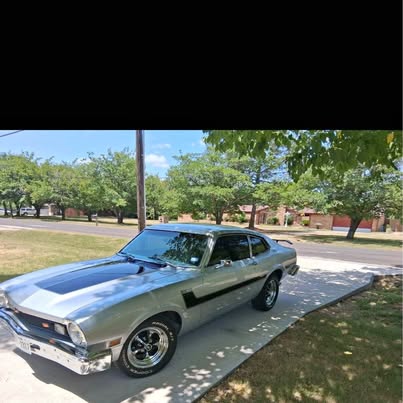 $20,000
Expand
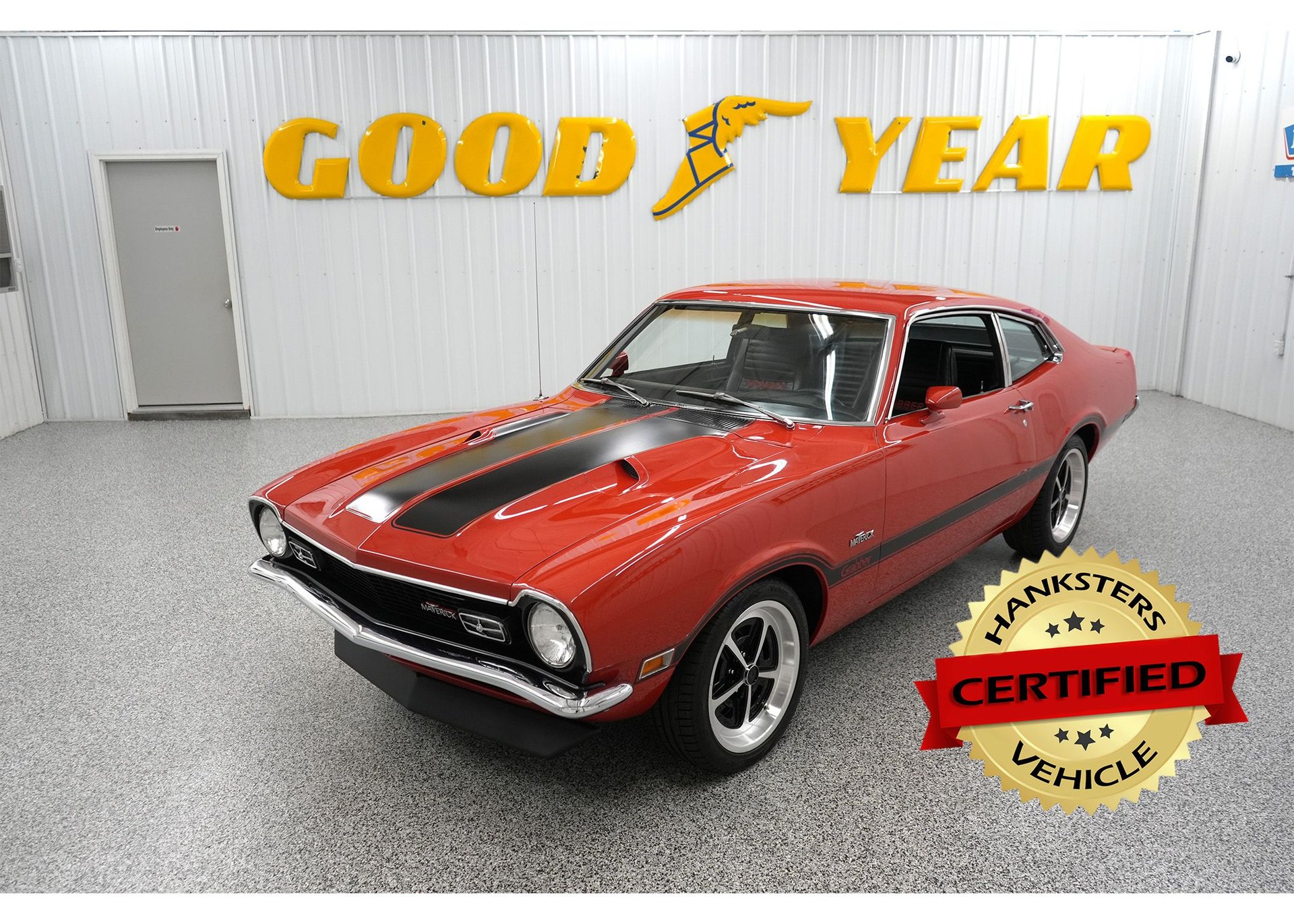 $39,900 · 93% above typical
Expand
 $49,995 · 142% above typical
Expand
What they sell for: Maverick sale prices.