
Honda Acty buyer's guide
Honda Acty -- the model's own buyer's guide: variants, values and what to check.
Years listed: 1990-2000 · Series: Acty
Overview and history
The Honda Acty is the smallest working vehicle Honda has ever sold in volume: a cab-over kei truck and van, built in Japan for the Japanese market only, engineered down to a legal formula rather than up to a price. Everything about it — the 660 cc three-cylinder engine under the load bed, the 12-inch wheels, the cab you sit in with your feet ahead of the front axle line, the three-way drop-side bed — follows from the kei regulations, the Japanese tax and licensing class that caps length, width and engine displacement in exchange for cheaper tax, cheaper insurance and, in rural Japan, exemption from the parking-space certificate a normal car requires. An Acty does the work of a side-by-side or a farm Gator with a roof, a heater, a proper gearbox and Honda build quality, at walking-pace running costs — in a grey import that was never sold here, which is precisely its appeal.
The name arrived in July 1977, when Honda replaced the TN360 and TN-V air-cooled trucks with a water-cooled design and called it the Acty — a contraction of "active", which tells you exactly who it was for. Kei trucks are Japan's working fleet: farmers, builders, fishermen, delivery firms and municipal crews run them by the hundreds of thousands. Honda was never the kei-truck volume leader — Suzuki's Carry and Daihatsu's Hijet outsold it — but the Acty carved out a loyal following on two things: a mid-mounted engine, laid down under the bed ahead of the rear axle in the layout Honda later made famous in the Beat sports car, and a reputation for the sweetest-running engine in the class.
The Acty's life falls into four generations. The first (1977–1988) was a 545 cc car built to the original 550-class rules. The second (1988–1999) is the one this guide concentrates on, because it is the one the American market actually buys: launched in May 1988 on the last of the 550 cc engines, then re-engined in January 1990 when the kei rules moved to 660 cc, and built in that form — HA3 and HA4 trucks, HH3 and HH4 vans — for the rest of the decade. The third generation (1999–2009) brought standard fuel injection and a softer cab; the fourth (2009–2021, truck only) carried the design to the end, Honda building the last Acty truck in 2021 and closing a 44-year run.
Why does a Japanese domestic-market truck from the 1990s have an American buyer's guide at all? Because of the 25-year rule. Vehicles never federalised for the United States become importable, outside the normal EPA and DOT certification process, once they are 25 years old — and the second-generation Acty crossed that line in the mid-2010s and has been arriving ever since, through specialist importers and the Japanese auction system. The result is a small, young American market with its own rules: condition is recorded in kilometres and auction grades, not restorations and matching numbers, and supply in Japan is deep while landed supply in America is thin.
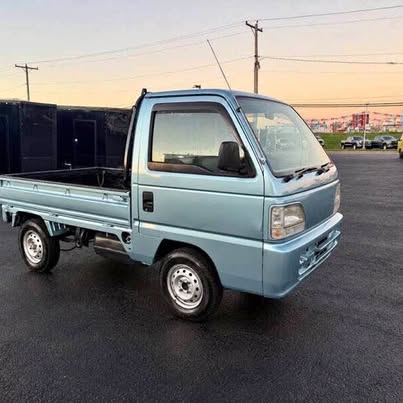
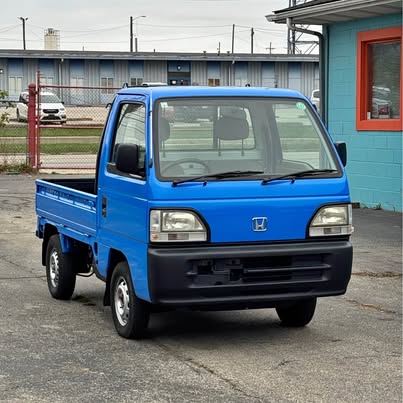
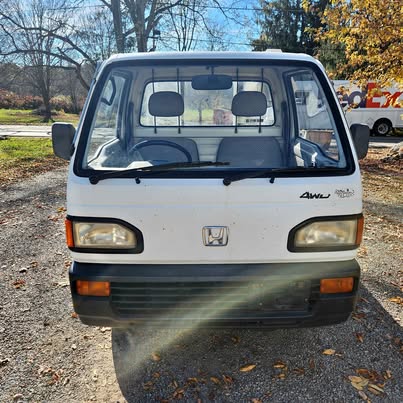
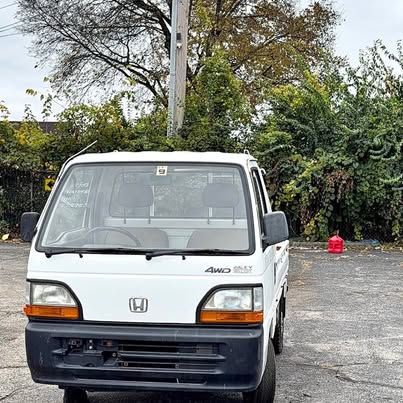
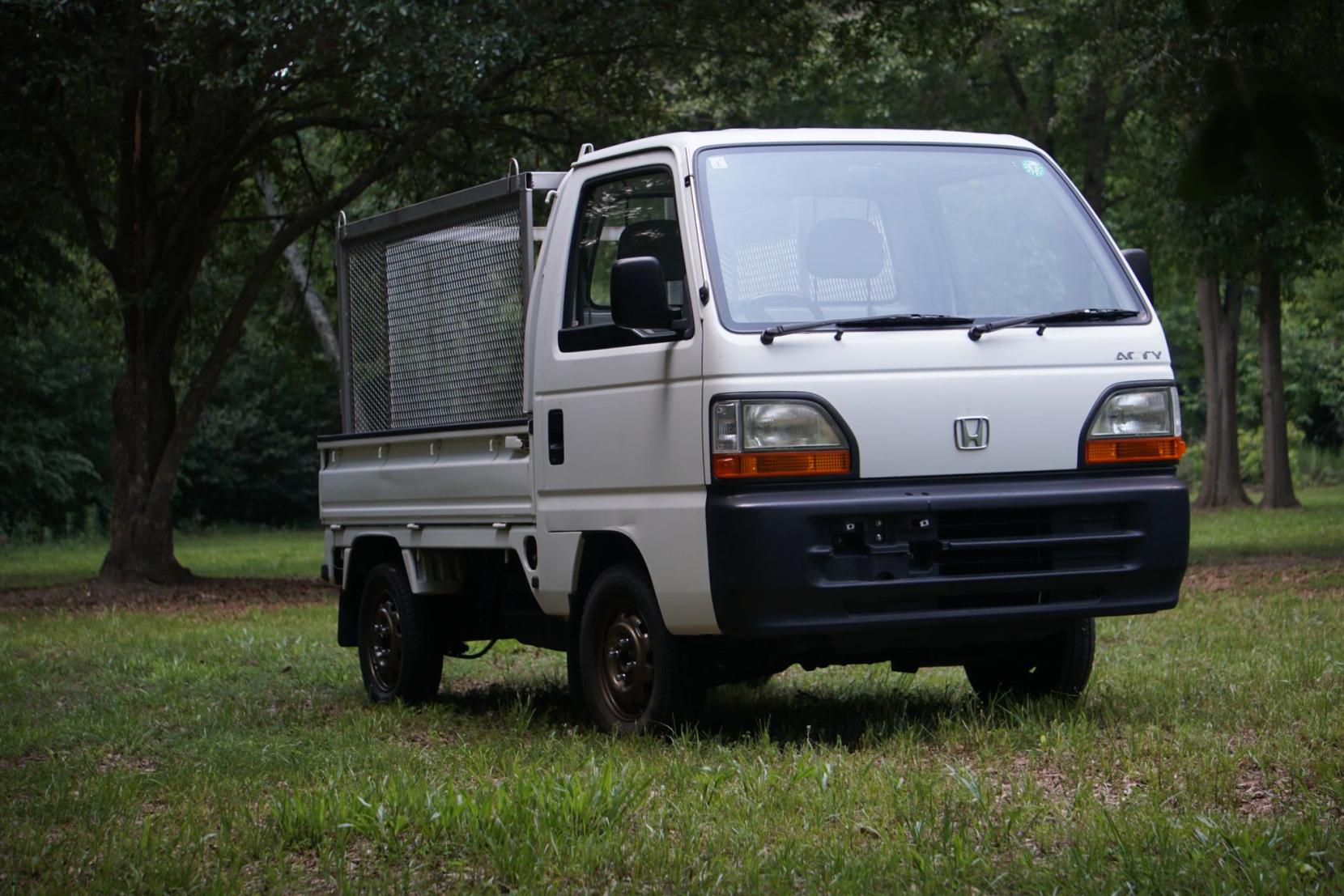
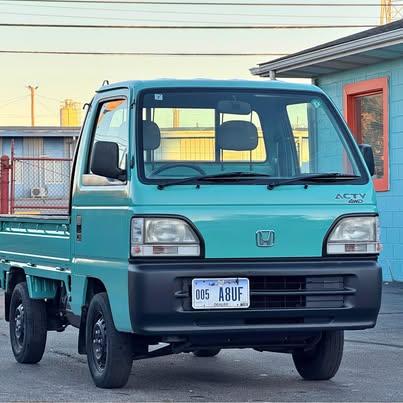
That shape shows in our own listings. We currently track 10 Actys, all of them for sale and all second-generation trucks from the 1990s: one from 1991, three from 1995, two from 1996, three from 1997 and one from 1998. Eight of the ten are manuals and two are automatics, which matches the Japanese fleet — the manual was the working default. Five are white, as most working Japanese trucks are, with two in turquoise, two in blue and one in grey. Six of the ten sit in Ohio, the rest across New York, New Jersey and North Carolina, and every one is a private Marketplace seller rather than a dealer — a fair picture of a market still made of individual importers and enthusiasts. The companion series guide covers the Acty family as a whole; this model guide goes deeper on the second-generation 660 cc truck — the HA3 and HA4, in the SDX trim most American buyers end up with.
One framing point before the detail. An Acty is not a small pickup in the American sense, and judging it like one leads buyers astray. It is a piece of Japanese municipal equipment with a Honda badge: payload is 350 kg (about 770 lb), the bed is roughly two metres long, and the cab fits two adults the way a phone box fits two adults. Judged as the most useful 660 cc object ever bolted together, it is superb; judged as a cheap Toyota Tacoma, it will disappoint you by lunchtime.
The models
Every Acty you will meet in America is a variation on one idea, but the badge, chassis code and trim decide what you are actually buying, and sellers — especially sellers copying Japanese auction descriptions — use the words loosely. Sort the car in front of you into the right box before you value it.
The naming works like this. Acty Truck is the pickup: a two-seat cab and a drop-side bed, in two-wheel drive (HA3 in 660 form) or four-wheel drive (HA4). Acty Van (HH3 two-wheel drive, HH4 four-wheel drive) is the same vehicle under a full-height box body — a working panel van with a sliding door each side and a tailgate. Acty Street is the passenger version of the van: windows all round, proper seats in the back, plusher trim, sold to families rather than fleets. The Street's plusher descendants were spun off as the Honda Vamos, a separate model line — a Vamos is a cousin, not an Acty, and sits outside this guide. Within the trucks, the trim ladder runs from the base STD through the SDX, the better-equipped car our listings centre on, with the four-wheel-drive Attack as a specialist work variant described below.
| Model | Years | Engine | Output | Built | Character |
|---|---|---|---|---|---|
| Acty Truck (first generation) | 1977–1988 | 545 cc two-cylinder (EH) | 28 hp | not published | The original; 550-class pioneer, now a curiosity |
| Acty Truck HA1 / Van HH1 | 1988–1990 | 547 cc three-cylinder (E05A) | about 34 hp | not published | Second-generation body on the last 550 engine |
| Acty Truck HA3 (2WD) | 1990–1999 | 656 cc three-cylinder (E07A) | 38 hp | not published | The core American import; simple, light, cheap to run |
| Acty Truck HA4 (4WD) | 1990–1999 | 656 cc three-cylinder (E07A) | 38 hp | not published | RealTime four-wheel drive; the snow-belt and farm pick |
| Acty Van HH3 / HH4 | 1990–1999 | 656 cc three-cylinder (E07A) | 38 hp | not published | The box-bodied worker; Street is its passenger trim |
| Acty Truck HA6 / HA7 | 1999–2009 | 656 cc three-cylinder (E07Z), injected | 46 hp | not published | Third generation; softer cab, standard PGM-FI |
| Acty Truck HA8 / HA9 | 2009–2021 | 656 cc three-cylinder (E07Z), injected | 46 hp | not published | The final car; truck only, newest of the line |
(Honda did not publish per-variant production figures a buyer can rely on, so the Built column is left honestly blank rather than filled with the invented totals that circulate online. Outputs are period Japanese figures. The bulk of landed stock, and everything in our current listings, is the 1990–1999 car.)
The 550 cars (1977–1990). The first-generation Acty and the earliest second-generation cars were built to the old 550 cc ceiling: a 545 cc two-cylinder in the original, replaced by the smoother 547 cc E05A three-cylinder in the 1988 redesign. Honest little trucks, but the wrong buy for most people in America: the smaller engine works harder, parts support is thinner than for the 660, and the cars are older and more worn. Buy one because you want an early car, not because it is the cheapest Acty in the classifieds.
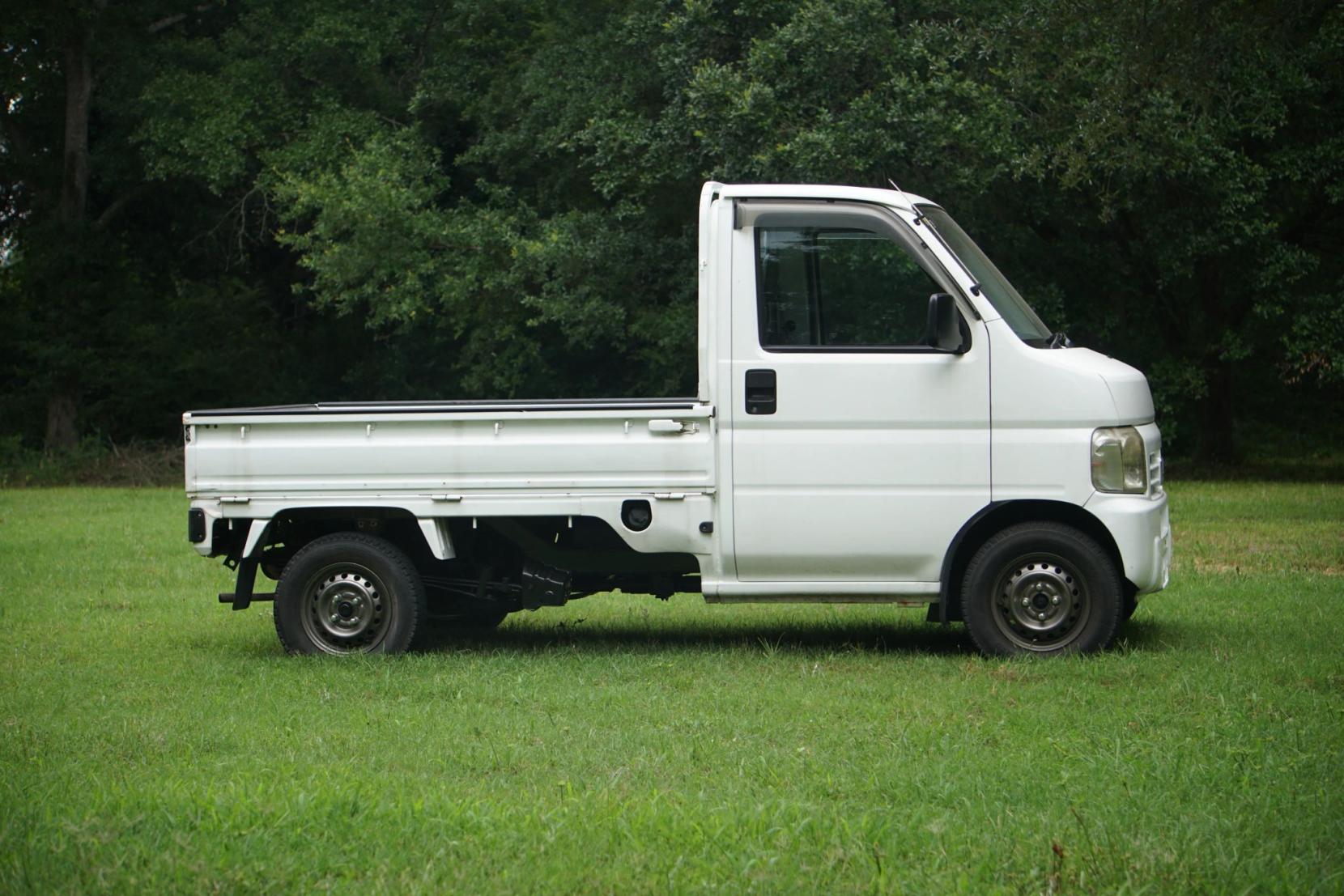
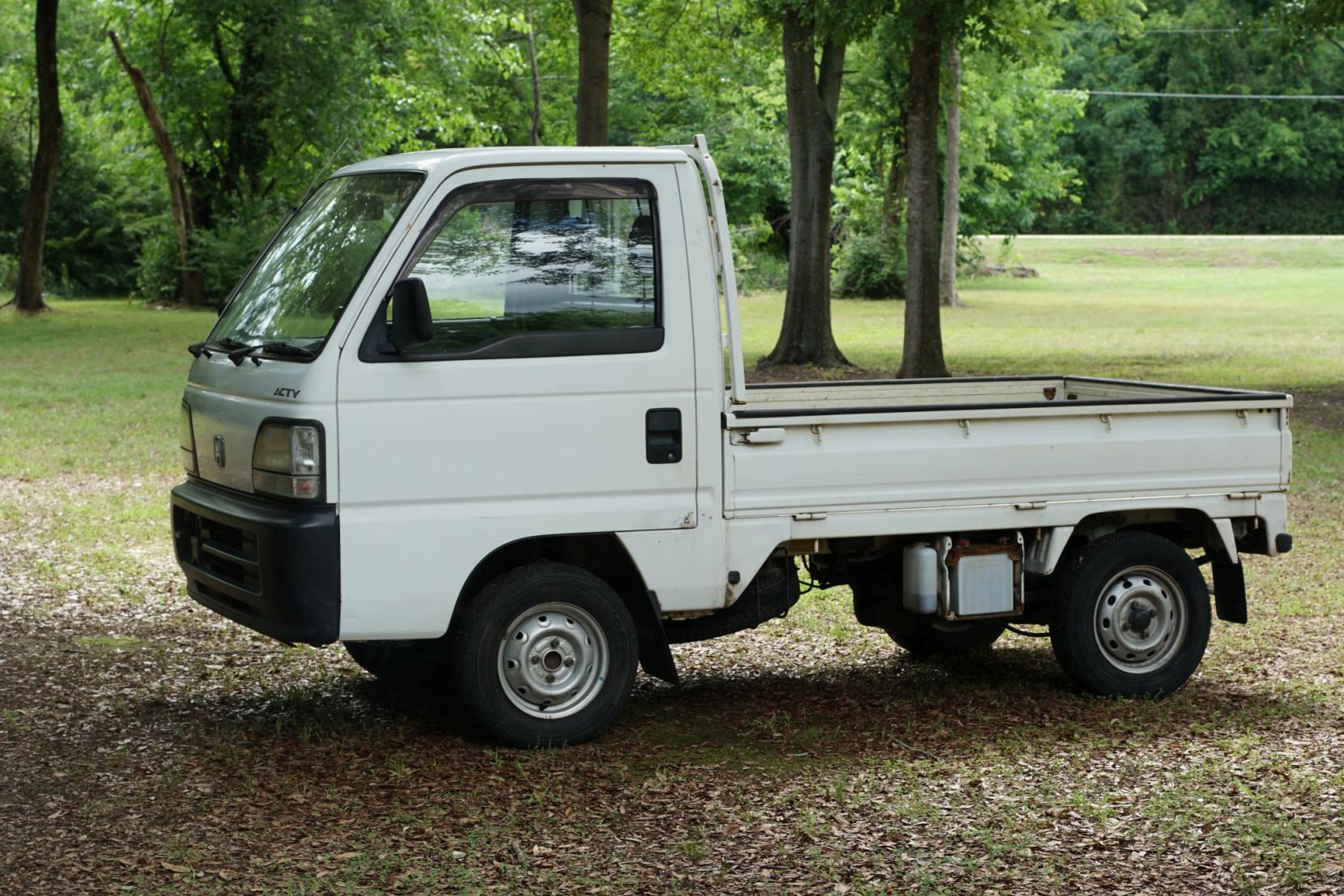
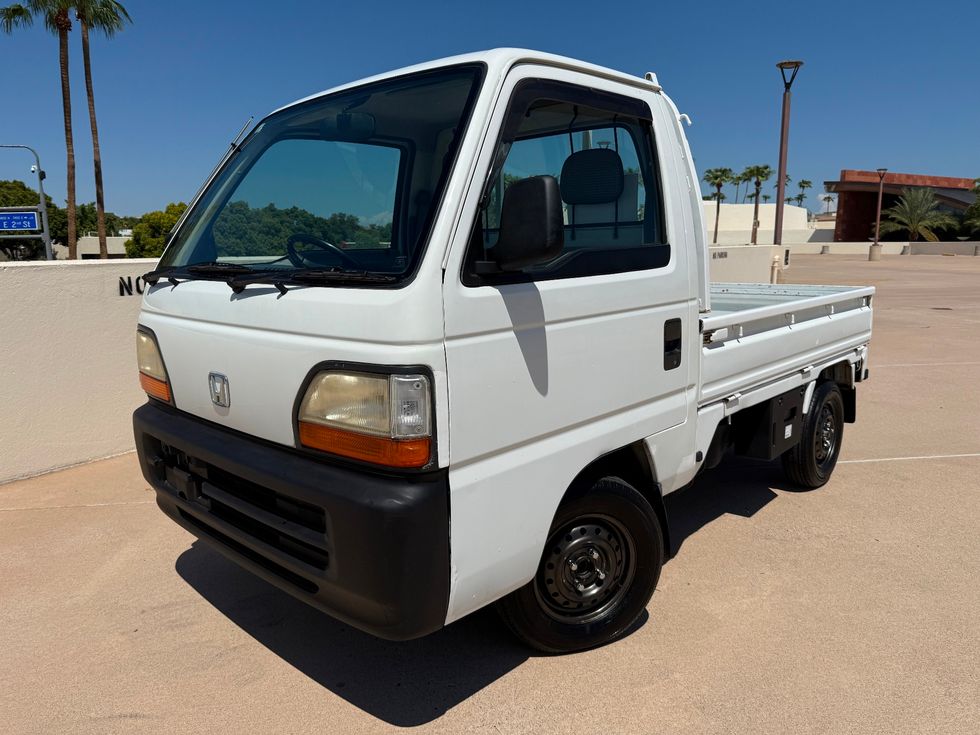
The 660 truck: HA3 and HA4 (1990–1999). This is the Acty of this guide. The January 1990 rule change let Honda fit the E07A, a 656 cc three-cylinder that transformed the car from adequate to genuinely willing, and the HA3 (rear-wheel drive) and HA4 (four-wheel drive) trucks were built in this form for nine years with only detail changes rather than facelifts you can date a car by. Almost everything an American seller calls an Acty is one of these. The bed is the working heart of it — steel, flat-floored, with sides and tailgate that all fold down (the "three-way opening" bed) and a payload rating of 350 kg. Under the bed sits the engine, mounted low and driving the rear wheels; on the HA4 a viscous-coupling RealTime four-wheel-drive system sends drive forward when the rears slip.
Trim: STD, SDX and Attack. The base truck — usually badged STD or sold unbadged — is a working tool: vinyl seats, minimal trim, steel wheels, and on early cars not necessarily air conditioning. The SDX is the deluxe trim and the sweet spot of the American market: air conditioning, better seat trim and cabin appointments — the equipment a private Japanese owner, rather than a fleet, tended to specify. It is the specification to benchmark others against. The Attack is the connoisseur's work truck: a four-wheel-drive variant with ultra-low gearing for crawling work, a rear differential lock, and a deliberately basic specification. Attacks are uncommon and command strong interest from buyers who know what they are — and are the easiest Acty to overpay for on the badge alone, since the low gearing that makes one priceless on a muddy farm makes it the most frantic of all Actys on the road.
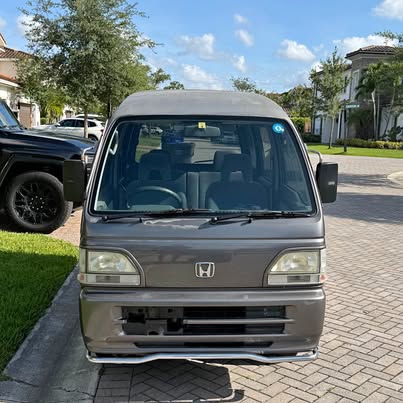
The vans: HH3, HH4 and Street. The van shares the truck's floor, engine and running gear under a tall box body, and divides into the commercial Van — sliding doors, a vast flat load space, hard plastic everywhere — and the Street, the passenger version with full glazing, folding rear seats and car-like trim. Vans are rarer in American listings than trucks; the Street has a following as a micro-camper base. Everything mechanical in this guide applies unchanged; what differs is the body, and a van body gives rust more seams to hide in, so the inspection section matters even more.
Model-year changes within the 660 run. Honda revised the car in detail rather than in leaps, and the changes that matter are these. Air conditioning refrigerant changed with the industry in the mid-1990s, so an early-1990s car may still be on the older refrigerant while a 1997 or 1998 car is on the modern type — check the label rather than assuming, because it changes what a re-gas costs. Fuel injection (Honda's PGM-FI) arrived late in the run on some versions and became standard on the third-generation car; a carburettor car and an injected car feel similar but service very differently, and the engine section separates them. Safety equipment crept in at the end of the decade — later cars are more likely to carry a driver's airbag. None of this is visible from a listing photograph, which is why the chassis plate and the Japanese paperwork are worth more than a seller's description.
Engines and gearboxes
The 550s: EH and E05A
The first-generation Acty's 545 cc EH two-cylinder and the 1988 car's 547 cc E05A three-cylinder belong to the 550 era, and you will meet them mainly in the earliest imports. Both are simple, carburettor-fed Honda engines, adequate rather than ample, and either has to be worked through the gears in a way the 660 does not. Their significance today is mostly negative — engine-specific parts are the hardest of any Acty to source outside Japan, and the cars are the oldest and most worked. As a default buy, skip to the 660.
The 660: E07A
The E07A is the engine that defines the American Acty market, and it deserves its good reputation. It is a 656 cc, water-cooled, three-cylinder unit with a single overhead camshaft and twelve valves — four per cylinder, unusual sophistication for a working truck of the period — driven by a timing belt. In the Acty it makes 38 hp in carburettor form, which sounds like nothing until you remember the truck weighs well under 800 kg in working trim: around town and on country roads an E07A Acty feels genuinely eager. It is the same engine family Honda tuned to 64 hp in the Beat roadster, and you can hear the kinship — a busy, willing three-cylinder thrum that loves revs.
In the truck the engine is mounted amidships, low under the load bed, ahead of the rear axle, driving the rear wheels. That layout is why the Acty handles the way it does — the mass is central, the nose light, the steering uncorrupted — and it dictates how you service it: access is from underneath and through panels in and under the bed, not by opening a bonnet, because there is no bonnet. Jobs that are trivial on a front-engined car involve more dismantling here, and the cooling system the engine depends on runs the length of the vehicle, a point the problem-areas section develops in full.
Carburettor cars. Most HA3 and HA4 trucks run a single carburettor with an automatic choke and a small forest of vacuum hoses controlling idle-up for the air conditioning, cold running and emissions functions. When it is right, a carburettor E07A starts easily and pulls without hesitation. When it is wrong, the cause is almost never the carburettor body itself: it is perished vacuum hose (there is enough of it that systematically replacing every hose is a legitimate first service, at trivial cost), a tired fuel pump, a clogged filter, or an automatic choke that has stopped choking. Ethanol in modern American fuel splits hoses and diaphragms Japanese fuel never troubled — another reason a freshly landed car deserves a full hose and filter refresh before you chase tuning. A proper rebuild is a few hundred dollars; the diagnosis is the skilled part.
Injected cars. PGM-FI — Honda's programmed fuel injection — reached the Acty late in the second-generation run and is standard on the third-generation E07Z. It removes the choke and vacuum-hose lottery and starts better in all weathers. Its failure modes are the usual electronic ones of the period: tired sensors, corroded connectors (an engine under a load bed lives in road spray), a fuel pump that has sat in stale fuel, and idle-control valves gummed with age. Diagnosis is by the system's self-diagnostic blink codes and basic fuel-pressure checks — about 2.5 to 3 bar at the rail is the order of figure to expect — before anyone sells you an ECU, which fails rarely and is blamed constantly. An injected car is the easier Acty to live with; a carburettor car is the easier one to fix at the side of the road.
The E07Z (1999-on). The third-generation car replaced the E07A with the E07Z, a development of the same 656 cc three-cylinder with standard PGM-FI and output up to 46 hp: smoother, cleaner, slightly stronger, and paired in the later trucks with a more car-like cab that makes the HA6 and HA7 noticeably calmer at speed. A turbocharged E07Z existed in related Honda models, but was not a mainstream Acty truck fitment, so treat any "turbo Acty truck" claim with suspicion and check the engine number.
Servicing the E07A properly. Three disciplines keep these engines alive, and the inspection section tests for all three. First, the timing belt: a failed belt means valve-to-piston contact and a bent-valve engine. Japanese practice treats the belt as a 100,000 km item, but on a 30-year-old import the calendar matters more than the odometer — a belt of unknown age is a belt you replace, with its tensioner and the water pump it gives access to, as a single job in the first month of ownership; realistically $600–1,000 at a shop. Second, valve clearances: the E07A uses mechanical adjustment, clearances close up with neglect, and an engine never checked is an engine quietly burning valves — the check is cheap, the cure for ignoring it is a head rebuild. Third, oil: the sump holds only around three litres, so the margin for neglect is small, and an engine that uses oil or breathes heavily is telling you about ring and bore wear, not about the oil.
Gearboxes and four-wheel drive
The standard gearbox is a five-speed manual, and it is one of the Acty's pleasures: light, precise, short-throw, with ratios chosen for a working truck — a low first for loaded starts and a fifth that is a cruising gear only by kei standards. Synchromesh wear shows first on second and third; a box that crunches into second when cold but behaves when warm is worn, not characterful. Clutch life in Japanese service was often short by American expectations because the trucks worked in traffic — a high bite point and any judder on a hill start price a clutch job, realistically $700–1,200 fitted given the labour the mid-mounted layout demands.
The automatic — a three-speed — is the minority choice: two of the ten Actys in our listings are automatics, against eight manuals. It suits the van and Street well and makes the truck an effortless town tool, but it blunts the little engine's enthusiasm and adds a specialist rebuild to the list of things that can go wrong expensively; a tired three-speed is a $1,500–2,500 conversation with a transmission shop that has to want the work. Check the fluid's colour and smell, insist on clean changes in both directions under load, and treat any delay engaging drive or reverse as a price reduction, not a quirk.
Four-wheel drive is where the Acty splits into two systems. The HA4 and HH4 use Honda's RealTime 4WD: in normal driving the car is rear-wheel drive, and a viscous coupling progressively sends torque to the front wheels when the rears begin to slip. There is nothing to select and nothing to forget to disengage — it simply works, in snow, mud and wet grass, and for farm and snow-belt use it is the single most valuable option on the truck. Its enemies are mismatched tyres (the coupling works constantly against even small differences in rolling radius, so a 4WD Acty needs four matched tyres, replaced as a set) and neglected driveline oils. The Attack takes the opposite approach: selectable low gearing with an ultra-low first and reverse, plus a rear differential lock. An Attack will crawl up things that stop a RealTime car; it will also cruise at the lowest speed and highest revs of any Acty. Drive both before deciding which system your life needs.
A word on gearing and speed, because it decides whether you enjoy owning one. All Actys are geared for Japan: short ratios, an engine that makes its power with revs, and aerodynamics shaped like a garden shed. They are happy, refined tools at 35–50 mph, will run at 60–65 mph on the flat with little in reserve, and are genuinely out of their element in fast interstate traffic, where 12-inch wheels, a short wheelbase and a tall, flat side profile make crosswinds and truck wash a wrestling match. Buy one for the roads it suits; buy one as a motorway commuter and you will sell it within the year.
Problem areas
An Acty fails in a different order from a normal classic car. The engine is the toughest part of it and the body is the weakest — but between those poles sits a cooling system that can kill the good engine in an afternoon, and a layer of Japanese-market details that catch American buyers out because nothing on a domestic vehicle works quite the same way. Work through this section in order: structure first, then the systems that destroy engines, then the running gear, then the cab and electrics.
Rust: the map
Japanese vehicles rust less than European ones of the same age, on the whole — Japan salts its roads less, inspects rigorously and scraps young. But a kei truck is a working vehicle built down to a weight and a price, in thin steel, and the youngest second-generation Acty is now over 25 years old. Rust follows the water and the mud, and concentrates in predictable places.
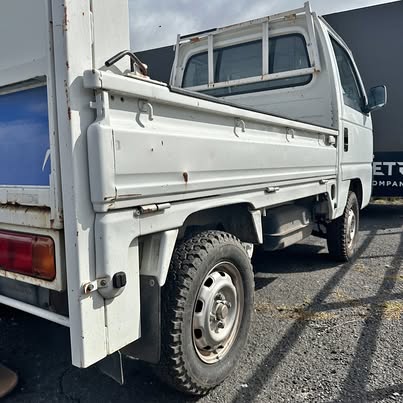
Cab floor, steps and cab corners. The cab is where rust starts and where it matters most, because the cab structure is the vehicle's structure. Mud thrown up by the front wheels packs into the step area and cab corners, and the seams at the base of the cab trap it. Get under the cab and prod: the outriggers and floor edges go first, then the lower cab corners behind the front wheels. Surface rust on a floor is a clean-and-treat job; perforation in the cab corners and step boxes is structural welding, realistically $800–2,000 a side done properly, and on a vehicle of this value two rotten corners can write the car off economically.
The bed. The drop-side bed is the Acty's hardest-worked panel and its most honest one. The bed floor corrodes along its seams and around the drain points, worst where loads have sat wet — Japanese farm trucks carried fertiliser, produce and fishing gear, all of them corrosive. The drop sides rust along their bottom edges and around the hinge and latch hardware, and a side that no longer folds flat or latches cleanly is telling you about distortion as well as rust. Bed floors can be patched and re-skinned — $500–1,500 depending on how much structure beneath is involved — but check underneath too: the crossmembers under the bed floor rot in the dark where listing photographs never go.
Wheel arches, sills and the front panel. The rear arches trap mud between the arch lip and the bed structure; the front arches and the panel below the windscreen suffer stone-chip and seam rust. The windscreen surround deserves its own minute: the seal perishes, water tracks down behind the dashboard, and the first symptom is a wet cab floor owners blame on the doors. Run a fingertip around the screen rubber looking for lifting and cracking; a screen-out reseal is a few hundred dollars, while the floor repairs that follow years of leaking are not.
Underneath: subframes, suspension mounts and pipes. The Acty's underside carries more than structure. The steel coolant pipes running from the front radiator to the mid-mounted engine, the fuel lines and the brake pipes all live under the floor in the road spray, and all corrode from the outside in. A coolant pipe that perforates does not leak politely at home — it lets go under pressure, at temperature, and the engine overheats before the gauge has finished telling you. Treat tired-looking coolant pipes as a replacement item, not a monitoring item: a set made up and fitted is a few hundred dollars, against a warped head if one bursts at speed. Suspension mounting points and rear spring hangers decide whether a cheap truck is a project or a parts car; perforation there is fabrication work priced per car.
Cooling, overheating and the head gasket
If rust is what kills Acty bodies, overheating is what kills Acty engines, through a layout no American mechanic will be familiar with. The radiator sits at the front, behind the front panel; the engine sits amidships, under the bed; between them runs a pair of long coolant pipes under the cab, plus a heater circuit that climbs into the cab and back. The system holds a modest volume of coolant spread over a long circuit, with high points where air collects — and air, trapped after any coolant change or hose replacement, is the number one cause of the classic Acty story: "it overheated once, for no reason, and now it uses coolant."
The mechanism matters. An air lock at a high point starves part of the circuit; the gauge, reading coolant at its own sensor, may show normal while the cylinder head runs hot; the head — aluminium on an iron block — warps microscopically, the gasket's seal is compromised, and from then on the engine pressurises its coolant and overheats in earnest. By the time the symptoms are obvious the head usually needs skimming and the gasket replacing: a $1,200–2,500 job at a shop. The prevention is procedure: the system must be filled and bled properly, using the bleed points Honda provided, with the heater set to hot — and any Acty that has had coolant work without evidence of careful bleeding should be test-driven long and hard, watching the gauge and the overflow bottle, before you pay for it.
The supporting cast fails too. The electric cooling fan and its switch are the only airflow the radiator gets at low speed — a fan that does not cut in turns a traffic jam into an overheating event. The thermostat sticks with age, open (slow warm-up, a cold heater, a carburettor that never comes off choke) or shut (rapid overheating). The water pump is driven with the timing belt and replaced with it as a matter of course. Hoses perish from the inside; on a freshly imported car, budget for a full set. And the radiator clogs with scale in cars that ran on plain water in Japan — a recore or replacement is a few hundred dollars. The rule is simple and total: on an Acty, cooling work is never deferred, because the engine forgives everything except heat.
Timing belt, ignition and fuel system
The E07A's timing belt belongs here in its failure context. A belt that snaps at speed bends valves. There is no warning and no cheap version of the repair — the head comes off, and on an import-only engine the parts hunt alone can take weeks. Any Acty without documentary proof of a recent belt — a Japanese service sticker with a date and kilometre reading, or an American invoice — gets the job priced into the offer, whatever the seller says about how these engines "never break belts". They do not break belts that have been changed on time. That is a different statement.
Ignition on the carburettor cars is a conventional distributor system, and its wear items are conventional too: cap, rotor arm, leads and plugs, all cheap, all neglected. The distributor's advance mechanisms seize or split their diaphragms with age, giving flat spots and pinking that owners blame on the carburettor. Test the vacuum advance with a hand pump before condemning anything downstream; the diaphragm that does not hold vacuum is a small part that causes a large misdiagnosis. Injected cars replace most of this with sensors, and their equivalent trap is the corroded connector: the engine lives under a load bed in the road's weather, and green terminals in a multiplug cause more injected-Acty faults than any component failure.
The fuel system ages in the tank. Trucks that sat between auction and export — most of them sat — grow varnish and rust in the tank, and the first American tank of fuel washes it toward the filter and the carburettor jets or injectors. A car that runs cleanly for twenty minutes and then falters is showing you a clogging filter, not a mystery. Budget for a filter, a tank inspection and, on carburettor cars, a strip and clean as part of recommissioning any Acty that has been standing. Fuel pumps fail with age and stale fuel alike, and are cheap enough that a suspect one is replaced, not nursed.
Running gear: suspension, brakes, tyres and the 4WD driveline
The Acty's running gear is simple — struts at the front, a leaf-sprung rear axle on the truck — and its problems are those of small components worked hard. Front struts and their top mounts wear and knock; ball joints and track-rod ends develop the play that makes a short-wheelbase truck wander; rear leaf springs sag and crack leaves under years of loads at or beyond the 350 kg rating, and a truck sitting low at the back is showing you its working life. None of it is expensive in parts — the bill is in labour and the wait for parts from Japan — but all of it shows on the test drive.
Brakes are discs at the front and drums at the rear, sized for a 660 cc truck at Japanese speeds, and they are the system American use tests hardest. A loaded Acty descending a long American hill on 30-year-old brake fluid and tired pads will fade in a way that concentrates the mind. The full refresh — fluid, hoses, pads, shoes — is a few hundred dollars in parts and non-negotiable on a fresh import. Judge the pedal on the test drive: firm, high and stable under a hard stop from 50 mph.
Tyres are a system on this vehicle, not a consumable. The correct fitment is a light-truck tyre in 145R12 or a close equivalent — LT-rated, with the load index a working truck needs, not a passenger-car tyre of similar diameter. Wrong tyres are endemic on American Actys: passenger tyres that squirm under load, oversize tyres fitted for looks that foul the arches and destroy the gearing, and — on a RealTime 4WD car — mismatched rolling radii that work the viscous coupling to death. Price a correct, matched set into any car wearing odd rubber: realistically $400–700 fitted. On a 4WD car, mismatched tyres are a driveline diagnosis, not a cosmetic one.
The four-wheel-drive driveline itself is robust if its fluids are changed and its tyres matched. The viscous coupling fails silently — a car that behaves as pure rear-wheel drive in mud may have a dead coupling, and the test in the inspection section is the only way to know. Front CV joints split their boots and click on lock; the Attack's differential lock must be tested, because a lock never used in 25 years frequently cannot be used now. Prop-shaft joints and the rear differential whine or clunk when worn — any driveline shunt on take-up is wear you are buying.
Cab, electrics and the Japanese-market details
The cab is spartan and mostly durable, but three systems decide whether an Acty is pleasant or punishing. The heater matters out of proportion, because the cab is a thin steel box with a huge glass area: the heater matrix clogs (part of the cooling circuit's air-lock story), the blower motor wears its brushes, and the control cables seize. Test heat on every viewing, in July as in January — a cold heater is a cooling-system symptom until proved innocent. Air conditioning, where fitted — most SDX cars have it — uses a small compressor that works hard; check it blows cold, ask which refrigerant the car runs on, and treat a dead system on an early car on the old refrigerant as a conversion conversation, not a re-gas. Seats and trim are vinyl over foam that collapses with age and sun; a sagging driver's seat is normal wear, but torn trim and a cracked dashboard are expensive to put right because every replacement part is a Japanese import.
Electrics are Honda-simple and age in the usual places: earth points corrode, alternator brushes wear, and the small battery needs to be the correct size and properly secured. The Japanese-market details catch buyers out in small ways that add up. The radio tunes the Japanese FM band, which barely overlaps the American one, so the factory radio receives almost nothing — budget for a replacement if you care. Headlamp aim is set for left-hand traffic: on American roads the dip pattern points the wrong way, dazzling oncoming drivers and lighting the ditch — check what a previous owner has done about it. The speedometer reads in kilometres, and the shaken and service stickers on the glass and door jambs are not decoration: they are the car's documentary history.
How to inspect one
Allow an hour, bring a torch, a magnet in a cloth and — if you can — a jack and stands or a friendly lift. An Acty is small enough to inspect completely in that time. Work in this order, and stop early if step 3 or step 4 fails the car: there is no cheap Acty body and no cheap Acty cylinder head, and no other virtue compensates for either.
- Paperwork and identity first. Match the chassis number on the maker's plate to the import paperwork, the title and any Japanese documents. Confirm the car is what it is sold as — HA3 or HA4, truck or van, and the year; the chassis plate and the Japanese export certificate carry the truth, not the listing. Also establish the car's legal status in your state before anything else: titled for road use, titled as an off-road or low-speed vehicle, or untitled? Kei-truck registration rules vary sharply by state and have changed in several states recently, in both directions. A car that cannot be registered where you live is worth its off-road value to you, whatever the seller's state allows.
- Cold start, from stone cold. Insist on it. A carburettor car should fire with the choke doing its work and settle to a clean idle as it warms; an injected car should start instantly. Blue smoke at start-up that clears is valve-stem seals; smoke that persists is rings and bores. Listen for the electric fan cutting in as the car idles up to temperature — a silent fan is a serious finding, per the cooling section.
- The temperature test. With the engine fully warm, watch the gauge on a drive that includes a hill and a stretch at 50–55 mph, then let the car idle for five minutes. The gauge should sit steady. A needle that climbs under load, an overflow bottle blowing coolant, or a heater that blows cold at idle all point the same way — air in the system, a marginal radiator, or a head gasket already compromised. Check the oil filler cap for mayonnaise emulsion. Any positive here is a four-figure negotiation or a walk-away.
- Underneath, before anything else mechanical. Torch along the cab floor edges, steps and corners, the bed crossmembers, the rear spring hangers and the suspension mounts, and prod seams with the screwdriver (with permission). Then read the pipes: the long steel coolant pipes under the cab should be sound and evenly coated; blistered, flaking pipes are the burst-pipe failure from the rust section, waiting for a hot day. Perforation in cab corners or spring hangers ends the inspection — price structural welding honestly or leave.
- The bed. Fold every side down and latch it back up. Check the bed floor along its seams and drains, look for the distortion of a life spent overloaded, and check the hinges and latches for rust and play. A bed that has carried fertiliser or fish will show it in the floor seams whatever the top surface looks like after a wash.
- Timing belt evidence. Ask, directly, when the belt was last changed, and ask to see the proof: a service sticker (Japanese workshops stick them in the engine bay and door jamb, with the date and kilometres) or an invoice. No proof means the belt is due — that is the arithmetic of the problem-areas section — and the offer should carry the cost of the belt, tensioner and water pump job.
- The test drive: gearbox and clutch. Fifteen minutes minimum. Work the manual box through every gear, up and down, listening for second- and third-gear synchromesh protest; feel the clutch bite point and test it on a hill start. On an automatic, demand clean, prompt changes both ways and no flare between ratios, and check the fluid afterwards — dark, burnt-smelling fluid is a rebuild being announced.
- The 4WD test (HA4, HH4, Attack). Find loose ground, wet grass or gravel. From a standstill, give it enough throttle to spin the rear wheels and feel for the front axle joining in — drive should arrive progressively as the viscous coupling loads. No front drive means a dead coupling or a driveline fault, and the car is a two-wheel-drive truck at a four-wheel-drive price. On an Attack, engage the low gearing and the differential lock and confirm both work; a lock that will not engage is a repair, not a feature.
- Brakes, steering and stance. Brake hard from 50 mph: straight, firm, no fade, no pull, no judder. At parking speed, full lock both ways, listening for CV clicks on a 4WD car. Stand back and check the stance — level side to side, not sagging at the rear — and all four tyres: correct light-truck size, matched set, even wear. Odd tyres on a 4WD car reopen the viscous-coupling question from step 8.
- Heat, air conditioning and electrics. Whatever the weather, run the heater to full hot and the blower through its speeds — a cold heater is a cooling-system symptom on this car, per step 3. Run the air conditioning and confirm genuinely cold air. Work the lights, wipers, washers, horn and indicators, and note the Japanese-band radio for what it is.
- Oil, coolant and the small fluids. Pull the dipstick: level, colour, and no emulsion. Three litres of sump means neglected oil shows fast. Check coolant colour in the header tank — rusty water explains a clogged radiator and predicts step 3's problems — and look at the engine from underneath for the leaks a mid-mounted engine hides from every top-side glance.
- Interior and the Japanese record. Sit in both seats; check the driver's cushion for collapse, the belts for fraying, and the dash for sun cracking. Then read the car: shaken stickers, service stickers, the auction sheet if the seller has it (grade 4 and above is the tidy end of the Japanese market), and any service book. A documented car with high kilometres beats an undocumented car with low ones — odometers on 30-year-old working trucks are a claim, not a fact, and the paperwork is how the claim is tested.
Values
The Acty market in America is young, thin and import-driven, and the usual classic-car logic — rarity, originality, matching numbers — barely applies. These are working vehicles built in huge numbers, and value here is a function of condition, specification and legal status, in that order. The market block beneath this guide carries our current listings and recorded figures; this section teaches you how to read them.
Condition is the spread. The distance between the cheapest and dearest Acty in any month's listings is not a model-year or a badge — it is the distance between a rusty, undocumented truck with a timing belt of unknown age and a clean, graded, freshly serviced one. The Japanese auction grade is the market's shorthand: cars bought at grade 4 or better, with the sheet to prove it, anchor the top of the market, because the grade certifies the two things an American buyer cannot inspect from photographs — the underside and the accident history. An ungraded car is not necessarily bad, but it is an unpriced risk, and should cost less by roughly the cost of the surprises it may contain.
What carries a premium, and why. Four-wheel drive carries a real premium in the snow belt and farm country and almost none in the Sun Belt, where a two-wheel-drive truck does the same work — geography prices the HA4. The SDX trim carries a smaller, steadier premium everywhere, because air conditioning and a civilised cab are worth money on any day of the year. Genuinely low kilometres carry a premium only when documented; the service record is what is being bought, not the number on the dial. Fresh recommissioning carries the most defensible premium of all: a car with the timing belt, cooling system, brakes and tyres verifiably done has had the entire first-year budget of Acty ownership spent by the seller, worth close to its cost in the price.
Asking prices and achieved prices part company on these cars more than on established classics. The market is thin enough that a seller can anchor to the dearest listing in the country and wait, and private sellers — every Acty in our current listings is a private Marketplace sale — often price the story ("imported, rare, turns heads") rather than the truck. Negotiate from the inspection, not from the advertisement: the belt job, the tyres, the cooling work and the rust you found are each real money, itemised in this guide, and a seller who knows these cars will recognise the list.
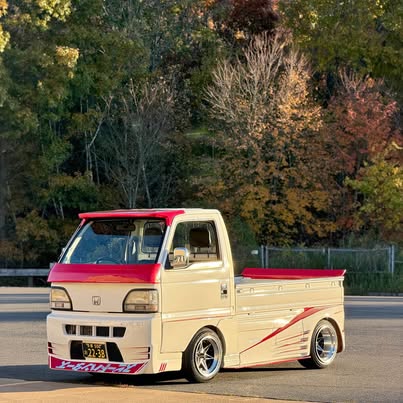
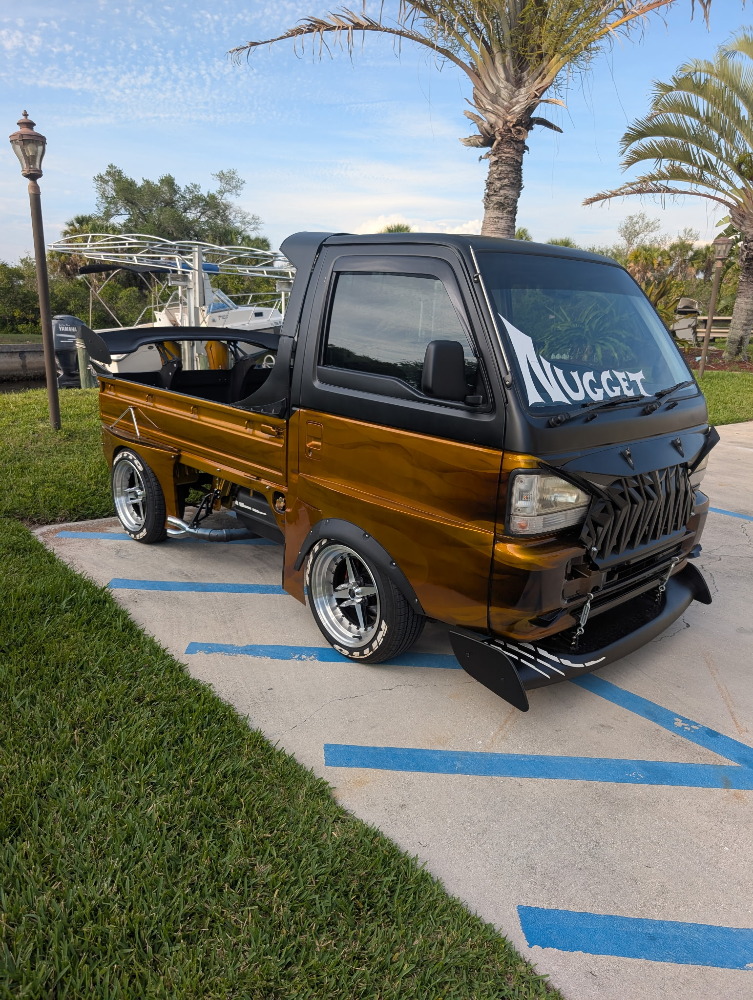
The project-versus-driver gap is wide and treacherous. A project Acty looks cheap because the parts prices are small; it stops looking cheap when the labour is on a mid-engined import, the parts are on a boat from Japan, and the welding is in the cab corners. The sorted driver is almost always the better buy; the project only makes sense for an owner who welds, waits patiently for parts, and wants the work. Modified cars sit outside the scale entirely: a widebody or customised Acty is worth what its specific buyer will pay, a smaller and less predictable market than the standard truck's — buy one because you love it, at a standard car's money or less, never at a premium justified by the word "special".
Finally, legal status is value. A truck titled for the road in a state that registers kei trucks is a different asset from the identical truck on a bill of sale in a state that does not, and the difference survives resale. If you are buying out of state, price the car for your state's rules, not the seller's.
Parts and ownership
The Acty ownership proposition rests on a paradox: it is one of the cheapest vehicles in the world to run, and one of the slowest to get parts for. Planning for the second is what makes the first enjoyable.
Easy, once you know the system. Honda built these engines and running gear in enormous numbers, so mechanical parts availability from Japan is genuinely good: service items, timing belt kits, water pumps, clutch kits, brake parts, filters and gaskets are all obtainable by part number through the Japanese parts network and the import specialists who order from it, typically in one to three weeks. The parts diagrams are published online by the big Japanese parts exporters, and the chassis code — HA3, HA4, HH3, HH4 — plus the frame number gets you to the right page every time. The correct 145R12 light-truck tyres are stocked by kei-truck specialists even if your local tyre shop has never seen the size.
Harder and slower. Body panels, glass, bed sides, trim, seats and cab interior parts are the slow lane — bulky to ship, often discontinued, and sourced used from Japan or from the small American breaker trade in wrecked imports. A windscreen is obtainable; a mint dashboard is a hunt. This is the practical reason the guide keeps repeating that the body is the car: you can rebuild the entire driveline from a catalogue, but you cannot catalogue your way out of a rotten cab. Air-conditioning parts sit in between — compressors obtainable, early-refrigerant cars needing a conversion conversation.
Running costs. Fuel consumption is the Acty's party trick: driven as intended, a 660 returns figures in the high thirties to forties miles per gallon, and even worked hard it drinks like a motorcycle. Servicing is simple, insurance through the agreed-value market is modest, and the vehicle fits in a single garage bay with room to spare. The budget line that catches new owners is the first-year catch-up — timing belt service, cooling refresh, brakes, tyres and fluids on a car of unknown history, honestly $1,500–3,000 all-in at a shop, less for the home mechanic who orders ahead — and the wait. Every job should start with the parts already on your shelf, because the car will otherwise sit in pieces while a box crosses the Pacific.
Living with one. Register it correctly for your state, insure it for an agreed value that reflects replacement-by-import rather than book price, and find your mechanic before you need one: the right shop is a Japanese-import or Honda specialist who finds the mid-engined layout interesting rather than billable. Keep the Japanese paperwork forever; it is the car's history and a chunk of its resale value. Used as intended — farm, estate, town runabout, the vehicle that does all the dirty jobs — an Acty earns its keep weekly. Used as a motorway car, it will punish you.
Which one to buy
- The all-rounder: HA3 or HA4 SDX, 1995–1998, manual. The later 660 truck in the deluxe trim, with the mid-run production details sorted and the best parts support in the range. Two-wheel drive for the Sun Belt and town work, four-wheel drive anywhere it snows. This is the default Acty, and the one to benchmark every other candidate against.
- The worker: Acty Attack 4WD. Ultra-low gearing and a differential lock make it the most capable kei truck Honda built. Buy it for land, mud and snow, verify the lock and low range work, and accept the frantic road manners as the price.
- The value buy: HA3 STD or plain-spec truck. The same engine, bed and structure without the SDX equipment, usually cheaper because sellers price the badge. With air conditioning and a clean underside, it gives up nothing that matters at work.
- The family and camper base: Acty Street (HH3/HH4). The passenger van: full glazing, folding seats, the same mechanicals. Buy the best body you can find, because van bodies hide rust in more places than trucks do.
- The newest route: HA6/HA7, 1999-on. The third-generation car is inside the 25-year window now: standard fuel injection, 46 hp, a calmer cab. It is the Acty for a buyer who wants the least-old example of the idea rather than the classic second-generation shape.
- The one to walk past: any 550, any rotten 660, at any price that assumes the work is cheap. The early cars are charming and the projects tempting, and both are the wrong first Acty for almost everyone.
And the rule that overrides all of the above: buy the least rusty, best documented Acty you can find, with the timing belt and cooling system verifiably done, titled for your state. Engines, gearboxes, clutches and carburettors are all fixable at prices you can plan for. A rotten cab, a warped head and an unregistrable truck are the three failures no bargain survives.
See the 31 Acty cars currently listed.
For sale now
Expand
Expand
Expand
 $7,999
Expand
 $9,750
Expand
Expand
Expand
 $7,500
Expand
What they sell for: Acty sale prices.