
Honda Odyssey buyer's guide
Honda Odyssey -- the model's own buyer's guide: variants, values and what to check.
Years listed: 1997-2001 · Series: Odyssey
Overview and history
You buy a Honda Odyssey of the years covered here for one reason above all others: nothing else at the money carries seven people, their luggage, and a sheet of plywood with the same ease, and then drives down the road like a large Accord rather than a truck. The van itself — body, seats, steering, brakes, the V6's top end — is durable Honda engineering. The automatic transmission bolted behind that V6 in the second-generation van is not. Almost every buying decision on a 1999–2004 Odyssey, and most of the decision on a 2005, reduces to one question: what is the documented state of the gearbox? This guide keeps returning to that question because the market keeps trying to make you forget it.
The Classic Listings pool for this guide is small and honest about it: nine Odysseys in total, eight listed for sale and one recorded as sold, every one an automatic, every one sourced through Facebook Marketplace. By year it runs one 2001, three 2003s, three 2004s, and two 2005s, in LX, EX, and EX-L trim and silver, gold, white, tan, and blue. Nine cars is a snapshot, not a census: it shows you the surviving, still-trading stock — second-generation vans at the end of their depreciation, plus the first of the third generation. The first-generation vans have largely left the cheap-van market; the vans you actually find advertised are the big V6 vans of 1999 onward.
The Odyssey story falls into three acts, and you need the first to understand the other two. Honda enters the American minivan market late and sideways. The first-generation Odyssey, sold for 1995–1998 and built in Sayama, Japan, is not a van in the Chrysler sense at all. It is a tall Accord wagon: Accord platform, Accord four-cylinder engine, Accord four-speed automatic, a low floor, and — the fact that surprises people — four conventional hinged doors. Correct that myth at the start, because buyers repeat it constantly: the first-generation Odyssey does NOT have sliding doors. It is reliable in the way an Accord of the same years is reliable, and, by modern minivan standards, small and slow, especially loaded.
The second act is the one your pool lives in. For 1999 Honda replaces the tall wagon with a clean-sheet American van: designed for North America, substantially wider, longer, and heavier, built in Lincoln, Alabama, with early production also in Alliston, Ontario. This RL1-generation van, sold for 1999–2004, is the Odyssey that defines the name. It has dual sliding rear doors — powered on EX and above — a 3.5-litre V6 in place of the four, a third row that folds flat into the floor at the pull of a strap, and the interior volume American families actually asked for. It wins the comparison tests and develops, within three model years, the transmission reputation that still governs its price as a used buy. Treat 1999–2001 and 2002–2004 as two distinct buys that share a body and a warning label.
The third act begins with the van at the top of your pool. The 2005 Odyssey is a new generation, the RL3, sold through 2010: sharper styling, a revised chassis, more equipment, and a split in the engine range that matters enormously to a used buyer. LX and EX cars keep a straightforward V6. EX-L and Touring cars get a different version of the same engine with Variable Cylinder Management, which shuts down a bank of cylinders at cruise — and brings its own oil-consumption, spark-plug, and engine-mount story. Your pool's two 2005s are both EX cars, which is the fortunate version: the new body without the cylinder-management engine and without PAX. Later generations sit outside this pool and outside this guide, which covers the first generation as background, the second as its centre of gravity, and the 2005 car as the pool supports it.
There is no all-wheel-drive or manual version in any year covered here, whatever a seller claims — and since every Odyssey in this guide is an automatic, the automatic's health is not one inspection item among many. It is the inspection.
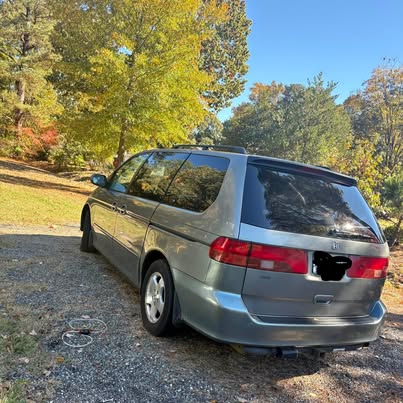
The models
Trim, on an Odyssey of this era, changes equipment and repair exposure far more than it changes the driving experience. Every second-generation van has the same engine, seats, folding third row, and body. What LX, EX, and EX-L add or subtract is power doors, power seats, leather, climate control, and entertainment electronics — each a system you will one day pay to fix. The "Built" column in the table gives you the factory, not a production total; Honda's Odyssey production is large, six-figure in the strong years, and no honest buying decision turns on an exact count, so this guide prints no totals it cannot stand behind.
| Model | Years | Engine | Output | Built | Character |
|---|---|---|---|---|---|
| Odyssey LX / EX (RA1) | 1995–1997 | 2.2-litre F22B6 four-cylinder | 140 hp | Sayama, Japan | The tall Accord wagon; hinged rear doors, car manners, modest pace |
| Odyssey LX / EX (RA3) | 1998 | 2.3-litre F23A four-cylinder | 150 hp | Sayama, Japan | One-year improvement; the best of the first generation |
| Odyssey LX / EX (RL1) | 1999–2001 | 3.5-litre J35A1 V6 | 210 hp | Lincoln, AL / Alliston, ON | The big van arrives; four-speed automatic is the weak point |
| Odyssey LX / EX / EX-L (RL1) | 2002–2004 | 3.5-litre J35A4 V6 | 240 hp | Lincoln, AL | More power, five-speed automatic, same gearbox vigilance required |
| Odyssey LX / EX (RL3) | 2005 | 3.5-litre J35A6 V6 | 255 hp | Lincoln, AL | New generation without cylinder management; the pool's 2005 pick |
| Odyssey EX-L / Touring (RL3) | 2005 | 3.5-litre J35A7 V6 with VCM | 255 hp | Lincoln, AL | Cylinder management, active mounts, and — on Touring — PAX wheels |
The first-generation range is simple. Both use the four-cylinder and four-speed automatic described in the next section, and both fold the third row into its well — practise the fold on any car you view, because a third row that will not fold or latch usually means bent hardware or a well full of debris rather than a design fault. The 1998 car, with the larger engine and a year's worth of small fixes, is the first-generation van to buy. Rust, accident damage, and deferred timing belts have thinned these vans far more than mechanical failure has; a sound one is now the exception.
The second-generation range is where your real choice sits, and it divides by year before it divides by trim. A 1999–2001 van has the 210-horsepower J35A1 and the four-speed automatic. A 2002–2004 van has the 240-horsepower J35A4, the five-speed automatic, and a better equipment baseline. But condition and documentation are never equal in practice, and a 2001 with a paper trail proving a recent remanufactured transmission is a better buy than a 2003 with no history and a hesitation on the 2–3 shift.
Within each year split, the trims run LX, EX, and EX-L. The LX is the workhorse: cloth seats, manual sliding doors, steel wheels on most cars, manual air conditioning, and the fewest powered accessories. The EX adds power sliding doors, alloy wheels, automatic climate control, a power driver's seat, and heated mirrors. The power doors are the headline: wonderful with small children in a rainy car park, and the most common source of Odyssey-specific repair bills in the problem areas below. The EX-L adds leather, heated front seats, and often a factory DVD system or navigation — value both at zero: your passengers will use their phones, and a 2003 navigation system carries 2003 maps. Leather matters more: Honda leather of this era cracks on the driver's bolster and second-row armrests, and a retrim costs real money, while cloth that has survived this long usually continues to survive.
The 2005 range repeats the pattern with one structural change. LX and EX keep the non-VCM J35A6 engine, and both are the cars your pool contains. EX-L and Touring step up to the VCM-equipped J35A7, the Touring adding a power tailgate, parking sensors, and PAX tyres. As a used buy the ladder inverts: every step above EX adds a system — cylinder management, active mounts, PAX wheels — whose failure costs more than the equipment is now worth. Buy the 2005 range from the bottom up.
Two identification checks protect you across all these years. First, the VIN settles any argument about whether a van advertised as a 2002 is actually a late 2001 — a distinction that changes the engine, the gearbox, and the value. Sellers get model years wrong constantly, usually innocently, by registration year; the VIN does not get it wrong. Second, trim badges mean less than on most cars, because tailgates get replaced after parking knocks and badges get added. Verify trim by equipment — power-door switches, leather, climate panel — not by the badge. A van described as an EX-L with cloth seats and manual doors is an LX wearing a badge, and you price it as an LX.
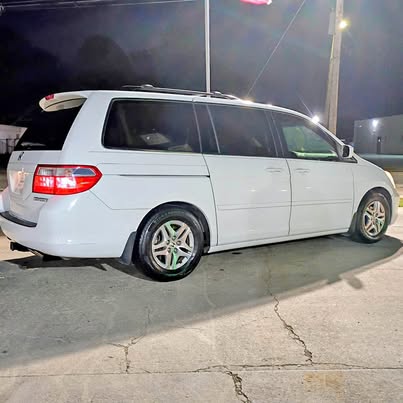
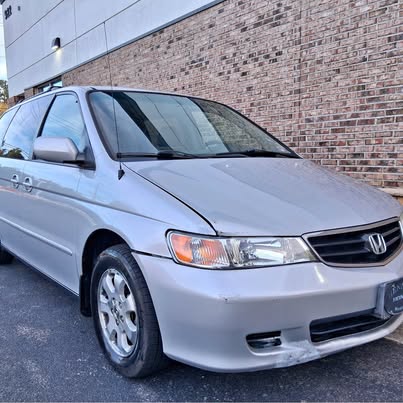
Engines and gearboxes
Every engine in this guide is a Honda engine in the best sense — an all-alloy, overhead-camshaft unit that, given oil, coolant, and timing belts on schedule, outlasts the vehicle around it. The differences that matter to you are three maintenance facts: every engine here drives its camshafts with a rubber timing belt that must be replaced on schedule because every engine here is an interference design; the V6 develops an exhaust-gas-recirculation clogging pattern you need to recognise; and the 2005 VCM engine adds an oil-consumption pattern of its own.
The F-series four-cylinders: 1995–1998
The first-generation van uses Accord engines: the 2.2-litre F22B6 single-overhead-camshaft four, with 140 horsepower, for 1995–1997, and the 2.3-litre F23A, with 150 horsepower and VTEC variable valve timing, for 1998. What kills them is neglect of the belt — Honda's interval is 105,000 miles or seven years, and a snapped belt bends valves — and neglected oil changes, which varnish the 1998 car's VTEC passages and cost you the VTEC changeover. Valve clearances are screw-and-locknut and drift with mileage; a top end that ticks cold and quiets warm is normal, one that ticks hot wants a clearance check, $150–$300 including the rocker-cover gasket. Budget $700–$1,100 for a timing-belt service done properly — belt, water pump, tensioner, idlers, and seals — and treat a claim of a recent belt with no invoice as no belt at all. The four-cylinder's real limitation is workload: seven people aboard, 140 horsepower makes a busy climb on a long grade. Accept that as the price of simplicity, or buy the V6 van.
The J35 V6, first form: J35A1 and J35A4, 1999–2004
The second-generation van's engine is the 3.5-litre J35, a 60-degree V6 with a single overhead camshaft per bank, four valves per cylinder, VTEC on the intake side, and an aluminium block with cast-iron liners. As the J35A1 for 1999–2001 it produces 210 horsepower and runs happily on regular fuel. As the J35A4 for 2002–2004, a higher compression ratio, revised intake, and freer exhaust lift output to 240 horsepower; Honda recommends premium for the full figure, and the engine runs on regular with slightly reduced output and no harm — correct the occasional claim that a 2002–2004 van "requires" premium. It does not. It prefers it.
The top end asks for three things. First, the timing belt, on the same 105,000-mile or seven-year schedule, driving both camshafts and the water pump; a proper J35 belt service — belt, hydraulic tensioner, idlers, water pump, and spark plugs if due — runs $900–$1,400 at an independent and more at a dealer, and it is the largest scheduled expense in the van's life. Second, spark plugs at roughly 100,000-mile intervals; the front bank takes minutes, the rear bank takes patience, and a misfire under load is plugs and possibly a coil pack — one coil per plug, $60–$120 the part — producing a flashing check-engine light and a dead-cylinder shake owners routinely misdiagnose as transmission failure. Learn the distinction: a misfire shakes at idle and sets a P0300-series code naming a cylinder; a failing transmission slips, flares, or bangs on shifts. The bills differ by an order of magnitude. Third, valve clearances: screw adjusters again, and clearances tighten as well as loosen — exhaust valves trend tight — so a van never checked by 150,000 miles deserves one, $300–$500 with gaskets, because a tight exhaust valve held off its seat eventually burns.
One further J35 behaviour deserves warning, because sellers dismiss it as "they all do that": oil consumption that begins suddenly past 150,000 miles on a previously tight engine. On a non-VCM J35 that usually means hardened valve-stem seals or a stuck PCV valve — replace the PCV valve first; it costs under $20 and its neglect pressurises the crankcase and pushes oil past seals — rather than worn rings. A J35 using a quart in 1,000 miles with no service history wants a compression and leak-down test before you buy, not after.
The J35 for 2005: J35A6 and the VCM J35A7
The 2005 engines are developments of the same J35 architecture, rated at 255 horsepower, with drive-by-wire throttle and the same timing-belt schedule and interference layout — everything above about belts, plugs, coils, and clearances applies unchanged. The split is cylinder management. The LX and EX engine, the J35A6, runs on six cylinders all the time. The EX-L and Touring engine, the J35A7, carries Variable Cylinder Management: under light load, an oil-pressure-actuated mechanism locks the rear bank's valve operation out, the rear three cylinders stop pumping, and the van cruises as a large three-cylinder, with active noise cancellation and hydraulic active engine mounts masking the change in character.
VCM saves a little fuel and costs you in three ways. The inactive cylinders' rings run cool and unloaded, oil control deteriorates, and VCM engines develop oil consumption and oil-fouled rear-bank plugs the plain engine does not; owners chase coils and injectors before anyone pulls a plug and finds it wet with oil. The active mounts that hide the three-cylinder thrum are expensive hydraulic units, and when they collapse the van vibrates in ECO mode like a driveline fault. And the benefit — roughly a mile per gallon in period testing — buys you nothing at this age. Aftermarket VCM defeat devices keep the engine on six cylinders by altering the coolant-temperature signal; they stop the fouling on a healthy engine, but they can mask a genuine overheat signal and are no substitute for walking away from a VCM van that already burns oil. Your pool avoids the question — both its 2005s are EX cars — and your shopping should too.
Gearboxes: the four-speed, the five-speed, and the failure you must understand
There is no gearbox choice on an Odyssey. The second- and third-generation vans use Honda-designed multi-shaft automatics — Honda builds its automatics unlike anyone else, without planetary gearsets, using constant-mesh gears and individual clutch packs on parallel shafts, more like an automated manual gearbox inside than a conventional automatic. In the 1999–2004 vans, in 3.5-litre V6 torque and two-tonne service, it is also under-cooled, under-filtered, and the defining risk of the entire purchase.
The 1999–2001 vans use a four-speed automatic; the 2002–2004 vans, and the 2005 van, use a five-speed. The failure mechanism is shared. The clutch packs — the third-gear clutch pack in particular on the five-speed — shed friction material as they wear. That debris circulates in the fluid. A conventional automatic has a serviceable filter you change with the fluid; the Honda unit's filter is internal, effectively non-serviceable without splitting the case, so debris accumulates, restricts flow through the filter and cooler circuit, and raises operating temperature. Heat hardens seals and accelerates clutch wear, which sheds more debris. The loop, once established, feeds itself. Compounding it, on the 2002–2004 five-speed Honda identifies a lubrication shortfall to the secondary shaft's second gear: under sustained high-temperature running the gear overheats, in extreme cases to breakage. Honda's recall response is an oil-jet kit — an external line that sprays fluid directly onto that gear, plumbed through a modified filler bolt — fitted free to affected vans. Look for that kit on any 2002–2004 van you inspect: a small oil line entering the top of the transmission case at the filler is the visible evidence. But correct the myth the kit generates: the oil-jet kit does NOT fix the transmission. It addresses one gear's lubrication. It does nothing for clutch-pack wear, a clogging internal filter, or a torque converter shedding its lock-up clutch lining, the other major debris source. A van "with the recall done" is a van with one recall done. It is not a van with a healthy gearbox.
The symptoms arrive in a recognisable order, and the inspection section's test drive is built around provoking them. Early: a flare on the 2–3 upshift, revs rising a few hundred rpm before the next gear takes hold, most obvious on a moderate throttle when the fluid is fully hot; a shudder at 30–45 mph as the torque-converter clutch locks and unlocks on a light throttle; a delay, then a thump, engaging Drive or Reverse from Park when hot. Middle: harsh, banging shifts; a flashing D indicator, which is the transmission's fault lamp and sets codes in the P0700 range and gear-ratio codes such as P0730; the check-engine light joining in. Late: slipping under load, loss of a gear, loss of Reverse, and a van that moves only when cold, because cold, thick fluid seals what hot, thin fluid cannot.
Honda's warranty history tells you how seriously the manufacturer took this. Affected owners receive warranty extensions — the 1999–2001 vans' transmissions are covered to seven years and 100,000 miles, subsequently extended under a class-action settlement to seven years nine months or 109,000 miles — and Honda replaces large numbers of units with factory remanufactured transmissions. That paper is the difference between a gamble and a purchase. Documentation that proves a fix, in descending order: a Honda dealer invoice naming the VIN, showing a remanufactured transmission part number and labour, ideally recent and near the van's current mileage; a specialist invoice showing a full rebuild with a replacement torque converter plus an added external cooler and filter — a good rebuild addresses the debris loop by fitting both, and a cooler kit costs only $100–$250 in parts; a string of ATF services at 30,000-mile intervals with Honda ATF-Z1 or the later DW-1, which supports careful ownership but does not prove the box unworn. Documentation that proves nothing: a verbal "the transmission was done"; a fluid-change invoice presented as a rebuild; a salvage-yard swap with no mileage or warranty — a salvage box carries the same design and an unknown fraction of the same wear; and an oil-jet recall receipt presented as a transmission replacement.
Costs, so you can do the arithmetic. A quality remanufactured unit, fitted with a new torque converter and fresh fluid, runs $3,000–$4,500 at an independent and $4,500–$6,000 at a dealer. A specialist rebuild of your own unit sits in the same range; anyone quoting half that is reusing the converter or clutch packs, and you pay the difference later. A salvage-yard swap, $1,200–$2,000 all in, is the false economy above. Set those figures against what these vans sell for — the market block beneath this guide carries the current numbers — and the conclusion writes itself: a failed transmission is a total-loss event on a cheap Odyssey, and a documented replacement is the most valuable attribute a van can have, worth more than low mileage, leather, or a clean tailgate. Buy the gearbox's history. The rest of the van is the bonus.
Problem areas
Work through this section with the inspection checklist open beside it. The transmission dominates the previous section and it dominates value, but it is not what you spend money on month by month if you buy a good one. That distinction belongs to the sliding doors, the engine mounts, the EGR system, and the ordinary wear of a heavy front-wheel-drive vehicle — items individually affordable and collectively decisive.
Sliding doors: rollers, cables, contacts, and latches
The second-generation van's power sliding doors are its signature convenience and its signature repair bill, and the failures are mechanical far more often than electronic, whatever the seller tells you. Each door hangs and rolls on three supports, of which the centre roller — running in the track along the rear quarter panel, visible in the photograph in the models section — does the most work and wears first. Its rollers are small nylon wheels. Twenty years of heat cycles embrittle the nylon, the wheels crack and develop flat spots, and the door shudders, rumbles, and sags as it travels, then binds, then reverses halfway as the pinch-protection logic reads the extra drag as an obstruction. A door with dead centre rollers growls through the middle of its travel, drops visibly as it comes off the front latch, and no longer sits flush at its rear edge when closed. The centre roller assembly is a modest part — $40–$90 aftermarket, more from Honda — and a competent owner replaces one on a driveway in under an hour with the door supported on a jack. A dealer charges $300–$500 per side fitted.
Power operation adds three further failure points. The door is pulled along its track by a cable driven by a motor inside the rear quarter panel. The cable's plastic coating cracks, the cable frays and snaps, and the door loses power while remaining openable by hand with effort — budget $400–$800 per side for a cable-and-motor repair at an independent. A door with a snapped cable should still latch securely; if it does not, walk away until it does, because a sliding door that will not latch is a safety defect, not a negotiation point. The door's electrical connection is made by spring contacts on the door edge meeting pads on the B-pillar; corrosion interrupts the latch, window, and lock circuits, producing faults that come and go with door position. Cleaning the contacts cures most of it for the cost of the cleaner; a door that works half-open and fails closed shows dirty contacts, not a failed control unit. Finally, the rear latch's motor pulls the door the last centimetre into its seals, and when it or its microswitches tire, the door pops back after closing, shows a door-ajar warning on a shut door, or drains the battery overnight as the body computer stays awake awaiting a closed signal. That drain — a van flat on Monday after starting all week — is a classic Odyssey complaint. A latch runs $150–$300 in parts; a current clamp on the battery cable, watching the draw fail to fall to a few tens of milliamps after twenty minutes, is the test that proves it.
Manual doors on the LX avoid the cables, motors, and contacts entirely, which is the LX's whole argument. They do not avoid the centre rollers, which wear on the same schedule. Two reset facts save you money on either system. The power doors are logic-controlled, and a door that has lost its calibration after a flat battery often recovers with the documented reset procedure — in essence, clearing the door codes by pulling the clock fuse, fuse 13 in the passenger-side fuse box, for thirty seconds, then fully opening and closing the doors under power so the control unit relearns its endpoints. Learn the exact sequence for the year you buy and try it before authorising any parts.
EGR, intake carbon, and engine management
The J35's best-known running fault is exhaust-gas recirculation clogging, and it is a design-pattern fault, not a maintenance failure, which is why it recurs across vans with good service histories. The EGR valve meters exhaust gas into the intake manifold through small passages cast into the manifold. At the low-flow conditions of light-throttle cruising, carbon deposits narrow those passages unevenly between cylinders. The symptoms follow the physics: a surge, hesitation, or light bucking at a steady 35–55 mph on a feathered throttle, worst around 1,500–2,000 rpm; in advanced cases a stumble at idle, stalling at junctions, and the code P0401, insufficient EGR flow. Owners blame the transmission because the bucking arrives at exactly the speeds where the torque converter locks, so learn the distinguishing test: EGR bucking happens at a steady throttle with no shift in progress and stops the instant you accelerate or lift off; converter shudder happens at the lock-up event itself and changes with the lightest throttle change as the clutch engages and releases. A mechanic who knows these vans confirms EGR by commanding the valve open with a scan tool at idle — a healthy system stalls or nearly stalls the engine as flow floods in; a clogged system barely changes the idle — and by vacuum-testing the valve, which must hold vacuum on its diaphragm. Honda's cure is mechanical cleaning of the manifold passages and fitting an EGR pipe kit that enlarges and reroutes the flow path; kit and cleaning run $300–$600 at an independent, the valve itself $120–$250 if it has failed.
Around that fault, the management system ages conventionally. Oxygen sensors tire past 120,000 miles; the parts run $80–$180 each, and a lazy sensor costs fuel before it costs you a light. The converter sets P0420 when genuinely spent, but also when an exhaust leak or a long-running misfire has poisoned it — never authorise a converter, $600–$1,200 fitted, on a van whose misfire is unfixed. The idle air control valve on cable-throttle 1999–2001 cars carbons up and hunts at idle; cleaning usually cures it. The main relay can fail heat-soaked and produce a crank-no-start after a short hot stop that recovers as the car cools; at $40–$80 it is worth replacing preventively on any van with a hot-start history. Alternators announce themselves with a whine and a battery light; a remanufactured unit fitted runs $350–$600. None of this is exotic, and all of it is cheaper diagnosed by pattern than by parts-swapping.
Engine and transmission mounts
A front-wheel-drive V6 van hangs a heavy powertrain on hydraulic mounts, and the Odyssey's mounts are a wear item with a service life, not a lifetime component. The front mount does the most work, controlling the engine's rock under torque, and on many cars it is vacuum-assisted, with a diaphragm that stiffens it at idle. The failure sequence is consistent: the rubber tears or the hydraulic fluid leaks out — look for dark staining beneath the mount — the mount collapses, and the symptoms arrive: a clunk as you select Drive or Reverse or as the transmission shifts under load, a vibration through the body at idle that smooths as revs rise, and in advanced cases visible excess engine rock when a helper holds the brake, selects Drive and Reverse in turn, and blips the throttle while you watch from beside — never in front of — the van. A collapsed front mount accelerates wear on the side, rear, and transmission mounts, so price the set, not the single part: standard mounts run $80–$200 each in parts, and a full set fitted at an independent is a $600–$1,200 day. Distinguish mount clunk from transmission clunk before condemning either: a mount thuds once, on the torque change, at standstill and at the first throttle application; a dying transmission bangs on a specific shift, at a specific road speed, repeatably. The standstill test costs nothing and settles it.
Suspension, steering, brakes, and tyres
The Odyssey's chassis is honest, heavy-duty car engineering, and its wear items are the ones two tonnes and front-wheel drive dictate. Front struts tire by 120,000–150,000 miles and show as float over crests, nose-dive under braking, and inner-edge tyre wear; a pair of quality strut assemblies fitted, with an alignment, runs $600–$1,000. Sway-bar end links and bushes clunk over low-speed bumps — a light, hollow knock over driveway aprons is links until proven otherwise, $150–$300 the pair fitted. Wheel bearings hum: a drone that changes pitch as you weave gently at 40 mph, loading and unloading each side, is a bearing, $250–$450 per corner fitted. The steering rack is durable, but the power-steering pump develops an inlet O-ring leak that draws air and produces the famous Honda pump whine and foamy fluid in the reservoir; the O-ring costs pennies and the job is an hour, while the pump it gets misdiagnosed as runs $300–$500 — on the 2005 van especially, whine plus foam equals O-ring first.
Brakes are sized adequately and work hard. Front rotors develop uneven pad deposits from hot stops held on the pedal and produce a steering-wheel shake under braking from highway speed that disappears as you slow; quality rotors and pads fitted run $350–$600 per axle, and the cure includes bedding the pads properly. Tyres: the van is heavy, front-driven, and hard on front shoulders if the alignment drifts. Budget for tyres in the correct load rating, rotate them, and treat a van presented on four mismatched budget tyres as a van whose owner has deferred everything you cannot see as well. On a 2005 Touring, repeat the PAX warning in tyre form: PAX tyres fit only PAX wheels, require specialist equipment, and are effectively obsolete; conversion to conventional wheels and tyres is a four-figure project you price into the purchase, or you buy a different van.
Air conditioning, electrics, and the interior
The most common is also the cheapest: the compressor clutch relay fails, intermittently at first, and the air conditioning cuts out on hot days and returns unbidden; the relay is a $15–$30 part in the under-bonnet fuse box, interchangeable with identical relays beside it for a roadside test, and it is your first move on any "air conditioning needs a regas" car. Compressor failure proper can shed debris through the system — the black-death pattern — turning a $700–$1,100 compressor job into a system flush with receiver-drier and expansion device at $1,200–$1,800; cold air at the face vents and a rear system that also blows cold — EX and above have rear air conditioning, and you test both zones — are inspection items, not assumptions. Electrically, the van is sound apart from the door-latch drain, front window regulators that slow and fail, $200–$400 fitted, and an ignition switch with a recall history for stalling and key-interlock faults — check the recall record for the VIN, because recall work remains free regardless of age. Inside, the second-row seats remove (they are heavy; lift one and check the floor latches), the third row folds flat in seconds, and the plastics survive. What does not survive is the headlining on sun-baked southern vans, which sags and costs $300–$600 to retrim; the leather driver's bolster; and the door trim panels, whose loosening clips rattle in a way owners mistake for suspension wear. A Magic Seat that will not fold or latch has usually been forced against an obstruction in its well; clear the well, work the mechanism through its full travel twice, and only then price parts.
Rust and body
But the structure is a steel unibody, the vans are now old, and the salt-belt cars in any national pool, like the New Hampshire car in this one, need a systematic look. Rust starts where water and road film sit. The rear wheel arches, at the lip where outer panel meets inner tub, bubble from the inside out; by the time paint blisters, the metal behind it is thin, and a magnet wrapped in cloth tells you where filler already lives. The subframes — the front engine subframe especially — scale and thin on salted-road cars, and a subframe is a structural part whose replacement, $800–$1,500 with a used subframe and the alignment it disturbs, can exceed a cheap van's value; put a screwdriver to any suspect subframe metal on a ramp, with the seller's permission, and reject metal that flakes or perforates under firm pressure. The tailgate rusts around the handle and lamps, and the floor beneath the third-row well — which collects spilled drinks and wet umbrellas — deserves a look on any van that smells musty. Accident damage matters as much as corrosion: check the door apertures for even gaps, because a van whose doors bind after a side repair eats rollers and latches for as long as you own it, and check the spare-tyre well and front rails for ripples betraying a cheaply straightened shunt. Paint fades — silver and gold cars show clearcoat failure on roof and bonnet as a milky peel — which is cosmetic and priced in; a twenty-year-old van with suspiciously perfect paint wants a harder look underneath than a van wearing its fade openly.
How to inspect one
Inspect an Odyssey in this order, because the order front-loads the faults that end purchases — paperwork, transmission, structure — and leaves the faults that merely adjust prices for later. Do not reverse it. Allow an hour, insist on a cold engine at the start, and arrange a test drive of at least twenty-five minutes including a highway stretch: the transmission faults in the gearbox section hide when cold and confess when hot.
- Start with the paper, not the van. Read the invoices for three documents: a transmission invoice naming the VIN — dealer remanufactured unit or specialist rebuild with a converter — a timing-belt invoice with a date and mileage, and any ATF service records. Note each mileage against the odometer in front of you.
- Verify the identity. Match the VIN at the base of the windscreen to the door-jamb sticker and the title paperwork, and read the model year from the VIN itself. Confirm the trim by equipment — power-door switches, seat material, climate panel — not by the tailgate badge, for the reasons given in the models section.
- Cold start, bonnet up, ears open. From cold, the J35 should start instantly and idle smoothly. A rattle that lasts a second and vanishes is oil pressure arriving; a persistent tick wants the valve-clearance question asked. Watch for blue smoke on the first throttle blip — stem seals — then check the coolant: clean, of the correct type, with no oil sheen, and no mayonnaise emulsion under the oil filler cap beyond a trace on a short-trip winter car.
- Read the transmission fluid before you drive. Pull the transmission dipstick following Honda's check procedure for the year exactly — the level reads differently from other makes. The fluid should be red to light brown, smell neutral, and feel clean between finger and thumb.
- The door test, both sides, twice. Open and close each sliding door through its full travel twice, under power on EX and above, by hand on an LX. Listen for the centre-roller growl from the problem areas, watch the rear edge land flush, and confirm each door latches, locks, and shows no door-ajar warning once shut.
- The mount test at standstill. With the engine warm, your foot hard on the brake, and a helper watching the engine from beside the van, select Drive, then Reverse, then Drive again, with a small throttle blip in each. One soft movement is normal. A thud, a visible lurch of the engine, or a clunk you feel through the floor is the mount pattern from the problem areas — price a set of mounts, and do not mislabel a mount thud as gearbox failure and reject a sound van.
- The short, slow drive first. In a car park and on side streets, test what the highway hides: full-lock turns both ways for clicking CV joints and steering groans; low-speed bumps for the sway-bar link knock; the steering for the whine-and-foam O-ring pattern, checking the reservoir for foam when you return; firm stops from town speed for pedal feel and pull; and the parking brake on a slope.
- Provoke the EGR pattern. Hold a steady light throttle at town-outskirts speeds, in the rev range the problem areas name, for as long as traffic allows. The surge-and-buckle of clogged EGR passages appears here, at a cruise, with no shift occurring, and vanishes when you accelerate.
- The long hot drive: the transmission examination. This is the step the purchase turns on, so take the time it needs. Drive at least twenty minutes, including highway running, until the fluid is at full operating temperature. Test in sequence: gentle upshifts at light throttle, feeling for the flare on the change into third; moderate upshifts at half throttle; a kickdown from cruise; a steady light-throttle cruise at suburban speeds for converter shudder as the lock-up clutch engages; and, back at base, hot engagement of Drive and Reverse from Park, listening for delay and thump. Watch the gear indicator throughout: a flashing D at any point is a stored transmission fault and, combined with any slip or flare you have felt, ends the negotiation for that van at any price above its value as a project with a gearbox budget attached.
- Read the codes. Plug in a basic OBD-II reader — buy one before you go shopping; it costs less than the fuel for three wasted viewings — and read stored and pending codes, then check that the readiness monitors have run. Transmission codes in the P0700 range, gear-ratio codes, and repeated misfire codes on a 2005 VCM car are the findings that matter; an old evaporative-emissions code is the finding that does not.
- Heat, air, and electrics under load. With the engine hot, run the air conditioning on full cold and confirm genuinely cold air at the front vents and the rear outlets, listening for the compressor clutch cycling and for actuator groans as you sweep the temperature controls. Work every window, the locks, the mirrors, the seat adjusters, the lights, and the wipers.
- Seats, seatbelts, and the fold. Remove a second-row seat and refit it. Fold the third row flat and raise it again. Pull every seatbelt to its full extension and watch it retract.
- Underneath, on a ramp if you can possibly arrange it. Pay for a pre-purchase inspection at a Honda-literate independent on any van that has survived steps 1–12; it is the best money in the whole purchase. On the ramp you want eyes on the subframes for salt-belt scaling, the rear arches from inside, CV boots, steering rack boots and leaks, the underside of the transmission case for leaks and for the oil-jet kit line on a 2002–2004 car, oil leaks at the rear main seal and VTEC oil-pressure switch, and the exhaust's flexible section and converter flanges.
- The overnight questions, asked directly. Ask, and note the answers verbatim: has the battery ever gone flat for no reason — the door-latch drain; does the van use oil between changes, and how much — the VCM and stem-seal question; when did the air conditioning last blow warm; and why is the van for sale. The answers matter less than the seller's fluency with them.
- Price what you have found, in writing, before you negotiate. List every fault with its problem-areas cost range beside it and add the list. That total, set against the asking price and the market evidence beneath this guide, is the negotiation — conducted with a document, in a friendly tone, and with a genuine willingness to walk away, because the van you walk away from is never the last one. It is only ever the wrong one.
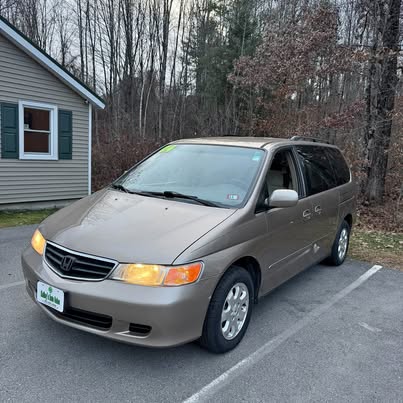
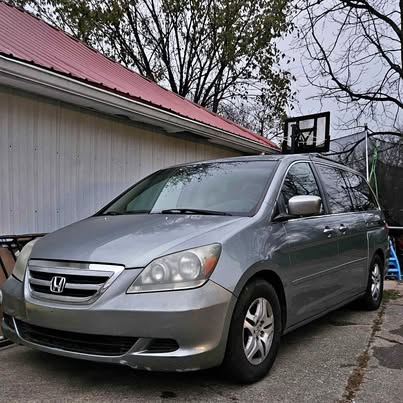
Values
Read the market figures beneath this guide — the listed-now summary and the recorded-sales evidence the site builds from its own pool — as a description of a small, specific market, because that is what they are. The pool behind this guide holds nine vans, and a pool that size moves with a single exceptional or desperate listing. What you pay now buys condition, documentation, and remaining life, and the spread between the best and worst van of the same year and trim is wider — far wider — than the spread between model years. A later van with a slipping gearbox and no history is worth less, in any honest accounting, than an earlier van with a documented replacement transmission and a fresh timing belt, whatever the year badges suggest.
Three forces drive that condition spread, and you can watch all three at work in any group of listings. The first is transmission documentation, which functions in this market almost as a separate trim level: vans with a dealer or specialist invoice for a replacement gearbox trade as a different, scarcer commodity from vans without one, because every informed buyer is pricing the same risk and every informed seller of a documented van knows it. The second force is geography, working through rust: a structurally clean southern van carries a real premium over a salt-belt van of equal mileage, and rationally so, because structure is the one thing you cannot renew at sensible cost. The third force is trim, working in reverse: at this age the plain LX's lack of powered systems reads to experienced buyers as lower future cost, and a tidy LX holds its own against a tired EX-L in a way that would surprise anyone shopping from the original brochure.
Asking prices and achieved prices are different animals in this corner of the market, and the gap between them is information. Project vans and driver vans barely inhabit the same market at all. A van needing a transmission is not a cheap version of a van that does not; it is a different purchase, made by a different buyer — one with a lift, a specialist on call, or an appetite for the work — and if that description does not fit you, no gap between the project price and the driver price is large enough to make the project the sensible buy, because the gap is consumed, predictably and entirely, by the repair that defines it. Negotiate, by all means: the inspection-list method in the previous section, faults priced in writing, is the honest way to do it, and sellers of twenty-year-old family vans expect it. But negotiate over rollers, mounts, belts, and tyres — the renewable things. On the two facts that decide these vans, structure and gearbox, there is nothing to negotiate. There is only the decision to buy that van, or to buy a different one.
Parts and ownership
Own an Odyssey of these years as you would own any well-supported Honda, with one adjustment: your choice of who maintains it matters more than it does on a Civic, because the van's expensive faults are pattern faults, and pattern faults are cheap only when the person diagnosing them has seen the pattern before. A Honda-literate independent specialist is the correct home for the van — dealer-level knowledge without dealer labour rates — with the franchised dealer reserved for recall work, which remains free, and for the occasional procedure where the factory tool genuinely decides the outcome.
Parts supply is as good as it gets for a vehicle of this age. Honda continues to supply the service and safety items — timing-belt kits, mounts, latch assemblies, suspension components — through the dealer network, and the aftermarket covers the wear catalogue comprehensively: struts, bearings, brakes, alternators, coil packs, and centre-roller assemblies are all available from multiple makers at multiple price points. The items that reward genuine Honda sourcing are the transmission fluid — use Honda ATF, DW-1 superseding the earlier Z1 specification, and no universal substitute, on a gearbox whose survival is a fluid story — the power-steering fluid, which is Honda-specific, and the timing-belt tensioner, where the genuine part is cheap insurance on an interference engine. Service costs in ownership follow the pattern this guide has built: ATF drain-and-fill services — the Honda box is serviced by repeated drain-and-fill rather than a machine flush, which Honda advises against on these units — every 30,000 miles at $120–$250 a time; a timing-belt service every 105,000 miles or seven years; spark plugs on the long interval; brake fluid, coolant, and filters on the handbook schedule. None of it is ruinous. All of it is cheaper done on time than late, and the records file you start at purchase — keep every invoice, in order, in a folder that goes with the van when you sell — is an asset you build from the first service, because you have already seen, as a buyer, exactly what that folder is worth.
Owners keep these vans for a decade at a time for a reason. Bought on documentation, maintained on schedule, and understood on the gearbox question, an Odyssey is not a gamble on Honda's reputation. It is the thing the reputation was built on, with one known, priced, inspectable exception.
Which one to buy
Buy by documentation first, year second, trim third — the reverse of the order the advertisements invite you to use. Within that order, the picks run as follows.
- The all-rounder: a 2002–2004 EX with a documented replacement transmission. The facelift engine's extra power, the five-speed's better ratios, power doors for family life, cloth seats that wear honestly — and the invoice that retires the model's one great risk. This is the van most buyers should hold out for.
- The value buy: a 2002–2004 LX with a full service file. Manual doors, cloth trim, the fewest systems to fail, and a price that reflects the market's outdated preference for equipment over simplicity. If its gearbox history is documented, it is not the cheap option; it is the clever one.
- The top-of-pool pick: a 2005 EX. The third-generation body and interior, the plain non-VCM engine, conventional tyres, and — on the pool's evidence — the configuration the market actually offers at the top end. You still inspect its five-speed automatic exactly as you inspect a 2003's.
- The simplicity pick: a sound 1998 first-generation van. For the buyer who wants the smallest Odyssey, the Accord running gear, and no sliding-door machinery at all, a rust-free 1998 with a proven timing belt is a genuinely charming vehicle — bought on structure, because at this age structure is all that is scarce about it.
- The project, knowingly: any second-generation van with a slipping gearbox and a perfect body. Only for the buyer who has priced the remanufactured transmission, has the money set aside before purchase, and wants the resulting van — documented, cooled, and filtered — enough to build it the slow way.
- The one to avoid: a 2005 EX-L or Touring with oil consumption, fouled plugs, or its original PAX wheels. Cylinder management's costs without any compensating benefit at this age, and in the Touring's case a tyre system the industry has abandoned. A different van is always available. Buy that one instead.
The overriding rule: buy the transmission's paperwork, not the van's promises — a documented gearbox and a sound structure outrank year, trim, colour, and mileage, every time, and a van that fails on either is not a bargain at any discount the seller can offer.
See the 3 Odyssey cars currently listed.
For sale now
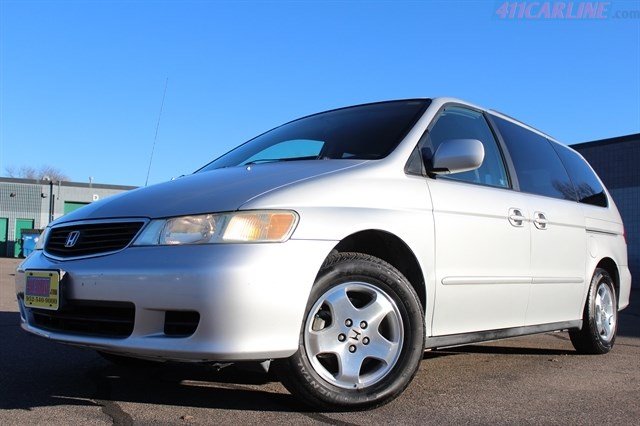 $8,989
Expand
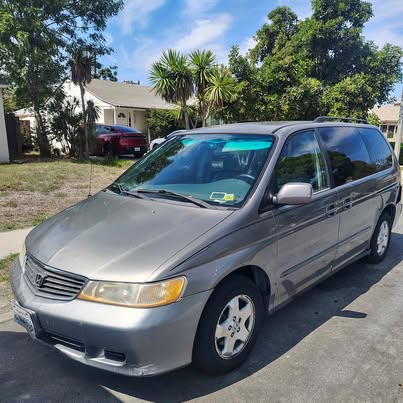 $2,100
Expand
What they sell for: Odyssey sale prices.