
Honda Odyssey buyer's guide
Honda Odyssey (1995–2001) — Odyssey: what's listed, and what they sell for.
Years: 1995–2001 · Models: Odyssey
Overview and history
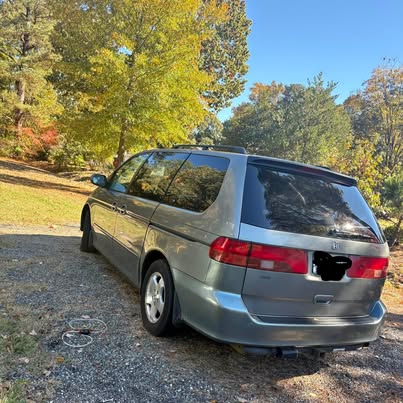
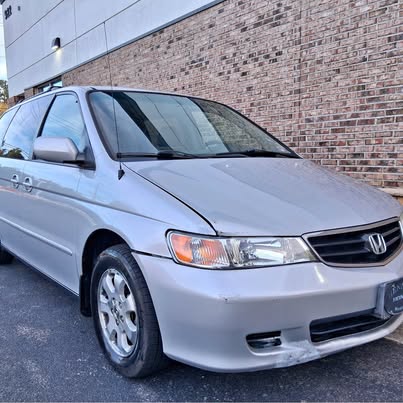
The Honda Odyssey is two different vehicles wearing one name, and knowing which one you are looking at is the first skill this guide teaches. The first-generation car, sold in the US from 1995 to 1998, is an Accord underneath: a relatively compact wagon-like minivan with four conventional hinged doors, a four-cylinder engine and front-wheel drive, built in Japan. The second-generation car, sold from 1999 to 2004, is the one that defined the modern American minivan: much larger, built in North America, with a 3.5-litre V6, dual sliding rear doors and a third-row seat that folds flat into the floor. The 2005 model year opens a third generation that keeps the second car's formula and adds cylinder deactivation on the upper trims. Our listings concentrate on the second-generation car and the 2005 changeover year, which is where the buying risk — and the buying opportunity — also concentrates.
The first Odyssey arrived for 1995 because Honda had no minivan for the American market and needed one quickly. Its engineers stretched the Accord platform into a tall, one-box family car with a low, flat floor, four doors that opened like a sedan's, and a third-row bench that folded down into a well behind it. It was clever and car-like to drive, but American buyers read the hinged doors and modest size as a station wagon rather than a minivan, and it sold in modest numbers against the Chrysler vans. Isuzu sold a lightly rebadged version as the Oasis from 1996 to 1999 — worth knowing, because an Oasis is mechanically an Odyssey and sometimes escapes the Honda premium.
Honda learned the lesson completely. The second-generation Odyssey, launched for 1999, was designed in and for North America: bigger in every dimension, with the sliding doors buyers demanded, the V6 power they expected, and the folding third row — now called the Magic Seat — that the first car had pioneered. It was an immediate hit, routinely won comparison tests against the Chrysler vans and the Toyota Sienna, and spent years with waiting lists. Production began at Alliston, Ontario, and moved to Lincoln, Alabama, early in the run. For 2005 the third generation kept the size and the formula, sharpened the styling, added side curtain airbags as standard, and introduced Variable Cylinder Management on the leather-trimmed cars.
Today these are old family vehicles at the bottom of a long depreciation curve, and that is exactly why they reward a knowledgeable buyer. An Odyssey was usually bought by a family, serviced at least adequately in its early years, and used hard in the middle ones. The engines are among the toughest Honda ever built. What kills these vans is rarely the engine: it is the automatic transmission on the V6 cars, deferred services, worn sliding-door hardware and, in salt country, corrosion underneath. Buy the right van — the one whose transmission and timing belt histories you can prove — and you get an excellent family hauler for very little money. Buy the wrong one and the first repair bill can exceed the purchase price.
The models
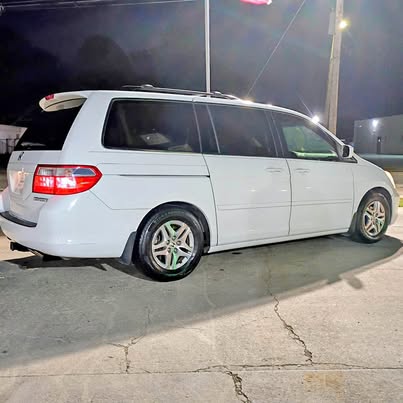
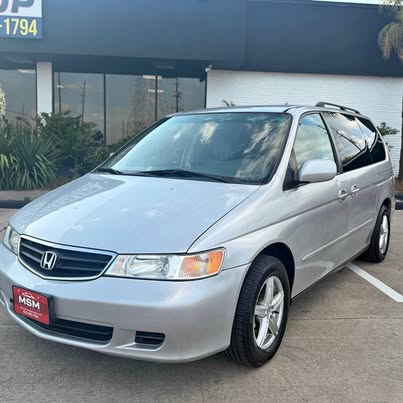
The range divides by generation first and trim second. Within the second generation — the core of today's market — the trims are LX, EX and, from 2002, EX-L, with the EX-L offered in three flavours: plain leather, leather with the RES rear entertainment system, or leather with the NAVI navigation system. The first-generation cars are simpler: LX and EX, both four-cylinder. The 2005 third-generation range runs LX, EX, EX-L and a new flagship, Touring.
| Model | Years | Engine | Output | Built | Character |
|---|---|---|---|---|---|
| Odyssey LX (first generation) | 1995–1998 | 2.2 / 2.3 four (F22B6 / F23A7) | 140 / 150 hp | Not published by trim | The Accord-based original; hinged doors, simple and light |
| Odyssey EX (first generation) | 1995–1998 | 2.2 / 2.3 four (F22B6 / F23A7) | 140 / 150 hp | Not published by trim | Adds ABS, sunroof and alloys to the same honest recipe |
| Odyssey LX (second generation) | 1999–2004 | 3.5 V6 (J35A1 / J35A4) | 210 / 240 hp | Not published by trim | The workhorse; manual sliding doors, seven-seat bench |
| Odyssey EX (second generation) | 1999–2004 | 3.5 V6 (J35A1 / J35A4) | 210 / 240 hp | Not published by trim | Power sliding doors, captain's chairs; the volume seller |
| Odyssey EX-L (second generation) | 2002–2004 | 3.5 V6 (J35A4) | 240 hp | Not published by trim | Leather and heated seats; RES and NAVI versions exist |
| Odyssey LX / EX (third generation) | 2005 | 3.5 V6 (J35A6) | 255 hp as rated at launch | Not published by trim | The new shape without cylinder deactivation — the simpler 2005 |
| Odyssey EX-L / Touring (third generation) | 2005 | 3.5 V6 (J35A7) with VCM | 255 hp as rated at launch | Not published by trim | Cylinder deactivation, active mounts; Touring adds the PAX run-flat trap |
(Honda published production in aggregate rather than by trim, so no honest per-trim build figure exists; treat any seller quoting one with suspicion. Outputs are the period US ratings; the 2005 figure was restated lower under the later SAE measurement standard, which is a paperwork change, not a different engine.)
The first-generation cars (1995–98). LX is the base car: seven seats, a four-speed automatic, air conditioning and not much else. EX adds anti-lock brakes, a power sunroof, alloy wheels and upgraded trim. Both are slow by modern standards and both are charming: light, economical and almost entirely free of the transmission disease that defines the V6 cars, because the four-cylinder automatic lives an easier life. Their rarity today is the problem — they were never numerous, and most survivors are simply worn out.
The second-generation LX (1999–2004). The sensible van. You get the full-size body, the Magic Seat and the V6, but the sliding doors are manual — which, twenty years on, is a feature, because there are no motors, cables or control units to fail. The middle row is a bench rather than captain's chairs on most LX cars, and condition varies enormously.
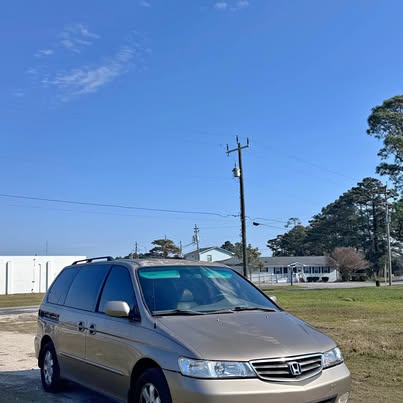
The second-generation EX (1999–2004). The car most people bought and most people want: power sliding doors on both sides, removable captain's chairs, dual-zone climate control, keyless entry and, from the 2002 refresh, front side airbags. Leather was an option before 2002 and became the separate EX-L trim that year. The EX-L RES carries a factory DVD player with a flip-down screen — a period piece now — and the EX-L NAVI carries Honda's early satellite navigation, which is obsolete and should add nothing to the price.
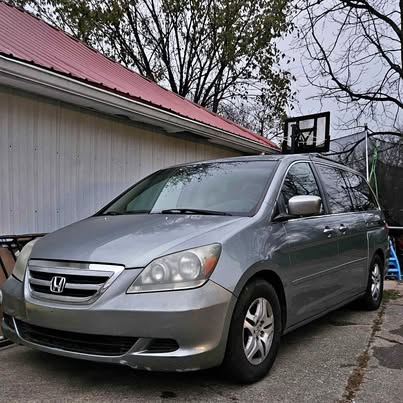
The 2005 cars. The third generation is a better van in almost every measurable way: stronger structure, curtain airbags, sharper steering, a five-speed automatic across the range. The split that matters is not LX against EX but plain V6 against VCM V6. The LX and EX use the conventional J35A6; the EX-L and Touring use the J35A7 with Variable Cylinder Management, active engine mounts and active noise cancellation — more refinement, more complexity, and two ownership traps (the active mounts and, on Touring, the Michelin PAX run-flat system) covered in the problem section.
Engines and gearboxes
The four-cylinder cars: F22B6 and F23A7
The first-generation Odyssey uses the Accord's SOHC four-cylinder family: the 2.2-litre F22B6 (140 hp) for 1995–97 and the 2.3-litre F23A7 (150 hp) with VTEC for 1998. These are simple, understressed engines from the period when Honda fours were close to unburstable, and the same virtues and vices apply here as in an Accord of the same age. Valve clearances are set with screw-and-locknut adjusters and drift with mileage, so a top end that ticks when cold and quiets as it warms is normal, while a car that has never had a clearance check will be noisy and down on power. The timing belt drives the water pump and wants replacing at the period Honda interval — around 90,000 to 105,000 miles or seven years, whichever comes first — and because these are interference engines, a snapped belt bends valves. Budget $700–1,200 for a belt, tensioner and water pump done together at an independent shop, and treat a car with no belt history as a car that needs one immediately.
The period Honda faults are all present and all cheap if caught early. The distributor's O-ring hardens and leaks oil down the back of the engine, and its internal bearing wears, giving a chirp from the distributor body and eventually erratic running; a rebuilt distributor is a few hundred dollars fitted. The main relay under the dashboard develops cracked solder joints with age, and its signature is famous: the car starts perfectly cold, refuses to restart after a short hot stop, then starts again once cooled. Suspect the $60–90 relay before anyone sells you a fuel pump. The idle air control and fast-idle valves gum up and cause a hunting idle; cleaning usually cures it. Oil consumption on a high-mileage four is usually valve stem seals — a puff of blue smoke on a cold start that clears is the tell, and it is a watch-it item, not a walk-away.
The J-series V6: J35A1, J35A4, J35A6 and J35A7
The second and third generations are built around one engine: the 3.5-litre J35, a 60-degree SOHC V6 with four valves per cylinder, VTEC on the intake side, a timing belt, and coil-on-plug ignition. In the 1999–2001 vans it is the J35A1, rated at 210 hp and tuned for regular fuel and mid-range torque. The 2002 refresh brought the J35A4: 240 hp from revised intake and exhaust breathing and a higher compression ratio, still on regular fuel. For 2005 the J35A6 (LX and EX) kept the same basic architecture at 255 hp as rated at launch, while the EX-L and Touring received the J35A7, which adds i-VTEC with Variable Cylinder Management: under light load the rear bank of three cylinders is deactivated by locking its rocker arms so the valves stay shut, and the van cruises as a large three-cylinder. Active engine mounts and active noise cancellation mask the change in character.
The core engine is genuinely excellent. Bottom ends are strong, oil consumption is low on a maintained car, and 250,000 miles is unremarkable for a J35 that has had its oil changed and its timing belt done. A healthy one starts instantly, idles almost silently, pulls hard and clean from low revs — these vans are properly quick for their size — and shows no smoke in any circumstance. Judge any J35 on four things: the timing belt record, the state of its oil, misfire behaviour, and its mounts.
Timing belt. The J35 is an interference engine, and the belt interval is 105,000 miles or seven years under normal service in the period schedules. The belt itself rarely fails first: the hydraulic tensioner weeps and loses pressure, or an idler bearing dries out, and the belt jumps or strips. The full job — belt, tensioner, idlers, water pump (it is driven by the belt and is right there), and ideally the camshaft and crankshaft seals — runs $900–1,500 at an independent and more at a dealer. It is the single most valuable invoice in a seller's history file, and its absence on a 120,000-mile van is a $1,200 hole in the asking price, non-negotiable.
Misfires and the EGR system. On the 1999–2001 cars, the signature J35 fault is carbon-clogged EGR passages. Exhaust gas recirculation reaches the cylinders through small ports in the intake manifold, and those ports coke up unevenly, so one or two cylinders receive too much exhaust gas and misfire under light load. The presentation is a surge or stumble at a steady 40–55 mph cruise, sometimes with misfire codes, on an engine that pulls perfectly at full throttle. Honda extended the EGR warranty on the affected years; the fix is to clean or drill out the ports and fit the revised port kit — $300–600 at a shop that knows the job. The trap is that the same light-load stumble is also the first symptom of torque converter clutch failure, and the two are confused constantly; the problem section explains how to separate them. Individual ignition coils also fail with age, giving a single-cylinder misfire that follows the coil when swapped between cylinders — a $60–120 part and a ten-minute diagnosis. On the VCM engine, fouled rear-bank plugs with oil on the threads point at the VCM oil-control system rather than at the plugs themselves.
Engine mounts. All of these vans use fluid-filled mounts, and the front and passenger-side mounts sag and tear with age, giving a clunk on take-up of drive and vibration at idle in gear. On the VCM cars the mounts are active — electrically switched to stiffen when the engine drops to three cylinders — and cost several times as much: an active front mount can run $500–900 in parts alone against $100–200 for a conventional one. A 2005 EX-L that vibrates noticeably in ECO mode with a clunk over bumps may need mounts, not an engine.
Gearboxes: the four-speed, the five-speed, and why they fail
Every US-market Odyssey is an automatic; there was never a manual option. The first-generation cars use a four-speed unit behind the four-cylinder and are largely untroubled. The V6 cars use two gearboxes, and both need a full explanation, because the gearbox — not the engine, not the body — is what prices a second-generation Odyssey.
The four-speed automatic (1999–2001). This unit, Honda's own design, is the notorious one. Honda built its automatics differently from everyone else: instead of planetary gearsets, a Honda automatic is laid out like a manual gearbox, with individual clutch packs engaging each ratio along parallel shafts. It is compact and efficient, but it puts enormous faith in its clutch packs and in the fluid that cools and feeds them. Automatic transmission fluid in this box does three jobs at once — it is the hydraulic medium that applies the clutches, the lubricant for the shafts and bearings, and the coolant that carries clutch heat away to the small heat exchanger in the radiator. The failure is a vicious circle that starts with heat. The torque converter's lockup clutch, which engages at cruise to save fuel, generates heat and sheds friction material as it wears. The third-gear clutch pack, marginally cooled in this design, runs hot, and its friction material begins to break down. Worn material circulates in the fluid — and here is the design's fatal weakness: the only filter is a strainer buried inside the transmission case, which cannot be changed without splitting the gearbox open. As debris accumulates, the strainer and the fine internal passages progressively clog, fluid pressure and flow fall, the clutches receive less cooling and less clamping pressure, they slip more, slip makes more heat and more debris, and the circle tightens until the box is changing gear with worn-out clutches on starved hydraulics. By the time the driver notices, the damage is done and is not reversible with fluid.
The symptoms arrive in a recognisable order. First, a shudder or judder under light throttle at 35–50 mph as the lockup clutch engages and slips. Then flare — the revs rising between changes, especially the 2–3 change — and changes that were once clean becoming drawn out. Then harsh engagement of drive or reverse from rest, a delay before the box takes up, and finally the D light on the dashboard flashing, which is the transmission's fault lamp: stored codes for incorrect gear ratio and torque converter clutch faults live behind it. Honda, to its credit, stood behind the problem in period: the transmission warranty on the affected vans was extended first to seven years or 100,000 miles and, after legal action, effectively to 109,000 miles, and thousands of vans received Honda remanufactured transmissions. Those warranties are long expired, so today the question is purely factual: has this van's box been replaced, when, and by whom? A Honda remanufactured unit fitted at a dealer in the van's middle years is the best possible news. An original four-speed at 160,000 miles with no history is a liability you should price as a rebuild — $2,800–4,500 for a quality remanufactured unit fitted, with the car's value moving by roughly that amount depending on the answer.
The five-speed automatic (2002–2004, and 2005 in revised form). The five-speed is a stronger box and fails less often, but it has its own named fault, and it is a safety story rather than a wear story. On the 2002–04 vans, the second-gear gearset received insufficient lubrication and cooling from its oil jet, so in sustained hard use the gear could overheat — visible as heat discoloration, blueing of the metal — and in the extreme case a heat-weakened gear could chip or fracture, with debris capable of locking the transmission. Honda recalled the vans in 2004: dealers inspected the gear through the filler opening with a photoscope and fitted an external oil jet kit that sprays fluid directly onto second gear; a van whose gear already showed discoloration got a replacement transmission instead. On a 2002–04 van, the recall paperwork is a document you want in the file, and the jet kit's external pipework at the filler is its physical evidence. Beyond the recall, the five-speed's wear faults are more conventional: torque converter lockup shudder as on the four-speed (slower to arrive, same mechanism), failed third-gear pressure switches causing a flare or harsh change into third — an external part at $50–100 plus labour, one of the few cheap transmission fixes on these vans — and, at high mileage, the same debris-and-heat circle if the fluid has never been changed.
Fluid discipline, for both boxes. Honda specified its own ATF-Z1 fluid for these gearboxes; the later ATF DW-1 supersedes it, and generic multi-vehicle fluids are a false economy in a box calibrated around one friction specification. A drain removes only about a third of the charge, so Honda's procedure is drain, refill, drive, and repeat — three drain-and-fills replaces most of the fluid, at $150–300 done professionally. Never power-flush a suspect Honda automatic: stirring a worn box's debris loose under pressure accelerates exactly the clogging failure described above. A seller who changed burnt fluid for fresh the week before listing has hidden your best evidence — smell the dipstick anyway, because the acrid smell lingers, and test the box on the road, where fresh fluid cannot disguise worn clutches for long.
Problem areas
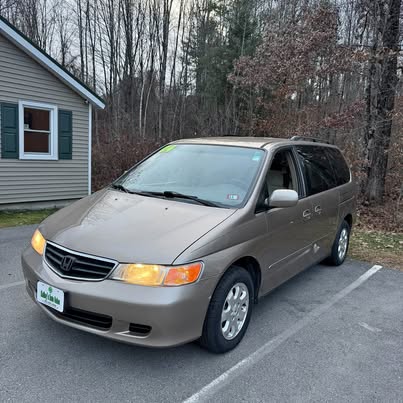
Everything in this section follows from one fact: these vans are now twenty to twenty-five years old, they were bought to work for a living, and most have had at least one owner who treated maintenance as optional. Our current listings are a small sample — nine vans tracked, eight of them for sale, spanning 2001 and 2005 model years in the store — so no honest failure statistics can be drawn from the listings themselves; the patterns below are the model's documented behaviour over two decades. Work through the systems in this order, because the order is also the order of the bills.
The automatic transmission: telling a dying box from a healthy one
Start here, because on a V6 Odyssey this is the whole ballgame. The mechanisms are laid out in the engines and gearboxes section — heat, clutch-pack debris, a filter you cannot change, and a circle that only tightens — so what follows is the practical discrimination: how a dying box behaves differently from a healthy one, and how not to be fooled.
The road test is the instrument. Insist on driving the van from cold, and drive it for at least twenty minutes so the fluid reaches full temperature; a worn box is at its best cold, when the fluid is thick and pressures are high, and at its worst hot and heat-soaked after several stops. Watch the tachometer, not the seat of your pants. On each change — above all the 2–3 change on the four-speed and the change into third on the five-speed — the revs should step down cleanly and immediately. Flare, where the needle rises a few hundred rpm between ratios before the next gear takes hold, is clutch slip, and slip on a test drive means the pack is already worn; it does not heal, and no additive fixes it. Next, find a gentle grade at 40–50 mph and hold a light, steady throttle so the torque converter locks: a healthy lockup is a single, almost imperceptible step down in revs, while a dying lockup clutch shudders repeatedly — a vibration through the body that feels like driving over a rumble strip for a second or two at a time.
Separating gearbox shudder from engine misfire. This is the confusion that costs buyers money in both directions, because a clogged EGR system or a failing coil produces a light-load stumble in the same speed range. Three tests separate them. First, the shudder of a lockup clutch happens exactly at the lockup point and repeats predictably at the same speed and throttle opening; a misfire stumbles under load at various speeds and usually worsens climbing a hill. Second, tap the brake pedal lightly with your left foot while holding the throttle steady: touching the brake commands the converter to unlock, so a shudder that vanishes the instant you touch the brake is the converter clutch, while a stumble that continues is the engine. Third, a misfire severe enough to feel will usually set or flash the check-engine light and store a cylinder-specific code; a transmission fault flashes the D indicator instead and stores ratio or converter codes. Read the codes on any van you are serious about — a basic scanner is cheap, and codes the seller has cleared will often reset during a twenty-minute drive.
The stationary tests. With the box fully warm, come to a stop and select reverse, then drive, several times. Engagement should take under a second and arrive with a gentle nudge. A pause, then a thump, is worn clutches and low pressure announcing themselves. Hold the van on the brake in drive at idle: excessive vibration is usually engine mounts, not the box, but a box that creeps weakly or shudders on take-up from rest is slipping. Check for the flashing D light at every stage, and cycle the ignition and check again — some faults only store after a drive cycle.
The evidence that cannot be faked. Fluid first: pull the transmission dipstick warm, wipe it on white paper, and look and smell. Healthy fluid for its age is red to light brown and smells neutral. Dark brown or black fluid that smells burnt — acrid, like scorched toast — has been overheated, and in this gearbox overheating and clutch wear are the same event. Glitter or metallic sheen in the fluid is clutch and bearing material, and it is a walk-away unless the price already assumes a rebuild. Then the paperwork: a Honda remanufactured transmission invoice, a recall record on a five-speed car, or a documented pattern of drain-and-fills every 30,000 miles all move the van into a different value class. The absence of any transmission history on a high-mileage four-speed van is itself the history. Price it honestly: a quality remanufactured unit, fitted with a new or rebuilt converter, fresh mounts where needed and an auxiliary cooler, runs $2,800–4,500, and a van that needs one is worth its asking price minus most of that figure.
Sliding doors, tailgate and the body hardware
The second generation's power sliding doors are its second great wear system, and their failure is mechanical, not electronic, in most cases. Each door hangs on three hinges; the centre hinge carries rollers that run in a track along the rear quarter panel, and those nylon rollers wear flat, crack and finally disintegrate. The sequence is audible: first a rumble or grind as the door travels, then a door that sags slightly and needs a lift to latch, then juddering travel, and finally a door that jams or falls off its track alignment. Rollers are cheap parts — a centre hinge assembly is typically $40–100 — and an owner with basic tools can change one in an hour; a shop charges $250–450 a side. The drive cables that the motor pulls to move the door fray inside their guides, especially where road salt reaches them, and a snapped cable is a $400–800 shop job because the interior trim comes off to fit it. Test both doors through several full cycles from every switch, watch for even speed and a clean latch pull-in at the end of travel, and look along the lower edge of the rear quarter for the scratches a sagging door leaves in the paint.
The electrical side has its own signatures. The door draws power through contact pins in the door jamb that corrode and pit, giving intermittent operation; cleaning them is free and should precede any motor replacement. A door that opens a few inches and reverses is usually meeting resistance — worn rollers again — and its pinch protection is doing its job. A door that goes dead after a flat battery often needs only its control unit reset by pulling and refitting the correct fuse; price a dead door as a motor and enjoy the discount if it is the fuse. On all cars, the fuel filler door interlocks with the left sliding door, so a door that refuses to open only when the filler flap is ajar is behaving correctly.
Underneath and around the body, age is the enemy rather than design. These are not notoriously rusty vans by the standards of their Chrysler rivals, but in the salt belt the rear wheel arches, the bottoms of the sliding doors and tailgate, the rocker panels and — most expensively — the front subframe and its mounting areas all corrode, and a subframe perforated near a mount is a structural repair that can exceed the van's value. Brake pipes along the floor and the air-conditioning pipes to the rear unit corrode in the same environment. Get the van on a lift or at least on your knees with a torch: surface rust on suspension arms is cosmetic, flaking and perforation at the subframe and the jacking points is not. A lift inspection at $100–175 is the best money in the whole purchase. Elsewhere, the tailgate struts sag, the bonnet cable stretches, and door check straps click — small money, useful negotiating detail.
Suspension, steering and brakes
The chassis is conventional — MacPherson struts in front, a multilink rear on the second generation — and wears like any heavy front-drive vehicle. Front lower control arm bushes tear, giving a clunk over sharp bumps and a vagueness on turn-in; sway bar links knock over broken surfaces and are cheap, $100–250 a pair fitted. Struts and rear dampers are usually tired by 120,000 miles, and a van that floats and dives is on its originals; a full set fitted runs $800–1,400. Wheel bearings hum in proportion to speed and change note as you load them in corners — weave gently on a quiet road and listen for the note rising and falling. Drive shafts click on full lock when their outer joints wear, and torn CV boots on a viewing mean the joint behind them is living on borrowed time.
The steering rack leaks from its seals at high mileage, showing as fluid on the bellows and a falling reservoir; a rack replacement is $700–1,200 fitted. Brakes are a service item with one behavioural trap: these are heavy vans, and overheated front discs develop a judder under braking from highway speed that owners misdescribe as warped rotors — the mechanism is usually uneven pad deposits from holding the van on the brakes when hot, and new discs and pads at $300–500 an axle cure it either way. Seized rear caliper slide pins give uneven pad wear you can see through the wheel spokes; compare the pads side to side.
Electrics, air conditioning and the cabin
Honda electrics of this era are well made, and most faults trace to switches, actuators and grounds rather than wiring. Door lock actuators buzz or die one door at a time — $150–300 a door at a shop, mostly labour. Window regulators slow and fail, the driver's first. The ignition switch on the 1999–2001 vans was subject to a recall for worn contacts that could stall the engine; check the recall history, because a van that cuts out at random and restarts is describing that switch until proven otherwise. The instrument cluster clock and the radio display fade, the SRS warning light commonly traces to a seatbelt buckle switch — which Honda has historically covered under a lifetime seatbelt warranty in the US, so an SRS light is a dealer conversation before it is a bill — and a parasitic battery drain on a van that stands is most often a sticking air-conditioning compressor clutch relay or a sliding-door control unit that never sleeps; both are findable with a multimeter and patience.
Air conditioning matters in a glass box this size, and the system is two systems: front and rear units sharing one compressor and condenser. Compressor clutch relays stick (leaving the compressor engaged or disengaged), condensers corrode and leak at the front, and the long pipes to the rear evaporator corrode in salt country. A full professional diagnosis with a refrigerant charge runs $150–300; a compressor replacement $700–1,200; rear pipework is the expensive outlier because of access. Test the system on the viewing whatever the season: run it to maximum cold, check for genuinely cold air at both the front and rear vents, and listen for the compressor clutch cycling cleanly rather than chattering.
Inside, the cabin wears honestly. Exercise the Magic Seat: fold the third row into its well and raise it again, checking that the latches engage and the release cables have not stretched — a seat that will not latch is a safety item, not a quirk. Captain's chairs should slide, recline and remove as designed. Seat fabrics split on the driver's bolster, and a dead factory DVD screen on an RES car should be treated as decoration. Check every seatbelt extends and retracts, because belts are both a safety item and, as noted, a warranty conversation.
The 2005 cars: VCM and PAX
Two third-generation systems deserve their own warning. Variable Cylinder Management on the 2005 EX-L and Touring is reliable in its electronics but hard on its supporting hardware: the active engine mounts that mask three-cylinder running are expensive wear items, as covered earlier, and the rear bank's plugs and oil control rings work under an unusual duty cycle, so a VCM van with a misfire and oil-fouled plugs needs diagnosis of the VCM oil pressure switches and spool valve — a few hundred dollars in parts — before anyone condemns the engine. An oil consumption habit on a VCM car is a known pattern, not a mystery.
The Touring's Michelin PAX system is the single biggest trap in this guide. PAX is not a normal run-flat: it is a complete wheel-and-tyre system with a special rim, a gel-filled support insert and a tyre that can only be fitted with dedicated equipment. The tyres are now scarce and expensive where they can be found at all, and many Touring owners have de-PAXed — fitting conventional wheels and tyres from a lesser Odyssey, plus a spare. A Touring still on PAX wheels carries a four-figure conversion or tyre bill in its near future; a Touring already converted to conventional wheels, with the conversion documented, has had its biggest problem solved by someone else. Check which you are looking at before you discuss price, by looking for the PAX marking on the tyre sidewall and the distinctive rim.
How to inspect one
Allow ninety minutes, bring a torch, white paper for the dipstick tests, and a cheap code scanner if you own one. Arrange to arrive to a cold van — a seller who has warmed it up has removed your best evidence, and you should say so and reschedule if the bonnet is warm.
- Paperwork before metal. Match the VIN on the title to the plate at the base of the windshield and the sticker on the driver's door jamb. Then hunt the three documents that price the van: a timing belt invoice (date and mileage), any transmission invoice or Honda remanufactured unit paperwork, and, on a 2002–04 van, the second-gear oil-jet recall record. Ask when the transmission fluid was last changed and what fluid was used; vague answers on a V6 car are an answer.
- Cold start. Start the engine from stone cold and listen. It should fire at once and settle to a smooth idle. Blue smoke on start-up that clears points to valve stem seals; smoke that persists is worse. A top-end tick that fades in seconds is acceptable; a rattle that stays is not. On a first-generation car, note any hunting idle — that is the idle control system asking for a clean.
- Under the bonnet. Pull the engine dipstick: oil at the right level, amber to brown, is what you want; black, thin or fuel-smelling oil is neglect. Look at the timing covers for oil mist, the VTEC solenoid for leaks, the power steering reservoir for foamy fluid, and the coolant for oil contamination or rust colour.
- The transmission dipstick test. With the engine warm and idling in park after a short drive, pull the transmission dipstick and wipe it on your white paper. Read the colour against the light and smell it, exactly as the problem section describes: red to light brown and neutral is healthy, dark brown and acrid is cooked, and any metallic glitter is a walk-away unless the price already assumes a replacement box.
- Stationary gearbox tests. Fully warm, select drive and reverse several times each. Engagement should come in under a second with a gentle nudge. A pause followed by a thump is the worn-clutch signature from the problem section. Watch the dashboard throughout for a flashing D light, and hold the van in drive on the brake to feel for shudder on take-up.
- The road test — gearbox first. Drive at least twenty minutes, including a gentle grade at 40–50 mph. Watch the tachometer through every change for flare, especially into third. Hold a light throttle at the lockup point and feel for the rumble-strip shudder; then touch the brake lightly with your left foot — if the shudder vanishes the instant the converter unlocks, you have found a lockup clutch fault, not an engine misfire, and you should price the van accordingly.
- The road test — everything else. Accelerate hard once: the engine should pull cleanly with no misfire or hesitation. Brake firmly from highway speed: the van should stop straight, without judder through the wheel or pedal. Weave gently on a quiet road and listen for wheel bearing hum that rises and falls with load. Turn full lock both ways in a car park for CV joint clicking, and drive over broken surfaces for control-arm and sway-bar-link knocks.
- Sliding doors, all of them, repeatedly. Cycle each power door at least three times from the fob, the dashboard switch and the handle. Listen for roller rumble, watch for sag or judder, and confirm the door pulls itself the last inch into the latch. On a manual-door LX, slide each door by hand through its full travel. Then check the left door with the fuel filler flap open — it should refuse, by design.
- Air conditioning and electrics. Run the air conditioning to maximum cold and check both the front and rear vents for genuinely cold air, whatever the season. Work every window, lock, mirror, seat adjustment and light. Note any SRS light and ask about seatbelt buckle history. Test the heater too — a van that cannot demist is a van you cannot use.
- Seats and the Magic Seat. Fold the third row flat into its well and raise it again; both latches must engage positively. Slide, recline and, if you can, remove and refit one middle-row seat. Pull every seatbelt fully out and let it retract. A seat that will not latch or a belt that will not retract is a safety repair, priced into the offer.
- Underneath. On a lift if at all possible — pay for this inspection if the van has passed everything else. Read the front subframe and its mounts, the rear arches, the rocker panels, the brake pipes and the rear air-conditioning pipes for perforation rather than surface rust. Look for oil at the steering rack bellows, torn CV boots, and transmission casing leaks. Fresh underseal over everything on a van of this age is a question, not an answer.
- The 2005 checks. On an EX-L or Touring, feel for vibration and clunks that arrive specifically when the ECO light shows the engine running on three cylinders — that is the active mount test. On a Touring, read the tyre sidewalls for the PAX marking, ask whether the van has been converted to conventional wheels, and look for a spare, because a PAX car carries none.
Values
There are no bargains in this market, only vans whose price does or does not reflect their transmission and timing belt histories — and learning to read that gap is the whole of Odyssey valuation. The computed market figures appended to this guide tell you what sellers are asking and what recorded sales have achieved; this section teaches you how to place an individual van within that spread, because on these vehicles the spread between the cheapest and the dearest example of the same model year is explained almost entirely by condition and paperwork, not by trim or mileage alone.
Start with the two invoices. A van with a documented timing belt service in date and a Honda remanufactured transmission in its past — or, on a five-speed car, a clean bill from the oil-jet recall and a visible pattern of fluid changes — sits at the top of the market for its year, and deserves to. A van with neither document is not the same vehicle at a lower price; it is the same vehicle with two large, probable bills still inside it, and the honest comparison is its price plus the cost of both jobs against the documented car's price. Sellers of undocumented vans routinely ask documented money. The market, given time, does not pay it, which is why undocumented vans linger in listings while documented ones sell.
Generation and trim move the price less than condition does, but they do move it. The second-generation cars are the volume market and the easiest to compare, because there are always several for sale; within them, the EX and EX-L carry a modest premium over the LX for the power doors and captain's chairs, a premium that shrinks as the doors age, because the buyer of a twenty-year-old van is also buying the door repairs. The factory DVD and navigation options add nothing measurable now. The 2005 cars sit a step above the earlier vans as the newer design with standard curtain airbags, but the Touring's premium is fragile: a Touring still on its PAX wheel system is worth less to an informed buyer than an equivalent EX-L, not more, because the conversion cost travels with the car. First-generation vans and the Isuzu Oasis trade in a thin, enthusiast-tinged market where a genuinely sound example can outrun its book value and a tired one is worth only what a parts buyer will pay.
Geography matters too. Salt-belt vans are cheaper and should be: the difference is under the floor, in subframes, brake pipes and rear air-conditioning lines, and a southern or western van with a dry underside is worth travelling for. High mileage alone is a weak reason to discount a J35 van with full history; the engine tolerates miles far better than the gearbox tolerates neglect, so a high-mileage documented van is usually a better buy than a low-mileage van with no paperwork, whose miles have often been accumulated in exactly the short-trip, never-serviced pattern that cooks transmission fluid.
Finally, the negotiation reality: the asking-versus-achieved gap is widest on over-optimistic undocumented examples and narrowest on fairly priced documented ones, and the strongest lever you hold is the inspection itself. A flare on the 2–3 change, a burnt smell on the dipstick paper, a timing belt overdue — each is a concrete, demonstrable deduction, and sellers who have watched you find them rarely argue. A van that passes the full inspection in this guide, papers in order, is worth paying the asking price for.
Parts and ownership
The Odyssey is one of the easiest vehicles of its era to keep, because Honda built them in large numbers, the mechanicals are shared widely — the J35 family also powers the Pilot, the Acura MDX and TL and a generation of Accords, and the first-generation car is Accord underneath — and the vans remain thick on the ground in salvage yards. Almost everything a driver needs is available new, remanufactured or used at short notice, and any competent independent Honda specialist knows these vans by heart.
Easy and cheap: service items, filters, plugs and coils, brake discs, pads and calipers, suspension wear parts, sway bar links, wheel bearings, CV shafts, sliding-door rollers and latch parts, lock actuators, window regulators, radiators, alternators and starters. Most are same-week parts at ordinary prices, and the door rollers in particular are the kind of job a home mechanic can do on a Saturday morning for the price of a takeaway.
Available, at a price: the automatic transmissions themselves. Remanufactured units for both the four-speed and the five-speed are a mature trade — expect the fitted range quoted in the gearbox section, and insist on a new or rebuilt torque converter and an auxiliary cooler as part of the job, because reusing the converter that shed the debris defeats the object. Timing belt kits with the tensioner and water pump are sensibly priced as kits. The active engine mounts for the VCM cars, the sliding-door drive cables and motors, air-conditioning compressors and rear pipework, and a replacement steering rack sit in the middle band: hundreds rather than thousands, but worth pricing before you buy a van that needs two of them at once.
The awkward list: Michelin PAX tyres and the equipment to fit them are effectively a closed chapter — the answer is conversion to conventional wheels, as the problem section explains. Factory navigation and DVD components are obsolete electronics, worth nothing in a valuation. First-generation body and trim parts are thinning as the cars disappear from yards, and Isuzu Oasis trim is pure archaeology.
Running costs. Fuel consumption is the honest downside: a V6 Odyssey is a heavy vehicle with the aerodynamics of a garden shed, and consumption in the high teens in town and the low-to-mid twenties on a highway run is realistic, with the four-cylinder cars several points better. Insurance is ordinary family-car money. The budget that catches new owners is the first year: catching up a neglected van — timing belt service, transmission drain-and-fills, brakes, tyres, door rollers and the small electrical list — runs into the low thousands before you improve anything. Set against that, a sorted Odyssey asks little: oil services, a transmission drain-and-fill every 30,000 miles as insurance, and the belt at its interval.
Which one to buy
- The all-rounder: a 2002–04 EX or EX-L with papers. The 240 hp engine, the five-speed with its recall work documented, power doors and the deepest supply to choose from. This is the default Odyssey, and the right answer for most buyers.
- The value buy: a 1999–2001 van with a Honda remanufactured transmission already fitted. The four-speed's reputation crushes the price of the whole van, including the ones whose boxes were replaced at Honda's expense in period. Find one with the invoice and you have bought the discount without the risk.
- The simple-life buy: a second-generation LX. Manual sliding doors delete an entire failure system, the bench seat swallows people without ceremony, and the money saved over an EX buys the timing belt service the van probably needs.
- The best van here: a 2005 EX. The third-generation structure and safety kit with the conventional engine and no VCM complexity. Check the belt history exactly as on the earlier cars.
- The cautious buy: a 2005 EX-L. Everything the Touring offers in comfort without the PAX trap — but feel for ECO-mode vibration on the test drive and price active mounts into any car that clunks.
- The enthusiast's buy: a first-generation EX, or an Isuzu Oasis. The Accord-based original is the interesting one and the Oasis is the same car wearing a rarer badge. Buy purely on condition; there are too few left to be choosy about colour or trim.
- The one to walk away from: any V6 van, of any year or trim, whose seller will not let you drive it for twenty minutes from cold. That refusal is the inspection result.
And the rule that overrides all of the above: buy the transmission history, not the van. The engine will outlast you and the doors can be re-rollered for pocket money — but a second-generation Odyssey is worth exactly what its gearbox and timing belt paperwork say it is worth, and no shine, trim level or low mileage changes that.
Listed now
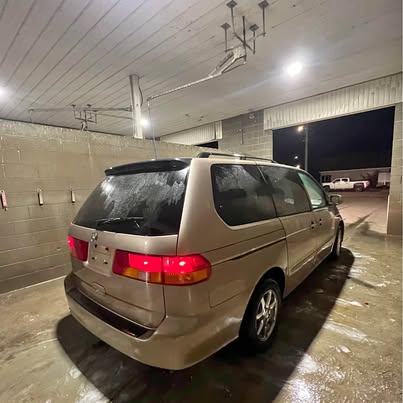
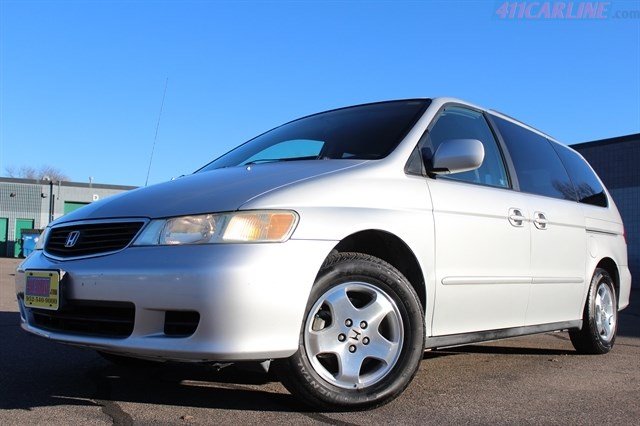
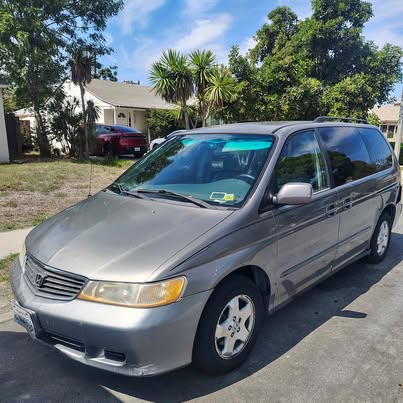
On Classic Listings today: 3 cars are listed here; 2 for sale and 1 marked sold; average asking price $5,545; asking range $2,100 to $8,989; sold cars average $5,700.
See the 3 Odyssey cars currently listed.
The market — recorded sales
Recorded-sale figures: 1 recorded sale · median $5,700 · range $5,700 to $5,700 (Feb 2024 – Feb 2026)
Based on 1 recorded sales — too few for a benchmark value.
| Date | Car | Sale price | Source |
|---|---|---|---|
| Feb 5, 2026 | 1997 Odyssey | $5,700 | Cars & Bids |
Dates are the sale date where the source states one; otherwise the date the sale was recorded here.
For sale now
 $8,989
Expand
 $2,100