Honda CR-V buyer's guide
Honda CR-V (1996–2001) — CR-V, CRV: what's listed, and what they sell for.
Years: 1996–2001 · Models: CR-V, CRV
Overview and history
The Honda CR-V is the car that invented the modern compact crossover, and it did it by refusing to be a truck. Launched in Japan in October 1995 and in the United States for the 1997 model year, the CR-V — the name stands for Comfortable Runabout Vehicle — took the platform, engines and driving manners of the Civic and wrapped them in a tall, square, five-door wagon body with a side-hinged tailgate, a tailgate-mounted spare wheel and just enough all-wheel drive to deal with snow, mud and boat ramps. There was no low-range gearbox, no ladder frame and no pretence of rock-crawling. What there was, instead, was a flat cabin floor you could walk through, a fold-out picnic table hidden in the cargo floor, car-like fuel economy and Honda reliability. Buyers understood it instantly, and every manufacturer on earth has been copying the formula ever since.
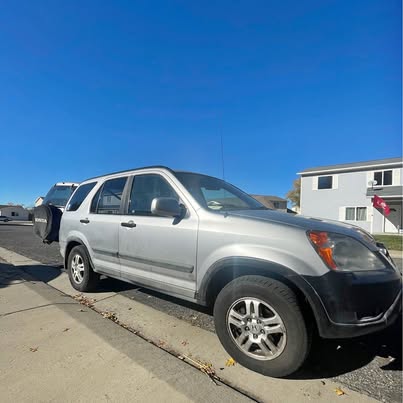
That matters to you as a used buyer because the CR-V has now been in production for three decades, across six generations, and the early cars have crossed from cheap used transport into the territory this site covers: the newest first-generation car is a quarter of a century old. We currently track 13 CR-Vs for sale in the US, all of them first- or second-generation cars, all automatics and all sourced from Facebook Marketplace sellers — a fair picture of where these cars trade now: privately, cheaply, and on condition rather than provenance. Six of the 13 are silver, which is also a fair picture of how they were bought new.
The generations divide cleanly. The first (1997–2001 in the US) is the purest: a 2.0-litre four, a simple dual-pump all-wheel-drive system with no electronics in it at all, and a cabin trimmed like a Civic's. The second (2002–2006) grew up — a bigger 2.4-litre i-VTEC engine, a roomier body and, from the 2005 facelift, a five-speed automatic and stability control. The third (2007–2011) dropped the tailgate spare and side-hinged door for a conventional liftgate. The fourth (2012–2016) refined that recipe, the fifth (2017–2022) downsized to a 1.5-litre turbo and added a hybrid, and the sixth, on sale since 2023, pushes the hybrid to the front of the range.
None of these cars is fast, rare or precious, and that is precisely their appeal and their trap. The appeal: the engineering is fundamentally sound, the failure modes are known to the last relay, and parts support is as good as it gets. The trap: because a CR-V asks so little of its owner for so long, many owners give it nothing at all. These cars die of neglect, not design — skipped timing belts, skipped valve adjustments, skipped rear-differential fluid, skipped air-conditioning repairs that turn a worn compressor into a contaminated system. The difference between a good CR-V and a money pit is almost never the mileage. It is whether the handful of scheduled jobs that actually matter on this car were done, on time, by somebody. This guide teaches you which jobs those are, and how to test for each one standing in front of a specific car.
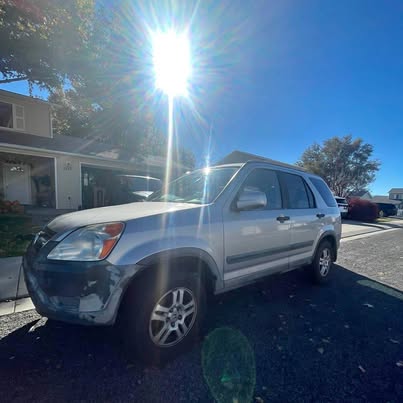
The models
Every CR-V is a five-door, five-seat wagon with a transverse four-cylinder engine, driving the front wheels full-time and the rear wheels automatically when the fronts slip — except for the front-wheel-drive versions Honda also sold in most years, which you must identify before you pay all-wheel-drive money. Trim names in the US run LX (the base car), EX (the volume seller: sunroof, alloys, better audio, all-wheel drive standard in most years) and EX-L (EX plus leather), with a Special Edition — badged SE — appearing at the end of several generations as a value package of EX equipment. The table covers the generations you will actually meet in the classic-era market; the built column is left blank where no genuinely documented total exists, and outputs are the US-market figures for the years shown.
| Model | Years | Engine | Output | Built | Character |
|---|---|---|---|---|---|
| CR-V (Gen 1, RD1) LX/EX | 1997–1998 | 2.0 four (B20B) | 126 hp | — | The original; simple, slow, timing belt critical |
| CR-V (Gen 1, RD1) LX/EX/SE | 1999–2001 | 2.0 four (B20Z) | 146 hp | — | The one to have in Gen 1; real extra pace |
| CR-V (Gen 2, RD4/5) LX/EX | 2002–2004 | 2.4 four (K24A1) | 160 hp | — | Bigger, torquier; watch the A/C compressor |
| CR-V (Gen 2) LX/EX/SE | 2005–2006 | 2.4 four (K24A1) | 160 hp | — | Facelift: 5-speed auto, stability control |
| CR-V (Gen 3, RE) LX/EX/EX-L | 2007–2009 | 2.4 four (K24Z1) | 166 hp | — | Liftgate replaces the side door; no spare on show |
| CR-V (Gen 3) LX/EX/EX-L | 2010–2011 | 2.4 four (K24Z6) | 180 hp | — | Facelift with a useful power bump |
| CR-V (Gen 4, RM) LX/EX/EX-L | 2012–2014 | 2.4 four (K24Z7) | 185 hp | — | The last of the conventional automatics |
| CR-V (Gen 4) | 2015–2016 | 2.4 four (K24W) | 185 hp | — | Direct injection and a CVT; a different drive |
| CR-V (Gen 5, RW) | 2017–2022 | 1.5 turbo (L15) / 2.4 (K24W, early LX) | 190 hp / 184 hp | — | Turbo pace, turbo questions; hybrid from 2020 |
| CR-V (Gen 6, RS) | 2023–present | 1.5 turbo / 2.0 hybrid | 190 hp / 204 hp combined | — | The current car; hybrid is the volume seller |
The first generation (1997–2001). The RD1 is the CR-V at its most honest: Civic-based, upright, with thin pillars and a huge glasshouse. The 1997–98 cars use the B20B at 126 hp and feel it — merging takes planning. The 1999 model year brought the B20Z, worth a full 20 hp, and it transforms the car from adequate to genuinely willing. A Special Edition joined for 2000–01 with leather, alloys and body-coloured trim. Manual gearboxes exist and are delightful, but they are rare: every one of the 13 cars in our current listings is an automatic, which is the market as it is, not as the brochures promised. One identity trap lives in this generation, and our own listings prove it: a right-hand-drive car listed as a 1996 model is a Japanese-market import, not an early US car. Honda never sold a 1996 CR-V in the United States; the US car starts at 1997. The Japanese car is mechanically near-identical, but its paperwork and its value are different questions, covered in the inspection section.
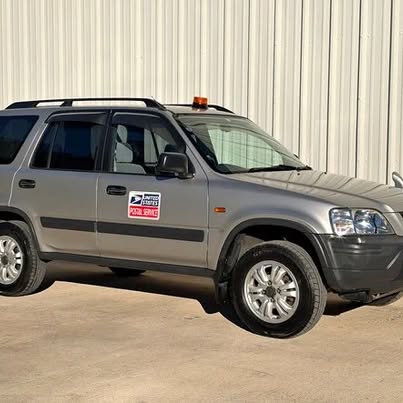
The second generation (2002–2006). Bigger in every dimension, with a longer wheelbase and the new K24 engine. The rear seat slides and reclines, and the picnic table survived. The 2005 facelift is the important dividing line: revised lights and bumpers, 16-inch wheels, drive-by-wire throttle, a five-speed automatic in place of the four-speed, and Vehicle Stability Assist with side-curtain airbags — a meaningful safety step, and the reason the 2005–06 cars are the pick of the generation. The SE returned for 2005–06 with leather and heated seats.
The third generation (2007–2011). The RE car is where the CR-V stops looking like a small SUV and starts looking like a tall wagon: the spare went under the cargo floor, the tailgate became a top-hinged liftgate, and the picnic table was gone. A five-speed automatic became the only US gearbox, the interior took a clear step up, and the 2010 facelift added 14 hp. These are the oldest CR-Vs that still feel modern in daily traffic, and the first whose electronics — door lock actuators, the A/C clutch relay, the VTC actuator — generate their own known faults, all covered below.
The fourth and fifth generations (2012–2022). The RM fourth generation evolves the third, keeping the basic K24 until the 2015 facelift swapped in a direct-injected Earth Dreams engine and a CVT — a car you must judge on CVT service history. The RW fifth generation downsized to a 1.5-litre turbo for most trims, brought Honda Sensing driver assistance, and added a hybrid for 2020. It is a better car than any CR-V before it and a more complicated used buy: the turbo engine has a documented oil-dilution behaviour in cold climates and short-trip use that you test for on the dipstick, exactly as you test a first-generation car for its timing belt.

Engines and gearboxes
The B-series fours: B20B and B20Z (1997–2001)
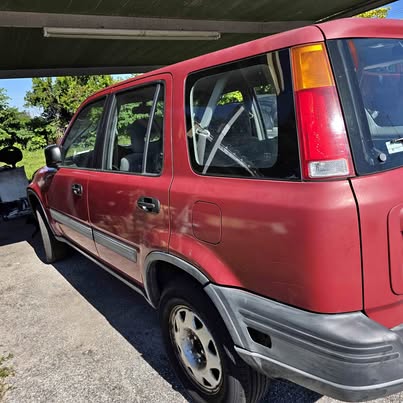
The first-generation engine is a 2.0-litre, all-alloy, double-overhead-cam four from Honda's B family — the same architecture as the Integra's engines, in a tall-deck, long-stroke, non-VTEC tune built for torque rather than revs. The B20B fitted to 1997–98 cars makes 126 hp; the B20Z of 1999–2001 raises compression from 8.8:1 to 9.6:1, revises the intake manifold and adds a knock sensor, and makes 146 hp. On the road the difference is larger than the number suggests, because the Z also pulls harder through the mid-range where the B feels breathless. Both engines are fundamentally tough — bottom ends that survive 250,000 miles are routine — and both share two service disciplines that decide whether a specific car is a good buy or a valve job waiting to happen. Learn them, because the whole first-generation market turns on them.
The timing belt. The B20 is an interference engine: if the belt breaks, pistons meet valves. Honda's replacement interval is 105,000 miles or seven years, and the belt drives the water pump, which any competent shop replaces in the same job along with the tensioner. The belt itself is cheap; the job at a shop runs roughly $600–1,100 with the pump. The trap is documentary, not mechanical: a 25-year-old car on its third or fourth owner often has no receipt, and a belt's age cannot be judged from a photograph or a peek under the cover — a belt that looks fine can be a decade old and living on borrowed time. So the rule is absolute: no receipt with a date and mileage you believe, no assumption. Price the belt job into any first-generation car without proof, and if the seller claims it was done, ask who did it and when, and see whether the story stays straight. A seller who had the belt done usually kept the invoice, because the invoice is money at resale.
The valve clearances. The B20 uses screw-and-locknut valve adjustment, and the clearances close up with wear — the valves, especially the exhausts, sink into their seats and the clearance shrinks toward zero. A valve held fractionally open leaks combustion gas, runs hotter and hotter, and eventually burns; the classic presentation is a car that misfires, idles roughly and loses compression on one cylinder, most often past 120,000 miles on a car whose clearances were never checked. Honda's schedule calls for inspection at 30,000-mile intervals in the car's early life, which almost nobody did once the cars became cheap. The test that separates a tight-valve car from every other cause of a rough idle is a compression test followed by a clearance check: if the clearances on the low cylinder are at or near zero, you have found it, and the fix — an adjustment, roughly $200–400 at a shop — is cheap only if the valve has not yet burned. Once it has, you are pricing a cylinder-head rebuild at $1,200–2,500. A cold engine that idles unevenly and smooths as it warms deserves that compression test before money moves, not after.
Smaller B-series tells: the distributor carries the coil and igniter inside it, and heat kills both — a car that cuts out hot and restarts cold is describing its distributor, and a replacement runs $200–450 fitted. Oil weeps from the distributor O-ring and cam end plug are normal-age leaks, cheap to fix. Spark plug tube seals harden and let oil pool around the plugs; the fix is a valve-cover gasket set, not an engine.
The K-series fours: K24A1, K24Z and K24W (2002–2016)
From 2002 the CR-V moves to Honda's K24 — a 2.4-litre, chain-driven, double-overhead-cam four with i-VTEC, in the economy tune Honda used across the CR-V, Element and Accord. The K24A1 of the second generation makes 160 hp and a broad, lazy spread of torque. The third generation's K24Z1 makes 166 hp, the 2010 facelift's K24Z6 makes 180 hp, and the fourth generation runs a 185 hp K24Z7 before the 2015 facelift moves to the direct-injected K24W, still 185 hp, paired with a CVT. All share the K family's virtues — a strong bottom end, coil-on-plug ignition, no timing belt — and the same behaviours you must test for, because each is cheap early and expensive late.
Oil level is the master gauge. K24s in high-mileage service commonly use oil — a quart between changes on a hard-used 180,000-mile engine is unremarkable — and nearly every expensive K-series failure starts as an oil-level failure. The timing chain is tensioned hydraulically and the VTC (Variable Timing Control) actuator that phases the intake cam is driven by oil pressure: run the sump low and you starve both. Chain stretch shows up as a cold-start rattle that lasts longer and longer, then as a P0341 cam-position fault; a chain, guides and tensioner job runs roughly $900–1,600 at a shop. The VTC actuator produces the generation's signature sound: a harsh, brief rattle — about a second — on a cold start after the car has sat overnight, caused by the actuator's locking pin failing to hold the cam in its parked position so the mechanism slaps until oil pressure arrives. The test is specific and free: insist on a genuinely cold engine, stand at the open hood, and listen to the first start of the day. A warm engine will not do it, which is why a seller who has helpfully warmed the car up before you arrive has cost you your best evidence. An actuator replacement runs roughly $700–1,200 fitted; it is not immediately destructive, but it is a real deduction, not a quirk. And before condemning either part, check the dipstick: a K24 that rattles with its oil a quart low and black may simply be telling you how it has been kept.
The 1.5-litre turbo (2017 onward) deserves its own paragraph because its known issue is the most misreported in the CR-V story. The L15 turbo is a strong, efficient engine, but in cold climates, on short trips where the engine never fully warms, fuel washes past the rings and accumulates in the sump — oil dilution. Honda addressed it with software updates and extended warranty coverage on affected 2017–18 cars, and the honest position is that it is a use-pattern problem, not a universal defect: a highway-driven car in a warm state may show nothing at all. Your test is the K24's dipstick discipline applied in reverse: an oil level above the full mark, smelling strongly of petrol, is the tell, and a far more reliable witness than anything the seller tells you about how the car was used.
Gearboxes and the Real Time AWD system
Manuals — a five-speed — were offered on the first two generations and are simple, slick and effectively trouble-free beyond worn synchromesh on abused cars and clutch wear you judge as on any manual. Almost none survive in the US market: all 13 cars in our current listings are automatics, and the automatic is the gearbox you will actually be buying.
The automatics are Honda's own parallel-shaft designs — not planetary boxes, but constant-mesh gear pairs engaged by clutch packs, which is why their fluid discipline matters so much. The first generation uses a four-speed; the second starts with a four-speed and gains a five-speed at the 2005 facelift; the third and early fourth use a five-speed; the 2015 facelift and all fifth-generation petrol cars use a CVT. A healthy Honda automatic shifts cleanly with no flare, no hesitation engaging Drive or Reverse, and no shudder at light throttle in the 25–45 mph range — that shudder is the torque-converter lock-up clutch complaining, and the first remedy is fluid, not a rebuild. Honda automatics want Honda ATF (older cars specify ATF-Z1, superseded by ATF DW-1) changed by drain-and-fill: a single drain replaces roughly a third of the fluid, so black, burnt-smelling fluid needs the drain repeated two or three times, at roughly $120–250 a drain at a shop. A full rebuild runs $2,500–4,000 — on a cheap CR-V, the value of the car — so the fluid's colour and smell on the dipstick (these cars, helpfully, still have one) is a five-second test that prices the whole gearbox.
Real Time AWD is the CR-V's defining mechanism, and the first two generations use a version of beautiful simplicity. There is no centre differential and no electronics. A propeller shaft runs to a rear differential unit containing two hydraulic pumps: one driven by the shaft (and therefore by the front wheels), one driven by the rear wheels. In steady driving both pumps turn at the same speed, pressures balance, and the car is front-wheel drive. When the front wheels slip and turn faster, the front pump out-pumps the rear one, the pressure difference rises, and it squeezes a multi-plate clutch pack that drives the rear wheels. Later generations add electronic supervision, but the buyer's checks are the same.
The dual-pump unit lives on one fluid: Honda Dual Pump Fluid II. Neglected fluid is its one real weakness, and it announces itself unmistakably — a groaning, binding or chattering from the rear on tight, full-lock, low-speed turns, because old fluid lets the clutch pack grab unevenly as the rear wheels are forced to turn at different speeds. The test costs nothing: three or four slow full-lock circles in each direction, windows down, listening. The fix, if the unit is not damaged, is a fluid change — about a quart, roughly $100–200 at a shop — and it is so often the whole cure that a groaning car is a negotiation, not a rejection. A car that still binds with fresh fluid has worn clutch plates and a rear unit rebuild or replacement in its future, $800–1,800 depending on source. Also confirm the car actually has the system: front-wheel-drive CR-Vs have no propeller shaft and no rear differential, and the only certain check is to look underneath. On a car advertised as AWD, look.

Problem areas
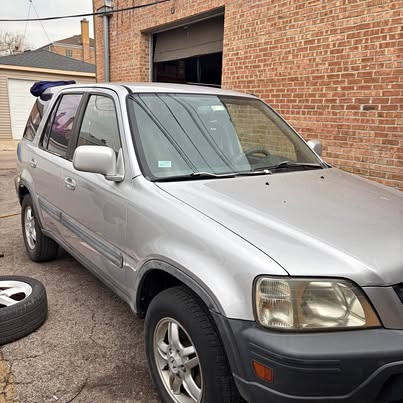
Everything in this section is a known behaviour of the car, with the mechanism behind it and the test that separates the cheap cause from the expensive one. Almost every famous CR-V fault has a cheap version and a dear version that present identically at first glance, and the buyer's whole job is telling them apart before the price is agreed. Work through the systems in this order — air conditioning first, because on the second-generation car it is the largest single bill the model can present.
Air conditioning: the black death and the relay
No system on any CR-V deserves more of your time than this one, because the second generation — 2002 to 2004 cars above all — carries the model's one genuinely notorious defect. The compressor Honda fitted to these cars can fail internally in a particular way: the compressor's internal surfaces wear and shed fine metallic and Teflon debris into the refrigerant circuit, where it mixes with the oil and turns it black — hence the name owners gave it, the black death. The debris does not stay in the compressor. It circulates, coats the inside of the condenser (whose passages are too fine to flush clean), lodges in the expansion valve and contaminates the receiver-drier. The consequence, which you must internalise before you negotiate on any 2002–04 car, is that replacing the compressor alone does not fix the car: the new compressor pumps the old debris around and dies the same death, sometimes within a season. The proper repair replaces the compressor, the condenser, the expansion valve and the drier as a set, with the lines flushed — roughly $1,500–3,000 at a shop with parts and labour, on cars that often change hands for figures in the same range.
So the test matters, and it has three layers. First, performance: run the system on maximum cold, at idle and then at a fast idle, for a full five minutes. A healthy system blows genuinely cold — uncomfortable on your hand at the vent — and holds it at idle. A system cold at speed and warm at idle, or cold for a minute and then fading, is failing, not merely low on refrigerant. Second, listen and look: the compressor clutch should engage with a single click and stay engaged; rapid cycling, grinding, or a compressor body stained with oily black residue at its seams is the debris story made visible. Third, the paper test: an invoice showing a compressor-only replacement on a 2002–04 car is not the reassurance a seller thinks it is — ask whether the condenser and expansion valve were done with it. If not, price the full system job into the car regardless of how cold it blows on the day, because the contamination is still in there.
The later generations trade that defect for a cheaper, sneakier one: the A/C compressor clutch relay. On third- and fourth-generation cars the relay can stick closed, leaving the clutch engaged when it should not be — the air conditioning runs when switched off, the compressor overheats, and in the classic presentation the fault also leaves a parasitic drain that flattens the battery overnight. A car with a history of unexplained flat batteries and a system that feels cold when supposedly off is describing a part that costs roughly $15–40 and swaps in minutes in the under-hood fuse box. Owners have replaced compressors chasing this relay. On any later car with A/C symptoms, the relay is the first suspect and the cheapest test in this guide: swap it with the identical relay beside it and see whether the fault moves. Condenser damage from road debris is the other later-car cause — the condenser sits low and exposed at the front — and unlike the black death it is a single-part repair, roughly $500–900 fitted and recharged.
Rust and the body
The CR-V is a unibody car with no separate chassis, and its rust map follows the water and the salt. Start at the rear wheel arches: the arch lip traps mud against the inner panel, and bubbling at the lip means the rot is already through the inner arch you cannot see — press along the lip and feel for the give of thin metal under paint. Follow the sills, especially at the rear where they meet the arch, then get underneath, because the structural item on an ageing CR-V is the rear subframe and the trailing-arm mounting area: surface rust here is normal on a salt-belt car, but perforation around the mounting points prices as fabrication, not as a patch, and on a cheap car it is the walk-away finding. The states in our current listings tell the story — the 13 cars we track are spread across Colorado, Utah, Texas, Missouri, Florida and Illinois — and it is the Illinois and Missouri cars, not the Florida and Texas ones, that need the underside examined hardest, because road salt, not sunshine, is what kills these shells. Treat any northern car as guilty until the underside proves it innocent.
The tailgate deserves its own minute on the first two generations. It is side-hinged, heavy, and carries the spare on its outer face, so its hinges and latch work hard; sagging shows as a gate that needs a lift-and-slam to close, and rust gathers at the bottom edge and around the spare mounting. Open it, swing it fully, and check the aperture seals — a leaking seal wets the cargo floor, and on a first-generation car the cargo floor is itself a part: it lifts out and turns into the famous folding picnic table, missing from a surprising number of cars and worth checking for, because a complete table is a small marker that the car has been kept whole. Check the spare itself — a tailgate spare lives outdoors, and a perished or flat spare on a car you intend to drive home is an immediate cost. On third-generation and later cars the liftgate is conventional; check the struts hold it fully open, because a gate that drifts down is a $60–120 pair of struts and a fair tell of maintenance levels. Windshield surrounds, door bottoms and the front wings behind the wheels complete the map; none alone kills a car, but together they tell you how it has lived — and on a CR-V, whose mechanicals forgive so much, the shell is the asset you are actually buying.
One theft note: first- and second-generation CR-Vs sit high, with the catalytic converter accessible underneath and worth money as scrap, and they are known targets for converter theft. A replacement runs $800–2,000 depending on the unit fitted and your state's emissions rules. On inspection, look underneath: fresh welds, clamps or a visibly newer exhaust section tell you it has already happened once — and a car done once, parked in the same place, can be done again. Factor a shield or garaging into ownership if the car will live outside in a city.
Suspension, steering and brakes
The CR-V's chassis is conventional — MacPherson struts at the front from the second generation (the first uses a double-wishbone layout, a Civic inheritance), a multi-link or trailing-arm arrangement at the rear — and its wear items are cheap, known and diagnosable from the driver's seat. Work through them by ear. A clunk over sharp bumps at low speed is most often the anti-roll bar (sway bar) end links: a $30–80 pair of parts and the single most common noise on the car. Do not dismiss every clunk as links, though — a deeper knock under braking or acceleration points at the front lower control arm compliance bushings, which crack and split with age and show as a car that wanders under braking and clunks as the arm shifts. You can see them with a torch from underneath: split, extruded rubber is the verdict, and the job runs roughly $400–800 fitted.
Worn struts show as a car that bounces twice after a bump; budget $800–1,500 for a set of four fitted and aligned. Steering is hydraulically assisted except on the fifth generation's electric rack: on the hydraulic cars, a whine that rises with revs points at the pump or low, aerated fluid — check the reservoir first, because a $15 O-ring on the pump inlet hose lets air in and makes a healthy pump sound dying. A groan or notchiness at parking speeds on a high-mile car can be the rack itself, $700–1,400 fitted. Brakes are front discs with drums or discs at the rear depending on year and trim; the wear story is calipers that seize after years of gentle use — a car that pulls under braking, or one hot wheel after a drive, has a sticking caliper, roughly $250–500 a corner fitted. And tyres: mismatched brands or sizes on an all-wheel-drive car are a genuine demerit, because the dual-pump system reads wheel-speed differences as slip — a car that groans on tight turns may be wearing odd tyres rather than a worn differential, so check the tyres before you diagnose the driveline.
Electrics, locks and the cabin
Honda electrics of this era fail at the edges, in components, not in looms. The signature fault of the second and third generations is the power door lock actuator: a small motor in each door latch that weakens until the lock buzzes, clicks repeatedly, or simply stops moving. Test every door from the fob and from the driver's switch, twice — actuators fail hot and intermittently before they fail for good. One actuator is roughly $150–350 fitted; five is a negotiation. Electric window regulators wear and slow; a window that needs helping up is a regulator and motor at $250–450 fitted. On first-generation cars, the ignition switch's electrical portion wears and produces the era's most alarming symptom — the engine cuts out while driving, dash lights flickering as the key's weight rocks the worn contacts — and it was the subject of recalls on Honda models of the period; a car that has ever cut out in motion needs the switch proven, not the story believed, and the part is cheap ($100–250 fitted) relative to the symptom's drama.
Inside, judge the cabin as evidence. The seats are durable and the cloth outlasts the foam: sit in the driver's seat and feel for a collapsed base, because seat foam and a cover are upholstery-shop money on a car where you expected none. Airbag recalls are a serious paperwork item: second- and third-generation CR-Vs were caught in the Takata inflator recalls, among the largest in history, and the remedy is free at a Honda dealer — but only if it has been done. Run the VIN through Honda's recall lookup before you buy, and treat an open recall as a first-week booking, not a reason to reject the car. Check the rear wiper and washer (the motor seizes from disuse) and every courtesy light; a car where everything electrical works has been used and maintained, which on a CR-V is the best single predictor there is. Finally: count the keys. A replacement programmed key is dealer money, and a one-key car is priced accordingly.

How to inspect one
Allow an hour, bring a torch, and arrange the viewing so the engine is genuinely cold when you arrive — two of the tests below are worthless on a warm engine, and a seller who has pre-warmed the car has, deliberately or not, hidden them from you. Most of what decides a CR-V's value can be checked in a driveway; a lift inspection is still worth paying for on a serious candidate, for the rear subframe alone.
- Start with the paperwork and the VIN. Match the VIN on the title to the plate at the base of the windshield and the sticker on the driver's door jamb. Read the chassis code inside the VIN: US first-generation cars carry RD1 in the sequence, and a car priced as a 1999–2001 model should have the B20Z engine, not the earlier B20B. If the car is right-hand drive or claimed as a 1996 model, it is a Japanese-market import: ask for the import paperwork, and confirm the title is clean and in the seller's name before anything else. While you have the VIN, run Honda's recall lookup — an open Takata airbag recall is a free dealer fix, but you want to know it exists.
- Cold start, hood up, ears open. Start the engine from stone cold and listen for the first two seconds. On a K24 car (2002 onward), the harsh brief rattle from the engines section is the VTC actuator announcing itself — it only does it cold, after sitting. Watch the exhaust: a puff of blue at start-up that clears is valve stem seals; smoke that persists under load is rings. Note how it idles cold — a first-generation car that idles unevenly cold and smooths warm goes on your compression-test list (step 6).
- The dipstick, read properly. Pull it twice: once for level, once for evidence. On a K24, low and black oil is the context for every chain and actuator noise the car makes. On a 1.5 turbo car (2017 onward), a level above the full mark with a strong smell of petrol is the oil-dilution tell. On every car, look under the oil filler cap: a trace of emulsion on a short-trip car can be condensation, but thick sludge anywhere is neglect you can see.
- The timing belt question (1997–2001 cars). Ask it directly and watch for the invoice, not the answer: belt, tensioner and water pump, with a date and a mileage. No paperwork means you budget the job — the first-generation car's one non-negotiable expense, because the B20 is an interference engine and a snapped belt is a cylinder head. Check the valve-clearance history in the same breath; a belt receipt with no clearance record still owes you a clearance check.
- The air-conditioning test. Five full minutes, maximum cold, first at idle and then at a fast idle, exactly as the problem-areas section sets out. Cold at speed and warm at idle is a failing system. On a 2002–04 car, open the hood with the system running: look at the compressor for black, oily residue at its seams, listen for grinding, and ask the condenser question — if the compressor was replaced, was the condenser and expansion valve replaced with it? On a later car with A/C or flat-battery stories, remember the clutch relay — but do not pay as though the cheap fix is proven.
- Compression and clearances, if the car has earned the question. A first-generation car with a cold misfire, a rough idle or no valve-clearance history deserves a compression test before money moves: even readings across all four cylinders settle it, and one low cylinder with near-zero clearance on its valves is the tight-valve story from the engines section, cheap only if the valve has not burned. A seller who refuses a test you are paying for has given you the result.
- Underneath: the structure and the driveline. Torch along the sills, the rear arch lips from inside, and above all the rear subframe and trailing-arm mounts — perforation there is the walk-away, as the rust section explains. While you are under the back, settle the drivetrain: a rear differential and a propeller shaft mean all-wheel drive; their absence means front-wheel drive, whatever the advert said. Look at the exhaust for the fresh welds of a replaced catalytic converter, and at the transmission fluid on its dipstick where fitted — pink-to-red and sweet is healthy, brown and burnt is a price cut.
- The full-lock circle test. Drive three slow circles at full lock in each direction, windows down. Groaning, binding or chattering from the rear is the dual-pump differential on old fluid — or, check first, odd or mismatched tyres. Four matching tyres of the same size, evenly worn, are what the system wants. A car quiet on the circles has passed the only functional test the AWD system offers, and it is a good one.
- The test drive, in the right order. Fifteen minutes: car park manoeuvres first (listening for end-link clunks and compliance-bush knocks), then town driving for the automatic's low-speed manners, then a highway stretch. The automatic should engage Drive and Reverse promptly, shift without flare, and hold lock-up at a steady 40 mph without shudder. Brake firmly from speed twice: straight, no judder, no pull. Listen on the coast for wheel-bearing drone that rises with speed — a rear bearing is a common, moderate bill, but it goes in the price.
- Heat and electrics at the kerb. Let it idle hot: temperature gauge steady, fans cycling, no coolant smell. Then work everything: every door lock from the fob twice (the actuator test), every window, the rear wiper and washer, the sunroof on an EX, the lights, the horn, and the air conditioning once more now the engine is fully hot. Try both keys if there are two.
- The tailgate and the cargo floor. Swing the side-hinged gate on a first- or second-generation car through its full arc: it should not sag or need lifting to latch, and the hinges should be free of rust bloom. Lift the cargo floor — on a first-generation car, is the picnic table still there? Check the spare's condition wherever it lives, and look for water staining in the well: a leaking seal shows here first.
- Interior last, as the summary. Sit in every seat and feel for collapsed foam. Read the cabin as the car's diary: a clean, complete, working interior on a 200,000-mile CR-V is the signature of the owner who also changed the differential fluid and the timing belt, and a shabby one is the opposite signature. On this model more than most, you are buying the previous owner's habits.
Values
The build appends the current market figures — what is listed now and what has actually sold — beneath this guide, and those numbers are the ones to negotiate from. This section teaches you how to read them, because the CR-V market has a shape that catches out buyers who arrive with ordinary used-car instincts.
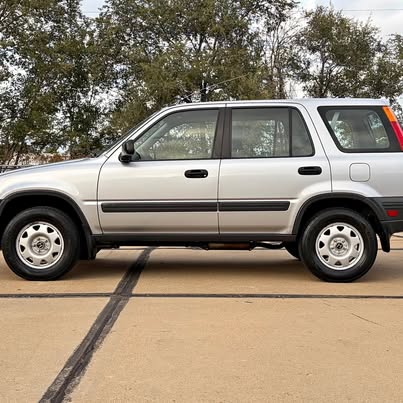
The first thing to understand is the condition spread, which on this model is wider than the model spread. A first-generation CR-V can be a worn-out, salt-eaten parts donor or a one-family, garaged, fully serviced survivor, and those two cars share a badge, a model year and almost nothing else — the gap between them is not a percentage, it is a multiple. Generation and trim move prices less than condition and paperwork do: the market pays a modest premium for the 1999–2001 cars over the early B20B cars, a clearer one for the 2005–06 facelift cars, and a consistent one for EX over LX — but a documented timing belt, a proven air-conditioning system and a clean underside move the price of a specific car further than any badge. When the figures below show a wide range inside one model year, that is what you are looking at: not a confused market, but a market pricing maintenance histories.
Second, understand where these cars trade. The early CR-V has largely left the dealer forecourt; our own current sample of 13 cars comes entirely from Facebook Marketplace private sellers, spread across six states, and that is typical. Private-sale asking prices are opening positions, not verdicts: sellers anchor on the best car they have seen advertised, and the honest middle of the market sits below the median ask. Recorded sales — the achieved figures in the block below — are the corrective, and the gap between asking and achieved is your negotiating room, provided you can name the jobs the car still owes. A timing belt without an invoice, an air-conditioning system that will not hold cold at idle, a groaning differential: each is a specific, costed deduction, and sellers concede specific deductions far more readily than general cheapness.
Third, know which cars carry structural premiums and discounts. Right-hand-drive Japanese imports trade in their own small market — scarcer, interesting, and worth less to most buyers for everyday use, whatever the seller's rarity pitch; price them against the US car, not the story. Front-wheel-drive cars are worth less than all-wheel-drive cars in snow-belt states and nearly the same in the Sun Belt. Manual cars are rare enough to find buyers who will pay for the rarity, yet common enough in neglect that most are worth less — judge the car, not the gearbox. High mileage, on its own, is the weakest discount of all: the market has learned that a serviced 220,000-mile K24 car beats a neglected 130,000-mile one, and prices reflect it. The discount that is always real is rust — a perforated rear subframe takes a car out of the driver market entirely, however strong its engine.
Finally, the project-versus-driver gap. On most classics it is a slope; on the CR-V it is a cliff with a plateau at the top. Good, serviced, rust-free early cars are genuinely scarce — most were used as appliances and consumed — and the survivors hold their money and sell quickly. Below that plateau, cars fall fast, because the cost of the standard catch-up (belt, fluids, air conditioning, tyres, brakes) approaches the value of the finished car. That arithmetic is your friend if you do your own work and your enemy at shop rates: the cheapest CR-V to own is almost never the cheapest one advertised. Buy the car whose expensive jobs are documented as done, and let the figures below tell you what that premium currently runs to.
Parts and ownership
The CR-V is one of the best-supported cars of its era, for a simple reason: Honda built them in the millions, the engines are shared with the Accord, Civic and Element, and the aftermarket followed the volume. Almost everything a CR-V needs is available, most of it quickly, and much of it at prices that belong to a modern runabout rather than a classic.
Easy: service items of every kind — filters, plugs, belts, brake discs, pads, calipers and hoses — plus suspension wear parts (end links, control arms, struts, bushings), wheel bearings, alternators, starters, water pumps, radiators, exhaust sections and converters, door lock actuators, window regulators, and the A/C clutch relay that causes so much misdiagnosis. Order today, fit this weekend. Honda's own parts counters still supply a remarkable amount for the first two generations, and pattern-part quality is generally good because the market is so large.
Harder and dearer: the complete air-conditioning system set for a black-death second-generation car (compressor, condenser, expansion valve and drier together — the parts are available, it is the size of the set that costs), automatic transmission rebuilds, rear dual-pump differential units (good used units are the usual route), first-generation interior trim and seat foam in the right colours, the folding picnic table on its own, and rust-free rear subframes in salt-belt states — the good ones are in the South and West and travel badly. First-generation body panels are thinning out in the used market; a straight, rust-free tailgate is worth travelling for.
Running costs. Budget for the car the schedule describes, not the car the myth describes. The myth says a Honda needs nothing; the schedule says a first-generation car needs a timing belt and water pump at 105,000-mile or seven-year intervals, valve clearances checked regularly, transmission fluid by drain-and-fill, and Dual Pump Fluid II in the rear differential roughly every 30,000 miles — and a K24 car needs its oil level watched between services as a habit, not an event. None of it is expensive done on time; all of it is expensive done late, which is the whole economics of this model. Fuel economy is honest rather than brilliant — the early cars return figures in the low-to-mid twenties in mixed use — and insurance sits in the cheapest brackets for a car of this size. A sorted CR-V is a realistic daily driver at any age covered here. The first-year catch-up is the figure to plan: on a running car with deferred maintenance, expect the belt (first generation), all fluids including the differential, tyres and brakes to arrive in year one, and price the purchase so that programme does not sting. Cars that have sat need the usual recommissioning, plus one CR-V line: the air conditioning, run for a full five minutes before you conclude anything about it, because a system that sat is a system whose compressor seals have dried.
Which one to buy
- The all-rounder: a 2005–2006 EX. The facelift second-generation car — five-speed automatic, stability control, side-curtain airbags, the torquey K24 and the picnic table still in the floor. The most complete CR-V of the classic era. Prove the air conditioning and the cold start, and it will not disappoint you.
- The value buy: a 1999–2001 LX or EX with paperwork. The B20Z gives the first-generation car real pace, values sit below the later cars, and the whole risk concentrates in two questions you can settle in an hour: the timing belt invoice and the valve clearances. A documented car is the cheapest honest motoring in this guide.
- The simple-life buy: a 2002–2004 car, after the A/C verdict. The sweetest of the early cars to drive, priced with the black death hanging over the generation — so a car whose full system (compressor, condenser, expansion valve, drier) is documented as replaced is worth more than the market usually credits, and a car with weak air conditioning is worth less than the seller hopes. Buy the paperwork.
- The modern buy: a 2010–2011 EX or EX-L. The facelift third-generation car: 180 hp, a proper liftgate, the most refined cabin here — the oldest CR-V that asks no allowances in modern traffic. Test for the VTC rattle from cold and exercise every door lock actuator twice.
- The enthusiast's buy: a first-generation manual, or a right-hand-drive Japanese import. The manual RD1 is the CR-V as its engineers signed it off — light, simple, mechanical — and the JDM cars add rarity and charm. Buy either with your eyes open: the manuals are usually the most worn, and the imports need their paperwork proven line by line.
- The avoid-unless-cheap: any car with a perforated rear subframe, a slipping automatic, or a 2002–04 air-conditioning system that will not hold cold at idle with no system history. Each is a bill in the size range of the car's whole value, and on a model this plentiful, the right response is to buy a different car, not a bigger project.
And the rule that overrides all of the above: buy the maintenance history, not the mileage, the trim or the story — on a CR-V the documented car with 200,000 miles is worth more than the undocumented car with half that, because every expensive failure this model has is a scheduled job somebody skipped. Belts, clearances, fluids and the air-conditioning system: if those four are proven, the rest of the car will follow.
Listed now
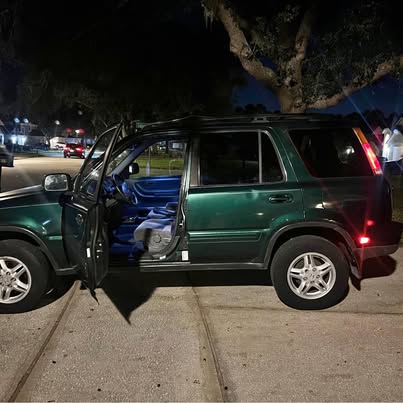
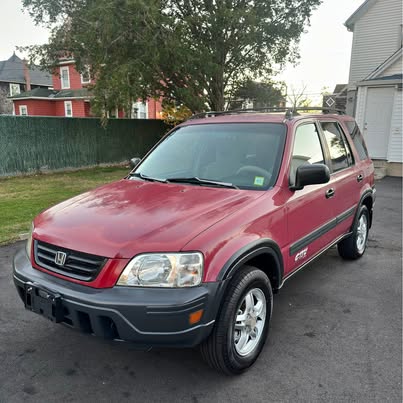
On Classic Listings today: 6 cars are listed here; 3 for sale and 3 marked sold; average asking price $2,850; asking range $2,800 to $2,900; sold cars average $9,283.
See the 6 CR-V cars currently listed.
The market — recorded sales
Recorded-sale figures: 3 recorded sales · median $8,250 · range $8,100 to $11,500 (Nov 2024 – Nov 2026)
Based on 3 recorded sales — too few for a benchmark value.
| Date | Car | Sale price | Source |
|---|---|---|---|
| Nov 11, 2026 | 2000 CR-V | $8,100 | Cars & Bids |
| Apr 9, 2026 | 2004 CR-V | $8,250 | Cars & Bids |
| Dec 10, 2025 | 2005 CR-V | $11,500 | Cars & Bids |
Dates are the sale date where the source states one; otherwise the date the sale was recorded here.
For sale now
 $2,800
Expand
 $2,900
Expand