
Honda Civic buyer's guide
Honda Civic (1973–2001) — Civic: what's listed, and what they sell for.
Years: 1973–2001 · Models: Civic
Overview and history
The Civic is the car that made Honda a car company in America. Honda arrived in the United States selling motorcycles and the tiny air-cooled N600 and Z600 cars; the Civic, launched in Japan in July 1972 and sold in the US from the 1973 model year, was the first Honda designed from the start as a proper car for export markets — front-wheel drive, a transverse water-cooled four-cylinder engine, a hatchback body when Detroit still thought small cars were punishment boxes, and build quality the domestic industry could not match at the size. It won Japan's Car of the Year award three years running, 1972, 1973 and 1974, and in the US it landed in the middle of the first fuel crisis, which made its timing perfect.
The technical landmark came in 1975 with CVCC — Compound Vortex Controlled Combustion. Honda's engineers, working to a brief from founder Soichiro Honda that the engine meet the US Clean Air Act without bolt-on aftertreatment, gave the cylinder head a small auxiliary combustion chamber and a rich mixture around the spark plug, with a lean mixture in the main chamber. The result burned cleanly enough that the 1975 Civic CVCC met the federal emissions standards of the day with no catalytic converter — the only car on sale that could say that. CVCC is the reason the Civic name meant engineering credibility rather than just economy, and it carried Honda through the decade.
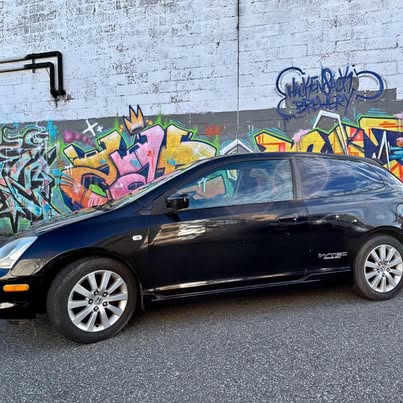
This guide covers the first seven generations, 1973 to 2005 — the span of the cars that turn up in our listings, which run from a 1973 car to 2005 models. That is a long arc, and the car changes character across it. The first three generations (1973–87) are featherweight economy cars, now genuinely scarce and bought as hobby cars. The fourth, fifth and sixth generations (1988–2000) are the enthusiast core: double-wishbone suspension at both ends, the rev-happy D-series engines, VTEC from 1992, and the 1999–2000 Si coupe with its 8,000 rpm B16. The seventh generation (2001–05) is a bigger, softer, more practical car — MacPherson struts in place of the wishbones, a flat rear floor, the EP3 Si hatchback built in England, and from 2003 the first Civic Hybrid.
What never changed across those thirty-two years is the formula underneath: a simple, light, transverse four-cylinder engine, manual gearboxes that shift beautifully, automatics that are the weak point of every generation, and mechanicals that will outlast the body in any climate where the roads are salted. That last point defines buying one today. A Civic of any of these generations is rarely killed by its engine; it is killed by rust, by a failed automatic gearbox, by a timing belt nobody changed, or by forty years of previous owners modifying it. Buy the shell and the history first and the specification second — that rule runs through everything below.
One honest warning about the early cars: first- and second-generation Civics (1973–83) have effectively left the ordinary used market. Survivors are thin on the ground, rust took most of them decades ago, and the ones that remain are either cherished originals or parts cars. The third generation (1984–87) is heading the same way. From the fourth generation on, the cars are still findable in real numbers, parts support is deep, and everything in this guide applies with full force.
The models
Seven generations, three decades, and one naming system that stayed mercifully simple: DX is the basic car, LX adds equipment, EX adds more plus (usually) the stronger engine, and Si is the sport model. Under that sit the economy specials — CX, VX and HX — and the body styles cycle through hatchback, sedan, coupe and wagon in different combinations each generation. The table covers the mechanically distinct US-market versions; the generations follow under it.
| Model | Years | Engine | Output | Built | Character |
|---|---|---|---|---|---|
| Civic 1200 / CVCC (Gen 1) | 1973–1979 | 1.2 (EB) / 1.5 CVCC (ED) four, carburettor | 50–63 hp | Not published by trim | The original; tiny, clever, now a collector's hobby car |
| Civic (Gen 2) | 1980–1983 | 1.3 / 1.5 CVCC four, carburettor | 55–67 hp | Not published by trim | Bigger, rust-prone, the forgotten generation |
| Civic / CRX (Gen 3) | 1984–1987 | 1.3 (EV) / 1.5 (EW) four, carb. or injection | 58–91 hp | Not published by trim | Featherweight; CRX HF economy, Si the first hot Civic |
| Civic (Gen 4, EF) | 1988–1991 | 1.5 / 1.6 (D-series), DPFI or MPFI | 70–108 hp | Not published by trim | Double wishbones arrive; the modern Civic begins |
| Civic (Gen 5, EG) | 1992–1995 | 1.5 / 1.6 (D-series), VTEC on EX/Si/VX | 70–125 hp | Not published by trim | The tuner generation; VX economy, Si the driver's car |
| Civic (Gen 6, EK) | 1996–2000 | 1.6 (D-series), B16 in the Si coupe | 106–160 hp | Not published by trim | The refined double-wishbone car; Si coupe is the flagship |
| Civic (Gen 7, ES/EM) | 2001–2005 | 1.7 (D17), 2.0 (K20) in EP3 Si | 115–160 hp | Not published by trim | Bigger, strut-suspended, practical; EP3 is the odd one out |
| Civic Hybrid (Gen 7) | 2003–2005 | 1.3 (LDA) IMA hybrid, CVT or manual | 93 hp combined | Not published by trim | The economy flagship; buy the battery, not the badge |
(Outputs are US-market figures for the strongest common version of each line. Honda published production by nameplate rather than by trim, and period totals by individual variant are not reliably available, so the Built column says so rather than inventing numbers.)
The first generation (1973–79). A two- or three-door hatchback (a wagon joined later) barely longer than a modern supermini's parking space, with a 1.2-litre engine in the first cars and the 1.5 CVCC from 1975. Everything is simple: MacPherson struts in front, an independent trailing-arm rear end, a four-speed manual or the two-speed semi-automatic Hondamatic. These cars are charming, economical and slow, and the buying question is never specification — it is whether any metal survives. Genuine, solid first-generation cars are now collector items; most of what surfaces cheaply is a parts source.
The second generation (1980–83). Larger in every direction, with 1.3 and 1.5 CVCC engines, a five-speed manual option and sedan and wagon bodies alongside the hatch. Mechanically worthy, stylistically anonymous, and the generation rust loved most. Buy on condition alone; there is no variant premium worth chasing.
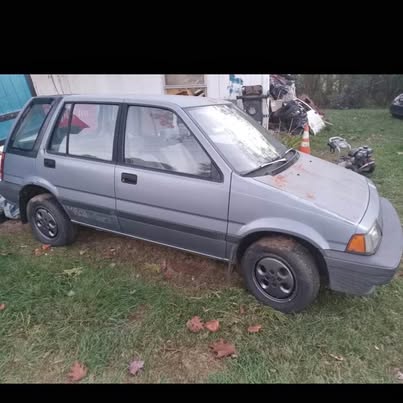
The third generation (1984–87). The car that set up everything after. A crisp, angular range — hatchback, sedan, wagon (including the tall 4WD wagon) and the two-seat CRX — on torsion-bar front suspension, with the 1.5 EW engine in carburetted form and, from 1985, fuel injection in the CRX Si and then the Civic Si hatchback. The CRX HF was the economy hero of its decade; the Si, at 91 hp in a car weighing around a ton, was the first Civic with real pace. Survivors are light, simple and delightful, and increasingly hard to find unrusted.
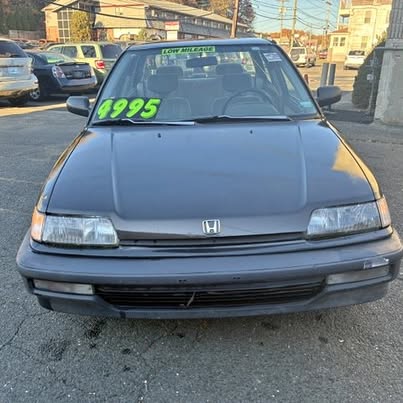
The fourth generation (1988–91). The step change. Double-wishbone suspension front and rear — technology Honda borrowed from its racing programme and no rival at the price offered — under hatchback, sedan and wagon bodies, with the new D-series engines. Fuel injection came in two flavours: cheap dual-point (DPFI) on the standard cars, and proper multi-point (MPFI) on the EX sedan and the 108 hp Si hatchback, the one everyone wants. There is also a CRX line (covered by its own reputation) and the RT4WD wagon with its viscous-coupled rear drive. Fourth-generation cars are the oldest Civics that still work as real cars today.
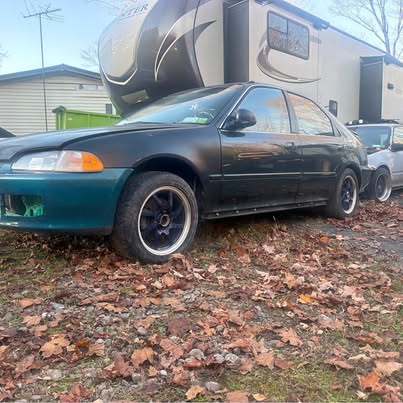
The fifth generation (1992–95). The rounded car, and the one that built the modern Civic cult. VTEC arrived in the US range: the EX coupe and sedan and the Si hatchback carry the 125 hp D16Z6, while the VX hatchback's VTEC-E engine was tuned the other way, for a lean-burn cruise worth fuel economy that still embarrasses modern cars. The CX hatchback is the featherweight (an 8-valve 70 hp engine and almost no equipment), the DX is the volume car, and the del Sol replaced the CRX as the two-seater. Fifth-generation cars were modified in period in enormous numbers; an unmodified one is now the rarity.
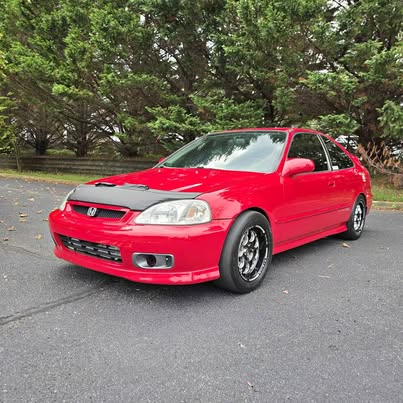
The sixth generation (1996–2000). A careful evolution: same double-wishbone layout, stiffer shell, better safety, OBD-II electronics. DX, LX and EX run the 1.6 D-series in three states of tune; the HX coupe pairs a VTEC-E engine with an optional CVT automatic and economy gearing. The headline is the Si coupe of 1999–2000: the B16A2 twin-cam, 160 hp, an 8,000 rpm redline and one of the great front-wheel-drive drivetrains. Note for inspection day: the US Si of these years is a coupe, full stop — a car advertised as a sixth-generation Si sedan is a badge, a swap or a non-US car until paperwork proves otherwise. Japanese-market Ferio Si and Vi-RS sedans exist and a few have been imported; those are right-hand-drive cars with their own papers, not US models.
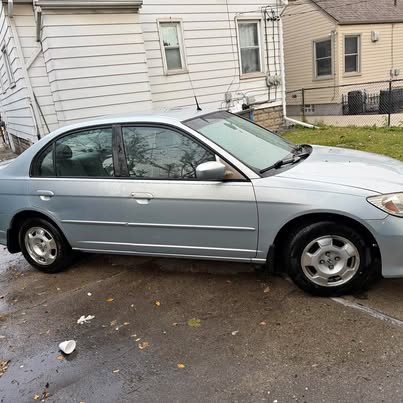
The seventh generation (2001–05). Honda prioritised space and safety: a bigger body, a flat rear floor, and MacPherson struts replacing the front double wishbones, which enthusiasts have never forgiven. Sedan and coupe carry the 1.7 D17; the Si name moved to the EP3 hatchback, built in Swindon, England, with the 2.0 K20 engine, a dashboard-mounted gear lever and electric power steering — a good car that the market has always judged against the 1999–2000 coupe and found wanting. The Hybrid arrived in 2003, the first hybrid Civic, pairing a 1.3 engine with Honda's IMA electric motor in the flywheel housing.
Engines and gearboxes
The early engines: EB, ED, CVCC and the E-series
The first-generation cars run the EB 1.2 and, from 1975, the ED 1.5 CVCC — small, tough overhead-cam fours with a carburettor (two, in effect, on the CVCC, which has its own small auxiliary carburettor feeding the pre-chamber). The second generation kept CVCC in 1.3 (EN) and 1.5 (EM) form. The third generation moved to the E-series in its EW form: a 1.5 with either a carburettor or, in the Si cars, Honda's PGM-FI fuel injection, worth 91 hp.
The honest summary of all of these is that the bottom ends are durable and everything bolted to them is now old. CVCC cars have a specific trap: the auxiliary chamber and its tiny passages carbon up, the three-barrel Keihin carburettor is a specialist rebuild rather than a Saturday job, and vacuum hose rot produces driveability faults that look like ignition trouble. Parts for the pre-chambers and correct carburettor kits are genuinely scarce. On third-generation cars the injected EW is the one to have — it starts, idles and pulls like a modern car — while the carburetted cars share the usual period vices: choke faults, hesitation when cold, and vapour-lock grumbling in summer traffic. Timing belts apply here too: the EW is an interference design, and a belt of unknown age on any early Civic is a change-it-this-week item, not a monitor-it item.
The D-series: 1988 to 2005
The D-series is the Civic engine for most buyers of most classic Civics: single overhead cam, aluminium head on an iron block, made in 1.5 and 1.6 sizes for the fourth, fifth and sixth generations and stretched to 1.7 (D17) for the seventh. It is one of the most reliable small engines ever built — 200,000 miles on oil changes is normal — and its variations are what you are actually shopping for, because the badge on the car does not always tell you which one you are getting. The engine code is stamped on a flat pad at the front of the block, beside the exhaust manifold; read it on every car.
Dual-point versus multi-point (1988–91). Fourth-generation standard cars use DPFI — two injectors in a throttle body that looks like a carburettor under its air cleaner. The D15B2 makes 92 hp and is fine; the base D15B1 makes 70 hp and is not. The EX sedan and Si hatchback use MPFI with the D16A6, 108 hp, and are transformed cars. A seller calling a DPFI car an Si is the oldest trick in this market; the code pad settles it in ten seconds.
The fifth- and sixth-generation spread. The volume engines are the D15B7 (102 hp) and D16Y7 (106 hp) — no VTEC, no drama, endless life. The D16Z6 (1992–95 EX and Si) and D16Y8 (1996–2000 EX) add VTEC on the intake side and make 125–127 hp with a keener top end; the changeover, around 5,500 rpm, should be audible and felt as a clean second wind, and a car that never changes over has a VTEC solenoid, oil pressure or wiring fault, usually cheap. The economy engines are their own discipline: the D15Z1 in the VX and the D16Y5 in the HX use VTEC-E — at cruise, one intake valve barely opens, the mixture runs lean, and the economy is extraordinary. Judge those cars on whether the lean-burn cruise still works (a smooth, faintly flat cruise that sharpens the moment you ask for power), not on outright pace.
The D17 (2001–05). Bigger, lazier and just as durable in 115 hp (D17A1) and 127 hp VTEC (D17A2) forms. Its known weaknesses are covered below — the automatic gearbox bolted to most of them is the bigger worry — but note the service change: the timing belt interval stretches to around 110,000 miles, and the belt still drives an interference engine, so the arithmetic of neglect is unchanged.
Across all D-series cars, the maintenance facts that price a purchase are the same. The timing belt, tensioner and water pump are a set, done together at roughly 90,000-mile intervals (about 60,000 on the earliest D-series schedules in severe use — check the car's own manual), and a shop will charge in the region of $500–900 for the full job with the pump and seals. Valve clearances are screw-and-locknut and want checking every 30,000 miles or so; a top end that rattles at idle on a car with no clearance history is telling you about its life. Oil consumption on a healthy D is negligible; a car using a quart every 1,000 miles has bore or ring wear or hardened valve stem seals, and blue smoke on start-up after sitting points at the seals (a head-off but not engine-out job), while smoke under load points at the rings and a different conversation.
The twin-cams: B16A2, the K20A3, and the Hybrid
The B16A2 (1999–2000 Si coupe) is the jewel of this whole guide: 1.6 litres, twin cams, VTEC on both cam profiles, 160 hp at 7,600 rpm and an 8,000 rpm redline, from an engine with no turbo and no tricks beyond breathing. It should idle silkily, pull cleanly through the changeover at about 5,500 rpm, and then harden into a completely different engine note to the redline. Anything less — a soft changeover, a misfire up top, oil smoke — is a fault to price, not character. B16s are robust but they are also the most abused engines here: check the oil level first (these engines use oil when driven as intended, and run-low damage is the classic killer), and look for the evidence of the swap culture around the car, because a B16 in the wrong shell, or a tired B16 in the right one, changes the value entirely.
The K20A3 (2002–05 EP3 Si) is a different design: chain-driven twin cams with i-VTEC, 160 hp with far more mid-range than the B16 and far less top-end theatre. The chain is a service item in the long run — a rattle from the timing case on a cold start that fades as the oil pressure builds is the tensioner and guides asking, and it should be priced as a chain job ($700–1,200 at a shop) rather than ignored. K-series engines also drink a little oil by design at high mileage; a quart between changes is acceptable, a quart every 500 miles is not.
The Hybrid's LDA 1.3 (2003–05) pairs a lean-burn VTEC engine with Honda's IMA system — a slim electric motor in place of the flywheel that assists, regenerates and restarts the engine. The petrol engine itself is the least of your worries. What you are buying is the IMA battery pack behind the rear seat: when it is healthy the car shows charge and assist sweeping freely on the dashboard gauge and returns its economy; when it is tired you get an IMA warning light, reluctant assist and a car that is just a heavy 1.3. Replacement packs from the aftermarket run roughly $1,500–2,500 fitted, and that figure should be in your head during every Hybrid negotiation.
Gearboxes
The manuals are the Civic's second great strength. Four speeds on the earliest cars, five from the second generation on, cable- or rod-shifted depending on generation, light, precise and long-lived. Judge them on three things: second- and third-gear synchromesh on a fast downshift (a graunch on a car that is otherwise right is a rebuild priced into the offer, $800–1,500 at a transmission shop), input-shaft bearing noise (a rumble in neutral that stops when you press the clutch — common on fifth- and sixth-generation cars, annoying rather than fatal, and usually lived with), and clutch bite point and judder. The B16's gearbox is close-ratio and delightful; the EP3's dash-mounted lever is better than it sounds.
The automatics are the opposite story, and they divide by generation. The early Hondamatic is a period piece — a two-speed semi-automatic that asks you to shift between its two ratios yourself; judge it as a curiosity. The conventional three- and four-speed automatics of the third to sixth generations are unremarkable and reasonably tough if the fluid has been changed, but Honda fluid matters: these boxes want Honda ATF (ATF-Z1 in period terms, DW-1 today), and a box filled with generic fluid often shifts oddly for no other reason. The seventh-generation automatic (2001–05) is the one genuinely weak gearbox in this guide — failure through worn clutch packs is common enough that it has its own entry in the problem areas, and a seventh-generation automatic car should be bought as if the gearbox rebuild is a when, not an if, unless there is a receipt proving it has already been done. The CVTs — the HX's optional box and the Hybrid's standard one — are smooth and economical, want their own Honda CVT fluid on a strict schedule, and in the Hybrid add a start-clutch judder on take-off that is a known, priceable fault rather than a mystery.
Problem areas
Everything here follows one pattern: the Civic's mechanical core is so durable that the faults which end these cars' lives are the ones around the edges — rust in the shell, solder and sensors in the electrics, a belt nobody changed, an automatic nobody serviced. Work through them in the order a buyer should fear them.
Rust: the map
Rust is the first filter on every generation, and it follows the water and the road salt in a predictable map.
Rear wheel arches and quarter panels. The signature Civic rot, worst on the fourth, fifth and sixth generations. The arch lip traps mud against the inner wing, and the panel rots from inside out at exactly the point where the rear bumper meets the quarter. Bubbling at the arch edge is never just the bubble: press along the lip, open the boot or hatch and check the inner arch from inside, and look at the seam where the quarter meets the sill. A proper repair is a cut-out arch section welded in and painted, roughly $600–1,500 a side done well; filler over the lip is a season's disguise, and the magnet test in the inspection section finds it.
Sills and rocker panels. Structural, hidden by the very trim that makes them look tidy, and fed by blocked drain holes. Work the full length with your thumb, check the jacking points for crush and perforation, and treat fresh black underseal on a rocker panel as a question, not an answer.
Floor pans and the boot floor. Water arrives from perished windscreen seals, blocked sunroof drains and the heater intake, then sits under sound-deadening that holds it against the metal. Lift the carpets — front footwells first, then under the rear seat — and lift the spare wheel: the wheel well collects everything the boot seal lets past. Surface rust is a wire brush and a weekend; perforation is welding, and floor welding on a cheap Civic is where the economics of the whole car are decided.
The early cars' extras. First- to third-generation cars add the windscreen surround, the hatch and tailgate seams (the third-generation hatch rots around its hinges and along the lower edge), the fuel filler surround, the battery tray, and front wings that dissolve behind the wheel. On a first- or second-generation car, assume the rust you can see is a sample, not a census, and budget accordingly — or walk away, because early shells are the one thing the parts trade cannot sell you.
Seventh-generation specifics. The bigger, better-sealed shell rots less, but check the same arches and sills, the front subframe and its mounting points, and the rear bumper beam behind the cover. A 2001–05 car with perforated arches in the salt belt has usually lived outside and been washed rarely, which tells you about the rest of its maintenance too.
The no-start pair: main relay and distributor
Two components cause the overwhelming majority of classic Civic no-starts and hot stalls, and between them they have generated more misdiagnosis than everything else in this guide combined.
The PGM-FI main relay lives under the dashboard and switches power to the fuel pump and the injection system. Its solder joints crack with thirty years of heat cycles, and the failure is temperature-sensitive in a way that makes it maddening: the car starts cold, runs, and then will not restart hot — in a fuel station forecourt, classically — until it cools for twenty minutes. The diagnostic tell is the fuel pump: turn the key to the run position on a hot no-start and listen for the two-second pump prime behind you. Silence means the relay (or its circuit), and a resolder or a replacement relay in the $50–90 range cures it. On a viewing, a car that "sometimes won't start when it's hot, probably the starter" is a car with a known fault wearing a disguise — the starter is almost never the cause, and a new starter fitted by the previous owner is evidence the fault is still in there.
The distributor on D-series cars carries the ignition coil, the igniter module and the crank and cylinder sensors in one housing on the end of the camshaft, bathed in engine heat. The igniter and coil fail with age and heat, giving a sudden cut-out or a no-start with no spark; the internal bearing wears, announcing itself with a squeal and fine reddish dust inside the cap, and lets oil past its seal into the cap. The complete fix is a quality replacement distributor ($200–450 for the part, an hour to fit and time), and it is such a standard job that a seller's receipt for one is a genuine plus. Distinguish the two faults by symptom: relay faults kill the fuel pump prime and the car cranks healthily forever; distributor faults leave the pump priming but remove the spark, and often cut a running engine dead at temperature.
Timing belts, cooling and head gaskets
The D-series, B-series and E-series engines are interference designs: if the timing belt breaks, the pistons meet the valves, and a $600 service becomes an engine rebuild. Belts also stretch the truth — a car with no belt history should be priced as needing the full belt, tensioner, water pump and seal job immediately, at the $500–900 figure from the engines section, and on a marginal car that arithmetic alone can end the negotiation, correctly.
Overheating is the second engine-killer, and it is nearly always neglect rather than design: plastic radiator end tanks crack with age on fifth- and sixth-generation cars, thermostats stick, electric fan switches fail so the fan never cuts in, and the first the driver knows is the gauge in the red. An aluminium D-series head that has been properly overheated warps, and the head gasket goes soon after — so read the signs on every viewing: a coolant reservoir with oily film or rusty water, bubbles rising in the reservoir with the engine running, a sweet smell at the exhaust, white smoke that does not clear, or mayonnaise emulsion under the oil cap on a car that does long journeys (short-trip cars can show a trace innocently). A head gasket job with a head skim runs roughly $900–1,600 at a shop; a car needing one is a project priced as a project.
Automatics, CV joints and driveline
The seventh-generation four-speed automatic (2001–05) fails by wearing its internal clutch packs, helped by a small fluid capacity and, on many cars, fluid that was never changed because the schedule was vague. The progression is consistent: a flare or a shudder on the 2–3 change, then delayed engagement of drive or reverse when cold, then slipping under load. Catch it at the flare stage on a test drive and you are pricing a rebuild at roughly $1,800–3,000; buy a car already slipping and you are buying the rebuild outright. There is no cheap fluid miracle — a drain-and-fill with Honda DW-1 is correct maintenance on a healthy box and a diagnostic on a sick one, nothing more. Sixth-generation automatics are better but not immune at high mileage, and the same test-drive routine applies.
CV joints are the routine driveline item on every front-drive Civic: split boots fling their grease out, and within a few thousand miles the joint clicks on full lock. Clicking on lock at parking speeds means the joint is already worn — a replacement shaft is $150–350 a side fitted, boots alone only help if caught silent. Wheel bearings drone with speed and change note as you load them in gentle bends; on the double-wishbone cars they are a press job, priced accordingly.
Suspension, steering and brakes
The fourth- to sixth-generation double-wishbone suspension is a joy when tight and a rattle-fest when the bushings die — and at this age they have died, usually in this order: the big rear trailing-arm bushings (clunks over bumps, a rear end that steers itself gently on lift-off, and a labour-heavy replacement at $400–800 the pair), front upper and lower control-arm bushings, and anti-roll bar links. Ball joints matter more: the lower front joints carry the car's weight path, wear shows as play with the wheel rocked vertically, and a separated joint drops the corner of the car — check for play and for torn boots, and treat a car with perished boots and no play as a near-term bill. Seventh-generation cars trade those faults for their own: front lower-arm compliance bushings that crack and clunk, strut top mounts that knock over sharp bumps, and engine mounts — the front mount especially — that sag and transmit a vibration at idle in gear on automatics.
Brakes are simple discs in front and drums or discs behind depending on trim, and everything is cheap; the cost is in undoing standing time — seized calipers, corroded discs, perished flex hoses and a handbrake that has given up on drum cars. Budget $600–1,200 for a full hydraulic refresh on a car that has sat, and treat a pedal that sinks slowly at a standstill as a master cylinder asking to be in that budget.
Steering is hydraulic power assistance on most, manual on the lightest early cars (heavy at parking speed, and normal), and electric on the EP3 Si — where a notchy, reluctant-to-centre feel points at the rack itself, a dearer conversation than a pump. On all of them, look for weeping rack boots and a fluid reservoir that needs topping: racks leak at the seals, and a rebuilt rack fitted runs $500–900.
Electrics, interior and the Hybrid battery
Fifty years of Honda electrics fail at the edges, not the core. The recurring items: alternators (check for a charge light that glows faintly at idle), starter motors that click on heat-soaked restarts, and window regulators — the cable-type regulators on sixth- and seventh-generation cars strip and drop the glass, $150–300 a door fitted. Door lock actuators buzz and give up one door at a time. The SRS airbag light with no accident history is most often the driver's seat-belt buckle switch, a known fault Honda covered with an extended warranty on many of these cars — worth a dealer conversation before paying anyone. Air conditioning fails by compressor clutch and relay first (cheap), then by the compressor itself; on seventh-generation cars a compressor that has failed internally contaminates the whole system, and the correct repair — compressor, condenser, drier and a flush — runs $900–1,500, which is why so many are sold in spring with the air conditioning described as "just needing a regas".
Interiors are hard-wearing cloth over foam that eventually splits on the driver's bolster, headliners that sag on coupes and sedans, and dashboard plastics that survive better than most. The expensive interior fault is water: a car with a damp smell and misted windows has a leak — sunroof drains, windscreen seal, tail-light gaskets on hatchbacks — and the leak matters less than the floor rust it has been feeding, which takes you back to the start of this section.
The Hybrid concentrates its risk in one component. The IMA battery pack fades with age and heat; the dashboard charge/assist gauge and the IMA warning light tell the story, and a pack that recalibrates constantly (the charge gauge swinging from full to empty in minutes) is a pack at the end. Add the CVT's start clutch, which judders on take-off when worn, and the Hybrid rule writes itself: the car is only cheap if both are proven good, with the pack's behaviour demonstrated on a proper drive, not asserted.
How to inspect one
Allow an hour, bring a torch, a magnet in a cloth, and a friend to work the controls while you watch. On any Civic, the order matters: identity and shell first, because they decide whether the mechanical checks are worth your time.
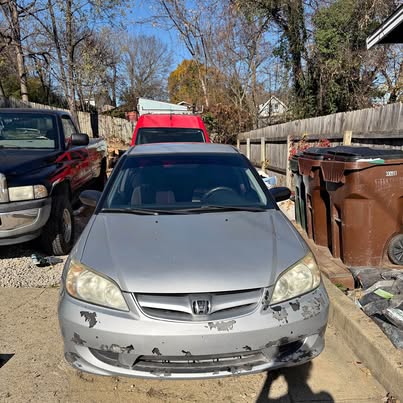
- Start with the identity. Match the VIN on the title to the dashboard plate and the door-jamb sticker, then find the engine code stamped on the pad at the front of the block and check it against what the car claims to be: D16Z6 or D16Y8 in a VTEC car, B16A2 in a 1999–2000 Si, D16Y7 in a plain DX or LX. A wrong engine is not automatically a walk-away — swaps are this car's culture — but it reprices the car and raises emissions and insurance questions the seller should answer, not you.
- Cold start. Insist the engine is stone cold. It should start at once, idle fast then settle, with no blue smoke (valve stem seals), no top-end clatter that persists (valve clearances, or worse), and no rattle from the timing case on a K20 EP3 (the chain tensioner from the engines section). Note the oil level before you start it if you can — low oil on the dipstick of a B16 car tells you how it has been kept.
- The hot-restart test. Once the car is fully warm later in the viewing, switch off, wait five minutes, and restart. A car that cranks and will not fire hot is showing you the main relay or distributor fault from the problem areas — listen for the fuel pump prime as you turn the key, because its absence names the relay. Price the fault in rather than accepting "it does that sometimes".
- The rust circuit. Work the map from the problem areas in order: rear arch lips (press, and check from inside the boot), the quarter-to-bumper seam, sills and jacking points, front footwell floors under the carpets, the spare wheel well, door bottoms, battery tray. Run the magnet over the arches and lower quarters. Perforation in the sills or floors is structural money; bubbles at both rear arches on a fifth- or sixth-generation car mean the inner arches are worse.
- Cooling and head gasket. With the engine cold, open the coolant reservoir: clean coolant at the right level is what you want; rust, oil film or a low level are questions. On the drive, watch the gauge settle and stay, and confirm the electric fan cuts in at a standstill. After the drive, look for bubbles in the reservoir and check the oil cap for emulsion — the head-gasket evidence from the problem areas, gathered in that order.
- The gearbox test. Manual: fast downshifts into third and second at moderate revs should be silent; note input-shaft rumble in neutral that stops with the clutch down. Automatic: on seventh-generation cars above all, drive long enough for a fully warm box, then feel for flare or shudder on the 2–3 change, delay engaging drive and reverse from rest, and any slip under a firm throttle. Any one of those is the rebuild from the problem areas, priced into the offer. CVT cars, HX and Hybrid: take-off should be clean, with no start-clutch judder.
- VTEC and the top end. On a VTEC car, use a safe stretch of road and pull through 5,500 rpm in second. The changeover should be a clean step in note and urge, and the engine should pull to the redline without misfire or smoke. No changeover is a fault to price (solenoid, screen or oil pressure, usually cheap); smoke or a misfire up top on a B16 is a dearer one.
- Suspension and steering. Rock each front wheel vertically for ball-joint play and horizontally for bearing and tie-rod wear. On the drive, listen for trailing-arm clunks over bumps at the rear, compliance-bush knocks at the front on a seventh-generation car, and CV clicks on full lock in a car park — each one maps to a priced job in the problem areas. The steering should centre cleanly; notchiness on an EP3 points at its electric rack.
- Brakes and standing time. Brake firmly from speed: straight, no judder, no pull. A sinking pedal at rest, a handbrake that barely holds, or rust-banded discs say the car has sat and the hydraulic refresh belongs in your budget. Check every flex hose you can see for perishing.
- Electrics and air conditioning. Work everything: all windows (watch for a slow or dropping glass — the cable regulators), locks, blower on all speeds, lights, washers and wipers. Run the air conditioning and confirm genuinely cold air at idle and at speed; "needs a regas" on a seventh-generation car is priced as the full compressor-system job until proven otherwise. Note any SRS light and ask about the seat-belt buckle switch before assuming airbag money.
- Hybrid-specific checks. On a Hybrid, watch the charge/assist gauge through a full drive: assist should sweep freely, the pack should hold charge on a cruise, and the gauge should not swing from full to empty in minutes (the recalibration habit of a dying pack). Confirm the IMA light is out and stays out, feel for start-clutch judder pulling away, and treat the pack replacement figure from the engines section as live money in the negotiation.
- Interior and water, last. Sit in every seat, check the driver's bolster, look for sagging headliner, and use your nose: a damp, musty cabin means a leak, and a leak means you go back to step 4 and look harder at the floors. A dry, original, unmodified interior on a fifth- or sixth-generation car is now genuinely scarce and worth paying for, because it is the strongest single evidence the car has been kept rather than consumed.
Values
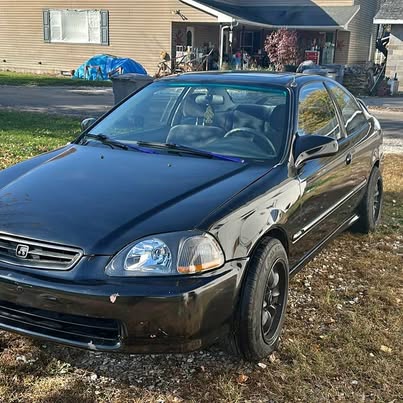
The market block beneath this guide carries the current numbers from our own listings — read it after this section, because the numbers only make sense with the condition spread in mind, and on the Civic that spread is wider than on almost any other car here. The same badge covers a rusted, swapped, four-owner project and a one-owner, garaged, fully documented original, and the distance between those two cars is not a percentage of value; it is several multiples of it. Sellers price off the best car they can find advertised; buyers should price off the work the specific car in front of them needs, using the job costs in this guide as the deductions.
Three structural facts shape Civic values. First, originality is the rising premium on the fourth, fifth and sixth generations: these cars were modified in period at a rate few cars have ever matched, so a standard, unmolested car — original engine with the right code on the pad, original suspension, interior intact — now stands out in any listing set and sells like it. Tasteful modifications do not add value; they usually subtract it, because the next buyer prices in undoing them. Second, the enthusiast premium concentrates exactly where the engineering does: the B16 Si coupe of 1999–2000 sits in its own market, the VTEC cars carry a premium over the plain D-series cars, and the economy specials (VX, HX, CRX HF in the earlier range) have a smaller but real following that pays for proven economy hardware. Third, the seventh generation inverts the usual pattern — it is new enough that buyers still cross-shop it as transport, so condition and the automatic gearbox's health move the price more than specification, and a Hybrid is worth its premium only while its battery demonstrably behaves.
Asking prices and achieved prices part company most on project cars. A cheap Civic with arch rust, a slipping automatic or a dead IMA pack is not a bargain version of a good car; it is a good car's price paid in instalments to repairers, usually ending higher. The honest bargains in this market are the unfashionable ones: automatic-free plain sedans with full history, seventh-generation coupes nobody collects, and third- and fourth-generation cars whose owners have done the rust and the belt and kept the receipts. Pay for evidence — invoices for the belt, the gearbox, the battery, the welding — because on a Civic, evidence is the one option that was rarely fitted and always worth having.
Parts and ownership
The Civic is one of the easiest classics in this guide series to keep, with one generational divide. For the fourth generation onward, the parts situation is close to modern-car easy: the cars were built in the millions, Honda supported them for decades, the aftermarket is enormous, and the D-series engine's ubiquity means service parts, suspension components, brake parts and panels are cheap and everywhere. Easy: filters, plugs, belts, water pumps, radiators, distributors and main relays (the two known faults are also two of the cheapest fixes), clutch kits, CV shafts, suspension bushings, brake hydraulics, exhausts in standard form, glass and most seals. Harder: correct trim and interior pieces for specific years, because the breaker supply has been picked over by the modification scene; VTEC solenoids and sensors are available but buy quality, as cheap pattern ignition and sensor parts are a false economy on these cars. Genuinely scarce: anything CVCC-specific for the early cars — pre-chamber components, correct Keihin carburettor parts — plus first- and second-generation body panels and brightwork, and EP3-specific parts, which come from a low-volume English-built car and price accordingly. Hybrid IMA packs are an aftermarket purchase, not a Honda one, at any sensible price.
Running one is correspondingly painless. The D-series cars return fuel economy in the thirties as a matter of routine (the VX, HX and Hybrid far beyond that), insurance is ordinary, and any competent independent can service one — the specialist knowledge is concentrated in the early CVCC cars and in honest automatic-gearbox work. The budget lines that catch new owners are the catch-up ones this guide keeps returning to: the timing belt set on any car without a receipt, the first-year suspension bushing harvest on a double-wishbone car, and the recommissioning list on a car that has sat — fuel system cleaned, every brake component inspected, tyres replaced on age rather than tread. A sorted Civic of any of these generations is a realistic daily classic; an unsorted one is a queue of small bills, each individually reasonable, arriving monthly.
One ownership note that is specific to this car: fifth- and sixth-generation Civics sit permanently near the top of theft statistics, because the same interchangeability that makes them easy to keep makes them easy to part out. Fit visible and electronic security, keep the car garaged if you can, and check before purchase that the VIN plates and stickers are all present and consistent — a car with missing identity stickers is a car whose history you cannot fully know.
Which one to buy
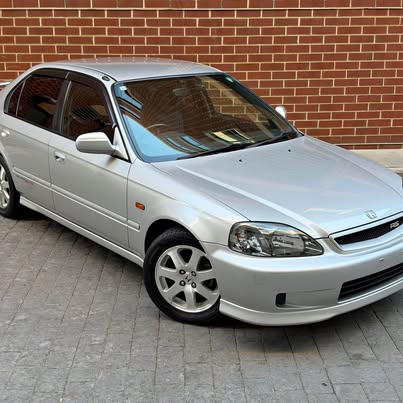
- The all-rounder: fifth- or sixth-generation EX. The VTEC D-series, the double-wishbone chassis, real pace and real economy, with the deepest parts support in the guide. A documented, unmodified EX sedan or coupe is the Civic to buy with your head.
- The enthusiast's car: 1999–2000 Si coupe. The B16A2 is worth every bit of its reputation — but buy the engine code, the oil history and the shell, in that order, and expect to pay for all three.
- The value buy: seventh-generation coupe or sedan with a manual gearbox. The overlooked generation: bigger, safer and cheaper than the cars either side of it, and the manual sidesteps the one genuinely weak component, the automatic.
- The economy buy: VX, HX or a proven Hybrid. The VX hatchback and HX coupe deliver their economy with simple hardware; the Hybrid beats both only while its IMA pack is demonstrably healthy — buy the gauge's behaviour on a long drive, not the seller's assurance.
- The character buy: third-generation Si or CRX. Featherweight, simple and increasingly scarce. Rust decides everything; a solid one is a delight and a rotten one is a sculpture.
- The collector buy: a first-generation CVCC. The historically important car, bought as a hobby and a conversation, with eyes open about parts and rust. Buy the best shell in existence and accept the pace.
- The project to avoid: any seventh-generation automatic with a flare on the 2–3 change and no gearbox receipt, and any fifth- or sixth-generation car with bubbles on both rear arches described as "surface rust". Both are priced as if the big bill were optional. It is not.
And the rule that overrides all of the above: buy the least rusty, least modified car you can find, with the timing belt and the big bills already paid by someone else. Engines, relays, distributors and bushings are all fixable at prices this guide has given you. A rotten shell and a lost history are the two things about a Civic that money cannot put back.
Listed now
On Classic Listings today: 43 cars are listed here; 20 for sale and 23 marked sold; average asking price $4,269; asking range $1,200 to $8,500; sold cars average $8,529.
See the 43 Civic cars currently listed.
The market — recorded sales
Civic Classic Listings Index: $7,100 — based on 23 recorded sales, Nov 2024 – Nov 2026.
Change vs the prior 24 months: — not enough earlier sales to compute a change.
Recorded sales: 23 · Total recorded sale value: $196,165 · Lowest sale: $850 · Top sale: $22,350 · Most recent sale: $1,250 (Nov 14, 2026)
| Date | Car | Sale price | Source |
|---|---|---|---|
| Nov 14, 2026 | 1996 Honda Civic EX Sedan 4D | $1,250 | |
| Nov 14, 2026 | 2000 Honda Civic EX Coupe 2D | $850 | |
| Nov 14, 2026 | 1997 Honda Civic EX Coupe 2D | $3,500 | |
| Nov 14, 2026 | 1997 Honda Civic DX Hatchback 2D | $4,500 | |
| Nov 10, 2026 | 1997 Civic | $6,500 | Cars & Bids |
| Oct 28, 2026 | 1989 Civic Wagon | $11,000 | Cars & Bids |
| Oct 23, 2026 | 2001 Civic | $8,200 | Cars & Bids |
| Sep 16, 2026 | 1987 CRX | $9,500 | Cars & Bids |
| Aug 27, 2026 | 1994 Civic Coupe | $7,650 | Cars & Bids |
| Aug 25, 2026 | 2001 Civic Sedan | $6,415 | Cars & Bids |
| Aug 12, 2026 | 1997 Civic Sedan | $4,950 | Cars & Bids |
| May 20, 2026 | 1994 Civic | $17,500 | Cars & Bids |
| May 18, 2026 | 1991 Civic | $7,000 | Cars & Bids |
| Apr 30, 2026 | 2000 Civic | $7,000 | Cars & Bids |
| Mar 30, 2026 | 2000 Civic | $16,000 | Cars & Bids |
| Jan 26, 2026 | 1981 Civic | $6,000 | Cars & Bids |
| Jan 14, 2026 | 1986 CRX | $7,100 | Cars & Bids |
| Jan 5, 2026 | 2003 Civic | $6,700 | Cars & Bids |
| Dec 31, 2025 | 1998 Civic Type R | $22,350 | Cars & Bids |
| Nov 4, 2025 | 2000 Civic Sedan | $8,700 | Cars & Bids |
| Oct 21, 2025 | 1997 Civic Coupe | $9,100 | Cars & Bids |
| Oct 8, 2025 | 1994 Civic | $10,400 | Cars & Bids |
| Sep 5, 2025 | 2004 Civic | $14,000 | Cars & Bids |
Dates are the sale date where the source states one; otherwise the date the sale was recorded here.
For sale now
 Current bid $200
Expand
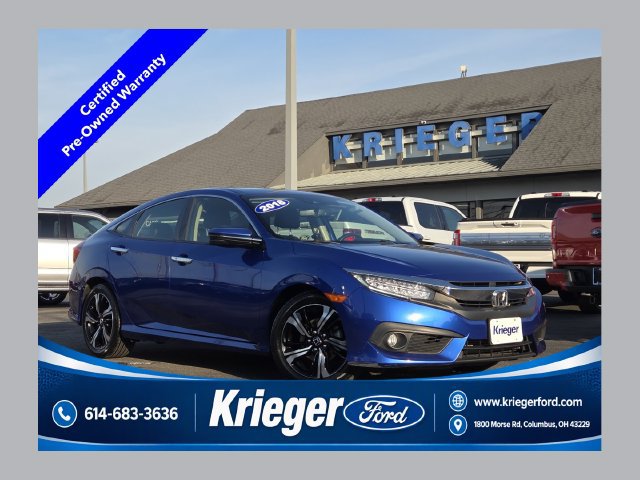 $20,750
Expand
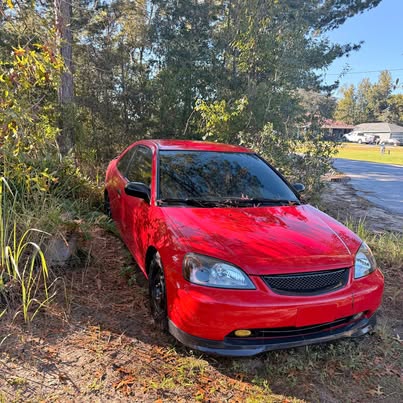 $1,200
Expand
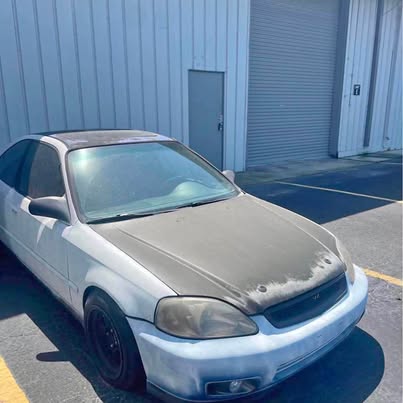 $6,500
Expand
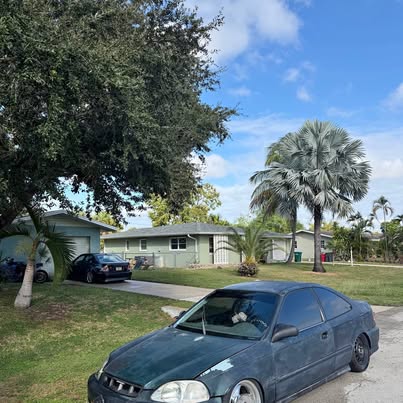 $4,500
Expand
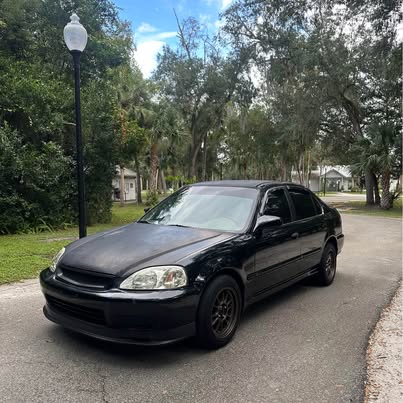 $3,800
Expand
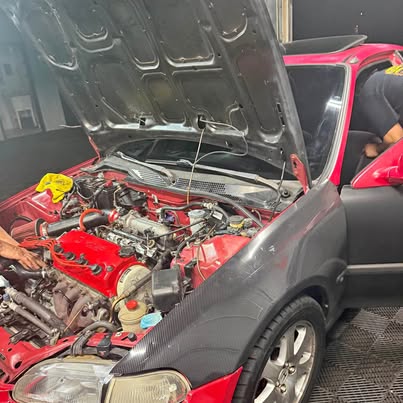 $4,000
Expand
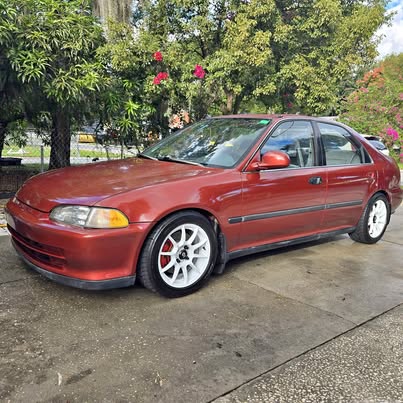 $5,500