
Jaguar E-Type buyer's guide
Jaguar E-Type -- the model's own buyer's guide: variants, values and what to check.
Years listed: 1962-1973 · Series: E-Type
Overview and history
Start with the name, because in North America it causes real confusion at buying time. The car Jaguar launched at Geneva in March 1961 is the E-Type. In the United States it was marketed and badged as the XK-E, usually shortened to XKE, and American paperwork, titles and old advertisements use that name freely. They are the same car, built on the same Coventry line, to the same drawings. A seller who presents an E-Type and an XKE as different models, or charges a novelty premium for one name over the other, is either confused or hoping you are. Judge the car by its series, body, chassis number and condition — never by which badge word appears in the advert.
What you are judging is the defining British sports car of the 1960s. Jaguar took the mechanical lessons of the D-Type, which had won Le Mans three years running in 1955, 1956 and 1957, and put them under a road body shaped by aerodynamicist Malcolm Sayer. The result offered a claimed 150 mph, disc brakes at all four corners, independent suspension at all four corners and a twin-cam engine, at a launch price far below the Italian and British exotics it matched for pace. Enzo Ferrari's famous compliment about its beauty is quoted so often it has become wallpaper, but the buyer's version of the same point is harder-headed: this shape has never gone out of demand, which is why even difficult E-Types find buyers, and why sellers of difficult E-Types know it.
Underneath, the car is two structures, and you need to hold both in your head on every inspection. The centre and rear of the car is a steel monocoque — floor, sills, bulkheads, transmission tunnel, rear wings and boot structure welded into one stressed shell. Bolted to the front bulkhead is a tubular subframe assembly, built from Reynolds 531 steel tube, which carries the engine, the front suspension, the steering rack and the enormous one-piece bonnet. There is no chassis frame underneath to forgive rot. When an E-Type's sills and floors corrode, the car does not merely look shabby; it loses the stiffness the suspension and door fits depend on. Almost every expensive E-Type story starts in that shell.
At the rear sits the second structure: Jaguar's independent rear suspension, carried complete in a removable steel cage. A Salisbury final-drive unit sits in the middle of the cage, the disc brakes are mounted inboard against it rather than out at the wheels, and each side is located by a lower wishbone, a fixed-length driveshaft acting as the upper link, twin coil-over damper units and a trailing radius arm. In 1961 this was racing practice on a production car, and it is why the E-Type rides and grips as it does. It is also why rear brake and differential work are subframe-out jobs rather than Saturday-morning jobs.
Production ran from 1961 to 1975 and divides into Series 1, Series 2 and Series 3. The six-cylinder cars come first: the 3.8-litre Series 1 of 1961 to 1964, the 4.2-litre Series 1 of 1964 to 1968 with a transitional group of 1968 cars enthusiasts call Series 1.5, and the federalised Series 2 of 1968 to 1970. The Series 3 of 1971 to 1975 replaces the six with Jaguar's 5.3-litre V12 and turns the car into a faster, softer grand tourer. Three bodies cover the range: the open two-seater roadster, the fixed-head coupé fastback, and from 1966 the longer-wheelbase 2+2 coupé with its small rear seat. The V12 roadster also uses the long wheelbase, so do not assume every roadster you see shares the early car's compact proportions.
The American market took the majority of production, so most cars offered in the United States are left-hand-drive export cars, and American specification is its own subject. From 1968, federal rules gave US cars twin Zenith-Stromberg carburettors in place of the triple SUs fitted elsewhere, plus altered gearing, trim and lighting. None of that makes a US car a bad car. It makes specification-checking part of the purchase: two outwardly similar 1969 cars can differ in carburation, final-drive ratio and original equipment in ways that change how they drive.
Hold one principle through everything that follows. With an E-Type you buy structure, then mechanical honesty, then cosmetics, in that order and without exception. Paint is the cheapest thing on the car to renew and the most expensive thing to see through.
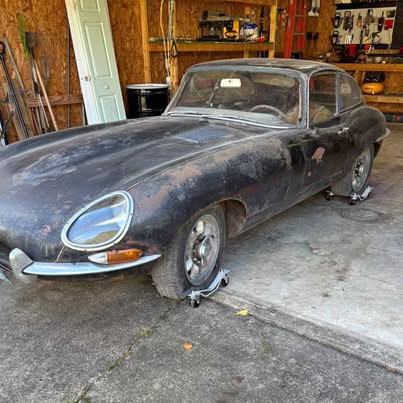
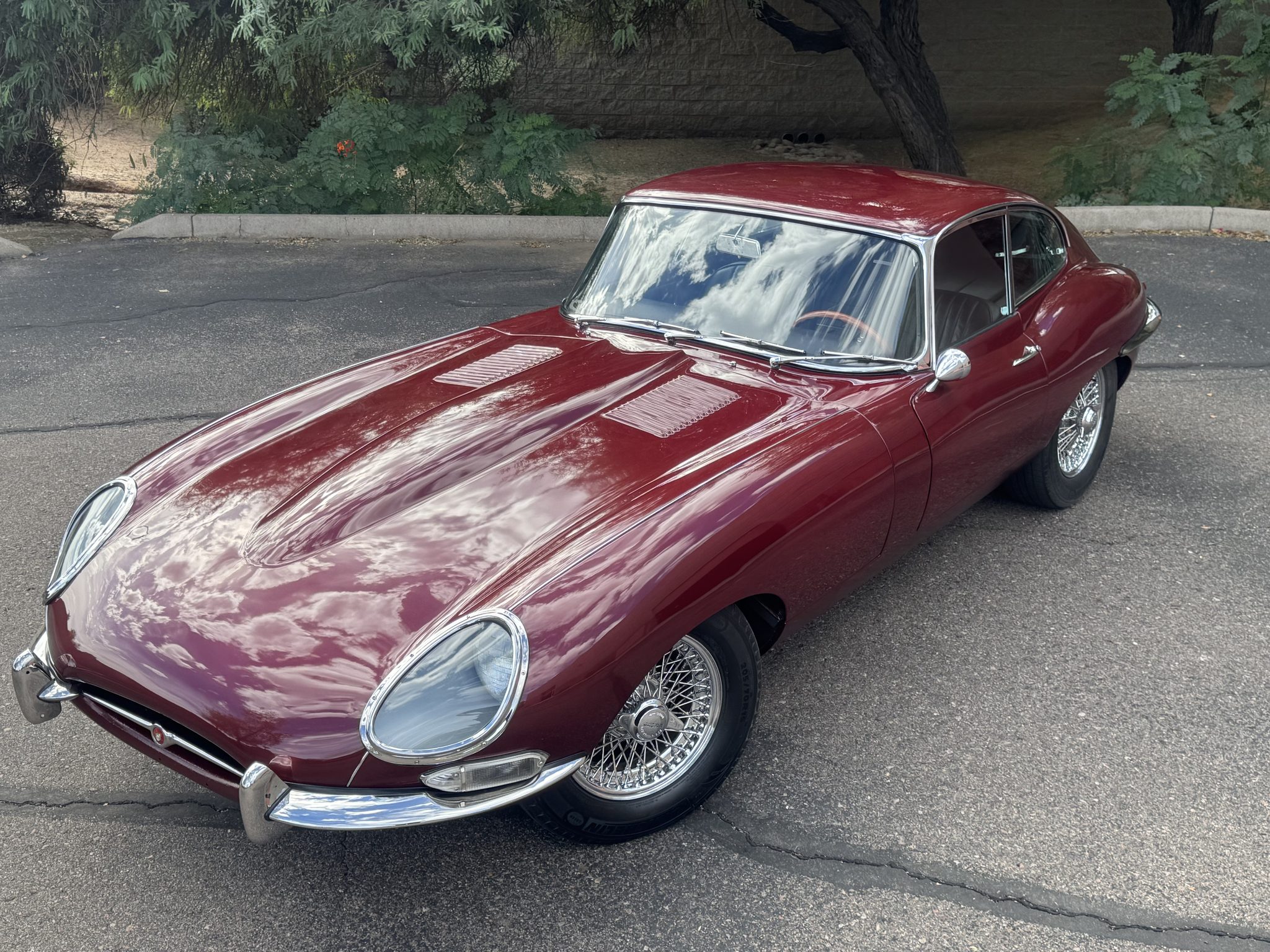
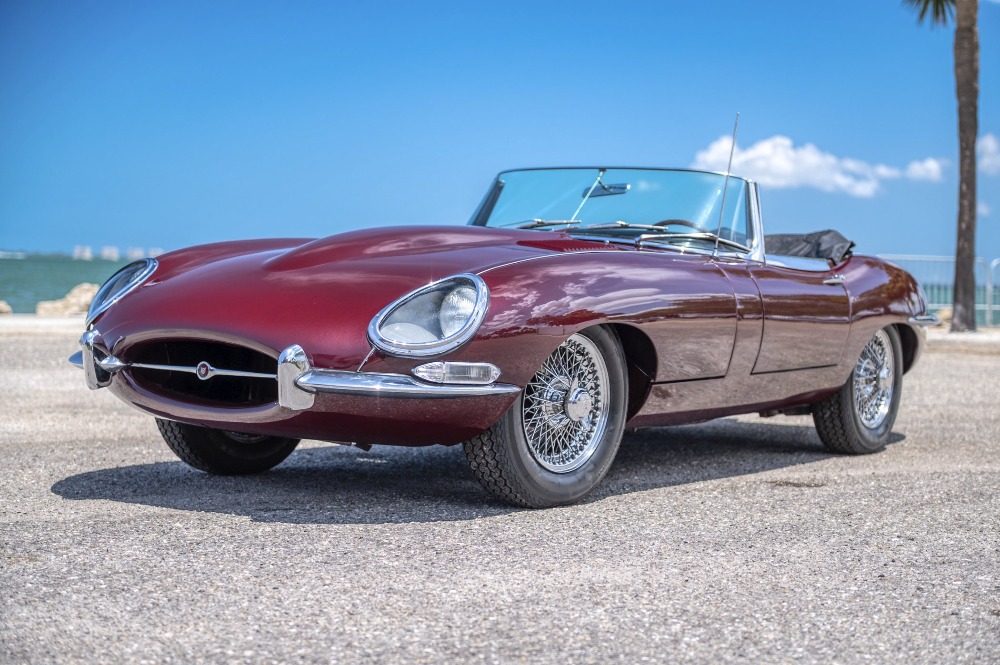
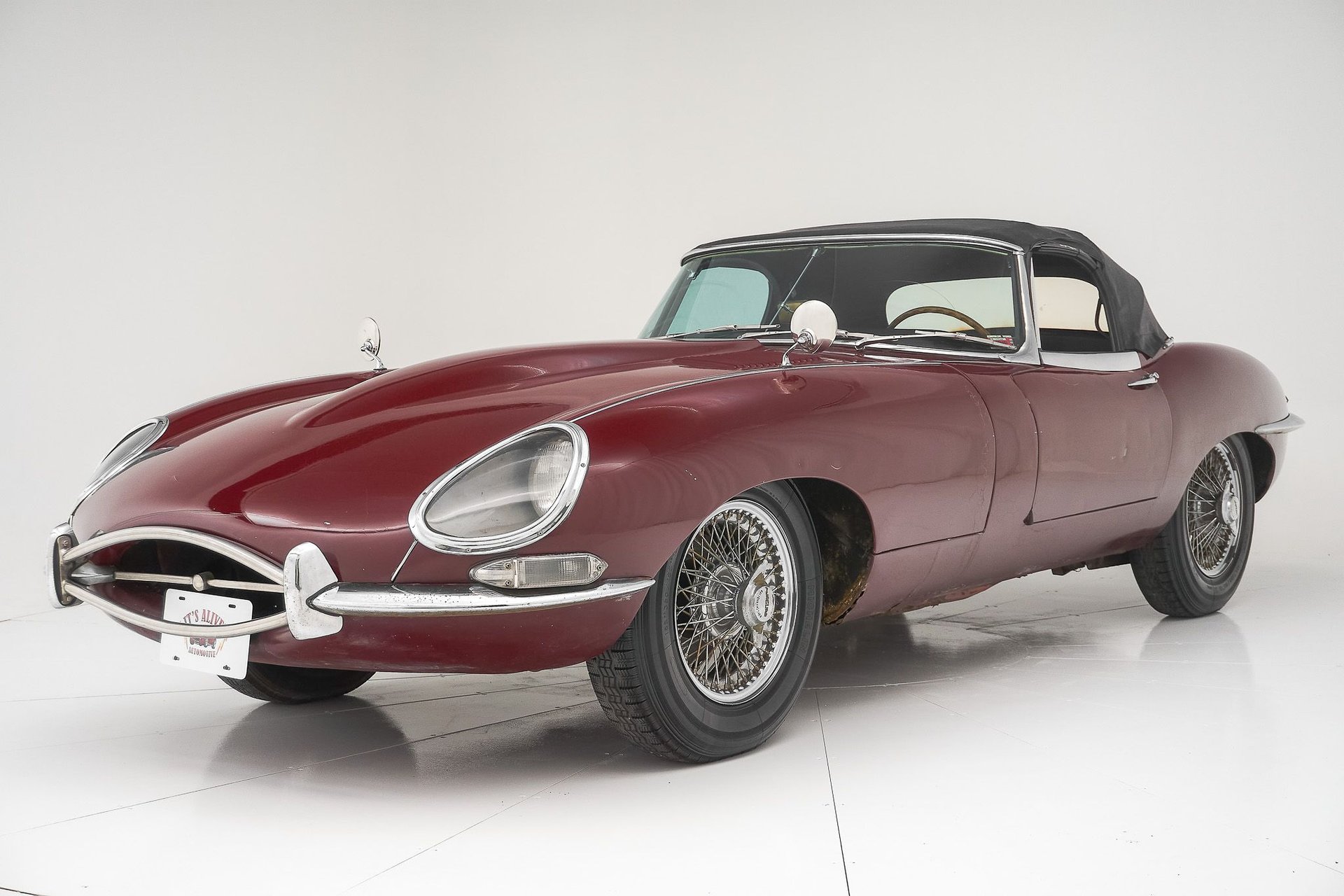
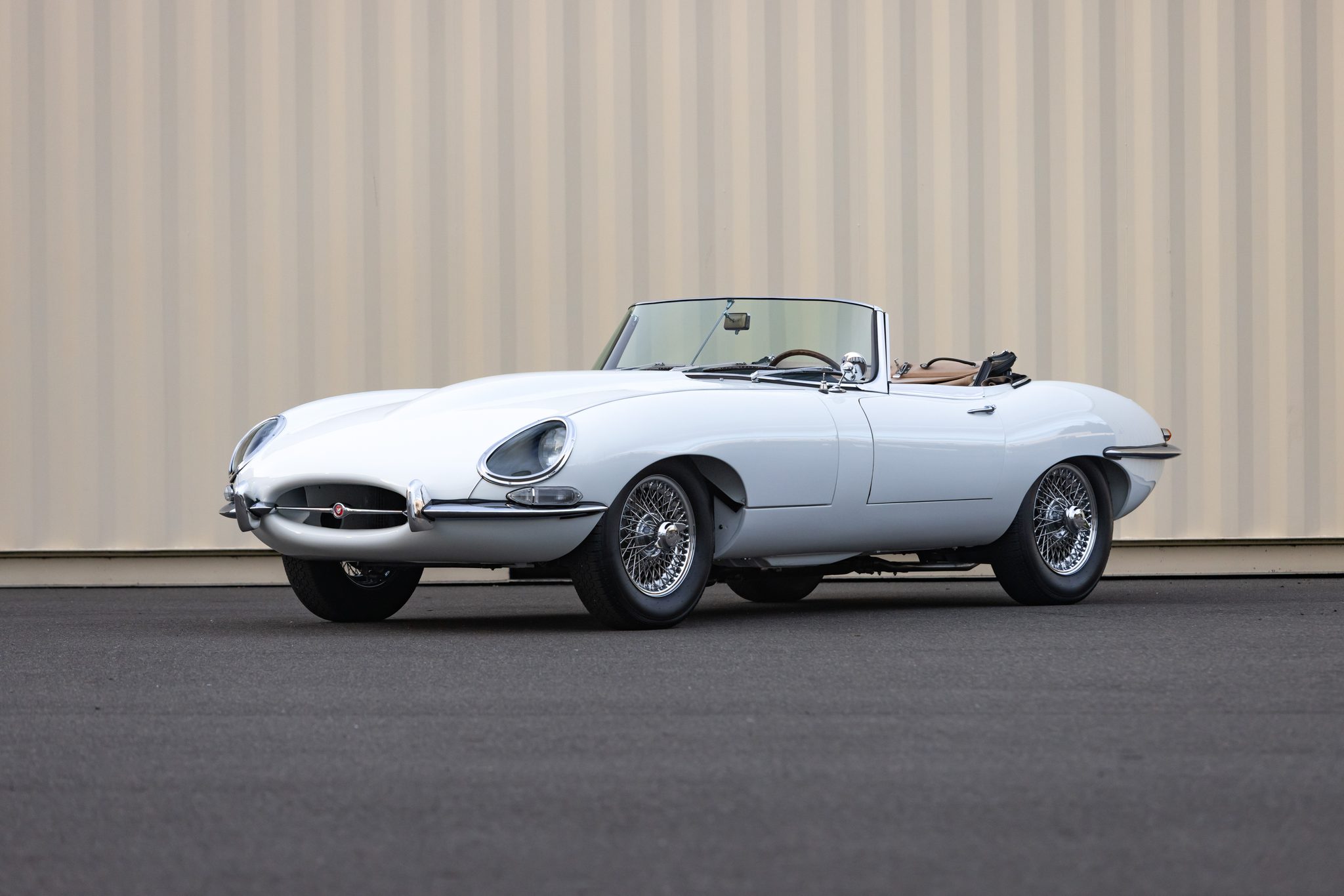
Use a front three-quarter view like this one to read the front structure before the styling. The bonnet is a single pressing that includes both wings, hinged at the front, so its fit against the scuttle and sills is a structural report: even, narrow gaps suggest straight subframes and an unbent bonnet, while a bonnet sitting high on one side points to subframe damage, hinge trouble or heavy filler. Check that both covered headlamp glasses sit at the same height, the bumpers are level, and the wire wheels fill their arches evenly.
The models
An E-Type purchase resolves into three questions, in this order. Which series? Which body? And which market specification? Sellers answer the first two loosely and the third rarely, so the table below gives you the skeleton to pin a specific car against. Outputs are period gross figures as Jaguar quoted them; American Series 1.5 and Series 2 cars on Stromberg carburettors are quoted lower, and real-world differences between individual cars today owe as much to tune and condition as to the brochure number. Production totals are the accepted factory figures, rounded, and the 1968 transitional cars are counted within the series totals either side of them, which is why no honest table lists Series 1.5 as a separate production run.
| model | years | engine | output | built | character |
|---|---|---|---|---|---|
| Series 1 3.8 roadster | 1961–1964 | 3.8 XK six, triple SU HD8 | 265 bhp gross | about 7,800 | The launch car in open form; Moss gearbox, eager engine, minimal concessions |
| Series 1 3.8 fixed-head coupé | 1961–1964 | 3.8 XK six, triple SU HD8 | 265 bhp gross | about 7,700 | The closed original; taut, hot in summer, the purest fastback line |
| Series 1 4.2 roadster | 1964–1967 | 4.2 XK six, triple SU HD8 | 265 bhp gross | about 9,600 | All-synchromesh gearbox, better seats and brakes; the classic all-rounder |
| Series 1 4.2 fixed-head coupé | 1964–1967 | 4.2 XK six, triple SU HD8 | 265 bhp gross | about 7,800 | The 4.2 improvements in the rigid shell; a serious long-distance car |
| Series 1 4.2 2+2 | 1966–1968 | 4.2 XK six, triple SU or US twin Stromberg | 265 or about 246 bhp gross | about 5,600 | Nine inches longer, occasional rear seat, automatic offered; the family E-Type |
| Series 2 roadster | 1968–1970 | 4.2 XK six, US twin Stromberg | about 246 bhp gross | about 8,600 | Federalised open car; better cooling, power steering and air conditioning available |
| Series 2 fixed-head coupé | 1968–1970 | 4.2 XK six, US twin Stromberg | about 246 bhp gross | about 4,800 | The last short-wheelbase coupé; often the best-driving six-cylinder value |
| Series 2 2+2 | 1968–1970 | 4.2 XK six, US twin Stromberg | about 246 bhp gross | about 5,300 | The roomy tourer; automatics are common, so check spec carefully |
| Series 3 roadster | 1971–1975 | 5.3 V12, four Stromberg | 272 bhp gross in UK tune | about 8,000 | V12 pace and refinement on the long wheelbase; a grand tourer outright |
| Series 3 2+2 | 1971–1975 | 5.3 V12, four Stromberg | 272 bhp gross in UK tune | about 7,300 | The V12 closed car; no V12 fixed-head coupé exists, whatever an advert says |
Across the three series Jaguar built roughly 72,500 E-Types. That total is the buyer's friend: the model is rare enough to hold interest permanently and common enough that specialists, parts and comparable cars all exist. You are never under genuine pressure to buy a particular car.
The 3.8 Series 1 is the connoisseur's end of the range. Early production details change almost monthly through 1961 and 1962: the first cars have flat floors and bonnet catches operated from outside, footwells are then dished to give pedal room, and seats, trim and dash finishes all evolve. All 3.8s share the Moss gearbox with synchromesh on the top three gears only, the smaller Dunlop brake calipers with a bellows-type servo, and an engine that revs more eagerly than the 4.2 and asks more of its driver. A dynamo charges the earliest cars, with an alternator arriving late in 3.8 production. Buy a 3.8 for its edge and its history, not as the easiest E-Type to live with.
The 4.2 Series 1, from October 1964, is the same silhouette with the working parts civilised. Torque rises and arrives lower, the new Jaguar all-synchromesh gearbox transforms town driving, an alternator and negative-earth electrics become standard, the brake servo arrangement improves, and the seats become places you can spend a day. Covered headlamps and the small mouth survive until 1967 in most markets. If your plan is to drive several thousand miles a year, this is the Series 1 to shortlist first, in either body.
The 1968 cars called Series 1.5 were never named that by Jaguar. They are a phased changeover: open headlamps without covers, and on US cars the Stromberg carburation and emissions equipment, arrive while much of the Series 1 rear bodywork and interior character remains. Because the changes were phased, no single feature defines one. Establish what a 1968 car actually is from its chassis number and build date, ideally confirmed by a Jaguar Daimler Heritage Trust certificate, and price it as what it verifiably is rather than what the seller calls it.
The Series 2 is the honest, usable six-cylinder car, and a large share of the six-cylinder cars offered in the United States are 1969 and 1970 Series 2s. You get raised open headlamps in larger chrome surrounds, a wider mouth with a heavier bumper, tail lamps below the rear bumper, rocker switches in place of toggles, headrests, a collapsible steering column and, on US cars, the twin-Stromberg induction with its secondary-throttle arrangement. Against that you also get twin electric cooling fans and the options of power steering and air conditioning. A Series 2 fixed-head coupé in particular is frequently the most car for the money in the whole six-cylinder range.
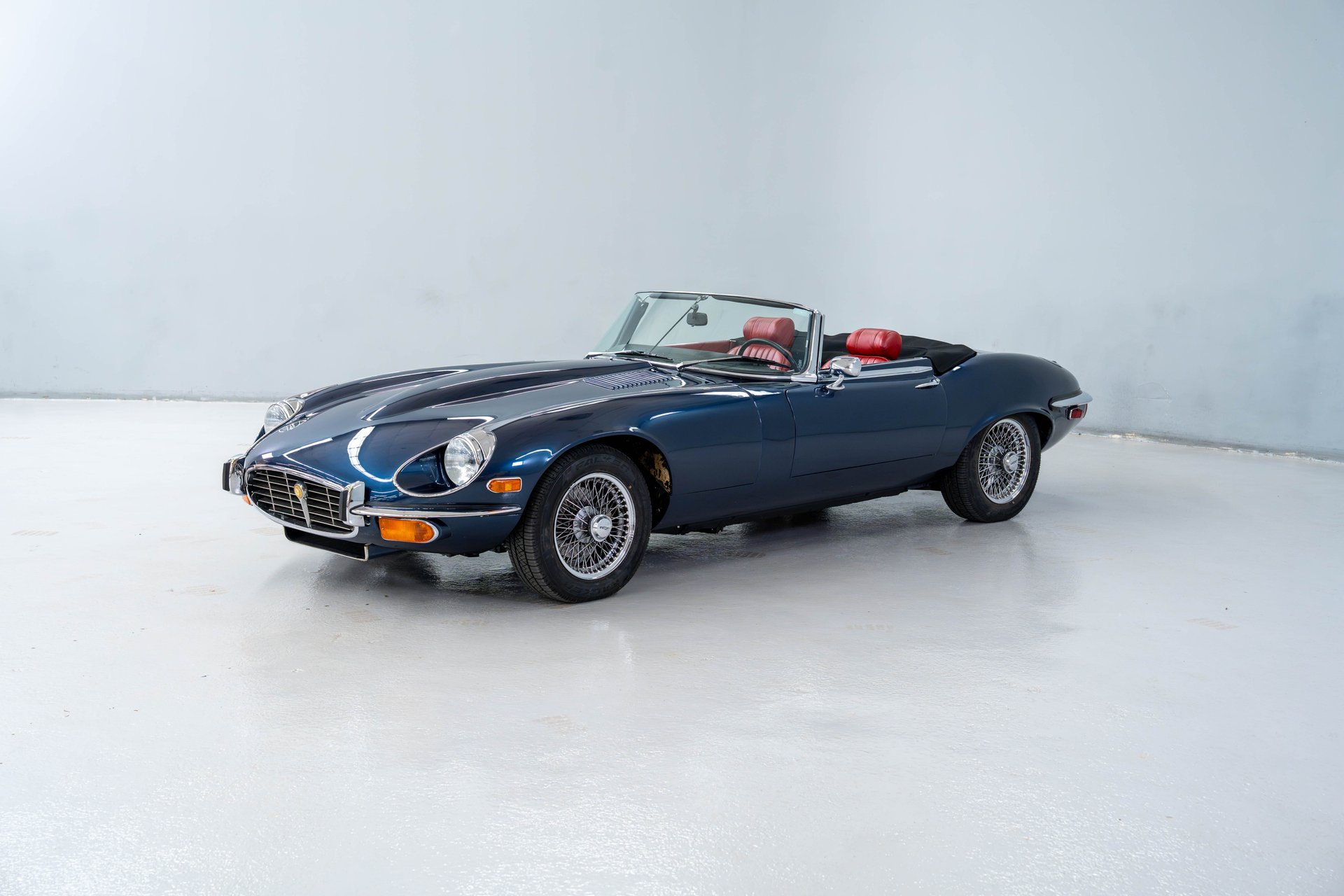
The Series 3 is a different proposition wearing a related shape. The V12 brings a chrome grille, a bonnet bulge, flared wheel arches over a wider track, ventilated front discs and standard power steering. The short-wheelbase coupé disappears; both V12 bodies sit on the 105-inch wheelbase. Treat a Series 3 as a high-speed touring car with twelve cylinders to feed and maintain, not as a heavier Series 1, and it makes complete sense.
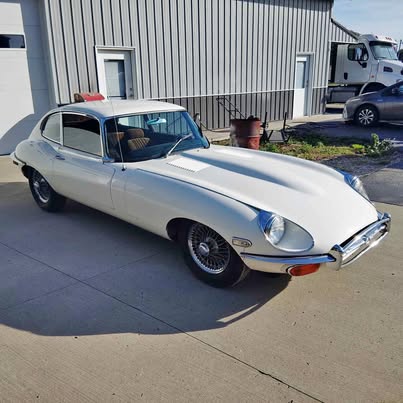
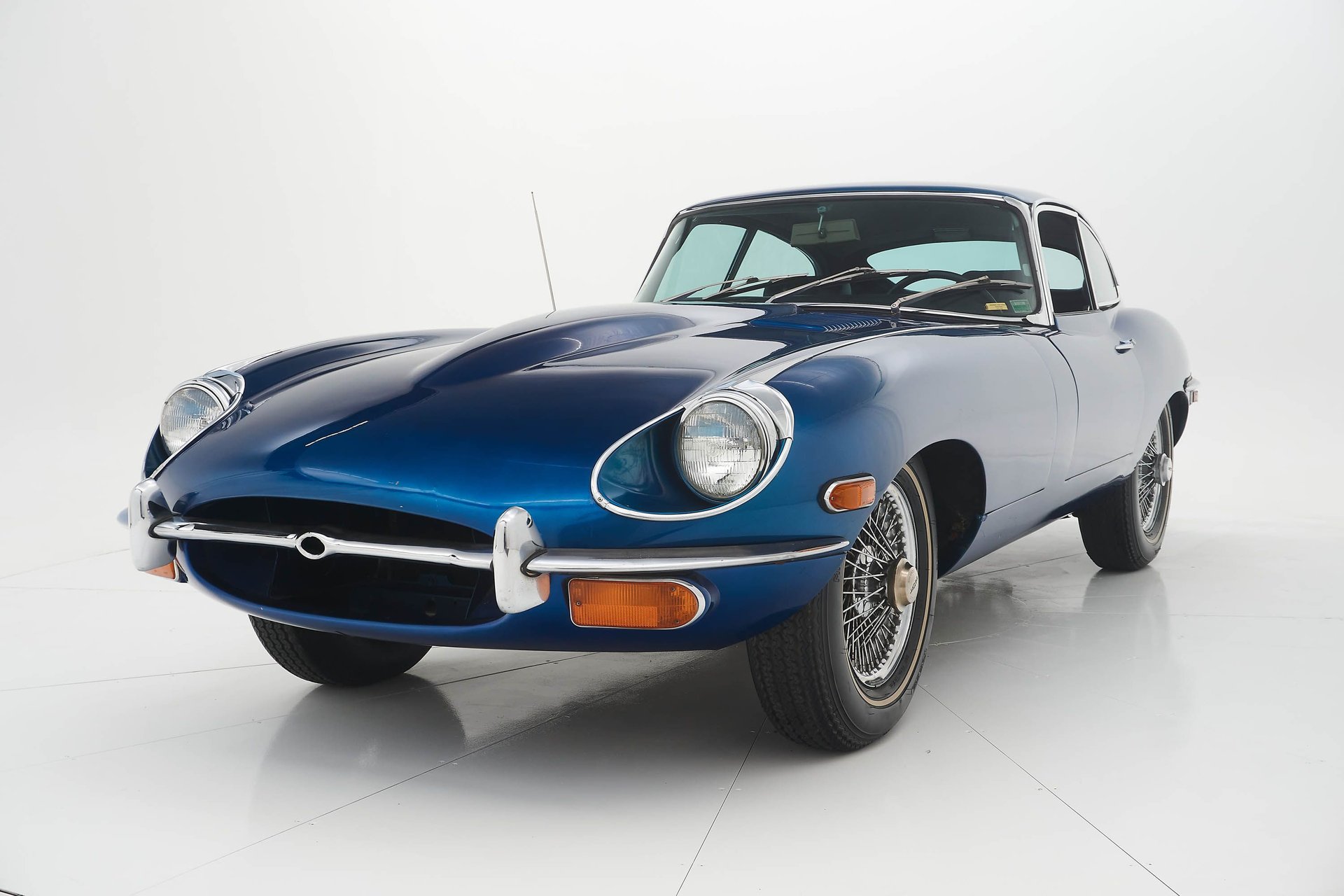
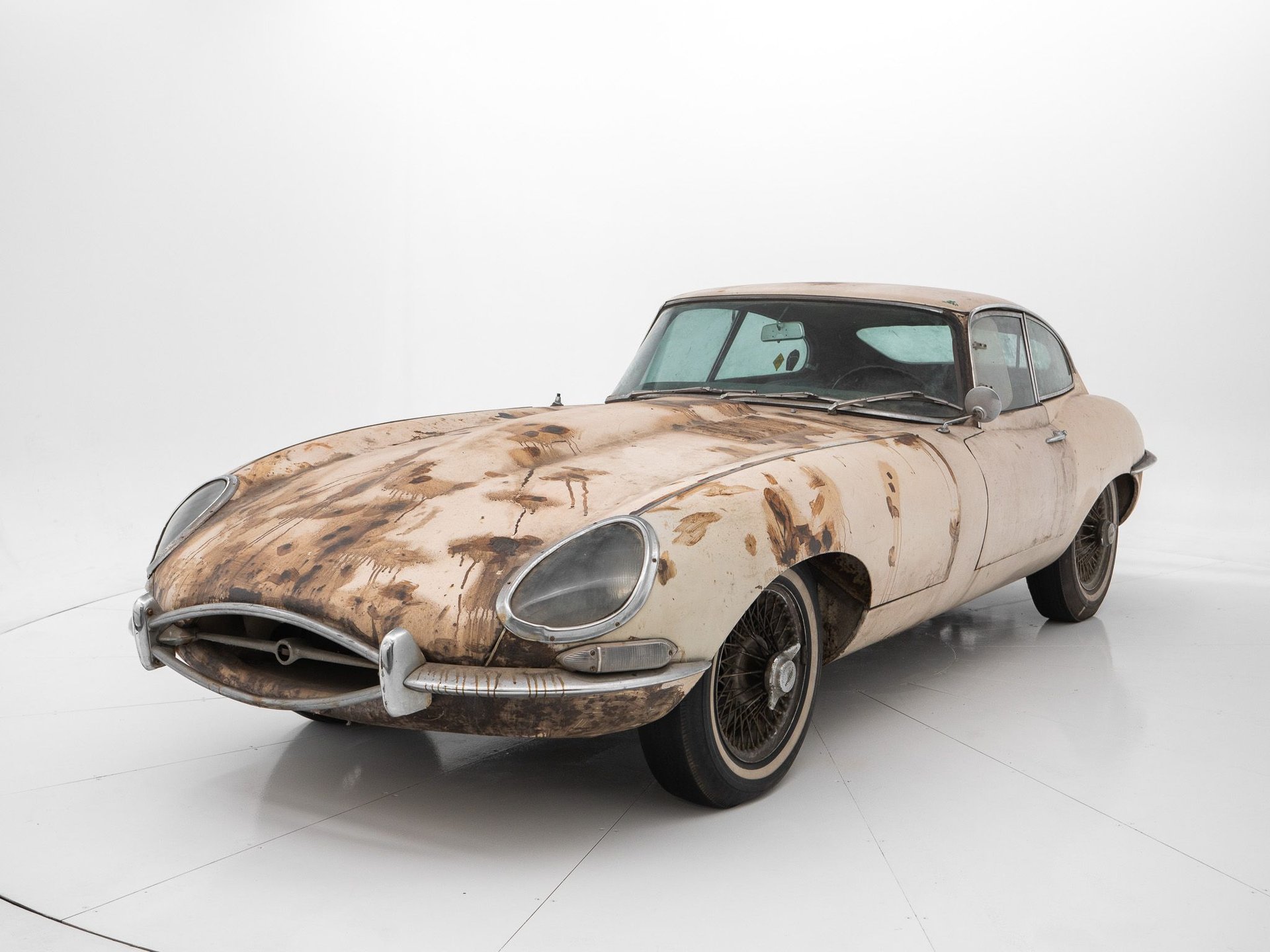
On any Series 2, compare the two headlamp pods before anything else: they sit exposed where Series 1 lamps sat under glass, so accident repair and mismatched replacement panels show as pods at different heights or with different gaps to the bonnet. Read the wider mouth and heavier front bumper for straightness, and look along the top of each front wing for the ripples that betray filler over the wheel arch. A white car is the kindest colour for this check, because panel waves that darker colours hide stand out in raking light.
Engines and gearboxes
The XK six in 3.8 form
The XK engine is the reason the E-Type exists in this form at all. Jaguar's twin-cam six, in production in various models from 1948, combines a cast-iron block with an aluminium cylinder head carrying two overhead camshafts, inclined valves in hemispherical combustion chambers and a seven-bearing crankshaft. In the 3.8 E-Type it displaces 3,781 cc from an 87 mm bore and a long 106 mm stroke, runs a 9:1 compression ratio on most cars, and is quoted at 265 bhp gross at 5,500 rpm with 260 lb ft of torque at 4,000 rpm. Three SU HD8 carburettors of 2-inch choke feed it on home-market and most export cars, drawing through a single air cleaner assembly, and an SU electric fuel pump supplies them at roughly 2.5 to 3.5 psi.
Drive a good 3.8 and you understand the reputation. It pulls cleanly from low revs, hardens from 3,500 rpm and revs with an eagerness the later engine trades away. Its weaknesses are age weaknesses rather than design flaws. The duplex timing chains — a lower chain and an upper chain, with a hydraulic tensioner on the lower — stretch and wear until cold starts are accompanied by rattle from the front of the engine; budget for chain, tensioner and guide renewal on any car without proof of the work, typically $1,200 to $2,500 in parts and labour at a specialist if caught before damage. Valve clearances are set by shims under bucket tappets, so a quiet top end is not proof of correct clearances, and a noisy one usually means clearances never checked. Tappet guides can work loose in the head on hard-used engines and are commonly staked or collared as a preventive fix. Oil consumption of a pint every few hundred miles can be normal on a worn engine and alarming on a fresh one; what matters is where it goes — past the rings under load, down the valve guides on the overrun, or out of the seals at rest, and each shows differently on a test drive.
Two 3.8 checks are specific. First, the rear crankshaft seal is a rope-type arrangement that weeps by design tolerance; a dry rear main on a 3.8 usually means the car has not been driven, not that it will stay dry. Second, the exhaust manifolds are enamelled cast iron and crack with heat cycling, and their studs and brass nuts seize; a blowing manifold on a cold start that quietens as the engine warms is a crack or a failing gasket announcing itself, and manifold work with seized studs turns a small parts bill into a labour bill quickly.
The XK six in 4.2 form, and the Stromberg question
The 4.2 of October 1964 keeps the XK architecture and the 106 mm stroke, opening the bore to 92.07 mm for 4,235 cc. The headline output stays 265 bhp gross, but torque rises to 283 lb ft at 4,000 rpm and the engine works less hard everywhere. Detail changes matter to owners: the block is revised with siamesed bores, later 4.2 engines use long head studs that pass through the water jacket — studs that corrode in neglected coolant and can make head removal a fight — and the cooling system grows a header tank arrangement and, through production, better fan provision. The alternator is standard and the electrics are negative earth, which simplifies modern accessories and battery care.
For American buyers the defining 4.2 question is induction. Cars built for most markets keep triple SU HD8s. US-market cars from the 1968 changeover run two Zenith-Stromberg 175 CD-2 carburettors on a duplex manifold with secondary throttles that stay shut at small openings, an arrangement designed for emissions control rather than response. Jaguar quoted the Stromberg car at about 246 bhp gross, and the seat of your trousers agrees there is a gap: throttle response is softer, the top end is flatter, and a neglected Stromberg installation with perished diaphragms, worn temperature compensators and sticking secondary throttles feels far worse than the design ever intended. None of this is terminal. A properly rebuilt and balanced Stromberg pair drives acceptably, and converting a US car to triple SUs is a well-trodden path using new or rebuilt carburettors, the correct manifold and linkage — allow $3,500 to $6,000 for a complete, properly set-up conversion with quality parts, and keep every removed Stromberg component with the car, because originality-minded future buyers value a reversible change.
Judge any 4.2 by oil pressure and temperature behaviour rather than by noise. The gauge should show around 40 psi at 3,000 rpm hot on a healthy engine; the XK oil pump is durable, and low hot pressure points to bearing wear rather than a pump you can swap in an afternoon. Coolant temperature that climbs steadily in traffic but falls at speed is a cooling-system verdict, covered in the problem section, not an engine verdict. Coolant temperature that climbs under load at speed, with bubbles in the header tank and a misfire on one cylinder, is a head-gasket conversation. The 4.2 head gasket job itself is straightforward for a specialist, typically $1,800 to $3,000 including a head skim and stud inspection, but corroded long studs are what turn it into an engine-out job, so a car with documented coolant changes is worth real money over an identical car without them.
The 5.3 V12
The Series 3 engine is a clean-sheet design by the standards of the six: 5,343 cc from a short-stroke 90 mm by 70 mm layout, an aluminium block and heads, a single overhead camshaft per bank operating flat-headed combustion chambers, and a quoted 272 bhp gross in British tune with torque of 304 lb ft, US cars somewhat lower in period figures. Four Zenith-Stromberg 175 CD carburettors feed it — the production E-Type V12 was never fuel-injected — and ignition is by Lucas OPUS electronic amplifier triggering a single coil and distributor.
The V12's character is turbine smoothness and mid-range weight rather than the six's bark. Its ownership reality is access and heat. Twelve of everything lives in a wide vee under a bonnet that traps heat; rubber hoses, plug leads and the ignition amplifier all cook slowly. The OPUS amplifier, mounted in the vee where it gets hottest, is the classic V12 no-start and hot-cut-out culprit: a car that dies when fully warm and restarts when cool is describing its amplifier until proven otherwise, and modern replacement electronic ignition kits, typically $600 to $1,200 fitted, cure it permanently — many owners relocate the amplifier to a cooler position at the same time. Timing-chain tensioner wear shows as rattle from the front cover. Oil leaks from cam covers and the rear of the engine are endemic and mostly tolerable; oil leaks onto the exhaust from the top of the engine are not tolerable and are a fire risk to fix first. A V12 that runs cool, charges, idles evenly on all twelve and shows even plug colours is a sorted car. A V12 described as needing only a tune-up usually needs the full ignition, cooling and carburation service nobody has done, at $2,000 to $4,000 by the time all four carburettors, the ignition and the hoses are right.
Gearboxes and final drive
Three manual gearboxes and two automatics cover the range, and identifying which one a car has is a first-viewing task. The 3.8 uses the Moss four-speed, with synchromesh on second, third and top only; first is a crash engagement, the change is slow and deliberate, and a quick shift into second on a cold box crunches on the healthiest example. Judge a Moss box by whether it jumps out of gear under load, whines in the indirect ratios, or refuses second when warm — worn examples need a specialist rebuild at $2,500 to $4,500, and parts for Moss internals are the least plentiful in this whole guide. The Jaguar all-synchromesh four-speed fitted from the 4.2 onwards is stronger, quicker and the box most drivers want; it should engage first at rest without force, stay in gear on the overrun, and run quietly in top. Budget a similar rebuild range, with far better parts support.
Automatics arrive with the 2+2: a Borg-Warner Model 8 three-speed on six-cylinder 2+2s, and the stronger Borg-Warner Model 12 on the Series 3, where automatic is the majority specification. Both are durable, unhurried boxes whose health shows in fluid colour and change quality. Fluid should be red, not brown, and should not smell burnt; changes should be firm without a thump, kickdown should answer promptly, and any flare between ratios on a warm box means internal wear. A Model 12 rebuild by a transmission specialist typically runs $2,500 to $4,000. Manual Series 3 cars exist and are prized, so verify a claimed manual V12 by the pedal box and the chassis record, not by the gear lever alone.
Final-drive ratios explain why two apparently identical cars cruise so differently. US six-cylinder cars commonly run a 3.54:1 Salisbury axle, eager and busy at highway speed; 3.31:1 and the relaxed 3.07:1 appear on other specifications and as period options. A limited-slip differential is standard on most E-Types and should engage smoothly without chatter in tight turns; chatter that disappears with fresh oil and the correct limited-slip additive was a maintenance item, while chatter with fresh oil is wear. Clunks from the rear on taking up drive are usually worn universal joints, splines or mountings in the cage rather than the differential itself, and the inspection section gives you the sequence to separate them.
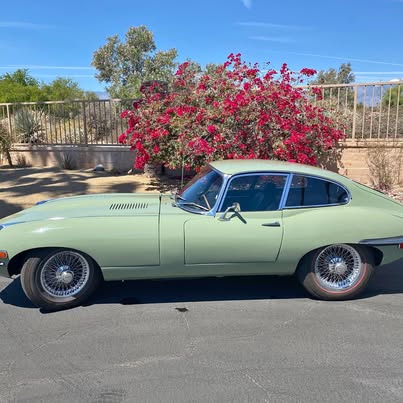
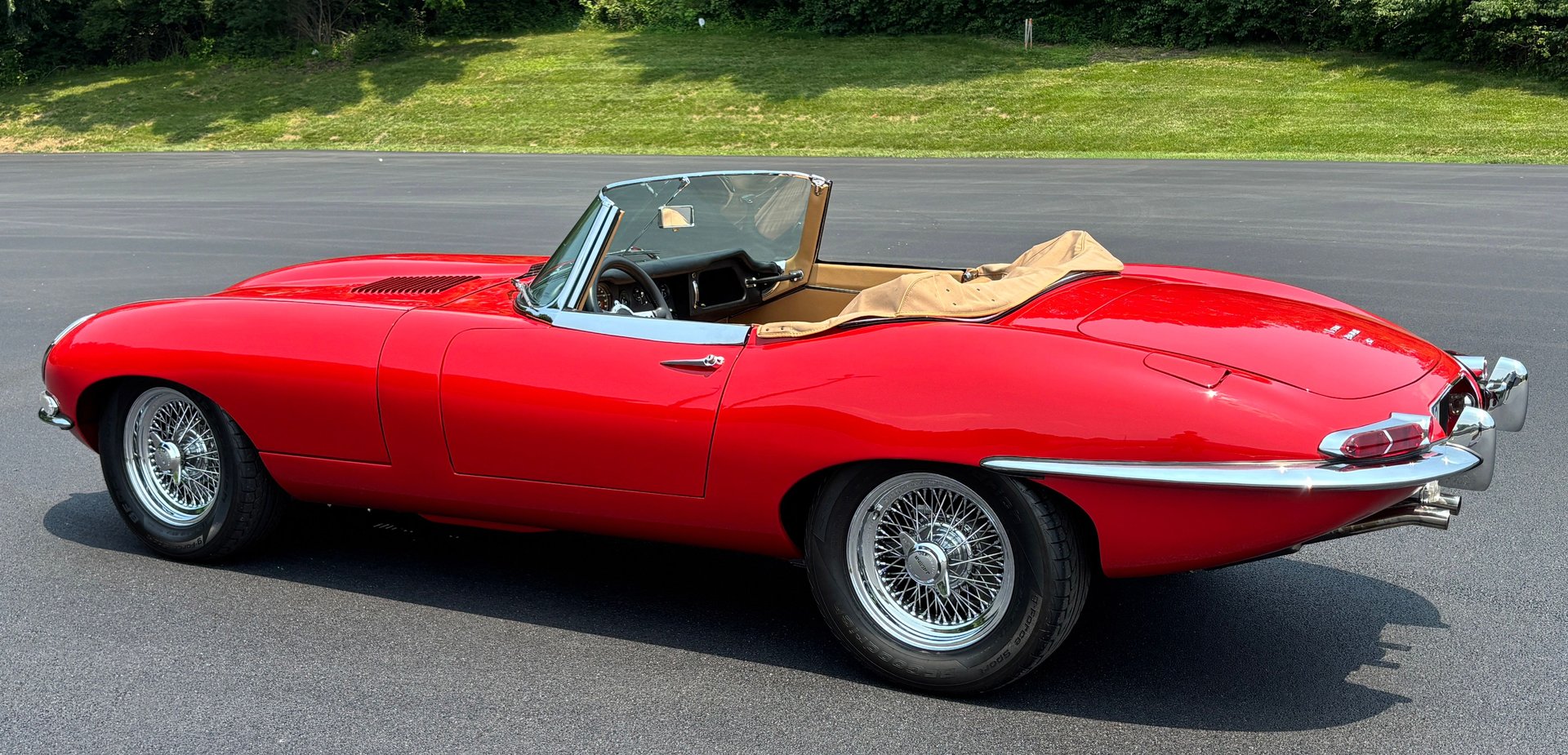
A Series 2 in profile teaches the wheelbase check. Short-wheelbase cars carry the door shut line close ahead of the rear wheel arch, while the 2+2 stretches the door itself and moves the arch rearward — learn that proportion and you will never mistake one body for the other in a photograph again. On the car in front of you, sight along the sill between the wheels: the sill is a structural box, and any sag, ripple or fresh underseal blister along this line outranks every other cosmetic observation you will make that day.
Problem areas
Rust: the monocoque map
Every E-Type conversation starts here, because rust is the only problem on this car that routinely costs more than the car. The monocoque rots from the inside out: box sections fill with condensation and road water, protective paint was thin when new, and the outer skin can look presentable while the structure inside has turned to scale. Work through the map in a fixed order and never let a seller hurry you past a station on it.
The sills come first. Each sill is a structural box made of an outer panel, an inner panel and closing panels, and it carries the jacking point and much of the shell's bending stiffness. Rust starts at the bottom seams and around the jacking point, and spreads inside the box where you cannot see it. Test by pressing hard along the sill bottom with your thumb, tapping with a knuckle for the change from a solid ring to a dead crunch, and looking inside the rear wheel arch at the sill closing panel. A magnet that will not hold along the lower sill means filler, and filler in a sill means the question is not whether it needs welding but how much. Proper sill replacement, inner and outer with the shell supported, runs $2,000 to $4,000 a side at a body specialist, and it frequently uncovers floor and bulkhead work that doubles the bill.
Floors and bulkheads come next. The footwell floors rust where water sits under carpets and where the exhaust heat and road spray work from below; the front bulkhead rusts around the battery tray, where spilled acid strips paint, and at the seams where the subframes bolt on — corrosion at the subframe mounting points is a structural failure, not a cosmetic one. Inside the car, lift the carpets and the boot boards. The boot floor and spare-wheel well rust from trapped water and a perished rear hatch or bootlid seal, and the fuel tank sits in that well, so perforation here is also a fuel-smell diagnosis. Rear wheel arches rust at the lip and at the inner arch where it meets the sill and the radius-arm mounting area. The radius arms locate the rear suspension and bolt to reinforced cups on the shell; a cup that flexes or a mounting surrounded by blistered paint means the shell is failing at a point that takes suspension loads, and that repair is jig work, not patch work.
Doors, bonnet and the front subframes complete the map. Door skins rust along the bottom edge and the frames inside rust invisibly until the skin blisters; a door that has dropped is usually worn hinges, but a door whose bottom edge is swollen is a re-skin or a replacement. The bonnet centre section and wings rust around the headlamp apertures, along the seams where panels are joined, and at the lower valance; a replacement bonnet assembly is one of the most expensive panels in the classic-car world, so filler in a bonnet is a serious negotiation point. The tubular front subframes rust from inside the tubes and crack at the brazed joints, especially the picture frame around the radiator and the engine frames at their mounting feet. Remember the metallurgy: these tubes are brazed, not welded, and a subframe with cracked joints or internal rust should be replaced as an assembly, typically $2,500 to $5,000 in parts for the frame set plus a major strip-down in labour. Never accept a welded repair to a Reynolds 531 frame as equivalent to replacement.
The myth to correct is that a dry-state car cannot be rotten. Cars from dry states rust less on exposed panels but still rust inside sills, boot wells and subframe tubes wherever condensation and old leaks have worked undisturbed, and a car restored twenty years ago in any state can be rusting again under its shiny paint. Provenance changes the odds. It never replaces the magnet, the torch and the lift.
Cooling, and the heat the car makes for itself
The E-Type's cooling system was adequate in 1961 British traffic and has no reserve for a modern American summer queue. Series 1 cars use a single electric fan and a modest radiator core; Series 2 cars improve matters with twin fans; the V12 makes more heat in a fuller engine bay. Overheating complaints divide into three causes, and the test sequence matters because owners routinely replace the wrong one.
First, airflow and coolant flow. Radiator cores silt up internally and lose their fin bond externally; a radiator that looks clean from the front can flow half what it should. Header tanks crack and weep, hoses collapse internally, thermostats stick, and the water pump impeller erodes. A recored or modern high-efficiency radiator, at $800 to $1,800 fitted depending on series, transforms a marginal car, and is the single most common cure. Second, the fans and their switching: a Series 1 fan that cuts in late because its Otter switch has drifted, or a Series 2 with one dead fan motor, gives you a car that is fine at 50 mph and helpless at a standstill. Test by idling the car fully warm for fifteen minutes and watching both the gauge and the fans. Third, genuine engine trouble: retarded ignition, weak mixtures from worn carburettors, and head-gasket failure all present as heat. A car that overheats at sustained highway load with a known-good radiator and fans is telling you about timing, mixture or gasket, in that order of likelihood.
Heat does collateral damage. It cooks the V12 ignition amplifier, hardens every rubber hose and seal in the engine bay, warps Stromberg carburettor components over time, and makes the fixed-head coupé cabin genuinely unpleasant when the transmission tunnel insulation and seals are tired. When you assess a car that runs hot, price the cause, not just the radiator.
Rear suspension, inboard brakes and the handbrake
The rear cage concentrates several of the car's most-misunderstood jobs. The inboard rear discs are efficient and protected, but the calipers live beside the differential where road dirt and heat soak them, and the separate small handbrake calipers and pads that grip the same discs are the weakest part of the whole design. A handbrake that barely holds on a slope is normal enough on an E-Type that sellers joke about it; a handbrake that does not hold at all usually means worn handbrake pads, a seized linkage or stretched cable, and access is poor enough that owners defer it for years. Rear caliper work, handbrake renewal and differential seal replacement are all rational with the cage dropped — a half-day of labour by the book that becomes a while-it-is-out programme of mounts, universal joints, radius-arm bushes and brake hoses, realistically $1,500 to $3,500 for the full cage-out refresh with parts. Ask any seller of a higher-mileage car when the cage was last out. The answer dates half the rear-end maintenance on the car.
The cage itself is located by rubber V-mounts to the shell and the radius arms are bushed at both ends. Perished mounts let the whole assembly shift under load, which shows as vague rear steering on lift-off and a clunk on taking up drive. Worn radius-arm front bushes tear under torque. Universal joints in the driveshafts wear and click. None of these parts is expensive; all of them are labour to reach. A car that drives straight, brakes straight and takes up drive silently has had this work done or does not need it yet — either way it is worth money over a car that wanders, because you cannot tell which of the six possible causes is yours until the cage is on the bench.
Oil leaks from the differential pinion seal and output seals are common and mist oil over the inboard discs if neglected, which then contaminates the pads and ruins rear braking balance. On the test drive, brake firmly from 50 mph on a straight, empty road: a rear-end step-out or a pull that changes between applications points here or to a seized caliper piston, and both are cage-out conversations.
Electrics, charging and the Lucas detail
E-Type electrics fail by connection and by earth far more often than by component. The fuse boxes use glass fuses whose holders lose tension; bullet connectors corrode inside their sleeves; earth straps between engine, subframe and shell go high-resistance and produce faults that migrate — lights that dim with the indicators, gauges that read with the headlights on, a starter that turns slowly only when hot. A methodical cleaning and remaking of earths and connectors cures most of it for the cost of an afternoon, which is why an E-Type with several small electrical faults is often a better buy than it looks, provided the wiring loom itself is original and unbutchered. A loom full of scotch-lock connectors, household cable and mystery relays is the opposite: allow $1,500 to $3,000 for a correct new loom and fitting if the car deserves one.
Charging splits by era. Dynamo cars need a healthy control box and brushes; alternator cars use the Lucas 11AC with its separate regulator arrangement on early 4.2s, and a failed alternator diode pack gives you a charge light that glows at idle and a battery that is flat after a night drive. The starter motor is durable; slow cranking is usually cables, earths or a tired battery in a hot boot-side compartment. On the V12, treat the OPUS ignition amplifier described in the engine section as an electrical component with a known heat-related failure pattern, not as a mystery. Electric cooling-fan motors, window mechanisms on 2+2s, and the heated rear window on coupés all fail individually and are all available; budget by the item, $150 to $400 each fitted, rather than fearing the system.
Trim, glass, chrome and the interior
Interior and brightwork decide what a finished E-Type costs, because a full retrim is skilled, slow work. Original interiors are leather-faced seats with vinyl elsewhere, wool-blend carpets and, on early cars, an aluminium-finished dash and console that later cars replace with vinyl and leather trim. Check seat foams and diaphragms by sitting, not looking: a seat that you sink through needs foams and webbing regardless of how good the leather photographs. A complete professional retrim with a quality kit runs $6,000 to $12,000 fitted; fitting a kit yourself is possible but the seat covers and headlining expose inexperience quickly. Headlinings in coupés sag and stain from hatch-seal leaks. Wood-rim steering wheels crack at the rim joints. Chrome on bumpers and window frames pits, and re-plating a full set of E-Type brightwork typically costs $2,500 to $5,000, so bright original chrome is a genuine asset. Wire wheels need their own check: loose or broken spokes, worn hub splines that let the wheel rock on the hub, and rust at the rim. A set of new wire wheels runs $2,000 to $3,500, and worn splines on the hubs themselves mean hub renewal as well.
On roadsters, the hood and its frame decide open-car usability. A hood that is hard to raise, sits unevenly, or has a cloudy rear window is a $1,500 to $3,000 renewal fitted, and the frame irons rust at their pivots. Check the tonneau and hood envelope are present, and on every open car check the windscreen header rail and A-posts for the rust that water entry starts there.
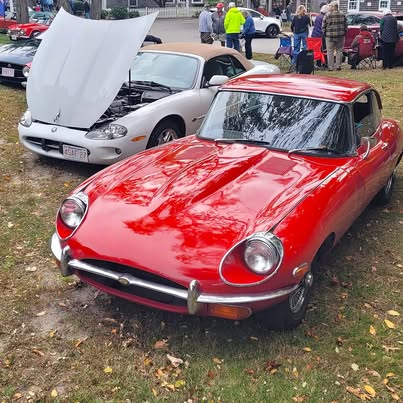
Red shows filler honestly if you look the right way. Sight along the flank from front and rear at bumper height and watch the reflection of any straight line — a fence, a kerb, the edge of a building — as it crosses the door and rear wing. A reflection that kinks at the door shut or swims over the rear arch is telling you about panel work underneath. Then check the door bottoms and the trailing edge of the bonnet against the same light, and compare the two sides: the E-Type shell is symmetrical in its shut lines, and asymmetry is information.
How to inspect one
Inspect in this order and do not let the seller reorder it for you. Structure first, identity second, mechanics third, cosmetics last. Bring a magnet wrapped in cloth, a torch, a tyre-pressure gauge, overalls for lying down, and a friend to work the pedals and steering while you watch. A lift transforms this inspection; if the seller will not allow one, that refusal is itself a finding.
- Start with identity, on paper and on metal. Read the commission plate on the bulkhead and compare chassis, engine, gearbox and body numbers against the paperwork and, if the seller has one, the Heritage Trust certificate. The chassis number is also stamped into the front subframe picture frame; a stamped number that does not match the plate means a replaced subframe at best and an identity problem at worst. Engine numbers are stamped on the block above the oil filter and on the cylinder head. Walk away from mismatches the seller cannot document.
- Do the sill test from the rust section before you open anything else. Thumb pressure and knuckle taps along both sill bottoms, a torch into the rear arches at the closing panels, and the magnet along every lower edge. Then ask to jack the car at one front jacking point and watch the door gaps as it lifts: a shell whose gaps close visibly as it rises is flexing because its sills are weak, and no other virtue on the car compensates.
- Work the rest of the rust map in order. Carpets up for floors and inner sills, boot boards up for the spare-wheel well and tank surround, torch on the battery tray and bulkhead seams, fingers along door bottoms and bonnet seams, and a careful look at every subframe tube and brazed joint you can reach. Surface rust on a seam is a negotiation; perforation at a mounting point is a verdict.
- Cold-start the engine yourself, from the driver's seat, after confirming the car is genuinely cold by touching the top hose. Watch oil pressure rise, listen for timing-chain rattle that lasts beyond the first seconds, and look at the exhaust: blue smoke on start that clears suggests valve-guide wear, continuous blue smoke under load suggests rings, and white vapour that persists after warm-up with a sweet smell suggests coolant. Note how many cranks a Stromberg car needs and whether the choke behaves.
- Read the gauges through a full warm-up at idle. Oil pressure should settle near 40 psi at 3,000 rpm hot once driving, coolant temperature should stabilise, and the fans must cut in without the gauge climbing past them. Fifteen minutes idling tells you more about an E-Type's cooling than any seller description; a car the seller keeps moving to avoid idling is answering the question.
- Drive at least twenty miles, mixed roads, and test the gearbox in every gear including reverse. On a Moss box, expect a slow change and no synchromesh into first; judge it on jumping out and on warm second-gear behaviour. On the all-synchromesh box, demand clean engagement everywhere. On an automatic, check fluid colour before and change quality after: firm, prompt, no flare, with a working kickdown.
- Brake three times: gently from 30 mph for balance, firmly from 50 mph for pull and rear behaviour, and once to a stop to test the servo's consistency. A pull, a step from the rear or a pedal that changes height between stops points to the caliper and contamination issues in the problem section. Then test the handbrake on a real slope, not the seller's flat drive.
- Test the rear end as its own system. Take up drive sharply in first and listen for the clunk that separates worn joints and mounts from differential wear. Corner steadily and lift off: rear steering on lift-off means cage mounts or radius-arm bushes. Feel for spline wear by rocking a rear wire wheel against its hub with the knock-off tight; movement is hub and wheel spline wear, not bearing play, until you prove otherwise.
- Run every electrical item in a fixed sequence: lights, indicators, fans, wipers, washers, horn, gauges, interior lamps, window winders or motors, and the heated rear window on a coupé. Note faults individually — several small faults with an original loom are usually connections and earths, while several small faults with a butchered loom are a rewire. Check the charge light behaviour at idle and at speed.
- Inspect the hood on a roadster or the hatch on a coupé. Raise and lower the hood fully, check frame pivots and header fit, and look for water staining in the trim behind the seats. On a coupé, open the side-hinged rear door, check its hinges and seal, and look at the headlining for the stains that record hatch leaks. On a 2+2, sit in the back yourself and fold the seat; you are buying the room claim, so verify it.
- Finish underneath if a lift is available, and this is where the earlier findings get priced. Subframe tubes and joints, sill bottoms from below, floor edges, radius-arm cups, cage mounts, differential leaks onto the rear discs, exhaust manifold joints, and the state of every rubber hose and bush. Photograph everything; underneath photographs are what specialists quote from.
- Close with the history file, read properly. Restoration invoices that name the sill, floor and subframe work matter more than a thick file of oil receipts. A photographic record of a shell restoration is the strongest document an E-Type can carry after its Heritage certificate. Gaps in the file are not fatal, but price the car as if the undocumented work was never done, because for resale purposes it was not.
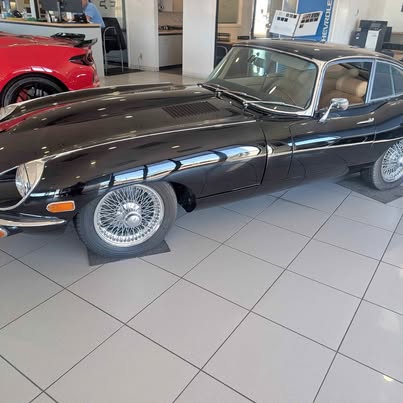
Black paint hides panel waves and shows dust, swirls and filler edges, so inspect a black car twice: once in flat light for shut lines and gaps, and once at an angle to a bright light source for reflections along the bonnet and doors. On a Series 2, use this view to compare the open headlamp pods, the heavier bumpers and the tail-lamp position below the rear bumper against the Series 1 photographs in older adverts — sellers mix the vocabulary, and the car in front of you is the only authority.
Values
The build of this page appends the current market figures beneath this guide — what is listed now and what recorded sales show — and those figures are the ones to negotiate from. This section teaches you how to read them, because with the E-Type the spread inside a single model line is wider than the spread between model lines, and a median figure for a series tells you almost nothing about the car in front of you.
Condition drives everything, and it drives it through the structure. The gap between a project car with a rotten shell and a sound, driving example of the same series and body is not a percentage adjustment; it is a different market. A shell restoration consumes so much skilled labour that a cheap rotten car routinely ends up costing more, finished, than the sound car that looked expensive — the market knows this, which is why genuinely solid project cars with complete components hold a floor value while incomplete rotten cars are the hardest E-Types to sell at any figure. When you compare a car against the recorded sales, compare it against sales of the same structural honesty first and the same shine second.
Series and body set the second layer. Covered-headlamp Series 1 cars carry the strongest demand, with early 3.8 cars at the top of it; roadsters draw more buyers than coupés in the six-cylinder years, and the 2+2 trades at a discount to both despite costing much the same to restore, which is precisely why a good 2+2 can be the rational purchase. Series 2 cars sit below equivalent Series 1 cars on specification and looks rather than on merit, and that discount is the informed buyer's opportunity. In the V12 range the pattern inverts in one respect: manual Series 3 cars are scarce and sought after, while automatics are plentiful, so gearbox matters more to a V12's value than to a six's.
Originality is the third layer, and it is specific. Matching engine and chassis numbers, confirmed by a Heritage Trust certificate, support the top of any car's range. Original left-hand drive matters in the American market; a car converted from right-hand drive is worth less than a factory left-hand-drive car in otherwise identical condition, however well the conversion was done. Original colour, or a change to another period-correct colour executed to a high standard, holds value better than a fashionable modern colour. Modifications divide cleanly: reversible, documented upgrades to cooling, ignition and braking are neutral to mildly positive for a driver-grade car, while a triple-SU conversion on a Stromberg car pleases drivers and should be sold with the original parts included; cut bodywork, non-period engines and deleted original equipment subtract everywhere.
Finally, read asking figures as opening positions. E-Types are emotional purchases sold by dealers, estates and long-term owners, and the gap between asking and achieved prices is widest on over-described cars — fresh paint over an undocumented shell, a rare-colour claim the certificate contradicts, a Series 1.5 wearing Series 1 money. The cars that achieve close to their asking figure share a pattern: documented structure, honest specification, cold-start video, underneath photographs, and a history file that answers questions before they are asked.
Parts and ownership
Ownership is well supported, and that support is a large part of why this model is a rational classic rather than a brave one. Jaguar's own heritage operation supplies the Heritage Trust production-record certificate that anchors identity, and the specialist trade around the E-Type is mature on both sides of the Atlantic. In the United States, suppliers such as SNG Barratt's American operation, Moss Motors, Welsh Enterprises and XK's Unlimited stock the mechanical and trim ranges; body panels and complete shell components come from Martin Robey in England, the firm that took over the original tooling story for E-Type pressings; and service specialists with decades on this one model exist in most metropolitan areas. Before you buy, price the five jobs your inspection flagged from two suppliers' catalogues — availability you have verified beats availability you have assumed.
Know the parts landscape by system. Mechanical parts for the XK six are excellent: gaskets, chains, pistons, bearings, water pumps and carburettor rebuild kits are all current production or good reproduction, and a full SU rebuild with spindles, jets and floats typically runs $900 to $1,600 for a triple set through a carburettor specialist. V12 service parts are similarly available, with ignition and cooling components the fastest-moving lines. Brake and suspension consumables are ordinary money. The thin areas are Moss gearbox internals, some early 3.8 detail parts, and high-quality chrome and trim, where reproduction quality varies enough that original pieces in restorable condition are worth keeping and re-plating. Interior trim kits from the established makers are good; the expensive part is fitting them well.
Running rhythm matters more than running cost. The XK six wants valve-clearance checks, timing-chain attention and coolant changes on schedule, and it rewards use: cars driven regularly seal better, charge better and corrode slower in their exhausts and brakes than cars stored for years between outings. Budget an annual service at a specialist at $600 to $1,200 for a six-cylinder car in regular use, more for a V12, and keep a separate reserve for the deferred job every E-Type eventually presents — the cage-out rear refresh, the radiator, the subframe set — rather than letting it arrive as a surprise. Insure on an agreed-value classic policy, and revisit the value whenever the market block under this guide moves, because under-insurance is the quietest way to lose money on this car.
Club and knowledge support is as good as it gets for a British classic. The Jaguar Clubs of North America, the Jaguar Drivers Club and the E-Type register and forum communities carry searchable archives that answer most faults from other owners' experience, and JCNA concours standards double as an originality reference. Use them before you buy, not after: posting the chassis number and photographs of a candidate car will often surface its history or a previous sale, and that free diligence has saved more buyers than any inspection gadget.
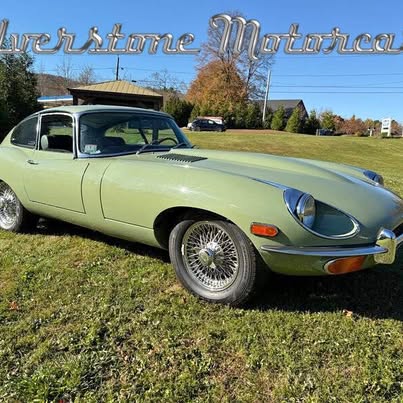
On a brightly coloured car, open everything before you admire it. Look at the door shuts, the inside of the bonnet edges, the boot aperture and the engine frames for the car's earlier colour: a colour change done with the shell stripped leaves no overspray lines and no old colour in the seams, while a quick respray announces itself in exactly these hidden edges. Neither finding ends a purchase, but they are different cars at different money, and this is the moment to establish which one you are negotiating for.
Which one to buy
- The purist: a Series 1 3.8, roadster or coupé, with matching numbers and a documented shell. You accept the Moss gearbox and the least forgiving manners in the range in exchange for the original car in its rawest form.
- The all-rounder: a Series 1 4.2. The all-synchromesh gearbox, the torque, the better seats and brakes and the covered-headlamp shape in one car — this is the six-cylinder E-Type most owners would choose again.
- The value buy: a Series 2 fixed-head coupé. The last short-wheelbase coupé, better cooled and easier to live with than any Series 1, discounted for its federalised face rather than for any failure as a car.
- The family tourer: a 2+2, six-cylinder or V12, bought with your eyes open about the rear seat. Room, an automatic if you want one, and the lowest entry point into a sound shell — provided the shell really is sound, because the restoration maths punish this body hardest.
- The grand tourer: a Series 3 V12, manual if you can find one, automatic if your driving is long and open. Buy the best-maintained example, not the cheapest, because deferred V12 maintenance is the most expensive sentence in this guide.
- The project buyer: a complete, honestly described car with a repairable shell and its identity paperwork in order. Completeness is the asset; a dismantled car missing its trim and brightwork is not a project but a parts bill with a chassis number.
The overriding rule: buy the shell, then the numbers, then the mechanics, then the paint — and walk away from any car, however beautiful, whose sills, floors and subframe mountings you have not personally verified.
See the 15 E-Type cars currently listed.
For sale now
Expand
 Current bid $28,028
Expand
Expand
Expand
Expand
Expand
 Current bid $30,000
Expand
 $99,995
Expand
What they sell for: E-Type sale prices.