
Jaguar S-Type buyer's guide
Jaguar S-Type (1999–2008) — S-Type: what's listed, and what they sell for.
Years: 1999–2008 · Models: S-Type
Overview and history
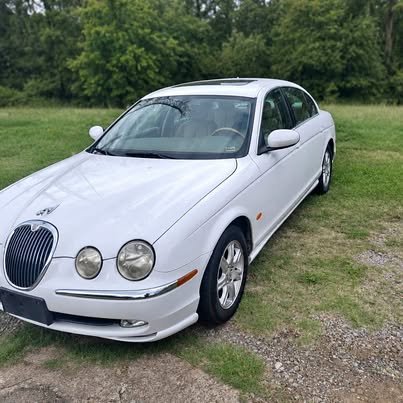
The Jaguar S-Type in these listings is the modern car, built from 1999 to 2008 under Ford ownership, not the original S-Type of the 1960s. The distinction matters before anything else, because the two cars share a name, a grille shape and very little else. The original of 1963 to 1968 was a Mark 2 development with independent rear suspension from the Mark X. The modern car, factory code X200, is a steel monocoque saloon, front engine, rear-wheel drive, double wishbones at both ends, with Ford-era engines and electronics. No panel or mechanical part interchanges between them. If a listing or a seller blurs the two, re-identify the car from its year, shape and VIN plate. Every car in the Classic Listings pool here is a modern car, and everything that follows is about the modern car only.
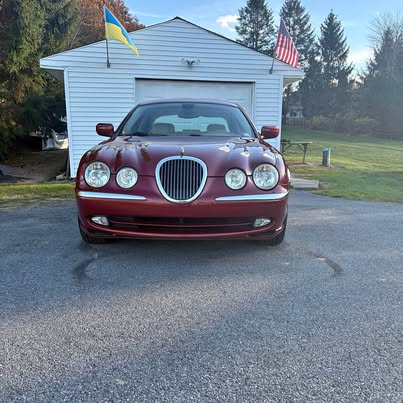
Jaguar showed the new S-Type in October 1998 and put it on sale for the 1999 model year. Ford, which had owned Jaguar since 1989, needed volume below the XJ, in the class the BMW 5 Series and Mercedes-Benz E-Class owned, in a car that looked unmistakably like a Jaguar. Styling director Geoff Lawson answered with deliberate nostalgia: oval grille, four separate headlamps, curved rear deck, wood and leather cabin, all quoting the Mark 2 and the original S-Type on purpose. Underneath, the car is thoroughly Ford-era. The platform is the DEW98 architecture, shared with the Lincoln LS and, shortened, the retro Ford Thunderbird, which is why some parts carry Ford numbers and why a Lincoln specialist sometimes recognises more under an early S-Type than a traditional Jaguar specialist does. The launch range was a 3.0-litre V6 and a 4.0-litre V8, the car sold on ride, steering feel and cabin atmosphere, and total production across all versions is generally quoted at about 291,000 cars, built at Castle Bromwich. You can still choose between cars today instead of chasing the one example that surfaces.
The important change comes for the 2003 model year in the United States, prepared during 2002 as the X202 update. This is not a light facelift. The 4.0 V8 gives way to a 4.2, naturally aspirated and supercharged R. The Ford five-speed automatic gives way to the ZF six-speed. The interior is redesigned, the suspension and steering revised, an electronic parking brake arrives, and the electrical architecture is reworked. A lighter X204 update for 2005 brings an aluminium bonnet and cleaner styling, and in Europe a 2.7-litre twin-turbo diesel joins the range. A final X206 tidy-up carries the car to 2008, when the XF replaces it.
That history gives you the buying map. Early cars, 1999 to 2002, are cheapest to buy and most fragile in specific, documented ways: early V8 tensioners, Nikasil bores on the very first V8s, the Ford five-speed automatic, and a cooling system full of ageing plastic. The 2003-onwards cars fix most of the engineering while keeping the same looks and the same rust traps. The R is a genuinely fast car bought today mostly by people who already know what it is. None of these cars is expensive beside its German rivals, and all of them can be expensive to sort if you buy the wrong one. The difference is almost never mileage. It is the sills, the automatic gearbox, the V6 cooling system, the early V8 chain hardware, and whether the last owner maintained the car as a Jaguar or ran it as a cheap old luxury saloon.
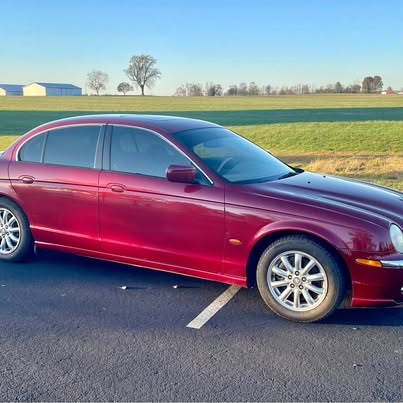
The models
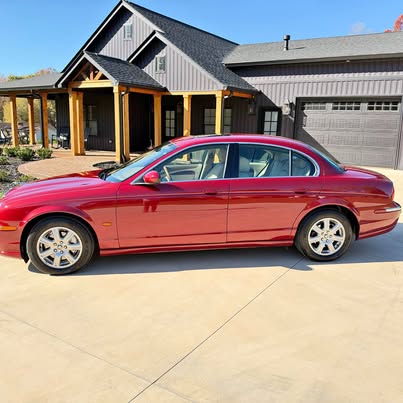
Every modern S-Type is a four-door, five-seat, rear-wheel-drive saloon. There is no estate, coupe or convertible in this series, whatever a loose listing suggests. The boot badge tells you the engine size and, on the fast car, the letter R. Trim badges such as SE, Sport and Executive describe equipment, not engineering, and vary by market and year, so never price a car off a trim badge. Price it off the engine, the year, the gearbox and the shell.
| Model | Years | Engine | Output | Built | Character |
|---|---|---|---|---|---|
| S-Type 2.5 V6 | 2002–2008 | 2.5 V6 (AJ-V6) | about 200 hp | not published separately | The economy petrol; Europe-led, rare in the US |
| S-Type 3.0 V6 | 1999–2008 | 3.0 V6 (AJ-V6) | about 240 hp | not published separately | The volume car; the default sensible buy |
| S-Type 4.0 V8 | 1999–2002 | 4.0 V8 (AJ-V8) | about 276 hp | not published separately | The early flagship; tensioner and bore checks decide it |
| S-Type 4.2 V8 | 2002–2008 | 4.2 V8 (AJ-V8) | about 300 hp | not published separately | The sorted V8; smooth, quick and better engineered |
| S-Type R | 2002–2008 | 4.2 V8 supercharged (AJ-V8) | about 400 hp | not published separately | The super-saloon on a budget; verify it is a real R |
| S-Type 2.7 Diesel | 2004–2008 | 2.7 V6 twin-turbo diesel | about 207 hp | not published separately | Europe only; torque, economy and diesel-specific risks |
Jaguar published a total of about 291,000 modern S-Types but no clean split of that total by engine, so the built column says so honestly rather than inventing figures. Outputs are period figures and vary slightly by market and rating standard, so treat the last few horsepower as noise and the engine itself as the fact that matters.
The V6 cars. The 3.0 V6 is the car most buyers end up with: quick enough for any road use, free of the early V8 timing-chain story, and the only S-Type you can realistically find with a manual gearbox in the United States. The 2.5, introduced with the 2002 update, is the same family in smaller form, working harder in a heavy shell, and rare enough in North America that you buy one only because that specific car is good. In the Classic Listings pool the display label flattens almost everything to a single V8 wording, a pool defect you must work around: at least one pooled car is recorded in its photo record as a V6 and several carry no engine in the title at all. Read the boot badge and count the engine in the bay; never trust the headline to tell you V6 or V8.
The V8 cars. The 4.0 V8 of 1999 to 2002 gives the S-Type the effortless pace the styling promises, and a good one is a lovely car. It also demands the most forensic buying, because the earliest engines carry two liabilities: plastic secondary timing-chain tensioners and, on cars built before the change during 2000, Nikasil cylinder bores. Neither automatically condemns a car today: one with metal tensioners fitted, even compression and clean oil has answered both questions. One with no paperwork on either has not. The 4.2 that replaces it for 2003 is the better engineering bet in every respect. If you want a V8 with no strong preference for an early car, buy the 4.2.
The S-Type R. Launched with the 2002 update, the R adds an Eaton supercharger and about 100 horsepower to the 4.2, plus larger brakes, firmer adaptive suspension on most cars, a mesh grille and R badging. It is a 400-horsepower saloon that still rides like a Jaguar. It is also the variant most often misdescribed: sellers dress ordinary 4.2s in R wheels and badges, and the only reliable tells are the supercharger in the engine valley, the R brakes and suspension hardware, and the VIN record. Check for the blower first. A car without it is not an R and is not worth R money.
The diesel. The 2.7 twin-turbo diesel, sold from 2004 in Europe and other non-US markets only, is a joint Ford and PSA engine and by far the most economical S-Type. If you meet one in a US listing, establish how it got there before discussing price, because US parts and diagnostic familiarity are thin. Its checks are turbos, injectors, fuel system and particulate filter behaviour, plus the same ZF and sill questions as every other car.
Trim and equipment. SE cars bring the leather, wood and comfort equipment most buyers want. Sport cars trade some wood for a darker, firmer presentation. Other market labels sit in between. None of it changes the inspection. Verify options by testing, not by reading the advert: air conditioning, heated seats, the touchscreen on later cars, parking sensors, and on R and late V8 cars the adaptive cruise, whose front-bumper radar is expensive and easily damaged. Assume an untested option does not work until you have watched it work.
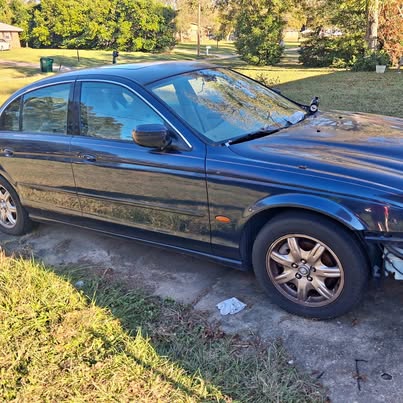
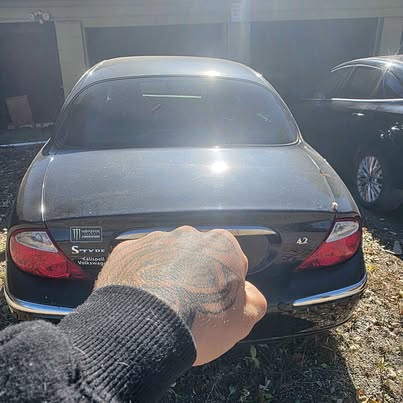
Engines and gearboxes
The V6 petrol engines: AJ-V6 2.5 and 3.0
The petrol V6 is the AJ-V6, a 60-degree V6 developed from the Ford Duratec architecture and finished by Jaguar with its own heads, variable inlet cam timing and Jaguar management. The 3.0 makes about 240 horsepower in US tune and runs from launch to the end; the 2.5 joins in 2002 at about 200 horsepower. Both are chain-driven with coil-on-plug ignition, and both share one story: a durable bottom end wrapped in a cooling and ignition system that punish neglect.
A healthy V6 starts cleanly, idles without a shake, pulls without a flat spot and holds a steady temperature once warm. Oil consumption should be modest and the cam covers dry; a left weep becomes oil in the plug wells, where it attacks the coils. Listen at cold start for a brief chain rattle that fades as pressure builds. A second or so on a car that has sat is common. A rattle that continues, or returns at hot idle, is chain, guide or tensioner wear and an engine-open job.
The myth to correct first is that a misfiring V6 needs an engine. It almost never does. The usual causes are coils and plugs, and the trap is that the rear bank sits partly under the inlet manifold, so swapping coils bank to bank is no cheap shortcut. Owners guess, replace the front coils, and sell the car still misfiring. Price the honest fix: plugs and coils with the manifold removed, 600 to 1,200 dollars with labour. Ask when the plugs were last changed, because plugs left beyond their interval seize in the heads. A misfire under load points to coils. A misfire at idle with a lean code points to air leaks at the manifold gaskets and breather hoses. Fuel trims distinguish them: high positive trims at idle that fall as revs rise mean unmetered air, not ignition.
The cooling system is the V6 section that decides engines. The thermostat housing, outlet pipes and expansion tank are plastic, live in heat, and age by calendar as much as by mileage. A housing that weeps today splits next summer. The water pump is durable by comparison but is often blamed for leaks from the housing above it, so insist on a pressure test, not a parts guess. Budget 500 to 1,100 dollars for a housing and pipes done properly, and pay a premium for a documented cooling refresh. On a viewing, run the car fully hot, watch the gauge, look for crust at every plastic joint, and confirm the heater blows hot, because an airlocked system shows in the heater before the gauge.
Dull performance on a V6 usually traces to maintenance, not design: sticking variable-timing behaviour from dirty oil, tired lambda sensors and a dirty throttle body. Fresh oil, new plugs and a cleaned throttle body restore most of it. The bottom end is rarely the problem on a car that has had oil changes. Walk away from low oil pressure at hot idle, metallic glitter in the oil, or a deep knock under load.
The V8 petrol engines: AJ-V8 4.0 and 4.2, including the supercharged R
The AJ-V8 is Jaguar's own all-aluminium, quad-cam V8, built at Bridgend in Wales. In the S-Type it appears as the 4.0-litre AJ27 from 1999 to 2002, about 276 horsepower, and as the 4.2-litre AJ33 and AJ34 from 2002 to the end, about 300 horsepower naturally aspirated and about 400 horsepower supercharged in the R. All are chain-driven with coil-on-plug ignition, and the supercharged engine adds an Eaton M112 Roots-type supercharger with twin air-to-water intercoolers.
Start with the two early-engine questions. The first is cylinder bores. The earliest AJ-V8s used Nikasil-plated bores, a coating high-sulphur fuel could attack, causing bore wear, oil consumption and lost compression. Jaguar changed to steel liners during 2000 and US fuel sulphur also fell, so a surviving early car that compresses evenly and uses little oil has answered the question by living this long. Do not reject one on the word Nikasil alone, or accept one on the seller's word. The tests are compression or leak-down, oil consumption history, and a cold start watched for continuing blue smoke.
The second question is timing-chain tensioners, and this one deserves no optimism. The early engines use plastic-bodied secondary tensioners, and the plastic cracks with age and heat cycles. The first symptom is a rattle at cold start lasting a few seconds. The last is a jumped chain and bent valves. The 4.2 engines have the later, durable design. On a 4.0, the only satisfactory evidence is an invoice showing metal-bodied tensioners fitted, ideally with chains and guides assessed at the same time. Price the job into any 4.0 without that invoice: 1,800 to 3,200 dollars at an independent, and more with chains and guides. Insist on a genuinely cold start. A seller who warms a 4.0 before you arrive is hiding the one noise you came to hear.
The 4.2 is the settled V8: instant starting, near-silent idle, clean surge. Its routine faults mirror the V6: coil packs, cam cover gaskets weeping onto the manifolds, plastic cooling joints, and a thermostat that shows first as a gauge climbing in traffic. The valley under the inlet manifold hides coolant hoses; a sweet smell with no visible leak often lives there, and a pressure test finds it. Coils and plugs run 500 to 1,000 dollars fitted. The real danger is a V8 run low on coolant: an aluminium engine overheats quickly, and warped heads turn the cheapest V8 into the most expensive car you own. Learn the three smokes: blue at cold start that clears is stem seals, blue under load is rings and bores, sweet white vapour that persists when hot is coolant.
The supercharged R adds its own layer. The supercharger is durable and its oil is often forgotten; ask whether it has ever been changed. The intercooler system has its own electric pump, and when it fails the management cuts power, so an R that feels merely brisk rather than violent is frequently an R with a dead pump, a 300 to 600 dollar fix sellers misdescribe as needing a tune. The valley coolant hoses under the supercharger live the hardest life on the car and replacing them means removing the supercharger, so a documented valley-hose job is worth money. Listen for coupler rattle at idle and check the belt and tensioner. An R also works its brakes and rear tyres far harder than a standard car, so budget from the condition you see.
The diesel: AJD-V6 2.7 twin-turbo
The diesel uses the 2.7-litre V6 twin-turbo developed jointly by Ford and PSA, the AJD-V6, about 207 horsepower with strong low-rev torque from two variable-geometry turbos, offered in Europe with a six-speed manual or the ZF automatic. You will rarely meet it in North America, so this section covers only what distinguishes it on a viewing. Both turbos should spool without a siren wail or blue smoke. Injector wear shows as a rough idle, sharp knock, hard hot starting and black smoke under load; instant cold starting with long hot cranking is injector leak-back until proved otherwise, and the test is a leak-off test. Short-trip cars with a particulate filter clog it and dilute the oil during repeated regenerations. Any bottom-end knock is a walk-away noise. Gearbox and sill checks match the petrol cars.
Gearboxes: Ford five-speed, ZF six-speed and the manuals
The model year tells you the gearbox. Early cars, 1999 to 2002, use the Ford 5R55N five-speed automatic behind both petrol engines. Updated cars from 2003 use the ZF 6HP26 six-speed automatic behind every engine. The manual, where it exists, is a five-speed Getrag 221 on the petrol V6 and a six-speed on the European diesel. In the United States the overwhelming majority are automatic, and the single manual car in the Classic Listings pool fits that pattern: manuals are the exception you verify, not the norm you assume.
The Ford 5R55N is the weaker box. When right it shifts smoothly, but it has a well-earned reputation for valve body and servo bore wear, showing as flared shifts, a shudder under light load, and delayed drive or reverse engagement. Heat is the accelerant. Fluid renewal helps only at the margins; a box that flares, bangs or slips needs a rebuild, 2,500 to 4,500 dollars fitted. Get it fully hot on the test drive, because behaving cold and misbehaving hot is the classic presentation. Test every shift, hold the car in drive on a hill, and select reverse after the run. A long pause is money off or a walk away.
The ZF 6HP26 is a much better gearbox with one famous fault and one famous myth. The myth is sealed for life: ZF recommends fluid and filter renewal roughly every 60,000 to 80,000 miles, and the cars that shift best at high mileage are the ones whose owners ignored the label. The filter is part of the plastic sump pan, so a proper service replaces pan, fluid and mechatronic sleeve together, 500 to 900 dollars with the correct fluid; the wrong fluid creates faults then misdiagnosed as mechanical failure. The famous fault is the lurch, a thump as the car stops, caused by adaptive software and wear interacting. A software update and fluid service cure many cars. Violent lurching, slipping or gear-ratio codes mean mechatronic or clutch-pack money, 1,800 to 3,500 dollars and up. Check the mechatronic sleeve for leaks, often misread as a rear seal. On the drive, a single repeatable stop-thump with clean shifts is the adaptation story; slipping or flaring across gears is mechanical wear.
The manual is a pleasure and the rarest choice. The Getrag five-speed suits the 3.0 V6, the change should be light and precise, and second-gear synchromesh is the first wear point, tested with a brisk downchange from third when cold. Clutch judder points to a worn clutch or an oil-contaminated plate; replacement with the flywheel inspected runs 1,200 to 2,000 dollars. A manual escapes automatic-rebuild risk but concentrates risk in the clutch hydraulics, and few US shops know the manual S-Type well. Buy it because you want it, and pay no rarity premium for a worn one.
Check the differential too: a whine that changes between drive and overrun is wear or low oil; a clunk on take-up is mounts or joints before it is the gearbox.
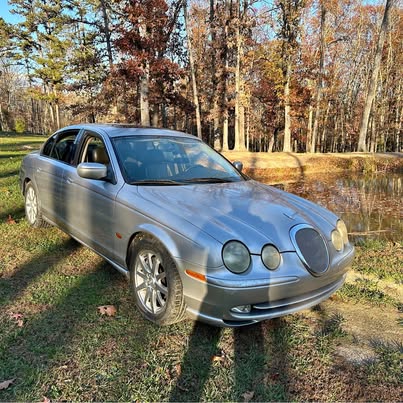
Problem areas
Everything here is a known S-Type pattern, ordered so the faults that end cars come first. Corrosion and the automatic gearbox decide whether a car is worth buying at all. Cooling, suspension and electrics decide the first-year cost. Interior and trim decide how good it feels. Work in that order, and do not let a clean cabin talk you out of what the sills have told you.
Rust and the shell: sills first, everything else second
The S-Type rusts in the worst place for a casual check: inside the sills, under plastic covers that hide the damage until it is structural. The sill is a load-bearing box section, it collects water and mud from the front wheels, its drains block, and it rots from the inside out. By the time bubbling shows outside, the inside is usually worse. This is the single most important check in this guide, on every model year. Late cars rust here too, and low mileage does not protect a salt-state car, so judge the metal, not the story.
Do the check properly. Look along both sill covers for cracks, distortion, loose fixings and fresh sealant at the joins, because a cover recently off and resealed has often been off for a reason. Press hard along the cover and look behind its rear end into the rear arch, where sill rot and arch rot meet. Prod the exposed metal at the jacking points and both ends of the sill. Sound metal rings and resists; rotten metal crunches and gives. A proper repair, cutting out the rot, welding in new metal and protecting the cavity, runs 800 to 1,800 dollars a side, and a car needing both sills plus arch work has consumed most of the gap between a cheap S-Type and a good one before you touch the mechanics. A seller who will not let you inspect the sills closely has given you the inspection result.
The rear arches follow the sills. The arch lip traps mud, and rust starts on the lip and in the seam where arch meets sill. Run a fingertip inside each rear lip for bubbling, then look inside with a torch for scale and holes. The bottom of the front wing behind the wheel is a regular scab point. Door bottoms rust when drains block: feel along every door's bottom edge and check the slots are clear. The boot floor and spare wheel well collect water from perished boot and lamp seals, so lift the spare wheel on every viewing; staining is a clean and protect job, perforation is welding. Subframes also corrode, the rear in particular on salt-state cars, and subframe corrosion is where a cheap car becomes a parts car. Spend your lift time on sills, subframes and floor seams, in that order.
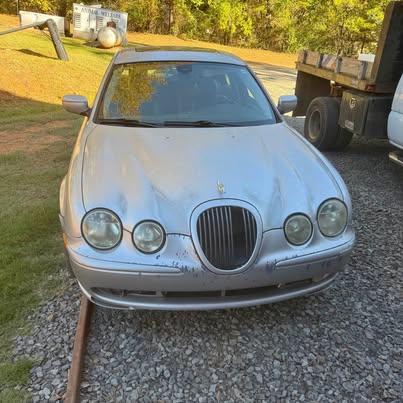
Read paint and underseal as carefully as metal. Factory protection ages evenly; a uniform coat of fresh black underseal over sills, arches and subframes in the week before a sale is a cover until proved otherwise. Fresh paint low on the car, overspray on sill covers and filler found by a magnet that stops dead over sills and arch lips all tell the same story. None of it kills a car priced as a repaired car with welding invoices. All of it kills a car priced as original and rust-free.
Suspension, steering and brakes
The S-Type rides on double wishbones at both ends, which gives the car its ride and steering when the joints are tight and makes it vague, knock-prone and tyre-hungry when they are not. Ball joints, wishbone bushes, anti-roll bar links and rear toe links wear first, by mileage and age together, so a low-mileage car on original bushes can drive worse than a higher-mileage car on renewed ones.
At the front, worn lower ball joints and wishbone bushes give a knock over bumps, a wander on the motorway and inner-edge tyre wear an alignment alone will not cure, because you cannot align a car whose joints move. Rock each front wheel and lever the joints while an assistant watches: any visible ball-joint play is a fail, not a note. Complete front arms run 400 to 900 dollars a side fitted, and both sides plus an alignment is the honest budget on a tired car. At the rear, the toe links are the signature wear item: worn joints let the geometry move under load, the car feels nervous in fast corners and the rear tyres wear unevenly. Toe links run 200 to 450 dollars a pair fitted and transform an unsettled car, so a nervous rear end is a negotiation point provided the subframe is sound. Dampers, including the adaptive CATS units on Sport and R cars, weep and lose damping with age, so bounce each corner, look for oil misting on the bodies and, on adaptive cars, confirm there is no suspension warning.
Steering should be light and silent lock to lock. A groan at parking speeds with low fluid points to a leak at the pump, rack or hoses; a rack leak is the expensive version, 800 to 1,500 dollars exchange fitted. A tight spot passing the straight-ahead points to the intermediate shaft joint, a cheaper fix owners misdescribe as a rack fault, so feel for it before you price a rack in.
Brakes are conventional discs all round and parts are affordable, which is why neglected brakes tell you so much about the maintenance. A stored car wears a rust band and a lip on every disc, calipers seize on their sliders, and early rear calipers seize and present as a dragging, hot rear wheel. Judge pedal and discs together: a long pedal is hydraulics and air, judder from speed is disc thickness variation, and a pull is a caliper or a tyre, with pressures checked first because that check is free. A full hydraulic refresh on a stored car runs 700 to 1,500 dollars. It belongs in the first-year budget, not in a rejection of a good shell.
Cooling, air conditioning and the heater
Cooling faults kill more S-Type engines than mechanical wear does, because both petrol engines are aluminium and neither forgives an overheat. The shared pattern is plastic tanks splitting at the seams, housings and pipes cracking, radiator end tanks weeping, and hoses perishing where the clips bite. The discipline is a cold pressure test, which finds the joint that only leaks under pressure, then a hot run with the heater on, which finds the airlock and the sticking thermostat. A seller's assurance that the car uses no coolant is worth nothing against crust at a joint, a low tank level or a sweet smell after a run. If the gauge climbs in traffic, stop negotiating about trim and start pricing the cooling system, because the next event is a head gasket.
Air conditioning fails in layers: compressor and clutch wear, condensers corrode where stones and salt hit them, and joints leak slowly enough that a re-gas appears to fix the car for a month. A system that blows cold with no service history may simply have been re-gassed for the sale. Ask when it was last serviced, look for dye at the joints, and run it for the whole test drive. Compressor replacement with a condenser and a proper recharge runs 900 to 1,800 dollars. Treat it as a priced system, not a yes-or-no advert claim.
The heater fault that catches buyers is the dual coolant control valve, the DCCV, which meters hot coolant to each side of the dual-zone cabin. When it fails you get heat on one side and cold on the other, full heat that will not moderate, or no heat at all, and it is routinely misdiagnosed as a control panel or matrix fault. Test both sides independently: set each side cold, then hot, and confirm the air follows. A one-sided fault is the DCCV until proved otherwise, a 350 to 700 dollar fix, and far better than a blocked matrix, which is dashboard-deep labour. No heat either side points back to coolant level, airlock and thermostat, in that order.
Electrics, electronics and the electronic parking brake
The S-Type carries a lot of electronics, and its faults follow the Ford-era Jaguar pattern: modules are mostly durable, and failures concentrate in batteries, earths, water ingress and actuators. Start with the battery. These cars are sensitive to low voltage, and a weak battery or poor earth produces a harvest of unrelated warnings, phantom gearbox faults and restricted-performance messages that vanish with a healthy battery and clean terminals. A car presented with a flat or borrowed battery cannot be assessed electrically at all, so price the uncertainty or view another car.
Water is the second cause. Blocked drains and perished seals let water into the boot and footwells, where modules and connectors live. Look for water and tide marks around the spare wheel and the boot-mounted battery, whose tray and terminals corrode in a wet boot. Damp front carpets point to scuttle and pollen-filter housing leaks. Find the leak before any module is replaced, or the replacement fails the same way.
The electronic parking brake on 2003-onwards cars fails expensively and strands cars. Motors seize, cables corrode and modules fault, presenting as a warning, a brake that will not release, or one that will not apply. A car that cannot release its brake cannot be test-driven, which settles the viewing. Test motor, cables and module in that order on a car with an intermittent warning; the work runs 500 to 1,200 dollars. A seller who routinely uses the handbook emergency release is telling you the system has been faulty for a while.
The rest of the electrical checklist is actuator-by-actuator testing. Door locks cycle weakly when actuators tire, and a door that locks but does not unlock is an actuator, not a mystery. Window regulators slow and crunch. Touchscreens fail by screen and backlight rather than all at once. Parking sensors that sound continuously usually have one failed sensor, found by listening for the clicking of the live ones. Xenon levelling and adaptive cruise faults are sensor and unit money, so test and price them individually. Never accept a bundle description like electrics need attention: every fault on this car has a name, a test and a price, and your job is to give each one all three.
Interior, trim and body fittings
The cabin is the S-Type's selling point and, on a cheap car, its most honest witness. Neglected leather cracks on the driver's bolster first, splits on the seat seams and shines on the wheel and selector. Sit in the driver's seat, not the passenger's: the driver's cushion collapses first, and once the foam has gone the seat needs foam and trim together, 400 to 900 dollars a seat for a local repair, and far more for a full retrim no ordinary S-Type justifies. Original and tired is fixable in stages. Original and torn is a retrim conversation.
Wood veneer cracks in the lacquer with sun and age; Sport cars use dark wood or aluminium finishes that scratch rather than crack. Mismatched veneer tone between dash and doors means a panel has been replaced. Headlinings sag from the rear as the foam backing fails, a trimmer job at 400 to 800 dollars, not a can of adhesive. Wet carpets belong in the water story above: find the leak first.
Outside, check panel gaps for accident history, mirror motors, and boot and bonnet struts, whose tolerated failure tells you about the rest of the car. Headlamp lenses cloud and polish back, so cloudy lamps are cosmetics; cracked lamps and damaged adaptive-cruise radar housings are parts money. Wheels corrode at the centre and rim, and R wheels are expensive and easy to kerb, so price refurbishment at 100 to 200 dollars a wheel. None of these items ends a purchase. Together, on a car that also needs sills and a gearbox service, they are how a cheap S-Type becomes an expensive one.
How to inspect one
Allow at least an hour, bring a torch, a magnet wrapped in cloth, a screwdriver for prodding with the seller's permission and a basic code reader if you have one. Insist on a cold engine. If the car passes you, pay for a lift inspection before money changes hands, and spend that lift time on the sills, subframes and floor seams. Work in this order, because the early steps can end the viewing.
- Start with the paperwork and the identity. Match the VIN on the title to the plate through the windscreen and the plate in the engine bay. Confirm the year from the VIN, not the listing, because the pool for this series mixes years and flattens engine labels. Confirm the engine in the bay: V6 or V8, and on a car sold as an R, look for the supercharger in the valley. No supercharger means no R. Read the service history for the four items that price these cars: tensioners on a 4.0 V8, gearbox fluid services, cooling-system work on any petrol car, and sill welding invoices.
- Do the sills before anything else. Work the full length of each sill cover with your eyes, fingertips and firm hand pressure, as set out in the rust section. Prod the metal at the jacking points and both ends of each sill, and check the rear arch lips from inside. Perforation or crunching ends the viewing for any car priced as a good car. An honest welding project is the only exception, and it still needs the lift check in step 5.
- Cold start, listening first. Start from cold and listen before you touch anything else. On a 4.0 V8, a front-of-engine rattle lasting more than a second or two is the tensioner question, unanswered. On a V6, a brief fading rattle is noted; a continuing one is priced as chain work. Watch the exhaust: continuing blue smoke is oil, sweet white vapour that persists when hot is coolant, black soot is rich running. A shake at idle starts the coil, plug and air-leak sequence, not an engine rebuild.
- Under the bonnet, hot and cold checks. Cool, check the coolant level and the oil level and condition. Oil that smells of fuel, sits oddly high or carries metallic glitter is a stop sign. Look for coolant crust at the thermostat housing, outlet pipes, tank seams and radiator ends, and for oil weeping from the cam covers. New plastic cooling parts are a good sign when the invoices match them. Then run the engine to full temperature and repeat the leak check hot, watching the gauge settle and stay settled.
- Pay for the lift and use it on structure. Inspect both sills from below, the floor seams, both subframes and their mountings, the rear arch inners and the boot floor. Read the underseal: aged and patchy is honest, fresh and uniform is a question that needs an answer. Check for steering leaks, gearbox leaks at the pan and the ZF mechatronic sleeve, and differential oil at the pinion seal. Subframe perforation is a walk-away on an ordinary car.
- Trunk, battery and water. Lift the boot carpet and spare wheel. Look for rust, water, tide marks and a damp smell, and inspect the boot-mounted battery and its terminals. Corroded terminals and water in the well explain half the electrical bundles sellers describe. Check the front footwell carpets for damp too. Trace any active ingress to its seal or drain before you price modules.
- Suspension and steering by hand. Rock each wheel and lever the front ball joints while an assistant watches. Any visible ball-joint play fails the car until it is priced as suspension work. Inspect the rear toe links, the dampers for oil misting, and the tyres for confirming wear: inner-edge front wear for front joints, uneven rear wear for toe links. Turn the steering lock to lock, feel for the intermediate-shaft tight spot, and listen for pump groan.
- Gearbox, cold and then fully hot. Drive at least twenty minutes including a faster road. On the Ford five-speed, test every shift light and firm, hold the car in drive on a slope and select reverse after the run, because delayed reverse and hot flaring hide when cold. On the ZF six-speed, judge the hot shifts, note any lurch on stopping, and distinguish the single repeatable stop-thump of the adaptation story from slipping or flaring across gears, which is mechanical. On a manual, test second-gear synchromesh cold and feel the clutch for judder.
- The full test drive. Fifteen to twenty minutes minimum, town, open road and stop-and-go. The engine should pull cleanly: hesitation under load starts with coils, plugs and air leaks. The gauge must not climb in traffic. Brake firmly from speed: judder is discs, a pull is a caliper or a tyre, a long pedal is hydraulics. Listen for a differential whine that changes between drive and overrun, and localise it with that change rather than blaming the gearbox. On an R, the car should feel decisively fast; merely brisk means check the intercooler pump story before you pay R money.
- Heat, cold and both sides of the cabin. Run the heater hot on both sides independently, then the air conditioning cold on both sides, and keep it running for the rest of the drive. One side hot, the other cold is the dual coolant control valve test, and it prices as a valve, not a control panel. No heat either side sends you back to coolant level, airlock and thermostat. Air conditioning that fades after ten minutes is a leak or a tired compressor, not a car that needs a re-gas.
- Every electrical item, one at a time. Work the list without skipping: parking brake three times on a 2003-onwards car, all windows, all door locks both ways, heated seats, mirrors, parking sensors, lights, washers, audio and touchscreen, and any adaptive cruise or xenon levelling. Note each failure by name. Reject a seller's bundle summary, because each fault has its own test and price, and a bundle always prices in the seller's favour.
- Interior last, from the driver's seat. Judge the driver's cushion, bolster and wheel wear, then every other seat. Check the headlining for sag, the trim for mismatch between dash and doors, and the carpets again now the car is warm, because damp smells stronger warm. A sound original interior is the hardest part of an S-Type to recreate, so weight it heavily once the sills, gearbox and cooling system have passed. If those three have not passed, the interior does not matter.
Values
Read this market as a condition market, not a model-year market. The spread between the cheapest and dearest example of the same variant is usually wider than the spread between variants, because the work that separates them, sill welding, gearbox, cooling and suspension renewal, costs much the same on a V6 as on a V8, while the finished values differ. A cheap car needing the standard list is rarely cheap once the list is done, and a dearer car with invoices proving the list is done is frequently the better buy. Use the market block beneath this guide for the current picture, and this section to judge what any asking price is actually claiming about the car.
Condition drives the order in a fixed sequence. Shell first: sound, original sills and subframes stand in a different class from welded sills, and both stand above a car that still needs the welding, whatever the mileages say. Engineering evidence second: tensioner invoices on an early V8, fluid services on an automatic, cooling renewal on a petrol car. Specification third: engine, then verified R status, then trim, because trim is common and verified engineering is rare. Mileage comes last and misleads in both directions: a high-mileage car maintained as a Jaguar routinely beats a low-mileage car that sat, corroded and kept its original gearbox fluid for two decades. Pay for evidence, not for the odometer.
Asking and achieved prices part company predictably. Sellers price the styling, the badge and the cabin. Informed buyers price the sills, the gearbox and the invoices. Cars advertised on the seller's basis change hands below the ask often enough that a firm price is no verdict on a car with unproven sills or an unserviced automatic. The opposite also holds: a car with honestly disclosed welding, a serviced gearbox and a refreshed cooling system sells close to its ask, because buyers know what those invoices would cost them. Negotiation is therefore an accounting exercise: list the standard jobs the car still needs, price them from this guide, and let that list carry the conversation.
Variant premiums follow scarcity of good examples, not scarcity of production. The R carries the clearest premium, justified only when the supercharger, brakes and suspension are all present and working and the shell passes the same sill test as any other car; a rusty R is an expensive repair attached to a fast engine. The 4.2 carries a smaller premium over the 4.0 because buyers have learned the tensioner and gearbox lessons, and a 4.0 with full tensioner evidence closes most of that gap. The 3.0 V6 prices as the volume car, with good manuals attracting interest out of proportion to their numbers and tired ones worth no premium at all. The 2.5 and the diesel price on individual condition alone.
The project-versus-driver gap is the widest judgement you will make. A non-running car, a failed automatic or a car needing both sills is worth its parts value plus whatever a specialist will pay to rebuild it, which bears no simple relationship to driver prices. Anchor a project offer on the costed list of work to make it a driver, including the jobs you cannot assess while it does not run, and keep a margin for the fault you have not found yet, because on a stored S-Type there is always one. Cars that run, drive and stop hold a floor value projects do not, because the buyer can test every system. Testability itself is worth money.
Parts and ownership
The S-Type is well supported for a Ford-era Jaguar. Jaguar's classic parts operation, the independent specialists who built their businesses on the XJ and XK of the same era, and breakers dismantling S-Types in volume cover most needs. The DEW98 sharing with the Lincoln LS helps with chassis knowledge in the United States, but never assume a Lincoln part fits because the platform is shared; verify by part number every time, because Jaguar changed far more than the badges.
Easy to get: filters, plugs and coils for both petrol engines, brake discs, pads and hoses, suspension arms, ball joints and toe links, cooling hoses, tanks, thermostats and housings, batteries, standard-size tyres, and pattern exhaust sections. These are order-today parts at ordinary executive-car prices, fittable by any competent independent. ZF service parts, pan, filter, sleeve and correct fluid, are equally available; the insistence on correct fluid is the only trap.
Harder and dearer: supercharger valley hoses and intercooler pumps for the R, because the labour to reach the hoses exceeds the parts cost; parking brake motors and modules; adaptive CATS dampers; adaptive cruise radar units; late touchscreens; unclouded headlamp units; and rust-free used panels, because the donor fleet rusts in the same places as your car. V8 timing-chain kits are available but labour-priced. Interior trim in the right colour is breaker-sourced and variable, so a good interior saves a hunt as well as a bill. Diesel parts in North America come from Europe, slow and expensive, which belongs in any US diesel decision.
Running one well is a discipline of intervals, not rescues. Change the oil on time and on grade, because variable cam timing and chain tensioners live on oil pressure and cleanliness. Service the ZF fluid on the schedule in this guide and treat any Ford five-speed fluid history as unknown until proved. Renew coolant on schedule and replace plastic cooling parts by age and evidence, not by waiting for a split in traffic. Inspect ball joints, toe links and bushes at every service, because this suspension wears its joints as a set. Keep the drains clear, the battery healthy, and the car driven regularly and fully hot, because short cold trips generate the warning-light harvest owners then pay to diagnose.
Budget honestly for the first year. Catching up deferred maintenance on a running car, fluids, plugs, coils and brakes as needed, a gearbox service and the flagged suspension joints, runs into the low thousands of dollars before any welding or rebuild, and a car needing sill work plus one major system can double that without anything unusual going wrong. Fuel consumption is executive-car consumption: the V6 is the thriftiest petrol, the R the thirstiest. The bargain is real but conditional: a distinctive, comfortable saloon for modest purchase money, in exchange for Jaguar maintenance at Jaguar intervals, not cheap-car maintenance at intervals you invent. Owners who accept that keep these cars for years. Owners who defer it sell the car to you.
Which one to buy
- The all-rounder: S-Type 3.0 V6, 2003 onwards. The updated car with the ZF automatic and none of the early V8 liabilities. The deepest choice, simplest ownership, and the car most buyers should start from.
- The value buy: S-Type 3.0 V6, early car with evidence. A 1999 to 2002 V6 with sound sills, a healthy Ford automatic and a refreshed cooling system undercuts the later cars with the same cabin. Buy the evidence, not the year.
- The V8 to buy: S-Type 4.2 V8. The sorted V8 with later tensioners and the six-speed automatic, delivering what the 4.0 promises without its two questions.
- The early V8, with conditions: S-Type 4.0 V8 with tensioner invoices. Lovely when the metal tensioners are documented, compression is even and the sills pass. Without that paperwork, price the job in full or buy a 4.2.
- The fast car: S-Type R. Buy it for the performance and ride, verify the supercharger, brakes and dampers that make it an R, test the intercooler pump by how hard it pulls, and apply the same sill test as on a V6. Speed excuses nothing underneath.
- The manual car: S-Type 3.0 V6 manual. Rare in the US, engaging and free of automatic-rebuild risk. Buy it because you want a manual, test second-gear synchromesh and clutch, and pay no premium for wear.
- The European choice: S-Type 2.7 Diesel. Torque, economy and the same shell and gearbox checks. In North America, buy one only at a price that reflects thin parts supply.
And the rule that overrides all of the above: buy the least rusty car you can find, with the fullest service evidence, in the specification you can live with. Gearboxes can be rebuilt, cooling renewed and joints replaced at prices you can plan for. A rotten shell costs more to put right than the finished car is worth, and it can never be made original again.
Listed now
On Classic Listings today: 15 cars are listed here; 2 for sale and 4 marked sold; average asking price $5,725; asking range $3,500 to $7,950; sold cars average $6,780.
See the 15 S-Type cars currently listed.
The market — recorded sales
Recorded-sale figures: 2 recorded sales · median $5,250 · range $4,700 to $5,800 (Nov 2024 – Nov 2026)
Based on 2 recorded sales — too few for a benchmark value.
| Date | Car | Sale price | Source |
|---|---|---|---|
| Nov 9, 2026 | 2000 S-Type | $4,700 | Cars & Bids |
| Feb 9, 2026 | 2000 S-Type | $5,800 | Cars & Bids |
Dates are the sale date where the source states one; otherwise the date the sale was recorded here.
For sale now
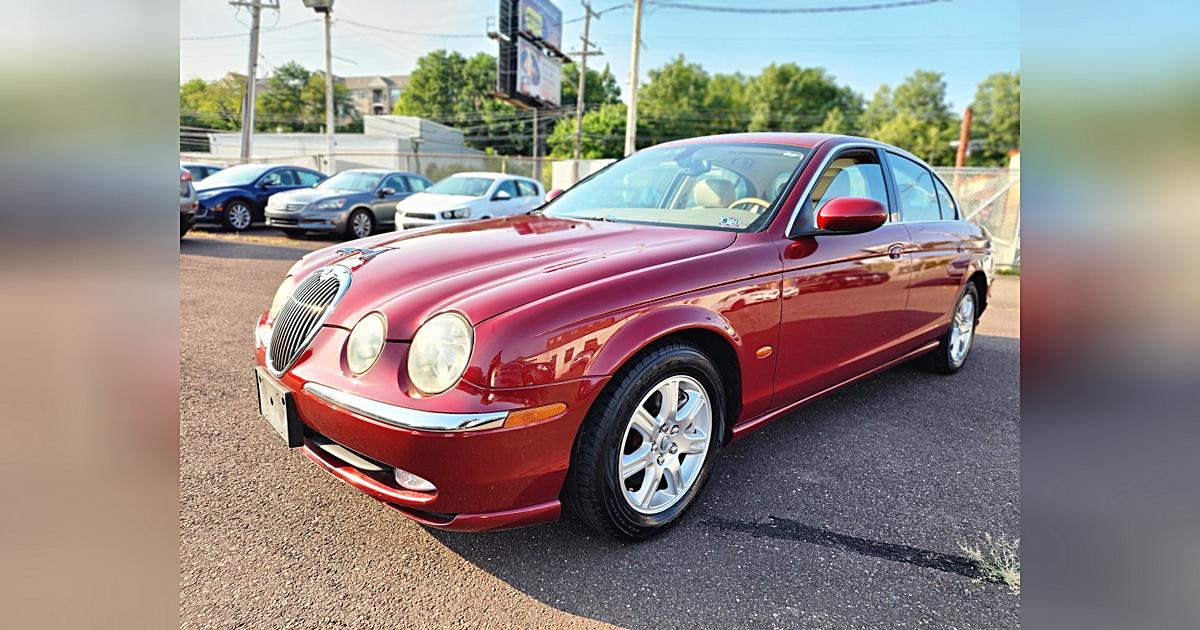 $7,950
Expand
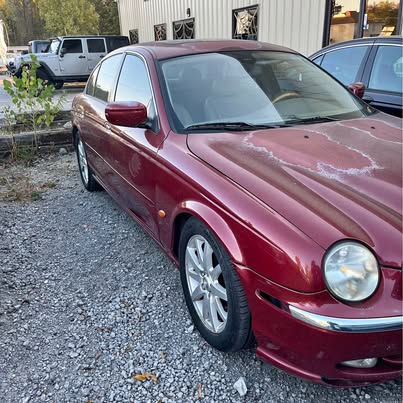 $3,500