
Jaguar X-Type buyer's guide
Jaguar X-Type (2001–2009) — X-Type: what's listed, and what they sell for.
Years: 2001–2009 · Models: X-Type
Overview and history
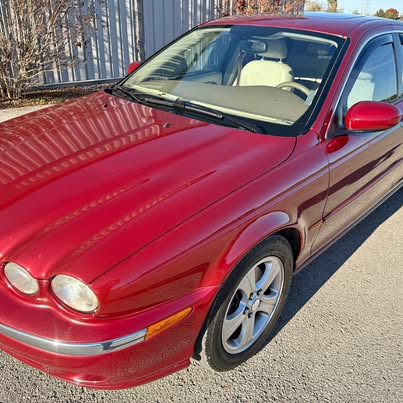
The X-Type is the Jaguar that Ford bought, the Jaguar that purists argued about, and — twenty years on — the Jaguar that gives you the most car for the least money of anything wearing the leaper. Codenamed X400, launched at the Geneva motor show in March 2001 and built at Halewood on Merseyside until December 2009, it was Jaguar's first compact executive car, its first diesel, its first estate, and its first all-wheel-drive production model. It was also, by volume, the best-selling Jaguar of its era. None of that makes it a great car automatically. What makes it worth your attention today is simpler: it is a handsome, well-equipped, genuinely pleasant saloon or wagon whose values collapsed under the weight of one lazy criticism — that it is just a Ford Mondeo in a dinner jacket — and whose real faults, which are specific and knowable, are entirely different from the fault it is famous for.
Deal with the Mondeo question first, because everyone will raise it. The X-Type does sit on a heavily reworked version of the Mondeo's CD132 platform and shares roughly a fifth of its components with Ford products — switchgear details, some electrical architecture, the European diesels, gearbox castings. Everything you see, touch and drive, however, was re-engineered or re-trimmed by Jaguar: a stiffer, differently panelled structure, AJ-V6 petrol engines with Jaguar heads, variable valve timing and intake systems over a Ford-derived block, a Jaguar-developed all-wheel-drive system, and an interior — real wood, real leather on most cars — from a different price class. Cousins under the skin, strangers in the room. The criticism hurt the car when new, against the BMW 3 Series and Mercedes C-Class. At today's money it is irrelevant: you are buying the finished object, and it is considerably more Jaguar than the joke allows.
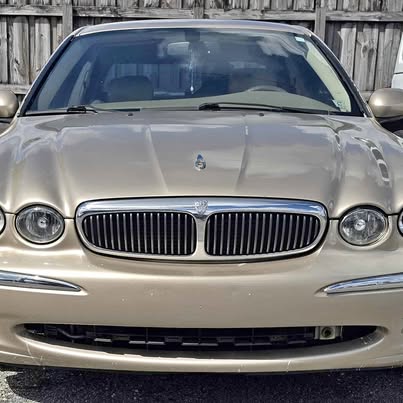
Ford had owned Jaguar since 1989; the X-Type was its volume play, a car to double production and take Jaguar into the heart of the compact executive market. Halewood, a former Ford Escort plant, was rebuilt for it. The 2001 launch range was deliberately Jaguar: two petrol V6s, 2.5 and 3.0 litres, all-wheel drive as standard, in a saloon styled under Geoff Lawson with the classic four-lamp nose and proportions that quoted the XJ in miniature; Ian Callum, who succeeded Lawson, oversaw what followed. A cheaper front-wheel-drive 2.1 arrived in 2002. The car Jaguar had sworn it would never build — a diesel — arrived in 2003 as the 2.0D, because European company-car tax demanded it; in 2004 came the second forbidden car, the Estate, sold in America from 2005 as the Sportwagon. A 2.2 diesel followed in 2005, and a thorough 2008 facelift brought a mesh grille in the style of the new XF, revised bumpers and mirror indicators. Production ended in late 2009 after roughly 355,000 cars; there was no direct replacement until the rear-drive XE of 2015.
In North America the story is narrower and, for you as a buyer, cleaner. The United States and Canada got petrol V6 cars only: the 2.5 and 3.0, all-wheel drive on the saloons, the Sportwagon from 2005 to 2008, and trim lines that ran from the base car through Sport to the plush Vanden Plas. No diesels, no 2.1, no front-wheel drive. American sales were strong at first — the X-Type was Jaguar's best seller in the US in its early years — then faded as the German rivals refreshed and the car's mid-2000s reputation for middling reliability took hold. That fade is your opportunity. The X-Type depreciated like a volume Ford-era product rather than like a low-volume Jaguar, and it has stayed cheap, which means the entire buying game is condition: the difference between the best and worst X-Type on sale today is not the badge, the year or the mileage. It is whether one specific, expensive driveline component has been looked after, whether the sills are steel or filler under their covers, and whether the previous owner treated a cheap car as a disposable car.
That is the thread running through this guide. An X-Type is not fragile in the way an older Jaguar is fragile: its engines are fundamentally strong, its structure modern, its electrics fallible in known places and rarely mysterious. But it contains two or three jobs whose cost exceeds the value of a cheap example, and a car passed through three owners who each deferred them is a parts car wearing a price tag. Conversely, a maintained 3.0 with a quiet transfer box, solid sills and a sheaf of invoices is one of the great bargains in modern classics. Buy the maintenance, not the mileage, and never the story.
The models
The range divides three ways: by engine, by driven wheels and by body. In North America the matrix collapses to something simple — 2.5 or 3.0 petrol, all-wheel drive, saloon or Sportwagon — but you will meet imports, misdescribed cars and European specifications in the wider market, and the full table below is the map. Production figures are Jaguar's period totals for the whole X400 programme of roughly 355,000 cars; Jaguar did not publish a clean public split by engine, so the built column gives honest period estimates and shares rather than invented precision.
| Model | Years | Engine | Output | Built | Character |
|---|---|---|---|---|---|
| 2.1 V6 (Europe) | 2002–2009 | 2.1 petrol V6, front-wheel drive | 156 hp | approx. 35,000 | The entry car; fleet-priced, light, the least Jaguar-feeling |
| 2.5 V6 AWD | 2001–2009 | 2.5 petrol V6, all-wheel drive | 194 hp | approx. 110,000 | The launch car and the American base model; sweet, smooth, adequate |
| 3.0 V6 AWD | 2001–2009 | 3.0 petrol V6, all-wheel drive | 231 hp | approx. 105,000 | The one the car was designed around; proper performance, proper appetite |
| 2.0D (Europe) | 2003–2009 | 2.0 diesel four, front-wheel drive | 128 hp | approx. 60,000 | The tax-break diesel; torquey, economical, injector-sensitive |
| 2.2D (Europe) | 2005–2009 | 2.2 diesel four, front-wheel drive | 152–155 hp | approx. 45,000 | The finished diesel; six-speed manual, automatic from 2008 |
| Estate / Sportwagon | 2004–2009 | 2.5 / 3.0 petrol AWD; diesels in Europe | 194 / 231 hp | included above, roughly 1 in 8 cars | The first Jaguar wagon; rarer, prettier than it needs to be, the connoisseur pick |
The 2.5 V6. The volume car and, in America, the starting point. The 2,495 cc AJ-V6 makes 194 hp and revs with a silkiness no four-cylinder rival matched, but it works for its living in a car that weighs around 1,500 kg before the all-wheel-drive hardware, and performance is brisk rather than fast — the automatic car, which is most of them, feels relaxed to the point of lethargy if you are in a hurry. As a cruiser it is lovely. Equipment on US cars was generous from the start: leather, wood, climate control, alloy wheels. If your use is commuting, winter driving and covering distance in comfort, the 2.5 does everything the 3.0 does except accelerate, and it is usually the cheaper and gentler-used buy. Just do not let a seller charge you 3.0 money for one: check the badge, then check the engine code and the registration documents, because bootlid badges are twenty-dollar items.
The 3.0 V6. The car the engineers wanted to sell you. The 2,967 cc AJ-V6's 231 hp transforms the X-Type from pleasant to genuinely quick for its era — period figures put the manual car at around six and a half seconds to 60 mph — and the extra torque arrives exactly where the 2.5 feels thin, in the mid-range overtake. It drinks a little more fuel, costs no more to maintain in any meaningful sense, and shares every weakness of the smaller engine, so there is no rational reason to prefer the 2.5 except the individual car's condition. In America the 3.0 also unlocks the higher trims. Given two equal cars, take the 3.0 every time; given a tired 3.0 and a cherished 2.5, take the cherished car. That rule — condition over specification — will recur throughout this guide because on this model it is not a platitude, it is arithmetic.
Sport, SE, Sovereign and Vanden Plas. Trim is where the markets diverge. British and European cars ran Classic, SE, Sport and later Sovereign and XS lines; American cars ran base, Sport and, from 2005, Vanden Plas. The Sport package is the one that matters dynamically: firmer, lower suspension, larger wheels — 17-inch, with 18-inch options — body-coloured trim in place of chrome, a boot spoiler on the saloon and sport seats. It looks sharper and rides noticeably harder on broken roads; on 18-inch wheels with ageing dampers it can be genuinely harsh, and the bigger wheels are also the ones most often kerbed, buckled or swapped. SE and Sovereign cars are the comfort specification: chrome, softer suspension, the fullest wood and leather. The American Vanden Plas is the luxury flagship of the range — premium leather, burl walnut, heated seats, parking sensors, a sunroof and most of the options list as standard — and as a used buy it is frequently the best value of all, because it was bought new by the demographic that services cars on schedule and garages them. A Vanden Plas badge on a neglected car, though, is just a badge. The specification is a tiebreaker between good cars, never a substitute for one.
The Estate and Sportwagon. The wagon, launched in 2004, is arguably the X-Type's most distinctive form: a tailgate with a separately opening rear window, roughly 445 litres behind the seats and around 1,415 litres with them folded, underfloor compartments and roof rails. American Sportwagons, sold 2005–08, came as 3.0 automatics with all-wheel drive — on paper the ideal all-weather family classic. They are rare, and rarity cuts both ways: tailgate-specific panels and trim are harder to source, and sellers of good ones know it. Check a wagon harder, not softer, for rear-end repair, water in the spare-wheel well and underfloor storage, and a sagging rear end on tired dampers.
The facelift cars, 2008–09. A bold mesh grille, reprofiled bumpers, mirror indicators and revised instruments mark the final cars; mechanically they are the same car with the same transfer box and the same sills, and very few reached North America. Do not pay a facelift premium; do pay for the lower mileages that come with them. Three categories deserve suspicion before you travel: an unverifiable rare or special edition (dealer sticker specials carry no premium), a diesel or 2.1 in North America (a private import, with parts, emissions and resale headaches), and any car flipped through several recent keepers — usually because someone discovered the transfer box, the sills or the gearbox, and chose to sell the discovery rather than fund it.
Engines and gearboxes
The petrol V6s: AJ25 and AJ30
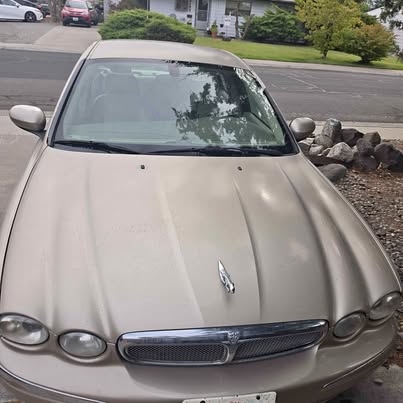
Every petrol X-Type runs a member of the Jaguar AJ-V6 family: a 60-degree, all-aluminium V6 with double overhead camshafts per bank, four valves per cylinder, continuously variable valve timing on the inlet camshafts, and a Ford-derived block architecture shared in its basics with the Duratec V6 — over which Jaguar designed its own heads, manifolds, engine management and ancillaries. There are three capacities. The 2.1, sold only outside North America, displaces 2,099 cc and makes 156 hp; it drives the front wheels only and exists to answer a price list, not an enthusiast. The 2.5 (AJ25, 2,495 cc) makes 194 hp at 6,800 rpm and 180 lb-ft of torque. The 3.0 (AJ30, 2,967 cc) makes 231 hp at 6,800 rpm and 209 lb-ft. Both of the larger engines share the same character: uncannily smooth at idle, quiet at a cruise, and with a hard, cultured snarl above 4,500 rpm where the variable intake geometry opens the engine up. These are not engines that feel strained by the car. Even the 2.5, the weakest pairing, never sounds coarse — it simply takes longer about its work.
The intake system deserves a paragraph because it generates a disproportionate share of the faults you will meet. The AJ-V6 breathes through a two-stage intake manifold controlled by Intake Manifold Runner Control — IMRC — valves: vacuum-actuated flaps that switch the engine between long runners for torque and short runners for top-end power. The actuators, their vacuum capsules and the small linkage clips age, crack and stick. A failed IMRC typically announces itself as a flat, breathless engine above 4,000 rpm, a hesitation, or fault codes for a lean condition — P0171 and P0174, bank 1 and bank 2 lean, are the X-Type's signature codes, and the runner system, perished vacuum elbows and split breather hoses account for far more of them than the oxygen sensors and mass airflow meters that sellers replace first, one expensive guess at a time. The diagnostic order matters and it is cheap: smoke-test the intake and vacuum system for leaks before buying sensors. A full set of vacuum hoses and elbows is a Saturday job with parts in the $80–200 range; a mechanic guessing his way through sensors can spend $600 of your money and fix nothing.
In service, the V6's fundamentals are excellent. It is chain-driven — no cambelt on any petrol X-Type — and chains and tensioners are not a routine failure item; a start-up rattle is worth investigating but is more often a tired tensioner or low oil than imminent disaster. What it consumes is coils and plugs on schedule, and it leaks oil in known places: cam cover gaskets harden and weep, the sump gasket seeps, crank seals mist. None is serious alone; together, in a bay filthy with old oil, they tell you the car has run on the defer-everything plan, which matters because of what else that plan defers. Coil failure presents as a misfire under load, sometimes with the flashing light that means unburnt fuel is reaching the converters. The rear bank's coils and plugs are the labour-heavy ones — the intake manifold comes off to reach them, turning a plug change into a $400–700 shop job and explaining why so many cars have three new plugs and three ancient ones. A full set done together, manifold gaskets renewed, is the mark of a car serviced by someone who understood it.
Cooling is the other system to respect. Budget on a water pump in the 100,000-mile region, a $450–800 job fitted; the thermostat housing and valley pipework go brittle with heat cycles, the expansion tank cracks and clouds so you cannot read the level, and radiator end tanks weep at the crimps. An X-Type that has overheated is a walk-away unless the price reflects an engine: the all-alloy V6 tolerates it poorly, head gasket failure follows, and the labour exceeds most cars' value. The gauge should sit centred, the fans should cycle at idle, and there should be no sweet coolant smell at the front of a hot car; brown sludge in the tank means the system has been topped up with whatever was at hand. Emissions hardware is durable — four converters and four oxygen sensors on the V6s — and converters rarely die unless a misfire has been run with, which is why the flashing-light misfire matters. Genuine converter failure, codes P0420 or P0430, is a $900–1,800 problem in quality parts: a negotiation, not a footnote.
The diesels: 2.0D and 2.2D (European cars)
North American buyers can skim this, but the diesels were the majority of later European production. Both are Ford Duratorq common-rail fours with Delphi injection: the 2.0D (1,998 cc, 128 hp, 243 lb-ft) and the 2.2D (2,198 cc, 152–155 hp, up to 269 lb-ft, six-speed manual, automatic from 2008). The front-wheel-drive 2.2 is arguably the best real-world X-Type: forty-plus miles per gallon and overtaking torque that shames the 2.5 petrol. Their weaknesses are the era's standard common-rail three: Delphi injectors that wear and leak back, giving hot-start trouble and diesel knock — a reconditioned set fitted and coded runs $900–1,600; a dual-mass flywheel that judders and fails, $1,100–1,900 with the clutch it should always accompany; and coked EGR valves, sticking turbo actuators and, on later filtered cars, blocked particulate filters. It is the same bill every 2000s diesel presents, and a cheap high-mileage diesel is cheap for the same reason a cheap petrol car is: the deferred jobs cost more than the car.
Gearboxes: manual, automatic and the transfer box
Three gearboxes serve the range. The five-speed manual, a Ford MTX75-family unit, is fitted to front-wheel-drive cars and, with a transfer drive, to the all-wheel-drive petrols; the European 2.2 diesel uses a six-speed manual. The manual is a pleasant, accurate box with a light clutch, and its faults are age faults: worn synchromesh on second gear showing as a crunch on hurried cold changes, tired selector cables making the change vague, and clutch wear anywhere past 90,000 miles — a clutch replacement on an all-wheel-drive car is a $900–1,500 job because of the labour around the transfer box, and the dual-mass flywheel question does not arise on the petrols, which use a conventional arrangement. A manual X-Type of any kind is a rare and desirable thing in America, where the automatic take-up was overwhelming; if you find a genuine manual 3.0 in good order, it is the driver's pick of the entire range.
Most cars you will see carry the five-speed automatic, the Jatco JF506E — a Japanese-designed transverse automatic also found in various Volkswagen, Mazda and Land Rover products of the era. In health it is smooth, well-matched to the V6 and quick enough to kick down. Its failure pattern is well documented: the valve body and its solenoids wear, producing harsh or flaring shifts — classically a thump on the 2–3 change and a flare between 3 and 4 — and neglected fluid accelerates everything. Jaguar's period line was that the box was sealed for life, which is the single most destructive sentence in the X-Type's maintenance history. The fluid is changeable, specialists do change it, and a car with documented automatic fluid changes at 50,000–60,000-mile intervals is worth a premium over an identical car without them. A fluid and filter service runs $250–450; a solenoid pack or valve body job $700–1,400; a rebuilt gearbox fitted $2,200–3,500. Test it from stone cold: engage drive and reverse in turn and feel for a delay followed by a thump, drive the first mile gently noting every shift, then, warm, ask for a full-throttle kickdown from 50 mph. Any flare, shudder or hesitation in a warm box is real money.
The 2.2 diesel automatic of 2008 onward uses a six-speed Aisin unit, a stronger and generally better-regarded gearbox, but it is a European footnote. The component that is not a footnote — the component around which the entire X-Type buying decision revolves — is the transfer box on the all-wheel-drive cars.
The all-wheel-drive system itself is elegant: a Ferguson-formula viscous coupling in the driveline, with a nominal torque split of 40 percent front and 60 percent rear, varying automatically as wheels slip, no electronics, no driver modes, nothing to switch. It gives the car superb wet-weather and snow traction and a distinctly rear-led feel on a dry road. The transfer box that takes drive to the rear wheels, however, holds a very small quantity of oil — around 600 ml — sits beside hot exhaust components, was declared sealed for life, and has seals that weep with age. The arithmetic is brutal: lose half the oil from a box that only held 600 ml to begin with, keep driving, and the box cooks. Failure announces itself as a whine or drone from the centre of the car that rises with road speed, a rumble or vibration under load, and in the end a graunching, binding driveline. A replacement transfer box, fitted with the propshaft work it usually entails, runs $2,000–3,500 with a used or rebuilt unit, and new units have long been effectively unobtainable at sensible money. There is no repair-in-place. This is why the inspection section of this guide puts the transfer box second only to the sills, why a car with a documented transfer box oil change — a non-scheduled job only an informed owner commissions, roughly $150–250 at a specialist — is worth real money, and why a droning X-Type at a bargain price is not a bargain. It is a bill with a Jaguar badge on it.
The propshaft behind it has its own wear items: a centre support bearing whose rubber perishes, producing a vibration in the 30–50 mph band and a thump on take-up of drive, and joints that dry out. A propshaft bearing or a reconditioned shaft is a $350–800 job — trivial next to the transfer box, and frequently misdiagnosed as it, in both directions. A specialist who knows the model will separate the two in one road test. Make sure yours does, before you either reject a good car or buy a bad one.
Problem areas
Work this section in the order it is written, because that is the order of financial consequence. The transfer box can cost more than the car. The sills can condemn the structure. Everything after those two is the ordinary, budgetable wear of a twenty-year-old executive car — real money in aggregate, but money you can plan. What you are doing on any viewing is separating the two categories, because sellers, deliberately or not, present them as one undifferentiated phrase: it just needs a few bits. Find out which bits.
The transfer box, propshaft and all-wheel-drive driveline
The mechanism is set out in the engines and gearboxes section: a sealed-for-life transfer box holding roughly 600 ml of oil, mounted hot, with seals that weep. Here is how to read a car for it. First, the sound. On the test drive, in a quiet car with the radio off and the windows up, accelerate gently from 30 to 60 mph and then lift off and coast down. A healthy driveline is near silent. A failing transfer box whines or drones in proportion to road speed — not engine speed; change gear or shift the automatic manually and note whether the pitch follows the road or the revs. Road-speed pitch implicates the transfer box, propshaft or wheel bearings; the inspection section separates them. A rumble under load that disappears on the overrun, and a clunk as drive takes up from rest, point to the propshaft centre bearing and joints. Binding, hopping or tyre-scrubbing on full-lock, low-speed turns — the wind-up you feel in a supermarket car park — means the viscous coupling has stiffened or seized, and that is transfer-system money too, not a quirk to live with.
Second, the evidence underneath. On a ramp, or with a torch and a mirror on a driveway, look at the transfer box casing for the oil mist and road-grime paste of a long-term weep, and at the undertray below it for staining. A bone-dry, freshly steam-cleaned underside on a car with no recent invoices is itself a finding: ask why. Third, the paper. Because the oil change is not in Jaguar's schedule, a receipt for one is the single most reassuring document in an X-Type history file; it proves the previous owner knew the car. Conversely, a whine plus no paperwork plus a seller who calls it a wheel bearing is the classic X-Type trap, and the correct response is to price the car as needing a transfer box — a $2,000–3,500 fitted job with a rebuilt or used unit — or to walk away. There is no third option in which you buy it and the noise turns out to be nothing. It is never nothing.
Differentials and driveshafts, by contrast, are durable. Rear differential seals weep with age, CV boots split and are cheap if caught before the joint runs dry — $200–400 a side for a shaft or boot job — and wheel bearings fail in the normal way, droning and changing pitch as you load and unload them in gentle bends. Budget them, do not fear them.
Rust: the sill map
The X-Type's structure is a modern monocoque and most of it lasts well; the car does not dissolve like a 1970s Jaguar. Its one structural weakness is serious, specific and hidden: the sills. The outer sills sit behind plastic sill covers, and the assembly traps moisture and road dirt against the steel. Corrosion starts inside, works outward, and by the time a blister shows at the cover's edge or the paint bubbles ahead of the rear wheel, the inner sill and the jacking point structure behind the cover are frequently far worse. Cars from the salt belt are the worst affected, but any car that has lived outside in a wet climate can be rotten here at fifteen-plus years old. This is a safety and structural item — the sills carry the jacking points and contribute to side-impact structure — and it is the reason apparently tidy X-Types fail inspections and are sold cheap in the spring.
The map, front to back: the sill ends behind the front wheels, where spray is thrown up; the full length of both outer sills under the covers, worst at the rear; the rear wheel arches, lip and inner arch, where the sill rot and arch rot meet; the jacking points themselves, which crush and tear on weakened cars when a jack or lift pad loads them; the front subframe and its mounting areas; the rear subframe and the boot floor around it on wagons that have carried water; and the lower edges of the doors and the tailgate on estates, which blister cosmetically long before they matter structurally. Surface rust on subframes and suspension arms is normal and largely cosmetic. Perforation in a sill is not.
Testing is tactile, not visual, because the covers hide the evidence. Press firmly along the sill cover and listen and feel: solid steel behind plastic feels dead and unyielding; rotten steel crunches, flexes and sometimes sheds flakes at the cover's lower edge. Tap with a knuckle and compare sides. Look at the sill from underneath, behind the cover line, with a torch. Check the jacking points for distortion — a car whose jacking points are already bent or patched has been lifted on weak metal. Ask directly whether the sills have been welded, and treat a good welded repair, invoiced and photographed, as a positive: it is the correct fate of most surviving cars. A professional sill repair, cut out and welded properly, runs $800–1,800 a side depending on how far the rot has travelled into the inner structure; filler and an underseal blow-over, which is what a suspiciously cheap fresh black coating along both sills usually is, lasts one winter and costs you the same money again, plus interest. The fresh-underseal car is the second classic X-Type trap, after the droning one. Fresh black paint under a car should make you more suspicious, not less, and it should make you press harder along those sills, not softer.
Beyond the sills, the body is honest: good Ford-era paint, clear coat peeling on sun-baked cars, pitting chrome trim, headlamp lenses that cloud and polish back. Panel gaps on an unhit car are even and tight; a mismatched panel or overspray on the rubbers means repair, which at this value is a price conversation, not an automatic rejection, provided the structure underneath is straight and sound.
Suspension, steering and brakes
The X-Type rides on MacPherson struts in front and a multi-link rear axle, tuned softer and quieter than the Mondeo's. It works beautifully when the dampers and bushes are alive and feels like a barge with a knock when they are not. Front lower arm bushes split and let the arm move under braking — a shudder and a wandering line under a firm stop. Anti-roll bar links knock cheaply. The rear is the subtle one: worn rear control arms and bushes let the wheels adopt excessive camber and toe, and the car eats the inner edges of its rear tyres while driving perfectly normally. Inner-edge rear wear is therefore a diagnostic, not a tyre problem: budget $500–1,000 for arms, bushes and the four-wheel alignment the job must end with. Dampers are conventional and almost all originals are now tired; a quality set fitted, $700–1,300, transforms the car more than any other single spend. Spin every wheel for pothole buckles, especially the Sport's 18s. Steering is hydraulic, accurate and mostly trouble-free — a whining pump is usually a weeping hose and low fluid, a knocking rack is inner joints, $400–900 covers most of it — but wander or notchiness is alignment and bushes, not character. Brakes are ordinary discs, cheap in parts at $350–650 a set, $600–1,000 fitted. Test the handbrake on a hill — it acts on the rear calipers, seizes, and needs caliper work, not adjustment — and inspect the steel brake pipes for salt corrosion alongside the sills; a full pipe set is a $500–900 negotiation point. ABS and traction lights together usually mean a sensor or reluctor ring, cheap parts and a code read, not a module.
Electrics, interior and trim
The X-Type's electrics are Ford-group electrics of the early 2000s, managed through a General Electronic Module, and their failure style is nuisance rather than catastrophe. Central locking actuators fail one door at a time — a door that does not lock, or locks and immediately unlocks, is a $200–400 actuator job, and two dead doors is a pattern to price. Electric window regulators slow, crunch and fail. The remote fob's buttons wear through and its battery dies; two working keys is a genuine selling point, because a replacement programmed key is a $200–400 dealer or locksmith event and a car with one key is a car one loss away from an immobilised driveway ornament. Battery condition matters out of proportion: a weak battery on an X-Type produces a festival of unrelated warning lights and module complaints that all vanish with a healthy battery and a code clear, and sellers have spent fortunes chasing them. Test the simple thing first. It is the electrical version of the vacuum-leak rule in the engine section.
Inside, the cabin is the car's best argument and the fastest guide to its life. The leather cracks on the driver's bolster and dries in sun states, but responds to feeding if it has not split; a one-seat re-trim is $400–800, a dye kit a tenth of that. The real walnut veneer cracks its lacquer around the gear surround and in heat; breaker sets are plentiful and cheap. Headlinings sag, eventually, on almost every car — press the lining at its edges, and price a $350–700 re-trim into any car whose lining has not yet dropped. Seat motors and heated elements fail individually and are breaker fixes. Test the air conditioning for genuinely cold air at idle: a system that only cools at speed is low on gas, weak in the compressor or both, and a compressor job is $700–1,200. Satnav is a museum piece; pay nothing for it. Water gets in where you would expect — blocked sunroof drains, perished door membranes, and on wagons the tailgate seals, wetting the load bay and spare wheel well — and wet carpets matter beyond the smell, because the water finds wiring and module connectors low in the car. Press a hand into every footwell and lift the boot floor: fixing a leak is cheap, fixing what it did is not always.
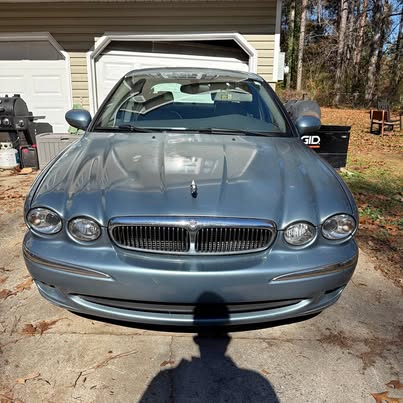
How to inspect one
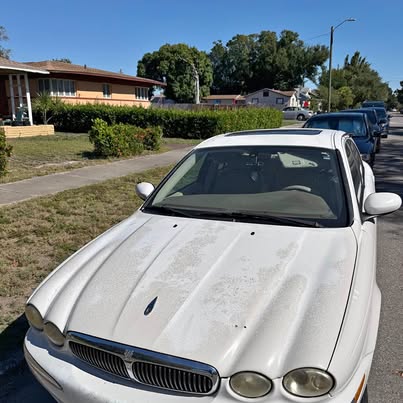
Do this in order, cold car first, and do not let the seller warm the car up before you arrive — warmth hides the cold-start, cold-gearbox and cold-driveline evidence that prices an X-Type. Bring a torch and your nerve — a magnet is useless behind plastic sill covers — and arrange a drive with a quiet road, a hill, a car park for full-lock turns and a stretch where 60 mph is legal.
- Start with the paperwork, standing up, before you touch the car. Title in the seller's name, VIN on the documents matching the VIN plate at the base of the windscreen and the door sticker, service history read for the three documents that matter: a transfer box oil change, sill welding, and automatic gearbox fluid changes. A file with all three is a cherished car. A file with none of them is a negotiation that starts now.
- Walk the body in daylight. Panel gaps, paint match panel to panel, blistering at the rear arch lips and door bottoms, clouded headlamps, kerbed or buckled wheels, and the tyres: matching quality tyres in even wear say money spent; mismatched budget tyres with eaten inner rear edges say rear suspension bushes and deferred everything — the rear-arm story from the problem areas, printed on the rubber.
- Do the sills, properly. Crouch and press firmly along both sill covers, full length, feeling and listening for crunch, flex or flaking at the lower edge. Torch underneath behind the cover line. Inspect all four jacking points for tearing or patching. Fresh black underseal along the sills moves this from an inspection to an interrogation: press harder, and ask for the welding invoice.
- Cold start, bonnet up. The V6 should catch cleanly, idle smoothly and settle without hunting. Listen for a timing-chain rattle that lasts more than a second, a diesel-like ticking from a dry top end, and any whine that rises as an assistant blips the throttle. Watch for blue smoke on start-up — valve stem seals — and check the expansion tank: correct coloured coolant at the level, not brown sludge under a cracked, clouded tank.
- Read the engine bay for the maintenance culture. Oil leaks at the cam covers, a filthy bay, three visibly new spark plugs' worth of disturbed hardware on the easy bank only, split vacuum elbows and perished breather hoses — the lean-code kit from the engine section. Pull the dipstick: oil at the level, not overfull to mask consumption, not milky. A car presented with the oil light's story untold is priced by this step.
- Test every electrical item from the driver's seat, in a deliberate sweep: all four windows, all door locks from the fob and the switch, mirrors, seat motors and heaters, sunroof through its full travel, lights, wipers and washers, both keys if there are two. Then the air conditioning: genuinely cold at idle within a minute, compressor clutch cycling without graunching. Note every failure as a priced line, not a shrug.
- Check the cabin like a surveyor. Driver's bolster, headlining pressed at its edges for sag, damp in every footwell with the flat of your hand, the boot floor lifted and the spare wheel well dry — on a wagon, the underfloor compartments too. Veneer lacquer, gear surround, and the smell of the car: mildew is water with an address you have not found yet.
- Drive it cold and listen to the gearbox first. The Jatco automatic should engage drive and reverse promptly and without a thump, and the first, cold 2–3 shift is the tell from the gearbox section: flare or a bang now is valve body wear, and warm fluid will forgive it within ten minutes, which is exactly why you test it in minute one. A manual should take second cleanly at a brisk pace, hot and cold.
- On the quiet road, do the driveline test. Radio off, windows up: gentle acceleration 30 to 60 mph, then a lifted-throttle coast down. Pitch following road speed is transfer box, propshaft or bearing; now load the car gently in bends — a drone that changes side to side is a wheel bearing, a constant central drone or whine under load that fades on the overrun is the transfer box or propshaft until a specialist proves otherwise. Price what you hear.
- In the car park, full lock both ways at walking pace. Binding, hopping or scrubbing is a stiffened viscous coupling — transfer-system money. Then the hill: handbrake test, and a firm stop from speed on the way back, feeling for bush shudder through the pedal and body, and a pull to either side.
- Finish hot, back at base. Temperature gauge centred and steady, fans cycling, no coolant smell, idle still clean with the air conditioning on. Underneath with the torch again, hot: transfer box weep, sump and cam cover oil, coolant traces at the thermostat housing, exhaust condition. Warning lights: everything that lit at start-up should be out, and an engine light that never lights at all has been defeated, which is its own verdict.
- Decide by category, not by feeling. Structure (step 3) and transfer box (step 9) are walk-away-or-reprice items. Gearbox behaviour (step 8) is a four-figure negotiation. Everything else is a list of hundreds — add it up honestly, add the cost of the service the car is plainly due, and offer on the total cost of the sorted car, not on the car as it stands and hopes.
Values
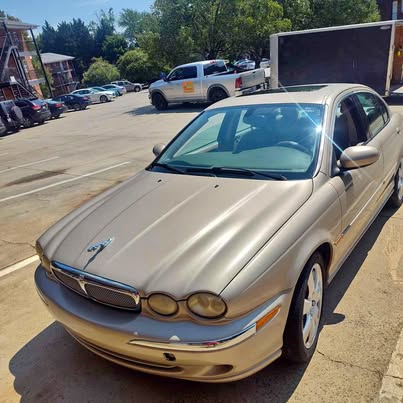
The market content printed beneath this guide — the cars listed now and the recorded sales — carries the numbers, and it changes with every build. This section teaches you how to read it, because the X-Type market is one of the most condition-sensitive in the modern-classic world and the headline figures, read naively, will mislead you in both directions.
The first thing to understand is the spread. Few models have a wider proportional gap between their worst and best examples. A tired X-Type is worth very little indeed — it competes with every other ageing executive saloon whose repair bills exceed its value, and the market prices it accordingly — while a genuinely sorted, low-mileage, fully documented 3.0, and above all a good Sportwagon or manual car, commands a real premium from a small but committed audience of buyers who know exactly what the cheap cars cost to fix. When you see an asking figure far below the cluster of comparable cars, do not read it as a bargain waiting for you. Read it as the market's estimate of the transfer box, the sills or the gearbox, and go and find out which. On this model the cheap cars are usually cheap for an identified reason, and the reason is usually in this guide.
Second, the asking-versus-achieved gap. X-Types sit for sale longer than most modern classics: the buyer pool is thin, and many sellers price from what they paid or what they have spent rather than from what the market clears at. Advertised figures for ordinary cars are routinely optimistic, and patient, evidence-based offers — the inspection list, priced, in writing — succeed more often here than on almost any other model. The exception is the genuinely good car with the full history file: those sell close to asking, quickly, because everyone who has done the homework recognises the same car. Negotiate over hundreds and over what is included — spare keys, recent tyres — not over whether the seller will halve the price. He will not, and the next viewer will pay it.
Third, what carries a premium and what does not. The 3.0 earns one over the 2.5 in equal condition. The Sportwagon carries the strongest premium of all, on rarity and on owners who actually use them. A genuine manual carries a North American premium out of all proportion to its original cost, because so few were sold. The Vanden Plas carries a modest premium that understates how nice the cars are — the market's small inefficiency in your favour. Deep greens, blues and reds with a light interior are the easiest resale; gold and silver are plentiful and priced like it. What carries no premium, whatever the seller says: dealer special editions, aftermarket wheels and audio, and money spent. A recent four-figure bill is a reason to prefer the car, not a sum to add to its market figure — you are buying the result of the spending, a car that needs nothing, priced as one.
Fourth, the project-versus-driver gap, which on the X-Type is a cliff. A project car — non-running, droning, rotten at the sills, or all three — is worth its parts value and little more, because returning it to the road through the big jobs costs more than the finished car is worth. There is no arithmetic in which a rotten, whining X-Type is a cheap route to a good one; the good one, bought directly, is the cheap route. Pay for condition, in full, every time. The driver-quality car with honest wear, current maintenance and the big jobs evidenced as done is where the value sits, and it sits there stably: these cars stopped depreciating years ago, and good examples now move with the general modern-classic market.
Finally, insure it like a classic, not a banger: agreed-value cover costs little more than minimum cover, and a dated photographic record of the sills, underside and history file turns an insurance argument into a settlement. The market block below tells you what is being asked and what has changed hands. Your job is to place the car in front of you on the condition ladder — and on an X-Type, the ladder is the whole market.
Parts and ownership
Owning an X-Type is a study in two supply chains. The Ford-family service side is cheap, plentiful and will remain so: filters, brakes, suspension arms and bushes, bearings, sensors, coils, thermostats and water pumps are pattern or original-equipment parts at Mondeo-adjacent money, available overnight. A major service at an independent specialist — oil, filters, plugs with the manifold off, brake fluid, coolant, automatic gearbox fluid and, on all-wheel-drive cars, the transfer box and differential oils Jaguar never scheduled — runs $600–1,000; a plain annual service is $250–450. These are family-car running costs with a wood dashboard. The Jaguar-specific side is where a specialist earns his fee. Transfer boxes are the scarce item: new supply dried up years ago, so the market is rebuilt and tested used units, $1,200–2,200 before fitting — buy only with a warranty and an oil history, because a cheap untested box is a lottery ticket. Body panels are breaker-sourced: wings, doors and bumpers are plentiful, while Sportwagon tailgates, estate trim and facelift bumpers are genuinely scarce and worth buying when seen. Seats, door cards and veneer sets are cheap and everywhere; the small clips and caps that finish a cabin are what try your patience — buy the bag of clips before the job, not after.
Consumables reward the standard advice with unusual force. All-wheel drive wants four matched tyres of the same size and similar wear, for the viscous coupling's sake as much as the handling; a quality set in the common 225/45 17 size is $500–800 fitted, and owners have spent real money diagnosing the grumble from a mixed set as a transfer box. Batteries are cheap and disproportionately influential — replace on age and test results, not on failure. The one specification to get exactly right is the transfer box and gearbox oils, where a specialist's knowledge of the correct grades is worth more than a generalist's saving.
Where to have it looked after matters more than what it costs. The ideal is the independent Jaguar specialist who sees X-Types weekly: he has the diagnostic kit that talks properly to the modules, he has done the transfer box oil change Jaguar never scheduled, and he knows the Jatco fluid procedure and the rear-arm alignment settings. Main dealers remain a source for the odd Jaguar-only part, but their labour rates make big jobs uneconomic. A competent generalist is fine for brakes, suspension and servicing, provided he hands over the two jobs that are not his: transfer box assessment and automatic gearbox internals. The owners' clubs and forums are unusually practical and honest about costs; the collective knowledge on sill repair, IMRC diagnosis and transfer box sourcing lives there, and an evening in the archives is worth a workshop manual. Budget honestly — a rolling programme, a suspension corner one year, the cooling refresh the next — and the car repays it with reliability that surprises people who believed the reputation. Starve it, and the bills do not disappear; they queue, compound, and eventually present themselves to the next owner as the reason the car is cheap.
Which one to buy
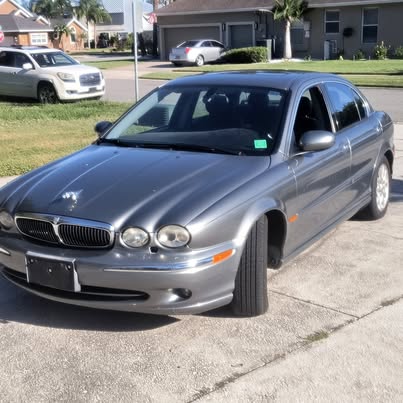
- The all-rounder: a 3.0 saloon, automatic, SE or Vanden Plas, 2004–07, with a full history file. The engine the car was designed for, the trim that shows it off, the years with the best supply of cherished examples — transfer box oil change and sills evidenced, two keys, matched tyres. This is the X-Type most buyers should be looking for.
- The value buy: a 2.5 Vanden Plas or SE with long-term ownership and invoices. The market underprices the smaller engine, so the best-maintained X-Types per dollar in America are frequently 2.5s bought new by careful people. If the file has the big three jobs in it, the missing horsepower is the cheapest thing you will ever not buy.
- The driver's pick: a 3.0 manual, Sport specification. Rare in North America, worth travelling for when a genuine one surfaces with a quiet driveline and solid sills, and the combination most likely to be sought after in ten years. Verify the manual is factory — the VIN and build record settle it, not the gearknob.
- The family classic: a Sportwagon, 2005–08. The 3.0 automatic wagon is the most usable car in this guide and the rarest body in America. Pay the premium for a dry load bay, a working tailgate window, solid rear arches and the full history; walk away from a cheap one with water in the wheel well and a drone at 50 mph, because wagon-specific trim will punish you while the driveline bill lands.
- The European footnote: a 2.2D manual estate. In Europe the six-speed diesel wagon is the range's real-world champion. In North America it is an import curiosity; do not pay rarity money for one.
- The one to leave: any car that drones at road speed and crunches at the sills. Not at a discount, not as a project, not because the interior is lovely. A finished good car costs less than that car's price plus its two big jobs.
Buy on the transfer box, the sills and the history file, in that order — specification, colour, mileage and year are tiebreakers between cars that pass those three tests, and a car that fails one of them is not a cheaper X-Type, it is a more expensive one that has not sent you the bill yet.
Listed now
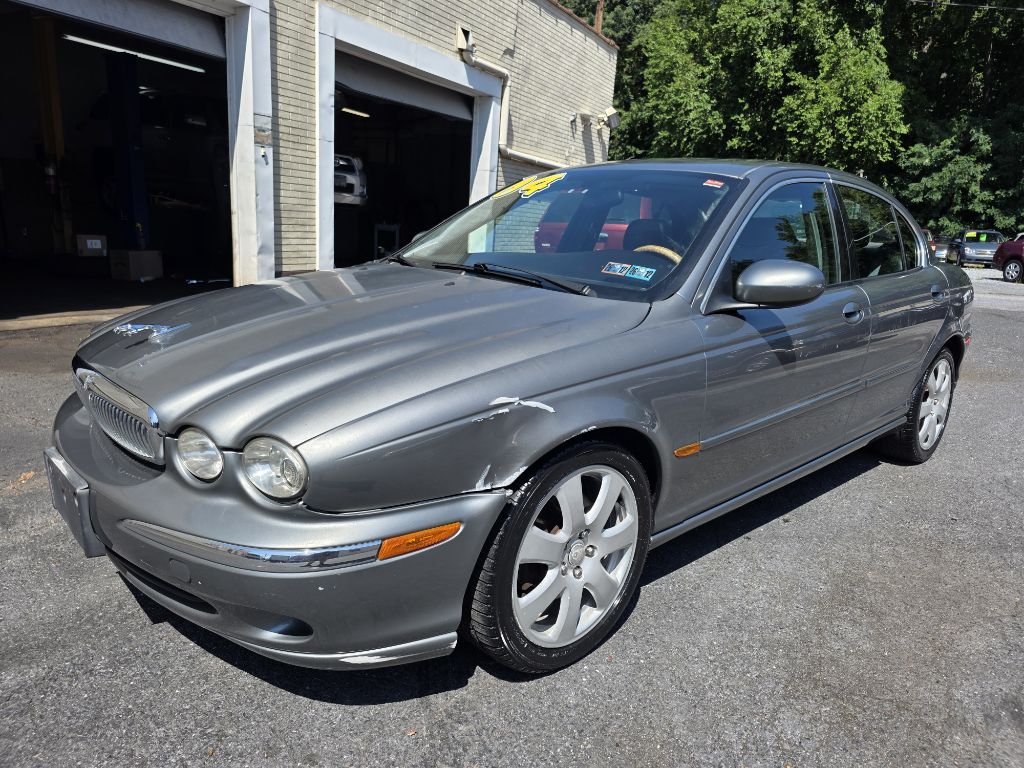
On Classic Listings today: 6 cars are listed here; 2 for sale and 0 marked sold; average asking price $1,100; asking range $1,100 to $1,100.
See the 6 X-Type cars currently listed.
The market — recorded sales
No dated sales recorded for this series yet — as sales are recorded, they will appear here with their dates and prices.
For sale now
Expand
$1,100