
Jaguar X-TYPE 2.5L Sedan 4D buyer's guide
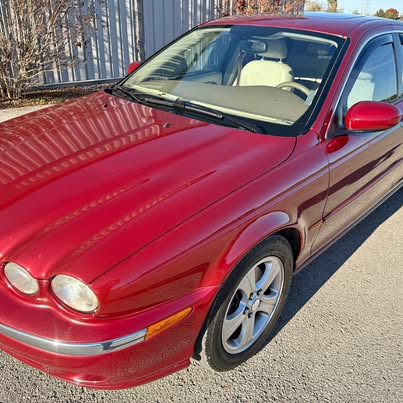
Jaguar X-TYPE 2.5L Sedan 4D -- the model's own buyer's guide: variants, values and what to check.
Years listed: 2002-2005 · Series: X-Type
Overview and history
The Jaguar X-Type, factory code X400, is the most argued-about Jaguar of the modern era, and the argument misses the point for a buyer today. At its 2001 launch it was condemned in some quarters as a Ford Mondeo in a Savile Row suit, because it shared its basic platform architecture with the contemporary Mondeo and was built under Ford ownership. Two decades on, standing in front of a specific used example, the platform's parentage is the least important thing about the car. What matters is this: the X-Type is a compact, wood-and-leather, all-wheel-drive Jaguar saloon with a proper V6, a chassis tuned by people who understood ride quality, and a small number of well-defined mechanical weaknesses — one of them, the all-wheel-drive transfer case, serious enough to decide whether a given car is a bargain or a parts donor. Learn those weaknesses, test for them in the right order, and the X-Type becomes what it quietly always was: the cheapest credible route into a real Jaguar, bought with your eyes open.
The car was conceived in the late 1990s, when Ford — which had owned Jaguar since 1989 — wanted volume. The S-Type, launched in 1999, had taken Jaguar into the executive class against the BMW 5 Series; the X-Type's job was the class below, at volumes Jaguar had never attempted, with a business plan speaking of around 100,000 cars a year. To reach anything like that economically, Jaguar's Whitley engineers worked from Ford's CD132 platform, the architecture under the third-generation Mondeo, with the engine transverse and — the decision that defines the car — all-wheel drive as the standard layout for the V6 models. Jaguar was always emphatic that the shared content was far smaller than the headlines claimed: the structure was substantially reworked, and the all-wheel-drive system, the interiors and the body were Jaguar's own.
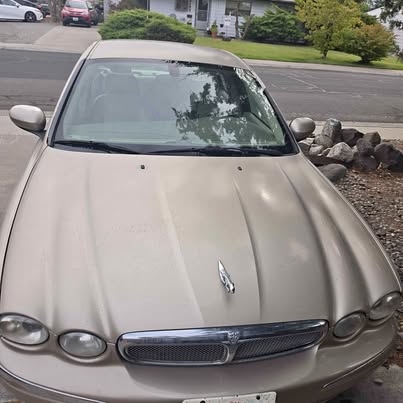
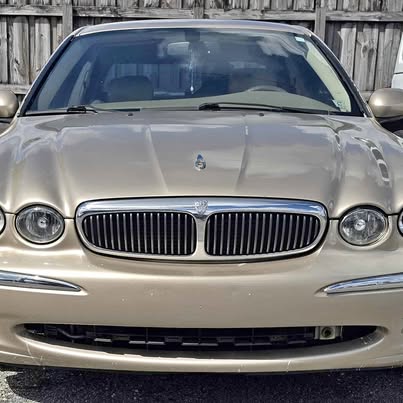
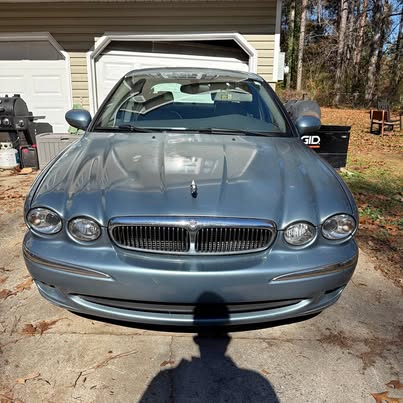
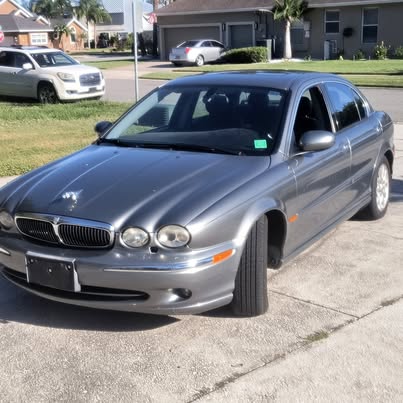
Production began in 2001 at Halewood on Merseyside, a former Ford plant transferred to Jaguar and heavily re-equipped. The shape was deliberately traditional: four round headlamps, a fluted bonnet line, a grille in the classic idiom and a bootlid with the curved fall of the original XJ6 — it was meant to read, instantly, as a small Jaguar. The interior followed the same brief: real wood veneer, leather on the better trims, and a driving position that felt like a scaled-down XJ. Contemporary road tests were kinder than the later folklore: ride and refinement were praised almost universally, and the 3.0-litre car was genuinely quick.
America was the market that mattered most, and in the United States the range was kept simple: cars arrived for the 2002 model year with a choice of the 2.5-litre or 3.0-litre V6, all-wheel drive on every car, and a five-speed manual or automatic gearbox. Europe got a wider range as the years passed — a front-wheel-drive 2.0-litre V6 from 2002, common-rail diesel power from 2003, and an estate car, the first production Jaguar wagon, from 2004, which reached America as the Sportwagon for a short run. A facelift for 2008 brought a new mesh grille and fresh trim. American sales ended after 2008; European production ran into December 2009, when Halewood built the last of a total run usually quoted at 355,227 cars — a long way short of the plan, and the reason the X-Type is now so cheap: it was built in family-car numbers and is valued today as a family car, while the surviving good ones become scarcer every winter.
That survival point is the second thing to hold in mind. The X-Type's value fell so far, so fast, that maintenance budgets fell with it. A model whose transfer case holds barely more than half a litre of oil, whose automatic gearbox was declared sealed for life, and whose sills rust behind decorative covers punishes exactly the neglect its low prices invited. The spread between the best and worst X-Type you will look at is therefore enormous, and it is almost entirely a spread of care rather than of specification.
The models
Because this is a model guide, the table below works at the level at which X-Types actually separate in the market: engine, drive layout and body. Outputs are period factory ratings; American cars were quoted in SAE net horsepower, European cars in metric PS, so a European figure can look a few units stronger than the same engine quoted for America without being any different under the bonnet. Production is given only for the range as a whole, because honest per-variant build figures were never published in a form worth repeating, and a dash in that column means exactly that.
| Model | Years | Engine | Output | Built | Character |
|---|---|---|---|---|---|
| 2.0 V6 (Europe) | 2002–2005 | 2.1 V6 (AJ20), front-wheel drive | 157 PS | — | The fleet special; no all-wheel drive, no American sales |
| 2.5 V6 AWD | 2001–2008 | 2.5 V6 (AJ25) | 192 hp (US) | — | The volume American car; adequate, sweet, needs revs |
| 3.0 V6 AWD | 2001–2008 | 3.0 V6 (AJ30) | 227 hp (US) | — | The one the chassis deserved; effortless by comparison |
| Sport | 2002–2008 | 3.0 V6 (AJ30), some markets 2.5 | 227 hp (US) | — | Firmer suspension, bigger wheels, mesh grille, dechromed |
| Estate / Sportwagon | 2004–2009 | 2.5 / 3.0 V6, diesels in Europe | 192–227 hp | — | The first Jaguar wagon; rare and genuinely practical |
| 2.0D (Europe) | 2003–2009 | 2.0 Duratorq diesel, front-wheel drive | 130 PS | — | The economy play; injectors and flywheel are the story |
| 2.2D (Europe) | 2005–2009 | 2.2 Duratorq diesel, front-wheel drive | 155 PS | — | Strong, frugal, the best European mile-eater |
| VDP Edition (US) | 2006–2008 | 3.0 V6 (AJ30) | 227 hp | — | Vanden Plas luxury trim on the small car; wood and piping |
The 2.5 V6 (2002–08 in America). The default X-Type, and the car most listings describe. Its 2,495 cc V6 makes its power high in the rev range and its torque peaks later still, so a 2.5 works its gearbox harder and feels busier at highway pace than the badge suggests. Around town and on a flowing road it is sweet, smooth and entirely sufficient; on a long grade with four adults aboard you will wish for the 3.0. The mechanical car underneath barely changed across the run, which simplifies buying: year matters less than condition and evidence.
The 3.0 V6 (2002–08 in America). The engine the car was designed around. The extra half-litre is not about the headline power figure; it is about torque arriving earlier and in greater quantity, so the automatic changes up sooner, the car cruises with less throttle, and the whole drivetrain leads an easier life. If two otherwise equal cars stand in front of you, the 3.0 is the better buy almost every time, and the market knows it only mildly, so the premium is usually small. It is also the engine of the Sport and of the estate in America, which concentrates most of the desirable variants in this one row of the table.
The Sport. Not an engine but a chassis and trim package, sold in America principally on the 3.0: firmer, lower suspension, larger wheels — 17-inch standard, 18-inch on some cars — a mesh grille, body-coloured exterior trim, sports seats and a darker interior. The ride penalty is modest on 17-inch wheels and a genuine consideration on 18s over broken pavement, because the standard car's ride is one of its best features and the Sport spends some of it. Check a Sport's wheels for kerb damage and its tyres for the uneven rear wear described in the problem sections.
The estate — Sportwagon in America (2004 onward). Jaguar's first production estate car, with a genuinely useful load bay with the rear seats folded. American sales were brief and numbers small, so a Sportwagon is the hardest X-Type to find and the easiest to justify: it does everything the saloon does and carries dogs, furniture and bicycles while doing it. Its specific checks are the tailgate struts and hinges, water leaks around the tailgate seal into the spare-wheel well, and the self-levelling rear suspension fitted to some cars, whose failure presents as a car sitting low at the back and riding harshly.
The VDP Edition (2006–08, America). Late in the run Jaguar America offered the small car with Vanden Plas treatment: richer wood, piped and softer leather, chrome detailing and a longer equipment list. Mechanically it is a 3.0 automatic, nothing more or less, so buy it exactly as you would a 3.0 — but its buyers tended to be the demographic that services cars properly, and a VDP with a fat history file is one of the best places in the range to find a cared-for example.
The European cars you may meet as imports. The 2.0 V6 of 2002 was Jaguar's admission that all-wheel drive and a 2.5-litre entry price had pitched the car too high for European fleet buyers: a 2,099 cc version of the same V6 family, driving the front wheels only. It deletes the transfer case — this guide's biggest problem area — at a stroke, but it was never sold in America. The diesels matter more. The 2.0D of 2003 and the 2.2D of 2005 used Ford's Duratorq common-rail four-cylinder, front-wheel drive and a manual gearbox as standard, with a six-speed automatic joining the 2.2D at the 2008 facelift. They sold in large numbers in Europe, are the X-Types most likely to have covered enormous mileages, and their failure modes — Delphi injectors, dual-mass flywheels, turbocharger actuators, particulate filters on the later 2.2 — are covered below. No diesel was ever sold new in America; treat one on American soil as a private import and price its orphan status accordingly.
Engines and gearboxes
The AJ-V6 petrol engines: AJ25 and AJ30
Every petrol X-Type sold in America carries a member of one engine family: Jaguar's AJ-V6. The family's ancestry is Ford's Duratec V6, the 60-degree, all-aluminium, double-overhead-camshaft, 24-valve V6 that powered Mondeos, Tauruses and much else besides — but ancestry is not identity. Jaguar's engineers reworked the design at Whitley with Jaguar-specific cylinder heads, continuously variable timing on the inlet camshafts, a variable-geometry intake system that changes the effective tract length with revs to fatten the torque curve, and Jaguar engine management. The result has a different character from its Ford cousins: quieter, keener to rev, and smoother at the top end, where it makes its power.
AJ25 — the 2.5 (2,495 cc, 192 hp in American tune). The engine's defining trait is where it does its work: peak torque arrives at around 3,000 rpm and peak power close to 6,800 rpm. Driven gently it is refined and willing; driven hard it needs the gearbox to keep it on the boil, which is why the automatic 2.5 feels a full class slower than the 3.0 while the manual 2.5, where you hold the gears yourself, feels closer. It is a durable engine with no signature internal failure. Its weaknesses are all in the systems hung around it — cooling, ignition, vacuum and intake control — covered in the problem sections.
AJ30 — the 3.0 (2,967 cc, 227 hp in American tune). The same architecture stretched to three litres, and the stretch transforms the brief. Torque is up by roughly a third over the 2.5 and arrives no later, so the 3.0 pulls from 2,000 rpm in a way the smaller engine never quite manages, while sounding like a Jaguar should — a muted, expensive hum under load that hardens pleasantly above 4,500 rpm. It shares the 2.5's ancillaries, service schedule and failure modes almost item for item, which is why this guide treats the two V6s as one engine with two temperaments: everything you learn to check on one applies to the other, and the rear bank of either is equally buried under the intake manifold when a coil pack or a set of plugs needs changing.
Servicing the AJ-V6 is conventional and that is its strength. There is no timing belt: the camshafts are chain-driven, and the chains, tensioners and guides are long-lived on an engine that has had its oil changed — the one non-negotiable. Oil changes at sensible intervals, on the correct grade, are the difference between a silent 180,000-mile engine and a rattly 110,000-mile one, because the variable cam timing and the chain tensioners both live on oil pressure and cleanliness. Spark plugs are long-life items, but the rear bank sits beneath the intake manifold, so plug and coil-pack changes on that bank carry manifold-off labour — a fact that shapes several bills in the next section and makes a documented rear-bank plug and coil history genuinely valuable. The thermostat, water pump and plastic cooling housings are service items by age now, not by mileage. Engine management is Jaguar-tuned with coil-on-plug ignition and full on-board diagnostics a generic code reader can interrogate — there is no excuse for buying an X-Type with an unexplained warning light, because the car will tell you, in codes, most of what is wrong with it before you spend anything.
The Duratorq diesels: 2.0D and 2.2D (Europe)
The diesel X-Types use Ford's ZSD-series Duratorq four-cylinder, a 16-valve common-rail turbodiesel with Delphi fuel injection, in 2.0-litre form making 130 PS and in the later 2.2-litre form 155 PS, the bigger engine with a six-speed manual and, from the 2008 facelift, the option of a six-speed automatic and a particulate filter. On the road the 2.2D is a fine thing: torque in a quantity no petrol X-Type approaches, delivered early, with fuel economy the V6s cannot approach either. As used cars their risks are the standard common-rail diesel risks in concentrated form, because so many were bought as high-mileage fleet and taxi transport. Injector wear shows as rough cold starting, a smoky idle and diesel knock under load, and Delphi injectors of this era are coded to the engine management when replaced — a specialist job, not a driveway swap. The turbocharger's electronic actuator fails separately from the turbocharger itself and produces limp-home mode and underboost codes owners misdiagnose as a dead turbo. The dual-mass flywheel wears with mileage and announces itself as a judder on take-up and a rattle at idle that stops when the clutch is pressed. Exhaust gas recirculation valves coke up and stick. None of this applies to an American-market car, and all of it applies, hard, to a European one — which is why no diesel should be bought without a cold start witnessed from stone cold.
Gearboxes and the all-wheel-drive system
The five-speed automatic — Jatco JF506E. The automatic fitted to almost every American X-Type is a five-speed transverse unit built by Jatco, a gearbox family also found, in different calibrations, in Volkswagens, Mazdas, Rovers and Land Rovers of the same era. In the Jaguar it is controlled through the traditional J-gate, which lets the driver hold lower gears manually, and it has a Sport mode that holds gears longer and changes down earlier. It is a smooth, well-matched gearbox when healthy, and a neglected one is a common sight, for one specific reason: Jaguar presented it as sealed for life, with no scheduled fluid change, and a generation of owners believed them. No automatic gearbox is sealed for life. The fluid oxidises, friction material accumulates in it, the solenoids and valve body wear in dirty fluid, and by 120,000 miles an unserviced JF506E is living on borrowed time. The symptoms arrive in a familiar order — a flare on the two-to-three change, a thump into Drive or Reverse after a pause, shuddering under light load, changes that deteriorate as the box warms — and they are largely preventable, because the box responds well to fluid and filter service with the correct fluid to the Jaguar specification. Budget a fluid service into any purchase without evidence of one, and treat a box that already misbehaves hot as a rebuild-or-replace negotiation, with a fitted cost in the region of $2,500–4,000 for a rebuilt unit installed by a specialist, against which the price of the whole car should be measured.
The five-speed manual — MTX-75 family. A minority choice in America and a significant one in Europe, the manual is a five-speed transaxle from Ford's MTX-75 family, adapted to drive the transfer case on all-wheel-drive cars. It is a strong, pleasant gearbox: a slightly long throw, well-chosen ratios, and no known appetite for self-destruction. Judge it on the clutch — bite point, judder, slip under load in a high gear — on the concentric slave cylinder, whose failure is a gearbox-out job and therefore a clutch job at the same time, and on synchromesh into second and third when cold. A manual car deletes the automatic's fluid question entirely and gives the 2.5 back its missing flexibility; it is the enthusiast's specification and the market's scarcest.
The all-wheel-drive system — viscous centre coupling, 40/60 split. This is the X-Type's signature hardware and its signature risk, and it deserves a plain explanation. Drive leaves the gearbox and enters a transfer case — a power take-off unit bolted to the transaxle — which sends drive rearwards through a two-piece propshaft to the rear differential. Inside the transfer case, a viscous coupling divides torque between the axles. In steady cruising the split is fixed at 40 per cent front, 60 per cent rear, which is why the X-Type feels subtly rear-led in a way no front-drive-based rival of its day did. When one axle begins to turn faster than the other — a front wheel spinning on ice, say — the coupling's silicone fluid shears, heats and thickens, progressively locking the axles together and sending torque to the axle with grip. There are no locking differentials at either end; wheel-level slip is managed by traction control braking individual wheels through the ABS system, with Jaguar's Dynamic Stability Control fitted or optioned depending on year and market. The system is elegant, light and, in snow, genuinely excellent. Its weakness is capacity and cooling: the transfer case holds only around 0.6 of a litre of oil, it has no cooler, it sits in the hot neighbourhood of the exhaust, and on many cars it was never checked, let alone changed. Heat cooks the oil, the oil stops protecting the gears, bearings and seals, and the unit begins the whine-and-rumble sequence detailed in the problem sections. None of this is a reason to avoid the system. It is a reason to test it properly, to change its oil on any car you buy, and to understand that on this model the cheapest-sounding car with a noisy transfer case is the most expensive car on the page.
Problem areas
Rust and structure: sills, subframes and the hidden map
The X-Type's body was well protected when new — galvanised panels, wax injection, plastic sill covers — and that protection has a perverse consequence twenty years on: the car hides its rust better than it resists it, so the inspection has to go looking. Learn the map, because it is consistent from car to car.
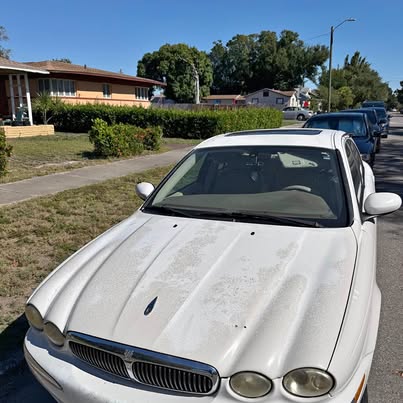
The sills are the structural story. The outer sills run beneath plastic cover trims that keep road filth and moisture against the metal and hide the result from a casual glance. Corrosion starts at the rear of the sill, around the jacking points and where the sill meets the rear wheel arch, and eats outward and upward; by the time blistering shows on the visible paint above the cover line, the sill underneath is usually perforated, and the sill is a structural member whose condition decides whether the car is a car or a welding course. Press firmly along the sill behind the cover, look up at it from below with a torch, and treat crunching, flaking or fresh underseal applied only to the sills as a verdict, not a detail. A proper sill repair — covers off, rot cut out, new metal let in, painted and waxed — is a job in the region of $800–1,800 a side at a competent independent, and a car needing both sills has consumed most of its own value before you have touched the mechanical side.
Subframes and suspension mountings. The front and rear subframes are steel, exposed and, on cars from salted-road country, frequently corroded — the rear subframe and its mounting points especially, because they live in the spray behind the rear wheels and are rarely washed. Surface rust on a subframe is cosmetic; flaking, holed or thinned metal around the mounting bolts is structural and expensive, because subframe replacement means suspension, exhaust and, at the rear, driveline components all come apart. Check also the front suspension turrets, the boot floor and spare-wheel well — estate cars leak at the tailgate and store the water there — and the bottoms of all four doors, where the skin folds over the frame and traps moisture. Wheel arches lip-rot from the inside out, and bonnet and bootlid edges bubble where the skin is folded. American cars from the dry states routinely present a different picture — original paint on the subframes, factory wax still in the sills — and that geographic difference is now one of the largest single components of an X-Type's value. Where a car has lived is a specification. Ask, and check the underside to confirm the answer.
The driveline: transfer case, propshaft and differentials
The transfer case is the model's defining failure, so learn its mechanism properly. As the engines section explained, the unit holds roughly 0.6 of a litre of oil, runs hot, and was widely treated as maintenance-free. The failure sequence is progressive and audible. First, usually, a whine or a high, dry bearing note that rises with road speed regardless of gear. Then a rumble under load, a vibration through the floor at cruising speed, and in the late stages grinding, graunching on tight turns as the viscous coupling — its fluid cooked by the same heat — begins to bind and release, and oil weeping from the seals and breather onto the exhaust. Distinguish it from the imitators before condemning it: a wheel bearing changes note when you load and unload it by weaving gently; tyre noise changes with the road surface; transfer-case noise changes with throttle — it loads and unloads as you lift off and reapply power at a steady speed — and it comes from the centre of the car, not from a corner. A car at this stage needs the unit rebuilt or replaced, a specialist job in the region of $1,800–3,200 fitted with a rebuilt unit, and the car should be priced as what it is: a sound car minus that bill, or a spares car. Prevention, on a quiet unit, is simple and cheap by comparison — fresh oil of the correct specification, changed on purchase and periodically thereafter, by someone who knows the fill procedure, because access is awkward and under-filling is its own failure mode.
Propshaft and rear driveline. The two-piece propshaft's centre support bearing wears and perishes, presenting as a thump on take-off, a vibration in the 40–60 mph band and a droning that owners chase through the tyres and wheel bearings before finding it. The bearing and its rubber mounting are replaceable without replacing the whole shaft if you use a specialist who will press the joint apart; main-dealer logic historically replaced assemblies, one of several places where independent knowledge halves an X-Type bill. The rear differential is a modest unit that nevertheless leaks from its pinion and output seals and whines if it has run low; look for the mist of oil and road dirt that marks a long-term weep. Front driveshafts wear their inner joints — a shudder under acceleration that vanishes on lift-off is the classic tell — and split gaiters, caught early, are a cheap job; ignored, they are a shaft.
The viscous coupling as a tyre discipline. One ownership rule belongs here, because it kills couplings: the viscous unit interprets any persistent speed difference between the axles as slip, and mismatched tyres create exactly that. Different brands, wear states or sizes front to rear make the coupling work constantly, heating its fluid and wearing it out in ordinary driving. An X-Type must run four matching tyres of the same size, rotated to keep wear even — and a car presented on a mixed set is telling you its previous owner either did not know or did not care.
Engines: cooling, ignition, intake and leaks
The AJ-V6 itself — block, heads, chains, bottom end — is the least of your worries. The systems around it are where X-Type engine bills live, and they follow a pattern: plastic and rubber components that were fit for a fifteen-year life are now twenty years old.
Cooling system. The water pump, the thermostat and its plastic housing, the expansion tank and a forest of hoses and plastic connectors all age out together, and the failure that matters is the one that overheats the engine, because an aluminium V6 run properly hot is an engine whose head gaskets are in question from that day forward. Look for the evidence trail: a stained or crazed expansion tank, mismatched hoses, coolant crust at hose joints, a fan that runs constantly or not at all — the cooling-fan control module is a known failure that presents as overheating in traffic, a dead air-conditioning system, or both, and is misdiagnosed as a fan motor or a compressor before anyone tests the module. A healthy car holds its temperature in traffic with the fans cycling and shows clean coolant in a tank you can see through. Budget a cooling-system refresh — pump, thermostat, housing, tank, the worst hoses — as a job in the region of $600–1,200 in parts and labour on any car without evidence of one, and treat it as insurance rather than repair.
Ignition and the rear-bank problem. Coil-on-plug ignition means six coils, and the three on the rear bank live under the intake manifold. Coils fail with age and heat, one at a time, presenting as a misfire under load, a flashing engine light and codes that identify the cylinder. On the front bank that is a ten-minute job; on the rear bank it is manifold-off labour, which is why cheap owners replace one rear coil and leave two equally old ones to fail next month, and why a car with an invoice for a full set of coils and plugs is worth measurably more than the same car without one. When a rear-bank coil is changed, plugs and manifold gaskets should be done in the same visit — the labour is already paid. Judge any misfiring car on this arithmetic: the parts are modest, the access is the bill, in the region of $400–800 for a specialist to do the rear bank properly with plugs.
Intake control and vacuum. The variable intake system uses vacuum-operated actuators and small linkage components to switch the tract length; the plastic clips and diaphragms age, a linkage drops off or a diaphragm splits, and the car loses the low-rev torque the system exists to provide, sometimes with a rattle from the manifold at idle, sometimes with nothing but a flat feel below 3,000 rpm that an owner will describe as normal. It is not normal — a healthy AJ-V6 pulls cleanly from low revs. The same vacuum system feeds a web of small hoses that perish and split, causing lean-running codes, a hunting idle and a hiss you can hear with the bonnet open if you stand quietly and listen. The crankcase ventilation valve and its hose are part of this story: a collapsed or blocked PCV path raises crankcase pressure and pushes oil out of gaskets that are then blamed for leaking. None of these parts is expensive. All of them require diagnosis by mechanism rather than by replacing the largest component in the neighbourhood.
Gearboxes in service: automatic and manual failure modes
The automatic's story was told in the engines section; its service reality belongs here. A JF506E that changes cleanly when cold proves almost nothing, because the classic failures are temperature-dependent: the test is the box fully hot, after twenty minutes of mixed driving, performing the two-to-three and three-to-four changes under light and moderate throttle, engaging Reverse and Drive from rest without a delay-and-thump, and holding a steady cruise without hunting. Solenoid failures and valve-body wear produce harsh or flared changes that a fluid service sometimes improves and sometimes merely postpones; internal clutch wear produces slip that no fluid will cure. Electrical faults in the gearbox loom and selector switch produce intermittent limp-home mode and misleading codes. The honest pricing rule: a hot misbehaviour a specialist attributes to solenoids or valve body is a job in the region of $800–1,500; slip under load is a rebuild, $2,500–4,000 fitted, and at that point the car's price must do the adjusting.
Suspension, steering and brakes
The X-Type rides on MacPherson struts at the front and a multi-link rear suspension derived from the Mondeo estate's layout, chosen to package the rear driveline, and its condition decides whether the car feels like a Jaguar or like a tired taxi. The front lower arms carry bushes and a ball joint that wear as a set; the symptom is a knock over sharp bumps, vague steering on turn-in and inner-edge front tyre wear. The rear is a small forest of links — and it is the rear that generates the model's characteristic tyre bill, because worn rear control-arm bushes and toe links let the rear wheels toe and camber out of specification, scrubbing the inner edges of the rear tyres bald in a few thousand miles while the centres still look new. Any X-Type wearing uneven rear tyres has a bill attached: arms and links in the region of $500–1,000 in parts, plus the four-wheel alignment the job is pointless without, plus the tyres it has already eaten. Wheel bearings — pressed into the hubs — drone in the classic rising note and are a press job, not a hand-tool job. Dampers tire by 100,000 miles and the car tells you with float over crests and a second bounce after speed humps; springs snap at the coil ends, announced by a crack over a bump and a corner sitting low. The steering rack leaks from its seals and the track-rod ends wear into the same vagueness as the front bushes, so diagnose the front end as a system. Brakes are conventional discs all round, generously sized on the 3.0, and their enemies are corrosion and seized caliper sliders on cars that sit — an X-Type that has stood for a year needs its brakes recommissioned, not merely tested, handbrake mechanism included.
Electrics, interior and the comfort systems
The X-Type's electrics are Ford-era Jaguar: fundamentally sound architecture, a body control system managing locks, lights and windows, fibre-optic networking for audio and telephone equipment on cars so equipped, and a list of age-related failures that is long but mostly cheap. Door lock actuators fail one by one — a door that locks but does not unlock, or chatters, is an actuator, in the region of $150–300 fitted per door. The boot and fuel-flap releases die from microswitch and wiring faults, often where the loom flexes into the bootlid. Battery drain faults trace most often to a boot or glovebox light staying on, a failing alternator or a module not sleeping — and the alternator itself, a smart-charge unit, produces the model's favourite false alarm: a battery warning light with a charging system that tests perfectly well, caused by the communication between alternator and engine management rather than by either component. Air-conditioning failures divide between the fan module already mentioned, condensers corroded at the front of the car, and compressors tired at high mileage. The cabin's enemies are age and heat: headlinings sag — near-universal on sun-belt cars, a retrim job in the region of $300–600 — seat motors and memory modules fail, facia veneer crazes and lifts at the edges, the driver's bolster wears through its colour, and sunroof drains block and deliver rainwater to the headlining and footwells, where it is blamed on the windscreen seal. None of this is structural. All of it is the difference between a car that feels like a Jaguar and one that feels like an old saloon with wood on the dash, and it is priced, item by item, in the negotiation.
How to inspect one
Work in this order: cold car, paper first, underside before cosmetics, and the expensive systems — transfer case, gearbox, sills — tested deliberately rather than noticed in passing. Do not let a seller warm the car up before you arrive, because a warm engine and a warm gearbox hide the two most expensive stories this model tells.
- Start with the paper, not the paint. Service history, invoices and receipts, read for the specific items this guide names: transfer-case oil changes, automatic gearbox fluid services, cooling-system work, rear-bank plugs and coils, rear suspension arms. A thick file that never mentions the transfer case is not a thick file. Note the tyre brands and sizes recorded on recent invoices for step 9.
- Cold start, bonnet up, stand and listen. From stone cold the AJ-V6 should fire instantly, idle evenly and quieten within a minute. A rattle from the top of the engine that fades as oil pressure builds points at chain tensioners and an oil-change history that needs questioning; a hunting idle or an audible hiss points at the vacuum system from the problem sections. On a diesel, slow cranking, rough running, smoke and diesel knock cold are injector and glow-system evidence.
- Cooling system, cold and then hot. Cold: expansion tank condition and coolant colour and level, crust at hose joints, mismatched or spongy hoses, stains that map old leaks. Then, on the test drive, watch the gauge in traffic and confirm the fans cycle and the air-conditioning blows cold — the fan-module test from the problem sections, done by simply using the car as its owner would.
- The sill and subframe test. Crouch at each side: press the sills firmly along their length behind the covers, look at the rear sill and jacking point with a torch, check the door bottoms and arch lips, then get the car over a pit or on a ramp if the sale justifies it and read both subframes and their mountings. This is the rust map from the problem sections applied in five minutes, and it outranks everything cosmetic on the car.
- Transfer case, tested by ear and by throttle. On the drive, at a steady 40–60 mph, lift off and reapply the power gently and repeatedly. Whine, rumble or vibration that loads and unloads with the throttle, from the centre of the car, is the transfer case until proven otherwise; weave gently to eliminate a wheel bearing, which changes note with side loading. Finish with two or three tight, full-lock, slow turns in a car park: graunching, binding or hopping is the viscous coupling objecting, and the objection is a bill.
- The automatic gearbox, fully hot. Only judge the box after twenty minutes of driving. Demand the two-to-three and three-to-four changes under light and then moderate throttle, a steady cruise without hunting, and Drive and Reverse engagement from rest without delay or thump. Any flare, shudder or slip hot is priced by the gearbox subsection — solenoids and valve body at the kind end, a rebuild at the other — and never by the seller's assurance that it has always done that.
- The manual gearbox and clutch, if fitted. First changes of the day into second and third for synchromesh, bite point height, judder on take-up, and a high-gear, low-rev full-throttle pull for slip. A gearbox-out clutch job is the unit of currency here; price any doubt as that job.
- Engines under load. A healthy AJ-V6 pulls cleanly from 2,000 rpm — a flat, reluctant feel low down with a rattle from the manifold is the variable-intake fault from the problem sections, not the car's character. Use the gears on an automatic through the J-gate, listen for misfire under load, and check the mirrors for smoke on a hard acceleration and on the overrun after it.
- Tyres as evidence. Four matching tyres, same brand, size and approximate wear, are a requirement of the viscous coupling, not a preference. Then read the wear patterns as the suspension section teaches: inner edges scrubbed at the rear mean links and alignment; fronts worn on the inner edge mean bushes and ball joints. A mixed set of tyres is both a coupling risk and a character reference for the previous owner.
- Suspension and steering by feel. Over a broken surface at low speed, listen for the front knock of worn lower arms; over crests at speed, feel for the float of tired dampers; on a straight road, check the wheel sits straight and the car does not wander or pull under braking. Every noise here maps to a named component in the problem sections — price the component, not the noise.
- Electrics, everything, in the seat. Every window, lock, mirror, seat motor and memory position; the boot and fuel-flap releases; the air-conditioning hot and cold; the audio and, if fitted, navigation and telephone; every warning light on at key-on and off again at start. Then check for the water that betrays blocked sunroof drains: damp headlining edges, damp footwell carpets, a musty smell.
- The underside and the fluids, last and together. On a ramp or with the car safely raised: transfer-case and differential leaks, power steering weeps, driveshaft gaiters, brake condition and caliper sliders, exhaust condition, and the state of every fluid you can see. Finish by re-reading the history file against what the car has just told you. Where they agree, you have a price. Where they disagree, believe the car.
Values
The build beneath this guide carries the current listings and the recorded-sales picture for the X-Type, refreshed as the market moves, and that block is where the numbers live. This section teaches you how to read it, because the X-Type market is one in which the average of anything is close to meaningless and the spread is the whole story.
The condition spread on this model is wider than on almost any comparable car, and it is driven by the failure map you have just read. At one end sits the car with perforated sills, a whining transfer case and an unserviced automatic: a car whose honest value is its usefulness as a source of parts for the survivors, whatever its mileage or its photographs. At the other end sits the dry-state or garaged car with the transfer case serviced, the cooling system renewed, the rear suspension rebuilt and four matching tyres: a car that needs nothing and drives like a small XJ. Those two cars can share a year, an engine and a colour, and the distance between them in money is not a percentage adjustment — it is a multiple. When you read the listings block, therefore, do not anchor on the middle of the range. Establish which end of the spectrum each car honestly occupies, using the inspection sequence, and expect the market's middle figures to describe cars that mostly live in the lower half of it.
Within that spread, the premiums are consistent and explicable. The 3.0 commands a modest premium over the 2.5 because it is the better car to drive and no more expensive to run. The estate — the Sportwagon — commands a real one, because so few were sold in America and its buyers have no substitute within the marque. The manual gearbox, rare in America, finds its buyers quickly when the car is otherwise right. The VDP Edition and the Sport sit at opposite ends of taste and both find loyal audiences, neither worth a large premium over a standard 3.0 in equal condition. Colour and trim move individual cars, but no colour rescues a noisy transfer case, and no options list outranks a service file.
The asking-versus-achieved gap on this model is wide and it works in the prepared buyer's favour. Sellers anchor on what the car is — a Jaguar, all-wheel drive, leather and wood — while the market prices what the car needs, and an X-Type with an honest list of deferred jobs can sit unsold through several reductions before it meets its buyer. Your leverage is specificity: a written, costed list from the inspection — sill work, a transfer-case unit, a gearbox service, rear links and tyres — converts a negotiation from opinion into arithmetic, and sellers of these cars, usually private owners rather than traders, respond to arithmetic. The project-versus-driver gap follows the same logic. A project makes sense only when the structure is sound and the faults are the bolt-on kind — cooling plastic, coils, links, tyres — because the structural and driveline faults each cost a large fraction of a good car's whole value, and a project that needs sills and a transfer case is not a project but a donation. Buy the driver, pay the driver's premium, and let the recorded-sales block below confirm that the best cars in this market are still remarkably little money for what they are.
Parts and ownership
Owning an X-Type well is an exercise in knowing which parts bin you are shopping in, because the car has three. The first bin is Jaguar-specific: trim, body panels, interior components, the transfer case and its internals, Jaguar-calibrated electronics and the all-wheel-drive hardware. These parts come from Jaguar's own classic-parts channels, from the big independent specialists — in America, firms such as Welsh Enterprises and Terry's Jaguar Parts; in Britain, SNG Barratt and a deep bench of marque breakers — and, increasingly, from the dismantling of the rusty and the blown-up, which is now a steady supply in itself. Prices for this bin are fair while stocks last and rise as they thin, so the rule for a keeper is simple: when a Jaguar-specific part you will certainly need appears at a fair price, buy it then, not when the car is off the road.
The second bin is the Ford inheritance, and it is the X-Type's ownership gift. A long list of service components descends from high-volume Ford practice — filters, many sensors and switches, brake components, suspension hardware shared in design if not always in part number, the manual gearbox's internals and the diesel engines' entire ecosystem in Europe. These parts are cheap and everywhere, provided you or your supplier know the cross-reference; this is where the marque specialists earn their margin, because their catalogues tell you which components are common and which are not. The third bin is bought-in hardware shared across the industry: the Jatco automatic, whose solenoids, service kits and rebuild parts are stocked by transmission suppliers for the Volkswagen, Mazda and Land Rover applications of the same gearbox family, is the outstanding example — a gearbox specialist who has never touched a Jaguar may know your transmission intimately, and his parts shelf will be cheaper than the Jaguar box the same components arrive in elsewhere.
Running the car day to day is unremarkable, which is the point. Servicing is annual or by mileage on conventional schedules, fluids and filters are ordinary, tyres are ordinary sizes — but observe the two model-specific disciplines from the problem sections as services in their own right: the transfer-case oil, changed on purchase and periodically thereafter even though no schedule demands it, and four matching tyres, rotated to wear evenly, for the viscous coupling's sake. Add the automatic gearbox fluid service that the sealed-for-life claim discouraged, and you have the complete preventive programme: three fluids the factory under-scheduled, attended to by you. The owner's community is a genuine asset: the Jaguar forums carry two decades of X-Type diagnosis, including transfer-case oil procedures, fan-module testing and intake-linkage repairs, written by owners who have done the jobs. On this model, the forum archive is effectively part of the workshop manual.
Find your mechanic before you need him: an independent Jaguar specialist who likes the X-Type — not all do — backed by a transmission specialist for the Jatco and a competent welder for the sills. Between those three, every fault in this guide is a known job at a known price, and that is what makes the difference between an X-Type that is cheap to own and one that is merely cheap to buy.
Which one to buy
Buy on condition first, specification second, and let the list below order the specifications once condition is equal — because on this model a base car with evidence beats a flagship without it, every time.
- The all-rounder: a 3.0 automatic saloon with a full file. The engine the chassis deserved, the gearbox most buyers want, and the deepest pool of cars to choose from. Spend your effort on the transfer case, the sills and the gearbox service history, and this is the X-Type at its best.
- The enthusiast's pick: a 3.0 Sport with a manual gearbox. The rarest American specification worth having — firmer chassis, the right engine, no automatic question to answer. Accept the ride penalty, verify the synchromesh cold, and buy the first genuinely good one you find.
- The value buy: a 2.5 automatic from a dry state with documented fluids. The market discounts the smaller engine more than the driving experience justifies. A southern or western car with transfer-case and gearbox oil evidence, sound sills and four matching tyres is most of the X-Type for the least money in the range.
- The practical classic: the Sportwagon estate. Everything the saloon does, plus a load bay, in the rarest body the model offers in America. Check the tailgate, the spare-wheel well and the rear suspension as the models section directs, and expect to pay a premium that the scarcity justifies.
- The luxury buy: a VDP Edition. A 3.0 automatic in a richer suit, bought by the demographic that services cars. Judge it as a 3.0, enjoy the cabin, and let its typical owner's habits work in your favour.
- The European mile-eater: a 2.2D manual, bought in Europe. Torque, economy and a six-speed manual, with diesel risks — injectors, flywheel, turbo actuator — that must be tested from stone cold and priced in.
The overriding rule: buy the transfer case, the sills and the service file — the car attached to them is almost incidental. A quiet driveline, solid structure and evidence of the three fluids changed will make any X-Type a good one; their absence makes every X-Type, however shiny, an expensive one.
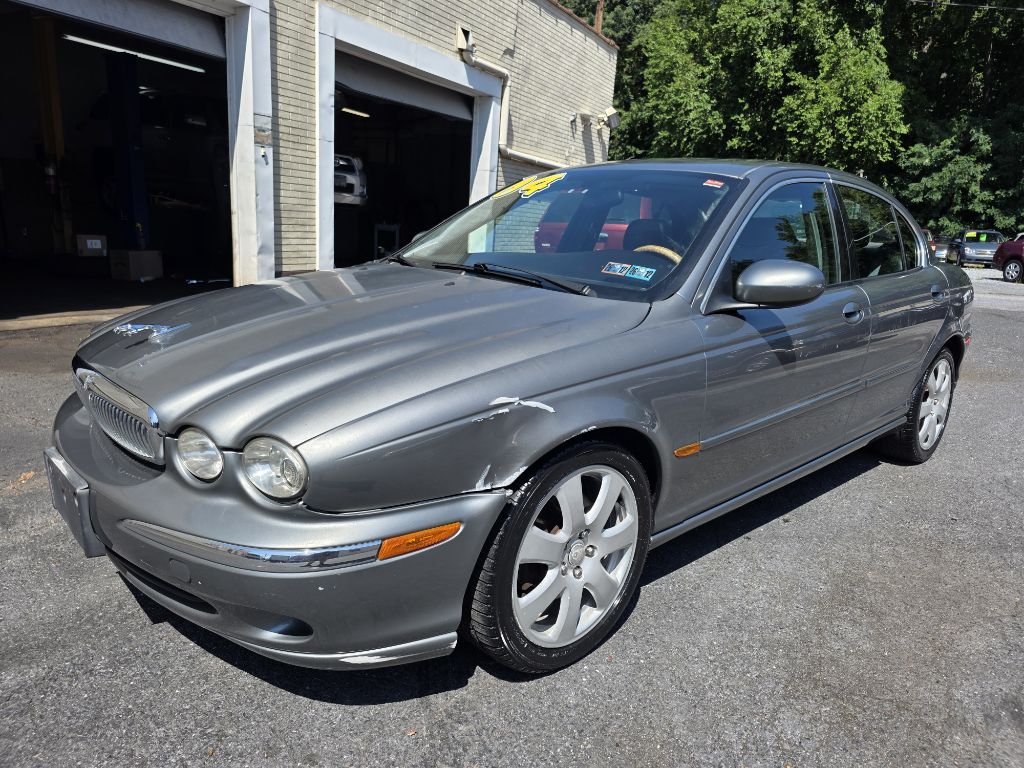
See the 6 X-TYPE 2.5L Sedan 4D cars currently listed.
For sale now
Expand
$1,100Expand
What they sell for: X-TYPE 2.5L Sedan 4D sale prices.