
Jaguar XJ8 buyer's guide
Jaguar XJ8 -- the model's own buyer's guide: variants, values and what to check.
Years listed: 1997-2001 · Series: XJ
Overview and history
The Jaguar XJ8, built between 1997 and 2003 and known inside Jaguar as the X308, is the last XJ constructed exactly as an XJ had been since 1968, and the first XJ powered entirely by a V8. That combination is the whole car: understand it and you understand why good ones are so satisfying and cheap ones so punishing.
The X308 did not start as a clean sheet. It is a thorough evolution of the X300 of 1994 to 1997, itself a reworking of the XJ40 platform of 1986. The steel monocoque, double-wishbone front suspension in a subframe, independent rear suspension, long bonnet, low roof, four round headlamps and fluted bonnet centre all carry over. What changed was the nose, revised lamps and bumpers, a completely new interior, and above all the engine room. Out went the AJ6 and AJ16 straight sixes and the V12. In came the AJ-V8, Jaguar's first V8 since the Daimler engines of the 1960s, and only the fourth entirely new engine family in its history at that point.
That engine had debuted a year earlier, in 1996, in the XK8. In the saloon it defined new naming logic: an XJ was no longer an XJ6, it was an XJ8, for eight cylinders. The American range was simple: XJ8, XJ8 L, Vanden Plas and XJR, with the rare Super V8 at the top. Europe also had a 3.2 litre XJ8, plus Sport, Executive, Sovereign and Daimler trims, but the American buyer will almost always face a 4.0 litre car.
The X308 matters now because it sits at a hinge point: modern enough for a five-speed automatic, traction control, airbags and diagnosable engine management, yet old enough to have no air suspension, no aluminium body and no touchscreen dependence. Its successor, the X350, is cleverer but feels like a different idea of a Jaguar. The X308 is the traditional idea perfected. Its hydraulic steering talks, its ride on 16 inch wheels is the full Jaguar glide, and its cabin smells of real leather and wood because it is.
Go in with your eyes open: the early car has two genuinely serious engine issues. The Nikasil bore coating on early AJ-V8 engines can fail, and the plastic-bodied secondary timing chain tensioners fitted to most of the run can crack and let a chain jump. Neither is a reason to walk away from the model. Both are reasons to buy by engine number, build date and documented work, never by colour and mileage alone, because they are the difference between a bargain and an engine-out bill larger than the purchase. Get them right, attend to a cooling system made partly of ageing plastic, change the gearbox fluid the factory said never needed changing, and an XJ8 is a durable, charismatic car that will do a long freeway day at a murmur.
Production ran from 1997 as a 1998 model year car in the United States through to 2003. Total X308 production was in the region of 126,000 cars, which helps parts supply today, though sorted survivors are far fewer: many were run as cheap luxury, maintained to a price, and the engine and cooling issues above finished off cars rust had already weakened. Inspection discipline matters more than haggling.
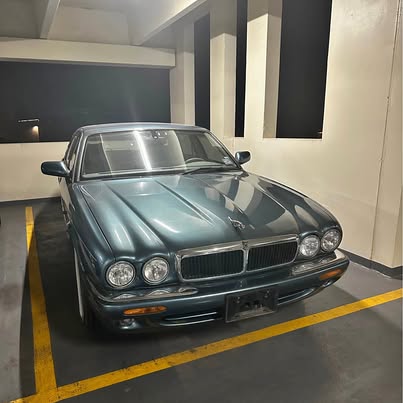
Look at the stance first, before you look at anything else on the car in front of you. An X308 should sit level and low, with the top of the rear tyre close to the arch lip and no sag at either end. A nose-high car suggests tired rear springs or dampers, a nose-low car suggests front spring or subframe mount trouble, and either tells you the previous owner tolerated faults you will now pay to correct. Note the four separate round lamps and the oval grille. On this generation the grille surround and the boot plinth are chrome on most American trims, and pitting or peeling there is cosmetic but expensive to make right, so price it into your thinking from the first photograph.
The models
The American X308 range is easier to read than most Jaguar ranges. Four core variants cover almost every car you will see, plus one rare flagship. Trim differences are secondary. Wheelbase, engine tune and supercharging separate the cars mechanically, and should drive your choice.
| Model | Years in the US | Engine | Output | Built | Character |
|---|---|---|---|---|---|
| XJ8 | 1998-2003 | 4.0 litre AJ-V8, naturally aspirated | 290 bhp | The volume model, short wheelbase | The all-round XJ8, softest ride on 16 inch wheels |
| XJ8 L | 1998-2003 | 4.0 litre AJ-V8, naturally aspirated | 290 bhp | Long wheelbase version of the base car | Extra rear legroom, same mechanicals, calmer still |
| Vanden Plas | 1998-2003 | 4.0 litre AJ-V8, naturally aspirated | 290 bhp | Top trim, mostly long wheelbase | Daimler specification under an American name, richest interior |
| XJR | 1998-2003 | 4.0 litre AJ-V8, supercharged | 370 bhp | The performance flagship of the regular range | A muscle saloon in a formal suit, different gearbox |
| Super V8 | 1998-2003 | 4.0 litre AJ-V8, supercharged | 370 bhp | Low hundreds for the US, long wheelbase only | XJR power with Vanden Plas luxury, the connoisseur car |
The standard XJ8 rides on a 2,870 mm wheelbase, 113.0 inches, yet the rear seat is tighter than the exterior promises: Jaguar prioritised the low roofline and the front occupants. If you carry adults in the back, you want a long wheelbase car. The L adds 125 mm, taking the wheelbase to 2,995 mm, 117.9 inches, almost all of it in rear legroom, with a fractionally calmer ride. Identify an L by its visibly longer rear door. Sellers advertise short cars as long ones more often than you would expect, and the rear door settles it at a glance.
Vanden Plas is the name Jaguar used in America for the car sold in Britain as a Daimler. Mechanically it is an XJ8 or XJ8 L, same engine and ZF gearbox. What you pay for is the interior: deeper leather with contrasting piping, picnic tables in the front seatbacks on most years, more wood, a fluted grille surround and boot plinth, and chrome exterior accents. Most American cars are long wheelbase. A Vanden Plas is worth a premium in equal mechanical condition. A sorted base car beats a tired one every time.
The XJR is a different animal in the same clothes: 370 bhp, 387 lb ft, a Mercedes-Benz gearbox rated for that torque, firmer Computer Active Technology Suspension dampers on most cars, larger wheels, a mesh grille and sports seats. It surges rather than lunges, supercharger whine under a wave of torque. It is also thirstier, harder on tyres and bushes, and far less serene on broken surfaces. Buy one because you want it, not because it was cheap.
The Super V8 combines the XJR powertrain with the long wheelbase Vanden Plas body, without the sporting chassis emphasis. It is the rarest American X308 and the hardest to find honestly. Verify a genuine car by VIN and specification, not badges: badges are cheap and picnic tables can be retrofitted.
European imports occasionally appear. The XJ8 3.2 uses a 3,270 cc AJ-V8 making about 240 bhp: smooth, adequate, and subject to exactly the same Nikasil and tensioner questions, so a low price is not compensation. Sport and Executive are trim levels, Sovereign is the British near-equivalent of Vanden Plas, and Daimler Eight and Super V8 are the fluted-grille toppers. None of this changes the inspection.
Model year matters more than trim. The 1998 and 1999 cars carry the AJ26 with Nikasil bores and the earliest tensioners. The 2000 model year brought the AJ27 with variable valve timing, but Nikasil remained until partway through 2000 production. Cars built from late August 2000 received steel liners, and the final metal-bodied tensioner design is the service replacement you want documented on any earlier car. A 2001 to 2003 car starts with structural advantages a 1998 car matches only if a previous owner paid for the fixes. The market does not always price that difference, which is where a knowledgeable buyer gains.
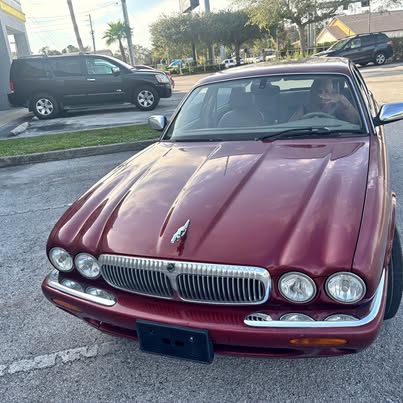
Use the rear door to sort the range in photographs before you travel. On this standard wheelbase car the rear door is noticeably shorter than the front door and the rear wheel sits close behind it. On an L or a Vanden Plas on the long shell the rear door is almost the length of the front, and there is a clear extra span of metal between the door shut line and the rear arch. Sellers photograph cars from the front three-quarter because it flatters them, which conveniently hides the wheelbase. Always ask for a true side photograph, and walk away from any listing that will not provide one.
Equipment was generous: climate control, leather, wood veneer, power seats with memory on most trims, power column adjustment, cruise control and alloy wheels, 16 inches on comfort models, 17 or 18 on sporting ones. Options included a sunroof, heated seats and later navigation, now a period curiosity. No option should decide a purchase. All of them should work if fitted, because electrical faults are diagnostic time, and diagnostic time is money.
Engines and gearboxes
Every American X308 shares one engine architecture. The AJ-V8 is a 90 degree V8 with an aluminium block and heads, dual overhead camshafts per bank driven by timing chains, four valves per cylinder, and coil-on-plug ignition in later form. It is compact, light and free-revving, deliberately happy to rev, unlike the lazy pushrod V8s of American luxury cars. The versions you need to distinguish differ in bore surface and engine management, not in size.
The naturally aspirated AJ26 and AJ27, 4.0 litres
The launch engine, internal designation AJ26, displaces 3,996 cc from an 86 mm bore and 86 mm stroke. In American tune it produces 290 bhp at 6,100 rpm and 290 lb ft of torque at 4,250 rpm. Those figures flatter to deceive if you expect low-down thump. The AJ-V8 makes its power with revs, pulling cleanly and sweetly from 3,000 rpm to the redline with a refined mechanical hum, while below that it is adequate and smooth rather than muscular. The five-speed automatic masks this well in normal driving. Performance when new was quoted at around 6.9 seconds to 60 mph for the short wheelbase car, which is brisk rather than fast today, and entirely sufficient for the car's purpose.
The AJ26 matters because of how its cylinders were finished. Instead of separate cast iron liners, the bores were coated with Nikasil, a nickel and silicon carbide electroplating applied directly to the aluminium block. Nikasil is an excellent surface in the right conditions, used successfully in motorcycles and in racing engines, hard wearing and low friction. Its weakness is sulphur. High sulphur petrol attacks the coating, and parts of the United States in the late 1990s had petrol with sulphur levels high enough to do real damage, particularly in cars used for repeated short journeys where the engine rarely reached full temperature and corrosive combustion products lingered. Once the coating breaks down, the bore loses compression and the engine develops the classic Nikasil symptoms: hard starting, rough idle, high oil consumption and heavy blow-by, with crankcase pressure you can feel at the oil filler. Jaguar tested suspect engines with a blow-by meter under an extended warranty programme and replaced many blocks with steel liner engines. That programme is long finished. Today the test that settles a Nikasil car is a compression test and, better, a leak-down test, interpreted by someone who knows these engines.
For the 1999 calendar year, phased in for the 2000 model year in America, Jaguar introduced the AJ27. The headline change is variable valve timing, continuously variable on the inlet camshafts, which broadens the torque curve and improves economy and emissions. AJ27 also brought revised engine management, coil-on-plug ignition replacing the earlier arrangement, and a drive-by-wire throttle in place of a purely mechanical cable, which is why later cars can suffer throttle body faults the early cars present differently. Output stayed at a nominal 290 bhp in American literature, though the car feels a touch more flexible in the mid range. Critically, AJ27 did not immediately end Nikasil. Early AJ27 engines still had coated bores. The change to pressed-in steel liners came during 2000 production, and the commonly quoted dividing line is engines built from 18 August 2000, with engine numbers from 0008181043 onward. Treat any single date or number as a guide to be verified against the specific engine in front of you, not as gospel, because service replacement engines complicate the picture in the best possible way: a 1998 car carrying a later steel liner replacement engine, documented on a Jaguar invoice, is a better buy than an original 2000 car on its factory Nikasil block.
The second universal AJ-V8 issue is the timing chain tensioner system. There are primary chains from the crankshaft to intermediate sprockets and secondary chains from those sprockets to the camshafts, with hydraulic tensioners for each. The original secondary tensioners have a plastic body and a plastic slipper surface, and with age and heat cycles the body cracks, typically around the mounting and the spring housing. The first symptom is often a rattle for a second or two on a cold start, as oil pressure builds in a tensioner that can no longer hold its position. Ignore it and the chain can gain enough slack to jump a tooth. On an interference engine, where valves and pistons occupy the same space at different times, a jumped chain means bent valves and a cylinder head rebuild at best. Jaguar revised the tensioners more than once, and the service solution is the later metal-bodied secondary tensioner design, fitted as a set with fresh chains and guides assessed at the same time. The parts cost for a tensioner and chain refresh at a specialist is typically in the region of 1,200 to 2,500 dollars in parts and labour for the secondary tensioners alone, rising to 2,500 to 4,000 dollars if primaries, guides and associated seals are done comprehensively while the front of the engine is open. That is real money, and it is why a receipt for this job is worth a premium on any pre-2002 car.
Other AJ-V8 specifics reward attention. The water pump originally used a plastic impeller that can crack and separate from its shaft, giving overheating with a gauge that may lag the reality, and the thermostat housing on early cars is a plastic tower that warps and leaks; aluminium replacement housings exist and are the correct fix. The hoses hidden in the valley of the V, beneath the inlet manifold, age invisibly and then burst, and replacing them is a manifold-off job in the region of 800 to 1,500 dollars at a specialist, which is why evidence of valley hoses done alongside other work is a good sign. The throttle body on drive-by-wire cars contains a motor and position sensors that wear, producing limp mode, a restricted performance message and uneven idle; a rebuilt throttle body is a known cost, commonly 600 to 1,200 dollars fitted, rather than a mystery. Oil leaks come from cam cover gaskets that harden with heat, and spark plug tube seals that let oil pool around the coils and cause misfires that sellers blame on the coils themselves.
One more behaviour frightens owners and is easily avoided: bore wash. Start an AJ-V8 from cold, move it a few feet and switch off, and rich cold-start fuelling washes oil from the bores, compression falls, and the next start may fail. The cure is patience, a fully charged battery and wide-open throttle cranking to cut fuel on cars with clear-flood mode. The prevention is simple: never run one for thirty seconds and switch it off. Let it warm through.
The supercharged engine in the XJR and Super V8
The XJR engine is the same AJ-V8 architecture with an Eaton M112 supercharger sitting in the valley, driven by belt, forcing air through twin intercoolers integrated with the inlet system. Output rises to 370 bhp at 6,150 rpm and torque to 387 lb ft at 3,600 rpm, and the delivery transforms the car. Where the naturally aspirated engine needs revs, the supercharged engine answers from low speed with a continuous, almost electric surge, accompanied under load by supercharger whine. Period figures put the XJR at about 5.4 seconds to 60 mph, which was genuine sports car pace in a car with picnic-table rivals in its sights.
Mechanically, everything about Nikasil dates, tensioners, cooling plastics and valley hoses applies equally, because the base engine shares them. A supercharged car adds its own items: supercharger drive belt and idlers, an auxiliary electric coolant pump for the intercooler circuit that fails quietly and costs performance before it costs reliability, supercharger oil that is supposedly sealed for life and benefits from being changed by a specialist who knows the fill procedure, and a greater appetite for premium fuel, rear tyres and brake pads. Detonation control depends on correct fuel and a healthy cooling system, so a supercharged car with any overheating history deserves extra suspicion. Budget a supercharger service and coupler inspection in the region of 500 to 1,000 dollars if there is rattle from the nose of the blower at idle that disappears just above idle, a classic sign of a worn drive coupler.
Gearboxes: ZF 5HP24 and Mercedes-Benz W5A580
No American X308 has a manual gearbox. The naturally aspirated cars use the ZF 5HP24, a five-speed automatic with electronic control, adaptive shift programmes and Jaguar's J-gate selector, which lets you hold gears on the left side of the gate for descending grades or press-on driving. It is a smooth, well judged transmission when healthy, shifting almost imperceptibly at light throttle and crisply when asked. The supercharged cars use the Mercedes-Benz 5G-Tronic, designated W5A580 and also known as the 722.6, because its torque capacity suited the supercharged engine. It is an equally durable unit with a different feel, marginally more deliberate in its changes.
Both gearboxes suffer from the same piece of factory doctrine: sealed for life. Jaguar, like several makers of the period, specified no routine fluid change, on the basis that the fluid would last the life of the car, which quietly assumed a life far shorter than the one you are now hoping to give it. In practice the ZF unit in particular rewards fluid and filter changes at around 60,000 mile intervals, and a car that has had them shifts better and lives longer. A fluid and filter service at a specialist typically costs 400 to 800 dollars, the wide range reflecting fluid specification and whether the full procedure with a proper level check at the correct temperature is followed. Neglect shows up first as a thump on the two to one downshift coming to a stop, hesitation engaging reverse, or a flare between gears when warm. The ZF 5HP24 also has a known weakness in its A clutch drum, which can crack and cause loss of forward drive, a gearbox-out rebuild in the region of 3,000 to 5,000 dollars at a transmission specialist. The Mercedes unit has its own known items, including a conductor plate inside the gearbox carrying speed sensors, and a pilot bushing where the wiring enters the case that leaks fluid up the harness if ignored. Neither should scare you off. Both should make you insist on a long test drive from cold, as set out in the inspection section, because a gearbox that misbehaves only when warm will behave perfectly for a ten minute demonstration.
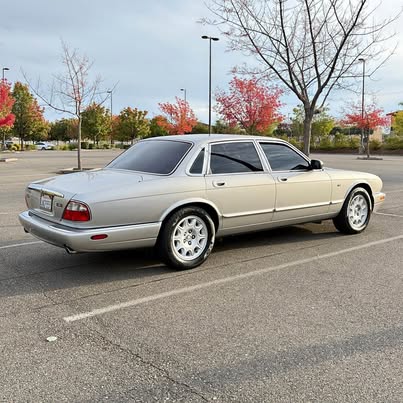
The earliest cars, like this 1998 example, are the purest expression of the shape and the riskiest mechanical purchase. Everything in this section converges on them: Nikasil bores as standard, the earliest plastic tensioners, the plastic thermostat tower and the oldest cooling hoses. That does not make an early car a bad car. It makes paperwork the car. A 1998 with a documented steel liner replacement engine and metal tensioners fitted is mechanically a later car in an early shell. A 1998 with no paperwork is a gamble priced as if the work were done, and you should negotiate or walk on that basis.
Problem areas
Work through this section system by system. Almost every fault here is known, diagnosable and priceable. The dangerous car is not the one with faults. It is the one whose faults were hidden by a warm engine, a valeted bay and a seller who wants you to judge the leather.
Engine: Nikasil, tensioners, cooling and the top end
Start with the two structural questions. First, what bore surface does this engine have? Establish the engine number from the documentation and, where accessible, from the engine itself, and ask directly whether the block is an original Nikasil block, an original steel liner block, or a Jaguar replacement. Then ask what evidence supports the answer. A compression test with all eight cylinders even and strong, and a leak-down test with low and even leakage, is the functional answer that matters most: an engine making even compression today is sealing today, whatever its bores are made of. Uneven results, one bank notably down, or heavy crankcase breathing point the other way. Do not accept a smooth idle as a compression test. The AJ-V8 can idle acceptably on seven and a half cylinders, and the seller knows it.
Second, have the secondary timing tensioners been replaced with the metal-bodied design, and when, and by whom? A proper invoice names the parts. A vague claim that the chains were done is not evidence. Listen from cold, with the bonnet open and the seller quiet, for a rattle lasting one to three seconds at start-up. That rattle is the sound of slack chains before oil pressure arrives, and on this engine it is a warning, not a quirk. A car that rattles needs the job priced in immediately, in the ranges given in the previous section, and a car that has jumped timing already will present as a non-runner or a severe misfire and is a project for an expert only.
Cooling is the third engine system, and on an ageing X308 it is the one most likely to strand you. The system combines a conventional radiator and electric fans with plastic components that were adequate when new and are now a quarter century old. The thermostat housing tower cracks and weeps. The water pump impeller, if still plastic, can fail. The expansion tank necks crack. Radiator end tanks seep. And the valley hoses, the short coolant hoses under the inlet manifold connecting the rear of the engine, perish out of sight. Any one of these can drop coolant, and the AJ-V8 does not tolerate overheating: aluminium heads on an aluminium block warp, head gaskets fail, and a cheap hose becomes an engine rebuild. Look for pink or green crusting at hose joints, a low coolant level excused as just topped up, a sweet smell after a run, and a temperature gauge that sits anywhere other than steady at the middle once warm. A full cooling refresh with hoses, housing, pump, thermostat and coolant at a specialist can run 1,000 to 2,000 dollars depending on how much is done, and valley hose replacement adds the manifold labour noted earlier. Evidence of staged, documented cooling work is one of the best signs of a caring owner.
Top end and breathing faults are more mundane. Cam cover gaskets leak oil onto exhaust manifolds, giving a burning smell after a run that sellers call normal for the age. It is common, but it is a job, typically 400 to 800 dollars for both banks with plug tube seals at a specialist, and oil in the plug wells kills coils. Misfires under load are usually coils, plugs overdue for change, or oil contamination, in that order of checking, not an engine computer. The electronic throttle body on AJ27 cars can set restricted performance messages and drop to limp mode; cleaning helps a dirty bore but does not cure a worn motor or sensor track, so budget for a rebuilt unit if codes point there. Exhaust manifolds crack occasionally, ticking when cold and quietening when warm. Catalytic converters fail on cars that have run misfiring for months, which is another reason a misfire history matters.
Gearbox, driveline and exhaust
Gearbox faults were covered mechanically in the previous section. In problem terms, judge the gearbox by behaviour across a full warm-up cycle. The ZF 5HP24 should engage drive and reverse promptly, shift without flaring, and come down to first at a stop without a thump you feel through the seat. A thump can be fluid condition, a worn rear subframe mount or a propshaft coupling rather than the gearbox itself, which is why diagnosis by a specialist beats guessing by a seller. The Mercedes unit in the supercharged cars should be similarly clean; harsh shifts can be electronic, via the conductor plate, rather than mechanical destruction. Fluid leaks from either box need locating: a ZF sump or a Mercedes pilot bushing leak is a service item, while fluid burnt dark and smelling scorched suggests internal wear.
Behind the gearbox, the propshaft centre bearing sags with age, giving vibration or a thump on take-up, and the differential can whine if its oil was never changed. The exhaust is long lived, but hangers perish and let it knock over bumps, and cheap aftermarket systems drone. Shake the tailpipes gently: movement and rattles are negotiation points, not surprises for later.
Suspension, steering and brakes
The X308 rides on coil springs and conventional dampers, with double wishbones at the front carried in a subframe and a sophisticated independent rear arrangement. There is no air suspension to collapse overnight, which removes one of the great X350 anxieties entirely. What ages instead is rubber. Front wishbone bushes soften and split, ball joints wear, anti-roll bar links knock, and the front subframe V mounts that locate the subframe to the body crack and allow movement you feel as imprecision and hear as a clonk over sharp edges. At the rear, the A-frame bushes and the large subframe bushes control the axle's position, and when they go the car feels loose under power and wanders under braking. A full front suspension refresh with bushes, joints and alignment at a specialist commonly falls in the 1,200 to 2,500 dollar range, with rear bush work in a similar band if the subframe comes down. Dampers themselves last well but a car on original dampers at high mileage will float and patter. The Computer Active Technology Suspension on XJR and some other models uses electronically controlled dampers with a control module and wiring at each corner, and a fault light or one failed damper is a specific cost, not a generic one, so check the warning lights and the ride in both modes where fitted.
Wheels and tyres tell you about alignment and care. Cars on 16 inch wheels with 225/60 tyres ride best. Mismatched budget tyres are a false economy you will correct at 600 to 1,200 dollars for a proper set. Uneven front wear means alignment or bush wear, and old tyres with tread remaining are a safety item, not a bonus.
Steering is power-assisted rack and pinion, speed-sensitive on many cars. Rack and hose leaks are common; groaning at parking speed usually means low fluid from a leak, not a failed pump. Brakes are conventional discs with anti-lock and traction control through a Teves system on most cars. A pulsing pedal is corroded discs from standing, a long pedal is overdue fluid, and an ABS warning light is often the control module's internal solder joints, with rebuilt modules in the 200 to 500 dollar range plus fitting, rather than four wheel sensors. Do not accept just a sensor until a code read proves it.
Rust: the map
The X308 rusts far less readily than an XJ40 and is galvanised in key areas, but it is a steel car now well over twenty years old, and rust decides more purchases than engines do, because rust is the fault you cannot fix economically once it is structural. Work the map in order.
Front wings rust around the wheel arch lip and behind the wheel where mud collects against the lower rear edge, and a wing with filler in that lower corner is hiding the sill and A-post area behind it. Sills rust from the inside, fed by blocked drain points and by jacking damage that breaks the coating at the pinch weld; press firmly along the sill, look for bubbling at the ends, and treat softness as a stop sign. A sill repair done properly, cutting out and welding new metal and protecting the cavity, is typically 1,000 to 2,500 dollars a side at a body shop, and it is rarely only one side. The floor pans and the jacking points themselves crush and corrode. The rear wheel arches bubble at the lip and at the junction with the sill, and the rear subframe and its mounting points are the structural item to inspect on a ramp if you are serious: surface corrosion is normal, perforation at a mount is a major repair. Around the front and rear screens the channels rust under the seals and show as bubbling at the corners of the glass, a glass-out repair to do properly. The boot floor and the spare wheel well collect water from failed boot seals and rear lamp seals, so lift the carpet and the spare. Doors rust along the bottom edge where the skin folds, visible only with the door open and your eyes at sill height. None of this is hidden from a buyer willing to crouch. All of it is hidden in photographs taken standing up.
Paint should match the rust story: clear coat fails on roofs and boot lids in sun states, and chrome pits. A resprayed car is not a bad car if the metal was sound and the work documented. An original paint car with perforated sills is not a good one.
Interior, electrics and everything in the cabin
The X308 cabin is its selling point and its second largest source of bills. Leather seats wear on the driver's bolster first; piping splits on Vanden Plas seats, and a worn bolster can be repaired by a trimmer for a few hundred dollars if the leather is not torn through, while a full retrim is a four figure decision. Seat mechanisms are electric with memory, and faults are usually motors, switches or the seat control module under the seat rather than the seat itself. The steering column adjusts electrically for reach and rake on most American cars, driven by motors and flexible cables that fail, leaving the column stuck, often in a position set for a previous owner; reach motor failure is a well known fault, and the fix ranges from a cable and motor at a few hundred dollars to considerably more if the column comes out. Test every direction of column and seat movement before you buy, and sit in the car at the seller's settings to see whether you can even get comfortable if it is stuck.
The headlining sags. The foam backing of the headliner material disintegrates with heat and age, the cloth drops onto your head, and the only proper cure is removing the headliner board and retrimming it, typically 500 to 1,000 dollars at a trimmer depending on sunroof and local labour, with temporary pins and spray glue counting as evidence of an owner who cuts corners elsewhere too. Wood veneer cracks in its lacquer, especially on the ski slope and door pieces exposed to sun, and matching veneer is a specialist art. The centre console and ski slope carry the climate and audio controls, all of which should light, respond and hold their settings. Climate control faults range from a blend flap actuator to a failed heater pump and valve assembly that leaves one side of the cabin cold, a fault owners describe as the heater blowing cold on the passenger side. Test heat and cold on both sides separately.
Electrics follow a pattern: the systems are sound, the connectors and modules age. Door lock actuators fail one door at a time. Window regulators slow and stop. The memory system forgets. The instrument pack can lose pixels or backlighting. The boot release, fuel flap and glovebox mechanisms are electric and each has a manual workaround you should know exists rather than discover at a fuel station. The remote locking and alarm system uses a fob whose buttons perish; replacement cases are cheap, but a car with one key and one fob is a cost, because additional keys and programming at a dealer or equipped locksmith commonly run 200 to 500 dollars. Ask how many keys there are at the start, not at the end. Battery condition underpins everything: the battery lives in the boot, a weak battery produces a carnival of unrelated warning messages on this car, and a seller who says the gearbox is faulty because a light came on may simply have a dying battery, while a seller who clears codes with a fresh battery may be hiding the reverse. A code read with a Jaguar-capable scanner, not just a generic reader, is part of any serious inspection.
Air conditioning is tested wrongly at most viewings. A system cold at idle may fade in traffic if the condenser is corroded, the fans are not cutting in, or the charge is low. Run it for the whole test drive, and check for clear water under the car afterwards: the healthy sign of a working evaporator drain.

Read the rear of the car as carefully as the front. The rear arches on this view are where bubbling starts at the lip, the boot shut lines should be even on both sides, and the exhaust tailpipes should sit level and centred in their cut-outs. A tailpipe hanging low on one side is a perished mount today and a knocking exhaust over every bump tomorrow. Check the boot plinth chrome for pitting and the rear lamp seals by looking for condensation inside the lenses, because that same water path fills the spare wheel well described in the rust map above.
How to inspect one
Inspect an X308 cold, in daylight, with the seller expecting you to take an hour. A car presented warm at dusk is a car whose seller understands cold start rattles and leaks perfectly well. Bring a torch, a magnet wrapped in cloth, and a code reader if you have one.
- Paperwork before metal. Read the service history for the three receipts that matter most: timing tensioners replaced with the metal design, cooling system work including valley hoses, and gearbox fluid changes. Note the engine number and build date and settle the Nikasil or steel liner question from the engines section. Count the keys and fobs.
- Cold start, bonnet open. Stand at the front wing and listen. You want instant firing, no rattle beyond a moment, no smoke beyond a wisp. A two to three second chain rattle sends you straight back to the tensioner discussion in the problem areas. Blue smoke that persists is oil consumption. Heavy breathing at the oil filler cap is blow-by.
- Idle and fluids. With the engine idling, check oil colour and level, coolant level and colour in the expansion tank, and power steering fluid. Milky oil, oil in the coolant or a pressurised top hose on a cold engine each stop the inspection until explained. Look under the car for fresh drips after five minutes of idling.
- The rust walk. Crouch at each corner and work the map from the problem areas: wing bottoms, sill ends and pinch welds, rear arch lips, door bottoms with the doors open, screen corners. Use the magnet on arch lips and sill ends. Filler announces itself by a dead response and a slightly soft edge.
- Boot and spare wheel well. Lift the carpet, remove the spare, and look for water, rust staining and a tide line. Check the battery for its date and secure mounting. A wet well confirms the seal leaks described earlier and tells you the seller did not look, or looked and said nothing.
- Cabin electrics, every switch. Sit in the car and operate everything: both front seats in every direction, steering column reach and rake, all windows, sunroof, mirrors, locks, lights, wipers, washers, boot release and fuel flap. Set the climate to full heat on both sides, then full cold. Sagging headlining and a stuck column are priced from the problem areas, not forgiven.
- Warning lights and codes. Turn the ignition on and watch every light prove out, then go out after starting. An ABS, airbag or restricted performance light that never illuminates has been disabled, which is worse than one that stays on. Read codes with the best scanner available and write them down rather than clearing them.
- The test drive, at least thirty minutes. From cold, note the first gear changes. Drive slowly over broken surfaces listening for front suspension knocks, then at freeway speed for vibration, wander and brake judder. Use the J-gate, use kickdown, and reverse uphill into a parking space at the end, feeling for delay or shudder. The gearbox tests from the engines section only work across a full warm-up.
- Heat, air conditioning and temperature throughout. The gauge should reach the middle and stay there in traffic and at speed. Run the air conditioning for the whole drive, as the problem areas direct, and confirm heat on both sides before you finish. Any gauge movement, coolant smell or fan running long after switch-off needs an explanation.
- Brakes and steering at the end of the drive. On a quiet, straight road, brake firmly from speed with a light grip. The car should stop straight with a firm pedal. At parking speed, go lock to lock and listen for groans and feel for notchiness.
- Underneath, on a ramp if at all possible. Pay for a pre-purchase inspection at a Jaguar specialist if the seller agrees, and most honest sellers do. You are looking at rear subframe mounts, sill structure, brake pipes, gearbox and differential leaks, and the exhaust hangers. This is the step that settles the sills and subframe questions the kerbside crouch can only raise.
- The second cold start. Back at the seller's address, switch off, wait ten minutes while you review paperwork, then restart. A car that started perfectly first thing and now cranks long, rattles or shows a restricted performance message has told you something the first start could not, including the bore wash behaviour described earlier if it was moved and switched off during your visit.
Add up what you found as priced jobs, not impressions. A car needing tensioners, valley hoses, tyres and a headlining is not a bad car, but its price must carry those jobs. If the arithmetic fails, walk away. A perforated subframe mount or a Nikasil engine failing leak-down is not a negotiation. It is a different, cheaper car, bought knowingly as a project or not at all.
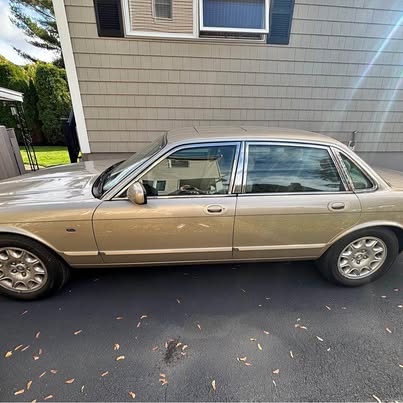
Final year cars like this 2003 reward the same inspection, not a shorter one. The later build answers the Nikasil question in your favour, but a 2003 that has stood unused can need more recommissioning than a 1999 in weekly use. Judge by the twelve steps, not the year on the title.
Values
The build's market block beneath this guide carries the current numbers for the XJ8, the cars listed now and the recorded sales, refreshed as the market moves. Read it with the condition spread in mind, because no model in this guide's class has a wider one. An X308 can be a running, driving luxury saloon with a year's worth of deferred jobs inside it, or a maintained car with every structural question in this guide answered on paper, and those two cars share a badge, a year and sometimes a mileage while being worth entirely different amounts. The headline figure for the model tells you almost nothing. The paperwork tells you almost everything.
Condition drives the spread in a predictable order. At the bottom sit non-runners and cars failing on tensioners or compression, bought as parts sources or expert projects. Above them sit presentable drivers with needs: tyres, suspension bushes, a headlining, cooling work pending. These are the cars most buyers actually purchase, and the honest way to value one is to take the asking figure and subtract the priced jobs from your inspection, in full, not at a hopeful discount. Above them sit maintained cars with steel liner engines or documented replacements, metal tensioners, recent cooling and gearbox servicing, sound sills and a working cabin. They are scarcer than advertisements suggest, because many advertisements describe this car while selling the one below it. At the top sit low mileage Vanden Plas and Super V8 cars with continuous specialist history, and the very best XJR examples, where rarity and specification finally add a premium on top of condition rather than substituting for it.
Variant premiums are real but modest, and they follow desirability rather than original price in a straight line. The XJR commands a following of its own and holds a premium over an equivalent naturally aspirated car, provided its supercharged mechanicals are proven. The Super V8 is rare enough that asking figures vary wildly and patience matters more than any guide figure. Vanden Plas trim adds a smaller premium that evaporates if the interior, the very thing being paid for, is worn. Long wheelbase cars are worth a little more to the buyers who need the rear seat and a little less to those who prefer the short car's proportions, so treat wheelbase as a matching exercise rather than a value ladder. Colour plays its usual part: silver, dark green, black and dark blue sell readily, while pale gold and beige cars can linger regardless of condition, which makes them the value route into a good car if the colour suits you.
Asking and achieved figures diverge in a specific way: sellers anchor on what the car cost new, buyers price the tensioner job and cooling refresh into every bid. Cars at maintained money with project paperwork sit for months, then sell for driver money. Cars priced honestly to their documented condition sell quickly. A long advertised spell is information: ask what the last serious viewer's inspection found. And the project versus driver gap is the decision that matters most: a cheap X308 needing the full set of known jobs can absorb the price of a good one before it turns a wheel, and still be a higher mileage car in a quieter colour at the end. Paying more for the car with the work done is not a slogan on this model. It is arithmetic, line by line on the inspection sheet.
Parts and ownership
An X308 is a realistic car to own and run with an independent specialist, and an expensive one to run exclusively through a main dealer at full labour rates on a car of this age. Find the specialist before you buy the car, not after the first warning light. A good Jaguar independent will know the tensioner history by engine number range, will own the diagnostic equipment that reads the car's modules properly rather than guessing from generic codes, and will have seen your exact fault before. That knowledge is the difference between a targeted repair and an expensive parts lottery.
Parts supply is strong for service and mechanical items. Jaguar's own classic parts operation, and long established specialists such as SNG Barratt, supply everything from timing chain kits and water pumps to suspension bushes and trim clips, and the car's production volume means pattern and used parts fill the gaps. Filters, plugs, coils, brake discs and pads, dampers and bushes are all routine purchases at sensible money. Gearbox service kits for both the ZF and the Mercedes unit are readily available from transmission specialists. Where supply tightens is on model specific trim and electronics: Vanden Plas picnic tables and specific wood sets, seat covers in the less common colours, the correct grille and plinth finishes, and some control modules that must match the car's specification and may need programming. Buy a car with its trim complete and its modules healthy, because those are the parts money cannot always find quickly.
Running rhythm is straightforward. Engine oil and filter changes annually or every 10,000 miles at the outside, sooner on cars used for short journeys, with the correct specification oil. Spark plugs, air and fuel filters and coolant on schedule, with coolant condition mattering as much as age on a car whose cooling plastics are a known weakness. Gearbox fluid and filter at around 60,000 mile intervals, whatever the sealed for life label says, and differential oil at the same visit for the small extra cost. Brake fluid every two years. Tyres matched as a set, in the correct size and load rating, with alignment checked whenever suspension work is done. A battery in good health, kept charged on cars used occasionally, prevents more spurious warning lights than any other single measure.
Insurance and storage follow the usual classic pattern. Agreed value cover through a specialist insurer suits a good car better than a standard policy valuing it as an old saloon. A garage transforms the ownership experience, keeping water out of the boot seals, sun off the veneer and clear coat, and the headlining adhesive alive longer. A car that must live outside needs its drains cleared, its boot seal checked and a trickle charger if it stands for weeks. None of this is demanding. All of it is cheaper than the repairs it prevents.
Which one to buy
Buy on engine provenance, cooling history and sill condition, in that order, and let trim and colour settle what is left. The variants below assume equal condition, which in practice they never are.
- The all-rounder: a 2001 to 2003 XJ8 with the steel liner engine, documented tensioner history or the job priced in, on 16 inch wheels. This is the car for most buyers, most of the time.
- The value buy: a sound long wheelbase XJ8 or Vanden Plas in a quiet colour, bought on paperwork rather than presentation. The rear seat and the cabin come almost free in the market.
- The luxury buy: a Vanden Plas with a complete, unmarked interior and every cabin electric working. Pay for the trim only when the trim is genuinely the best part of a mechanically proven car.
- The performance buy: an XJR with supercharger, gearbox and cooling history in writing. Buy the best documented car you can find, because the cheap XJR is cheap for mechanical reasons.
- The connoisseur buy: a Super V8, verified by VIN, bought patiently. Rarity justifies waiting for condition, never paying a rarity premium for a tired car.
- The project buy: an early Nikasil car with honest compression results, bought at project money by a buyer who can do the tensioner and cooling work. Bought at driver money, it is not a project. It is a mistake.
The overriding rule: on an X308, paperwork is condition. A documented car at a fair price beats an undocumented car at a tempting one, every time, because the two faults that decide this model's future cannot be seen in a photograph and can always be proven on paper.
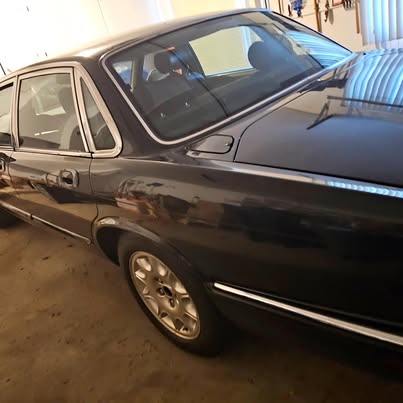
Finish where you started, with the car as a whole. In black the X308's proportions read at their most formal, the chrome carrying the shape in a way sporting trim deliberately suppresses. Whichever variant you choose, choose the one whose stance is level, whose shut lines are even, whose start from cold is silent and whose history file answers the questions this guide has taught you to ask. That car, in any colour and at either wheelbase, is the XJ8 at its best: a traditional Jaguar made properly modern, bought with knowledge rather than luck.
See the 7 XJ8 cars currently listed.
For sale now
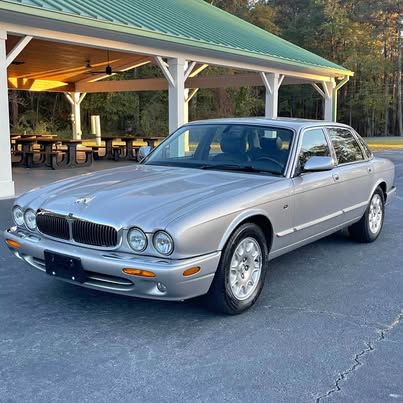 $5,900
Expand
What they sell for: XJ8 sale prices.