
Jeep Scrambler buyer's guide
Jeep Scrambler -- the model's own buyer's guide: variants, values and what to check.
Years listed: 1983-1983 · Series: Jeep
# Jeep Scrambler (CJ-8) — Buyer's Guide
Overview and history
You are not looking at a stretched toy. The Jeep Scrambler, factory code CJ-8, is the long-wheelbase pickup version of the CJ-7, built by American Motors from 1981 through the end of CJ production, and it solves the one problem every CJ-7 owner knows by heart: there is nowhere to put anything. Stretch the wheelbase, add a short steel or fibreglass bed behind a half cab, and you get a Jeep that still parks, turns and climbs like a CJ, but can actually carry camping kit, a dog, a cool box and a spare without stacking everything against the tailgate.
The numbers tell the story cleanly. A CJ-7 sits on a 93.3-inch wheelbase. A CJ-8 sits on a 103.5-inch wheelbase — just over ten inches longer, almost all of it behind the seats, with a longer rear overhang giving you a bed roughly five feet long. Overall length grows to about 177 inches. That is the whole identity check in one measurement, and you use it on every car you view: if the tape does not show 103.5 inches between axle centres, you are not looking at a genuine Scrambler, whatever the badges, stripes and paperwork say. Hold that thought, because cut-down and re-bodied imitations exist, and the later Wrangler Unlimited tempts sellers to borrow the Scrambler name for a truck Jeep never built under that badge in that era.
AMC launched the CJ-8 for 1981 because the market had moved: small pickups sold, and Jeep dealers wanted something between the CJ-7 runabout and the full-size J-series pickup. The Scrambler answered with familiar CJ mechanicals — ladder frame, live axles on leaf springs, part-time four-wheel drive — under a new rear body. Scrambler was not a separate model line, as sellers sometimes imply; it was the sales name for the CJ-8. The VIN says CJ-8. The tailgate says Scrambler. Both have to agree.
Production stayed low by CJ standards, which is why the car matters now. Total CJ-8 production across the run is usually quoted at just under 28,000 trucks — a fraction of CJ-7 volume — and survival is far lower, because Scramblers worked for a living. They ploughed, fenced, hunted and sat outside in salt states while a CJ-7 was often a second car. That working life explains the condition spread you meet today: the best survivors are remarkable, the average farm truck is tired in every system at once.
On Classic Listings the pool behind this guide is small and honest about it: eight Scramblers recorded in total, four listed for sale and four recorded as sold, spanning 1981 to 1985 in the records held here, with most cars in Georgia and single examples in Oregon and Pennsylvania. That is a snapshot, heavily dealer-sourced, not the whole market — but you do not choose from dozens locally. You travel, you wait, or you compromise, and this guide assumes you would rather wait for the right truck than restore the wrong one by accident.
One myth dies here. The Scrambler is not valuable simply because it is a pickup. It is sought after because it is the most usable classic CJ ever sold, and because so few survived uncut, un-lifted beyond reason and un-rotted. Usability plus attrition is what you pay for. Buy structure, identity and drivetrain, in that order.
The models
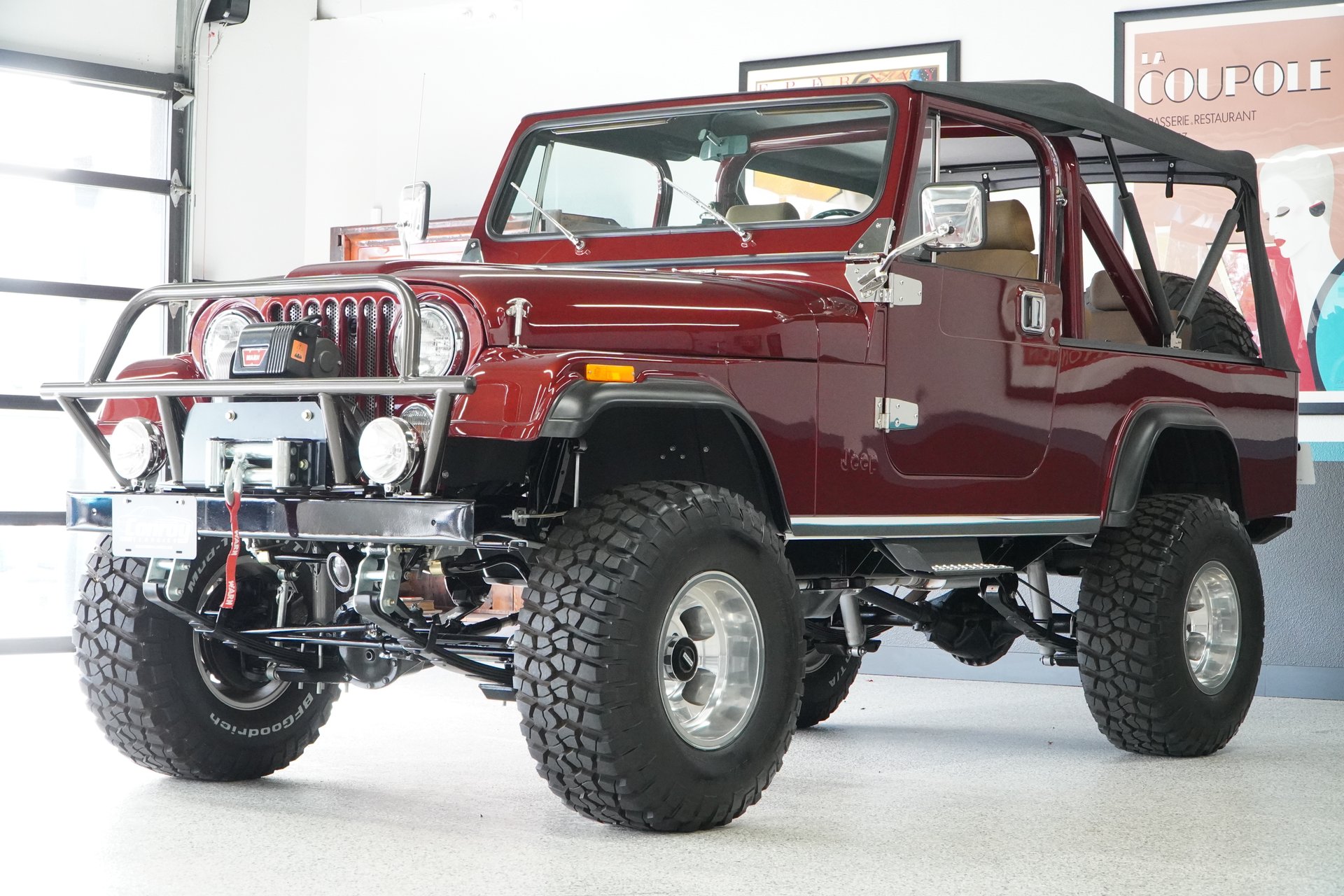
There is only one CJ-8 body, and understanding that saves you from a week of confused listings. Every genuine Scrambler is a two-door, half-cab pickup on the 103.5-inch frame, with a removable top, a bulkhead behind the seats and a separate bed floor. Variations come from tops, trim packages, engines and gearboxes, not from different bodyshells. A full-length soft top, a half soft top, a fibreglass half hardtop and the rare full hardtop all fit the same tub. A car advertised as a Scrambler convertible, a Scrambler four-door or a Scrambler wagon is either misdescribed or modified, and you price it as a modified Jeep, not as a factory variant.
The factory run divides into early and late cars. The 1981 launch cars carry the widest engine choice, including the short-lived V8 option, and narrow-track axles shared with late CJ-7s. For 1982 Jeep moved to wide-track axles — a wider Dana 30 front and AMC 20 rear that fill the arches better and improve stability — and from then to the end of production the recipe barely changes: four- or six-cylinder power, four- or five-speed manual or three-speed automatic, SL or SR trim. After the last CJ year the Wrangler YJ replaces the line entirely, and no direct successor appears until the much later Unlimited and Gladiator revivals — different trucks, different frames, different VINs, however often the names are borrowed in adverts.
Trim is where sellers earn their confusion, so learn the factory language. The base Scrambler is plain: vinyl seats, painted steel wheels, minimal brightwork. The SL package is the decor package — more chrome, styled wheels, upgraded seat trim, cab carpet, a centre console on many cars and side stripes. The SR package is the sport package — bolder graphics, blackout details, sport steering wheel. Neither changes the frame, axles or engine availability: an SL is not mechanically superior to a base truck, and an SR is not faster. You pay for originality and condition within a package, never for imagined hardware.
Laredo needs a straight answer, because you will meet Laredo Scramblers in adverts every month. Laredo is, first and foremost, the top trim name on the CJ-7 — chrome grille overlay, leather-wrapped wheel, tachometer and clock, high-back seats and striping. On the Scrambler, Jeep sold SL and SR as the named packages, borrowing heavily from the same parts bin, which is why a well-specified SL can look very Laredo indeed. The trap is paying a Laredo premium for a badge and a grille a previous owner fitted in an afternoon. Build evidence — original stripes, seat material, dash equipment, any surviving paperwork — settles what the truck left the factory as. Absent that evidence, value the truck as an SL or SR in its actual condition and let the word Laredo be decoration, not money.
Tops define how you will use the truck, so treat them as model differences in practice. The steel half cab gives you a true pickup with a very exposed bed floor that shows every year of work. Fibreglass hardtop cars — including the full-length World Cab variants built in small numbers for fleet and export use — feel more finished and are quieter, but the top cracks and a damaged full top is expensive to replace like-for-like. Soft-top cars are the most CJ in character and the least secure. A cheap truck needing a top, seals and a bulkhead repair is not cheap.
The table below summarises the factory offer as a buyer meets it. Outputs are period American ratings in net horsepower, which is why they look modest beside modern figures — judge these trucks by torque, gearing and weight, not by the headline number.
| Model | Years | Engine | Output | Built | Character |
|---|---|---|---|---|---|
| CJ-8 base, four-cylinder | 1981–86 | 151 cu in Iron Duke four, later AMC 150 four | about 82–86 hp | part of about 27,800 total | The working truck; slow on the highway, honest and simple |
| CJ-8 base / SL / SR, six-cylinder | 1981–86 | AMC 258 cu in (4.2-litre) inline six | about 110–115 hp | the bulk of production | The Scrambler most buyers want; torque everywhere, parts forever |
| CJ-8 V8 | 1981 only in regular offer | AMC 304 cu in (5.0-litre) V8 | about 125 hp net | small minority | The collector footnote; verify it was born a V8 before paying for it |
| CJ-8 automatic | 1981–86 | 258 six (usually) with TorqueFlite automatic | as six above | minority | The easy driver; superb off-road, thirstier and rarer in good order |
Two special cases deserve a sentence each. Ex-fleet and postal-related trucks surface with odd specifications and hard commercial use — interesting, rarely the best buy. And a handful of late CJ rear axles were built with the stronger Dana 44 in place of the AMC 20: a real bonus on a genuine late Scrambler, confirmed by the diff cover shape underneath, never by the advert headline.
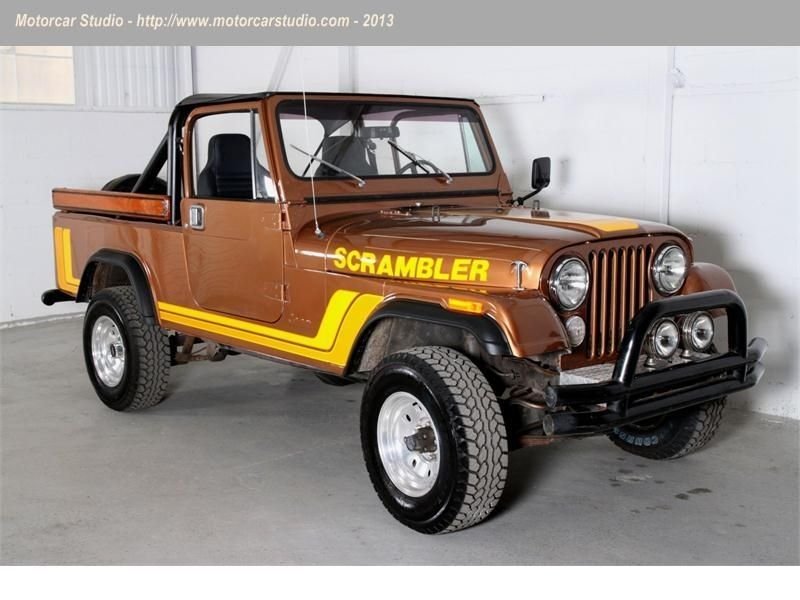
In the Classic Listings pool the pattern is six-cylinder-era, dealer-presented trucks in silver, grey and brown metallics with a single red car — period colours, sensibly kept — and manual gearboxes dominating, with a single automatic recorded among the eight. That mirrors the wider market faithfully: the six with a manual box is the Scrambler, and everything else is a variation you buy for a specific reason.
Engines and gearboxes
The AMC 258 six — the engine the Scrambler was built around
Buy the six if you can. The AMC 258 cubic inch inline six — 4.2 litres, seven main bearings, a single overhead story it never tells because it is a pushrod engine of the oldest, toughest school — is the engine in the great majority of Scramblers, and it suits the truck perfectly. It makes its period-rated 110 or so horsepower low in the rev range and, far more importantly, it makes strong, flat torque from idle, which is what moves a leaf-sprung pickup up a wet hill without drama and what lets you pull away in second gear around town without slipping the clutch to death. It is understressed, it tolerates neglect longer than it should, and every part of it can still be bought, rebuilt or upgraded without specialist drama.
The layout is simple. Cast-iron block and head, hydraulic lifters, a two-barrel Carter BBD carburettor on most years, electronic ignition, and a valve cover that warps and weeps as a rite of passage. A cold engine should start on the choke, settle to a slightly lumpy idle as it warms, and pull cleanly without a blue haze. Oil pressure on a healthy warm engine is strong at cruise and modest at hot idle. A 258 that rattles from the top end cold and quietens as pressure builds is showing lifter bleed-down and tired oil. A 258 that knocks from low down under load is showing crankshaft bearing wear, and that is a rebuild conversation, not an oil change.
Prefer an engine that is complete and original under the bonnet to one that has been half-converted — vacuum lines capped at random, an air pump removed but its plugs leaking. The best-running Scramblers are either honestly original and recently serviced, or honestly and completely converted by someone who understood the whole system. The worst runners are the middle ground, and the middle ground is where most cheap trucks live.
Longevity is excellent when oil changes happened: a well-kept 258 runs well past 150,000 miles without opening the bottom end. Expect valve-cover leaks, a weeping rear main seal and cracked exhaust manifolds along the way — the manifold cracks between the centre ports and ticks loudly when cold, quietening as it expands, a noise sellers will call a lifter for as long as you let them. A ticking that stays when hot, rises with load and comes with low oil pressure is not the manifold, and you walk the inspection back to the bearings.
The 151 four — Iron Duke first, AMC four later
The base engine for most of the run is a 151 cubic inch — 2.5-litre — four-cylinder, and you need to know which four you are looking at, because the name stays the same while the engine changes. Early cars use the General Motors Iron Duke 151: a pushrod four with a crossflow-era reputation for toughness, a single-barrel or two-barrel carburettor depending on year and market, and a character best described as willing. From the middle of the run AMC substituted its own 150 cubic inch four, developed from its six-cylinder architecture, with similar output and the same job to do. Either way the figures are modest — low eighties in horsepower — and in a truck that weighs what a Scrambler weighs, modest means slow. A four-cylinder Scrambler holds 55 to 60 miles per hour on the flat, plans overtakes by postcode, and works hard on grades. Around town and on the trail, geared low, it is perfectly pleasant.
Do not let anyone sell you the four as the economical choice without qualification. Worked hard, a 151 drinks nearly as much fuel as a cruising 258, and wears faster doing it. Its virtues are specific: lighter over the front axle, simple, cheap to rebuild, and an original four-cylinder truck is often the least modified Scrambler you will find, because nobody bought it to build a rock crawler. As a local driver or preservation buy it makes sense. As a highway truck it does not, and no tune changes that — the myth that a four is one upgrade away from six-cylinder pace survives only in advert copy.
Judge the four on blow-by, timing noise and carburation, and check the tyre size against the axle ratio tag before you judge the engine tired: big tyres on stock ratios force the engine to labour everywhere, and sometimes the engine is fine and the gearing is the crime.
The AMC 304 V8 — real, brief, and faked
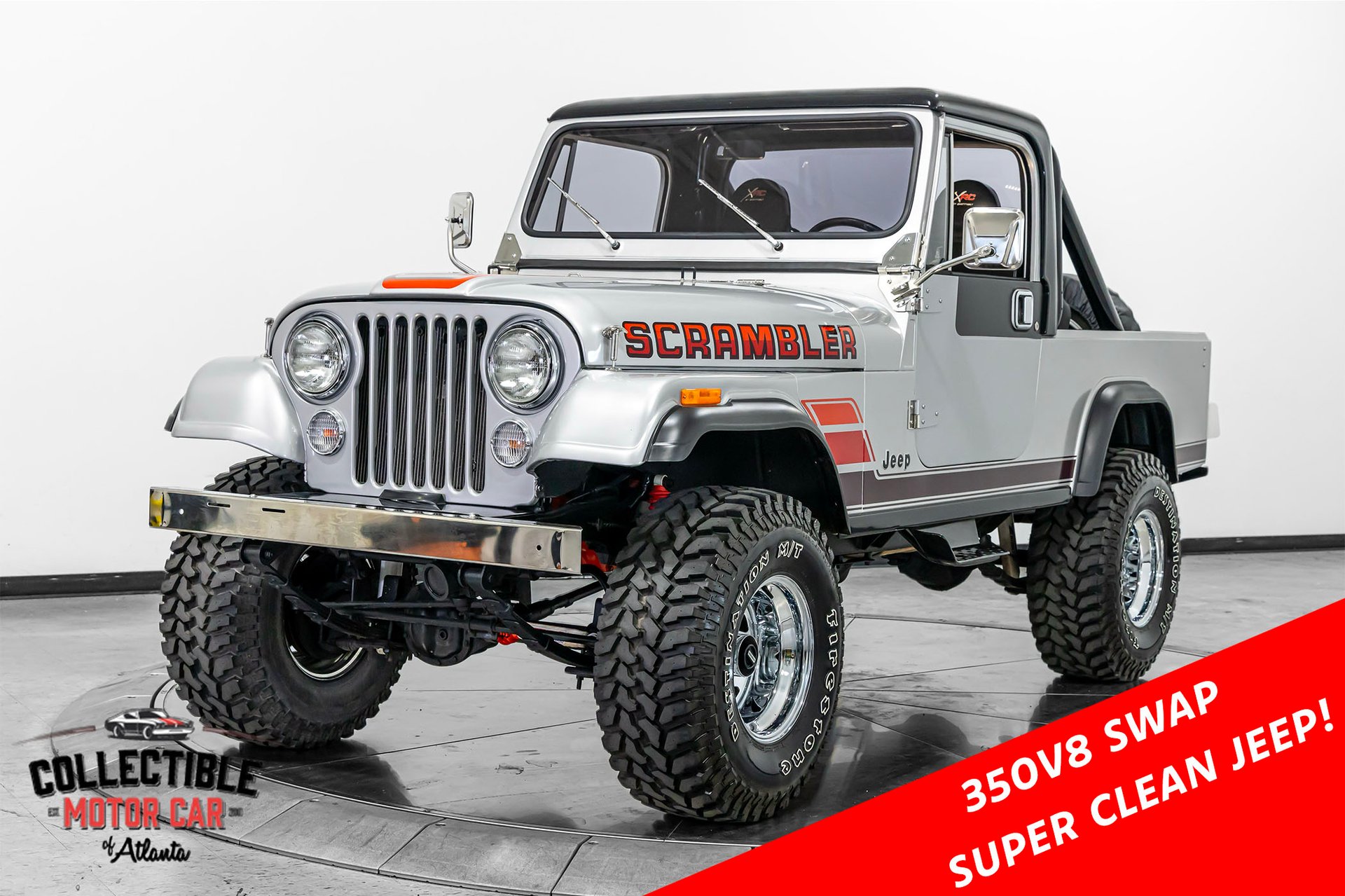
Yes, there is a factory V8 Scrambler, and no, most of the V8 Scramblers you will be offered did not leave the factory that way. The AMC 304 cubic inch V8 — 5.0 litres, cast iron, a two-barrel Motorcraft carburettor in factory CJ tune, rated at roughly 125 horsepower net in its final emissions-era form — was offered in the CJ range at the start of the Scrambler run and then withdrawn as fuel-economy rules and AMC priorities closed in. In the CJ-8 it belongs to the launch period, essentially the 1981 cars. It gives the truck a different voice, stronger mid-range and no meaningful economy benefit, and because AMC V8s swap into CJ engine bays with factory parts, the world is full of 304, 360 and even 401 swaps wearing factory manners.
That is not a condemnation. A well-executed 360 swap is a delight. It is a pricing instruction: a born-V8 truck, proven by the VIN engine code and matching evidence, is a scarce factory specification and you may choose to pay for that scarcity. A swapped truck is a modified Jeep whose value lives in the quality of the swap — mounts, cooling, wiring, exhaust clearance, gearbox choice — and you pay for the engineering, never for the story. The fifth character of the VIN carries the engine code on these trucks; learn the decoder for the year you are viewing, check the plate on the dash and the frame and title agree, and treat any V8 car whose paperwork cannot support its claim as a swap until proven otherwise. The same discipline, reversed, protects you the other way: a six-cylinder truck with V8 badges is not a mystery, it is a misdescription.
Under the bonnet the 304 behaves like the small AMC V8 it is: strong oil pressure when healthy, a thirst for fuel, manifolds that crack, and a cooling system that must be entirely right before a lifted, big-tyred truck stays cool in summer traffic. Budget early for radiator, fan shroud and clutch, hoses and water pump as a system — V8 Scramblers overheat by accumulation, one marginal part at a time.
Gearboxes and the Dana 300 transfer case
Four manual gearboxes and one automatic cover the run, and they are not equals. The Borg-Warner SR-4 four-speed fitted at the start of the decade is the weak link of the drivetrain: adequate behind a four-cylinder, marginal behind a 258, and known for bearing noise and tired synchromesh in trucks that have worked. The Tremec-sourced T-4 that follows is better mannered but still a light box. Neither is the box you choose for towing, big tyres or V8 torque. Listen for whine in third and fourth, and price a noisy light box as a future rebuild, typically $900–1,800 professionally, rather than as character.
The heavy four-speed is the T-176 — a Tremec-built, cast-iron-case four-speed with a proper truck feel and a reputation for surviving everything the 258 and most V8 swaps produce. Between two otherwise equal six-cylinder trucks, you buy the T-176 car over a T-4 car. The five-speed is the Borg-Warner T-5, from 1982 onward, whose overdrive fifth transforms highway cruising — at the cost of a lighter case and a fifth gear you must never tow or labour in. A T-5 that rumbles in fifth under load is warning you, and you believe it.
The automatic is the Chrysler TorqueFlite, the TF999 three-speed behind the six (the lighter TF904 family behind fours). It is the easiest Scrambler to drive and superb in low-speed off-road work, and entirely dependent on fluid history. Pull the dipstick on every automatic: bright red and sweet-smelling is serviced, brown and burnt is a rebuild negotiation — a professional rebuild typically runs $1,800–3,200, so a slipping automatic is never a small deduction. Check the kickdown linkage is present and moving; a disconnected linkage makes the box shift early and slip itself to death, and sellers call the resulting laziness normal automatic character. It is not.
Every Scrambler sends drive through the Dana 300 transfer case, one of the great components in the CJ story: gear-driven, cast iron, part-time, with a 2.62:1 low range and strength far beyond the engines in front of it. It should engage high and low range cleanly at a crawl, hold range under load without popping out, and run without a howl that rises with road speed. Popping out of low range points to worn shift forks, tired detents or bent linkage before it points to gear damage — diagnose in that order. A full rebuild with bearings and seals is typically $700–1,400 if the gears are sound, which they usually are.
Axles complete the picture. Up front is a Dana 30 — narrow-track early, wide-track from 1982 — with disc brakes and locking hubs. At the back is the AMC Model 20, a strong centre section let down by its factory two-piece axle shafts, whose splined hub joint is the most famous mechanical weakness on the whole truck. One-piece shaft kits cure it permanently for roughly $400–700 in parts plus fitting. Axle ratios vary by engine and year, and the ratio must match the tyre size or every judgement you make about engine health will be wrong — read it from the axle tag on every viewing.
Problem areas
Rust — the frame and the tub, mapped honestly
Rust decides Scrambler value more than mileage, engine or trim combined, and it decides it in two separate places that you must judge independently: the frame and the tub. A truck can have a beautiful tub on a dying frame, a solid frame under a lacework bed, or — the car you want — honest metal in both. Sellers photograph the tub. You buy the frame first.
Start with the frame, because the CJ frame traps mud and road salt exactly where you cannot see it. The killing zones, in order, are the rear frame rails around and behind the rear spring hangers, where the rails kick up over the axle; the sections around the rear crossmember and fuel-tank skid; the spring hanger and shackle mounts, which rust from inside their own brackets; the steering-box mounting area at the front left rail, where cracks join rust as a failure mode; and the body-mount outriggers, hidden by the tub until the mounts punch through. Take a torch, a thin screwdriver and no embarrassment: tap, probe, look inside every rail opening. Surface scale that rings is age. Metal that dents, flakes in layers or lets the screwdriver sink is structural, and structural rust is weldable only in small, honest patches. A frame needing rear-rail sections, hangers and a crossmember is a $2,500–5,000 welding programme before paint, and a frame rusted through in multiple zones is a parts truck wearing a price tag. Walk away from multi-zone frame rot at any engine, any trim, any story.
The tub map is just as specific. First, the bed floor: it lives under mats, liners and plywood that sellers leave in place precisely because removal is revealing, so insist on seeing it bare. The bed rusts along its seams, around the wheel tubs, at the front corners by the bulkhead where water sits, and in a tide line where a liner has trapped moisture against the steel for twenty years. A sprayed-in liner over rust is not a repair; it is a blindfold, and you price an unverifiable lined bed as a bed needing work. Second, the bulkhead and the cab floor beneath it: water collects at this junction and the seam rots from underneath while the top face still paints well — press hard along it from inside the cab. Third, the familiar CJ circuit: floor pans, toe boards, rockers, lower cowl sides, the windshield frame around its seal and lower corners, rear corners, and the body mounts, whose rubber perishes and steel cups rust until the tub sits crooked on the frame. Crooked gaps on a CJ are not always accident damage — count the mounts and check their heights before you blame the doors.
Two CJ-specific traps catch buyers who learned rust on other classics. The first is fibreglass: replacement tubs and bed panels exist, some excellent, some dreadful, and a glassfibre tub is not automatically a bad truck — it never rusts again — but it is not the steel factory body, it changes the value, and it must be declared and priced as what it is. Check with a cloth-wrapped magnet and ask directly. The second trap is fresh underseal applied last week over everything, including the rust. Honest preservation is thin, old and patchy. A uniformly thick black coat that smells new is a question the seller must answer with receipts and before-photos; if he cannot, find another truck, because Scramblers reward patience and punish rescue fantasies.
Put numbers on tub work so optimism has a limit. A single floor pan or bed-section repair, welded properly, is typically $600–1,200 a side once trim removal is counted. Rockers, floors and a bulkhead seam together become a $2,000–4,000 programme, and a full professional tub restoration with paint exceeds the value of most trucks — which is the point: you buy metal, you do not buy a welding apprenticeship at retail prices.
The Carter BBD, feedback systems and the emissions plumbing
If the six-cylinder Scrambler has a signature running fault, it lives here, in a carburettor and a thicket of hoses that most modern mechanics have never been trained to read. The Carter BBD is a two-barrel carburettor fitted across the 258 range, in plain form early and in feedback form — with a mixture-control solenoid taking orders from a simple computer — on later and emissions-market cars. It is not a bad carburettor. It is a carburettor whose idle circuit passages are fine enough to block with the debris of forty years, whose castings and throttle shafts wear, and whose surrounding vacuum system perishes hose by hose until the engine is breathing unmetered air from six places at once. The result is the classic Scrambler complaint list: it stalls at junctions, it idles fast then dies, it hesitates off idle, it smells rich and returns terrible fuel figures, and it has defeated two owners and a general workshop before it reaches you.
Learn the mechanism, because the test follows from it. At idle the BBD meters fuel through small idle tubes and passages inside the carburettor body. Ethanol-era fuel, long storage and a tired fuel filter shed varnish and grit into exactly those passages. Partial blockage leans the idle mixture on one barrel more than the other, the engine hunts and stalls, and the traditional cure — winding the idle speed screw up until it stays running — masks the blockage while ruining the transition onto the main circuit, which is why so many trucks idle at a roar and still stumble pulling away. The distinguishing test is cleaning, not adjusting: a BBD that has been stripped, ultrasonically cleaned or carefully blown through, fitted with a fresh kit and set up by the book, and which then idles evenly at a normal speed, was a dirty carburettor. A BBD that still will not idle after that work, with no vacuum leaks anywhere, is showing you throttle-shaft wear — air leaking past the shaft bores — and that is a rebush or replacement conversation. A professional rebuild with shaft attention typically runs $350–650; a quality replacement carburettor conversion, done completely with the right linkage, air cleaner and jetting, runs $500–900 in parts. Both are fair money. What is never fair money is the third carburettor swap on a truck whose real fault was a split vacuum hose, so you always diagnose air before fuel.
The vacuum system is the second half of the lesson. By the mid-1980s a 258 carries vacuum control for the distributor advance, EGR valve, canister purge, air pump diverter, choke pull-off and feedback controls, routed through thermal switches that open and close with coolant temperature. Every hose is now forty years old unless replaced. A single perished hose leans the idle, disables the advance and makes the truck feel flat and hot; a failed thermal switch makes the fault appear only warm, or only cold, which is why sellers demonstrate the truck in whichever state hides it. Your test is decisive: listen for hiss at idle, pinch and wiggle hoses one by one and watch the idle change. Budget a full hose replacement on any new purchase, and distrust any bay where half the hoses are capped with screws. Capped hoses are not a conversion. They are unanswered questions.
Emissions hardware divides buyers, so be practical and legal-minded. In states and counties with visual or functional smog inspection, missing air pump, EGR, converter or feedback hardware is a failed test and an expensive reinstatement, because previous owners throw the removed parts away. Know your local rule in writing before you buy a truck with deleted equipment, not from the seller. Where no inspection applies, a complete, thoughtful de-smog with correct carburation can make a 258 run beautifully — but a truck with the pump removed, the EGR blocked with a coin and the feedback solenoid still clicking against a capped carburettor is none of those things. Price reinstatement or proper completion into the car, typically $600–1,500 with used and new parts mixed, and never accept the claim that they all run better with it ripped off. They run better with it working, or properly replaced as a system. Halfway is the fault, not the hardware.
Ignition conspires with the carburettor to produce the same symptoms. The Motorcraft electronic ignition is robust, its module less so with age and heat, and a module failing hot — the truck dies after twenty minutes, restarts when cool — is a classic breakdown misdiagnosed as fuel starvation for months. The test costs nothing: when it dies hot, check for spark before you touch the fuel system. No spark, hot only, module and pickup head the list. Carry a spare module in the glovebox; every experienced CJ owner does.
Steering, suspension and running gear wear
A Scrambler that wanders, shimmies and crashes over bumps is not showing you character. It is showing you a shopping list, and the discipline is to separate the cheap items from the dangerous ones, because both feel similar from the driver seat. The CJ steers through a recirculating-ball steering box, a drag link and tie rod to steering arms on the Dana 30 knuckles, with a steering damper that exists to calm the system, not to repair it. The suspension is leaf springs all round with simple lever-arm-era geometry, shackles at the spring ends and rubber or polyurethane bushes that perish. Everything wears, everything is replaceable, and the truck tells you which parts have gone if you test in order.
Start with the famous one: death wobble, the violent front-axle shimmy triggered by a bump at 30 to 50 miles per hour that only braking below the trigger speed stops. Death wobble is not a part. It is a system resonance, and any seller who tells you a new steering damper fixed it is telling you he masked it. The causes, in the order you check them, are tyre condition and balance, wheel bearing play, ball-joint wear, tie-rod and drag-link end play, collapsed spring and shackle bushes, steering-box play and loose box mounting — check the frame at the box for cracks — and caster lost to an uncorrected lift kit. A stock-height Scrambler on sensible tyres with tight joints does not death-wobble. Your road test must include broken pavement at those speeds; a truck demonstrated only on a smooth boulevard at 25 miles per hour has not been demonstrated at all. A full front-end refresh typically runs $800–1,800 in parts and labour.
Play at the steering wheel has its own anatomy. With the engine off and an assistant rocking the wheel either side of centre, watch each joint in turn: movement at the tie-rod ends is wear, movement at the box output without road-wheel movement is box play (most on a forty-year-old box is a rebuild, typically $300–600 exchanged), and movement of the whole box against the frame is mounting trouble — loose bolts, cracked bracket or rusted rail — which is structural and urgent. The intermediate shaft and its small universal joints add their own click and are cheap to replace, so isolate them before condemning the box. Power steering adds a pump that whines when low or tired; manual steering is heavy at parking speed on wide tyres and honest everywhere else.
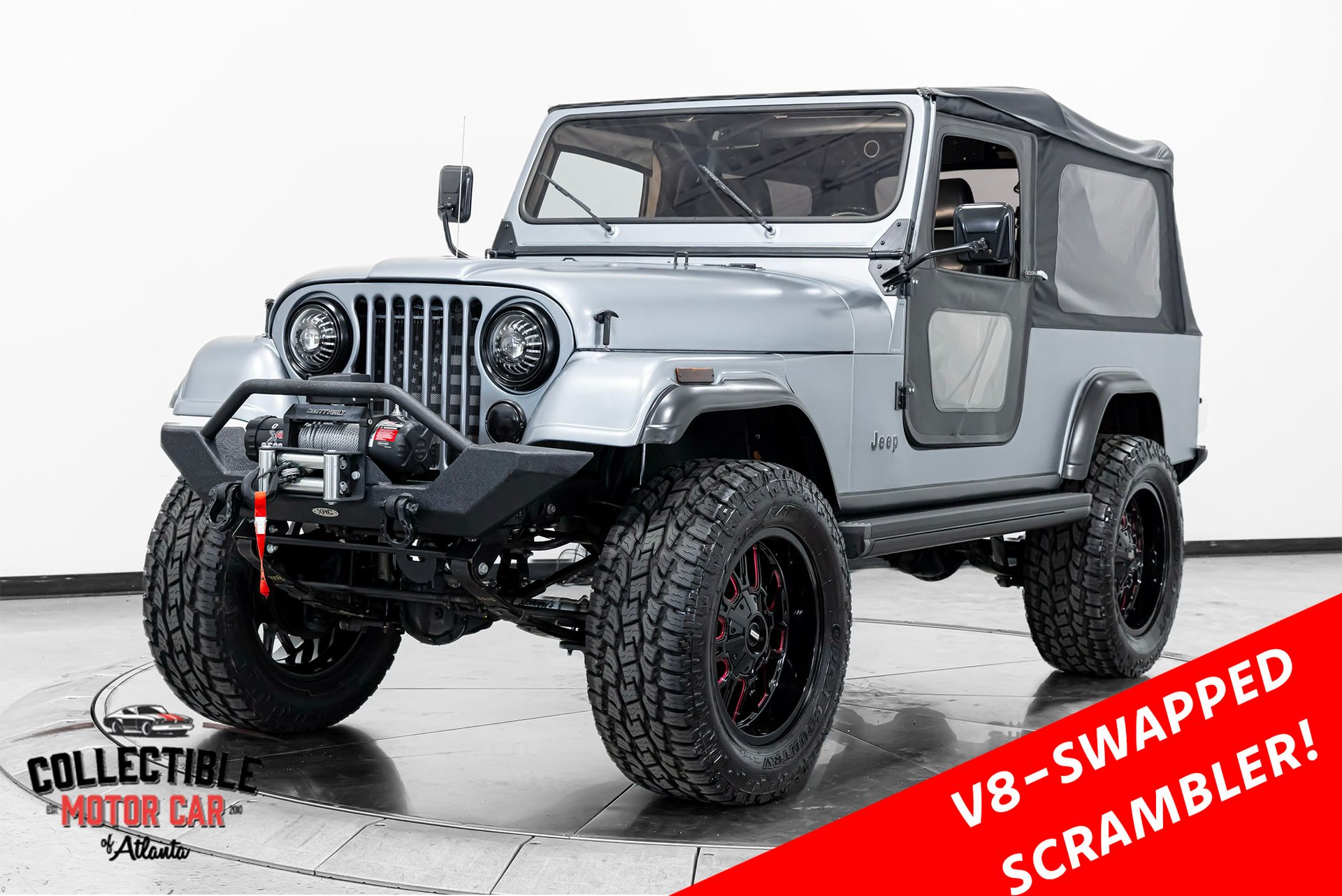
Springs and dampers decide whether the truck feels tired or merely old. Leaf springs sag, most visibly at the rear of a pickup that has carried loads, and a nose-high Scrambler with flat rear springs has told you its history at a glance. Broken leaves hide inside the pack — look for a leaf that ends early or sits offset. Collapsed shackle bushes let the spring move sideways, felt as rear-end steer on throttle changes. A truck that bounces twice after a bump needs four dampers, at roughly $250–500 a set fitted. Lift kits deserve suspicion rather than automatic rejection: a complete lift with corrected steering, longer brake hoses and matched gearing is an enthusiast truck; a cheap lift — blocks, long shackles, stretched stock hoses, no caster correction — is a handling fault you inherit and price into the deal.
Brakes, bearings and the AMC 20 complete the circuit. Front discs and rear drums are adequate when maintained and alarming when not: a pulling brake is a seized caliper or a collapsed flexible hose acting as a one-way valve, a soft pedal that pumps up is air or a master cylinder, and a pedal that sinks slowly at a standstill is a master cylinder bypassing internally — do not drive that truck home. Roughness rocking a front wheel at twelve and six, having eliminated ball joints at three and nine, is wheel bearings. At the rear, check the AMC 20 shafts for play, ask directly about one-piece conversions, and treat unexplained rear brake contamination as a seal-and-bearing job, typically $400–800 a side, until proven otherwise. None of these faults rejects a structurally sound Scrambler. All of them are reasons to pay for the truck that exists, not the truck in the advert.

Electrics, interior and the top
The last problem family fills your weekends rather than emptying your wallet in one blow, and it still matters, because a Scrambler with tired electrics and a leaking top is a truck you stop using in winter. CJ wiring is simple, exposed and now old: the bulkhead connector corrodes, earth straps between engine, frame and tub rot until gauges lie and lights glow dimly, and the fuse panel lives where wet boots drip. The classic symptoms — fuel gauge reading what it wishes, temperature gauge rising with the headlights on, indicators slowing when the heater fan runs — are earth faults until proven otherwise, and the cure is cleaning and remaking earth points, not a new loom. The fuel sender tires and its earth fails; a gauge reading empty with a full tank, or full forever, is sender or earth, tested by grounding the sender wire at the tank and watching the gauge sweep. Budget $150–350 for a sender and drop-the-tank labour if the test condemns it.
The heater core leaks into the passenger footwell — sweet smell, misting screen, damp carpet — at $200–450 for a core and the labour to reach it. Speedometer cables chatter and fail, wipers park where they please when the motor earth tires, and a seller who has fixed these small things unprompted has usually maintained the big things too. The reverse correlation is just as reliable.
Interior condition is evidence. Sun-cracked dash pads and split seat vinyl are age; a brand-new interior in a tired truck is a question — why did the money go to the visible room instead of the frame? Original SL and SR seat patterns are reproduced unevenly, so a truck retaining worn-but-correct trim can be a better base than one retrimmed wrongly in generic vinyl. Floors under carpets must be lifted and looked at: the carpet is part of the rust inspection, not an alternative to it.
Tops close the section. Half-hardtop seals perish, and a top leaking at the bulkhead rots the cab floor seam described in the rust section while you blame the weather. Soft tops shrink, their windows yellow and crack, and a top that needs forcing to latch is at the end of its life, $800–1,600 to replace well. Judge every top by fitting it, latching it and, if the seller permits, hosing it. A dry cab is worth real money in a truck you intend to use.
How to inspect one
Inspect in this order and do not let the seller rearrange it. Structure first, identity always, cosmetics last. A Scrambler inspection takes ninety minutes done properly, and any seller who allows twenty has told you which truck he is selling.
- Prove the identity before you admire the truck. Measure the wheelbase — 103.5 inches centre to centre — then read the VIN plate at the dash, check the frame and title numbers agree with it, decode the engine character for the year, and confirm the body is steel where it should be with a cloth-wrapped magnet at the cowl, bed sides and floors. A cut-down CJ-7, a re-bodied truck or a later Unlimited in Scrambler dress fails here, and nothing later in the inspection rescues it.
- Cold-start it, having arranged in advance that the engine is stone cold when you arrive. A 258 should catch on the choke, smoke at most a brief grey puff, and settle as it warms. Blue smoke that persists is oil, white smoke that persists and smells sweet is coolant, and a warm engine on arrival means the cold-start evidence has been deliberately spent — reschedule rather than guess.
- Work the frame with torch and screwdriver in the order from the rust section: rear rails and hangers, rear crossmember and tank area, steering-box rail, body-mount outriggers. Tap and probe; do not accept photographs of the underside, including your own, as a substitute for the sound and feel of the metal.
- Strip the bed in your mind and then in fact: lift every mat, liner and board, and read the bare bed floor, its seams, wheel tubs and front corners. Then the bulkhead seam from inside the cab, pressing hard along the floor junction, and underneath with the torch.
- Complete the tub circuit — floors under every carpet, toe boards, rockers, cowl sides, windshield frame corners, rear corners and all body mounts for height and condition. A tub sitting visibly uneven on its mounts is telling you about mounts or frame, and you find out which before proceeding.
- Under the bonnet, audit the systems, not the shine. Trace the vacuum hoses end to end, note every capped stub and screw plug, check the Carter BBD for fuel weeping at its base and shafts, inspect the exhaust manifold for the centre-port crack and listen cold for its tick, and read the oil, coolant and dipstick evidence for yourself.
- Run the distinguishing tests from the problem areas. Listen to the idle for hunting that suggests blocked BBD idle passages; watch whether it stalls returning to idle after a blip; if it has died hot on the seller in the past, ask when, and remember the ignition module test — spark first, fuel second.
- Check the gearboxes and the Dana 300 on the move and at a crawl. Every gear, up and down, listening for the light-box whine in third and fourth and the T-5 rumble in fifth; low range engaged and loaded gently to prove it holds; automatic fluid pulled and smelled before the drive, kickdown linkage seen moving, shifts felt for flare and slip.
- Drive the steering test properly: broken pavement at 30 to 50 miles per hour for shimmy, a straight hands-light run for wander, full-lock parking turns for hub, joint and bearing noises, and then the assistant test back at base, rocking the wheel while you watch each joint, the box and its mounting in turn.
- Brake it hard from speed, twice. It should pull straight, the pedal should be firm without pumping and should hold without sinking at the next standstill. Then rock each front wheel at twelve and six and at three and nine to separate bearing play from ball-joint play, and inspect the rear brakes' backing plates for the wetness that betrays AMC 20 seals.
- Test every electrical consumer and believe the pattern, not the item: lights, heater fan, wipers, indicators and gauges together, watching for the dimming and lying that indict earths, then ground-test the fuel gauge if it misbehaves, and hose or at least fit and latch the top and judge its seals honestly.
- Finish with the paperwork and the arithmetic. Test trim claims (SL, SR, any Laredo wording) against build evidence, V8 claims against the VIN, and axle claims against what you saw underneath, then total the welding, carburation, steering and brake work you found at the job prices in this guide. That total, added to the asking figure in your own notebook, is the price of the truck. Bid on that number, or walk to the next one.

Values
This section contains no figures on purpose. The market numbers for Scramblers listed and sold through Classic Listings sit in the computed market block beneath this guide, refreshed as cars come and go, and that block is where you read what sellers ask and what recorded sales achieved. What follows here is how to interpret those numbers without fooling yourself, because the Scrambler market punishes lazy reading more than most.
First, understand the spread. No mainstream classic spreads its values by condition as ruthlessly as a working CJ pickup. At one end sits the structurally sound, honestly original truck with its identity proven, its frame ringing clean and its six-cylinder drivetrain sorted; at the other sits a cosmetically bright truck over patched rails, a tired light gearbox and a half-finished carburettor conversion. In photographs the second truck can look better. In the market block the two can appear side by side at a glance, and the entire skill is refusing to average them. Read every comparable through the frame first: a recorded sale only teaches you something if you know which of those two trucks it was, and the sale description and photographs usually tell you, if you look at the underside evidence instead of the stripes.
Second, know what carries a premium and what merely carries a claim. Proven factory specification earns money: a verified early V8 car, a well-preserved SL or SR with original trim intact, a late truck with the stronger rear axle confirmed underneath, a documented survivor with its bed unlined and floors original. Claims earn nothing until you verify them, and this market is rich in claims — trim names borrowed from the CJ-7 catalogue, swaps described as factory fits, restorations that were paint over untouched structure. The premium follows the proof, and a seller who holds the proof shows it without being asked twice. Offer for the truck you can prove, and let the seller keep the story for free.
Third, read asking figures and achieved figures as different languages. Scramblers are often advertised optimistically by sellers who have priced the best truck they have seen and applied it to the truck they own, and dealer presentation — most of the cars recorded here arrive through dealers — adds polish and margin in equal measure. Recorded sales matter more than listings, and the gap between the two is your negotiation space, widened by every item your inspection priced honestly. A seller who has done those jobs can show receipts that close the gap again. Receipts, on a Scrambler, are a currency of their own.
Fourth, judge the project against the driver with cold eyes. The distance between a running project and a sorted driver is almost entirely labour-priced metal and system work, and it routinely exceeds the difference in asking figures — which is why the cheapest Scrambler is so often the most expensive purchase in the market. Buy the best structure you can reach, even if its paint is dull and its seats are split, over a shiny truck needing structural money, every time.
Finally, hold the long view without turning it into a promise. Demand rests on real scarcity of good trucks and real usability, not fashion alone. Buy a truck you want to drive for a decade, keep every receipt, and let the market do whatever it does. The owners who lose money on Scramblers buy stories at premiums and sell metal at discounts. You now know how to do the opposite.
Parts and ownership
Owning a Scrambler is one of the easier classic-truck propositions in America: a simple, parts-rich vehicle that asks for frequent small attention instead of rare large bills. Parts supply divides into three tiers. The first is everything mechanical shared with the CJ-7 — 258 engine internals, service items for the fours and the 304, gearbox and Dana 300 bearings and seals, brakes, steering joints, springs and bushes. This tier is comprehensively reproduced and priced like working-truck parts; you will not wait months for a water pump. The second is CJ-8-specific body and bed metal — bed floor sections, bulkhead panels — reproduced in smaller runs, costing more, and worth buying when available rather than when needed. The third is trim and top specifics: correct SL and SR stripe kits, seat materials, full-length hardtop components, where reproduction is patchy and original stock is finite. That is the practical reason originality of trim, dismissed by some buyers as cosmetics, matters on this model.
Running costs follow the design. Fuel consumption is period truck consumption — a four works hard for similar thirst to a cruising six, and a V8 simply drinks — so budget by miles rather than by economy claims. Tyres in sensible sizes are cheap and everywhere; oversize fitments cost more in every sense. Insurance on agreed-value classic terms is straightforward for a garaged truck, and registration burdens vary by state, with the emissions-equipment question from the problem areas section the single largest variable — settle it before purchase, in your state, in writing where possible.
Maintenance rhythm is short-interval and simple. Engine oil and filter every 3,000 miles or annually; gearbox, transfer case and axle oils on a two-year cycle, sooner after water crossings, with the Dana 300 level checked whenever you are underneath; chassis grease points — and a CJ has many — on the same visit as the oil; coolant and brake fluid every two years. A Scrambler kept this way is a reliable truck by any standard. A Scrambler maintained by breakdown is a subscription to breakdowns, each one small and collectively the reason previous owners sell.
Community and knowledge for the CJ are as deep as any in the hobby. Own the factory service manual for your year before you own a second accessory; the wiring diagrams alone repay it at the first earth fault. Owner clubs and Scrambler registers hold the accumulated answers to every fault in this guide, including the BBD idle-passage cleaning procedure written out with photographs by people who have done it a hundred times.
Store it dry if you possibly can. More Scrambler frames have been finished by damp storage and winter salt than by any trail. Drive it regularly — seals, carburettor passages and brakes deteriorate faster in disuse than in service — and let it be what it is: the most useful classic Jeep ever built, doing the job it was built for.
Which one to buy
Buy by use case, in this order of honesty about how you will actually drive the truck — and remember that condition and identity outrank specification on every line below.
- The all-rounder: a six-cylinder 258 car with the T-176 four-speed or the T-5 five-speed, wide-track axles, a sound frame you have probed yourself and a complete, working carburettor and vacuum system. This is the Scrambler for most buyers, most roads and most trails, and it is where your money is safest.
- The value buy: a base or SL six-cylinder truck with dull paint, split seats and perfect metal, ideally with one-piece rear shafts already fitted and receipts for steering and brake work. The market underprices honest dullness and overprices shine, and this truck exploits that error in your favour.
- The easy driver: a 258 automatic with bright red transmission fluid, a connected kickdown linkage and a documented fluid history. Superb in traffic and off-road, rarer in good order than the manuals, and worth seeking if the truck will genuinely be driven daily.
- The preservation buy: an unmodified four-cylinder truck, narrow- or wide-track, with original trim and an unlined bed, bought for originality and local use. You accept the pace as the price of the most untouched Scrambler your budget can reach, and you do not spoil it with a swap.
- The collector pick: a VIN-proven 1981 V8 car, or a late truck with the stronger rear axle confirmed underneath and its SL or SR specification documented. You pay for proof, you keep the proof with the truck, and you understand you have bought scarcity as well as transport.
The overriding rule: buy the frame and the VIN first, the engine second, and the stripes never — a proven, solid truck in the wrong colour beats a rotten, unverifiable truck in the right one, every time.
See the 1 Scrambler cars currently listed.
For sale now
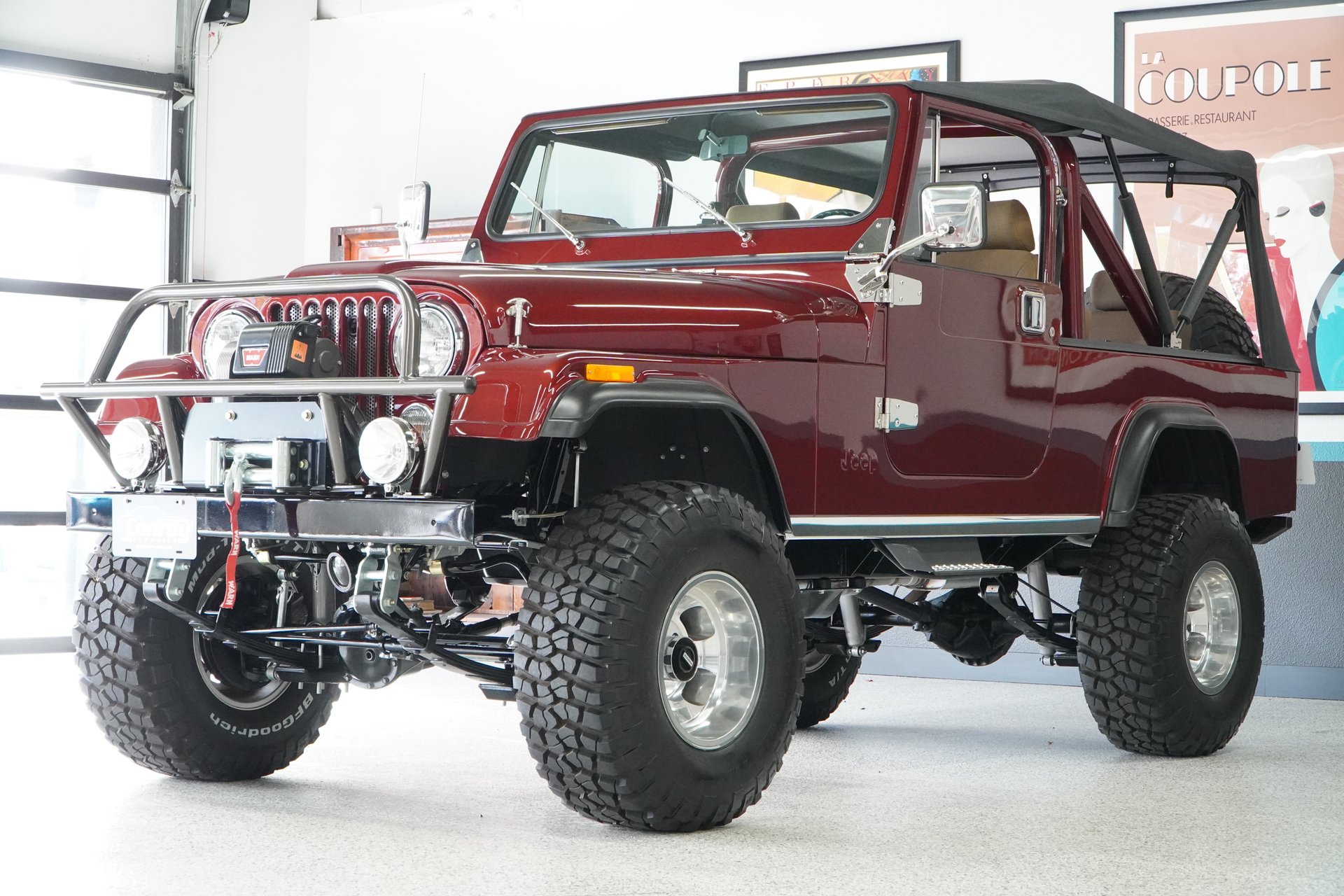 $69,900 · 44% above typical
Expand
What they sell for: Scrambler sale prices.