
Mazda Protege DX Sedan 4D buyer's guide
Mazda Protege DX Sedan 4D -- the model's own buyer's guide: variants, values and what to check.
Years listed: 1999-2001 · Series: Protege
Overview and history
The Protege is the car Mazda sold to people who wanted a Corolla-sized sedan built by a company that cared how a car steers. For three generations, from 1990 to 2003, it is a front-wheel-drive compact with a transverse four-cylinder engine, a proper independent rear suspension where rivals made do with a beam, and a chassis that rewards a driver far beyond the car's station. In ordinary DX and LX trim it is honest, economical transport. In ES trim it is a quiet sports sedan. And at the very end of the line it produces two specials — the Protege MP3 of 2001 and the Mazdaspeed Protege of 2003 — that turn the humble shell into genuine sport-compact history. Which Protege you are standing in front of decides how you inspect it, because the failure list of a 92-horsepower commuter and a turbocharged limited edition barely overlap.
The car underneath is the Mazda Familia, the company's world compact, sold in most markets as the 323. North America gets the sedan as the Protege from the 1990 model year, with the 323 name kept for the three-door hatchback alongside it. The first generation, the BG chassis of 1990 to 1994, is the enthusiast's sleeper: the LX sedan carries the 1.8-litre twin-cam BP engine, closely related to the unit that later powers the Miata, with four-wheel disc brakes at a time when rivals still ship drums. The second generation, 1995 to 1998, grows up — bigger cabin, standard dual airbags, softer edges — and drops the hatchback in this market entirely. The third generation, the BJ chassis of 1999 to 2003, sharpens the styling and the steering again, restores a hatchback as the Protege5 wagon for 2002, and hosts the two performance specials before the Mazda3 replaces the whole line for 2004.
Understand what the used market actually holds, because it is not the poster cars. The overwhelming majority of surviving Proteges are ordinary sedans: DX and LX commuters from the second and third generations, most with the four-speed automatic, bought new as cheap reliable transport and run for decades on that basis. The ES is scarcer. The Protege5 has a loyal following and survives in better average condition than the sedans. The MP3 and Mazdaspeed are rare, hunted, and — this matters — cloned, because almost everything that makes a Mazdaspeed special bolts onto a standard shell. This guide covers the full line, weighted toward the cars you will actually find, and it treats identity as a first-order inspection item on the performance cars, not an afterthought.
The survival pattern explains the condition spread you meet. These were inexpensive cars, so they were rarely garaged, rarely rustproofed, and often sold on the moment a repair approached the car's book value. In the salt belt, rust has culled the herd brutally; a third-generation car from the dry Southwest and a third-generation car from Ohio are effectively two different models now. The good news is mechanical: the engines are fundamentally durable, non-interference designs that tolerate a snapped timing belt without destroying themselves, the manual gearboxes are strong, and the cars are simple enough that almost every fault in this guide can be found with a flashlight, a jack and a cold start. Buy the shell first and the engine second — that ordering, unusual for a Japanese compact, is the Protege in one sentence.
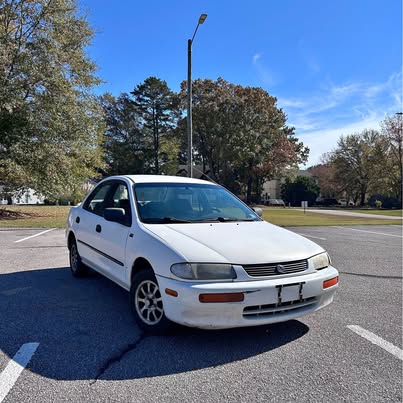
The models
Every Protege is front-wheel drive with a transverse four-cylinder engine, MacPherson struts at the front and Mazda's twin-trapezoidal-link independent rear suspension — a multi-link arrangement that is a large part of why these cars handle as well as they do. Trim decides the engine more often than it decides the equipment, so read the badge as an engine claim first. A summary table follows, then the generations in turn.
| Model | Years | Engine | Output | Built | Character |
|---|---|---|---|---|---|
| 323 hatchback | 1990–1994 | 1.6 B6 SOHC | 82 hp | Not published by trim | The hatchback twin; light and simple |
| Protege DX (first generation) | 1990–1994 | 1.8 B8 SOHC | 103 hp | Not published by trim | The base sedan; durable, plainly trimmed |
| Protege LX (first generation) | 1990–1994 | 1.8 BP DOHC | 125 hp | Not published by trim | The sleeper: twin-cam, four-wheel discs |
| Protege DX / LX (second generation) | 1995–1998 | 1.5 Z5 DOHC | 92 hp | Not published by trim | The grown-up commuter; economy first |
| Protege ES (second generation) | 1995–1998 | 1.8 BP DOHC | 122 hp | Not published by trim | The sports sedan of the middle years |
| Protege DX / LX (third generation) | 1999–2002 | 1.6 ZM DOHC | 105 hp | Not published by trim | The volume BJ sedan |
| Protege ES / LX (third generation) | 1999–2000 | 1.8 FP DOHC | 122 hp | Not published by trim | The short-lived 1.8 BJ |
| Protege DX / LX / ES (third generation) | 2001–2003 | 2.0 FS DOHC | 130 hp | Not published by trim | The 2.0 becomes the standard engine |
| Protege5 | 2002–2003 | 2.0 FS DOHC | 130 hp | Not published separately | The five-door wagon; the lifestyle buy |
| Protege MP3 | 2001 | 2.0 FS DOHC, tuned | 140 hp | 1,500 | The limited edition: chassis first, power second |
| Mazdaspeed Protege | 2003–2003.5 | 2.0 FS turbo | 170 hp | About 3,500 across both runs | The turbo flagship; identity is everything |
Outputs are period US figures. Mazda published totals for the nameplate, not trustworthy trim-by-trim splits for the ordinary cars, so this table gives a build figure only where one is genuinely documented — the limited editions. Treat any seller quoting an exact production total for a DX or LX with the suspicion that deserves.
The first generation (BG, 1990–1994). The Protege sedan arrives as DX and LX, with a plainer SE joining late in the run. The DX uses the single-cam 1.8 B8; the LX is the car to know — the twin-cam BP, four-wheel disc brakes, a rear anti-roll bar and the option of the stronger manual gearbox make it a genuine compact sports sedan wearing commuter clothes. The 323 three-door hatchback alongside it uses the smaller 1.6 B6 and is lighter and simpler still. Japan kept the interesting Familia variants — turbocharged and all-wheel-drive cars — out of this market; the one earlier exception, the 1988–1989 323 GTX turbo all-wheel-drive car, belongs to the previous generation and is a collector piece in its own right, not a Protege variant. BG cars are now scarce in any condition, and rust, not mileage, has done the culling.
The second generation (BH, 1995–1998). A full redesign: rounder, roomier, quieter, with dual airbags standard and a structure built for the crash standards of the day. The hatchback disappears from North America. DX and LX cars carry the new 1.5-litre Z5 twin-cam, an economy engine in every sense; the ES keeps the faith with the 1.8 BP twin-cam, four-wheel discs and firmer suspension. These are the most anonymous Proteges and, bought well, among the cheapest durable transport in this guide — but they sit in the rust window hardest, and most have now been scrapped for body rather than mechanical reasons.
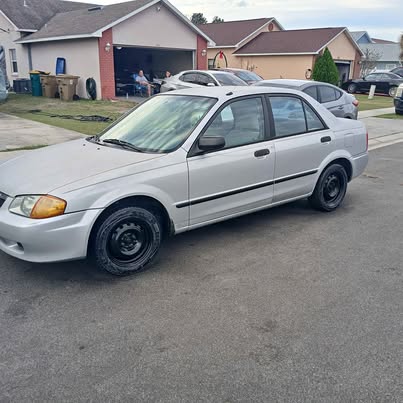
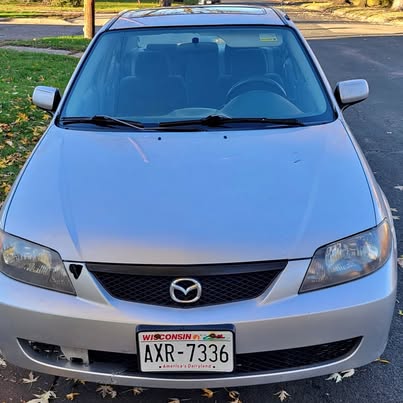
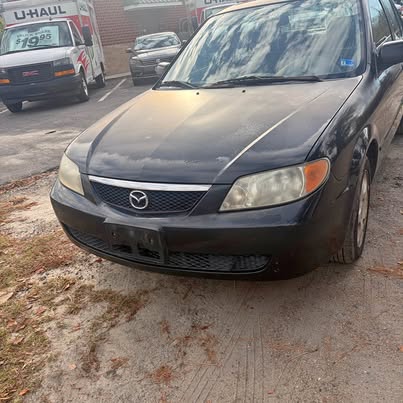
The third generation (BJ, 1999–2003). Sharper styling, a stiffer shell and the best steering of the line. The range opens with the 1.6 ZM in DX and LX, the 1.8 FP in the ES (and as the uplevel engine elsewhere), then consolidates around the 2.0 FS: from 2001 the ES and the LX 2.0 carry it, and by the final year every sedan is a 2.0. A mild facelift for 2001 revises the nose, lamps and interior trim — a styling event, not a mechanical one, so do not pay for it as though it were. The Protege5 arrives for 2002 as a five-door wagon on the same running gear, all 2.0, and quickly becomes the enthusiast-adjacent buy of the range: same car, more useful, usually better kept.
The MP3 (2001). Mazda's rehearsal for the Mazdaspeed. One year only, 1,500 built, in Laser Blue Mica or Vivid Yellow. The FS 2.0 gains a freer exhaust, revised engine management and a shorter final drive for 140 hp, but the point of the car is the chassis: Racing Beat-tuned suspension, 17-inch Racing Hart wheels, a limited-slip-free but beautifully sorted front-drive setup, plus a Kenwood MP3 head unit that gives the car its name. There is no sunroof and no cruise control — weight and cost saved, and two quick identity tells. An MP3 is a trim-and-chassis package on a standard shell, which makes it cloneable; the build plate, the colour and the equipment list together settle what a car is.
The Mazdaspeed Protege (2003 and 2003.5). The flagship, built in two half-year runs of about 3,500 cars in total. Mazda handed the FS 2.0 to Callaway Cars to engineer a turbo installation: a Garrett T25 turbocharger, a side-mount intercooler, stronger engine management, a Tochigi Fuji limited-slip differential in a reinforced gearbox, Racing Beat suspension, bigger brakes and 17-inch Racing Hart wheels. Output is 170 hp. The 2003 run comes in Spicy Orange Mica or Black Mica; the 2003.5 run adds Titanium Gray Metallic, Laser Blue Mica, Sunlight Silver and Blazing Yellow, with revised aero and interior trim. It is a real, numbered-feeling special — and precisely because the turbo hardware, wheels and badges bolt onto any BJ sedan, it is the most cloned car in this guide. The full identity check is in the inspection section, and it is not optional.
Engines and gearboxes
Four engine families cover the line, all of them iron-block or iron-and-alloy fours of Mazda's own design, all belt-driven, and — the single most buyer-friendly fact in this guide — all non-interference: a snapped timing belt stops the engine but does not bend valves. That does not make belt neglect free, because the water pump is usually driven in the same housing and fails on the same schedule, but it removes the catastrophic failure that hangs over so many belt-driven engines of the era. Budget a timing belt, tensioner, idlers and water pump together at $600–$1,100 fitted on any car without documented proof of the job, and treat that proof — a dated invoice, not a seller's memory — as part of the car's value.
The B-series: B6, B8 and the BP twin-cam
The first-generation cars run Mazda's B family. The 323 hatchback's 1.6 B6 is a single-cam engine of about 82 hp: simple, understressed, and limited mostly by the age of everything attached to it. The Protege DX's 1.8 B8 is the same architecture stretched — a single-cam 1.8 making 103 hp, tuned for torque, and one of the most durable engines Mazda ever sold. The engine that matters is the BP, the 1.8 twin-cam in the first-generation LX and the second-generation ES: 125 hp in BG form, 122 hp in BH form, with an iron block, an alloy head, a forged crank in early form, oil-spray cooling under the pistons and a 7,000 rpm appetite. It is the engine the Miata made famous in 1.6 and 1.8 form, and in the Protege it gives the car its character — smooth, willing and almost impossible to kill with revs.
Its habits are few and specific. The BP uses hydraulic lash adjusters, and a ticking top end on a cold start that quiets within a minute or two of warm-up is usually tired adjusters or old oil, not doom; a tick that never goes away, on fresh oil of the right grade, is a set of adjusters at $400–$800 fitted, and still not a bottom-end verdict. The distributor and cam-angle sensor at the back of the head leak from a hardened O-ring with age, dripping oil onto the heater hoses below — the oil swells and softens the hose until it bursts, which is how a $10 seal becomes an overheating event. Smell hot coolant and find oil at the back of the head and you have found the pair; replace the O-ring and both heater hoses together. Valve-cover gaskets weep on every B-family engine by now. Ignition is conventional distributor-and-leads, so a misfire hunt is cheap and logical: plugs, leads, cap, rotor, in that order, before anyone sells you a coil.
The Z-series: Z5 and ZM economy twin-cams
The second generation's DX and LX, and the third generation's base cars, run the Z family: the 1.5 Z5 of 1995–1998 at 92 hp and the 1.6 ZM of 1999 onward at 105 hp. These are twin-cam, belt-driven economy engines — narrower, lighter and less charismatic than the BP, designed for fuel consumption and low emissions rather than revs. Judge them on those terms and they are excellent: they start, they sip, and they run to mileages that embarrass the bodies around them.
Their failure pattern is neglect rather than design. The ZM in particular is frequently the engine in the cheapest car in the range, and cheap cars get skipped services: a ZM with a rattling top end and black oil is telling you about its past, not its design. Check the timing belt history exactly as on the B-series — the same non-interference mercy applies, the same $600–$1,100 belt-and-pump job is the remedy — and check the ignition leads and coil packs for heat cracking, the accessory belts for squeal on a cold, damp start, and the crank and cam seals for the slow weep that eventually coats the belt and shortens its life. An oil leak into the timing case is the one Z-family leak that matters, because it converts a seal into a belt failure; price it as a belt job plus seals, not as a wipe-down. Power steering pumps whine on these cars when the fluid is old or low; a pump that quiets with fresh fluid was a fluid problem, and one that does not was a pump.
The F-series: FP and FS 2.0, including the Mazdaspeed turbo
The third generation's upper range runs the F family: the 1.8 FP of 1999–2000 at 122 hp and the 2.0 FS that takes over from 2001 at 130 hp in standard form, 140 hp in the MP3 and 170 hp turbocharged in the Mazdaspeed. The FS is a long-stroke, torque-first engine — iron block, alloy head, twin coil packs mounted on the valve cover working a wasted-spark ignition, and electronic fuel injection with a conventional throttle. It is not a revver like the BP and should not be judged as one; its working range is the midrange, and a healthy one pulls cleanly and quietly from low revs.
The FS has three signature issues, and a buyer should know all three by name. The first is the intake manifold. The FS runs a variable intake system with butterfly plates inside the manifold, held by small screws. On some engines those screws loosen — the test is a light metallic rattle from the intake at idle and just off idle, worst cold — and a screw that leaves home is ingested by the engine. Mazda addressed it in service; many cars were fixed, many were not, and there is no external way to be certain. A car with a documented manifold replacement or inspection is worth more than one without, and a car rattling from the intake today gets priced as a manifold job at $500–$1,200, not as a curiosity. The second is the exhaust-gas recirculation valve: carbon builds in the EGR passages and valve until the car idles roughly, stalls at junctions when hot, and logs a flow code. Cleaning or replacing the valve and clearing the passages runs $250–$600 and genuinely fixes it — do not let anyone sell you an engine-management overhaul for a carbon problem. The third is oil consumption at high mileage, from a tired positive-crankcase-ventilation valve first and worn rings second. The distinguishing test is order of operations: a new PCV valve is pocket money, so fit one and measure consumption over a thousand miles before accepting a ring diagnosis at rebuild money.
Coil packs are the FS's wear item. Two packs sit in the heat on top of the engine and eventually crack and misfire under load — the classic presentation is a car that idles sweetly and stumbles accelerating uphill or onto a highway, with a flashing check-engine light if you persist. Packs and leads together are $150–$350 in parts and an hour's work, and replacing one pack at a time on a high-mileage car is false economy. The close-coupled warm-up catalytic converter in the exhaust manifold can also break up with age and oil burning, rattling in the manifold and setting an efficiency code; a manifold-converter assembly is a $700–$1,400 fitted event, which is why an FS that burns oil is worth materially less than one that does not — the oil is killing the converter as well as leaving by the exhaust.
The Mazdaspeed's FS-DET is the same basic engine with Callaway's turbo installation: a Garrett T25 turbocharger, a side-mount intercooler, revised management and fuelling, and largely standard internals. That last fact is the ownership key. The stock connecting rods are the ceiling: at factory boost the engine is reliable, and the well-documented failures come from owners raising boost on standard rods. Ask any Mazdaspeed seller about boost controllers, manual or electronic, and treat a car that has run raised boost on a stock bottom end as a car with an unknown engine, however clean it looks. The turbo itself is durable if fed oil; smoke on overrun and at idle after a hot run points to turbo seals, and a rebuild or replacement turbo is a $900–$1,800 event. The wastegate actuator diaphragm is the classic Mazdaspeed fault: it splits with age and heat, and the car either makes lazy boost or, worse, uncontrolled boost. The test is a hand vacuum/pressure pump on the actuator — it must hold and move smoothly — and an actuator is $150–$300 in parts. Never road-test-diagnose boost problems by feel alone when the pump test settles it in five minutes.
Gearboxes
Manual cars use one of two five-speed transaxles. The lighter F-series box serves the small engines; the stronger G-series box serves the BP cars, the FS cars and, in reinforced form with the limited-slip differential, the Mazdaspeed. Both are good gearboxes with a precise, mechanical shift that is part of the car's appeal. Wear shows as a tired second-gear synchromesh — a graunch on a fast upshift into second or a downshift into second that a slower, rev-matched change avoids — and as slop from worn shifter bushings, which is cheap linkage wear, not gearbox wear. Learn to tell them apart: bushing slop is play at the lever in every gear with clean engagement; synchro wear is a clean lever and a crunch in one gear. A clutch is a $800–$1,400 fitted job and the slave cylinder is external and cheap; a car that needs both is a negotiation, not a rejection.
Automatics are four-speeds: the F4A-EL family in the earlier cars and the FN4A-EL in the third generation, a unit closely related to a Ford design of the period. It is a sound automatic that dies of fluid neglect. Mazda specifies its own ATF M-V fluid for the later box, and the fluid history is the inspection: fluid that is red and sweet-smelling suggests care; brown, burnt-smelling fluid in a car that shifts late, flares between second and third, or shudders on lock-up is a transmission announcing its future. A rebuild or quality used replacement runs $2,200–$3,500 fitted, which on an ordinary sedan exceeds the car — so on an automatic car, the gearbox test matters more than the engine test. Solenoid faults present as a single harsh or missing shift with otherwise clean behaviour and are the repairable minority; general wear across all shifts is the terminal majority.
Problem areas
Rust: the map that decides everything
Rust is the Protege's defining problem, and on the third-generation cars it is severe enough that the marque's own following treats a rust-free BJ as the rare variant. The mechanism is consistent: Mazda's rustproofing of the era was adequate for Japan and the Sun Belt and inadequate for a decade of salted northern roads, and the design traps moisture in specific places. Learn the map, in the order it kills cars.
Start at the rear wheel arches. The arch lip is a folded seam where the outer quarter panel meets the inner wheelhouse, and it fills with wet road grit that never dries. Rust begins inside the fold, invisible, and announces itself as paint bubbles along the arch edge — by which point the fold is rotten through both layers. Bubbling is not cosmetic and it is never "just starting"; on a BJ it is the visible tip of a structural repair, and proper arch work, cutting out both layers and letting in new metal, runs $800–$2,000 a side. Press the arch lip firmly between finger and thumb all the way around: sound metal is unyielding, rotten metal crunches and flexes. Check the matching spot inside the rear door shut and at the bottom of the quarter where it meets the sill, because the same grit trap continues there.
The sills and rocker panels go next, attacked from inside by blocked drain holes and from outside by stone chips under failed plastic covers. The jacking points are the tell: a sill that folds, crunches or lifts unevenly when the car is jacked at the factory point has failed the only test that matters. Front subframes and, more seriously, the rear crossmember and suspension mounting area rot on salt-belt BJ cars to the point of structural failure — the rear suspension attaches to a crossmember that can rust until mountings tear, and this is the one Protege fault that scraps an otherwise running car outright, because the repair is a crossmember replacement with the rear suspension out, at $1,200–$2,500 with a sound used or new member, assuming the surrounding floor is good enough to weld to. Get under the back of any northern car with a light and a screwdriver and probe the crossmember and the trailing-arm mounts before you discuss the engine at all. Strut towers, front and rear, bubble at their seams; floor edges and the spare-wheel well in the trunk collect water from failed lamp and seal gaskets and rot from the inside out, so lift the trunk carpet and spare on every car. Brake and fuel lines run the length of the underside and corrode in their clips; a line that weeps is a brake failure scheduled, and a full line replacement is $400–$900 depending on how much of the set is done.
Second-generation cars rust on the same map, a few years further along it, and first-generation cars are now so old that survival itself is evidence — a BG that still exists in the north has either been garaged, repaired, or both, and the repairs deserve the same probing as original metal. Fresh underseal on a car for sale is a flag, not a feature: it is the cheapest way to hide exactly the areas this section names, and a seller who has genuinely repaired rust has photographs and invoices, not a fresh black coating applied the week before sale.
Engine, cooling and gearbox faults
Beyond the family-specific issues in the engines section, the pattern across all Proteges is age faults on simple systems, which is good news: they are findable and priceable. Cooling systems run a radiator with plastic end tanks that heat-cycle into cracks at the neck and seams — look for dried coolant crust, pink or green, at the top tank joint and a sweet smell after a run. A radiator is $250–$500 fitted; an engine that has been run hot because of one is a different and larger problem, so ask directly whether the car has ever overheated, and be suspicious of a car presented with a stone-cold engine that the seller will not let warm up fully. Thermostats stick, heater output fades, and the water pump should be treated as part of the timing belt job on every engine in this guide.
Engine mounts are the FS-era car's signature wear item, and they explain a fault buyers routinely misdiagnose. The 2.0 cars carry several mounts including a large passenger-side mount that sags and splits with age; the symptom is vibration at idle, worst in gear in an automatic with the air conditioning on, and a clunk or shudder as drive is taken up. Owners chase it as a misfire or an idle fault for months. The test costs nothing: watch the engine while a helper shifts between drive and reverse with the brake held — excessive rock, and a visible split or collapsed rubber in the top mount, settles it. A full set of mounts fitted runs $450–$900, and a car transformed by them was never an engine problem at all.
Oil leaks beyond the B-series distributor seal are mostly gasket age: valve covers, cam and crank seals, oil-pan sealer. Rank them by consequence, not by mess. A leak that coats the timing belt, drips on the exhaust, or drops the oil level between services matters; a damp valve cover on a 25-year-old engine is a photograph for the negotiation, not a repair bill. Alternators on the third-generation cars are controlled through the engine management and are a known source of confusion: a battery light or charging fault on a BJ must be diagnosed as a system — alternator output, wiring and control signal — because fitting a generic replacement without checking the control side produces cars that eat alternators. Budget $300–$600 for a correct alternator fitted, and more in diagnostic time if the car arrives with a history of repeat failures, which usually means the original fault was never found.
Automatic gearbox faults beyond fluid neglect are mainly electronic in presentation: a single harsh shift, a refusal to lock up, or a flashing hold light points to solenoids or sensors and is repairable at $300–$800; slippage in several gears on burnt fluid is mechanical and terminal at rebuild money. Manual cars suffer clutch slave and master cylinder leaks — a pedal that sinks or a reservoir that empties — at $150–$400 for hydraulics, and gear-lever slop from bushings at pocket money. Power steering pumps groan when low or aerated, racks weep at their boots, and a boot full of fluid means a rack, at $500–$1,000 fitted with an exchange unit.
Suspension, steering and brakes
The chassis is durable in design and consumable in detail. Front struts tire, top mounts knock over sharp bumps, and anti-roll bar links rattle over broken surfaces at walking pace — links are $100–$250 a pair fitted and are the first suspect for front-end noise, ahead of anything structural. The rear suspension's links and bushes last well, but rear strut top mounts clunk on BJ cars and rear wheel bearings hum — a hum that changes with load in corners is a bearing, $250–$450 a side fitted, and one that does not change is more likely a tyre. On the Mazdaspeed, add the famous rear anti-roll bar clunk: the bar's bushings and brackets wear and knock over bumps, a fault so common it has its own cottage industry of upgraded brackets; it is annoying, cheap in parts at $50–$150, and not a suspension failure, but confirm it is the bar — jack the car, unload it, and move the bar by hand — before accepting the seller's diagnosis, because the same knock from a rear strut mount or a worn link costs more.
Brakes are conventional discs at the front on everything, with the performance and ES cars carrying discs at the rear where base cars may run drums on the earliest models. The recurring fault is the rear caliper on disc-brake cars: the handbrake mechanism inside the caliper corrodes and seizes, so the caliper either drags — a hot wheel, a burnt smell, terrible fuel economy — or the handbrake stops holding. Slider pins seize alongside. A rebuilt caliper is $200–$400 a side fitted; test by feeling each rear wheel's temperature after the test drive and by checking the handbrake holds on a slope and releases fully. Constant-velocity joint boots split and throw grease, most often the outer front boots; a clicking joint on full lock has already run dry and needs a shaft or joint at $250–$500 a side, while a split boot caught before clicking is a $150–$300 boot job. Steering should be light, quiet and self-centring; notchiness suggests a tired rack or a dry column joint, and any BJ with heavy steering and a battery light together is showing you the charging fault from the previous section wearing a disguise.
Mazdaspeed-specific faults
The turbo car concentrates its faults in the parts that make it special, which is convenient: inspect the special parts and you have inspected the risk. The limited-slip differential is the headline. The Tochigi Fuji unit in early cars has a documented habit of failure — the internal assembly can break up, in some cases cracking the gearbox case — and the failure is sudden and total. A Mazdaspeed that whines loudly from the transmission, clunks on lock at parking speed beyond the normal limited-slip manners, or has metal in its gearbox oil is a car priced with a gearbox rebuild and an aftermarket gear-type differential in it, a $2,000–$3,500 event. Many cars already carry an upgraded differential; paperwork for one is a genuine value-add, not a modification to fear. The side-mount intercooler has plastic end tanks that crack and leak boost with age and heat, presenting as a car that feels flat and hisses under load; an upgraded intercooler is common and acceptable, a cracked standard one is a $300–$700 fix depending on the route taken. Exhaust manifolds crack and studs snap on cars that have been worked hard and heat-cycled; listen for a ticking from the manifold on a cold start that fades as it warms and expands. The Kenwood flip-face head unit fails by ribbon cable, leaving a dead or possessed stereo — a $100–$250 repair or a replacement unit, trivial money, but a useful originality check, because the correct unit belongs with the car. Finally, treat every non-standard part under the bonnet as a question: bigger injectors, a boost controller, a front-mount intercooler and an exhaust are a package that tells you how the car has been used, and on standard connecting rods that history is the engine's future.
Interior, electrics and trim
Interiors wear honestly. Seat bolsters split on high-mileage drivers' seats, headlinings sag, and the dashboard itself is more durable than most of the era. Electric window regulators on the BJ are a cable design that fails with a crunch and a window that drops or jams; a regulator is $150–$350 fitted per door, and testing all four windows is a thirty-second job buyers forget. Door lock actuators tire one at a time. The blower motor resistor fails by speeds — a fan that works only on its highest setting is the classic signature, $40–$120 in parts — and air-conditioning compressors lose their clutch air gap and their condensers to corrosion, so an air-con system that blows warm is a $400–$1,200 spread depending on whether it needs gas and a relay or a compressor and condenser; a system that has been open or empty for years sits at the expensive end of that spread by default. Instrument clusters, switches and lamps are simple and mostly still available used. Water leaks matter more than any of these: wet carpets point to door membranes, lamp gaskets or a blocked air-conditioning drain, and water inside a Protege feeds the floor rust in the first section, so a damp car is a rust suspect even if the arches look clean.
How to inspect one
Inspect in this order: identity and shell first, because rust and a false badge cannot be negotiated away, then the mechanicals, which mostly can. Take a flashlight, a magnet, gloves for the arch lips, and insist on a cold engine — a warmed-up car hides cold-start ticks, manifold cracks and reluctant starters, and a seller who has pre-warmed the car has told you something before you begin.
- Settle the identity before anything else. Match the VIN plate at the base of the windscreen to the title and to the driver's door sticker, and read the engine code from the engine itself, not the badge. On a claimed ES, MP3 or Mazdaspeed this step is the inspection: a Mazdaspeed must show the turbo installation as factory work — the Garrett turbo, the side-mount intercooler plumbing, the limited-slip gearbox, the Racing Beat suspension hardware, the bigger brakes and the correct interior and build details for its run and colour. An orange or yellow sedan with badges and wheels but a naturally aspirated engine is a standard car in costume, whatever the paperwork the seller has printed says.
- Work the rust map from the problem areas section, in order. Rear arch lips between finger and thumb, rear door shuts, sill jacking points, then underneath: rear crossmember and suspension mounts, strut towers, floor edges. Lift the trunk carpet and the spare wheel and look for water and rot in the well. Any structural finding here ends the inspection or resets the price to project money — do not proceed to fall in love with the engine.
- Cold start, bonnet open, standing at the front. Listen for a top-end tick that should fade as oil pressure builds, an intake rattle on an FS 2.0 that raises the manifold-screw question, a manifold tick on a Mazdaspeed that fades as it warms, and belt squeal. Watch for blue smoke on start-up and on the first throttle blip — valve seals and rings introducing themselves.
- Read the fluids and the leaks. Oil condition and level, coolant colour and level in the bottle, brake fluid, power steering fluid, and on an automatic the gearbox fluid — colour and smell, as the gearbox section describes. Then look underneath for what is dripping and where: oil at the back of a B-series head is the distributor seal; oil inside the timing cover's lower edge is a seal heading for the belt.
- Test the mounts and the idle. Engine running, air conditioning on, shift an automatic between drive and reverse on the brake and watch the engine rock; on a manual, take up the clutch bite gently and feel for a shudder or clunk. Vibration at idle in gear on a 2.0 car is the mount test from the problem areas, and it settles mounts versus misfire before you spend anything.
- Drive it long enough to get everything hot — twenty minutes minimum. The car should pull cleanly through the midrange, with no stumble under load climbing a hill; an FS that stumbles under load and is sweet at idle is showing you its coil packs. Note the temperature gauge's behaviour, the heater's output, and any hum that changes as you load the car side to side in corners.
- Work the gearbox properly. Manual: every gear up and down, with particular attention to second in both directions, and a check for lever slop versus synchro crunch — the distinction is in the engines section. Automatic: every shift should arrive once, on time, without flare or shudder, hot as well as cold, including lock-up at a steady cruise. One odd shift is a solenoid question; several are a verdict.
- Brake it hard, twice, from speed, somewhere safe. The car should stop straight with a firm pedal. Then check the handbrake on a slope, feel each rear wheel for heat after the drive to catch a dragging caliper, and look through the wheels at disc and pad condition front and rear.
- On a Mazdaspeed, test the boost system as a system. The car should build boost cleanly and hold it without hissing, surging or a sudden loss of pull. Ask for the actuator to be tested with a hand pump if there is any doubt — it must hold pressure and move smoothly — and ask directly about boost controllers, past and present, and about the differential: paperwork for an upgraded unit is a plus, silence plus transmission whine is a price cut.
- Test every electrical item, all of it, in the car. All four windows up and down, locks, blower on every speed, air conditioning genuinely cold, wipers, washers, every lamp, the stereo — on a Mazdaspeed or MP3, the correct Kenwood unit present and working is an originality point. Electrical faults on these cars are individually cheap and collectively a biography of neglect.
- Check the paperwork against the car's story. Timing belt evidence is the single most valuable document with any Protege: a dated invoice moves the belt job from your budget to the car's history. Look for gearbox fluid changes on automatics, manifold or differential work on the relevant cars, and rust repairs with photographs rather than fresh underseal.
- Finish underneath, on a lift if you can get one. Crossmember, lines, boots, bushes, exhaust and the rear of the sills, with the car in the air and the wheels free to rock for bearing and joint play. If you cannot get a lift, a jack, stands and ten unhurried minutes still answer the questions that decide this car. A seller who refuses underside access has answered them for you.
Values
Values in this market are set by three things, in this order: the shell, the badge, and the paperwork — and the order surprises buyers who arrive pricing these cars like other Japanese compacts, where the engine usually leads. A Protege's mechanicals are cheap to put right and its body is not, so the market pays for metal. A rust-free third-generation sedan from a dry state is worth a clear premium over a mechanically sweeter car from the salt belt, because the rusty car's repair list is structural and open-ended while the dry car's is a service schedule. Learn to read listings by geography before you read them by mileage: where a car has lived explains its underside better than any photograph in the advert will.
Within the ordinary range, condition spreads are wide because the cars were cheap for so long that the market never sorted them. A project sedan with structural rust and a tired automatic is worth its usefulness as a parts source and little more; a clean, documented, rust-free driver is a different commodity entirely, and the gap between the two is proportionally far larger than the gap between a tired and a tidy example of a car that was expensive when new. Trim premiums among the ordinary cars are modest and logical: the ES earns a small premium for its engine and brakes, the Protege5 earns a real one for its usefulness and its following, and manual gearboxes earn a premium over automatics in the enthusiast-adjacent part of the market while making no difference at the commuter end. Low mileage on its own earns surprisingly little — a low-mileage northern car can be the rustiest car in the listings — while documented timing belt, gearbox fluid and rust-repair history earns a great deal, because it removes named bills from the buyer's first year.
The specials live in a different market. The MP3's rarity and one-year status support a firm premium over an equivalent ES, provided the identity is genuine and the colour and equipment check out; a cloned or repainted car loses the premium entirely and should be priced as the sedan underneath. The Mazdaspeed carries the strongest values in the range and the widest spread, because its value is identity plus the condition of parts that are expensive and specific: a documented car on its correct colour, with an upgraded or proven differential, a healthy turbo system and no history of raised boost on standard internals, sits at the top; a car with transmission noise, unknown boost history or identity questions falls away steeply, and a clone is worth standard-sedan money regardless of the money spent building it. Asking prices for the specials run optimistic as a class — sellers price the badge's reputation — and achieved prices separate the documented cars from the stories, so patience and paperwork, not enthusiasm, are the buyer's tools.
Negotiation reality is simple: on ordinary cars, the named faults in this guide are your leverage, because each one has a known cost and the seller's alternatives are few. On rust, do not negotiate as though bubbling arches were paintwork — price the structural repair or walk. On the specials, negotiate on identity and documentation, and be willing to leave a car whose story does not settle; another Protege is always coming, but money spent on a false Mazdaspeed does not come back.
Parts and ownership
Ownership is where the Protege's ordinariness becomes its virtue. Service parts — filters, plugs, belts, brakes, struts, mounts — are widely stocked and cheap, because the car shares its mechanical life with a large Mazda parc of the era and the aftermarket never stopped supporting it. A full timing belt and water pump service at $600–$1,100 is the largest routine event; budget it on purchase unless it is documented, and then simply enjoy the interval. Consumables like coil packs at $150–$350 a set, window regulators, blower resistors and anti-roll bar links are all priced in the problem areas section, and none of them requires a specialist: any competent independent shop knows these cars, and the home mechanic faces one of the most forgiving engine bays of its decade.
The supply picture divides by system. Mechanical parts for the B, Z and F engines remain easy, including gaskets, seals, pumps and ignition parts, and used engines and gearboxes are still findable because so many cars were scrapped for rust with sound drivetrains — a rust-free shell in search of an engine is a viable project in a way it is not for rarer cars. Automatic gearboxes are the exception to plan around: good used FN4A-EL units exist but are a gamble, so an automatic car is best bought on its fluid history rather than on the promise of a cheap swap. Mazdaspeed-specific parts are the tight end of the market: turbo system components, the limited-slip differential, Racing Beat suspension parts and the correct wheels and trim are increasingly sourced used, from the model's active owner community, or upgraded to modern equivalents — an upgraded differential at the $2,000–$3,500 fitted level is now simply part of Mazdaspeed ownership planning rather than a disaster scenario. Body panels and rust-repair sections are the hardest mainstream need: good used quarters and doors come from dry-state cars, new old stock is thin, and this scarcity is the practical reason the values section prices the shell first. Trim, glass and interior parts are used-market items; buy them when you see them, not when you need them.
Running costs are those of a small, light, simple car: modest fuel consumption (best in the Z-engined cars, worst — though hardly ruinous — in the turbo), inexpensive tyres in mainstream sizes on ordinary cars, and insurance that only the Mazdaspeed complicates. The ownership discipline that pays is rust prevention: wash the underside and the arch lips through winter, keep the sill drains clear, treat the arch folds and crossmember with a rust inhibitor before they need it, and garage the car if you can. An hour of prevention a season is worth more to a Protege's survival than any mechanical upgrade, and it is the difference between the cars that still exist and the far larger number that do not.
Which one to buy
- The all-rounder: a third-generation ES or LX 2.0 sedan, manual, from a dry state. The FS engine's torque, the G-series gearbox, the best steering of the line and the full parts supply, in the shell you can still find honestly. This is the default recommendation for almost every buyer.
- The value buy: a second-generation ES. The BP twin-cam and four-wheel discs in the least fashionable body, at commuter money. Rust decides, as always — a sound one is the cheapest real driver's car in this guide.
- The first-generation pick: a BG LX sedan. The original sleeper, Miata-hearted and disc-braked, now scarce enough that condition outranks everything. Buy the best shell offered, whenever it is offered; the mechanicals can follow.
- The practical classic: a Protege5. The wagon does everything the sedan does, carries more, and has been kept better on average. The automatic is acceptable here if the fluid history is documented; the manual is the one to keep.
- The collector: a Mazdaspeed Protege, documented and identity-proven. Correct run and colour, a proven or upgraded differential, standard boost history, the Kenwood and the wheels present. It is the only Protege whose value is still climbing on merit, and the only one where a missing document is a missing part of the car.
- The connoisseur's alternative: a Protege MP3. Chassis over power, one year, two colours, and a subtler appeal than the turbo car. Verify the identity as carefully as a Mazdaspeed's — the package bolts on, and so do the badges.
- The commuter buy: a Z-engined DX or LX, any generation, bought purely on shell condition. The slowest cars in the guide and among the toughest; if the arches and crossmember are sound and the belt is documented, you have bought years of cheap transport.
The overriding rule: buy the shell, then the paperwork, then the engine — a rust-free Protege with a fault you can name is a bargain, and a shiny Protege with rotten arches or an unproven badge is not a car at any price.
See the 4 Protege DX Sedan 4D cars currently listed.
For sale now
 $3,300
Expand
$3,000Expand
What they sell for: Protege DX Sedan 4D sale prices.