
Mazda Protege buyer's guide
Mazda Protege (1990–2001) — Protege, Protege5: what's listed, and what they sell for.
Years: 1990–2001 · Models: Protege, Protege5
Overview and history
The Mazda Protege is the sensible car that handled like an enthusiast's car, and that combination is the whole reason to read a buying guide for one today. Sold in North America from 1990 to 2003, the Protege was Mazda's compact sedan — the car called the Familia in Japan — pitched against the Honda Civic, the Toyota Corolla and the Nissan Sentra, and consistently the driver's choice of that group. It never outsold the Civic or the Corolla, and Mazda never spent the advertising money to make it famous. What it had instead was steering feel, a chassis tuned by people who also built the Miata, and engines that liked to rev.
Three generations followed the name's arrival for 1990, when it replaced the 323 badge on the sedan in North America. The first, built for 1990 to 1994, is the boxy, light car: simple, tough and now genuinely scarce. The second, for 1995 to 1998, is rounder and roomier, and splits the range into an economy 1.5-litre car and a much livelier 1.8-litre ES. The third, for 1999 to 2003, is the car most buyers will actually find: a sharper-edged sedan that gained a 2.0-litre engine for 2001, gained the Protege5 hatchback for 2002, and finished with two limited editions — the MP3 of 2001 and the turbocharged Mazdaspeed Protege of 2003. When the Protege ended after 2003, its replacement took a number instead of a name: the Mazda3, whose reputation for handling starts here.
Understand what the Protege was sold as, because it decides what survives. These were inexpensive cars bought to be used up: commuted in, parked outside, serviced when something broke rather than when the schedule said so, and handed down to younger drivers as they aged. The consequence is a survivor pool with a brutal split in it. A Protege that lived in the South under an owner who changed the oil can be a tight, honest car well past 150,000 miles — the basic engineering is that good. A Protege that lived in the Snow Belt is, with very few exceptions, a rust problem with an engine attached, because Mazda's rust protection of this era was the weakest part of the car. Geography is destiny with these cars in a way it simply is not with a contemporary Corolla.
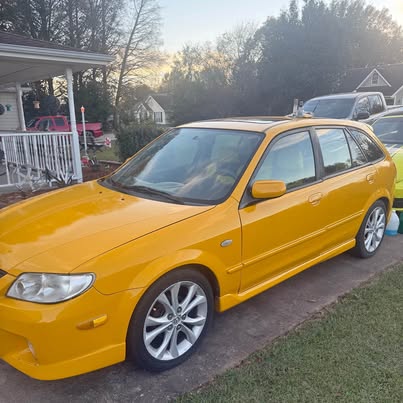
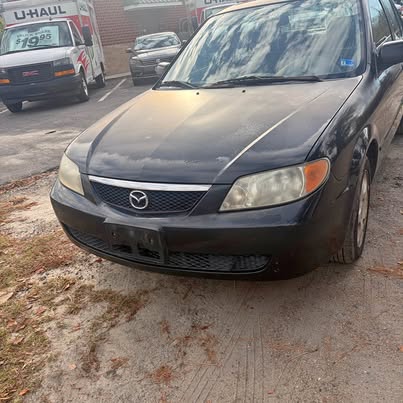
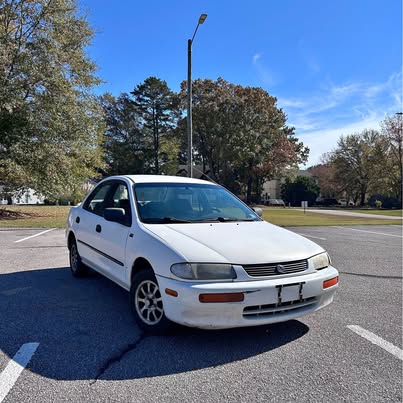
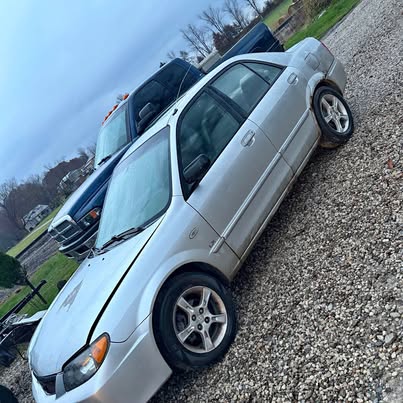
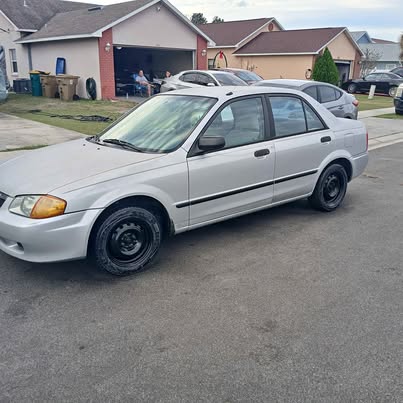
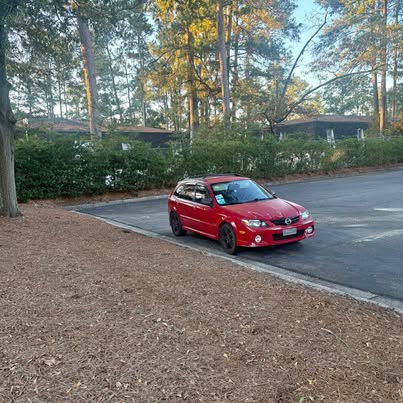
Our own listings show that split, and they are worth reading honestly. We currently track just 9 Proteges for sale or recently sold — 8 for sale and 1 sold — every one sourced from Facebook Marketplace, a sample small enough to treat as a snapshot, not a census. Eight of the 9 are automatics and only one is a manual, which inverts what an enthusiast wants: the manual cars were a minority when new, were driven harder, and are the first to be kept, crashed or modified out of the pool. Each listing carries a single lead photograph — which means the underside, the engine bay and the rear arches, the three views that actually price a Protege, are exactly the views you do not get. The skill this guide teaches is knowing which questions separate the sound southern driver from the rotten one before you travel to see it.
Buy the least rusty car, in the specification you actually want, and let the mechanical list be whatever it is — the mechanical list is the cheap part, and structural rust repair, on a car of this value, costs more than buying the next, better car.
The models
Every Protege sold in North America is a front-wheel-drive compact, and the range is simpler than the badge count suggests. The sedan is the core car in all three generations; the Protege5 of 2002 and 2003 is the same car with a five-door hatchback body. Trim runs DX at the bottom, LX in the middle and ES at the top, and trim matters more than usual here, because on most Proteges the trim decides the engine.
| Model | Years | Engine | Output | Built | Character |
|---|---|---|---|---|---|
| Protege DX / LX (BG) | 1990–1994 | 1.8 four, single cam | 103 hp | High-volume run | The light, boxy original; simple and now scarce |
| Protege LX (BG) | 1990–1994 | 1.8 four, twin cam (BP) | 125 hp | Smaller share | The early driver's car |
| Protege DX / LX (BH) | 1995–1998 | 1.5 four, twin cam (Z5) | 92 hp | The bulk of second-generation sales | The economy car; adequate, frugal, slow |
| Protege ES (BH) | 1995–1998 | 1.8 four, twin cam (BP) | 122 hp | Minority share | The one to have of its generation |
| Protege DX / LX (BJ) | 1999–2000 | 1.6 four, twin cam (ZM) | 105 hp | The bulk of early third-generation sales | Sharper shell, modest engine |
| Protege ES (BJ) | 1999–2000 | 1.8 four, twin cam (FP) | 122 hp | Minority share | The complete early BJ |
| Protege DX / LX / ES (BJ) | 2001–2003 | 2.0 four, twin cam (FS) | 130 hp | The bulk of late production | One engine for all trims |
| Protege MP3 | 2001 | 2.0 four, twin cam (FS), tuned | 140 hp | 1,500 for the US | Limited edition: chassis, exhaust and audio |
| Protege5 | 2002–2003 | 2.0 four, twin cam (FS) | 130 hp | Two model years only | The hatchback; the most useful Protege |
| Mazdaspeed Protege | 2003–2003.5 | 2.0 four, twin cam (FS), turbocharged | 170 hp | Limited run of a few thousand in total | The flagship: turbo, limited-slip differential, Racing Beat chassis |
(Outputs are the period SAE net figures for North American cars; Mazda published no clean American splits by trim, so the built column says so instead of inventing per-trim numbers.)
The first generation (1990–1994). The BG cars are upright, square-cut and light — around 2,400 lb in early form — and they feel it. The DX and the volume LX use the single-cam 1.8, an honest 103 hp engine that does the job. The twin-cam LX is the interesting car, because its BP engine is from the same family as the Miata's, detuned for sedan duty and still happy to rev. Buy a first-generation car on condition alone — survival, not specification, is the rarity.
The second generation (1995–1998). The BH cars are bigger, quieter and safer, with a rounder body facelifted for 1997. The range split hardens here. DX and LX cars carry the 1.5-litre Z5 twin-cam with 92 hp, and that is not much engine for the weight: adequate around town, patient on a freeway grade, and usually honestly kept. The ES carries the 1.8 BP with 122 hp, plus four-wheel disc brakes, a rear anti-roll bar and better seats. An ES drives like a different model, because in every way that counts it is one. If you shop this generation, shop for an ES and accept a longer search.
The third generation (1999–2003). The BJ shell is the best-looking Protege — taut, European and still modern-looking — and the chassis took another step: stiffer, sharper, steering feel intact. For the first two years, DX and LX cars use the 1.6-litre ZM with 105 hp, a willing engine that is nevertheless working hard in a car of this weight, especially with the automatic, while the ES keeps a 1.8-litre FP twin-cam with 122 hp and four-wheel discs. Then, for 2001, Mazda simplified the range in the buyer's favour: every Protege, DX to ES, got the 2.0-litre FS twin-cam with 130 hp, and the facelift brought a revised nose, lamps and interior. Trim now buys equipment rather than speed — DX the plain car on steel wheels, LX the middle car most people bought, ES the dressed car with alloys, four-wheel discs and often a sunroof.
The MP3 (2001). Mazda showing its working: a limited run of 1,500 cars for the US, in Laser Blue Mica or Vivid Yellow, built around the chassis rather than the engine. The 2.0 was tuned to 140 hp with a revised intake, exhaust and engine management; Racing Beat supplied the suspension tuning; Racing Hart supplied 17-inch wheels; Kenwood supplied a head unit with an MP3 player, then a novelty. An MP3 is worth a premium over an ES — but check its identity carefully, because blue paint and a set of wheels make a convincing tribute out of an ordinary sedan, and the premium rides on the car being real.
The Protege5 (2002–2003). The five-door is the Protege at its most likeable: the late sedan's 2.0 engine and chassis, a genuinely useful hatchback body with a split-folding rear seat, roof rails on most cars, side skirts and a rear spoiler. It was sold as a lifestyle car to younger buyers, which cuts both ways today — many were modified, lowered and driven accordingly, and an unmodified Protege5 is now the exception worth paying for.
The Mazdaspeed Protege (2003–2003.5). The finale, and the only Protege that is already a collector car. Mazdaspeed took the 2.0 FS, added a Garrett T25 turbocharger with an air-to-air intercooler at modest boost, and quoted 170 hp; added a Tochigi Fuji limited-slip differential to the five-speed manual — there was no automatic — and gave the chassis to Racing Beat again: stiffer springs and anti-roll bars, bigger brakes, 17-inch Racing Hart wheels and a Kenwood audio system with a subwoofer. The 2003 cars came in Spicy Orange Mica and Black Mica; the mid-year 2003.5 cars brought new colours, a revised front spoiler and different wheels. It is a genuinely special and genuinely demanding car: the turbo engine's internals are close to stock, the differential has a known failure mode, and a modified Mazdaspeed is a car whose remaining life you cannot price from an advert. Buy the most standard one you can find.
Engines and gearboxes
The economy fours: Z5 1.5 and ZM 1.6
The 1.5-litre Z5 (1995–1998 DX and LX) and the 1.6-litre ZM (1999–2000 DX and LX) are the engines most Proteges actually have: a belt-driven twin-cam four with an iron block and an alloy head, hydraulic lash adjusters and electronic fuel injection, with distributor ignition on the earlier cars. Neither is powerful. The Z5 makes 92 hp and needs revs and planning on a freeway merge; the ZM makes 105 hp and feels a size larger than it is around town. Bottom-end failures on an unmodified, oil-fed engine are rare enough to treat as a sign of outright neglect rather than a model weakness.
Their failure pattern is a maintenance pattern, and it repeats, with variations, on every engine in this guide. First, oil. Hydraulic lash adjusters are fed by the oil supply, and on old or thin oil they tick at start-up and then all the time; an engine that ticks loudly cold and quietens as it warms is usually asking for fresh oil of the right grade, while one that ticks hot, at idle, after a run, may have genuinely worn adjusters or low oil pressure — the oil change is the cheap first test. Second, the timing belt. Every engine in this guide drives its camshafts by belt, the published interval varies by year and by state emissions specification between roughly 60,000 and 105,000 miles, and the honest rule is simple: a belt with no invoice is a belt that is due, on the day you buy the car, at your cost. Budget a belt service at roughly $450–900 at an independent shop with the tensioner and idlers, and add the water pump while the front of the engine is apart. These engines are generally regarded as non-interference designs, so a snapped belt usually stops the engine rather than bending valves — but a tow is guaranteed either way.
Third, oil leaks, which on these engines are a geography lesson. The valve cover gasket hardens and leaks into the spark plug wells, where the oil cooks the plug leads and produces a misfire owners misdiagnose as ignition failure. The distributor O-ring on distributor cars leaks at the back of the head and drips onto the heater hoses below it, softening them until they swell and split — a leak that looks trivial and a failure that empties the cooling system, so trace any oil at the back of the engine before you price the car.
The 1.8s: BP and FP
The 1.8-litre cars are where the Protege becomes the car its reputation describes. The BP (1990–1994 LX, 1995–1998 ES) is the famous one: the twin-cam four from the Miata's family, with 125 hp in first-generation form and 122 hp in second-generation form, an engine that revs cleanly to its redline and rewards a driver who uses the gearbox. The FP (1999–2000 ES) is its descendant — a related but distinct 1.8 in the F family, again 122 hp, smoother and torquier in the middle of the range. Both transform their cars, and an FP-engined ES is the most balanced standard Protege of all.
Mechanically, read the 1.8s as the economy fours with the revs turned up, plus two checks of their own. The distributor O-ring leak is at its most consequential here, because the BP's distributor sits where its drip lands on coolant hoses — price hoses with the seal, not after the failure. Lash adjuster tick is the BP's signature sound on neglected oil, and the same oil-change-first logic applies. Beyond that, the wear items are the shared ones: belt, valve cover gasket, plug leads cooked by well oil, and a carboned idle air control valve — a cleaning job before it is a parts job. A healthy 1.8 starts instantly, idles evenly and pulls without a flat spot to the redline; blue smoke on start-up after sitting is valve stem seals, a priceable job, while smoke under load is ring wear and a walk-away conversation.
The 2.0: FS-DE
For 2001 the whole range converged on one engine, the 2.0-litre FS-DE: iron block, alloy twin-cam head, 130 hp, and the strongest low- and mid-range pull of any standard Protege engine. It powers the late sedans, every Protege5 and, in tuned and turbocharged forms, the MP3 and the Mazdaspeed. It is a good engine with a longer specific-fault list than the engines it replaced, and two items on that list can kill an engine that runs sweetly on the day you view it.
The headline item is the intake manifold. The FS uses a variable-length intake system — Mazda's VICS, Variable Inertia Charging System — with butterfly plates in the manifold runners, and on the 2.0 those plates are held by small screws. On a documented number of cars those screws loosen with age and vibration; a loose screw first announces itself as a faint rattle from the manifold, and a screw that comes out entirely goes where the airflow goes, into a cylinder, where it can destroy a piston, a head or both in seconds. This is not folklore and it is not a reason to avoid the engine — ask one specific question of every 2.0 seller: has the manifold been checked, the screws secured or the plates dealt with? A documented manifold fix is worth money; an unexplained top-end rattle is a car to price as if the engine is already hurt, and a seller who has never heard of the issue has told you the check has never been done.
The rest of the FS list is cheaper and more familiar. Ignition is by two coil packs mounted on the valve cover, each firing two cylinders in a wasted-spark arrangement, with conventional leads to the plugs — coil packs crack and fail with heat and age, and the symptom is a misfire under load that comes and goes with temperature before it becomes permanent. Coils are inexpensive parts and a driveway job, roughly $100–250 in parts for the pair, so a misfiring 2.0 is a negotiation point rather than a rejection — unless the misfire has been driven on for months, which destroys the catalytic converter downstream and turns a coil bill into a converter bill. The EGR valve carbons and sticks, giving a rough, dipping idle and an engine light with an EGR flow code; cleaning cures some, replacement cures the rest, at roughly $150–350 fitted. Engine mounts — there are four, and the passenger-side and rear mounts go first — tear and transmit a vibration at idle and a clunk on take-up of drive that owners routinely misdiagnose as a gearbox fault; mounts are roughly $250–600 fitted for the ones that matter.
The turbo car: FS-DET in the Mazdaspeed Protege
The Mazdaspeed's engine starts as the same FS 2.0 and adds a Garrett T25 ball-bearing turbocharger, a small side-mounted air-to-air intercooler, revised engine management and a stronger clutch, for 170 hp at modest boost — around 6 to 7 psi in standard form. The qualification matters, because the standard internals set a hard ceiling: the connecting rods are essentially the standard car's, and they are the known weak point when boost is raised. A standard, unmodified engine with oil history is durable. A modified one is an unknown quantity whose price should assume an engine build, roughly $3,500–6,500 for a proper forged rebuild with labour, whether or not the seller agrees.
Three further checks are Mazdaspeed-specific. The limited-slip differential — a Tochigi Fuji conical unit — has a known failure mode in which the differential fails and the car loses drive, sometimes with warning noise and sometimes without; owners have long treated a welded or uprated replacement as the permanent fix, so ask directly whether the differential is original, replaced or welded, and treat a vague answer on a hard-driven car as a cost to come, at roughly $800–1,800 to put right with labour. The turbocharger is a service item at this age: blue smoke at idle after a hot run points to seals, a whine to bearings, and a rebuilt or replacement T25 is a $700–1,500 conversation fitted. A Mazdaspeed that boosts unevenly or feels flat is usually leaking air somewhere cheap — cracked plastic charge pipes are the usual suspects — before it is dying somewhere expensive, but the diagnosis needs a pressure test, not guesswork.
Gearboxes
The standard gearbox is a five-speed manual from Mazda's G-series family, and it is one of the car's best components: light, precise, with a shift quality that shames most modern cars. Judge it on the synchromesh — second and third gears wear first, and a crunch on a fast change that disappears when you slow the change down is synchromesh wear announcing itself years before it strands you — on the clutch take-up, and on whine in gear, which points to bearings and a rebuild conversation at roughly $1,200–2,500 with the clutch done at the same time. A clutch alone is roughly $600–1,100 fitted. There was no automatic Mazdaspeed, and a Mazdaspeed advertised with an automatic is not a Mazdaspeed.
The automatic is a four-speed — the F-series Mazda automatic, the FN4A-EL in the third-generation cars — and it dominates the surviving pool: 8 of the 9 cars we currently track are automatics. It is a conventional torque-converter box that is smooth and unremarkable when its fluid has been changed and increasingly unhappy when it has not. The symptoms arrive in order: a long, soft engagement of drive or reverse from cold, a flare — revs rising without drive — on the change up under load, and eventually a box that holds gears too long or will not take top gear at all. Fluid condition is the first test: pull the dipstick, and fluid that is dark brown and smells burnt is a box that has been cooked. A fluid and filter service is roughly $150–300 and is worth doing on any purchase; a rebuild is roughly $1,800–3,200, which on a standard automatic sedan is more than the difference between that car and a better one, so an automatic that flares when warm is a walk-away at any price that assumes it does not. The manual is the enthusiast's car and the safer old-age bet; the automatic is the commoner car and the one to judge hardest.
Problem areas
Everything in this section follows from one fact about the Protege: the mechanical design is better than the corrosion protection. We have no photo-note incidence figures to quote for this model — our current pool is 9 cars with a single lead photograph each, and a lead photograph cannot show you a sill, a subframe or a spring seat — so this section will not pretend otherwise. Work through the rust map first on any car, whatever its mileage, service history or paint.
Rust: the map
Rust on a Protege follows salt and trapped water, and it starts earlier and spreads faster than on the Honda and Toyota rivals — the model's defining weakness. Work through it in this order:
Rear wheel arches and rear quarters. The first place, and the place to look before anything else. The arch lip traps mud and salt against a seam, the paint bubbles from underneath, and by the time the bubble breaks the rot is through the outer skin and working on the inner arch and the sill end behind it. Arch repair — cut out, weld in a repair section, paint — runs roughly $600–1,500 a side done properly, and is only worth doing on a car whose sills and subframe are sound. Arch rust on both sides plus sill rust is not a repair list, it is a verdict.
Sills and rocker panels. The sills carry the jacking points, collect everything the front wheels throw at them, and rot from the inside out, so the outside can look presentable over metal that will no longer take a jack. Prod the jacking areas, and be suspicious of fresh black underseal and of any car photographed to keep the sills in shadow. A sill that flexes or crunches under a firm thumb press is structural. Welding a sill properly is roughly $700–1,800 a side with paint — money that only makes sense on an otherwise sound shell.
Front subframe. The engine and front suspension hang from a pressed-steel subframe, and on salt-state cars this is now the commonest structural failure on the third-generation cars: the frame rots from inside its box sections, often worst around its mounting points and the lower control arm mounts, and it can look merely scabby from the side while being perforated where it matters. This check needs the car in the air or, at minimum, you on the ground with a torch looking up, not across. Perforation here is not a patch job; it is a replacement subframe — a good used southern frame, the labour to swap it and an alignment — at roughly $900–2,000 all in, if a sound used frame can be found.
Strut towers and the engine bay seams. Open the bonnet and read the towers and the seams where the inner wings meet the bulkhead. Surface scabbing is common and treatable; bubbling that has lifted the seam sealer, cracking around the top mount, or metal that flakes under a screwdriver is structural corrosion in the part that locates the front suspension, and it is fabrication work priced per car.
Floors, spare wheel well and the Protege5 tailgate area. Water gets in past tired lamp seals, a perished tailgate or trunk seal and blocked sunroof drains, and sits under carpets and under the spare wheel. Lift the spare and look at the well corners; lift the carpet edges in the rear footwells and feel for damp and for the crunch of a floor going soft. On the Protege5, add the tailgate itself: the seams around the glass and the lower edge hold water, and the struts tire and let the hatch drop. A rusted well or floor section is a weld-and-paint job at roughly $500–1,400 depending on extent — but floors rarely rot alone, so treat what you find there as a marker for the whole shell and go back to the arches and sills with fresh suspicion.
The smaller traps. Door bottoms, where blocked drain slots let the door fill and rot from the lower seam outward — fingertip every door's bottom edge and feel for bubbling. The bottoms of the front wings behind the wheels. Brake and fuel hard lines under the car, which on a salt car can be as rotten as the body they run along — a perforated brake line is a safety failure, and a full set of lines is roughly $400–900, real money on a car of this value. And the rear subframe and its mounts on the third-generation cars, which rot on the same schedule as the front one and are inspected the same way: from underneath, with a torch, looking for perforation rather than colour. None of the small traps alone kills a car; together they date-stamp how the car has lived, and on a Protege how it has lived is what you are buying.
Suspension, steering and brakes
The Protege rides on MacPherson struts at the front and Mazda's twin-trapezoidal-link arrangement at the rear, and the design is durable, simple and cheap to maintain. What wears is predictable, and almost all of it announces itself by noise before it announces itself by failure.
Anti-roll bar links and bushes are the first stop for any clunk. The drop links are small, cheap and short-lived; a light knocking over broken surfaces at low speed is links or bushes nine times out of ten, and a set is roughly $150–400 fitted depending on how many corners need doing. On the Mazdaspeed, the rear bar's bushes are a known squeak-and-clunk item in their own right — the Racing Beat rear bar works its bushes hard. Rule the cheap noise out before anyone sells you struts. Wheel bearings, by contrast, growl: a hum that rises with road speed and changes as you weave gently is a bearing, and a front bearing is a press job at roughly $250–500 a side fitted.
Struts, top mounts and springs. By this age every Protege that has not had them done needs struts: judge by bounce — push a corner down and release, and a car that rises and settles once is fine, while one that oscillates is on tired dampers — by oil leaking down the strut body, and by the front top mounts, which crack their rubber and knock over sharp bumps. A full set fitted with an alignment runs roughly $800–1,600, and it transforms a sloppy car. Springs sag and occasionally break at the bottom coil, worst on salt cars where corrosion thins them; a broken spring end often hides inside the lower seat, so look, do not just listen.
Steering. The rack is hydraulically assisted and generally long-lived; the wear items are the track rod ends, whose play shows as vagueness on centre and a knock when you rock the steering at rest, and the pump and its hoses, which weep and then leak. Black power steering fluid and a pump that groans at full lock are maintenance deferred, usually curable with fluid and hoses at modest cost; a rack leaking from its seals is roughly $500–1,000 exchanged and fitted.
Brakes. Front discs on everything, rear drums on the lower trims and rear discs on ES, Protege5 and Mazdaspeed cars — and the split matters at inspection. Disc cars carry the model's known brake trap: the rear calipers seize, the slider pins first and then the piston, and the handbrake mechanism inside the caliper is part of the same story — a rear wheel that runs hot after a short drive, a car that drags, uneven rear pad wear and a handbrake that barely holds are the presentations. A seized rear caliper is roughly $200–450 a side exchanged and fitted, and the honest fix includes the sliders and the cable, not just the caliper. A full hydraulic refresh — discs, pads, hoses, fluid and a caliper or two — runs roughly $600–1,400, which belongs in the first-year budget of any car bought out of storage.
Engine ancillaries, cooling and driveline
Beyond the engine-specific faults in the previous section, the ancillary layer is where a Protege's running costs actually live, and it is mercifully cheap.
Cooling. The radiator's plastic end tanks age, craze and eventually split or weep at the crimped seam, usually at the top tank first; a sweet smell after a run and a crusty residue line along the seam are the early warnings, and a radiator is roughly $300–600 fitted. Thermostats stick — open, giving a car that never warms up, or closed, giving an overheat that will warp a head if it is driven through. Never drive an overheating Protege and hope: an alloy head on an iron block does not forgive it, and a head gasket job at roughly $900–1,600 turns a cheap car into an expensive one. Hoses perish from the inside and from oil contamination — remember the distributor O-ring drip.
Idle and drivability faults on a high-mileage Protege are a short list that repeats: a carboned idle air control valve giving a hunting or stalling idle, worst from cold or with the air conditioning on; a dirty or failing mass airflow sensor giving flat spots owners blame on the gearbox; tired plug leads breaking down under load in the wet; and vacuum leaks from perished hoses giving a high or wandering idle. None of these is a big bill — diagnosis is the cost, and the engine light's codes, read before you negotiate, separate a cheap fix from a dear one.
Air conditioning deserves its own paragraph because so many surviving cars live where it matters. A system that blows cool rather than cold may need only a recharge, roughly $120–250, but a system that has been empty for years needs the leak found, and a compressor is roughly $600–1,100 fitted. Test it on every viewing, in November as in July, and treat "just needs a recharge" as an unproven claim priced as a compressor until a gauge set proves otherwise.
Driveshafts and CV joints click on full lock when the outer joints wear — a $200–400 a side job fitted — and the boots split first, so a car with intact boots and no click is a car whose shafts will last. On automatics, return to the gearboxes verdict in the previous section: the fluid's condition and the warm test drive are the inspection, and no additive fixes a flaring box.
Interior, electrics and trim
The Protege cabin is plain, hard-wearing and honest, and it prices a car more accurately than the odometer does, because a Protege interior cannot be retrimmed economically — what you see is what you will live with.
Seats and trim. The cloth is tough but the driver's bolster wears through where a decade of getting in and out rubs it, and the foam underneath collapses on high-mileage cars so you sit in the seat rather than on it. Sit in the driver's seat, always; the passenger seat lies to you. ES and Protege5 cars got better bolstered seats, and a Mazdaspeed's two-tone trim is part of its value. Headliners sag with age and heat, and sunroof cars leak past blocked drains. A good used seat from a low-mileage car is the fix, roughly $100–300 a seat from a breaker if you can find one that matches.
Electrics fail at the edges, in the usual Japanese-car pattern of this era. Electric window regulators — cable-driven — stretch, fray and fail, usually the driver's window first, at roughly $150–350 a door fitted. The blower resistor fails by speeds, leaving the fan working only on its highest setting — a cheap part and the classic symptom, so test every speed. Central locking actuators tire one door at a time. The alternator is a known mid-life replacement, roughly $300–550 fitted. On the Mazdaspeed and MP3, the Kenwood head units are a period trap: the motorised flip-face mechanism fails with age, and a dead face is an audio replacement, not a fuse — price the car as needing a modern unit unless the original demonstrably works. The clock spring behind the steering wheel matters more than it sounds, because its failure takes the horn, the cruise control and the airbag circuit together, and an airbag light is a repair, not a bulb to remove.
The rest. Wiper linkages wear and slap, the Protege5's rear wiper seizes at its spindle, and lamp lenses cloud. Exhausts rot from the rear box forward on salt cars and from the flex section on all cars — a full standard system is roughly $400–900 fitted. None of this is hidden money on the scale of rust or a gearbox: spend your fear on the structure, and budget the rest as a list.
How to inspect one
Allow an hour, bring a torch, a magnet wrapped in cloth and a jack if the seller will let you use it — and if you are travelling for the car, agree the photograph list in step 2 before you set off. The inspection has a strict order, because the first checks can end it: there is no point falling for an interior on a car whose subframe is perforated.
- Paperwork and identity first. Match the VIN on the title to the plate at the base of the windshield and the sticker in the driver's door jamb, and read the title brand honestly — a rebuilt or salvage title on a car of this value is a permanent discount, not a detail. Confirm the car is what it claims to be: an MP3 or a Mazdaspeed carries a premium that badges and wheels can fake, so look for the full package together — suspension, interior trim, audio and, on the Mazdaspeed, the turbo installation and the manual-only specification — rather than any single item. Weight a timing belt invoice above every other document in the file.
- The remote rust triage. Before you travel, ask for photographs of both rear arches, both sills along their full length, the engine bay strut towers, the spare wheel well with the spare lifted, and the front subframe from underneath. A seller who refuses has given you the answer the rust section predicts — spend your day on another car.
- Cold start. Insist the engine is cold when you arrive; a warmed-up car is one whose cold-start behaviour someone did not want you to hear. Listen for lash adjuster tick that should fade as oil pressure builds, watch for blue smoke on start-up (valve stem seals) and, on a 2.0, listen at the intake manifold for the rattle that points to the VICS screws described in the engines section.
- Under the car: the deciding step. Torch along both sills and prod the jacking points, then the front subframe around its mounts and control arm pickups, then the rear subframe and the floor seams. Perforation in a subframe, a sill or a spring seat is structural, and structural rust on a Protege ends the inspection whatever the asking price — the rust section's costs explain why. Read the underseal as you go: thin, patchy and dirty is honest; a fresh uniform black coat over seams, lines and mounts alike is a question, not an answer.
- Arches, doors and seams above ground. Run the magnet over the rear arches, the sill ends and the lower doors; filler announces itself. Fingertip every door bottom for bubbling, check the bonnet leading edge and, on a Protege5, the tailgate seams and lower edge. Lift the spare wheel and look at the well corners.
- Engine bay checks. Pull the dipstick: oil that is black and gritty is a service history; oil that is fresh in a car with no invoices is a question. Trace the back of the head for the distributor O-ring drip and check the heater hoses below it for swelling. On a 2.0, check the plug wells for oil and ask the manifold question outright. An empty coolant reservoir means a leak you have not found yet.
- The test drive, manual. Fifteen minutes minimum, including a freeway stretch. Work the engine through the rev range — a 1.8 or a 2.0 should pull cleanly without a flat spot — and make several fast changes into second and third: the crunch that vanishes when you slow the change is the synchromesh verdict from the gearboxes section. Feel the clutch take-up and listen for a CV click on full lock.
- The test drive, automatic. Most cars you will see are automatics — 8 of the 9 in our pool — so learn this version too. The box must be fully warm before you judge it. Engagement of drive and reverse should be prompt and without a thump; under load the changes should be clean, with no flare of revs between gears. A warm box that flares or delays is the walk-away case the gearboxes section describes, at any price that pretends otherwise.
- Brakes, steering and suspension together. Brake hard from speed: the car should stop straight, without judder or a sinking pedal. After the drive, feel each wheel for heat — a hot rear wheel on a disc-brake car is the seized caliper from the problem areas section, found for free. Rock the steering at rest for track rod play, and drive a broken surface slowly for the link-and-bush knock. Push each corner down and release it: one rise and a settle is a strut that still works.
- Heat, air conditioning and electrics. Whatever the season, run the heater to full hot and the air conditioning to full cold, and work the blower on every speed — the resistor that has taken the low speeds with it shows itself here. Work every window, lock, wiper and light. On an MP3 or a Mazdaspeed, power up the Kenwood unit and watch its face complete its travel; a unit that stalls halfway has priced itself.
- Interior last, driver's seat first. Sit in the driver's seat and feel for the collapsed bolster and the spring frame underneath; the passenger seat will flatter the car. Check for damp carpets in the rear footwells — water in a Protege comes from lamp seals, hatch seals and sunroof drains, and it rots floors from the top down while the underside still looks honest. On a Protege5, fold the rear seat and confirm the load floor and spare well are dry and sound.
- Price what you found, in the right order. Total the car in this sequence: structure first (any structural rust re-prices the car as a parts car or ends it), then the belt service if there is no invoice, then the gearbox verdict, then the wear list — struts, brakes, mounts, coils, air conditioning. A Protege with a sound shell and a long wear list is a negotiation. A Protege with a rotten shell and a short wear list is a photograph of a car. If the car passes you and the sums work, a paid lift inspection before money changes hands is still the best money in the purchase — the one view of the subframes and floors that no driveway inspection fully replaces.
Values
The build appends the current market figures beneath this guide — the cars listed now and the recorded sales — so this section deliberately carries no prices of its own. What it can give you is how to read those figures, because the market's shape matters more than any single number in it.
Start with the condition spread, which on this model is not really a condition spread at all: it is a geography spread wearing a condition badge. Two cars with the same year, trim and mileage sit at opposite ends of the market because one has a sound shell and one has arches, sills and a subframe in the state the problem areas section describes. The practical reading is this: the bottom of the market is not a bargain tier, it is a rust tier, and a car priced at the bottom that proves genuinely sound underneath is the only true bargain the model offers.
Asking and achieved prices part company in a particular way on cheap cars. Sellers anchor on what they have spent — a recent clutch, tyres, a timing belt — and ask as if maintenance were equity. It is not: maintenance is the price of the car still existing, and the market pays for shell condition, specification and gearbox, in that order.
Within the range, the premiums are legible. The manual gearbox carries one everywhere, because it is rarer in the surviving pool, better to drive and cheaper to keep — our own current pool, eight automatics against a single manual, shows you the supply side of that premium at a glance. The Protege5 carries a genuine premium over an equivalent sedan, because the body is more useful and the supply stopped after two years. The MP3 carries a rarity premium that depends entirely on the car being verifiably real and substantially standard. And the Mazdaspeed sits in a market of its own: the only Protege bought by collectors, priced on originality and modification history rather than on transport value. On a Mazdaspeed, the modification list is a deductions list.
The project-versus-driver gap completes the picture. A non-running or structurally rusty Protege is worth its parts and very little more, because the repair economics in the problem sections never close: the welding costs what the welding costs, the finished car is worth what a driver is worth, and those two figures meet only on the limited editions. A running, sound, documented driver, by contrast, is worth a clear premium over the market's middle, because the supply of them shrinks every winter. On this model the expensive-looking car is usually the cheap one, and it is not close.
Parts and ownership
The Protege is one of the easiest cars of its era to keep. Mazda built the Familia family in large numbers worldwide, the mechanical design changed slowly across three generations, and the car shares its world with the Ford Escort and Mercury Tracer of the 1990s, which carried Mazda engines and gearboxes in American showrooms and widened the parts pool further. There is very little about a Protege that is unknown, unavailable or dear.
Easy: service items, filters, plugs and leads, coil packs for the 2.0, brake discs, pads, drums and shoes, struts and top mounts, anti-roll bar links and bushes, wheel bearings, CV shafts, radiators, thermostats, alternators, window regulators, timing belt kits and water pumps. Order today, fit this weekend, at prices close to modern economy-car money — and the $450–900 fitted belt cost quoted earlier is mostly labour.
Harder and dearer: body panels and rust repair sections are the honest difficulty — arch and sill repair panels exist for some versions but coverage is patchier than for a Civic, and good used panels come from the same southern cars you are competing to buy whole. Front subframes are the sharp end of that problem: no meaningful new supply, so the fix is a sound used frame. Mazdaspeed-specific parts divide by type: engine and turbo service parts are findable, the limited-slip differential and its uprated replacements are a specialist purchase, and the Racing Beat suspension components, Racing Hart wheels and Kenwood audio are finite — damaged or missing Mazdaspeed trim is replaced from a shrinking pool of broken cars, at prices that reflect it. Interior trim in the right colour is a breaker part now; buy the interior with the car.
Running costs. A sorted Protege is a realistic daily car: fuel economy in the high twenties to mid thirties per gallon depending on engine and gearbox, with the automatics and the Mazdaspeed at the thirsty end and the 1.6 manual at the frugal end; insurance in the lowest groups the American market offers for a standard car; and servicing any competent independent shop can do. The budget line that catches new owners is the first year: catching up deferred maintenance on a running Protege — belt service, fluids, brakes, struts, mounts, tyres — honestly runs $1,500–3,500 before you improve anything, and recommissioning a car that has sat for years runs more, because standing still rots brake hydraulics, perishes every rubber component and lets the fuel system varnish. Buy a car in regular use, from the driest state you can manage, and the Protege repays you the way it repaid its first owners: it starts, it handles, and it asks for very little.
Which one to buy
- The all-rounder: Protege5 (2002–2003). The 2.0 engine, the best body, the strongest image and a hatch that swallows real life. If you want one Protege to use every day and enjoy, this is it.
- The driver's sedan: ES, any generation. The 1.8 BP car of 1995–1998 and the 1.8 FP car of 1999–2000 are the formula in its purest form, and the 2.0 ES of 2001–2003 is the easiest version to find.
- The value buy: a late LX or DX (2001–2003). From 2001 every trim got the 2.0 engine, so the plain cars stopped being slow cars. A well-kept southern LX automatic with a belt invoice is the cheapest honest transport in this guide.
- The connoisseur's car: the first-generation LX (1990–1994). The light, boxy twin-cam original, from the Miata's engine family. Survival, not specification, is the rarity now.
- The collector car: Mazdaspeed Protege (2003–2003.5). The flagship, and the only Protege to buy with originality in mind. Standard, documented and unmodified outranks low mileage with a boost controller — and verify the differential and the manifold history before anything else.
- The rarity: MP3 (2001). The chassis special that previewed the Mazdaspeed. Worth its premium when verifiably real and unmolested; worth no more than an ES when it is a blue sedan with wheels.
And the rule that overrides all of the above: buy the least rusty car you can find, in the specification you can live with, and let the mechanical list be whatever it is. Coils, belts, struts, mounts and brakes are all fixable at prices you can plan for, and this guide has priced them for you. A rotten subframe, rotten sills and rotten arches cost more to put right than the finished car will ever be worth — on a Protege that arithmetic is not a warning about restoration. It is simply the market, working.
Listed now
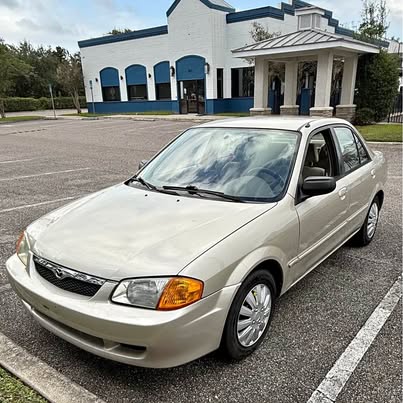
On Classic Listings today: 4 cars are listed here; 2 for sale and 2 marked sold; average asking price $3,150; asking range $3,000 to $3,300; sold cars average $4,235.
See the 4 Protege cars currently listed.
The market — recorded sales
Recorded-sale figures: 2 recorded sales · median $4,234 · range $500 to $7,969 (Nov 2024 – Nov 2026)
Based on 2 recorded sales — too few for a benchmark value.
| Date | Car | Sale price | Source |
|---|---|---|---|
| Nov 14, 2026 | 1999 Mazda Protege Sedan 4D | $500 | |
| Oct 30, 2026 | 2001 Protege | $7,969 | Cars & Bids |
Dates are the sale date where the source states one; otherwise the date the sale was recorded here.
For sale now
 $3,300
Expand
$3,000