
Mazda RX-8 buyer's guide
Mazda RX-8 -- the model's own buyer's guide: variants, values and what to check.
Years listed: 2004-2005 · Series: RX-8
Overview and history
The Mazda RX-8 is the last rotary-engined production car the world has had, and a completely different proposition from the car it replaced. The RX-7, which left the US market after 1995, was a two-seat turbocharged sports car that got faster, more fragile and more expensive with every generation. The RX-8, launched in 2003 as a 2004 model, kept the rotary and threw away almost everything else. In came four usable seats, a pair of small rear-hinged back doors Mazda called freestyle doors, no B-pillar between them, and a naturally aspirated engine with no turbocharger to cook. The target buyer was no longer the committed rotary obsessive. It was anyone cross-shopping a Nissan 350Z or an Infiniti G35 who wanted something stranger and better balanced.
That packaging only works because the engine is tiny. The Renesis two-rotor is a fraction of the size and weight of a piston engine of similar output, so Mazda could mount it low and well back in the chassis — a front-mid layout, with the engine behind the front axle line — and still leave room for four adults. The result is a car of around 2,900 to 3,050 pounds depending on trim and gearbox, with weight distribution close to 50:50, double-wishbone front suspension, a multi-link rear, rear-wheel drive and one of the finest steering and gearshift combinations ever fitted to a car at its price.
Production ran from 2003 to 2011, sold in the US for the 2004 through 2011 model years. Total production was roughly 192,000 cars worldwide — a big number by rotary standards, which is why the RX-8 is common and cheap in a way no RX-7 has ever been. The range divides cleanly in two. Series I cars, 2004 to 2008, are the original design. Series II cars, 2009 to 2011, wear a facelift and carry a long list of small engineering changes underneath, most of them aimed squarely at the early cars' engine-durability reputation. A high-spec R3 version topped the Series II range. There was no factory turbo version and no convertible. When production ended in 2011, the rotary engine ended with it.
So why is a car this good this cheap, and why does this guide spend so much of its length on one workshop test? Because the RX-8's reputation rests on a single component group — the apex seals that seal each rotor to its housing — and on buyers who learned, often expensively, that a rotary engine can feel perfect on a test drive and be worn out inside. The Renesis asks more of its owner than any piston engine of its era: oil consumed by design and checked constantly, ignition parts treated as service items, a strict warm-up discipline, and regular hard use to keep carbon at bay. Owners who understood that got long service. Owners who treated the car like a Corolla got an engine that lost compression, refused to restart when hot, flooded, and eventually stopped altogether. Mazda itself acknowledged the problem in the US by extending the core engine warranty on 2004 to 2008 cars to eight years or 100,000 miles, long since expired on every car.
That history defines today's market. Almost everything about an RX-8 except the engine's internal sealing is conventional, durable and cheap to fix — the chassis, brakes, suspension, interior and gearboxes are not the risk. The risk is concentrated in one place, invisible from the driver's seat, and measurable precisely in about half an hour with the right instrument. An RX-8 bought on compression figures is one of the great performance bargains of its era. An RX-8 bought on how it feels is a lottery ticket.
A note on what you will actually find for sale: we currently track nine RX-8s, every one a 2004 or 2005 car, seven of them manuals and two automatics, all offered by Marketplace sellers. That is a fair picture of the affordable end of this market. Series II cars, and R3s especially, are far thinner on the ground, and you will have to hunt and travel for one.
The models
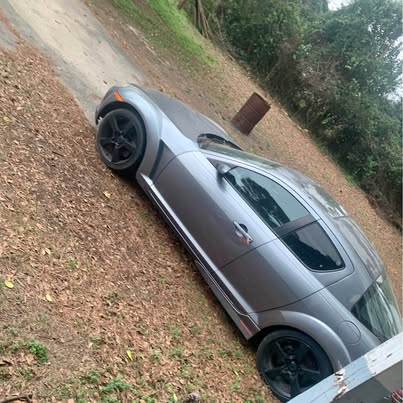
There is only one RX-8 body: a four-door coupe with a conventional front door and a smaller rear-hinged door behind it on each side, the rear door latchable only when the front door is open. There is no B-pillar, which is why the body carries extra reinforcement in the sills and roof rails, and why door alignment and latching deserve a check on any car. Everything else in the range is engine output, gearbox and trim. The crucial split is not the badge on the trunk but the version of the Renesis under the hood: manual cars got the High Power engine with a six-port intake, while early automatics got a detuned Standard Power four-port engine with a much lower redline. They are effectively two different cars to drive, and they sit in different value bands for good reason.
| Model | Years | Engine | Output | Built | Character |
|---|---|---|---|---|---|
| RX-8 Standard Power (automatic) | 2004–2005 | 1.3 two-rotor Renesis, four-port | 197 hp | Not published by variant | The detuned car; 7,500 rpm limit, four-speed automatic |
| RX-8 High Power (manual) | 2004–2008 | 1.3 two-rotor Renesis, six-port | 238 hp, later rated 232 hp | Not published by variant | The real RX-8; 9,000 rpm, six-speed manual |
| RX-8 automatic, six-speed | 2006–2008 | 1.3 two-rotor Renesis | 212 hp | Not published by variant | Better gearbox, more power, still no manual's character |
| RX-8 Shinka | 2005–2006 | 1.3 two-rotor Renesis, six-port | 238 hp, later rated 232 hp | Limited runs, about 1,350 for 2005 US cars | Trim special: unique colours, light interior, foam-filled chassis members |
| RX-8 40th Anniversary | 2008 | 1.3 two-rotor Renesis, six-port | 232 hp | 1,000 US cars | Commemorative trim on the last Series I; Metropolitan Grey, Cosmo Red interior |
| RX-8 Series II (manual) | 2009–2011 | 1.3 two-rotor Renesis, six-port, revised oiling | 232 hp | Not published by variant | The developed car; facelift, shorter gearing, better engine protection |
| RX-8 R3 | 2009–2011 | 1.3 two-rotor Renesis, six-port, revised oiling | 232 hp | Not published by variant | The driver's spec: Recaros, Bilsteins, 19-inch forged wheels, no sunroof on most |
Production figures by variant were never published by Mazda in a form a buyer can rely on, so the Built column says so rather than inventing numbers; the roughly 192,000 total for the whole programme is the figure to hold on to. Outputs are US SAE figures of the period, and the apparent drop from 238 hp to 232 hp on the manual car is a change in the SAE rating method, not in the engine. Do not let a seller charge you for a "high-output early car" on that paperwork difference.
Trim levels. US Series I cars came as the base car (sometimes listed as Sport), Touring and Grand Touring, with equipment climbing through xenon headlamps, a limited-slip differential on manual cars, stability control, leather, heated seats, a sunroof, navigation and a Bose audio system. The limited-slip differential matters more than any luxury item: manual cars have it, and it is part of what makes the car feel so composed putting power down out of a slow corner. Automatics make do without the full performance hardware, which is another reason they are the cheaper buy.
The Shinka (2005–2006) was the first special edition and the one you are most likely to meet. It is a Grand Touring-based manual car distinguished by its colours — Black Cherry for 2005, then a small palette including Copper Red and Galaxy Grey — a light sand-colour leather and Alcantara interior, chrome-finished wheels and urethane foam filling in the crossmembers for a touch more body stiffness. Mechanically it is a standard High Power car, so buy it as you would any 2005 manual: on compression. Its pale interior shows wear badly, so a clean Shinka cabin is a genuine point in a car's favour.
Series II (2009–2011) is the connoisseur's end of the range, covered in engineering detail in the engines section: the changes that matter are a third oil injector per rotor housing and a redesigned metering system for better apex-seal lubrication, revised manual gear ratios with a shorter final drive, and the facelift styling. Trim ran Sport, Grand Touring and R3. The R3 is the one enthusiasts chase: Recaro front seats, Bilstein dampers, 19-inch forged alloy wheels, a rear spoiler and no heavy options. It is also the rarest regular-production US RX-8, and sellers know it.
Special editions to treat with care. In the US market, anything wearing an unusual badge and a standard specification is a trim package, not a performance model. There is no factory turbo RX-8 and no Mazdaspeed production version for the US; a car described as either has been modified, and modified RX-8s are priced in the problem areas of this guide, not in this section.
Engines and gearboxes
The Renesis: 13B-MSP
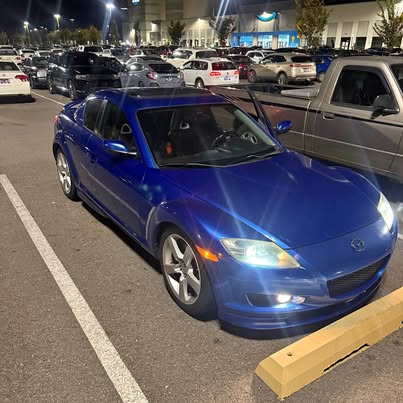
Every RX-8 carries the same basic engine, the Renesis — Mazda's designation is 13B-MSP, for Multi-Side-Port. It is a two-rotor Wankel of 654 cc per chamber, quoted as a 1.3-litre equivalent, and its defining change over the RX-7's 13B is where the exhaust leaves. Earlier rotaries exhausted through peripheral ports in the rotor housing itself, which forced overlap between intake and exhaust events and is a large part of why old rotaries idle lumpily, waste fuel and emit heavily. The Renesis moves the exhaust ports into the side housings, alongside the intake ports. Overlap disappears, the engine can run a 10.0:1 compression ratio — high for a rotary — and it can rev: the High Power redline is 9,000 rpm, with the warning beeper arriving just before it, a sound every owner knows.
Understand what a rotary's moving parts actually are, because the whole buying discipline follows from it. Each rotor is a rounded triangle turning inside an epitrochoid housing — think of a slightly pinched oval. The three tips of the rotor carry apex seals, sprung strips that ride against the housing's chrome surface and separate the three working chambers. The flanks carry side seals against the side housings, with corner seals where the two systems meet. There are no valves, no pistons, no rings in the piston sense, and almost nothing to wear except those seals and the surfaces they ride on. Oil is not an incidental lubricant here: a metering system deliberately injects engine oil into the housings so the apex seals have a film to ride on, which is why the engine consumes oil by design. When the seals wear, the chambers leak into each other, compression falls, and no adjustment, additive or service item brings it back. The engine is then a rebuild or a replacement. Everything in this guide flows from that paragraph.
High Power, six-port (manual cars). The manual RX-8's intake has six ports per rotor: primary and secondary side ports plus an auxiliary port in the side housing, opened at high rpm by an auxiliary port valve system, with a secondary shutter valve managing the earlier stages. It is a staged system that behaves like three engines — tractable below 4,000 rpm, waking up as the secondary ports open, and making its real power from about 6,000 rpm to the 9,000 rpm redline. US output was rated at 238 hp at 8,500 rpm at launch, re-rated to 232 hp under the revised SAE method from 2006, with 159 lb-ft of torque at 5,500 rpm. Torque is the honest weakness: there is little of it low down, the car must be revved, and drivers who will not rev it conclude wrongly that it is slow. Driven as designed — needle in the top third of the dial — it is a genuinely quick car.
Standard Power, four-port (early automatic cars). The 2004 and 2005 automatics use a four-port version of the same engine: no auxiliary ports, a redline of 7,500 rpm and 197 hp at 7,200 rpm, with torque quoted at 164 lb-ft at a lower, more accessible point in the range. It is not a bad engine, but in a two-pedal car it gives away the rotary's one great party trick — the top end — and keeps all of its disciplines. From 2006 the automatics gained power, to 212 hp, and a six-speed gearbox, but the redline and character remained those of the detuned engine. If you want the RX-8 experience, you want the manual engine. If you want cheap entry and a pleasant coupe, the automatics are the softest-priced cars in the market — a good one is still a good car, just not the same one.
Series II changes (2009–2011). The facelift was more than styling. Mazda reworked the oiling system the whole engine's life depends on: an additional oil injector per rotor housing — three instead of two, feeding the centre of the apex seal's sweep as well as its ends — an electrically driven metering pump with finer control, and revised oil pan and pressure arrangements to keep supply consistent under sustained cornering. The manual gearbox received new ratios with a shorter 4.777 final drive in place of the Series I car's 4.444, which makes a Series II feel keener in every gear despite identical rated output. None of this transforms the engine's nature — a Series II still consumes oil, still floods if abused and still wears its seals — but the changes were aimed at exactly the failure that kills Series I cars, and a Series II engine at a given mileage is, on average, the better bet. On average is doing work in that sentence: an individual car still stands or falls on its own compression figures.
Running requirements that are part of the specification. Premium fuel is required, not recommended, on US cars. Factory US oil specification is 5W-20, and the oil debate — many specialists favour a 5W-30, and owners argue mineral against synthetic endlessly — matters less than the two rules nobody argues about: the oil must be full, and it must be fresh. The ignition system is a wear item in a way piston-car owners do not expect: each rotor has two spark plugs, a leading plug low in the housing and a trailing plug above it, and they are different parts — NGK RE7C-L leading and RE9B-T trailing in the standard fitment — served by four coils and leads that live in engine-bay heat and degrade. Plugs are a roughly 30,000-mile item and coils are commonly tired by 30,000 to 50,000 miles. A weak spark does not merely cause a misfire here; unburned fuel overheats the catalytic converter, and a failing converter can then strangle the engine. Ignition health is engine health on an RX-8.
Gearboxes
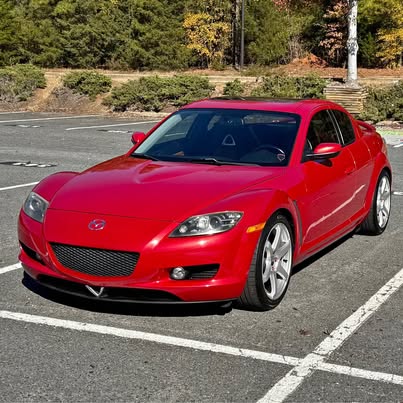
The six-speed manual is one of the great gearboxes of its period — an Aisin-built six-speed with a short, precise shift owners compare, without embarrassment, to the MX-5 Miata's. Ratios are close and the engine needs them to be: you will change gear constantly, which in this car is a pleasure rather than a chore. Judge it on synchromesh on second and third when cold and when hurried, a clutch that bites cleanly without judder, and no whine in gear. The clutch pedal carries a known weakness covered later: its bracket can crack and flex, presenting as a vague, inconsistent bite point and a squeak, and can be mistaken for a dying clutch. Series II cars shift the same but pull harder thanks to the shorter final drive.
The automatics divide by year. The 2004 and 2005 cars use a four-speed automatic with manual override, paired only with the Standard Power engine; it is smooth, unhurried and the least desirable combination in the range. From 2006 the automatic became a six-speed with paddle shifters, paired with the 212 hp engine — a far better gearbox, still rev-limited well below the manual car, and still without the limited-slip differential. Both are conventional torque-converter units and not a known weak point; judge them on fluid condition, clean shifts hot and cold, and no delay engaging drive or reverse. An automatic that flares or thumps is a bill like any other car's, roughly $2,500 to $4,500 for a rebuild or quality replacement fitted, and it should be priced into the offer rather than waved away as rotary character.
Problem areas
Every problem in this section is a known RX-8 behaviour with a mechanism behind it, and they are not equal. One of them — compression loss — decides whether the car is a bargain or a parts donor. The rest are the supporting cast: the systems whose neglect accelerates that failure, and the ordinary faults of a twenty-year-old coupe. Work through them in the order given, because that is the order in which they should price a car.
Compression loss: apex seals, side seals and the death of a Renesis
The apex seals ride the housing surface under spring and gas pressure, lubricated by the injected oil film. They wear, the housings wear, carbon lodges around the seals and can stick them in their grooves, and oil starvation — a sump allowed to run low, a failed metering line, an owner who never checked the dipstick because "cars don't use oil" — accelerates all of it. As the seal-to-housing contact degrades, each chamber leaks into its neighbours. Compression falls evenly at first, then unevenly as individual seals and faces suffer.
The symptoms arrive in a specific order, and recognising the order is how you read a seller's story. First, usually, is hot-start failure: the car starts instantly from cold, drives perfectly, and then, stopped for fuel after a proper run, cranks and cranks and refuses to fire. Heat expands clearances and thins the oil film, a marginal engine seals worst exactly when it is hottest, and cranking compression falls below what ignition needs. A car advertised as "sometimes slow to start when warm" is describing end-stage compression loss in polite language. Next come a rough, hunting idle and stalling at junctions, then a creeping loss of power, and finally cold-start difficulty, flooding and a car that will not run at all. By the cold-start stage the engine is finished as a serviceable unit.
The test, and why only one test counts. A rotary cannot be compression-tested with a piston-engine gauge in any way that prices a car. Each rotor presents three separate chambers to the spark plug hole in turn, and what matters is the pressure of each of the six faces — three per rotor, front and rear — measured individually, at a known cranking speed, on a fully warm engine. Mazda's own tester and the aftermarket rotary testers built for the job record each face as the engine cranks, producing six figures. A conventional gauge with a check valve shows a single blended peak that can look respectable on an engine with one dead face; without one it gives a flickering needle and an argument. Insist on the proper instrument, at a Mazda dealer or rotary specialist, and pay for it yourself — expect roughly $100 to $200 for the test. It is the best money in this entire guide.
The figures. Mazda's specification for the Renesis, normalised to 250 rpm cranking speed, is a standard pressure of about 120 psi (830 kPa) per face, a minimum of about 98.6 psi (680 kPa), and a maximum permitted spread of about 21 psi (150 kPa) between faces. Read results like this. Faces in the 110s and 120s, even across both rotors, are a healthy engine. Faces in the high 90s and low 100s are a worn but serviceable engine — price it as living on borrowed time and check the hot restart obsessively. Anything in the 80s or below, on a properly warm engine at corrected cranking speed, is an engine at or past the end: it may still drive sweetly, and it will still strand its owner. Two corrections matter. First, cranking speed: results must be normalised to 250 rpm, because a lazy battery or tired starter drags every figure down — a proper printout states the rpm. Second, pattern: one low face points to a seal serving that chamber; two adjacent low faces on the same rotor point to the apex seal between them, which seals both; all three faces of one rotor low together point to side seals, a housing or that rotor's whole sealing system. Even-but-low across all six is general wear — the classic oil-neglected engine.
The starter-motor trap. Early cars, 2004 and 2005 especially, were fitted with a slow-cranking starter Mazda later superseded with a more powerful unit. An upgraded starter spins a worn engine fast enough to build marginal compression and start, masking the underlying wear — and sellers know it. A car whose history shows a recent uprated starter, a new battery and new plugs all at once is a car whose compression you test before anything else. Conversely, a slow crank on an original starter can make a sound engine test poorly; the rpm correction on the printout separates the two cases.
What a dead engine costs. There is no cheap way back from compression loss. A quality rebuild by a rotary specialist typically runs about $4,000 to $7,000 depending on how many hard parts survive inspection, because worn rotor housings are not reusable and they are the expensive line on the invoice. A Mazda remanufactured engine, plus fitting, commonly lands in the $6,000 to $9,000 range all-in. Against the price of the cars themselves, that arithmetic is the market: a cosmetically lovely RX-8 with a dead engine is worth its value as a shell, and no more.
Flooding: the short-trip trap
The Renesis injects a rich mixture for cold starting, and if the engine is switched off before it has warmed through — moved off a driveway, shuffled in a showroom, started to show a friend and shut down — the excess fuel stays in the housings, washes the oil film off the surfaces the seals depend on, and compression collapses. The next start attempt cranks a flooded, unsealed engine that cannot fire, and each attempt adds fuel. Every owner learns the ritual once: never switch a cold Renesis off. Let it warm fully, and if a short move is unavoidable, hold the revs up briefly before switching off so the engine clears its throat.
A flooded car is not a dead car, and the distinction matters when a seller demonstrates a non-starter. The de-flooding procedure uses the clear-flood mode built into the engine management: with the accelerator held flat to the floor — which cuts fuel delivery during cranking — crank in bursts of about ten seconds, resting the starter between attempts, until the engine begins to catch, then release the pedal and let it clear itself at a fast idle. Cars that flood repeatedly are not showing a quirk: they are showing low compression, weak ignition or tired injectors, and the flood is the symptom.
Ignition failure and the catalytic converter it kills
The four coils sit in engine-bay heat, work hard at rotary rpm and fail progressively rather than all at once. A coil going down produces a misfire owners describe as a hesitation or flat spot, worst under load in the midrange, sometimes with a flashing check-engine light on hard acceleration — the flashing light is a catalyst-damaging misfire warning and it means what it says. Leads break down with age and heat; plugs wear and foul, particularly on short-trip cars. The mechanism that makes this an engine problem rather than a service item is downstream: unburned fuel burns in the catalytic converter instead, overheating and eventually melting or clogging the substrate. A clogged converter chokes the engine — power falls away at high rpm as if strangled, which it is — and the heat and back-pressure feed further damage. A remarkable number of "tired engines" are a dead coil set and a blocked cat on an engine with fair compression, which is why the diagnostic order is compression first, then ignition, then converter. Budget roughly $300 to $600 in parts for coils, leads and the correct plugs, and treat documented recent ignition work as a genuine selling point. A replacement converter is a bigger bill — roughly $800 to $2,000 fitted — and a car needing both has a four-figure negotiation written into it.
Oil: consumption by design, starvation by neglect
Repeat the central fact until it is reflex: this engine burns oil on purpose. The metering system injects engine oil into the housings to lubricate the apex seals, at a rate that rises with rpm and load. Consumption of around a quart every 1,000 to 2,000 miles is normal, varying with how the car is driven, and experienced owners check the level at every second fuel fill. The sump is not large, the distance from full to dangerously low is short, and every mile run low is apex-seal life spent. On an inspection, the dipstick is a character witness: an owner who cannot tell you the car's oil consumption rate, or whose dipstick shows a low, black level, has been consuming the engine itself.
Check the metering hardware as well as the level. The oil injector lines go brittle with age and heat, and a cracked line starves one injection point while the rest of the engine oils normally — localised seal wear with no dashboard warning. On Series II cars the electrically driven metering pump is more precise and more expensive when it fails. Some owners add two-stroke oil to the fuel — premixing — as extra seal insurance. It is not a factory requirement, and a car that has not been premixed is not a neglected one; do not let the argument distract you from the dipstick and the compression figures.
Oil leaks are usually minor, but the oil cooler lines deserve their own look: the RX-8 runs twin oil coolers in the front bumper corners, their lines corrode in salt-using states, and a line that lets go at speed empties the system and finishes the engine. Weeping lines are a replace-now item, roughly $300 to $700 fitted. Oil changes around 3,000 to 5,000 miles are the mark of an owner who understood the car.
Cooling: the rotary's other fatal condition
A piston engine that overheats may warp a head. A rotary that overheats can distort housings and destroy the coolant seals that run in grooves around them, and the engine is then a rebuild regardless of its compression history. The system itself is conventional — radiator, electric fans, thermostat, water pump — and its failures are conventional too: plastic end tanks that crack, sticking thermostats, tired fan motors, coolant unchanged since the warranty expired. Coolant-seal failure presents like a head gasket's: bubbles in the expansion tank, a sweet smell and white vapour from the exhaust beyond warm-up, coolant disappearing with no puddle, a top hose rock-hard minutes after a cold start. Any one of those ends the viewing as a purchase and restarts it as a negotiation over a rebuild. Watch the temperature gauge on the test drive — it should climb to the middle and stay there — and treat a car that has ever boiled as a walk-away unless the price assumes an engine.
The intake system: SSV, APV and the valves that stick
The staged intake is worked by valves in the intake manifold — principally the secondary shutter valve (SSV), which manages the secondary ports, and the auxiliary port valves (APV) that open the high-rpm ports — driven by vacuum and electric actuators and governed by solenoids. Carbon and oil vapour gum the SSV in particular; a sticking valve announces itself as a loss of the top-end step, hesitation in the upper rev range, sometimes a check-engine light or a manifold rattle. The engine still passes a casual test drive conducted below 5,000 rpm, quietly giving away the only thing it is for — which is why the inspection insists on a full run to the redline. Cleaning or replacing an SSV is a manifold-off job, roughly $400 to $900 at a shop, and the solenoids and vacuum lines feeding the system are cheap parts whose perished condition mimics valve failure, so test actuation before buying a valve. The eccentric shaft position sensor and mass airflow sensor are the other inputs whose faults present as poor running, stalling and hot-start complaints; both are cheap next to an engine, and both are routinely misdiagnosed as one.
Chassis, rust, steering and brakes
Underneath, the RX-8 is a well-made modern Mazda and ages like one. Rust is not the killer it is on older classics, but salt-belt cars corrode in the predictable places: rear arches, sill ends, subframes and the brake and oil-cooler lines already mentioned. Check the sill and door area hardest — there is no B-pillar, the sills carry extra load, and the rear doors latch into the front doors and apertures, so misaligned doors show more than a cosmetic fault. Work both rear doors: they should open and close cleanly once the front door is open, and hold without slamming. Suspension wear is conventional: bushes and ball joints tire, dampers are done by 80,000 to 100,000 miles, and alignment drift wears inner tyre edges — budget roughly $800 to $1,600 for a set of quality dampers fitted, R3 Bilsteins at the top of that range. Electric power steering is usually reliable; intermittent heaviness points to the torque sensor or rack electronics, and a replacement rack is a job to price before purchase. Brakes are strong discs with cheap consumables; the standard rules — lipped discs, seized rear calipers, perished hoses — apply unchanged. Clutch life is ordinary, but test the pedal bracket before pricing a clutch: flex, creaking or a wandering bite point means the known bracket crack, fixable with a reinforced bracket for a few hundred dollars fitted, and routinely misdiagnosed as a worn clutch at four times the money.
Interior, electrics and the rest
The cabin wears well in its materials and badly in its known details. The driver's seat bolster wears, the sun visors droop and split, the centre console latch is fragile, and the dashboard top can develop a crazed patch above the passenger airbag on sun-baked cars — cosmetic, very visible, and a dashboard-out job to fix properly. Electrics are Mazda-grade reliable with exceptions: the air-conditioning condenser is vulnerable to stone damage low in the nose, heated seat elements fail, the Bose amplifier can drop channels, and window regulators tire. The car was caught up in the Takata airbag recalls, so check that work is documented as complete. None of this should decide a purchase; it should all be priced, calmly, after the engine has passed.
How to inspect one
Allow an hour for your own inspection and arrange the compression test at a Mazda dealer or rotary specialist as part of the same visit — together they are the purchase process for this car, and a seller who will not allow a compression test has given you the result free of charge. Bring a torch, a notebook for six numbers, and the discipline to do the steps in order: the cheap checks come first, and the engine verdict comes before you fall for the chassis.

- Start with the paperwork. Match the VIN on the title to the plate on the car and check the specification against what is in front of you — manual or automatic, Series I or II, trim and special-edition claims. Then read the history file for the things that predict this engine's life: oil changes at short intervals, ignition work done on schedule, and any previous compression figures or engine replacement invoices. A thick file with a compression printout in it is worth a premium. A file with a recent starter motor, battery and plugs all together is a question, per the starter trap in the problem areas.
- Check the dipstick before the engine is started. Level first: low oil on a car presented for sale means an owner who does not check it, and on this engine that is a verdict about the car's whole life. Condition second: the oil should look like oil, not tar. Note the level precisely and check it again after the test drive — an RX-8 uses oil by design, but not a visible amount in fifteen miles, so a falling level on your visit means a leak, not metering.
- Cold start, from outside the car. Insist the engine is stone cold when you arrive. Have the seller start it while you stand at the exhaust. It should fire quickly and settle to a fast idle that falls as it warms. Blue-grey smoke that clears in seconds is oil burning off after standing; smoke that persists is seal wear. White, sweet-smelling vapour that does not clear points at coolant seals — the cooling section's walk-away signs. A healthy Renesis idles smoothly; a shaking, hunting idle is compression or ignition announcing itself.
- The short-trip question. Ask whether the car has ever flooded, and whether it has ever refused to restart when hot. You are not expecting a confession; you are watching for the pause, the laugh, and the phrase "they all do that". They do not all do that. A sound engine restarts hot, every time.
- The hot restart test. The single most informative free check on the car, done after the test drive when the engine is fully hot. Switch off, wait five minutes, then restart. A healthy Renesis fires at once. Long cranking, a catch that dies, or a refusal that only resolves as the engine cools is hot-start failure, the classic symptom of compression loss, and no explanation involving the battery or the weather changes it. If it fails this test, the compression figures will only tell you by how much.
- The compression test. Now the formal measurement, warm engine, rotary tester, as set out in the problem areas: six figures, one per rotor face, normalised to 250 rpm, with the spread between faces no more than about 21 psi and no face below the 98.6 psi minimum if the engine is to be called healthy. Write the numbers down in order, front rotor then rear, and compare them against the bands in the problem areas — 110s and 120s, strong; high 90s to low 100s, worn and priced as such; 80s or below, an engine at the end. Check the printout's cranking rpm before judging: figures taken at low rpm understate a good engine.
- The test drive, to the redline. Fifteen minutes minimum, including what cautious sellers hope you will skip: once fully warm, a full-throttle run in second or third gear to the beeper. The staged intake should deliver its steps cleanly — a swell as the secondary system opens and a final hardening of pace and note above about 6,000 rpm as the auxiliary ports open. A car that flattens, hesitates or feels strangled up there is showing you an SSV fault, a clogged converter or an engine that cannot breathe. Note the idle at every stop on the way back: smooth and steady, or hunting and stalling.
- Ignition and converter evidence. On the drive, feel for the midrange hesitation under load that marks a failing coil, and watch for a flashing check-engine light under hard acceleration. A car that smells strongly of rotten egg, or whose exhaust note sounds muffled for its rpm, is carrying exhaust trouble. In the history file, recent coils, leads and correct plugs — leading and trailing are different parts, and the invoice should show both — are a genuine plus.
- Cooling, watched properly. Through the whole drive the temperature gauge should rise to the middle and stay there. Afterwards, with the engine running, look in the expansion tank for a stream of bubbles — the coolant-seal tell. Inspect the radiator end tanks for staining and cracks and the fans for operation. Any overheating history the seller mentions casually is to be treated as an engine event, not a cooling event.
- Doors, sills and structure. Open everything. Work both rear doors through their full action — front door open first, as the interlock requires — and check the latches hold cleanly and the door edges align. Press along the sills, look behind the rear arches, and get the torch under the car for subframes, brake lines and the oil cooler lines at the front corners: weeping on an oil line is a replace-before-driving item.
- Gearbox, clutch and steering. On a manual, test second- and third-gear synchromesh cold and hurried, then press the clutch repeatedly at rest and feel for bracket flex, creak or a wandering bite — the bracket check from the problem areas, done before you price a clutch. On an automatic, demand clean, prompt shifts hot and cold. The electric steering should be light, smooth and self-centring with no intermittent heaviness; drive a tight, slow circle both ways and feel for notchiness.
- Interior and electrics last. Work everything: air conditioning properly cold, heated seats, windows, sunroof if fitted, the Bose audio on every channel, the visors staying where you put them. Judge the driver's seat bolster, look at the dashboard top on the passenger side for crazing, and confirm the Takata airbag recall shows as completed. A sound engine in a car with a tired cabin is a negotiation. A tired engine in a car with a perfect cabin is a walk away.
Values
The build of this page appends the current listings and recorded market figures beneath this guide, and those numbers are where you should take prices from — what follows here is how to read them, because the RX-8 market is one of the easiest in the modern-classic world to misread.
The first thing to understand is that the spread between the cheapest and dearest RX-8 is not a condition spread in the usual sense. On most cars, money buys cosmetics, originality and history. On an RX-8, money buys one thing first: verified compression. A car with a recent, documented set of figures in the healthy band is a fundamentally different commodity from an identical-looking car with no figures at all, and the fair gap between them is the price of an engine — because that is literally what the unmeasured car may need. A cheap RX-8 without compression figures is not cheap; it is unpriced, and the test is what prices it.
The second driver is the gearbox and engine pairing, and it is not subtle. Manual High Power cars carry the market; automatics, especially the early four-speed Standard Power cars, sit at a clear discount no trim level or low mileage fully erases, because the automatic gives away the 9,000 rpm engine that is the model's whole point. Within the manuals, Series II cars command a premium over Series I for the oiling and gearing changes, and the R3 commands the strongest money of all regular models — scarcity, the Recaro and Bilstein specification, and the knowledge that the last cars are the developed ones. The Shinka and 40th Anniversary editions carry a modest premium when their special interiors are genuinely clean, and none when they are worn, because the mechanical car underneath is identical. Colour works the usual way: strong launch colours help, while the anonymous greys and silvers that fill the listings — four of the nine cars we currently track are grey, two more silver — need the car itself to do the persuading.
The project-versus-driver gap is the widest in this market relative to the car's price, and it is a cliff rather than a slope. A running RX-8 with fair compression is a usable performance car. The same car with a failed engine is worth what its shell, interior and suspension are worth to someone with an engine to fit, because a rebuild or replacement commonly approaches or exceeds the finished car's whole value. Sellers of dead-engined cars frequently have not accepted this, which is why non-running RX-8s appear at running-car money with the words "just needs" doing heavy work. There is no "just" about an engine on this car. Equally, a replacement engine is only as good as its invoice: a Mazda remanufactured unit fitted with paperwork is a value; an engine described as rebuilt with no specialist invoice and no figures is an unknown wearing a new coat.
Negotiation here is unusually evidence-based, and you should keep it that way. Your leverage is not opinion about the model's reputation — every seller has heard the engines are fragile, and the good ones have priced their car with the answer ready. Your leverage is the specific car: the compression printout you commissioned, the ignition parts the file does not show, the oil cooler lines weeping in your photographs. Buyers who arrive with a tester booked move the price; buyers who arrive with internet folklore do not. The RX-8 remains cheap next to an RX-7 or a 350Z in equivalent verified condition — but not every RX-8 is a bargain. A verified one is, and verification is a purchasable thing.
Parts and ownership
The RX-8's parts situation is the reverse of most cult cars: the car is plentiful and the consumables are ordinary Mazda, while the engine's internal hard parts are specialist territory. The used-parts supply is deep because so many cars have been retired by engine failure with sound everything else attached — a dead RX-8 is, paradoxically, the parts department for the living ones.
Easy and cheap: service items, filters, brake discs and pads, suspension arms, bushes and dampers, wheel bearings, exhaust sections behind the converter, radiators, thermostats, water pumps, clutches, batteries and the correct spark plugs. The ignition set — four coils, leads and plugs — is a routine order, roughly $300 to $600 in parts, treated as a service purchase, not a repair. Body panels, lamps, glass and interior trim are all readily found used, and the freestyle doors and their latches, which buyers fear, are ordinary Mazda hardware with a good used supply.
Harder and dearer: the engine's core. Rotor housings are the critical part in any rebuild — judged on chrome condition and wear, not cheap when new ones are needed, and the reason rebuild quotes vary so widely between the optimistic telephone figure and the invoice after strip-down. Seals and gasket sets are available from Mazda and the rotary aftermarket without drama; it is the housings and rotors that price a build. Catalytic converters are a real cost, roughly $800 to $2,000 fitted, and cheap pattern converters have a mixed record of keeping the engine-management light off. The Series II electric oil metering pump, the electric steering rack and R3 Bilsteins and forged wheels all sit in the "available, but price it first" class. Buy the car with good paint: a quality repaint costs what it costs on any modern coupe, which against RX-8 values settles the question.
Running costs, honestly stated. Fuel consumption is the rotary's standing joke and it is not exaggerated: expect the high teens in mixed use, well below that in town, on premium fuel. The tank is not large, so you refuel often — which is when you check the oil. Oil consumption is a running cost by design, roughly a quart every 1,000 to 2,000 miles; the correct mental model is that the engine has two consumable fluids, not one. Servicing itself is simple and cheap — no valves to adjust, no timing belt, no head gasket in the conventional sense — and any competent independent can handle the chassis work. What you need a specialist for is diagnosis: compression testing, intake-valve faults, and any internal engine question. Find yours before you buy, because the compression test has to come from somewhere.
The ownership discipline, in one place. Check the oil at every second fuel fill and top up without waiting for a service. Change oil and filter every 3,000 to 5,000 miles. Never switch the engine off stone cold, and avoid short trips as a pattern of use. Once warm, use the rev range properly and regularly; sustained gentle use carbons the ports and seals, and the engine was built to be revved — the rare case of the enjoyable instruction also being the maintenance instruction. Keep the ignition on schedule, and the battery strong, because cranking speed is compression on this engine. Do those things and the Renesis rewards the attention. Skip them and no purchase price is low enough.
Which one to buy
- The all-rounder: a Series I manual, 2006 to 2008, with documented compression. The developed end of the original car, in the deepest part of the market, at prices the Series II never reaches. Bought on a healthy printout, this is the RX-8 most people should own.
- The best car: a Series II manual, 2009 to 2011. The extra oil injector per housing, revised metering and shorter final drive make it the one to hunt if the budget stretches. Thinner supply means travelling and waiting; do both rather than settling for a tired early car at the same money.
- The driver's pick: the R3. Recaros, Bilsteins, forged 19-inch wheels and the Series II engine changes in one specification. The premium over a Series II Grand Touring is real and, for the buyer who will drive the car hard, justified. Verify it is a genuine R3 from the paperwork, not a spoiler and a set of seats.
- The value buy: a clean Shinka or Grand Touring manual with figures. Top-trim Series I cars carry only a small premium over standard manuals, and a Shinka with a clean pale interior and a healthy engine is a lot of car for the money — provided the compression printout, not the trim, sold it to you.
- The cheap seat: an automatic, bought knowingly. The six-speed automatic cars from 2006 onward are pleasant, well-equipped coupes at the softest prices in the range. Buy one as exactly that, with the same compression discipline — not as a cut-price substitute for the 9,000 rpm manual car, because it is not one.
- The project: a dead-engined shell, priced as a shell. Only for the buyer with a specialist lined up, a written rebuild estimate in hand and a total budget — car plus engine — that still undercuts a verified runner. For everyone else, a project RX-8 is how money leaves.
And the rule that overrides all of the above: buy the compression figures, not the car. A rotary compression test on a warm engine, six numbers normalised to 250 rpm, all healthy and even, is the only foundation an RX-8 purchase can safely stand on — trim, colour, mileage and seller charm are negotiable details on top of it. A car with a strong printout and a scruffy cabin is a bargain waiting for a valet. A car with a beautiful cabin and no figures is an engine rebuild looking for someone to pay for it.
See the 13 RX-8 cars currently listed.
For sale now
 $2,500
Expand
What they sell for: RX-8 sale prices.