
Mercedes-Benz 190 buyer's guide
Mercedes-Benz 190 -- the model's own buyer's guide: variants, values and what to check.
Years listed: 1984-1993 · Series: W201
Overview and history
The 190E is the car that changed what a Mercedes-Benz was allowed to be. When the W201 was unveiled in December 1982, Mercedes had not built a genuinely compact car in decades, and the company spent years and a development budget out of all proportion to the car's size making sure the small car was not a cheap one. The result — sold in the United States from the 1984 model year to 1993 as the 190E — was the first modern compact executive car: a four-door sedan about 4.43 metres long that carried the same safety cell, the same build discipline and, in its ride and steering, most of the character of the big cars, in a package aimed squarely at buyers Mercedes had never previously reached. Every C-Class since is a descendant of this car, and the template it set — small, formal, rear-wheel drive, engineered a class above its rivals — is the template the whole segment still follows.
The engineering headline, and the thing to understand before anything else, is the rear suspension. In place of the swing axle and semi-trailing arms of earlier small Mercedes, the W201 introduced a five-link multi-link rear axle, each wheel located by five separate links so that camber, toe and anti-squat geometry could be controlled independently through the wheel's travel. It was a landmark design — expensive, complex for its class, and so effective that Mercedes rolled it out across the range and the rest of the industry eventually followed. At the front the W201 uses MacPherson struts, and steering is by recirculating ball, as on the larger cars. The body, styled under Bruno Sacco, was equally deliberate: a drag coefficient of around 0.33, remarkable for an upright sedan of the period, achieved with flush glass, careful underbody work and details like the single windscreen wiper sweeping an eccentric arc to clear more of the screen.
The 190E was the petrol car. The W201 range also included the carburettored 190 and the 190D diesels, which have their own followings and their own guides, but the E — Einspritzung, injection — was the mainstream Mercedes for a decade: first with the M102 four-cylinder 2.3, then, from 1987 in the US, with the M103 six-cylinder 2.6 alongside it. A major facelift in the autumn of 1988 brought the wide lower cladding panels everyone calls Sacco panels, revised bumpers and mirrors, and a tidier interior, and the 2.6 carried the car through to the end of production in 1993, when the W202 C-Class replaced it. Just under 1.9 million W201s of all kinds were built — a huge number by Mercedes standards of the day — and North America took a substantial share of the injected cars.
Hanging over the whole range, and covered in this guide as context rather than as the subject, is the 16-valve line: the 190E 2.3-16 of 1986–87, with its Cosworth-developed cylinder head, and the European 2.5-16 and Evolution cars that followed it into touring-car racing. Those are specialist, high-value cars with their own failure modes and their own market. The plain 190E — the car this guide is about — is something different and, for most buyers, better: a durable, honest, everyday classic that was maintained like a Mercedes for the first half of its life and then, as values fell through the 2000s, very often run like a cheap old car for the second half. That divide defines the market today. The mechanicals are fundamentally tough, the fuel injection is widely misunderstood rather than genuinely fragile, and the difference between a good 190E and a money pit is rust in a handful of specific places plus deferred maintenance — not mileage, and not age.
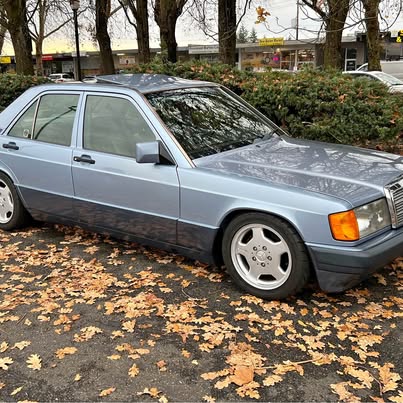
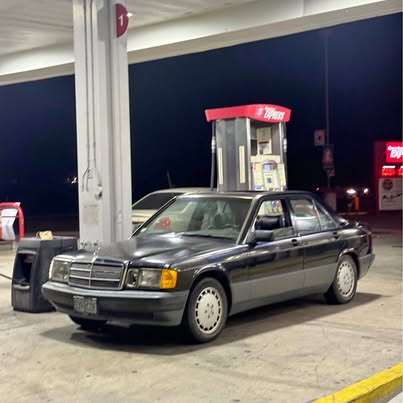
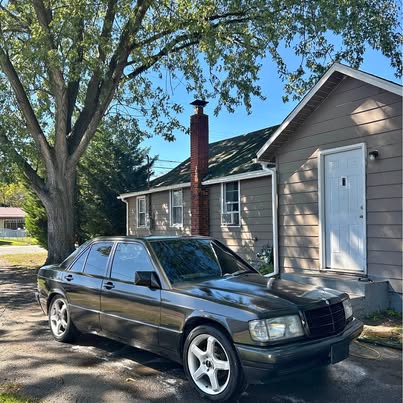
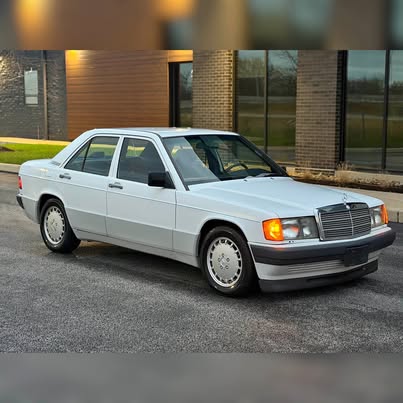
That is also what the cars that reach this site look like. The current pool behind this guide is small — four cars, all of them late 190E 2.6 sedans from 1990 to 1992, three automatics and one manual — which is representative of what survives and trades most often now: the facelift six-cylinder car, in sedan form, at the affordable end of the classic market. Read the sections that follow with that car in mind, and treat the four-cylinder and 16-valve material as the context you need to price, and occasionally to walk away from, the car in front of you.
The models
Every US-market 190E is a four-door sedan — there was no coupe, wagon or convertible W201 — and the badge decodes simply: 190 for the class, E for fuel injection, and the number, where it appears, for the engine. The range divides into three acts: the four-cylinder 2.3 that launched the car, the six-cylinder 2.6 that became its centre of gravity, and the 16-valve cars at the top. European buyers also had a 2.0-litre 190E that was never sold new in the US; grey-market examples surface occasionally and are covered below so you can identify one.
| Model | Years (US) | Engine | Output | Built | Character |
|---|---|---|---|---|---|
| 190E 2.3 | 1984–1988 | 2.3 four (M102), KE-Jetronic | about 120–130 hp | — (part of 1.88m W201 total) | The original; light, simple, the value route in |
| 190E 2.6 | 1987–1993 | 2.6 six (M103), KE-Jetronic | 158 hp US (166 hp DIN) | — (part of 1.88m W201 total) | The core of the market; smooth, torquey, durable |
| 190E 2.3-16 | 1986–1987 | 2.3 four (M102.983), Cosworth head | 167 hp US (185 hp DIN) | 19,487 (all markets) | The homologation special; context here, its own market |
| 190E 2.0 | Europe only | 2.0 four (M102), KE-Jetronic | about 122 hp DIN | — | Grey imports only; check identity carefully |
| 190E 2.5-16 | Europe only | 2.5 four, Cosworth head | about 195 hp DIN | 5,743 (all markets) | The 2.3-16's successor; Evolution I and II (502 each) sit above it |
(Outputs are period figures; US cars are rated lower than European DIN figures because of emissions equipment and net rating conventions. Per-variant production for the plain cars was never published in a form worth inventing precision from, so the table gives exact figures only where they are genuinely documented — the 16-valve cars — and the W201 total for the rest.)
The 190E 2.3 (1984–88). The launch car, and for its first three US years the only petrol 190. The M102 four is a sturdy, unstressed engine and the 2.3 is the lightest 190E, which shows in the steering: a good 2.3 feels nimble in a way the six does not quite match. Early cars (1984–86) have the slimmer pre-facelift trim, plainer interiors and the first version of several systems; the 2.3 was re-engined with a revised M102 for its final years and dropped from the US range after 1988, when the 2.6 took over as the sole 190E. Today the 2.3 is the cheapest way into a W201 and the most likely to have been run on a budget — buy the history, not the badge.
The 190E 2.6 (1987–93). The car most buyers end up with, and the car all four examples in this site's current pool are. Mercedes squeezed the M103 six from the larger 300E into the W201's engine bay — it is a tight fit, and the six-cylinder cars sit slightly nose-heavier — and the result transformed the model's appeal in the US: proper Mercedes refinement, strong mid-range torque and a car that cruises at modern highway speeds without effort. The 2.6 spans the 1988 facelift, so it exists in both early narrow-cladding and later Sacco-panel form; the later cars also gained equipment year by year, and by the final years a driver's airbag and ABS were standard US fitments. A 1992–93 Sportline package — lowered, firmer suspension, quicker steering, wider wheels and tyres, sport seats and a smaller steering wheel — was offered on the 2.6 and is the most desirable of the plain cars: it sharpens the chassis noticeably and carries a genuine premium. Verify a claimed Sportline from the data card and the hardware (springs, seats, steering wheel), not from badges, because the badges are cheap and the package is not.
The 190E 2.3-16 (1986–87) — context. The 16-valve car exists because Mercedes wanted to go rallying and then touring-car racing with the W201, and needed a multi-valve engine to do it. The cylinder head was developed with Cosworth: a twin-cam, 16-valve head on the M102 block, making 185 hp in European trim and 167 hp in detuned US form. US cars got a dogleg five-speed Getrag manual or an automatic, a limited-slip differential, self-levelling rear suspension, a body kit and sports seats. It announced itself to the world at the reopened Nürburgring in May 1984, when a grid of identical 2.3-16s was handed to Formula One drivers and won by a young Ayrton Senna. None of that makes a plain 190E a 16-valve, and none of it should rub off on a plain car's price. What matters to the 190E buyer is the reverse trap: 16-valve body kits, wheels and badges fitted to ordinary cars. A real 2.3-16 is identified by its VIN and engine — the engine number belongs to the M102.983 series and the car carries the 16-valve head, two cam covers' worth of hardware under one wide cover, that no badge can fake once the hood is open. If a seller is asking 16-valve money, the data card and the engine settle it in five minutes; if they are not, enjoy the kit and pay 2.6 money.
Facelift versus pre-facelift. The autumn 1988 revision (US 1989 model year onward) is the range's great divide. Beyond the cladding, the facelift brought better rust protection in several panels, revised seats and door trims, an updated dashboard and detail improvements throughout. Neither side of the divide is a bad car, but the later cars are the easier ownership proposition and the market knows it: like for like, a facelift 2.6 is the default recommendation in this guide, and the pre-facelift cars have to win on condition and history.
Engines and gearboxes
The four: M102 2.3
The M102 is a single-overhead-cam, two-valves-per-cylinder four with a cast-iron block and an alloy head — 2,299 cc in the 190E 2.3, driving the camshaft by chain and the valves through hydraulic lifters, so there is no valve adjustment in the service schedule. It is not a glamorous engine, and it was never meant to be: it was designed to run for a very long time on regular servicing, and it does. A healthy M102 starts promptly, idles at a steady 700–800 rpm once warm, pulls cleanly from low revs and shows strong oil pressure — the gauge high at speed, dropping at a hot idle, which is normal. US output figures moved around with emissions specification, roughly 120 hp in the early cars and nearer 130 hp in the final 2.3s; the car is adequately quick rather than fast, and works best kept in its mid-range.
Two M102 specifics matter to a buyer. The first is the timing chain. Early engines use a single-row chain, and single-row chains stretch and wear their guides; cars from about 1988 onward use a duplex chain that largely puts the question to rest. On an early car, listen at a cold start for a brief rattle that silences as oil pressure builds — a second or two is the tensioner taking up; a rattle that persists, or a car with no record of chain work at high mileage, is a job to price in (a chain, guides and tensioner renewal is roughly $800–1,500 at a specialist, and it is cheap insurance against the failure that ends these engines). The second is oil consumption, which the M102 shares with the six and which gets its full treatment below: hardened valve stem seals, not worn bores, are the usual cause, and the distinction is worth money.
The six: M103 2.6
The M103 is the same idea scaled up: a single-overhead-cam six, 2,599 cc in the 190E application, iron block and alloy head, hydraulic lifters, chain drive — and one of the smoothest engines Mercedes ever made. In US trim it makes 158 hp, but the number undersells it; the point of the 2.6 is torque delivered in a single seamless pull and a refinement at 70 mph that no four-cylinder rival of the era matched. It should be nearly silent at idle from inside the car, rev willingly to its roughly 6,200 rpm redline, and return the same oil-pressure behaviour as the four. The engine bay is crowded — the six was packaged tightly into a four-cylinder car's nose — which makes some jobs slower (access to the front of the engine and to the rearmost plugs and leads is fiddly) and makes cooling-system condition doubly important, because there is little spare airflow and no spare capacity.
Head gasket and oil leaks — the M103's signature faults. Budget for these on any 2.6, and read the engine bay for them on every viewing. The head gasket on the M103 characteristically fails in two ways. The first is an external oil leak: the gasket's sealing around the oil gallery deteriorates and oil weeps from the head-to-block joint, typically at the front and along the side of the engine, eventually dripping onto the exhaust and smelling of hot oil after a run. The second, more serious failure is oil finding its way into the coolant — the tell is a brown, mayonnaise-like emulsion in the expansion tank and oil that needs topping up with no visible leak to explain it. A full head-gasket job at a specialist — head skimmed and checked, gasket set, stretch bolts, fluids — runs roughly $1,200–$2,200, and documented recent work is a genuine selling point. Do not let a seller talk you into the cheaper misdiagnosis in either direction: the M103 also leaks oil from the front timing-cover seal (the small U-shaped seal where the timing cover meets the head and block), a leak that mimics a front head-gasket failure but costs a fraction as much to fix, and the distributor of blame matters. Clean the area, run the car, and watch where fresh oil appears first — or have a specialist do it on the lift inspection. That half hour settles a four-figure question.
Valve stem seals and oil consumption. Both the M102 and the M103 harden their valve stem seals with age and heat, and the symptom pattern is so consistent that you can diagnose it from the driver's seat. The seals leak most when intake vacuum is high and the engine has been sitting: a puff of blue smoke on a cold start, another puff when you accelerate away after a long idle or after coasting downhill on a closed throttle, and oil consumption of a quart every 500–1,000 miles in a car that otherwise runs cleanly, shows good compression and does not smoke under load. Smoke under load, by contrast, points at piston rings — a compression and leak-down test separates the two, and you should insist on one before paying strong money for an oil-drinking car. Stem seals are the good outcome: they can be renewed with the head in place, using compressed air to hold the valves, for roughly $500–$900 at a shop that knows the engines, and oil consumption typically returns to near zero. A seller who has had the seals done should have the invoice; a seller describing quart-a-thousand consumption as "they all do that" is describing a car that needs the job.
KE-Jetronic: the fuel system, and how it is actually diagnosed
Every US 190E runs Bosch KE-Jetronic — CIS-E — and no part of the car suffers more from folklore. Understand what it is and the folklore evaporates. The base system is mechanical and continuous: fuel is delivered at a system pressure of around 5.2–5.6 bar to a fuel distributor, which meters fuel constantly to each injector in proportion to an airflow sensor plate lifted by the engine's intake air. Layered over that mechanical base is an electronic trim: an ECU reads a throttle switch, temperature sensors and (on US cars) an oxygen sensor, and drives an electro-hydraulic actuator (EHA) on the side of the distributor, varying the pressure differential — normally about 0.4 bar between the distributor's upper and lower chambers — to richen or lean the mixture for cold running, emissions control and altitude. There is no fuel rail, no injector pulse and no meaningful self-diagnosis in the modern sense. US cars give you a duty-cycle (on/off ratio) reading at the diagnostic socket in the engine bay, which a knowledgeable technician reads with a dwell/duty meter to confirm the mixture control is alive and centred; that, a fuel-pressure gauge set and an ammeter for EHA current are the diagnostic kit. Anyone who wants to diagnose a KE car by replacing the ECU is guessing with your money.
Diagnosed properly, the system's real failure points are few and mostly cheap:
The overvoltage protection (OVP) relay is the first suspect for a whole family of symptoms — an ABS warning light that comes and goes, a high or hunting idle, hard starting and occasional stalling — because the relay feeds power to the ECU and the idle-speed system, and its solder joints crack with age. The relay sits in the engine bay behind the battery area, has a fuse on top, and costs little; a car with those symptoms and an original OVP relay is a car whose "electronic fault" may be a twenty-minute fix. Test by substitution with a known-good relay before any deeper work.
Residual pressure and hot starting. A KE car that starts cold, runs well and then refuses to restart after a 20–30 minute heat soak is usually losing rest pressure: the system must hold roughly 3 bar or more for at least 20 minutes after shutdown, and the components that hold it are the fuel accumulator (a spring-and-diaphragm canister by the fuel pump package under the rear of the car), the pump check valve and the injector seals. A pressure gauge on the system settles which; an accumulator is a few hundred dollars fitted. Cold-start complaints, conversely, start with the cold-start injector and its control, the coolant temperature sensor's signal to the ECU, and basic mixture setting.
The running hardware. The fuel pump package under the rear floor — pump (or pumps), filter and accumulator — lives in road spray and corrodes; a pump that buzzes loudly is warning you. The airflow sensor's potentiometer wears at the idle position and can cause a surge or hesitation just off idle. The EHA itself can leak fuel externally, visible as wetness and a fuel smell at the distributor. The idle air control valve gums up and sticks, giving a low, lumpy idle that cleaning often cures. None of this is exotic, all of it is documented, and a Mercedes independent who knows CIS will fault-find it methodically. The correct conclusion is not that KE-Jetronic is trouble; it is that a 190E should be bought with its fuel system demonstrated working — cold start, hot restart after a soak, steady idle, clean pull to the redline — because those four behaviours, witnessed, are the test.
Gearboxes
The automatic fitted to almost every US 190E is Mercedes' 722.4 four-speed — a fully hydraulic box with no electronics, controlled by engine vacuum at a modulator and by a Bowden cable from the throttle that sets shift timing and pressure against load. That architecture gives you its diagnosis for free. Shifts that are harsh at light throttle suggest vacuum trouble (a perished modulator diaphragm or a leaking vacuum line) rather than a dying box; shifts that flare — revs rising between gears, classically on the 2–3 change — or come late and hard suggest cable adjustment or wear; a long delay engaging reverse is the classic wear symptom. Fluid condition is the honest witness: the 722.4 wants fluid and filter changes at roughly 30,000-mile intervals, and fluid that is dark and burnt-smelling in a car with no service record tells you how the box has lived. A rebuild at a specialist runs roughly $2,500–$4,000; a modulator, cable adjustment and a fluid service together are a few hundred, which is why the order of diagnosis matters.
The manual is a five-speed (type 717.4) with an overdrive top gear, and it is the rarity the market prizes: in this site's current pool of four cars, three are automatics and one is a manual, and that ratio flatters the manual's availability in the wider US market, where the automatic take-up was overwhelming. The box itself is strong; judge it on second-gear synchromesh (the first to wear, tested on a brisk cold downchange), on shifter feel — a sloppy, vague gate is worn linkage bushings, a cheap kit that transforms the car — and on the clutch hydraulics, which share fluid with the brake system and announce neglect as a low, heavy pedal. The dogleg Getrag five-speed belongs to the 2.3-16 alone; a plain 190E with a dogleg gate has had a transplant, which is a conversation, not a catastrophe.
Whichever box a car has, check the driveline behind it: the propshaft's rubber flex discs crack with age (look for fraying and cracks at the bolt holes; a failed disc is violent, so any visible deterioration is a replace-now item), the centre bearing rubber sags, and differential whine on a light throttle at 40–60 mph is usually mountings and old oil before it is the diff itself.
Problem areas
Everything in this section is what thirty-plus years does to a W201, system by system. The 190E's reputation for durability is earned — but it was earned by cars that were serviced, and the cars on the market now divide sharply between those that still are and those that have been run as disposable transport. Work through these areas in order: rust first, because it is the only fault class that can write the car off, then the chassis, then the systems that decide whether the car is a pleasure or a project.
Rust: the map
The W201 rusts less readily than the Mercedes generations before it — panel protection improved through production, and again at the facelift — but it rusts in specific, predictable places, and "rust-free" claims should be tested at exactly these addresses.
Jack points and sills. The most important check on the car. The W201 is lifted on pads beneath the sills, and the sill structure around the four lifting points traps water and mud and corrodes from inside; by the time bubbling shows on the outer sill, the inner structure is usually further gone. Press and prod along the full sill length, examine the pad areas closely, and treat fresh black underseal localised to the sills as a question, not an answer. Sill repair is welding, cutting and paint — roughly $800–$2,000 a side done properly — and perforated sills near the lifting points are a structural conversation, not a cosmetic one.
Rear subframe mounts. The signature structural fault of the older W201. The rear subframe bolts to the body at four points, and the forward mounting areas in the floor structure corrode — hidden above the subframe, invisible in listing photographs, and serious when advanced, because the subframe carries the whole multi-link axle. This is the single strongest argument for the lift inspection recommended below: with the car in the air, the mount areas can be seen and prodded; from ground level they effectively cannot. Repair is fabrication and welding, priced per car, and advanced corrosion here ends the discussion on a cheap car.
Battery tray and bulkhead. The battery sits in the engine bay on a tray that rots from the top down, underneath the battery, so it is invisible with the battery in place — and the acid track runs down onto the structure behind and below it. Rock the battery, shine a torch at the tray edges and the metal below, and budget for a tray (a modest part) plus whatever the metal beneath it needs. This corner also matters electrically: several of the car's relays and connections live nearby, and corrosion here travels.
Front spring perches and wheel arches. The front coil springs seat against body perches that collect wet dirt; corrosion there weakens the seat the spring bears on, so inspect the perch area with the wheel turned and a torch, and look for springs sitting unevenly. Wheel-arch lips — rear especially — bubble where the lip's folded edge holds mud; check the inner lip by fingertip as well as the painted face, and look inside the rear arches at the seam where arch meets sill.
The smaller traps. The spare-wheel well in the trunk (water arrives past the trunk seal and the rear lamp seals; lift the spare and look at the well's lowest corners), the floor around the rear window's drainage path, door bottoms (less troublesome than on earlier Mercedes, but the drain slots block and the bottom edge bubbles), the panel below the windscreen, and the headlamp surrounds. None of these alone kills a car; together they are the biography of how it has been stored, and a car garaged all its life reads completely differently at these addresses from a car that has lived outside in a salt state. Geography is evidence: three of the four cars in this site's current pool are listed in states that salt their roads or sit on a coast — Washington, New Jersey and Ohio among them — so underside condition, not paint, is where those cars will be priced.
Suspension, steering and driveline
The W201's chassis is its glory and its biggest deferred-maintenance ledger, because almost everything in it is a rubber bush, a ball joint or a link with a finite life that the second and third owners deferred.
Front ball joints — the safety item. The lower ball joints carry the front suspension loads, they are sealed units that cannot be greased, and a worn joint announces itself with a groan or creak on steering input and over bumps before it wears to detectable play. Do not wait for play: a front lower ball joint that separates does so suddenly and drops the corner of the car. On any 190E without documented recent ball joints, price renewal in (roughly $400–$800 a side fitted, joint pressed into the control arm) and treat creaking from the front end as a fix-before-driving-regularly item, not a quirk. Test on the lift by unloading the joint and levering for movement — rocking the wheel at ground level understates wear on this design.
The rest of the front end. Struts and their top mounts (knocking over sharp bumps, cracked mount rubber visible from the engine bay), control-arm bushes (cracking, and a front end that wanders under braking), tie rods and the steering idler-arm bush (the classic source of a steering dead spot at centre), and the recirculating-ball steering box itself, which wears to free play that a careful adjustment can partly recover — but only partly, and an overtightened box wears faster and steers worse, so a car advertised as "adjusted" wants a long test drive. Springs sag with age and the front springs can crack at the lower coil; a car sitting visibly nose- or tail-down is telling you its springs and mounts are original and tired.
The multi-link rear — the handling item. Five links per side locate each rear wheel, and when their bushes wear, the rear axle stops being the precision instrument it was designed to be: the car wanders in crosswinds, needs constant small corrections on the highway, wears its rear tyres unevenly (inner-edge wear is the classic printout) and can develop a disconcerting rear-steer feeling on throttle changes mid-corner. No single link is expensive; a full set of links and bushes, fitted and followed by the four-wheel alignment the job demands, runs roughly $800–$1,600, and it transforms a tired car. Budget for it on any high-mileage example without records, and judge the car you're testing with this in mind: a 190E that feels vague at the back is almost never "just how they are" — a sorted W201 tracks arrow-straight, and the difference is this paragraph.
Subframe bushes, differential and brakes. Rear subframe bushes perish and add clunks over bumps and a general looseness; differential mounts do the same for driveline shunt. The brakes are conventional discs with a drum-in-hat parking brake — parts are cheap and plentiful, and the standard recommissioning list after a car has sat (seized calipers, perished flex hoses, corroded discs) runs roughly $600–$1,400 for a full hydraulic refresh. ABS was an option early and standard later; an ABS light that stays on starts with wheel sensors and the OVP relay before it is an expensive unit.
Fuel, climate and vacuum systems
The KE-Jetronic hardware is dealt with in the engines section; what follows are the cabin and auxiliary systems, where a 190E's age shows daily.
Climate control. US cars carry pushbutton automatic climate control, and its moving parts are vacuum-operated flap actuators (pods) behind the dashboard, switched by a vacuum switchover block from the pushbutton unit's instructions. The pods' diaphragms perish, and the failure pattern is diagnostic: air delivered only to the windscreen and floor regardless of the buttons, or a centre vent that never opens, means vacuum or a pod, not the expensive unit — though the pushbutton units themselves develop cracked solder joints and are exchanged or rebuilt when buttons and temperature control go erratic. Heat is metered by a monovalve whose diaphragm kit is cheap; a car stuck on full heat or no heat is usually the monovalve or its control, not the heater core. The auxiliary water pump keeps coolant flowing to the core at idle — its failure shows as heat that fades at traffic lights. The blower motor is, mercifully, one of the accessible ones of the era, reached from the cowl area rather than by removing the dashboard, so a squealing or dead blower is a moderate job (roughly $300–$600 fitted) rather than a four-figure one. Air conditioning was R12 from the factory; most surviving cars have been converted to R134a with varying thoroughness, compressor condition and auxiliary-fan operation decide summer comfort, and a conversion with no paperwork wants its cooling demonstrated on a warm day, not described.
Vacuum and central locking. The petrol cars' vacuum system is engine-fed with a reservoir, and it serves the climate pods, the headlamp range control on European cars and — via an electric vacuum pump mounted under the rear seat — the central locking, which is vacuum-actuated at each door. Slow or lazy locking, one door lagging the others, or a pump that runs on and on after locking all point to a leaking actuator diaphragm or a split line at a door hinge, and the pump running continuously will kill the pump, which is the expensive version of a cheap fault. Engine vacuum leaks matter beyond the locks: they lean the idle mixture and upset the automatic's modulator signal, so a car with a rough idle, harsh light-throttle shifts and lazy locks may have one cause wearing three costumes.
Interior and electrics
Trim and seats. Most US cars wear MB-Tex vinyl, which survives decades with nothing worse than splits at the driver's entry bolster and seam wear; leather was the cost option and cracks in the sun. Under either, the seat pads lose their resilience and the spring boxes sag — sit in the driver's seat and judge whether you are sitting on the seat or in a hole, because re-padding and spring work (roughly $300–$600 a seat) is the difference between a car you enjoy for an hour and one you endure. Door panels on facelift cars can warp and delaminate at their tops, headliners on sunroof cars sag, and the dashboard cracks in hard sun across the speaker and defroster areas. None of it is structural; all of it is visible in every photograph, which is why honest interior condition moves prices so much on these cars — trim in the correct colours is findable used, but a full interior re-trim costs more than a cheap 190E is worth.
Electrics. The pattern of the era: failures at connections, relays and switches rather than in looms. The checklist that matters: electric windows (front regulators wear and slow; a window that tilts as it rises has a worn regulator guide), the sunroof (slow or one-sided movement is cables and guides asking for service before they fail shut or open), the instrument cluster (odometer drive gears crumble with age — a stopped odometer with a working speedometer is usually gears, roughly $150–$300 to put right, and it makes the displayed mileage a claim, not a fact), the door-mounted seat switches on later cars, the heated rear window, the cruise control (actuator and amplifier joints), and the antenna mast, which sticks and strips. A car in which everything on this list works has been maintained by someone who fixed things as they failed — which is the single best predictor of how the rest of the car has been treated.
How to inspect one
Allow an hour, bring a torch, a cloth-wrapped magnet and a tyre-pressure gauge, and arrange the test drive to include a hot restart: drive the car, park it for twenty minutes, and start it again. If the car passes you, pay for a lift inspection at a Mercedes independent before money changes hands — on a W201 the lift is where the subframe mounts and sill structure live, and it is the best money in the whole purchase.
- Paperwork and identity first. Match the VIN on the title to the plate and stampings on the car. Ask for the data card and the service history — on a 190E, invoices are worth more than low mileage, because the faults that cost money are all maintenance-shaped. Check the engine against the badge: a 2.6 carries the M103 six, long and tight in the bay; a car badged 2.3-16 must show the wide 16-valve head and the M102.983 engine number series, or it is a dressed-up plain car and must be priced as one.
- Cold start. Insist the engine is stone cold when you arrive — a seller who has warmed the car up has hidden the test. A KE-Jetronic car should start promptly and settle to a steady idle. Blue smoke at start-up that clears is the valve stem seal signature from the engines section; smoke that persists under load is rings, and a compression test comes before any offer. An ABS light that lingers, a hunting idle or stalling on a cold car points first at the OVP relay — cheap — but only a known-good substitute proves it.
- Oil, coolant and the head-gasket evidence. Pull the dipstick: level, colour, smell. Open the expansion tank and look for the brown emulsion of oil in coolant; look along the head-to-block joint and the front timing cover for the M103's external oil weep, and at the exhaust side for oil burned onto the manifold. On a six with emulsion in the tank, the head-gasket conversation ($1,200–$2,200) is part of the price, whatever the seller says about it "just being condensation."
- Under the car — the structural pass. Torch along both sills and prod the lifting-pad areas; examine the rear subframe's forward mounts where they meet the floor; check the front spring perches, the floor seams and the spare-wheel well from below. Perforation at the subframe mounts or around the sill lifting points is structural money — fabrication, priced per car — and on a car at the cheap end of the market it is the walk-away line. Read the underseal as you go: patchy and honest is age; a fresh uniform coat over exactly these areas is a question.
- Battery corner and trunk. Rock the battery and torch the tray edges and the metal below it for acid damage. Lift the spare wheel and check the well's corners for water and rust; a damp trunk mat means the trunk or rear-lamp seals are leaking, and the water has been going somewhere.
- Ball joints and front end. Listen on the drive (step 9) for groaning on lock and over bumps, and on the lift have the lower ball joints levered under load — the test from the problem areas, because a worn joint can feel acceptable at rest. Check strut top mounts from the engine bay for cracked rubber, and rock each front wheel for bearing and joint play.
- The rear axle's report card. Look at the rear tyres: inner-edge wear is the multi-link's wear signature printed in rubber. Feel the rear subframe bushes' condition on the lift, check the propshaft flex discs for cracking at the bolt holes — any fraying means replacement before regular use — and check half-shaft boots for splits.
- Body and gaps. Magnet over the sills, arch lips and lower doors; fingertip along the inner rear arch lips and every door bottom. Check the Sacco panels on facelift cars sit flush and match — misaligned cladding hides arch work. Count tired chrome and trim; on a 190E the brightwork is modest, but correct facelift trim pieces are increasingly a used-parts hunt.
- The test drive. Twenty minutes minimum, including highway speed. The car should track straight with hands light on the wheel — crosswind wander and constant correction are worn rear links talking. The automatic should shift firmly without flaring, especially 2–3, and engage reverse without a long pause; harsh light-throttle shifts suggest vacuum/modulator, flaring suggests wear, and the distinction is priced in the engines section. Brake hard once from speed: straight, no judder, no pull. Note the temperature gauge's behaviour in traffic afterwards.
- The heat-soak restart. Park, wait twenty minutes, restart. A car that cranks long or refuses hot is losing fuel rest pressure — accumulator, check valve or injector seals — and the pressure test from the engines section settles which. While you wait, run the climate control through every mode: air should follow the buttons (defrost-only delivery is vacuum pods), heat should come and go with the temperature wheel (stuck heat is the monovalve), and the blower should run quietly on all speeds.
- Electrics sweep. Every window up and down, the sunroof through its full travel, central locking from the driver's door while you watch each button — one lazy lock is a leaking actuator, and a pump that runs on afterwards is the same fault spending money. Check the odometer is turning against the trip meter as you drive; check cruise, heated rear window, washers, lights and the antenna. Everything working is a maintenance biography; make a list of everything that isn't, and price the list, not the promise.
- Interior last. Sit in the driver's seat for a full minute: pad support, bolster splits, spring sag. Check the headliner (especially around a sunroof), door-panel tops on facelift cars, and dash cracking. A sound original MB-Tex interior is the hardest thing on the car to recreate at sensible money, so weight it as heavily as the mechanics.
Values
The figures that matter for this model are computed from this site's own listings and recorded sales, and they sit below this guide — the listed-now summary and the market block are refreshed every time the site rebuilds, so use them rather than any number quoted elsewhere. What follows is how to read them, and it comes with a sample-size warning first: the pool behind this guide at the time of writing is four cars, all late 2.6 sedans, so any figure drawn from a pool this small is an indication of where the entry to the market sits, not a valuation of the model. The wider market has to be read through the structure below.
The 190E lives in two markets at once, and the same physical car can belong to either. The first is the cheap-old-Mercedes market: cars bought as transport, priced against other old sedans, where a running 2.6 with a year's life left in its tyres is worth what any clean old car is worth and no more. The second is the rising-classic market: documented, rust-free, well-kept cars — increasingly the facelift 2.6, the manual cars and the Sportline — bought deliberately by people who wanted a W201. The spread between the two markets is the widest fact in 190E values. Condition, history and underside integrity move a car between them; badge, colour and mileage, in that order, mostly do not.
Within that spread, the premiums have reasons. The 2.6 commands more than the 2.3 because it is the better car to use and the later cars are better protected against rust; the facelift commands more than the pre-facelift for the same reason. A genuine manual gearbox carries a real premium over an identical automatic — the cars are scarce in the US and the drivers who want one have few to choose from — and a verified Sportline carries another. Documented big-ticket work (head gasket, timing chain, rear links, ball joints) adds value in a way that cosmetic expenditure does not, because the next buyer is pricing the same deferred-maintenance ledger you are. The 16-valve cars are a separate market entirely — an order of magnitude away, driven by rarity and motorsport history — and no part of their pricing transfers to a plain car, whatever kit it wears.
Two cautions apply to every figure you read. These are asking prices, and at the cheap end of this market the gap between asking and achieved is wide and negotiated in person, usually over the inspection findings — which is why the inspection section of this guide is, in effect, a negotiating document. And the project-versus-driver gap is the trap: a non-running or structurally rusty 190E is not a cheap 190E, because the recommissioning arithmetic (fuel system, brakes, suspension wear items, tyres, fluids) starts in the low thousands before rust is mentioned, on a car whose finished value is capped by the driver market above it. The cheap cars at the bottom of every listing set share the same biography — storage, salt or deferred everything — and the rational buy is almost always the best-documented car in the middle of the band, not the cheapest car at the bottom of it.
Parts and ownership
The 190E is one of the best-supported Mercedes of its era for a simple reason: Mercedes built just under 1.9 million W201s, the model was the brand's volume car for a decade, and a large specialist and breakers' trade grew up around it. The factory still supports the model through the Mercedes-Benz Classic programme, and the pattern of ownership is well understood by any independent who works on Mercedes of the 1980s and 1990s — the car shares its engines, its injection system and much of its running gear with the W124, so expertise and parts cross over.
Easy: service items (filters, plugs, belts, hoses), brake discs, pads, calipers and flex hoses, water pumps, thermostats and radiators, suspension wear parts including ball joints and the individual rear links, struts and mounts, exhaust systems, fuel pumps, filters and accumulators, OVP and fuel-pump relays, monovalve kits, vacuum pods, window regulators and most seals and gaskets — including head-gasket sets and valve stem seals for both engines. Order today, fit this weekend, at prices close to modern-car money; this breadth of cheap supply is the 190E's core ownership argument.
Harder and dearer: KE-Jetronic fuel distributors and EHA units (serviceable used units and rebuilders exist, but a new distributor is real money — another reason to buy a car whose injection is demonstrated working), climate pushbutton units (exchange/rebuild), Sportline-specific springs and trim, correct facelift interior trim in the less common colours, crack-free dashboards, 16-valve engine parts of any kind, and good rust-free body panels in the correct facelift form. A quality repaint starts around $8,000–$10,000 — which is why this guide's mantra is to buy the body and the underside, and fix the mechanics.
Running costs. A sorted 190E is a realistic daily classic: fuel consumption in the high teens around town and the mid-20s mpg on a highway run for the 2.6 (the 2.3 a little better), servicing any good independent can handle, and insurance in line with other classics of the value. The budget line that catches new owners is the same one that catches W108 buyers — the first year. Catching up deferred maintenance on a running car honestly costs $1,500–$4,000 before you improve anything: the rear links, ball joints, fluids, flex discs, stem seals and climate pods of the problem-areas section are all individually modest and collectively a sum. Recommissioning a car that has sat for years runs more — $3,500–$7,000 at a shop — because modern ethanol fuel attacks old rubber and leaves varnish through the tank and lines, so the fuel system is cleaned end to end, every brake component is inspected, and all fluids, seals and tyres are renewed on condition regardless of appearance. Buy a car in regular use over a sleeping one even at a higher price; the 190E rewards use and punishes storage, and the market's cheapest cars are almost always the stored ones.
Which one to buy
- The all-rounder: a facelift 190E 2.6 automatic, 1989–93. The best-protected body, the smooth six, the deepest parts and knowledge base, and the car this site's pool actually trades — all four cars behind this guide are 2.6s of 1990–92. With documented head-gasket, chain and suspension work, it is the 190E to drive every day.
- The value buy: a 190E 2.3 with history. The lightest, simplest car in the range and the cheapest to buy — provided the timing chain question is answered on an early single-row car and the price reflects the four-cylinder market. A documented 2.3 beats a neglected 2.6 every time.
- The driver's buy: a manual car, 2.3 or 2.6. Scarce in the US (one of the four cars in this guide's pool), worth a premium, and the version whose values have the clearest upward logic. Test second-gear synchromesh cold and budget for shifter bushings.
- The connoisseur's plain car: a 2.6 Sportline, 1992–93. The sharpened chassis the W201 always deserved, in small numbers. Verify the package from the data card and hardware — springs, seats, steering wheel — and pay the premium only for a verified car.
- The context car: a 2.3-16. A genuinely significant Mercedes and a fine thing to own — bought deliberately, at 16-valve money, with 16-valve running costs, after verifying the engine number and head beyond argument. It is not a substitute for a plain 190E, and a plain 190E is not a cut-price one.
And the rule that overrides all of the above: buy the least rusty, best-documented car you can find, in the specification you can live with. Head gaskets, stem seals, links, ball joints and relays are all fixable at prices you can plan for. Corroded subframe mounts and sills cost more to put right than a cheap car will ever be worth — and a thick history file is the only reliable evidence that the fixable list has actually been fixed.
See the 14 190 cars currently listed.
What they sell for: 190 sale prices.