
Mercedes-Benz E-Class buyer's guide
Mercedes-Benz E-Class -- the model's own buyer's guide: variants, values and what to check.
Years listed: 1991-1993 · Series: W124
Overview and history
The Mercedes-Benz 300TE is the petrol six-cylinder estate in the 124 series — the wagon version of the car most people know as the W124 saloon. Mercedes' internal code for the estate is S124, and the S124 is not a saloon with a longer roof. It has its own rear body, its own standard-fit self-levelling rear suspension, a load bay engineered to take real weight, and an optional rear-facing third row of seats that folds into the floor. The 300TE sat at the top of the ordinary petrol wagon range for most of its life: a 3.0-litre straight six, automatic gearbox, and the kind of relaxed, heavy, deliberate engineering that made the 124 the last Mercedes widely described as over-engineered.
The 124 saloon was launched in December 1984, styled under Bruno Sacco, with a slippery body, a multi-link rear axle borrowed from the 190E programme and a safety cell that set the class standard. The estate followed at the Frankfurt show in September 1985 and reached European showrooms that autumn. The 300TE joined the range in 1986, and North America — which had taken the previous 123-series wagon in large numbers — got the car for the 1988 model year, after the diesel wagon bowed out. US sales ran through 1993, which is why the American market in these cars is a narrow, knowable thing: an M103-engined car from 1988 to 1992, a 4MATIC all-wheel-drive option from 1990, and a single final year, 1993, when the badge stayed 300TE but the engine under the bonnet became the larger 3.2-litre M104. In Europe the story has one extra chapter, the 24-valve 300TE-24 of 1989 to 1992, and a renaming: after the mid-1993 facelift the car became the E320 estate and ran on to 1996.
Why does the 300TE matter now? Because it occupies a sweet spot the market has been slow to price. It is modern enough to use every day — fuel injection, ABS on later cars, air conditioning that actually works, a five-link rear axle and brakes and steering that feel like a modern car's — and old enough to be mechanical, repairable and free of the screen-and-module dependency of everything that followed. The six-cylinder engines are among the toughest Mercedes ever built. What kills 300TEs is not the engine: it is rust in estate-specific places, a neglected hydraulic rear suspension, deferred head-gasket and wiring work on the later cars, and the long cheap years when a complex wagon was worth so little that nobody maintained the complex parts.
That history defines how to buy one. Our own listings currently track just four 300TEs, all of them automatic and all of them sourced from Facebook Marketplace — a small, honest snapshot of how thin the US supply is, and of why you will usually be judging a private seller's photographs rather than choosing between dealer cars. Judge every car on the estate-specific systems first, the body second, and the engine third — the reverse of instinct, and the right order for this model.
The models
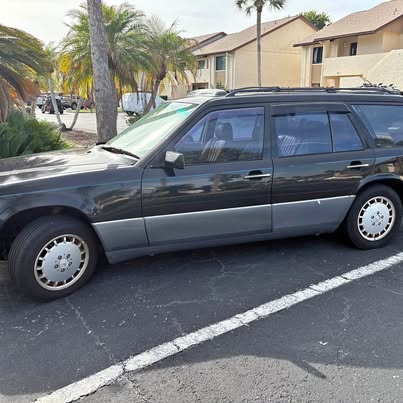
There is only one body: the S124 five-door estate, five seats as standard with an optional folding rear-facing bench in the load bay taking it to seven. Every US-market 300TE is an automatic — the four cars in our current listings are all automatic, which matches the market; manual 300TEs exist in Europe and are a curiosity, not a US buying option.
| Model | Years | Engine | Output | Built | Character |
|---|---|---|---|---|---|
| 300TE | 1986–1992 (US 1988–1992) | 3.0 six (M103), KE-Jetronic | 177 hp (US) | Not published separately | The core car; simple, tough, the default buy |
| 300TE 4MATIC | 1987–1993 (US 1990–1993) | 3.0 six (M103), KE-Jetronic | 177 hp (US) | Not published separately | All-weather traction, real complexity; buy with eyes open |
| 300TE-24 | 1989–1992 (Europe) | 3.0 six (M104.980), 24-valve | 217 hp | Not published separately | The fast one; revs, rarity, EZL and head-gasket costs |
| 300TE (1993 US) | 1993 | 3.2 six (M104.992), HFM injection | 217 hp | Not published separately | The facelift-preview car; best performer, wiring-harness caveat |
Mercedes never published tidy separate production figures for each 300TE variant, so treat any exact variant total you are quoted by a seller as decoration. What is documented is the shape of the range, and that is what prices a car.
The standard 300TE (M103). This is the car most buyers should be shopping for. The 3.0-litre M103 is a single-overhead-cam, two-valves-per-cylinder six with Bosch KE-Jetronic injection — mechanical fuel metering with electronic trimming, no throttle-by-wire, no engine-management labyrinth. Performance is brisk rather than fast, the delivery is smooth and unstressed, and the engine's known faults (head gasket seepage, valve stem seals, injection ancillaries) are all diagnosable with basic tests and fixable at predictable prices. In the US it was sold from 1988 to 1992, through both the original body style and the 1989 Series 2 update with its full-length side cladding. Neither phase is mechanically superior; buy the better-kept car.
The 300TE 4MATIC. Mercedes' first-generation 4MATIC, developed with Steyr-Daimler-Puch, is an on-demand system: the car drives its rear wheels alone until slip is detected, then engages the front axle hydraulically, then locks differentials in stages if the slip continues. It is genuinely effective in snow and genuinely complicated — a transfer case, a front differential packaged through the engine's oil pan, extra driveshafts, hydraulic control and a thicket of sensors and valves that were old technology even when new. In the US the 4MATIC wagon was sold from 1990 to 1993, and survivors cluster in snow states for obvious reasons — which also means survivors cluster where road salt lives. A working 4MATIC is a wonderful winter car. A 4MATIC with its warning light on and its system disabled is a rear-wheel-drive wagon carrying dead weight and future bills, and should be priced as less than a two-wheel-drive car, not more.
The 300TE-24 (Europe). The 24-valve M104.980 turned the wagon into a genuinely quick car — 217 hp and an appetite for revs the M103 never had. It kept KE-Jetronic rather than the later electronic injection, and it adds its own costs: a more expensive head-gasket job, the EZL ignition control unit, and valvegear that rewards engines that have had their oil changes. Never officially sold as a wagon in the US, so an American-advertised 300TE-24 is an import and its paperwork, lighting and emissions equipment deserve the same scrutiny as its engine number.
The 1993 US car (M104 3.2). For the final US year the 300TE kept its badge and gained the 3.2-litre M104 with HFM sequential electronic injection — smoother, stronger, cleaner-running, and the best-driving of the lot. It is also the car with the sharpest single trap in this guide: the biodegradable engine wiring harness fitted to early-1990s Mercedes, whose insulation crumbles inside the loom and causes exactly the random running faults sellers describe as character. A 1993 car with a documented replacement harness is arguably the best 300TE of all. A 1993 car on its original harness is a car with a four-figure job already scheduled, priced in the Parts section below.
Trim and options. US cars were well equipped as standard: automatic climate control, cruise control, electric front seats, central locking, alloy wheels and a load-bay roller cover. Leather was an option over the standard MB-Tex vinyl; most cars have MB-Tex, which wears far better. The options worth seeking are the third-row seat (check the belts and the folding mechanism, not just the cushions), the combined load cover and dog net, and a sunroof that works with clear drains. None of the options outweighs condition; all are cheaper to buy already fitted than to retrofit.
Engines and gearboxes
The M103 3.0: the iron-block six (1986–1992)
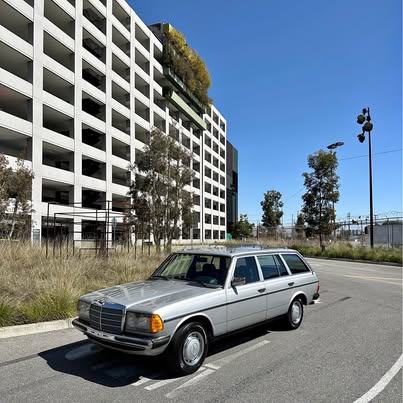
The M103 is the engine in the great majority of 300TEs, and it deserves its reputation. A cast-iron block, an alloy single-cam head, a single timing chain and Bosch KE-Jetronic injection: nothing exotic, everything accessible, and a bottom end that routinely outlives the car around it if the oil has been changed. US cars make 177 hp; European non-catalyst cars were rated at 188 PS, and the difference is emissions equipment, not character. A healthy M103 starts promptly hot or cold, idles at a steady lope-free tickover, pulls cleanly from low revs and shows strong oil pressure — the gauge pinned high at speed, dropping at a hot idle, which is normal.
KE-Jetronic is the part buyers misunderstand. It is continuous mechanical injection: an airflow sensor plate lifts in proportion to the air the engine draws, a fuel distributor meters petrol to each injector in proportion, and an electro-hydraulic actuator (the EHA, bolted to the distributor) trims the mixture under instruction from an ECU reading the oxygen sensor and temperature senders. System fuel pressure runs at roughly 5.2 to 5.6 bar — far higher than electronic-injection rail pressures — which is why tired pumps, a clogged filter or a failing fuel-pressure accumulator produce running faults that feel electronic. The classic KE failure set is ancillary, not internal. The overvoltage protection relay (OVP), a relay with a fuse in its top behind the battery, feeds the ECU and ABS; its solder joints crack with age and heat, and the symptoms — an ABS light, a high or hunting idle, cold-start misbehaviour, occasional stalling — point everywhere except at the relay. A known-good OVP is a cheap substitution test and belongs in every fault-finding sequence before anyone sells you an ECU or a fuel distributor. The idle control valve gums up and sticks. The rubber air-metering boot and the forest of vacuum hoses harden and split, admitting unmetered air the plate never measured. The airflow sensor's potentiometer wears at the idle position, where its wiper has sat for thirty years, and produces a hesitation or flat spot just off idle that owners blame on the distributor; a meter on the potentiometer track, swept slowly, shows the drop-out directly. The EHA itself can weep fuel externally — smell for petrol at the distributor and price the unit, roughly $250–450 for the part, before it becomes a fire-risk conversation. A full KE pressure test with the proper gauge set, system and differential pressures read against specification, is the distinguishing exercise for the whole system: a specialist will charge $150–300 to test and report, and it separates a $100 vacuum hose from a $900–1,400 rebuilt fuel distributor with certainty.
The M103's internal faults are two, and both are testable. First, the head gasket: it characteristically leaks oil externally at the rear of the head, and eventually can breach between an oil gallery and the outside or a waterway. A clean engine with fresh oil staining at the back of the block, or oil in the coolant header tank, is the presentation. A compression test plus a cooling-system pressure test distinguishes a gasket that is merely weeping (monitor it, budget for it) from one that is failing into the cooling system (do it now). The job, done properly with the head checked for flatness, runs roughly $1,200–2,200 at an independent specialist. Second, valve stem seals: they harden, the engine draws oil down the guides, and consumption climbs with blue smoke on start-up after sitting and on the overrun after a long closed-throttle descent. The distinguishing test against worn rings is smoke behaviour plus a compression and leak-down test: good compression, smoke after idle and start-up, equals seals — a $600–1,100 job done in place with the head on — while low compression and smoke under load is rings, and that is an engine-out rebuild conversation at $4,000 and up. Timing chains on the M103 are long-lived; a rattle beyond the first second points at the tensioner and guides. Distributor caps and rotors are service items whose neglect mimics injection faults.
The M104: 24 valves, two different cars (300TE-24 and 1993 3.2)
The M104 is a different architecture: a twin-cam, 24-valve head on a related block, and in the wagon it arrives in two forms that share a badge family and almost nothing else in their fuel systems.
The M104.980 in the European 300TE-24 keeps KE-Jetronic, so everything above about the OVP relay, the EHA, fuel pressures and the potentiometer applies unchanged, and adds a high-output top end: 217 hp, a willingness to rev to its redline, and a variable intake resonance flap that should give a noticeable strengthening of the pull as the revs climb. Its specific costs are the EZL ignition unit (dearer and scarcer than the M103's), a head-gasket job at the top of the six-cylinder price range at roughly $1,500–2,500, and the same external oil leak at the rear of the head, often worse. Oil leaks at the front come from the upper timing-case cover seal — the so-called U-gasket — which hardens and weeps down the front of the engine; it is a modest parts cost and a fiddly reseal, and sellers routinely describe it as a head gasket to justify either a high price for having fixed it or a low one for not having done so. The leak's location settles it: oil starting high at the timing cover is the cover; oil at the rear corner is the gasket.
The M104.992 in the 1993 US car is the modernised engine: 3.2 litres, HFM sequential electronic injection with a hot-film air mass meter, distributor-less ignition with coil packs, and 217 hp delivered with noticeably better manners and economy. Its fault list moves from hydraulics to electrics. The air mass meter drifts and fails, giving flat performance and a rich or lean stumble that a scan or a known-good substitution identifies — budget $250–500 for a quality replacement. Coil packs and their short connector leads crack with heat; a single-cylinder misfire that moves when you swap coils is diagnosed in ten minutes. Above all, this engine carries the biodegradable wiring harness. Mercedes' early-1990s insulation compound breaks down with heat and age until the conductors inside the loom touch: the symptoms are random, multiple and migratory — misfires, stalling, warning lights, faults that vanish when the loom is disturbed. The distinguishing test is physical, not electronic: at the front of the engine, around the thermostat housing and the injector and sender connectors, flex the loom gently and look for insulation cracked like old paint, coloured dust, and bare copper. A replacement harness, if the date tag on the loom shows a later Delphi-made unit, has already solved the problem — look for that tag and for the invoice. If the harness is original, price the job in at roughly $1,200–2,500 for the harness and fitting, and apply the same suspicion to the throttle actuator's internal wiring where an electronic actuator is fitted, which degrades by the same chemistry and causes idle and cruise-control faults at a similar cost to put right. Head gaskets leak on the 3.2 exactly as on the 3.0 — rear corner, external oil — and coolant loss with no visible leak on any M104 should be pressure-tested before it is attributed to anything else.
Both M104s share the M103's cooling discipline: a viscous fan clutch that should roar on a hot start, a radiator whose plastic end tanks weep at the neck with age, and a water pump checked by rocking its pulley. Hot in traffic but cool on the road is usually the fan clutch; hot everywhere is a radiator, pump or head-gasket investigation, in that order of cost.
Gearboxes: the 722.3 four-speed automatic
Every US 300TE drives through Mercedes' four-speed automatic of the 722.3 family (the W4A 040), a hydraulically controlled box with a torque converter, no electronics to speak of, and two behaviours that trap the unwary. First, it pulls away in second gear by design; first engages only on full throttle, on kickdown, or when the selector is used to demand it. A second-gear start is correct, not slip. Second, shift quality is set by vacuum and cable, not by software: engine vacuum, read through a modulator on the side of the box, tells it how hard you are working the engine, and a Bowden cable from the throttle linkage sets shift timing. A perished vacuum line to the modulator or a modulator diaphragm that has split gives harsh, thumping shifts; a stretched or misadjusted cable gives shifts that come absurdly early or hang on too long. Both are cheap — a modulator is roughly $60–120 plus fitting, a cable adjustment is labour only — which is why you test before you condemn: a $3,000–4,500 rebuild quote for a box that needed a $20 vacuum hose is a story told at every Mercedes meet. Genuine wear shows differently: flaring (revs rising) on the 2–3 change, a long delay engaging reverse when cold that worsens as the box ages (the reverse piston seal hardening and leaking internally until pressure builds), and dark, burnt-smelling fluid on the dipstick. A fluid and filter change is $200–350 at a specialist and should be in the car's past every 30,000 miles or so; a box with no record of one is not necessarily dying, but it has not been loved. European manual cars use the 717.4 five-speed, rare enough in the US to matter only as an import check: judge synchromesh on second and third. The 4MATIC drivetrain itself — transfer case, front differential, hydraulic engagement — is covered where it belongs, in Problem areas, because on a thirty-year-old car it is a system to be tested, not a feature to be assumed.
Problem areas
A 300TE concentrates its risks in places a saloon buyer never looks. The engines are the strong part of the car; the estate body, the hydraulic suspension and the all-wheel-drive system are where money goes. Work through this section in the order it is written — body first, because rust decides whether any of the rest is worth fixing.
Rust: the tailgate, the rear quarters and the water map
Rust on an S124 follows the water, exactly as it does on any Mercedes of the period.
The tailgate. The single most estate-specific rust site on the car. The tailgate is a large steel pressing with a window in its upper half, and water gets trapped at three points: under the rear window seal, around the rear wiper spindle where it passes through the panel, and along the bottom edge and handle recess where road spray and condensation collect. The mechanism is the familiar one — the seal and the spindle grommet harden, water sits against painted steel in a seam that never dries, and corrosion starts inside the seam and bubbles out through the paint around the window frame, the wiper and the lower edge. By the time the paint blisters visibly around the rear window, the frame behind it is usually perforated, and a repair means glass out, metal cut back to sound steel, and paint — roughly $800–1,800 for a proper localised repair, and good used tailgates are scarce and often no better. Check that the rear wash-wipe works, that the heated rear window clears across its whole area rather than in a few stripes, and that both tailgate struts hold the (heavy) gate fully open without creeping down — struts are cheap at $40–90 the pair, but a gate that has been dropped by dead struts often has the bent hinges and misaligned latch to show for it.
The rear quarters, wheel arches and load-bay floor. The rear wheel arches rot at their lips and where the quarter panel meets the sill, and the D-pillar and the frames of the rear side windows trap moisture behind their seals in the same way as the tailgate glass. Inside, lift the load-bay carpet and the side trim panels: the spare wheel lives upright in a locker on the left side of the bay, and that locker, the corresponding well on the right, and the under-floor area where the optional third-row seat folds all collect water from tailgate and side-window leaks. Surface staining is a clean, treat and reseal job; perforation in the bay floor or the lockers is panel work, and because these areas carry the rear seat and seat-belt structure on seven-seat cars, it is structural in the ways that matter. Budget $600–1,500 per side for arch and quarter repairs done in metal and paint, and treat a car needing both rear quarters, a tailgate and sills as a body restoration, not a purchase with a discount.
Sills, jacking points and the front of the car. Shared with the saloon, and just as decisive. The sills carry jacking sockets behind plastic covers, and they rot from inside: press hard along the full length, look for bubbling at the socket surrounds, and be suspicious of fresh underseal. The definitive test is the car's own jack in each socket in turn — a sound sill lifts the corner silently, a rotten one creaks and flexes, and a seller who refuses the test has answered it. Welding a sill properly runs roughly $900–2,000 a side. Series 2 cars with full side cladding hide the lower wings and sill tops behind plastic that traps wet dirt against the steel: look for rust staining bleeding from behind the cladding edges and push gently along the panel bottoms. Front wings rot behind the wheels and at their lower rear corners, the battery tray rots under the battery and tracks acid down the firewall, the front subframe mounts and spring seats collect mud and corrode, and the front and rear subframe mounting points and rear spring seats must be inspected from underneath on a lift — perforation there is fabrication work priced per car, and it ends more purchases than any engine fault. Door bottoms fill with water when their drain slots block: run a fingertip along every door's lower edge for bubbling and check the drains are clear. Windscreen and rear side window seals that have perished let water into the footwells, where it sits under sound-deadening and starts the floor pans; wet carpets in a supposedly dry-stored car mean a leak, and a leak maintained for years means floor work at $500–1,200 a side before you have touched anything else.
Self-levelling rear suspension: accumulators, struts and the height valve
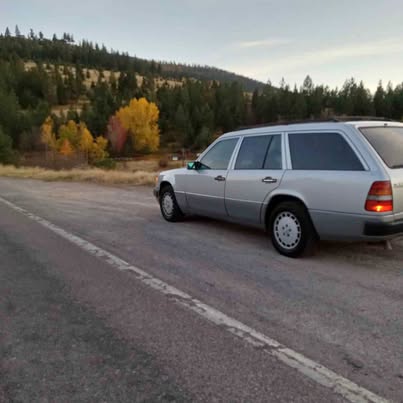
Every S124 left the factory with hydropneumatic self-levelling on the rear axle, and on a car of this age it is the system most likely to have been neglected, misunderstood or quietly converted. An engine-driven pump supplies hydraulic fluid (the reservoir sits in the engine bay; the fluid should be clean and at level) to a pair of rear struts. Each strut works against a nitrogen-filled accumulator — a steel sphere divided by a membrane, gas on one side, fluid on the other. The gas is the spring's compliance: it compresses to absorb bumps and provides the pressure that lets a height-corrector valve, linked to the rear anti-roll bar, add or release fluid to hold the car's ride height constant whether the bay is empty or carrying half a ton. The accumulators are the wear item, and their failure mechanism is precise. Over years the nitrogen charge seeps through and past the membrane until the sphere is full of effectively incompressible fluid. Levelling still works — the pump and valve can still set the height — so the car sits correctly and sellers say the suspension is fine. What has gone is the cushion: every bump now arrives as a hydraulic hammer blow, the rear ride turns harsh, thumping and bouncy in a distinctive hard-edged way, and the shock loads start damaging struts, mounts and tyres. The distinguishing test costs nothing: push down hard on a rear corner and release. A car with live accumulators moves with damped, expensive-feeling compliance. A car with dead spheres feels wooden and harsh, kicks back, and transmits a thud through the body over sharp bumps on the test drive — speed humps at low speed are the perfect test track. Accumulators are a service replacement: roughly $120–220 each for quality parts, and a pair fitted with fresh fluid runs $500–1,000 at a specialist. That is the good news, and it is why a harsh-riding car is a negotiation, not a walk-away.
The expensive failures are the struts and the system around them. Rear struts that weep fluid down their bodies will eventually leak faster than the pump can compensate; replacement struts are $300–600 each plus fitting, and pattern quality varies, so ask what is fitted. The height-corrector valve can seize or its linkage can disconnect or bend, giving a car that sits permanently high, permanently low, or level only by luck — linkage and valve faults are $150–450 to sort, but diagnose before replacing: a disconnected linkage rod mimics a dead valve exactly. Some cars have been converted to conventional dampers and uprated springs, deleting the levelling. A good conversion drives acceptably; a cheap one sits tail-high unloaded and sags loaded, which is the worst of both worlds. If a car is converted, price it below an intact car and check the stance both ways described in the inspection. The system test that settles everything is the load test: measure the rear arch height, load the bay with a few hundred pounds (people work well), drive around the block, and re-measure. A live system returns to its set height. A dead one stays down — and now you know it is pump, valve or pressure, not accumulators, because levelling and cushioning fail independently and must be tested independently.
4MATIC: the transfer case, the front drive and the warning light
On a 4MATIC car, this system outranks everything except structural rust. First-generation 4MATIC is electro-hydraulic: sensors detect wheel slip, a control unit commands hydraulic valves, and clutches in the transfer case engage the front drive in stages — first an open planetary split biased to the rear, then a locked centre differential, then a locked rear differential if the car is still fighting for grip. Age attacks it from three directions. Hydraulically, the transfer case and its control circuit leak and lose pressure, so engagement becomes slow, partial or absent. Mechanically, the front driveshaft, its joints and the front differential — which is packaged with its drive passing through the engine's oil pan, an arrangement that makes certain engine jobs longer and dearer — wear and develop play and leaks that are expensive simply because access is poor. Electrically, wheel-speed sensors, the control unit and the hydraulic valve block produce the failure every buyer will meet: the 4MATIC warning light on, and a system that has been switched off, had its fuse pulled, or been left in two-wheel drive for years. The distinguishing approach is to treat the light as a diagnosis to be bought, not a bulb to be argued about. A specialist with the period test procedure can interrogate the system and exercise the engagement stages; budget $150–300 for that assessment on any car where the light is on, and get it before purchase, because the repair spread runs from a $100 sensor or a corroded connector to a transfer-case overhaul at $2,000–4,000, with used parts scarcity adding time to money. On the test drive, find a loose or wet surface with the seller's agreement: a working system engages without drama, clunks or wind-up; graunching, binding on tight full-lock turns on dry tarmac (a system stuck engaged behaves like a locked 4x4 and hops and protests), or a light that appears under slip all fail the car as a 4MATIC, whatever it does as a wagon. Finally, price honestly: owners' clubs are full of 4MATICs run permanently in two-wheel drive, which is a legitimate way to own the car, but such a car is worth two-wheel-drive money minus the cost of the dead system it carries, and its winter-party trick is gone.
Chassis, steering and brakes: the multi-link tax
The 124's five-link rear suspension was revolutionary and remains excellent — when its bushes are alive. There are five links per side, plus subframe mounts, differential mounts and anti-roll bar bushes, and after thirty years the rubber in most of them is cracked, compressed or separating. Worn rear links announce themselves as a rear end that steers itself over bumps and lane changes, a car that needs constant small corrections on the motorway, uneven rear tyre wear (the inside shoulders go first), and knocks from behind over rough surfaces. No single link is expensive — arms run roughly $60–180 each depending on which — but a full rear-end bush and link refresh with alignment is $1,200–2,500 in parts and labour. The test is a lift inspection with a pry bar on every link and mount, plus a hard look at rear tyre wear patterns.
At the front, MacPherson struts with lower control arms: check ball joints for play (they are replaceable separately, $250–450 a side fitted), control-arm bushes for cracking, struts for leaks, and the front springs and their upper seats for the rust described above. Steering is a recirculating-ball box, and its wear points are the idler arm bush, the centre drag link, tie-rod ends and the steering damper — play at the wheel rim beyond a modest amount, plus a knock over bumps, is usually the idler bush and joints ($300–700 to refresh the linkage wear points) rather than the box itself, which is adjustable for preload and expensive to replace at $800 and up for a rebuilt unit. Judge it after the cheap points are known good, not before. The rubber flex discs in the propshaft crack with age and produce a driveline thump on take-up and a vibration at speed; they are $80–150 each in parts and should be inspected on the lift, along with the propshaft centre bearing. Brakes are conventional discs with ABS on most later cars: seized calipers, perished hoses and corroded lines on salt-state cars are the standard list, $600–1,500 for a full hydraulic refresh with lines where needed, and an ABS light that accompanies rough running on a KE car points back at the OVP relay before it points at the ABS pump.
Interior, climate and electrics: where the labour lives
The cabin is hard-wearing, and its costs are labour costs, because everything awkward lives behind the dashboard.
The automatic climate control works through vacuum-operated flap pods behind the dash, a push-button control unit, an electrically driven auxiliary coolant pump and a solenoid heater valve. The pods' rubber diaphragms perish: the classic presentation is air that will only come from the defrost vents, or a centre vent that never opens, because the system defaults to defrost when vacuum fails. Each pod is cheap ($40–120); reaching the deep ones is a dashboard-out day, $800–1,500 in labour, so test every vent position and temperature change on the viewing and price what does not respond. The heater valve itself fails to a permanently hot or permanently cold cabin and is an engine-bay job at $100–250 fitted — distinguish valve from pods by whether temperature control or air distribution is the fault. The blower motor wears its brushes and squeals or dies; on many cars its fuse is an external strip fuse near the brake booster that corrodes and mimics a dead motor, so check the fuse before pricing the motor at $300–600 fitted. The air-conditioning evaporator is the big one: it lives in the dash, it leaks with age, and replacing it is $2,000–3,500, mostly labour. A car whose air conditioning blows warm needs a leak diagnosis with dye or a sniffer before you accept the seller's re-gas story — a system that holds a charge but has a tired compressor ($500–900 fitted) is a different purchase from one with a leaking evaporator. Vacuum also runs the central locking, from a pump under the rear seat: slow or lazy locking, a pump that runs on and on, or one door or the tailgate that does not lock points to a leaking vacuum element or a split line, diagnosed door by door with a hand vacuum pump at $60–150 per element plus labour.
Electrically, work through the whole car: all four windows (regulators and the comfort relay), the sunroof in both slide and tilt, electric seat adjustments in every direction (the switches live in the doors and their contacts dirty up; a seat that moves in some directions is usually switch contacts, not motors), heated seats where fitted, the rear wiper and washer, the load-bay light, the cruise control on the drive, and the instrument cluster, whose rheostat dims the dash lights to invisibility and whose odometer gears crumble — a stopped odometer with a worn story about when it stopped should move the car into the mileage-unknown price class. The load bay is the estate's own interior: check the roller cover retracts and its cassette is present, the dog net is there if the car was equipped, the third-row seat (where fitted) folds up and down with its belts and head restraints complete, the side locker doors latch, and the bay carpet is dry — a wet bay carpet sends you straight back to the tailgate section, because the water came from somewhere.
How to inspect one
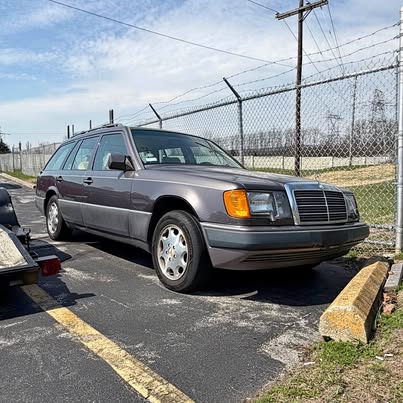
Allow ninety minutes, bring a torch, a cloth-wrapped magnet, a tyre tread gauge and a tape measure, and arrange a lift inspection for any car that passes you. Insist on a cold engine when you arrive.
- Paperwork and identity first. Match the VIN on the title to the plate and stamping on the car, and confirm the engine matches the badge: an M103 car should carry its 103 engine number, a 1993 car its 104, whatever the tailgate badge says. Ask for the service file: invoices for a head gasket, a wiring harness on a 1993 car, accumulators, or a gearbox service are each worth real money and are listed again in the Parts section.
- Cold start and the gauges. A KE-Jetronic car should start promptly and settle to a steady idle; an HFM 1993 car should do the same with no warning lights staying on. Watch for blue smoke on start-up (valve stem seals, per the Engines section), listen for chain rattle that outlasts the first second, and note the oil pressure: high at speed is healthy, a hot-idle drop is normal.
- The dipstick and the header tank. Smell the oil, read its level, and look in the coolant header tank for oil emulsion. Oil staining at the rear of the head, fresh on a clean engine, is the M103 and M104 head-gasket signature from the Engines section — decide with a compression and cooling-system pressure test whether it is a weep to budget or a failure to fix before use.
- On a 1993 car, flex the loom. Before anything else electrical, inspect the engine wiring harness at the thermostat housing and the injector and sender connectors for cracked, crumbling insulation and bare copper, and look for the replacement harness date tag and invoice. Random electrical faults on a 1993 car are the harness until proven otherwise, and the proof is physical, as the M104 section sets out.
- The tailgate circuit. Open and close the tailgate: struts should hold it fully open, the latch should pull it shut squarely, and the rear wash-wipe and heated window should work across the whole glass. Then run a fingertip around the window seal line, the wiper spindle and the bottom edge feeling for bubbling and swelling — the tailgate rust map in the Problem areas section is the checklist, and bubbling along the seal means perforation behind it.
- The load bay, dry and underneath. Lift the bay carpet, open both side lockers, check the spare wheel and its well, and fold the third-row seat up and down if fitted. Everything should be dry. Water, staining or a damp smell sends you back to the tailgate and rear side-window seals, and perforation in the bay floor or lockers is structural money, not trim.
- Sills and the jack test. Press along both sills, check every jacking-point surround, and look for rust bleeding from behind the side cladding on Series 2 cars. If the seller allows it — and refusal is information — use the car's own jack in each sill socket in turn: silent and solid passes, creaking or flexing ends the viewing until the price reflects welded sills on both sides.
- Underneath on a lift. Torch along the subframe mounts front and rear, the front spring seats, the floor pans and seams, the brake and fuel lines, and the propshaft flex discs. Perforation in mounts, spring seats or floors is fabrication work. Read the underseal as you go: honestly patchy is factory; a fresh, uniform black coat over everything, applied for the sale, is a question.
- The self-levelling tests, both of them. Do the bounce test first — push a rear corner down hard and release; wooden, harsh, thudding means dead accumulators, a priced job in the suspension section. Then do the load test: measure a rear arch height, load the bay heavily, drive around the block, and re-measure. A system that returns to height has a live pump and valve; a car that stays down has a levelling fault, which is a different diagnosis and a different price.
- On a 4MATIC, the light and the loose surface. The 4MATIC warning light must come on with the ignition and go out, stay out, and stay out under provoked slip on a loose or wet surface with the seller's agreement. Binding or hopping on tight dry turns means a system stuck engaged. Any other behaviour buys a specialist system assessment before purchase, at the price the 4MATIC section gives — the spread between a sensor and a transfer case is too wide to guess.
- The test drive, gearbox first. Fifteen minutes minimum, with a motorway stretch. Expect a second-gear start (correct, per the Gearboxes section), firm clean changes, a prompt kickdown and reverse that engages without a long delay, hot and cold. Flaring on the 2–3 change or a worsening reverse delay is genuine wear; harsh thumping shifts are the vacuum modulator test before they are a rebuild. Then brakes in a straight line from speed, steering for play and knocks, and the rear end for self-steering over bumps — the multi-link wear signature from the chassis section.
- Climate, electrics and the driver's seat, last. Run the climate control through every vent position and from cold to hot: distribution faults are vacuum pods, temperature faults are the heater valve, and warm air conditioning needs a leak diagnosis, not a re-gas promise, because the evaporator is the expensive answer. Work every window, the sunroof both ways, every seat direction, the cruise control and the central locking including the tailgate. Sit in the driver's seat and feel for the frame through the pad. A car that passes all twelve steps with its systems alive is the car this guide exists to find.
Values
The computed market block beneath this guide carries the current numbers — what is listed now, and what recorded sales have achieved — and it is refreshed as the market moves, so this section deliberately teaches you how to read those figures rather than repeating them. Our own listings currently track only a handful of 300TEs at any one time, all of them private Marketplace sellers rather than dealers, which means a single exceptional car, or a single desperate one, can drag an apparent median a long way from what a typical honest wagon actually changes hands for. Read ranges, not points, and read the spread between the cheapest and dearest cars as the real information: on a 300TE the spread is enormous, and it is almost entirely condition.
The drivers of that spread are consistent. At the top sit cars with a documented service history, a sound tailgate and rear quarters, a self-levelling system that demonstrably levels and rides properly, and — on the 1993 cars — a replacement wiring harness with the invoice to prove it. Working air conditioning with evidence behind it, a complete load bay with its roller cover and any third-row seat intact, and original paint in a good colour all add. At the bottom sit cars with the estate diseases: tailgate and sill rust, dead accumulators sold as a hard ride, a disabled 4MATIC, and a pile of deferred ancillary work on a KE-Jetronic car that has not been properly diagnosed.
Variant premiums are real but conditional. The 1993 car commands a premium for its engine and equipment only when the harness question is answered; unanswered, it can be worth less than a sorted earlier car, because the buyer is purchasing an unknown. A working 4MATIC earns a modest premium in snow country and none — or a discount for complexity — where winters are mild. The European 24-valve car is the rarest and the most collectible on paper, but in the US its premium is capped by parts and specialist scarcity, and an imported example with patchy paperwork gives the premium back. Two reading habits will protect you. First, separate asking from achieving: private sellers of thinly traded wagons routinely ask driver money for project cars and wait, so time on market is information — a car that has sat unsold through several price reductions is the market giving its verdict on the gap between the description and the car. Second, price the project gap honestly before you romanticise it: the distance between a cheap 300TE and a good one is consumed quickly by tailgate metal, accumulators and struts, a head gasket, a harness and a climate system, each priced in the sections above, and the finished project is still a car with a story. The market knows this, which is why the cheap cars stay cheap. Buy the condition, use the computed figures below to check that the asking price belongs to the class of car you have actually inspected, and let cars priced in the wrong class sit.
Parts and ownership
The 300TE shares the W124 saloon's mechanical core, and the saloon was built in the millions, so the ownership proposition is fundamentally friendly: Mercedes-Benz Classic still supports the 124 extensively, the specialist and breaker network is deep on both sides of the Atlantic, and most service and wear parts are ordinary money ordered today and fitted this weekend.
Easy and cheap: filters, plugs, belts, brake discs and pads, calipers, hoses, water pumps, thermostats, viscous fan clutches, distributor caps and rotors for the M103, suspension wear parts including ball joints and individual multi-link arms, exhaust sections, glass rubbers and seals, tailgate struts, accumulators for the self-levelling system, and KE-Jetronic service items such as the OVP relay, idle valve and vacuum hose. A first-year catch-up budget on a neglected but sound car — fluids, filters, brakes, tyres, the deferred ancillaries — is realistically $1,500–3,500 before you improve anything.
Estate-specific and scarcer: the tailgate itself (good used panels are the hunt; budget for repairing yours), load-bay trim, roller covers and dog nets, third-row seat components and belts, rear side glass and its seals, self-levelling struts at $300–600 each, and the height-corrector valve. None of this is unobtainable, but it comes from the estate's far smaller production run and from breakers who know what they have, so completeness on the car you buy is worth money: a wagon missing its bay furniture will cost more to complete than the discount you negotiated for its absence.
The priced jobs, collected: head gasket, M103, roughly $1,200–2,200, and M104, roughly $1,500–2,500; valve stem seals in place, $600–1,100; engine wiring harness on a 1993 car, $1,200–2,500 fitted; accumulators as a pair, fitted, $500–1,000; automatic gearbox rebuild, $3,000–4,500, against a vacuum modulator at $60–120 that cures more gearboxes than any rebuild; 4MATIC transfer-case work, $2,000–4,000 when it is needed, against $150–300 to have the system properly assessed before you buy the car; air-conditioning evaporator, $2,000–3,500, mostly labour; a full rear multi-link refresh with alignment, $1,200–2,500.
Running one. Fuel consumption sits in the high teens to low twenties in miles per gallon depending on use, the sixes run happily on premium unleaded, and insurance and registration are ordinary classic-car money for a car of this value. The ownership discipline that matters is use: these cars deteriorate when parked. Seals dry, KE-Jetronic fuel varnishes in distributors, accumulator membranes age whether the wheels turn or not, and air-conditioning seals leak down. A 300TE driven weekly and serviced annually is a dependable family car; one recommissioned after five years asleep needs the fuel system cleaned end to end, every fluid changed, the brake hydraulics inspected piece by piece and a recommissioning budget of $2,500–5,000 at a shop before it is trustworthy. Buy the car that has been in regular use, keep it in regular use, and the model will repay you in the way it was engineered to: quietly, for a very long time.
Which one to buy
- The all-rounder: 300TE, M103, two-wheel drive. The core car and the right default: the toughest engine in the range, the simplest systems, the deepest parts support and the widest choice. A sorted example with working self-levelling and a dry load bay is the best classic family car most buyers will ever own.
- The best driver: 1993 300TE with the 3.2 M104 — harness done. The strongest, smoothest engine and the most modern manners, provided the wiring harness has been replaced and the invoice is in the file. Without that evidence, it drops below the M103 car, because you are buying the job as well as the car.
- The winter car: 300TE 4MATIC, system proven working. Genuinely capable in snow and worth its premium where winters are real — but only with the engagement stages demonstrated and no warning light. A disabled 4MATIC is a two-wheel-drive car carrying a liability, and should be priced below one.
- The connoisseur's car: 300TE-24. The European 24-valve is the fastest and rarest wagon of the range and the one for the buyer who values revs and rarity over simplicity. Verify its identity by engine number, import paperwork and specification, and budget for M104 top-end costs from day one.
- The value buy: a cosmetically tired, mechanically documented M103 car. Faded paint and a worn driver's seat are cheap problems on this model; rust, dead hydraulics and undiagnosed injection faults are the expensive ones. A car that is ugly in the photographs and strong in the file is the experienced buyer's 300TE.
And the rule that overrides all of the above: buy the car whose estate systems work — tailgate sound, load bay dry, self-levelling levelling — in the specification you can live with. Engines, gearboxes and climate pods are all fixable at prices you can plan for from this guide. A rotten tailgate and rear quarters, or a hydraulic system abandoned beyond economic repair, cost more to put right than the finished wagon will be worth, and they are the things about an S124 that can never be made original again.
See the 5 E-Class cars currently listed.
What they sell for: E-Class sale prices.