
Mercedes-Benz S-Class buyer's guide
Mercedes-Benz S-Class -- the model's own buyer's guide: variants, values and what to check.
Years listed: 1982-1985 · Series: C126
# Mercedes-Benz 500SEC (C126) — Buyer's Guide
Overview and history
The 500SEC is the pillarless coupé version of the W126 S-Class, and it is the car that defines what a big Mercedes coupé should feel like: heavy, quiet, long-legged and built with a seriousness that makes most rivals feel temporary. Mercedes-Benz presents the SEC at the Frankfurt show in September 1981, two years after the W126 saloon, and builds it until 1991. The engineering is the saloon's — the same floorpan shortened slightly, the same all-alloy M117 V8 up front, the same four-speed automatic — but the body is entirely its own. There is no B-pillar. Drop both windows and the side of the car is one uninterrupted opening, which is why the front belts ride on the famous powered presenters: with no pillar to hang a belt from, the car hands it to you.
Styling is credited to Bruno Sacco's team, and the coupé is lower, wider-looking and cleaner than the saloon, with a drag figure that embarrasses most sports cars of the day. Nothing about the concept is exotic. The appeal is execution: panel fit, switchgear that still clicks forty years on, seats built like furniture, and a V8 that pulls from walking pace to autobahn speed in one long, even breath.
The 500SEC sits in the middle of the four-model SEC range. Below it sit the 380SEC (1981–85) and the later 420SEC (1985–91); above it, from 1985, sits the 560SEC. North America is different, and this matters to you as a buyer: Mercedes-Benz officially sells the 500SEC in the United States only for 1984 and 1985, after which the 560SEC takes over as the flagship coupé. Any 500SEC you meet in America wearing an earlier or later year — a 1983 car, a 1990 car — arrived as a grey-market import when new, or came in later once the 25-year import rule made it straightforward. That is not a defect, but it changes the car's specification, its paperwork and the questions you ask, and this guide returns to it throughout.
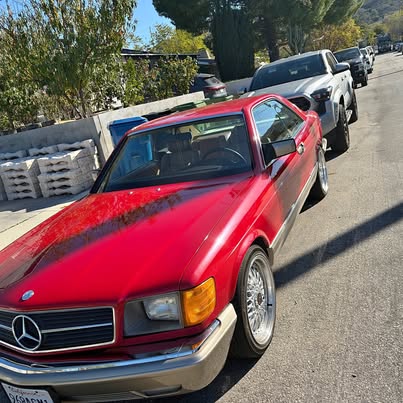
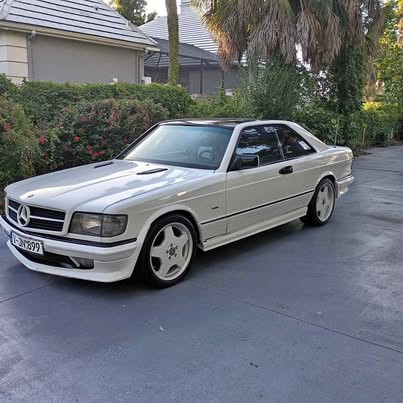
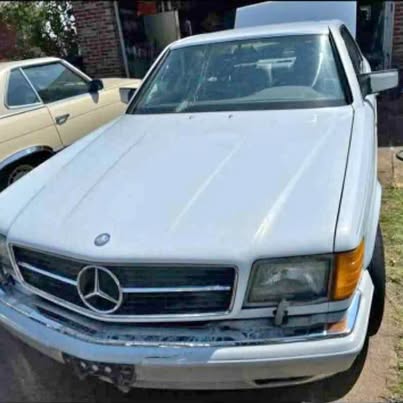
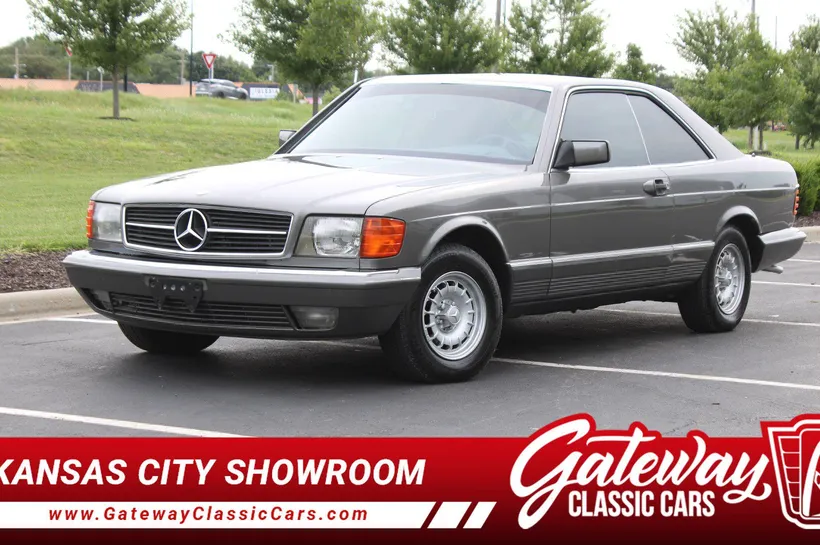
The pool of cars recorded on this site is small and illustrates the point neatly: four 500SECs, three currently offered for sale and one recorded as sold, spanning a red 1983 car in California, two 1985 cars — a white car in Florida and a Smoke Silver Metallic car in Maine — and a white 1990 car in Texas. Two of those four bookend the official US years, exactly as the import history predicts. Treat that as a snapshot of how these cars surface today, not a census of the model.
What you are buying, at this age, is not performance. A 500SEC is quick enough and utterly relaxed, but its value to you is as a grand tourer of unusual integrity that still covers distance the way it did when new. The difference is almost never the engine. It is the shell, the pillarless hardware and the accumulation of deferred small jobs, and those are the things this guide teaches you to judge.

The models
The SEC range is simple once you separate the two production series and the two markets. Series 1 runs from launch in late 1981 to the facelift of September 1985. Series 2 runs from then to the end in 1991, and it is more than a trim change: the engines gain compression, electronic engine management and more power, the body gains smoother lower cladding in place of the earlier ribbed side panels, wheels grow, and rust protection improves. The badge never changes across the facelift, which is why sellers describe early and late cars as identical. They are not — though a cherished early car beats a neglected late one.
In the home market the range opens with the 380SEC, powered by the 3.8-litre M116 V8. It is the lightest-feeling SEC and the slowest, and early US-market 3.8s carry the single-row timing chain that gives the family a worse name than the 5.0 deserves — the M117 in the 500 uses a duplex chain from the start. The 420SEC arrives with the facelift as a Europe-only model, using a 4.2-litre version of the M117; it is smooth, rare and largely irrelevant to an American buyer except as a warning that badges and markets mix freely in adverts. The 560SEC tops the range from 1985: 5.5 litres, the most torque, the richest standard equipment, and in the US it is the only SEC you can buy new from 1986 on. European 560s in high-compression tune are the fastest standard SECs of all.
The 500SEC itself divides three ways. First, the Series 1 European car (1981–85): 231 hp, K-Jetronic mechanical injection, high compression by the standards of the day, slim bumpers, and the ribbed lower body sides. Second, the US-specification car (1984–85 only): the same basic engine detuned hard for emissions — lower compression, catalytic converter, lambda control and an output of just 184 hp — wearing the deep impact bumpers and US lighting. The gap between a Euro and a US Series 1 car is the largest specification gap in the whole SEC story, and it is why two cars with the same badge can feel like different models. Third, the Series 2 European car (1985–91): the revised M117.965 engine with KE-Jetronic, electronic ignition control and 245 hp in non-catalyst ECE tune, or 223 hp in catalyst tune. America never receives this car new; the 1990 car in this site's pool is one of these, imported after the fact.
Equipment is generous and grows with the years: electric front seats (driver's memory on later and US cars), automatic climate control on US cars (European cars range from simple heater controls through Tempmatik to full automatic), an electric steel sunroof on most cars, cruise control, a Becker radio, metallic paint and leather on the majority. Options to note because they affect value and running costs include heated seats, the orthopaedic front seats with vacuum-adjustable bladders, a limited-slip differential, rear self-levelling suspension where fitted, and the rear-window roller blind on later cars. AMG requires a paragraph of its own: AMG is an independent tuner in this era, not a Mercedes trim line, and genuine AMG-converted C126s — up to and including the 6.0-litre four-valve "Hammer" coupés — are vanishingly rare and documented car by car. Wheels, a body kit and a boot badge make an SEC with AMG parts, not an AMG car. Treat every AMG claim as unproven until paperwork, not parts, proves it.
| Model | Years | Engine | Output | Built | Character |
|---|---|---|---|---|---|
| 380SEC | 1981–85 | 3.8 M116 V8 | 204 hp Euro / 155 hp US | 11,267 | The light, entry SEC; US cars carry the single-row chain |
| 500SEC Series 1 (Euro) | 1981–85 | 5.0 M117.963 V8 | 231 hp | 30,184 (all 500SEC) | The original: K-Jetronic, slim bumpers, full performance |
| 500SEC (US spec) | 1984–85 | 5.0 M117.963 V8 | 184 hp | included above | Detuned for emissions; big bumpers; the common US find |
| 500SEC Series 2 (Euro) | 1985–91 | 5.0 M117.965 V8 | 245 hp ECE / 223 hp catalyst | included above | The developed car; never sold new in the US |
| 420SEC | 1985–91 | 4.2 M117 V8 | 218–231 hp | 3,680 | Europe-only, smooth and rare; a badge-check exercise |
| 560SEC | 1985–91 | 5.5 M117.968 V8 | 300 hp ECE / 238 hp US | 28,929 | The flagship: most torque, most equipment, most demand |
Two cautions about the table. Outputs are period DIN figures for European cars and SAE net for US cars, quoted so you can compare within a market, not across the Atlantic with false precision. And production totals are for the model across its whole run; Mercedes does not publish a clean early/late split for the 500SEC, so any seller who quotes you one is guessing.
Engines and gearboxes
The M117 V8: one engine, two characters
Every 500SEC carries the M117, an all-alloy, single-overhead-camshaft-per-bank V8 of 4,973 cc (96.5 mm bore, 85 mm stroke) with two valves per cylinder, rocker arms and hydraulic lash compensation. It is not a highly stressed engine — even the strongest standard tune makes under 50 hp per litre — and that is precisely its virtue. A maintained M117 is a 250,000-mile engine.
The Series 1 engine, the M117.963, is the simpler unit. European cars run a compression ratio around 9.2:1 and make 231 hp at 4,750 rpm with 405 Nm of torque. US cars run roughly 8.0:1 compression with a catalytic converter, exhaust gas recirculation and air injection, and make 184 hp — you feel the difference as a general softness rather than a hole anywhere in the range, and a US car is still a relaxed, adequate performer, just not the car the badge promises a European buyer. The Series 2 engine, the M117.965, raises compression (around 10:1 in ECE tune), adds electronic ignition control and revised injection, and makes 245 hp in non-catalyst form or 223 hp with a catalyst. It is the sweetest of the three: stronger everywhere, cleaner-running, and — because it coincides with the facelift — attached to the better body.
Top-end wear is the M117's signature ageing pattern, and it has a specific cause you can check. Each camshaft is fed by an oil pipe running above it, clipped on with small plastic fittings. The plastic embrittles with heat and age; a fitting cracks, oil delivery to the nearest lobes falls away, and a cam lobe wears while the engine develops a light ticking that owners blame on the hydraulic elements. Ticking from one bank at idle that rises with revs is an oiler-pipe inspection first and a lifter discussion second. Replacing the plastic fittings is a cheap, classic preventative job; replacing a worn camshaft and rockers is not. Budget roughly $150–300 in parts and labour for the oiler fittings as prevention, against $900–1,600 for a camshaft, rockers and gaskets once a lobe has gone. Valve stem seals harden on the same heat cycle: the test is blue smoke on the overrun after a long downhill coast, or a puff at start-up after sitting, with clean running in between. Stem seals can be replaced with the heads in place for roughly $600–1,100; ignore them and you simply feed the engine oil and foul plugs.
The timing drive is the one place where deferral can kill the engine outright. The duplex chain itself is long-lived, but it runs against plastic-faced guide rails, and the rails — not the chain — are the wear item. Old rails go brittle, a rail breaks, and the chain can jump teeth with valve-to-piston consequences. There is no warning light and often no noise until very late. If a car has no record of chain guides and a tensioner in the last two decades, treat the job as due: a preventative guide, rail and tensioner replacement typically runs $900–1,800 at an independent specialist, which is cheap insurance against a $5,000-plus engine rebuild.
Lower down, the M117 mostly just leaks and sags. Valve cover gaskets, the front crank seal and the oil pan gasket weep with age; engine mounts collapse until the fan sits off-centre in its shroud and a driveline thump appears on take-up. Head gasket failure is uncommon and usually follows overheating, which is why the cooling system matters: the viscous fan clutch loses its drive silently (test it by feel — a hot engine with a fan you can spin freely by hand has a dead clutch), radiator side tanks and necks age, and the auxiliary electric fan exists to support the air conditioning, not to rescue a failed main fan. A temperature gauge that climbs in traffic and settles at speed is a fan clutch or radiator verdict, not a Mercedes characteristic, whatever the seller says.
K-Jetronic, KE-Jetronic and the emissions variants
Series 1 cars use Bosch K-Jetronic — CIS — a fully mechanical continuous-injection system. A fuel distributor meters fuel to eight injectors in proportion to airflow, a warm-up regulator enriches the mixture when cold, and an auxiliary air valve handles cold fast idle. US cars add lambda closed-loop control with an oxygen sensor and a frequency valve. Series 2 cars move to KE-Jetronic (CIS-E), which keeps the mechanical distributor but adds an electronic control unit, an electro-hydraulic actuator on the distributor, electronic idle control through a rotary idle valve, and on catalyst cars full lambda management. The KE car starts cleaner, idles steadier and tolerates altitude and fuel variation better. Neither system is unreliable; both are now old enough that rubber, not electronics, causes most faults.
Hard starting when hot, after a 20–40 minute soak, is the classic fuel accumulator or a leaking injector/check valve letting rail pressure fall away — the system must hold rest pressure, and a pressure gauge test settles it in minutes; an accumulator is roughly $120–250 plus labour. Hard cold starting points at the cold-start injector, its thermo-time switch, or on KE cars the coolant temperature sensor feeding the ECU. A hunting or high idle on a KE car is usually the idle valve gummed solid or the overvoltage protection relay — the OVP, whose failure also lights the ABS lamp and can cause cold-start misery — and the OVP is a cheap plug-in part (roughly $60–120) that you test by substitution before anyone sells you an ECU. A warm engine that stalls at junctions on a K car points at the warm-up regulator or split intake rubber: every rubber boot and vacuum hose in the system is now decades old, and unmetered air is the single most common cause of poor running on both systems. A fuel distributor that has sat for years with stale fuel varnishes internally; professional rebuilds run roughly $600–1,200, which is why a car that has been in storage needs a fuel-system budget line, not just fresh petrol.
The emissions hardware defines the US car and the grey-import question. A genuine US 500SEC carries a catalytic converter, lambda control, EGR and an air pump, and its engine bay shows the plumbing. A European car of the same year has none of it unless it is a catalyst model. Federalised grey imports sit awkwardly in between: converters and side-marker lamps added by the importer, sometimes neatly, sometimes not, and the quality of that 1980s conversion work is a legitimate inspection item. A later catalyst-era European car (the 223 hp tune) is a different thing again — factory-fitted, clean and entirely respectable. What you must not do is pay European-tune money for a car whose performance you have not verified: drive it. A healthy Euro Series 1 or Series 2 car feels decisively stronger than a US car, and if the "Euro" car in front of you feels no stronger than the US car you drove last week, start asking which engine tune it actually has — the VIN and the emissions label settle it, as the inspection section explains.
The 722.3 four-speed automatic
There is no manual 500SEC, and there never was — a fact worth stating because this site's own pool lists the same gearbox two ways ("Automatic" for three cars, "4-Speed" for one), and because sellers occasionally dress the car up as rarer than it is. Every 500SEC uses the 722.3 four-speed automatic (the W4A 040 family): a torque-converter gearbox with a hydraulic control system, no electronics, and two behaviours that alarm first-time drivers into misdiagnosing faults. First, the car pulls away in second gear in normal driving; first engages only with kickdown or when you select the lowest position. That is design, not slippage. Second, shifts are firm and deliberate by modern standards. What is not normal is flaring — revs rising between gears — slipping under load, a long delay engaging reverse, or shifts that arrive far too early or late.
Shift firmness is set by a vacuum modulator fed from the inlet manifold: a perished vacuum line or a failed modulator diaphragm makes shifts harsh, and the fix can be a few dollars of hose. Shift timing is set by a Bowden cable from the throttle linkage: a stretched or maladjusted cable makes the box change up too early and kick down reluctantly, and adjustment is a spanner job. Genuine internal wear shows differently — flaring on the 2–3 shift points at the K1 clutch pack, loss of forward drive can trace to the B2 piston and its worn bore, and delayed, then bang-in, reverse engagement points at the reverse piston seal. Fluid tells the truth quickly: it should be red and sweet-smelling; dark, burnt fluid in a box that also flares is a rebuild conversation ($2,500–4,500 at a specialist, fitted), while clean fluid and a vacuum fault is a hose. Service history matters more than mileage: a 722.3 fed fresh ATF and a filter every 30,000 miles or so routinely outlasts the car; a neglected one is a lottery ticket. Budget $180–320 for a fluid, filter and pan-gasket service and have it done on any car without a recent record — it is also your cheapest diagnostic, because the state of the pan and filter tells the specialist plenty.
Problem areas
Rust: the map
The C126 rusts less readily than the Mercedes generations before it, and Series 2 cars are better protected than Series 1, but "less readily" is doing heavy lifting in that sentence: every car is now between 35 and 45 years old, and rust — not the engine, not the gearbox — is what writes these cars off.
Start at the rear window, the C126's signature failure. The rear screen seal ages and admits water, which runs down behind the trim and pools at the base of the glass and in the panel beneath it, rotting the parcel-shelf area and eventually the boot floor from the inside out. From the seller's driveway the car looks perfect; from inside the boot, with the trim pulled back and a torch on the seam under the rear window, you see the truth. Bubbling paint at the lower corners of the rear screen is the external tell, and any car showing it needs the glass out and metal repaired — a proper repair with the screen removed, new metal let in and a new seal typically runs $1,200–2,800 depending on how far it has travelled, and a car where it has reached the boot floor and rear panel is a structural conversation, not a cosmetic one. While you are at the glass: the laminated rear screen delaminates at its edges, turning milky white, which also kills sections of the heated-window element. It is unsightly rather than dangerous, but replacement glass is expensive and good used glass is scarce, so price it into a car that has it.
Work forward. The front wings rust at their rear lower edges and behind the headlamps; the inner wings and the bulkhead corrode where water sits in the battery tray and around the fuse box — lift the battery and look. The front crossmember under the radiator traps mud and rots quietly. Sills are strong but not immortal: check the jacking points and the sill ends where they meet the wheel arches, and use the jack test described in the inspection section, because a sill that crunches under the car's own jack is telling you the structure is gone regardless of how the outer skin photographs. Floor pans suffer where sunroof drains or window seals have been leaking into the cabin for years — press the carpets, and treat a musty car as a leaking car until proven otherwise. Door bottoms corrode on a car whose drain holes are blocked, which on a pillarless door also means water has been visiting the window mechanism. Rear wheel arches bubble at the lip, the boot floor rots around the spare-wheel well and the rear panel seams, and the fuel-filler area and the panel behind the rear bumper collect their share. Sunroof cars add the roof cassette and its four drains: a blocked rear drain empties into the body, not onto the road.
Series matters: a Series 1 car from a wet or salt-belt climate deserves a full hour of your scepticism, while the pool on this site — cars surfacing in Florida, California, Texas and Maine — spans both worlds. Ask where the car has lived, and believe a dry-state history only when the underside agrees with it. Underseal is the great concealer: fresh black underseal on a car for sale is a question, not an answer, and you are entitled to prod suspicious areas with a screwdriver handle and to walk away if the seller objects.
Pillarless hardware: windows, regulators and the belt presenters
The party trick — no B-pillar, all four windows down — is also the car's most specialised maintenance burden, because the hardware that makes it work lives a hard life. Each front window is a large, heavy sheet of frameless glass carried on a scissor-type regulator, and it must rise to meet a seal fixed to the roof and the rear quarter window exactly, every time, or the car whistles and leaks. Worn regulator teeth, tired motors and dried-out runners show as slow, tilted or groaning glass; a window that drops slightly crooked and then corrects itself is wearing its mechanism, and a window that has been "helped up by hand" for a year may have bent its regulator. The rear quarter windows are worse: they are driven by a more complex linkage tucked inside the rear bodywork, access is poor, and a failed rear regulator is a labour-heavy job — expect $500–1,100 a side at a specialist if parts can be sourced or the mechanism rebuilt, and test both rear windows repeatedly, because sellers demonstrate the fronts and hope you forget the rears.
The seat-belt presenter is the other signature mechanism. Close the door and turn the key, and a slim arm slides out from the trim behind the door, carrying the front belt forward to your shoulder; take the belt and the arm retracts. Inside, a small electric motor drives the arm through a rack-and-pinion arrangement, triggered by switches in the door latch and controlled by a small module. The failure modes are mechanical and electrical in equal measure: the plastic drive gear strips (the arm stutters or stops mid-travel), the microswitches in the door latch tire (the arm never deploys, or deploys with the door open), and the module's solder joints crack. A dead presenter is not a safety defect — the belt itself is conventional — but it is a value defect, because it is the feature everyone remembers, and a car with two dead presenters and a seller calling it "a fuse" deserves a price that reflects a gear, a switch and diagnostic time: $250–600 a side is a fair planning range depending on which component has failed. Test the full cycle on both sides, twice, including whether the arm retracts once the belt is pulled.
Seals tie the whole section together. The roof rail seals, the rear quarter window seals and the door seals are the car's weatherproofing, they are long out of casual production, and perished rubber means wind noise, wet carpets and the floor rust described above. Budget for seal work on any car that has lived outdoors, examine the rubber for cracking and compression, and run the hose test in the inspection section before you decide the interior is dry by luck. Door check straps groan and crack their mountings; door hinges wear until the long, heavy door drops and the latch meets the striker off-centre — lift the door at its rear edge and feel for play. A dropped door on a pillarless car is not a five-minute adjustment if the hinge itself is worn.
Climate control, vacuum systems and electrics
The automatic climate control fitted to US cars (and to well-specified European ones) is a vacuum-and-electronics system of real complexity, and it fails in layers. The pushbutton control unit commands a set of vacuum pods behind the dashboard that move the air flaps; the pods' rubber diaphragms perish, and each dead pod deletes a function — no air to the screen, no centre vent, air only at your feet. Heater control is by a monovalve, an electrically pulsed valve whose diaphragm tears with age; the classic symptoms are heat that will not turn off, or heat only at certain revs, and a repair kit for the valve is cheap ($40–90) compared with the misdiagnosis it attracts. The auxiliary water pump that supports heater flow at idle fails silently and takes low-speed cabin heat with it. The pushbutton unit itself cracks its solder joints and can be rebuilt by specialists for roughly $250–450; the blower motor wears its brushes and squeals or dies, and it is buried deeply enough that labour dominates the bill. Air conditioning is the expensive end: most cars start life on R12, many have been converted to R134a with varying honesty, and a conversion done as a gas swap alone — no receiver-drier, no seals, no oil change — is a system waiting to fail. An evaporator leak is the nightmare job, a dashboard-out repair that can reach $1,800–3,000; a compressor and drier replacement is more typically $800–1,400. Price a car with dead air conditioning as a car needing that work, not as a car needing "a regas".
Vacuum runs more of this car than the climate system. The central locking is driven by an electric vacuum pump (mounted in the boot area) with actuators in each door and the boot; leaks show as locking that cycles slowly, one door lagging, or the pump running on for many seconds after locking — and a pump that runs on is burning itself out. The orthopaedic seat bladders, where fitted, leak and deflate. The engine's own vacuum feeds the gearbox modulator and the economy gauge, so a single split hose can present as harsh shifts and a lazy gauge simultaneously; this is why the guide keeps telling you to look at hoses before components.
Electrics are mostly a story of age and solder rather than design flaws. The ceramic torpedo fuses corrode at their contact points and cause intermittent faults that vanish when the fuse is twisted — clean contacts and fresh fuses cure a surprising share of "electrical problems" on a newly bought car, and brass-bodied replacement fuses are the durable fix. The overvoltage protection relay (already met in the engine section) deserves its reputation: one tired relay can produce an ABS lamp, a high idle and poor cold running on a KE car, all at once. The cruise-control amplifier cracks its solder joints and the system surges or drops out; rebuilt amplifiers run $200–350. The odometer is driven through small plastic gears that crumble — which means the indicated mileage on a car whose odometer has stopped, or stopped and been repaired, is a claim, not a fact, and paperwork matters more than the dial. Window and seat switches wear their contacts (the seat switches live in the doors and collect a decade of spilled coffee), the Hirschmann aerial mast sticks or its drive belt perishes, the outside temperature display and trip computer functions on later cars fade, None of this is ruinous individually. All of it together is the difference between a sorted car and a project, and it is why the inspection section tests everything, twice.
Suspension, steering and brakes
The C126's chassis is conventional and strong, and its wear pattern is predictable. At the front, double wishbones carry the car on coil springs, and the components that age are the ball joints, the upper control arm bushes, the tie rods and centre link, the idler arm bushes and — the SEC speciality — the guide rod mounts, the brake-support bearings at the rear of the front suspension that locate the wheel under braking. Worn guide rod mounts announce themselves as a clunk and a shimmy when you brake firmly from speed, and they are routinely misdiagnosed as warped discs. The test is in the inspection section. A full front-end refresh with quality parts — arms or bushes, ball joints, tie rods, idler, mounts — runs roughly $1,200–2,200 in parts and labour, and budget for it on anything vague-feeling.
The steering is a recirculating-ball box, and a little free play at the straight-ahead is period character; a lot is wear in the box or the linkage. Distinguish them with a helper: engine running, have them rock the wheel gently while you watch the linkage from underneath — movement lost before the wheels respond is linkage wear (cheap), movement lost inside the box itself is box wear (an exchange or rebuilt box runs roughly $600–1,100 fitted). The steering damper is a small shock absorber on the linkage whose failure lets kickback through; it is a cheap part and a good tell of whether the previous owner maintained or merely repaired.
At the rear, semi-trailing arms on a subframe, coil springs, and a differential carried on a rubber mount that collapses with age until a thump on throttle changes tells you it has gone. Subframe mounts and trailing-arm bushes harden and crack; the car starts to feel loose over bumps and to steer itself gently on the throttle. Where rear self-levelling is fitted — an option on the 500, standard on some markets' 560s — it adds hydraulic struts, a pump and accumulators whose membranes fail, at which point the rear sits low or rides harshly; accumulator replacement is roughly $150–250 a side in parts, while leaking struts are the expensive version. Note the myth to correct here: no SEC has air suspension. The car rides on steel coils (with hydraulic levelling assistance on some cars), and a seller describing "air suspension problems" is describing a car he does not understand — or a different car.
Brakes are discs all round with ABS on US cars and later European ones, and they are strong when maintained. Age attacks the flexible hoses (they balloon internally and act as one-way valves, dragging a brake on), the calipers (pistons seize, especially rears on cars that sit) and the fluid (nobody changes it, and the ABS unit pays). A car that pulls under braking, or whose pedal feel changes between the first and second application, needs the hydraulic system gone through, not just pads. Wheel bearings, front especially, rumble with mileage and are a press job. Wheels and tyres close the section: Series 1 cars wear 14-inch "Bundt" alloys, Series 2 cars 15-inch flat-face wheels, and both are frequently swapped — which is fine, but check that whatever is fitted has the correct offset and that the tyres are a matched, fresh set of the right size, because an SEC on old, mismatched tyres drives like a worn car even when it is not. Tyre age is a negotiation point in its own right: a set of quality tyres in these sizes runs $600–1,000, and a car on decade-old rubber needs them before its first fast road, whatever the tread depth says.
How to inspect one
Inspect in this order: identity before cosmetics, structure before systems, systems before the road test. Take a torch, a magnet wrapped in cloth, a screwdriver for prodding (with permission), and an hour. A seller who will not give you the hour has answered your most important question already.
- Settle the identity first. Read the VIN from the car, not the paperwork, and compare it with the title. A North American specification car carries a VIN in the WDBCA format on a plate visible through the windscreen; a European car carries a WDB126-format number, with its build plate in the engine bay. Then walk the car for the specification evidence: deep impact bumpers, US lamps and side markers say federal car; slim bumpers, large glass European lamps and no side markers say European car. A 1983 or a 1986-onwards 500SEC in America is an import by definition — official US sales cover 1984 and 1985 only — so ask for the import and federalisation story and look at the quality of any conversion work in the engine bay and lamps.
- Check the engine number and specification against the claim. If the car is sold as a European-tune car, look for the emissions hardware a US car must have — catalyst, lambda wiring, air pump — and remember its absence or presence tells you which tune you are really buying. Decode the VIN through a Mercedes dealer or a marque specialist to obtain the data card: it confirms the original engine, gearbox, colours and options, and it exposes engine swaps, colour changes and invented options in one step.
- Do the rear window test from the rust section. Open the boot, pull the trim back, and put your torch on the seam beneath the rear screen. Look for bubbling at the screen's lower corners outside, check the boot floor and spare-wheel well, and press the rear parcel area for the crunch of thin metal.
- Work the full rust map: sill ends and jacking points, front wing rear edges, behind the headlamps, the battery tray and bulkhead (lift the battery), the radiator crossmember, door bottoms, rear arch lips and the floors under the carpets. Then do the sill-jack test: using the car's own jack on each jacking point in turn, raise the car a fraction and watch and listen. A sound sill takes the load silently; a rotten one crunches, flexes or lets the jack sink. Stop at the first crunch — you have your answer, and possibly a negotiation.
- Test the pillarless hardware exhaustively. Run all four windows up and down three times each. Fronts should rise straight, evenly and at matching speeds; rears — the expensive ones — must complete their full travel without help. Close the doors and cycle both belt presenters twice: out fully when the door closes and the key turns, retracting when you take the belt. Check the roof and quarter seals with your eyes for cracking, then with a hose or a careful bucket of water over the closed roof while a helper watches inside for drips.
- Cold-start the engine — insist it is genuinely cold, because a pre-warmed car hides the CIS system's worst behaviour. A K-Jetronic car should fire quickly, idle fast briefly, then settle. A KE car should start and settle cleanly with no hunting. Note blue smoke at start-up (valve stem seals), ticking from one bank (the cam oiler pipe from the engine section), and any chain rattle in the first seconds that outlasts the oil pressure arriving.
- Read the engine bay like a document. Look for the condition of every rubber boot and vacuum hose, bodged wiring, a varnished fuel distributor on a car that has sat, coolant stains, a fan clutch with no resistance when the engine is hot, and oil leaks mapped against the known weep points. Check the oil for mayonnaise, the coolant for oil, and the cap undersides for neglect.
- Test the gearbox on the road, properly warm. Confirm the second-gear start is the normal design behaviour, then use kickdown to confirm first engages and the car pulls hard. Feel each shift: firm is correct, flaring between gears is wear, harshness with all shifts equally is a vacuum or modulator fault, and early, lazy shifts point at the Bowden cable. Engage reverse several times and time the delay — a long pause followed by a bang is the reverse piston seal pricing itself into your offer. Afterwards, check the fluid colour and smell on the dipstick.
- Test the climate and vacuum systems function by function. Run the climate control through every mode — screen, face, feet, heat, full cold — and confirm each change actually happens, because each dead mode is a vacuum pod. Confirm the heater can be turned fully off on a warm engine (the monovalve test). Lock and unlock the car repeatedly and time the pump: prompt, even locking is health; one lagging door or a pump running on is a leak to find.
- Drive the chassis. On a straight road at speed, brake firmly once from 50 mph: a clunk and shimmy points at the guide rod mounts, a pull points at hoses or calipers, and a long or changing pedal points at fluid and hydraulics. Feel for steering play at the straight-ahead, listen for front wheel bearing rumble on gentle bends, and notice whether the rear feels loose or thumps on throttle changes.
- Test every electrical consumer, twice, including the ones sellers forget: both presenters again, seat adjustment in every direction on both seats, heated seats if fitted, sunroof through its full travel (and check the headliner around it for the water stains that betray blocked drains), cruise control on the road test, the odometer actually advancing during your drive, aerial, all lamps, and the ABS lamp coming on with the ignition and going out after start — remembering that on a KE car an ABS lamp that stays on can be the overvoltage protection relay, not the ABS.
- Finish with the paperwork, because on this car paperwork is a component. Service records that show chain guides, a gearbox service, climate work and regulator work are worth real money and should change what you offer. An odometer reading with no supporting history is a guess (the gears crumble; the dial lies by omission). Import papers on a grey car, the data card, and a title that matches the VIN in the windscreen close the inspection. If the car has passed steps 1–11 and the paperwork supports it, you are looking at the right car — the remaining negotiation is about the deferred jobs you have listed, each with the cost ranges this guide gives you.

Values
The build of this page carries the live market beneath this guide — the cars currently listed and the recorded sales — and that block, refreshed as listings change, is where the numbers live. This section teaches you to read it, because on a 500SEC the spread between the cheapest and the dearest car is wide, and the reasons for the spread are more useful to you than any single figure.
Condition drives almost everything. The 500SEC sits in the part of the market where a genuinely sorted car — sound shell, working pillarless hardware, cold air conditioning, documented chain guides and a gearbox that shifts as it should — commands a strong premium over a merely presentable one, and the premium is rational: the gap between the two cars is a known list of jobs, most of them priced in this guide, and their total routinely exceeds the difference in asking prices. The market knows this, which is why the best cars sell quickly and quietly while the tired cars circulate. When you read the listings below, sort by evidence, not by optimism: a thick recent history file is the single best predictor that an asking price is honest.
Specification moves value in ways specific to this model. European-tune cars carry a premium over US-specification cars of the same year and condition, because the performance difference is real and the supply in America is thin — but only when the specification is genuine and documented, which is why the identity checks in the inspection section matter to your wallet as much as to your conscience. Series 2 cars are favoured over Series 1 for their stronger engines and better protection, other things equal, though other things rarely are equal, and a cherished early car with history will outrun a neglected facelift car in any sale. The classic metallics with a contrasting leather interior photograph and resell best, while white — the colour of half the small pool recorded on this site — is honest, period-correct and neither a premium nor a penalty. Grey-market paperwork cuts both ways: a fully documented import with its federalisation history in order loses little or nothing, while a car with a story and no papers carries a discount that no amount of seller confidence removes.
The project-versus-driver gap is the trap to understand. A cheap 500SEC is almost never a bargain version of an expensive one; it is the same car with the deferred spending still attached, and on this model the deferred list is long, specialised and labour-heavy — rear window metalwork, rear window regulators, climate pods behind a dashboard, a gearbox rebuild. Add the realistic cost of the list to the cheap car's price before you compare it with the sorted car's price, and the comparison usually reverses. Auction results, including the auction car in this site's little pool, show the same pattern the wider market does: bidders pay for evidence and completeness, and they discount stories. Asking prices sit above achieved prices by a margin that patience and a written list of costed faults will usually close. Negotiate from the inspection list, item by item, in the language of the jobs themselves — that is the negotiation this market respects.
Parts and ownership
A 500SEC is a supportable classic, not an orphan, and the reason is the W126's production scale: the coupé shares its engine, gearbox, suspension, brakes and most of its electrical architecture with a saloon Mercedes built in the hundreds of thousands, so mechanical parts supply is deep. Mercedes-Benz's own classic parts operation still lists a great deal for the car, the specialist ecosystem around the W126 is mature on both sides of the Atlantic, and the breakers' yards hold enough saloons to keep a coupé fed with the shared hardware for years. The parts that are genuinely SEC-only — pillarless window mechanisms and their trim, coupé glass, coupé-specific body panels and interior pieces — are the ones to respect: available, but scarcer, slower and dearer, which is why the inspection weights them so heavily.
Running the car properly is a rhythm, not a burden. Engine oil and filter every 5,000 miles or annually, whichever comes first, with the valve clearances' hydraulic compensation needing no routine adjustment; spark plugs and air filter on a two-year cycle for a car in regular use; gearbox fluid and filter around every 30,000 miles; brake fluid every two years without exception, because the ABS unit and calipers pay for old fluid; coolant on the same two-year rhythm. The preventative jobs that define ownership are the ones this guide has flagged: cam oiler pipe fittings before they cost you a camshaft, timing chain guides and tensioner on evidence or on age, valve stem seals when the smoke test says so, and a rolling programme of rubber — hoses, boots, bushes and seals — because on a car of this age rubber is a service item. Annual running costs for a sorted car in regular use, excluding fuel and insurance, typically settle in the $800–1,800 range at an independent specialist; a car catching up on deferred work will spend two or three times that in its first year, and budgeting for that first-year catch-up is the difference between enjoying the car and resenting it. Fuel consumption is honest V8 consumption: expect the mid-teens in town and the low twenties on a long highway run, on premium fuel for the high-compression European tunes.
Choose your support before you buy the car. The right mechanic is a Mercedes specialist who knows CIS injection as a system rather than a mystery — a generalist who wants to replace the fuel distributor for a split intake boot will cost you real money — and the marque clubs and W126 forums hold the accumulated knowledge on everything from presenter gears to climate pod replacement, including which jobs are genuinely DIY-friendly (fuses, the monovalve insert, the OVP relay, oiler fittings for the confident) and which are not (evaporator, rear regulators for most people, structural rust). Store the car dry if you possibly can: a garaged car ages at half the rate of one that lives in the rain. Use it regularly, too — the CIS system, the climate pods, the window mechanisms and the gearbox all deteriorate faster in storage than in service, and a 500SEC that covers a few thousand miles a year with heat cycles and full lock-to-lock, full-travel use of everything electric is the one that stays working. Ownership, in short, rewards the engaged and taxes the neglectful, but it never surprises you: every weakness in this guide is known, priced and fixable, which is more than can be said for most cars of its era and ambition.
Which one to buy
- The all-rounder: a Series 2 European 500SEC (1985–91) in catalyst 223 hp or ECE 245 hp tune, with documented chain guides and working everything. It is the most developed version of the car — strongest engine, best rust protection, KE-Jetronic manners — and in America it arrives as an import, so buy the paperwork as carefully as the car.
- The value buy: a US-specification 1984–85 car with a sound shell and a thick history. The market discounts the 184 hp tune, but the car underneath is the same magnificent coupé, the federal specification is fully documented by definition, and the money you save buys the first-year catch-up outright.
- The original: a Series 1 European car (1981–85), K-Jetronic and ribbed sills, bought for the purity of the first design and the full 231 hp. Inspect the shell twice as hard as a later car's — the protection improved with the facelift, and an early car from a wet climate has had forty years to prove it.
- The driver's pick: whichever example, of any variant, has the best-documented recent decade — guides done, gearbox serviced, climate working, regulators and presenters cycling — because on the road the sorted 184 hp car is a better companion than the neglected 245 hp car, every single mile.
- The one to avoid: the undocumented "AMG" or "Euro-spec" car at a premium price, the car with fresh underseal and no boot-floor access, and any car whose seller will not let you run all four windows and both presenters repeatedly. The premium claims on this model are exactly the claims the data card and ten minutes of testing settle.
The overriding rule: buy the shell and the history, not the badge, the tune or the odometer — a rust-free, documented 500SEC with honest miles is worth more than any specification claim, because everything else on this car can be repaired, and the structure and the paperwork cannot be replaced.
See the 9 S-Class cars currently listed.
For sale now
 $20,000
What they sell for: S-Class sale prices.