
Mercedes-Benz S-Class buyer's guide
Mercedes-Benz S-Class -- the model's own buyer's guide: variants, values and what to check.
Years listed: 1987-1991 · Series: C126
Overview and history
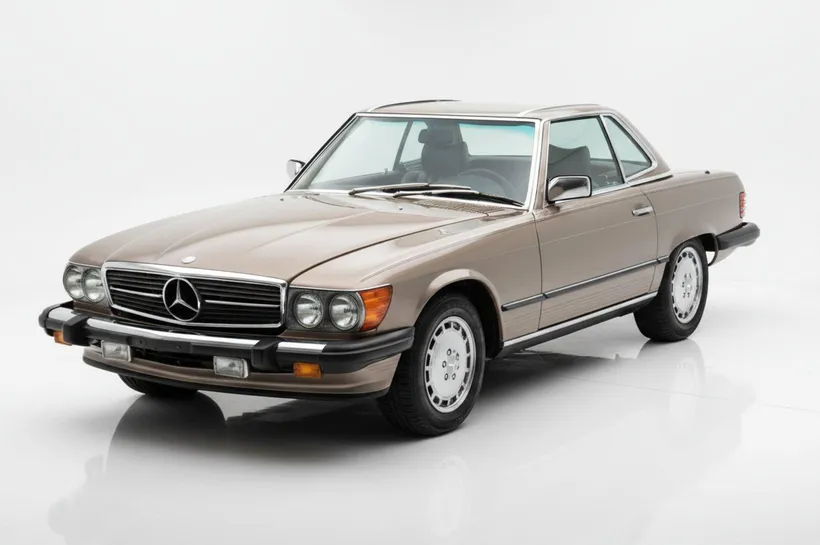
The Mercedes-Benz 560SEC is the flagship coupe of the W126 S-Class generation — the C126, in factory code — and for many buyers it is the definitive Mercedes coupe of the modern-classic era. It takes everything that made the W126 sedan the benchmark luxury car of the 1980s — the safety-cell body, the vault-like build, the long-legged V8, the sense that every control was engineered rather than styled — and wraps it in a pillarless two-door body drawn under Bruno Sacco that has aged better than almost any car of its decade. If the sedan was the chairman's car, the SEC was the chairman's own car: bought to drive, not to be driven in.
The coupe line itself arrived first. Mercedes showed the 380SEC and 500SEC at Frankfurt in September 1981, a year after the W126 sedans, replacing the SLC (C107) with a true S-Class coupe: shorter wheelbase than the sedan, no B-pillar, all four side windows winding fully away, and a wider, lower grille carrying the star in its centre rather than on the bonnet. The design brief was restraint. Sacco's team gave the car clean flanks, a formal roofline that still left real headroom in the back, and detailing — the ribbed lower cladding, the flush glass, the deep bumpers on European cars — that looked expensive because it was. A new 560SEC cost more than most houses in much of America when it was current, and in the United States it was for several years the most expensive Mercedes you could buy.
The 560SEC itself was announced at Frankfurt in September 1985 as the head of a revised, second-series C126 range, reaching the United States for the 1986 model year and running to the end of W126 production in 1991. The change was more than a bigger badge. The 5.5-litre M117 V8 gave the coupe the torque its weight had always wanted, standard equipment rose to a level the earlier cars had offered only as options — anti-lock brakes, a driver's airbag in the US, automatic climate control, power seats with memory, and self-levelling rear suspension among them — and a series of detail revisions, from smoother lower cladding to revised seats, made the late cars feel a generation more modern than a 1982 380SEC, even though the shell is fundamentally the same.
That position at the top of the range is the key to understanding the car today. The 560SEC was not a sports coupe and was never sold as one. Mercedes had the SL for that, and AMG — then still an independent tuner, which is why the wide-body cars discussed later in this guide are conversions, not factory models — for outright speed. The SEC's job was to cover ground: quietly, at very high average speeds, with four adults and their luggage, for a decade or more without loosening, rattling or dating. Judged on that job it succeeded completely, which is why good ones still feel modern in the ways that matter — refinement, visibility, seat comfort, braking — and old only in the ways that charm: key-turn starting, vacuum-operated locks, and an automatic that prefers to pull away in second gear.
The production total tells you how exclusive it remained. Across a ten-year run Mercedes built 74,060 C126 coupes in all versions, of which the 560SEC accounts for roughly 28,900 cars — the single most numerous SEC variant, but still a small number beside the 818,000-plus W126 sedans. North America took a large share of 560SEC production, which is why the market here is deep by flagship-coupe standards: cars turn up in every condition from preserved, garaged, two-owner examples with full dealer history to tired, multi-owner cars that have been run on a budget for twenty years. The small pool currently recorded on this site makes the point about how thin any single snapshot is — just 4 cars in total, 3 listed for sale and 1 recorded sold, all of them C126 cars, spanning only 1988 and 1990 in that sample of 4 — so treat any one week's listings as a glimpse, not the market. The full market, over a season, offers real choice. Use it. With this car, patience is worth more than any single option code.
The ownership history of most survivors follows a familiar arc, and reading it correctly is half of buying well. The first owner maintained the car at the dealer because the warranty and the car's cost demanded it. The second owner, who bought it at five to eight years old for half the money, usually maintained it properly too. The danger years came when values bottomed in the 2000s and early 2010s: a car worth modest money with flagship running costs invites deferral, and the 560SEC has several systems — timing-chain guides, climate-control vacuum actuators, self-levelling suspension spheres — where deferral compounds silently and then presents as one large bill. Values have since recovered enough that conscientious owners are spending again, but the fleet is bifurcated: cars that were kept up through the cheap years, and cars that were not. There is very little middle ground, and the price difference between the two groups is smaller than the cost of converting one into the other. That single fact shapes everything that follows in this guide.

The models
Every C126 is a two-door, four-seat, pillarless coupe on the W126 platform, with a V8 and an automatic gearbox — there was no manual 560SEC, no diesel, no six-cylinder SEC in this generation, and no convertible from the factory. Within that fixed recipe, the range evolved in two series and several engine sizes, and the 560SEC sits at the end of both progressions. Understanding where it sits means understanding what it replaced, because 380SEC and 500SEC cars share the same shell, much of the same trim, and a great deal of the same buying advice — and because sellers occasionally blur the badges.
| Model | Years | Engine | Output | Built | Character |
|---|---|---|---|---|---|
| 380SEC | 1981–1985 | 3.8 V8 (M116) | 204 hp (Euro); ~155 hp (US) | 11,267 | The entry coupe; lighter, slower, early cars have single-row timing chain |
| 420SEC | 1985–1991 | 4.2 V8 (M117) | 231 hp (Euro KAT); 218 hp (US years n/a — not sold in US) | 3,680 | Europe-only middle car; rare, largely irrelevant to the US market |
| 500SEC | 1981–1991 | 5.0 V8 (M117) | 231–252 hp (Euro); ~184–201 hp (US, varies by year) | 30,184 | The original flagship; long run, wide specification spread |
| 560SEC (US) | 1986–1991 | 5.5 V8 (M117) | 238 hp | Part of 28,929 total 560SEC | The US flagship; full equipment, emissions-spec engine |
| 560SEC (Euro ECE) | 1985–1987 | 5.5 V8 (M117) | 300 hp | Part of 28,929 total 560SEC | The high-compression car; the performance pinnacle of the standard range |
| 560SEC (Euro RUF/KAT) | 1987–1991 | 5.5 V8 (M117) | 279 hp (RUF); 242 hp (KAT) | Part of 28,929 total 560SEC | Catalyst-era European cars; RUF is the one to seek, KAT closest to US spec |
| AMG 560SEC 6.0 | 1986–1991 (conversions) | 6.0 V8 (M117-based, AMG) | ~331 hp (32-valve) | Very small numbers, no factory total | Independent AMG conversion incl. wide-body; provenance is everything |
(Outputs are period figures: European cars in DIN hp, US cars in SAE net hp, which is why the same basic engine appears to lose so much crossing the Atlantic — some of the gap is measurement, most of it is compression, cam timing, exhaust and emissions tuning, covered in the engines section. Production totals are the factory C126 figures by model; Mercedes did not publish a clean US/Euro split for the 560SEC total, so this guide does not invent one.)
Series 1 and Series 2. The coupe range divides at September 1985. Series 1 cars (1981–85) are the 380SEC and the early 500SEC: ribbed lower-body cladding in a contrasting tone, earlier seat designs, 14- or early 15-inch wheels, and — on US cars — the most intrusive federal bumpers and sealed-beam headlamps of the run. Series 2 cars (1985–91), which include every 560SEC, brought smoother cladding largely in body colour, revised seats and door trims, improved rust protection, updated climate control and, progressively, more standard safety equipment. Within Series 2 there is a further, smaller step for the 1988 model year onward — revised interior details, updated seat-belt presenters and minor equipment changes — and the last cars, 1990–91, are generally the most completely equipped and the best protected against corrosion. In the tiny current sample on this site — 4 cars — the years present are 1990 (3 cars) and 1988 (1 car), all automatic, which happens to match where most US buyers shop: the late cars.
The 380SEC and 500SEC, briefly. The 380SEC is a pleasant, lighter-feeling car whose US version is hampered by emissions tuning and whose earliest engines carry the single-row timing chain that must have been converted to double-row by now — verify it, in writing, on any early 380. The 500SEC is the connoisseur's alternative: in European high-output form it is nearly as quick as a US 560SEC, it ran for the whole decade so specification varies enormously, and the best Series 2 500SECs overlap the 560 in feel while usually costing less. Neither is a substitute if you have decided you want the flagship — the 560's extra torque, standard equipment and stronger resale are real — but a superb 500SEC is a better buy than a tired 560SEC at the same money, a comparison this guide returns to in the final section.
Euro versus US 560SEC. This is the model's defining split, and it is larger than on most Mercedes of the era. A US 560SEC was built for US rules from the first bolt: 5 mph bumpers that extend the car and change its proportions, sealed-beam or US-spec composite headlamps (depending on year) with wipers deleted or altered on some years, side-marker lights, a low-compression catalyst engine rated at 238 hp, and gearing and a speedometer set for US limits. A European 560SEC wears slim bumpers that tuck close to the body, large glass headlamps with vacuum height adjustment, no side markers, and — in the first two years — the 300 hp ECE engine with 10:1 compression, no catalyst, freer exhaust manifolds (the desirable tri-Y headers on ECE cars) and performance to match: the ECE car is a genuinely fast coupe by 1980s standards, where the US car is a very brisk one. From 1987 Europe itself split: the RUF version, without catalyst but with the preparation to retrofit one, kept 279 hp; the KAT version, with catalyst and lower compression, made 242 hp — close to the US car in output, though still in the slimmer European body.
Grey-market European cars reached the US in numbers during the 1980s, federalised to varying standards, and they still surface. A properly documented ECE 560SEC, legally imported and well federalised (or correctly returned to European lamps and bumpers where state rules allow), is the most desirable standard 560SEC there is. An undocumented one is a title, emissions and insurance problem wearing a desirable engine. The data card and the VIN settle what a car is: US 560SECs carry a US-market VIN format and the option codes for US equipment, while a European car's build card shows its original delivery market and engine version. Never pay an ECE premium for a badge, a seller's story, or a set of European headlamps bolted onto a US car — the engine number and compression tell the truth, and the paperwork must agree. Equally, do not dismiss a KAT or US car for not being an ECE: condition-for-condition, the catalyst cars are sweeter at low speed, run happily on US premium fuel, and pass emissions testing without drama, which an ECE car in a testing state may not.
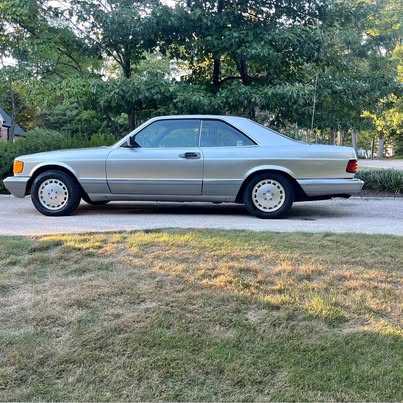
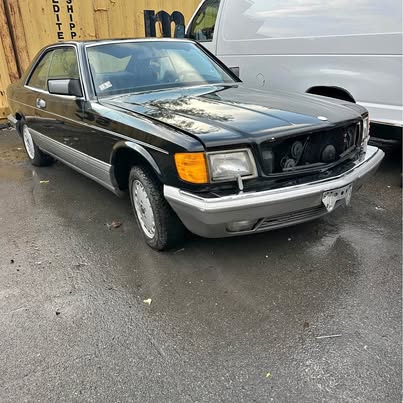
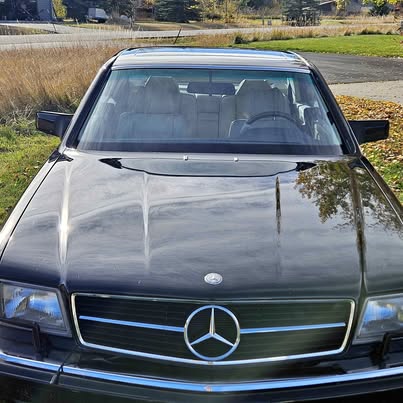
Colours, trim and options. The palette was sober: Black and Silver both appear in this site's current sample of 4 cars (Black on 2 cars, Silver on 1, the fourth car's colour unrecorded), alongside the period staples of white, dark blue, anthracite grey, smoke silver and the occasional burgundy or green. Interiors are leather in US cars — black, grey, palomino, cream beige and blue being the common colours — over burl walnut (US standard) or zebrano wood. The option list that matters today is short: an electric sunroof (nearly universal in the US), heated and orthopaedic seats on some cars, a limited-slip differential (standard on US 560SECs in most years — confirm on the data card), and the rare rear-seat and touring options that add interest rather than value. Aftermarket wheels, body kits and audio installations subtract value unless they are documented period AMG or Lorinser work, fully reversible, with the original parts included.
Engines and gearboxes
The M117 5.5: one engine, three tempers
Every 560SEC carries the same basic engine: the M117, Mercedes' all-alloy V8 — aluminium block and heads, single overhead camshaft per bank driven by a double-row timing chain, two valves per cylinder, and Bosch KE-Jetronic fuel injection with electronic ignition. In 5.5-litre form (engine code M117.968 in the 560SEC) it displaces 5,547 cc from a 96.5 mm bore and 94.8 mm stroke. It is not a highly stressed engine in any standard tune — even the 300 hp European version makes only about 54 hp per litre — and that understressing is the foundation of its reputation: a maintained M117 routinely passes 200,000 miles without internal work, and the bottom end — crankshaft, bearings, pistons — is rarely what ends one of these engines. What ends them, when they die early, is almost always the timing drive or oil starvation at the top end, both covered in the problem-areas section, and both preventable.
The three tempers matter when you are comparing cars, because they drive differently and they are priced differently.
The US engine (238 hp, 287 lb-ft). Built to meet US emissions rules with a three-way catalyst and air injection in its earlier years, running 9:1 compression and cam timing chosen for cleanliness and low-speed torque. On the road it feels exactly as the figures suggest: immense, quiet urge from idle to about 4,500 rpm, with no reward for revving beyond that. It runs happily on premium unleaded, returns fuel consumption in the mid-teens in mixed use and the high teens on a highway cruise, and passes emissions testing in standard tune — a practical virtue that should not be underestimated in states that still test cars of this age.
The ECE engine (300 hp, about 336 lb-ft, 1985–87). The engine Mercedes built when nobody was watching: 10:1 compression, hotter cams, no catalyst, and the free-flowing tri-Y exhaust manifolds that US cars never received. It transforms the car — stronger everywhere, keener to rev, and with a harder exhaust note — and it is the reason European-spec cars carry their premium. The costs are real: it wants the best fuel you can buy, it will not pass a US tailpipe test without the federalisation equipment many cars had fitted (and some have since lost), and its specific parts — pistons, cams, manifolds — are scarcer and dearer. Verify it by engine number and data card, never by claim.
The catalyst-era European engines (from 1987). The RUF engine (279 hp) kept most of the ECE character with catalyst preparation and slightly softened tuning; the KAT engine (242 hp, 9:1-class compression with catalyst) is effectively the European twin of the US specification in the slimmer body. Both are fine engines. The buying mistake is paying ECE money for either, which happens when sellers describe any European-delivery car as "the 300 hp version." Model year alone nearly settles it — a 1989 European car cannot be a factory ECE — and the data card settles it completely.
How a healthy one behaves. Cold, a 560SEC should start after a brief crank, settle quickly to a smooth idle once the warm-up enrichment fades, and show no smoke beyond a faint puff after a long stand. Hot, it should idle almost silently at about 600–700 rpm in Drive, pull cleanly and strongly through the gears, and hold temperature just above the middle of the gauge in traffic with the auxiliary fan cutting in as needed. Oil pressure is the M117's health gauge: expect the needle at or near the top of the 3-bar gauge at driving speeds, and at least 1 bar at a hot idle in gear — a needle that sits low at speed, or flickers at idle, is a worn engine or a failing sender, and only a mechanical gauge test distinguishes them. Any top-end ticking that does not fade as the engine warms, any rattle from the front of the engine in the first seconds after starting, and any blue smoke on a trailing throttle after a long downhill are all priced in the problem-areas section; note them, do not wave them away as "they all do that." They do not.
KE-Jetronic and ignition. The fuel system is Bosch KE-Jetronic (CIS-E): a continuous mechanical injection system with electronic trim, governed by an ECU reading coolant temperature, throttle position, airflow and (on catalyst cars) an oxygen sensor. It is robust, well understood by Mercedes specialists, and misdiagnosed constantly. The failure pattern to learn is the distinction between the mechanical core — fuel distributor, injectors, warm-up regulator functions now handled electronically — which wears slowly and predictably, and the electronic trim — the electro-hydraulic actuator (EHA) on the distributor, the idle-control valve, the coolant-temperature sensor, the over-voltage protection relay — which fails suddenly and cheaply by comparison. A car that idles at 1,200 rpm hot, hunts, or stalls at junctions is usually an idle-valve, vacuum-leak or sensor problem, not a fuel-distributor problem, and the order in which a seller's invoices attacked those systems tells you whether their mechanic knew the car. Fuel pressure and system-pressure tests come before parts on this system, exactly as fuel pressure came first on the older D-Jetronic cars: half the "injection faults" on a 560SEC are a tired fuel pump, a clogged filter, or a failing accumulator letting pressure bleed away — the accumulator being the classic cause of the hot-restart complaint, where the car restarts perfectly cold and after five minutes, but cranks endlessly after a twenty-minute heat soak. Budget roughly $400–900 for pumps, filter and accumulator as a set, fitted, against $1,200–2,000 for a rebuilt fuel distributor you may not need.
Gearboxes: the 722.3 four-speed automatic
There is one gearbox: Mercedes' own 722.3 four-speed automatic with torque converter (type W4A 040 in this application), and in this site's current sample of 4 cars every recorded car is automatic — 3 recorded simply as "Automatic" and 1 described in full as a four-speed automatic — because there was no alternative. It is a strong, long-lived box that suits the engine perfectly, with two period behaviours every first-time driver misreads. First, a US 560SEC pulls away in second gear in normal driving; first engages only on a full-throttle or kickdown start, or when you select it — so a "missing" first gear at gentle throttle is correct behaviour, not slip. Second, the shifts are meant to be firm, particularly the 2–3 change when cold; a Mercedes shift of this era is a distinct event, not the slurred change of a contemporary American automatic.
What is not correct: flaring (revs rising between gears), a long delay engaging Drive or Reverse from Park, shuddering on take-up, or hunting between third and fourth at a steady cruise. The common causes, in ascending order of cost, are old fluid and a clogged filter (a fluid-and-filter service runs roughly $250–450 and should be the first step on any new purchase, whatever the history claims), a failed vacuum modulator or its vacuum line (harsh or soft shifts everywhere, and a modulator diaphragm that leaks will also draw transmission fluid into the intake — white smoke and a mysteriously falling gearbox oil level are the tells), worn valve-body components, and finally internal wear requiring a rebuild, realistically $3,500–6,000 at a specialist with the box removed and refitted. Modulator pressure and stall tests let a specialist grade a box in an hour; on any car with a shift complaint, that hour is worth more than a long test drive. Kickdown must work — the switch lives under the accelerator pedal and the cable adjustment matters — because a car that never kicks down feels twenty horsepower down and tempts sellers into engine diagnoses the car does not need.
The rear axle is a conventional Mercedes independent rear suspension with a limited-slip differential on most US 560SECs. Its propshaft centre bearing and flexible couplings ("flex discs") are service items: driveline shunt or highway vibration is usually a $300–700 job, not an axle rebuild. Differential whine at a steady 50–60 mph, by contrast, is wear, and a rebuilt exchange unit fitted runs into four figures — listen for it on every test drive, windows up, radio off.
Problem areas
The 560SEC divides cleanly into the problems that cost hundreds, the problems that cost thousands, and the one problem — structural rust in the wrong place — that can cost the car. Work through this section in that order of consequence, not in the order sellers would prefer. Several known failure modes hide silently until they become expensive, which is why documented prevention — not low mileage, not shiny paint — is what you are buying.
The engine's timing drive and top end
Timing-chain guides. This is the 560SEC's signature mechanical risk, and it is an age failure, not a mileage failure. The M117's double-row chain itself stretches slowly and rarely breaks; what breaks is the set of plastic guide rails it runs against, above all the upper rails in the cylinder heads, which become brittle with heat cycles and years. A rail that cracks sheds a fragment, the chain jumps a tooth on a camshaft sprocket, and on an interference engine the bill escalates from a guide job to bent valves in one start. The prevention is cheap relative to the consequence: rails, tensioner and chain inspection — many specialists replace the chain, rails and tensioner together — runs roughly $1,500–3,000 fitted, and the prudent interval is every 100,000 miles or, on age alone, if there is no invoice proving it has ever been done, assume it has not and price it in on any car you buy. The warning signs are a brief rattle from the front of the engine on a cold start that fades as oil pressure reaches the tensioner, and visible wear or discolouration of the rails seen through the oil-filler opening with a torch — a rail that looks dark amber and scored is tired; one that looks pale and smooth is not new either, because new rails are nearly white. Ask for the invoice. "Done recently" without paperwork is not done.
Cam oiler tubes. Each camshaft is fed oil through a tube running above it, connected by small plastic fittings that, with age, do exactly what the chain guides do: embrittle and pop off. The result is a cam lobe starved of oil while the rest of the engine shows perfect pressure on the gauge — the failure is silent until the lobe and its rocker (follower) are scored, announced by a rhythmic ticking from one valve cover that rises with revs. The fittings cost almost nothing; the kit of tubes and connectors is well under $100 in parts. The labour to inspect them — valve covers off — is the same labour as a valve-cover gasket job, roughly $400–800 fitted with gaskets, and any sensible owner combines the two. A car with a documented oiler-tube refresh and quiet top end has had an owner who knew the model; a car with an unexplained tick has a $1,000-plus question over it if a camshaft is already damaged (cam plus followers, fitted, runs roughly $1,200–2,500 a side).
The rest of the engine. Valve-stem seals harden with age and give the classic puff of blue smoke on start-up after standing and on the overrun — an $800–1,500 top-end job, annoying rather than serious. Hydraulic lifters tick when worn or when oil changes have been stretched; fresh oil of the correct grade cures borderline cases. Engine mounts collapse with age — the V8 sits low and vibration reaches the cabin — at roughly $400–800 a pair fitted. Oil leaks concentrate at the valve covers, front crank seal and weep points; a dry M117 is a maintained M117, and a filthy one is telling you about its last decade.
Rust: the map
A 560SEC rusts far less readily than a W108 or W114, and galvanising and cavity protection on Series 2 cars were genuinely effective — but the youngest car is now well past thirty, and rust, where it comes, comes in specific, checkable places. Assume nothing; inspect all of them.
The rear window frame. The coupe's signature rust trap, and the first place to look. The rear screen sits in a frame whose lower corners and the parcel-shelf panel beneath it collect water that enters past a perished rear-window seal, and the rot works outward from inside the structure: the visible symptom — paint bubbling at the lower corners of the rear glass, or rust staining below the screen inside the trunk — is late evidence of a longer process. Press firmly along the frame, look inside the trunk at the shelf beneath the window, and check for water staining on the parcel shelf trim inside the cabin. Repair means screen out, metal cut out and welded, and paint: roughly $1,500–4,000 depending on how far it has travelled, and a car needing it also needs the seal and a careful check of everywhere else the water went. A car with bubbling at both rear corners and a damp trunk is not a cheap car; it is a welding project with a nice interior.
The bulkhead (firewall). The second structural trap, shared with the W126 sedan. Water and debris collect in the plenum at the base of the windshield, drain holes block, and the bulkhead corrodes — worst around the area behind the battery and the corresponding panel on the opposite side, and along the seams where the inner wings meet the bulkhead. From the engine bay, look behind and below the battery tray for staining, lifted paint and perforation; from inside, wet front carpets and a damp smell after rain are the downstream evidence, and bulkhead rot is the upstream cause buyers miss while pricing a set of carpets. Structural bulkhead repair is dashboard-and-engine-bay-deep work, priced per car and easily into five figures done properly — which is why this check, with a torch, ranks ahead of almost everything else on the inspection list.
The rest of the shell. Jacking points and the sill sections around them (prod them; the coupe uses the same sill-jack sockets as the sedan, and a socket surround that flexes or crunches is rotten), front wheel-arch lips and the lower rear quarters behind the rear wheels, door bottoms where drain holes block, the trunk floor and spare-wheel well (fed by the rear-window seal above and the trunk seal itself), the battery tray, and the front subframe and its mounting areas. Wheel-arch and lower-quarter repairs are panel work in the $800–2,500-a-side range fitted and painted; sill and jacking-point work is structural and costs more. Factory underseal on a C126 presents as a consistent, aged coating; a fresh, uniform black coat applied over seams, suspension and fasteners the week before a sale is a cover-up until proved otherwise — the same rule as on the older cars, and just as reliable.
Climate control, vacuum systems and the presenters
Automatic climate control (ACC). US 560SECs carry Mercedes' push-button automatic climate control, a system that blends vacuum-operated air flaps, an electronic control unit and a coolant monovalve to hold a set temperature. It works beautifully when it works, and its failures are systematic, not random. The vacuum actuators (pods) that move the flaps — for the centre vent, defrost, legroom and recirculation — have rubber diaphragms that perish with age; a failed pod gives air from the wrong vents, a centre vent that never opens (the single most common ACC complaint on the car), or a system that changes airflow with engine load as vacuum leaks away. The pods themselves are cheap — tens of dollars each — but several live behind the dashboard, and a full pod refresh is a dashboard-out job in the $1,500–3,000 range fitted. Test every vent position and every temperature extreme on a viewing, because a system blowing only at the screen and footwells is telling you its pods have gone. The monovalve, which pulses coolant to the heater core, fails in the opposite direction: a torn diaphragm or failed solenoid gives full heat at all settings or heat that arrives uninvited at speed — a $100–250 part, accessible in the engine bay, and a satisfying first fix. The push-button control unit itself suffers dry solder joints with age; rebuilt exchange units are available, and erratic, intermittent ACC behaviour that changes when you press the unit is the classic symptom. Air conditioning proper — compressor, condenser, receiver-drier — is conventional; many cars have been converted from R12 to R134a, which is fine if documented and done with the correct oil and drier, and a system that merely "needs a charge" needs a leak found and fixed, in the $600–1,800 range depending on which component has failed.
Vacuum everywhere else. Central locking, headlamp adjustment on European cars, seat-back locking on the coupe (the front seat backs lock when the doors close, released by vacuum and by the buttons on the seat sides — a safety item, so check the backs actually lock and release), and the engine's own economy gauge all run on vacuum from a pump and a reservoir of lines and check valves. A hissing car, locks that work on three doors out of four, or seat backs that will not stay locked are vacuum-leak symptoms: tedious to trace, cheap in parts, and diagnostic gold, because a car whose vacuum system has been maintained is a car whose owner fixed small things.
Seat-belt presenters. The coupe's party piece: with no B-pillar, the front belts mount far behind the seats, so when you close the door and turn the key, a motorised arm extends from the rear side panel and hands you the belt. The presenters fail by gear wear (the small drive gears crack), by microswitch and control faults, and by simple age — symptoms are an arm that extends and grinds, extends halfway, or never appears. Gears and motors are available, a presenter repair runs roughly $300–800 a side depending on cause, and both sides should work on any car presented as fully sorted: it is the first feature a passenger notices, and the one whose failure most reliably signals deferred attention to the small things. Extend and retract each presenter several times on a viewing; a presenter that works once and stalls is failing, not fickle.
Suspension, steering and brakes
Self-levelling rear suspension. US 560SECs carry hydropneumatic self-levelling at the rear: hydraulic struts in place of conventional dampers, fed by an engine-driven pump through a levelling valve, with nitrogen-filled accumulator spheres providing the springing compliance. The system's job is to hold ride height regardless of load, and its test is the one from the older cars, updated: load the trunk heavily, drive around the block, and a live system pumps the car back to level; leave it overnight and it should not sink. Failure modes are the spheres (their internal membranes fail with age, giving a rock-hard rear ride with no compliance — the car crashes over bumps at the back while the front rides normally), leaking struts, a worn levelling valve, and low or contaminated hydraulic fluid in the dedicated reservoir (it uses a specific hydraulic oil, not ATF or brake fluid — the wrong fluid in the reservoir is an owner's-knowledge test in itself). Spheres are roughly $150–300 each in parts; a full refresh of spheres, fluid and lines runs $800–1,800 fitted; leaking rear struts are the expensive line, at $600–1,200 a side for rebuilt or new units plus fitting. Some owners delete the system and fit conventional springs and dampers; the conversion works after a fashion but gives up the levelling the car was designed around, usually sits wrong, and should be priced as a deduction, not an upgrade — originality and ride quality both say keep it and fix it.
Front suspension and steering. Conventional Mercedes practice: double wishbones, coil springs, an anti-roll bar, and recirculating-ball power steering. Wear concentrates in ball joints, tie-rod and drag-link joints, the idler bush, and the steering box itself, which develops play at centre that adjustment only partly cures — a rebuilt box runs $600–1,200 exchange plus fitting. Subframe and engine mounts perish together and make the front end feel vague. A full front-end refresh with alignment runs $1,500–3,500 and transforms a tired car: judge by the test drive, where a good SEC tracks straight, centres itself, and answers small inputs at once.
Brakes. Discs all round, ABS standard on the 560SEC in the US. The system is strong and parts are cheap; the costs are the usual recommissioning costs of a heavy car that has sat — seized calipers, perished hoses, a tired master cylinder — at $800–2,000 for a full hydraulic refresh. ABS faults are usually wheel sensors or wiring; an ABS lamp that never lights at start-up has often been disconnected rather than repaired, so watch it prove itself on the key turn, then go out.
Interior, electrics and trim
The cabin is built to a standard no modern car matches, and most of it lasts — which makes the failures specific. Leather cracks on the driver's bolster first; the seat pads beneath (foam on these cars, not the horsehair of the older generation) collapse on the driver's cushion, and the spring frame beneath that can crack — a re-pad and local repair runs $400–900 a seat, a professional leather retrim of the front pair $2,500–5,000, and a full interior much more, so a sound original interior is worth a real premium. Memory-seat and mirror electronics fail at switches and control units under the seats; window regulators wear (the coupe's large, frameless door glass is heavy, and a slow or tilting window is a regulator announcing itself — $400–800 a side fitted); sunroof cables and seals need service, and a sunroof that tilts but will not slide, or vice versa, is a cable-and-guide job in the $600–1,200 range. Burl walnut veneer cracks and lifts at the console first, where heat and sun concentrate; refinishing the full set is $1,000–2,500. The instrument cluster's odometer gears crumble with age — an odometer that has stopped while the speedometer works is common, cheap in parts ($30–60 for gear sets) and an hour or two of labour, but it poisons the mileage record from that point on, so reconcile any odometer failure against the history file before you believe any mileage claim on that car. Cruise control fails at its amplifier (rebuilt units available); the Becker radios are routinely replaced, which matters only to originality judging. Outside, the aluminium and chrome trim, the large coupe door seals (expensive — a full door seal set runs into hundreds per side, and wind noise at speed is usually perished seals, not adjustment), and the rear side glass seals all age in the sun. None of it is fatal. All of it is priced, item by item, against the car in front of you.

How to inspect one
Allow ninety minutes, bring a torch, a cloth-wrapped magnet, a tyre-pressure gauge and a friend to work the controls while you watch the car. Insist on a cold engine and, if the car passes you, pay for a lift inspection and a compression or at least a vacuum and oil-pressure check at a Mercedes specialist before money changes hands — on a 560SEC that inspection is buying information about five-figure systems for three-figure money.
- Paperwork and identity first. Match the VIN on the title to the plate and stampings on the car, and get the data card (or its decode) for the car: engine version, delivery market, colour, trim and options as built. The engine number must agree with the story — above all on any car claimed to be a European high-output version, where the premium rides on the engine, not the badge. Reconcile the mileage against invoices and inspection records, and note any gap that coincides with an odometer-gear failure.
- Cold start. From stone cold, the car should start promptly, idle smoothly once enrichment fades, and show no rattle from the front of the engine beyond a momentary hush as the chain tensioner takes up — a rattle that lasts seconds, or returns on a hot restart, is the timing-drive warning from the problem-areas section. Watch the exhaust: a puff after standing is stem seals; sustained blue smoke is not.
- Oil, fluids and the filler-cap view. Check engine oil level and condition, then shine a torch through the oil-filler opening at the visible chain guide rail: pale and smooth is healthy, dark amber and scored is a bill coming. Check the self-levelling reservoir — correct fluid, correct level — the power-steering fluid, the brake fluid, and the coolant for oil contamination or rust colour. A car whose fluids are all fresh, correct and at level has been kept by someone who knew it.
- The rear window frame and the trunk. Press along the lower rear-screen frame, look for bubbling at the corners, then lift the trunk mat and spare and inspect the shelf beneath the rear window from inside the trunk, the wheel well and the floor corners. Water staining here is the rear-window trap announcing itself; price the welding, not the seal.
- The bulkhead. Torch behind and below the battery (lift the battery if the seller allows), along the plenum at the windshield base, and down both bulkhead seams. Perforation here ends the inspection for most buyers — this is the structural repair that exceeds the value of all but the best cars. Check the front carpets for damp while you are thinking about water.
- Sills, jacking points and underside. Prod all four jacking-point surrounds and along both sills; run the magnet over arch lips, lower quarters and door bottoms. Read the underseal as you go — aged and patchy is honest, fresh and uniform over everything is a question. On the lift, add subframe mounts, flex discs, exhaust condition and any hydraulic leaks from the rear struts.
- Climate control, exhaustively. Engine warm, work the ACC through every vent position and from full cold to full heat. Air must arrive where the buttons say, the centre vent must open, and full cold must actually be cold if the air conditioning is claimed to work. Heat that cannot be turned off points at the monovalve; screen-and-feet-only airflow points at the vacuum pods, and the dashboard-out labour that follows them.
- Presenters, locks and seat backs. Close each door, turn the key, and take the belt from the presenter — several times each side. Work the central locking from both doors, lock and release both front seat backs (they must lock with the doors closed and release with the buttons), and run every window and the sunroof through full travel, watching the big door glass for tilt or hesitation.
- Suspension and stance. Stand back and sight the car level: the self-levelling rear should hold height evenly. Load the trunk with your friend and your luggage, drive around the block, and confirm it pumps back to level; bounce each rear corner — a rock-hard rear with no compliance is failed spheres, however well the car sits. Front vagueness, knocks or uneven tyre wear price a front-end refresh.
- The test drive. Twenty minutes, mixed roads, windows up and radio off for part of it. The automatic should pull away in second (correct), shift firmly, kick down on full throttle, and engage reverse without a long pause. Listen for differential whine at a steady 50–60 mph, feel for driveline shunt on take-up (flex discs), and brake firmly from speed — straight, quiet, no judder. The steering should centre itself and answer small inputs at once.
- Heat soak and hot restart. After the drive, park for fifteen to twenty minutes, then restart. Endless cranking hot, when the car starts perfectly cold, is the fuel-accumulator and pressure story from the engines section — a known, priced fix, and a useful negotiation point rather than a mystery. Let it idle hot and watch temperature and oil pressure: at least 1 bar at idle in gear, temperature stable with the auxiliary fan cycling.
- Interior last. Sit in all four seats, work the memory positions, check the driver's bolster and cushion against the passenger's, inspect the console wood where heat lifts it first, and confirm the odometer advances on the test drive while the speedometer works. A sound, original interior is the hardest part of this car to recreate, so weight it as heavily as the mechanics.
Values
The figures that matter for this model are computed from this site's own listings and recorded sales, and they sit below this guide — the listed-now summary and the market block are refreshed every time the site rebuilds, so use them rather than any number quoted elsewhere. What follows is how to read them, and it matters more than usual here, because the 560SEC's condition spread is the widest in the W126 world: the distance between a preserved, documented car and a tired one wearing the same badge is not a percentage, it is a multiple.
Three sub-markets share the name. At the top sit the exceptional cars — low mileage with continuous history, documented timing-drive and suspension work, original paint or a proper repaint, and, commanding the strongest premium of all, a verified European ECE car with its paperwork in order. In the middle sits the honest driver market: cars with real mileage, full or nearly full history, everything working, bought to use — this is where most transactions happen and where value for money lives. At the bottom sit the projects and the deferred-maintenance cars, priced temptingly until you add the timing guides, the climate pods, the spheres, the rear-window welding and the interior work they almost all need, at which point most of them cost more finished than the middle-market car cost bought. Read every listing against that structure, and be suspicious of any car priced in one band while described in the language of another.
Two cautions apply to the numbers below this guide. The current pool behind this site's snapshot is very small — 4 cars in total, 3 for sale and 1 recorded sold, drawn from Facebook (3 cars) and Bring a Trailer (1 car) in that sample of 4, located in North Carolina, Massachusetts and Montana (1 car each in the recorded states) — so medians from a sample that size move violently with a single listing, and the range and the individual cars matter more than any average. And asking prices on this model run ahead of achieved prices more than most: sellers price the badge and the memory of what the car cost new, while auctions, where documented and undocumented cars meet the same bidders on the same day, are the corrective. Where a car has auction history, weight it above any asking-price comparison.
Parts and ownership
The 560SEC is one of the best-supported flagship classics you can own. Mercedes-Benz Classic still supplies a wide range of parts for the W126, the car shares its mechanical core with the high-volume W126 sedan, and a mature specialist trade — Mercedes independents, KE-Jetronic and climate-control rebuilders, trim and wood refinishers — covers everything the factory no longer does.
Easy: service items, filters, belts and hoses, brake discs, pads, calipers and hydraulics, suspension wear parts, steering joints, water pumps, exhaust systems in standard form, glass and most seals, monovalves, vacuum pods, accumulator spheres and the small plastic parts — oiler-tube fittings, odometer gears, presenter gears — whose failure dominates the problem list. Most of it is order-today, fit-this-week, at prices that embarrass modern flagship owners.
Harder and dearer: timing-drive components are available but the labour is the cost; self-levelling rear struts (rebuilt units are the realistic route); ECE-specific engine parts — pistons, camshafts, tri-Y manifolds; the fuel distributor (rebuild, do not replace); push-button climate units (rebuilt exchange); coupe-specific trim, the large door seals, rear side glass and its seals, and crack-free burl walnut. A quality repaint on this large, trim-heavy coupe starts in five figures done properly, which is why the standing advice for this model is to buy paint, body and interior, and fix mechanics.
Running costs. Fuel in the mid-teens mpg, insurance in line with other classics of the value, and servicing any good Mercedes independent can handle — provided they know the W126, because the model's known traps (guides, oiler tubes, pods, spheres) are exactly what a generalist misses. The honest budget line is the first year: catching up deferred maintenance on a running car typically runs $3,000–6,000 before you improve anything, and a car fresh out of long storage needs the full recommissioning — fuel system cleaned end to end, brakes overhauled, spheres, fluids, tyres aged out regardless of tread — at $5,000–10,000 at shop rates. Thereafter a sorted 560SEC is a realistic regular-use classic, and many are used exactly that way.
Which one to buy
- The all-rounder: a US-specification 1990–91 car with full history. The most completely equipped, best corrosion-protected version, emissions-clean anywhere, and the deepest market to buy from and sell into. If you want one 560SEC to drive, this is it.
- The connoisseur's car: a documented European ECE (1985–87). The 300 hp engine in the slim-bumper body is the model's pinnacle — but only with the data card, engine number and legal import paperwork agreeing. Without them it is a risk, not a rarity.
- The value buy: a catalyst-era car — US or European KAT — with the big jobs invoiced. Timing guides done, pods done, spheres fresh: a car whose previous owner paid the model's known bills is worth more than a lower mileage car whose bills are all still yours.
- The alternative in the family: the best 500SEC you can find. If the budget will not stretch to a good 560SEC, a superb Series 2 500SEC at the same money beats a tired flagship on every measure except the badge.
- The one to walk away from: any car with bulkhead perforation or rear-window-frame rot at both corners and no other virtues. Either repair, done properly, can exceed the finished value of an ordinary car. Cheap 560SECs are the most expensive kind.
- Wide-body and AMG cars: buy provenance, not presence. A documented period AMG 6.0 conversion is a serious collector car; an undocumented wide-body is a modified 560SEC and should be priced as one, however it looks.
And the rule that overrides all of the above: buy documented maintenance and a sound shell, in the specification you can live with — never mileage, never paint, never a badge claim. On a 560SEC the invoices for the timing drive, the climate system and the rear suspension are worth more than 30,000 miles on the odometer, because those are the bills that decide whether the flagship you bought stays a pleasure or becomes a project.
See the 14 S-Class cars currently listed.
For sale now
 $21,250
 $40,000
What they sell for: S-Class sale prices.