
Mercedes-Benz R129 SL buyer's guide
Mercedes-Benz R129 SL -- the model's own buyer's guide: variants, values and what to check.
Years listed: 1994-1997 · Series: R129
# Mercedes-Benz SL320 (R129) — Buying Guide
Overview and history
The SL320 is the six-cylinder version of the R129 SL, the roadster Mercedes-Benz launched in 1989 to replace the long-lived R107 — and it is the thinking buyer's way into the car. Where the SL500 carries the M119 V8 and the SL600 the M120 V12, the SL320 runs the M104 3.2-litre straight six: an engine with less theatre, less weight over the front axle, lower running costs and, in the real world of thirty-year-old hydraulics and wiring, fewer expensive ways to ruin your month. Understand what the R129 is before you judge the badge. This is not a sports car. It is a 4,000-pound, Bruno Sacco-styled grand touring roadster engineered to the standard Mercedes set for itself in the late 1980s, when cost accounting still lost arguments to the engineering department. The shell is immensely stiff for an open car, the doors close with vault finality, and the standard equipment list — fully automatic soft top, detachable aluminium hardtop, automatic roll bar that deploys in a fraction of a second if the car senses a rollover, integral seats with the belts built in — was a generation ahead of anything else you could buy.
The SL320 arrived for the 1994 model year, replacing both earlier six-cylinder cars, the 300SL and the 300SL-24, with a single 3.2-litre model. It was sold in the United States through 1997; after that, America got only the V8 and V12 cars, while European buyers continued with a V6 SL320 that is a different engine in the same suit and outside the scope of this guide. Every SL320 on this site is an R129 — the pool behind this guide is four cars, all R129, spanning 1994 to 1997 — and the six-cylinder cars were always the minority of production next to the SL500, which is why you will look at more V8s than sixes while you shop.
Buy one for what it does well. The straight six is smooth in the specific way a long-stroke inline six is smooth, the ride is superb, the top mechanism remains a small miracle of electro-hydraulic choreography, and the car will cross a continent at 80 mph in near silence with the hardtop on. Buy one with your eyes open about the two era-specific traps — the biodegradable wiring fitted to the 1994–95 cars and the hydraulic top system fitted to all of them — because those two systems, more than the engine itself, decide whether a cheap SL320 is a bargain or a subscription.

The models
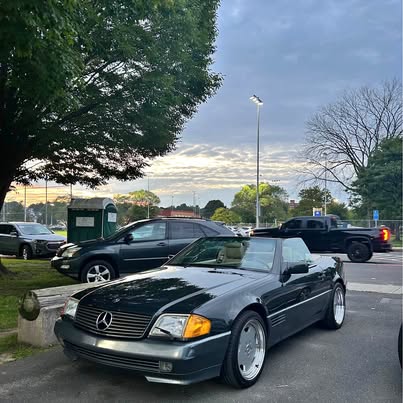
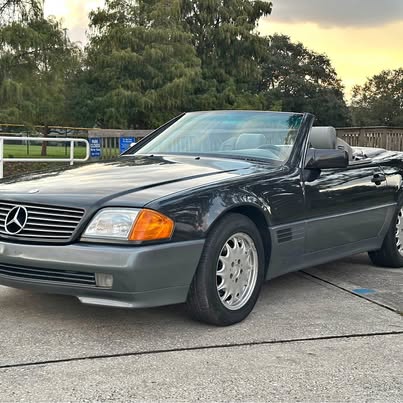
There is only one SL320, but it exists in two distinct forms, and the split matters more than the model years suggest. The dividing line is the R129 facelift of June 1995, which reached the US as the 1996 model year. Pre-facelift cars (1994–95) carry the original bumpers and two-tone side cladding, amber-fronted indicators and the 722.5 five-speed automatic. Facelift cars (1996–97) get body-coloured, more rounded bumpers and cladding, clear indicator lenses, redesigned wheels, a revised interior with different door panels and seat stitching, and — the change you will feel — the 722.6 electronically controlled five-speed automatic in place of the hydraulic 722.5. Xenon headlamps joined the options list on the later cars. The engine, the M104.991, is the same 3.2-litre 24-valve six throughout, with the same 228 hp in US tune.
One earlier car needs naming so you do not confuse it at a viewing: the 300SL-24 of 1990–93 uses the first-generation M104, a 3.0-litre with CIS-E mechanical-electronic injection and a distributor. It wears a 300SL badge, not SL320, and its engine bay looks different — a fuel distributor and airflow meter where the SL320 has a hot-film air-mass sensor and electronic injectors. Sellers occasionally describe any six-cylinder R129 as an SL320. The badge, the VIN and the engine number settle it, and the inspection section tells you where to look.
In Europe a five-speed manual gearbox was offered on the SL320; it is vanishingly rare and was never sold new in the United States, where the automatic was standard fit. Treat any US-market car advertised as a factory manual with suspicion until the data card proves it — and treat the phrase "5-speed" in a listing as meaning the five-speed automatic unless the seller shows you a clutch pedal, because that is what almost every listing means by it. The pool behind this guide reflects the reality: three cars listed as automatic and one listed simply as "5-Speed," with no manual car among them.
Colours follow the R129 palette of the day — the site's current pool alone spans green, black, grey and Quartz Blue Metallic — and colour is a matter of taste, not value, on the six-cylinder car. What does carry weight is specification that costs money to retrofit: a working hardtop with a sound headlining, the wind deflector, heated seats, and the optional ADS adaptive damping, which is rare on the SL320 and, as the problem sections explain, a mixed blessing at this age.
Standard equipment was generous in the way of a car that cost as much as a small house's deposit when new: automatic climate control, cruise control, electric seats with memory on the driver's side, the integral seat belts, a power aerial, alloy wheels and the full electro-hydraulic roof with its heated glass rear window in the hardtop and plastic window in the soft top. The options list is where you read a car's first owner: xenon lamps on facelift cars, the Bose sound system, a CD changer in the boot, orthopaedic seats, the luggage straps and storage boxes for the rear shelf, and the rare rear jump seats that turn the shelf into occasional seating for the very small. None of these changes the car's worth by much individually — the R129 market pays for condition and completeness, not option-count — but a car that arrives with its options working is, again, a car that has been maintained by someone who fixed things.
| model | years | engine | output | built | character |
|---|---|---|---|---|---|
| SL320 (pre-facelift) | 1994–1995 | M104.991 3,199 cc inline six, HFM injection | 228 hp, 232 lb-ft | not separately published | The original form: two-tone cladding, 722.5 automatic, and the wiring-harness years — buy on harness evidence |
| SL320 (facelift) | 1996–1997 | M104.991 3,199 cc inline six, HFM injection | 228 hp, 232 lb-ft | not separately published | Cleaner styling, 722.6 electronic automatic, out of the worst harness window; the easier ownership proposition |
Total R129 production across all engines ran to just over 200,000 cars between 1989 and 2001, with the SL500 taking the largest share; Mercedes has not published a clean separate total for the M104 SL320 in US specification, so any seller quoting you an exact build figure for the model is quoting folklore. Judge the individual car, not the claimed rarity.

Engines and gearboxes
The M104.991 six
Every SL320 carries the M104.991: 3,199 cc of inline six, four valves per cylinder, double overhead camshafts and an iron block with an aluminium head — the final and best-developed form of a Mercedes six-cylinder line that runs back through the M104's 3.0-litre ancestor to the M103. Output in US specification is 228 hp at 5,600 rpm with 232 lb-ft of torque at 3,750 rpm, figures that read modestly against the SL500's 315 hp until you put them in a 4,000-pound car whose mission is torque-fed cruising rather than drag strips. The six is some 200 pounds lighter than the V8 installation, most of it ahead of the front axle line, and you feel that in the way the SL320 turns in: still deliberate, still no sports car, but measurably less nose-led than the eight.
The details that matter at inspection are the management system and the top end. The M104.991 breathes through HFM engine management — HFM stands for hot-film air-mass metering — with sequential electronic fuel injection, a hot-film air-mass sensor in the intake tract, and variable timing on the intake camshaft, which advances under load in the mid-range to fatten the torque curve. Ignition is distributorless: three dual-output coils sit under the cam-cover trim and fire paired cylinders in wasted-spark fashion, feeding the plugs through short connector boots with suppression resistors in the ends. There is no distributor to wear, no rotor arm to track — but those resistor ends and the coils themselves are service items, and a single failed coil takes out two cylinders at once, which is why an M104 misfire so often presents as a six running on four.
The electronic throttle is the other defining feature. The SL320 has no direct cable connection in normal running: the pedal works a potentiometer, and an electronic throttle actuator (ETA) on the intake drives the throttle plate, with a cable retained only as a limp-home link. Cars with ASR traction control — most US cars — integrate the actuator with the traction system. This is why the wiring-harness problem in the next section reaches so deep on this model: the harness inside the ETA itself is made of the same era insulation as the main engine harness, and it fails the same way, presenting as limp mode, an ASR warning lamp and a car that will not rev past idle speed in any useful sense.
Mechanically the bottom end is close to unburstable in road use. The crank runs in seven main bearings, the timing drive is a duplex chain with a hydraulic tensioner, and there is no belt to change and no interval that strands you. The known wear points are concentrated at the top and the front: the head gasket's oil gallery at the rear of the head, the front timing-cover seal, the water pump, the belt tensioner and its damper, and the hydraulic tappets, which tick when the car has sat or when oil changes have been stretched. Oil consumption on a healthy M104 at this mileage is modest; a car using a quart every few hundred miles has bore or valve-guide wear that no additive will reverse.
What the six is not: the earlier M104 and the later V6
Two confusions to clear away. First, the M104.980 in the 300SL-24 is a related but different engine — 2,960 cc, CIS-E injection, a distributor, and a different character, peakier and less torquey. Nothing in this guide's engine advice about HFM sensors, coils or throttle actuators transfers to it. Second, the European SL320 from 1998 uses the M112 V6, a three-valve, twin-plug engine that shares nothing but the badge. If a car presented to you as an SL320 has a V6 under the bonnet, it is a later European-market car or an import, and it should be priced, checked and titled as exactly that.
Gearboxes: the 722.5 and the 722.6
Pre-facelift cars use the 722.5, a five-speed automatic whose first four ratios are hydraulically controlled in the long Mercedes tradition, with an electronically engaged overdrive fifth. It shifts with the deliberate, slightly elastic feel of its generation, kickdown is commanded by a cable and a switch under the pedal, and the box is fundamentally strong. Its service needs are unfashionable and simple: fluid and filter changes that many owners skipped because the era's guidance was vague, a vacuum modulator that ages and softens or harshens shifts, and bowden-cable adjustment that controls shift timing. A 722.5 that flares on the 2–3 shift or slams into reverse is usually tired fluid, a failed modulator or worn friction material in that order of cost — and the order matters, because the first two are cheap and the third is a rebuild.
Facelift cars use the 722.6, Mercedes' first electronically controlled five-speed, the box the rest of the industry came to know as the NAG1. A transmission control unit works solenoid valves on a conductor plate inside the sump, adaptive shift logic learns your driving, and a lock-up torque converter tightens the cruising feel considerably over the 722.5. It is the better gearbox to use and the more electronic one to own. Its signature failures are the conductor plate itself (speed sensors on the plate fail and the box drops into limp mode, stuck in second), the 13-pin electrical connector at the front of the box, whose seal leaks and wicks fluid up the harness toward the control unit, and lock-up clutch shudder at light throttle in top gear. Mercedes originally sold this transmission as sealed for life; it is not, and a car with documented fluid and filter services at sensible intervals is worth real preference over one without.
Living with the six: fuel, ignition and service rhythm
The HFM system is, the harness aside, reliable and diagnosable. Its wear items are the hot-film air-mass sensor, which drifts with age and contamination and shows itself as a flat spot, poor hot starting or fuel consumption that has quietly worsened — a genuine or OEM sensor is a $250–450 part and a ten-minute fit, which is exactly why pattern copies tempt people and disappoint them — and the oxygen sensors, which are ordinary service items. The fuel system runs at roughly 3 bar at the rail; a car that cranks long when hot is often losing residual pressure through a tired pump check valve or a weeping injector rather than lacking spark, and a pressure gauge on the rail distinguishes the two in minutes. Injectors themselves are durable and cleanable. Spark plugs are conventional copper or platinum items on a sensible interval, and the plug connectors under the cam cover — the resistor ends — crack with heat cycles and cause the single-cylinder misfire that owners chase through coils first; a set of connectors costs little and belongs in any misfire diagnosis before money is spent on coils. The coils themselves fail singly, and because each fires two cylinders, the failure pattern (two dead cylinders, often a paired combination) is the signature that separates a coil from a plug or connector fault with no test equipment beyond pulling leads. Keep the service rhythm simple and documented: oil and filter annually or every 7,500 miles regardless of the era's longer claims, coolant and brake fluid every two years, gearbox fluid and filter every 40,000–60,000 miles on either box, and plugs, air filter and belt inspection on the maker's schedule. An M104 serviced like that is a 300,000-mile engine; the ones that die young die of neglect wearing the disguise of age. On either box, check the fluid yourself on the test drive aftermath: dark, burnt-smelling fluid in a 722.6 that also shudders is a negotiation, not necessarily a walk-away — but a box already in limp mode is a diagnosis you are buying blind, and you should price it as a rebuild until a code read proves it is only a conductor plate, a $600–1,200 repair against $3,000–4,500 for a quality rebuild fitted.
Problem areas
The wiring harness: the SL320's defining fault
Between roughly 1993 and 1995 Mercedes fitted engine wiring harnesses whose insulation was formulated to biodegrade — and it does, inside the loom, where you cannot see it, whether the car is driven or stored. The SL320's first two years sit squarely in the window. The mechanism is simple and merciless: the insulation on individual wires inside the harness crumbles to powder and flakes, bare conductors touch, and the HFM control unit receives nonsense or shorts to ground. Symptoms wander — a hot-film sensor code that a new sensor does not cure, an idle that hunts only when hot, random ASR and check-engine lamps, a misfire that moves between cylinders, in the worst cases a no-start or a harness that has shorted hard enough to damage the control unit itself.
Do not let a seller diagnose this for you; test the harness physically. The accessible tell is at the connectors you can open: unplug the coolant-temperature sensor or an injector connector at the front of the engine, and gently flex and inspect the wires where they enter the plug and where the loom bends near the thermostat housing and along the cam cover. On a failed harness the insulation is cracked like old paint, flakes off on your fingers and shows bright copper. A good harness flexes with supple, intact insulation. Also lift the trim over the coils and look at the wiring to the coil connectors — same story. The second loom to interrogate is the one inside the electronic throttle actuator: you cannot open it at a viewing, but a car that drops into limp mode with an ASR lamp on a test drive, then recovers after a restart, is showing you classic ETA internal-wiring failure until proven otherwise.
The fix is replacement, not repair: a new engine harness runs roughly $900–1,600 for the part depending on source, with $500–900 of labour to fit, and a rebuilt ETA with modern wiring runs $600–1,000 exchanged. The good news is that the job only needs doing once, and a documented harness replacement with a dated invoice converts the car's biggest liability into a selling point. A 1994–95 car with no harness invoice and no visible deterioration at the connectors is a car whose harness has not failed yet — price the replacement into your offer rather than hoping to be the exception. Facelift cars are largely outside the window, but "largely" is doing work in that sentence: inspect a 1996–97 car's connectors the same way, because the tail of the bad production overlapped the facelift, and the ETA wiring deserves the same suspicion on any year.
The hydraulic roof, roll bar and locks
The R129's party piece is a fully automatic soft top operated by an electro-hydraulic system: a pump and fluid reservoir in the boot, a control unit taking signals from a constellation of microswitches, and a set of hydraulic cylinders — eleven or more depending on how you count the pairs — that unlatch the windscreen header, raise or lower the roof, work the tonneau cover, tension the rear bow and drive the roll bar. Every seal in every cylinder is now a quarter-century old, and the seals are the system's clock. They fail by leaking internally (the cylinder moves slowly or drifts) or externally (fluid weeps from the rod seal and runs down inside the trim).
The failure geography is predictable. The front header latch cylinders, above the windscreen, leak first and announce themselves with hydraulic fluid dripping onto the header trim, the sun visors or, memorably, the driver's head — any staining on the headlining at the front corners or a sweet-oily smell in the cabin is this leak until proven otherwise. The main lift cylinders and the tonneau cylinders follow. A top that starts its cycle and stalls halfway, that needs a helping hand, or that leaves the warning chime sounding is telling you a cylinder is bypassing internally or a microswitch has lost the plot — and the two causes are distinguished by whether the motion is weak everywhere (pump pressure or low fluid: check the reservoir level in the boot first, it costs nothing) or weak in one phase of the cycle only (the cylinder that works in that phase).
Budget honestly. Individual cylinders can be rebuilt by specialists with proper seals for roughly $75–150 per cylinder plus removal labour; a full set rebuilt in one visit, with the pump serviced and the fluid changed, typically lands between $1,500 and $3,000 — and doing them one at a time as each fails costs more in repeated labour and repeated trim removal. A car with a fully working top and dry header trim is worth a real premium over a car whose seller says the top "just needs a switch." The roll bar shares the hydraulics: it should rise and fall smoothly on the console switch, and it must never have deployed in anger — ask, and check for the cosmetic damage a deployment leaves around the bar's trim. The hardtop, by contrast, is purely mechanical latching onto the same front and rear locks: check its headlining for sagging, its rear window seal, and that the car comes with the hardtop stand or at least a plan for storing a large, awkward, easily damaged object.
The soft top itself is a wear item. The canvas lasts well but the plastic rear window clouds, cracks along its fold lines and eventually splits; a window can be sewn in for $400–700, a quality replacement top fitted runs $1,200–2,200. A top that has been left down for years takes a set, shrinks slightly and strains its seams on the first cycles — cycle it several times at the viewing, not once.
Engine: leaks, gaskets and cooling
The M104's signature mechanical fault is the head gasket's external oil leak. The gasket's sealing around an oil gallery at the rear of the head, on the exhaust side, hardens and weeps, and oil tracks down the back of the block and onto the bellhousing, where it is routinely misdiagnosed as a rear main seal leak. The distinction matters because the prices differ: shine a light down the back of the head from above, or feel for fresh oil on the ledge where head meets block at the rear corner. A weep that leaves a drip on the driveway but consumes no coolant and shows no oil-in-water emulsion is the classic M104 seep — many owners live with it for years; the cure, a head gasket job done properly with the head checked and the timing-cover seals renewed while access is free, runs $1,800–2,800 at a specialist. Walk away from the opposite presentation: mayonnaise under the oil filler cap combined with coolant loss and a pressurised cooling system on a cold engine means combustion gas is crossing the gasket, and that car needs the job now, at your price or the seller's.
The front of the engine leaks too, more cheaply. The U-shaped seal between the upper timing cover and the head weeps oil down the front of the block — a $300–600 reseal that is often bundled into other work. The water pump (weep hole staining, bearing rumble), the belt tensioner and its small shock absorber (belt chirp and visible flutter at idle), the idler pulley and the crankshaft front seal complete the usual list. None of these is catastrophic; together, neglected, they make a front-of-engine mess that hides the one leak you actually care about, so a steam-cleaned engine bay at a viewing is a reason to look harder, not to relax.
Cooling on the R129 is viscous-fan primary with electric auxiliary fans for the air conditioning and temperature emergencies. A viscous coupling that has failed lets the temperature climb in traffic while behaving perfectly at speed — test by sitting at idle, hot, with the air conditioning on, and watch the gauge: it should stabilise, with the auxiliary fans cutting in, not creep toward the red. The radiators are aluminium with plastic end tanks that age-crack at the hose necks. Hydraulic tappets that tick for the first seconds after a cold start are normal; a tappet that ticks for minutes points at stretched oil intervals or a failing non-return valve in the head, and persistent ticking plus low oil pressure at hot idle on the gauge is a combination to walk away from. Finally, engine mounts: the fluid-filled mounts collapse with age, the engine sits low and vibrates through the body at idle in Drive. A car that is glassy smooth in Neutral and buzzes in Drive with your foot on the brake is showing you its mounts — $400–800 the pair fitted — not a misfire.
Suspension, steering and brakes
The R129 rides on coil springs all round with a five-link rear suspension inherited from the W124 programme and a conventional strut-and-wishbone front. It is a durable layout whose wear items are rubber: front lower control-arm bushes crack and let the wheel move fore-and-aft under braking (felt as a thump and a steering tug over sharp bumps), ball joints wear, the steering damper dies and lets kickback through, and the idler arm bush introduces play you can find by having a helper rock the steering while you watch the linkage. At the rear, the five links' bushes and the subframe mounts age together; a rear end that steers the car over bumps or wears the inner edges of its tyres is asking for a link-and-alignment bill of $800–1,500, not a set of tyres. Flex discs in the propshaft crack around their bolt holes and announce themselves as a driveline shunt on take-up and a vibration at cruise — inspect them on a ramp; a failed disc that lets go damages the tunnel and the gearbox tail, so this is a fix-before-driving item, at $150–300 per disc plus labour.
Most cars have conventional steel springs and dampers that simply wear out; budget $1,200–2,000 for a set of quality dampers fitted with an alignment. The exception is ADS, the optional adaptive damping system with hydraulic struts and level control: superb when new, and the single most expensive suspension a classic Mercedes can present you with when the struts weep and the accumulators fail. An ADS car with invoices for recent struts is fine; an ADS car sitting low or uneven with no paperwork is a four-figure suspension rebuild looking for an owner, and on an SL320 the system is rare enough that you can simply buy a non-ADS car instead.
Brakes are strong four-wheel discs with ABS, and ASR traction control on most US cars. The wear story is weight: 4,000 pounds consumes pads and discs, and warped front discs from enthusiastic use of the brakes on long descents are common — feel for pedal pulsation from 50 mph. Brake fluid absorbs water, the ABS pump and modulator are expensive, and a car with black fluid in the reservoir has been serviced by hope. The parking brake is a drum inside the rear disc hat and is often seized or useless from disuse; test it on a slope.
Air conditioning, electrics and the cabin
The automatic climate control works through an electronic push-button unit commanding vacuum actuators behind the dash. The evaporator is the big-ticket failure: it leaks, the system loses charge, and because the evaporator lives inside the heater box, replacement is a dashboard-out job of $2,500–4,000 all-in. Test the air conditioning properly — full cold at the centre vents within a couple of minutes, at idle, on a warm day — and treat "just needs a recharge" as an evaporator quote until a leak test proves a cheaper cause like a condenser stone strike or a compressor seal. The push-button unit itself develops dry solder joints (intermittent blower, buttons that work when they feel like it) and is rebuildable for a few hundred dollars; the blower motor's electronic regulator fails and takes the blower speed control with it; the vacuum pods that move the flaps perish and cause air delivered to the wrong vents, centre-vent oddities being the classic tell. Budget for the system as a whole: an R129 whose air conditioning is genuinely, verifiably cold is worth money over one whose is not.
The rest of the electrics are era-typical rather than disastrous. The pneumatic central locking runs off a vacuum pump (the PSE unit) whose failure takes the locks, the boot release and the orthopaedic seat bladders with it. Seat electrics, including the memory function and the integral belt presenters on some markets, suffer switch and motor wear. The instrument cluster's warning lamps and odometer are electronic and generally reliable, but check that the SRS lamp lights and extinguishes on start-up — an SRS lamp that never lights has often been removed to hide a fault, and the same applies to the check-engine and ASR lamps. A bulb check on first key-on is the cheapest fraud detector you own: every warning lamp should prove out, then go out. The Bose audio system's amplifiers fail with age and are repairable; the electric aerial mast seizes and strips its drive. None of this is ruinous individually. It adds up, and a car where everything works has usually been owned by someone who fixed things as they failed — which is exactly the owner you want to buy from.
Inside, the leather is good quality and wears on the driver's bolster first; the burl wood's lacquer cracks and milks around the console and door trims, and refinishing a set properly costs more than most expect ($600–1,200). Seat covers hide sins, so look at the passenger seat and the rear deck area — the R129 has no rear seats, just a carpeted shelf with optional storage boxes or, on some cars, small jump seats — for the honest condition read. Check the wind deflector is present; it transforms top-down motorway comfort and is a $150–300 used part that sellers lose.
Body, rust and accident damage
The R129 shell is well protected by the standards of its day and rust is a secondary issue next to the hydraulics and harness — but secondary is not absent, and the cars in northern states have now lived through thirty salted winters. Work the known spots: the jacking points and the sill ends behind the front wheels, the front subframe and its mounting areas, the spring perches, the boot floor around the battery and the spare wheel well (water enters past perished boot and hardtop seals and sits), the soft-top storage well, which is a designed-in water trap if its drains block, and the bottoms of the doors and the windscreen frame, where the header seal traps moisture. Bubbling at the wheel-arch lips on a facelift car with body-coloured cladding means the rust is established behind the trim, not starting.
The bigger body risk is accident repair on a car that was expensive when new and cheap when crashed. Panel gaps on an R129 are tight and even from the factory; a bonnet or door that sits proud, overspray on the rubbers, mismatched orange-peel between panels or a replaced front wing on one side only are all tells. The headlamp wiper system on US cars is a useful witness: arms missing or lamps replaced with non-wiper units suggest a front-end repair done to a price. Check the hardtop's fit on its locks — a shell that has taken a hard hit often shows it in a hardtop that latches unevenly or a soft top frame that sits crooked. And confirm the car still has both tops, its tool kit, first-aid kit and spare: the aluminium hardtop alone is heavy, model-specific and expensive to replace, and a car missing it is worth meaningfully less than the same car complete.
How to inspect one
Work in this order: identity and paper first, because there is no point falling for a car you cannot cleanly buy; cold engine before warm, because the M104 hides its manners once hot; the roof cycle in the middle, while you still have the seller's patience; and the test drive last, long enough to get the gearbox fully warm.
- Prove the identity. The VIN plate sits at the base of the windscreen and on the door jamb. An SL320's chassis code is 129.063 and a US VIN begins WDBFA63F — a car whose paperwork says SL320 but whose VIN says otherwise is not an SL320, whatever the badge claims. Match the VIN across title, jamb and windscreen, then find the engine number on the block's machined pad and confirm the 104.991 prefix. Ask for the data card or a VIN decode: it lists the original engine, gearbox, colours and options, and settles arguments about ADS, heated seats and originality in one page.
- Read the paperwork for the two big jobs. You are looking for dated invoices, not verbal assurance: an engine wiring harness replacement on a 1994–95 car, and hydraulic cylinder or roof work on any car. Add gearbox fluid services on a 722.6, air-conditioning work, and regular oil services with sensible intervals. A thick file with gaps beats a thin file with none of the big three addressed.
- Do the bulb check. Key on, engine off: check-engine, ASR, ABS, SRS and the roof warning lamp should all light, then extinguish after start. A warning lamp that never lights has been defeated; a lamp that stays lit is a fault the seller is handing you. Price accordingly or walk.
- Start it stone cold. Insist on this — a pre-warmed car is a hidden car. The M104 should fire instantly, idle evenly around 700 rpm with no hunting, and any tappet tick should fade within seconds. Hunting at idle, a hot-film sensor code story, or a misfire that moves around points back at the harness and sensor discussion in the problem areas. Watch for blue smoke on start-up (valve stem seals) and check the exhaust for the sweet smell of coolant.
- Interrogate the harness by hand. With the engine off, open the connectors named in the problem section — coolant temperature sensor, an injector plug, the coil wiring under the cam-cover trim — and flex the insulation gently. Crumbling, cracking or visible copper ends the negotiation about whether this car needs a harness: it does, and the price moves by the cost of one, or you walk. On any year, ask whether the throttle actuator has ever been replaced or rebuilt, and note any history of limp mode or ASR lamps.
- Check the engine's leaks in the right places. Light down the rear of the head for the head-gasket oil weep; check the front timing cover for the U-seal leak; look at the water pump weep hole, the belt run for tensioner flutter, and the underside of the bonnet for the spray pattern of a failing accessory. Then check the fluids themselves: oil that is black and gritty, coolant that is brown or oily, and a transmission dipstick (722.5) showing dark, burnt fluid each tell their own story.
- Cycle the roof — twice. Full cycle down and up, twice, engine running. Every phase should move at an even pace without help, the header should latch without a slam, the roll bar should rise and fall on its switch, and the warning chime should fall silent at the end of each cycle. Staining on the front headlining, a drip at the header, or a phase that stalls identifies which cylinders you are buying. Then fit the hardtop: it should latch evenly at all four locks, and its headlining should be attached. A car demonstrated with the top already down and a flat refusal to cycle it is a car whose roof you are meant not to test.
- Test the air conditioning and every electrical consumer. Full cold at idle within minutes, all blower speeds, air directed correctly to screen, face and feet. Then work through seats (including memory and heaters), windows, mirrors, locks, aerial, wipers and headlamp wipers, cruise control and the instrument illumination. Make a written list of everything dead — on an R129 the list is your discount schedule, itemised at the parts-and-ownership prices, not a vague plea.
- Get underneath, or pay someone who will. On a ramp: flex discs for cracking, front control-arm bushes, ball-joint play, steering linkage, rear subframe mounts, exhaust condition (the rear silencers rot from the inside), brake pipes, and the rust map from the body section — jacking points, sill ends, boot floor, spring perches. Thirty minutes on a lift finds more than three hours of driveway optimism.
- Drive it properly — at least twenty minutes. From cold if you can. The 722.5 should shift cleanly without flare on the 2–3 change and engage reverse without a slam or a long delay; the 722.6 should be near-seamless, with no light-throttle shudder as the converter locks in top and no limp mode after a kickdown. Note idle quality in Drive with your foot on the brake (mounts), steering kickback over bumps (damper and idler), a thump on take-up (flex disc), and braking from 50 mph for disc warp. Get the temperature fully up, then sit at idle with the air conditioning on and watch the gauge behave.
- Recheck hot. Back at base, engine hot: idle stability, any new leaks dripping onto the ground, the temperature gauge steady, the auxiliary fans cycling. Sniff the coolant header tank for exhaust gas if you saw any cold-start symptoms. A car that is only well-behaved for the first ten minutes has told you what it is.
- Decide with the arithmetic, not the shine. Total the car as: purchase price, plus harness if unproven on a 1994–95, plus roof hydraulics as found, plus tyres, brakes and fluids as found. If that total buys you a better car that is already sorted, buy that car instead. The SL320 rewards the buyer who pays for work already done; it punishes the one who pays for promises.
Values
The SL320 lives in the SL500's shadow, and that shadow is your friend. Because the market prices the badge and the cylinder count before it prices the car, the six-cylinder R129 consistently trades at a discount to an equivalent V8 — equivalent being the operative word, because on a thirty-year-old Mercedes, condition is not a factor in the price, it is most of the price. The spread between the cheapest SL320 you can find and the best one is not a spread between two similar cars at different prices; it is a spread between a car carrying several thousand dollars of deferred hydraulic, wiring and air-conditioning work and a car whose previous owner already paid those bills. Read every asking price as a claim about which of those two cars this is, and make the seller prove it with invoices.
Asking prices and achieved prices part company on this model in a predictable way. Auction results — where the hammer settles the argument in public — tend to reward documented, everything-works cars in strong colours and punish cars with needs, however shiny, because the bidder pool for an R129 is knowledgeable and has usually owned one before. Private asking prices, by contrast, are often set by sellers pricing their car against the best auction result they ever saw, regardless of their own car's file. The gap between the two is your negotiating space, and it is widest on cars with a working roof today and no paperwork for tomorrow: the market is slowly learning to price the harness and the hydraulics, but individual sellers often have not.
Within the model, the premiums are modest and rational. Facelift cars earn a small premium for the styling and the 722.6 gearbox, but a pre-facelift car with a documented new harness is the better buy against a facelift car with no history, and the market does not always see it — that mispricing is where the value in this model hides. A complete car — both tops, wind deflector, tools, books, a hardtop with a sound headlining — earns its premium honestly, because completing a car from the parts market costs more than the premium. Rare colours help at resale only when the car is otherwise excellent; a tatty car in a rare colour is a tatty car. The project-versus-driver gap is the widest divide of all: a non-running or limp-mode SL320 is worth parts-car money plus the shell, because the diagnosis alone can consume the difference, while a sorted driver you can take to dinner tonight is a finished product. Never pay driver money for a project on the strength of the sentence "it just needs…" — on this model, the things it just needs are the expensive ones, and the market figures printed below this guide will show you exactly how the pool is priced today.
Parts and ownership
The R129 was built in large numbers for a flagship, shares its mechanical core with the W124 and W140 programmes, and sits in the sweet spot of Mercedes classic support: the factory still supplies a great deal for it, the specialist aftermarket is deep, and the breakers' yards hold everything the factory has dropped. Mechanical parts for the M104 — gaskets, water pumps, tensioners, coils, sensors — are ordinary-money items available from the usual German-parts channels, often in a choice of genuine, OEM and budget brands; buy OEM or genuine for anything electronic, because the cheap copies of hot-film sensors and throttle components have a well-earned reputation for arriving pre-failed. Service consumables are unremarkable: the six takes ordinary filters, plugs and fluids, and a competent independent Mercedes specialist will service it for family-car money. Find that specialist before you buy, not after — ideally one who knows the R129 roof system personally, because the general trade's learning curve on the hydraulics is billed to you by the hour.
The parts that deserve respect are the model-specific ones. Roof hydraulic cylinders are rebuildable rather than replaceable — the specialists who reseal them are the supply chain, and their work is good — but roof control units, microswitches and the pump are used-part territory. Trim is the other frontier: wood sets, door panels in the right colour, seat covers in the right leather and the small plastic fittings that were only ever on this car are finite, priced accordingly, and the reason a complete interior is worth money. The aluminium hardtop and its seals, the wind deflector, the tool kit and the first-aid kit all trade actively; check a car's completeness against that list before you agree a price, because assembling the missing pieces afterwards is a hobby in itself.
Running one is straightforward. Insure it as the modern classic it is — agreed-value policies are cheap for the R129 because the market value is modest and the theft risk is low. Fuel consumption sits in the high teens around town and the mid-twenties on a run in imperial terms; it is a heavy car and drinks like one, but no worse than the V8 by a margin that matters. Tyres are a common size and sensibly priced. Use the car regularly: the roof hydraulics, the air conditioning and the gearbox all live longer worked than stored, and the classic R129 storage faults — seized roof mechanisms, flat-spotted seals, a battery killed by the alarm and clock drain — are storage faults, not driving faults. A trickle charger, a monthly roof cycle and a proper run every few weeks is the whole storage doctrine. Join the owners' community and read the R129 forums before you need them: the diagnostic knowledge for the harness, the roof microswitches and the 722.6 conductor plate lives there in step-by-step form, and it will save you its weight in misdiagnosed parts.
Which one to buy
- The all-rounder: a 1996–97 facelift car with a full file. The 722.6 gearbox, the cleaner styling, the later interior and a position largely outside the harness window make this the easiest SL320 to own. Pay for documented gearbox services and a roof that cycles perfectly, and you have the car as Mercedes intended it, at the model's friendliest running costs.
- The value buy: a 1994–95 car with the harness already replaced. The market discounts the early cars for the fault that a previous owner has already paid to eliminate. With a dated harness invoice in the file, the pre-facelift car gives you the same engine, the same roof and the same road manners for less — the discount is real and the risk is gone.
- The brave buy: a cheap car with known roof or harness needs, bought at project money. Viable only if the price genuinely reflects the work, you have a specialist lined up, and you enjoy the sorting as part of the hobby. Bought at driver money on a promise, this is the most expensive SL320 of all.
- The one to avoid: any car — any year — with an unproven harness, a roof the seller will not cycle, and air conditioning that "just needs gas." Those three sentences are the three biggest bills in R129 ownership travelling together. There is always another car.
The overriding rule: on an SL320 you are not buying an engine, you are buying a wiring harness, a hydraulic roof and a history file that happen to have a car attached — buy the car whose big three are proven, and let someone else buy the shiny one that isn't.
See the 9 R129 SL cars currently listed.
For sale now
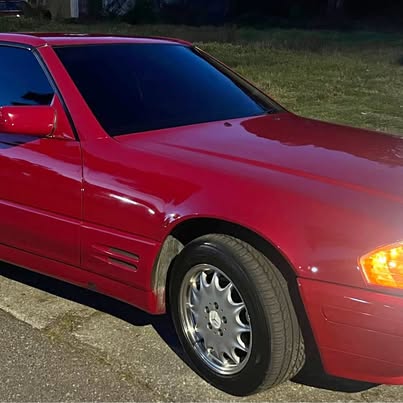 $12,500
Expand
What they sell for: R129 SL sale prices.