
Mercury Comet buyer's guide
Mercury Comet -- the model's own buyer's guide: variants, values and what to check.
Years listed: 1964-1964 · Series: Comet
Overview and history
The Mercury Comet is not one car. It is three different cars, built in three different decades of Ford thinking, that happen to share a name, a Mercury badge — eventually — and a habit of being more interesting than the car they were based on. Decide which Comet you mean before you shop, because a 1962 six-cylinder sedan, a 1965 Cyclone and a 1971 two-door have almost nothing in common except the script on the rear quarter. They do not share panels, parts prices, or a market.
The car was conceived in the late 1950s as the compact for the Edsel division — an "Edsel Comet" to sit alongside Ford's new Falcon. Edsel collapsed before the car reached showrooms, so when it launched in the spring of 1960 it arrived as a standalone make: just "Comet," sold through Lincoln-Mercury dealers, with no Ford or Mercury badge on it. That matters as an identity point: a 1960 or 1961 car correctly has no Mercury badging, and a seller who has added Mercury scripts to one is decorating, not restoring. From 1962 the car became the Mercury Comet officially, and it stayed a Mercury for the rest of its life.
Underneath, the first-generation car, 1960 to 1963, is a Ford Falcon with a longer wheelbase, a longer tail, more trim, and a quieter interior. The styling went its own way: canted fins in 1960 and 1961, a cleaner look for 1962 and 1963. Mechanically it is Falcon to the last bolt: the same thin-wall sixes, the same front suspension hung between pressed-steel shock towers, the same leaf-sprung live rear axle, the same unibody with the same rust traps. That kinship is the Comet's greatest ownership asset — almost everything mechanical is shared with one of the best-supported American cars of the period.
For 1964 the Comet was restyled and enlarged, and this second generation, 1964 and 1965, is the one most buyers are really hunting. It kept Falcon underpinnings but grew sharper styling, a proper hierarchy — base 202, mid-range 404, plush Caliente, and at the top the Cyclone — and engines from the 170 six to the 289 V8. The Cyclone, launched for 1964 with bucket seats, a tachometer and the 210-horsepower 289, gave the name its reputation. Mercury campaigned Comets hard that year, and factory-backed A/FX drag cars with 427 power made the little Mercury a genuine quarter-mile name. That history explains the Cyclone premium — and why so many Calientes have acquired Cyclone badges over sixty years.
For 1966 the Comet moved house. It left the Falcon platform and became an intermediate, based on the Ford Fairlane, with a 116-inch wheelbase, stacked headlamps, and room under the bonnet for Ford's big-block FE engines. The 1966 and 1967 cars — Capri, Caliente, Villager wagon, and the Cyclone and Cyclone GT — are bigger, heavier, more comfortable and, in 390 GT form, properly fast in a straight line. A 1966 Cyclone GT convertible was the Indianapolis 500 pace car, which gives that variant a documented claim the others do not have. These are no longer compacts, and you should not buy one expecting Falcon agility or Falcon running costs.
For 1968 the Comet name was demoted: the intermediate line was renamed Montego, "Comet" survived as its base trim for 1968 and 1969, and the Cyclone became a model in its own right with the 428 Cobra Jet. Those base cars are Montegos in all but badge, and this guide treats them briefly.
Then, after a year away, the name came back to where it started. From 1971 to 1977 the Comet was again a compact — a Mercury version of the Ford Maverick, differing in grille, tail panel and trim, in two-door and four-door sedan forms only. The early cars, 1971 to 1973, with their small bumpers, are the ones buyers want; the later federal-bumper cars are heavier in look and feel. A sport package, bucket-seat GT variants from 1973, and the 302 V8 give it a modest performance corner, but its real appeal is simplicity: a light, honest seventies compact sharing its mechanical life with millions of Mavericks, and correspondingly cheap to keep.
On this site the Comet pool is small — 15 records in total at the time of writing, 9 listed for sale and 6 recorded sold — and weighted to the middle of the story: five are 1965 cars, three are 1964s and three are 1966s, with single examples from 1962, 1963, 1967 and 1971. That is a sample, not a census: it tells you the 1964–66 heartland is what comes to market, not that other years do not exist.
The through-line, whichever generation you choose, is this: the Comet is a Mercury wrapper around high-volume Ford engineering. That is not a criticism. The mechanical story is well understood, the parts pipeline is deep, the failure modes are known to the last bushing, and the car's value sits in three things — the soundness of a sixty-year-old unibody, the correctness of its identity and trim, and the honesty of its engine. Get those right and a Comet is one of the easiest American classics to live with. Get the first wrong and nothing will save you.

The models
Read this section as a hierarchy, because Mercury built the Comet as one. In every generation there is a base car bought on price, a mid-range car bought on trim, and a top car bought on equipment and image — and the market today pays for the hierarchy in almost exactly the order Mercury created it, with performance variants above everything. The trap is that trim is changeable. Seats, scripts, consoles and even tachometers swap between cars in an afternoon, and sixty years is a lot of afternoons. The data plate and body codes settle which rung of the ladder a car was born on; everything bolted or clipped to it is merely a claim.
| Model | Years | Engine | Output | Built | Character |
|---|---|---|---|---|---|
| Comet sedan / wagon (base) | 1960–1963 | 144 / 170 six, 260 V8 (1963) | 85–164 hp | Volume seller | The economy Mercury; honest, slow with the 144, charming with the 260 |
| Comet Custom / S-22 | 1960–1963 | 170 six, 260 V8 | 101–164 hp | Mid-volume | Buckets and better trim in the S-22; the first-gen car to have |
| Comet 202 / 404 | 1964–1965 | 170 / 200 six, 260 / 289 V8 | 101–210 hp | Volume seller | The working range under the Caliente; most have been used up |
| Comet Caliente | 1964–1967 | 200 six, 289 / 390 V8 | 120–335 hp | High volume | The plush one — best trim, most survivors, the sensible buy |
| Comet Cyclone | 1964–1965 | 289 V8 | 210–271 hp | Low volume | The performance flagship; verify identity before paying for it |
| Comet Capri / Caliente (intermediate) | 1966–1967 | 200 six, 289 / 390 V8 | 120–335 hp | High volume | Fairlane-sized comfort; six-cylinder cars are the orphans |
| Cyclone / Cyclone GT | 1966–1967 | 390 V8 | 265–335 hp | Low volume | Big-block pace; the GT is the documented performance car |
| Comet (base Montego range) | 1968–1969 | 200 six, 302 / 390 V8 | 115–320 hp | Low volume | A badge on the base intermediate; buy it as a Montego |
| Comet (Maverick-based) | 1971–1977 | 170 / 200 / 250 six, 302 V8 | 82–140 hp | High volume | The Maverick's Mercury twin; early small-bumper cars lead |
Production figures for individual trim lines were not always published separately from model-year totals, and period outputs are gross SAE ratings, measured on an optimistic test bed — so treat every horsepower number here as a period claim for comparing variants, not a promise about the car in front of you. What the numbers reliably tell you is where a variant sat in the range, and that is how the market still prices them.
The first generation, 1960–1963. The base car is a sedan or wagon with the 144 six and little equipment, and its survival rate is low because for decades it was worth nothing; survivors tend to be cherished family cars or worn-out ones. The Custom adds trim, and the S-22 adds bucket seats, a console and a sportier brief. The car to have is a V8 car: the 260 arrived during 1963, late enough that genuine first-generation V8 Comets are uncommon, and a 1963 S-22 or Custom convertible with the 260 is a legitimately desirable small car. Buy a six for what it is, not as a V8 conversion project — the conversion needs the V8's stronger driveline and suspension pieces, and the finished car is still a converted six.
The second generation, 1964–1965. This is the heartland. The 202 is the base car, the 404 the mid-range, and the Caliente the luxury model: better seats, more brightwork, more sound deadening, the full engine list. Most survivors are Calientes, because they were the most expensive and the most garaged, and a Caliente hardtop or convertible with the 289 is the all-round sweet spot of the Comet story. The Cyclone sits above it — two-door hardtop, and for 1965 a convertible — with the 289 standard and performance intent. The 1965 Cyclone could be ordered with the 271-horsepower K-code 289, the Mustang's high-performance engine; genuine examples are rare and valuable, and it is the most faked specification in the Comet world, which the inspection section deals with in detail.
The intermediate cars, 1966–1967. Capri becomes the base hardtop line, Caliente continues as the well-trimmed model, Villager is the wagon, and Cyclone and Cyclone GT are the performance cars. Six-cylinder intermediates are heavy cars for a 200 six; they sell cheaply and stay cheap. The 289 cars are the drivers. The 390 cars — the Cyclone GT with its 335-horsepower GT engine in particular — are the collectors' cars, with the 1966 GT convertible's Indianapolis pace car connection at the top. Watch for ordinary 289 Calientes described loosely as "GT" for wearing badges fitted later. The VIN engine code and data plate settle what a car was born with; badges settle nothing.
The 1968–1969 base cars and the Maverick-based cars, 1971–1977. The 1968–69 Comet is the entry-level intermediate under the Montego umbrella; value it as the equivalent Montego, by condition and engine, with a small premium only for the badge's curiosity. The 1971–77 car is a compact sedan trimmed a step above the Maverick, sixes dominating production and the 302 V8 the performance ceiling; the GT package from 1973 adds stripes and trim rather than power. Early cars carry the slim bumpers the design was drawn with; from 1974 federal bumpers change the car's face and add weight. In today's pool the Maverick-based car appears once, a 1971 example — a small-sample fact, not a verdict on availability.
One cross-generation warning. Comet names repeat with different meanings: a Caliente of 1965 and a Caliente of 1967 are different cars on different platforms. Anchor on the year first and the badge second when you order parts, read adverts or compare prices — more money is wasted in the Comet world by describing a car by its badge alone than by any mechanical failure.
Engines and gearboxes
Every Comet engine is a Ford engine, in the best sense: high-volume, conservatively engineered, understood by every machine shop in America, and supported by a reproduction industry that exists because the same engines power Mustangs, Falcons and Fairlanes in far greater numbers. There are three families — the Falcon inline sixes, the small-block Windsor V8s, and, for the 1966–69 intermediates, the FE big-blocks — plus the Maverick-era sixes and 302, which are developments of the first two.
The inline sixes: 144, 170, 200 and 250
The Falcon six is a thin-wall cast-iron engine with an integral intake manifold cast into the cylinder head — the log head — and a single one-barrel Autolite 1100 carburettor on most applications. The 144, at 85 horsepower, powered the 1960–63 base cars and is the weakest engine ever fitted to a Comet: adequate around town, breathless on a grade. The 170, at about 101 horsepower, is noticeably more willing. The 200, introduced for 1964, is the pick of the early sixes: roughly 120 horsepower, a seven-main-bearing crankshaft in later form against the earlier engines' four mains, and a better torque spread. The 250, a taller-deck development in the Maverick-based cars, adds torque again and is the six to choose in a 1971-onward car if you are not buying the V8.
These engines are simple and long-lived, and their failure modes are plain. The integral log manifold means a cracked exhaust side cannot be unbolted separately — you are into head work. The Autolite 1100's accelerator pump and automatic choke cause most flat spots and cold-start sulks sellers blame on "needing a tune-up." Valve stem seals harden and give the classic puff of blue smoke on start-up after sitting — a seals job, not a rebuild; sustained blue smoke under load is rings and bores, which is a rebuild. The cooling system is marginal in a hot climate if the radiator is original and silted. Budget $400–900 for a carburettor rebuild, ignition overhaul and cooling service to wake a neglected six up, and $1,800–3,500 for a full rebuild if the bores and crank need machine work.
The small-block V8s: 260, 289 and 302
The Windsor small-block is the engine that makes a Comet. The 260, fitted from 1963, gives 164 horsepower with a two-barrel carburettor, a five-bolt bellhousing pattern on the earliest examples — a detail that matters when matching gearboxes — and a free-revving character in a light car. The 289, standard-bearer of the 1964–67 cars, came in three states of tune: the two-barrel car at about 195–200 horsepower, the four-barrel premium-fuel car at 210 horsepower in 1964–65 and 225 in 1966–67, and the high-performance K-code at 271 horsepower with a solid-lifter camshaft, an Autolite 4100 four-barrel, free-flowing exhaust manifolds and a dual-point distributor. The K-code idles with a lope and wants its valve lash set, and it is the engine the Cyclone premium is really paying for. The 302, which takes over in 1968–69 and the Maverick-based cars, is a stroked 289 in essence: torquier, lazier, extremely durable.
The small-block's problems are age and neglect rather than design. Rear main seals weep — two-piece seals on early engines — and a coin-sized spot overnight is normal for the breed, while a spreading puddle is a seal job, $600–1,200 with the gearbox out. Timing chains stretch and retard the cam timing, giving a car that feels flat and overheats slowly in traffic; a chain and gear set is $500–1,000 fitted. Flat tappets and modern oils are a genuine issue: use an oil specified for flat-tappet engines, especially during cam break-in — a wiped cam lobe on a fresh rebuild is a $1,500–2,500 lesson. Exhaust manifolds crack, particularly the close-fitting right-hand manifold on V8 compacts, and bolts seize in the heads. The Autolite 2100 and 4100 carburettors are excellent when rebuilt properly — $350–750 — and preferable to a cheap modern replacement thrown on without jetting thought.
A full small-block rebuild, with hardened exhaust valve seats fitted for unleaded fuel, runs $3,500–6,500; a K-code-correct rebuild costs $6,000–9,000, the solid-lifter camshaft, correct carburettor and dual-point distributor being specialist items. Hardened seats matter — engines rebuilt without them recess their exhaust seats on unleaded fuel over time, though slowly on a gently driven car. Ask for the machine-shop invoice: "rebuilt" without paperwork is a word, not a fact.
The FE big-blocks: 390 and 428
The FE arrived when the Comet became a Fairlane-sized intermediate for 1966, and changed the car's character completely. The 390 came in two-barrel form at about 265–270 horsepower, four-barrel form at about 315–320, and as the GT engine — the S-code in the 1966–67 Cyclone GT — at 335 horsepower with a Holley four-barrel, a hotter camshaft and low-restriction exhausts. The 428 Cobra Jet, offered in the 1968–69 Cyclone rather than in a car badged simply Comet, carries the famous nominal 335-horsepower rating nobody believed then or now; it is a torque engine of the first order, with big-valve heads derived from the 427 programme.
FE ownership is about weight, heat and oil. An all-iron FE weighs roughly 650 pounds and sits over front suspension and brakes sized accordingly only in the GT applications — check that a 390 car has the heavy-duty springs and larger brakes its engine code implies, because a big-block dropped into a small-block shell brings lesser hardware with it unless the converter did the whole job. FEs run hot in traffic if radiator, shroud and fan clutch are not all correct and present, and they are notorious for exhaust manifold leaks: manifolds warp and crack, and extracting broken bolts from FE heads is specialist work — $800–1,800 to do a leaking side properly, more if the head comes off. Oil leaks from the intake end seals and rear main are endemic; a dry FE is a recently resealed FE. A full reseal and tune runs $700–1,400; a full rebuild, $5,500–9,500, with correct GT and Cobra Jet components pushing beyond that.
Verify FE identity by the VIN engine code, not by displacement claims. A 390 and a 428 are externally near-identical, FEs carry no convenient external displacement marking, and "428" is the most optimistic word in the intermediate Mercury market. Block and head casting numbers and date codes, and — on a Cobra Jet claim — the documented VIN code are the evidence. If the premium asked is a 428 premium, the paperwork has to carry it.
The Maverick-era engines, 1971–1977
The last Comet returned to the first Comet's recipe: the 170, 200 and 250 sixes as volume engines and the 302 V8 as the option that matters. Outputs by now are quoted net and fall with emissions equipment — a mid-seventies 302 rated around 122–140 horsepower sounds dismal beside a 1965 figure and is not directly comparable, gross and net measuring different things. The engines are the same durable Ford units, encumbered with smog pumps, EGR and lean carburation that make a neglected car run badly in ways usually cheap to fix: perished vacuum hoses, a stuck EGR valve, a tired Motorcraft two-barrel. Budget $300–800 to restore the car's manners. Where a smog regime applies to the car's year, original emissions equipment is a legal matter too — check before you buy.
Gearboxes
Manual cars start with a three-speed column-shift gearbox — "three on the tree" — standard on six-cylinder and base V8 cars. It is durable and slow, and the column linkage wears into vagueness long before the gearbox fails; rebushing it is a $200–450 job. The four-speed is the Ford Toploader, one of the strongest manual gearboxes of the era, fitted across the 289 and 390 ranges; it must not jump out of gear under load or on the overrun — one that pops out of third is telling you about worn engagement teeth, and a rebuild is $1,200–2,200 plus removal. Clutches are conventional, $700–1,200 fitted; a high, sharp bite point is a clutch at the end of its adjustment or its life.
Automatics divide by era. Early cars, 1960–63, use a two-speed Fordomatic-derived automatic — smooth, slow and adequate behind a six — with a three-speed unit on V8 applications. From 1964 the C4 Cruise-O-Matic, a light, strong three-speed, becomes the standard automatic behind sixes and small-blocks: cheap to rebuild at $1,200–2,000, tolerant, well supported. Big-block cars use the C6, a heavier three-speed of similar virtues at $1,400–2,400 to rebuild. The test for any of them: fluid red and sweet-smelling rather than brown and burnt, engagement without a delay over a second or a thump, upshifts without flare, and no slipping under a full-throttle climb. An automatic that fails those tests is the price of a rebuild off the car's value, whatever the seller says about it "just needing a service." A service at $180–350 cures neglect; it does not cure burnt clutches, and burnt-smelling fluid is the smell of burnt clutches.
Rear axles are the Ford 8-inch on most small-block and six-cylinder cars — strong, quiet, with a removable carrier — and the 9-inch on big-block and high-performance applications, with lighter integral-carrier axles under the earliest sixes and Maverick-era cars. Problems are bearing whine that changes with load, pinion seal leaks, and, on abused cars, chipped teeth announcing themselves as a rhythmic clunk. A bearing and seal refresh is $500–1,100; a full differential rebuild, $1,200–2,400. Ratios matter: economy sixes carry tall ratios that make them calm and slow, GT and Cyclone cars shorter ratios that make them urgent and busy on the highway. Read the data plate's axle code before the test drive surprises you.
Problem areas
A Comet's problems are Ford problems of the period, concentrated by unibody construction into one theme: the structure is the car. Engines, gearboxes, axles and trim can be rebuilt or replaced with money and a catalogue. A rotten or cracked unibody can also be repaired — for considerably more money — but it is where cost routinely exceeds the value of all but the rarest variants, and where a cheap Comet becomes an expensive one. Work through this section in order: structure, running gear, systems, cabin. In this site's own photo-note sample for the Comet — a very small sample, just 2 cars examined — rust was mentioned in both. That proves nothing statistically; treat it as a reminder of where every experienced buyer starts.
Rust and structure: the map
Start at the front, because both platforms concentrate their structural risk there. The front suspension mounts between pressed-steel shock towers, and the towers, aprons and front frame rails carry every load the front wheels generate. Look for three failures. First, rust: the tower-to-apron seams, the battery tray area — battery acid accelerates everything on that side — and the rails under the battery and steering box rot from inside and from trapped mud. Second, cracking: towers crack around the upper control arm mounting and along the seams on hard-lived cars, and a tower cracked and welded badly is worse than one cracked honestly, because the repair hides distortion. Third, accident repair: rails bend in a front impact and are often pulled straight and filled rather than replaced. Sight along the aprons for ripples; a car that will not align is telling you its rails are not where the factory put them.
The cowl is the next critical area, and the least visible. The fresh-air vents at the base of the windscreen drain into the cowl sides, the drains block with debris, and the cowl rots from inside. The symptom is water on the front floor after rain, and that water then rots the front floor pans from above while road salt rots them from below. Pour a jug of water into the cowl vent on an inspection — with the seller's permission — and watch where it emerges: it should run out behind the front wheels, not into the footwells. Cowl repair is dash-out, screen-out work, at $1,500–3,500 to do a side properly. Front floors are cheaper because reproduction pans exist — $800–1,800 a side fitted — but a car needing cowl, floors and rails has passed the point of sense for any but a Cyclone GT or K-code car.
The middle of the car lives or dies on its torque boxes and rocker panels. On the Falcon-based cars the front torque boxes, where the front structure ties into the floor and sills, are both structural and rot-prone; on convertibles and hardtops, which lack the sedan's roof contribution, the whole sill structure does more work and fails more consequentially. Do the sill-jack test: jack at the factory jacking point and watch the door gaps. A sound car lifts with its gaps unchanged; a car whose door gap closes at the top or whose door will not latch cleanly while jacked has lost stiffness where it matters. Rocker and torque-box reconstruction is $1,000–2,500 a side with the car braced, and a convertible needing both sides needs its doors fitted and gaps set during the work, not after.
At the rear, check the trunk floor — lift the mat, because sellers who will happily open a bonnet go quiet at the trunk — the drop-offs behind the rear wheels, the lower rear quarters, the arches, and above all the rear spring mounts. The leaf springs hang from a front eye bracket tied to the rear frame rail and a rear shackle through the rail and trunk floor area; rust there is structural in the most literal sense, and a spring mount that moves when you lever it is a car you should not drive home. Rear rail and mount reconstruction runs $1,200–2,800 a side. Wagons add the tailgate aperture and spare-wheel well. Each generation adds traps: 1960–61 cars rust around their elaborate tail panels, 1964–65 cars at the base of the rear window, and Maverick-based cars in their lower quarters, with the seventies hazard of a vinyl roof hiding rust beneath it. A bubbling vinyl roof is not cosmetic: it is $1,500–3,000 of metalwork once the vinyl comes off.
Front suspension, steering and brakes
The front suspension is conventional: coil springs, upper and lower control arms, ball joints, and an anti-roll bar on V8 and performance cars — on the Falcon design the spring loads the shock tower, which is why tower condition and suspension condition are the same conversation. Wear concentrates in the ball joints, control arm bushings and idler arm. The distinguishing test is to jack the front under the lower arm, unloading the joint correctly, and lever the wheel: ball-joint play shows as movement at the joint itself, steering play at the tie-rod ends and idler. A full front-end rebuild with ball joints, bushings, tie-rod ends and an alignment is $900–1,800 and transforms a wandering car; budget it in unless the seller can show it has been done, because on a sixty-year-old car it has either been done recently or it needs doing.
Steering is a recirculating-ball box, manual on most cars, power-assisted on better-trimmed and big-block examples. Manual boxes wear a loose spot on centre that adjustment can reduce but not eliminate if the worm is worn; a rebuilt box is $400–800 exchanged. Power steering is the Ford control-valve-and-ram system, and it leaks as a matter of course. A weep is period normal; a drip that empties the reservoir in a week is a $500–1,100 reseal and hose job. Groaning at full lock is air or low fluid, and a car that steers heavier to one side has a control valve problem, not an alignment problem.
Brakes are drums all round on the early cars, with front discs arriving as an option and then as standard on performance and later models — the 1966–67 Cyclone GT and the seventies cars are the disc-brake cars — and converting drum cars to front discs is the most common modification in the Comet world. Judge what is fitted on its merits: a well-executed conversion is a safety improvement; a badly executed one, with the wrong master cylinder and a spongy pedal, is a fault to price. On any car the hydraulics are age-critical: wheel cylinders weep, flexible hoses perish internally and act as one-way valves, and single-circuit master cylinders on the earliest cars give no redundancy. A full hydraulic overhaul is $600–1,400 and is not optional money on a car whose brake history is unknown. Pulling to one side is a hose, a cylinder or a contaminated lining until proved otherwise; a pedal that sinks slowly at a stop is a master cylinder bypassing internally, and that car should not be driven until fixed.
Rear suspension, axle and driveline
The rear suspension is leaf springs and a live axle on every Comet, and its wear items are spring sag, worn shackle bushings and tired dampers. Sag shows as a car sitting low at the rear and bottoming over bumps; a replacement spring set is $400–900 fitted. Check the front spring eye mounting, covered in the rust section, and the axle U-bolts, which corrode and lose clamp. Dampers are $200–450 a set fitted and are the first thing to replace on a car that floats or crashes over bumps.
Axle noise needs distinguishing, because the cures differ in price by a factor of three. A whine that rises with road speed and changes between drive and coast is ring and pinion wear or set-up; a constant hum that does not change with throttle is a wheel bearing; a clunk on taking up drive is universal joint wear, backlash, or both. Universal joints are $250–500 a pair fitted; a pinion seal, $200–400; a full axle rebuild is the $1,200–2,400 figure from the engines section. At a steady 40–50 mph, lift off and reapply the throttle gently: listen for the whine changing character and feel for the clunk. An axle is silent in a seller's driveway and eloquent at speed.
Cooling, fuel and exhaust systems
Overheating is almost never a design verdict and almost always a maintenance sum: a silted original radiator, a missing fan shroud, a tired fan clutch, the wrong thermostat, an eroded water pump impeller, and timing retarded by a stretched chain. The test is a proper run — twenty minutes including a climb and traffic — with your eyes on the gauge and, afterwards, a check that the top hose is hot and pressurised and the coolant clean rather than rusty soup. A quality replacement radiator is $450–900 fitted; a shroud and fan clutch, $200–450. Do not let a seller explain a hot-running car as "they all do that" — they do not when they are right.
The fuel system's age faults are the tank, the sender and the lines. Tanks rust from inside and shed debris that blocks filters and carburettor jets; a car that runs well for ten minutes and then starves is showing you exactly that. Replacement tanks for the popular generations run $300–650 fitted; senders are cheap and routinely inaccurate, so never trust the gauge until you have calibrated it against a known fill. Ethanol attacks old rubber lines and carburettor components; replace fuel hose with ethanol-rated hose as a matter of course, $100–250, and treat any fuel smell in the boot or cabin as a stop-and-fix fault.
Exhausts are straightforward except where they meet FE manifolds, covered above, and where headers cook the starter motor. A heat-soaked starter gives the classic symptom — cranks slowly or not at all when hot, perfectly from cold — that owners misdiagnose as a battery fault; the cold-versus-hot comparison is the distinguishing test. A standard system is $500–1,100 fitted; a quality performance system, $900–1,800.
Electrics and instruments
Comet electrics are simple, and their faults are those of simple systems left alone for sixty years: resistance in earth straps, corrosion in bulkhead connectors and fuse boxes, regulators and tired switches. The most useful test is a voltage-drop check on the main earths and starter circuit while cranking; the second is to operate everything, twice — heater fan on all speeds, wipers, every lamp, the horn, the gauges — and note what is dead, dim or intermittent. Intermittence is corrosion or a failing switch, and a cluster of unrelated electrical faults is usually one earth point, not five components: find the common earth before anyone sells you parts. Most cars need $300–800 of methodical cleaning, terminals, straps and a regulator or alternator rebuild to be wholly reliable; a complete rewire, at $1,500–3,000, is justified only on a fire-damaged or butchered car.
Instruments lie in known ways. Fuel gauges read by sender resistance and fail optimistic or dead; temperature gauges fail dead more often than pessimistic. The Cyclone's tachometer is a selling feature and a common failure and substitution point — check it reads plausibly against the engine note and is the correct unit for the year, because a wrong tachometer is both a fault and an identity clue. Heater cores leak into the passenger footwell, announcing themselves with a sweet smell and a misting windscreen — the core is cheap, $80–200, and the labour to reach it is not, at $400–800 total fitted.
Interior, trim and weather sealing
The cabin is where a Comet's cost-to-finish hides. Upholstery is vinyl on most cars, in patterns the reproduction industry covers well for Caliente and Cyclone and patchily for base cars and wagons. A full retrim — seat covers, foam, door cards, headlining, carpet — is $2,500–5,500 fitted, and a genuinely good original interior is worth a real premium, because original grain and colour cannot be fully reproduced. Check seat frames and springs, not just covers: a sagging driver's seat is a broken spring or collapsed foam, and S-22, Cyclone and GT bucket seats have specific frames not interchangeable with bench hardware.
Trim is the model's specific trap. Caliente, Cyclone and GT brightwork, grilles, tail panels and badging are model- and year-specific, not reproduced comprehensively, and expensive used when they appear. Price a car with missing special trim as a car plus a hunt — a Cyclone missing its distinctive pieces is, in market terms, a Caliente with a story until the pieces are found. Window regulators wear and drop glass, at $150–350 a side, and weatherstripping is universally reproduced and universally needed — a full seal kit fitted is $600–1,200 and is the difference between a car you can use in rain and one you cannot. Water in the front footwells is cowl rust until proved otherwise; in the rear footwells, usually rear window or quarter seals; in the trunk, the trunk seal, tail lamp gaskets, or a rusted trunk floor letting it up from below.

How to inspect one
Inspect a Comet in this order, and do not let a seller's enthusiasm, a warm engine or polished paint rearrange it. The order runs from identity to structure to systems to the road, because each stage can end the inspection and save you the rest. Bring a torch, a magnet wrapped in tape, a jack and stands if the seller permits, a jug of water for the cowl test, and a friend to work the controls. Allow two hours; a seller who will not is giving you information.
- Paperwork and identity first. Match the VIN plate to the title and to the stampings on the car, and decode the data plate: year, body, engine code, transmission and axle. This check settles a claimed Cyclone, K-code 289, GT or 428 — the engine code is what the car was born with, and any premium resting on identity must be carried by these codes, not by badges or stories. Walk away from a car whose plate is missing, restamped or inconsistent with its title until the discrepancy is explained in writing.
- Cold engine, first look. Insist on a cold start; a warm engine on arrival hides choke, starting and oil-pressure faults. Check the oil for level, colour and mayonnaise emulsion under the filler cap, the coolant for oil and rust, and the automatic fluid for the brown colour and burnt smell described in the gearboxes section. Note every leak under the car before it moves.
- Start it and listen. A six should settle to a quiet idle as its choke comes off; a hydraulic-lifter small-block should be tappet-quiet within seconds, while a K-code solid-lifter car ticks legitimately. Watch for the start-up puff of blue smoke that means valve stem seals, and for sustained smoke that means rings. Oil pressure must be prompt. A knock that fades is wear announcing itself; a knock that stays is a rebuild.
- The cowl water test. Pour water into the cowl vent at the base of the windscreen, as described in the rust section. It should drain behind the front wheels. Water in the footwells means cowl rot, and converts the interior inspection from a trim assessment into a structural one.
- Shock towers, aprons and front rails. Examine both towers for rust at the seams, cracks around the upper arm mounts and previous weld repair; check the battery tray side twice, sight down the aprons for ripples, and get under the front to see the rails. Cracks plus rust plus ripples together end the inspection for all but the rarest cars.
- Floors, sills and the sill-jack test. Inspect the front floors, torque boxes, rockers and seat-belt mountings from underneath. Then jack at the factory point and watch the door gaps, as in the rust section: gaps that move, or a door that will not latch cleanly while lifted, mean the shell has lost stiffness. On a convertible, this test is the inspection.
- Rear rails, spring mounts and trunk. Lift the trunk mat, inspect the trunk floor and drop-offs, and lever the rear spring mounts and shackles. Movement at a spring mount is structural failure in progress. Check the lower quarters and arches with the magnet for filler depth, and look inside the rear wheel wells for underseal laid over rust rather than over repair.
- Suspension and steering on the jack. With the front raised under the lower arms, test ball joints and wheel bearings for play, as described in the problem areas, and have your friend rock the steering wheel while you watch the idler arm, tie-rod ends and steering box output for lost motion. Play you can see at a joint is play you will pay to remove; total it up as you go.
- Brakes, before the road. Check the pedal for height, firmness and the slow sink that betrays a bypassing master cylinder. Inspect flexible hoses, look behind each wheel for cylinder or caliper leaks, and confirm whether the car has drums or discs, original or converted — and whether a converted car has the correct master cylinder and a pedal that feels like engineering rather than hope. A car that fails this stage does not go on a road test.
- Electrics and instruments, everything twice. Operate every lamp, the indicators, wipers and washers, the heater fan on every speed, the horn and all the gauges, as in the electrics section. Note the tachometer's plausibility on a Cyclone.
- Interior and trim audit. Work the list from the interior section: seat frames and springs by sitting hard in each seat, every piece of model-specific brightwork present or missing, glass operation, door latches, window regulators, weatherstrips and headlining. On a convertible, operate the top twice, fully, watching for asymmetry and ram leaks. Price what is missing now, from real listings for the parts.
- The road test: engine and gearbox. Drive at least twenty minutes, including a climb and traffic. A six should pull cleanly without the Autolite flat spot; a small-block should rev willingly and show no smoke in the mirror on the overrun after a downhill coast — the ring and bore test that matters. The automatic must engage promptly, shift without flare and hold under full throttle on the climb; the manual must not jump out of gear on the overrun, the Toploader test from the gearboxes section. Watch the temperature gauge throughout, and again in traffic at the end.
- The road test: chassis. At a steady speed on a quiet road, do the axle test — lift off and reapply the throttle gently and listen for the whine changing character and feel for the clunk. Brake firmly from speed, hands light on the wheel: pulling means hydraulics or linings, as covered above. The car should track straight without constant correction; wandering is the front-end wear you priced at step 8.
- Hot restart and final leak check. Switch off, wait five minutes, and restart: the heat-soaked starter fault from the systems section shows now if it exists. Look underneath again with the torch and compare the leak map with step 2. Check the coolant and the oil once more. Then, and only then, talk about money — with your written fault list, each item attached to the job cost given in this guide.
Values
The Comet market is several markets wearing one badge, and they do not move together. A first-generation six-cylinder sedan, a 1965 Cyclone, a 390 GT convertible and a Maverick-based two-door are priced by different buyers for different reasons, and a rise in one tells you nothing about the others. The market block appended to this guide carries the current figures from this site's own listings and recorded sales; this section teaches you how to read them, and deliberately contains no numbers of its own, because numbers age and the structure of this market does not.
Condition spread is wider for Comets than for the Fords they are based on, because of survival pattern. Mustangs and Falcons were preserved in numbers; Comets were used. The result is a long tail of tired cars and a short supply of genuinely sorted examples. The gap between a project and a driver is therefore a step, not a slope: a project carries the full restoration arithmetic of a unibody car, while a driver with documented structural soundness, a rebuilt front end and hydraulics you can trust commands a disproportionate share of the range. Read the appended figures by their spread, not their middle.
Identity is the second driver, and it operates as a multiplier rather than an addition. A genuine Cyclone, K-code car or Cyclone GT with its codes in order carries a premium over its Caliente and Capri equivalents that has widened as verifiable cars have thinned. The corollary is that an unverifiable performance claim should carry no premium from you: the market pays for codes and paperwork. Colour and specification move cars within their band, but none of them rescues a car whose identity or structure is wrong.
Generation by generation: first-generation cars are the connoisseur's corner, low supply and modest demand, values carried by body style and the rare V8. The 1964–65 cars are the liquid heart of the market, Calientes trading on condition and Cyclones on identity. The 1966–67 intermediates follow the Fairlane market at a Mercury discount that has narrowed for GT cars and convertibles and remains wide for six-cylinder and base cars. The Maverick-based cars are the value end, priced as interesting Mavericks rather than collectible Mercurys, early small-bumper cars and factory 302s at the top of that smaller range.
Asking and achieved prices diverge in the usual places. Sellers anchor on the best comparable they can find, which for a Comet usually means a better car or a rarer variant; auction results are real but include the heat of the room. Your negotiation reality is the fault list: a Comet's price is negotiable in proportion to the priced, specific, demonstrable work it needs — the front-end rebuild, the hydraulic overhaul, the cowl repair — and barely at all on general impressions. Bring the list, with costs, and you are negotiating about facts.

Parts and ownership
Owning a Comet is an exercise in benefiting from other cars' popularity. The mechanical parts pipeline is the Falcon, Mustang, Fairlane and Maverick pipeline: deep, competitive and fast, with service items, suspension and brake components, engine internals, gaskets, carburettor kits and cooling parts available from multiple suppliers at prices reflecting Mustang volumes. A full service runs $250–500 at a shop, and less if you do it yourself, which these cars encourage: everything is accessible, nothing requires a laptop, and the factory manuals are reprinted and cheap.
Availability, rather than cost, is the ownership point for engine and driveline work: small-block and six components are off-the-shelf, FE components are available at big-block prices with more casting-number homework, and parts for the C4, C6, Toploader, 8-inch and 9-inch are in current production or healthy circulation. Plan ahead only for model-specific steering hardware on the earliest cars and big-block intermediates, where a box or control valve may be a rebuild-yours transaction with a turnaround time — budget $400–1,100 and do not take the car off the road for one in the week before you need it.
Body and trim are where the pipeline thins, in proportion to how Mercury-specific the part is. Floor pans, trunk floors and many structural panels are reproduced for the Falcon- and Fairlane-based cars because Ford volumes justify them; Maverick-based body parts follow the Maverick catalogue. Mercury-specific sheet metal — tail panels, quarter treatments, the distinctive 1964–65 front and rear treatments — is not comprehensively reproduced, and neither is the brightwork from the interior section. So the structure can usually be repaired with available panels, but cosmetic identity may depend on used parts and patience; and completeness is value, because a car with all its trim is cheaper to finish by the whole cost of the hunt.
Running a Comet day to day is uncomplicated. Fuel consumption is period-normal: a six returns economy that still looks respectable, a 289 driven gently is a moderate drinker, and a 390 GT driven as its makers intended is not — none should be bought with fuel economy as a criterion. All run on modern unleaded fuel, with the hardened-seat consideration from the engines section and an octane appetite on high-compression and K-code engines that may mean premium fuel and careful timing. Insurance on agreed-value classic policies is straightforward for standard cars and requires honest declaration for modified ones. Storage matters more than mileage: these unibodies rust from inside box sections outward, and a car kept dry and ventilated will hold its structure for decades while one kept under a damp cover on grass will not.
Which one to buy
- The all-rounder: a 1964 or 1965 Caliente hardtop with the 289 V8 and an automatic. The best trim of the heartland generation, enough performance, and full parts support.
- The value buy: a 1966 or 1967 Caliente or Capri with the 289. The intermediates trade at a Mercury discount to their Fairlane equivalents, and the 289 keeps running costs at small-block level. Avoid the six-cylinder versions unless the car is exceptional.
- The performance buy: a 1965 Cyclone — with the data plate, engine code and, on a claimed high-performance 289 car, the component evidence all verified before money moves. A verified car is the strongest holding in the Comet market; an unverified one is a Caliente at a Cyclone price.
- The big-block buy: a 1966 Cyclone GT, hardtop for value, convertible for the pace-car connection. Budget for FE running costs, verify the S-code identity, and buy the best-documented car.
- The charmer: a 1963 Custom or S-22 with the 260 V8, ideally a hardtop or convertible — the first-generation car with the engine it always needed.
- The usable classic: a 1971 to 1973 Comet two-door with the 302 V8. Small bumpers, Maverick mechanicals, the cheapest entry in this guide. Buy on condition and originality; modifications subtract value here faster than anywhere else in the range.
- The one to avoid: any Comet whose shock towers, cowl, torque boxes or rear spring mounts are rotten and whose price does not fully reflect the structural repair costs in the problem areas. Rare badges soften this rule only for the genuinely rare — a verified K-code Cyclone or GT convertible can carry structural work a base car cannot — and even then the work must be priced in, in writing, before you commit.
Buy the structure first, the identity second and the engine third — a sound, genuine Comet with a tired engine is a good car waiting for a rebuild, while a shiny, misidentified car with rotten towers is a liability at any price.

See the 1 Comet cars currently listed.
For sale now
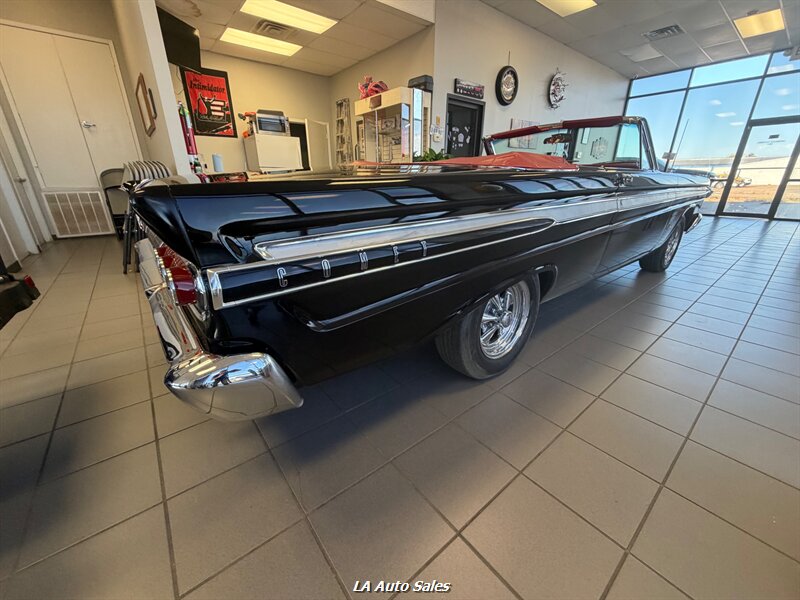 $39,995 · 49% above typical
Expand
What they sell for: Comet sale prices.