
Mitsubishi Eclipse Spyder buyer's guide
Mitsubishi Eclipse Spyder -- the model's own buyer's guide: variants, values and what to check.
Years listed: 1992-2003 · Series: Eclipse
Overview and history
This is the model guide to the Mitsubishi Eclipse, and it assumes you have already decided the shape appeals to you. The series guide tells the broad story — four generations, two distinct cars under one name, a Diamond-Star beginning and a front-drive ending. This guide goes one level deeper, to the level at which money is actually won and lost: which generation, which trim, which engine is really in the bay, whether a Spyder top is an asset or a subscription, and how to tell a factory turbo car from one that has merely acquired turbo badges or a turbo price. If the series guide answers should I consider an Eclipse at all, this one answers the harder question: this specific Eclipse, with this specific history — yes or no.
That distinction matters more on the Eclipse than on most coupés of its era, because no other mainstream coupé changed its mechanical identity so completely while keeping its name. A 1991 GSX and a 2011 GT share a badge, a plant in Normal, Illinois, and almost nothing else. Even inside one generation the spread is extreme: a 1998 GS and a 1998 GSX look like trim levels of one car, yet one is a Chrysler-engined front-drive coupé of modest value and the other a turbocharged all-wheel-drive car with a competition pedigree, a famous crankshaft failure mode and a collector market. Sellers blur that line constantly, sometimes from ignorance and sometimes because the blur is profitable. Your job is to un-blur it, every time, with evidence from the car itself.
The listings pool makes the point for you. The Eclipse cars currently tracked on this site are a small, Marketplace-sourced sample — 11 cars in total, 10 of them offered for sale — spanning 1996 to 2004 in the listings, with the weight of the sample in the 2001 and 2003 model years. In other words, the typical Eclipse you will actually go and view today is not the poster car. It is a 2G non-turbo car at the edge of the DSM era or, more often, a 3G four-cylinder or V6 car from the years after the turbo and all-wheel drive were deleted. This guide is weighted accordingly: the deepest treatment goes to the turbo cars and to the Spyder, where the money and the traps concentrate, and the most practical treatment goes to the 3G and 4G cars, where the decision is about condition, belts and trim rather than mythology.
Three organising ideas run through everything that follows. First, generation beats trim: place a car in its generation from across the street before you spend a second on RS, GS, GT or GTS, because the generation determines the engine families, the failure modes and the market. Second, the engine bay beats the badge — on a model where one shell hides a Chrysler four, a Mitsubishi four, a turbo four and two V6s, badges are advertising and the bay is evidence. Third, paperwork beats presentation: a timing-belt invoice, a measured crankshaft and a dry Spyder footwell are worth more than any amount of detailing, because the Eclipse's expensive faults are all quiet ones.
Two boundary notes. The Eclipse Cross crossover shares the name and nothing else — no buying logic here applies to it. The Eagle Talon and Plymouth Laser are the Eclipse's Diamond-Star sisters, mechanically the same cars in the ways that matter and often the smarter buy, because the Mitsubishi badge carries the fame premium. Buy the Eclipse with that map in your head and it is one of the most rewarding cheap-performance buys of its period. Buy it on the badge alone and you will pay GSX money for a GS, belt money for a car that needed an engine, or Spyder money for a top that needed the price of the car again. The rest of this guide is how not to.
The models
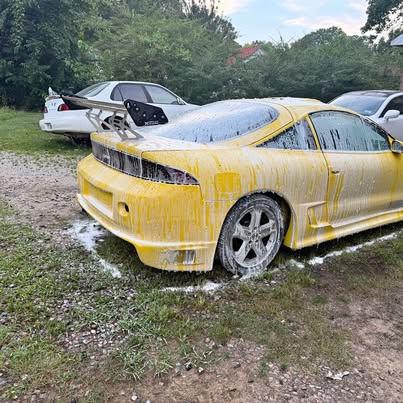
The Eclipse range only makes sense generation by generation, because Mitsubishi reused the same trim letters to mean different cars. GS has been a naturally aspirated Mitsubishi coupé, a Chrysler-engined coupé, a 2.4-litre coupé, a convertible and a MIVEC coupé at different points in the run. RS always means the base car, GT the V6 car where a V6 exists, and GSX exactly one thing — turbocharged and all-wheel drive — but only in the first two generations. Outputs below are the period SAE net figures. Mitsubishi did not publish a trustworthy production split by trim, so the built column says so rather than inventing precision; total production across all four generations ran well past a million cars, which is why mechanical parts survive where trim does not.
| Model | Years | Engine | Output | Built | Character |
|---|---|---|---|---|---|
| Eclipse base / GS | 1990–1994 | 1.8 four (4G37) or 2.0 four (4G63) | 92 hp / 135 hp | Not separately published | The 1G entry cars; find a 2.0 GS, skip the 1.8 |
| Eclipse GS Turbo | 1990–1994 | 2.0 turbo four (4G63T), front-drive | Around 190 hp | Not separately published | Turbo pace, simpler driveline than the GSX |
| Eclipse GSX | 1990–1994 | 2.0 turbo four (4G63T), all-wheel drive | Around 190 hp | Not separately published | The original flagship; six-bolt cars are the prize |
| Eclipse RS / GS | 1995–1999 | 2.0 four (420A) | 140 hp | Not separately published | The 2G volume cars; Chrysler engine, condition-only value |
| Eclipse Spyder GS | 1996–1999 | 2.4 four (4G64) | 141 hp | Not separately published | The first open Eclipse; Mitsubishi four, no turbo |
| Eclipse GS-T / Spyder GS-T | 1995–1999 | 2.0 turbo four (4G63T), front-drive | 210 hp | Not separately published | The turbo front-driver; the Spyder GS-T is 2G only |
| Eclipse GSX | 1995–1999 | 2.0 turbo four (4G63T), all-wheel drive | 210 hp | Not separately published | The famous car; crankwalk and tower checks in full |
| Eclipse RS / GS | 2000–2005 | 2.4 four (4G64) | 147 hp | Not separately published | The 3G four-cylinder cars; sedan-based, honest transport |
| Eclipse GT / GTS | 2000–2005 | 3.0 V6 (6G72) | 200–210 hp | Not separately published | The 3G flagship; the GTS intake is the one to feel for |
| Eclipse GS / GT Spyder | 2000–2005 | 2.4 four (4G64) or 3.0 V6 (6G72) | 147 hp / 200 hp | Not separately published | The 3G open cars; GT Spyder is the comfortable pick |
| Eclipse GS | 2006–2012 | 2.4 four (4G69) | 162 hp | Not separately published | The 4G entry car; MIVEC four, heavy shell |
| Eclipse GT | 2006–2012 | 3.8 V6 (6G75) | 263–265 hp | Not separately published | The last flagship; strongest standard engine in the range |
The 1G in buying detail, 1990–1994. Split the generation at its 1992 facelift. The early 1Ga cars carry pop-up headlamps; the later 1Gb cars carry fixed lamps in a smoother nose. Neither is automatically the better buy — a rust-free 1Ga beats a tired 1Gb every time. The range is a ladder: the base 1.8-litre 4G37 car is bought today only for its shell, the GS with the naturally aspirated 4G63 is the thinking buyer's 1G, the GS Turbo adds boost and front-wheel drive, and the GSX adds all-wheel drive and becomes the car that built the legend. Automatics were tuned more mildly in turbo form and are worth less than manuals in every trim. The single most valuable 1G fact is the six-bolt engine: cars built before roughly April 1992 carry a 4G63 whose thrust arrangement never developed the walking habit that haunts the later seven-bolt engine. You cannot see the bolt count without separating engine and gearbox, so build date, engine number and documentation are what you are buying — which is why documented six-bolt cars command their premium and undocumented claims should not.
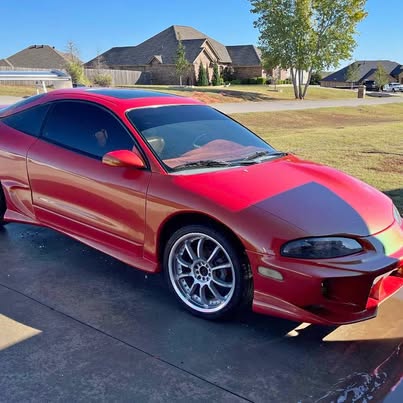
The 2G in buying detail, 1995–1999. The second generation is where most DSM buying happens, and it is really two ranges sharing a showroom. The RS and GS coupés are Chrysler-engined 420A cars — the RS the stripped base car, the GS better equipped with the same engine — priced and inspected as nineties coupés, full stop. The GS-T coupé and the GSX are Mitsubishi turbo cars in a different market entirely. Between those poles sits the Spyder, launched for 1996: the Spyder GS with the 2.4-litre 4G64, and the Spyder GS-T with the turbo engine and front-wheel drive. Memorise the Spyder rules now: there was never an all-wheel-drive Spyder, in any generation, and never a turbocharged Spyder after 1999. The 1997 facelift is the easiest dating cue in photographs. The 1999 GS with the OZ Rally package wears smart wheels and trim over the same 420A engine as every other GS — an appearance package, and any seller pricing it as a performance model is testing you. Leather and a sunroof move a 2G's price a little. The engine and drivetrain move it a lot.
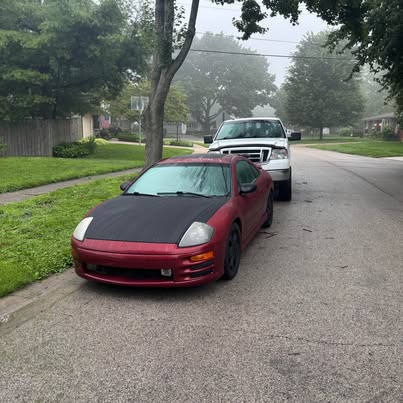
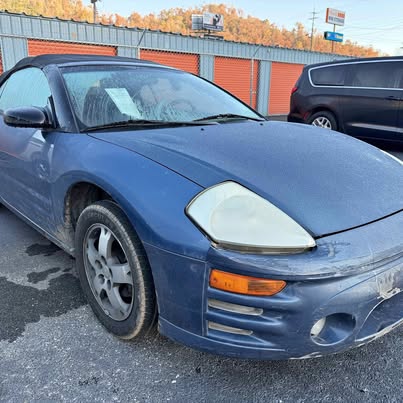
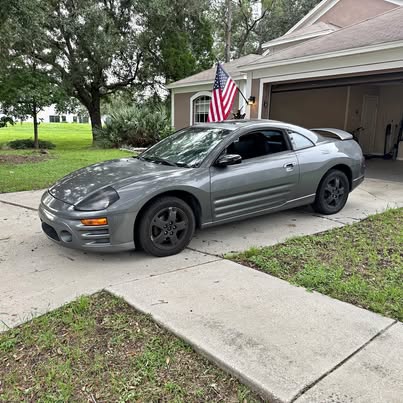
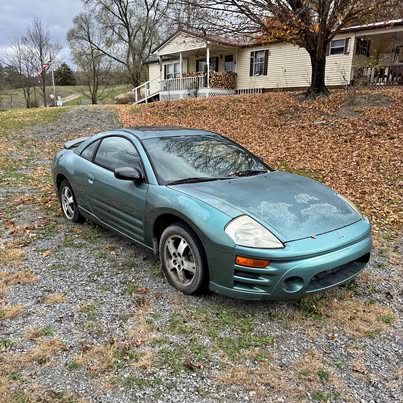
The 3G in buying detail, 2000–2005. The third generation is the car the current listings pool is mostly made of, and it rewards a different mindset: forget DSM, think well-kept used coupé. The GS with the 2.4-litre 4G64 four is the volume car and the GT with the 3.0-litre 6G72 V6 the flagship. For 2003 the GTS joined the range, using a variable-length intake manifold — Mitsubishi Variable Induction Management, MVIM — to lift the V6 to 210 hp; on a test drive a GTS should feel noticeably stronger in the mid-range than a plain GT, and if it does not, ask why. The Spyder returned as a GS and a GT, with a GTS Spyder alongside, all front-wheel drive, all without a turbocharger. Say that last clause again in front of any 3G listing, because the pool itself contains the counterexample: a blue 2003 Spyder from Shelbiana, Kentucky, listed as a GS-T. No such car was built. Mitsubishi built no turbocharged 3G in any body style, so a 2003 GS-T is not a rare car — it is a misdescribed GS or GT Spyder, to be re-identified from its VIN and engine bay and priced as what it actually is. An impossible trim does not make a car rare; it makes the listing unreliable.
The 4G in buying detail, 2006–2012. The final generation simplifies the choice to two honest options. The GS carries the 2.4-litre 4G69 MIVEC four and is a heavy car for its power, bought for style and equipment. The GT carries the 3.8-litre 6G75 V6, a six-speed manual if you are lucky, and performance that is genuinely strong in a straight line. Spyder versions of both followed the coupés, a 2009 facelift lifted the GT a fraction to 265 hp, and a Special Edition package closed the line for 2012. There are no hidden performance variants in the 4G, no turbo sleeper and no all-wheel-drive unicorn — the whole decision is mileage, belt evidence, top condition on a Spyder and whether the heavy, nose-led handling suits your driving.
Engines and gearboxes
The 4G63 in depth: the engine the model is really about
Spend the most time here, because the 4G63 is the reason the Eclipse has a model guide at all. It is a 1,997 cc double-overhead-cam 16-valve four with a cast-iron block, an aluminium head, hydraulic lash adjusters and twin balance shafts. In naturally aspirated 1G GS form it makes 135 hp and is underrated in its own right — smooth for a big four, willing to rev, and tough. As the turbocharged 4G63T it adds lower-compression pistons, piston-cooling oil jets, a knock sensor and a Mitsubishi TD04-family turbocharger — a TD04-14B on early manual 1G cars, milder units on automatics, and a Garrett-licensed T25 on the 2G, chosen for response rather than ultimate flow. Period outputs were around 190 hp for the 1G turbo cars and 210 hp for the 2G cars. The numbers understate the engine: the iron block and the depth of tuning knowledge around it are why the same architecture, evolved, powered the Lancer Evolution line, and why a 4G63 accepts tuning that would scatter most contemporaries.
For the buyer, the 4G63 divides into three questions. Which crank is in it? Which turbo and management are on it? And who has been inside it since? Six-bolt engines, in 1Gs built before roughly April 1992, have the generous thrust surfaces and the reputation for staying put; seven-bolt engines, fitted thereafter through the whole 2G run, carry the crankwalk risk examined in the problem areas — real, on a minority of manual cars, and testable. There is no shame in a seven-bolt car that measures correctly, only folly in one bought unmeasured. A stock 2G on its T25, stock injectors and factory airbox is the collectible specification, and every departure must be documented to be worth money rather than worry. The third question is answered by receipts, by fasteners — a bay full of mismatched hardware and fresh sealant tells its own story — and by how the car idles, boosts and returns to idle.
Supporting systems decide whether a good 4G63 feels good. The mass-airflow metering counts air before the turbo, which is why venting a blow-off valve to atmosphere — releasing already-counted air — makes a standard car run rich and stumble between gear changes, however good it sounds. The idle speed control motor and a carboned throttle body cause most hunting and stalling complaints, and are cleaning-and-testing jobs, not rebuilds. Budget for methodical recommissioning of hoses, gaskets and sensors on any stored DSM turbo car, and be suspicious of a stored car claimed to need nothing: the rubber has aged whether the seller has noticed or not.
The supporting fours: 4G37, 420A, 4G64 and 4G69
The 4G37 1.8 in the base 1G is a single-cam eight-valve engine making 92 hp, and its buying logic is one sentence: it is a simple, durable engine in the least desirable Eclipse, so the car must be bought for an exceptional shell at a base-car price, or not bought. Nothing about it is expensive to fix and nothing about it will ever make the car quick or valuable.
The 420A in the 2G RS and GS deserves fairer treatment than DSM folklore gives it. It is a 1,996 cc Chrysler double-overhead-cam 16-valve four, related to the Neon unit, making 140 hp, installed with its exhaust manifold at the front of the bay as you look in — the quickest visual separation from a Mitsubishi-engined car, whose turbo cars announce themselves with a turbocharger, heat shielding and intercooler pipework. It revs happily, returns decent economy and has no tuning ceiling worth chasing, which is a liberation at buying time: you are judging a used engine, not a project. Judge it on head gasket history, belt and water-pump evidence and oil leaks. A sweet 420A in a solid shell is a better purchase than a sick 4G63T in a rotten one, whatever the forum says.
The 4G64 is the quiet workhorse: a 2,351 cc single-cam 16-valve Mitsubishi four, a long-stroke relation of the 4G63 architecture, making 141 hp in the 2G Spyder GS and 147 hp in the 3G RS and GS. It trades revs for torque, shares the family's belt discipline including the balance-shaft belt, and lasts well when belts and oil have been respected. In the Spyder it is the engine most buyers should choose — the open car is a cruiser, and the 4G64 cruiser needs less and worries less than the turbo car. The 4G69 in the 4G GS is the modernised descendant: 2,378 cc, MIVEC variable valve timing, 162 hp, still belt-driven, and now old enough that its MIVEC oil-control components and belt history both belong on the inspection list. Neither engine carries a collector premium; both are bought on maintenance evidence, and both punish its absence the same way, with a snapped belt and bent valves.
The V6s in depth: 6G72 and 6G75
The 3G GT's 6G72 is a 2,972 cc V6 with a single overhead cam per bank and 24 valves, making 200 hp in GT form and 210 hp in the GTS, where the MVIM variable-length intake manifold fattens the mid-range in a way you can feel. It is the right engine for the 3G: smooth, torquey and unstressed. Its buying traps are neglect traps. The timing belt is deferred because the engine gives no warning. The hydraulic lash adjusters tick when oil changes have been stretched, telling you about the service history in real time. The rear bank's spark plugs are an intake-off job and routinely skipped, so a full plug record marks a cared-for car. The distributor on earlier cars weeps oil from perished internal seals and causes misfires blamed on everything else first.
The 6G75 in the 4G GT is the family's full-size answer: 3,828 cc, MIVEC, 263 hp at launch and 265 hp after the facelift, with torque that makes the heavy 4G feel effortless. It is the strongest engine fitted to a standard Eclipse and the simplest flagship to buy — no turbo, no all-wheel drive, no crankwalk folklore, only the same V6 discipline of belts, oil and rear-bank neglect on a newer fleet. A 4G GT with a dated belt invoice and a quiet cold start is one of the most straightforward performance buys in this guide.
Gearboxes, clutches and the all-wheel-drive system
Five-speed manuals are the default DSM story, but they are not one gearbox. Non-turbo Mitsubishi-engined cars used the F5M22 family. The 420A cars used Chrysler's NV-T350, a lighter, notchier box — judge it against another NV-T350, never against a Mitsubishi box, or you will condemn a healthy gearbox for its accent. Turbo front-drive cars used the stronger F5M33. The GSX used the W5M33 manual with a centre differential and viscous coupling, a transfer case, a two-piece propeller shaft on carrier bearings, and a rear differential that sometimes carried a limited-slip unit, declared by a sticker on the housing itself. That sticker is worth kneeling for: verify it on the car, never repeat it from the listing.
Automatics divide the same way: the F4A33 four-speed family behind Mitsubishi engines, Chrysler's A604 behind the 420A — the fussiest box in the range for fluid, suffering measurably on generic ATF in place of its specified fluid — and automatic turbo cars tuned more mildly and worth less than manuals today. The 3G pairs its engines with a five-speed manual or four-speed Sportronic automatic; the 4G offers a six-speed manual behind the V6, the driver's pick of the late cars and the hardest to find unabused.
Clutch judgement on a turbo manual is inseparable from crank judgement: a pedal that behaves differently in left-hand turns means crankwalk until proved otherwise, and the full test is in the inspection section. Gearbox oil is the cheapest diagnostic you own — fresh correct oil transforms some notchy changes and exposes the genuinely worn synchromesh no oil will save. As negotiation orientation, a DSM manual gearbox rebuild is typically a specialist job in the high hundreds to under two thousand dollars, a clutch replacement in the mid hundreds to just over a thousand dollars fitted, and transfer-case resealing a few hundred dollars while it is still only weeping. Finding the fault before the sale moves the cost to the right side of the negotiation.
Problem areas
Identity traps first: the faults that are not mechanical at all
Begin with the failure that costs Eclipse buyers more money than any bearing: buying a different car from the one described. A turbo 3G or 4G, in any trim or body style, does not exist as a factory car — the 2003 GS-T Spyder in the current pool, a blue car from Shelbiana, Kentucky, is the standing example, to be treated as a misdescribed GS or GT until the VIN and engine bay prove a documented conversion, and then priced as a conversion, not a rarity. An all-wheel-drive Spyder does not exist in any generation. A GSX without a rear differential, transfer case and propeller shaft is not a GSX, whatever is stuck on the tailgate. A 2G wearing GS-T badges over a 420A bay is a GS with jewellery. A Talon rebadged as an Eclipse is still a good car, but it is bought at Talon money. And a 1999 OZ Rally GS is an appearance package over a standard 420A car, full stop.
The defence is procedural. Read the VIN at the windscreen base and on the door-jamb label and confirm year and model against the title. Open the bonnet and name the engine aloud — turbocharger present or absent, Chrysler layout or Mitsubishi layout, four cylinders or six — before you look at a badge again. On a claimed GSX, kneel and confirm the rear differential exists. On a claimed Spyder GS-T, confirm the car is a 1996 to 1999 car first, because outside those years the claim is impossible on its face. Sellers who made an honest mistake correct it gracefully. Sellers who argue with the engine in front of both of you have told you how the negotiation will go.
Timing belts: the fault that organises all the others
Every engine in this guide — 4G37, 4G63, 420A, 4G64, 4G69, 6G72 and 6G75 — drives its camshafts by belt, and every one is an interference design in which pistons and valves meet violently when the belt fails. A snapped belt is never a roadside inconvenience here: it is a cylinder-head rebuild at best, typically in the fifteen hundred to twenty-eight hundred dollar range, and a replacement engine at worst. That is why belt evidence outranks mileage, paint and tyres combined in Eclipse valuation.
The intervals vary by engine and era, roughly 60,000 miles on the DSM-era cars and stretching towards 100,000 miles on the later cars, but on vehicles of this age the calendar is the binding constraint: a belt fitted twelve years ago is due at any mileage. A proper job is a system job. On the Mitsubishi fours it includes the smaller balance-shaft belt behind the same cover — whose failure can derail the main belt — plus tensioner and idlers and, where the water pump is belt-driven as on the 420A, the pump itself. Orientation costs at an independent shop run roughly five hundred to nine hundred dollars in parts and labour for a four-cylinder car done completely, and eight hundred to fourteen hundred dollars for a V6. A verbal assurance is not evidence; a dated invoice naming belts and tensioners is. Price the full job into any car without it, on day one. And note the belt's quiet accomplice: cam and crank seals weep with age on every engine here, oil inside the cover degrades the belt, and a belt job that ignores leaking seals is a half job — so read the cover seams for oil misting as carefully as you read the paperwork.
Crankwalk: the 2G turbo test, explained properly
Crankwalk is excessive fore-and-aft movement of the crankshaft caused by wear of the thrust bearing meant to control it, and on the seven-bolt 4G63 it is the model's defining mechanical risk. The thrust bearing carries the load every time the clutch is pressed, which is why manual cars dominate the statistics and automatics rarely suffer. As it wears, end-play grows beyond the factory limit — roughly a quarter of a millimetre at the service limit, against a few hundredths on a healthy engine — and the crank begins to travel. In the classic presentation the clutch pedal stays down, or its bite point wanders, when pressed during a left-hand turn. Later the trigger plate strikes the crank-angle sensor, bringing ticking, misfires and erratic running, and the end of the story is a bottom end damaged beyond economic repair.
Now the corrections, because the folklore harms buyers in both directions. Crankwalk is not inevitable and not a reason to reject the 2G as a model — the honest incidence is a minority of engines, concentrated in mid-run 2G manual turbo cars, and thousands of seven-bolt engines have lived long lives unwalked. Equally, low mileage is no defence, an undocumented six-bolt swap claim is no defence, and a car cannot be cleared by how sweetly it idles. It is cleared by measurement: engine off, dial gauge against the crank pulley, pry bar moving it gently fore and aft, a reading in figures rather than feelings. Any perceptible clunk is a failed test. A failed test makes the car a shell, a parts proposition or a six-bolt build candidate, priced as such. A passed test, recorded with its date, is one of the most valuable documents a 2G turbo car can carry into its next sale — so make it and keep it.
Rust: strut towers, and everywhere the water goes
If crankwalk is the 2G turbo car's famous fault, strut-tower rust is its fatal one, because it attacks the structure the front suspension bolts to. The towers corrode from inside the engine bay, around the strut top mounting and along the seams where tower meets inner wing. The treachery is presentational: a 2G can show clean sills, shiny arches and a detailed bay while the metal around its strut tops is flaking or perforated, because sellers detail what buyers photograph and buyers photograph paint. Your inspection reverses the priority: bonnet up, torch on both towers in full, and a screwdriver handle pressed into any bubbling. Sound metal rings and resists; rotten metal crunches, flakes and shows daylight. Proper repair — strut out, rot cut back, new metal welded with geometry preserved — is a fabrication job typically in the six hundred to fifteen hundred dollar range per side, and a tower that has cracked or shifted is a walk-away at ordinary money, because you are buying a geometry question, not a repair.
The rest of the shell follows the water. The 1G rusts in the classic pattern: sills, rear arch lips, floor edges, door bottoms, around the hatch. All generations trap mud behind arch liners and leak at tail-lamp seals, spoiler mountings and the rear washer, filling the spare-wheel well — lift the spare on every car and read the well like a rain gauge. Sunroof drains block and empty into the footwells, rusting floors from the inside under intact-looking carpets. Underneath, subframes corrode at their mountings, brake lines rust along the rear run, and DSM fuel tank straps and filler necks are routine renewals. The 3G and 4G were better protected and still go at rear arches, subframe mounts and Spyder sill structures. Bury the myth that a Japanese-designed car of this era does not rust: these were built in Illinois and wintered in the salt belt for decades, and the clean survivors are the garaged and Southern cars. Their premium is scarcity, not sentiment.
Spyder-specific problems: tops, seals and water management
The Spyder deserves its own problem section because its faults are additive: everything a coupé suffers, plus a folding roof, its mechanism, its seals and the water all three admit when they age. On any Spyder, judge the top as a system in a full cycle, down and up, more than once: hesitation, uneven movement, a straining motor or a latch that needs persuading are the first instalments of a repair, not quirks. A replacement hood with fitting is typically a nine hundred to sixteen hundred dollar job, and a perished rear window or failed tension straps are real deductions even when the cloth looks presentable.
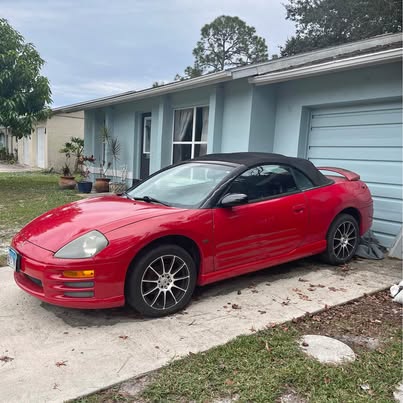
Water is the second system. The hood well behind the seats holds what the seals miss against the rear bulkhead; A-post and scuttle seals perish and feed the footwells; trunk seals leak onto a floor that rusts under its trim. The pattern is consistent: damp carpets blamed on weather, mustiness blamed on age, floor corrosion found a year later by the buyer who lifted nothing. Your nose is an instrument on a Spyder viewing — a car that has managed water badly smells of it before you open a door — and your hands finish the job, under carpets, in the hood well, in the spare well. Florida Spyders like the red 2001 GS Spyder from North Port in the pool trade salt risk for sun and storm risk; neither origin is a verdict. The seals, the wells and the floors are the verdict.
Engines beyond the headlines: gaskets, electronics and modifications
The 420A's signature fault is its early cylinder head gasket, leaking oil externally at the rear corner of the head. The revised multi-layer steel gasket is the permanent fix, typically a seven hundred to twelve hundred dollar job with the head checked — which is exactly how a weeping rear head corner should be priced, not as a wipe-down. Its belt-driven water pump makes pump and belt one invoice.
The 1G's signature electronic fault is its engine computer: the electrolytic capacitors leak with age and produce intermittent cutting-out, a clicking main relay and no-starts that resolve themselves. A specialist refurbish is typically a two hundred to four hundred and fifty dollar job, and any 1G without evidence of it should be budgeted for it. Across all DSM cars, idle faults trace to the idle speed control motor, a carboned throttle body and perished vacuum hose, in some order — weekend jobs, not wallet jobs. Turbo health is checked by hand and ear: minimal compressor side play is normal, in-and-out play is not, and the 2G's cast manifold cracks between its centre runners often enough that you should look for the soot line and the cold tick that seals as it warms.
Modifications are the final engine problem, and on DSM turbo cars they are the median case, not the exception: boost raised with no fuel to match, a large turbo on standard injectors, a blow-off valve vented to atmosphere on mass-airflow metering. None of that condemns a car built by a competent owner with receipts and a coherent parts list. All of it condemns paying standard-car money for undocumented modification, because you are buying uncertainty, and uncertainty on a turbo engine is priced in pistons. The standard car is the valuable car; the documented build is a specialist purchase; the undocumented build is a project.
Driveline, suspension, brakes and the ageing cabin
Manual synchromesh wears on second and third gears first across the DSM boxes, showing as a baulk on a brisk change that vanishes when the change is slowed — try both tempos, and try fresh correct-specification oil before condemning, because the wrong fluid manufactures symptoms in these boxes. The GSX driveline's three oil-filled units are each forgotten independently by owners who changed only the engine oil: transfer cases leak at the output yoke, a fault serious enough to have drawn a factory safety recall because a case run dry can lock the driveline, so yoke and case level are safety checks, not cosmetics. Carrier bearings perish and clunk; rear differentials whine on ancient oil. A GSX with documented fluids in all three units is rarer than one with a polished bay, and should be valued like it.
One safety item stands alone on the 2G: the curved lower front control arm's ball joint was recalled because a worn, corroded joint can separate and drop the corner of the car. Check both front lower ball joints on every 2G, without exception. Around it, the wear list is the honest age list: tired dampers, humming wheel bearings, rattling anti-roll-bar links, weeping steering racks, seized calipers, and dead air conditioning — budget four hundred to a thousand dollars for a dead system rather than accepting the traditional regas story. The cabin ages by sun and scarcity: the 3G dashboard cracks across its top in sunny climates, a cosmetic fault with a structural price because good used dashboards are drying up, and every generation's trim moves further into used-only territory each year. Mechanical faults have prices; missing trim increasingly has only apologies.
How to inspect one
Inspect an Eclipse in this order: identity, structure, the generation's signature test, then everything else. Resist the test drive until step eight — the faults that matter are all found standing still. Bring a torch, a magnet wrapped in cloth, a pry bar if the seller allows it, a dial gauge for a serious 2G turbo viewing, and a code reader for any car from 1996 onwards. Allow a full hour, longer for a Spyder or a GSX.
- Settle identity before condition. Read the VIN at the windscreen base and the door-jamb label, and match year and model against title and listing. Open the bonnet and name the engine aloud: turbocharger and intercooler pipework, Chrysler 420A layout, Mitsubishi four, or V6. Apply the impossibility rules from the problem areas without exception — a turbo 3G, an all-wheel-drive Spyder, a GSX with no rear differential — and re-describe the car honestly before any discussion of price.
- Read the paperwork for the belt. Ask for the timing-belt invoice and record its date and mileage; on a Mitsubishi four, confirm the balance-shaft belt and tensioners were included, and on a 420A car, the water pump. Dated evidence inside the interval, in years as well as miles, clears the item. Anything less means the belt job is written into your offer before you discuss any other fault, because on an interference engine this is the one deferred job that can end the engine without warning.
- Do the strut-tower examination on every 1G and 2G. Torch on both front towers: top surfaces, front and rear faces, seam and sealer lines. Press a screwdriver handle into any bubbling or flaking. Original, unbroken metal with honest surface ageing passes. Perforation, cracking, previous plating or any sign the tower has moved converts the viewing into the structural conversation priced in the rust section — and on a car at ordinary money, ends it.
- Walk the rest of the shell. Sills, arch lips, door and hatch bottoms, then the spare-wheel well with the spare lifted, reading for tide marks. Lift the footwell carpets where sunroof drains terminate. On a Spyder, add the scuttle, A-post bases and hood well. Treat fresh, uniform underseal blown over seams as a question, not a gift.
- On a seven-bolt turbo car, measure the crank. Engine off, handbrake set. Dial gauge against the crank pulley if you have one; pry the pulley gently fore and aft. A few hundredths of a millimetre of movement is a healthy engine. Movement you can feel as a clunk, or read anywhere near the quarter-millimetre service limit, is the crankwalk failure from the problem areas: stop, and reprice the car as a project or walk away. Record a passing measurement — it becomes part of the car's value story when you sell.
- Cold-start the engine, genuinely cold. Arrange it beforehand and touch the manifold on arrival to prove it. A healthy engine of any family here starts promptly, ticks briefly at most from its lash adjusters and settles to an even idle. Extended cranking, blue smoke, a hot-start reluctance the seller describes as character, or ticking that never fades each map to a named fault in the engine sections. On a 1G, ask directly whether the ECU capacitors have been replaced, and treat any history of random cutting-out as that job introducing itself.
- Test the turbo as a system, if the car has one. Intake hose off, spin the compressor wheel by hand: it should turn freely, with minimal side play and no in-and-out play. Check the exhaust manifold for the centre-runner crack and its soot line. On the road in step eight, boost should build cleanly, hold steadily and leave no smoke on the overrun, and a car venting its blow-off valve to atmosphere on standard metering should still idle and return to idle cleanly — stalling between gears confirms the metering fault, not a tuning feature.
- Drive everything, twice: once gently, once briskly. Work every gear at both tempos for synchromesh baulking into second and third, feel the clutch bite point and test for slip in a high gear under load or boost, and on a seven-bolt manual repeat the behavioural crankwalk test from the problem areas — clutch pressed through a slow left-hand turn, feeling for the pedal dropping or the bite point wandering. On an automatic, insist the drive starts cold, watch for flare and delayed engagement, and on a Sportronic car exercise the manual gate in both directions.
- On a GSX, get the car in the air. Check the transfer-case level and output-yoke area for the leak the recall addressed, the carrier bearings for play, the rear differential for leaks and its limited-slip sticker, and fluid condition in all three units. A seller who refuses a lift inspection is asking you to price three unknown gearboxes as healthy. Decline, or price them as unhealthy.
- Clear the safety items by name. Front lower ball joints on every 2G, for play and split boots. A firm stop from speed, straight, with no pull, pulse or long pedal. Tyre ages off the sidewalls as well as tread — an ancient set on a turbo car is a maintenance statement. Then brake lines and subframe mountings underneath.
- Cycle the Spyder, scan the modern car. Run any Spyder top through two full cycles yourself, work every latch, then hunt the water: hood well, boot floor, carpets, spare well, and your nose before any of them. On any 1996-onwards car, plug in the code reader: no stored faults beyond the trivial, readiness monitors set. Freshly cleared codes with unset monitors mean the memory was wiped for your visit. Ask what was in it.
- Finish inside, judging the unreplaceables. Dashboard first on a 3G — uncracked is a genuine premium — then seat bolsters sat in, not looked at, door cards, switchgear, and on a DSM car the archaeology of modification: gauge pods, pillar holes, stray wiring. Work every window, the sunroof, the air conditioning and the heater. Trim you cannot buy new condemns a car more surely than paint you can commission.
Values
Read the computed market summary beneath this guide as four markets sharing a badge, because a single figure drawn across all Eclipses describes none of them honestly. The DSM turbo cars are enthusiast collectibles, traded between people who know what crank end-play means. The non-turbo DSM cars are period coupés whose worth is condition and nothing else. The 3G and 4G cars are modern used coupés, valued on mileage, service evidence and equipment in the ordinary way, with the V6 versions carrying a modest and durable premium for pace and specification. When the market block shows you a spread, your first task is to decide which of those four markets the car in front of you actually belongs to — and the identity work in this guide, not the seller's description, is what decides it.
Inside the turbo market, the condition spread is the widest in this guide's territory, and it is rational. The distance between a documented, standard, measured GSX and an undocumented, modified one with unknown belt history is not a percentage adjustment; it is a multiple, because the second buyer is purchasing a recommissioning programme whose contents reveal themselves over the first year. Six-bolt 1G cars, standard 2G GSXs with passing crank measurements, and any turbo car with a complete dated file sit at the top and earn their place. Documented builds occupy a middle ground that rewards expertise — you are valuing the builder as much as the car. Project turbo cars trade between enthusiasts at levels assuming workshop access and an engine-out future; a buyer without both should never mistake that tier for a cheap way in.
Asking and achieved figures part company most dramatically where fame does the asking. The 2G's film-driven celebrity means sellers routinely ask documented-car money for undocumented cars, and recorded sales are the corrective: cars change hands when the price reflects the inspection. Eclipse negotiation is properly itemised — belt evidence absent, tower repair outstanding, synchromesh tired, top doubtful, each finding carrying its repair estimate from the problem areas. On later cars the arithmetic is plainer: a missing belt history or dead air conditioning moves the price by roughly what the work costs, and no mythology defends the number.
Two premiums deserve scepticism. The Spyder premium is real but strictly condition-led: a dry car with a sound top earns it, and a car needing a hood, hydraulics and floor attention hands most of it back. The manual-gearbox premium on turbo and V6 cars is real and structural, but it purchases a healthy gearbox and clutch, not the mere presence of a third pedal.
The project-versus-driver gap is the last lesson. On a DSM car the gap between a running project and a sorted driver is consistently smaller than the cost of closing it. On a 3G or 4G it is honest used-car arithmetic that can favour a handy buyer. Know which gap you are standing in before you bid — on this model the cheapest car in the listings is very often the most expensive Eclipse you can buy.
Parts and ownership
The Eclipse ownership proposition splits by generation. The 3G and 4G cars are the easy end: built in volume from sedan-derived components, with service items, belt kits, suspension and brake parts still widely stocked through ordinary motor factors at ordinary prices. If you want an Eclipse a generalist garage can maintain from the shelf, buy a late car and keep its belt evidence current.
The DSM cars split in two directions at once. The 4G63 enjoys one of the deepest enthusiast aftermarkets of any engine of its era — gaskets, belt kits, clutch kits, gearbox internals, sensors and a performance catalogue sustained by the same architecture's competition career in the Lancer Evolution — while 420A spares flow through the Neon and Mopar channels just as freely. Join the marque forums before buying, not after: the classifieds, archived procedures and collective memory are a working parts source, including the specialists who refurbish 1G engine computers and rebuild DSM gearboxes.
What dries up, on every generation, is trim. Dashboards — the 3G's above all — door cards, seat fabrics, switchgear, badges and the Spyder's seals, latches and top components are used-market items now, priced by scarcity and patience. So buy the interior you can live with permanently and the mechanicals you can fix on a schedule, never the reverse: a mechanically tired car with a perfect cabin is a programme of known costs, while a sweet engine in a car with a cracked dash and missing Spyder hardware is a hunt with no guaranteed end.
Running costs are period-honest: four-cylinder cars are gentle on fuel driven gently, turbo cars and the big V6 generous in proportion to how they invite you to drive. Insurance on DSM turbo cars increasingly belongs on an enthusiast or agreed-value policy, with every modification declared. Servicing is conventional work for any competent independent, and the specialist knowledge — crank measurement, gearbox oil specification, transfer-case levels, balance-belt discipline — is documented exhaustively by the owner community. Adopt a calendar rhythm: belts on age as well as mileage, driveline oils on a schedule the original book barely mentioned, towers and sills wax-protected yearly near salt. Fund the first year properly — belt service if evidence is short, fluids throughout, aged tyres, one contingency item — and the second year is famously cheap. Starve it, and the Eclipse presents its invoices in a bunch.
Which one to buy
- The definitive Eclipse: a 2G GSX, manual, standard or lightly and documentedly modified. Pass the crank measurement, the tower examination and the belt-evidence test, and you own the famous car in its best form — the strongest long-term value in the range and the one future buyers will queue for.
- The connoisseur's DSM: a six-bolt 1G GSX, 1990 to early 1992. The strongest bottom end Mitsubishi fitted, the rally-bred original, and less fame-taxed than the 2G. Buy the best shell you can find and verify the build date and engine documentation as if they were the car, because for value purposes they are.
- The value turbo: a GS-T coupé. Front-wheel drive costs the GS-T its halo and a large slice of its premium, while the engine, the pace and most of the experience survive intact. A documented GS-T is the cheapest honest route into a turbo DSM — with the same crank, belt and tower tests applied in full.
- The Spyder to buy: a 2G GS-T Spyder for the full story, a 3G GT Spyder for the easy life. The turbo Spyder is a 1996 to 1999 car only — any later GS-T Spyder claim fails on its face — and the V6 Spyder is the comfortable, parts-friendly alternative. In both cases judge top, seals and floors in that order, and buy the driest car, not the shiniest.
- The modern coupé buy: a 3G GTS or a 4G GT with a dated belt invoice. The GTS intake gives the 3G real mid-range distinction, and the 4G GT's 3.8 V6 is the strongest standard engine in the model's history. Neither carries DSM mythology or DSM pricing, and both are bought exactly like the good used coupés they are.
- The budget entry: a clean non-turbo car bought on condition alone. A tidy 420A 2G, a 4G64 3G or a 4G69 4G GS is honest transport. Pay for shell, interior and service file, never for a badge or an appearance package.
The overriding rule: identify the car from its VIN and engine bay, measure what this guide tells you to measure, and pay for documented condition — on an Eclipse, the badge is the least reliable part fitted to the car.
See the 9 Eclipse Spyder cars currently listed.
For sale now
Expand
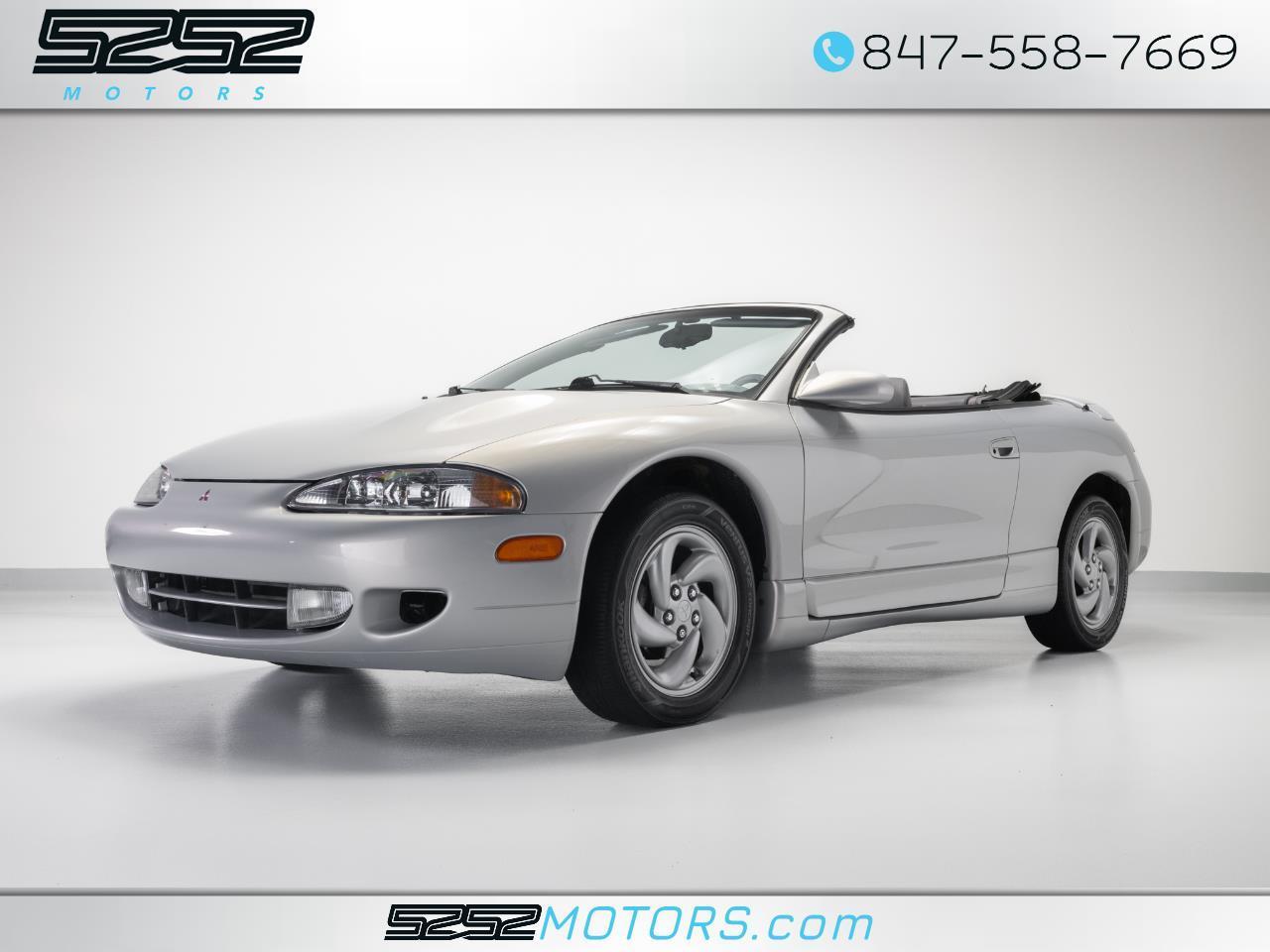
$2,000Expand
What they sell for: Eclipse Spyder sale prices.