
Mitsubishi Mighty Max Regular Cab Short Bed buyer's guide
Mitsubishi Mighty Max Regular Cab Short Bed -- the model's own buyer's guide: variants, values and what to check.
Years listed: 1983-1994 · Series: Mighty Max
# Mitsubishi Mighty Max — Buyer's Guide
Overview and history
You are not looking at a rare truck, and that is exactly the point. The Mitsubishi Mighty Max is the compact pickup America bought quietly for a decade and a half, used hard, and mostly threw away — which is why a straight, unrotted survivor now stops you. It is a simple, honest, body-on-frame workhorse from the era when a small pickup was genuinely small: narrow enough for a garden gate, light enough for a four-cylinder engine to move properly, and mechanical enough that you can understand nearly everything on it with a workshop manual, a multimeter and a Saturday.
The truck starts in Japan in 1978 as the Mitsubishi Forte, soon renamed L200. Chrysler, which owned a stake in Mitsubishi and had no small pickup of its own, imports it from 1979 as the Dodge Ram 50 and, briefly, the Plymouth Arrow Truck. When Mitsubishi sets up its own American sales arm in 1982, the same truck gains a third badge — Mighty Max — and the three versions run side by side, differing in grilles, badges and trim rather than substance. The Plymouth fades out in the early 1980s, the Ram 50 continues to 1993, and the Mighty Max runs to the middle of the 1990s.
There are two generations, and you need to know which one stands in front of you. The first generation, sold as a Mighty Max from 1982 to 1986, is the squarer, simpler truck: carburettor engines only, the big 2.6-litre Astron four as the prestige option, an optional turbo diesel for a couple of years, and interiors trimmed to a standard that makes a garden shed look upholstered. The second generation, from the 1987 model year to the end of American sales in the mid-1990s, rounds the cab, adds an extended MacroCab body, brings fuel injection and a 3.0-litre V6, and quietly turns the truck from a farm implement into something you can commute in. Underneath, both generations keep the same formula: a separate ladder frame, independent front suspension with torsion bars, a leaf-sprung live rear axle, rear-wheel drive as standard and part-time four-wheel drive as the option that transforms both the truck and its value.
Why buy one now? Three honest reasons. First, size: no modern pickup gives you this combination of a usable bed and a footprint a city driver can place without thought. Second, character: the four-cylinder trucks drive with a lightness and visibility — thin pillars, low scuttle, upright seat — that you cannot buy new. Third, mechanical transparency: there is no sealed-for-life anything here, and the worst faults announce themselves to the tests in this guide rather than hiding in software. Against that, you accept a truck built down to a working price and usually maintained by owners who bought it because it asked for so little. Your job is separating the minority that were kept ahead of their needs from the majority that were simply used up.
The models
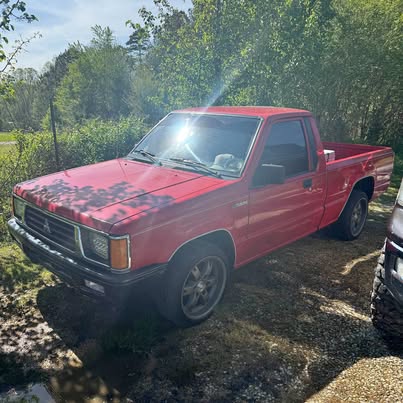
The range looks complicated in period brochures and is simple in the metal. Every Mighty Max is a regular-cab or extended-cab pickup on one of two bed lengths, with rear- or four-wheel drive, a four-cylinder or (in the second generation) a V6, and a trim ladder from vinyl-seated austerity to carpeted respectability. Learn the shapes first, the badges second.
The first-generation truck, 1982 to 1986, comes as a short-bed standard model and a long-bed model with the extra length in the load box and wheelbase. The Sport usually carries the 2.6-litre engine and a five-speed gearbox. Four-wheel drive arrives early in the run; those trucks sit taller, carry manual locking front hubs, and wear their transfer-case lever beside the gear lever. A one-ton-rated long-bed variant appears in the second generation with heavier rear springs — check any truck advertised as one, because the rating lives in the springs and axle, not in the decal.
The second generation, from 1987, is the truck most buyers should be shopping for. The cab is roomier, the dash is a proper moulded design, and the MacroCab extended cab — with its small rear bench and stowage behind the seats — makes the truck viable for anyone over six feet. Engines modernise in stages: the carburettor 2.0 and 2.6 run on at first, then the fuel-injected 2.4 takes over as the standard four, and the 3.0 V6 tops the range in two- and four-wheel drive. Air conditioning, power steering and an automatic gearbox are options scattered through the range rather than tied to one badge, so verify each truck individually.
You will cross-shop the Dodge and Plymouth siblings whether you plan to or not. The Ram 50 follows the same two-generation arc and in its final seasons is effectively a second-generation Mighty Max with Dodge badges. The Arrow Truck is a first-generation-only name and the rarest badge of the three, which makes it interesting to collectors and irrelevant to everyone else: mechanically it is the same truck. In all cases the VIN plate and under-bonnet labels, not the tailgate, settle what you are looking at — and tailgates get swapped, so check.
| Model | Years | Engine | Output | Built | Character |
|---|---|---|---|---|---|
| Mighty Max standard, short bed | 1982–1986 | 2.0 4G63 carburettor | about 93 hp | not published separately | The basic first-generation truck; light, simple, slow |
| Mighty Max / Ram 50, 2.6 | 1982–1989 | 2.6 4G54 Astron, MCA-Jet | about 105–110 hp | not published separately | The torquey period favourite; the head needs the checks below |
| Mighty Max / Ram 50 diesel | 1983–1985 | 2.3 4D55, later turbo 4D55T | about 62 hp, turbo about 80 hp | not published separately | Rare, economical, leisurely; a survivor niche of its own |
| Mighty Max second generation | 1987–1989 | 2.0 4G63 or 2.6 4G54 | about 93–110 hp | not published separately | The rounded cab on the early engines; a transition truck |
| Mighty Max 2.4 | 1990–mid-1990s | 2.4 4G64 fuel injection | about 116 hp | not published separately | The sensible default: injected, torquey, plentiful |
| Mighty Max V6 | 1990–mid-1990s | 3.0 6G72 V6 injection | about 143 hp | not published separately | The relaxed cruiser and the strongest tower of the range |
| Mighty Max MacroCab | 1987–mid-1990s | 2.4 or V6, as above | as above | not published separately | The extended cab; the one that fits real adults and real life |
| Mighty Max 4x4 | 1983–mid-1990s | 2.6, 2.4 or V6 by year | as above | not published separately | Part-time four-wheel drive; the premium and the rust risk both rise |
A word about that "built" column, because honesty here saves you money later. Mitsubishi did not publish clean per-badge, per-trim American production figures for these trucks in a form you can verify, and any seller quoting you an exact build count for, say, a 1991 MacroCab V6 is repeating a number you cannot check. Pay for survival and condition, never for a production figure nobody can document.
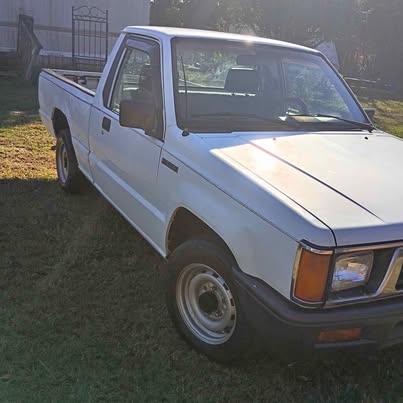
Bed and cab shapes matter more than trim: the short bed is about six feet, the long bed about seven and a half on a longer wheelbase, and the MacroCab is the cab most buyers actually want, which is why good ones are chased.
Engines and gearboxes
Four engine families power these trucks, and you buy a different ownership experience with each one, so identify the engine by looking at it — not from the advert, which will call everything a 2.6 by reflex. The Astron is a chain-driven, balance-shafted giant of a four from the 1970s. The Sirius fours are belt-driven, then injected and torquier in 2.4 form. The V6 is a car engine doing truck work. The diesel is a rare period piece with its own rules.
The Astron fours: 2.0 G63B origins and the 2.6 4G54 with MCA-Jet
The 2.6-litre 4G54, part of Mitsubishi's Astron family and badged G54B in American service, is one of the largest four-cylinder engines ever sold in a production vehicle: single overhead cam, two valves per cylinder, and dimensions chosen for torque rather than revs, which is exactly right for a working pickup. It also served in everything from the Starion coupé to Chrysler's K-cars, so its habits are thoroughly documented. The smaller 2.0-litre G63B, sold alongside it in the early trucks, is the economy choice: less torque, more willingness to rev, and a simpler life for the owner who does not tow.
The 4G54 runs a timing chain, not a belt, and a second chain drives the two counter-rotating balance shafts — Mitsubishi's silent shafts — that cancel the big four's vibration. Healthy, the engine is uncannily smooth for its size. Worn, you hear a rattle from the front of the engine at cold start that quiets as oil pressure rises, and feel a coarseness at cruising speed that owners blame on tyres or mounts. Chain and guide renewal is a front-of-engine strip job, typically $700–1,400 in parts and labour, and it is worth doing completely — chains, guides, tensioners and oil-pump drive — because opening the front cover twice costs more than the parts you saved.
The cylinder head carries the system's signature technology and its signature fault. To meet American emissions rules, Mitsubishi developed MCA-Jet: a third, small jet valve in each chamber, fed by its own intake passage, which fires a jet of mixture across the chamber to swirl the main charge and burn it cleanly. It works, but the jet valve is a small, hot, hard-worked component threaded into an aluminium head that expands and contracts around it, and the head's known weakness — detailed in the problem areas — is cracking in the thin metal between the jet valve, the spark plug hole and the intake valve seat. Hold the buying rule: a 2.6 that uses coolant, shows combustion gas in the expansion tank or has overheated is a truck whose head you price as suspect until the tests below clear it. A quality rebuild with new jet valves and guides lands at $900–1,800 fitted, which is real money against the truck's value and exactly why the inspection matters.
Fuelling on the Astron trucks is a Mikuni downdraught carburettor, in later American form a feedback unit taking instructions from a simple control unit and an oxygen sensor. The carburettor itself is well made; the troubles come from age — worn throttle shafts, perished vacuum hoses by the dozen, a sticking choke, and previous owners who adjusted everything adjustable in the wrong order. A proper rebuild with a quality kit runs $250–500, and a truck that idles cleanly, pulls without a flat spot and starts hot without pumping the throttle has usually had exactly that done.
The Sirius fours: 2.0 4G63 and the injected 2.4 4G64
The second four-cylinder family is the one to live with. The 4G63 2.0 and its tall-deck, longer-stroke brother the 4G64 2.4 belong to Mitsubishi's Sirius line: belt-driven single overhead cam, eight valves in American truck tune, and a bottom end with the same balance-shaft arrangement as the Astron in most versions. In the Mighty Max the 2.0 appears first with a carburettor at about 93 hp; the 2.4 arrives with Mitsubishi's ECI-Multi electronic fuel injection and makes about 116 hp with a spread of torque that flatters the truck everywhere — it pulls from low revs like the 2.6, revs more cleanly, and returns better economy doing it. If you remember one engine recommendation from this guide, make it this: the injected 2.4 is the sweet spot of the entire range.
The timing belt is the family's governing service item. A small separate belt behind it drives the balance shafts, and both live under covers that hide their condition completely. The interval is 60,000 miles, and a neglected belt does not warn before it fails — a snapped belt bends valves, because this is an interference design in which piston and valve occupy the same space at different times and only the belt keeps the appointment diary. A full job with both belts, tensioners, idlers and the water pump runs $500–950 at an independent. On any truck without a dated, receipted belt change, that job is not a negotiating point, it is your first purchase, priced into your offer. Ask when it was done, then ask to see the invoice; a dated sticker on the cover is better than nothing and worse than a receipt.
The injection hardware — throttle body, injectors, in-tank pump, pressure regulator — is conventional and durable, with one age-related exception covered in the problem areas: the engine-control unit's electrolytic capacitors, which leak with age. Idle quality tells you most of what you need: a healthy 2.4 settles to a steady idle within a minute and never hunts, surges or stalls at junctions. Hunting points first to vacuum leaks and a gummed throttle body or idle-speed control motor, all cheap; erratic running with a hot-restart refusal points deeper, toward the ECU. A throttle body and idle motor service runs $120–250; a professionally repaired ECU runs $250–450.
The V6: 3.0 6G72
From 1990 the top of the range is the 3.0-litre 6G72 V6, a 60-degree, single-overhead-cam-per-bank, 12-valve engine shared with a long list of Mitsubishi and Chrysler cars. It makes about 143 hp, and what it sells is not speed but ease: it tows the heaviest loads the chassis allows without drama, climbs grades in top that have the fours reaching for third, and in a light regular-cab truck makes the Mighty Max genuinely brisk by period standards.
The V6 has two governing ownership facts. The first is its timing belt, on the same 60,000-mile discipline as the fours and with the same interference consequence if it lets go — typically $1,800–3,000 for a top-end rebuild after a failure, against $600–1,000 for the preventive belt, tensioner and pump job. The arithmetic argues itself. The second is oil control: the 6G72's valve stem seals harden with age, and the classic symptom is a puff of blue smoke on start-up and a longer trail on the overrun, clearing as you accelerate. Seals can be replaced with the heads in place, typically $600–1,100; ignore the smoke for years and you add consumption and fouled plugs to the bill. Neither fact should scare you off the V6 — it regularly outlives the truck around it — but both belong in the price you offer.
A V6 truck that runs cool, quiet and smoke-free on the test drive in this guide is the most relaxing Mighty Max you can buy.
The diesel: 2.3 4D55 and 4D55T
The rarest engine powers the most devoted niche. The 4D55 is a 2.3-litre indirect-injection diesel, sold in the Ram 50 and in small numbers as a Mighty Max in the mid-1980s, first naturally aspirated at about 62 hp and then turbocharged as the 4D55T at about 80 hp. It is a swirl-chamber engine with glow plugs, a timing belt, and an economy figure that embarrasses every petrol version. It is also slow: the naturally aspirated truck plans overtakes the way chess players plan endgames.
Buy a diesel only if you specifically want one, and buy it on diesel evidence: a cold start from overnight cold on glow plugs alone, even compression across all four cylinders, an injection pump that does not weep, and no history of overheating, because the diesel head, like the Astron petrol head, cracks when cooked and costs more to replace — a rebuilt diesel head fitted typically runs $1,200–2,200, and the pool of good used castings is small and shrinking. Parts support, covered later, is the thinnest of any version.
Gearboxes and four-wheel drive
The standard gearbox is a five-speed manual — Mitsubishi's KM132 family in the four-cylinder trucks, with related KM145-series units in heavier and four-wheel-drive applications — light in its change and known for outlasting the engines ahead of it when the oil is changed. Early base trucks exist with a four-speed, no hardship in town and a chore on the highway. Check for a clutch that bites high, a judder pulling away, and bearing whine in the intermediate gears that fades in fourth. A clutch is a gearbox-out job at $600–1,100 fitted; a gearbox rebuild runs $900–1,600, which is why the test drive loads the box in every gear.
The automatic is a three-speed in the earliest trucks and a four-speed with overdrive in later ones. It is unhurried, durable when the fluid is changed, and prone to lazy, flaring shifts when it is not. Pull the dipstick: the fluid should be red and smell of almost nothing. Dark brown, burnt-smelling fluid is the service history in one sniff, and a rebuild at $1,500–2,500 is the number you hold against the asking price until a specialist says otherwise.
Four-wheel drive is part-time: a transfer case, manual locking hubs on early trucks and automatic or fixed arrangements later. There is no centre differential, so it is for loose or slippery surfaces only, and a seller demonstrating it on dry tarmac is demonstrating wind-up, not capability. Check that it engages high and low range cleanly, the hubs lock and free, and there is no graunching under load. A stretched transfer-case chain clunks rhythmically under hard acceleration in four-wheel drive — a $700–1,300 repair. The 4x4 premium is earned when the system works; a broken one is a two-wheel-drive truck with extra weight and rust traps, priced accordingly.
Problem areas
This section is ordered by consequence, not likelihood. The Mighty Max has no exotic failure modes, but it has one fault that ends trucks (frame rust), one that ends engines (a cooked or cracked cylinder head), and a supporting cast of age troubles that separate a good buy from a money pit only if you fail to look for them.
Rust and the frame: the map
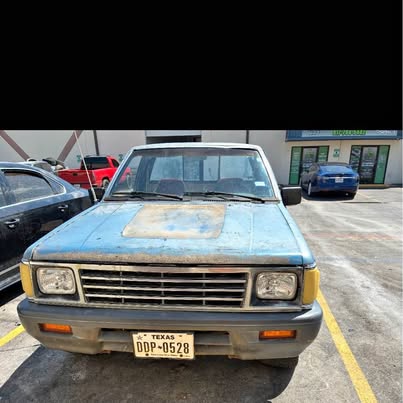
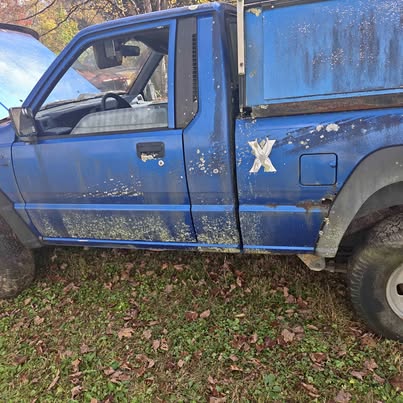
Rust is the Mighty Max's defining problem, and it is structural before it is cosmetic. The frame — not the cab, not the bed — is where your inspection starts and where a bad truck is condemned. Mitsubishi's rustproofing was average for a Japanese truck of the era, which means inadequate for thirty-five winters anywhere salt touches a road, and these were working trucks that lived outside and were rarely washed underneath.
Start at the rear. The rails over and behind the rear axle trap mud and salt against the spring hangers, and the metal thins from inside the section outward, so a rail can look painted and sound while a screwdriver finds it soft. Probe — with permission, firmly but fairly — the rails at the spring hangers, the shock mounts and the crossmembers. Move forward: the rails under the cab collect debris at the cab mounts, and the torsion-bar crossmember area holds water after every wet drive. Surface scale that rings solidly to a hammer tap is a truck you can treat and keep. Flaking, holed or plated-over rails are a walk-away, because proper frame repair means body-off fabrication at $1,500–4,000 and up, and the economics collapse. Beware fresh black underseal over everything: it is the oldest disguise in the trade, converting your probing into guesswork, which is precisely its purpose. Price the truck as though what is under it is the worst plausible answer.
The body rusts in a predictable order. Bed floors go first, under load liners and mats that trap moisture for decades — lift every liner, because a bed that looks sound over one can be lace underneath, and a replacement bed floor is fabrication at $800–2,000, not a bolt-on panel. Cab floors, sills (rocker panels), door bottoms and lower front wings follow, fed by blocked drains and by the scuttle leaking quietly into the footwells. The windscreen frame rusts under its seal, shows first as bubbling at the corners, and costs $900–1,800 to do properly with the glass out. Cab mounts perish and corrode too; a cab sitting visibly low or crooked is telling you about both.
Panel rust alone is rarely fatal — sills and floors are straightforward welding at $400–1,200 a side for sills done properly — but it is cumulative: add the panels honestly before money moves, because every panel you miss is a panel you bought.
The Astron head, MCA-Jet and cooling: the engine fault that matters most
The 2.6's cylinder head is the most discussed component in the Mighty Max world, and the discussion is justified — but it is also surrounded by folklore, so take the mechanism first. The MCA-Jet head carries, in each chamber, the main intake and exhaust valves, the spark plug, and the small jet valve fed by its own passage in the intake manifold. The metal between those three penetrations is thin, it runs hot, and it endures a thermal cycle every journey. Add one episode of serious overheating — a failed water pump, a split hose, a thermostat stuck shut, a driver who kept going — and the head can crack through that thin bridge, most often between the jet valve and the intake valve seat. Coolant then finds the combustion chamber or the intake tract, and the engine begins to consume coolant, steam from the exhaust, misfire on the affected cylinder, or pressurise its cooling system with combustion gas, depending on where the crack runs.
The myth to correct explicitly is that every 2.6 head cracks and the engine is therefore hopeless. It is not true: heads that have never been overheated commonly run the life of the truck, and improved replacement castings — with the jet-valve architecture revised or deleted — exist precisely because the bottom end beneath is durable enough to be worth saving. The correct position is neither fear nor faith but testing. Coolant loss with a white, sweet-smelling exhaust plume suggests coolant entering a cylinder. Bubbles rising steadily in the expansion tank, or block-test fluid changing colour on the filler neck, show combustion gas in the coolant. A system that pressurises hard within a minute of a cold start is combustion pressure, not heat. A compression test and a cooling-system pressure test, $100–200 combined at any shop, separate a cracked head from a failed gasket or a simple external leak before you commit, and you price the truck on the result.
The jet valves wear independently of cracking. A tired jet valve upsets the chamber's swirl, giving a rough idle and a hesitation no carburettor adjustment cures — the classic Mighty Max misdiagnosis, in which owners rebuild the carburettor twice chasing a stumble that lives in the head. The distinguishing test is a compression and leak-down test: a cylinder leaking audibly through the intake side is telling you about its valves, jet included. A head rebuild renewing jet valves, guides and seals runs $900–1,800 fitted; on a truck you are valuing to buy, it is a deduction, not a detail.
Cooling discipline protects every engine here, the Astron most of all. Radiators silt up, pumps weep from their tell-tale holes, thermostats stick, and the viscous fan coupling loses its drive so the fan freewheels when it should pull air at idle. Check the coupling on a hot, switched-off engine — it should drag firmly — and treat any truck with a history of running hot as one whose head you test as above, whatever the explanation. A radiator runs $180–350 in parts and a pump $60–150; neither matters beside the head they protect.
Belts, balance shafts and electronics: the injected trucks and the V6
On the belt-driven engines — 2.0, 2.4 and V6 — the pattern reverses the Astron's: the castings are strong, and the risks are scheduled items ignored. A timing belt that snaps bends valves; the repair on a 2.4 runs $900–1,600, and on the V6 the $1,800–3,000 figure from the engines section applies. The small balance-shaft belt fails more quietly: it can tangle into the main belt and cause the same damage, or leave the engine vibrating with a coarseness owners chase through engine mounts for years. Both belts are one job, and an engine with a fresh main belt but an ancient balance belt was serviced by someone who did not understand it — draw the obvious conclusion about the rest of its care.
One more Sirius check: the balance shafts run in oil-fed bearings, and on high-mileage engines the front balance-shaft bearing can wear and drop oil pressure. Flickering oil pressure at hot idle on a 2.4 is never dismissed as a faulty sender until a mechanical gauge proves it — a gauge test costs $60–120 and separates a $25 sender from a worn bottom end. Two of the three witnesses — healthy pressure, quiet top end, clean oil — is a negotiation; one is a walk.
The injected trucks add one electronic fault that defines their generation: the engine-control unit's capacitors. Mitsubishi ECUs of this era use electrolytic capacitors that leak corrosive electrolyte onto the board with age. The symptoms arrive as a cluster: hot-restart refusal, intermittent cutting out, a hunting or stalling idle, injector faults that move between cylinders, and codes that do not make sense together. The distinguishing test is gloriously simple: remove the ECU from behind its cab kick panel, open the case, and look and smell. Leaking capacitors show as crusty deposits and damaged tracks, with a fishy smell, and no sensor replacement fixes a board that looks like that. A specialist rebuild runs $250–450 and is a permanent cure; a used ECU is the same age as yours and carries the same clock. Budget the rebuild into any early injected truck that has not had it, the way you budget the timing belt.
The V6's specific troubles were introduced earlier and are gathered here for the inspection: hardened valve stem seals giving blue smoke on start-up and overrun; hydraulic lash adjusters ticking on old oil or when worn, a $400–800 job if renewal is genuinely needed after fresh oil fails to quiet them; cracked exhaust manifolds ticking when cold; and a cooling system working harder in a fuller engine bay. None of these is a reason to avoid the engine. All of them are reasons the V6 truck in front of you gets its smoke check from stone cold, on a start the seller has not pre-warmed for you — a point the inspection section makes a rule for every engine, because a pre-warmed engine hides stem seals, piston slap, chain rattle and cold-start fuelling faults in a single act of hospitality.
Chassis, steering, brakes and driveline
The front suspension is independent, with torsion bars, and its wearing parts are ball joints, bushings and dampers. Worn upper ball joints are the safety item: jack under the lower arm, grip the wheel top and bottom for play, then lever under the tyre to load the joint. A truck that wanders, wears front tyres on one edge and clunks over broken ground is asking for joints and bushings — a $350–800 refresh for both sides, plus alignment at $80–150. Torsion-bar adjusters seize, and a nose-down or listing truck has often simply sagged or been wound up unevenly, so measure ride heights side to side before condemning anything.
Steering is a recirculating-ball box, power-assisted on later and higher-trim trucks. Play comes from the box, the idler arm and centre link joints, and a worn flexible coupling. A box adjusted up too tight to hide wear feels notchy at the straight-ahead; honest slight play with smooth action is the better buy. Power-steering pumps whine on tired fluid and the hoses weep at their crimps — a pump runs $150–300 in parts, hoses $40–120 each. At the rear, leaf springs sag and wear their bushings until the axle thumps on take-up; a replacement pair runs $300–700 fitted.
Brakes are front discs and rear drums, vacuum-assisted, with a load-sensing proportioning valve on many versions that seizes with age and ruins rear balance. You want a pedal firm and high, not creeping under sustained pressure (a creeping pedal is a master cylinder bypassing internally, $120–250 to renew); discs unscored and above their cast minimum; and rear drums that reveal dry linings, because a leaking wheel cylinder or axle seal oils the shoes. Handbrake cables seize, especially on 4x4s — cables at $60–150 the pair, far more often than mechanism. Steel brake pipes corrode under their clips along the rails, and a full re-pipe in copper-nickel runs $400–900: worth it on a keeper, a fair deduction on a buy.
The driveline is conventional: propshaft, universal joints and a strong live rear axle. Universal joints announce themselves with a clunk on take-up and a vibration rising with road speed; a joint is $25–60 in parts, while ignoring one until it fails costs a propshaft. Axle whine that changes between drive and overrun points to pinion or gear wear — a specialist rebuild at $700–1,400 — while a steady drone regardless of throttle is more often a wheel bearing, and the distinction saves a misdiagnosis. On 4x4s, check the transfer-case oil: a case run low wears its chain, and the rhythmic clunk under load is that bill arriving.
Cab, interior, electrics and the small things that tell the truth
The cab is where the truck confesses its life. Worn bolsters and cracked dash tops are cosmetic; water is not. Wet carpets, a musty smell and rust at the floor seams mean the truck has been filling slowly for years, and the floors you cannot see are worse than the ones you can. Heater matrices leak into the passenger footwell and are routinely bypassed rather than replaced, because the job is dash-out labour at $500–900; a truck with its heater hoses looped together at the bulkhead has no heater, whatever the seller says, and you have found both a fault and a character reference.
Electrics are simple, with three recurring themes. Corroded earth points give dim lights, a wandering fuel gauge and wipers that slow when the lights are on — cleaning them is free, and gremlins here are almost never one expensive component. Alternators wear brushes and regulators, the charge light glowing faintly at idle is the classic sign, and a replacement runs $150–300. Switches and motors reach the end of their design life: window regulators, squealing blower motors, vague stalks. None of it condemns a truck, but you are buying evidence of the previous owner's standard, because that standard is what the frame, the head and the belts received too.
How to inspect one
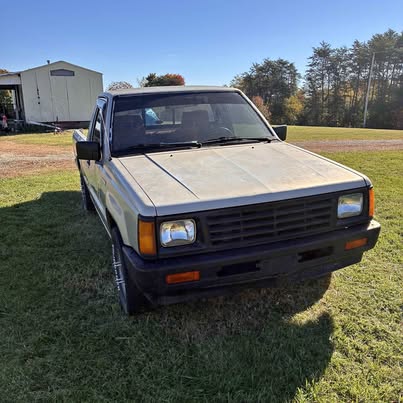
Inspect in this order, from the faults that end the deal to the faults that set the price, and see the truck cold, at the seller's place, with time and light — a pre-warmed engine or a dark yard are conditions chosen by someone, and not by you. Take a torch, a cloth-wrapped magnet, a screwdriver for fair probing, and a friend to watch the exhaust while you work the pedals.
- Start with the paperwork and the identity. Match the VIN on the dash plate and the driver's door label against the title, and confirm the engine in the bay is the engine the truck is advertised with — Astron, Sirius or V6 — because badges, tailgates and adverts all lie more easily than castings do. Note the odometer, then look at the pedal rubbers, seat bolster and steering wheel and decide whether they agree with it.
- Walk the body in good light, reading panel alignment, colour match between cab and bed, and ripples down the bed sides. Use the cloth-wrapped magnet on sills, lower doors and cab corners: where it falls away, filler lives. Bubbling at the windscreen corners sends you to the footwells in step 9.
- Get underneath and do the frame first, before affection for anything else sets in. Work from the rear spring hangers forward — rails, crossmembers, cab mounts, torsion-bar crossmember — tapping and fairly probing as the rust section describes. Flaking, holed or freshly undersealed rails end the inspection here: thank the seller and leave, because nothing above a bad frame can redeem it.
- Lift every bed liner and mat and inspect the bed floor, the front bed panel and the corners behind the cab. Then open both doors and press the cab floors through their mats, feeling for the crunch or give of thinned metal, and look at the sill seams from underneath.
- Open the bonnet on the cold engine and read the fluids before starting it. Coolant should be coloured coolant, not rusty water, and its level is your baseline for the bubble test later. On an automatic, pull the transmission dipstick now and note colour and smell.
- Start it from cold, yourself, while your friend watches the exhaust. You are listening for Astron chain rattle that fades as pressure rises, Sirius belt squeal, V6 lash-adjuster tick and diesel glow-plug behaviour, and watching for the blue puff of V6 stem seals, the black soot of an over-rich carburettor, or the white plume of coolant finding a cylinder. A cold engine that starts cleanly and settles has passed its first examination.
- Run the cooling tests while it warms. Watch the expansion tank for a steady stream of bubbles, feel the top hose for premature pressure before the thermostat opens, and confirm the fan coupling drags when hot. On a 2.6, any combustion-gas sign from the rust-and-head section prices the head as suspect from this moment on.
- Drive it for at least twenty minutes through every regime: town junctions, a hill under load, a highway stretch, a full-lock circle. Load the gearbox in every gear, listen for driveline clunks, feel for clutch judder, and note wander, pull under braking and speed-related vibration. On a 4x4, find a loose surface, engage high and low range, lock and free the hubs, and listen for transfer-chain clunks.
- Back at base, hot, check the idle quality with everything switched on — lights, blower, air conditioning if fitted. Hunting, surging or stalling on an injected truck sends you to the ECU inspection from the problem areas: kick panel off, case open, look and smell for capacitor leakage. On a carburettor truck, a hot restart after five minutes' heat soak separates a healthy Mikuni from a flooding one.
- Test the brakes properly: a firm, high pedal that does not creep under sustained pressure, straight stops from speed without pull, a handbrake that holds on a slope well before its last click. Then examine the discs through the wheels and, if the seller allows, a rear drum off for dry linings and free wheel cylinders.
- Work the steering and front suspension checks: wheel gripped top and bottom for ball-joint play, a lever under the tyre to load the joints, steering swept lock to lock for notchiness at the straight-ahead, and a bounce at each front corner for dead dampers. Measure the front ride heights side to side while you are there.
- Finish with the small things that report the owner's standard: every light, the wipers and washers, the blower on all speeds, the heater blowing genuinely hot (looped heater hoses at the bulkhead mean it cannot), the gauges reading steadily, and the spare, jack and tools present. Then ask the two questions that close the file — when were the timing belts last changed, with an invoice, and has the truck ever overheated — and weigh the answers against everything the truck has just told you itself.
If the truck passes steps 3, 6 and 7 cleanly, you are negotiating over money and maintenance. If it fails any one of them, you are negotiating over a rebuild, and the honest move is usually to find another truck — the next one costs you a journey rather than an engine.
Values
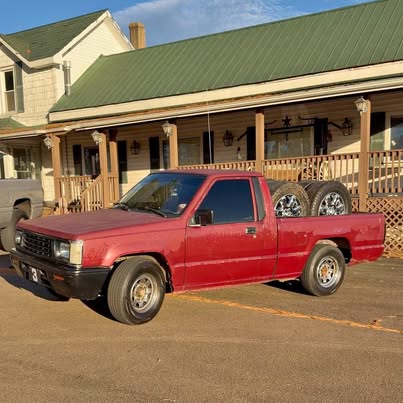
The Mighty Max market rewards condition and punishes sentiment. These trucks were inexpensive when new, were bought to work, and were never garaged as future classics, so the survivors divide sharply. At one end sits the project: running, perhaps, but carrying frame work, tired mechanicals or both. At the other sits the genuinely sorted survivor — sound frame, documented belts, an interior weather has not lived in — and the distance between the two, proportionally, is among the widest of any vehicle of its era. A project and a sorted truck can differ by a multiple, not a percentage, while wearing the same year and badge.
Within that spread, specification moves value in a clear order. Four-wheel drive carries a real premium over two-wheel drive in equal condition, because the system works, the look is right and the survivors are fewer. The MacroCab extended cab is the most wanted body, the V6 the most wanted engine among general buyers, and the combination of the three — V6, MacroCab, four-wheel drive, sound underneath — defines the top of the ordinary market. The injected 2.4 in a clean two-wheel-drive truck is the value heartland: less chased than the headline specifications, better to live with than most of them. First-generation trucks trade in their own smaller pool, where originality and the early square shape attract a different buyer, and the diesel, in either Dodge or Mitsubishi dress, answers to a niche so specific that value there is whatever two committed people agree on the day — a sound turbo diesel finds its buyer eventually, but eventually can be a long time, and sellers who price the wait into the truck tend to keep it.
Condition evidence outweighs specification at every level. A documented timing-belt change, a photographed frame in clean metal, a head with test results behind it, an ECU already rebuilt — each removes a known, priced risk and is worth real money. Fresh underseal, a pre-warmed engine and a story in place of an invoice are deductions wearing disguises. Asking prices in the private market, where most of these trucks trade, are frequently optimistic for ordinary trucks, because sellers anchor on the nicest advert they have seen rather than on the truck in their yard. Achieved prices follow the metal. Negotiate from your inspection notes, item by item, with the cost of each remedy named.
One closing caution: a Ram 50 and a Mighty Max in identical condition are near-identical purchases, and any premium claimed for one badge over the other should be modest enough to survive a straight face. Buy the truck because you want the truck, pay for condition you have verified, and treat any future rise as a footnote rather than the point.
Parts and ownership
Ownership suits the home mechanic better than almost any modern vehicle, and the parts picture is workable in a way that surprises people who assumed an orphaned Japanese truck would be a dead end. The structural advantage is that this is a world truck: the L200 sold across Asia, Australia, Europe, Africa and South America, and much of its hardware is shared with Mitsubishi cars of the era — the Pajero (Montero), the Starion and the Chrysler captive imports — while the 6G72 V6 lived in a fleet of Chrysler products whose parts channels remain deep. Your parts search should be global too.
Service items are easy and cheap. Filters, plugs, belts, hoses, brake parts, clutch kits, pumps, alternators and starters are all available through ordinary channels — typically $15–60 for filters and sundries, $180–320 for a clutch kit, $60–150 for a water pump. Suspension wear items remain listed for both generations, and a full front-end refresh in parts runs $250–500. Timing-belt kits run $90–180 for the fours and $140–240 for the V6, and Mikuni carburettor kits run $40–90. The injected trucks' sensors, injectors and fuel pumps are standard period Mitsubishi fare and cross-reference widely.
The harder layer is truck-specific trim: interior plastics, dash tops, badges and lamp lenses were unique to the pickup, were never stocked deeply, and now come from donor trucks and breakers. A good tailgate, sound bed or uncracked dash can take months to find at $100–400, so a truck with a complete interior is worth measurably more than a mechanically equal truck missing trim, because you cannot simply order the difference. Body panels sit between the layers — sill and floor repairs are fabrication for any competent welder, good used beds and doors circulate, and new old-stock panels surface occasionally from the Dodge side of the family. Glass is available; windscreen surrounds are labour rather than parts.
Diesel ownership is the exception: the 4D55's injection equipment and head castings draw on a much smaller pool, some parts are Japan- or Australia-sourced, and an injection-pump rebuild runs $600–1,200. Four-wheel-drive hardware sits one step better, shared with the Montero family in many applications, though a transfer-case chain at $200–350 in parts plus labour is typical when it arises.
Running costs follow the truck's nature. The injected 2.4 is the most frugal petrol version in real use, the 2.6 the thirstiest four, the V6 close behind, and all run happily on regular fuel. Tyres are in common, inexpensive sizes, and insurance through classic channels is available once a truck is tidy. The rhythm that keeps one cheap is preventive and short: oil and filter every 3,000 to 5,000 miles on the older engines, fresh coolant, belts on their interval without negotiation, valve clearances checked on the Astrons, and the frame washed and treated before each salt-country winter. Neglect them, and every deferred item is waiting in the problem-areas section with its price attached.
Owner forums for the Mighty Max, Ram 50 and L200 hold decades of cross-references — which Montero part fits, which head casting supersedes the crack-prone original — and that living archive matters as much as any warehouse. Join it early; it is the cheapest ownership decision you will make.
Which one to buy
Match yourself to one of these, then go and find the best example of it you can, in that order.
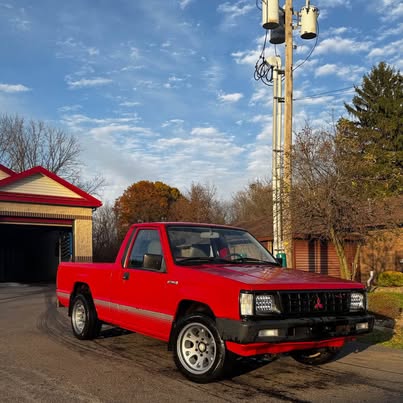
- The all-rounder: the injected 2.4, second generation, two-wheel drive. The default recommendation. The ECI-Multi 2.4 pulls like the old 2.6, sips less fuel, starts in all weathers and asks only for its timing belts on schedule and its ECU capacitors once in its life. In a MacroCab it fits your life as well as your driveway.
- The relaxed cruiser: the 3.0 V6, MacroCab if you can find it. Buy the V6 if you tow, climb, commute at highway speed or simply prefer an engine that never sounds asked. Verify the belt history, insist on the stone-cold start to judge the stem seals, and enjoy the most car-like Mighty Max Mitsubishi made.
- The working winter truck: the 4x4, on the 2.4 or the V6. The part-time system is honest and capable. Test it on a loose surface, probe its frame twice as hard as any other variant, and accept the extra weight and thirst as the price of going where the others stop.
- The character buy: a first-generation 2.6, Sport trim if possible. The square shape, the big Astron four and the period cabin make this the enthusiast's truck. It is also where the head tests in this guide are non-negotiable — buy a tested head and a proven frame, or buy a project knowingly and price it as one.
- The value buy: a tidy carburettor 2.0 or early second-generation truck. The least chased specification is often the best kept, because it was bought as transport and maintained as such. You trade performance for simplicity and price; on the right truck, that is the smartest trade in this whole guide.
- The specialist buy: the 2.3 diesel, turbocharged if you can find it. Only for the buyer who wants a diesel specifically and has the patience its pace and parts supply demand. A sound one is a rare, charming artefact — and a tired one is the most expensive cheap truck in this guide.
- The badge buy: the Ram 50 or Arrow Truck twin. If the right truck appears wearing Dodge or Plymouth badges, buy it without hesitation and inspect it by exactly the rules above. The badge changes the tailgate, the grille and the conversation at fuel stops, and nothing else that matters.
The overriding rule: buy the frame and the evidence, not the specification — a rust-free, documented 2.4 with an invoice file beats a rotten V6 MacroCab 4x4 at any price, because you can change almost everything on a Mighty Max except the honesty of its metal and the truth of its history.
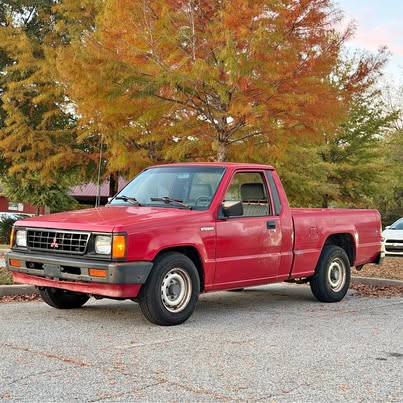
See the 2 Mighty Max Regular Cab Short Bed cars currently listed.
For sale now
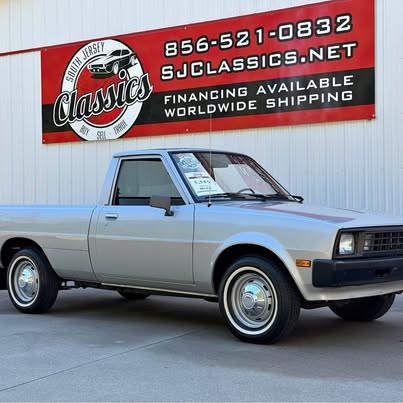 $16,900
Expand
$2,500Expand
What they sell for: Mighty Max Regular Cab Short Bed sale prices.