
Oldsmobile Ninety Eight Convertible buyer's guide
Oldsmobile Ninety Eight Convertible -- the model's own buyer's guide: variants, values and what to check.
Years listed: 1941-1964 · Series: Full Size
# Oldsmobile Ninety Eight — Buying Guide
Overview and history
The Ninety Eight was Oldsmobile's flagship for fifty-five years, and for most of that time it was also General Motors' quiet technology demonstrator: the division that had already given the world the first fully automatic gearbox put its best engineering, its richest trim and its longest wheelbase under this one nameplate. If you want to understand post-war American luxury as it was actually bought — by bank managers, surgeons and successful dealers rather than by Cadillac's flashier clientele — this is the car. It is also, in most of its generations, strikingly good value next to the Cadillac it so often matches mechanically, because the market pays for the wreath and crest and discounts the rocket badge. That discount is the buyer's opportunity, and this guide exists to help you spend it wisely.
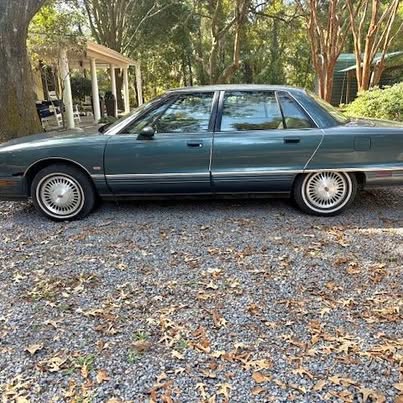
One scope note before anything else, because honesty about the evidence matters. The Ninety Eights currently listed with us span 1941 to 1995, and they cluster at the two ends of the run: pre-war and early-post-war cars — two 1941s, a 1948 and a 1953 convertible — plus a 1983 coupe and a 1995 sedan at the modern end. The finned 1957–60 cars, the big-block 1965–76 land yachts and the front-wheel-drive cars of 1985–90 are not represented in our current listings at all. This guide covers the whole 1941–1996 run from marque knowledge, because that is what a buyer comparing across the decades needs, but where a claim rests on the cars we have actually photographed and examined, it says so. Treat the middle generations as well-documented history rather than as stock we can show you today.
The name itself is a numbering artifact: Oldsmobile's 1941 line ran Series 60, 70, 80 and 90, and the top car, the Series 90, was marketed as the Custom Cruiser Ninety Eight — "98" because it was the Series 90 with the eight-cylinder engine, in the same way the six-cylinder version was the Ninety Six. The 1941 car rode the GM C-body shell shared with senior Buicks and Cadillacs, on a 127-inch wheelbase, powered by a 257-cubic-inch flathead straight eight of 110 hp, and it could be ordered with the previous year's sensation, Hydra-Matic Drive — the first true automatic, launched on Oldsmobiles for 1940. Open cars included a four-door convertible sedan, one of the rarest and most interesting bodies in this guide, and a convertible coupe. Production stopped in February 1942 for the war and resumed for 1946 with warmed-over pre-war styling.
The post-war story has three great chapters. First, the Rocket revolution: the 1948 Ninety Eight debuted the sleek "Futuramic" fastback styling a year ahead of the cheaper lines, still with the straight eight, and for 1949 Oldsmobile dropped in the 303-cubic-inch Rocket V8 — a modern overhead-valve, high-compression engine that effectively started the horsepower race and made the Ninety Eight a genuinely fast luxury car rather than a stately one. Through the 1950s the Rocket grew — 324, then 371 with the triple-carburettor J-2 option, then 394 — while the bodies cycled through the decade's styling revolutions and the Ninety Eight sat at the top of it all, hardtops, convertibles and vast wagons of chrome. Second, the big-block era: all-new styling for 1965 brought the 425 and then the 455, Turbo Hydra-Matic, and a procession of enormous, silent, torque-rich cars that peaked in size with the 1971–76 generation and then shrank sharply in the carefully engineered 1977 downsizing. Third, the front-wheel-drive era: for 1985 the Ninety Eight moved to GM's C-body front-drive platform with the Buick-built 3800 V6, shedding roughly a thousand pounds, gaining interior efficiency and electronic sophistication, and continuing — including a supercharged version in the early 1990s — until the name was retired after 1996, the flagship role passing to the Aurora.
What unites all of them, and what you are buying in any generation, is a formula: the largest Oldsmobile body, the division's strongest engine, the longest standard-equipment list, and engineering that was usually a season ahead of the rest of GM. What divides them is everything else — six volts or twelve, flathead eight or supercharged V6, body-on-frame or unitised front-drive. Buy the generation whose character you actually want, because a 1941 convertible sedan and a 1995 sedan share a badge and almost nothing else.
The models
Fifty-five years of production will not fit one table honestly, so the table below covers the generations as a buyer meets them — grouped by platform era, with the engines and outputs you will actually encounter. Within each era, the trim ladder is consistent: the standard Ninety Eight, then increasingly plush sub-series — Holiday hardtops in the fifties, the Luxury Sedan (LS) of the mid-sixties, and from the early seventies the Regency, which began as an option package with loose-pillow velour interiors inspired by a Tiffany-designed concept and ended up swallowing the range: by the eighties, nearly every Ninety Eight was a Regency. Convertibles were offered from 1941 through 1975 (the last ones on the 1971–76 body), hardtop coupes and sedans through the rear-drive era, and from 1985 the range settled into four-door sedans with a brief coupe and the sporting Touring Sedan (1987–90).
| Generation | Years | Engine(s) | Output | Character |
|---|---|---|---|---|
| Series 90 / Custom Cruiser 98 | 1941–42, 1946–47 | 257 cu in flathead straight eight | 110 hp | Pre-war flagship; C-body, Hydra-Matic pioneer |
| Futuramic 98 | 1948 | 257 cu in straight eight | 110 hp | New fastback styling, old engine — one-year bridge |
| Rocket 98 | 1949–53 | 303 cu in Rocket V8 | 135–165 hp | The OHV revolution; fast, modern, collectible |
| Mid-fifties 98 | 1954–56 | 324 cu in Rocket V8 | 185–240 hp | Panoramic screens, Jetaway, peak chrome confidence |
| J-2 era | 1957–58 | 371 cu in Rocket V8 (J-2 tri-power opt.) | 277–312 hp | Fins arrive; J-2 is the hot one |
| 394 era | 1959–64 | 394 cu in Rocket V8 | 315–365 hp | Flamboyant '59–60, then Slim Jim gearbox years |
| Big-block B/C-body | 1965–70 | 425, then 455 cu in V8 | 360–390 hp (gross) | Turbo Hydra-Matic, effortless torque, LS luxury |
| Colonnade-era giant | 1971–76 | 455 cu in V8 | 190–275 hp (net, falling) | Largest 98s ever; Regency plushness, smog-era pace |
| Downsized rear-drive | 1977–84 | 301/350/403 V8, 307 V8, 350 diesel | 105–185 hp | A thousand pounds lighter; diesel trap (see text) |
| Front-drive C-body | 1985–90 | 3.0/3.8 V6 (3800 from '86) | 125–165 hp | Electronic era; Touring Sedan the driver's pick |
| Final C-body | 1991–96 | 3800 Series I/II V6, supercharged opt. | 170–205 hp | Rounded flagship; supercharged Regency Elite |
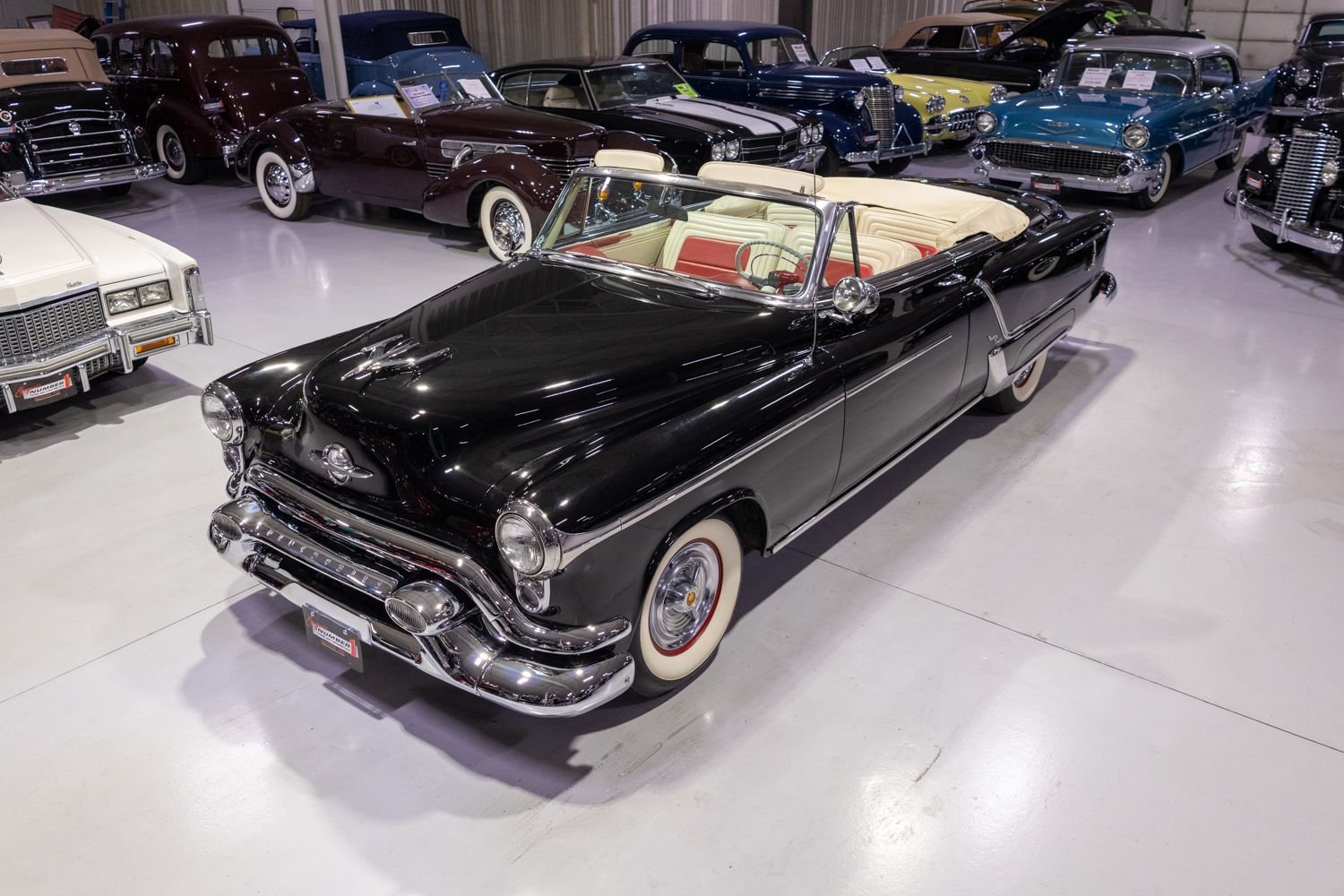
A few variants deserve naming because sellers trade on them and buyers overpay or underpay accordingly. The 1953 Fiesta convertible was Oldsmobile's entry in GM's 1953 dream-car trio alongside the Cadillac Eldorado and Buick Skylark: cut-down beltline, panoramic screen, every power option standard, built in tiny numbers (458). Genuine Fiestas are six-figure-grade rarities and heavily faked from standard convertibles — the body number and the beltline dip settle it. The J-2 option of 1957–58 put three two-barrel carburettors on the 371, the outer pair waking up only at full throttle; a real J-2 car carries specific linkage and air cleaners, and many "J-2s" offered today are a manifold swap on a standard car. The Starfire of 1961 began as a Ninety Eight-based convertible with bucket seats and a console before becoming its own line — early Starfires are Ninety Eights in all but badge and are judged by the same rules. In the front-drive era the Touring Sedan (1987–90) is the connoisseur's car: firmer FE3 suspension, quicker steering, bucket seats, console shifter and monochrome trim in place of chrome and velour. And the supercharged Regency Elite of 1992–95 pairs the Eaton-blown 3800 with the plushest trim — the fastest Ninety Eight since the big-block era and, in period, a genuine sleeper.
Body style matters to value and to usability in every era. Convertibles and Holiday hardtops lead the fifties market; four-door sedans of the same years are mechanically identical, objectively as good, and chronically cheaper. In the rear-drive decades the Regency coupe — like the white 1983 car in our listings — carries a small premium over the sedan for its pillarless-adjacent profile, though both are bought on condition, not body. Pre-war, the rarity order inverts normal logic: the convertible sedan and convertible coupe are the prizes, the big touring sedans the affordable entry into C-body ownership.


Engines and gearboxes
The flathead straight eight (1941–48)
The 257-cubic-inch L-head eight is a 1930s engine in the best and worst senses: massively built, silky at low speed, unstressed at 110 hp — and long, heavy and expensive to rebuild properly. It runs a single downdraft carburettor (Stromberg or Carter depending on year), a 6-volt electrical system and a cooling system sized for 1940s traffic, not for a modern summer queue. Its virtues for the buyer are smoothness and survival rate: these engines were rarely thrashed. Its vices are heat and wear you cannot see. A long straight eight wears its centre main bearings and develops crank flex; listen for a deep, slow knock under light load at hot idle, and watch hot oil pressure — a healthy engine holds steady pressure at a hot idle on the gauge, a tired one flickers the needle toward zero as the oil thins. Head gaskets weep between the middle cylinders after decades of heat cycles; look for rusty staining down the side of the block and unexplained coolant loss. Budget a rebuild as a specialist job: parts exist through the pre-war Oldsmobile network, but machine work on a block this long is not a job for a general shop, and a full rebuild with the ancillaries done properly lands in the $8,000–14,000 range. Buy the car with the best engine you can find, because it is the single most expensive thing on it.
The Rocket V8 (1949–64): 303, 324, 371, 394
The Rocket is the engine that made this car's reputation, and it is a superb buyer's engine: oversquare, hydraulic-liftered, high-compression OHV design with deep-skirt block and excellent parts support to this day. The 303 (1949–53) made 135 hp at launch, 160 with the four-barrel and higher compression for 1952, 165 for 1953. The 324 (1954–56) brought 185–240 hp. The 371 (1957–58) made 277 hp standard and 300–312 with the J-2's three Rochester two-barrels. The 394 (1959–64) is the torque king of the family, 315 hp in 1959 and up to 365 in its final high-compression form. All share the same ownership profile: iron heads and block, a Rochester or Carter carburettor, points ignition originally (many now converted to electronic), and a thirst that was a selling point in 1955 and is merely a fact of life now — expect single-digit to low-teens mpg depending on era and tune.
Mechanically, Rockets die of neglect, not design. The timing chain stretches and the nylon-toothed cam sprocket of later engines sheds teeth into the sump; any Rocket with unknown history wants a chain set as preventive maintenance (a $600–1,200 job with the front cover off, far cheaper than the valve-bending alternative — actually Rockets are non-interference in most forms, but a jumped chain still strands you). Sludge is the other killer: short-trip luxury cars that never got hot, on 1950s oil-change intervals, fill the rocker boxes with tar that starves the top end; pull a rocker cover on any car you are serious about and judge what you see — clean aluminium-coloured castings good, black crust bad. Carburettors (Rochester 2GC and 4GC, Carter WCFB/AFB) wear their throttle shafts and leak air, causing the hunting idle everyone blames on ignition; the test is wiggling the throttle shaft for play. J-2 cars add linkage synchronisation to the ritual: the centre carburettor does all the ordinary work, the outer pair must stay shut until the pedal is floored, and a badly set-up J-2 runs worse than a four-barrel car while drinking more. Exhaust manifolds crack, particularly the right side on 394s, and the heat-riser valve seizes, cooking the carburettor above it — check it moves.
The big blocks (1965–76): 425 and 455
The 425 (1965–67) and 455 (1968–76) are the second-generation Rocket architecture: tall-deck, massive-torque engines that define the big Ninety Eight experience — 500 lb-ft in early 455 form, delivered in near silence. Through the early seventies the compression fell, EGR and air injection arrived, and outputs sagged to a net 190 hp by 1975, but the torque and the fundamental strength never left. These are among the most durable engines GM ever built. What kills them is the nylon timing gear (as above, worse here because the debris blocks the oil pickup), overheating from a neglected 50-year-old cooling system dragging two tons of car, and carburettor neglect — the Rochester Quadrajet is a fine instrument that suffers from worn primary throttle shafts, warped air horns from overtightened air-cleaner studs, and amateur rebuilds. A Quadrajet rebuilt by a specialist ($400–700) transforms a car; a parts-store remanufactured unit often ruins one. Oil leaks from the rear main and the intake's end seals are normal-age items, not red flags. On 1975–76 cars, check the catalytic converter hasn't been hollowed or, worse, hasn't clogged — a car that won't rev past 3,500 under load with a healthy ignition is telling you about its exhaust.
The downsized mix (1977–84): small V8s and the diesel
Downsizing brought a parts-bin era: Oldsmobile's own 350 and 403, the Pontiac 301, and increasingly the Olds 307, which became the standard engine of the early eighties — smooth, quiet, underpowered in a car this size, and saddled with GM's Computer Command Control electronic Quadrajet, a carburettor with a mixture-control solenoid, a forest of vacuum hoses and an ECM. A healthy CCC system actually works well; a neglected one produces flat spots, stalling and failed emissions tests, and the cure is systematic vacuum-hose replacement and carburettor setup, not parts-swapping. The 307's other known vices are a plastic-toothed timing gear (same story, same fix) and valve seals that harden and puff blue smoke on start-up after sitting — cosmetic if oil consumption is otherwise modest.
The 350 diesel (1978–85, and a 4.3 V6 diesel 1982–85) requires its own warning, because cheap diesel Ninety Eights tempt buyers every year. The LF9 diesel was converted from the petrol 350 architecture and its weaknesses are structural: head bolts and head gaskets that fail, injector pumps that wear, glow-plug and controller faults, and catastrophic sensitivity to water in the fuel. GM's later DX-block revisions improved matters, and a genuinely sorted diesel with documented pump and head work can be reliable — but the market knows the story, many cars were converted to petrol power (check the engine actually in the car against what the seller claims the car is), and an undiagnosed diesel with coolant loss or hard starting is a project priced as a runner. Unless you specifically want the diesel experience and the paperwork proves the known work, buy the petrol car.
The 3800 V6 era (1985–96)
The front-drive Ninety Eight runs Buick's 3.8-litre V6 in its finest forms: the 3.0 V6 of 1985 only (avoid — underpowered and one-year-only), then the 3800 (1986 on), the revised LN3, the Series I (L27, 170 hp) in the 1991 restyle, the supercharged Series I (L67, 205 hp) from 1992, and the Series II (205 hp naturally aspirated) for the final 1996 cars. This engine family has a legitimate claim to be the best V6 GM ever made: iron block, balance shaft from 1988 smoothing it out, sequential injection, and bottom ends that outlast the cars. Its known faults are specific and diagnosable. Crankshaft position sensors fail with heat and age, causing intermittent no-starts that vanish when the engine cools — cheap part, awkward access behind the harmonic balancer, and the balancer's rubber ring itself delaminates on high-milers. Series I engines weep coolant from intake gaskets; the Series II's plastic upper intake manifold warps around the EGR passage and can leak coolant into the engine — on a 1996 car, unexplained coolant loss is this until proven otherwise, and the fix (a revised manifold and gaskets, $500–900 in a shop) is well understood. Supercharged cars add the Eaton M62 blower: a rattling at idle that stops when you blip the throttle is the nylon coupler in the supercharger nose, a $300–600 repair with the special oil refill, not a dying engine; a blower that whines louder than when new or shows oil starvation is the expensive version. Coil packs and ignition modules fail one cylinder pair at a time and mimic fuel faults — carry the diagnosis methodically.
Gearboxes
Almost every Ninety Eight is automatic, and the gearbox defines each era as much as the engine. The original Hydra-Matic (optional from 1941, near-universal after the war) is a four-speed with a fluid coupling rather than a torque converter: shifts are deliberate, there is no Park position — you park in Reverse with the engine off and rely on the handbrake — and correct function depends on band and servo adjustments that require factory gauges and a dwindling number of specialists. A Hydra-Matic that flares on the 2–3 shift or shudders taking up drive needs adjustment first and a rebuild ($2,500–4,500 at one of the few shops that know them) only if adjustment fails. The Dual-Range Hydra-Matic (1952) added driver control of the shift pattern; the Jetaway (1956–60, also called Super Hydra-Matic) added a Park position and smoother manners with a second coupling. The Roto Hydra-Matic ("Slim Jim", 1961–64) is the problem child: compact, clever, prone to a harsh 1–2 shift even when healthy, and supported by the thinnest parts supply of any box in this guide — a 1961–64 car with a slipping or banging Roto should be priced as if the gearbox needs specialist attention, because it does. Redemption arrived with the Turbo Hydra-Matic 400 (1965–76, with a switch-pitch converter 1965–67): one of the strongest automatics ever made, cheap to rebuild ($1,800–3,000) anywhere in America. Downsized cars use the THM350, THM200 (light-duty, treat a slipping 200 as a rebuild) and from the mid-eighties the 200-4R overdrive behind the 307 — a good box whose lockup converter shudder is usually fluid and solenoid, not doom. Front-drive cars use the THM440-T4/4T60 and, from 1991, the electronically controlled 4T60-E: both are durable if the fluid was changed, both are killed by heat and neglect, and both announce trouble as delayed engagement on a cold morning months before they fail outright. On any automatic in this guide: pull the dipstick where one exists. Bright red and sweet-smelling is health; brown and burnt is a negotiation.
Problem areas
Rust: the map
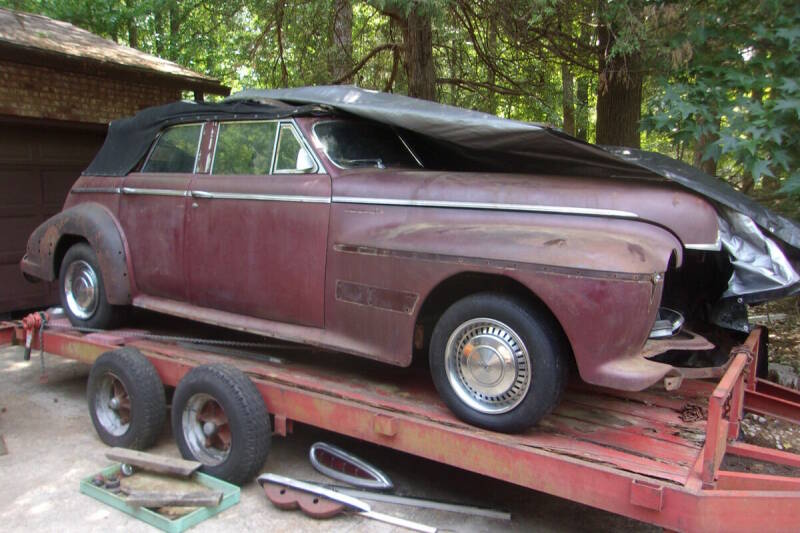
Every steel-bodied Ninety Eight rusts in predictable places, and the map changes by era, so learn the map for the car in front of you. On pre-war and immediate post-war cars (1941–48), the structure is a separate chassis with a Fisher steel body, and the killers are the floor pans over the frame rails, the bottoms of the doors and cowl sides where water sits behind the trim, the trunk floor around the spare-wheel well, and — on open cars — the sills and the wooden top and header structure's steel brackets. A convertible sedan like the 1941 project in our listings lives or dies by its sills and its door apertures: open all four doors on a project and look for the gaps changing, because a car whose doors sag when opened is telling you the structure between the axles is soft. Frame rust on these cars concentrates at the rear kick-up and the X-member's low points; surface rust on a 1940s frame is normal, perforation at the spring hangers is not.
On 1949–60 cars, add the places fifties styling created: the bottom of the front fenders behind the wheel (mud traps behind the splash shields), the rocker panels under their stainless trim — the trim hides the rust and holds the moisture that causes it, so press along the rocker with your thumb and distrust any car whose trim is freshly re-fitted — the dogleg where the rear door meets the wheel arch on four-doors, the headlamp eyebrows on 1957–60 cars, and the vast flat trunk floor. Battery trays and the inner fender beneath them rot from acid. On convertibles, the well the top folds into collects water and rots the seat pan and floor behind the front seat; lift the well liner and look. On 1961–76 cars, the map shifts rearward and downward: trunk floors and the drop-offs behind the rear wheels, the lower rear quarters, the frame's side rails just ahead of the rear wheels on salt-belt cars (perforation here is a structural write-off conversation, not a repair bill), the cowl and windshield frame on 1971–76 cars whose vinyl tops trapped water against the roof and A-pillars — a vinyl top with bubbles under it is rust with a cover on, and the cover comes off in your budget, not the seller's story. On 1977–84 cars, door bottoms, the seams of the downsized body's trunk floor, and the rear frame rails again. On front-drive cars (1985–96), the steel is better galvanised and the map shrinks to the rear wheel arches, the subframe and its mounting points (a rotted front subframe on a cheap 3800 car is the one genuinely structural repair of the era), the brake and fuel lines along the floor, and the strut towers. In all eras: a car from the dry Southwest or a garaged life in the Southeast is worth travelling for, and fresh underseal over everything is a reason to pay less, not more — it hides the map you came to read.
The repair economics are unforgiving and era-dependent. A pair of rocker panels or a trunk floor on a fifties car, done properly in metal, runs $1,500–4,000 depending on how much fabrication the panel availability saves you; floor sections for the popular years are reproduced, pre-war and 1971–76 metal is largely a fabricator's job. Structural frame work on a car worth driver money rarely pencils out. This is why the inspection section below spends so much of its length underneath the car: on a Ninety Eight, the body is the value, and the engine is the cheap part.
Suspension, steering and brakes
The chassis story is conventional GM and mostly good news. Pre-war cars use independent front suspension with coil springs and lever-action or tubular shocks depending on year, a live rear axle on leaf springs, and hydraulic drum brakes that were excellent in 1941 and are merely adequate now — a pre-war Ninety Eight driven in modern traffic wants its brakes in perfect order, its hoses new, and an owner who plans ahead; budget $800–1,500 to go through an unknown system completely (cylinders, hoses, shoes, drums skimmed or replaced) and consider it money that buys the whole car. From 1949 the front end is the familiar GM double-wishbone with ball joints, the rear a coil-sprung live axle on the big cars (leaf springs lingered on some early-fifties bodies), and power steering — standard or near-universal on Ninety Eights from the mid-fifties — is by Saginaw and leaks from the pump shaft seal and the box's Pitman seal in that order; a groan at full lock with foamy fluid is air from a low reservoir, not necessarily a failed pump. Worn idler arms and centre links produce the classic vague on-centre wander; these are cheap parts and an afternoon, and a seller who hasn't done them hasn't done anything. From 1965, front disc brakes appear (optional, then standard by 1971 across the big cars) — check rotor thickness and caliper slide function, and on 1971–76 cars test the power brake booster by pumping the pedal down with the engine off, holding it, and starting the engine: the pedal should sink slightly as vacuum builds. Sagging springs are endemic on the heavy cars: a Ninety Eight that sits nose-down or lists has tired coils, and new springs ($400–800 a set fitted) transform both ride and geometry. On front-drive cars, the wear items are MacPherson struts, rear struts with the automatic level-control air system (a compressor that runs every morning, or a car that sits low at the rear overnight, means leaking air struts or lines — conversion to conventional struts is the common, acceptable fix, $500–900), and wheel bearings that hum in proportion to speed and load in corners. Power steering racks on high-mile FWD cars weep from the end seals; a rack is a bigger bill ($700–1,200) than a pump, so identify the leak's source before you negotiate.
Interior, electrics and the toys
Ninety Eights were the most gadget-laden Oldsmobiles of every era, and the toys are where old luxury goes to die expensively. Start with the era-defining systems. Power windows and seats: fifties cars use hydraulic-electric window systems on some early-fifties models (shared pump and fluid lines — a slow window can be a fluid leak, not a motor) and electric thereafter; window motors and regulators are rebuildable, and a full set of four slow windows on a fifties convertible is a known, budgetable job ($1,200–2,500 through a specialist), not a surprise. Air conditioning: factory A/C appears from 1953 and is common from the sixties; assume any system needs seals, a dryer and a recharge at minimum, that R12 conversions to R134a are normal and acceptable, and that a compressor with a seized clutch on a car "that just needs gas" needs a compressor. On 1977–84 cars the system is conventional and repairable; on FWD cars the compressors (Harrison V5 and later designs) are variable-displacement and fail by losing displacement control — cold at speed, warm in traffic. Electrical systems: pre-war cars are 6-volt with generator charging — dim lights and slow cranking are the system's nature with tired cables, and the fix is cable condition and connections, not a 12-volt conversion (which, done badly, devalues the car and cooks its gauges). From 1953 (12 volts arrived across GM in stages; Oldsmobile V8 cars went 12-volt for 1953) the systems are conventional. The eighties bring the electronic era's specific grief: the CCC engine computer and its sensors on 307 cars, digital instrument clusters on FWD cars that fail by segment and by backlight (rebuild services exist, $300–600), the Twilight Sentinel and automatic climate controls whose vacuum actuators and programmer heads produce heat stuck on one temperature — on a FWD car, test that the climate system delivers hot and cold air to the right vents before you test anything cosmetic. Trim and upholstery: the Regency's loose-pillow velour and the fifties' leather-and-broadcloth interiors are reproduced only in part; correct NOS fabric surfaces occasionally and correct reproduction leather is a trimmer's job at $3,000–6,000 for a full interior. A tired interior is the most common reason a mechanically good Ninety Eight is cheap, and it is the slowest, least satisfying money to spend — price it into the car, not into your optimism. Chrome, the fifties cars' glory, replates at $800–1,500 for a big rear bumper and proportionally for the rest; pot-metal grilles and trim pit and are repaired by specialists, not replaced from a catalogue. Buy the car with the best chrome and interior you can find; mechanical work is cheaper than brightwork, always.
Convertible tops, seals and weather equipment
Open Ninety Eights span 1941 to 1975, and their weather gear fails in the same sequence everywhere. The top itself is the cheap layer — quality reproduction tops in the correct materials run $1,500–3,000 fitted — so never let a shabby top canvas talk you out of a sound car, and never let a new top talk you into a rotten one. What matters is the mechanism underneath it: the hydraulic pump, rams and lines on power tops (fifties and sixties cars), which weep fluid into the rear quarters and weaken exactly where the well already collects water; the scissor frames, which wear at their pivots until the top sits crooked and tears its own canvas; and the header and tack-strip wood or composite on earlier cars, whose rot lets the top lift at speed. Operate the top twice, fully, and watch the rear window panel and the well as it folds — the inspection section's toy test catches most of it. Seals are the other half: perished door, vent-window and windshield rubber on any era lets water into the floors and door bottoms the rust map blames on age, and a full seal kit fitted is a $600–1,500 job that prevents the $4,000 one. On closed cars the same logic applies to the vinyl roofs of 1965–76 — the vinyl is a wear item with a fifteen-year life, and a car still wearing its original top is wearing it over whatever the years have done to the steel beneath.
What the years do to value-relevant originality
Three traps recur across the decades. First, engine swaps: the Ninety Eight's engine bay accepts everything GM made, and cars are routinely found with later 350s, 455s in 307 cars, and petrol engines in diesel shells. A swap done well makes a fine driver and a cheaper car; a swap passed off as original makes a fraud. Check the engine code stamped on the block (on Olds V8s, the pad at the front of the block and the casting numbers at the rear) against the year and model — the numbers either match the story or they don't. Second, the diesel conversion in reverse: diesel cars converted to petrol are common and legitimate if disclosed and if the title and emissions status in your state are clean; the trap is the seller who doesn't know or doesn't say. Third, trim-level forgery: Regency badges on a standard car, Fiesta claims on a standard 1953 convertible, J-2 manifolds on a standard 371. Every one of these is settled by build data — Fisher body plates, trim codes and, for later cars, the RPO sticker — and every one is a reason the inspection below starts with paperwork and numbers, not with the test drive.

How to inspect one
Work in this order. It is written for the range as a whole, with the era-specific checks flagged; the logic is the standard's logic — identity and structure first, because everything else is repairable at a price and those two are not.
- Paperwork and identity first. Title in the seller's name, VIN/serial plate where the era puts it (pre-war cars: the engine number and frame stampings carry the identity; from the sixties, the VIN plate at the windshield base and the Fisher body plate under the hood). Read the trim and paint codes and compare them to the car: a colour change is fine if disclosed and well done, a trim code that says sedan on a car wearing hardtop chrome is a conversation. On any claimed Fiesta, J-2, Starfire or supercharged car, the build data must say so.
- Cold start, always. Arrange to arrive before the car is warmed. A Rocket or 3800 that starts instantly cold, idles clean within a minute and shows no blue smoke has passed its first exam. Blue smoke on a cold start that clears is valve seals; smoke that stays is rings or bores. A diesel that needs ether or endless glow cycles has told you its compression and its pump in one gesture — walk or reprice.
- The rust map, underneath. Get the car on a lift or get yourself under it with a light. Work the map for its era from the problem areas section: sills and floors on pre-war cars, rockers under their trim and trunk floor on fifties cars, rear frame rails and vinyl-top cars' pillars on 1965–76, subframe mounts on FWD cars. A screwdriver pressed (not stabbed) into suspect metal tells the truth your eyes flatter.
- Panel fit and the magnet test. Sight down the flanks for ripple, check door and boot gaps for the evenness Fisher built in, and run a weak magnet wrapped in cloth over the lower panels: it falls off over filler. On a convertible, operate all doors with the car on its wheels and again with one front wheel on a ramp — movement in the gaps is flex, and flex in an open car is structure.
- Engine bay forensics. Oil on the dipstick: black is a schedule, grey or milky is coolant and ends the viewing until explained. Pull a rocker cover on a Rocket if the seller allows (many will — it is the marque's known check) and judge sludge. Look for the correct engine by casting and stamp, correct carburettor by era, and bodged wiring, which on these cars predicts bodged everything.
- Cooling system under pressure. With the engine hot after the drive, look for weeping at the water pump, radiator seams and heater valve; a cooling system that needs topping "every so often" on a 3800 is the intake story from the engines section, and on a Rocket is a head-gasket conversation. Check the fan clutch (FWD and later cars) by spin-down feel, and the electric fans on FWD cars by letting it idle until they cycle.
- The gearbox ritual. Hydra-Matic cars: from rest, the shifts should arrive firmly and in order; flare or slip on 2–3 means adjustment or money. Roto cars (1961–64): expect a firm 1–2, reject slip anywhere. THM400 and later: kickdown must work, engagement into Drive and Reverse from cold must take under two seconds, and the fluid must not smell burnt. FWD 4T60-E: watch for a flare on the 2–3 shift under light throttle, the classic early symptom.
- The drive itself — twenty minutes minimum. These are big, soft cars; judge them against their design, not a modern sedan. Steering should self-centre and track straight hands-off on a flat road; wander is idler arm and alignment, pull under braking is a caliper or hose. Listen for wheel-bearing hum (FWD), axle whine on the overrun (worn ring and pinion on high-mile rear-drive cars), and the supercharger coupler rattle at idle on blown 3800s.
- Brakes from speed, twice. Two firm stops from 50 mph: the car must pull up straight, the pedal must stay hard and high, and the second stop must feel like the first. A sinking pedal is master cylinder or a leak; a pedal that kicks back is a warped drum or rotor; on pre-war cars, any pull at all means the system overhaul from the problem areas section is in your first month.
- Every toy, operated. Windows up and down, seat fore and aft and tilt, top up and down on a convertible (watch for hydraulic weep at the rams and a pump that labours), A/C to full cold and full heat, cruise, aerial, clock, radio, and on FWD cars every segment of the digital dash and every climate mode. List what fails and price it from the problem areas section — the list is your negotiation, in writing.
- Leaks after the drive. Park over clean cardboard for ten minutes. Engine oil at the rear is the rear main; red fluid at the front of the gearbox is the pump seal; coolant at the front of a 3800 is the water pump or intake; nothing at all on a fifties car is mildly suspicious — check the levels were actually full.
- The numbers, last. Compare your fault list against the asking price using the repair ranges in this guide, and against the market block beneath it. A Ninety Eight with a strong body, honest numbers and a list of small faults is the buy. A Ninety Eight with a weak body and a shiny engine is the trap, in every one of its fifty-five years.
Values
The Ninety Eight market is a condition market wearing a badge discount, and understanding those two facts will save you more money than any negotiation trick. Start with the discount: in almost every era, the equivalent Cadillac — same platform, often the same showroom street — commands a premium for its badge that the Oldsmobile does not, while the Ninety Eight gives you the same size, most of the same equipment and, in the Rocket years, an engine the Cadillac men respected. That gap has been stable for decades and shows no sign of closing; it is why this guide can call the car good value without caveating the claim to death. If you are buying the car to drive and enjoy rather than to speculate, the discount is your friend at purchase and merely a fact at sale.
Within the model, the spread is driven by body style, then by generation, then — far more than mileage — by condition. Convertibles and hardtops of the fifties lead their generations; the pre-war open cars, the convertible sedan above all, trade in a rarity market where completeness matters more than shine; the big-block coupes and convertibles of 1965–70 have a following the sedans lack; the 1971–76 cars are bought on plushness and preservation, original low-mile Regencies finding buyers that a restored standard car does not; the downsized rear-drive cars are the market's bargain basement, priced as interesting old cars rather than collectibles, with clean Regency coupes the pick; and the front-drive cars split in two — ordinary sedans are cheap, honest transport with a following among 3800 devotees, while the Touring Sedan and the supercharged cars have a small, real enthusiast premium. In every generation the four-door sedan is the value buy: mechanically identical, cheaper to buy, and no worse to own.
Asking prices and achieved prices part company most widely at the two extremes of condition. At the top, a genuinely excellent car — documented, correct, sorted — sells for strong money to the small pool of buyers who know what correctness costs to create, and those cars rarely sit long. In the middle, the driver-quality market is soft and negotiable: cars sit for months at optimistic asks, and the gap between the first asking price and the eventual sale is where patient buyers live. At the bottom, projects are priced by hope and bought by arithmetic — the 1941 convertible sedan in our listings is the archetype: a rare and desirable body whose restoration will cost several times its purchase price, worth doing for love and for the finished car's rarity, never as an investment. The honest rule for this model is that the finished value of a restored Ninety Eight, the rare open cars and Fiestas excepted, seldom repays a full professional restoration; buy the best car, not the best story.
Two more patterns are durable. Originality pays in the early cars and matters less each decade: a numbers-matching Rocket with correct trim codes earns its premium, while a 1980s car is bought on condition and equipment alone. And paperwork pays everywhere: a thick history file, especially one documenting the known big jobs — timing chain, gearbox work, diesel pump or head work, supercharger coupler — moves a car up a condition class in buyers' minds, because it converts the unknowns this guide has taught you to fear into knowns. When you sell, that file is the difference between the asking price being argued with and being paid.
Parts and ownership
Owning a Ninety Eight is, by the standards of flagship classics, a rational proposition — because Oldsmobile built millions of cars on these platforms and the aftermarket noticed. For the Rocket and big-block eras, mechanical parts support is excellent: engine internals, gaskets, water pumps, carburettor kits, brake and suspension wear items are all in current production or deep NOS supply, and the Oldsmobile club scene (the Oldsmobile Club of America and marque specialists) sustains reproduction of the trim and rubber that wear out. Sheet metal is the boundary: patch panels exist for the popular fifties years, and beyond that you are into used panels and fabrication. For pre-war cars, support runs through the pre-war specialist network — engine parts, gaskets and ignition components are findable, Hydra-Matic service is a handful of specialists nationally, and trim is a swap-meet and NOS hunt; ownership is a hobby in itself and should be entered as one. For 1977–84 cars, the GM parts-bin nature of the cars is the joy: engines, gearboxes and chassis parts cross-reference across half the GM range, junkyards still yield trim, and the CCC carburettor's specialists keep the electronics honest. The diesel is the exception — pump and head parts exist, expertise is thinning, and ownership is a commitment. For front-drive cars, the 3800's ubiquity (it powered a generation of Buicks, Pontiacs and Chevrolets) means mechanical parts are cheap and everywhere, including the supercharger service items; the scarcity is in Ninety Eight-specific trim, digital clusters (rebuild services cover them) and body panels, which were never reproduced.
Running costs follow the eras. The V8 cars drink fuel at a rate that was normal in their day — plan on low-teens mpg for a Rocket in mixed use, less for a 455 around town, and treat it as the price of the torque. Tyres for the early cars are bias-ply sizes available from the classic-tyre specialists (radial conversions are common, improve the drive, and are a taste question on show cars); the later cars use ordinary modern sizes. Insurance through the classic market is straightforward for all generations, with agreed-value policies the norm and the front-drive cars insurable as ordinary modern classics. Storage is the hidden cost of the big cars: a 1971–76 Ninety Eight is over eighteen feet long and will not fit a short garage, and a convertible of any era wants dry, ventilated storage to protect the top and the interior you paid for. Servicing rhythm: annual oil and filter regardless of mileage, coolant every two to three years (non-negotiable on 3800s, where the intake story starts with tired coolant), gearbox fluid on a schedule the original owners never kept — every 30,000 miles transforms an old automatic's life expectancy — and brake fluid every two years on the drum-brake cars especially, whose wheel cylinders corrode from the inside out.
The ownership community is part of the proposition. The Oldsmobile clubs are strong, the technical knowledge for every engine in this guide is written down and findable, and the Ninety Eight's position — flagship engineering without flagship prices — means the cars at shows are owned by people who chose them knowingly. Buy into the generation whose community and parts shelf match your appetite: the fifties Rocket cars are the easiest classics in this guide to live with, the pre-war cars the most involving, and the 3800 cars the cheapest route to a genuinely usable daily classic.
Which one to buy
- The all-rounder: a 1954–56 Ninety Eight Holiday hardtop or sedan. The 324 Rocket, 12-volt electrics, modern-enough brakes and steering, peak parts support and the decade's best styling without the 1959–60 cars' excess — the easiest fifties flagship to own, and the sedan is the value of the range.
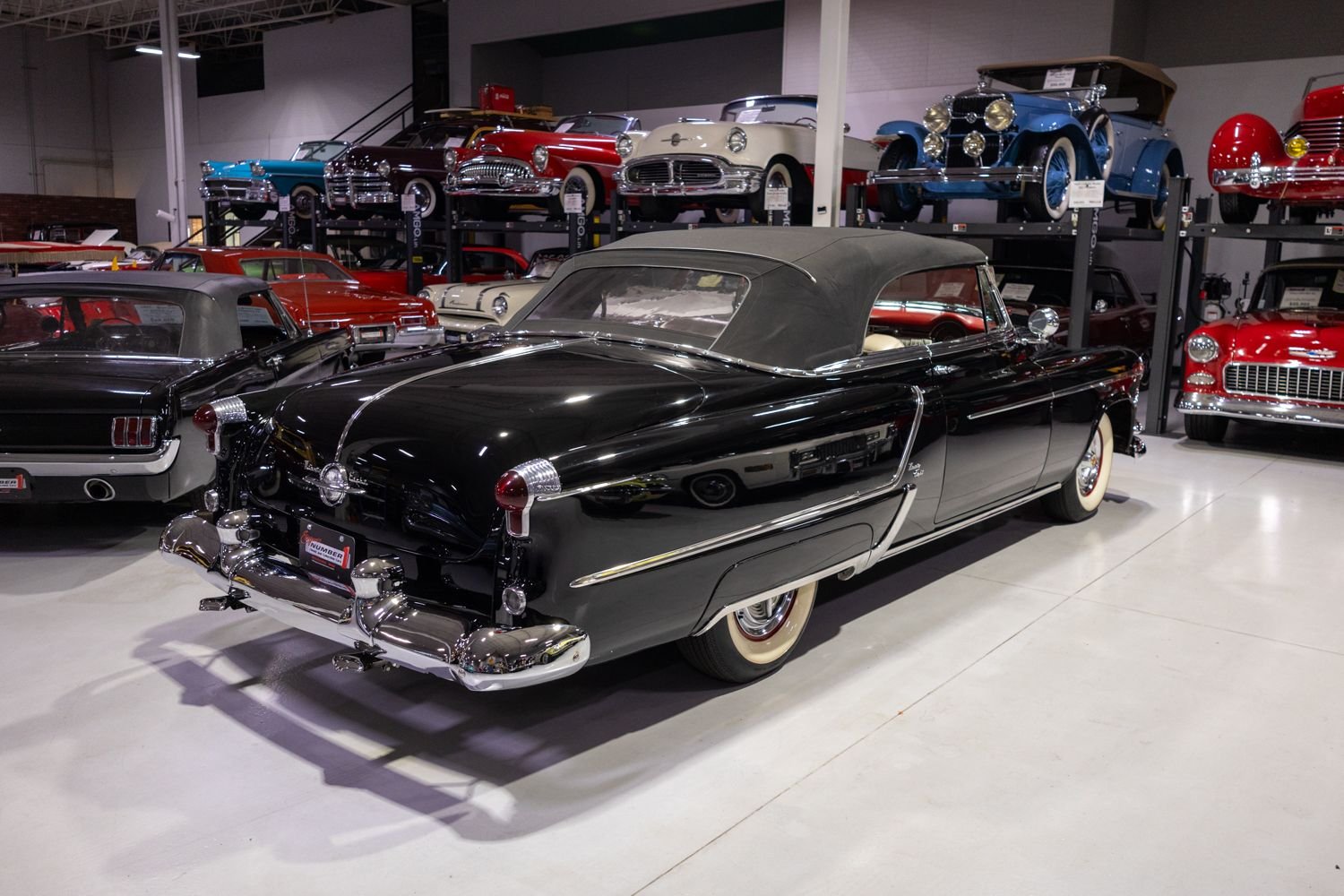
- The glamour buy: a 1953 Ninety Eight convertible. Rocket power, the last year of the early-fifties body, every toy Oldsmobile knew how to fit. Verify it is not being sold as a Fiesta unless the body plate agrees — and if it is a genuine Fiesta, verify everything twice and bring an expert.
- The pre-war adventure: a 1941–42 Custom Cruiser Ninety Eight. Hydra-Matic history, C-body presence, and in convertible sedan form one of the great rare American open cars. Buy completeness over condition, and only with the sill-and-door test from the inspection section passed.
- The torque buy: a 1968–70 Ninety Eight with the 455. The big-block at full strength with the THM400 behind it, before the size peak and the smog trough. LS and Regency-trim cars are the plush picks; condition of the body decides, as always.
- The bargain cruiser: a 1977–84 Regency, petrol V8. The white 1983 coupe in our listings is the template — downsized, comfortable, parts-bin cheap to run. One condition is absolute: not the diesel, unless its documented pump and head work comes with it.
- The modern classic: a 1992–95 supercharged Regency Elite, or a 1987–90 Touring Sedan. The 3800 at its best, in the two front-drive variants built for drivers. Paperwork for the intake, coupler and climate systems is the difference between a bargain and a bill.
- The entry point: the best four-door sedan your budget reaches, in any era. The market's discount on four doors is the same discount, compounded — the cheapest way into every generation's engineering.
The overriding rule: on a Ninety Eight, buy the body and the paperwork, and let the engine be the negotiation — in fifty-five years of production the engines are the strong part, the sheet metal and the history file are what you cannot buy later.
See the 4 Ninety Eight Convertible cars currently listed.
For sale now
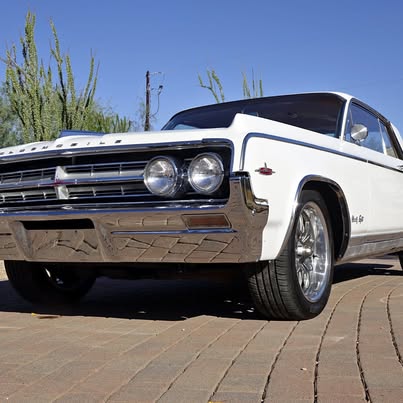
 $35,000 · 13% above typical
Expand
 $32,500
Expand
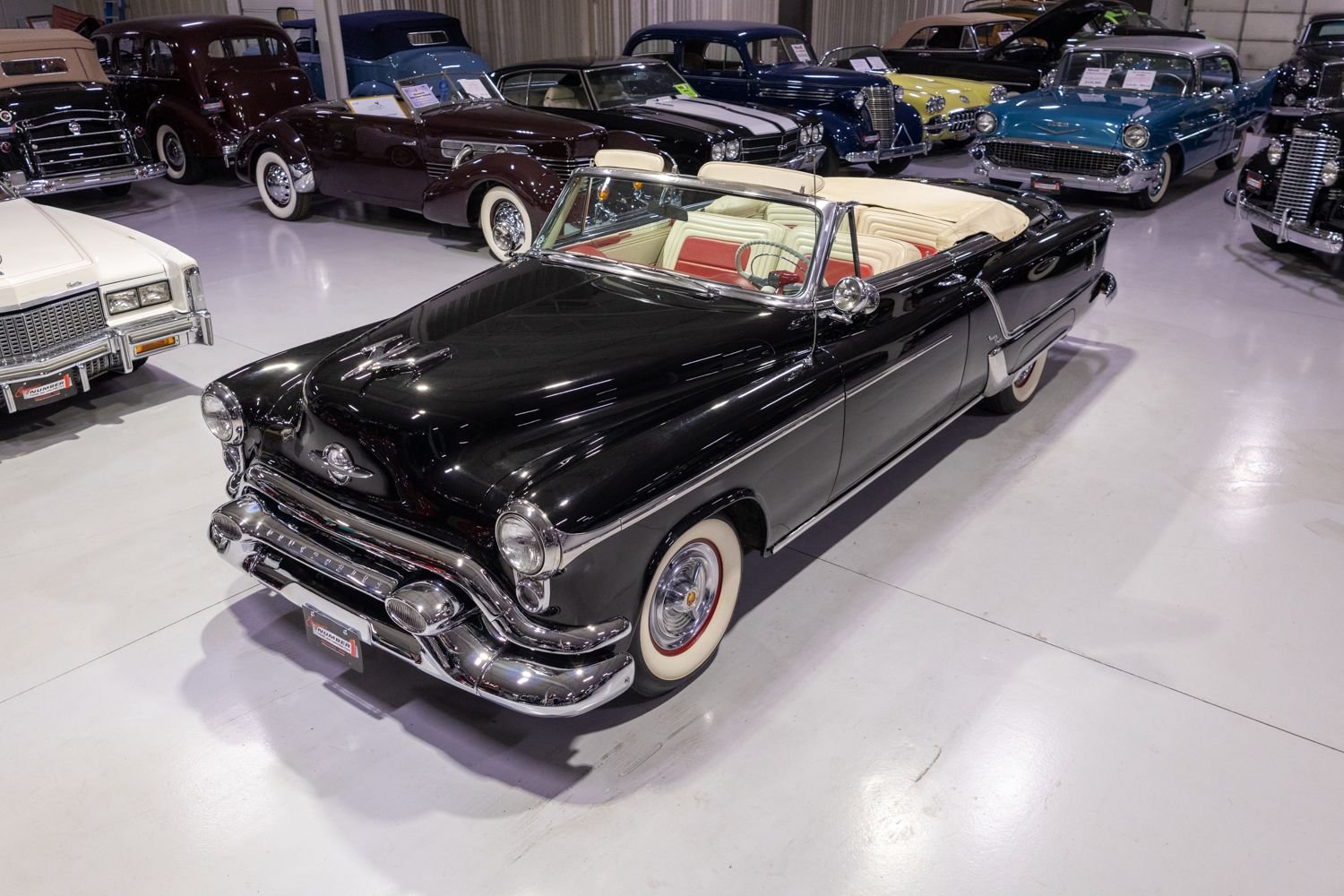 $64,995 · 109% above typical
Expand
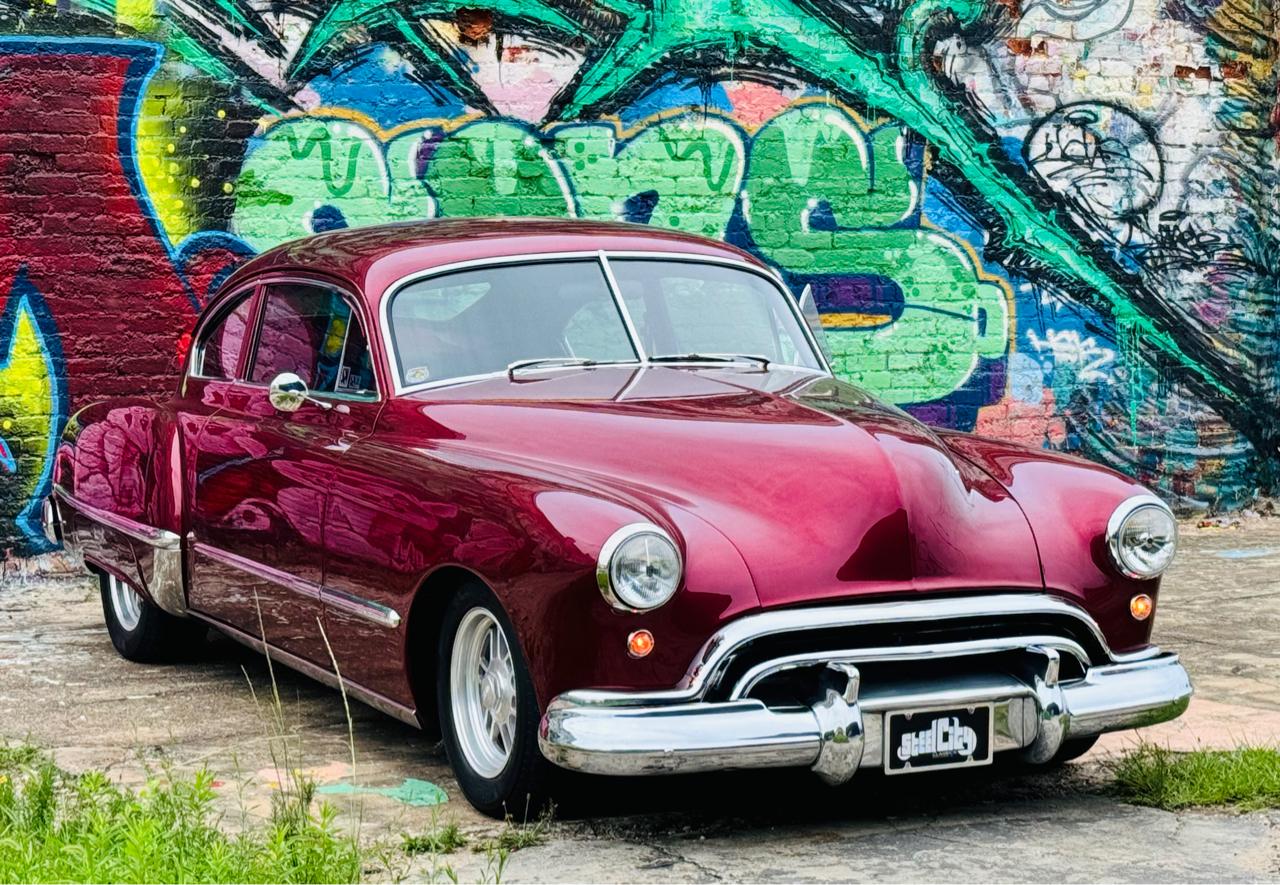 $48,000 · 55% above typical
Expand
What they sell for: Ninety Eight Convertible sale prices.