
Plymouth Deluxe Street Rod buyer's guide
Plymouth Deluxe Street Rod -- the model's own buyer's guide: variants, values and what to check.
Years listed: 1947-1950 · Series: Full Size
# Plymouth Deluxe — Buyer's Guide
Overview and history
The Plymouth Deluxe is not one car. It is a name Plymouth uses, on and off, from the early 1930s to 1950, for the better-trimmed version of its ordinary, full-size, six-cylinder family car — and that single fact shapes everything about buying one today. A 1935 Deluxe and a 1950 Deluxe share a badge, a basic layout and an engine architecture, and almost nothing else you can swap between them without work. Treat every advertisement as the start of an identification exercise, not the end of one, and you will buy well. Skip that exercise, and you will pay Deluxe money for the wrong year, the wrong trim, a swapped engine, or a street rod wearing a Deluxe grille.
Plymouth itself is Chrysler's low-priced division, launched in 1928 to fight Ford and Chevrolet on price, and the Deluxe sits exactly where that fight is fiercest. Below it, in most years, sits a cheaper line — Standard or Roadking — and above it, from the late 1930s onward, sits the Special Deluxe, which adds trim, upholstery and equipment rather than a bigger engine or a different chassis. That is the first myth to correct, and you will use it on almost every viewing: a Special Deluxe is not mechanically superior to a Deluxe. Same flathead six, same gearbox, same brakes, same suspension. You pay extra for a Special Deluxe, if at all, for condition and original trim completeness — never for performance, because there is none to be had.
The second thing to understand is why these cars survive in such numbers, and in such varied states. Plymouth builds them simply and in volume: a separate steel frame, a side-valve (flathead) six any competent mechanic of the period can service with hand tools, four-wheel hydraulic drum brakes — Plymouth is early and consistent on hydraulics — and bodywork in heavy-gauge steel. Simplicity is why so many are still here, and why so many have been altered: an engine swap, a later gearbox, a 12-volt conversion or a complete street-rod rebuild all bolt into this architecture with less drama than into almost any rival. The stock, unmodified Deluxe is now the minority in many adverts, and the modified car is not automatically the worse buy — it is a different car, which you price and inspect as what it actually is.
The chronology breaks into three clear acts, and you should decide which act you want before you look at a single car. The pre-war cars, roughly 1933 to 1942, run from upright, separate-fendered sedans with running boards to the streamlined, headlamps-in-fenders shapes of 1940–42. They are the most collectible as period objects and the most demanding to own: 6-volt electrics, narrower tyres, lower cruising speeds and trim that is hardest to replace. Civilian production stops for the war years, so there are no ordinary 1943, 1944 or 1945 model-year Plymouth Deluxe cars to buy — a car advertised as one of those years is misdated, a military or leftover-titled vehicle, or a mistake you need explained in writing before money moves.
The second act is the immediate post-war car, the P15 Deluxe and Special Deluxe of 1946 to 1948. Plymouth, like every American maker, restarts with its warmed-over 1942 design because there is no time or tooling money for anything else, and buyers queue anyway. These cars are the bridge: recognisably pre-war underneath, a little more integrated in the styling, and built in a seller's market that did not reward careful assembly. Judge them car by car.
The third act is the all-new post-war body of 1949 and the P20 Deluxe of 1950. The styling goes boxy, upright and deliberately conservative — Chrysler's president K. T. Keller insists on cars you can enter wearing a hat — interior room improves, and the car becomes the easiest Deluxe to live with: best parts situation of the three acts, best weather sealing, best road manners at modern traffic speeds, and the least valuable as a pure period artefact. By 1951 the Deluxe name gives way to Concord, Cambridge and Cranbrook, which is why 1950 is your natural end point. A "1951 Deluxe" is a listing error until the serial plate proves otherwise.
In the current Classic Listings pool the spread tells the same story in miniature: six cars filed as Deluxe, spanning 1935 to 1950, with 1950 the most common year, plus a 1940 car and a 1947 car among them. That is a thin, scattered pool — you will usually have to travel, wait, or compromise on year.
What you are buying, in any act, is not speed. Even the strongest stock Deluxe is a relaxed, low-revving car that cruises well below modern motorway pace and asks you to plan overtakes and hills. What you get in return is torque from idle, a ride that deals with poor surfaces better than many later cars, and mechanical honesty — every fault announces itself with a noise, a smell, a leak or a gauge reading you can check. Buy the car for that character, with your eyes open about the pace, and it delivers. Buy it expecting a cheap route to a V8-era cruiser, and you will be selling it within a year.

The models
Because Deluxe is a trim-and-series name that migrates across body generations, the only reliable way to sort the cars is by Plymouth's own series codes — the P-numbers — and by model year. Sellers rarely quote P-numbers; you extract them from the serial plate and the car's shape, and the table below gives you the framework. Production figures for individual Deluxe body styles are not reliably separable from total Plymouth production in sources a buyer can check at the kerbside, so the "built" column gives the honest position — the scale of the series — rather than an invented body-style count. Anyone who quotes you an exact figure for, say, a 1940 Deluxe coupe should be asked for the source before you treat any other figure in the advert as fact.
| model | years | engine | output | built | character |
|---|---|---|---|---|---|
| Deluxe (PJ and successors) | 1935–1936 | 201.3 cu in flathead six | about 82 hp | volume series; exact Deluxe split not reliably published | upright mid-1930s car, running boards, the earliest Deluxe most buyers meet |
| Deluxe (P3/P5/P7 line) | 1937–1939 | 201.3 cu in flathead six | about 82–86 hp | volume series; exact split not reliably published | streamlining arrives year by year; 1939 brings column gear change |
| Deluxe P9 / P10 | 1940 | 201.3 cu in flathead six | about 84 hp | volume series; exact split not reliably published | headlamps sealed into the fenders, wider body, the pre-war sweet spot for many |
| Deluxe P11 / P12 | 1941–1942 | 201.3 cu in flathead six | about 87–92 hp | curtailed by war in 1942 | the most developed pre-war car; short, interrupted 1942 run |
| Deluxe P15 | 1946–1948 | 217.8 cu in flathead six | about 95 hp | large post-war volume | the 1942 car restarted; honest, plentiful, condition varies wildly |
| Special Deluxe P15 | 1946–1948 | 217.8 cu in flathead six | about 95 hp | large post-war volume | same car, richer trim and upholstery; pay for trim completeness only |
| Deluxe P17 / P18 | 1949 | 217.8 cu in flathead six | about 97 hp | one-year all-new body | first year of the boxy post-war shell; early-production quirks apply |
| Deluxe P20 | 1950 | 217.8 cu in flathead six | about 97 hp | volume series | the last and most sorted Deluxe; the practical buy of the whole name |
Body styles repeat across the acts with variations you learn by generation, not by name alone. The staple is the four-door sedan — called a Touring Sedan in the later 1930s when it carries a built-in trunk — always the easiest body to buy well and the hardest to sell at a premium, because supply is deepest. Coupes split into two animals adverts routinely blur: the business coupe, with a short cabin and a huge trunk, built for travelling salesmen, and the club coupe, with a small rear seat. The difference is visible in the roof length and the rear side window — check the photograph before you travel, and the body number when you arrive.
Convertibles sit at the top of the pre-war and immediate post-war ranges and carry the usual convertible arithmetic in extreme form: the top mechanism, the rear window and the extra body flex all become your problems, and a cheap convertible Deluxe is cheap for reasons a new top skin does not fix. Station wagons of this era involve structural wood on the earlier cars and are a specialist purchase — if you are looking at one, you need a wood assessment by someone who restores it, full stop. At the other end sit the commercial variants, and the pool shows the type clearly: the panel delivery, a sedan-delivery body on the car chassis, which survives rarely precisely because it was worked to death when new.

Trim identification deserves its own paragraph because it is where money leaks. A Deluxe is identified by its serial prefix and original specification, not by badges a later owner has screwed on, and Special Deluxe brightwork bolts straight onto a plain Deluxe. The honest test is cumulative: serial plate first, then the pattern of trim-clip holes and original fittings, then paperwork. A car with Special Deluxe badges, plain door cards and a plain-Deluxe serial is a plain Deluxe with badges, and you price it as one. The reverse error also exists — a genuine Special Deluxe stripped of its trim in a cheap repaint — and there the clip holes and serial tell you the car deserves its trim reinstated, which is a cost you price in, not a premium you pay the seller.
Two listing labels in the modern pool need translating. "Street rod," as on the 1947 car in the pool, means the seller is telling you plainly that the car is modified — later engine, very often a V8, later running gear, custom interior — and that is honest labelling you should be grateful for; your job is to inventory the modifications, not to hunt for originality that is not claimed. "Panel delivery" and "sedan delivery" are used loosely for the same commercial body; what matters is the body itself. And any Deluxe of 1935 to 1950 advertised with an automatic gearbox is, as the gearbox section explains, modified or misdescribed — so the word "automatic" in an advert is a question, not a feature.
Engines and gearboxes
Every stock Plymouth Deluxe runs the same fundamental engine: Chrysler's L-head, side-valve inline six — the flathead six — in one of two displacements, fed by a single downdraught carburettor, with six-volt electrics and a three-speed manual gearbox behind it. Variations in displacement and rating matter less than the shared architecture, because the shared architecture is what you inspect, maintain and buy parts for. Learn the flathead once, properly, and you can assess any Deluxe from 1935 to 1950. Learn only the year-specific numbers, and the first car with a swapped block — a common, often legitimate event in these cars' long lives — will fool you completely.
The 201.3 cu in six — the pre-war engine, 1935 to 1942
The pre-war Deluxe engine displaces 201.3 cubic inches (about 3.3 litres) from a bore and stroke chosen for torque and longevity rather than revs, and period ratings sit in the low-to-mid 80-horsepower range, creeping upward toward the end of the run. Four main bearings support the crankshaft — a point worth knowing because a rumbling bottom end is a full engine-out rebuild, not an adjustment. Valves sit in the block beside the cylinders, operated directly by tappets; there are no pushrods, no rocker shaft and no overhead anything to wear, rattle or leak, and the trade-off is breathing: a flathead's ports turn corners an overhead-valve engine's do not, which is why the engine makes its power low down and is done by speeds a modern engine treats as a starting point.
Carburation is a single downdraught unit — Carter Ball & Ball instruments are the period fitment you will meet most often — with a manual choke on earlier cars and automatic choke arrangements appearing later, plus an oil-bath air cleaner you service by washing and re-oiling. Ignition is by coil and distributor with contact-breaker points, and the distributor's advance mechanism — centrifugal weights plus vacuum advance — is as important to how the car drives as the carburettor, a fact sellers of badly running cars rarely mention. The cooling system contains the flathead six's signature internal component: the water distribution tube, a long perforated tube inserted into the water jacket behind the water pump, which directs cool water toward the exhaust-valve seats and the rear of the block. Remember that tube. Half the overheating stories in the problem-areas section trace back to it.
Period outputs need handling with care. Ratings of the era are gross figures no modern test repeats, and the difference between an 82 hp and an 87 hp version is invisible from the driver's seat. What you can feel is condition: a tight 201 with correct timing, a clean carburettor and free valve clearances pulls cleanly from walking pace in top gear — the flathead party trick — while a tired one wheezes, pings under load and needs second gear where the tight one does not. Judge the engine in front of you, not the number in the table.
The 217.8 cu in six — the post-war engine, 1946 to 1950
For the post-war P15, Plymouth enlarges the six to 217.8 cubic inches (about 3.6 litres), chiefly by lengthening the stroke, and the rating rises to about 95 hp, then about 97 hp in the 1949–50 cars. Nothing about the architecture changes: still a flathead, still four main bearings, still a single Carter carburettor, still the water distribution tube, still six volts. The longer stroke deepens the engine's one great virtue — low-speed torque — and the post-war car is usefully more relaxed in traffic, less because of the headline horsepower than because the torque arrives where you actually drive.
This engine also has the deepest afterlife. The same basic Chrysler flathead six, in related displacements, powers Dodge trucks, industrial engines and agricultural equipment for years after the cars are gone, which is why pistons, bearings, gaskets, water pumps and ignition parts for the 217 remain obtainable in a way parts for a one-year-only engine never are. When the parts section calls the post-war Deluxe the practical buy, this engine's industrial second career is a large part of the reason.
Swaps between the two displacements are common. A pre-war car carrying a 217 has usually been given it decades ago by an owner who wanted the stronger engine, and a post-war car can turn out to carry a 201, a Dodge-badged variant, or a later industrial block. None of these is automatically a reason to walk away — a good swapped engine beats a worn original — but each is a reason to re-price, because originality money paid for a non-original engine is money given away. The engine number, stamped on a machined pad on the block at the front left of the engine, is the check: record it, compare its prefix against the series the car claims to be, and treat a ground-off or restamped pad as a stop-and-think moment.
Gearboxes — the three-speed manual, and the automatic that is not there
The stock gearbox across the whole run is a three-speed manual with synchromesh on second and top, first gear unsynchronised. Early cars carry the lever on the floor; by 1939 Plymouth follows the industry to column change, and post-war cars are column-change cars. The column linkage is the wear point: rods, levers and bushes whose cumulative slop turns a precise gearbox into a stir-and-hope exercise, and whose renewal — bushes and adjustment, not a gearbox rebuild — is one of the cheapest transformations in the whole car. Inside the box there is little to fear: the gears are generously sized, and the classic failure is not breakage but jumping out of gear on the overrun, which points to worn synchromesh, selector parts or detents and is a rebuild you price before purchase, not a surprise you accept after it.
Clutch operation is mechanical, a pedal linkage acting on a conventional single dry plate, and most "clutch faults" you will be shown are linkage wear, incorrect free play or a contaminated plate from a leaking rear main or gearbox input seal, in ascending order of cost. A clutch that drags — crunches into first at a standstill, creeps with the pedal down — is linkage or adjustment until proven otherwise. A clutch that slips under load in top gear is a plate at the end of its life or oil on the friction material, and the distinction is made by looking for the leak while the engine is out, not by replacing parts in sequence until the bill teaches you.
Now the myth, stated plainly because adverts keep repeating it: no Plymouth Deluxe of 1935 to 1950 leaves the factory with a fully automatic gearbox. Plymouth's first true automatic, PowerFlite, does not arrive until 1954, on a different generation of car. The semi-automatic systems Chrysler sells in the 1940s belong to the higher-priced divisions and models, not to the Deluxe. So when a Deluxe in the modern pool is listed with an automatic — and the current pool does list automatic cars under this name — you are looking at one of three things: a street-rod or restomod conversion with a later engine and automatic fitted as a package, a later gearbox conversion behind a flathead or a swapped engine, or a plain listing error. Each is inspectable, none is original, and the correct response is identical in all three cases: ask what engine and gearbox are actually in the car, in those words, and inspect what you are told — conversion quality varies from engineering to improvisation, and the gearbox tunnel, the shifter installation, the cooling arrangements for the transmission and the quality of the mounts will tell you which you are facing within five minutes of getting underneath.
Overdrive deserves a footnote in the same spirit: it is not part of the standard Deluxe specification in these years, so a car advertised with one has a conversion — period accessory, later unit or seller optimism — and you inspect it as a modification, checking engagement and whether the rear-axle ratio still makes sense with it fitted.

Problem areas
A Deluxe fails in predictable places, and the predictability is your advantage: you can inspect for every major fault in a single structured viewing, with hand tools, a torch, a magnet and a jack. What follows is organised by system, in the order that kills cars or empties wallets fastest. Each fault comes with its mechanism and the test that distinguishes it from the cheaper thing it is usually blamed on — because on a car this old, the diagnosis is worth more than the repair. The job-cost ranges quoted are realistic planning figures for competent professional work in the United States, and they exist so you can convert a fault into a price adjustment on the spot, in the seller's driveway, rather than discovering its cost at home.
Rust and structure: frame first, body second
The Deluxe is a body-on-frame car, and that changes the rust hierarchy compared with a unitary car. Body rust is cosmetic until it is structural at the mounts; frame rust is structural from the first deep pit. Inspect in that order and you will never buy a shiny car on a rotten chassis, the single most expensive mistake available in this market.
Start with the frame rails, on your back, with a torch and a small hammer for tapping. Surface scale is normal and meaningless. What condemns a rail is lamination — the steel splitting into flakes — thinning you can feel as a change in the tap tone from a ring to a thud, and perforation, most often where the rails kick up over the rear axle, around spring hangers and shackle mounts, at crossmember junctions where mud sits, and along the bottom flange. Frame repair is skilled welding on the component that carries everything else: budget $800–2,500 for a localised professional rail repair, and walk away from a car needing multiple rail sections unless the price treats it as a parts car, because jig time follows welding time on any honest invoice.
Body rust follows the water. Floor pans go first at the lowest points and under carpet that has held moisture against them — lift the carpets, all of them, including in the trunk, where the floor over the fuel tank and the spare-wheel well rot quietly under a mat that looks clean from above. Rocker panels and sills rust from the inside out, fed by blocked drain holes; press hard with your thumb along the whole length and treat any give, crunch or filler ripple as a section to be cut out, at $600–1,800 a side professionally depending on how much inner structure travels with the outer skin. Door bottoms, trunk-lid edges, front fender bottoms behind the wheels, cowl sides, and the panel below the rear window on sedans complete the standard map. On pre-war cars add running-board mountings and fender welt seams, which trap water between two steel faces for eighty years.
Two warnings belong here. First, filler hides exactly as well on a 1940 car as on a 1980 car, and the magnet test — a weak magnet in a cloth, dragged over suspect panels, falling away where filler replaces steel — works exactly as well too; use it on sills, door bottoms and around every wheel arch. Second, accident damage disguised by age is common: sight down each side for ripples, check that door gaps are even and doors close with the same effort, and treat one heavy door plus a perfect gap pattern elsewhere as evidence of a past shunt the frame check must then confirm or clear.
The flathead six: cooling, cracks and the distribution tube
Work through the three systems that actually kill flatheads — cooling, the castings themselves, and lubrication — and you will know more about the engine in front of you than most sellers do.
Cooling first, because it is the flathead's defining weakness in modern use. The design cools adequately when every component is as the factory left it, and inadequately the moment two or three small degradations stack: a radiator core furred internally, a thermostat stuck partly shut, a slack fan belt, retarded ignition adding heat, and — the signature fault — a corroded or collapsed water distribution tube. That tube sits inside the water jacket and directs coolant to the exhaust seats and the rear cylinders. As it rots, flow to the back of the block falls away, the rear cylinders run hot, and the car develops the classic symptom set: temperature climbing in traffic or on grades but acceptable at a steady cruise, localised boiling after switch-off, and eventually a blown head gasket or a cracked casting at the hot end. The distinguishing test is comparative temperature: with the engine fully warm, an infrared thermometer read along the head from front to back should show a gentle gradient, not a rear end dramatically hotter than the front. A car that runs hot with a clean radiator, a correct thermostat and a hot rear end is telling you the tube needs replacing — typically $300–900 professionally with parts, and priced into the car, because "it just needs a flush" is the most expensive sentence in flathead ownership.
Cracks are the second killer, and they are a flathead speciality: the casting is thin between the valve seats and the cylinder bores, thermal stress concentrates there, and an engine overheated hard in eighty years may carry cracks only a magnaflux or dye test at a machine shop reveals with certainty. You cannot perform that test in a driveway, so you use the proxies. Milky residue under the oil filler cap after a full warm-up, bubbles in the radiator header with the cap off and the engine running, one spark plug steamed clean against five sooty ones, coolant loss with no external leak, oil level rising on the dipstick — any two together mean you price the car as needing engine work, full stop. A professional rebuild of a Chrysler flathead six runs $3,500–7,000 depending on region and how much assembly you do yourself; a head-gasket job alone is $600–1,200 but is wasted money on a head that has not been crack-tested while it is off.
Lubrication faults are quieter. The period oil system uses a bypass (partial-flow) filter arrangement on many cars rather than full-flow filtration, so oil cleanliness has always depended on change intervals, and an engine fed dirty oil wears its bearings in ways you detect by oil pressure and by ear. A warm engine should hold steady pressure at a fast idle and at cruise; pressure that is healthy cold and falls away hot, with a deep rumble under load, is main-bearing wear announcing a rebuild. Blue smoke on the overrun points to valve guides; blue smoke under load points to rings and bores. Budget a valve job at $800–1,800 professionally, and remember that on a flathead the valves are in the block, so "head work" and "block work" are the same disassembly — combine jobs whenever the engine is open, because paying the same labour twice is the amateur's tax.
The supporting cast fails too, and cheaply masks itself as major trouble. The exhaust manifold cracks and its heat-riser valve seizes, either cooking the carburettor (stuck closed) or strangling warm-up (stuck open); a freed heat riser is penetrating oil and patience. The Carter carburettor wears at the throttle spindle, admitting air no adjustment cures — wiggle the spindle on a car that will not idle cleanly before you condemn anything else — and a professional rebuild runs $250–500. Fuel pumps fail by diaphragm, and modern ethanol-blended fuel attacks old diaphragm and hose materials, so any car still wearing ancient flexible fuel lines is a fire risk you fix in the first week, for under $100 in parts. Vapor lock on hot days — faltering and dying in traffic, restarting after a cool-down — is a period characteristic aggravated by modern fuel, managed by correct fuel-line routing, insulation and, on many cars, an electric auxiliary pump; price it as an afternoon's work, not an engine fault.
Gearbox, clutch and rear axle
Gearbox faults announce themselves honestly. Jumping out of top or second on the overrun is worn synchromesh and selector mechanism until proven otherwise, and a professional rebuild of the three-speed box runs $900–2,000 with the box out — which means clutch and linkage work should always be quoted in the same conversation, because the labour overlaps. Whine in the indirect gears with quiet top-gear running points to layshaft bearings; whine in all gears including top moves suspicion to the rear axle or universal joints, and the test that separates gearbox from axle is simple: the noise that changes when you lift off in top gear, at the same road speed, is behind the gearbox; the noise that follows gear selection is inside it.
The driveline between box and axle is short and checkable. Universal joints die of neglected greasing; grab the propeller shaft and twist — clunks and visible play at either joint are a $150–400 fix that becomes a floor-pan-damaging failure if ignored. The rear axle, a hypoid live axle on leaf springs, fails by pinion bearing wear (a whine rising with road speed), by half-shaft seal leaks that soak the rear brakes, and by the slow sag of the leaf springs, which drops the rear and alters the propeller-shaft angles enough to set up a vibration owners then chase through the engine for years. Compare arch heights side to side and look for broken leaves at the spring eyes while you are under there for the frame.
Suspension, steering and brakes
The front suspension is independent by coil springs and wishbones, with kingpins — not ball joints — carrying the steering pivots. Kingpin wear is the headline check, and the test is physical: jack the front wheel clear, grip it at top and bottom, and rock. Play that disappears when a helper presses the brake pedal is wheel-bearing play; play that remains is kingpin and bush wear, and a professional kingpin job runs $500–1,200 a side. Add worn steering-box adjustment, tired tie-rod ends and perished bushes, and you have the complete recipe for the wandering front end sellers describe as "they all do that." They do not all do that. A sorted Deluxe tracks straight hands-off at 50 mph, and the difference between sorted and tired is a defined list of wear parts, not a mystery.
Brakes are Lockheed hydraulics, drums all round, with a single-circuit master cylinder across the whole run — there is no dual-circuit safety split on any stock Deluxe, which is why brake condition is a first-week, no-exceptions overhaul on any car you buy, regardless of what the pedal feels like. The components fail by age, not mileage: wheel-cylinder cups harden and weep, flexible hoses rot from the inside and can act as one-way valves that hold a brake on, steel lines corrode under clips, and the master cylinder bypasses internally so the pedal slowly sinks at a standstill with no fluid lost — the distinguishing test for a master-cylinder fault against every other cause of a sinking pedal. A full professional brake overhaul runs $900–2,000; parts are available and the work is straightforward, but it is not optional, and a seller's "brakes were done" means nothing without an invoice naming the cylinders and hoses, because relined shoes alone leave every age fault in place.
Electrics: six volts, honestly assessed
Every stock Deluxe is a six-volt car, positive-earth in Chrysler practice of the period, with a generator — not an alternator — and a voltage regulator whose settings decide whether the battery lives or dies. Six volts is not a defect; it is a system that works when its connections are clean and its cable sizes are respected, and fails when eighty years of corrosion add resistance a twelve-volt system would shrug off. Slow cranking, the classic complaint, is more often tired cables, dirty earth straps and a worn starter than a weak battery: the test is voltage drop, measured across each cable and connection while cranking, and any single connection dropping more than a fraction of a volt is the fault, fixed for the price of cleaning or a cable. Budget $150–400 for a starter or generator rebuild if the units themselves are tired, and treat a car converted to twelve volts as neither better nor worse in itself — the conversion's quality is the question, and a converted car whose six-volt gauges, bulbs and fuel sender were fed twelve volts by an optimist is a small electrical fire with a history.
Lights, horn, wipers and instruments fail individually and cheaply; vacuum-operated wipers on the earlier cars deserve their reputation — they slow as you accelerate, because manifold vacuum falls as the throttle opens — and an electric conversion is a common, reversible kindness. On a car whose engine dies of overheating, an untrustworthy temperature gauge is not a quirk, it is the first repair, and you verify it against the infrared thermometer you already own from the cooling checks.
Interior, trim and weather sealing
The cabin is where restoration costs hide in plain sight. Mohair and broadcloth on the pre-war and P15 cars, later cloths on the 1949–50 cars, headlinings on bows, door cards on fibreboard that warps with every decade of damp — a full professional retrim in correct-style materials runs $3,500–8,000, which routinely exceeds the value difference between a tidy car and a shabby one. That arithmetic is why you buy the best interior you can find, and why a mechanically tired car with a superb original interior is often the smarter purchase than the reverse. Check the seat springs by sitting, not looking; check the headlining at its seams; and inventory the bright trim, inside and out, piece by piece against photographs of a correct car, because missing stainless is bought by the piece, at prices set by the other people hunting the same piece.

Weather sealing is the quiet destroyer. Perished window channels, a shrunken windshield seal and door rubbers turned to stone admit the water that rots the floors you checked earlier, so a Deluxe that "only needs rubbers" is describing the cause of its next rust bill; a full rubber kit is $400–1,000 in parts and is the highest-value preventive spend in the whole car. Glass is flat or gently curved and replaceable by cutting on most panels, which keeps glass costs sane; the chrome window frames and division bars on the earlier cars are the fragile, expensive part, not the glass itself.
How to inspect one
Inspect in this order, without skipping, and take notes and photographs as you go — on a thin market you may be comparing this car, from your notes, against another one three states away next month. Allow two hours. A seller who will not allow the time, the carpets lifted, the cold start or the test drive is giving you the inspection result for free: walk away.
- Start with identity, before condition. Read the serial plate, record the engine number from the pad on the block, and check both against the year, series and trim the car is sold as. A Deluxe that is really a cheaper series, a Special Deluxe that is a badged Deluxe, or a car whose numbers have been disturbed settles the negotiation before it starts — everything after this step prices the car you have identified, not the car in the advert.
- Demand a cold start. Arrive to an engine you can touch. A flathead that starts readily cold, with choke behaviour that makes sense and no smoke beyond a first puff, has passed its first examination; an engine presented warm has had its cold-start, oil-pressure and choke faults pre-hidden for you, and you reschedule rather than proceed.
- Read the cooling system while it warms. Cap off when safe, look for bubbles and oil film; feel the hoses; watch the temperature gauge's story and check it against reality. Then, fully warm, take the front-to-back temperature readings along the head that the cooling section describes — the hot rear end is the water distribution tube confessing.
- Check the oil and the pressure, not the promises. Dipstick level and smell, filler-cap residue after the warm-up, gauge pressure hot at idle and at a fast idle. Pressure that fades as the temperature climbs is the bottom end asking for a rebuild, and no oil additive story changes the arithmetic.
- Listen and load the engine. Blip the throttle for knocks, hold a steady fast idle for rattles, and note smoke by condition: on start, under load, on the overrun. The problem-areas section gives you the translation — guides, rings, or bearings — and each translation has a price.
- Get underneath, frame first. Torch, tap test, rails, kick-up over the rear axle, spring hangers, crossmembers. Then floors, trunk floor and spare-wheel well from below and above. Frame findings outrank everything else on the car; a condemned frame ends the inspection and reprices the car as a project or a parts source.
- Run the magnet and the thumb along the body. Sills, door bottoms, fender seams, wheel-arch lips, trunk-lid edge, cowl sides. Mark every filler find and every soft spot on your notes with its panel, because "some rust" is not a price adjustment and "left sill, right door bottom, trunk floor corner" is.
- Work the gearbox and clutch at a standstill, then on the move. Pedal free play, clean engagement of first without a crunch, then on the road: each gear under load and on the overrun, listening for jump-out, whine by gear, and the lift-off test that separates gearbox noise from axle noise. A car listed as automatic gets its extra question here — what is actually fitted, and how well was the conversion executed underneath?
- Test the brakes as a system, not a pedal. Firm pedal that does not sink under sustained pressure at a standstill, straight stopping from moderate speed without pulling, no grabbing, no pedal pulsation. Then look for weeping wheel cylinders and perished hoses with the torch. Whatever the result, the full overhaul from the brakes section goes into your first-month budget — this step sizes the discount, not the decision to overhaul.
- Rock the front wheels and drive the steering. The kingpin test from the suspension section — play that survives a helper pressing the brake pedal is kingpin wear — then tie-rod ends, steering-box free play at the wheel rim, and straight-line tracking on the road. Price the wear list you build; do not accept "they all wander."
- Audit the electrics in ten minutes. Cranking speed from cold, charge showing on the ammeter, lights, horn, wipers, and every gauge cross-checked against what you already know from steps 3 and 4. On a twelve-volt conversion, look at how the gauges and sender were protected.
- Finish inside, with the trim inventory. Sit in every seat, work every window and handle, and list missing or damaged trim pieces by name against photographs of a correct car. Then add up your notes into three numbers — make-safe money, make-good money, make-it-yours money — and negotiate from the total, out loud.

Values
This section deliberately carries no prices, because the live market block beneath the guide on this site — the cars listed now and the recorded sales — carries the current numbers, refreshed as the market moves, and any figure printed here would be stale before it helped you. What does not go stale is how to read those numbers, and on a model as scattered as the Deluxe, reading well is worth more than any single figure.
Start with the spread, because the Deluxe has one of the widest condition spreads of any car in its class. The same model year can appear as an engineless project body, a running but tired driver, a presentable older restoration and a freshly finished show car, and the gaps between those four states are not percentages — they are multiples. When you compare a listing against the market block, your first job is placing the car honestly in one of those four bands, using the inspection routine above, and your second is refusing every comparison that crosses bands. A project priced against driver money is not expensive or cheap; it is mis-banded.
Within a band, three things drive the price. Structure comes first, because frame and floor work is the spend you cannot defer or disguise. Originality and completeness come second — a car with its correct engine, trim complete and interior original is worth more than a shinier car assembled from three donors, because completeness is the one asset you cannot buy later at any predictable price. Body style comes third, as a multiplier on the first two: coupes and convertibles carry premiums over sedans, the panel delivery carries a scarcity premium, and the four-door sedan — the best car to own per dollar in this guide — carries a discount that has nothing to do with its merits and everything to do with its survival rate.
Expect the asking-versus-achieved gap to be real and negotiable, especially on cars that have sat listed. The Deluxe market is thin, turnover is slow, and sellers of ordinary sedans routinely anchor on the best price ever achieved by the best car they have ever seen — a different band, a different body style, sometimes a different year. Your counterweight is evidence: the recorded sales in the market block, band-matched, plus your inspection's three numbers spoken aloud. Sellers respond to costed faults far better than to opinions about the market.
Two traps close the section. The first is restoration arithmetic: a Deluxe almost never repays a full professional restoration in resale value, so a car "worth doing" is worth doing because you want that car, finished, for years — never as an investment, and any seller presenting a project as an investment is selling the calculation, not the car. The second is the modified car. A street rod or engine-swapped Deluxe is worth what its build quality and usability support, assessed against other modified cars; it is not worth stock money minus a token deduction, and it is not worthless either. Band it correctly, as its own category, and both errors disappear.
Parts and ownership
Ownership of a Deluxe is a study in two opposite truths. The mechanical car is one of the best-supported pre-war and early post-war Americans you can choose, and the cosmetic car is one of the easiest on which to strand yourself with an unfinished project and a box of missing trim. Plan around both truths and ownership is straightforward; discover the second by experience and it is not.
Mechanical support rests on the flathead six's long industrial and truck afterlife and on the Chrysler-family parts trade. Engine internals for the 217 — pistons, rings, bearings, valves, guides, timing components, gaskets — are obtainable through the established Mopar-vintage specialists, and the 201 is close behind. Water pumps, Carter carburettor kits, ignition consumables, clutch components, brake cylinders, hoses and shoes, kingpin kits, universal joints and steering wear parts all sit in the same ecosystem, joined by the general old-car trade for tyres, six-volt batteries, bulbs and wiring. None of this is next-day availability, and a car in weekly use needs an owner who orders ahead and keeps a shelf: a carburettor kit, points and condenser, a fuel-pump kit, brake hoses, a thermostat and the correct gaskets, bought before they are needed, convert most roadside dramas into an hour's work.
Body and trim support is the opposite picture. Pressings for floors and sills exist in the reproduction trade for the commoner bodies, patch panels vary in fit, and glass is cuttable — but bright trim, correct badges, interior handles and year-specific stainless are used-market items, hunted through marque clubs, swap meets and the online used-parts trade. This is the mechanical reason behind the guide's repeated instruction to buy completeness: the engine you can always rebuild, the missing 1940-only trim piece you may hunt for two years. The Plymouth Owners Club and the broader Chrysler-product clubs are the infrastructure here — registers, technical advisers who know the P-number system cold, and classifieds where the trim actually circulates — and club membership is not a social extra on this car, it is a parts strategy.
Running the car asks disciplines modern ownership has let you forget. The six-volt system rewards clean connections and heavy battery cables and punishes neglect with slow cranking that tempts owners into pointless starter replacements. The bypass-filter oil system rewards short change intervals. The chassis rewards a grease gun used on schedule, because kingpins, shackles and steering joints that are greased live, and that are not, wear. Valves in the block need their clearances checked as a service item, not a repair. Ethanol-blended fuel demands renewed rubber fuel components and respect for the car's vapor-lock habits. Tyres are a genuine decision: correct-size crossplies give the period steering feel and its limitations, radials transform the car's manners and divide club opinion — either is defensible, mixing them on one car is not.
Store the car dry, drive it regularly rather than in one annual burst, keep the cooling system serviced, and the Deluxe repays you with the trait that built Plymouth's name: it simply keeps going, at its own pace, on parts you can get, with faults you can diagnose. For the right buyer, that is enough.
Which one to buy
- The practical all-rounder: a 1949–50 Deluxe sedan, P18 or P20, in driver condition. The 217 engine in its best-supported form, the easiest body to live with, the simplest trim to complete, and the sedan discount working in your favour. If you intend to drive regularly, start here.
- The pre-war pick: a 1940 P10 Deluxe, coupe if the premium is sane, sedan if it is not. The most resolved pre-war styling and specification in one year, still on the 201 engine you assess on condition rather than numbers. Buy the interior and the frame; everything else is fixable.
- The value buy: a P15 Deluxe or Special Deluxe of 1946–48 with a superb original interior and tired mechanics. The market prices these cars on shine, the retrim costs more than the engine rebuild, and the arithmetic therefore favours the shabby-engine, lovely-cabin car every time.
- The rarity buy: the panel delivery, any year, bought as commercial bodywork. Genuinely scarce, genuinely usable. Inspect the cargo body as a van, not a sedan, and expect to be the only one at any show.
- The modified buy: a well-built street rod, bought as a street rod. The 1947 in the current pool is the type specimen. You are buying build quality — engine installation, cooling, brakes matched to the performance — not originality nobody claims.
- The project buy: a complete 1935–42 car, complete being the operative word. An engineless Deluxe is only a bargain if its trim, glass and brightwork survive with it; a stripped shell is the most expensive way into this hobby that exists.
The overriding rule: buy completeness and structure over shine and story — a Deluxe with a sound frame, its correct trim and an honest interior beats a prettier car missing any one of the three, at any price the market is likely to ask you.

See the 4 Deluxe Street Rod cars currently listed.
For sale now
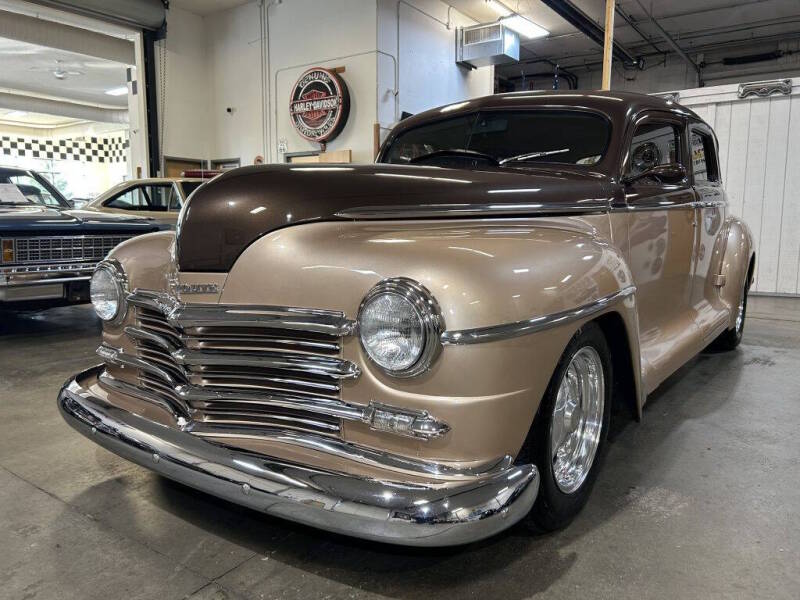 $35,990 · In line with typical
Expand
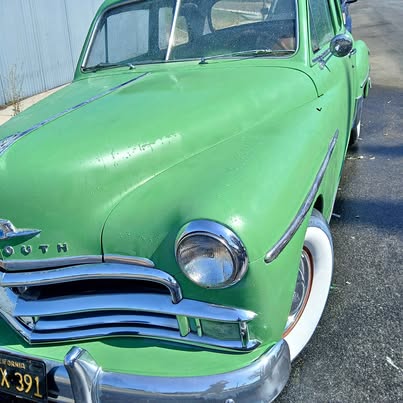 $5,500
Expand
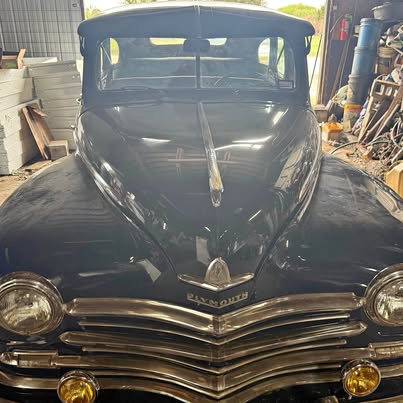 $10,000
Expand
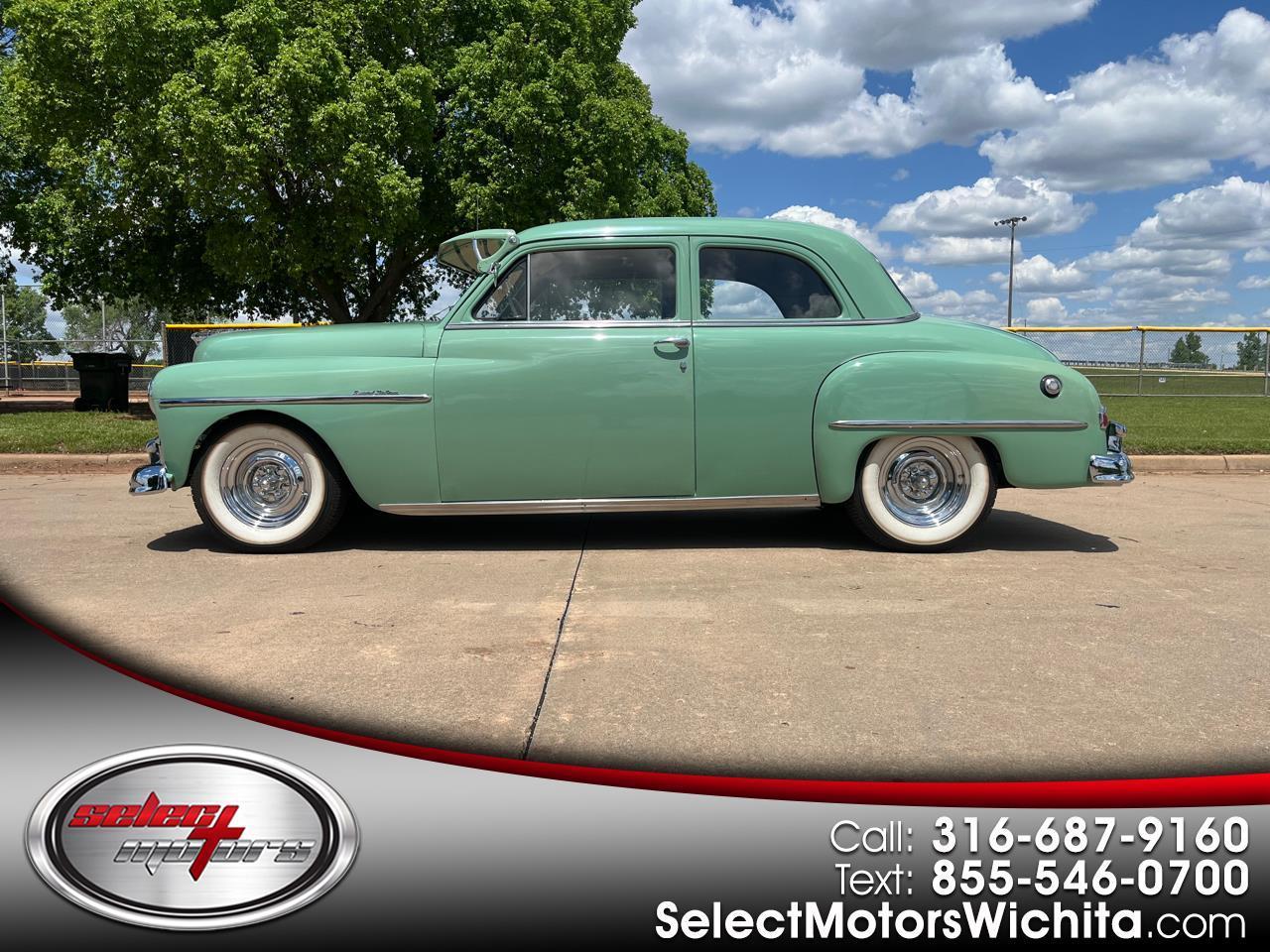 $11,999 · 66% below typical
Expand
What they sell for: Deluxe Street Rod sale prices.