
Plymouth Special Deluxe Station Wagon Woody buyer's guide
Plymouth Special Deluxe Station Wagon Woody -- the model's own buyer's guide: variants, values and what to check.
Years listed: 1941-1950 · Series: Full Size
# Plymouth Special Deluxe — Buyer's Guide
Overview and history
The Plymouth Special Deluxe is the top-trim version of the most honest car America built in the 1940s. Plymouth is Chrysler Corporation's low-price make, launched in 1928 to fight Ford and Chevrolet on price, and by the time the Special Deluxe name appears for 1941 it sits at the top of a range that sells on engineering rather than glamour: a full-pressure-oiled flathead six, hydraulic brakes on all four wheels, independent front suspension, and an all-steel body on a separate frame. None of that is exotic — and all of it is why these cars survive in usable numbers today.
The name runs across three distinct generations. The first is the 1941 P12 (and its short-run 1942 P14C successor), the last of the prewar cars. The second is the postwar P15 of 1946 to early 1949, a warmed-over 1942 car — because it has to be: Plymouth restarts production after the war with prewar tooling, and the P15 that rolls out from October 1945 is the car a demobbed generation buys in enormous numbers. The third is the all-new 1949 second-series P18 and its 1950 P20 development, with slab-sided styling and the same flathead six underneath. The name is retired after 1950; for 1951 the top Plymouth is called Cranbrook.
On this site the pool is small and you should read it honestly: nine records in total, six offered for sale and three recorded sold, spanning 1941 to 1950, with the weight in the later cars — three from 1949 and four from 1950 against two 1941s, and no 1946–48 P15 in the current pool at all. Eight of the nine come through dealers and one through a Marketplace seller, spread across six states. The Special Deluxe is a car you buy from stock, compare in the metal, and negotiate over condition, because supply is steady rather than scarce. The P15 advice in this guide therefore rests on general knowledge of the model rather than on cars currently listed here — when a P15 does appear, judge it by the same tests as the later cars, because mechanically it is nearly the same car.
In sedan and coupe form it is one of the cheapest honest ways into a pre-1950 American car you can actually drive: torquey, simple to service, and well served for parts. It is not a performance car or an investment-grade rarity — the convertible and the wood-bodied wagon excepted. Buy the condition, not the badge.

The models
Plymouth's range structure is simple once you decode it. In each year there are two trim levels: Deluxe, the base car, and Special Deluxe, the same car with more equipment, better upholstery, and more brightwork. There is no mechanical difference between them — same engine, same gearbox, same brakes, same suspension. That single fact drives the most important identity check in this guide: a car is a Special Deluxe because of its trim and equipment, not because of anything under the bonnet, so the trim is what you verify.
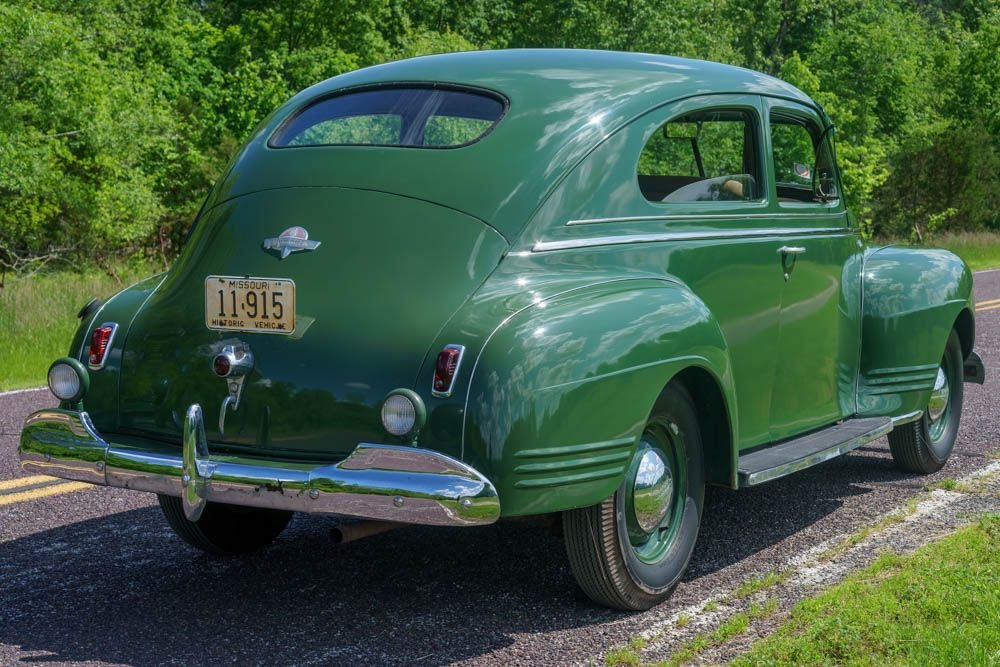
The 1941 P12 Special Deluxe is the prewar flagship. Plymouth's 1941 styling is a careful evolution of 1940: the grille is wider, the headlamps sit in the fender crowns, running boards are concealed under flared sills on most bodies, and the fastback and notchback shapes share a 117-inch wheelbase. Body styles span two-door and four-door sedans, a business coupe with no rear seat, a club coupe, a convertible coupe, and a station wagon with structural woodwork. The engine is the smaller 201.3 cu in flathead six (see the engine section), the gearbox a three-speed manual with column change, and the equipment list — twin wipers, a second tail lamp, upgraded upholstery, chrome window surrounds, wheel trim rings — is what lifts it above the P11 Deluxe. The 1942 P14C is the same car with a heavier grille and the larger 217.8 cu in engine, built only until February 1942, when the government halts civilian production. A genuine 1942 is rare because so few were made; treat any "1942" claim with the serial-number check in the inspection section.
The postwar P15, sold as the 1946, 1947 and 1948 model and into the first weeks of 1949 as the "first series" 1949 car, is a 1942 in a new suit of trim. The grille gains a plainer horizontal-bar treatment and the panel is revised, but the body shell, the 117-inch wheelbase, the 217.8 cu in engine and the running gear are carry-over — which is why P15 parts interchange so widely. Body styles mirror the prewar list: four-door sedan (the volume car), two-door sedan, club coupe, business coupe, convertible coupe, and the wood-bodied station wagon. This is the archetypal postwar Plymouth.
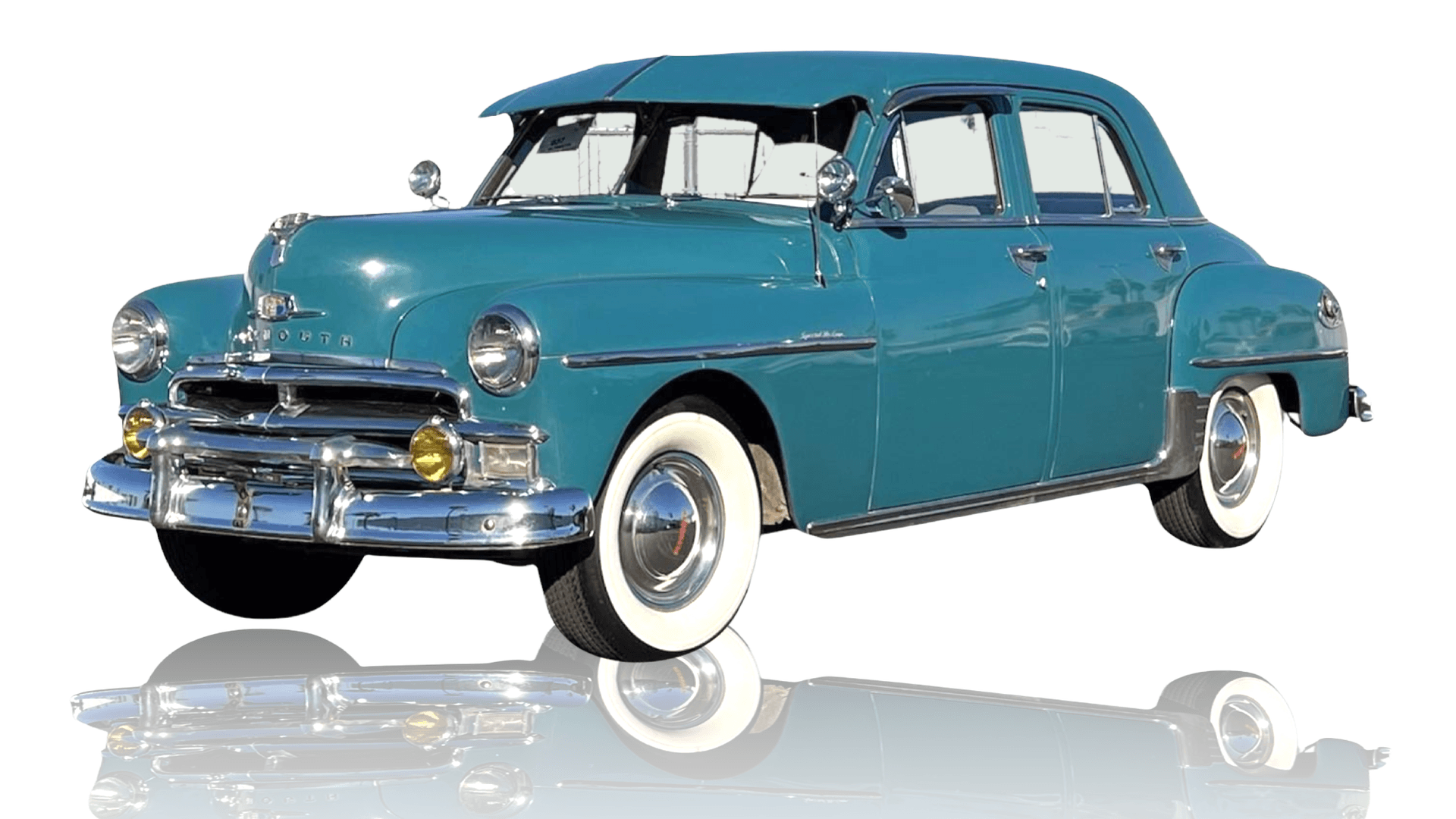
The 1949 model year is the trap for the unwary, because there are two completely different "1949 Plymouths." Cars built from January to about March 1949 are first-series cars: P15 bodies on the old shell, sold as 1949 models while the new tooling came on stream. Cars built after the spring launch are second-series cars: the all-new P18 Special Deluxe (and P17 Deluxe), with the upright, slab-sided "three-box" body that defines the 1949–50 Plymouth in most people's minds. The Special Deluxe moves to a 118.5-inch wheelbase while the Deluxe sits on a shorter 111-inch chassis, giving the P18 a longer bonnet and more rear-seat room. Styling is conservative next to a 1949 Ford, but the Plymouth is taller, roomier, and easier to get in and out of. The 1950 P20 is a detail revision of the P18: grille and trim changes, the same structure and running gear. Distinguishing a P18 from a P20 is a grille-and-badge exercise; distinguishing either from a first-series 1949 is easy, because the body is entirely different.
| Model | Years | Engine | Output | Built | Character |
|---|---|---|---|---|---|
| P12 Special Deluxe | 1941 | 201.3 cu in flathead six | 87 hp | Large prewar production | Last prewar flagship; most style, least performance |
| P14C Special Deluxe | 1942 | 217.8 cu in flathead six | 95 hp | Very small — production halted Feb 1942 | Rarest of the line; verify the serial before paying for rarity |
| P15 Special Deluxe | 1946–48 (and first-series 1949) | 217.8 cu in flathead six | 95 hp | Very large — the volume postwar car | The archetype; best parts support, easiest ownership |
| P18 Special Deluxe | 1949 (second series) | 217.8 cu in flathead six | 97 hp | Large, but a short run | All-new body, old heart; roomiest of the range |
| P20 Special Deluxe | 1950 | 217.8 cu in flathead six | 97 hp | Large | The developed final version; the sensible late buy |
Production figures in the table are deliberately given in words rather than invented precision: Plymouth builds these cars in the hundreds of thousands across the run, and per-body-style numbers vary between sources. The market shape is what matters: sedans and coupes are common, convertibles are scarce, and wood-bodied wagons are scarcer still — the blue-chip cars of this range.
Two identity traps deserve stating here, because they decide what a car is before you discuss what it is worth. The first is the Deluxe-versus-Special-Deluxe question. Because the difference is trim, a Deluxe can be dressed up: add the brightwork, the trim rings, the better upholstery and the badges, and a base car presents as a Special Deluxe. The trim and brightwork settle it — but only if you check them against the car's serial and body records rather than the seller's description, because a dressed car carries exactly the brightwork you are using as evidence. Look for the less glamorous equipment dressers-up rarely bother with, and treat a mismatch between paper identity and specification as a pricing fact. The second trap is the postwar "1946" that is really re-serialed prewar stock: when production restarts, cars and components built to 1942 specification move through the system, and over the decades more than one 1942 has acquired a postwar identity, innocently or otherwise. The serial number is the car's birth certificate. Read it, date the car from it, and let the title follow the metal.
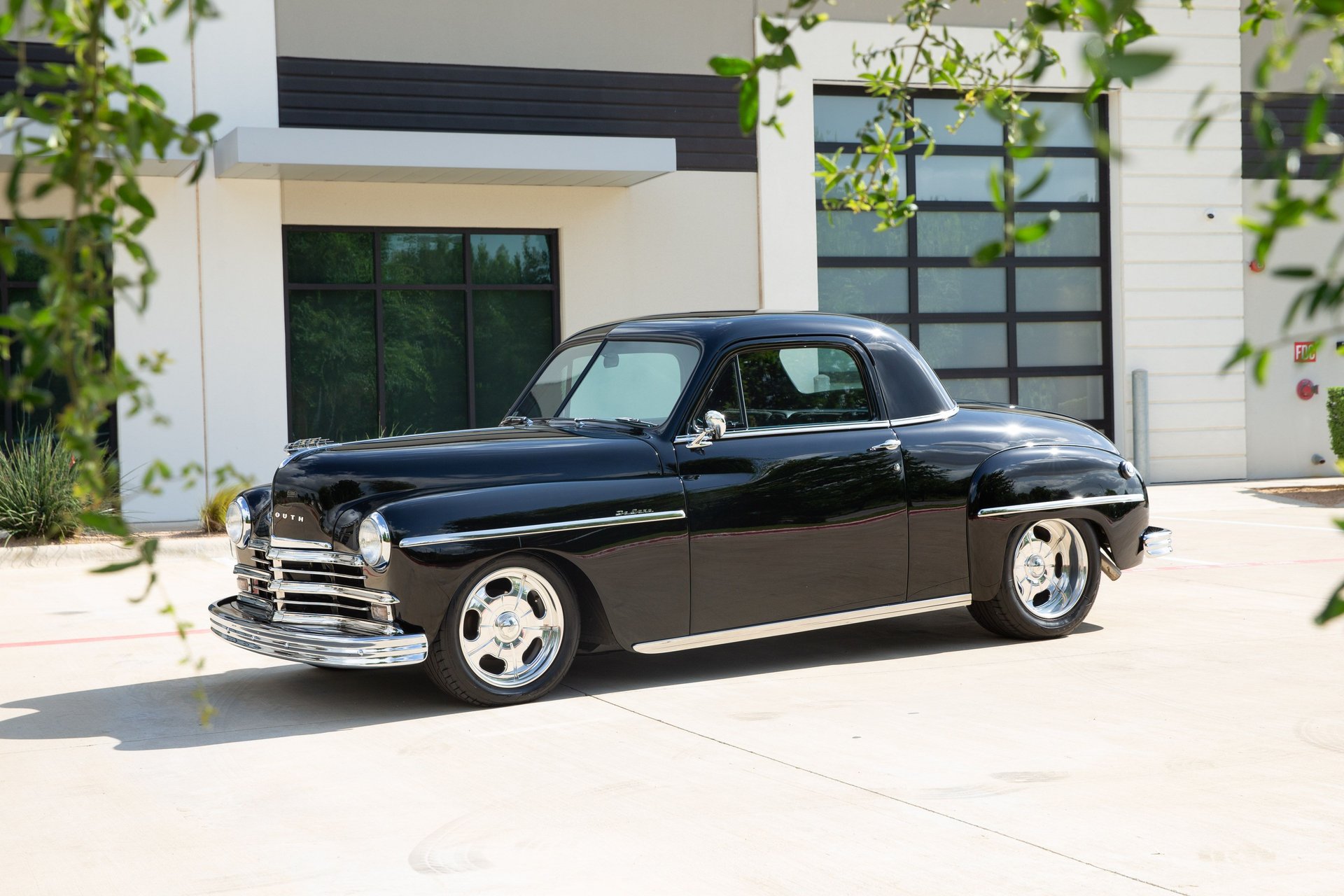
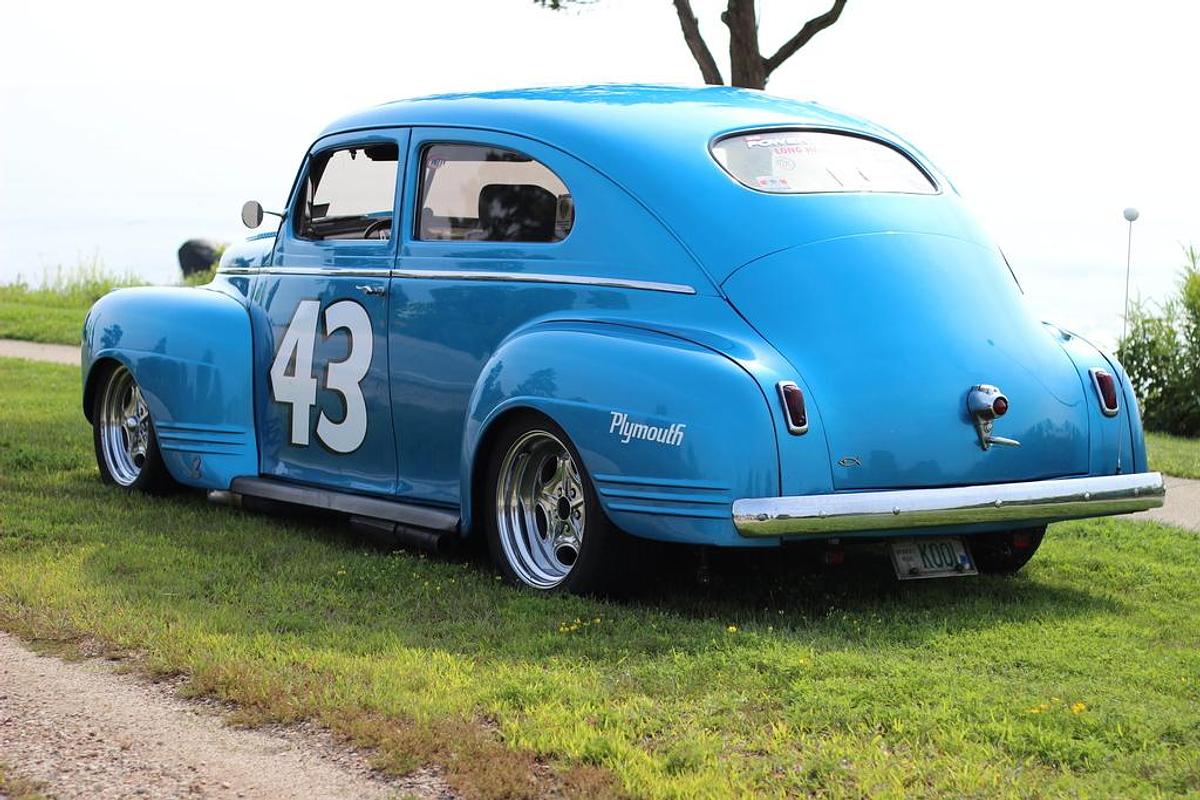
Finally, note that the current pool includes modified cars alongside stock ones: a 1941 sedan described in its listing as an all-steel big-block car, and listings whose transmission is recorded as a five-speed Tremec manual or an automatic — neither of which Plymouth ever fitted. Hot-rodded examples are a legitimate part of this market, but they are a different purchase, judged on the quality of the conversion rather than on originality. This guide covers the stock car.
Engines and gearboxes
The 217.8 cu in flathead six — P15, P18 and P20
The engine that powers nearly every Special Deluxe you will ever look at is Chrysler's L-head (flathead, side-valve) inline six of 217.8 cu in — about 3.6 litres — with a 3.25-inch bore and a long 4.375-inch stroke. Cast-iron block and head, four main bearings, a single downdraught carburettor (Carter Ball & Ball in most applications), a compression ratio in the mid-sixes, and an output of 95 hp in the P15 and a nominal 97 hp in the P18 and P20. Those numbers undersell it. The long stroke and mild tuning give you torque low down, so the car pulls away cleanly in second, trickles in top at walking pace, and cruises at 50–55 mph without strain. Judge it as a slogging, unstressed engine, because that is what it is, and its longevity comes from exactly that lack of stress.
Understand the architecture and most of its behaviour follows. The valves sit in the block beside the cylinders, operated by tappets from a camshaft low in the block; the combustion chamber spreads sideways over the valves, which is why the flathead is smooth and quiet but thermally inefficient and prone to running hot at the exhaust side. There is no overhead valve gear to wear and no timing chain — the camshaft is gear-driven. Valve clearances are set at the tappets, reached by removing the covers on the side of the block (the rear cover sits awkwardly behind the manifolds, which is why the job gets skipped), and the settings are small — of the order of eight thousandths of an inch on the inlet side and ten on the exhaust, set hot. A flathead that ticks gently when warm is telling you its clearances have never been done; one that is silent but down on power may have closed-up exhaust clearances holding a valve off its seat, which burns the valve if you keep driving. Budget a tappet set into any purchase with no recent history of one: a half-day at home, or roughly $250–450 at a shop, and it transforms starting and idle quality.
Oiling is one of this engine's genuine strengths and the first thing to verify. The system is full-pressure: the pump, driven from the camshaft, feeds the main, connecting-rod and camshaft bearings under pressure, unlike the splash-and-dip systems still found on some rivals. Oil pressure at hot idle on a healthy engine is modest but present — pressure that rises promptly with revs and does not flicker at idle when hot. Weak hot-idle pressure, or a gauge that takes seconds to wake on a cold start, means bearing wear or a tired pump, and no oil grade will cure it. The factory filter, where fitted, is a partial-flow (bypass) unit, so cleanliness depends on change discipline. Change the oil every 2,000 miles or annually, use a good 20W-50 in a worn engine, and expect to spend $60–100 on oil and a filter element per change doing it yourself. Sludge is the enemy inside any flathead that has lived on short trips: check the filler neck for mayonnaise emulsion (condensation, common and not fatal) versus black tar. A sludged engine overheats, because sludge insulates, and starves its bearings, because sludge blocks. Walk away from black tar unless the price is a project price.
Cooling is the flathead's known weakness, and it is a design consequence, not a defect in any individual car. The exhaust ports pass through the water jacket inside the block, so this engine puts more heat into its cooling system than an overhead-valve design of the same output. The system itself is conventional: a belt-driven water pump, a thermostat in the outlet housing on the head, a generous radiator, and a fan on the pump shaft. Healthy cars run comfortably in ordinary weather. Marginal cars — a radiator core furred with scale, a pump with a worn impeller or a weeping seal, a thermostat stuck half-open, ignition timing retarded (retarded timing makes any engine run hot, and this one has no margin to spare) — overheat in traffic, on grades, and on hot days, in that order. The diagnostic sequence matters: if a car runs cool on the open road but boils in traffic, suspect airflow and the pump before the head gasket; if it pressurises the system and blows coolant out from cold, suspect combustion gas in the water — a compression test settles it. A radiator recore costs roughly $400–800; a water pump is a $60–150 part and an hour's work. What should frighten you is evidence of chronic overheating — a warped head, cracked block waterways around the exhaust ports, sealant smeared at the head joint. Head gaskets are cheap ($30–60) and the job is simple, but torque the head down in sequence and re-torque after the first heat cycles, because a flathead head gasket that is not re-torqued weeps.
Ignition is a conventional 6-volt coil-and-points system, Auto-Lite in most cases, the distributor driven from the camshaft with a vacuum advance unit on its side. Service items are points (gap of about twenty thousandths of an inch), condenser, rotor, cap, plugs (gap of about twenty-five thousandths) and leads — a full kit is $50–120 and an hour of your time, and it cures most "mystery" misfires and hot-start complaints. The failure mode to know is the vacuum advance diaphragm: it perishes, the advance stops working, and the car develops a flat spot and a thirst that owners blame on the carburettor. Test it before you buy parts — suck on the vacuum pipe or use a hand pump; the unit must move the base plate and hold vacuum. If it leaks, replace the unit (roughly $40–90 where available) rather than rebuilding the carburettor for the third time. The carburettor itself — a single-barrel Carter — is simple, rebuildable for $40–80 in parts, and rarely the root cause of anything once the ignition is right. A worn distributor shaft (side play you can feel at the rotor) scatters the timing however carefully you set the points: a rebuilt distributor runs $150–350.
Two more engine checks belong in your bones. Compression: a healthy 217.8 gives even readings across all six; an adjacent low pair points at the head gasket between them, one low cylinder with an oily plug points at rings or a valve, and all-low-even points at general wear or closed-up tappets. And the rear main seal is a rope-type seal that weeps with age: a damp bellhousing is normal, while a drip that marks the drive overnight is a gearbox-out job ($600–1,200 in labour terms) that you price into the deal.
The 1941 engine — the 201.3 cu in six
The P12 uses the earlier, smaller version of the same engine: 201.3 cu in (about 3.3 litres), a 3.125-inch bore with the same 4.375-inch stroke, rated at 87 hp. Everything said above about architecture, oiling, cooling and ignition applies, with two practical differences. First, performance: the 201.3 works harder in the same body, so a P12 cruises happiest at 45–50 mph and a worn one shows it sooner. Second, parts: the 217.8 is the engine the trade supports best, because it powers the whole postwar run and a generation of Dodge trucks besides; the 201.3 shares much, but pistons, rings and some gaskets are year-specific, so confirm availability before you buy.
Do not let anyone sell you a P12 as a P14C on the strength of an engine swap — engines swap between these cars easily, and many have been swapped. The engine number tells you what the engine is; the serial number tells you what the car is. Price the combination you are actually looking at.
The three-speed gearbox and the clutch
The standard gearbox across the whole run is a three-speed manual with synchromesh on second and third, a sliding-mesh first and reverse, and column-mounted change — any Special Deluxe with a floor lever has been modified. It is a strong, simple box: first is for starting on hills, second does most town work, and top is a direct-drive cruising gear. The checks are the classic ones. It should not jump out of gear on the overrun — a box that spits third back at you downhill has worn engagement dogs or a tired detent, and that is a rebuild ($800–1,800), not an adjustment. Synchromesh that crunches into second when cold but behaves when warm is usually oil and technique; synchromesh that crunches always is worn blocker rings. Whine in first and reverse is normal for straight-cut sliding gears; whine in top, which is direct drive, points at bearings. Gear oil is cheap to renew ($25–50) — do it on any new purchase and read what comes out: grey paste is wear, emulsion is a car that has stood in damp.
The clutch is a single dry plate with a mechanical linkage — no hydraulics to leak, but linkage bushes that wear and make the pedal vague. Judder taking up drive is usually oil on the plate (see the rear main seal, above) or a worn driven plate; slip under load in top on a hill is a worn plate, full stop. A clutch job is $700–1,400 in parts and labour. While it is apart, always renew the release bearing and check the flywheel face, because doing the job twice costs twice.
Fluid Drive — the coupling that is not an automatic
Many postwar cars carry Chrysler's Fluid Drive, and it confuses buyers more than any other feature of the model, so be precise. Fluid Drive is not an automatic gearbox. It is a fluid coupling — a sealed, oil-filled drum with vaned members, one driven by the engine and one driving the clutch — inserted between the engine and an ordinary clutch and three-speed manual gearbox. What it buys you is smoothness: you can start in second or even top, come to a halt in gear without stalling, and pull away again without touching the clutch. What it costs you is acceleration, because the coupling slips by design. You still change gear by hand; you just need the clutch less.
The buying consequences are threefold. First, identification: a Fluid Drive car has the coupling drum at the back of the engine, a filler and level plug on the coupling, and usually a Fluid Drive badge; a car advertised as an "automatic" Special Deluxe is either a Fluid Drive car described loosely or a later conversion — establish which, because they are entirely different purchases. The listings in this site's current pool include cars recorded with automatic-type transmissions; on a stock car that description cannot be literally right, so ask the question. Second, condition: the coupling has no wearing friction surfaces, but its seals perish, and a coupling that has lost its oil slips excessively — the car feels gutless and the engine races without drive. Refilling is possible; resealing is a gearbox-out job. Third, driving: judge it against Fluid Drive standards, not against a manual car. Excessive slip, shudder, or oil flung around the bellhousing are the faults; slowness is the design.

Problem areas
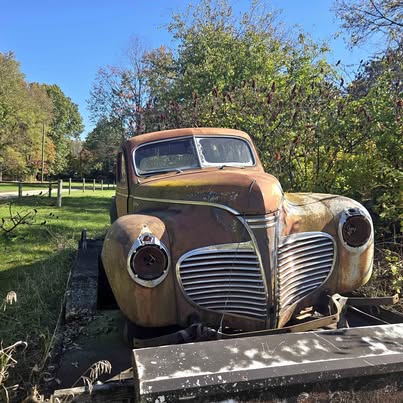
Everything on a Special Deluxe is repairable. That is not the same as everything being cheap to repair, and the difference between a good purchase and a bad one is almost entirely a matter of which problems the car in front of you has. The site's own photo-note evidence gives you a flavour of the pool: of the five cars photo-examined for this site, two carry rust mentions and two carry damage mentions, with no smoke and no leak mentions recorded — a tiny sample, so read it as a prompt to look, not as statistics. Work through the systems below in order, because the order is the order of financial pain: body first, then the running gear, then the electrics and trim.
Rust: the map for a 1940s all-steel body
The Special Deluxe is a body-on-frame car, and that fact cuts both ways. The frame rusts far less readily than the body, so a car can look hopeless and be sound underneath — or look tidy and be sitting on rotten body mounts. Assess body and frame separately, and never let a seller's "it's a frame car, so rust doesn't matter" pass: the body still has to hold its doors shut and keep water out, and body rust is the expensive kind.
Start with the floors, because on this car the floors are the verdict. The footwells, the floor under the front seat, and the trunk floor all rust from the inside out: water gets in past perished seals, sits under carpets and the trunk mat, and eats the flat panels where you cannot see it until it is through. Lift the carpets — a seller who will not let you lift carpets has answered your question — and press every floor area with your thumb and then with a screwdriver handle. Surface scale is normal and treatable; perforation, layered flaking, or patches pop-riveted over rot are the findings that matter. Replacement sections are available, but do the arithmetic honestly: replacing both front floors and the trunk floor properly is $1,500–3,500 in welding and fabrication before paint, and a car needing floors usually needs the next items on this list too.
Move outward to the sills and rocker panels, the box sections below the doors. These rust from inside — condensation and road salt collect in the box — and the door apertures depend on them, so sagging sills show up as doors that drop on their hinges and gaps that taper. Sight along the sill line for ripples and filler edges. Tap with a knuckle: steel rings dully, filler thuds. The test that settles sills is to open both doors on one side and check whether the apertures stay square, then inspect the underside of the sill box for perforation along its bottom seam. Sill replacement is $1,000–2,500 per side done properly; one rotten sill is a negotiation, two rotten sills and rotten floors are a restoration project whatever the paint says.
Then the wings and lower body. The bottoms of the front fenders trap mud against the cowl and rot through; the cowl sides rust where that mud sits, and a rotten cowl leaks water into the front footwells — which is how the floors went. Door bottoms rust along the folded seam where the skin wraps the frame: look for bubbling in a straight line along the bottom edge. The trunk lid's lower edge is a regular casualty. Around the screens, perished rubbers let water rust the apertures; staining on the headlining below the corners and weep marks below the rubbers are the tells, and aperture repair means screens out and welding where distortion shows forever — price it as skilled work, $800–2,000 per aperture beyond surface rust.
The frame itself: check the side rails at the body mounts, the rear spring hangers, and the crossmembers. Surface rust is fine. Perforation in a rail, holed spring hangers, and perished mount rubbers are not — mounts are replaceable ($300–700 for a set, body lifted), but frame welding is specialist work and a rotten frame on a car of this value usually ends the conversation. Also check the battery tray: acid rots it, a fiddly repair ($200–500) but diagnostic of how the car has been kept.
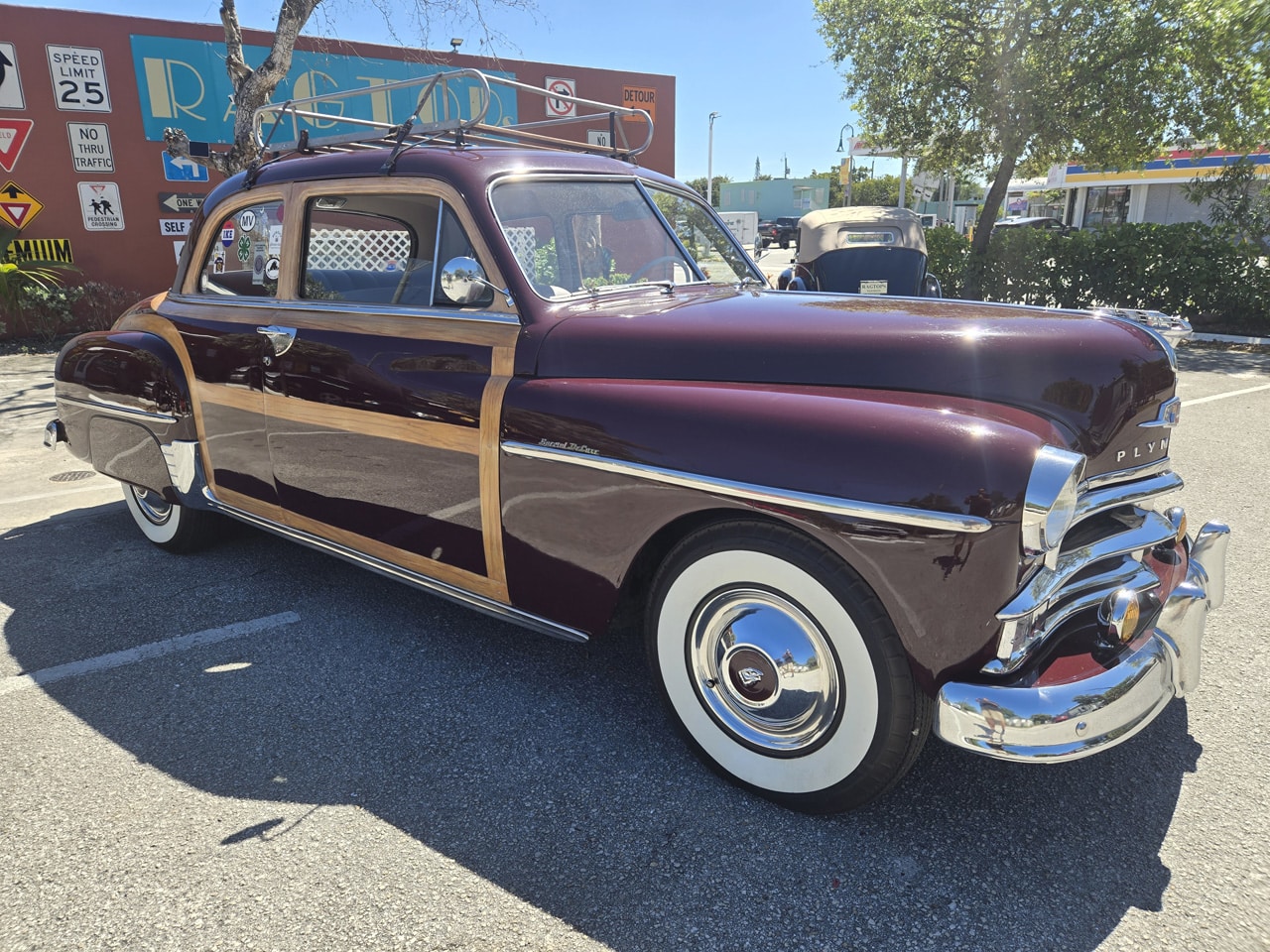
The woody wagon is a special case. On the 1949–50 station wagon the wood is structural and decorative at once — ash framing with panel inserts — and it fails by rot at the joints, by splitting along the grain, by varnish failure that lets water in, and by woodworm in neglected cars. Inspect every joint with a penknife point where the owner permits: sound wood resists, rotten wood takes the point like cake. Check the lower tailgate, the door bottoms, and the roof edges, where water stands. A full wood rebuild is one of the most expensive jobs in this guide — well into five figures in dollars for a complete set of new timber, fitted and finished — and even localised repairs ($1,500–4,000 for a tailgate or a door frame) need a craftsman, not a body shop. Buy a woody on its wood the way you buy a sedan on its floors, and be stricter.
Front suspension, steering and the rear axle
The front suspension is independent, with coil springs and unequal-length wishbones working on kingpins — vertical pins about which the stub axles steer, and the single most neglected service item on the car. Kingpins and their bushes need grease at chassis-lubrication intervals (period practice is roughly every 1,000 miles) and they wear when they do not get it. The test: jack the front so the wheel is just clear of the ground, grip the tyre at top and bottom, and rock it. Movement at the kingpin — distinct from wheel-bearing play, which feels looser and more general and which you confirm by rocking at three-and-nine while watching the hub — means kingpin and bush wear. A kingpin set is a modest parts cost ($120–250) but fitting is press work and reaming, so $500–900 fitted per side is realistic. A car that wanders, wears its front tyres on one edge, and stands with visible negative camber is usually showing you kingpin wear plus tired springs; budget for both, and for an alignment afterwards ($100–180). Coil springs sag with age — a car down on one corner has a broken or settled spring. A car that pitches and floats after a bump has dead dampers; bouncing each corner by hand tells you in seconds.
Steering is a worm-and-roller box with a long linkage, every joint of which wears a little until the sum is a quarter-turn of free play at the wheel. Some free play is period-normal; what you are testing for is lost motion that makes the car vague at speed and clunks over bumps. Have a helper rock the wheel while you watch each joint: movement at a joint before the next part moves is wear you can point at. The box adjusts to a degree, but a box adjusted tight to hide wear binds at the straight-ahead — test for a notchy patch at centre on the road test. A linkage overhaul runs $300–700 in parts; a steering box rebuild $400–800.
At the rear, a live axle on semi-elliptic leaf springs does the work. The axle rarely gives trouble beyond seal leaks — a pinion seal weep, and half-shaft seals that wet the brake backplates, which matters because oil on linings ruins them (see brakes, below). Differential whine that changes between drive and overrun suggests worn gears or bearings; a rebuild is $800–1,500. Leaf springs sag, break leaves, and wear their bushes until the axle steers the car from behind over bumps — new bushes and pins are cheap parts ($80–200) and a morning's work. The transmission-mounted parking brake — a drum on the back of the gearbox — deserves a mention: owners forget it exists until it drags or fails to hold, and its linings and cable need the same inspection as the service brakes.
Brakes
Plymouth's hydraulic brakes are a period strength — four-wheel hydraulics were standard on Plymouth years before some rivals offered them — but the system you are inspecting is seventy-five years old and single-circuit: one master cylinder feeds everything, and a single failed hose, cylinder or rusted line means no brakes at all, with only the transmission parking brake in reserve. Treat the hydraulics as a system you renew on suspicion, not on failure. The pedal should be firm, high, and stay firm under sustained pressure; a pedal that sinks slowly is bypassing internally in the master cylinder. Watch the fluid colour — black fluid is old fluid full of rubber debris and moisture. Follow every steel line along the frame looking for rust bloom, especially at clips and along the rear axle; follow every flexible hose looking for perishing and bulging. Pull the drums — or insist the seller's recent invoice shows it was done — and look for weeping wheel cylinders, contaminated linings, and drums scored or worn beyond their limit. A full hydraulic renewal — master cylinder, four wheel cylinders, hoses, lines as needed, shoes and fluid — is $700–1,500 in parts and labour and is the best money you can spend on one of these cars; many owners convert to a dual-circuit master cylinder for safety, a deviation from originality that most driver-car buyers accept and concours judges do not. Ask which the car has. On the road the car should pull up straight: a pull to one side is a sticking cylinder, a contaminated lining, or a collapsed hose acting as a one-way valve — the hose fault is the one everyone misses, so if a brake binds or pulls and the cylinders look fine, change the hoses first.
6-volt electrics
Every stock Special Deluxe is 6-volt, positive earth (ground), with a generator and a vibrating-contact voltage regulator. The system is adequate when healthy and infuriating when not, and its faults follow one master cause: resistance. Six volts means double the current of a 12-volt system for the same power, so every corroded terminal, undersized cable and poor earth drops voltage the system cannot spare. The classic symptoms — a starter that cranks slowly when hot, headlamps that are candles at idle and brighten with revs — are usually cable and earth faults, not component failures. The fixes are unglamorous and cheap: genuinely heavy battery cables, clean terminals, a sound engine-to-body earth strap, and a battery that is actually good rather than a tired one kept on a charger for viewings. Budget $100–250 to sort cables, earths and terminals and you cure most "6-volt problems" without converting anything.
The generator and regulator are serviceable: a generator that does not charge is usually brushes ($20–40) or a regulator whose points need cleaning and setting, and a specialist rebuild of both is $250–500. Slow cranking after you have sorted the cables points at starter brushes or a worn armature, $200–400 rebuilt. Many cars have been converted to 12 volts, usually with an alternator. A conversion is not a defect — it gives brighter lights and easier starting — but judge its quality: a tidy conversion with gauges, bulbs, heater motor and wipers properly dealt with is an asset; one that just swapped the battery and cooked everything 6-volt downstream is a rolling electrical fault. Test everything electrical, one switch at a time, whatever the car's voltage.
Wiring itself ages: the original cloth-braided insulation perishes and shorts, particularly in the engine bay and at the bulkhead. A car with random electrical faults and melted tape repairs needs a loom, and a reproduction loom is $400–900 plus fitting — a negotiation item, not a walk-away, unless there is evidence of an electrical fire.
Interior, trim and brightwork
The interior is where Special Deluxe money was spent when the car was new and where restoration money disappears fastest now. Upholstery is broadcloth or mohair on sedans and coupes, and it fails by sun-rot on the rear shelf and seat tops, by seam splitting, and by moth in stored cars. A full professional retrim in correct-style cloth runs $3,000–6,000. Headlinings sag and stain from the window-channel leaks described in the rust section — find the leak before you price the lining. The plastic steering wheel cracks with age, and a restored wheel is $400–900, which is why so many cars wear a wrap. Rubber — window seals, door seals, pedal rubbers, the trunk mat — perishes universally and is mostly reproduced; a full kit is $500–1,200 and a weekend of fitting, and it is the difference between a car that keeps water out and a car whose floors are quietly going.
Brightwork is identity on this model, so inspect it as evidence as well as ornament. Special Deluxe trim — side spears, window surrounds, grille treatment, hubcaps and trim rings — should be consistent in style, age and fitting across the car. A single freshly chromed piece among aged ones, or Deluxe-level plainness under Special Deluxe badges, feeds the identity question from the models section. Replating is expensive: a bumper is $400–800 done properly, a grille more, so good original chrome is worth real money over peeling brightwork. Stainless trim polishes up; pot-metal pieces — handles, ornaments, lamp bezels — pit from inside and are the first to be missing. Inventory the pot-metal before you buy.

How to inspect one
Inspect in this order and do not let a seller rearrange it for you: identity first, body second, mechanicals third, paperwork last, because each stage decides whether the next is worth your time. Allow two hours, and bring a torch, a magnet wrapped in cloth, a screwdriver, and a friend to work the controls while you watch underneath.
- Start with the numbers, before the paint dazzles you. Find the serial number plate on the left front door hinge pillar and the serial stamped into the frame, and read the engine number on its pad at the front of the block. The three should tell one consistent story: the serial dates the car (and settles the first-series versus second-series 1949 question, and the 1942-versus-1946 question), and the engine number tells you whether the engine is the 201.3 or the 217.8. A mismatch is not automatically a deal-breaker — engines get swapped honestly — but it must be priced as what it is, and a serial that does not match the title ends the inspection here.
- Settle the trim identity. Walk the brightwork and equipment against the Special Deluxe specification for the year, as the models section describes: window surrounds, side trim, trim rings, upholstery grade, the small extras. Look for evidence of a dressed-up Deluxe — mismatched trim age, fresh mounting holes, badges over plain specification. The trim and brightwork settle it; make them.
- Do the floors before anything else underneath the carpets. Lift every carpet you can, and the trunk mat. Press, prod and photograph. Perforated floors move the car into project pricing on the spot, per the rust map in the problem areas; sound original floors are the single best sign a car can show you.
- Work the rust map in order. Sills (open both doors each side, check the apertures stay square, sight along the sill line), cowl and front fender bottoms, door bottom seams, trunk lid edge, screen apertures, battery tray. Use the cloth-wrapped magnet on suspect panels: it falls off filler and sticks to steel.
- Get underneath, or get the car on a lift. Frame rails at the body mounts, spring hangers, crossmembers, mount rubbers, brake lines along the rails, and the underside of every floor you checked from above. On a woody, spend this time on the timber instead: every joint, the tailgate, the door bottoms, the roof edges, with a penknife point where permitted.
- Cold start, and insist on genuinely cold. An engine warmed up for your arrival is hiding its starting behaviour and its oil pressure on start. From cold, a healthy flathead starts on choke with a few turns, shows oil pressure promptly, and settles to a quiet, even idle as the choke comes off. Blue smoke that clears is age; blue smoke that stays is rings or bores; white vapour that does not clear and smells sweet is coolant, and takes you straight to a compression test.
- Compression and oil pressure, if the seller permits — and a serious seller does. Even readings across six cylinders, prompt oil pressure that holds at hot idle. Adjacent low pair: head gasket. One low with an oily plug: rings or a valve. Flickering hot-idle pressure: bearings or pump. Any of these reprices the car by the cost of the work in the engine section.
- Test the ignition and charging under load. Lights on, heater blower on, watch the charge behaviour, then check for the flat spot that betrays a dead vacuum advance — the suck test on the advance unit from the engine section settles it in a minute. Crank the starter hot as well as cold; slow hot cranking is the classic 6-volt cable-and-earth fault until proved otherwise.
- Kingpin and steering test on the jack. Front wheel clear of the ground, rock at twelve-and-six for kingpin play and at three-and-nine while watching the hub for bearing play, as the suspension section describes. Then have your friend rock the steering wheel while you watch every linkage joint for lost motion. Price what you find: kingpins, linkage and an alignment are a known, bounded bill.
- Brake test, static then rolling. Pedal firm, high, and holding under sustained pressure — a sinking pedal is a master cylinder bypassing. Fluid dark, hoses cracked, lines rusty: budget the full hydraulic renewal from the brakes section and say so in the negotiation. On the road, brake firmly from 40 mph with a light grip: straight stop, no pull, no bind afterwards. Check the transmission parking brake holds on a slope; it is the only backup a single-circuit system has.
- Road test for at least twenty minutes, including a hill and a hot restart. Listen for gearbox behaviour (jumping out on the overrun, crunching into second), differential whine that changes between drive and coast, and clutch judder or slip in top on the hill. On a Fluid Drive car, judge take-off by Fluid Drive standards — leisurely is correct, excessive slip and bellhousing oil are faults. Watch the temperature gauge throughout and at idle after the run. Park it hot for ten minutes, then restart: hot-start behaviour separates sorted cars from projects faster than any other test.
- Finish with the paperwork and the small things. Title against serial, bills that match the claimed work (a "rebuilt engine" with no invoice is an unrebuilt engine), and a sweep of the small stuff that costs real money in aggregate: every switch and lamp, wipers, heater, gauges, winders, locks, the pot-metal inventory, the spare and jack. Then add up the bills this inspection has generated and negotiate from the list, not from the asking price.
Values
Read this section as instructions for reading the market, not as a price list: the figures that matter are the ones in the market data published alongside this guide, refreshed as cars are listed and recorded sold, and your job is to understand what moves a Special Deluxe within that spread rather than to memorise numbers that date.
The spread itself is the first lesson. Condition moves this car further than specification ever does, because the range runs from a driving sedan that needs everything cosmetically, through honest drivers, to restored cars whose owners have spent more than the car will ever return. The gap between a project and a driver is wide, and it is mostly made of the bills itemised in this guide — floors and sills, a hydraulic renewal, kingpins, chrome, a retrim — so the cheapest car is routinely the most expensive way to own one. A project only makes sense at project money, with the welding priced honestly before bidding. The middle of the market — the sound driver with good floors, tired paint and honest mechanicals — is where the value sits for almost everyone.
Variant premiums are real but uneven. The convertible and the wood-bodied wagon stand apart: both were built in small numbers, both are expensive to restore (the woody uniquely so), and both draw buyers from outside the Plymouth world, which supports their prices in a way sedan prices are not supported. Coupes sit a step above sedans of equal condition, because buyers prefer the shape and fewer survive. Within the sedans and coupes, generation matters less than you might expect: a fine P15 and a fine P20 in the same condition are close relations in the market, the prewar P12's styling and smaller engine roughly cancelling out. A genuine 1942 is the exception, where verified rarity earns a premium — verified being the operative word, since the premium attaches to the serial number, not the claim.
Originality and modification pull in opposite directions, because this range has two distinct buyer pools. Stock-car buyers pay for correctness: matching identity, correct trim, the flathead in place, Fluid Drive present and working where fitted. Restomod buyers pay for build quality: a well-engineered conversion can out-earn a mediocre stock car, while a rough conversion is worth less than the stock car it started as. Neither pool pays a premium for the other pool's car, so a seller asking stock money for a modified car, or modified money for a stock one, is misreading their market — and that misreading is your negotiating room.
Asking prices and achieved prices are different animals on cars like these, particularly in dealer hands, where a Special Deluxe may sit as showroom furniture at an optimistic figure and sell, months later, for what the market actually thinks. The recorded sales alongside this guide are the corrective: they show what buyers paid, not what sellers hoped. Use them, use the condition bills from your inspection as leverage, and remember that on a car built in these numbers there is always another one.
Parts and ownership
Owning a Special Deluxe is a mainstream hobby proposition, and that is its great virtue. The 217.8 cu in flathead powers not just the postwar Plymouth range but a wide family of Chrysler Corporation cars, Dodge trucks, and industrial applications, so the mechanical parts trade is deep: pistons, rings, bearings, gaskets, water pumps, carburettor kits, ignition components, clutch parts, brake hydraulics and suspension wear items are all obtainable from the established American-classic suppliers, generally off the shelf and at prices that make European classics of the same age look punitive. A full engine rebuild, machined and assembled, runs roughly $3,500–6,000 depending on how much machining the block needs, and the engine's simplicity makes it a realistic home rebuild for a careful amateur with a manual and a good machine shop.
Chassis and brake parts follow the same pattern: kingpin sets, linkage ends, springs, brake cylinders, hoses and shoes are reproduced or held as old stock, and the jobs are sized for a home garage. Body and trim are where supply thins. Floor and sill sections are reproduced because the rust is predictable. Brightwork, pot-metal and model-specific trim are not, so you buy them used and replate what you have; this is why you buy the car with the best trim you can find — trim is the one thing money cannot easily buy later. Glass and rubber seals are reproduced, and interior cloth in correct patterns is obtainable from specialist trimmers.
Running costs are gentle. Fuel consumption sits in the high teens to low twenties per gallon — the flathead is unstressed, not efficient — and the car runs happily on regular unleaded with a lead-substitute additive or, better, with hardened exhaust valve seats fitted at rebuild time if you intend real mileage; the seats are in the block, so the cure is a machine-shop job you combine with other work. Insurance through the classic schemes is inexpensive. Spares to carry: points, condenser, plugs, a fan belt, hoses, a coil, and the tools to fit them — the whole kit fits in a small box in the trunk.
The ownership rhythm is period maintenance, done little and often. Grease the chassis points — kingpins above all — roughly every 1,000 miles; change the oil every 2,000 miles or annually; set the tappets and points annually if you use the car regularly; renew brake fluid on a two-year cycle because the single-circuit system forgives nothing; and exercise a Fluid Drive car regularly rather than letting seals sit. Join the marque community — the Plymouth Owners Club and the wider Chrysler-products clubs carry the technical knowledge, parts leads and dating expertise that settle questions like first-series production breaks, and club classifieds are where the best unrestored cars change hands. None of this is burdensome: it is the ordinary care of a well-made machine, and a Special Deluxe that gets it repays you by simply working.
Which one to buy
There is no bad Special Deluxe, only badly bought ones — the generations differ in flavour far more than in quality, so choose by the driving you intend and the body style you want, then buy condition ruthlessly within that choice.
- The all-rounder: a P20 (1950) four-door sedan or club coupe, stock, with sound floors. The final, most developed version, the roomiest body, the best-supported engine, and the deepest supply to choose from.
- The value buy: a P15 (1946–48) sedan in honest driver condition. The archetypal postwar Plymouth at the softest prices in the range, because supply is largest here. Tired paint and a worn interior at the right money beat fresh paint over unknown floors at any money.
- The stylist's pick: a 1941 P12 club coupe or convertible. The prettiest car in this guide, with prewar grace the postwar cars trade away for room. Accept the smaller engine's pace, verify the trim identity carefully, and expect to pay for the convertible's scarcity.
- The event car: a 1949–50 Special Deluxe woody wagon with sound timber. The blue-chip Special Deluxe — but only with sound wood. The penknife test in the inspection section is not a formality on this car; it is the whole decision.
- The rarity play: a verified 1942 P14C. The smallest production run and the better engine in the prewar body. The premium belongs to the serial number, and a 1942 identity that does not survive the numbers check is a 1946 with a story.
- The project for the right hands: a modified car, bought as a conversion, not as a classic. The pool includes big-block and modern-gearbox conversions; a well-documented one is a fine hot rod. Never pay stock-car money for it, and never pay restomod money without paperwork for the work.
The overriding rule: buy the floors, the trim and the numbers — a Special Deluxe with sound floors, complete correct brightwork and a serial that matches its story is worth more than any shinier car that fails one of those three tests, because paint and mechanicals can be bought, and floors, trim and identity are where the grief lives.
See the 7 Special Deluxe Station Wagon Woody cars currently listed.
For sale now
 $23,000 · 35% below typical
Expand
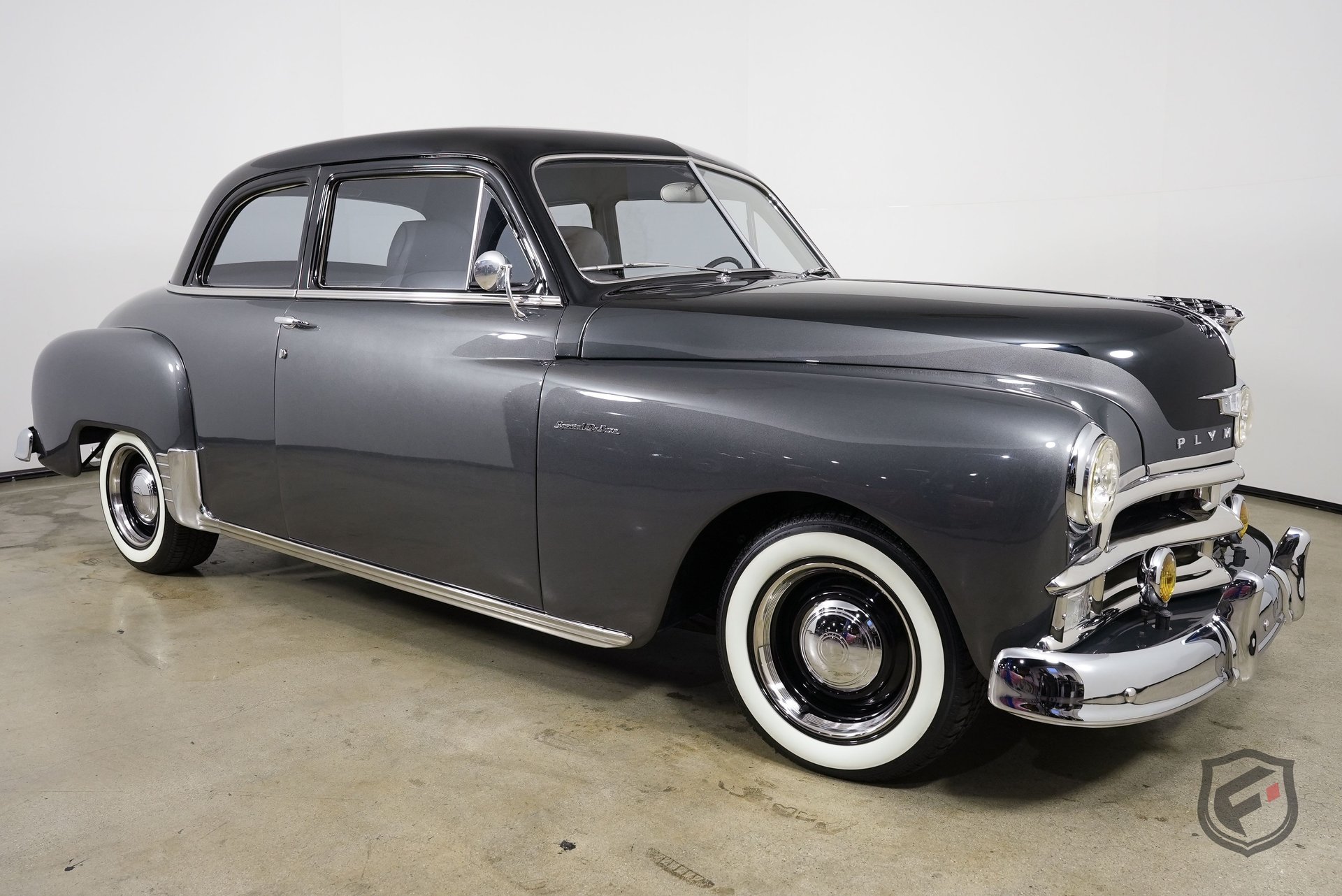 $49,950 · 41% above typical
Expand
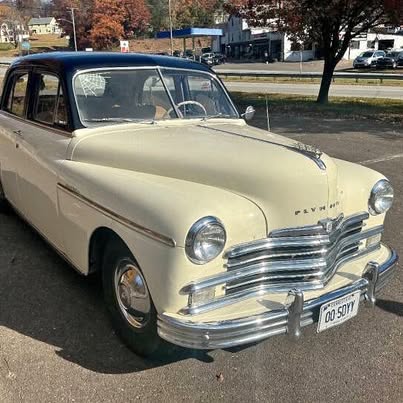 $4,000
Expand
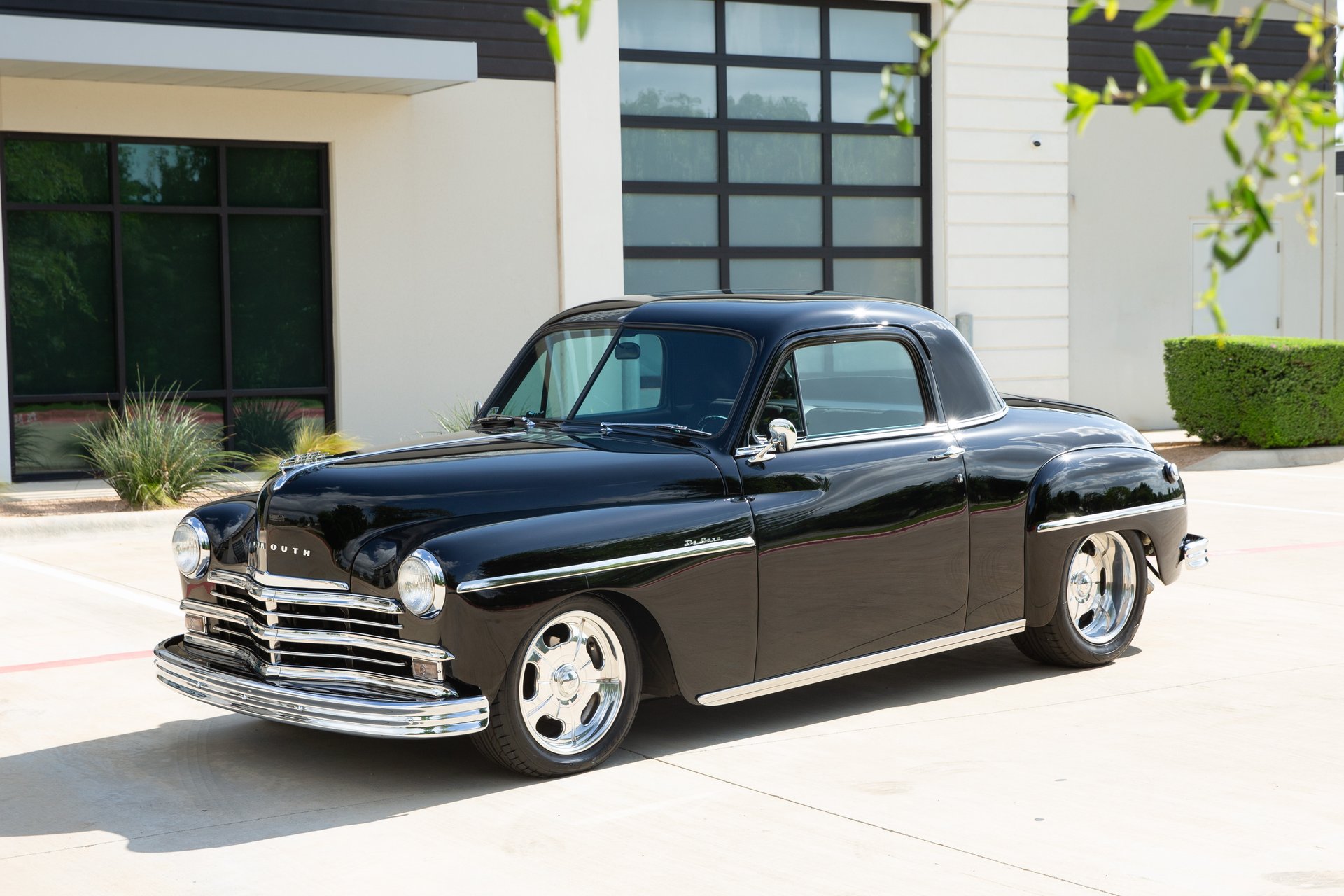 $60,000 · 69% above typical
Expand
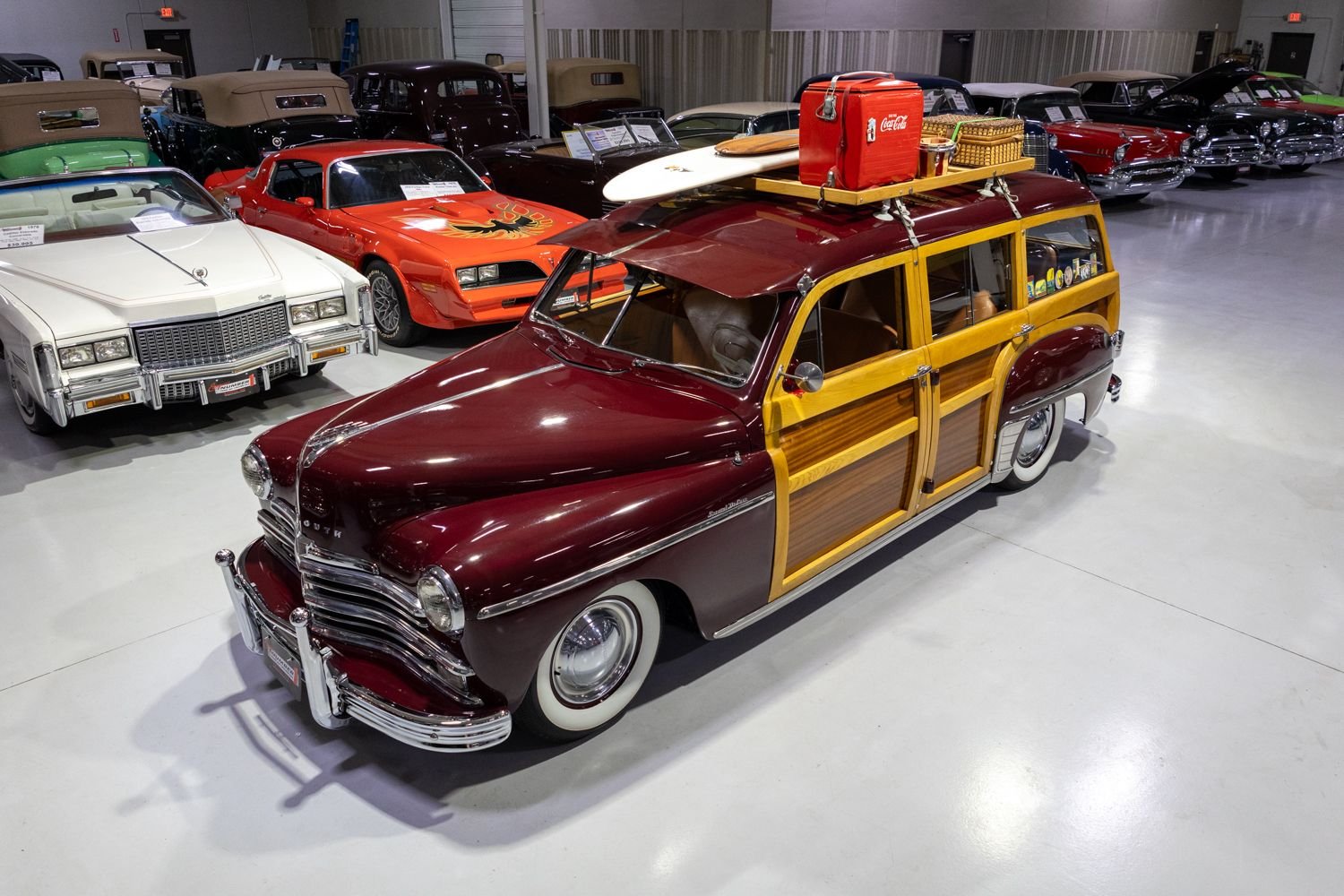 $79,995 · 126% above typical
Expand
 $3,500
Expand
 $24,800 · 30% below typical
Expand
What they sell for: Special Deluxe Station Wagon Woody sale prices.