
Plymouth Road Runner Coupe buyer's guide
Plymouth Road Runner Coupe -- the model's own buyer's guide: variants, values and what to check.
Years listed: 1969-1970 · Series: B-Body
Overview and history
The Plymouth Road Runner coupe is the cheapest honest way Plymouth ever sold speed, and that is exactly why you have to buy one carefully. The idea, launched for 1968, was brutally simple: take the intermediate B-body Belvedere, strip out everything that did not make it go, fit the heavy-duty suspension, brakes and cooling that a big engine actually needs, and sell the result for less than a well-optioned family car. No woodgrain, no deep-pile carpet, no pretence. Early cars had a plain vinyl bench, a taxicab horn that went beep-beep, and a cartoon bird licensed from Warner Bros. Underneath the joke was a serious car.
The coupe — body code RM21 in 1968–1970 — is the pillared two-door: a fixed B-post, pop-out rear side windows, and a roofline shared with the Belvedere two-door sedan. Do not let anyone sell you the word "coupe" loosely: Plymouth also sold the RM23 hardtop, with no B-post and fully opening side glass, and, for 1969–1970 only, the RM27 convertible. They share floors and running gear, but they are not the same body and the market does not treat them as interchangeable. This guide covers the coupe, and the 1971–1974 two-door as well, because from 1971 Plymouth dropped the pillared shell altogether and the single two-door Road Runner — a hardtop in construction, sold simply as the coupe in most listings, including the pool on this site — is the RM21's direct descendant.
Plymouth reasoned that a stripped intermediate with a proper big-block, a four-speed and nothing else could undercut the GTX by a wide margin, and that the Warner Bros. bird — fast, cheeky, never caught — was the perfect badge for it. They were right beyond expectation: Plymouth hoped for roughly 20,000 sales in 1968 and built more than twice that across coupe and hardtop, and 1969 was the peak, with Motor Trend naming the Road Runner its Car of the Year.
Mechanically, you are buying Chrysler's B-body unibody in its most famous form — no separate chassis. The front suspension, upper and lower control arms sprung by longitudinal torsion bars anchored in a crossmember under the front seats, bolts to a K-member that also carries the engine; at the rear a live axle on leaf springs locates, springs and drives. Steering is a recirculating-ball box; brakes are 11-inch drums as standard early on, front discs optional. It is simple, strong and completely unforgiving of rust where the suspension loads enter the shell — which is why the problem-areas section is long and the inspection section insists on a lift.
Because the coupe was the cheapest shell, it attracted the cheapest orders — bench seats, few options — and a disproportionate share of cars bought by people who intended to find out what they would do on Saturday night. Fifty-plus years later, survival is skewed accordingly. The pool of cars on Classic Listings at the time this guide was written illustrates the point honestly, because it is small: 12 cars filed as Road Runner Coupe in total, 5 listed for sale and 7 recorded sold, and by model year six from 1969, four from 1970 and two from 1974 — no 1968, 1971, 1972 or 1973 coupes in that pool at all. Note the shape of it: the 1969–1970 coupe dominates what comes to market, and the 1974 car is an outlier you will have to hunt for.
Two identity facts to carry through the whole guide. First, the VIN tells the truth about body and birth engine: on a 1968–1970 car the first four characters should read RM21, and the fifth is the engine code, which changes by year and must be decoded against that year's chart, not a generic internet table. Second, the fender tag — the stamped plate on the driver's inner wing — carries the engine as an E-code (E63 for the 383 four-barrel, E74 for the 426 Hemi, E86 for the 440 four-barrel, E87 for the 440 Six Barrel), plus gearbox, axle, colours and build date. A car whose VIN, tag and engine stampings all agree is a known quantity; a car where they disagree is a story, and stories are priced by the buyer, not the seller.
The models
Read this section as a map, not a price list. The coupe was never a trim ladder; what matters is year, engine and gearbox, in that order, then the options that change how the car drives — front discs, Sure-Grip axle, Air Grabber hood, power steering. Everything else is cosmetics, and cosmetics are cheap to change and therefore worthless as evidence of originality.
| Model | Years | Engine | Output | Built | Character |
|---|---|---|---|---|---|
| Road Runner Coupe 383 | 1968–1970 | 383 cu in V8, Carter 4-barrel | 335 hp gross | 28,978 coupes in 1968 (all engines) | The original formula: bench, big-block, four-speed |
| Road Runner Coupe Hemi | 1968–1970 | 426 cu in Hemi V8, 2× Carter AFB | 425 hp gross | Included above; Hemi was a small minority in every year | The drag-strip flagship, bought to race |
| Road Runner Coupe 440 Six Barrel (A12) | 1969 (mid-year)–1970 | 440 cu in V8, 3× Holley 2-barrel | 390 hp gross | 1,432 A12 cars in 1969 across body styles | Lift-off fibreglass hood in '69, Dana 60, no frills at all |
| Road Runner Coupe 440 | 1970 | 440 cu in V8, 4-barrel | 375 hp gross | 15,716 coupes in 1970 (all engines) | The torque buy: nearly Six Barrel pace, far less fuss |
| Road Runner (two-door) 340 / 383 | 1971 | 340 cu in V8 4-barrel / 383 cu in V8 4-barrel | 275 / 300 hp gross | 13,664 two-doors in 1971 | Fuselage shell, last year of the old order |
| Road Runner (two-door) 440+6 / Hemi | 1971 | 440 Six Barrel / 426 Hemi | 385 / 425 hp gross | Included above; both in tiny numbers | The final Hemi and Six Barrel B-bodies |
| Road Runner (two-door) 400 / 440 | 1972 | 400 cu in V8 4-barrel / 440 cu in V8 4-barrel | 255 / 280 hp net | 6,861 two-doors in 1972 | Net ratings arrive; still a real big-block car |
| Road Runner (two-door) 318 / 360 / 400 / 440 | 1973–1974 | 318 2-barrel / 360 4-barrel / 400 4-barrel / 440 4-barrel | 170 / 245 / 250 / 275 hp net | 19,056 in 1973; 9,646 in 1974 | Heavier, quieter, cheaper to buy and to run |
Production figures are the commonly published US totals for the body style in that year, not per-engine splits, except where a per-option figure is documented, as with the 1969 A12. Treat the order of magnitude as the point: the 1969 coupe is a common car, a 1971 Hemi two-door is not.
1968: the launch coupe. The first Road Runners were coupes only at launch — the hardtop joined during the model year — which is why the coupe outnumbers the hardtop so heavily in 1968. Standard engine is the Road Runner 383, not quite the ordinary 383: it borrows the 440 Super Commando's heads, intake and exhaust manifolds, windage tray and a hotter camshaft, and is rated at 335 hp. The only optional engine is the 426 Hemi, at a price that added roughly a third to the cost of the car — why so few were ordered, and why so many of those few were raced to death. Four-speed manual is standard, the 727 TorqueFlite the option. A 1968 coupe is the purest statement of the idea and the hardest to find unmodified, because purity was an invitation.
1969: the peak coupe. Detail changes — grille, tail lamps, side markers, optional bucket seats — and one very large addition partway through the year: the A12 package, the 440 Six Barrel. The A12 is built around the 440 with three Holley two-barrels on an Edelbrock aluminium manifold, a lift-off fibreglass hood, black steel wheels, a Dana 60 axle with 4.10 gears and Hemi suspension: a factory drag car with a warranty, and in coupe form the most collectible variant here after the Hemi. Note the trap: the ordinary 440 four-barrel was not a regular Road Runner option in 1969 as it was in the GTX — a claimed 1969 440 four-barrel coupe needs paperwork, not enthusiasm. The Six Barrel is the documented 440 route in 1969, joined by the regular 440 options for 1970.

1970: the facelift coupe. New front and rear styling on the same shell, and the widest engine range of the first generation: 383 standard, 440 four-barrel and 440 Six Barrel as regular options, Hemi at the top. A heavy-duty three-speed manual becomes the base gearbox, and the Air Grabber hood — a vacuum-operated scoop that rises at the flick of a dash switch — becomes the signature option. High-impact colours — Vitamin C Orange, Lime Light, Plum Crazy — arrive in force. A 1970 coupe is mechanically the most developed first-generation car and cosmetically the most flamboyant; it is also the year where clone risk is highest, because a 1970 Satellite coupe is the same shell and every Road Runner part bolts on.
1971: the fuselage car. All-new rounded sheet metal on the same architecture, and an engine list that reads like a farewell tour: 340 newly available, 383 detuned to 300 hp, 440 four-barrel, 440 Six Barrel and the 426 Hemi, all in their final year in this body. The 1971 car is a hardtop in construction — no pillared coupe — but is listed and sold as the coupe everywhere. Buy it for the engine, not the shell.
1972–1974: the late cars. For 1972 the Hemi is gone, the Six Barrel effectively gone (a handful of cars are documented despite not being a catalogued option — treat any claim as unproven until fender tag and build sheet agree), the 383 gives way to the 400, ratings switch to net, and the 440 becomes the basis of the Road Runner GTX package; a 1972 440 car is a genuinely quick, cheap entry into big-block ownership. For 1973–1974 there is new, squarer sheet metal again, 5-mph bumpers, more weight and more isolation, and a base engine that is now the 318 two-barrel, which tells you where the market had gone. Upward sit the 340 for 1973, replaced by the 360 for 1974, then the 400, then the 440 at the top, the latter years sold in Road Runner GTX form — as in the site's pool, where both 1974 cars are filed as Road Runner coupes. These are not the cars collectors fight over, and that is their virtue: newer shell, same Mopar hardware, cheaper parts, and nobody has usually bothered to fake one. Bought with open eyes, the late car is the best value in this guide.
Options that matter, across all years: front discs, which transform the car's safety; the Sure-Grip limited-slip, identifiable on the fender tag and by the tag on the axle; and the axle ratio, from relaxed 3.23:1 to the A12's 4.10:1 — a 3.23 automatic and a 4.10 four-speed share a badge and nothing else. Air conditioning was available on most engines but not with the Hemi: a Hemi car wearing factory air is a car whose story is wrong somewhere.
Engines and gearboxes
Every engine here is a Chrysler V8: the B/RB big-blocks (383, 400, 440), the 426 Hemi, and the LA small-blocks (318, 340, 360). All are pushrod, iron-block designs, and none is fragile — but all are now over fifty years old, so the engine in front of you is a history of oil changes done or skipped and rebuilds done well, cheaply, or merely claimed. Judge the individual engine, never the seller's adjective: a compression test, a leak-down test if compression is uneven, an oil-pressure reading from a mechanical gauge, and a cold start you witness yourself tell you more than any receipt folder.
The 383 and 400 B-series big-blocks
The 383 is the Road Runner's defining engine: a B-series big-block with a short deck height, which is why it revs more freely than the taller RB engines. In Road Runner tune it uses the 440's high-flow heads, intake and exhaust manifolds and a performance cam, breathes through a Carter four-barrel, runs about 10:1 compression in the early years, and makes its 335 gross horsepower honestly — strong, torquey, still pulling at 5,500 rpm. For 1971 compression and cam timing soften and output falls to a rated 300 hp gross; it feels much the same below 4,000 rpm and noticeably flatter above it.
The 400, standard from 1972, is 383 architecture bored out to the largest bore of any Chrysler big-block, with low compression (around 8.2:1) and emissions-era cam timing. It is rated at 255–260 hp net and is nobody's idea of a screamer in stock form, though the block itself — biggest bore of any Chrysler big-block, stiff casting — is prized by engine builders for stroker builds. As a running engine it is smooth, torquey at low speed, and strangled at the top end by cam, compression and exhaust in equal measure.
What goes wrong is age, not design. Test for: timing-chain slack — the original nylon-toothed cam sprocket sheds teeth with age and heat, and a slack chain retards the cam and makes the engine lazy in a way owners blame on carburation; check by rocking the crank against the distributor rotor, and budget $400–$900 for chain and gears if it is loose, more with the cover seals and water pump done at the same time, as they should be. Valve-stem seals harden and give the classic puff of blue smoke on start-up and on the overrun — harmless to performance, a reliable odometer of neglect. Exhaust manifold studs seize and snap in the heads, turning a gasket job into a drilling job. And lifters tick when oil is old, pressure low or a lifter collapsed: a tick that fades as the engine warms is a lifter bleeding down overnight, a tick that stays is a worn cam lobe until proven otherwise — the distinguishing test is a stethoscope on each rocker cover, cylinder by cylinder, not a guess.
Carburation brings its own small griefs. The Carter AVS meters its secondaries with a spring-loaded air valve; a bent valve, a tired spring or a warped air horn gives a bog on acceleration that owners chase through ignition parts for years. Ethanol fuel attacks old needle valves, pump cups and rubber lines, and a car that sits needs its carburettor kitted far more often than it did in 1975. A professional rebuild runs $350–$700; on a high-value car, rebuild the numbered carburettor the car was born with rather than replacing it.
The 440 RB: four-barrel and Six Barrel
The 440 is the raised-block RB engine — taller deck, longer stroke — and it comes in two forms of very different temperament. The four-barrel 440 (375 hp gross in 1970 tune, 370 in 1971, then 280 hp net for 1972 and 275 net for 1974 in GTX form) is the gentleman: a Carter or Holley four-barrel, a hydraulic cam, and 490 lb-ft of torque in the early tune delivered low enough to make the car feel effortless. It idles, starts hot and tolerates traffic — the easiest big engine here to live with.
The Six Barrel (Six Pack in Dodge language) is three Holley two-barrels on one manifold — Edelbrock aluminium on the 1969 A12 cars, Chrysler cast-iron for 1970–1971 — the centre carburettor doing all the work at cruise, the outers opening under vacuum when you ask for power. Rated 390 hp gross (385 in 1971), it makes Hemi-matching torque and a noise no four-barrel car duplicates. It also has three float bowls, perishable vacuum diaphragms and wearing linkage, and a reputation for running badly that is almost always earned by neglect. A car that stumbles or refuses to open its outers needs, in order: fresh fuel, correct float levels, intact diaphragms, free linkage, a clean centre idle circuit. Budget $800–$1,800 for a specialist to strip, kit and set up all three, and be suspicious of a Six Barrel car offered with a single four-barrel "for reliability" — the original setup is a large part of what you are paying for, and its absence is a deduction, not an upgrade, unless every removed part comes in a box with the car.
440-specific checks. The right-hand exhaust manifold cracks with heat cycling — listen for a ticking loudest cold that quietens as it expands. And decode before you pay: the 440 was the most swapped engine in the Mopar world, and a 383 car wearing a later 440 is a pleasant thing to own but must be priced as a 383 car with a 440 in it. The engine's identity is on the machined pad at the front of the block, and the partial VIN stamping on the oil-rail should match the car on any numbers-matching claim. No pad reading, no premium.

The 426 Hemi
The street 426 Hemi is a race engine adapted, not a road engine improved: hemispherical chambers with two rocker shafts per head, a forged crankshaft, cross-bolted main caps, dual Carter AFB four-barrels, 10.25:1 compression, and a rated 425 hp gross everyone in the period understood to be a polite fiction for insurance purposes. It is heavy and wide — air conditioning was not offered with it — and makes its power high in the rev range.
Living with one is a specialist discipline. The two-shaft rocker gear is durable but expensive when worn — a top-end rattle on a Hemi is not a $200 problem. Oil consumption is higher than a wedge owner's instinct expects, and the engine fouls plugs in traffic and cleans them under load. The two AFBs, cleaned and kitted as a pair, run $700–$1,400; a full rebuild by a recognised specialist is $18,000–$35,000 depending on what the crank, block and heads need. A cracked block or a welded head changes the car's value fundamentally, so a Hemi purchase without a specialist inspection and documentary proof of identity is not a purchase, it is a wager. Verify block casting and date, pad stampings and partial VIN: genuine blocks have been restamped, and genuine cars have had engines replaced with warranty blocks — legitimate history if disclosed and priced. What you are paying for is provenance, and provenance is paperwork.
The LA small-blocks: 318, 340 and 360
The small-blocks arrive as the muscle era fades, and they are better road engines than their reputation suggests. The 340 (1971–1973) is the jewel: a high-winding LA with a forged crank in the early years, good heads, a Carter ThermoQuad spread-bore carburettor, 275 hp gross in 1971 and 240 hp net thereafter, and a character that rewards revs in a way no 383 does. A 340 car is lighter over the nose and steers sweeter — the thinking driver's second-generation Road Runner. The ThermoQuad is its one caveat: a phenolic centre body that warps and cracks with heat and age, leaking fuel internally and externally; a warped body is replaced, not rebuilt, and a good replacement or specialist rebuild runs $450–$900.
The 360, which replaces the 340 for 1974, is a longer-stroke engine with more low-speed torque and less top end; in four-barrel tune it is rated 245 hp net and drives very well. The 318, standard in 1973–1974, is the indestructible small-block in two-barrel form — 170 hp net, no performance pretensions — and makes the car a cruiser with a famous name, a coherent thing to buy at a cruiser price. Small-block failure modes are shared and modest: timing chains stretch as on the big-blocks, valve seals smoke on start-up, and the electronic ignition (standard by 1973) introduces the ballast resistor as a no-start suspect — a 1973–1974 car that cranks and will not fire has a failed ballast resistor until proven otherwise, a part that costs very little and stops the car completely. Carry one in the glovebox.
Gearboxes and axles
The A833 four-speed manual is the enthusiast default: a cast-iron four-speed with a factory Hurst shifter, Pistol Grip lever for 1970–1971. Hemi and Six Barrel cars use the heavy-duty 18-spline input version; 383 and small-block cars the 23-spline unit. What wears is the synchromesh (second gear first), the shifter linkage bushes and rods — a sloppy, vague change is linkage until proven otherwise, and a linkage rebuild at $150–$400 transforms cars owners were about to condemn — and the reverse idler. A gearbox rebuild runs $1,200–$2,500 plus clutch; a clutch itself $600–$1,200 fitted. Check the gearbox identity as you check the engine's: an 18-spline box is part of a Hemi or Six Barrel car's value.
The 727 TorqueFlite automatic, fitted to everything from 318s to Hemis, is close to unbreakable in road use — the drag racer's automatic of choice for a reason. Failures are usually maintenance or adjustment: the kickdown linkage (mechanical, not a cable) controls line pressure as well as downshifts, and a disconnected or maladjusted kickdown burns the gearbox up while feeling, deceptively, like gentle early upshifts. Slipping on the 2–3 change, delayed engagement from cold, and dark, burnt-smelling fluid are the warning signs. A full rebuild is $1,800–$3,200 fitted — the cheapest catastrophe in this guide — but check the linkage adjustment first, because it is free.
The A230 three-speed manual, standard on many 1970-onward cars, is a sturdy unit nobody wants: a three-speed car is worth less and is frequently "upgraded" to a four-speed. A swapped car must be priced as swapped — read the fender tag's gearbox code.
Axles: the Chrysler 8¾-inch is standard, a strong banjo-type axle with a drop-out centre section, in ratios from 2.76 and 3.23 cruising gears through 3.55 and 3.91 to 4.10. Test the optional Sure-Grip limited-slip by jacking one rear wheel with the other on the ground: a working unit resists turning the free wheel hard, a worn clutch-type unit behaves like an open diff, and a rebuild runs $500–$1,000. Whine on a light throttle that changes on the overrun is crown-wheel-and-pinion wear or setup; a rebuilt centre section is $800–$1,600. The Dana 60 — a much larger 9¾-inch axle, ten-bolt rear cover — was fitted to A12 cars and four-speed Hemi and Six Barrel cars; it is effectively indestructible, and its presence or absence on a car that should have one is a major originality point. A vibration that arrives at one road speed and leaves at another is universal joints until proven otherwise, $150–$350 to renew both.
Problem areas
Everything below is ordered by consequence, not by likelihood: rust in the structure ends restorations, a tired carburettor ends afternoons. In the small photo-checked sample supplied with this guide's brief — four cars examined from the listings pool — rust was noted on two of the four, with a leak on one and damage on one. Four cars is too small a sample to generalise from, but it matches everything the B-body world knows: inspect the shell first, the shiny parts afterwards.
Rust: the map
The Road Runner is a unibody, so rust is never merely cosmetic once it reaches the parts that carry loads. Learn the map in this order.
The torsion-bar crossmember is the single most important piece of metal in the car: it spans the floor under the front seats and anchors the rear ends of the torsion bars — the front suspension literally pushes against it. If it is soft, holed or cracked around the anchor sockets, the repair is a major fabrication and welding job with the interior and often the gearbox out, $2,500–$5,000 done properly, and a car needing it is a project car at a project price whatever the paint says. Probe the ends where it meets the sills, the anchor housings and the floor around it. Surface scale is normal; perforation or flex is a verdict.
Front frame rails and the K-member area. The rails rust from the inside out, fed by drain holes that block with road dirt; the giveaway is loose rust audible when you tap the rail, bubbling at the upper control arm mounts, and perforation just behind the K-member. Fitting rail sections is skilled structural welding, $1,500–$4,000 a side. The K-member itself is bolt-on and replaceable — rust in the member is a haggling point, rust in the rails it bolts to is a structural finding.
Floors, sills and the cowl. Floor pans rust from the inside, fed by leaking windscreens, cowl vents and heater matrices, so lift the carpets and rear seat base rather than trusting an underside view of undersealed pans. Pan replacement is the cheapest structural job on the car — $800–$2,000 a side fitted — but floors are a symptom: find the leak or you will do the job twice. Sills carry the coupe's structure between the wheels; a sill that crunches under thumb pressure at the jacking points is a $1,200–$2,800-a-side repair. The cowl and windscreen-pillar bases are the 1971–1974 cars' particular weakness — hidden by trim and screen rubber, leaking onto the floors, and expensive to repair well because the screen comes out and the dash often follows, $2,000–$4,500 for a proper job.
The rear of the car. Trunk floor, trunk-floor extensions behind the rear wheels, rear rails where the leaf-spring hangers mount, and the lower rear quarters. The rear window channel is the classic B-body trap, worst under a vinyl roof covering, which traps water against the lower edge of the rear glass and down the sail panels: bubbles at the base of the vinyl, a damp trunk and rust staining below the rear window inside the trunk are the tells, and the repair means glass out, vinyl off and metal let in, $1,500–$3,500. Rear rails and spring-hanger mounts are structural as the front crossmember is — a hanger tearing out of a rotten rail is a failure, not a fault — and rail sections here run $1,500–$3,500 a side fitted. Quarters and arch lips rust from the inside where the skins meet; reproduction panels are available for 1968–1970 and thinner for 1971–1974 — check availability before you buy a rusty late car, not after.
Doors, wings and the battery tray. Door bottoms and lower front wings are cosmetic-structural and reproduced for the early cars. The battery tray and the inner wing beneath it rot from acid spillage and are missed because the battery hides them; a tray and local repair is $300–$800. Fresh underseal over the whole underside of a car for sale is a question, not an answer.

Front suspension, steering and brakes
The torsion-bar front end's wear items are all replaceable, so this section is about detection. Ball joints — two per side, the lowers carrying the load — wear, and a lower joint run worn can separate; check for play with the car jacked under the lower arm, and budget $600–$1,200 for a full set fitted with alignment. Control-arm bushes perish and crack, giving wander and clunks; a full front-end bush and joint rebuild, the most transformative job on a tired B-body, runs $1,000–$2,200. Torsion bars rarely fail but sag, and very rarely snap — a car sitting low at the front with the adjusters wound up has tired bars or moving crossmember anchors, and you already know which of those you fear. Bars are sided and must never be swapped side to side; new bars are $300–$500 a pair. Strut-rod bushes are the classic cause of a pull under braking that alignment never cures.
Steering: the recirculating-ball box wears in the straight-ahead position, giving free play at the wheel centre that owners disguise by over-tightening the adjuster, which makes the steering stiff and notchy off-centre. Rock the wheel gently with the engine off and watch the pitman arm: movement at the wheel with none at the arm is box wear or a worn coupling — the flexible rag joint perishes and is a $60–$150 part whose failure is total, so look at it. A rebuilt box is $400–$800 exchanged; idler arm and tie-rod ends are consumables, $300–$700 the set fitted.
Brakes divide by specification. The standard 11-inch drums, properly rebuilt, stop the car adequately once and fade thereafter; in modern traffic they are the weakest system on the car. Front discs are the desirable specification and a common, legitimate upgrade. A pedal that sinks slowly at a standstill is a master cylinder bypassing internally ($150–$350); a pull to one side is a seized caliper, a collapsed hose acting as a one-way valve, or contaminated linings — crack the bleed screw on the pulling side: if fluid spurts and the wheel frees, the hose is the culprit. Brake pipes are guilty until inspected; a full re-pipe in copper-nickel is $500–$1,100 fitted and is money to expect on any car without evidence of it. At the rear, leaf springs sag and occasionally crack a leaf — $400–$800 a pair fitted — and worn shackle bushes give the clonks owners blame on the axle.
Engines in service: cooling, oil and electrics
Cooling is the big-block's working limit. A healthy system copes; a marginal one overheats in traffic, and repeatedly overheated big-blocks warp heads and blow gaskets in ways that present months later as a mystery coolant loss. Suspects in order: a silted radiator core (feel for cold patches as the engine warms; a recore or replacement is $450–$1,000); a viscous fan coupling that freewheels when hot (spin it by hand on a hot, stopped engine — it should drag hard); a collapsing lower hose; a wrong thermostat; and timing retarded by a stretched chain. Verify with an infrared thermometer on the thermostat housing — the dash gauge is an indicator, not an instrument.
Oil leaks are a big-block's native condition in old age; the skill is distinguishing the trivial from the telling. Rocker-cover gaskets, valley pan and sender switches weep and are cheap ($100–$400 for the set). A rear main leak is an engine-or-gearbox-out job, $900–$1,800 — a haggling point alone, a rebuild conversation combined with low pressure and bearing rumble. Oil pressure is the number that matters: verify it with a mechanical gauge, hot, at idle and at 3,000 rpm. An engine that cannot hold healthy hot pressure on fresh oil has bearing wear, and no additive changes that.
Electrics age poorly in three places. The bulkhead connector corrodes and overheats — on ammeter cars the full charging current passes through the dash ammeter and its bulkhead connections, and resistance there gives dim lights, melted insulation and, in the worst cases, fire; inspect the plug on every car, and regard a properly done ammeter bypass as a safety improvement. The ballast resistor and ignition control box are the no-start pair from the engines section. A flickering charge light is brushes or regulator, $100–$300, before it is anything exotic. Wiring cut for stereos and alarms over five decades is the real enemy: be wary of any car "fully rewired" without a diagram.
Interior, trim and identity
The coupe's interior was cheap when new and is honest now: vinyl bench seats, simple door cards, a basic cluster. What perishes: seat foam and covers (a full retrim runs $2,000–$4,500), the dash pad, reproduced for the early cars at $400–$900 plus fitting, and the rubber seals — a full seal kit fitted is $600–$1,400 and transforms how much water the car lets in. The heater matrix leaks into the passenger footwell, is a dash-out job at $700–$1,500, and is a hidden cause of floor rust: wet passenger-side carpet is a heater or cowl leak until proven otherwise. Switches, the Air Grabber's vacuum motor, the specific beep-beep horn (often replaced with a generic unit) and the decals are all reproduced — which cuts both ways: nothing about a car's trim proves anything about its history.
Identity is the problem area that costs the most when it goes wrong. The fakes are rarely scratch-built; they are Satellite or Belvedere coupes — the same shell — re-badged and re-engined, or genuine Road Runners whose paperwork has grown more optimistic than the car. The defences are free: the VIN's RM21 prefix and engine digit against the year-correct decoder; the fender tag's E-code against the engine fitted; the partial VIN stampings on engine and gearbox, and the body sequence number on the radiator core support and under the trunk-lip weatherstrip, which should match the VIN. A missing tag alone is not fatal, but a missing tag plus a missing build sheet plus mismatched stampings is a car you value as the sum of its parts. The build sheet, often tucked in the rear seat springs or under the carpet, is the car's birth certificate: its absence on a Hemi or A12 claim should end the negotiation about originality, though not necessarily about the car. Treat engine swaps the same way: a later 440 in a 383 car is a perfectly good driver if the price reflects it, but a "matching-numbers" claim that survives only until the pad is read is worth nothing — read the pad yourself, in person, before money moves, and photograph every stamping as evidence for your own file.
How to inspect one
Inspect in this order — identity, structure, mechanics, road — because each stage can end the inspection and save you the afternoon. Take a magnet, a torch, a screwdriver for probing (ask first, probe second), and a friend to work the pedals and steering while you watch. Insist on a cold engine: a car presented warmed up has had its cold-start behaviour, the most revealing thirty seconds in any old V8's day, taken away from you — ask yourself why.
- Paperwork and identity first. Read the VIN plate at the base of the windscreen: RM21 for a 1968–1970 coupe, the engine digit against the year-correct chart. Read the fender tag and compare its E-code with the engine in the bay. Ask for the build sheet and title history, and marque-historian documentation on a high-value car. Any mismatch here reprices everything that follows — this is the identity check from the problem-areas section, done before you fall for the car.
- Cold start, standing outside. Have the seller start it while you stand at the exhaust. A puff of blue that clears is valve-stem seals; continuous blue smoke is rings or worse; white vapour that smells sweet and does not clear is coolant. Listen for lifter tick that fades (acceptable) and tick that stays (cam or lifter wear). Note how it idles: a Six Barrel or Hemi that idles sweetly cold has been set up by someone who knew how.
- The structure on a lift: crossmember first. Go straight to the torsion-bar crossmember from the rust map — probe its ends, anchor housings and the floor around it. Then the front rails behind the K-member, tapping for loose scale, then sills at the jacking points, floor pans from below and (with permission) under the carpets, and the rear rails at the spring hangers. A failure at the crossmember or a rear hanger mount ends the inspection at project-car money.
- The rear-window and vinyl-roof check. Look inside the trunk below the rear window, feel for damp in the trunk floor and extensions, and examine the base of the rear glass and the sail panels for bubbling, especially under vinyl. Mildew is a leak with a history.
- Panel fit and filler. Work round the car with the magnet, your eye along the flanks in raking light. Coupe doors are long and drop on their hinges — a door that lifts at the handle before it closes has worn hinges or a tired shell.
- Engine bay detail. Find and read the engine pad stamping. Look at the battery tray and the metal under it. Inspect the bulkhead wiring connector for corrosion and heat damage — the electrics section's fire risk lives here. Check coolant and oil colour and level, and the automatic's fluid colour and smell if it is a TorqueFlite car. Look for the correct carburation for the claimed variant: three two-barrels on a Six Barrel claim, two AFBs on a Hemi, and ask where the original parts are if they are not on the car.
- Suspension and steering on the lift. With the front jacked under the lower arms, rock each wheel top and bottom for ball-joint play and side to side for tie-rod and idler wear. Look at control-arm and strut-rod bushes for cracking. Check the torsion-bar adjusters: both wound to the top on a car still sitting low is the sagging-bars or moving-anchors finding from the suspension section. Rock the steering wheel and watch the pitman arm for lost motion.
- Brakes, with your friend on the pedal. Pedal height, firmness, and whether it sinks under sustained pressure (master cylinder bypassing). A wheel that stays tight after the pedal is released has a collapsed hose or seized caliper. Look for fluid at the drum backing plates, and read the brake pipes along their full length: amateur repairs with compression fittings are a fail on sight.
- Gearbox and axle, static. On a manual car, feel the change through every gate with the engine off and then idling: synchromesh crunch needs motion, so note it for the road test, but linkage slop and a clutch biting at the very top of the pedal are visible now. On an automatic, check the kickdown linkage is present, connected and moving with the throttle — a disconnected linkage is a TorqueFlite being destroyed politely. At the rear, look for the Sure-Grip tag and the axle type: count the Dana 60's cover bolts on any A12 or four-speed Hemi/Six Barrel claim, and check spring condition and shackle bushes.
- The road test, long enough to get it hot. Twenty minutes minimum, including highway speed and a period in traffic. Listen for axle whine on a light throttle and on the overrun, and the exhaust-manifold tick that fades as it warms. Feel for pull under braking, wander at speed, and kickdown response — a TorqueFlite that will not kick down has a linkage or governor story. Work a manual car down into second at speed for the synchromesh verdict. Watch the temperature in traffic after the fast stretch: the cooling section's marginal car declares itself exactly here, when the heat soak arrives.
- Hot restart and under-bonnet, again. Switch off, wait five minutes, restart: a big-block that cranks slowly hot has a heat-soaked starter, tired cables or timing too far advanced — all fixable, all worth knowing. Look underneath for fresh leaks now everything is hot: rear main, gearbox seals, axle pinion, coolant at the core plugs.
- Interior, electrics and the small print. Work every switch, the lights, wipers, heater fan and the Air Grabber if fitted. Lift the rear seat base if the seller agrees — build sheets live there, and so does floor rust. End by re-reading the fender tag against the car you have just driven: if colours, gearbox, axle and options match the story from step 1, you are negotiating about condition; if they do not, you are negotiating about a different car from the one advertised, and the price should say so.
Values
This section deliberately contains no figures. The market block beneath this guide carries the current listings and recorded sales, refreshed as the market moves, and that block — not any number in prose — is where you read what these cars are fetching. What follows is how to read it.
Start with the spread, because the spread is the story of this model. The coupe was built in large numbers as a cheap car and in tiny numbers as an expensive one, so the distance between the least and the most valuable genuine coupe is wider than for almost any other B-body: at one end a late, 318-powered mid-1970s car in honest driver condition, at the other a documented 1969 A12 coupe or a numbers-matching Hemi coupe with its build sheet and original engine. Any average drawn across the whole model is meaningless for pricing either. Filter your comparisons by year, engine and gearbox first, and only then by condition — a set that mixes a 1974 automatic with a 1969 four-speed misleads in both directions.
Condition moves value in steps, not smoothly, and the steps are structural. A car with a sound crossmember, rails and floors but tired paint and trim is valued as a complete, honest car; the same car with rust in the load-bearing areas drops a whole category, because the repair consumes the budget the paint and trim were waiting for. Sort what you see into cosmetic tiredness — negotiable, fixable in stages while you drive the car — and structural tiredness, which is neither, and you will understand most asking prices, and most gaps between asking and achieved, in this market.
Asking and achieved are different numbers. Asking prices for the glamorous variants — Hemi, A12, Six Barrel, high-impact colours — are set by the best comparable sale the seller can find; private sellers of ordinary 383 coupes anchor on those same listings and ask driver money for project cars. The recorded sales in the block below are the corrective: study the sold cars that most resemble yours in variant, condition and documentation, and treat a wide gap between an asking price and those achieved figures as a negotiation the market has already half-conducted for you. Time on market is information too: a coupe advertised through a whole season at one figure carries the market's written opinion of it.
Variant premiums are real but not uniform, and they are paid for documentation as much as hardware. The Hemi premium is the largest and the most conditional: it attaches to the verified car — matching numbers, tag, sheet, stampings — and falls away steeply for a Hemi-born car now carrying a replacement engine, steeply again where the Hemi history cannot be evidenced at all. The A12 and Six Barrel premiums behave the same way at a lower altitude, with correct Six Barrel induction hardware present on the car part of what is being paid for. Four-speeds carry a premium over automatics in the first-generation coupes, where the manual was the point of the car; in the later, cruise-bought cars the premium narrows. High-impact colours, the Air Grabber, disc brakes and a Sure-Grip axle add desirability in roughly that order, and none rescues a car whose identity or structure is wrong.
The project-versus-driver gap is where buyers lose the most money. A project coupe that is complete, matching and structurally sound is a rational purchase, because every job it needs is a known job of the kind costed in this guide. A project that is incomplete, structurally rusty or missing its variant-defining parts is an open-ended commitment whose final cost routinely exceeds that of the finished driver it will never quite become. When a finished car and a project sit at close asking figures, the finished car is usually the cheap one. The late cars trade in a calmer market where condition and originality matter more than variant and low-mileage originals are prized precisely because nobody restored the ordinary ones: read their recorded sales separately, and do not let first-generation heat warm a late car's price — or talk you out of a good late car at a fair one.
Parts and ownership
Owning a Road Runner coupe is, by the standards of fifty-year-old performance cars, an easy life — with one generational divide. The 1968–1970 cars sit inside the best-served corner of the Mopar hobby: sheet metal, trim, interior kits, harnesses, weatherstrips and decals are reproduced in depth, and mechanical commonality with the whole B-body range makes service parts a phone call, not a search. The 1971–1972 cars are well served mechanically and adequately for trim. The 1973–1974 cars are the thin end: mechanical parts remain easy, but year-specific sheet metal, grilles, tail panels and trim are reproduced sparsely if at all, and a late car with damaged unique trim can wait months for a good used part. Price that into a late-car purchase, and inspect a late car's unique parts with a care you would not need on a 1969 car.
Mechanical supply is strong. Engine service parts for the 383, 400, 440 and LA small-blocks are catalogue items, and a mainstream 383 or 440 rebuild by a competent generalist shop runs $6,000–$11,000. The Hemi is the exception in cost, not availability: its full-rebuild bill sits at $18,000–$35,000. Carburettor kits are cheap and universal; the expertise to set up a Six Barrel or a pair of AFBs is the scarce resource, so find your specialist before you need one. Gearbox and axle parts are all reproduced, and a Mopar-literate shop can turn a 727 around in days.
Running costs are dominated by fuel, tyres and deferred jobs, in that order. A big-block coupe driven as intended recalibrates a modern owner's fuel expectations on the first long trip; none of these cars is economical, and all want fuel discipline — fresh fuel, no long storage on ethanol blends without stabiliser. Tyres in period sizes are available, and modern radials in those sizes are right for a driven car. Insure on a classic policy with an agreed value, revisited as the market moves and as you spend on the car, and keep the documentation file growing: the file is part of the car's value at resale.
The ownership rhythm is unglamorous. Oil and filter every season or every few thousand miles, with zinc-bearing oil correct for a flat-tappet camshaft — modern low-zinc oil in an old flat-tappet engine is a cam-lobe failure mechanism, not a saving. Coolant on schedule, brake fluid every couple of years. Timing chains and water pumps are mid-life jobs to expect once on any car without receipts: $400–$900 for the chain set fitted, $250–$600 for a water pump with hoses and thermostat. A car used regularly needs less of everything than a car stored badly — five years in a damp building manufactures the rust map in the problem-areas section all over again.
Specialists and community are part of the parts story: marque clubs, registers and the B-body forums hold searchable answers to almost every fault in this guide, and a marque historian's decode of tag and build sheet settles identity arguments for a modest fee. Buy from the established Mopar reproduction houses rather than the cheapest generic listing — a panel that fits is worth its premium over one needing a day of a panel-beater's time, and that arithmetic, part price against skilled labour, is the whole economics of restoring one of these cars. Keep every original part you remove until its replacement is proven, and never throw away a numbered component: the part you discarded is the part the next buyer's inspection will ask about.

Which one to buy
There is no bad engine in this guide and no coupe year to refuse on principle — only cars whose identity, structure and price agree, and cars where they do not. Choose by how you will use the car, then buy the best-documented, soundest-shelled example you can find.
- The all-rounder: a 1969 or 1970 383 coupe with the four-speed, front discs if you can find them, and a Sure-Grip axle. The original formula in its most developed form, with the best parts supply in the guide — drive it, improve it, enjoy it, in that order.
- The value buy: a 1972–1974 big-block car — 400 or, better, a 440 in Road Runner GTX form — bought on condition. You give up the first generation's glamour and gain a newer shell, the same fundamental hardware, and a market that has not yet priced these cars by their badges.
- The driver's pick: a 1971 340 car. The small-block's lighter nose, sweeter steering and appetite for revs make it the most balanced road car in this guide, and it remains overlooked next to the big-blocks.
- The torque buy: a 1970 440 four-barrel coupe. Nearly the Six Barrel's thrust with a single carburettor to feed and none of the triple-carburettor theatre — provided the pad stampings prove the car was born with the engine.
- The collector's car: a documented A12 Six Barrel coupe or a numbers-matching Hemi coupe, bought with a specialist beside you and every stamping read before money moves. These are purchases of provenance that happen to be cars; buy them slowly and with verification.
- The first muscle car: a 383 automatic coupe from 1968–1970, structurally sound and mechanically honest, cosmetics secondary. The TorqueFlite is strong, the car is simple, and you can improve it for years without taking it off the road for a season.
- The one to walk away from: any coupe whose torsion-bar crossmember or rear spring-hanger rails are rotten and whose price assumes they are not — and any Hemi or Six Barrel claim whose VIN, tag and stampings will not align. There is always another Road Runner; there is not always another restoration budget.
The overriding rule: buy the shell and the paperwork, and let the engine be the bonus — a structurally sound, honestly identified coupe with a tired engine is a good car waiting for a known bill, while a shiny, fast, misidentified or structurally rotten car is a liability at any price that assumes otherwise.
See the 5 Road Runner Coupe cars currently listed.
For sale now
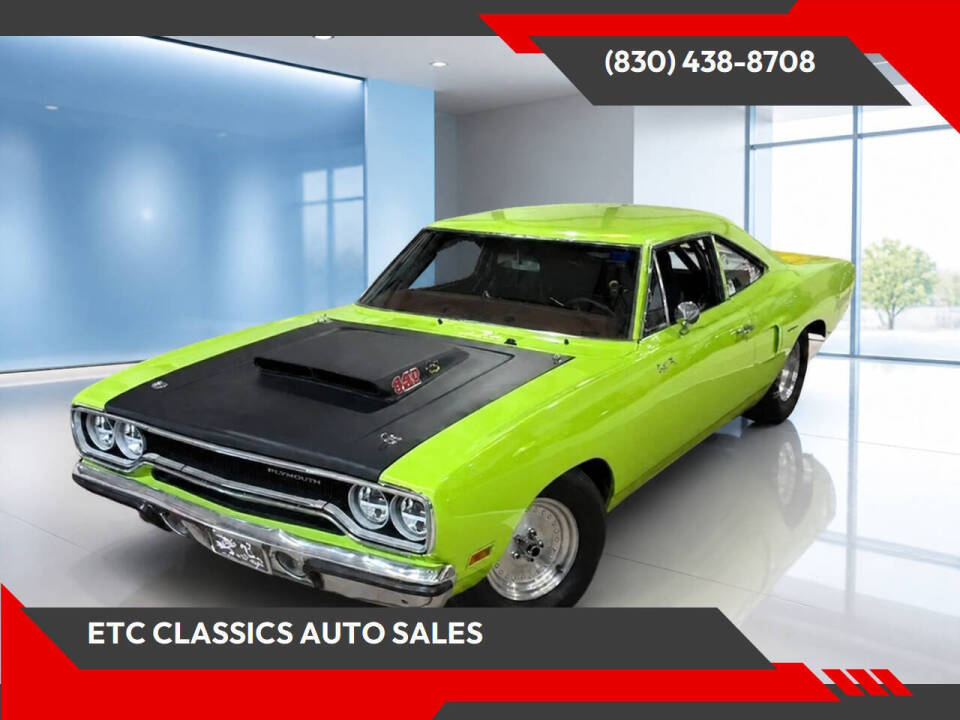 $32,000 · 41% below typical
Expand
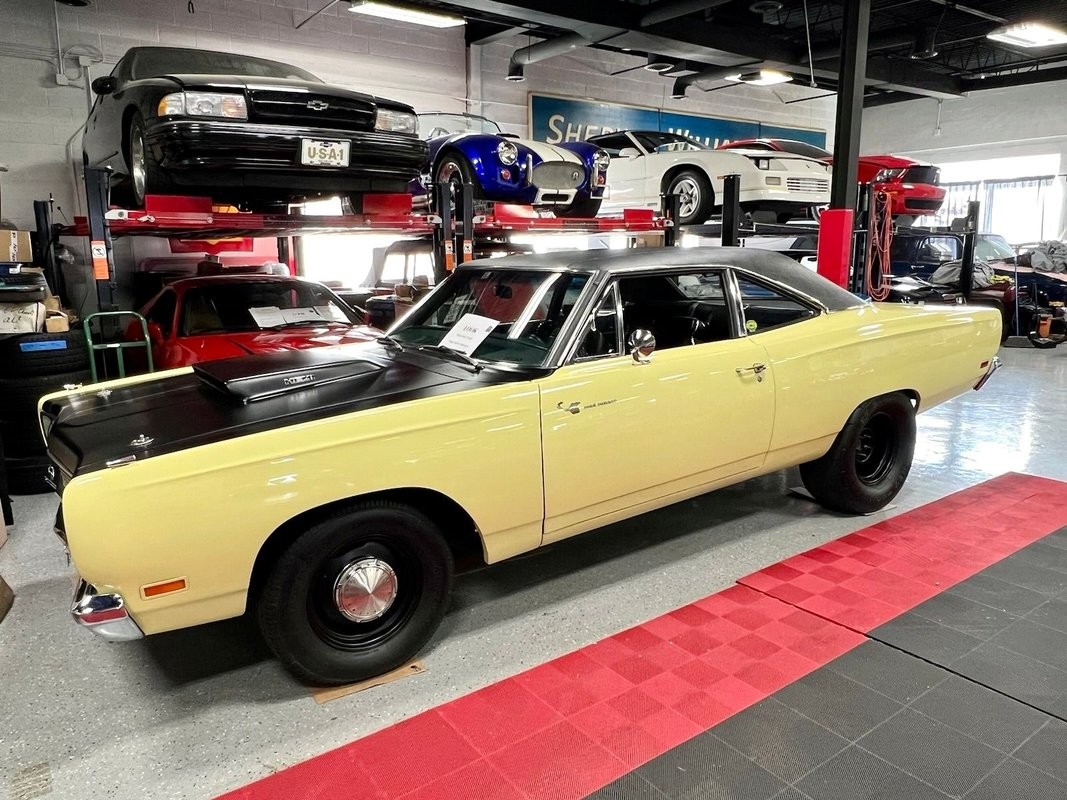 $89,900 · 65% above typical
Expand
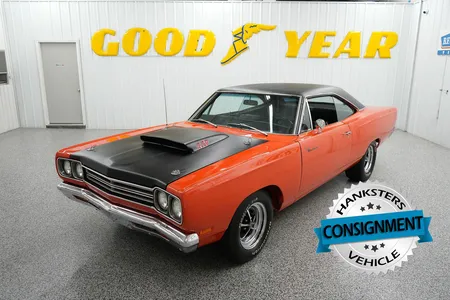 $69,900 · 28% above typical
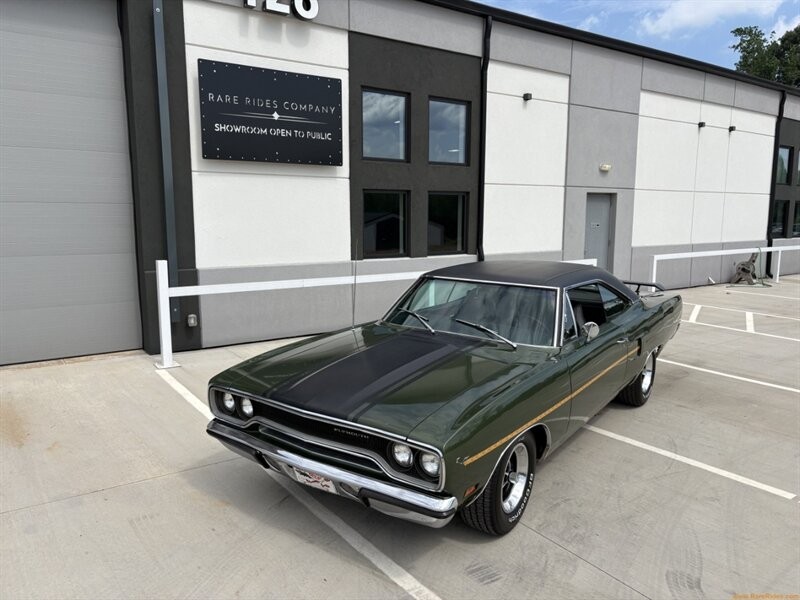 $64,995 · 19% above typical
Expand
What they sell for: Road Runner Coupe sale prices.