
Plymouth Road Runner Hardtop buyer's guide
Plymouth Road Runner Hardtop -- the model's own buyer's guide: variants, values and what to check.
Years listed: 1968-1971 · Series: B-Body
Overview and history
The Road Runner was Plymouth's answer to a problem the whole industry could see by 1967: muscle cars had become expensive. The Pontiac GTO had invented the formula in 1964 — a big engine in an intermediate body — and then loaded it with trim, options and price until the young buyers it was aimed at could no longer afford it. Plymouth proposed the opposite: take the lightest, cheapest intermediate it made, the B-body Belvedere, strip out everything that did not make it faster, fit the strongest running gear in the catalogue, and sell it on performance per dollar. The name and the cartoon bird came from Warner Bros., licensed for a modest fee that bought instant recognition, a pair of decals, and the most famous horn in the business — a specially voiced unit that went beep-beep, exactly like the cartoon.
The car that arrived for 1968 was deliberately crude in the right places: a bench seat, rubber floor covering in place of carpet on early cars, and a taxi-spec interior — because weight and cost were the enemy. Underneath, nothing was skimped: the standard engine was a 383 cubic inch big-block built only for this car, with the cylinder heads, camshaft and exhaust manifolds of the 440 Magnum, rated at 335 horsepower. Heavy-duty torsion bars, rear springs, four-speed or TorqueFlite and a stout 8 3/4-inch rear axle were all part of the package rather than options. The only engine upgrade was the one that mattered: the 426 Hemi, turning a bargain into a legend.
This guide covers the hardtop — body code 23 in the VIN, RM23 in full — because it is the Road Runner most buyers shop for today. The pillared coupe (RM21) was the cheapest car in 1968 and outsold the hardtop that first year, but the hardtop's pillarless profile was the better-looking car then and is the more sought-after one now. A convertible (RM27) joined for 1969 and 1970 only. The hardtop was offered in every year covered here, 1968 through 1971, and carried every engine the line offered, from the 383 to the Hemi. Our own listings reflect that spread: we currently track 13 Road Runner Hardtops, 9 of them for sale, spanning 1968 to 1971 with 1969 and 1970 the most numerous at five cars each.
The arc of the four years is the arc of the muscle era itself. The 1968 car is the pure idea: light, plain, fast. The 1969 car is the idea perfected and recognised — it won Motor Trend's Car of the Year award, an extraordinary honour for a car whose party trick was cheap speed — and mid-year it gained the A12 440 Six-Barrel package. The 1970 car is the idea at maximum flamboyance: new styling, the Air Grabber hood, high-impact colours and the Superbird. The 1971 car is the idea in a new, heavier, fuselage-styled body, still available with Six-Barrel and Hemi power but launched into a market collapsing under insurance surcharges and emissions rules. After 1971 the name continued, but the big-block hardtop formula covered here ended: compression fell for 1972 and the Hemi was gone.
Why does the hardtop matter to a buyer now? Because it is common enough that you can actually find one — total Road Runner production across 1968–71 ran well into six figures — yet the value is concentrated in a small number of verifiable things: the right VIN, the right engine, the right paperwork. A genuine Hemi hardtop and a Satellite wearing Road Runner badges can look identical in photographs and be different cars in every way that counts. On this model, knowledge is not a garnish on the purchase; it is most of the purchase: identity first, engines second, rust always.
The models
Every Road Runner of 1968–71 is a B-body: Chrysler's intermediate unibody platform, shared with the Plymouth Belvedere, Satellite, Sport Satellite and GTX, and with the Dodge Coronet and Charger lines. The hardtop body — Chrysler body style 23 — is a two-door with no B-pillar: wind both windows down and the side of the car is one open sweep of glass. That openness is the hardtop's charm and one of its costs, because the body gives up the stiffness the pillared coupe's post provides and leans harder on the roof, floor and rocker structure — which is why the structural rust checks later in this guide matter even more on a hardtop than on a coupe.
Read the range as four distinct model years, each with its own character, engine list and traps.
| Model | Years | Engine | Output | Built | Character |
|---|---|---|---|---|---|
| Road Runner Hardtop 383 | 1968–1971 | 383 V8, Carter 4-barrel | 335 hp (300 hp for 1971) | The volume car in every year | The honest Road Runner; quick, simple, cheapest to buy and run |
| Road Runner Hardtop 426 Hemi | 1968–1971 | 426 Hemi V8, dual Carter 4-barrels | 425 hp | Small hundreds per year | The legend; verify everything, twice |
| Road Runner Hardtop A12 440 Six-Barrel | 1969 (mid-year) | 440 V8, three Holley 2-barrels | 390 hp | 1,412 across coupe and hardtop in period counts | Factory street racer; lift-off hood, Dana 60, no frills |
| Road Runner Hardtop 440+6 | 1970–1971 | 440 V8, three Holley 2-barrels | 390 hp (385 hp for 1971) | Low thousands | The Six-Barrel as a regular option, Air Grabber on top |
| Road Runner Hardtop 440 | 1970 (Superbird) / 1971 | 440 V8, Carter 4-barrel | 375 hp | Superbird about 1,920 in period counts | 1970 figure is the Superbird nose-and-wing car; 1971 is the sleeper |
| Road Runner Hardtop 340 | 1971 | 340 V8, Carter 4-barrel | 275 hp | Small numbers | The insurance-era answer; a small-block in a big-block range |
(Outputs are period SAE gross ratings, the way Plymouth published them; they flatter every engine here by modern net standards, and the lower 1971 figures reflect the first emissions-era detuning rather than different hardware in any deep sense. Production figures for individual engine-and-body combinations are given only where period counts are genuinely established; where they are not, the table says so in words rather than inventing a number.)
1968: the original. Two bodies only — pillared coupe and hardtop — and two engines: the Road Runner-only 383 and the 426 Hemi. The hardtop cost a little more than the coupe and came with a slightly better-trimmed interior, including carpet. Styling is the cleanest of the four years: round side-marker lamps, a simple grille, minimal brightwork — everything says the money went into the drivetrain. Because it was the launch year and the cheapest specification, 1968 cars were worked hardest; a genuinely unmolested 1968 hardtop is a rarer sight today than the production numbers suggest.
1969: the peak of the original idea. Detail styling changes — rectangular side markers, revised grille and tail panel — a convertible added, and the same 383/Hemi engine pair for most of the year. Then, mid-year, the A12 package (option code A12, engine code M in the VIN) put the 440 Six-Barrel into a Road Runner stripped back even further: a matte-black lift-off fibreglass hood with a huge scoop, held by four pins and no hinges; a Dana 60 rear axle with 4.10 gears; black steel wheels with chrome lug nuts and no hubcaps. The A12 is covered in depth in the engines section, because mechanically it is a different car wearing the same badges. 1969 is also the year the market splits most sharply: an ordinary 383 hardtop is a plentiful, usable muscle car, while an A12 or Hemi car is a blue-chip collectible, and the paperwork gap between them is where buyers get hurt.
1970: the flamboyant one. Restyled with a loop front bumper framing the grille, high-impact colours with names like In Violet, Limelight and TorRed, dust-trail bird decals down the flanks, and an options list that finally let a buyer spend real money: bucket seats, console, the Rallye instrument cluster and the Air Grabber hood. The engine list is the widest of the four years: 383 standard, 440+6 and Hemi optional. It is also the Superbird year — the winged, nose-coned homologation special built to lure Richard Petty back to Plymouth, sold as a Road Runner variant with 440 four-barrel, 440+6 or Hemi power. A Superbird is a hardtop under the aero hardware, but it is its own market; if the car in front of you has a nose cone and a wing, price and authenticate it as a Superbird, not as a Road Runner with options.
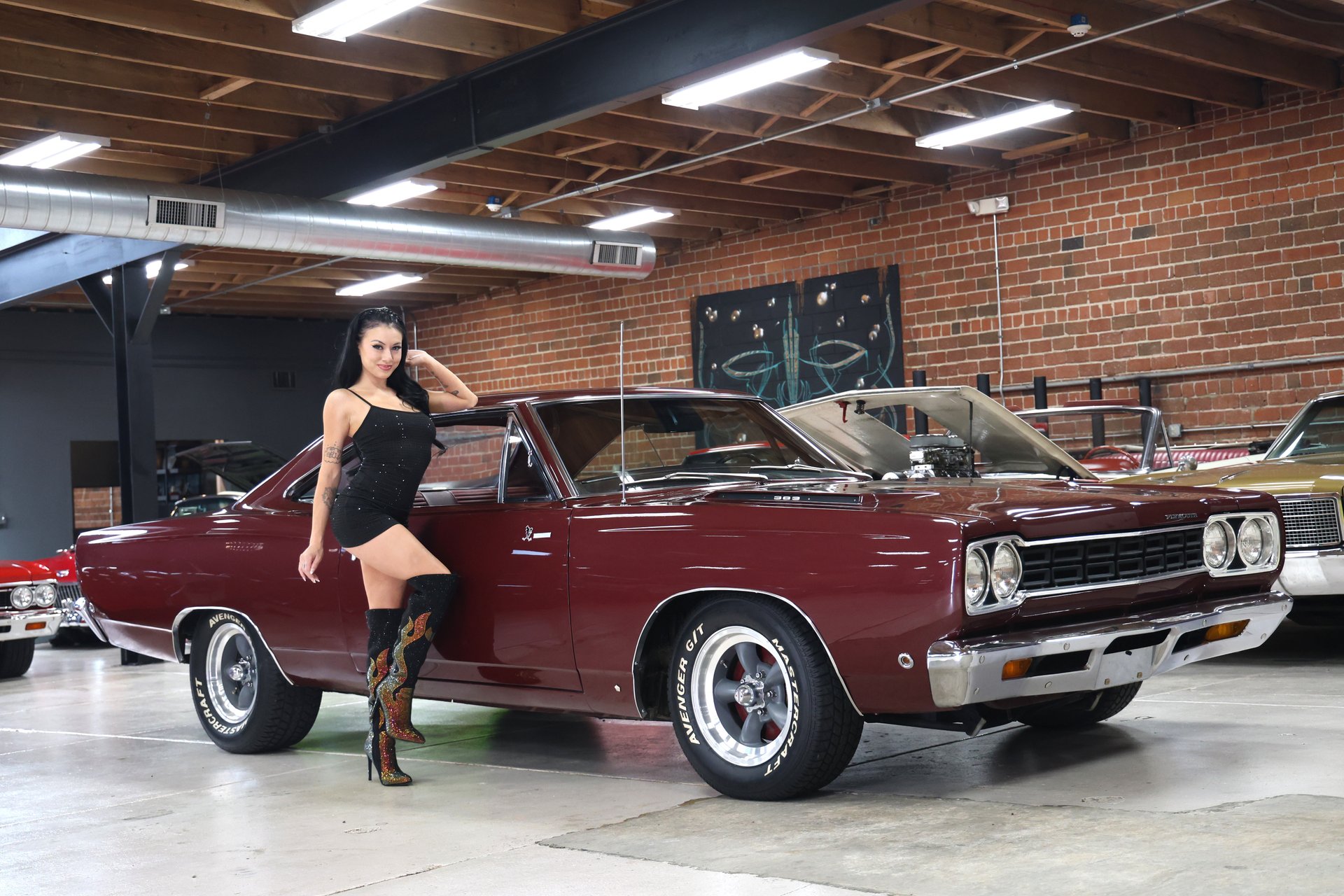
1971: the fuselage car. All-new sheet metal with Chrysler's fuselage styling — a loop bumper again, now wrapping a much rounder, heavier-looking body — and the last year of the true big-block Road Runner. The 383 remained standard, now rated 300 hp in gross terms for the detuned, lower-compression version. New for 1971 was a 340 small-block option, aimed at buyers being priced out by insurance, and the 440 four-barrel joined the list alongside the 440+6 and the Hemi, both in their final year. The 1971 car is the most modern to drive — better seats, the optional Tuff Wheel, the Rallye dash — and the heaviest. It is also the year where a vinyl roof is most common, and vinyl roofs on fuselage cars hide roof rust like nothing else in this guide.
What the hardtop range never was. There was no Road Runner wagon, no four-door, and no small-block before 1971 — any 1968–70 car presented with a 318 or 340 as original is a swap or a clone. There was no factory 440 four-barrel in a standard 1968 or 1969 Road Runner: in those years the 440 appears only as the A12 Six-Barrel (1969) or in the GTX. Clones are built from the cheaper Satellite and Sport Satellite, not from GTXs — badges and trim move up the donor ladder, never down it.

Engines and gearboxes
The 383: the Road Runner engine
The standard engine is a B-series big-block of 383 cubic inches — the low-deck Chrysler big-block, distinct from the taller-deck RB family that carries the 426 Hemi and the 440. The Road Runner version was not the ordinary passenger-car 383: Plymouth built it as a hybrid, with the free-breathing cylinder heads, hotter hydraulic camshaft, exhaust manifolds and four-barrel induction of the 440 Magnum. Induction is a Carter AVS four-barrel under an unsilenced air cleaner, and the published rating is 335 horsepower with 425 lb-ft of torque in period gross terms. It is a sweet specification: lighter than an RB over the front wheels, willing to rev in a way the 440 is not, and in a light 1968 hardtop genuinely quick — period road tests put a well-driven 383 car in the high-14-second bracket over the quarter mile, within sight of cars costing far more.
On the road today a healthy 383 should start readily hot or cold, idle with a slight lope from the Magnum cam, and pull cleanly and stronger as the revs climb. A 383 that smokes lightly on start-up from tired valve seals but runs clean under load is a very different proposition from one that smokes under power. Judge the fuel system as carefully as the engine: the Carter AVS meters its secondaries with an adjustable air valve, and a car that bogs when the secondaries open usually has an air valve set too loose or a tired accelerator pump, not a worn engine — a carburettor rebuild runs roughly $450–850 depending on whether the throttle shafts need bushing. Heat is the other 383 theme: a car that runs hot in traffic is usually showing you a silted radiator, a missing fan shroud or retarded timing rather than a cracked head. A recore or quality replacement radiator runs roughly $400–800 before fitting; find out which cheap cause it is before pricing the expensive one.
Identity on a 383 car is settled at the engine pad. On B-series engines the identification pad is at the front of the block, beside the distributor, carrying displacement and build-date coding; the partial VIN stamping that ties an engine to a specific car is on a machined pad low on the passenger side of the block, near the oil pan rail, on 1969 and later cars. A 1968 car predates routine partial-VIN stamping, which is why 1968 originality leans so heavily on paperwork. Casting dates should precede the car's build date by weeks to a couple of months — a block cast after the car was built is a replacement whatever the seller calls it.
The 426 Hemi: the legend, and the homework
The Street Hemi is the engine that built the Road Runner's reputation and the one that empties wallets. It is an RB-family engine of 426 cubic inches with hemispherical combustion chambers: two huge valves per cylinder, splayed in the head, opened by a solid-lifter camshaft (hydraulic lifters arrived for 1970–71) through shaft-mounted rocker gear, with two Carter AFB four-barrels on an alloy intake, and a published rating of 425 horsepower that period and modern testing alike suggest was conservative. Torque is the point: a Hemi hardtop transforms the Road Runner from a quick budget coupe into one of the fastest production cars of its era.
Everything about a Hemi car costs Hemi money, starting with verification. The VIN's fifth character is the first gate — J in 1968 and 1969, R in 1970 and 1971 — and a car without that letter is not a Hemi car, whatever engine sits in it today. The engine carries its identity on the pad on top of the block at the front and in its casting numbers and date, and the Hemi's hardware is hard to fake cheaply: the wide heads with spark plugs through the rocker covers, the cross-bolted main caps, the dual-carburettor intake. But engines move between cars: a numbers-matching Hemi hardtop, a Hemi car with a correct but replacement engine, and a 383 car with a Hemi installed are three different values wearing the same valve covers. Paperwork — the broadcast sheet, the fender tag's E74 engine code, dealer records — is what separates them.
Living with one is a specialist discipline. The dual AFBs want correct linkage setup and clean fuel; fouled plugs are the classic street-Hemi complaint, because an engine built to breathe at 6,000 rpm idles rich and loads up in traffic. Solid-lifter cars need periodic valve lash checks, and a Hemi that ticks loudly is asking for one, not announcing doom — but a Hemi that ticks after a documented recent adjustment is a different conversation. Rebuild costs reflect the parts: a quality street-Hemi rebuild runs roughly $18,000–30,000, against roughly $7,000–12,000 for a comparable 383 or 440. That gap is why a Hemi's engine health is worth paying an expert to assess, and why documented engine work by a named Hemi specialist genuinely adds value.
The 440: Magnum, A12 Six-Barrel and 440+6
The 440 is the other RB engine: taller deck than the 383, longer stroke, and a torque curve that arrives earlier and stays longer. In single four-barrel Magnum form — Carter AVS, 375 horsepower in period gross terms — it was the GTX's engine, and in a Road Runner it appears in the 1970 Superbird and as a regular option for 1971. A 440 Magnum hardtop is the torque buyer's car: less frantic than the Hemi, stronger everywhere than the 383, and cheaper to rebuild than either because the parts are common.
The Six-Barrel cars are where the 440 becomes folklore. The 1969 A12 package took the 440 block, fitted three Holley two-barrel carburettors on an Edelbrock alloy intake manifold — the centre carburettor does the everyday work, the vacuum-operated outboards open under load — and rated the result at 390 horsepower with 490 lb-ft of torque. Around it Plymouth built a street racer: the lift-off fibreglass hood with its sealed fresh-air scoop, a Dana 60 rear axle with 4.10:1 gears and Sure-Grip, heavy-duty 727 TorqueFlite or the heavy-duty A833 four-speed, and the barest trim in the range. For 1970 the Six-Barrel became a regular production option — Plymouth badges it 440+6, Dodge calls the same hardware Six-Pack — now under a steel hood with the Air Grabber scoop, and it continued for 1971.
Two ownership truths follow. First, the three-carburettor setup is a system, not a part: centre-carburettor idle quality, outboard opening rate, linkage geometry and fuel pressure all interact, and a Six-Barrel car that stumbles or surges usually needs the system set up by someone who knows Holleys, not a new engine. A specialist rebuild and setup of all three carburettors runs roughly $900–1,800. Second, A12 identity is as checkable and as faked as Hemi identity: the VIN engine code M, the A12 code on the fender tag, the Dana 60, the lift-off hood and the build sheet all have to agree — an A12 tribute built from a 383 car is worth 383 money plus parts, not A12 money.
The Air Grabber appears across the 440+6 and 383 cars alike. It is a fresh-air induction system, option code N96: a scoop in the hood sealed to the air cleaner, with a door — vacuum-operated, worked by a switch on the dash, wearing an orange face and a cartoon shark's grin on the 1970 version — that the driver opens for cold air and closes for weather. On 1969 cars the equivalent fresh-air hood uses manually positioned scoops. Check the whole system on any car priced as an Air Grabber car: the vacuum canister and actuator, the dash switch and its lines, the seal between scoop and air cleaner, and the correct air cleaner base. The hardware is reproduced in part and missing in many cars — roughly $1,500–3,500 to source and fit a complete correct system where major pieces are absent — so a claimed N96 car with a plain closed air cleaner and no scoop mechanism is a deduction, not a detail.
Gearboxes and axles
Two gearboxes do nearly all the work. The A833 four-speed manual is Chrysler's own heavy-duty box, supplied with a Hurst shifter; Hemi and A12 four-speed cars received the heavy-duty version with the coarse-spline input shaft (the so-called 18-spline box), while 383 cars use the standard 23-spline unit — a distinction worth checking on any car sold as an original Hemi or A12 four-speed, because the box is part of the car's identity. For 1970–71 the shifter wears the famous pistol-grip handle. Judge an A833 on second-gear synchromesh, on whine and on whether it stays in gear on the overrun; a rebuild runs roughly $1,200–2,500 plus clutch, and worn linkage can mimic internal wear, so test the cheap cause first.
The TorqueFlite 727 automatic is the other choice and, in period, the quicker one for most drivers: a three-speed of legendary strength. It should engage promptly, shift firmly without flaring, and kick down decisively. Delayed engagement when cold points to hardened seals; flaring on the 2–3 shift points to wear in the front clutch or a tired valve body. A specialist rebuild runs roughly $1,800–3,200. The fender tag's transmission code (D21 for the four-speed, D32 for the heavy-duty automatic) confirms what the car was born with.
At the back, the standard axle is the Chrysler 8 3/4-inch unit with a drop-out centre section: strong, quiet when healthy, and easy to re-gear, which is why so many have been. Sure-Grip limited-slip was an option; A12 cars and Hemi four-speeds carry the Dana 60 as standard, identifiable at a glance by its huge centre housing and rear cover plate where the 8 3/4 has a smooth welded back. Whine under load that changes on the overrun is pinion and crown-wheel wear or a bad pinion bearing; a centre-section swap on an 8 3/4 runs roughly $800–1,600 for a rebuilt unit fitted, while a Dana 60 rebuild is specialist work at roughly $1,500–2,800. Always check the ratio actually fitted against the tag — decades of gear swaps mean the paperwork and the axle frequently disagree.
Problem areas
Start with the honest evidence problem. In the six cars in our current listings whose photo sets we have examined in detail, the written photo notes record no rust, no smoke, no leaks and no damage at all — zero mentions in a sample of six. Do not read that as a clean bill of health: six cars, most of them dealer-presented and photographed to sell, is a tiny and flattering sample, and the absence of a note is not the presence of an inspection. What it does tell you is that the cars reaching the market today are mostly restored or curated, so the faults that decide value have moved from the obvious to the hidden — under fresh paint, under new carpet, behind a swapped tag. The problem areas below are therefore ordered by how much money each one can quietly take from you: identity, structure, then the mechanical systems.
Identity: the VIN, the fender tag and the Satellite clone problem
No problem area costs more money than this one, and it costs it instantly, in the gap between what you paid for and what you got. The Road Runner shares its entire body shell with the Belvedere, Satellite and Sport Satellite — cars built in far larger numbers and worth far less. Everything that makes a Road Runner visually distinctive bolts on: badges, decals, grille details, the beep-beep horn, the hood. Everything that makes it legally and historically a Road Runner is in its numbers. A Satellite with Road Runner trim is a tribute; a Satellite with a Road Runner VIN tag is a fraud; and the market contains both.
Learn the VIN before you look at any car. A 1968–71 Plymouth VIN has thirteen characters and reads in blocks. The first character is the car line: R for Plymouth's B-body line. The second is the price class, and it is the single most important character on the car: M means the medium-price Road Runner line. A Satellite carries H, a Sport Satellite P, a GTX S, a Belvedere L. If the second character is not M, the car did not leave the factory as a Road Runner, full stop — it may be an excellent car, but it is priced as its own model, not this one. The third and fourth characters are the body: 23 is the two-door hardtop this guide covers (21 is the pillared coupe, 27 the convertible). So every genuine car in this guide begins RM23. The fifth character is the engine, and its meaning changes by year, which is itself a trap for the hurried: H denotes the 383 four-barrel in 1968 and 1969, while the same engine is N in 1970 and 1971; the Hemi is J in 1968–69 and R in 1970–71; the 440 Six-Barrel is M in the 1969 A12 and V in 1970–71; the 440 four-barrel is U in 1970–71; the 340, 1971 only, is H — a letter that means a big-block in an earlier car and a small-block in this one. Never decode the fifth character from memory: decode it against the chart for that car's year. The sixth character is the model year (8, 9, 0, 1), the seventh is the assembly plant — A is Lynch Road in Detroit, where most A12s and many Hemis were built; B is Hamtramck; E is Los Angeles; G is St. Louis — and the last six are the sequence number.
The fender tag — Chrysler's data plate, screwed to the driver's side inner front fender — is the second document. Read it from the bottom up: the bottom line carries the model and body in sales-code form, the engine code (E63 for the 383 four-barrel, E74 for the Hemi, E87 for the 440 Six-Barrel), the transmission code (D21 four-speed, D32 heavy-duty automatic), the paint and trim codes and the scheduled build date. Option codes fill the lines above: A12 for the 1969 Six-Barrel package, N96 for the fresh-air hood. Three cautions. Tags were screwed on, not riveted, so removal alone proves nothing — tags come off for paint. Reproduction tags exist and are legitimate when they copy a documented original, so a crisp tag on a restored car is a question about documentation, not an accusation. And Lynch Road tags are famously sparse, carrying far fewer codes than other plants' tags, so a thin tag on a Lynch Road car is normal — which is exactly why Lynch Road A12 and Hemi cars lean hardest on the broadcast sheet.
The broadcast sheet — the build sheet, the car's factory birth certificate — is the third document and the strongest. Copies were left in the car by line workers: under or behind the rear seat springs is the classic location, with others found above the glovebox or under the carpet. It lists the VIN, engine, transmission, axle, paint, trim and options as scheduled. A car with a legible sheet matching its VIN and fender tag is as verified as a Mopar gets. A car without one is not condemned — sheets are lost — but it is verified only as far as its other numbers reach, and on a Hemi or A12 that ceiling should show in the price.
Finally, the body itself carries numbers. From 1969 the last digits of the VIN are stamped into the radiator core support and under the trunk weatherstrip on the driver's side; on a 1968 car the stampings carry the shipping order number, which appears on the fender tag and broadcast sheet rather than the VIN. These hidden numbers are the clone-killer: a tag can be swapped in minutes, but a core support stamped for a different car exposes the whole story. Check them on any car priced as rare, and treat a seller's refusal as an answer. For a Hemi or A12, marque registries and paid authentication services exist, and their fee — typically a few hundred dollars plus travel — is trivial against the mistakes they prevent.
Rust: the unibody map
The B-body is a unibody: there is no separate chassis frame to save a rotten shell, and the structure that carries the suspension is the body itself. That single fact organises the whole rust map, because the most dangerous corrosion on a Road Runner is not in the panels you can see but in the boxes and rails you cannot.
Work from the front. The front frame rails run from the bumper back to the torsion-bar crossmember, and they rot where road spray and trapped mud sit against them, worst where the rails meet the crossmember. The crossmember itself is the critical structure at the front: it carries the torsion bar anchors, and the bars' loads pass through it into the floor. Corrosion or cracking around the torsion bar sockets is a structural repair of the first order — fabrication and jig work, realistically $3,000–6,000 to put right properly — and it is the single best reason to put any Road Runner on a lift before buying it. The inner front fenders and battery tray corrode from acid and trapped leaves; the cowl sides and lower windshield frame rot where the screen seal fails, and the water runs down inside the A-pillars into the front floors, which is why front floor rust on a B-body so often starts at the toe boards.
The floors follow the water: front pans from the cowl and heater box, rear pans from the rear window — and a hardtop adds its own entry point, since water passing the rear quarter window seals collects in the quarters and rear footwells. Lift every carpet: perforation is panel work at roughly $1,200–2,500 a side fitted and painted, and floors rarely rot alone. The rocker panels are part of the unibody's bending strength, and on a hardtop — no B-pillar, remember — they matter more; prod the full length, especially where mud packs behind the front wheel.
At the rear, the trunk is the B-body's truth-teller. The trunk floor rots from the inside out: water passes the tail panel seams, the trunk seal and the rear window channel, then sits in the floor's pressings and in the trunk floor extensions behind the rear wheels. Lift the mat, remove the spare, and check the seams where floor meets extensions and wheelhouses. A trunk floor replacement with extensions is roughly $1,500–3,000 fitted before paint. The rear quarters rot at the wheel lips and in the lower sections behind the wheels; bubbles at the lip mean the sandwich is rotting from inside, and a quarter skimmed over rust will bubble again within a couple of seasons. The rear window channel is a prime rot site on vinyl-roof cars — the vinyl holds moisture against the steel and the first sign is often a soft spot felt through the covering. On a 1971 car, budget the roof and rear window channel as a primary inspection area.
Underneath, finish with the spring hangers and rear frame rails: corrosion where the front spring eye mounts is structural in the same way as the torsion-bar crossmember. Read the undercoating as evidence: aged, patchy factory coating with honest stone chips is what an unrestored underside looks like; a uniform fresh black coat blown over everything the week before sale is a question, and the answer is a screwdriver and a lift, not a debate.

Suspension, steering and brakes
The front suspension is Chrysler's torsion-bar design: longitudinal bars anchored in the crossmember, with ride height set by adjuster bolts. It is simple, strong and rebuildable, and its wear points are predictable. Ball joints and control-arm bushings perish and wear, giving knocks over bumps and vague on-centre feel; idler arm wear is the classic B-body steering fault, letting the linkage move before the wheels do and producing the wandering steering owners wrongly blame on the steering box. A full front-end refresh — bushings, ball joints, tie-rod ends, idler arm — runs roughly $1,200–2,200 fitted and aligned, and transforms these cars. Torsion bars rarely fail, but the adjusters seize and the anchor seals perish and let water into the crossmember sockets; a car sitting nose-down on one side may have a sagged or incorrectly indexed bar — measure ride height against the factory procedure before condemning parts. Rear leaf springs sag, worst on cars that lived with air shocks compensating for them; a replacement spring set runs roughly $500–900 fitted, and air shocks on a car today are a confession that the springs are tired.
Power steering, where fitted, whines at the pump when worn or low; play at the wheel rim of more than a couple of inches with the linkage proven tight is a box rebuild, roughly $450–800 exchanged. Manual-steering cars are heavy at parking speeds by design; that is character, not a fault. Brakes divide by year and option: heavy-duty drums standard early on, front discs optional and increasingly common later. The standard recommissioning list — master cylinder, wheel cylinders or calipers, hoses, shoes or pads, fluid — runs roughly $900–1,800 for a full hydraulic refresh with labour. Judge any car by a hard stop from speed: pulling to one side is a hose or caliper fault, a sinking pedal is hydraulic, and a long pedal on a drum car that improves with pumping is adjustment and air, not necessarily money. Handbrakes seize from disuse.
Electrics, interior and trim
Chrysler electrics of this era fail at two famous points. The bulkhead connector, where the engine harness passes through the firewall, carries the alternator feed and the ammeter circuit, and heat-damaged, green, loose terminals there cause charging faults, flickering lights and, in the worst cases, melted plastic. Pull the connector apart on any car you are serious about: bright tight terminals are a good sign; heat distortion is a harness conversation, roughly $300–700 to repair properly with new terminals, with a headlight relay conversion the common-sense upgrade alongside. The ammeter is the second weak point, its connections behind the dash adding resistance and heat; many cars run a voltmeter conversion, a safety improvement rather than an originality crime. The ballast resistor is the small ceramic part that stops these cars dead when it fails, and every owner should carry a spare; a car that starts in the crank position and dies when the key returns to run has a failed resistor or its wiring — a five-minute diagnosis that has sold many good cars cheaply.
Ignition divides the range: points on the early cars, dual-point distributors on performance engines, and Chrysler electronic ignition arriving as the period closes and retrofitted to many earlier cars. A retrofit done with factory parts is a reliability gain; one done with a spliced aftermarket box is a future fault-finding session. Check which you are looking at.
The interior is where the Road Runner's cheap origins show and where restoration costs ambush the unwary. Bench-seat cars have simple trim, and simple is good: seat covers, foam and carpet are reproduced, and a full interior refresh in standard trim runs roughly $2,500–4,500 in parts with fitting on top. Bucket-seat, console and Rallye-dash cars carry model-specific parts that cost more and take longer to find. The dash pad cracks from the speaker grille outward in sun-state cars; a quality replacement or recover is roughly $600–1,200. Headliners sag, door cards warp where the frameless glass has let water in, and the hardtop's window mechanisms — the rear quarter regulators especially — wear and drop glass out of alignment, leaving the water entry that rots the quarters from inside. Work every window through its full travel; a quarter glass that needs a helping hand is a regulator job at roughly $250–500 a side, and a car whose windows all seal properly has usually been kept under cover, which is the best single sign there is.
How to inspect one
Allow two hours, not one, and bring a torch, a cloth-wrapped magnet, a small mirror and a notebook. Read the car in this order — identity before beauty, structure before mechanics — because the expensive discoveries are all front-loaded.

- Start with the VIN, not the car. Read the dash plate through the windshield and write it down. First four characters: RM23, or stop and re-price the car as what it actually is. Fifth character decoded against that year's chart: does it match the engine the car is sold as? Sixth character matches the claimed year? Plate on its original rosette rivets? This is the identity check from the problem areas section, and it takes ninety seconds.
- Decode the fender tag. In the engine bay, read the tag from the bottom line up: engine code, transmission code, paint, trim, build date. Do the paint and trim codes match the car? Does the transmission code match the gearbox fitted? Is N96 claimed, and if so is the code there? Photograph the tag — a seller who objects to a photograph of a tag is telling you something.
- Hunt the broadcast sheet and the hidden numbers. Ask directly whether the car has its build sheet, and where. Check the radiator core support and trunk-lip stampings against the VIN (1969 on) or the shipping order number (1968). Agreement across VIN, tag, sheet and body stampings is the strongest position a buyer can stand in; each missing or disagreeing item lowers the ceiling on what the car can be worth.
- Cold start, then listen. Insist the engine is stone cold. A 383 should fire and settle with a lope; a Six-Barrel should idle on its centre carburettor without hunting; a Hemi should start without drama and will sound mechanically busy — that is normal. Blue smoke on start-up that clears is valve seals; smoke that stays is rings or worse. Watch the oil pressure gauge and listen for a deep knock in the first seconds.
- On a lift, structure first. Torch along the front frame rails, into the torsion-bar crossmember sockets, across the floors, into the trunk floor seams and extensions, and up at the spring hangers and rear rails — the full rust map from the problem areas section, in that order. Perforation at the crossmember, rails or hangers ends the inspection for most buyers; perforation in floors and trunk is a price, not a verdict, but it must be a counted one.
- Body, gaps and the magnet. Work the magnet over the rear quarters, wheel lips, lower fenders, door bottoms and rockers. Check the hardtop glass: all four windows up, meeting their seals evenly. Open and close both doors — a hardtop door is long and heavy, and sag shows in the latch. On a vinyl-roof car, press the roof gently around the rear window and feel for the crunch of rust under the covering.
- The Air Grabber and the engine's own numbers. If the car is sold as an N96 car, work the dash switch and watch the scoop door open and close; check the vacuum canister, actuator and air-cleaner seal are present. Then verify the engine itself: pad stampings, casting dates that precede the build date, and on 1969 and later cars the partial VIN on the block pad. On a Six-Barrel car, confirm the intake and carburettors are the correct three two-barrels. On a Hemi, this step is where you decide whether to pay for an expert — if the numbers so far do not fully agree, that decision has already been made for you.
- Suspension and steering by hand. With the front wheels off the ground, rock each wheel top-to-bottom and side-to-side for ball-joint and bearing play. Have a helper rock the steering while you watch the idler arm and linkage for lost motion — the classic B-body wear point from the problem areas section. Check ride height side to side and look for air shocks confessing to tired rear springs.
- The test drive, at least twenty minutes. Use everything: the four-speed's second-gear synchromesh going down as well as up, the TorqueFlite's 2–3 shift and kickdown, a hard brake stop from speed, a stretch of rough road for knocks, and a full-throttle run (where legal and safe) to feel the secondaries or outboards open and watch the temperature gauge. Note the speedometer against a phone GPS: a wrong reading often means a changed axle ratio.
- Heat, electrics and the bulkhead connector. Back at base, let it idle hot. Pull the bulkhead connector and look for heat damage; work every electrical item — lights, wipers, washers, heater fan on all speeds, horn (it should beep-beep), gauges. Run the heater even in summer. Electrical honesty correlates with maintenance honesty better than any other single check on these cars.
- Interior and glass, last but weighted. Sit in every seat. Work every window through its full travel, the quarter glasses twice. Check the dash pad for cracks starting at the speaker, the headliner seams, and the carpet for damp — a musty car is a leaking car, whatever the seller says about storage.
- Paperwork to close. Title matching the VIN exactly, character for character. A thick, dated, named-shop invoice file is the best predictor of a sorted car. For a Hemi, A12 or top-of-market car, make the sale conditional on independent authentication if any step above left a gap. Then, and only then, talk money.

Values
The build appends the current market figures beneath this guide — the cars listed now and the recorded sales — so this section deliberately carries no prices of its own. What it can teach you, durably, is how to read those figures when you get to them, because the Road Runner hardtop market punishes a naive reading harder than most.
First, understand that this is not one market but at least four, stacked on top of each other and sharing a badge. The 383 hardtop is the volume market: plentiful, liquid, and priced mainly on body condition and honesty, because the mechanicals are cheap to fix and every buyer knows it. The 440 Magnum and 440+6 cars form a second market, priced on specification as much as condition. The A12 is a third, small and specialist, where the package's completeness — hood, axle, sheet — moves the number as much as paint quality does. And the Hemi hardtop is a fourth market entirely, an investment-grade collectible priced on authentication first and condition second. Comparing a figure from one tier against a car from another is the most common beginner's error here; the recorded-sales block below will mix tiers if you let it, so sort by engine before drawing any conclusion from it.
Second, read the condition spread, not the headline. Within any tier, the distance between a project and a finished car is enormous, and it is driven by the structure: a car needing the crossmember, floors and quarters from the problem areas section consumes so much fabrication and paint money that its finished cost usually exceeds the price of buying a sound car outright. That is why honest project cars change hands at what looks like a small fraction of finished values, and why the fraction is fair. The driver-quality middle — sound structure, presentable paint, mechanicals in current use — is where most real transactions happen, and the hardest band to price from listings alone, because two cars described identically can be a full condition grade apart in the metal.
Third, adjust for the asking-versus-achieved gap. These are emotional cars, often priced by memory of the last headline auction. Asking prices are therefore an optimistic sample; recorded sale results, like the block appended below, are the corrective.
Fourth, know which options genuinely carry premiums and which merely decorate. Numbers-matching drivetrains, a broadcast sheet, and documented original paint or interior add real money in the top tiers and some in the middle. Four-speed cars generally outrun automatics in desirability except in the Hemi tier, where the TorqueFlite's drag-racing record muddies the preference. High-impact colours help a correct car and do nothing for a wrong one; a colour change usually subtracts in the upper tiers, where the fender tag tells on it. Air Grabber adds when complete and working, and nothing when it is a scoop screwed to a hood. Tributes and clones are worth the sum of a good donor car and the parts fitted — enjoy them at that price and the market cannot hurt you.
Finally, negotiate from the inspection, not from the asking price. The credible deductions on a Road Runner are all countable: structural welding by the area, a Six-Barrel setup by the carburettor, an interior by the seat and panel, authentication by the expert's report. A seller presented with a lift inspection and a priced fault list is negotiating about a specific car; a seller presented with a percentage off is negotiating about feelings.
Parts and ownership
The Road Runner is one of the best-supported American classics you can own: it shares its platform with the entire Chrysler B-body family, built in the millions, and the aftermarket has spent forty years reproducing parts for it.
Easy: engine service parts for the 383 and 440 — filters, plugs, ignition components, water pumps, gaskets — plus carburettor kits, brake hydraulics and friction parts, suspension wear items, steering pumps and exchange boxes, exhaust systems, weatherstrips, carpet sets, seat covers and foam, and the decals that finish a car. Order today, fit this weekend is only a slight exaggeration for this tier.
Harder and dearer: Hemi-specific parts of every kind, where pistons, rocker gear and correct castings live in a specialist economy of their own; correct dual-point distributors and date-coded components for judged restorations; A12 hardware, above all an original lift-off hood and the correct Dana 60; complete Air Grabber systems; rust-free original sheet metal, where a good used panel competes with reproductions of variable fit; 1971-specific trim and Rallye dash components; and crack-free dash pads in the less common colours. None of it is unobtainable, but all of it rewards patience over a rushed purchase.
Running costs. Budget the first year honestly. A car in regular use needs little beyond servicing — a few hundred dollars a year in consumables if you do your own work — but a car that has sat follows the pattern of every big-block car of the era: the fuel system cleaned end to end, because modern ethanol fuel attacks old rubber and leaves varnish in tanks and carburettors; every brake hose and seal renewed; tyres replaced on age regardless of tread; and the electrical weak points from the problem areas section inspected before they strand you. A realistic recommissioning at a shop runs into the low thousands before anything is improved. Fuel consumption is what the displacement promises: the low-to-mid teens in miles per gallon in mixed use from a 383, less from a 440. Insurance through a classic-car policy, on an agreed value supported by your authentication paperwork, is inexpensive for the performance on offer; keep the paperwork file with the policy documents, because in this market the file is part of the asset.
Ownership suits the home mechanic: the engineering is accessible, the workshop literature thorough and cheap, and every job here short of structural welding and Hemi machining can be done in a home garage. The one discipline ownership demands is documentation: keep every invoice, photograph every stamping, and never throw away a broadcast sheet or a tag. On a Road Runner, the archive you keep is quite literally worth money at resale.
Which one to buy
- The all-rounder: 383 hardtop, 1969 or 1970. The full Road Runner experience with the deepest supply, the cheapest parts and the widest choice. A four-speed car in a high-impact colour is the sweet spot of the whole range.
- The value buy: 383 hardtop, 1968. The purest and plainest car, often overlooked beside the later years' options and colours. Buy the best body you can find and you own the original idea at the range's friendliest money.
- The torque buy: 440 Magnum or 440+6, 1971. The fuselage car is the range's sleeper: big-block thrust, the most modern cabin, and a market that still prices the styling below the earlier years. A complete, working Air Grabber on a 440+6 car is the specification to hunt.
- The collector car: 426 Hemi hardtop, any year. Buy authentication first and the car second: matching numbers, a broadcast sheet and an expert's report are not extras on a Hemi, they are the product. A verified car is a blue-chip American collectible; an unverified one is a story you are paying Hemi money for.
- The connoisseur's car: A12 440 Six-Barrel, 1969. The factory street racer, and the most single-minded Road Runner ever sold. Completeness is everything — hood, Dana, sheet.
- The driver: any honest tribute or clone, bought at donor-car money. A well-built Satellite-based tribute gives you ninety percent of the experience for a fraction of the verified-car cost, provided you pay for the car it is, not the car it resembles.
And the rule that overrides all of the above: buy the numbers and the structure, in that order, and let the specification follow. Engines can be rebuilt and paint renewed at prices you can plan for — but a car that did not leave the factory as what it claims to be can never be made into one, and a rotten unibody costs more to save than a sound car costs to buy.
See the 8 Road Runner Hardtop cars currently listed.
For sale now
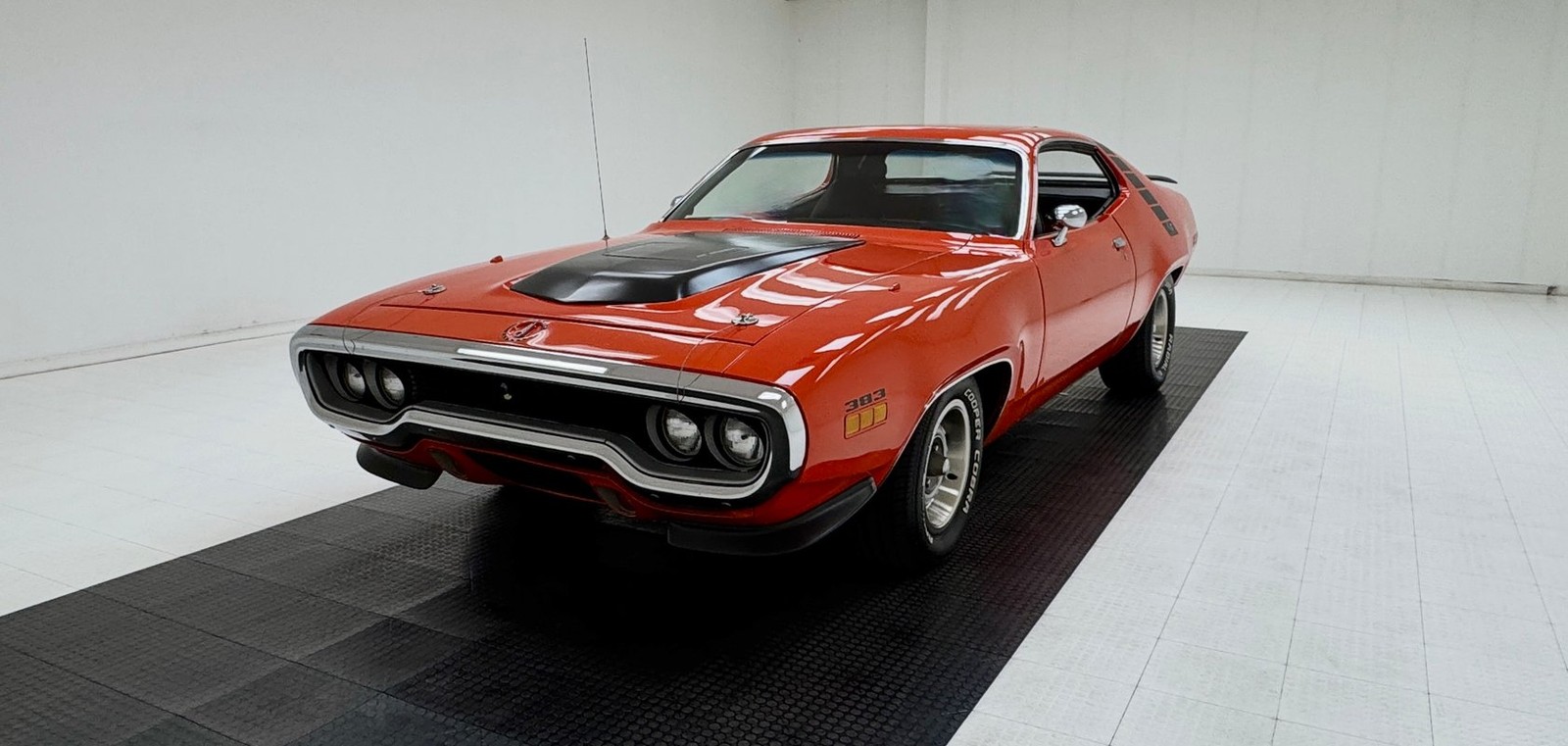 $52,000 · 41% below typical
Expand
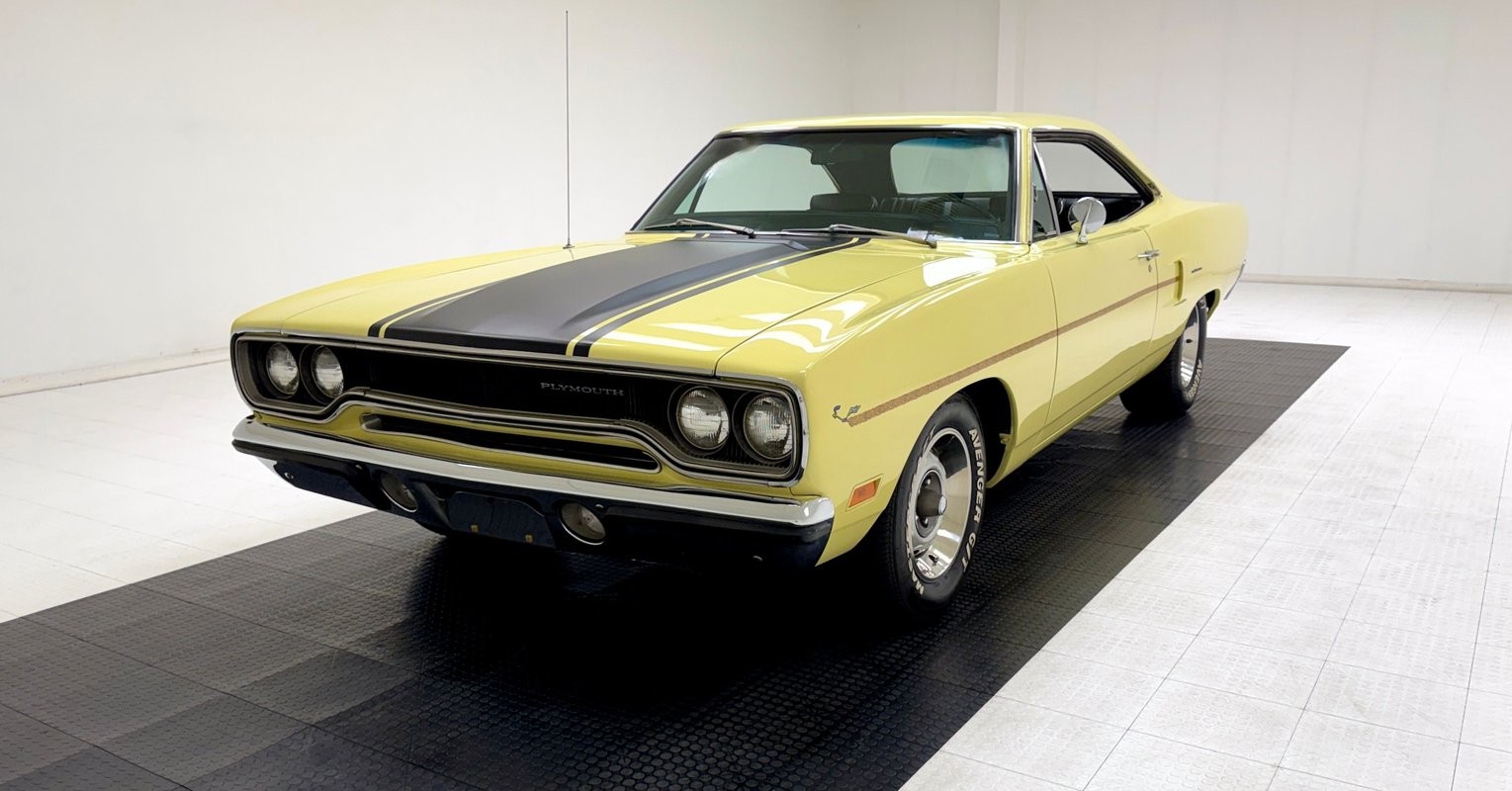 $61,000 · 31% below typical
Expand
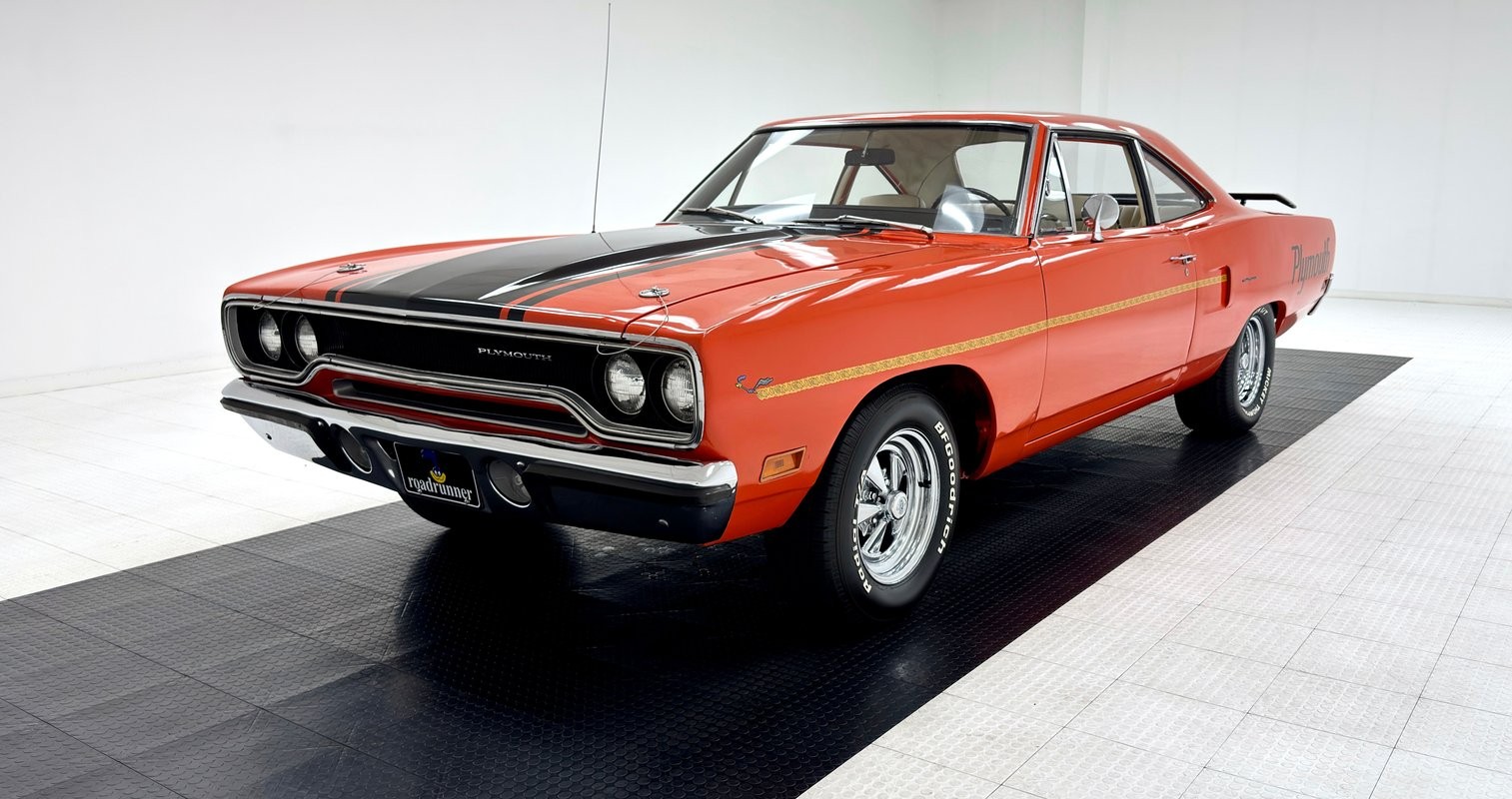 $59,900 · 33% below typical
Expand
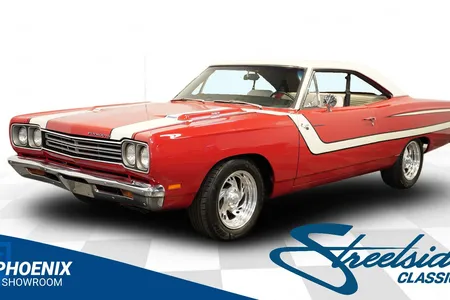 $77,495 · 13% below typical
Expand
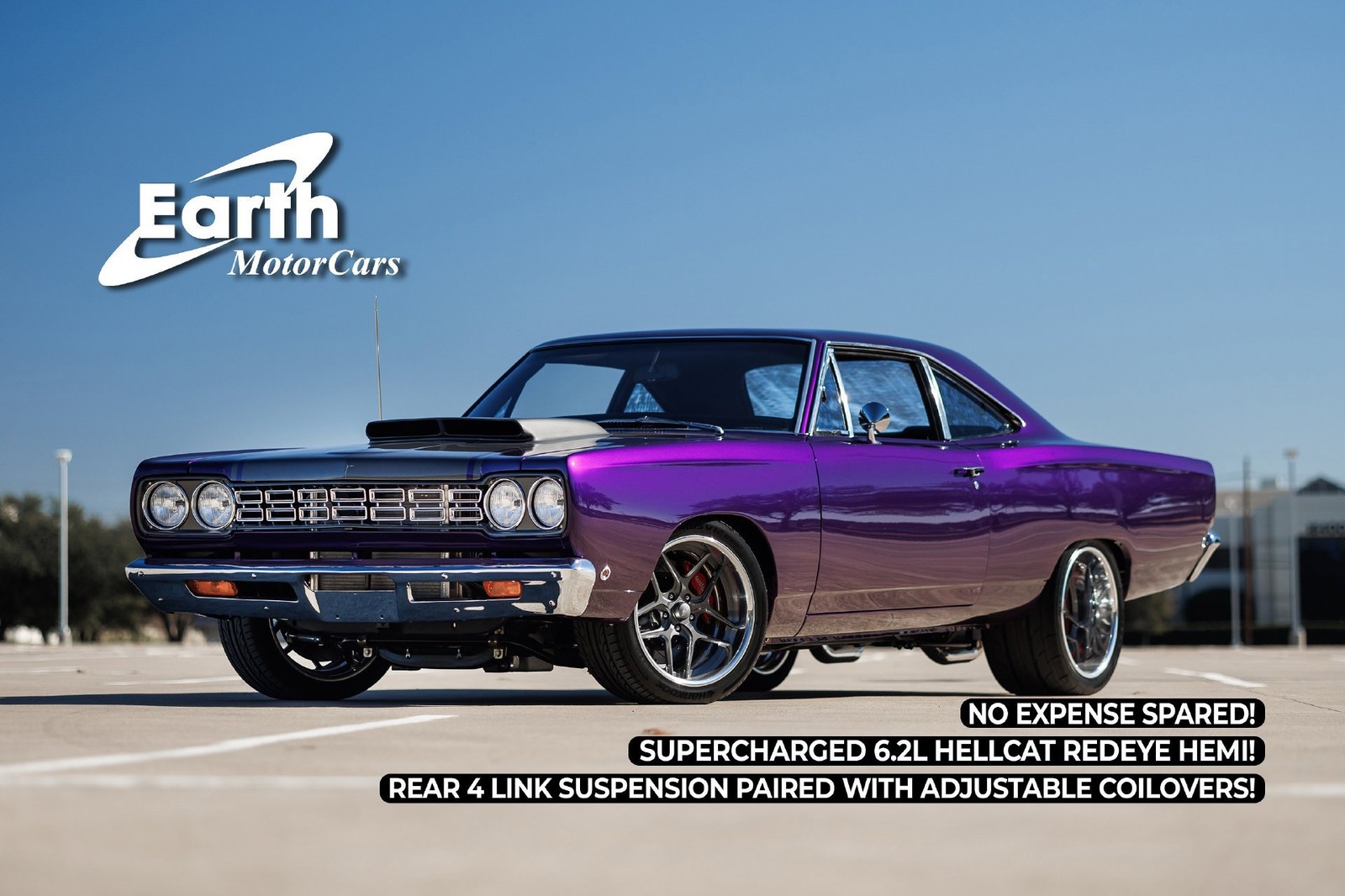 $247,675 · 179% above typical
Expand
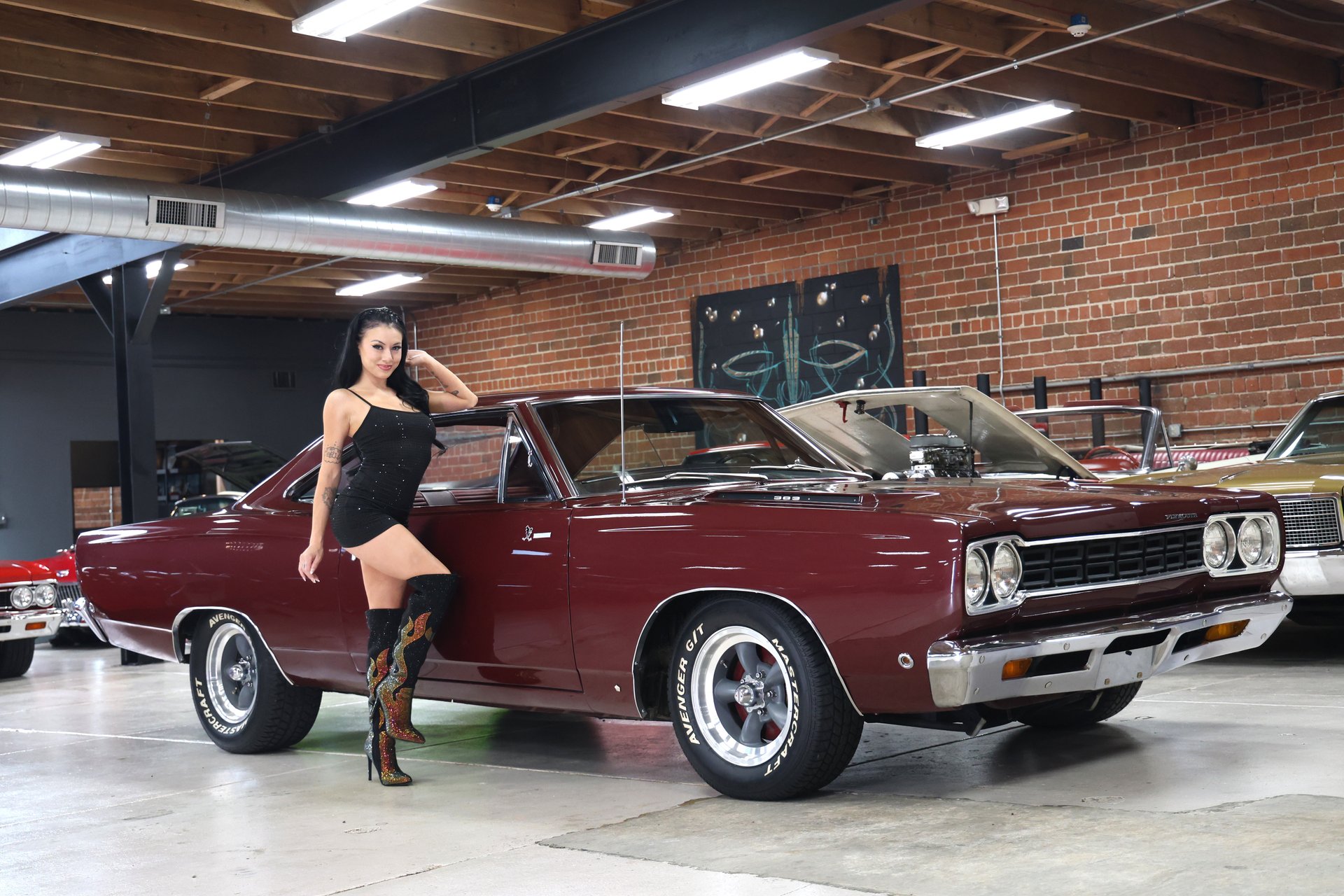 $84,500 · 5% below typical
Expand
What they sell for: Road Runner Hardtop sale prices.