
Plymouth Savoy buyer's guide
Plymouth Savoy -- the model's own buyer's guide: variants, values and what to check.
Years listed: 1962-1964 · Series: B-Body
# Plymouth Savoy — Buying Guide
Overview and history
The Plymouth Savoy leads two completely different lives, and the first thing you decide, standing in front of a car with Savoy badges on it, is which life you are looking at. In its first life, from 1954 through the 1950s, the Savoy is a full-size Plymouth trim line — the sensible middle of the range, above the plain Plaza and below the plusher Belvedere, sold to families who want a big, honest sedan and do not intend to show off about it. In its second life, from 1962 to 1964, it is something else entirely: the lightest, cheapest two-door sedan shell in Plymouth's downsized range, which makes it — by accident of poverty-spec trim and low weight — the car Chrysler builds its Max Wedge and Race Hemi Super Stock drag racers out of. The cheapest car in the showroom becomes the fastest car at the drag strip, wearing the same name. Almost every overpriced or misdescribed Savoy comes from confusing those two lives.
Start with the first life. The 1954 Savoy sits at the end of an era: it is the last Plymouth line powered solely by the L-head flathead six, a side-valve engine whose architecture reaches back to the 1930s, driving through a body-on-frame chassis with coil-spring front suspension on kingpins. It is sturdy, slow, simple and utterly conventional, and in 1954 that is exactly the point. For 1955 Plymouth throws the old car away: Forward Look styling, an overhead-valve V8 option in the polyspherical-head A-series engine, and a modern chassis make the Savoy a contemporary American sedan; by 1957 it has grown fins, torsion-bar front suspension — Chrysler's Torsion-Aire system, which rides and handles noticeably better than its rivals' coil springs — and the pushbutton TorqueFlite automatic that defines the late-1950s Mopar experience. You buy a 1957–59 Savoy for the styling, the torsion-bar ride, and the period charm of driving by pushbutton.
Then the name returns in 1962 in the strangest circumstances in Plymouth history. Chrysler, acting on a misheard rumour that Chevrolet is about to shrink its full-size cars, hurriedly downsizes the 1962 Plymouth to a 116-inch wheelbase. The car is smaller, lighter and oddly styled, and full-size sales suffer for it. But light weight is speed. The 1962 Savoy two-door sedan is the lightest shell in the range, and into it Chrysler drops the raised-block Max Wedge V8s and, for 1964, the 426 Race Hemi, creating factory Super Stock cars that dominate their classes. The name ends after 1964, giving the second-life cars a neat, three-year, competition-soaked story the market has never stopped paying attention to.
What does that mean for you? The Savoy badge covers one of the widest spreads of any nameplate you will shop. At one end sits a flathead-six 1954 sedan you buy cheaply and maintain with hand tools. At the other sits a 1964 two-door sedan that may be a genuine factory Race Hemi car — among the most significant American competition cars of the decade — or an ordinary slant-six sedan wearing a scoop and a story. Between those poles lie Poly 318 family cars, slant-six runabouts, 383-powered sleepers, and a great many tribute drag cars of wildly varying honesty. This guide covers the cars you will actually meet for sale: 1954 and 1955–60 full-size cars and, in the greatest depth, the 1962–64 cars that dominate today's listings. Throughout, the rule is the same: a Savoy is worth what its identity, structure and engine actually are — never what its badges, its scoop or its seller's recollections claim.

The models
Because Savoy is a trim name in the 1950s and a model name in the 1960s, you identify the car in two stages. First, fix the year and the shell — that tells you the chassis, suspension and structure you are inspecting. Second, fix the trim and engine the car was born with, from the data plate, the fender tag where fitted, and the engine stampings — because on the 1962–64 cars especially, the engine a Savoy wears today is very often not the one it was delivered with, and the difference between a born Max Wedge car and a converted slant-six car is the difference between two markets.
In 1954 the range runs Plaza, Savoy, Belvedere from bottom to top, and the Savoy comes as two- and four-door sedans, a club coupe and a station wagon, all on a 114-inch-wheelbase frame and all powered by the 217.8-cubic-inch flathead six — there is no V8 at Plymouth in 1954, whatever a seller tells you; a V8 in a 1954 Savoy is a later transplant, full stop. For 1955 the new body arrives with the 230-cubic-inch six still standard and the A-series polyspherical V8 optional, and the pattern holds through the decade: the six is the Savoy's natural engine, the Poly V8 the common upgrade, and the period's big performance engines live mostly in Furys and Belvederes, though a determined buyer could order strong engines in a Savoy and a few did. Body styles include two- and four-door sedans, hardtops in some years, convertibles rarely, and wagons. For 1957 the fins grow and the Savoy becomes the archetypal Forward Look family car. By 1959–61 it has slid downmarket to become the base full-size trim — the fleet and taxi specification — which is why late-fifties Savoys are plainer than you expect: less chrome, simpler interiors, more sixes.
The 1962 relaunch resets everything. The new car — the platform you will hear called the B-body — is unit-construction on a 116-inch wheelbase, and the range runs Savoy, Belvedere, Fury from bottom to top. The Savoy is the stripper: two-door sedan, four-door sedan and wagons, rubber mats instead of carpet in the cheapest versions, minimal brightwork, dog-dish hubcaps, and the lightest kerb weights in the range. Standard power is the 225 Slant Six or the 318 Poly V8; the performance ladder above them — 361, 383, the 413 and 426 Max Wedges, the single-four-barrel 426 Wedge, and for 1964 the 426 Race Hemi — is available in the Savoy precisely because racers want the big engine in the light shell, and Chrysler's Super Stock programme obliges. The two-door sedan is the competition shell, stiffer and lighter than the hardtop, and the body every factory lightweight uses. Four-door 1962–64 Savoys were the taxi, police and family specification, and they are the value end of the second-life market today.
| Model | Years | Engine | Output | Built | Character |
|---|---|---|---|---|---|
| Savoy sedan / coupe / wagon | 1954 | 217.8 cu in flathead six | 100 hp | Trim-level split not reliably published | Last of the old school: frame chassis, kingpins, 6-volt electrics, no V8 option |
| Savoy (full-size range) | 1955–56 | 230 cu in six / 241–277 cu in Poly V8 | From 117 hp (six) upward | Trim-level split not reliably published | The modernised Plymouth: overhead-valve V8 arrives, pushbuttons follow for 1956 |
| Savoy (Forward Look) | 1957–59 | 230 six, then 225 Slant Six from 1960 / 277–318 Poly V8 | 318 Poly around 230 hp in four-barrel form | Trim-level split not reliably published | Fins, torsion bars, pushbutton TorqueFlite; slides to base trim by 1959 |
| Savoy (B-body) | 1962 | 225 Slant Six / 318 Poly / 413 Max Wedge | 145 hp (six) to 410–420 hp (Max Wedge) | Trim-level split not reliably published | The downsized lightweight; the Max Wedge makes the stripper famous |
| Savoy (B-body) | 1963 | 225 / 318 Poly / 383 / 426 Max Wedge | To 415–425 hp (426 Max Wedge) | Trim-level split not reliably published | Cleaner styling, the 426 wedge replaces the 413 at the top |
| Savoy (B-body) | 1964 | 225 / 318 Poly / 383 / 426 Wedge / 426 Race Hemi | To 425 hp (advertised, Race Hemi) | Trim-level split not reliably published | The peak: Race Hemi Super Stocks, A-833 four-speed arrives, last year of pushbuttons and of the name |
A word about the numbers you will not find in that table. Honest, verifiable Savoy-by-engine production splits — above all for the Max Wedge and Hemi cars — live in registries and factory records rather than in a single trustworthy published figure, and sellers quote wildly varying counts to suit the car on the trailer. Treat any production claim for a rare Savoy as a claim to verify against the car's own documentation. What is not in dispute is the shape of survival: ordinary Savoys were cheap cars, worked hard and scrapped freely, so even humble 1962–64 two-door sedans are scarcer today than their original volumes suggest, and six-cylinder and four-door cars were consumed for decades as parts donors and clone raw material.

Two identity traps recur constantly. The first is the "Max Wedge Savoy" that began life as a six-cylinder car: the conversion is easy — the engines interchange, the scoop bolts on, the cross-ram is reproduced — and the result can be a wonderful car, but it is not a factory Max Wedge car and must be priced as a conversion, however well executed. The second is the reverse trap on the fifties cars: a "Belvedere" or "Fury" that is really a Savoy with swapped badges and added chrome, sold at the higher trim's money. On both lives, the data plate and serial number outrank the badges. Photograph every plate and stamping before you discuss money, and walk away from any car whose seller will not let you.

Engines and gearboxes
Five engine families power the Savoys you will meet, and they have almost nothing in common with each other — which is why generalisations about "the Savoy engine" are worthless. You learn each family on its own terms: what it is, how you identify it in the engine bay in front of you, how it fails, and what the failure feels like from the driver's seat.
The flathead six (1954, and the fifties sixes that follow it)
The 1954 Savoy's 217.8-cubic-inch L-head six is a side-valve engine: the valves sit beside the cylinders in the block, the head is a flat slab of iron, and the whole engine is built for longevity at low stress rather than power. It makes its advertised 100 horsepower with a single Carter carburettor, six-volt electrics and a cooling system with one component you must know by name: the water distribution tube, a perforated tube pressed into the block behind the water pump that directs coolant at the exhaust-valve seats. When that tube rusts thin and collapses — after seventy years, assume it is tired unless you have proof otherwise — the rear cylinders run hot while the temperature gauge, fed from the front of the engine, reads innocently normal. The symptom is a six that overheats under sustained load or boils after shutdown, with a clean radiator and a good pump. Walk an infrared thermometer along the hot block: the front-to-back gradient shows immediately, and tube replacement — fiddly but inexpensive — transforms these engines. For 1955 the six grows to 230 cubic inches, but the architecture, and the distribution-tube lesson, carry through until the Slant Six replaces it for 1960.
The flathead's other behaviours are age, not design. Valve clearances are set mechanically and drift; a tappety top end that quiets with an adjustment is normal, while a deep knock under load that worsens hot is bearing wear. Oil consumption past the guides and the rear main seal is endemic — you manage it rather than cure it short of a rebuild. Budget $3,500–6,000 for a full rebuild if the engine is tired, and note that on a 1954 car the engine matters less to value than the frame and body beneath it: the six is the cheap part of the car to fix.
The Poly V8s — the A-series (1955–1966, and the Savoy's bread and butter)
From 1955 the V8 Savoy carries the A-series engine with polyspherical combustion chambers, in sizes that grow through the decade — 241 and 260 cubic inches at first, then 277, 301, and from 1957 the 318 that becomes the staple and carries into the 1962–64 Savoys. You identify a Poly at a glance: wide valve covers scalloped along their lower edge, spark plugs passing through them, and a physically broad block — old hands call it the Wide Block, and it shares almost nothing with the later LA 318 wedge-head engine despite the identical displacement. That is your first Poly test: a seller who calls his 1963 Savoy's engine "the 318, same as a later small-block" does not know what he owns, and parts ordered on that assumption will not fit. The two-barrel 318 Poly is a 230-horsepower-class engine, unstressed, torquey and famously durable; four-barrel and dual-quad versions exist in the late fifties, but in a Savoy you will almost always meet the cooking engine.
Poly failure modes are mundane and diagnosable. The timing chain stretches, retarding the cam and softening idle and throttle response together; check it by rocking the crankshaft pulley against the distributor rotor's movement — several degrees of slack before the rotor answers means the chain is due, a $600–1,200 job with pump and seals done at the same time. The exhaust manifolds crack, classically at the centre where the heat-control (heat riser) valve lives; a stuck heat riser is the Poly's signature driveability fault, because a valve rusted shut cooks the carburettor and causes hot-start flooding and a flat, rich cruise, while one rusted open leaves the engine cold-natured and icing-prone. Test it cold: the counterweight should move freely against its spring when you push it with a gloved finger. If it is frozen, that — not the carburettor everyone blames — is your flat spot. Hydraulic lifters tick when oil is old or pressure low; a Poly that ticks hot at idle and quiets on fresh 20W-50 is telling you about clearances, not catastrophe. Parts support is the Poly's one real weakness, covered in the Parts section: the engine is tough, but it is an orphan family, and you buy its parts deliberately, not casually.
The Slant Six (1960–1964 Savoys)
The 225-cubic-inch Slant Six that powers base 1962–64 Savoys leans thirty degrees to the passenger side to clear a low bonnet line, and it is one of the most durable engines Chrysler ever built, with a reputation for outliving the cars around it. It makes an advertised 145 horsepower, which moves the light early-sixties car adequately — but you are not buying a slant-six Savoy for speed; you are buying the honest, cheap, unkillable end of the market, or, candidly, the shell for a later big-block build, which is what has happened to most of its siblings.
Two slant-six specifics matter at inspection. First, the lifters are mechanical, so valve lash is a service item: a slant that has never had its clearances set rattles, loses power and runs hot at the exhaust valves, and the adjustment — done hot, with feeler gauges — is a morning's work that transforms a neglected car. Second, exhaust manifold cracking and a seized heat-control valve produce the same cold stumble and hot flatness as on the V8s, and the cure is the same: free or replace the valve before you touch the carburettor. The one-barrel Carter or Holley is simple and rebuildable for $150–350. Blue smoke on start-up is usually valve stem seals, cheap and curable in place; smoke under load with heavy breathing from the filler cap is worn rings and bores, and then the engine's value is as a core — a $3,000–5,000 rebuild makes no sense against the car's price unless the shell is exceptional.
The big-blocks: B and RB wedges, Max Wedge, and the Race Hemi
This is the section the second-life Savoy lives or dies by. The big-block ladder runs: the 361 and 383 B-series wedges, the raised-block (RB) 413, the 426 Wedge in single-four-barrel street form, the 426 Max Wedge in dual-quad cross-ram Super Stock form, and for 1964 the 426 Race Hemi. Learn the identification cold, because this is where the money is and where the stories grow. Chrysler big-blocks carry their identity on a machined pad at the front of the block, beside the front-mounted distributor on the wedges, stamped with displacement and build codes — you read it with a torch and a rag, not from the listing. A 383, a 413 and a 426 wedge are externally near-identical; the pad, casting numbers and casting date separate a $5,000 core from the heart of a genuine Max Wedge car. The Hemi identifies itself — nothing else has those wide heads with plugs down the centre of the covers — but a Race Hemi and a 1966-onward street Hemi differ in detail, and engines move between cars: a Hemi in a 1964 Savoy today may be a period Race Hemi, a later street Hemi, or a modern crate engine, and the stampings and paperwork, not the silhouette, must settle which.
The cooking big-blocks first. The 361 and 383 are B-series, low-deck engines: strong, simple, with a single four-barrel Carter AFB in most Savoy installations, hydraulic lifters, and a failure profile dominated by heat and age — stretched timing chains, cracked exhaust manifolds, tired valve seals, and carburettors worn at the throttle shafts, which leak air, lean the idle and produce the hunting, stalling idle owners chase through three ignition systems before finding. Spray carburettor cleaner at the throttle shaft ends on a running engine: a change in idle speed confirms the leak. The 426 Wedge street engine is RB architecture with a single AFB, advertised at 365 horsepower in period form, and it is the sleeper specification of the range — nearly Max Wedge pace with road manners.
The Max Wedge is a system, not just an engine, and you inspect it as one. The 413 of 1962 and the 426 of 1963–64 wear a cross-ram intake carrying two Carter AFB four-barrels, one over each bank, joined by long ram tubes tuned for mid-range torque; free-flowing cast exhaust manifolds shaped like headers; a mechanical-lifter camshaft that idles rough by design; and, in serious Super Stock specification, weight-saving and traction measures in the car around it. Advertised outputs run from 410 and 420 horsepower for the two 413 compression versions to 415 and 425 for the 426. Three truths follow. A Max Wedge that idles smoothly and pulls cleanly from 1,200 rpm is either exceptionally well tuned or not a Max Wedge — the real thing is cammy, cold-blooded and unhappy below its working range, and that is correct behaviour, not a fault to negotiate over. Most running complaints trace to cross-ram linkage, float levels and heat soak in the long manifold rather than to the internals; a tune by a man who knows the system runs $400–800 and is money well spent. And the mechanical cam means valve lash is a recurring service item — be suspicious of any "Max Wedge" with hydraulic-lifter manners and a smooth idle sold at real Max Wedge money.
The 1964 Race Hemi crowns the range: 426 cubic inches, hemispherical chambers, a magnesium cross-ram intake with dual AFBs, a mechanical cam, and an advertised 425 horsepower period racers treated as a polite fiction. In the Savoy it creates the A-864 Super Stock package — the lightest shell carrying the strongest engine Chrysler had. Everything said about Max Wedge identity applies squared: genuine cars are documented, registered and known, and the default assumption for an undocumented "factory Hemi Savoy" is that you are looking at a conversion until the car proves otherwise. That is not cynicism, it is arithmetic: far more Hemi Savoys are claimed than were built, and the burden of proof sits with the car.
Gearboxes: pushbutton automatics, column manuals and the A-833
Three transmissions cover the Savoy's life. The fifties cars offer a three-speed manual, the two-speed PowerFlite, and from the late fifties the three-speed cast-iron TorqueFlite — all, from 1956, selected by dashboard pushbuttons. The buttons are no gimmick: they work a cable that operates the gearbox's manual valve, and the cable's adjustment is the whole system. A pushbutton car that selects the wrong range or drops to neutral over bumps usually has a cable maladjustment or a worn button mechanism — an hour's diagnosis — not a failed transmission. Learn also the 1962–64 parking arrangement: there is no Park position in the gearbox itself; a separate lever beside the buttons engages a cable-operated pawl in the tailshaft. A car that "has no Park" usually has a stretched or disconnected park cable, and until it is fixed you park it on the handbrake, on the flat.
The aluminium-case TorqueFlite 727 that arrives for 1962 is one of the strongest automatics ever built, and in these cars it fails by linkage before it fails by hardware. The throttle-pressure (kickdown) linkage is not optional decoration: it tells the gearbox how hard the engine is working, and a TorqueFlite run with it disconnected or badly adjusted shifts early and soft at full throttle and burns its clutches in short order. On any automatic Savoy, trace that linkage before the test drive and confirm it moves with the throttle and returns against its stop. Fluid tells the rest: dark and burnt-smelling on a car with a correct linkage is wear; the same fluid with a disconnected linkage is a death sentence already carried out. A rebuild runs $1,800–3,000; the linkage adjustment that prevents it costs nothing but knowledge.
Manual cars split by era. The three-speed column-shift manual is adequate, long-lived and worth little; worn column linkage makes it vague, and the fix is bushes, not a gearbox. The prize is the A-833 four-speed, offered from 1964 behind the big-blocks: a genuinely strong gearbox whose synchro wear shows as a crunch into second on a fast change, hot or cold, and whose presence transforms a 1964 Savoy and its value. Confirm it by the gearbox itself — side cover and casting — because conversions using later or lesser gearboxes are common, and a converted car is priced as one.
Problem areas
Every Savoy you inspect is between sixty and seventy-two years old, and it has been a family car, a taxi candidate, a teenager's first car, a parts source and a project. The problems below are organised by system, each with its mechanism and the test that separates the cheap cause from the expensive one. Work in this order, because structure outranks everything: a Savoy with a perfect engine and rotten torsion-bar mounts is a parts car with a nice engine.
Rust: the map, by era
The Savoy's two lives rust in different places, because they are built differently, and you must know which map you are reading before you start poking.
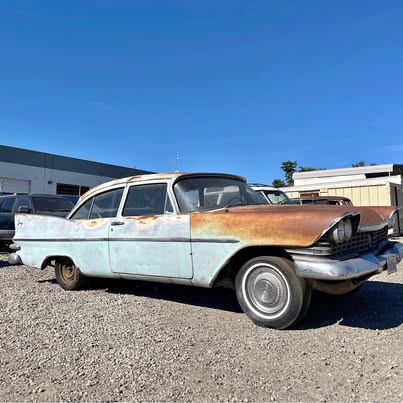
On the 1954 car, and on frame-chassis fifties cars generally, body and frame both rot. The frame goes at the side rails under the doors, at the rear kick-up over the axle, and around the body-mount outriggers; surface rust is cosmetic, but flaking, holed or thinned rails are structural, and frame repair on a car of this value is rarely economical unless you weld yourself. The body goes at the front fender bottoms behind the wheels, the rockers, the lower door skins, the floor pans under the front mats — where water sits trapped between mat and steel — and the trunk floor around the spare-wheel well. The two-minute test is the magnet-and-fingertip tour: a weak magnet over rocker and lower fender finds the filler, and your fingertips along the inner rocker seam find the swelling that precedes holes. Budget $1,000–2,500 per side for proper rocker and floor welding — on these cars rust, not mechanics, is the whole buying decision.
The Forward Look cars of 1957–59 add their own signature: headlamp eyebrows and front fender tops that trap mud and rot from inside out, a cowl that leaks into the front floors, and rear quarters that blister along their lower edges. Bubbles at the eyebrow tops mean rust you cannot yet see in the cowl behind — price the rust you can prove, plus a contingency, never the paint.
The 1962–64 unit-body cars concentrate their structural risk in three places, inspected in this order. First, the front subframe and the torsion-bar crossmember: the front suspension hangs from torsion bars anchored in that member, and it carries suspension loads, so rust there is not cosmetic — a holed or cracked crossmember area is a major structural repair, and you walk away from amateur plating over it. Second, the floors and the trunk: front floors rot from the inside where the cowl leaks, the trunk floor rots over the fuel tank and at its rear edge, and the rear spring hangers and their rails must be sound, because they carry the axle. Third, the cosmetic ring: rocker panels, lower fenders, door bottoms, quarter bottoms behind the wheels, and the panel below the rear window. The unit body has no frame to save it, and rockers on these cars are structural members of the shell — a rocker full of filler is a strength problem, not just an appearance problem. A thorough underside inspection on a lift, torch in hand, is not optional on a 1962–64 car; it is the inspection. Welding a floor and rocker properly runs $1,500–3,500 a side painted to match; a crossmember or rail reconstruction is a specialist job at $3,000 and upward, and it is the point at which most project Savoys stop making sense unless the car is a documented competition car.
Front suspension, steering, brakes and the rear axle
The fifties cars steer and ride conventionally: kingpins on the early cars, ball joints with the redesigns, and — from 1957 — the torsion-bar Torsion-Aire system that defines the second life too. Torsion bars fatigue, crack at their anchor ends, or lose their set when a previous owner has wound the adjusters unevenly to cure a list. The diagnostic is ride height: a Savoy that sits low, or looks level but with its adjusters at wildly different settings side to side, has a tired bar, a bent component or a twisted shell, and you distinguish them by having the height set to the book figure and seeing whether the car holds it and drives straight. A broken bar announces itself with a bang and a collapsed corner, usually at low speed — a known age failure; bars run $300–600 a pair fitted, but budget for both, the anchor seals and an alignment. Ball joints, idler arm and tie-rod ends wear as a set; play at the wheel rim, checked with the wheel jacked and rocked at twelve-and-six and three-and-nine, prices a front-end rebuild at $800–1,500 — routine money, and no reason to reject a car, but a reason to reject the seller's "just serviced" story.
Chrysler's power steering of the era is full-time and very light, with a vagueness at straight-ahead that is a design characteristic, not a fault. What is a fault is a pump groan on lock (low fluid, then a tired pump), a wander that changes with road camber (alignment and tyre pressures before you blame the box), and lost motion in the box itself, felt as free play at the wheel with the road wheels motionless — a worn box is a $400–700 rebuild. On manual cars, parking-speed heaviness is normal; notchiness is not, and points to a dry box or a seized kingpin or ball joint.
Brakes are drums all round on every Savoy in this guide, fed — and this matters — by a single-circuit master cylinder on all of them. One failed hose or wheel cylinder can take the whole pedal, which is why the dual-circuit conversion is the first safety job most experienced owners do, at $300–600 in parts, and why you inspect the standard system as if your life depends on it, because it does. The failure modes: wheel cylinders that weep behind their dust boots and contaminate the shoes, producing a pull under braking; flexible hoses that collapse internally and act as one-way valves, so a brake applies and then drags — crack the bleed screw on the dragging wheel, and if the brake releases with a spurt of fluid, the hose, not the cylinder, is the culprit; drums worn oval, felt as a pulsing pedal; and a pedal that sinks slowly at a standstill, which is the master cylinder bypassing internally, full stop. A full overhaul — cylinders, shoes, hoses, hardware, drums machined or replaced — runs $800–1,600, and it is the best money you will spend on any Savoy.
The rear axle on the later cars is Chrysler's 8¾-inch unit, a drop-out-carrier design of real strength. Its bearings are tapered rollers with adjustable end play; a car converted to sealed "green" bearings has had that system changed, fine if done properly, a whine-and-wander source if not. A whine on the overrun that is absent under power points to pinion bearing or mesh wear; a rumble that changes side to side on corners points to an axle bearing. Sure-Grip limited-slip units are clutch-type and need their friction modifier; one that chatters in tight turns on ordinary oil usually needs only the correct lubricant, while one that spins a single wheel on gravel has worn its clutches out. Carrier identity — the 741 and 742 cases of this era — matters for parts and gear swaps, and the ratio itself you verify by turning a wheel and counting pinion revolutions, never by trusting the seller: ratios are the most-swapped, least-documented part of any old Mopar.
Interior, trim and electrics
Savoy interiors are plain by design, and that plainness is now their problem: Belvedere and Fury trim is reproduced, while base-model Savoy seat cloth, door cards and rubber floor coverings are the hardest patterns to replace correctly. Inspect the interior as an originality document — a 1962–64 Savoy with its original bench, plain door cards and rubber mat intact is more original, and to the right buyer more valuable, than one "upgraded" with Fury trim. Seat frames collapse at the driver's bolster; springs and foam are rebuildable for $500–1,200 a bench. The painted metal dashboard of the early-sixties cars rusts at its base where the windscreen leaks — which is also where the front floor rust began. Always lift the mats and carpets: on these cars the floor's condition is interior inspection, and a seller who will not let you lift a mat is telling you why.
The instruments and switches are robust; the electrics around them are not. On the 1954 car you have six volts, a generator, and seventy years of resistance in every earth strap: dim lights and a slow crank are the system working at its design limit through dirty connections, and the cure is methodical cleaning of earths and terminals before any component is condemned. On sixties cars the signature fault lives at the bulkhead connector, where the harness passes through the firewall: terminals corrode and overheat — the high-current ammeter feed suffers worst — and the symptoms are maddeningly intermittent, a car that cuts out, loses its lights or refuses to crank, then behaves for a week. Wiggle the connector on a running car and watch for the stumble; green corrosion and melted plastic confirm it. Cleaning and terminal replacement is a $100–300 cure for a fault that has sold many Savoys cheaply to men who knew where to look. The ballast resistor is the other classic: a car that starts on the key and dies the instant you release it has a resistor that is bypassed during cranking and open in the run position — a ten-dollar part, and a spare belongs in your glovebox. Pushbutton mechanisms wear their cables and plastic buttons, and a car whose buttons are cracked, mismatched or replaced by a floor lever has been converted — price it accordingly.
Brightwork divides by life. Fifties Savoy chrome is heavy and replatable — budget $2,000–4,000 to redo a finned car's bumpers and spears properly — while pot-metal items, tail-lamp housings and grille pieces, pit beyond economic repair and are worth real money in good used condition, so a complete, straight, pitted set beats an incomplete shiny one. On the 1962–64 cars trim is minimal, which cuts both ways: less to restore, but the Savoy side spears, grille and tail panels are one-model parts, and a straight, unbroken grille is a genuine asset. Glass is available for the common bodies; the curved windscreens of the late-fifties cars are the difficult ones, and a cracked one is a sourcing project, not a phone call.
The modified car: cages, tubs, scoops and stories
A large share of second-life Savoys for sale are modified — drag tributes, Pro Street builds with tubbed rear ends and cages, Super Stock restorations. Modification is not a defect, but it changes what you are inspecting: you are buying someone else's engineering as much as Chrysler's. A cage welded to plates on a rusty floor is decoration; tubs that cut the rear rails change the structure permanently, and a tubbed car will never be an original car again. A well-executed 440 in a slant-six Savoy, with torsion bars, brakes and cooling upgraded to match, is a coherent car; a big-block dropped onto six-cylinder bars and standard drums is a hazard, betrayed by a nose that sits low and wallows. Value the coherence of the whole build. And the scoop deserves its own sentence: a Max Wedge-style scoop proves only that someone owned a drill. It appears on six-cylinder cars, on street Hemis, on everything. Treat it as styling, always, and let the stampings and paperwork do the talking.

How to inspect one
Inspect a Savoy in this order and do not let the seller rearrange it: identity first, structure second, mechanics third, cosmetics last — the first two decide whether the car is worth anything, and the last is the only one the seller has prepared for you. Bring a torch, a weak magnet, an infrared thermometer, a jack you trust, and a friend to work the pedals while you watch.
- Fix the identity before anything else. Photograph the serial/VIN plate in the driver's door area, the data or fender tag in the engine bay, and the engine stamping pad at the front of the block; decode them at home if you must, but capture them now. On a 1962–64 car, establish which engine it was born with and which it carries today; on any car wearing Max Wedge or Hemi claims, ask for the documentation file — build records, registry entries, period photographs — and treat its absence as a fact about the price.
- Read the shell for its life. Original panels or replacements; colour-change signs in the door shuts, boot and engine bay; the wave down each flank that betrays a replaced quarter; panel gaps checked for the evenness a straight, unhit shell keeps. A Savoy that has been a race car will show it — cage marks, tub evidence, drilled holes, a battery in the trunk — and none of that is hidden on an honest car.
- Do the rust tour with the magnet and the torch. Rockers, lower fenders, door bottoms, wheel arches, floors under the mats — lift them — and the trunk floor. On a fifties car add the frame rails, the outriggers and the headlamp eyebrows. On a 1962–64 car, get under it: the torsion-bar crossmember, the front subframe, the rear spring hangers and the rails are the structural heart of the car, and the screwdriver test on suspect seams from the rust section settles them. Any seller who refuses underside access ends the inspection.
- Check the stance and the torsion bars. Measure the front ride height side to side and compare the adjuster positions. A level car on even adjusters is healthy; a level car on wildly uneven adjusters, or a car that sits low at the front, has the tired-bar or bent-component story from the suspension section, and you price the front-end work accordingly.
- Cold-start the engine — insist on genuinely cold. A flathead or Slant Six should start with choke drama but no smoke beyond a puff; a Poly or big-block that smokes blue for a minute and clears wants valve seals, while one that keeps smoking wants rings. Listen for the mechanical-lifter clatter that is correct on a Max Wedge or Race Hemi and wrong on a hydraulic cooking engine, and for the deep knock no Savoy engine should make at any price.
- Work the temperature test on a six. With the engine fully hot, walk the infrared thermometer along a flathead block. The front-to-back gradient exposes the collapsed water distribution tube that a normal test drive hides.
- Test the heat riser and the carburation. On any V8, move the exhaust manifold heat-riser counterweight with a gloved finger, cold. Then, hot, spray at the carburettor throttle shafts and listen for the idle change that proves the air leak everyone else has been chasing through the ignition.
- Interrogate the gearbox the car actually has. Pushbutton car: select every range, confirm the car takes each one cleanly and holds it over bumps, and test the separate park lever on the 1962–64 TorqueFlite — the car must hold on a slope by the pawl, not by your faith. TorqueFlite car: trace the throttle-pressure linkage before you drive, then confirm the shifts are correctly timed on the road; early, soft, flaring shifts with a disconnected linkage mean the gearbox has been eating itself. Manual car: the A-833 must take second gear fast, hot and cold, without a crunch.
- Drive it long enough to learn something. Twenty minutes minimum: cold manners, hot idle in traffic, a steady cruise for the driveline whines, and a straight, hands-light braking test from speed on an empty road. Match the brake pull, pedal pulse and wander to their causes in the brakes section while they happen, not in the seller's driveway afterwards.
- Stop, and do the hot checks. Look for the leaks that only show hot and pressurised: rear main, water pump weep hole, heater hoses, the TorqueFlite's front pump seal dripping from the bellhousing. Restart it hot. A Savoy that will not restart hot has a heat-soaked starter, a carburettor cooked by that stuck heat riser, or a ballast resistor failing with temperature — all diagnosable, all price-relevant.
- Test the electrics like a sceptic. Lights, horn, wipers, heater, every gauge, and the bulkhead-connector wiggle test on a sixties car with the engine running. On a six-volt fifties car, judge lights and crank against six-volt reality, then check the earth straps before condemning anything with a price tag.
- Finish with the paper and the parts. A title that matches the VIN plate from step 1; the spares that come with the car, worth real money on a Poly or Max Wedge car; and the trim inventory — grille, spears, glass, interior — checked against the car, because missing base-model trim is harder to replace than an engine. Only now, with identity, structure and mechanics priced, do you talk about the paint.
Values
The Savoy market is really three markets wearing one badge, and the computed market block beneath this guide — current listings and recorded sales — only makes sense once you know which market the car in front of you belongs to. The first is the fifties cars: honest, full-size Plymouths whose value is set by condition and completeness rather than rarity, where the spread between a rusty project and a sorted driver is wide, and where trim originality and chrome move the price more than the difference between a six and a Poly V8. The second is the ordinary 1962–64 cars — slant-six and 318 sedans, four-doors and drivers — where you are buying a light, simple, charismatic early-sixties Mopar, and where a two-door sedan carries a clear premium over a four-door for the simplest of reasons: it is the shell the third market wants.
The third market is the competition cars, and it plays by different rules. A documented factory Max Wedge or Race Hemi Savoy is a blue-chip competition car whose value rests on provenance — paperwork, registry standing, matching numbers, period history — and such cars trade in a world where the documentation file is worth as much as a major component. A tribute or clone, however beautifully built, trades in the world of ordinary hot rods: worth the sum of its parts and the quality of its build, never a discounted version of the real car. The commonest expensive mistake here is paying a provenance price for a presentation car; the second is dismissing a plain, undocumented car that turns out, on the stampings, to be a genuine big-block car in a cheap dress. Both mistakes are made by people who priced the story instead of the car.
Within any of the three markets, the condition spread is the dominant number. Structure is the cliff edge: a Savoy needing the crossmember, rails and floors of the rust section is worth project money regardless of its engine, because the repair bill is fixed and large, while a structurally sound car with tired mechanics is a rolling restoration you can improve in stages and enjoy between them. Asking prices are aspirations; the recorded sales in the block below show what buyers actually paid, and the ask-to-achieved gap is widest on the over-described cars — the "Max Wedge" conversions, the "Hemi" tributes, the finned cars with fresh paint over old metal. Negotiate from the inspection, item by item: the torsion bars, brake overhaul, front-end rebuild and metalwork are all costed in this guide, and a seller looking at a written list of real jobs is having a different conversation. Buy the car whose faults are all in the cheap sections of this guide, and you will never go far wrong.
Parts and ownership
Owning a Savoy is a tale of two parts catalogues. The mechanical consumables of the sixties cars are superbly supported, because the 1962–64 Savoy shares its platform with the whole B-body Mopar family: TorqueFlite 727 internals, 8¾-inch axle parts, brakes, suspension bushes, ball joints, steering parts, Slant Six and big-block internals, ignition and charging parts — all available, much of it from multiple suppliers, at ordinary classic-car prices. A TorqueFlite rebuild, brake overhaul or front-end refresh is a phone-call-and-a-weekend proposition, and the knowledge base — factory manuals, marque clubs, a deep bench of Mopar specialists — is as good as any in the American hobby.
The exceptions define the ownership experience, so learn them before you buy. The Poly 318 is the orphan: durable, but its gaskets and Poly-specific engine parts come from a small number of specialists, at specialist prices and sometimes specialist waiting times; you do not refuse a good Poly car for this, but you buy its spares opportunistically, when they appear, rather than when you need them. Max Wedge and Race Hemi components divide into the reproduced — cross-ram intakes, scoops, exhaust manifolds — and the genuinely scarce, above all correct dated blocks, heads and carburettors, whose prices reflect the provenance market they serve. On the fifties cars the flathead's service parts survive well, but body, trim and glass are the constraint: finned-car brightwork, pot-metal and curved glass are hunted, not ordered, and a complete car earns its premium because completing an incomplete one can take years. Base-model interior trim, in every era, is the scarcest category of all — nobody reproduced the cheap stuff — so an original Savoy interior in good order is an asset you protect.
Running a Savoy asks little and rewards routine. Valve lash is a service item on the mechanical-lifter engines — flathead, Slant Six and competition big-blocks — and an annual check keeps them sweet. Torsion-bar cars want their ride height checked when the stance changes, not after a bar snaps. The single-circuit brakes want fluid changes and hose inspections on schedule, and the dual-circuit conversion is the upgrade every experienced owner recommends first. Fuel is the modern irritant: ethanol-blended petrol attacks old carburettor components and rubber lines, so you run fresh fuel, keep the car driven, and treat a long-stored Savoy's first start as a fuel-system recommissioning, not a turn of the key. Budget ordinary classic-car money, keep a ballast resistor and a set of points in the glovebox, and the car repays you with the reliability that sold Plymouths to careful people in the first place.
Which one to buy
- The all-rounder: a 1962–64 Savoy with the 318 Poly or a 361/383 wedge. Light, simple, handsome in its plainness, supported by the whole B-body parts world, and fast enough to be fun. This is the Savoy most buyers should own, in two-door sedan form if the budget reaches.
- The value buy: a 1962–64 four-door sedan, slant-six or 318. The same shell, parts support and charisma for the least money in the second-life market, because the two-door premium prices you out of a body style, not a better car. Buy the best-structure four-door you can find.
- The fifties choice: a 1957–59 Savoy, Poly V8, pushbutton TorqueFlite. The Forward Look experience — fins, torsion bars, buttons — in its purest family-car form. Buy on chrome completeness, eyebrow and cowl condition, and a surviving interior; the mechanics are the cheap part.
- The historian's car: a 1954 Savoy. The last flathead Plymouth line, bought cheaply, maintained with hand tools, enjoyed as a document of the moment before the V8 era. Buy the best frame and floors you can find.
- The serious car: a documented Max Wedge or Race Hemi Savoy. Buy it only with the paperwork in your hand and the stampings verified, pay for provenance and nothing else, and understand you are becoming a custodian. A genuine car with honest needs beats a restored car with a thin file.
- The fun car, honestly bought: a well-built tribute or conversion. A converted Savoy with a strong big-block and coherent brakes, bars and cooling, bought at conversion money, is one of the great cheap thrills of the hobby. The same car at genuine-car money is the classic trap.
The overriding rule: on a Savoy, identity and structure are the value — verify the plates, the stampings and the crossmember before you fall for the scoop, the fins or the story, because engines can be rebuilt and paint can be sprayed, but a Savoy that is not what it claims to be, or is rotten where it carries its suspension, will never be the car you paid for.

See the 3 Savoy cars currently listed.
For sale now
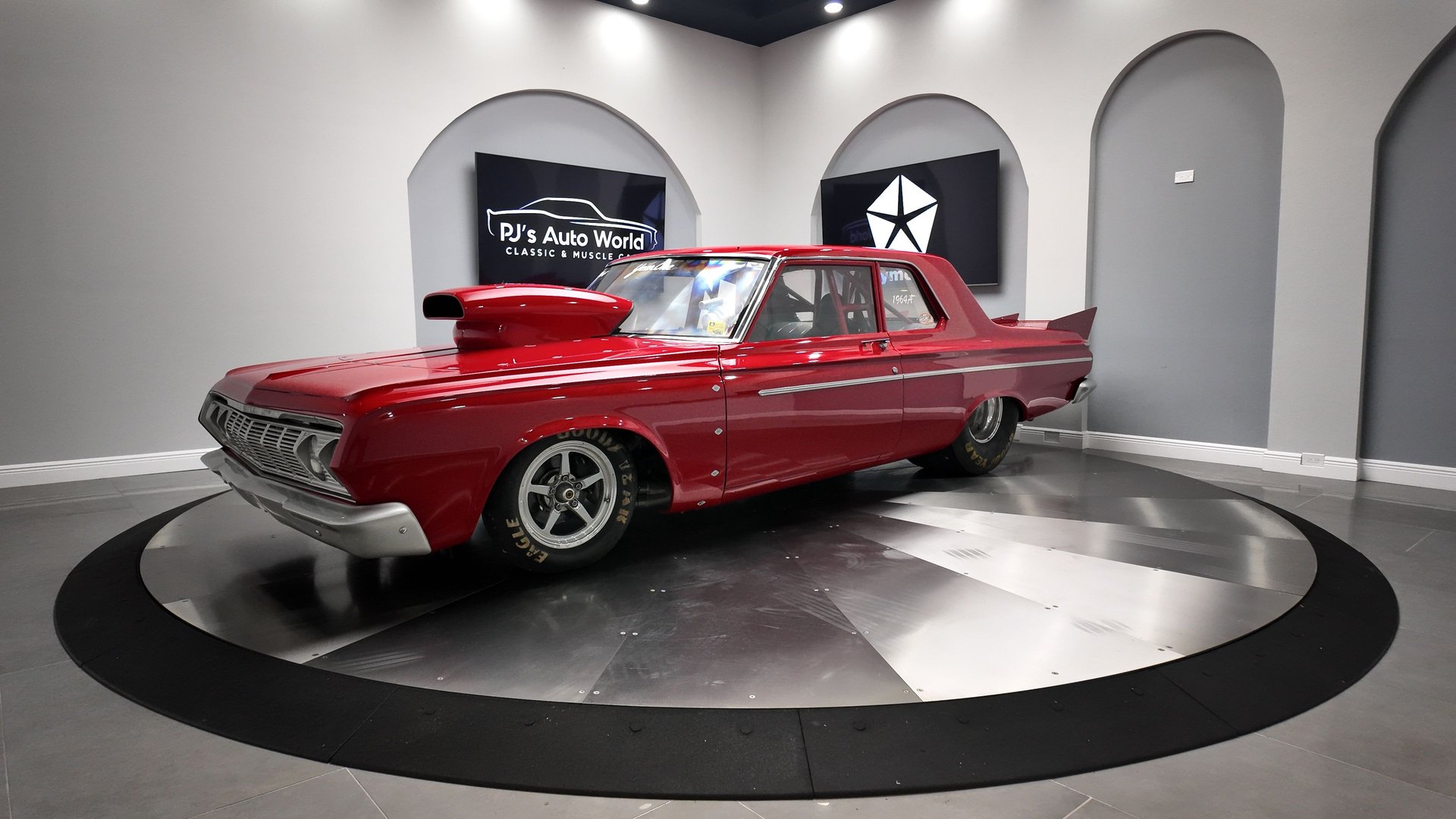 $59,900 · 66% above typical
Expand
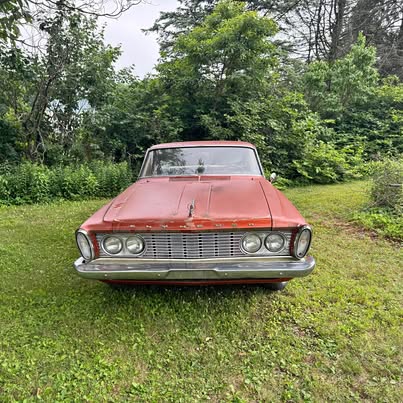 $4,000
Expand
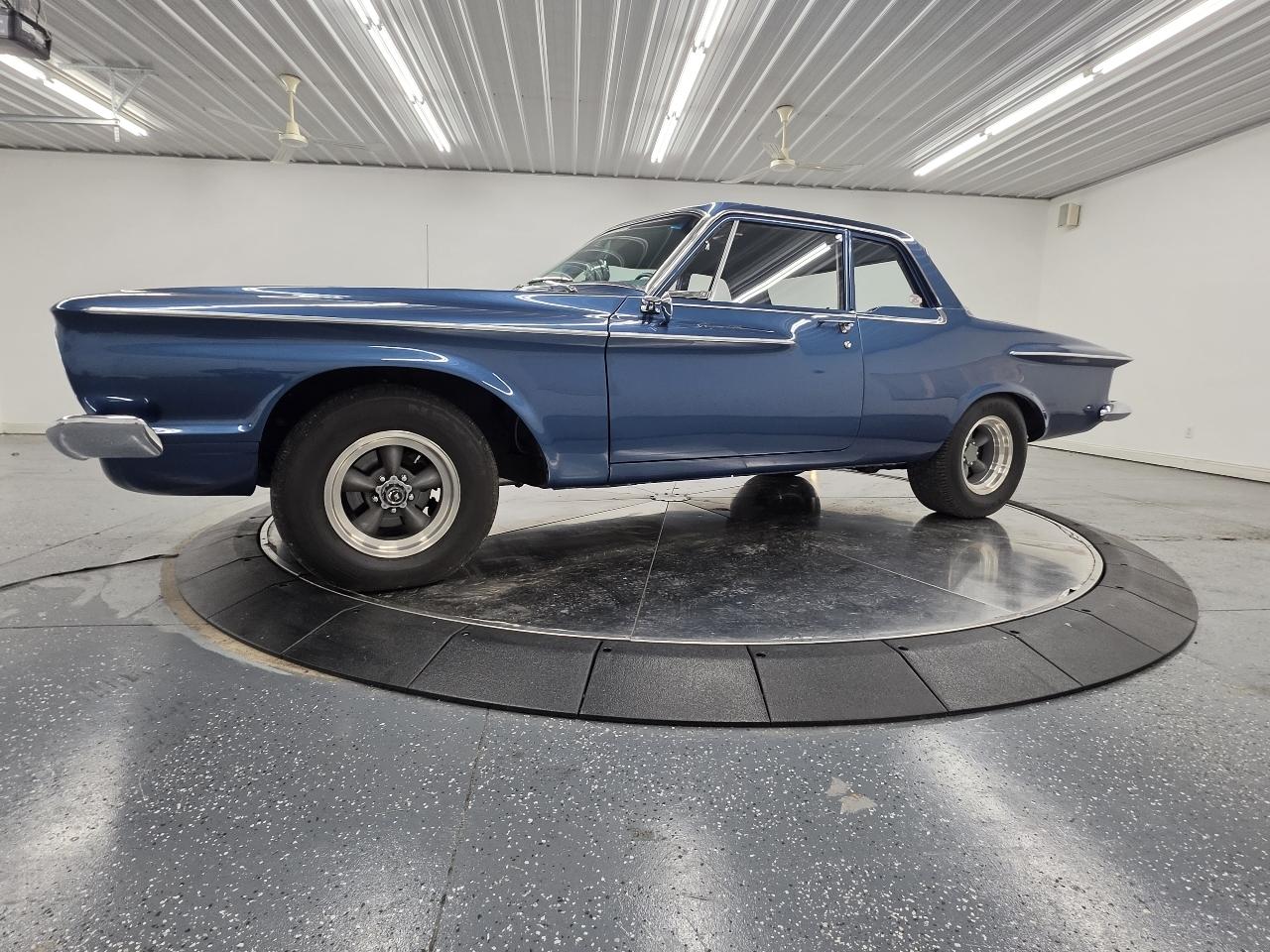 $49,900 · 39% above typical
Expand
What they sell for: Savoy sale prices.