
Pontiac Firebird Convertible buyer's guide
Pontiac Firebird Convertible -- the model's own buyer's guide: variants, values and what to check.
Years listed: 1969-1969 · Series: Firebird Gen 1
Overview and history
The Pontiac Firebird convertible exists for exactly three model years — 1967, 1968 and 1969 — and that brevity is the first thing to understand about it. Pontiac was late to the pony-car party it had itself helped to invent in spirit: John DeLorean's division had pushed for a two-seat sports car called the Banshee, General Motors killed it to protect the Corvette, and the consolation prize was Pontiac's own version of the Chevrolet Camaro's new F-body platform. The Firebird was announced on 23 February 1967, five months after the Camaro, and it went on sale as a coupe and a convertible in five flavours that Pontiac, characteristically, named after their engines rather than trim levels: Overhead Cam Six, Sprint, 326, 326 H.O. and 400.
That engine-first identity is what separates a Firebird from the Camaro it shares its shell, glass, suspension layout and much of its interior with. Where Chevrolet offered a conventional pushrod six, Pontiac fitted its remarkable overhead-camshaft inline six, an engine with a belt-driven single overhead cam that DeLorean championed and that no other American pony car could match for sophistication. Where Chevrolet topped out in 1967 with a 396 big-block, Pontiac fitted its own 400-cubic-inch V8 — the same basic architecture as the GTO's — and because every Pontiac V8 of the period shares the same external block dimensions, the line between a mild Firebird and a genuinely fast one is thinner, and easier to cross fraudulently, than on almost any rival. Hold that thought: it shapes the whole buying discipline in this guide.
The convertible matters out of proportion to its numbers because open cars were a modest slice of Firebird production — roughly fifteen to seventeen thousand a year against coupe volumes four to five times larger — and because attrition has been savage. A convertible F-body flexes more, leaks more, rusts in more places and was more often used up as a summer beater once values fell in the 1970s. Survivors are therefore scarcer than production figures suggest, and the proportion of convertibles wearing the wrong engine, the wrong trim or a coupe's worth of replacement panels is high.
On this site the pool is small and honest about it: 11 first-generation Firebird convertibles are recorded in total, 9 listed for sale and 2 recorded sold at the time of writing, and 9 of the 11 are 1969 cars, with one 1968 and one 1967. That skew mirrors the wider market — 1969 cars dominate adverts everywhere, partly because the 1969 model year ran long while GM waited for the delayed second-generation car, and partly because the 1969's styling, with its split grille, GTO-style Endura-look nose treatment and cleaner flanks, is the one most buyers picture. Do not let the skew fool you into thinking 1967 and 1968 cars are less desirable in any absolute sense; they are simply harder to find, and a good early car is a genuinely rare sight at any gathering.
The three years divide neatly. The 1967 car is the purest: vent windows, no side marker lights, a single-leaf rear spring on early cars, and the 326 V8 in place of the later 350. The 1968 car is the tidied one — vent windows deleted under GM's Astro Ventilation push, federally mandated side markers fitted, staggered rear shock absorbers to fight axle tramp, multi-leaf springs spreading across the range, and the 350 replacing the 326. The 1969 car is the extrovert: heavily restyled nose and tail, the Ram Air III and Ram Air IV at the top of the range, the Turbo Hydra-Matic 350 appearing, and — at the very summit — the Trans Am, of which just eight convertibles were built, a figure so small that any claimed example without bulletproof paperwork is a clone until proven otherwise.
Everything that follows assumes you are judging a specific car in front of you, not the model in the abstract. With a Firebird convertible, condition and identity are the whole game. A verified, honest 350 convertible in sound structural order is a better purchase than a shiny "400 Ram Air" car whose numbers do not survive ten minutes with a torch and a mirror — and this guide will show you exactly how to tell them apart.

The models
Pontiac sold the first-generation Firebird by engine, and the convertible followed the same ladder as the coupe at every step. That makes the range easy to read once you learn the ladder, and it also makes upgrading — honest or otherwise — unusually easy, because the Pontiac V8's common external dimensions mean a 350 car can wear a 400 with no visible change under the bonnet beyond casting numbers and codes. The table below gives the ladder as applied to convertibles; production figures are for all convertibles of that year across engines where an engine-by-engine split is not reliably published, and outputs are period SAE gross ratings — useful for comparing cars within the range, flattering compared with the net figures used from 1972.
| Model | Years | Engine | Output | Built | Character |
|---|---|---|---|---|---|
| Overhead Cam Six | 1967–69 | 230 cu in OHC-6 (1967), 250 cu in (1968–69), 1-barrel | 165 hp (230), 175 hp (250) | Part of 15,528 (1967), 16,960 (1968), 11,649 (1969) convertibles all engines | The light, sweet base car |
| Sprint | 1967–69 | OHC-6, 4-barrel, high compression | 215 hp (1967), 215–218 hp (1968–69) | Small minority of six-cylinder cars | The connoisseur's six: revs, rarity, no V8 weight |
| 326 / 350 | 1967 (326), 1968–69 (350) | V8, 2-barrel | 250 hp (326), 265 hp (350) | The volume V8 convertibles | Easy-going cruiser, the honest middle of the range |
| 326 H.O. / 350 H.O. | 1967 (326 H.O.), 1968–69 (350 H.O.) | V8, 4-barrel, dual exhaust | 285 hp (326 H.O.), 320 hp (350 H.O., 1968), 325 hp (1969) | Low thousands | The thinking buyer's performance car |
| 400 | 1967–69 | 400 cu in V8, 4-barrel | 325 hp (1967), 330 hp (1968–69) | The most sought-after regular convertible | GTO engine, pony-car shell; the icon |
| 400 H.O. | 1968–69 | 400 cu in V8, freer exhaust | 335 hp | Scarce | A small step in power, a big step in rarity |
| Ram Air I / II | 1967–68 | 400 cu in V8, functional scoops, hotter cam | 325 hp (RA I, underrated), 340 hp (RA II, 1968½) | Very low hundreds across the range | Race-bred, lumpy, collectible |
| Ram Air III / IV | 1969 | 400 cu in V8, functional scoops | 366 hp (RA III), 370 hp (RA IV) | RA IV convertibles: a handful | The summit before the Trans Am |
| Trans Am convertible | 1969 | 400 Ram Air III (RA IV optional) | 366–370 hp | 8 | The rarest regular-production Firebird convertible of all |
The six-cylinder cars: Overhead Cam Six and Sprint
Do not skip past the sixes. The base Overhead Cam Six convertible is a light, pleasant, genuinely interesting car whose engine — a single overhead camshaft driven by a fibreglass-reinforced toothed belt, an American first — gives it a character no Camaro six can approach. In 1967 form it displaces 230 cubic inches and makes 165 hp on a single-barrel carburettor; for 1968 it grew to 250 cubic inches and 175 hp. It will not win traffic-light races, but it steers sweeter than any V8 car because there is far less weight over the front wheels, and on a winding road with the top down it is arguably the most balanced Firebird of all.
The Sprint is the six with intent: a four-barrel carburettor, higher compression, a split exhaust manifold and 215 hp in 1967, rising slightly for the 250. Sprint convertibles are rare — most Sprint buyers chose coupes — and a genuine one, verified by its engine code rather than by the badges a previous owner may have added, is a collector's car in its own right. The Sprint's enemy is neglect of the cam drive and valve gear, covered in the engines section; its friend is that nobody bothered to fake one until recently, so originality is more common than in the V8 ranks.
The volume V8s: 326, 350 and the H.O. cars
The 326 of 1967 and the 350 that replaced it from 1968 are the same idea in two sizes: Pontiac's small-journal V8 in mild two-barrel tune, 250 hp and 265 hp respectively, aimed at the buyer who wanted V8 noise and torque without the 400's thirst or insurance bill. These are the convertibles you will actually find for sale, and there is no shame in them. They cruise beautifully, they take modern traffic in their stride, and because they were less often raced, their shells have often led easier lives than the 400s.
The H.O. (High Output) versions are the sleeper picks. The 326 H.O. of 1967 (285 hp) and the 350 H.O. of 1968–69 (320–325 hp) added a four-barrel carburettor, dual exhausts and — on the 350 H.O. — better heads and cam timing. A 350 H.O. convertible gives you perhaps nine-tenths of a standard 400's real-world pace with a substantially lower purchase temperature, and it is the variant this guide keeps returning to when the talk turns to value.
The 400 cars and the Ram Air ladder
The Firebird 400 is the car the model is remembered by: the GTO's 400-cubic-inch engine, 325 hp in 1967 and 330 hp thereafter, with bonnet scoops, a heavy-duty driveline and the full muscle-car manner. Pontiac even fitted a throttle linkage restriction on early 1967 cars under GM's corporate edict that the F-body should not embarrass the Corvette and GTO — a famous period detail, and one reason original 1967 linkage parts matter to purists.
Above the standard 400 sits a ladder you must learn rung by rung, because the price steps are steep and the fakery is constant. The 400 H.O. (1968–69, 335 hp) is a mild, exhaust-led improvement. The Ram Air cars are something else: functional bonnet scoops feeding a sealed air pan, hotter camshafts, and in the Ram Air II (from mid-1968) and Ram Air IV (1969) round-port cylinder heads with notably better flow. Ram Air I was rated at the same 325 hp as the standard 1967 400, a figure nobody believes; the Ram Air IV's 370 hp rating for 1969 is similarly diplomatic. What matters for buying is that Ram Air convertibles were built in tiny numbers, Ram Air IV convertibles in single figures by most reckonings, and every component that makes one — heads, intake, exhaust manifolds, carburettor, cam, the scoop hardware itself — is expensive and reproduced. A Ram Air claim is therefore a paperwork claim first and a car claim second: Pontiac Historical Services (PHS) documentation, taken from the factory billing record against the VIN, is the arbiter, and no convertible should be bought at a Ram Air price without it.
The Trans Am convertible
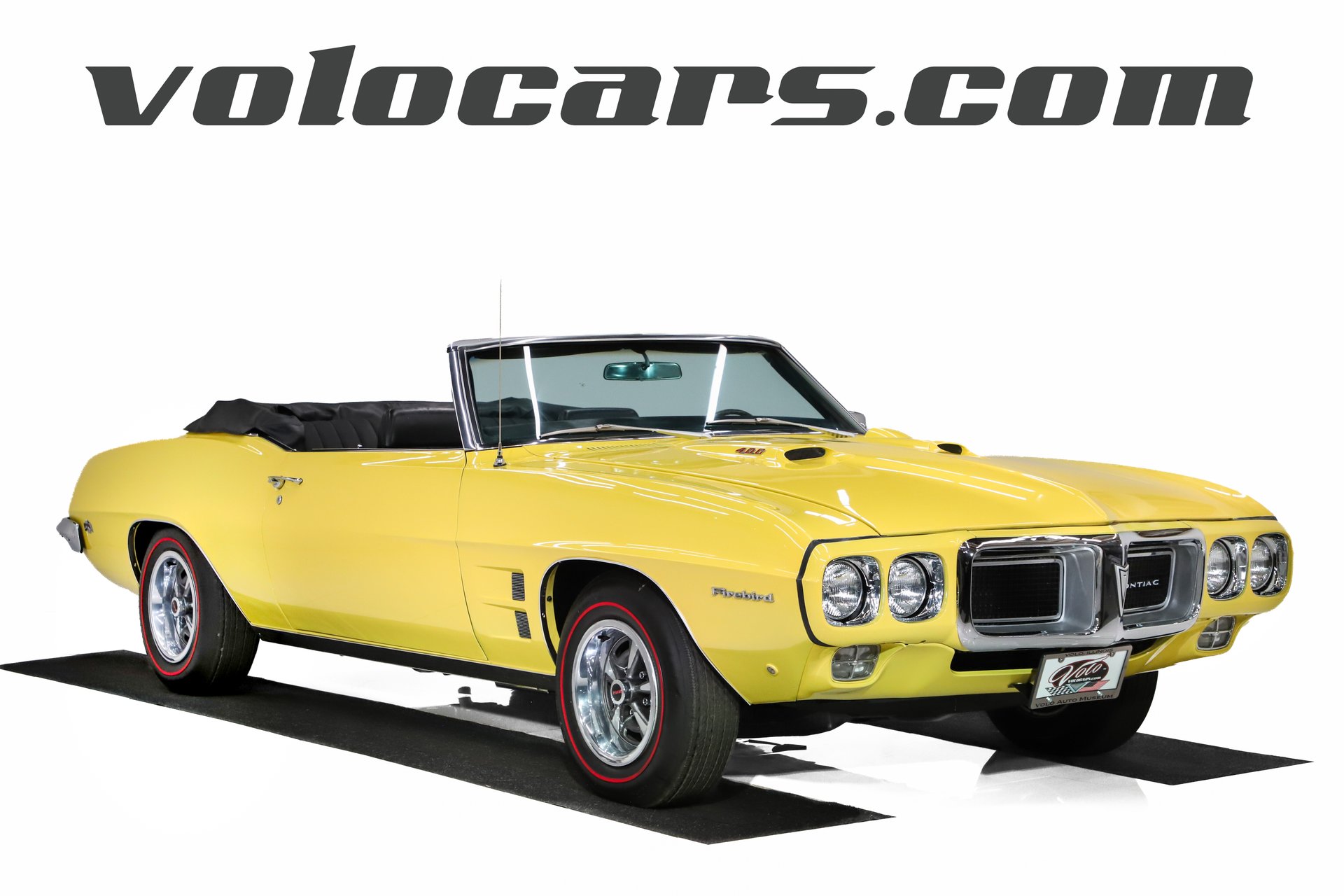
Eight. That is the whole production run of 1969 Trans Am convertibles, all Ram Air III cars save for the commonly cited tally, built before Pontiac concluded that an open car contradicted the Trans Am's road-race brief. They are museum-grade artefacts that change hands privately at figures unrelated to the rest of this guide. The practical consequence for you is negative but vital: the market is full of Trans Am convertible tributes wearing the white-and-blue scheme, the rear spoiler and the decals. A tribute honestly described and priced as a tribute can be a fine car. A tribute described as one of the eight, without PHS papers and a traceable chain of ownership, is a fraud risk, full stop.
Engines and gearboxes
Three engine families power the Firebird convertible, and they could hardly differ more in character or in what kills them. Learn each family's codes, because with Pontiac the stamped code on the block — not the seller's description, not the air-cleaner decal — is the identity document.
The overhead-cam six: 230 and 250
Pontiac's OHC-6 was the most advanced engine in any 1967 American car at its price: a cast-iron inline six with a single overhead camshaft in an aluminium cam housing, driven from the crankshaft by a toothed belt — the first American production use of a belt cam drive — with the cam lobes acting through finger followers. The 230 of 1967 became the 250 for 1968, gaining torque more than headline power. Base engines use a single-barrel Rochester; the Sprint uses a four-barrel Rochester Quadrajet on a special manifold, higher compression, and a split exhaust manifold that gives the Sprint its distinctive hard-edged exhaust note.
What to know as a buyer: the belt is a service item, not a lifetime fitment, and a belt that fails or jumps on a neglected engine announces itself through rough running and bent-follower damage rather than the catastrophic valve-to-piston contact of a modern interference design — but do not test that generosity. Budget a belt change on any car without a dated receipt for one. The cam housing and its cover are prone to oil weeps that cook onto the exhaust side and get misdiagnosed as head-gasket failure; the distinguishing test is a cleaned engine, a short run and a mirror — OHC-6 oil leaks travel down from the cam box, head-gasket leaks bubble at the coolant passages and show in the expansion of the top hose. Valve clearances are set by lash adjusters that tire with age and mileage, producing a top-end rattle that sellers dismiss as "they all do that." They do not, when sorted. A full top-end service with belt, tensioner attention and adjusters is a $900–1,600 job at a specialist who knows the engine — and finding that specialist is itself part of Sprint ownership, because most general shops have never seen one.
The six's cooling system is marginal in modern traffic if the radiator is silted, and the engine's smoothness encourages owners to ignore a rising gauge. Ask for a cold start: a healthy OHC-6 fires instantly, idles with a faint mechanical whir from the cam drive, and pulls cleanly to 5,000 rpm in Sprint tune without the flat, breathless top end that signals a worn cam or a stretched belt retarding the timing.
The small V8s: 326 and 350
The 326 (1967 only) and 350 (1968–69) are Pontiac V8s in the full sense — same architecture as the 400, same external dimensions, smaller bore and, in the 350's case, smaller valves and ports than the big engine's best heads. Two-barrel cars (250 hp for the 326, 265 hp for the 350) use a Rochester 2GC; H.O. cars use a Quadrajet four-barrel, dual exhausts and, on the 350 H.O., the better-breathing combination that lifts output to 320 hp in 1968 and 325 hp in 1969.
These engines are tough, understressed and cheap to keep — which is precisely why their failure mode is neglect rather than design. The Pontiac V8's oil pump is driven from the camshaft via the distributor, and oil pressure that is healthy hot (around 40–60 psi at cruise on a good engine, with the factory gauge or a mechanical test gauge to prove it) but fades at idle on a hot day points to bearing wear, not to a gauge fault. The test that settles it: screw a mechanical gauge into the oil-pressure sender port, run the engine to full temperature, and read idle pressure with the oil hot. A fresh engine holds comfortably; a tired one sinks toward single figures and the lifters begin to tick as pressure falls. A bottom-end rebuild on a 350, with machining, is a $4,500–7,500 commitment depending on parts and region; a reseal and top-end refresh on a sound short block is $1,800–3,000. Price any oil-pressure doubt as the former until proven the latter.
Pontiac V8s run their coolant through a timing-cover-mounted water pump with a divider plate whose clearance matters: a car that runs hot at idle but cools at speed often has a worn impeller or an incorrect plate gap rather than a blocked radiator. The fix is a pump and plate job at $450–800 in parts and labour, not the new radiator sellers love to point at as "already done." Rear main seals weep on cars that sit; exhaust manifolds crack on the centre ports of hard-used cars; and the nylon-toothed timing gear of period engines, if never replaced, sheds teeth into the sump — any engine without a receipt for a timing set should get one, at $600–1,100 fitted, before it strands you.
The 400 and the Ram Air engines
The 400 is the GTO engine in a lighter shell: 325 hp in 1967, 330 hp in standard tune for 1968–69, 335 hp as the H.O., then the Ram Air ladder — Ram Air I (1967–early 1968), the round-port Ram Air II (mid-1968, 340 hp), Ram Air III (1969, 366 hp) and Ram Air IV (1969, 370 hp, with round-port heads, an aluminium intake manifold on many builds, and a notably aggressive camshaft that idles with a lope no seller can hide and no clone can fake cheaply).
Identification is a discipline. Read the two-letter (sometimes letter-and-number) code stamped on the machined pad at the front of the block beside the distributor, and the partial VIN stamped low on the block near the timing cover on later cars; check the casting number at the rear of the block and the casting date beside the distributor hole; read the head casting numbers between the centre exhaust ports. Then compare all of it against the build date on the cowl data plate and, for any car priced above standard-400 money, against the PHS billing record. A "numbers-matching" claim means the partial VIN on the block matches the car's VIN and the code is correct for the model and transmission — anything less is a story. The commonest frauds are a 350 or a later 400 from a full-size Pontiac dressed with Firebird Ram Air hardware, and a standard 400 wearing reproduction scoops and decals. Both are detectable in twenty minutes with the codes listed in any Pontiac casting guide; neither is detectable from the driver's seat, which is why sellers of such cars prefer to talk about how it drives.
Mechanically, the 400's enemies are heat and detonation. The Ram Air IV's cam and compression demand good fuel and correct timing; an engine that pinks under load on premium fuel is telling you the timing curve, the compression (a previous rebuild may have raised it) or the cooling system needs attention, in that diagnostic order. Round-port Ram Air exhaust manifolds are expensive, crack-prone castings; a ticking that fades as the engine warms is the classic symptom, and replacement with correct castings runs $1,200–2,500 a pair before labour, with Ram Air IV parts at the top of that range and beyond. Carburation is by Quadrajet on most cars, with Ram Air carburettors carrying specific numbers that matter to value; a generic replacement Quadrajet runs fine but costs a Ram Air car real money in originality — a correct-number rebuilt unit is $800–1,500 when one can be found.
Gearboxes
Manual cars use a three-speed as the base fitment — a column or floor change depending on specification — with the Muncie four-speed (M20 wide-ratio, M21 close-ratio) as the enthusiast's choice and the heavy-duty M22 rare in Firebirds. Judge a Muncie by its synchromesh on the fast 3–2 downchange and by whether it jumps out of gear on the overrun in second or third, the classic sign of worn engagement teeth and sliders; a full Muncie rebuild is $1,200–2,200 plus removal, while a noisy input-shaft bearing alone, caught early, is a $700–1,100 job including the clutch you should replace while the box is out. Linkage wear masquerades as gearbox failure: a sloppy Hurst shifter with worn bushings makes a good box feel broken, and the $150–300 bushing-and-adjustment cure should be tried before anyone condemns the internals. Clutch judder on a convertible that has lived outdoors is often oil from a weeping rear main seal contaminating the plate — two jobs, one labour bill, $900–1,500 all in.
Automatics divide by engine. Sixes and small V8s used the two-speed Super Turbine 300 early on, a simple, lazy box whose very survival suggests it has led an easy life; the Turbo Hydra-Matic 400 backs most 400-engined cars and is as close to unburstable as period automatics get, failing by neglect — burnt fluid, slipping on the 2–3 change, delayed reverse engagement on a cold morning — rather than by weakness. The Turbo Hydra-Matic 350 arrived for 1969 on smaller-engined cars and splits the difference. A TH400 rebuild at a competent shop is $1,800–2,800 fitted; budget a fluid-and-filter service ($180–300) on any automatic without a recent receipt, and read the fluid as evidence: bright red and sweet is serviced, brown and burnt is a negotiation. Rear axles are GM 8.2-inch units (Pontiac-built and Chevrolet-built variants appear) with Safe-T-Track limited-slip optional; a whine that changes with throttle load is pinion bearing or gear wear ($900–1,600 for a rebuild with bearings and setup), while a clunk on take-up is as often worn universal joints ($150–300 a pair, fitted) or tired Safe-T-Track clutches as it is the gears themselves.
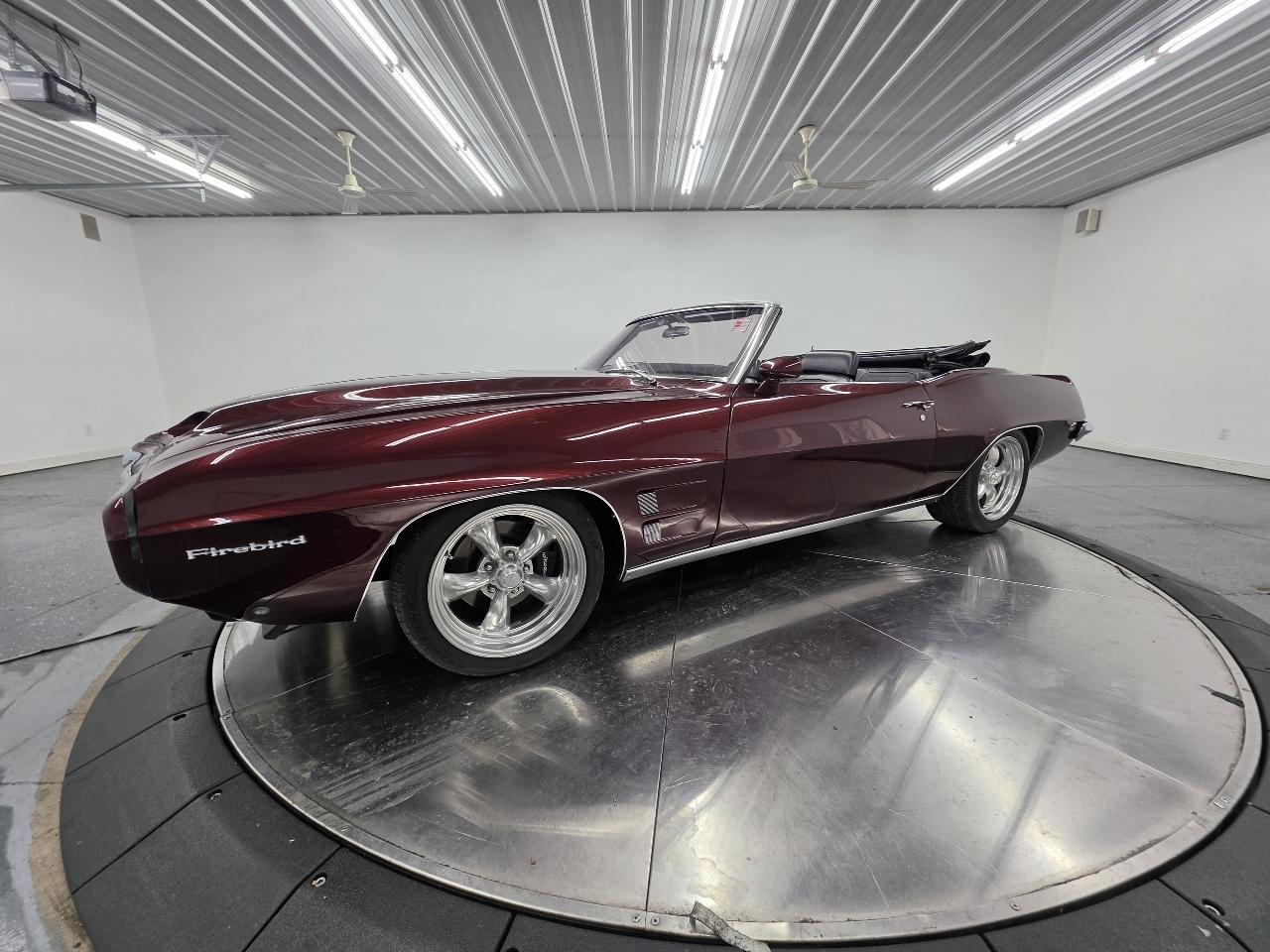
Problem areas
Rust: the map, and the convertible's extra chapters
An F-body is a unit construction with a bolt-on front subframe, and a convertible F-body deletes the roof — the panel that ties the whole structure together — and compensates with reinforced rocker sections, additional bracing and, famously, four vibration dampers ("cocktail shakers") at the corners of the body. That means a convertible rusts in all the coupe's places and then in a second set of places the coupe does not have, and it means rust is not merely cosmetic on these cars: the rockers are structure.
Start with the standard map. Front and rear floor pans rot from the inside out under wet carpet, worst at the toe boards and under the rear seat. The trunk floor rots above the fuel tank and at its drop-offs to the quarter panels. Rear quarter panels blister behind the wheel and along the lower edge where the inner and outer skins trap mud. The cowl and the panel below the windscreen leak water into the front footwells through perished seam sealer, presenting as "floor rust" that will return within a year if the cowl source is not sealed. Door bottoms, the lower front wings behind the wheels, and the battery tray area all follow the usual pattern. None of this is exotic, and all of it is repairable with reproduction panels; a floor pan section fitted and painted is a $800–1,800 job per side, a trunk floor $900–1,600, a quarter-panel lower section $1,500–3,000 a side done properly with the inner structure addressed.
Now the convertible chapters. Lift the rear seat base and look at the floor and the seat-belt anchorages. Open the boot, remove the spare and the trim, and inspect the well into which the folded top drops: the top well collects every drop of water that gets past the top's rear curtain and the boot cover, and it rusts from inside, invisibly, until the day it doesn't. Inspect the rocker panels with real suspicion, including from underneath with a torch: a convertible rocker that is holed is not a $600 sill patch, it is a structural repair to a reinforced section, realistically $1,500–3,000 a side with the car on a jig or at least properly supported, and a car needing both sides plus floors is a car whose purchase price must reflect a $5,000–9,000 welding programme before paint. Check the windscreen frame, especially the lower corners and the header rail where the top latches: header rust weakens the latching and lets the top drum and leak at speed, and repairs there are fiddly, skilled work at $800–2,000 depending on how far the rot has travelled into the pillars.
The convertible's cocktail shakers deserve their own paragraph because sellers remove them and buyers forget to ask. These are sealed canisters, each containing a spring-suspended weight in oil, bolted at the four corners of the body (front pair in the engine bay corners, rear pair in the boot) to damp the open body's natural shake frequency. They weigh roughly 25 pounds each. Cars missing them — often removed during a "restoration" by someone who did not know what they were — suffer visibly worse scuttle shake, and a complete correct set, used, is $400–900 when available. Their absence is not a deal-breaker; it is a price chip and a clue about the quality of previous work.
Finally, the front subframe and its mounts. The subframe itself rots at the rear mounting points and around the spring pockets, and the rubber body mounts perish and collapse, which drops the nose, misaligns the front panels and gets blamed on everything except the cause. A mount set is cheap ($120–250 in parts); fitting it, with the seized bolts a fifty-year-old car guarantees, is a $600–1,200 labour event. A rotted subframe can be replaced with a good used or reproduction unit at $1,500–3,000 all in. The test: sight along the car for nose droop, measure panel gaps, and put a pry bar at each mount while a helper watches for movement that should not be there.
Engine, cooling and driveline wear
The mechanical problem areas divide by family, and the engines section above gives the tests; here is the failure ledger in one place. On the OHC-6: cam belt neglect, cam-box oil leaks, tired lash adjusters, and overheating from a silted radiator on an engine whose smoothness hides distress — a top-end overhaul is $1,500–2,500, a full rebuild $4,000–6,000 at the few specialists who know the engine, and a cracked cam housing can turn a cheap car into a parts hunt. On the V8s: hot idle oil-pressure fade (bearings), timing-cover water-pump and divider-plate wear causing idle overheating, nylon timing gears shedding teeth, cracked centre exhaust manifolds, rear-main weep contaminating clutches, and — on hard-used 400s — the beginnings of the lifter and cam wear that announces itself as a single ticking lifter that no oil change cures; a cam-and-lifters job is $1,100–1,900 fitted. On Ram Air cars add cracked round-port manifolds and missing or reproduction induction hardware, priced in the engines section.
Cooling deserves emphasis because convertibles get driven on the hottest days in the slowest traffic. A three-row radiator recore or quality replacement is $450–850; a car that "just needs a thermostat" and is being sold in July should be test-driven in traffic, at length, with the gauge watched — and a seller who will not allow that drive has answered your question. Gearbox and axle costs are covered above; add driveshaft universal joints and the centre of every clunk diagnosis, and budget $250–450 for a full set fitted with the shaft balanced if vibration persists.
Suspension, steering and brakes
The front suspension is conventional double-wishbone with coil springs; the rear is a live axle on leaf springs — multi-leaf on most cars after 1967, with staggered shock absorbers from 1968 to control axle tramp under power. Wear concentrates in the front ball joints, the idler arm and the tie-rod ends, and it presents as wander, tramlining and a steering wheel that never quite centres. A full front-end refresh — ball joints, bushings, tie rods, idler — is $1,200–2,200 fitted and aligned, and it transforms these cars; conversely, a car that has had it drives so much better than one that hasn't that the receipt is worth money at purchase. Sagging rear springs drop the tail and ruin the stance; a pair of correct multi-leafs fitted is $500–900. Worn convertible body mounts, covered under rust, feed directly into the handling verdict, so do not judge a car's road manners until you know the mounts are sound.
Power steering, where fitted, is the Saginaw system: leaks from the pump and the box's input seal are routine, a resealed box is $450–750 exchanged, and a groan at full lock with foaming fluid is air from a low reservoir or a perished suction hose, not necessarily a dead pump. Brakes divide the range sharply: front discs were optional throughout, standard on some performance packages, and many convertibles still run four-wheel drums. Drums in good order stop the car adequately once; they fade on a long downhill and they demand adjustment discipline. A front disc conversion with quality components is $900–1,600 fitted and is the single best safety upgrade you can make — but on a Ram Air or otherwise originality-sensitive car, keep every removed part, because the next buyer may price their absence. Brake hydraulics on any car without recent receipts should be assumed to need a full overhaul — master cylinder, wheel cylinders or calipers, flex hoses — at $700–1,400, because fifty-year-old rubber and a single-circuit early system (dual-circuit became standard across the run, but check what is actually fitted) leave no margin for optimism. Handbrake cables seize in their conduits on cars that live outdoors; $200–400 sorts them, and a working handbrake is an inspection item, not a detail.

The top, hydraulics, interior and electrics
A convertible is bought twice: once as a car, once as a roof. The power top (manual tops exist on base cars) runs on an electric motor driving a hydraulic pump with cylinders at each side. The failure sequence is predictable: perished hydraulic lines and cylinder seals weep fluid (period systems used brake fluid, later automatic transmission fluid — know which is in the car before topping up, and treat any seller's casual mixing as a warning), the pump labours, the top slows, judders, and eventually stops mid-travel, usually in public, usually before rain. A pair of rebuilt cylinders is $350–650, lines $150–300, a pump rebuild $300–550; a full system overhaul is $900–1,600 and should be priced into any car whose top hesitates. Operate the top three times, fully, and watch for asymmetry — one side leading the other means a cylinder or a bent linkage, and a bent frame repaired badly never seals again. Frame side-rails crack at the pivot points; budget $400–900 for frame repair and alignment by a trim shop that knows F-bodies.
The top fabric itself, in vinyl with a plastic or (on better replacements) glass rear window, lasts ten to fifteen years in use and far less in sun. A quality replacement top fitted, with pads and well liner, is $1,800–3,200; a cheap top fitted badly waves at you from every photograph and drums at speed. Check the well liner and the boot cover are present, check the tacking strips are sound wood or sound replacements, and check the header seals and weatherstrips as a set: a full weatherstrip kit is $350–650 in parts, and fitting it well is a day's careful work that separates a car you can drive in rain from a car you cannot.
Interiors divide into standard and Deluxe (often called Custom) trim, with Morrokide vinyl throughout, a moulded dash pad that cracks in the sun belt from the speaker grille outward, and seat foams that collapse on the driver's outer bolster first. A dash pad reproduction is $400–700 plus fitting; a full interior kit — covers, foams, carpets, door panels — is $2,200–3,800 in parts with fitting on top, so a genuinely good original interior is worth real money and a "new interior" of the wrong pattern or colour for the data plate is worth a deduction, not a premium, on an originality-priced car. Seat belts, their anchorages and the convertible-specific rear trim panels around the top mechanism are the items reproductions serve worst; verify they are present and correct before you value the car.
Electrics are period GM: simple, repairable, and ruined mainly by previous owners. The convertible adds the top switch and motor circuit and the notorious appetite of period wiring for amateur alarm, stereo and spotlight installations. Every added wire under the dash is a future fault; a car with an unmolested harness is worth a premium you will appreciate at midnight in November. Test everything, including the courtesy lights, the horn, the blower on all speeds (a dead low speed is the resistor pack, $40–90, not the motor), the fuel gauge's honesty against a known fill, and the convertible's specific party trick — windows that must align with the top frame's weatherstrips. Window regulators wear and the glass drops or tilts; a regulator rebuild is $250–500 a side, and misaligned glass is the commonest cause of the leaks that rot the floors you checked in the rust section. The systems connect: on this car, they always connect.
How to inspect one
Inspect in this order: identity before condition, structure before cosmetics, and the top as a system, not an afterthought. Allow two hours, insist on a cold engine, and take a torch, a magnet wrapped in cloth, a mirror, a mechanical oil-pressure gauge if the car is a V8, and a helper.
- Papers and identity first. Match the VIN plate (driver's side, visible through the windscreen on 1968–69; on the door jamb area for 1967) to the title exactly. Read the cowl data plate: build date, paint code, trim code, body number. Any car priced as a 400, H.O., Ram Air or Trans Am needs its PHS billing record produced before you go further — the identity checks in the engines section only confirm what the hardware is; the PHS record confirms what the factory built.
- Engine codes before engine start. On a V8, read the stamped code by the distributor, the head castings and the partial VIN; on a six, confirm OHC architecture and Sprint hardware (four-barrel, split manifold) rather than Sprint badges. A mismatch discovered now saves the rest of the inspection.
- Cold start. A healthy OHC-6 fires instantly with its faint cam-drive whir; a healthy V8 settles to an even idle (Ram Air IV excepted — expect a lope). Blue smoke at start that clears is valve seals; smoke that persists under load is rings or bores. Listen for the single ticking lifter described in the problem areas.
- Oil pressure, proven. With the engine fully hot after the test drive, take the mechanical-gauge reading described in the engines section. Do not accept the dash gauge, and do not accept a cold reading.
- The rust circuit, in order. Floors from underneath and under the carpets; trunk floor with the spare out; the top well with the top half-lowered; both rockers with a torch, remembering they are structure on this car; windscreen header and lower corners; cowl seams; rear quarters behind the wheels. Use the magnet on quarters and door bottoms — it finds filler, not rust, and the pattern of filler tells you where the rust was.
- The jack-and-door test. With the car on level ground and the top down, open and close both doors and note the gaps. Then have the car lifted at one front corner and try the doors again. Noticeable change in gap or latch behaviour on a convertible means the structure is tired — rockers, floors or mounts from the rust section are the suspects, in that order.
- Subframe and mounts. Pry at each front subframe mount while your helper watches; look for the nose droop and uneven panel gaps that collapsed mounts produce, and inspect the subframe's rear mounts and spring pockets for rot.
- Cocktail shakers present? Front pair in the engine-bay corners, rear pair in the boot. Missing sets are a price chip and a workmanship clue, as the rust section explains.
- The top, three full cycles. Watch for one side leading, listen to the pump, then inspect the well, lines and cylinders for the weeps described in the top section. Check frame pivots for cracks, header latches for positive engagement, and every weatherstrip with the top up and the windows raised.
- Water test. With the seller's permission, a hose over the closed top and around the windscreen and cowl. Then lift the carpets' edges: today's leak is next year's floor pan, and the cowl leak described in the rust section shows itself here.
- The drive. Steering centre feel and wander (front-end wear), brake pull and pedal feel (hydraulics), axle whine on and off the throttle, gearbox behaviour on the fast 3–2 downchange for manuals and the 2–3 change for automatics, and scuttle shake over broken pavement — some is inherent to an open F-body; a car that shudders and drums has mount, shaker or structural explanations to find.
- Heat soak test. After the drive, idle in place for ten minutes and watch the gauge; then switch off, wait five minutes, and restart. Hot-start reluctance and idle overheating point at the cooling items in the problem areas — pump, divider plate, radiator — in that diagnostic order.
- Electrics sweep. Every switch, every speed, every light, plus window alignment against the top seals and the courtesy circuits. Note every non-factory wire under the dash and price the unravelling honestly.
- Interior against the data plate. Trim code versus what is fitted; Deluxe versus standard pattern; dash pad, foams, belts and the convertible-specific rear panels all present. A wrong-pattern "new interior" is a deduction on an originality-priced car, per the interior section.
- Reconcile and price the faults. List every fault found against the job costs in the problem sections, total them, and compare the total with the asking position. On these cars the arithmetic, not the emotion, should write the offer.
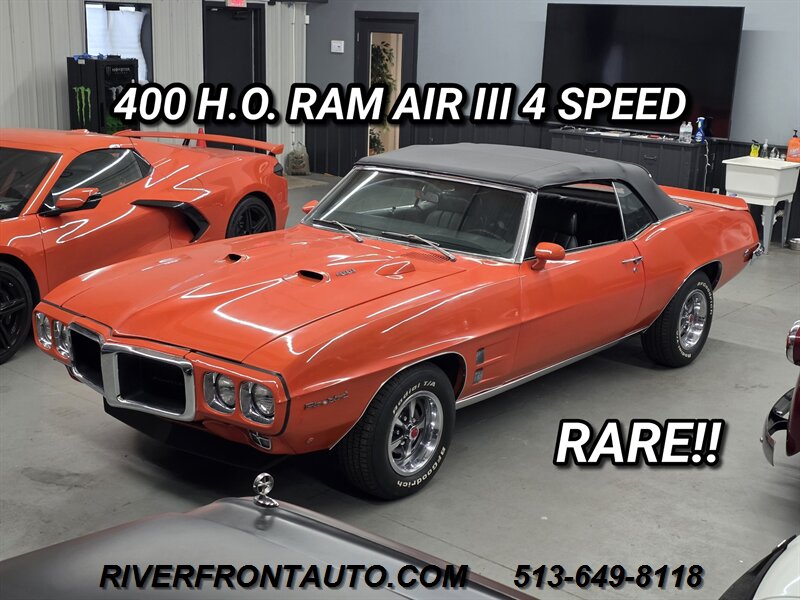
Values
The market block beneath this guide carries the current numbers — what is listed now, and what recorded sales have achieved — and this section deliberately carries none. Numbers date; the structure of this market does not, and the structure is what you need to read the block intelligently.
The first structural fact is the condition spread, which on first-generation Firebird convertibles is wider than on almost any comparable car. The distance between a structurally sound, honestly described driver and a correctly restored, documented example of the same variant is not a percentage — it is a multiple. That is because the expensive things on this car are invisible in photographs: rocker structure, floor and top-well integrity, engine identity, and the presence of small convertible-specific parts that cost disproportionately to replace. When you read the listings below, read the spread within a variant as a condition report on the whole market, not as evidence that the cheap cars are bargains. In this market the cheap car is usually the expensive car, deferred.
The second fact is the variant ladder, and it is steep at the top and shallow at the bottom. Six-cylinder convertibles, including the Sprint, trade in a band governed by condition far more than by specification — a superb Sprint and a superb base six are closer in value than their period characters suggest, because the buyer pool for sixes buys condition and charm. The volume V8s form the market's centre of gravity, with the H.O. cars earning a genuine but modest premium over their two-barrel equivalents. The 400 steps up decisively, and documented originality — matching numbers, PHS papers, correct codes — is worth more on a 400 than the engine itself, because the supply of verifiable cars is so much smaller than the supply of badged ones. Ram Air cars leave the ladder entirely and enter the documented-collectible market, where the billing record is not supporting evidence but the product itself. Trans Am convertibles, all eight of them, are not part of this market in any usable sense; if one is offered to you through ordinary channels at an ordinary multiple, you are looking at a tribute.
Third, asking prices and achieved prices diverge in a predictable pattern. Sellers ask restoration-cost-plus on cars whose restoration cost more than the market will repay, and those cars sit. The recorded-sales side of the block below is the corrective: it shows what buyers actually paid, and on this model the gap between optimistic asking and achieved money is widest exactly where documentation is thinnest. Treat any asking price unsupported by papers as the opening of a negotiation the seller has already half-conceded.
Fourth, the project-versus-driver gap. A project convertible — complete, structurally repairable, honestly described — is worth a small fraction of a finished car, and correctly so, because the welding programme, top, interior and paint on a convertible consume money at a rate the coupe does not match. The trap is the middle car: cosmetically fresh over unaddressed structure, priced as a driver, worth project money plus the cost of undoing the cosmetics to reach the structure. The inspection sequence above is designed to sort the three categories; use its totals, not the seller's category, when you bid.
Finally, premiums that are real: factory colours with charisma (the bright period hues over resale beige), four-speed manuals in V8 cars, Deluxe interiors in good original order, and unbroken documentation from new. Premiums that are not: fresh paint of the wrong code, reproduction Ram Air hardware, and any story that begins with the words "the previous owner said." The market block below will tell you what the market is doing this month. This section has told you how to know whether a given car deserves its place in it.
Parts and ownership
The first-generation Firebird sits in one of the best-supplied corners of the classic market, because it shares so much with the Camaro and because the performance aftermarket adopted the F-body wholesale. That said, "well supplied" divides sharply into three tiers, and knowing which tier a part lives in is most of ownership budgeting.
The first tier is effectively unlimited: service items, suspension and brake components, weatherstrips, top fabric, interior kits, sheet metal including floors, quarters and trunk pans, glass, and the whole mechanical catalogue for the Pontiac V8 — gaskets, pumps, timing sets, carburettor kits, ignition. A car in this tier of need is a weekend-and-budget problem, not an existence problem. Expect consumables to cost what they cost for any period American V8, and expect a competent local shop to be able to do most mechanical work, with the hourly arithmetic in the problem sections as your guide.
The second tier is available but priced: correct-number Quadrajet carburettors for specific applications, Ram Air induction hardware (much of it reproduced, all of it priced as if original until examined), round-port exhaust manifolds, Deluxe interior components in specific colours, and convertible-specific items — top frame components, well liners, cocktail shakers, header mouldings and the rear trim panels around the top mechanism. These parts exist; they reward patience and club networks; and their prices are why the inspection section tells you to verify their presence before valuing a car. A missing set of small convertible parts can quietly total $2,000–4,000 to replace piecemeal.
The third tier is genuinely difficult: OHC-6 Sprint-specific components (the four-barrel manifold, split exhaust manifold, correct camshafts and cam housings), 1967-only trim and hardware, and date-coded components for concours-grade Ram Air restorations. Six-cylinder owners should buy spares opportunistically — a spare cam housing or Sprint manifold at a fair price is money in the bank — and should cultivate the small, devoted OHC community, which functions as the real parts department for these engines.
Ownership rhythm is period American: oil and filter every 3,000 miles or annually, chassis and suspension attention at the same interval, coolant every two years, brake fluid on the same cycle (and immediately on any car you buy, along with every rubber hose), and the OHC-6's cam belt on a strict time-and-mileage schedule regardless of appearance. Budget a realistic annual running figure for a sorted driver — servicing, consumables, insurance, club and event costs, and the rolling rectification every fifty-year-old car generates — and expect the first year of any new purchase to cost noticeably more as you work through the deferred list your inspection compiled. Storage matters more for a convertible than for any coupe: a top stored folded and damp rots its own well; store the car top-up, dry, and with the hydraulic system exercised monthly, because seals that sit dry and still are seals that weep in spring.
The support ecosystem is strong: national Pontiac clubs, F-body specialists, PHS for factory documentation, and an online knowledge base that has decoded every casting number on these cars. Join before you buy, not after — the classifieds and the casting guides will pay the membership back on your first purchase decision.

Which one to buy
- The all-rounder: a 350 H.O. convertible, 1968 or 1969. Four-barrel pace close to a standard 400's, the tidier later suspension and brakes specification, a purchase temperature well below the 400's, and a shell that has usually led a calmer life. This is the car to buy if you intend to drive 3,000 miles a year with the top down.
- The icon: a documented 400 convertible. Buy it on papers and codes, not on badges, and buy the best structure you can find — the engine premium only survives if the shell underneath it is honest. A four-speed car in a period colour is the specification the market will always want back from you.
- The value buy: a sound two-barrel 350 or 326 convertible. The market prices these as the plain relations, yet they deliver the whole experience — the looks, the V8 note, the open top — for the smallest entry, provided the rockers, floors and top well pass the inspection. Cheap because of its engine is fine; cheap because of its structure is not a car at all.
- The connoisseur's pick: a verified Sprint convertible. Rare, light, technically fascinating and still undervalued against its character. Buy spares when you see them, find the specialist before you need him, and enjoy owning the answer to a question Chevrolet never asked.
- The collector's car: a PHS-documented Ram Air III convertible, 1969. Bought as an artefact with a driving habit, verified at every code and casting, and priced from recorded sales of documented cars — never from asking prices of undocumented ones.
- The one to walk away from: any Ram Air or Trans Am claim without paperwork, and any convertible whose doors change their gaps on the jack test. The first is a price built on air; the second is a structure asking you to fund its resurrection at retail rates.
The overriding rule: on a Firebird convertible, buy structure and identity before specification — a verified, solid car with a smaller engine is always worth more than a rotten or unverifiable car with a bigger badge, because engines can be rebuilt in a winter and paperwork can sometimes be recovered, but a flexed, rusted open shell and a false identity are forever.
See the 2 Firebird Convertible cars currently listed.
For sale now
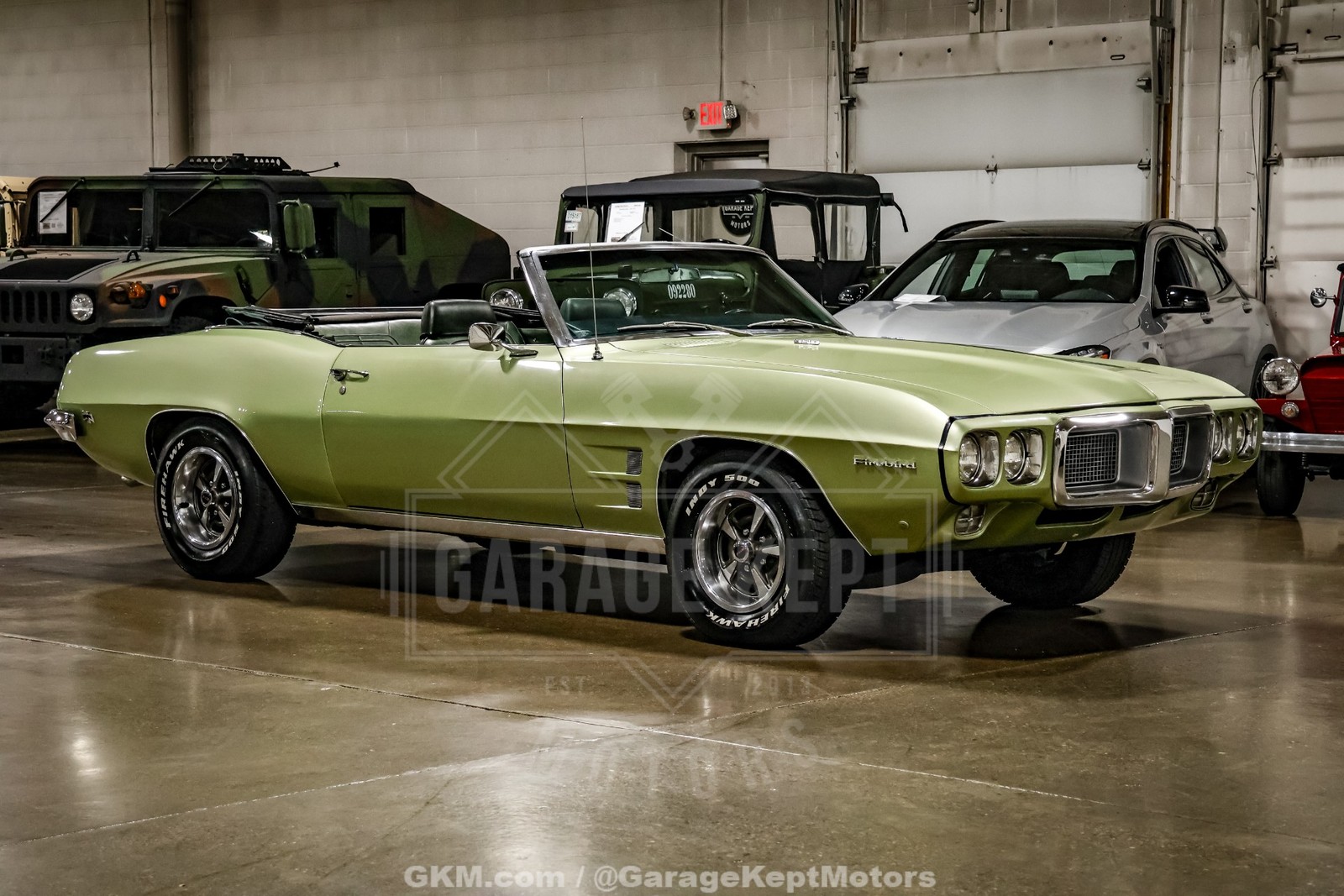 $44,900 · 12% below typical
Expand
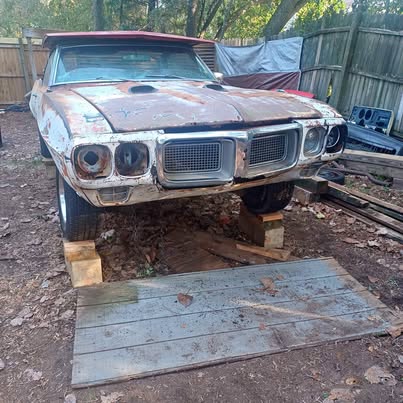 $6,500 · 87% below typical
Expand
What they sell for: Firebird Convertible sale prices.