
Pontiac Firebird Coupe buyer's guide
Pontiac Firebird Coupe -- the model's own buyer's guide: variants, values and what to check.
Years listed: 1967-1969 · Series: Firebird Gen 1
# Pontiac Firebird Coupe (1967–1969) — Buyer's Guide
Overview and history
The first-generation Firebird coupe is the car Pontiac built when it was finally allowed to answer the Mustang — and, more awkwardly, its own corporate sibling, the Chevrolet Camaro. GM gave Pontiac an F-body programme late, after the division's Banshee sports-car proposals were vetoed for threatening the Corvette, and general manager John DeLorean turned that constraint into a virtue. Launched on 23 February 1967, the Firebird shares the Camaro's shell, front subframe and basic suspension. Almost everything Pontiac could change, it did: its own engines throughout, its own styling with the trademark split grille and beaked nose, different spring and damper tuning, and a model ladder from a genuinely unusual overhead-cam six to the 400-cubic-inch V8 lifted from the GTO's world.
That ladder is the whole story, and it is why this guide is really several guides in one. A base six-cylinder coupe is a stylish, gentle classic that happens to share a silhouette with a muscle car. A Firebird 400 is a muscle car in full — heavy steering at parking speed, serious torque, and cooling demands and identity questions to match. Between them sit the small-V8 cars, the 326 of 1967 and the 350 that replaced it, which most experienced owners call the sweet spot for actual driving. The silhouette does not tell you which car you are looking at, and the badges sometimes lie about it. The VIN, the engine codes and the paperwork settle it, and much of this guide is about making them do so before money moves.
The generation runs for three model years only — 1967, 1968 and the long, delay-affected 1969 run — before the second-generation car arrived partway through 1970. The markers are easy once you know them: 1967 cars have vent windows and no side-marker lamps; 1968 cars lose the vent windows, gain side markers and get staggered rear shocks to fight axle hop; 1969 cars receive a comprehensive restyle and the ignition moved to the steering column. Underneath, the structure, rust map and most of the mechanical inspection are common to all three. Learn one car properly and you have learned the generation.
The pool behind this guide is narrow and honest about it. The fourteen coupes recorded here are all first-generation cars: eight from 1967, four from 1968 and two from 1969, nine offered for sale and five recorded as sold when the pool was drawn. Automatic transmission dominates, as it does the surviving population, with a minority of four-speed cars — the split that matters, because a genuine factory four-speed V8 coupe is rarer and more fought-over than an automatic. Black is the commonest colour, with green, blue, burgundy, silver and Verdoro Green also represented; a colour change against the data plate is a fact to price, not a detail to wave past. Sellers divide between dealers and private Marketplace sellers, scattered across the country rather than concentrated in the dry Southwest — which is why the rust inspection here assumes a car that may have spent fifty years in the Midwest. Everything site-specific is scoped to that pool; everything else is the general, documented knowledge of the 1967–1969 car.
Why buy one, against the Camaro that shares its bones and outsold it? Three reasons stand up. The engines: Pontiac's V8s have a character of their own, and the overhead-cam six is engineering history no Camaro offers. The styling: the beaked nose and coke-bottle quarters give the Firebird a presence the Chevrolet does not quite match. And documentation: Pontiac's build records survive through Pontiac Historic Services (PHS), so a Firebird's factory specification can be proven from an independent archive rather than argued from a seller's story. Let that cut both ways — a car whose seller resists the PHS check is telling you something.
Set your expectations. This is a unibody coupe on a separate front subframe, with a live rear axle on leaf springs, drum brakes on many cars, slow steering even in power form, and a structure that rusts in well-documented places. None of that is a reason not to buy one. All of it is a reason to buy the right one: the best body you can find, with the engine the paperwork says it should have.
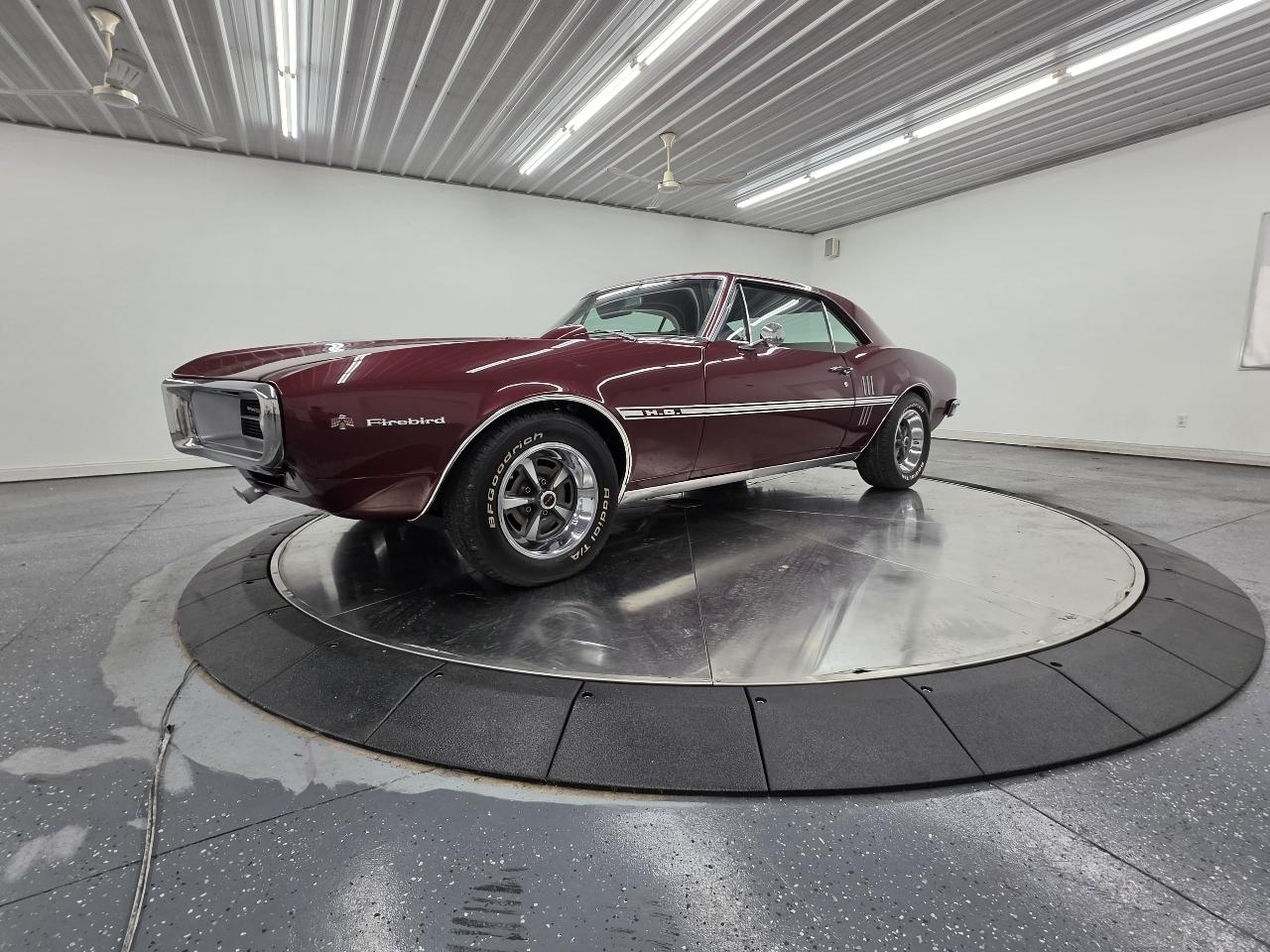
The models
The range is a ladder, and every rung is defined by its engine: a base Firebird, then the Sprint, the 326 and later 350 cars in standard and HO form, the Firebird 400, and — for 1969 only, in tiny numbers — the Trans Am. The convertible shares the ladder and has its own guide; everything here is the coupe, the body style of every car in this guide's pool. Trim packages — deluxe interior, air conditioning, power steering and brakes — cut across the ladder and add comfort and value, but they do not change what the car fundamentally is. The engine does.
The base car carries the overhead-cam six, covered in detail in the engines section. It is not a penalty box: in a light coupe the OHC six gives the Firebird a balance and willingness to rev that the V8s trade away for torque. The Sprint version, with four-barrel carburettor, higher compression and split exhaust manifold, is a genuinely quick period six and the connoisseur's choice. Six-cylinder cars were used as stylish transport and survive in smaller proportions than they were built — many were converted to V8 power over the decades — so a still-six-cylinder car with matching numbers deserves a second look, and a "V8 car" with a six-cylinder VIN deserves a very hard look indeed.
The volume V8 cars are the 326 (1967) and the 350 (1968–69): full Pontiac V8s — the same architecture as the 389 and 400, not a borrowed Chevrolet small-block — tuned for the everyday end of the market. In two-barrel form they are relaxed, torquey road engines. In HO form, with four-barrel carburettor, higher compression and dual exhausts, they are properly lively and the thinking buyer's Firebird: most of the V8 experience, less of the 400's weight, thirst and price. The Firebird 400 tops the regular range; its engine comes from the GTO programme and its bonnet carries the twin scoops that define the model's image. Ram Air versions — I in 1967 and into 1968, II for the second half of 1968, III and the rare IV for 1969 — add fresh-air induction and progressively more serious heads and camshafts. They are the blue-chip end of the range and the most faked, which is why identity verification runs through this guide like a seam.
The 1969 Trans Am needs a warning of its own because it distorts the market around it. Introduced mid-year as a package built around the 400 engine — Ram Air III standard, Ram Air IV optional — with heavy-duty suspension, a rear spoiler, striping and a special hood, it was built in very small numbers, coupes in the hundreds rather than thousands. Trans Am claims attach themselves to ordinary 1969 400 coupes the way Shelby claims attach to ordinary Mustangs. Treat every one as a claim to be proven from the VIN and PHS record, never from the stripes, and treat an honest "tribute" as a different, lesser car priced accordingly — a good tribute is a fine thing to own, provided you pay tribute money for it.
Year by year: for 1967, vent windows, no side markers, the 326 as the small V8, single-leaf rear springs with traction (radius) rods on 400 cars, and one-year trim details that make correct restoration slightly harder. For 1968, the 250 OHC six replaces the 230, the 350 replaces the 326, multi-leaf springs and staggered rear shocks arrive, side markers appear, vent windows disappear, and the Ram Air II arrives mid-year. For 1969, the restyle, the steering-column ignition lock, the Turbo Hydra-Matic 350 in the automatic range, and the Trans Am. The 1969 run spread wide because its replacement was delayed, so date a car from its paperwork, not its seller's memory.
| Model | Years | Engine | Output (period gross) | Built | Character |
|---|---|---|---|---|---|
| Firebird (base) | 1967–69 | 230/250 OHC six, 1-barrel | 165–175 hp | Volume model | Light, balanced, simple |
| Firebird Sprint | 1967–69 | 230/250 OHC six, 4-barrel | 207–218 hp | Low thousands/yr | The thinking six; revs, handles |
| Firebird 326 / 350 | 1967 (326), 1968–69 (350) | Pontiac V8, 2-barrel | 250–265 hp | Volume V8 | Relaxed torque, easy ownership |
| Firebird 326 HO / 350 HO | 1967–69 | Pontiac V8, 4-barrel | 285–325 hp | Minority of V8s | The sweet spot; near-400 pace |
| Firebird 400 | 1967–69 | 400 V8, 4-barrel | 325–335 hp | Minority; range flagship | Full muscle car; heaviest nose |
| Firebird 400 Ram Air I/II/III | 1967–69 | 400 V8, fresh-air induction | 335–340 hp | Hundreds to low thousands | Documented cars command the premium |
| Firebird 400 Ram Air IV | 1969 | 400 V8, round-port heads | 345 hp (underrated) | Very few hundred | The blue-chip 1969 car |
| Trans Am | 1969 | 400 Ram Air III (IV optional) | 335–345 hp | Hundreds of coupes | Provenance is everything |
Production totals for the generation are well documented — roughly 82,500 Firebirds of all body styles for 1967, about 107,000 for 1968 and about 87,700 for the long 1969 run — but splits by engine within the coupe body are far less firmly published, and any seller quoting a suspiciously precise rarity figure for an ordinary variant is performing, not informing. The genuinely rare variants — Ram Air cars, four-speed Sprints, the 1969 Trans Am — are rare in ways the PHS record can confirm for the individual car, and that confirmation is worth more than any statistic.
Options matter on individual cars. Air conditioning is desirable but check it works rather than merely exists — a complete but dead system is a recommissioning bill. Power steering is near-essential with the 400's weight. Front disc brakes were optional throughout and are the most worthwhile safety upgrade a drum car can receive; a factory disc car earns a small premium for the hardware. Positraction — Safe-T-Track in Pontiac language — is a real asset in a 400 and a code worth checking on the axle. No option rescues a rusty shell; all of them reward a sound one.
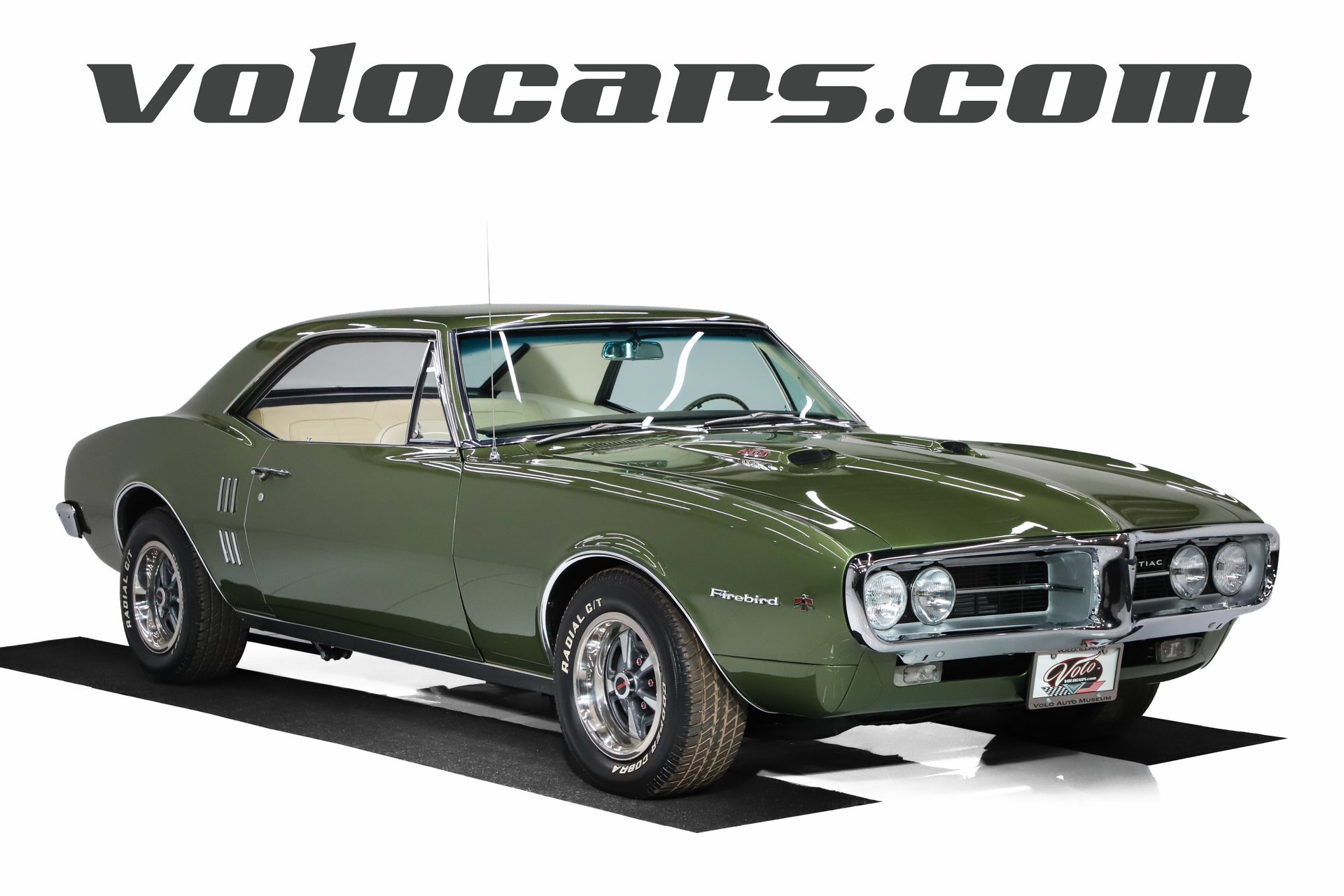
Engines and gearboxes
Three engine families power the generation — one six and one V8 architecture in several displacements and states of tune — and understanding that the Pontiac V8s are the same basic engine wearing different internal dimensions is the key to buying any of them well. A 326, 350 and 400 share block architecture and most ancillaries, which is why swaps are easy and common, and why the engine code stamped on the block — not the air-cleaner decal — is the only statement of what you are buying.
The overhead-cam six: 230 and 250, standard and Sprint
The OHC six is the most interesting engine in the range and the one buyers most often dismiss unread. Developed under DeLorean from the Tempest programme, it is a cast-iron inline six with a single overhead camshaft driven by a fibreglass-reinforced toothed belt — the first American production engine to use a belt-driven overhead cam, years before the practice became universal. The cam actuates the valves through finger followers, giving six-cylinder smoothness with a willingness to rev that pushrod sixes of the era did not have. In the 1967 Firebird it displaces 230 cubic inches; for 1968 the stroke grows and it becomes a 250, continuing through 1969.
In standard form, with a single-barrel carburettor, it produces 165 hp in 230 form and 175 hp as a 250 — period gross figures, as all outputs in this guide are. It is a smooth, adequate engine, and its economy and simplicity make a base coupe a genuinely usable classic. The Sprint is the one to hunt: with a Rochester Quadrajet, higher compression, a hotter camshaft and a split exhaust manifold, it makes 207 hp as a 230 and up to 218 hp as a 250, revs eagerly, and sounds like nothing else in the F-body world. A genuine Sprint is identified by its engine code and hardware — Quadrajet, split manifold, correct air cleaner — not by badges, which are available separately.
Living with the six turns on three things. The timing belt is a service item with a finite life; on any car whose belt history is unknown you replace it as a matter of course — budget $200–450. Camshaft and follower wear is the known wear point, audible as top-end ticking that does not clear with oil pressure; a top-end refresh with a replacement or reground cam and followers lands at $800–1,800. Carburation is the third: the single-barrel car is simple to keep in tune, while the Sprint's Quadrajet gives flat spots and hot-start trouble when worn throttle shafts leak air at the base — the classic Quadrajet fault, cured by bushing the shaft bores during a proper rebuild ($350–650), not by endless adjustment. The six also leaves the car's nose light: a Sprint on good dampers is the best-handling standard Firebird of the generation. Do not let a seller price a base six as a V8, or the market's V8 obsession talk you out of a good Sprint at six-cylinder money.
The Pontiac V8s: 326, 350 and the standard 400
The Pontiac V8 is a deep-skirt, cast-iron design dating to 1955, developed into a family sharing the same external block and differing in bore, stroke, heads, camshaft and induction. In the Firebird it appears as the 326 for 1967 — replaced by the 350 for 1968, Pontiac wanting a displacement that matched the market's expectations — the 350 for 1968–69, and the 400 throughout. Because the blocks look alike, the stamped engine code, on a machined pad at the front of the block at the base of the passenger-side head, alongside the engine production number, is the identity document. Learn to find, clean and read it on every car you inspect.
The 326 and 350 in two-barrel form (250 hp and 265 hp respectively, gross) are tuned for torque and manners, with a character that suits the automatic most of them carry. They are not slow in any sense that matters, and they are the least stressed engines in the range — usually under-maintained rather than worn out, a better starting point. The HO versions transform them: a Quadrajet, higher-compression heads, a better camshaft and dual exhausts take the 326 HO to 285 hp and the 350 HO to 320 hp in 1968 and 325 hp for 1969, putting a 350 HO within sight of a standard 400 on the road in a lighter-nosed car. The HO's hardware is visible and its codes checkable, and both matter, because HO claims are the second commonest exaggeration in Firebird adverts after Ram Air claims.
The standard Firebird 400 (325 hp for 1967, 330 hp thereafter) uses the GTO-family 400 with a Quadrajet, high-compression D-port heads and dual exhausts, in a car lighter than a GTO. It is a serious performer, with torque enough to overwhelm the rear tyres from rest and the cooling and traction problems that follow, both covered later. Its party pieces are the twin-scoop hood — the scoops are closed ornaments on the standard car, opened only on Ram Air cars — and its appetite: fuel consumption in the low teens or worse is normal.
Mechanically, all the Pontiac V8s share behaviours worth knowing. The distributor sits at the back of the engine, so oil leaks at its base mist the rear of the engine and get misread as rear-main leaks. The water pump mounts in the timing cover with internal divider plates whose clearance to the impeller governs low-speed cooling; a car that creeps hot in traffic but cools at speed is often suffering plate clearance or a corroded cover rather than a blocked radiator, and setting the clearance during a pump change costs little more than the pump job itself ($300–600 fitted). The rope-type rear main seal weeps with age; a damp sump rear is normal, a dripping one that fouls a manual car's clutch is a $600–1,200 job. Exhaust manifold bolts seize and snap in the heads, and a blowing gasket ticks on a cold start and fades warm; drilling out a snapped stud turns a cheap gasket into a $400–900 job. Hardened valve-stem seals give a puff of blue smoke on start-up — fixable in situ for $400–800 — while smoke under hard acceleration points to rings. Oil pressure on a healthy Pontiac V8 is strong; a hot idle that drops the gauge low, with bearing rumble on lift-off, is a bottom-end conversation you do not want after purchase.
On numbers-matching: from 1968, and in partial form earlier, the car's VIN derivative was stamped into the engine block and transmission case at the factory, so a 1968–69 V8 car can be verified to a standard a 1967 often cannot, and the market prices that difference. For 1967, engine code and production number, casting dates against build date, and the PHS record build the case. Either way, the PHS billing-history copy — obtained from the VIN for a fee — lists the car's original engine, transmission, axle and options as billed, and is the single most valuable document in a Firebird transaction. Order it before completing on any car whose price assumes a specification: any 400, HO, Sprint or four-speed car.
Ram Air 400s: I, II, III and IV
Ram Air was Pontiac's fresh-air induction programme: open hood scoops, a sealed air-cleaner assembly ducting outside air to the Quadrajet, and progressively more serious engines underneath. The 1967 and early-1968 Ram Air I cars pair the induction with a hotter camshaft and uprated valve springs in an otherwise D-port engine, rated at 325–335 hp. The Ram Air II, arriving mid-1968, is a step change: round-port heads with superior flow and a 340 hp rating period testers treated as a polite fiction. For 1969 the Ram Air III (335 hp) continues the D-port line, while the Ram Air IV (345 hp) brings round-port heads, an aluminium intake manifold and a high-lift, long-duration camshaft — tractable enough to drive, ferocious when used, and built in very small numbers.
You do not buy a Ram Air car on its hardware, because the hardware — scoops, pans, seals, even heads — has been assembled onto ordinary 400s for fifty years. You buy it on its paper: the PHS record showing the Ram Air option for that VIN, the correct engine code and VIN derivative on the block, and correct head castings with dates preceding the car's build. Ram Air IV cars additionally carry specific carburettor, distributor and manifold part numbers that fakers often miss. The gap between a genuine Ram Air II or IV and a well-assembled replica is the largest single premium in this market, and the replica's value collapses to "nice 400" money the moment the paper fails. A seller who will not wait for the PHS record is a seller to leave.
Gearboxes: manuals, Powerglide and Turbo Hydra-Matic
The standard gearbox is a three-speed manual, adequate and unglamorous. The one buyers want is the Muncie four-speed — wide-ratio M20 for most applications, close-ratio M21 behind the higher-output engines — with a Hurst shifter as factory equipment. The Muncie is strong and sweet-shifting when its linkage is in adjustment, and prone to two age faults: worn synchromesh on second, announced by a crunch on fast downchanges that double-declutching removes, and sloppy linkage from worn bushings, which makes a good box feel bad until $100–250 of bushings proves otherwise. A rebuild runs $1,200–2,200 plus removal; a clutch is $600–1,000 fitted, judged on bite point, judder and slip in a high gear at low revs. Check the quality of the many automatic-to-manual conversions: correct pedals, correct tunnel work, and a VIN-derivative stamp on the case that matches — or an honest acknowledgement that it does not. Four-speed cars are the minority in this guide's pool, matching the market: a factory four-speed V8 coupe is the specification the hobby most wants, and the one whose paperwork most needs to agree with its hardware.
Automatics divide by engine and year. Early six-cylinder and small-V8 cars use the two-speed Powerglide — simple and robust, with a first gear long enough to blunt a small engine; by 1969 the three-speed Turbo Hydra-Matic 350 is the standard automatic, a markedly better partner. The 400 cars use the Turbo Hydra-Matic 400, one of the strongest automatics ever fitted to a production car. Judge any automatic the same way: red fluid that smells of nothing much is good; brown, burnt-smelling fluid evidences heat and neglect; a flare on the 2–3 shift, delayed engagement from cold, or a shudder under light load are each rebuild conversations at $1,800–3,200 fitted, while a clean-shifting box with dirty fluid is a $200–350 fluid-and-filter service away from being declared healthy. Kickdown adjustment is a common, cheap cause of a TH400 that "never kicks down" — check before condemning. Rear axles are the GM 10-bolt, with Safe-T-Track optional; whine on the overrun, a clunk on take-up, and oil at the pinion or backing plates are the points, with a rebuild at $900–1,800.

Problem areas
Every first-generation Firebird problem falls into one of three classes: rust, which decides whether the car is worth anything at all; mechanical wear, which decides what the first two years of ownership cost; and the decay of trim, electrics and rubbers, which decides whether the car is pleasant or merely present. Work through them in that order, because they are priced in that order. A Firebird with a tired engine and a sound shell is a project with a future; one with a rebuilt engine and a rotten shell is a parts car wearing a price tag.
Rust: the map
The F-body is a unibody with a bolt-on front subframe, and its rust map follows from that architecture: water enters at the top, lives in the seams and box sections, and eats the structural points where panels join and the subframe attaches. Start at the back, because the rear rusts first, worst and most expensively. The rear quarters bubble behind the wheel openings where the skins trap road dirt against the seam, and by the time paint blisters show outside, the inner wheelhouse is usually involved. Prod the lower quarter with a magnet and your fingers; a panel that feels uniformly thick and rings is steel, one that feels dead and varies is filler over lace. The trunk floor rots from inside — lift the mat, always, and check the floor over the tank and the drop-off panels either side. A perforated or plated trunk floor means the quarters and wheelhouses need the same conversation, and that package is the classic big Firebird body bill: panels are available and reasonably priced, but the labour to do the three together properly runs $4,000–8,000 before paint.
The tail panel traps water behind the valance and rusts along its lower seam; the rear window channel rusts under its trim and leaks into the trunk, so a musty trunk often traces to the rear glass seal rather than the lid. The floor pans rust from both sides — road water below where undercoating has cracked, and cabin water above where a leaking cowl or heater has soaked the carpets for years. Press the floors hard at the front footwells and under the rear seat; a floor that flexes or crunches is a floor pan job, $1,500–3,000 a side done properly, and it is structural work, not cosmetic. The rockers on a unibody coupe are structural members, rusting from inside out where wheel spray hits the seams. The honest test is the sill-jack test: on its wheels, open and close both doors and watch the gaps; then jack one side at the factory point and watch again. Gaps that move, doors that drop or bind as the car lifts, tell you the structure is flexing because it is thin. A sound car barely changes. This test, which costs nothing, separates more good Firebirds from bad ones than any other in this guide.
At the front, the critical points are the cowl, the subframe and its mounts. The cowl plenum below the windscreen collects leaves and rusts through at its sides, dumping water into the front footwells; pour water into the cowl grille on inspection — it should leave by the drains behind the front wheels, not by the carpets. The windscreen channel rusts under the glass, showing as bubbles at the corners. The subframe rusts at its rear mounting points and around the body-mount holes, and the rubber mounts perish and collapse, letting the frame sit low and the front sheetmetal alignment wander; a car whose bumper, wings and bonnet will not line up often needs mounts and shimming rather than panel work. Renewing rotted mounting pads is specialist work at $1,500–3,500, and a subframe too far gone is replaced, which means a front-end strip. Front wings rust behind the wheel where the splash shield traps mud; doors rust along the bottom seam, where bubbling on the underside edge means the skin is folding over rust that started inside. Bonnet and bootlid edges, battery tray and inner aprons complete the tour — none structural alone, all evidence, and a car rotten in three minor places is usually rotten in one major one you have not found yet.
Two myths need correcting. A California or Arizona car can be rusty: sun-state cars rust less in floors and quarters but still rot window channels, the cowl and the trunk floor, and a desert car with a baked interior and every rubber perished can cost as much to make pleasant as a Midwestern car costs to make solid. And fresh undercoating is not protection: on a car for sale, fresh underseal over everything including the rust is the oldest concealment in the hobby, and underseal that is soft or bubbled in the areas above is a reason to probe harder. The pool includes cars from Iowa, Kentucky, Colorado, Kansas and Tennessee as well as California — assume nothing from the state on the title.
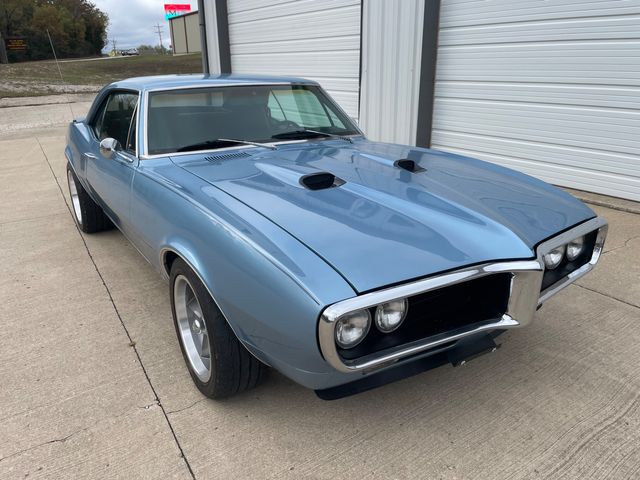
Engines, cooling and driveline wear
The engine-specific faults — OHC belt and cam wear, Quadrajet throttle-shaft wear, V8 seals and cooling plates — are covered in the engines section; this is the wear picture across the range. Oil consumption has three common causes and the tests separate them: a puff of blue smoke at start-up after sitting is valve-stem seals; continuous light smoke under load is rings; smoke with heavy breathing from the filler is general wear. A compression test, wet and dry, settles it — one low hole that rises with oil is rings, one that does not is a valve. Budget a top-end refresh at $1,500–3,000 and a full V8 rebuild at $4,500–8,000 with machining, more for a Ram Air-specification build; the six costs less in parts and more in finding a machinist who knows it.
Cooling is the V8 cars' standing weakness, and it is a system fault, not a single part. The divider-plate clearance already described, a radiator half-silted after fifty years, a missing fan shroud, a viscous fan coupling that no longer couples, and timing retarded by a stretched chain all present identically: fine at speed, creeping at idle, boiling after a hot shutdown. Diagnose in that order before buying parts — a quality replacement radiator is $400–800, a shroud and fan coupling $200–400 — and remember that a repeatedly boiled engine may have head-gasket damage, shown by pressurised hoses from cold or emulsion under the filler cap. A 400 that runs hot is not "they all do that"; a sorted 400 holds temperature.
Fuel systems age predictably. Tanks silt and rust internally, shedding debris that blocks filters; a car that starves under sustained load and recovers after a pause is often sucking a blocked tank sock or a collapsing rubber line rather than suffering pump failure. Rubber fuel lines perish and are a fire risk where they could be original — replace on sight; it is $50 of hose. The Quadrajet's other age fault is a warped air horn from decades of over-tightened bolts, giving vacuum leaks and an idle that will not settle. Ethanol in modern fuel attacks old floats and needle valves, so a car that has sat for years wants a carburettor rebuild as a recommissioning item regardless of how it first runs.
Suspension and steering wear is universal and cheap in parts, dear in accumulation. Ball joints, tie-rod ends, idler arm and centre link all wear; test with a lever under each joint, plus the dry-steering test — an assistant rocks the wheel while you watch for lost motion before the road wheel moves. A full front-end refresh in parts is $600–1,200, plus alignment. The steering box wears around the straight-ahead and can be adjusted, but a box adjusted tight to hide centre wear binds off-centre — check lock to lock. Rear leaf springs sag and crack; a car sitting low with axle tramp often simply needs springs ($400–700 a pair fitted) and dampers. Rubber bushings are age-expired on any car still wearing originals, and a refresh transforms the feel for $300–600 in parts. None of this rejects a car; all of it belongs in the negotiation, itemised.
Brakes divide by specification. Drum cars stop adequately when everything is renewed and poorly when any part is tired; budget a full drum overhaul at $700–1,400 if the drums are serviceable. Disc cars use single-piston calipers that seize on cars that sit, giving a pull under braking that changes as different calipers stick; a front disc refresh is $500–900. On every car, inspect the steel lines along the floors and over the axle: crusty, scabbed lines are a replacement set ($250–500 in pre-bent kits) before the car is driven any distance, and flexible hoses perish internally and act as one-way valves, holding a brake on — a wheel that runs hot after a drive is the tell.
Interior, electrics and trim
The interior is where asking price and reality part company, because interiors photograph well and wear in ways photos hide. Seat foam collapses on the driver's side first — if you are sitting in a hammock with the frame's edge in your back, price a re-trim: covers and foams are reproduced well, and both front seats run $1,200–2,500 depending on pattern. Dash pads crack along their top face; reproductions exist. Door cards warp at their lower edges from the same water that rusts the door bottoms, so a warped card is a prompt to check the door shell, not just a trim item. Carpets hide the floors, which is why the inspection section has you lifting them. The 1969 cars' column ignition and revised dash make their switchgear slightly harder to source than 1967–68 items.
Electrics are simple and suffer from two systemic faults: earths and age. Corroded earth straps produce every classic symptom — dim lights, slow cranking blamed on the starter, gauges reading low, charging that comes and goes — and renewing them is the first electrical job on any car, at almost no cost. The wiring itself suffers hardened insulation, previous owners' additions spliced with tape, and fuseboxes with corroded clips giving circuits that fail when warm. Multiple gremlins usually mean one earth and an afternoon; a burnt or butchered main harness is a $600–1,200 replacement and a weekend. Test everything on inspection — lights, blower speeds, wipers, horn, gauges — because the pattern is the diagnosis: one dead item is a bulb, six are a harness or an earth. A seller who says "they all do that" about the fuel gauge is usually right; the tank sender's earth is a known weak point.
Trim and brightwork decide restoration economics on an otherwise sound car. Grilles, nose pieces and the specific 1969 pieces are reproduced to varying standards; stainless polishes up, pot-metal pits and is expensive to re-chrome properly ($300–800 per significant piece), and one-year-only 1967 and 1969 details are hardest to replace correctly. Weatherstrips perish universally and a full set is $400–700 in parts — a car with new seals has had money spent in the right places, and a car that leaks in the rain will rot its own floors, closing the loop back to the rust section. On air-conditioned cars, a complete but inert system is a $1,000–2,500 recommissioning, and a system with parts missing is worth little more than a non-air car.

How to inspect one
Inspect in this order, on a cold car, in daylight, with a torch, a cloth-wrapped magnet, a jack and stands, and the seller's permission to lift carpets and the trunk mat agreed before you travel. Allow two hours. Each step cross-references the problem areas above; a car that fails an early step does not need the later ones.
- Paperwork first. Before touching the car, see the title, the VIN plate, and any PHS documentation. Confirm the title VIN matches the car, character by character. If the price assumes a 400, an HO, a Sprint, a Ram Air or a four-speed, the PHS record should already exist — if it does not, your price must assume the base specification until it does.
- Cold start, standing outside. Have the seller start the car from cold while you watch the exhaust and listen. Note start-up smoke (valve seals, per the driveline section), top-end rattle that persists (OHC cam wear or V8 lifter bleed-down), manifold tick that fades warm (gasket or a cracked manifold), and how the idle settles. An engine presented already warm has had its cold behaviour hidden; ask why.
- The rust circuit, outside. Walk the map in order: rear quarters behind the wheels with the magnet, tail panel seam, rear window channel corners, door bottoms with the doors open, rockers front to back, front wing lower rear corners, windscreen corners. Crouch behind the car and sight along each flank for ripple and filler shadow.
- Underneath. On stands or a lift, inspect floor pans, the rear leaf-spring mounting areas and torque boxes, the trunk floor from below, the subframe and its four body mounts, and the brake and fuel lines along their full length. Poke suspect areas with a screwdriver handle — sound metal rings, rotten metal crunches. This step and step 3 are the sill-jack test's evidence base.
- The sill-jack and door-gap test. With the car on its wheels, note both door gaps and open and close each door. Jack one side at the factory jacking point, watch the gaps, and try the door again. Movement, drop or binding under lift is structural flex — walk away, or reprice the car as a body restoration, per the rust section.
- Trunk and cabin floors. Lift the trunk mat and inspect the floor over the tank and both drop-offs; check for rear-window leakage staining. Inside, lift carpets at all four footwells and under the rear seat and press the floors hard. Pour water into the cowl grille and confirm it exits behind the front wheels, not onto the front carpets.
- Engine identity. Find the engine-code pad at the front of the block on a V8 and read the code and production number; on a six, read the code and confirm Sprint hardware physically — Quadrajet, split exhaust manifold — rather than by badge. Check the VIN derivative stamp on 1968-on cars against the car's VIN. Note head casting numbers on any HO or Ram Air claim.
- Engine health. Oil on the dipstick (level, colour, fuel smell), filler cap (emulsion), coolant (oil film, rust), hoses squeezed cold (crunchy means perished inside). Watch oil pressure hot at idle and listen for bottom-end rumble on lift-off — then repeat fully hot after the road test.
- Gearbox and axle. Manual: clutch bite point, judder, slip under load in top at low revs, synchromesh on a brisk 3–2 downchange, linkage slop. Automatic: fluid colour and smell, engagement delay, shift quality and kickdown on the road test. Axle: whine on the overrun, clunk on take-up, oil at the pinion and backing plates.
- Road test, twenty minutes minimum. Steering centre wear and wander, brake pull and pedal feel in a firm stop from speed, axle tramp on a brisk start, suspension knocks over broken surfaces, and how the car tracks with a light grip on a straight road. A car needing constant correction has front-end wear, a bent-subframe history, or both — the suspension section prices the first; the second is a reason to stop.
- Hot re-check and electrics. Back at base, engine hot: oil pressure at idle again, temperature behaviour sitting at idle for five minutes, any new leaks marking the ground. Then work every electrical item in the car, lights to heater speeds, and read the pattern of failures as the electrics section describes.
- The decision arithmetic. List what you have found in the three classes — body, mechanical, trim/electrics — with the cost ranges from the problem sections against each item, and add them to the asking price. If the total buys a better car already done, it is not this car's price that is wrong, it is this car. If the shell is sound and the faults are mechanical and priced in, you have found the buyable kind of Firebird.
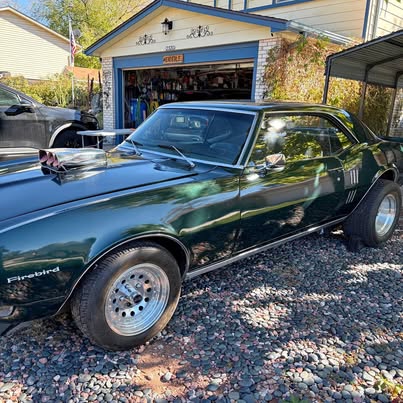
Values
There are no prices in this section, deliberately: the market block beneath this guide carries the current listings and recorded sales for the model, refreshed as the market moves, and any figure printed here would be stale before it was useful. What does not go stale is how this market behaves, and that is what you need in order to read those numbers when you reach them.
The first behaviour is the condition spread, wider here than on most classics of the era. The distance between a rusty, mis-engined coupe and a documented, correctly specified car in the same model year is not a percentage — it is a multiple, and the cheapest and dearest coupes in the market are barely the same commodity. Compare a car against recorded sales of its own specification and condition class, not the model's whole range: a base six-cylinder automatic and a Ram Air four-speed share a name and almost nothing else, and an average drawn across both describes neither.
The second behaviour is the premium structure, which follows documentation as much as specification. Value climbs in a consistent order: six-cylinder cars at the base, genuine Sprints clearly above standard sixes; small-V8 cars above them, HO cars above standard small-V8s; the 400 above those; and the Ram Air cars, four-speed V8s in the best colours, and above everything the 1969 Trans Am, at the top. But at every step a documented car out-earns an undocumented car of nominally higher specification, because the market has been burned by clones for fifty years and prices proof accordingly. A 400 with its PHS record and matching engine is a liquid asset; a claimed Ram Air without paper is priced, correctly, as a 400 with a story.
Third, the asking-versus-achieved gap. Dealer asking prices habitually sit above what recorded sales achieve, widest on over-described cars — the tribute presented hopefully, the colour-changed car described as original, the project described as nearly finished. Private sellers price closer to achieved levels but describe condition more optimistically. The recorded sales beneath this guide are your anchor, and a seller's awareness of them tests whether you are negotiating with the market or with a hope.
Fourth, the project-versus-driver gap, where most money is lost on these cars. A project coupe costs a fraction of a finished car and requires, in bodywork alone, a sum that routinely exceeds the finished car's price — the rust section's figures are the arithmetic. The genuinely mispriced cars are usually the honest mid-condition drivers: sound shells, tired cosmetics, bounded mechanical faults. Buying to restore, buy the project with the best shell and most complete trim, at project money. Buying to drive, the premium for a sorted car is almost always the cheapest money in the transaction.
Finally, colour, transmission and originality move cars within their class predictably. A factory four-speed lifts any V8 coupe. A desirable original colour — Verdoro Green, worn by one of the 400s in this guide's pool, has moved from period punchline to sought-after shade — lifts a car against the same car repainted in a fashionable non-original colour, because originality cannot be re-bought. Matching numbers are the value in a Ram Air car, a real factor in a 400 or HO, and a minor consideration in a base six bought to use. Buy the car whose value rests on things you have verified.
Parts and ownership
A first-generation Firebird is one of the better-supported American classics you can own, and the reason is standing next to it in the family: the Camaro. The shared F-body architecture means structural panels, glass, suspension, brake parts and weatherstrips are produced in volume and stocked deeply — Ames Performance and Classic Industries on the Pontiac side, the whole Camaro restoration industry for shared hardware. Floor pans, trunk floors, quarters, wheelhouses and door skins are all available as reproduction stampings of workable quality; expect panel fit to need the fettling such stampings always need, and budget your body shop's time accordingly.
The Pontiac-specific layer is thinner. Grilles, nose pieces, Firebird-only trim, correct hoods — above all the steel 400 hood — and Sprint and Ram Air induction components are reproduced selectively, priced accordingly, and sometimes available only as good used originals. The engines are well served: Pontiac V8 rebuild components, including improved modern rear-main seals that replace the rope original, are mainstream, and a specialist engine trade supports everything from stock rebuilds to Ram Air IV-specification builds. The OHC six is the exception: service parts are obtainable, but camshafts, followers and Sprint pieces require patience and club contacts rather than a next-day order, and that should be priced into a six needing top-end work. Gearboxes are straightforward — Muncie parts are a cottage industry, Turbo Hydra-Matic kits commodity items — and axles, brakes and suspension are similarly routine.
Running one asks for the rhythm of any carburetted, points-era American car. Oil and filter every 3,000 miles or annually; points and condenser, where not replaced by a discreet electronic conversion, checked at the same interval and replaced roughly every 10,000–12,000 miles. The OHC six adds its timing belt as a calendar item: replace on acquisition if the history is unknown, thereafter on the maker's interval rather than appearance. Coolant every two years protects the timing cover and divider plates from the corrosion behind the cooling faults in the problem section; brake fluid every two years likewise, because the cars sit and wheel cylinders corrode from inside. None of this is expensive in parts; all of it is cheaper than the repairs its neglect causes.
The ownership community is a genuine asset: clubs, marque forums with deep archives, and a literature documenting engine codes, casting numbers and Ram Air part numbers to a standard that makes this guide's identity checks practical for a home buyer. Use it before you buy — photographs of a car's stampings posted to a marque forum draw informed readings within a day. Insurance is conventional agreed-value classic business. Storage is the rust section read backwards: dry, ventilated, handbrake off, fuel stabilised, a battery tender rather than repeated flat-and-jump cycles.
Costs beyond purchase settle into a predictable shape. A sound car needs a first-year recommissioning budget — fluids, belts and hoses, brake hoses, a safety check, carburettor attention if it has sat — of $800–2,000 in parts and any labour you buy in. Thereafter it is tyres ($600–1,100 a set), consumables, and the rolling renewal any car of the era demands. The expenses that ambush owners are never the routine ones; they are deferred body repairs and identity surprises, which is why this guide spends its length on rust and paperwork.
Which one to buy
- The all-rounder: a 350 HO or 326 HO coupe, automatic or manual, in sound bodily condition. The HO small-V8 cars give you the Pontiac V8 experience — torque, sound, the Quadrajet's secondaries — in a lighter-nosed, less thirsty, less expensive car than a 400. Buy the best shell in this specification and you will not miss the flagship.
- The value buy: a standard 350 or 326 two-barrel coupe with a sound shell and tired cosmetics. The market prices these cars off their badges, not their condition, so a structurally honest example with faded paint routinely costs less than the bodywork it has avoided needing. Mechanical refreshment on the small V8 is the cheapest in the range.
- The connoisseur's car: a genuine Sprint coupe, ideally a 250 with a four-speed. The Sprint is the OHC six's best form and the best-handling standard car of the generation. Verify the hardware, confirm belt and cam condition, and accept the thinner parts shelf as the price of owning the interesting one.
- The muscle car: a Firebird 400 with its PHS record, a matching engine and a cooling system already sorted. Pay for documentation and a cool-running engine; walk from any car whose 400-ness rests on its hood and decals, because you will be holding it when the next buyer checks.
- The blue-chip buy: a documented Ram Air car — Ram Air II for 1968, Ram Air IV for 1969 — bought on paper first and car second. The purchase should resemble due diligence: PHS record, stampings, casting numbers and dates, component part numbers, expert inspection. Done properly, it is the most defensible money in this guide; done on trust, the most exposed.
- The one to enjoy without anxiety: an honest driver-grade 1969 coupe, small V8 or 400, bought for what it is. Driver-grade examples carry no premium for perfection, and a car you are not afraid to use is worth more to your life than a better car you are afraid to park.
The overriding rule: buy the shell and the paperwork, and let the engine specification follow — a sound, honestly documented Firebird of any specification is a better purchase than a rotten or mis-described flagship, every time, at every price. Rust decides what a Firebird costs to own; documents decide what it is worth to sell; the badge decides neither. Find the car whose floors, quarters, subframe mounts and VIN all tell the same true story, in the specification your driving calls for, and you have bought the right first-generation Firebird coupe.
See the 5 Firebird Coupe cars currently listed.
For sale now
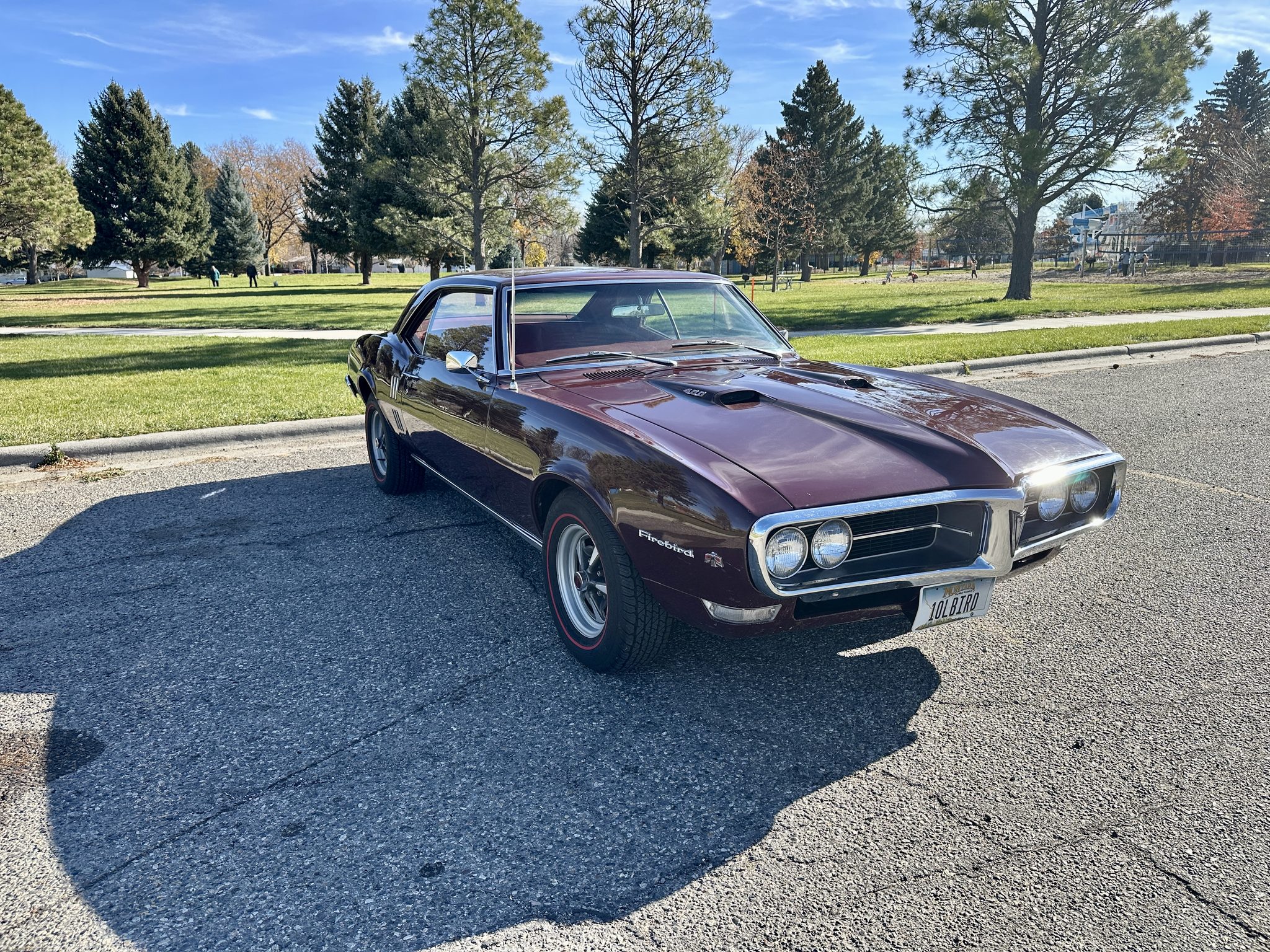 Current bid $9,500
Expand
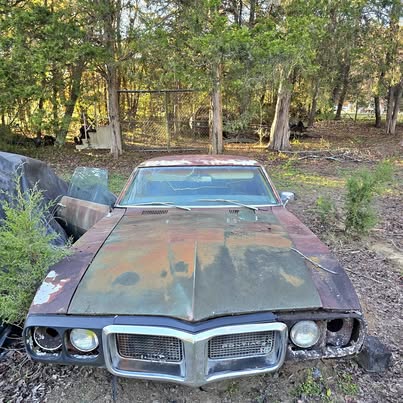 $3,500 · 79% below typical
Expand
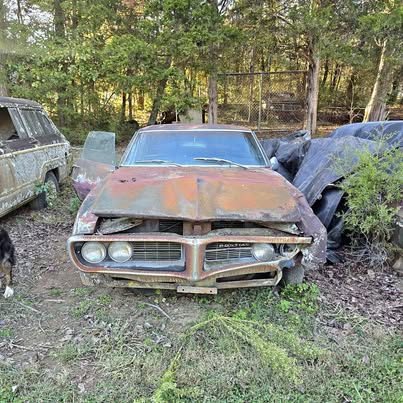 $3,000 · 82% below typical
Expand
What they sell for: Firebird Coupe sale prices.