
Porsche 356C buyer's guide
Porsche 356C -- the model's own buyer's guide: variants, values and what to check.
Years listed: 1964-1965 · Series: 356
Overview and history
The 356C is the last of the line — the final, most developed version of the car that built Porsche. When production ended in April 1965, the 356 had been in continuous evolution for seventeen years, from the first Gmünd coupés of 1948 through the Pre-A, the 356A of 1955 and the 356B of 1959. The C, introduced in July 1963 for the 1964 model year, looks at a glance like the late 356B T6 it replaced — same twin-grille engine lid, same raised nose and squared-off trunk lid, same unmistakable silhouette. Underneath, it is a materially better car, and the difference can be written in one word: brakes.
Every earlier volume-production 356 stopped on drums — big, finned, handsome drums, and well engineered, but drums all the same, prone to fade on a long descent and to pulling when damp or unevenly adjusted. The 356C adopted ATE four-wheel disc brakes as standard, a change that sounds like a detail and drives like a transformation. Discs brought new hubs, new 15-inch wheels with a wider bolt pattern and flat hubcaps in place of the earlier domed "baby moon" style, and a car that could be driven in modern traffic, on modern roads, at modern speeds, without the constant mental allowance drum brakes demand. That single change is why experienced 356 hands so often steer a buyer who intends to drive — rather than show, or complete a set — toward a C.
The timing matters to how you should read the car. The 911 had already been shown at Frankfurt in September 1963, and it entered production in 1964 alongside the last 356s. Porsche did not let the old car die neglected: the C received the disc brakes, a refined interior, detail improvements throughout, and in the SC the most powerful pushrod engine ever fitted to a production 356. At the same time, the factory was honest about the succession. When 356 production ended, the 912 was created to fill its place, powered by a detuned version of the 356 SC engine in the new 911 shell — which tells you exactly how good Porsche considered that engine to be. A 356C is therefore not a stopgap or a run-out special. It is a mature design at the end of a long development, built by a company that had already solved its problems.
In this site's current pool the model is thinly represented — 5 cars, all listed for sale, 3 from 1964 and 2 from 1965, every one a manual and every one sourced from Facebook Marketplace sellers — so treat any pool pattern here as a snapshot of five cars, not a market. These cars trade mostly through marque clubs, auctions and word of mouth, and a car surfacing on a general marketplace deserves more forensic checking, not less, precisely because it has surfaced outside the channels where its history would normally travel with it.
What you are buying, at its best, is the most usable early Porsche there is: light — a coupé weighs roughly 935 kg (about 2,060 lb) — simple, mechanical in the best sense, and sized for the road. The steering is unassisted and talks to you; the flat-four behind you makes 75 hp in a C or 95 hp in an SC, figures that read as modest until you remember how little car there is to move. At its worst, it is a rusty unibody with a tired engine and a six-figure restoration hiding under presentable paint. The C rewards the forensic buyer, because the spread between a sound car and a bad one is enormous, the bad work is easy to hide, and the good cars announce themselves — in the panel gaps, in the numbers, in the way the doors close — to anyone who knows where to look. This guide is about knowing where to look.
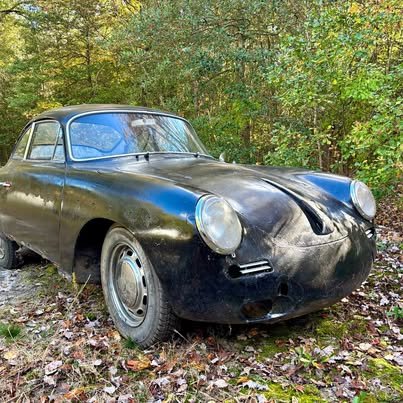
The models
The 356C range is deliberately simple to describe and surprisingly easy to get wrong in a listing, because the badge on the engine lid is the least reliable part of the car. There are two body styles, two volume engines, two body builders for the coupé, and one very rare four-cam flagship sitting above all of them. Everything else — sunroofs, 12-volt electrics, luggage, radios — is options and trim, not model lines.
| Model | Years | Engine | Output | Built | Character |
|---|---|---|---|---|---|
| 356C 1600 C coupé | 1964–1965 | 1.6 flat-four (616/15), twin Zenith | 75 hp | The bulk of C production | The usable classic: discs, torque, simplicity |
| 356C 1600 C cabriolet | 1964–1965 | 1.6 flat-four (616/15), twin Zenith | 75 hp | A minority of C production | Open car on the C running gear; check the hood and the floors twice |
| 356 SC coupé | 1964–1965 | 1.6 flat-four (616/16), twin Solex | 95 hp | A minority of C production | The fast pushrod car; revs, response, premium |
| 356 SC cabriolet | 1964–1965 | 1.6 flat-four (616/16), twin Solex | 95 hp | Scarcer than the SC coupé | The most sought-after volume C; verify the engine, not the badge |
| 356C 2000 GS Carrera | 1964–1965 | 2.0 four-cam flat-four (587/2) | 130 hp | Very small numbers | A competition engine in a road shell; specialist-only territory |
Total C and SC production across both years and both body styles was roughly sixteen to seventeen thousand cars — a substantial run by 356 standards, which is why parts and knowledge remain available, and a small one by modern standards, which is why sound original cars are hunted. Treat any seller's more precise production claim for a sub-variant with the same suspicion as any other unverified number: the chassis number and the factory record, discussed below, are what settle a car's identity, not a rarity story in an advertisement.
Coupé or cabriolet. The coupé is the core of the market: stiffer, quieter, weatherproof, and the car most buyers should start from. The cabriolet is a proper convertible with a lined, folding hood and a wind-up-window cabin — not a speedster-style toy — and carries a clear premium when right. It also carries two extra inspections: the hood itself (frame, lining, rear window, seals, fit at the windscreen frame) and everything water does to an open car over sixty years, so floors, seat frames and door internals get examined twice as hard. A tired hood is a known, priceable job; soft floors are the same structural conversation as any rotten 356, with a dearer badge on it.
Reutter or Karmann. Coupés were built by two houses. Reutter of Stuttgart — the firm whose seat business survives as Recaro — built coupés and all the cabriolets; Karmann of Osnabrück also built coupés, as it had since the B. There is no quality hierarchy to buy by: same drawings, same running gear, and condition overwhelms builder on any individual car. The builder matters for identity, not bragging rights — it is recorded in the chassis-number sequence and on the factory record, and a car whose paperwork claims one builder while its numbers say another has a story that has already come apart once. Learn to read the numbers (see How to inspect one), not the seller's description of them.
C or SC. This is the real choice in the range, and it is an engine choice, not a trim choice: the 75 hp 1600 C and the 95 hp 1600 SC are covered in full in the next section. In character, the C is the torquier, calmer road car and the SC the keener, higher-revving one. In the market, the SC carries a premium that is justified by a correct, original SC engine and is pure loss when paid for a badge, a pair of Solex carburettors bolted to a C bottom end, or a replacement engine of unknown parentage. SC conversions and re-badges have existed for as long as the price gap has, which is to say for decades. The rule for the whole model applies with double force here: verify the engine number, never the badge.
The 2000 GS Carrera. Above the pushrod cars sat the four-cam Carrera, its Ernst Fuhrmann-designed engine — two overhead camshafts per bank, twin ignition, dry-sump lubrication — derived from racing. In C form it is the 2000 GS, at 130 hp genuinely fast for 1964 and genuinely demanding forever after: engine work is a handful-of-specialists-in-the-world undertaking, and a rebuild is a five-figure event before anything unusual is found. If one is offered to you through a general listing at pushrod money, the correct assumption is that it is not one, or that something material is undisclosed. Real Carreras trade through specialists with documented provenance. This guide covers the pushrod cars in depth and the Carrera only to warn you how different its ownership proposition is.
Replicas — name them plainly. The 356 shape has been widely reproduced, in glassfibre and occasionally in metal, by firms including the Brazilian Envemo concern (which built notably faithful Super 90-style replicas, some on shortened Volkswagen floorpans and some on its own chassis), plus Beck, Intermeccanica, Vintage and others, mostly speedster-shaped but with coupés among them. A replica honestly described and honestly priced is a legitimate fun car. A replica described as a Porsche 356C is fraud, and the defence is mechanical, not aesthetic: a real C has a Porsche chassis number stamped into the front trunk floor, a Porsche engine with a stamped 616-series number, and a unibody structure that no floorpan car reproduces. In the current pool of 5 cars on this site, one listing is itself titled as an Envemo — a reminder, in a sample of five, that replica identification is not a theoretical exercise on this model. Check the numbers first, fall in love second.
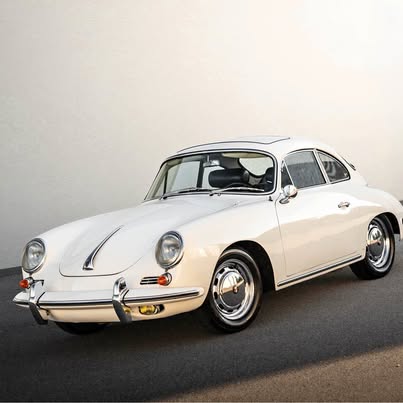
Engines and gearboxes
The pushrod flat-fours: 616/15 (1600 C) and 616/16 (1600 SC)
Both volume engines are the same engine in architecture, and understanding the family explains both. The 356 motor descends from the Volkswagen flat-four but shares almost nothing with it by the time Porsche has finished: an aluminium crankcase in three pieces, a forged counterweighted crankshaft running in plain bearings, individual cast-iron cylinders with aluminium heads, overhead valves worked by pushrods from a single central camshaft, and dry-sump thinking replaced here by a conventional wet sump with a generous oil capacity for the engine's size. Displacement is 1,582 cc from an 82.5 mm bore and 74 mm stroke. These are strong, understressed engines with one structural weakness that governs every assessment you will make: they are old, they are valuable, the crankshaft and crankcase are the value, and the cost of work rises steeply the moment a problem reaches them.
The 1600 C — Type 616/15, 75 hp. The C engine runs an 8.5:1 compression ratio and breathes through two Zenith 32 NDIX twin-choke carburettors, one per bank. Output is 75 hp (DIN) at 5,200 rpm, with its torque low and usable — this is an engine tuned for the road, and on the road it feels it: it pulls from 2,000 rpm without complaint, cruises at motorway speed without strain, and asks only for clean oil, correct valve clearances and carburettors that have not been "improved" by amateurs. It is the engine the 912 later borrowed in detuned form, which is a backhanded guarantee of its manners. In a buying inspection the C's virtues are its vices inverted: because it tolerates neglect for a long time, neglected ones are everywhere, still running, still saleable, and quietly wearing their valve guides, rings and bearings. A C that starts, idles and pulls is not thereby a healthy C — see the endplay and leak-down tests below.
The 1600 SC — Type 616/16, 95 hp. The SC raises compression to 9.5:1, fits a more ambitious camshaft and larger valves, adds a counterweighted crankshaft specification and chromed cylinder bores in period form, and breathes through two Solex 40 PII-4 twin-choke carburettors. Output is 95 hp (DIN) at 5,800 rpm, and the character change is larger than the 20 hp suggests: the SC wants revs, comes alive above 3,500 rpm, and rewards a driver who uses the gearbox. It is the most powerful pushrod engine Porsche put in a production 356, and it is correspondingly the most expensive to rebuild properly, because the specification lives in the details — correct cam, correct heads, correct carburettors, correct distributor — and a "rebuilt SC" assembled from C-grade parts is a C with a story. The engine number settles what the engine began life as; the inspection settles what it is now.
What wears, and how it tells you. Work through the engine as a system, in this order, because each test is cheap and each result prices the next.
Oil leaks are the 356's native language. Expect seepage at the pushrod tube seals, the oil cooler seals, the crankcase seams and the rear (flywheel-end) main seal, and learn to grade rather than merely note: a mist of oil on the case that never reaches the floor is an old Porsche being an old Porsche; drips on the ground after a run, oil on the clutch, or a wet underside blown back along the floor are jobs with prices. A full reseal with the engine out is a four-figure job at a specialist once the "while we're in there" items are counted, and on these cars they always should be — clutch, main seal, cooler seals and engine mounts are all cheapest at the same moment.
Crankshaft endplay is the single most informative thirty seconds you can spend on a 356 engine. The crank's fore-and-aft float is set by shims at the flywheel end; as the thrust bearing and case wear, the float grows, and excessive endplay is the classic symptom of a tired bottom end approaching a rebuild. The field test is crude but real: with the engine off, pull and push the crankshaft pulley firmly and feel for movement — a faint, barely perceptible click is normal territory; an audible clunk and visible travel is not. The workshop version puts a dial gauge on it and measures against the factory tolerance, and any pre-purchase inspection you commission should report the number. Endplay plus low hot oil pressure plus bearing noise is a rebuild conversation; endplay alone is a price conversation.
Compression and leak-down divide the honest engines from the storytellers. Even compression across all four cylinders with a modest spread is what you want; one low cylinder is a valve, a ring or a head problem localised to that corner, and a leak-down test tells you which — air hissing at the exhaust pipe is an exhaust valve, at the carburettor intake an inlet valve, at the oil filler the rings. On an SC, insist on both tests: the premium you are paying is for an engine, so measure the engine.
Carburettors are where running faults live. The Zenith 32 NDIX on the C is a sound carburettor whose enemies are wear in the throttle shafts, perished diaphragms in the accelerator pumps, and decades of varnish from standing fuel; the symptoms are a flat spot on tip-in, a hunting idle and hesitation that owners misdiagnose as ignition for years. The Solex 40 PII-4 on the SC is the more temperamental instrument — a sophisticated twin-choke whose throttle-shaft wear admits air the jets never metered, giving an idle that will not settle and progression that stumbles — and properly rebuilding a pair, with shafts rebushed, is specialist work in the region of $1,500–3,000 for the pair depending on condition. Budget for it on any car that "just needs a tune-up": on a 356, that phrase is doing heavy lifting, and carburettor wear is usually the load.
Ignition is conventional points-and-coil Bosch equipment: a worn distributor shaft gives timing scatter you can see with a strobe as a wandering mark, and the correct distributor for the engine type matters to value as well as running. Electronic conversions are common and, on a driver, sensible; on a car sold as original, a deduction to note, not a fault to fear.
Cooling and tinware are invisible in most listings, so look yourself. The sheet-metal shrouding — the "tin" — channels fan air over the cylinders and through the oil cooler; missing or badly fitted tin, a perished compartment seal or debris in the fan housing makes an engine run hot while excuses are made for it. Complete tin, intact seal, clean fan: that is the standard, and an engine that has been cooked has shortened the life of everything inside it.
The four-cam: Type 587 (2000 GS Carrera)
Briefly, because almost no reader will buy one and every reader should recognise one: the Carrera engine is a wholly different machine — gear- and shaft-driven twin overhead camshafts per bank, two spark plugs per cylinder, dry-sump lubrication, and a Hirth-type built-up crankshaft on roller bearings in its classic form. It does not share the pushrod engine's parts, people or prices. Assessment is provenance plus a named specialist's report, full stop. Any pushrod inspection method applied to it — including most of this guide — is out of its depth, and so is any generalist workshop.
Gearboxes: the Type 741 four-speed
Every volume 356C uses Porsche's Type 741 four-speed manual: all-synchromesh, in a light-alloy case at the rear, with a single dry-plate clutch and the characteristic long, deliberate linkage running forward to the gear lever. In this site's pool of 5 cars, all 5 are manuals — which, for once, is a pool pattern that matches reality exactly, because there was no automatic 356 of any kind. If a listing describes a 356C with anything other than a four-speed manual, the listing is wrong about something, and it is worth finding out what else it is wrong about.
A good 741 is a pleasure: light, precise once warm, with synchromesh that copes if you give it its half-second. Judge it cold and hot. The known wear points are second-gear synchromesh (the first to go, announced by a crunch on hurried downchanges that double-declutching cures — the test that separates synchro wear from linkage slop), worn shift linkage bushes (a vague, stirring-porridge gate that is cheap parts and real labour to renew, and transforms the car when done), and tired gearbox mounts, which let the whole powertrain move and make every other judgement harder. Whine in gear under load points at bearing or final-drive wear; a box that jumps out of gear on the overrun is worn internally and is a rebuild, realistically $3,500–6,500 at a specialist with the engine and box out, before any gears themselves are found damaged. Gearbox numbers are stamped on the case and recorded against the car — check the number is a 741-series stamping of the right period and, where the factory record gives it, that it matches. A non-matching gearbox in an otherwise honest driver is a negotiation point; a non-matching gearbox in a car priced on originality is a re-pricing event.
The clutch is conventional and its judgements are too: biting point, judder from a contaminated or warped plate (rear main seal leaks contaminate plates — two faults, one origin), and a heavy or noisy release bearing. Clutch replacement is an engine-out job on a 356, which is why it is so often deferred and why its cost — $1,200–2,500 all-in at a specialist — belongs in the deferred-maintenance arithmetic of any car that slips or judders.
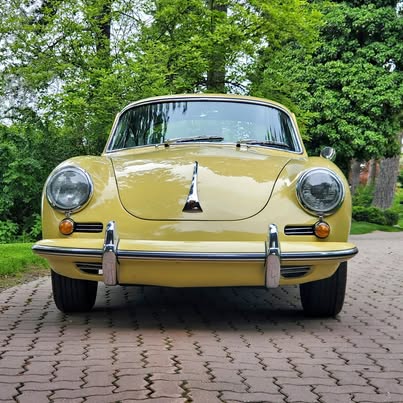
Problem areas
A 356C is a hand-finished, unitary-construction car built from sheet steel by early-1960s methods, with rust protection that was adequate for its expected life and has now been asked to last four times that long. Everything that follows flows from that sentence. The mechanicals are strong and rebuildable; the interior is restorable at a price; the electrical system is simple. The body is the car, the body is where the money goes, and the body's enemies are water, time and previous repairs done to a price. In a pool as small as this site's current 5 cars — all 5 from Facebook Marketplace, 2 of them in Washington state, 1 each in Delaware, Florida and California — no incidence claim can honestly be drawn, so this section makes none: it gives you the map, drawn from the model's known behaviour across six decades, and the tests that settle each area on the individual car in front of you.
Rust: the map
Work through the structure in this order, because the order is the order of consequence.
The longitudinals. The single most important check on any 356. The car's strength runs through two box-section members — the longitudinals — that run along each side of the floor, tying the front and rear structures together, carrying the jacking points and giving the shell its torsional stiffness. They rot from the inside out, fed by water that enters through the floor seams, the jack-point openings and the closing panels, and they can be structurally finished while the outer paint still presents well, because the visible outer face is the last part to perforate. Test them three ways: look, from underneath, along their full length for bubbling, flaking and seam swelling; press and tap, listening for the note to change from a ring to a crunch; and watch what happens at the jack points when the car is lifted by them, as described in the inspection. Longitudinal replacement is panel fabrication, alignment-sensitive welding and paint — a five-figure conversation on a car that needs both sides and the floors with them, and the point at which a cheap C stops being cheap in any currency. A car with genuinely sound, original longitudinals has passed the examination the whole purchase turns on.
The battery box and front trunk floor. The battery sits in the front trunk, in a box at the floor of the compartment, and it is the 356's equivalent of the trap that catches so many cars of the era: acid and water collect under and around the battery, the box floor perforates, and the corrosion spreads into the front trunk floor and the nose structure around it. The check costs nothing and is skipped in most viewings: lift the battery out — or at minimum lift the spare wheel and mats, look at the box from above and below, and prod the corners. A perforated battery box alone is a contained repair, in the region of $800–2,000 welded and painted properly. A battery box whose rot has walked into the surrounding floor and the front closing panels is the front of the car asking for fabrication, and it usually arrives with nose-panel history as well.
Floors. The floor pans are broad, flat and low, and they collect what the longitudinals' water does next. Lift every mat and carpet — the rear seat base and the front footwells especially — and look for the full range: surface bloom (treatable), pitting (judgement), perforation along the seams and around the seat mountings (panel work). Replacement floor sections are available and fitting them is well-understood work, roughly $1,500–3,500 a side done properly with the seams sealed — but floors, like the W108's, rarely rot alone. Floor rust is a marker: it tells you the car has been wet, and it instructs you to grade the longitudinals, the door bottoms and the rear structure as guilty until examined.
Door bottoms and door structure. The doors are long, heavy for their size, and closed at the bottom by a seam that traps what the window seals let past. Run a fingertip along the bottom edge of each door, feel for bubbling under the paint, check the drain slots are open, and then judge the door the way the factory's reputation says you should: by how it closes. A 356 door in a sound shell shuts with a precise, expensive clunk and sits flush with even gaps. A door that has to be lifted, slammed or persuaded is telling you about hinge wear, door-skin and frame corrosion, or a shell that has moved — three different prices wearing one symptom, and separating them is inspection work, not guesswork.
The nose: front lid surround, headlamp bowls and the brow. The front of a 356 lives a hard life: it is the first thing to meet parking impacts, stone chips and road salt, and its compound curves make honest repair difficult and dishonest repair tempting. The classic tells are filler in the brow above the headlamps, distorted headlamp bowls and rims that do not sit evenly, a front lid whose gaps wander, and ripples in the nose panel visible in raking light. None of this is necessarily structural — but nose filler hides the battery-box and front-floor condition behind it, and a car that has been nudged hard enough to move the front structure is a car whose door gaps and windscreen fit you should read as evidence, not as charm.
The rear: engine compartment, rear closing panels and the torsion-bar area. Check the engine-compartment floor and side panels, the rear valance and closing panels below the engine lid, and the structure around the rear torsion-bar tube and spring-plate mounts, where road dirt packs and holds moisture. Rear structural corrosion is less common than front and side corrosion and more awkward to repair, because the rear panels both close the body and locate the running gear. Oil confuses the picture: a long-term leak preserves the metal it coats, so clean-looking rear undersides on a leaky car deserve the same prodding as any other.
Jack points, closing panels and the underside generally. The jack spurs and the closing panels at the ends of the longitudinals are small parts with large meaning: they are low, they are wet, and they are honest, because nobody restores them for show. Their condition is a fair sample of the underside's condition. Read the underseal as evidence while you are under there — old, patchy, honestly worn coating over sound metal is what a preserved car looks like; a fresh, uniform coat of black applied over everything, seams and fittings included, in the weeks before a sale is a question the seller should be made to answer.
Suspension, steering and brakes
The front suspension is the Volkswagen-pattern layout Porsche developed to a high art: twin trailing arms on each side, transverse torsion bars in the beam tubes, telescopic dampers, and steering by worm and peg through a linkage with king-and-link-pin swivels. Its wear points are exactly its service points. King and link pins wear when their greasing is neglected, giving play you feel by rocking the front wheel and vagueness you feel through the wheel; the torsion-bar beam tubes themselves can corrode at their ends; dampers tire; and the steering box develops free play at centre that adjustment only partly cures once the peg and worm are worn. None of this is exotic — a front-end refresh of pins, bushes and dampers is well-understood work, roughly $1,500–3,500 at a specialist depending on how much is found — but all of it is negotiable only if you find it before the seller's price assumes you won't.
At the rear, the swing-axle layout with transverse torsion bars is joined on the C by a transverse compensating leaf spring, fitted to calm the swing axle's jacking tendency and make the car's limit behaviour kinder. Check the spring and its mounts for corrosion and cracking, the torsion-bar tubes as above, and the axle boots: split CV-style boots at the swing-axle joints leak the gearbox oil they contain, and a car driven on split boots has been spending its gearbox's bearings to save a small bill. Judge stance from behind as well as from the side — a rear wheel sitting at a noticeably different camber angle from its partner is geometry telling you about wear, damage or tired torsion bars, and it is not a "character" item.
The brakes are the C's glory and should be tested like it. ATE discs at all four wheels, with a single-circuit hydraulic system in period form — many cars have since been converted to a dual-circuit master cylinder, a safety upgrade you should welcome on a driver and note on a car sold as untouched. The failure modes are those of any sixty-year-old hydraulic system that has sat: calipers with seized pistons and corroded bores, perished flexible hoses, a master cylinder bypassing internally (the pedal sinks slowly under sustained pressure — the test is to hold it hard for thirty seconds and feel), and discs scored or below thickness. A full hydraulic refresh — calipers rebuilt or replaced, hoses, master cylinder, discs and pads as needed — runs roughly $1,500–3,000 with labour and transforms the car. Pedal feel is the summary judgement: high, firm, and the car pulling up straight and true, repeatedly, from speed. A C that does not stop like a disc-braked car has a bill attached, and the bill is knowable — which makes brakes one of the fairest negotiation grounds on the whole car.
Interior, trim and the cabriolet hood
The C's cabin is simple, beautifully made and expensive to put right in the details. Seats are steel-framed with horsehair-derived padding under vinyl or leather; the padding crumbles with age, announcing itself as dust under the seats and a sitting position sunk toward the frame. Sit in the driver's seat and judge from there. Re-trimming a pair of seats properly is a four-figure job, and a full interior in leather — carpets, headlining and door cards to the correct patterns and materials — runs well into five figures at a trimmer who knows the model. That is why an honest, original, worn-but-sound interior beats a fresh, wrong one: correct materials, stitching and carpet weave are the difference between restoration and upholstery, and the market knows it.
Instruments are VDO — a large central tachometer flanked by speedometer and a combined gauge — failing in period ways: tired movements, fogged glass, a clock that stopped in another century; refurbishment is priced per instrument. What you are checking in the cabin is completeness and correctness — the right wheel, knobs, radio or blanking plate — because small correct parts for these cars are hunted and priced accordingly.
Chrome and brightwork — bumpers with their overriders, headlamp rims, hubcaps, window frames, the horn grilles beside the front indicators — pits and dulls, and re-plating a full set to a proper standard is a serious bill that should be counted piece by piece on any car whose price assumes bright chrome. Body rubber is the quiet budget line: a full set of quality seals for a coupé is a four-figure purchase before fitting, a cabriolet's more, and perished window and door seals are not cosmetic items on a car whose floors rot from the top down — they are the water supply.
On a cabriolet, the hood is a mechanism, not a cover: frame joints, lining, padding, rear window clarity, the fit and sealing at the windscreen header rail, and the operation — smooth, even, latching without force. A hood replacement to the correct standard is a major trim bill, in the region of $4,000–7,000 fitted by a specialist trimmer, and a hood frame with bent or worn joints multiplies it. Price the hood you can see, not the one in the photographs with the top down.
Electrics
The C is a 6-volt car as standard — generator charging, 6-volt battery in the front trunk, 6-volt everything — with 12 volts a factory option that few private buyers took and many later owners have retrofitted. Neither system is a fault; both are judged by execution. A well-maintained 6-volt car starts and lights adequately, and its dim-by-modern-standards lamps are a period trait, not a defect. A badly maintained one — corroded earth straps, a tired generator, voltage drop in sixty-year-old connections — cranks slowly, lights feebly and generates electrical "mysteries" that are all, in the end, resistance. The tests are the multimeter tests: charging voltage at the battery with the engine running, voltage drop across the main earth strap during cranking, and every function worked in turn — lamps, indicators, wipers, horn, instruments, interior light. A 12-volt conversion done properly (generator or alternator, regulator, bulbs, wiper and fuel-gauge provisions, battery) is a legitimate driver upgrade; a conversion done by changing the battery and hoping is a fault list. Ask which you are looking at, and let the answer adjust the price, not the adjectives.
How to inspect one
Allow two hours, not one — a 356C hides its condition in more places than a bigger car, and none can be hurried. Bring a torch, a cloth-wrapped magnet, a small screwdriver for prodding (with the seller's permission) and a notebook. If the car passes you, commission a specialist inspection with the car on a lift and a dial gauge on the crank pulley before money moves: on this model, that inspection is not a formality, it is the purchase.
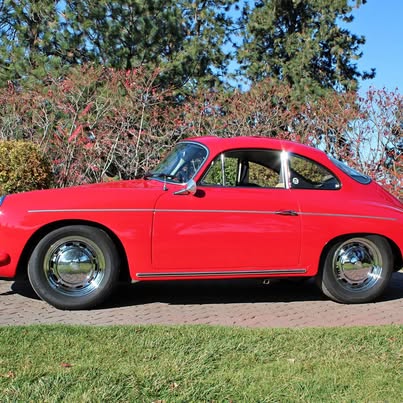
- Start with the numbers, before the car. The chassis number is stamped into the floor of the front trunk, and repeated on the identification plate. Read it yourself, photograph it, and check it against the title or registration exactly, digit by digit. A 356C's number places the car by year and body builder; a number that does not sit in the C sequences, a stamping that looks re-cut, ground or disturbed, or paperwork that does not match the metal ends the viewing until it is explained in documents, not conversation.
- Engine and gearbox numbers. The engine number is stamped on the crankcase — on the vertical boss by the generator stand on the third case piece — and its prefix tells you the engine type it began life as: a 616/15-family stamping for a 1600 C, a 616/16-family stamping for an SC. Compare it with the badge on the engine lid and with any factory record supplied. Then find the gearbox number on the 741 case and note it the same way. Mismatches do not automatically kill a car; undisclosed mismatches, discovered by you, re-price it.
- The factory record. Ask for the Kardex copy or the modern Porsche production-specification document (the successor to the old Certificate of Authenticity) and for the history file behind it. The record gives the original engine and gearbox numbers, the builder, the colours and the options as the car left the factory. A thick, continuous file — invoices from named specialists, old registrations, club history — is worth real money on this model, because it is the only thing that converts a seller's story into a car's history. No file is not a verdict; no file and no matching numbers is.
- Cold start. Insist the engine is stone cold when you arrive — a warmed-up 356 has had its two best tells (starting behaviour and cold oil pressure behaviour) erased. A healthy pushrod engine starts promptly, may smoke faintly for a few seconds, and settles to an even idle. Blue smoke that persists is oil — guides, rings or both. Listen at the fan housing for bearing growl and at the valve covers for a top end that stays noisy once warm.
- Endplay and the dipstick. Engine off: pull and push the crank pulley, feeling for the clunk of excessive end float described in the engine section. Engine warm, after the drive: check the oil's level, colour and smell, and look under the filler cap. Then look at the ground where the car stood and the underside's wetness pattern, and grade the leaks as the engine section grades them — misting is age, dripping is money.
- Underneath: the longitudinals settle the car. On a lift if at all possible, torch in hand, work the full rust map from the problem areas: longitudinals first, full length, both sides, tapping and pressing; then floors and their seams, battery box from below, jack points, closing panels, rear torsion-bar area. Perforation in the longitudinals is structural and reprices or ends the purchase. If the seller permits, lift each side in turn on the car's own jack at its jacking points and watch and listen: a sound structure rises quietly; a rotten longitudinal complains. Fresh, uniform underseal over everything is recorded as a question, never accepted as an answer.
- Doors, lids and gaps. Open and close both doors from outside and inside: the standard is the factory clunk, flush fit, even gaps, no lift-and-slam. Run the magnet over the nose, the brow above the headlamps, the door bottoms, the lower rear quarters and around the front lid — filler announces itself. Check the front lid and engine lid gaps for wander, and the headlamp rims for even seating. Sight down both flanks in the best light available.
- Front trunk and battery box. Spare wheel and mats out. The battery box gets lifted, prodded and judged as the rust section describes; the trunk floor, the inner nose panels and the chassis stamping you read at step 1 all get a second look now that you know what you are looking at. Water staining, a damp smell or fresh paint localised to this compartment are all findings.
- Engine compartment and tinware. Engine lid up: complete cooling tin, intact compartment seal, clean fan housing, correct carburettors for the claimed engine (Zenith 32 NDIX on a C, Solex 40 PII-4 on an SC — a C engine wearing Solexes is a story, and stories need documents), correct distributor, no wiring improvisations. Note the oil cooler's external state and any wetness at the pushrod tubes and case seams.
- The test drive. Twenty minutes minimum, mixed roads, engine fully warm. Use the gearbox: synchromesh into second, up and down, is the test the 741 section describes; note any whine, any jumping out on the overrun, any clutch judder or slip on a hill in a high gear. The engine should pull cleanly from low revs in a C and come on song above 3,500 rpm in an SC, with no flat spot you could set your watch by — progression stumbles are carburettor wear until proved otherwise.
- Brakes and stance. From 50 mph, brake firmly, more than once: straight, true, no judder, a pedal that stays high — then hold the pedal hard at a standstill for thirty seconds and feel for the slow sink of a bypassing master cylinder. This is a disc-braked car and should stop like the best-braked car of 1964, because it was. Afterwards, stand back: level stance, matched rear camber, no corner sitting down. Photograph the car in profile from ten paces; stance faults you rationalised in person are obvious in a picture.
- Interior, hood and electrics last. Sit in the driver's seat and feel for the frame through the pad; look under the seats for padding dust; work every instrument, lamp, the wipers, horn and heater fan; on a cabriolet, put the hood up and down yourself, latch it, and inspect the floors a second time with an open car's history in mind. A sound, correct, original interior is the hardest part of this car to recreate at any price, so weight what you find here more heavily than its position at the end of the list suggests.
Values
The figures that matter for this model are computed from this site's own listings and recorded sales, and they sit below this guide — the listed-now summary and the market block are refreshed every time the site rebuilds, so use them rather than any number quoted elsewhere. What follows is how to read them, and it needs one honesty note first: this site's current pool for the 356C is 5 cars, all for sale, all from Facebook Marketplace sellers, split 3 cars from 1964 and 2 from 1965, in black (2 cars), white, yellow and red (1 each). A sample of five cannot carry a median, a trend or a verdict, and any figure drawn from it should be read as five individual asking prices wearing a costume. The wider 356C market — auctions, specialists and marque channels — is where the real price discovery happens for this model, and the block below should be triangulated against it, never read alone.
The drivers of 356C value rank in this order. First, the shell: a structurally sound, honestly original car — longitudinals, floors and battery box intact — is the foundation every other value sits on, because structural restoration is the one bill that can exceed the finished car's worth. Second, the numbers: a matching-numbers engine and gearbox, verified against the factory record, carries a premium that grows with the car's other virtues; a non-matching engine in a driver is a deduction, and in a car priced as a collector piece it is a different car. Third, the variant: the SC's premium over the C is real when the engine number and specification earn it, and the cabriolet's premium over the coupé is earned the same way, by a sound hood and a structure that survived an open car's harder life. Fourth, documentation: on a model where identity is value, a continuous history file is part of the car.
Read the condition spread as three different markets sharing a badge. At the bottom sit the projects — structurally tired, incomplete or long-stored cars whose price is really an opening bid in a restoration negotiation, and whose correct comparison is not with other 356Cs but with the cost of the work, priced in the sections above. In the middle sit the drivers: sound, maintained, presentable cars with honest flaws, where the spread within the band is set by exactly the inspection findings in this guide — endplay, synchromesh, carburettor health, interior originality. At the top sit the restored and the exceptional original cars, where the premium is paid for correctness and provenance and is forfeited, quickly, by wrong details: a C engine in an SC-priced car, a retrim in the wrong materials, a colour change without documentation. Asking prices in the general-listing world run optimistic on this model — sellers price the badge and the best auction result they can remember — while achieved prices, especially at auction, are the corrective. The gap between a project and a driver is wide; the gap between a good driver and a great car is wider; and the cheapest 356C in any given month is, with a consistency that amounts to a law, the most expensive way to own one.
Parts and ownership
The 356C sits in the fortunate middle of classic-car support: old enough to be simple, valuable enough that the trade has invested in it, and built in sufficient numbers — roughly sixteen to seventeen thousand C and SC cars — that knowledge and reproduction parts exist in depth. Porsche's own classic operation supplies a meaningful range, US and German marque specialists cover most of the rest, and the 356 Registry and club scene carry knowledge owners of rarer cars can only envy.
Easy: service consumables, ignition parts, brake discs, pads, calipers and hydraulics, dampers, suspension wear parts, exhaust systems in standard form, body seals and rubbers (at a price), glass, and most engine service items for the pushrod motors. Order today, fit this week, at prices that are Porsche prices rather than exotica prices.
Harder and dearer: correct carburettor work — a properly rebushed pair of Solex 40 PII-4s or Zenith 32 NDIXs is specialist work, priced in the engine section — crankshafts and crankcases in good order (the heart of the engine's value, and priced like it), correct SC-specific components, original interior materials to the factory patterns, quality chrome, cabriolet hood frames and mechanisms, and anything four-cam, which belongs to another economy entirely. Body panels exist, including structural sections for the longitudinals and floors, but panel availability is not the cost — the skilled labour of fitting them into a hand-built shell, aligned and gapped to factory standard, is the cost, and it is why the parts section of this guide ends where the problem areas began: buy the shell.
Running costs. A sorted 356C is a realistic regular-use classic in a way few cars of 1964 are: the disc brakes, the torquey pushrod engine and the model's sheer development make it a car you can drive to the event rather than trailer to it. Fuel consumption sits in the mid-to-high twenties mpg driven with sympathy; servicing — oil, valves, points, carburettor balance — is within any good air-cooled specialist and within a competent owner's own garage, which is part of the model's culture. The budget lines that catch new owners are the deferred-maintenance catch-up (on a running car that has been used gently and serviced loosely, $3,000–6,000 in the first year is an honest planning figure before improvements), recommissioning after long storage ($6,000–12,000 at a shop once the fuel system, brakes, tyres and seals have all had their say — old fuel varnish, perished rubber and seized hydraulics are certainties, not risks, on a car that has slept), and the standing truth that every "while it's out" job on a rear-engined car doubles the labour logic of a front-engined one. Six-volt electrics maintained in good order are adequate; budget a conversion only if you will use the car at night, in winter, a lot — and then budget it done properly, as the electrics section describes. Buy a car in current, regular use over a car with a lower mileage and a longer sleep, at the same money, every time: on a 356C, use is maintenance and storage is a debt accumulating interest.
Which one to buy
- The all-rounder: 1600 C coupé. Disc brakes, the torquey 75 hp engine, the stiffest, most weatherproof shell, and the deepest pool of cars, parts and knowledge. If you want one 356C to drive, tour and keep, this is it — in matching-numbers form with a sound structure, it is the centre of the market for a reason.
- The driver's pick: 1600 SC coupé. The 95 hp engine transforms the car above 3,500 rpm and the coupé shell keeps the weather out. Worth its premium when — and only when — the engine number, the Solexes and the history file all agree it is a real SC.
- The open car: 1600 C or SC cabriolet. A proper convertible with a lined hood and a full cabin, and the most glamorous way to own the model. Buy it on structure and hood, in that order: the floors and longitudinals of an open car have lived the wettest life, and the premium evaporates into the first structural invoice.
- The value buy: an honest C coupé with a non-matching engine. Priced by collectors as a deduction and by drivers as an opportunity — a sound shell with a healthy, correct-type replacement engine is the cheapest route into real 356C driving, provided the price honestly reflects the numbers and nobody is telling stories about them.
- The specialist's car: 2000 GS Carrera. Magnificent, rare, and an ownership proposition measured in named experts and five-figure engine events. Buy one through the specialist market with provenance; it is not a listing-site purchase.
And the rule that overrides all of the above: buy the structure and the numbers, and let the specification follow. Engines can be rebuilt, carburettors rebushed, interiors retrimmed and chrome replated, all at prices you can plan for. Rotten longitudinals and an identity that does not survive its own paperwork are the two defects no budget reliably cures — and the cars that have both right reward their owners every drive.
See the 10 356C cars currently listed.
For sale now
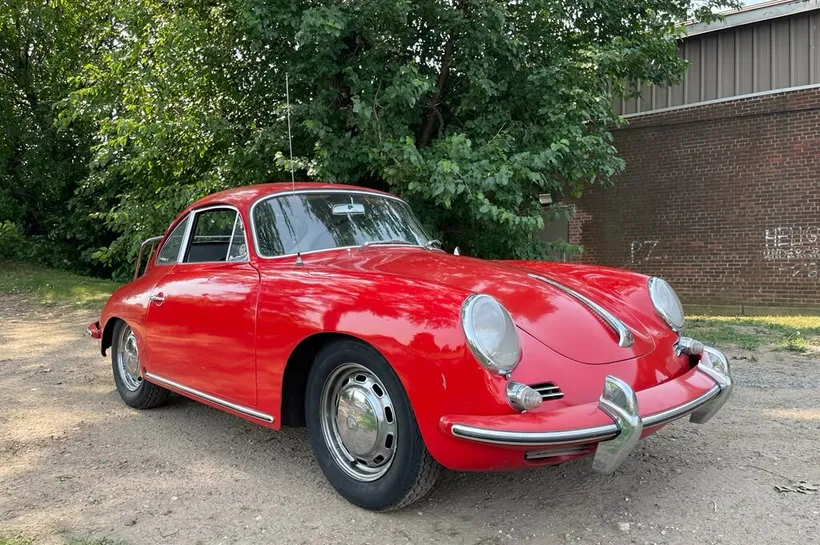 $21,250
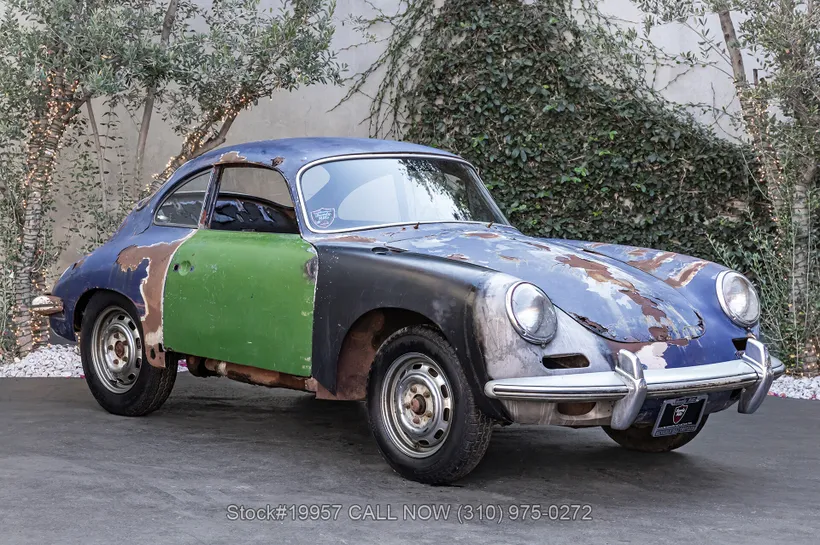 $21,250
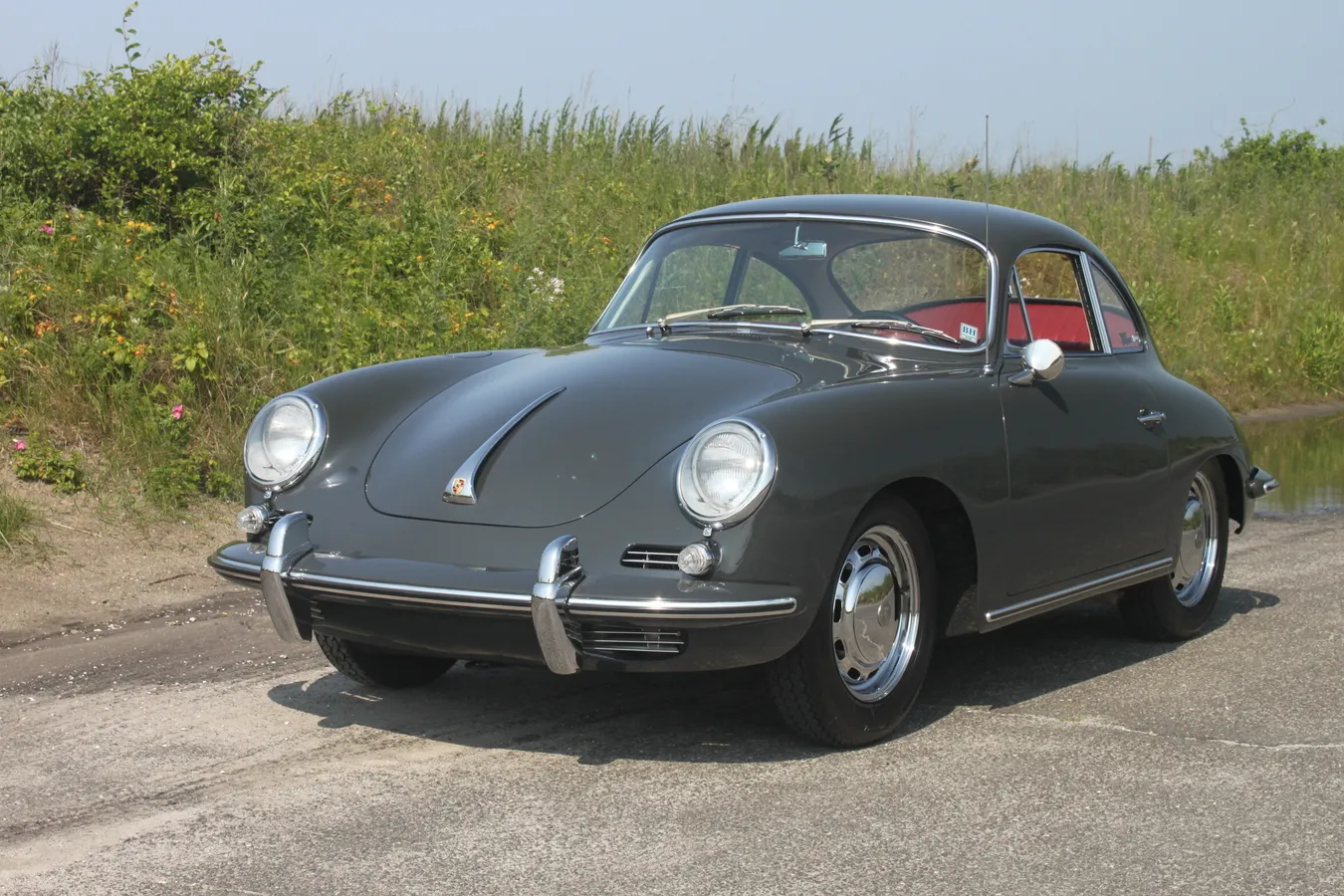 $21,250
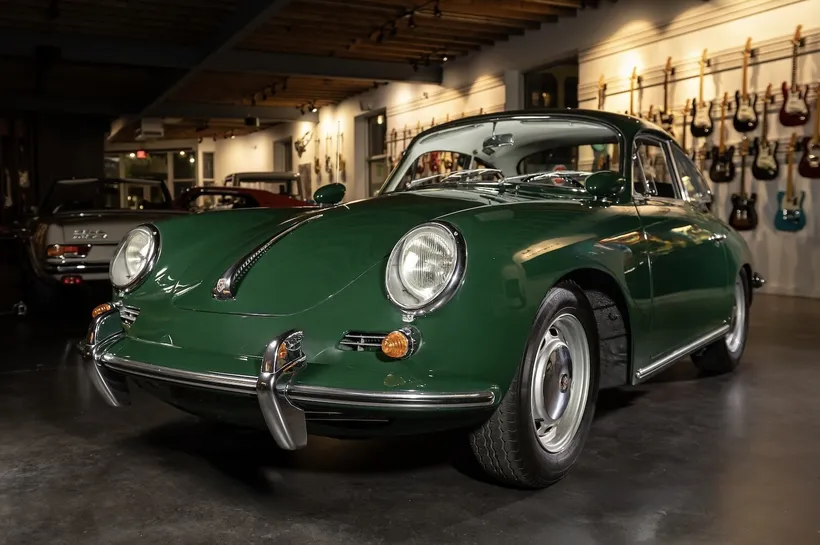 $125,000
 $21,250
 $21,250
 $21,250
 $21,250
What they sell for: 356C sale prices.