
Porsche 996 911 Cabriolet buyer's guide
Porsche 996 911 Cabriolet -- the model's own buyer's guide: variants, values and what to check.
Years listed: 1990-2001 · Series: 964
# Porsche 911 Carrera 4 (964 and 993) — Buyer's Guide
Overview and history
You are looking at the car that changed what a 911 was allowed to be. When the Carrera 4 arrives in 1989 as the first model of the type 964 generation, it is the first production 911 with all-wheel drive, power steering, standard ABS, and coil-spring suspension in place of the torsion bars used since 1963. Porsche calls the 964 around 85 per cent new, and for once the claim holds up: integrated bumpers, an electrically rising rear spoiler, and underneath a drivetrain adapted from the 959 supercar programme. The Carrera 4 is not a trim level launched alongside the rear-drive car: it comes first, on its own, because all-wheel drive is the point of the new car.
That ambition explains everything you need to check on a 964 today. Its all-wheel-drive system is electronically controlled and hydraulically actuated, shares its high-pressure hydraulics with the brake booster, and carries sensors no other 911 of its era needs. The 993 Carrera 4 that replaces it for 1995 takes the opposite approach: a simple viscous coupling with no electronics at all, half the system weight, and a car that is quicker, calmer and far cheaper to keep. Same badge, same basic engine, two opposite engineering philosophies — and that contrast should be the heart of your buying decision.
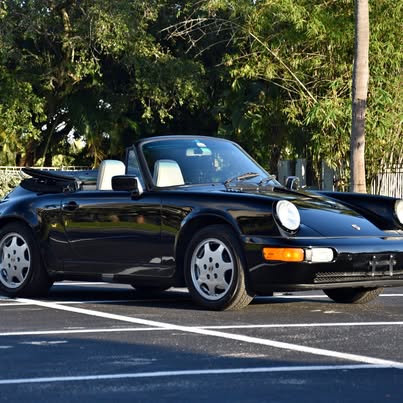
The 993, built from 1994 to March 1998, is also the last air-cooled 911, and you feel that fact in every conversation with a seller. It brings a multi-link rear axle that finally tames the old car's lift-off habits, sleeker bodywork, a six-speed gearbox and, from the 1996 model year, the VarioRam intake system. The Carrera 4 version keeps a narrow body — the wide Turbo-look shell belongs to the separate Carrera 4S, a distinction sellers blur constantly and one you must not. A narrow-body 993 Carrera 4 is its own model, built in far smaller numbers than the 4S, and it drives differently: lighter, less tyre, less theatre. Scope this guide honestly: it covers the narrow-body Carrera 4 in both generations — 964 cars, 1989 to 1994, and 993 cars, 1995 to 1998, in coupé, Cabriolet and (964 only) Targa form. The listings pool behind this page is small and split evenly between the generations — four cars at the time of writing, spanning 1990 to 1998, with Cabriolets prominent — so judge what you find one car at a time, not as a market average. The Turbo, Carrera RS, Carrera 2 and Carrera 4S are different guides and different money.

The models
Two generations, three body styles in the first and two in the second, one engine size throughout: every Carrera 4 here is a 3.6-litre air-cooled flat-six driving all four wheels. What changes is the body, the gearbox count, the all-wheel-drive hardware and, on the 993, the intake system.
| Model | Years | Engine | Output | Built | Character |
|---|---|---|---|---|---|
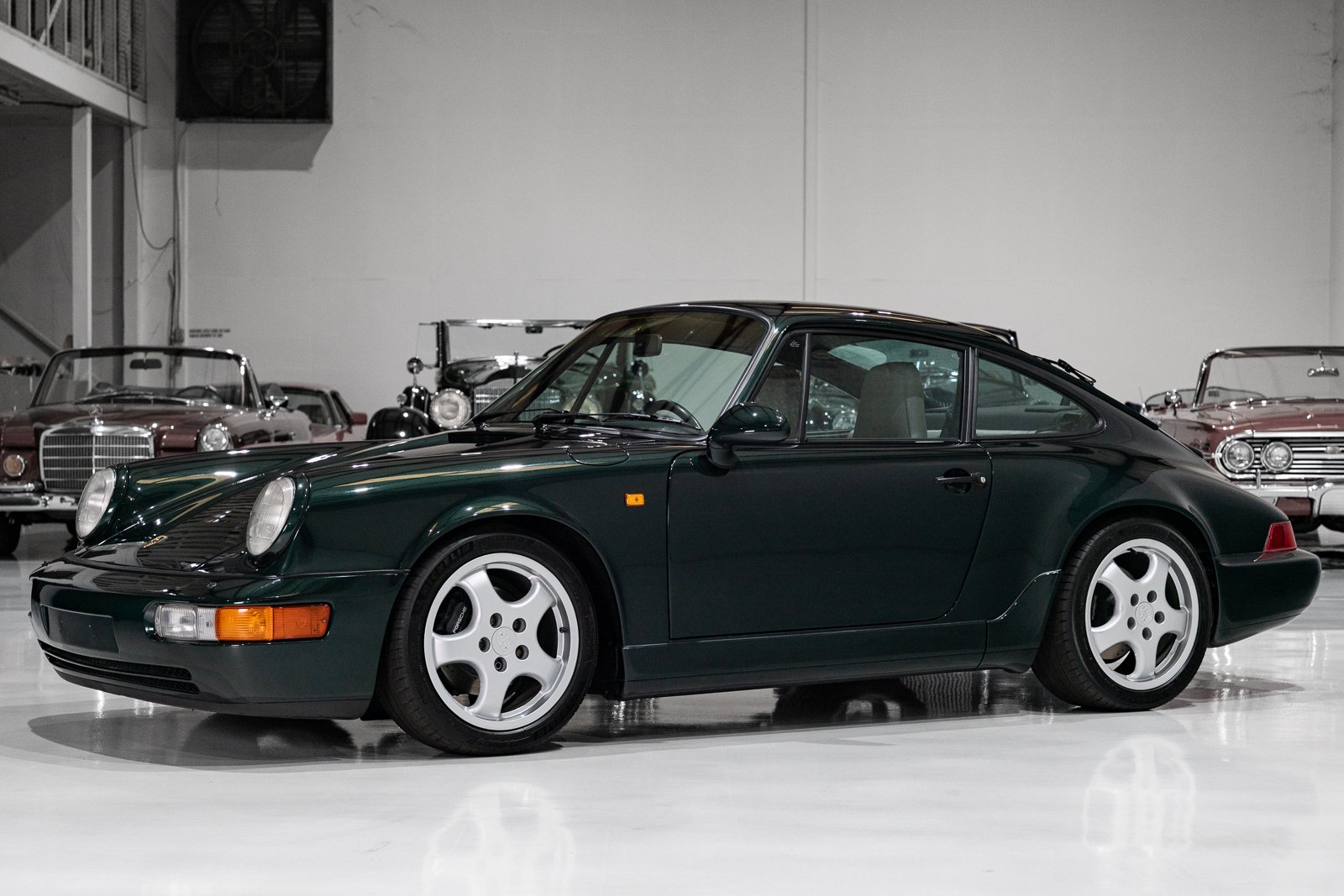
| 964 Carrera 4 Coupé | 1989–1994 | 3.6 M64/01 | 250 PS | 13,353 | The original all-wheel-drive 911; complex, planted, the purest 964 shape |
| 964 Carrera 4 Cabriolet | 1990–1994 | 3.6 M64/01 | 250 PS | 4,802 | Open car with all-weather traction; the softest, heaviest 964 Carrera |
| 964 Carrera 4 Targa | 1990–1993 | 3.6 M64/01 | 250 PS | 1,329 | The last traditional removable-panel Targa, and the rarest standard C4 body |
| 964 Carrera 4 Jubilee Coupé | 1993–1994 | 3.6 M64/01 | 250 PS | 911 | Wide Turbo-look body on standard C4 running gear, built for 30 years of the 911 |
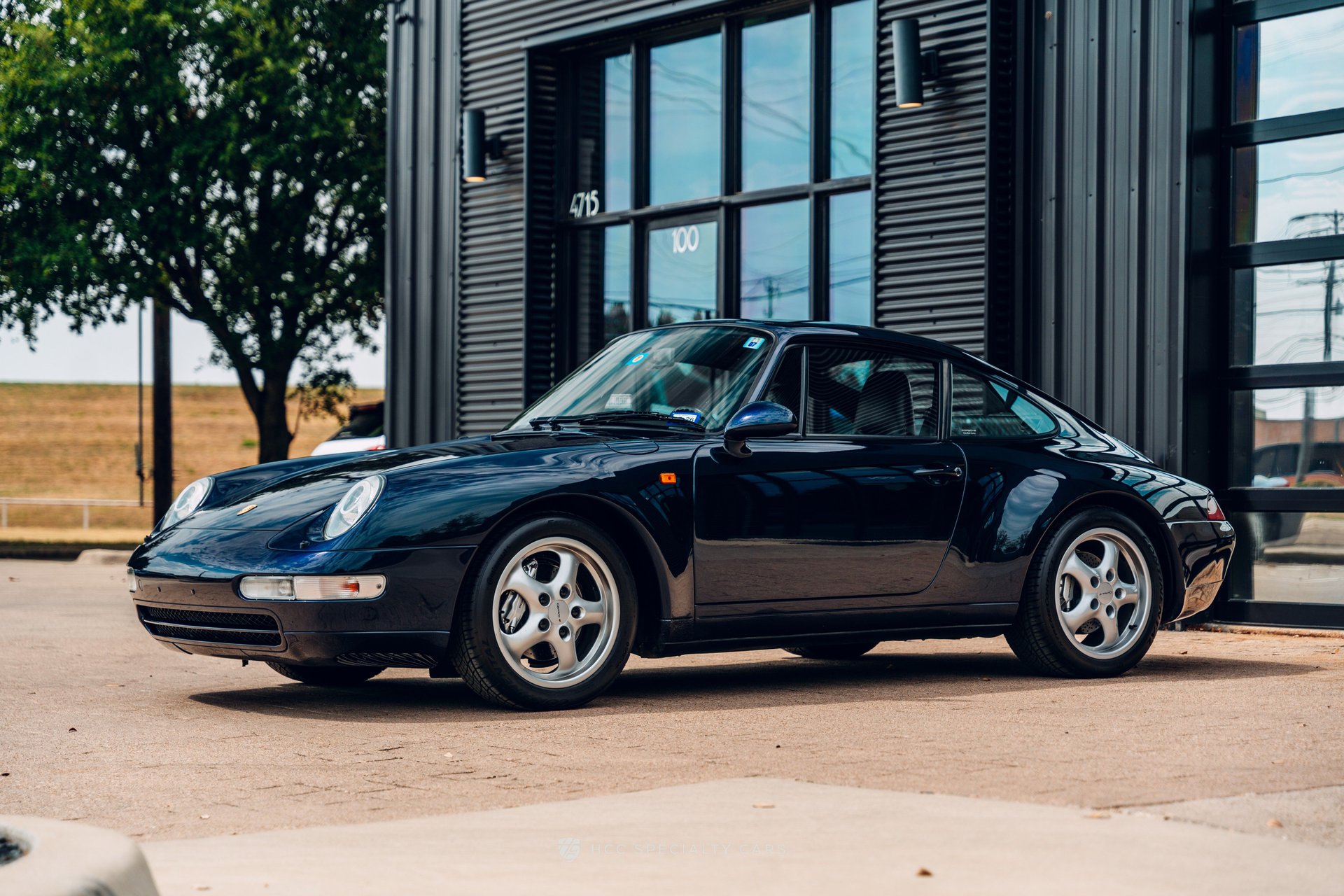
| 993 Carrera 4 Coupé | 1995 | 3.6 M64/05 | 272 PS | 2,884 | First-year 993 C4; simpler viscous drive, multi-link rear axle, no VarioRam |
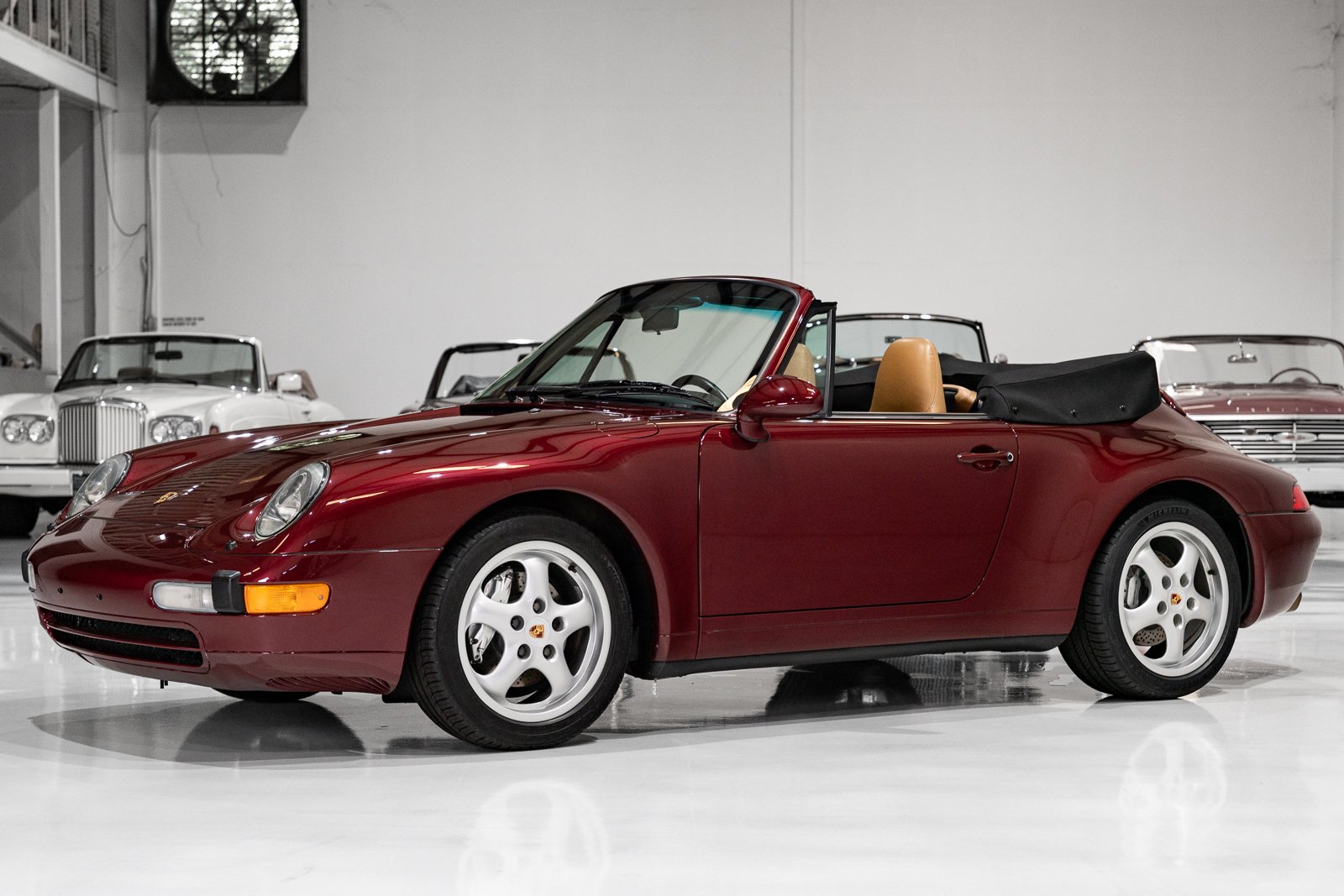
| 993 Carrera 4 Cabriolet | 1995 | 3.6 M64/05 | 272 PS | 1,284 | The rarest 993 C4 body-and-year combination you are likely to meet |
| 993 Carrera 4 Coupé | 1996–1998 | 3.6 M64/21 VarioRam | 285 PS | 1,860 | The developed car: stronger midrange, OBD-II diagnostics, the one most buyers chase |
| 993 Carrera 4 Cabriolet | 1996–1998 | 3.6 M64/21 VarioRam | 285 PS | 1,138 | Last-of-the-air-cooled open C4; small numbers, strong following |
Production figures are the published factory totals; the 964 range sums to 20,395 cars and the narrow-body 993 Carrera 4 to 7,166, which is why you meet far more 964s. The 993 Carrera 4S (6,948 built) is deliberately not in this table: it is a separate model with the Turbo's wide body, brakes and suspension, and a seller who prices a narrow-body car by pointing at 4S results is telling you something about the negotiation to come.
Read the years carefully, because model years and calendar years diverge. The 964 Carrera 4 launches as a coupé for 1989 in Europe, with Cabriolet and Targa bodies following; North American cars run to the 1994 model year, including the wide-body Jubilee (sold in the US as the Turbo-look car, 267 of them for that market). The 993 Carrera 4 starts a model year behind its rear-drive sibling — there is no 1994-model C4 in the US — and ends with a short 1998 model year as air-cooled production stops in March 1998. A car advertised as a 1998 should carry VarioRam, OBD-II diagnostics and the full set of late-production details, and you check that it does.
Body style shapes the ownership experience more than the badge does. The coupé is the stiffest shell and the driver's default. The Cabriolet uses a fully electric top with a plastic rear window and trades stiffness for open-air touring; scuttle shake over broken pavement is normal, groaning and visible cowl movement beyond that is wear. The 964 Targa keeps the classic removable roof panel and a fixed roll-over bar, and it is the body style Porsche abandons for the glass-roof 993 Targa — which, note, is rear-drive only, so any 993 Targa advertised as a Carrera 4 is misdescribed. That is your first identity trap. The others: a 964 Carrera 4 with an automatic gearbox does not exist from the factory (Tiptronic is a Carrera 2 option only), a 993 Carrera 4 wears silver brake calipers where a Carrera 2 wears black, and the option sticker under the front lid settles paint, interior and factory options on both generations. If the sticker and the book are both missing, you price the car as the specification you can prove, not the one you are told about.

Engines and gearboxes
The 964's M64/01: twin plugs, chains and a valve-adjust habit
Every 964 Carrera 4 runs the same engine: the M64/01, a 3,600 cc air- and oil-cooled flat-six with a 100 mm bore and 76.4 mm stroke, an 11.3:1 compression ratio, a forged crankshaft in an aluminium crankcase, single overhead camshafts per bank driven by duplex chains, and two valves per cylinder. Factory output is 250 PS at 6,100 rpm with 310 Nm of torque at 4,800 rpm (247 hp in US SAE terms), and the limiter sits at 6,700 rpm. Bosch Motronic engine management meters fuel and spark with knock control, which matters because the defining feature of this engine sits on top of it: twin-spark ignition. Each cylinder has two spark plugs, twelve in total, fired by two distributors — and the second distributor is not driven by the camshaft. It is driven off the first by a small internal toothed belt. That belt is the single most important service item on the car, and the problem-areas section explains what happens when it lets go.
The M64 is a dry-sump engine carrying roughly 11.5 litres of oil in total, about 9 litres of which changes at a service. Cooling is a partnership between the engine-driven fan and that oil circuit, which runs forward to a thermostatically controlled cooler in the right front wing with its own electric fan. An engine that runs hot in traffic is usually telling you about the oil side — a failed cooler fan, a lazy thermostat, a crushed or perished oil line — before it tells you about anything exotic. This generation still needs periodic valve-clearance adjustment; a car with no record of clearances being checked has not been fully serviced, whatever its oil-change stamps say. Budget a full major service with clearances, plugs (all twelve), filters and fluids at roughly $1,200–2,000 at a specialist if the history is thin, and treat a recent invoice for exactly that work as money in the bank.
In the car, the M64/01 feels strong and mechanical, with a resonance-flap intake that sharpens the midrange. It should idle evenly once warm and pull cleanly with no flat spots. A few seconds of haze on a cold start after standing is character — flat-sixes pool oil while parked. Continuous blue smoke, smoke on the overrun after a long downhill, or oil thirst you can measure in hundreds of miles per quart is wear, and the inspection section gives you the tests that separate the two.
The 993's M64: hydraulic lifters, then VarioRam
The 993 keeps the same 3.6-litre architecture — same bore, stroke and basic layout — and reworks almost everything hung on it. Pistons and connecting rods are lighter, the crankshaft is stronger, and hydraulic valve lifters end the valve-adjustment ritual for good: a 993 that sounds tappety when warm is not due a clearance check, it has a lifter, oil-grade or oil-pressure story to investigate. A new twin-outlet exhaust with two catalytic converters breathes better, and output rises to 272 PS at 6,100 rpm and 330 Nm at 5,000 rpm from the M64/05 fitted to manual cars (US cars quote 270 hp). The engine type stamp matters: M64/05 is the pre-VarioRam manual-gearbox engine, and you match the stamped type and serial beside the fan housing to the model year before you believe anything else about the car.
From the 1996 model year the VarioRam engine, type M64/21 in manual cars, replaces it. VarioRam is a variable-length intake system: vacuum-actuated flaps and sliding intake sleeves give the engine long tracts for low-speed torque and short tracts for top-end breathing, switching as revs and load change. With larger valves it lifts output to 285 PS at 6,100 rpm and 340 Nm at 5,250 rpm (282 hp US), but the number undersells it — the car pulls noticeably harder from 3,500 rpm and feels a size larger in the midrange. The system adds vacuum plumbing, actuators and flaps that can stick or leak after thirty years, so a VarioRam car that feels no stronger than an early car needs its vacuum circuit tested before anyone blames the engine itself. US VarioRam cars are also OBD-II cars, which cuts both ways: diagnostics are far better, and the secondary air injection system described in the problem areas becomes a check-engine light you cannot wish away.
Underneath both 993 engines sits the same dry-sump system and front oil cooler as the 964, plus one famous weak component: the cooler fan's ballast resistor pack, which provides its low speed. When it fails the fan runs only at high speed or not at all, and oil temperature creeps up in traffic with no warning light. You test it by watching the gauge and listening for the fan cutting in at low speed. A top-end refresh — valve guides, seals, reaming the air-injection ports while it is apart — is roughly $8,000–12,000 done properly; a full rebuild is well beyond that. The engines are fundamentally strong, and most big bills trace back to the systems covered below, not the bottom end.
Gearboxes and the two all-wheel-drive systems
Here is the divide that decides which Carrera 4 you should buy. Start with the gearboxes. The 964 Carrera 4 uses the G64 five-speed manual transaxle, built around the G50 family but with a second output driving a torque tube forward to the front differential. There is no automatic option on a 964 C4 — none — so your left leg is part of the package. The shift is deliberate and mechanical, and early cars carry a dual-mass flywheel whose springs fail with age, announcing themselves as a rattle at shutdown and judder on take-up; a clutch-and-flywheel job runs roughly $2,500–4,000 in parts and labour. The 993 moves to a six-speed version of the all-wheel-drive transaxle with closer ratios and a much sweeter, lighter shift, and it is one of the great manual gearboxes. A four-speed Tiptronic S automatic, with steering-wheel shift buttons, exists in the 993 Carrera range and a small number of Carrera 4s carry it; it is smooth, robust and worth meaningfully less to most buyers, and its fluid and filter history is the first thing you ask about. A six-speed rebuild for worn synchros, second gear above all, is roughly a $5,000–8,000 specialist job on either generation, so a gearbox that baulks, crunches into second when cold and stays crunchy when hot, or jumps out of gear on the overrun is a priced-in repair, not a quirk.
Now the driven wheels. The 964 system, called PDAS (Porsche Dynamische Allrad Steuerung — dynamic all-wheel control), is derived from the 959 and works like nothing else in the range. A planetary centre differential splits torque 31 per cent front, 69 per cent rear in normal driving. On top of that mechanical base sit two hydraulically actuated multi-plate locking differentials — one longitudinal, locking front axle to rear, one transverse, locking the rear wheels together — worked by a high-pressure hydraulic circuit and commanded by an electronic control unit shared with the ABS. The ECU reads wheel speeds from the ABS sensors and reads the car itself through two accelerometers, one longitudinal and one lateral, mounted in the centre tunnel ahead of the gear lever. When it senses slip or a spin developing, it clamps the locks progressively, up to full lock. A traction switch on the centre console lets you engage the locks manually at low speed to drag the car out of mud or snow. It is brilliant, it is heavy — the system accounts for most of the roughly 100 kg a C4 coupé carries over a C2, 1,475 kg against 1,375 kg — and it depends on hydraulics that also boost your brakes, because the 964 Carrera 4 has no vacuum brake servo. An electric pump charges a nitrogen-filled accumulator to well over 100 bar, and that stored pressure is your brake boost and the PDAS muscle alike.
The 993 system deletes all of it. In its place sits a viscous coupling: interleaved plates in silicone fluid, in the drive to the front axle. With both axles turning together it transmits only a small share of torque — around 5 per cent — to the front; when an axle spins faster, the fluid shears, thickens and progressively locks the coupling, sending drive to the axle with grip, with no sensors, hydraulics or electronics involved. Porsche quotes about 50 kg, half the 964 installation, paired with ABD (automatic brake differential, braking a spinning wheel via the ABS hardware) and a standard mechanical limited-slip rear differential. Braking returns to a vacuum servo. The car feels rear-driven almost all of the time, intervenes invisibly, and asks only for healthy tyres and fluid changes — a cooked viscous coupling is roughly a $2,000–3,500 exchange job, not a hydraulic rebuild saga.
Correct the two myths now. First myth: "the Carrera 4 is just a heavier Carrera 2." On the 993 the penalty is one passenger's worth, yet the system changes the car's balance, steering load and wet-weather manners completely; on the 964 it is the car's entire character. Second myth: "AWD makes it a winter car." Both systems are traction systems for road driving, not off-road hardware: ground clearance is sports-car low, the tyres are summer tyres, and salt eats the underside hardware. Buy one for wet-road security and year-round usability, not for snow.
Problem areas
Oil leaks, oil cooling and reading them properly
Every air-cooled Carrera 4 leaks a little oil eventually, and your job is to sort the leaks into three piles: cosmetic, scheduled and structural. Cosmetic first. The lower valve covers weep — on the 993 the composite covers themselves warp with heat cycles and the gasket alone stops curing it — and the timing chain housings sweat around their covers and seals. Oil return tubes, the pressure sender and the pulley seal all mist with age. None of these is a reason to walk away; they drip onto hot exhaust hardware and smell worse than they are, which is why a seller's "they all do that" is sometimes true. A valve-cover and chain-box reseal is a few hundred dollars in parts and a day of labour; use the leaks as a priced list, not a verdict.
The scheduled pile is the oil cooling circuit: the thermostat that sends oil forward to the front cooler, the cooler's fan and resistor pack, and the long lines through the sill all age. A car whose oil temperature climbs in traffic and settles on the move has a fan, resistor or thermostat fault, and you distinguish them by feeling the front cooler: stone-cold on a hot engine means the thermostat never opened or a line is crushed, while a hot cooler and a silent fan means the electrical side has failed. Left alone, sustained high oil temperature cooks the oil and accelerates every wear process in the engine.
The structural pile has one famous member, and it belongs to early 964s. Engines built before a running change during 1991 production seal the cylinder heads to the cylinders without the sealing ring later engines carry, and those early engines commonly weep oil at the head-to-cylinder joint. The oil appears at the base of the cylinders, mists across the heat exchangers and drips from the engine's underside in a pattern that looks, to a hopeful eye, exactly like valve-cover sweat. It is not the same bill. The proper fix is a top-end teardown with updated sealing, roughly a $4,500–7,000 job with the engine out, done once and permanently. The test that distinguishes it is cleaning and evidence: a specialist washes the engine, adds UV dye to the oil, runs the car and inspects with a lamp and borescope, and the leak's origin — high at the head joint versus low at the covers — settles the argument. On any 1989–1991 car, ask directly whether the update has been done and want the invoice, because the answer moves the car's value by the cost of the job. Later 964s and all 993s carry the improved sealing from the factory.
One more oil habit applies to both generations: consumption is information. A quart in well over a thousand miles of mixed driving is unremarkable; consumption shortening toward a quart every few hundred miles, with blue smoke on the overrun, points at the valve guides covered below. Ask the seller how much oil the car uses and over what distance, and write the answer down. Vagueness, from an owner who claims to know the car, is data.
The twin distributor and its belt — both generations
Both generations fire twelve spark plugs from a twin distributor, and in both the secondary distributor is driven from the primary by a small internal toothed belt. That belt lives in heat and in ozone generated by the sparks themselves, hardens and cracks with age, and when it breaks the secondary distributor stops turning. The engine keeps running on six plugs, down on power, and most drivers notice only a dullness. The danger is positional: if the stopped rotor rests pointing at one plug terminal, that plug can be fired continuously, and the resulting uncontrolled combustion in a single cylinder can destroy a piston. That documented worst case converts a cheap belt into an engine rebuild.
Porsche addressed the ozone half of the problem with a distributor vent kit that draws filtered air through the housings; check for its small hose when you look at the engine. The belt itself has no glamorous invoice attached, which is exactly why it gets skipped: a belt replacement or exchange rebuilt distributor is roughly a $400–900 job at a specialist, yet cars still surface with no record of it ever being done. Your test is physical and takes two minutes: caps off, engine cranked briefly and safely, both rotors watched. Both must turn, in step. A stationary secondary rotor ends the viewing until the belt is replaced, full stop, and where the belt's age is unknown it is your first job after purchase, before the drive home becomes the test.
Around the distributor, budget for ordinary ignition wear: two caps and rotors, twelve plug leads that break down with heat and show as a wet-weather misfire, and the plugs. A full ignition refresh fitted runs roughly $800–1,500 and transforms cars that have been "a bit flat lately." The DME relay, which powers the engine management and fuel pump on both generations, fails with age and heat and produces the classic crank-but-no-start, often after a hot stop. It costs little, and a car that has stranded its owner once for "no reason found" is telling you to carry a spare and suspect the relay before any expensive component.
On early 993s, add one check with a paper trail: first-production-year cars were recalled for engine wiring harness insulation that degrades with heat, risking shorts and running faults. Completion is recorded against the VIN, and you confirm it from a Porsche centre or the paperwork — degraded insulation hides inside intact-looking looms.
The 993 secondary air system and valve guides
If you buy a US-market 1996–1998 car — and the pool you are shopping from is exactly that — this section decides whether your first year is driving or litigation with a check-engine light. The secondary air injection system pumps fresh air into the exhaust ports briefly after a cold start, burning off unburned fuel and lighting the catalysts sooner, through small passages drilled in the cylinder heads. Those passages clog with carbon. The mechanism matters: the load is worst on cars with worn valve guides, because worn guides pass oil into the exhaust port area, and oil plus heat bakes into deposits that narrow the passages until flow drops below what OBD-II expects. Then the light comes on, codes P0410 and P0411 set, the readiness monitors will not complete, and in states with plug-in emissions testing the car cannot be registered until it is fixed.
Diagnosis has layers, and the order saves you money. The cheap causes are real: a tired air pump, a failed relay, split vacuum hoses and a failed one-way check valve letting exhaust pulses back up the air lines, accelerating the clogging. A specialist flow-tests the system bank by bank before condemning the heads. In-car cleaning of the ports, engine in place, runs roughly $1,000–1,500 and works when the guides are sound and the carbon is soft. When the passages are densely packed — the common case on a car that has been driven for years with the light on — the engine comes out, the ports are reamed, and you are at roughly $4,000–6,000; add valve guide replacement while it is apart, roughly $1,500–2,500 more, because cleaning ports without fixing worn guides is renting the repair. A full top-end rebuild that settles guides, seals and ports together lands in the $8,000–12,000 range quoted in the engines section.
The traps around this system are behavioural. A seller can clear the codes the morning of your viewing; the light stays off for a drive or two while the monitors run incomplete. Your counter is a scan tool or an inspector who checks readiness status, not just stored codes: a car offered with its monitors unset, a fresh battery and a story about a recent reset gets priced as a car with an unfixed SAI fault until a completed drive cycle proves otherwise. The 1995 cars clog too — OBD-I simply does not monitor the system with the same rigour, so no light shows while the same carbon accumulates. On a 1995, oil consumption and a borescope conversation with your inspector replace the dashboard as evidence.
Valve guide wear shows beyond the SAI system: blue smoke on the overrun, a start-up puff that grows from "after standing" to "every start," rising oil consumption and, eventually, a leakdown test that separates guide from ring wear by where the air escapes. Guides are a wear item at the mileages most of these engines have covered. A car with a documented top-end rebuild in its past is not a car with a black mark; it is a car whose largest known bill has already been paid by somebody else.
All-wheel-drive hardware: PDAS hydraulics on the 964, viscous calm on the 993
The 964's PDAS system fails in systems, not single parts, so learn the cast. The electric hydraulic pump and its nitrogen-charged accumulator supply both brake boost and diff-lock pressure. The accumulator's gas charge fades with age; the pump then runs more often to hold pressure, pedal reserve shrinks, and eventually the warning lights and buzzer arrive. The home test is simple: with the pump run to cut-off, count firm pedal applications before the pedal hardens and the pump restarts — a healthy system gives a comfortable reserve, a tired accumulator a couple of presses and a pump that never rests. An accumulator replacement is roughly an $800–1,500 job; a pump is more, and a car whose pump runs continuously is a car you do not drive away.
The accelerometers are the second act. The longitudinal and lateral sensors in the centre tunnel use a moving mass that can stick with age, and a stuck sensor declares itself at road speed — the PDAS warning light arrives above town pace, often around 50 mph and upward, on a car that behaves perfectly in the parking lot. That is why the inspection drive must include sustained higher-speed running. Replacement sensors have been scarce and expensive, in the $1,000-plus range when available, and diagnosis needs a specialist who knows the factory-tester world these cars live in. Locks that engage uncommanded produce violent understeer and wind-up, and any car that hops or groans in tight low-speed turns has a driveline story you price before you buy. Never let anyone put a 964 Carrera 4 on a two-wheel dynamometer or tow it with two wheels on the ground; the permanently engaged drive cannot be switched off, and the damage is immediate.
Tyres are part of this system on both generations, and they are the cheapest component that destroys the expensive ones. The centre drive reads any persistent front-to-rear rolling-radius difference as slip and works against it continuously. Mismatched sizes, or a worn pair on one axle and a new pair on the other, will cook a 993's viscous coupling and fight a 964's locks the whole time. You check that all four tyres match in brand, model and size, with tread depths close axle to axle.
The 993, by design, gives you almost none of this. Its viscous coupling has no service procedure and no warning light; it fails by going lazy — the car behaves as rear-drive and spins an inside wheel where it once would not — or, rarely, by seizing toward lock, showing as tight-turn wind-up. The front differential and driveshafts still want seals, CV boots and fluid, and ABD depends on healthy ABS wheel-speed sensors. The contrast is the point you budget around: a neglected 993 driveline is a fluid-and-boots conversation, while a neglected 964 driveline can be a hydraulics restoration. Price them accordingly.
Suspension, steering and brakes
Both cars are old enough that every rubber suspension component is either replaced or due, and the generations wear differently. The 964 wears its front bushings, ball joints, tie-rod ends and dampers in the ordinary way: vague on-centre steering, tramlining, clonks over sharp edges and a nose that dives and floats. Its power steering rack, pump and hoses leak with age — a whine on full lock and a wet front undertray are the usual announcement, and a rack rebuild is a specialist job in the $1,200–2,000 range fitted. Dampers on both generations are typically tired by now; a quality set, fitted with an alignment, is roughly a $2,000–3,500 decision that transforms the car and should be assumed on any example still wearing its originals.
The 993's multi-link rear axle is the sophisticated one, and its wear is more subtle. A network of links controls toe as the suspension moves — the kinematic toe effect that keeps the rear end stable — and as the bushings age the car develops rear-end steer of the wrong kind: a gentle wander under power, a shimmy over mid-corner bumps, squeaks over slow humps, and uneven rear tyre wear no standard alignment fixes. Diagnosis needs a specialist who can measure kinematic toe; repair is link and bushing replacement, roughly $1,500–3,000 for a rear-end refresh. Front wishbone bushings collapse and squeak, and early 993s on 18-inch wheels need the factory steering-rack support brace added as production developed — check it is fitted, because rack movement under load is the symptom it cures.
Brakes divide by generation in one important way. The 993 uses a conventional vacuum servo and big four-piston calipers — silver on the Carrera 4 — and its issues are the universal ones of age: seized pistons from standing, perished flex hoses, corroded hard lines, lipped discs. The 964's road test is a brake test as much as a drive test: the pedal should be firm and consistent stop after stop, and any change in effort, any warning light, any buzzer, ends the negotiation until a specialist has pressure-tested the hydraulic system. On both cars, budget a full brake service at roughly $1,200–2,000 if the history is silent — and remember fluid age matters doubly on the 964, whose boost circuit works the fluid far harder than a normal system.
Body, Cabriolet top, interior and electrics
The shells are galvanised and resist rust far better than earlier 911s, but they are not immune, and the rust they get is specific. On the 993, look first at the front windscreen surround: water sits under the seal, and corrosion starts in the lower corners and along the screen's edge, bubbling paint at the scuttle — a proper repair is screen-out welding and paint at roughly $1,500–3,000, and filler-bodied bubbles come back within a couple of winters. The rear screen surround deserves the same look. On both generations, check the battery tray and front boot floor (battery acid and standing water do the damage), the door check-strap mounts — a 993 door that clicks loudly as it opens is tearing its stay mount out of the A-pillar or the door skin, a welded repair in the $800–1,500 range per side — the jacking points and sill covers, and the seams around the rear quarters on Cabriolets. Accident damage hides in the front boot: you look for straight, factory-sealed panel seams, consistent spot-welds and a spare wheel well that has never been pulled straight.
The Cabriolet top is an electric mechanism of motors, gearboxes, cables and microswitches, and it ages as a system. A healthy top cycles smoothly in one motion, latches evenly and sits flat under its cover. A tired one groans, twists, stops mid-cycle, or arrives at the windscreen frame crooked because one side's drive has failed and the other is dragging it. Motors and gearboxes are rebuildable, cables stretch and snap, and a full mechanism overhaul is roughly a $1,500–3,500 job; a new canvas top with a clear plastic rear window, fitted, is roughly $2,500–4,500. The plastic window itself yellows and cracks, and it is replaceable separately. You operate the top twice, fully, on any Cabriolet you inspect — a seller who says the top "works but let's not" has answered your question. Water leaks at the A-pillars and header rail are adjustment and seals; a soaked rear footwell carpet is a blocked drain or a failed window seal, and the musty smell that comes with it never fully leaves the car.
Inside, both generations wear well if kept dry. Leather shrinks on the dashboard top in sun-state cars, seat bolsters wear on the driver's entry side, and the 964's climate control works through dash servo motors that fail one by one, leaving heat but no distribution, or distribution but no temperature control — servo replacement is fiddly dash work and a common $1,000-plus irritant. Two interior checks are really identity checks. The VDO odometer's plastic drive gear crumbles with age on both generations, stopping the mileage counter while the speedometer keeps working, so a car can cover years of miles its odometer never records — reconcile displayed mileage against service stamps, inspection records and title history, and price any gap. And an airbag or ABS light "fixed" by removing the bulb is discoverable at key-on, when every telltale should light and then extinguish; watch for exactly that sequence.
How to inspect one
Inspect in this order, cold car first, and do not let the seller warm it up before you arrive — half the evidence in the problem-areas section only exists on a cold engine. Take a scan tool for a 1996 or later 993, and a torch.

- Start with the paperwork, not the car. Match the VIN on the title to the VIN plate and the front-boot stamping, read the option sticker under the front lid for paint, interior and factory options, and reconcile the odometer reading against service stamps and inspection records — the odometer-gear failure in the body section means the displayed figure is a claim, and the file is where you test it.
- Confirm the car's identity against the traps: a 964 Carrera 4 is a five-speed manual, so an automatic car is not what it is badged as; a 993 Carrera 4 carries silver brake calipers; a 993 Targa is never a Carrera 4. Check the engine type stamp beside the fan housing against the model year — M64/01 in a 964, M64/05 in a 1995 993, M64/21 in a VarioRam car.
- Cold-start the engine yourself and watch the exhaust. A brief haze after standing is normal; sustained blue smoke, or smoke returning on the overrun during the drive, is the valve-guide story from the problem areas. Listen for chain rattle beyond the first seconds and top-end clatter that does not fade as the oil warms.
- Watch the dashboard through key-on. Every telltale lights, then extinguishes. On a 964, note the PDAS, ABS and brake warning lamps in particular, and on a 1996-onwards 993 confirm the check-engine light performs its bulb check — a lamp that never lights has been silenced, not fixed.
- Test the 964's hydraulic reserve before you drive. Let the boost pump run to cut-off, then count firm pedal applications before the pedal hardens and the pump restarts. A short reserve or a pump that runs almost continuously is the tired accumulator from the problem areas, priced before the car moves.
- Do the distributor test on either generation: caps off, engine cranked briefly and safely, both rotors turning in step. A stationary secondary rotor is the broken belt, and the viewing ends until it is replaced — you do not test-drive a car that might be firing one plug continuously.
- Drive for at least half an hour, including sustained running above town speed. On a 964 you are watching for the PDAS warning a sticking accelerometer only declares at pace; on both cars you are feeling for tight-turn wind-up that betrays a locking driveline, second-gear synchro behaviour hot and cold, and clutch judder like a failing dual-mass flywheel.
- Use the brakes hard, repeatedly, from speed. The pedal stays firm and identical on a healthy car. On a 964 any warning light, buzzer or change in pedal effort stops the inspection until the hydraulic system is pressure-tested; on a 993, pulling, pulsation or a lazy pedal is the ordinary caliper-and-hose story, priced accordingly.
- In slow traffic, watch the oil temperature gauge and listen for the front oil-cooler fan cutting in at low speed. A silent fan and a climbing gauge is the failed resistor pack from the oil section — a small fault that cooks engines when ignored, so it is settled before purchase.
- Get the car on a lift and read the underside in the order of the problem areas: oil origin at the head-to-cylinder joint on an early 964, valve covers and chain boxes, front differential seals and driveshaft boots, tyre sizes and tread depths matched across all four corners, sills and jacking points, and the front-boot floor and battery tray for corrosion.
- On a Cabriolet, cycle the top twice, fully, and watch both sides travel together; check the plastic rear window for cracks and yellowing, feel the rear footwell carpets for damp, and inspect the header-rail and A-pillar seals. On a 993 of any body style, run your eyes and a fingertip around the front windscreen surround for the first bubbles of the corrosion described in the body section.
- Finish with the scan and the specialist. On an OBD-II 993, read codes and, critically, readiness monitors — unset monitors mean the SAI question is still open, whatever the dashboard says. Then pay for a specialist pre-purchase inspection with leakdown figures and, on a 964, a PDAS system test. It is the cheapest money in the purchase, and a seller who refuses it has given you your answer.
Values
Read this market in layers: the badge covers two generations with different centres of gravity. The 993 sits at the top of the air-cooled hierarchy in buyers' minds — last of the air-cooled cars, the prettiest, the most developed — and that status supports every 993 before you discuss the individual car at all. The 964 trades in its shadow but has its own gravity: the first all-wheel-drive 911, shaped like the classic 911 in a way the 993 deliberately softens, with a coupé following that does not consult the 993 market before bidding. Within each generation, the same hierarchy repeats. Coupés lead, because buyers are mostly drivers and the coupé is the stiffest, lightest shell. Cabriolets trail the equivalent coupé, then sell to a different buyer entirely — the open-air tourer — on condition and colour rather than spec-sheet logic. The 964 Targa and the wide-body Jubilee coupé trade on rarity and story, and their results swing widest of all, because the buyer pool is thin and two motivated people can move a result far from the last one.
Condition spread is the whole game, and it is wider here than on almost anything else of the era, because the deferred-maintenance ladder is so tall. Two cars with the same year, badge and mileage can be separated by an engine-out top-end rebuild, a hydraulic restoration, a suspension refresh and a roof overhaul — years of specialist invoices. The car with the thick file, recent major work by named specialists and nothing due is the expensive car and usually the cheap purchase. The car at the bottom of the range with a thin file is not a bargain awaiting a detail; it is a sequence of workshop visits awaiting an owner, and the gap between the two asking prices is often smaller than the cost of closing the condition gap. Project-grade cars — non-running, long-stored, warning lights lit — are priced by sellers as if the work were minor and by buyers as if it were major, and they change hands slowly until one side accepts the other's arithmetic.
Asking and achieved prices part company in predictable places. Auction results are the most honest public evidence, because the hammer ends the argument — but a result is for one car, in one condition, on one day, and the recorded sales picture appended beneath this guide exists so you compare like with like. Dealer asks carry preparation, warranty obligations and margin, and the best-prepared cars justify much of the difference; private asks copied from the highest auction result justify none of it. Premiums attach to manual gearboxes, to coupés over Cabriolets, to VarioRam 993s over the early cars, to documented low ownership, to original paint in a desirable colour, and to the wide-body halo that washes down from the Carrera 4S — resist paying a 4S premium for a car that is not one. Discounts attach, fairly, to an unfixed secondary-air fault in an emissions state, to active all-wheel-drive warnings on a 964, to a missing service file, to a stopped odometer, and to any car whose seller will not allow a specialist inspection.
Negotiate from the inspection list, not from opinion. Every item your inspection prices — the belt of unknown age, the tired accumulator, the weeping head joint, the unset readiness monitors — is a line item with a workshop cost, and presenting those lines calmly moves a price further than any speech about the market. And remember how thin visible supply is: the pool behind this page held just four Carrera 4s when this guide was written, split evenly between the generations, so a single optimistic ask can look like a trend when it is only a hope.

Parts and ownership
Ownership suits a methodical person. These are not fragile cars, but they are old, low-volume and built from systems that reward scheduled attention and punish deferral: plan on a specialist service every year regardless of mileage, and expect an annual maintenance spend in the region of $1,500–3,000 on a sorted car before anything actually breaks. The 964 adds valve-clearance checks to its major services and asks for brake fluid changes on schedule with unusual sincerity, because its boost circuit works that fluid hard. The 993 counters with hydraulic lifters that never need adjusting. Both cars use oil in modest quantities by design, and your job is to keep a consumption log — a note at every top-up — because that log is the earliest warning the valve guides will ever give you, and it is free.
Parts supply is better than the cars' age suggests, because Porsche Classic supports both generations seriously and the specialist ecosystem is deep. Service items, ignition components, bushes, brake parts and top wear parts are all obtainable without drama. The scarcity lives where production was small and technology unique: 964 PDAS components, above all the accelerometers and hydraulic control parts, are the hardest items in this guide to source, some long unavailable new, the market running on tested used and rebuilt units — an accelerometer can run past $1,000 for the part alone when one surfaces. That is a genuine ownership consideration: budget for it, and buy a car whose system works completely today. The 993's viscous coupling is an exchange item, and its driveline seals and boots are shared with the Turbo programme, which keeps them findable.
Tyres deserve their own paragraph, because on these cars they are a driveline component. You fit matched sets in the factory staggered sizes, replace them in fours or in axle pairs of identical type and near-identical tread depth, and never mix brands across axles — the centre drive reads diameter differences as slip and works itself to death correcting them. Budget for premium tyres as a recurring cost of admission, keep the alignment set by someone who understands the 993's kinematic toe, and note that flat-spotted, perished tyres on a long-stored car are both a cost and a clue about how the rest of it was kept.
Choose your workshop before you choose your car: the 964's PDAS diagnostics live in an older tester ecosystem, and the 993's SAI world needs a specialist who flow-tests before quoting engine-out work. Insurance on agreed-value terms, a trickle charger, a spare DME relay in the glovebox and a file you keep adding to — that is the whole ownership system, and either generation will then cover long distances at speed, in weather that sends lesser classics home, for years.

Which one to buy
- The all-rounder: a 1996–1998 993 Carrera 4 coupé with the VarioRam engine and six-speed manual gearbox. The strongest engine, the simplest all-wheel-drive system, the best diagnostics and the stiffest shell in one car — the Carrera 4 that asks the least of you while giving the most back.
- The value buy: a sorted 964 Carrera 4 Cabriolet. The market discounts the open 964 twice — once for the roof, once for the generation — and a car with the head-sealing question answered, the belt documented and the PDAS system fully working is the gentlest entry to the original all-wheel-drive 911 in this guide.
- The traditionalist: an early 964 Carrera 4 coupé, bought on invoices. You accept the early-engine checks as the price of admission; with the top-end update done and a healthy accumulator, it is a deeply satisfying, mechanical thing.
- The open-top tourer: a 1997–1998 993 Carrera 4 Cabriolet. You trade the last degree of stiffness for the last of the air-cooled cars with the roof down and all-weather traction for the journey home — buy the best-documented one, in a colour you love.
- The rarity hunter: a 964 Carrera 4 Targa, or the wide-body Jubilee coupé if one surfaces. You are buying the smallest production numbers in this guide, and you accept a thinner market when you sell.
- The one to walk away from: any example, of either generation, with active driveline or brake warnings on a 964, unset emissions readiness on a late 993, or a seller who refuses a specialist inspection. The badge is common enough that you never need to rescue a car from its own dashboard.
The overriding rule: buy the individual car — its invoice file, its warning lights, its inspection results — and never the badge, the colour or the story; on a Carrera 4, documented condition outranks generation, body style and mileage every single time.

See the 54 996 911 Cabriolet cars currently listed.
For sale now
 $146,900
Expand
 $149,900
Expand
Expand
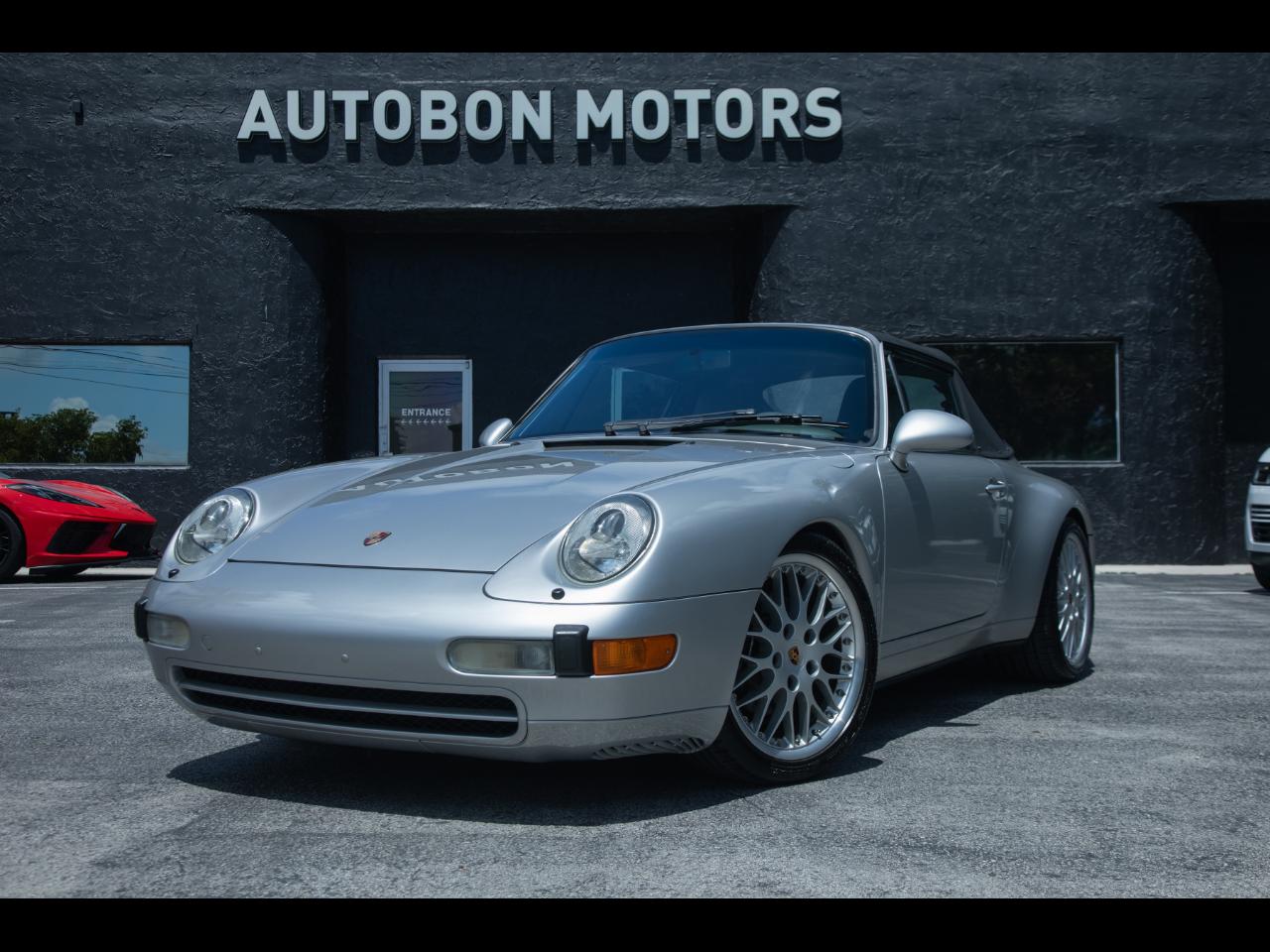 $126,900
Expand
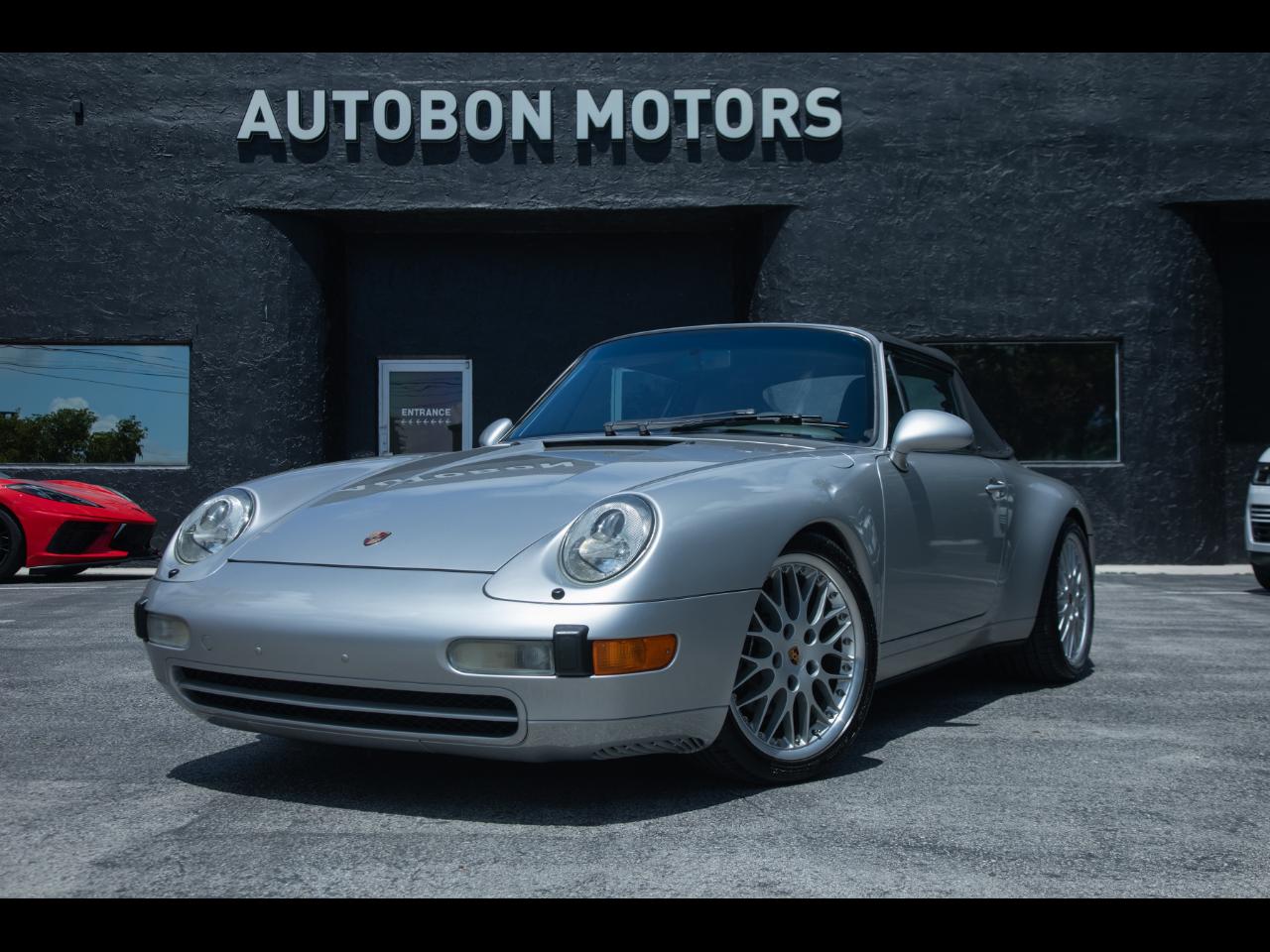 $126,900
Expand
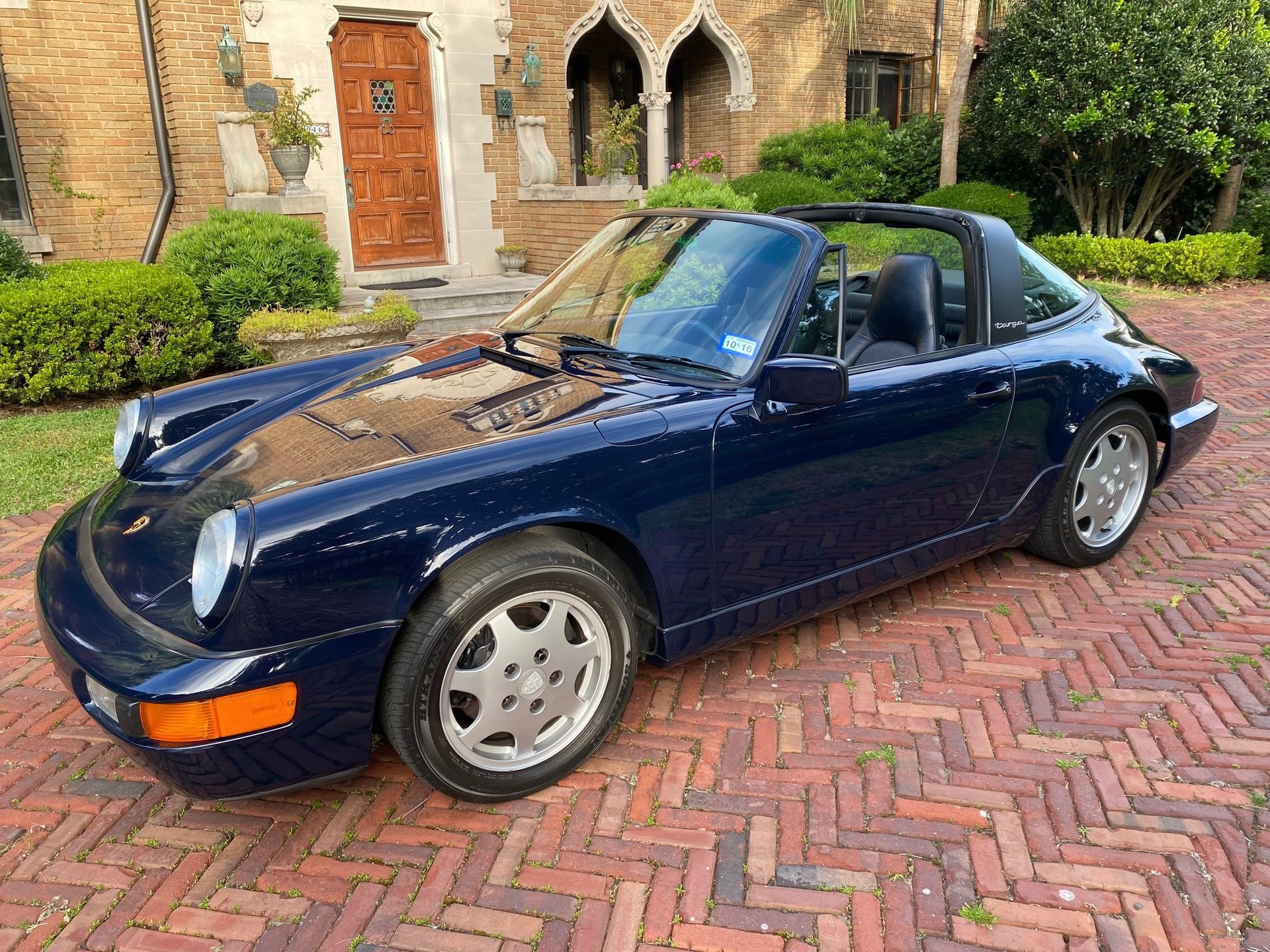 $125,500
Expand
What they sell for: 996 911 Cabriolet sale prices.