
Porsche 924 buyer's guide
Porsche 924 -- the model's own buyer's guide: variants, values and what to check.
Years listed: 1978-1988 · Series: 924
Overview and history
The 924 is the Porsche that saved Porsche, and for decades it was also the Porsche the snobs told you not to buy. Both things are true, and the second is exactly why you can still buy one cheaply today. This guide covers the base car — the naturally aspirated 2.0-litre 924 built from 1976 to 1985 — not the 924 Turbo (type 931) and not the later 924S, which is a different engine in the same shell and gets its own guide. Keep that boundary in your head while you shop, because sellers blur it constantly, usually in the direction of the more valuable car.
Start with the myth, because you will hear it in the first five minutes of any conversation about this car: "it's not a real Porsche, it's a Volkswagen." The truth is more interesting. The 924 began life as project EA425, a sports coupé Volkswagen commissioned Porsche to design in the early 1970s, to be built by Audi at Neckarsulm and sold as a VW/Audi product. When Volkswagen's management changed and the project was cancelled, Porsche bought the design back and launched it under its own badge in 1976. So the car is a Porsche design, engineered at Weissach, that was originally intended for somebody else's showroom. The engine is an Audi unit, the gearbox started life as an Audi transaxle, and the car was assembled at Neckarsulm by Audi workers — but the chassis tuning, the styling by Harm Lagaay, the transaxle layout and the whole concept are Porsche's. Judge it as a car, not as a pedigree argument.
That layout is the important part. The engine sits in front, the gearbox sits at the back as a transaxle, and a rigid torque tube joins them, with the clutch at the engine end. The result is weight distribution very close to 50/50 — period figures put it around 48/52 — and handling that embarrassed far more expensive machinery in period tests. The 924 was praised on launch for its balance, its steering and its brakes, and it remains a genuinely sweet car to drive at road speeds. What it never had, in base form, was straight-line speed. The 2.0-litre Audi-derived engine produces 125 hp in European trim and 95 hp in early US specification, strangled by emissions equipment; later US cars recovered to around 110 hp. A US car takes roughly ten seconds to reach 60 mph. You buy a 924 for the chassis, the hatchback practicality and the shape — a clean, wind-cheating wedge with pop-up headlamps and one of the largest glass hatches ever fitted to a production car — not for drag races.
The car was a commercial success on a scale Porsche had never seen: total 924 production across all variants ran to roughly 150,000 cars, and the base model accounts for the large majority of them — well over 120,000 built. It kept the company solvent through the late 1970s, funded the 911's survival, and seeded the whole transaxle family: the 944, 968 and 928 all descend conceptually from this car. In the US the 924 sold from the 1977 model year through 1982, after which the 944 took over the entry-level slot here; European production of the base car continued to 1985. That split matters when you shop in America: the newest US-market base 924 you will find is a 1982, and anything later wearing a 924 badge is a 924S (1987–88 in the US) or a grey import.
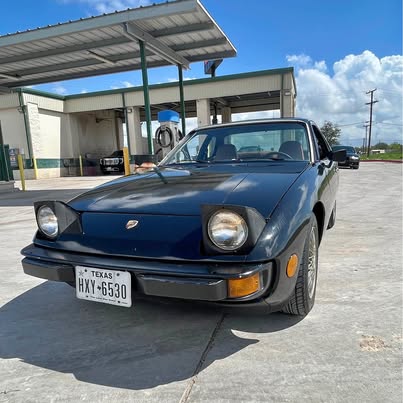
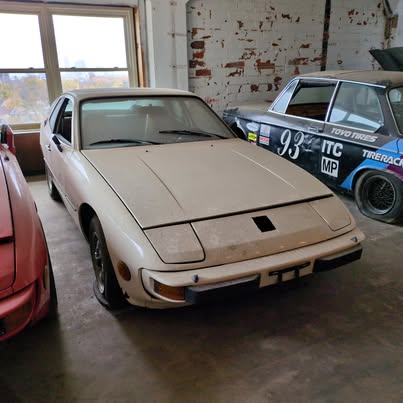
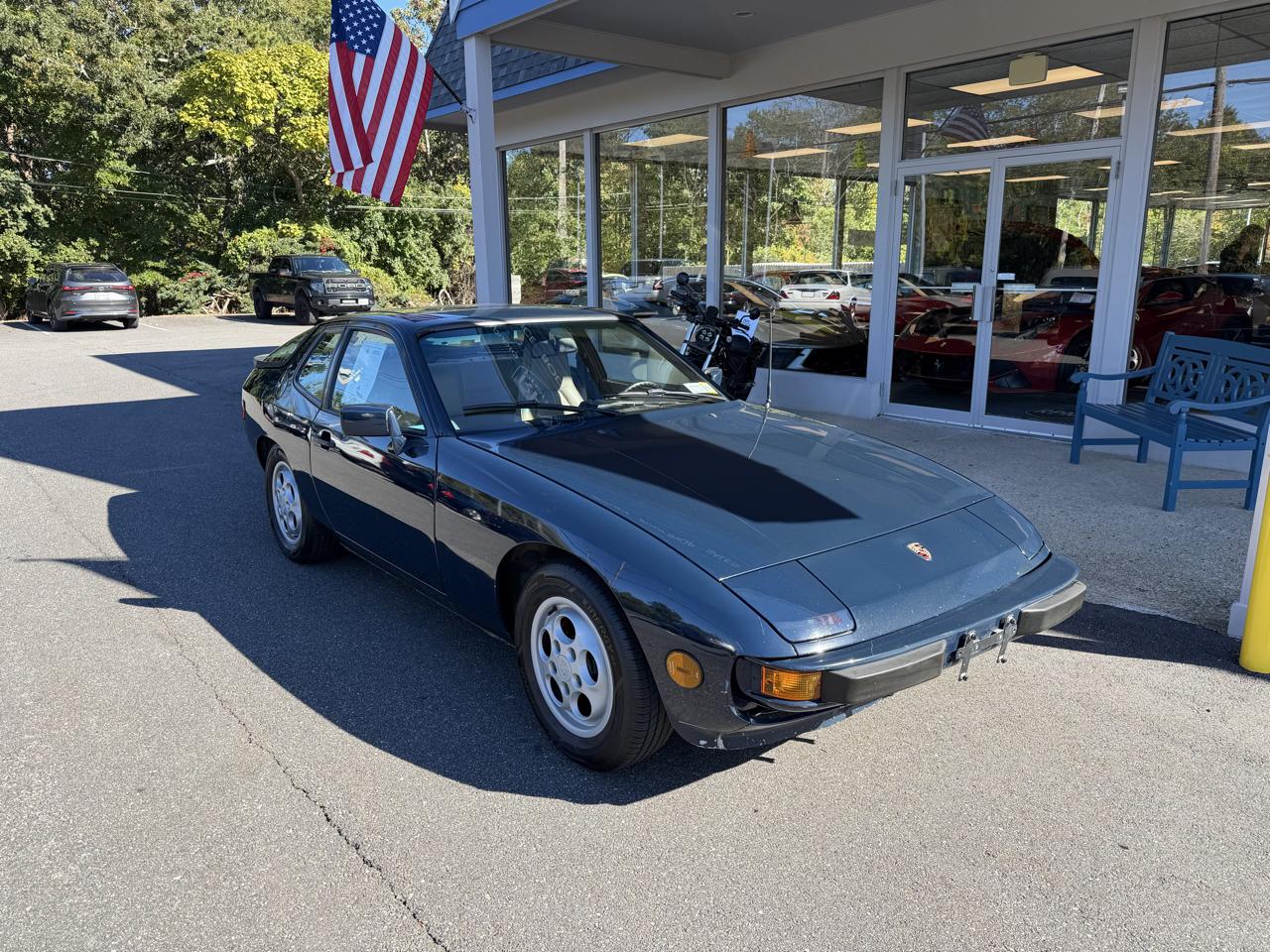
The pool on this site is small — three cars at the time this guide was prepared — but it is a fair miniature of the American 924 market. Two are 1977 cars, the first US year: a black car in Brownsville, Texas, and a white automatic in Cleveland, Ohio. The third is a 1982 Crystal Green Metallic car from Martinez, California — the last US year, and the spec most buyers should hunt. Two are for sale and one is recorded sold. Colours, years and gearboxes in that tiny sample — manual, 5-speed and automatic all appear — mirror the wider fleet: these were high-volume, everyday cars, bought in ordinary colours, driven hard, and maintained on ordinary budgets. That history, not rarity, is what you are shopping in.
One more piece of scene-setting before the detail. The 924 spent so long as the cheapest Porsche that a generation of cars was run into the ground by owners who could afford the purchase price but not the upkeep. The survivors divide sharply: cherished cars with thick files, and everything else. Almost everything in this guide is about telling those two populations apart, because mechanically the 924 is a simple, honest, largely VW/Audi-parts car that rewards maintenance and punishes neglect in very predictable places.
The models
There is only one body and, for the purposes of this guide, one engine — but the base 924 changed enough across its life that "a 924" is not a sufficient description of any car you are standing in front of. The changes that matter to a buyer are the US emissions tune, the arrival of the five-speed gearbox, the 1980 facelift, and the special editions that dress a standard car in collectible clothes. Learn the timeline and you can date a car from across the forecourt and spot the seller who cannot.
The US car arrives for 1977 at 95 hp, the 2.0-litre Audi engine detuned with a lower compression ratio, air injection and exhaust gas recirculation to meet federal emissions rules. A catalytic converter joins the specification for most markets as the decade turns. For 1980 Porsche fits the five-speed gearbox as standard on the US car — earlier American cars are mostly four-speeds, with the five-speed and a three-speed automatic as options — and for 1981 the US engine is re-tuned to around 110 hp with revised engine management, which makes the 1981–82 cars noticeably livelier than the late-seventies cars without giving up any reliability. If you drive a 95 hp car and a 110 hp car back to back, you will not need a stopwatch to tell them apart.
Europe kept a car America never officially got: the full 125 hp version, sold 1976–85, and it is the benchmark the US cars are measured against. European cars also show up in the US as period grey imports, so a claimed "Euro spec" car is plausible — but verify it from the engine number and the absence of US emissions hardware and side-marker lamps, not from the seller's story. A genuine Euro car is worth a modest premium for its extra power and cleaner specification; a US car with its emissions gear stripped is worth less, not more, in any state that still tests.
The special editions are trim and paint, and you should pay for them accordingly. The 1977 Martini Championship Edition (Martini Rossi stripes over white, commemorating Porsche's racing championships) and the 1978 Limited Edition are the best known; the 1981 Weissach Edition, a US-market package in Platinum Metallic with its own trim, is the most collectible of the base-car specials. None of them has a different engine or chassis. A real, documented special edition in excellent condition earns a premium from the small pool of collectors who care; a standard car wearing reproduction stripes earns nothing, and the stripes are widely reproduced. Check the option codes on the build sticker — in the luggage compartment — before you pay edition money.
Two cars sit at the edge of this guide and need naming so you do not confuse them at a viewing. The 924 Turbo (931 in left-hand drive, 932 right-hand drive), sold in the US 1979–82, takes the same Audi block to 143–170 hp with a KKK turbocharger, a stronger five-speed, bigger brakes and, usually, a rear spoiler and NACA bonnet duct. It is faster, rarer, more fragile and considerably more expensive to put right, and it has its own guide. The 924S (1987–88 in the US) is a 944's 2.5-litre Porsche-built engine in the narrow 924 body — a different car mechanically in almost every system that matters. A seller who calls a 924S "the last of the 924s" is right about the badge and wrong about everything you will have to maintain. This guide's inspection and problem-area advice applies to the 2.0-litre cars only.
| Model | Years | Engine | Output | Built | Character |
|---|---|---|---|---|---|
| 924 (European) | 1976–1985 | Audi 2.0 EA831, Bosch K-Jetronic | 125 hp | The majority of ~121,000 base 924s | The full-strength car; the benchmark spec |
| 924 (US, early) | 1977–1980 | Audi 2.0, K-Jetronic, federal emissions tune | 95 hp | The bulk of US sales | Honest but slow; four-speed common before 1980 |
| 924 (US, late) | 1981–1982 | Audi 2.0, revised tune/management | ~110 hp | Two model years only | The US sweet spot: five-speed standard, best base-car drive |
| Martini Championship Edition | 1977 | Audi 2.0 (market tune) | 95–125 hp | Limited run (commonly quoted around 3,000) | Stripes, trim and provenance; no mechanical change |
| Weissach Edition | 1981 | Audi 2.0 (US tune) | ~110 hp | Limited US run | The collector's base car; verify option codes |
| 924 Turbo (931) — context only | 1979–1982 (US) | Audi 2.0 turbo, KKK K26 | 143–170 hp | ~11,600 (931/932 combined, approx.) | Not this guide: see the Turbo's own guide |
| 924S — context only | 1986–1988 (US 1987–88) | Porsche 2.5 (944 engine) | 147–158 hp | ~16,700 | Not this guide: a 944 engine in a 924 shell |
A note on the Built column, in the spirit this program insists on: base-924 production totals are consistently documented at roughly 121,000 cars within a total 924-family figure near 150,000, but clean per-year and per-edition splits are not published in a form worth quoting to the unit, and forum numbers vary. What you can rely on is the shape: the base car is common, the Turbo is uncommon, and no base 924 is rare in the sense that justifies rarity pricing. Rarity claims attach to condition and documentation on this model, never to the badge.
Engines and gearboxes
The Audi EA831 2.0-litre four
Every base 924 carries the same engine: the Audi-designed EA831, a 1,984 cc overhead-cam inline four with a cast-iron block and an aluminium crossflow cylinder head, a single overhead camshaft driven by a toothed rubber belt, and two valves per cylinder. In European tune — 10.0:1-ish compression in early form, Bosch K-Jetronic injection — it makes 125 hp at 5,800 rpm. US cars run lower compression and emissions equipment: 95 hp for 1977–80, rising to about 110 hp for 1981–82 as the tune and management were revised. It is not a Porsche-designed engine and makes no attempt to sound like one; it is a sturdy, torquey, slightly agricultural unit shared in spirit with the Audi 100 and the VW LT van, which is precisely why it is cheap to keep alive.
Its one genuinely Porsche-relevant trait is that it is an interference engine. If the timing belt breaks or jumps, pistons meet valves. The belt also drives the water pump on these engines, so a proper belt job is belt, tensioner and pump together, and the interval you should work to is roughly every 30,000 miles or four years — much shorter than modern practice, because that is what period belts and tensioners honestly support. The job is a front-of-engine strip in a tight bay; a specialist charges in the region of $600–$1,100 with the pump, and it is the single most valuable line in any seller's history file. A car with no belt evidence needs the job before it is driven anywhere, priced into your offer.
Internally the engine is tough. Bottom ends rarely fail unless oil changes were skipped; what you actually meet is oil consumption from hardened valve-stem seals (a puff of blue smoke on start-up and on the overrun), weeping cam-cover and front crank seals, and a tired oil pump relief valve on very high-mileage cars. The camshaft runs directly in the head with shim-adjusted valve clearances on early cars — check for a rattly top end that does not quieten with an oil change; a worn cam lobe or collapsed follower on this engine is a head-off conversation. Oil pressure should sit healthily on the gauge at hot idle; a flickering light at hot idle with correct oil level is your cue to walk unless the price is parts-car money. Use a good 15W-40 or 20W-50 in warm climates; these engines were designed for it and thin modern oils make them noisier, not happier.
Fuel injection: Bosch K-Jetronic (CIS)
The 924 uses Bosch K-Jetronic continuous injection — CIS — a purely mechanical/hydraulic system with no ECU. A fuel distributor meters fuel continuously to mechanical injectors in proportion to airflow across a sensor plate; a warm-up regulator (control-pressure regulator) enriches the mixture when cold; a cold-start injector and thermo-time switch handle starting enrichment; an auxiliary air valve handles cold fast idle. Later US cars add a frequency valve and oxygen-sensor feedback (Lambda) trimming the control pressure. When it is right, CIS is smooth, economical and utterly reliable. When a car has sat, or been "adjusted" by someone with a 3 mm Allen key and confidence, it produces the classic 924 symptoms: hard hot starting, hunting idle, hesitation, and a fuel bill like a V8's.
Learn the three pressure tests, because they separate the causes that guesswork cannot. System pressure should be around 4.7–5.2 bar (roughly 68–75 psi). Control pressure runs low when cold (about 1.0–1.7 bar depending on ambient temperature) and rises to roughly 3.4–3.8 bar warm. Rest pressure must hold after shutdown — the system should keep at least about 1.8 bar after 20 minutes. The famous hot-start failure is a rest-pressure failure: the fuel accumulator at the rear, or the check valve in the in-tank or inline pump, lets pressure bleed away, the fuel in the lines vaporises in a hot engine bay, and the car cranks forever. The test is a gauge on the system after a hot soak, not a new starter motor. A fuel accumulator costs roughly $100–$200 in parts; a fuel distributor rebuild by a CIS specialist runs $400–$800; a warm-up regulator $150–$350 exchange. Never let anyone sell you a "rebuilt distributor" as the first step — measure first.
The other CIS truths: the injectors are cheap, mechanical and long-lived, but their spray pattern degrades and their seals harden, causing vacuum leaks that mimic bigger faults; the rubber boot and hoses between airflow meter and throttle body crack with age and lean the mixture in ways no adjustment will cure; and the mixture screw under its tamper plug should be a last resort, set with a gas analyser or dwell reading on Lambda cars, never by ear. A 924 that idles at a lumpy 600 rpm and smells rich has usually been "tuned" by ear at least once.
Cooling, ignition and emissions hardware
The cooling system is conventional — belt-driven pump (timing-belt-driven, as noted), front radiator, electric fan — and its weakness is age, not design. Radiators silt up, the fan thermoswitch fails so the fan never cuts in, and the expansion tank and its cap lose pressure, so the car that "only overheats in traffic" is usually a $30 switch and a silted radiator away from being fine — or one neglected summer away from a warped head. Check the fan cuts in at temperature on your test drive, every time. Ignition is breakerless electronic on later cars and conventional in spirit: a distributor at the front of the cam, HT leads that chafe, and a coil that dies slowly and intermittently. A misfire that appears only hot and under load is ignition until proved otherwise.
US emissions hardware is where originality and legality meet. Air pump, EGR and (on later cars) a catalytic converter were fitted to meet the rules of the day; much of it has been removed from surviving cars over the decades. Whether that matters is a state question, not a taste question: in California and other states that test cars of this age, a stripped car can be unregistrable without expensive reinstatement, and the 1982 California-pool car in this guide's photos is exactly the sort of car whose smog equipment you check item by item. Ask what is present, not what the seller thinks of the rules.
Gearboxes: four-speed, five-speed and the automatic
The transaxle sits between the rear wheels, driven through the torque tube, and it defines the car's character as much as the engine does. Early US cars are mostly the Audi-derived four-speed; the five-speed became an option and then, from 1980, standard US equipment. Note there are two five-speed designs in the wider 924 family: the early optional five-speed is an Audi-pattern unit with a dog-leg first gear (first down and to the left, the racing pattern), while the later standard five-speed uses a conventional H with fifth up and to the right, Porsche's own 016-family design lineage. Sellers rarely know which they have; the shift pattern tells you in five seconds, and a dog-leg car is not broken — it is just unfamiliar. Both are durable; both suffer worn synchromesh on second gear when abused, sloppy linkage bushes that make a good box feel broken, and torque-tube bearings that rumble at speed when they dry out. A linkage bush kit is tens of dollars and an afternoon; a torque tube rebuild is a specialist job at $800–$1,500, so a driveline rumble that rises with road speed — not engine speed — deserves a hard look before you buy.
The three-speed automatic, fitted to cars like the white 1977 in this guide's pool, is a VW/Audi unit, robust and completely character-changing: it blunts an already modest engine and drops the 924 from "slow but sweet" to simply slow. Automatics are worth less, sell slower, and suit almost nobody who wants a 924 — but a genuinely tidy automatic at a project price is the cheapest sound shell in the model, and manual conversions, while possible, are rarely worth their cost. Buy the gearbox you actually want; do not buy an automatic planning to convert it.
Clutches live at the engine end of the torque tube and are a real job — access is awkward, and labour of $900–$1,600 at a specialist is normal. A high bite point, judder, or slip in fourth under load on a test drive is therefore a four-figure negotiation item, not a shrug. The cable-operated clutch on these cars also stiffens as the cable frays; a heavy pedal is a $60 cable until proved otherwise.

Problem areas
Rust: the map
The 924 has a better rust reputation than most 1970s cars, and it has earned it dishonestly. Porsche used galvanised steel extensively on the 924 from early in production — the body was among the first in the industry to be substantially galvanised — which is why so many survive at all. But galvanising delays rust; it does not repeal it, and on a car now 40-plus years old the protection is exhausted exactly where stone chips, accident repair and trapped mud have broken the coating. The Cleveland-pool car in this guide — an Ohio car — deserves a harder rust inspection than the Texas or California cars, and that logic applies to any 924: geography is the first rust test.
Work this map in order. The battery tray and the bulkhead beneath it: batteries vent, acid attacks the tray, and rust here eats toward the cabin and the fuse/relay area — lift the battery out and look, because sellers never do. The inner front wings and the seams around the headlamp pods. The sill bottoms and jacking points, especially at the rear ends where they meet the rear wheelarches — prod with a screwdriver handle, and do the jack test: a sill that crunches or flexes as the car rises on its own jack is structural, and structural sill repair on a 924 runs $1,000–$2,500 a side done properly, which is real money against this car's values. The floor pans under the carpets, fed by leaking hatch and sunroof drains. The rear hatch surround and the lower corners of the hatch aperture, where water sits under the seal. The spare-wheel well. The front valance and lower nose, which live in the stone-chip zone. Doors rust along the bottom seams where the drain holes block. A magnet in a cloth tells you where filler lives; inconsistent panel gaps and overspray on the rubbers tell you why.
Two structural warnings. First, the 924 is a monocoque and the sills and inner wings are its strength — surface bubbles on an outer panel are cosmetic, but perforation at a jacking point, seat-belt mount or suspension pickup is an economic write-off on a base car unless you weld yourself. Second, accident repair defeats galvanising: a car with one replaced wing often rusts along that wing's seams while the rest of the shell stays sound, so judge panel by panel, not car by car. Paint itself is rarely original at this age; judge the metal, not the shine.
Suspension, steering and brakes
The front suspension is MacPherson struts with a design kinship to the VW Golf/Scirocco parts bin; the rear is a transaxle-era Porsche arrangement of semi-trailing arms with transverse torsion bars. The geometry is excellent and the components are cheap; the failure mode is universal wear presented as character. Worn front strut inserts and tired rear dampers make the car float and crash over bumps — a set of quality dampers is $400–$900 in parts and transforms the car, so price it in rather than walking away. Front ball joints and track-rod ends wear and show as vague steering and uneven front tyre wear; the steering rack itself (manual on most base cars, and all the better for it) develops play that a pinch-bolt adjustment sometimes cures and sometimes merely hides. Power steering, where fitted on later cars, leaks from the pump and rack seals like every system of its age.
The rear torsion-bar setup almost never breaks, but its bushes perish, the rear ride height sags unevenly, and seized height adjusters make a proper four-wheel alignment a fight. Budget for an alignment on any purchase and treat "it pulls slightly" as a symptom to diagnose, not a quirk: on this car it is bent parts, worn bushes or mismatched tyres far more often than it is tracking alone.
Brakes are discs at the front and — a genuine base-924 economy — drums at the rear on most cars, with four-wheel discs arriving via option packages and later/higher specs. The system is more than adequate for the performance; its enemies are standing time and neglect. Calipers seize, the rear drum self-adjusters seize, flexi-hoses perish internally and act as one-way valves (a brake that drags and a pedal that stays hard), and the master cylinder weeps into the servo. On any car that has stood — remember the dust-covered Ohio car — assume a full hydraulic refresh: fluid, hoses, caliper/drum overhaul and pads/shoes, $600–$1,400 in parts and labour, before the car is driven in anger. A 924 that stops straight and true from 50 mph with your hands light on the wheel is telling you a great deal of good about its whole maintenance history; the brake test is a history test.
Electrics and the pop-up headlamps
Period Porsche electrics with VW/Audi components: the architecture is simple, the execution is now old. The fuse and relay panel lives in the footwell/bulkhead area and suffers exactly what you would expect — corroded terminals, heat-discoloured fuse contacts and earth points that add resistance until circuits behave haunted. The classic 924 electrical symptom set — fuel pump silent, fan dead, wipers slow, gauges lying — is earths and fuse contacts more often than it is components. A methodical afternoon cleaning every earth and fuse contact cures more 924 electrics than any parts order; conversely, a car with Scotchlok connectors and mystery extra wires in the loom has been "fixed" repeatedly and will keep needing it.
The fuel pump relay deserves its own sentence: it is a known failure point, it cuts the pump, and the car dies as if out of fuel. Carry a spare in the glovebox of any 924 you own — they cost little — and if a seller's car "sometimes cuts out," this relay and the ignition switch's electrical half are your first two suspects, in that order. The ignition switch itself wears and causes no-crank and random accessory death; it is cheap and widely available because it is a VW part.
The pop-up headlamps are driven by a single motor with a linkage to both pods. Wear in the linkage and pivots produces the classic one-lamp-late, wobbling-lamp syndrome, and the relay and limit switches produce lamps that cycle or refuse to park. None of it is expensive; all of it is fiddly; a car whose lamps rise together, sit level and park flush has been looked after by someone patient. The rear wiper, heated rear window in that huge hatch glass, and the electric fan are the other usual casualties — test every one at a viewing, because each is a small bill and together they are a medium one. Sunroof cars add a cable-drive mechanism that strips its gears; a sunroof that only moves with manual help is a $150–$400 parts hunt.
Interior, the glass hatch and seals
The cabin is VW/Audi-grade trim wearing a Porsche layout, and it ages in specific places. The dashboard top cracks in sun states — Texas and California cars, look hard — and uncracked dashes are now genuinely scarce; a cracked dash is a cosmetic negotiation point (dash caps and re-trims exist, $200–$600) rather than a walk-away. The standard seats are comfortable and their vinyl/cloth splits on the driver's bolster; the optional checked "pasha" velour is beloved, fragile and hard to match, so a pasha car with intact cloth is worth real money over an identical car with split seats. Door cards warp and their fixings fail; window regulators slow and die; the heater controls' cables seize so the car offers one temperature forever.
The glass hatch is the car's signature and its biggest seal problem. The hatch is heavy, its struts weaken until it becomes a head injury waiting for a victim, and its seal leaks water into the luggage bay and rear footwells, where it quietly rots the floor and the rear light clusters' earths. New struts are cheap; a delaminating hatch glass (the glass is bonded to its frame and the bond fails at the edges, showing as white/milky borders) is not — good used hatches are getting scarce and the glass is effectively irreplaceable new. Inspect the hatch edges on every car. Sunroof seals and the four sunroof/hatch drain tubes block and overflow into the headlining and sills; pour water and watch where it exits.
Under the hatch, the luggage area hides the fuel accumulator, pump and filter on many cars, and the in-tank pump/screen arrangement on later ones — any fuel smell in the cabin or boot of a 924 is a leak until proved otherwise, and perished fuel hoses on a CIS car are a fire risk, not a service item. Replacing every rubber fuel line on a newly bought 924 is the best $150–$300 you will spend on it.
Engine ageing, oil leaks and cooling
Section 3 covered the systems; this is what forty years does to them. The EA831 leaks oil from the cam cover, the front and rear crank seals and the oil-filter housing, in roughly that order of frequency and ascending order of cost; a dry engine bay on a 924 is suspicious in itself — it usually means the car was cleaned for sale, so look underneath, at the tray and the driveway where it parks. Valve-stem seal hardening gives the start-up smoke puff; guides and rings follow only on genuinely worn engines, and a compression test separates them: even readings around 150–180 psi with smoke only at start-up is seals (a head-refresh job, $800–$1,500 at a shop); one low cylinder is a walk-away conversation. Coolant hoses, the heater valve and the radiator's plastic-era replacements all age out; overheating history is the one engine-killer to interrogate, because a warped head on an interference engine turns a cheap car into a parts car. Ask directly, watch the temperature gauge behaviour on your drive, and check for the mayonnaise emulsion under the oil cap and oil sheen in the expansion tank.
Finally, the standing-still tax, which applies to a large share of the surviving fleet. A 924 that has sat for years needs, before any enthusiastic use: timing belt and pump, all fuel hoses and a tank inspection (rust and varnish in the tank destroy CIS components downstream), brake hydraulics as above, tyres regardless of tread (read the date codes — anything over eight years old is a display tyre), clutch and gearbox seals checked for weep, and every rubber suspension bush assessed. Total recommissioning at a shop commonly lands between $2,500 and $5,000 in parts and labour. That number, added to the asking price of a "cheap" stored car, is the comparison you should make against a running, documented car — and it is why the stored car is rarely the bargain it photographs as.

How to inspect one
Inspect a 924 in this order: identity, structure, the systems that cost four figures, then the systems that cost three. Take a magnet in a cloth, a torch, a tyre pressure gauge, a friend, and — if the seller will allow it, and good sellers do — a CIS fuel-pressure gauge set. Allow ninety minutes. A seller who will not allow ninety minutes is telling you something.
- Identity first. The VIN plate sits at the base of the windscreen and on the body; US 924s carry VINs beginning WPO for later cars and 92A-series numbers for earlier ones. Match the VIN to the title exactly, then check the engine number against the car's paperwork and confirm it is a 924 2.0 unit, not a Turbo (931) or a swap. Find the build/option sticker in the luggage compartment and note the paint and option codes — this is where a claimed Martini or Weissach edition is proved or quietly dies.
- Cold start, from stone cold. Insist the engine is cold when you arrive. A CIS car that starts instantly cold, settles to a fast idle and steps down as it warms has a healthy warm-up regulator and auxiliary air valve. Cranking, hunting or a rich smell means control-pressure work (see the K-Jetronic subsection). Watch for the blue puff that says valve-stem seals.
- The rust map, in the order given. Battery out, tray and bulkhead first; then sills with the jack test from the rust section; floors under the carpets; hatch surround and spare-wheel well. Perforation at a jacking point or belt mount ends the inspection for most buyers — everything else is negotiable.
- Hatch glass and seals. Run a finger around the hatch glass edge looking for the milky delamination described in the problem areas; check struts actually hold the hatch; pour a bottle of water over the hatch and sunroof and watch the drains exit under the car rather than into the footwells.
- Hot restart. Drive the car fully warm, park it for fifteen minutes, then restart. The CIS rest-pressure test in disguise: a car that cranks endlessly hot has the accumulator/check-valve fault from the engines section. This single test catches the most common 924 complaint in the wild.
- The drive: gearbox and torque tube. Use every gear. Crunch into second, whine that follows engine speed, and a rumble that follows road speed are three different bills — synchromesh, gearbox bearings, torque-tube bearings — in ascending order of pain. If it is a five-speed, confirm which pattern it has before you judge a "missing" gear.
- Clutch. Bite point high, judder pulling away, slip in a high gear under load: any one is the $900–$1,600 clutch conversation from the gearbox subsection. A heavy pedal alone is probably the cable; a heavy pedal with slip is not.
- Brakes as a history test. From 50 mph, brake firmly with a light grip. Pulling, pulsing, dragging or a long pedal maps directly onto the brake subsection. On a car that has stood, assume the hydraulic refresh regardless of what the pedal feels like in the seller's yard.
- Steering and suspension. Straight-line wander, play at the wheel, knocking over bumps, uneven front tyre wear. Then bounce each corner: a car that keeps bouncing needs dampers, which is fine and priced; a car that sits visibly low or crooked at the rear needs bush and torsion-bar work, which is a bigger conversation.
- Electrics sweep. Lamps up and down twice (level, together, parked flush), fan cut-in at temperature, rear wiper, heated rear window, every gauge, sunroof if fitted. Then look at the fuse panel: corroded contacts explain quirks; extra wires and Scotchlok connectors explain the seller.
- Emissions equipment inventory (US cars). Air pump, EGR, catalyst where fitted — present or absent, item by item, and weigh the answer against your state's testing rules for a 1977–82 car before you value the car. In a testing state, a stripped car is a project whatever its paint says.
- Paper. Timing-belt invoice is the crown jewel; then fuel-system work, clutch, and any welding invoices. A thick file on a 924 is worth more than a low odometer reading, because the odometer on a five-digit car has almost certainly been around at least once and proves nothing either way.
Score the car as the market does: structure, then mechanical health, then cosmetics. A shiny 924 with soft sills is the worst car on the market; a dull 924 with a sound shell, a recent belt and a file is the best.
Values
The computed market block beneath this guide carries the current numbers — the cars listed now and the recorded sales — so this section teaches you how to read them, because the base 924's market is one of the most condition-driven in the whole Porsche world. The spread between the cheapest and the best base 924 is proportionally enormous, and it is not driven by mileage, colour or options. It is driven by structure, documentation and whether the car runs properly on the day you view it.
Understand the shape of the pool. This site's own current snapshot — three cars: two 1977s and a 1982, two for sale and one sold — is typical of the American base-924 market at any moment: a thin trickle of cars, dominated by early US cars, with the desirable 1981–82 five-speeds under-represented because their owners keep them. Thin markets mean individual sales move the averages wildly; a single exceptional auction result does not reprice the project car in a barn, whatever its seller tells you. Read medians across the wider recorded-sales history, not from this month's handful of listings.
Asking prices and achieved prices part company predictably on this model. Project and stored cars are chronically over-asked, because sellers price the badge and the finished car they imagine; they sell, eventually, at recommissioning-adjusted money — asking price minus the standing-still tax itemised in the problem areas, minus welding, minus paint. Documented, running, rust-free cars at fair asks sell close to them, because the buyer pool for a good 924 — while small — knows exactly how few good ones surface. The negotiation lever is never "it's only a 924"; it is the itemised bill: belt, brakes, welding, dash, hatch glass. Price the car as shell plus file, then subtract the list you made at the inspection.
Variant premiums within the base car are modest and specific. The 1981–82 US cars earn a real but small premium for the five-speed and the stronger tune. Genuine, sticker-verified special editions — Martini, Weissach — earn a premium only in excellent condition and only from collectors; a tatty Martini is a tatty 924 with stripes. The automatic discount is real and persistent. The Turbo and the 924S live in different markets entirely and their prices tell you nothing about a base car — beware the seller who anchors a base 924 to a Turbo result. Finally, the project-versus-driver gap: on this model it is routinely wider than the cost of the work, because the market prices fear as well as labour. If you can weld and you enjoy CIS, the gap is your opportunity; if you will pay a shop for everything, the best 924 is the most expensive one you can find, and it is not close.
Parts and ownership
Owning a base 924 is one of the cheapest ways to run a classic Porsche, and the reason is the parts bin it was born from. The engine's consumables — filters, plugs, belts, water pump, seals — are Audi/VW parts, widely stocked and priced like VW parts, because they are. Brake and suspension consumables likewise cross-reference to the VW/Audi world. Porsche-specific mechanicals — torque-tube bearings, transaxle internals, CIS components — come from the transaxle specialists (the 944 world supports the 924 by overlap) and from CIS specialists who rebuild distributors and warm-up regulators on exchange. Body and trim are the constraint: panels are mostly used-part territory, the hatch glass is effectively irreplaceable new, uncracked dashboards are scarce, and pasha cloth is a treasure hunt. Buy the best-trimmed car you can, because trim is the one thing money cannot easily fix later.
Running costs are honest-car costs. Expect mid-to-high twenties mpg in mixed use from a healthy CIS car. Insurance on agreed-value classic policies is cheap. The maintenance rhythm is: oil and filter every 5,000 miles or annually; valve clearances checked with the belt service; timing belt, tensioner and water pump every 30,000 miles or four years without exception; brake fluid every two years; coolant every two to three. CIS cars hate standing: drive the car at least monthly, keep the tank fullish with fresh fuel, and use a fuel stabiliser over winter storage — varnish in a K-Jetronic distributor is the classic springtime 924 bill.
The ownership community is a genuine asset. The transaxle forums and the 924-specific boards hold decades of archived diagnosis — the CIS pressure tables, the torque-tube rebuild threads, the wiring diagrams — and the model's "unloved Porsche" status means the people in it are there for the car, not the investment. Club and forum knowledge will save you more money on this model than on almost any other Porsche, because so much of the failure library is already written down with photographs. Budget realistically: a sorted driver kept on top of costs a few hundred dollars a year in consumables plus the periodic four-figure items (belt service, clutch, dampers) arriving on schedule rather than as surprises. The expensive 924 is never the one you maintain; it is the one somebody else didn't.
Which one to buy
- The all-rounder: a 1981–82 US car, five-speed, with a file. The strongest base-car tune, the standard five-speed, the most developed specification — the 1982 Crystal Green car in this guide's photographs is the template. Pay for the belt invoice and the rust-free sills, not for the colour.
- The value buy: a sound 1977–80 four- or five-speed bought on structure. The early US cars are the cheapest way into a genuinely good chassis. A 95 hp car with a perfect shell and a thick history file beats a 110 hp car with soft jacking points every single time.
- The collector's pick: a sticker-verified Weissach or Martini edition in excellent order. Premium justified only by the option codes on the build sticker and condition to match; reproduction stripes on a standard car are worth exactly nothing extra.
- The brave buy: the stored automatic at a true project price. Cars like the dust-covered 1977 automatic in this guide's pool are the cheapest sound shells in the model — but only if the price already subtracts the full recommissioning bill, and only if you actually want an automatic, because converting it rarely pays.
- The one to walk away from: any car, at any price, with structural sill or suspension-mount rust you cannot weld yourself. The economics of a base 924 never survive professional structural welding plus paint.
The overriding rule: on a base 924 you are buying a shell and a paper file; the engine is the cheapest part of the car to fix and the body is the most expensive — so never trade structure for shine, and never pay Turbo or 924S money for a 2.0-litre car, whatever the seller calls it.
See the 5 924 cars currently listed.
For sale now
Expand
What they sell for: 924 sale prices.