
Porsche 924 buyer's guide
Porsche 924 -- the model's own buyer's guide: variants, values and what to check.
Years listed: 1987-1988 · Series: 924
# Porsche 924S (1986–1988): Buyer's Guide
Overview and history
You are not looking at a cut-price imitation of a Porsche, and you are not looking at a 944 with the badges changed. The 924S is its own, very specific answer to a very specific problem, and you buy a good one only when you understand what that problem was. By the middle of the 1980s the original 924 — launched in 1976 as Porsche's entry-level car, built for Porsche at the Audi plant in Neckarsulm, and powered in its basic form by a 2.0-litre Audi-derived engine — is nearing the end of its life. Above it sits the 944, launched in 1982, which takes the 924's transaxle layout, widens the body, and installs Porsche's own 2.5-litre four-cylinder engine. The 944 is the better car and everyone knows it, including Porsche. The problem is price and positioning: the 944 keeps getting more expensive, and Porsche still needs an entry point that a younger buyer, or a buyer stretching to a first Porsche, can actually reach.
The solution, introduced for 1986, is disarmingly simple. Take the narrow, unflared 924 body shell — the one without the 944's swollen wheel arches — and install the 944's 2.5-litre engine in it, in a slightly softened state of tune. Keep the 924's narrower track, its smaller brakes and its plainer trim. Price the result below the 944 and call it the 924S. That is the whole recipe, and it produces a car that is quicker in a straight line than its specification suggests, because it carries the big engine in the lighter, slimmer, more aerodynamic older shell. Period testers notice this at once. The 924S is not a consolation prize. On a tight road, on the gearing Porsche gives it, it feels alert in a way the heavier, wider 944 does not always manage.
Hold two myths up to the light before you go any further, because you will hear both from sellers and from fellow enthusiasts, and both are wrong. The first is that the 924S is "just a cheap 944." It is not. It shares the 944's engine family and its transaxle layout, but the body, the track widths, the brakes, the wheels, much of the trim and the whole visual character are 924, and those differences are exactly what you are inspecting when you stand in front of one. The second myth runs the other way: that the 924S is "a VW in a Porsche suit," a slur carried over from the original 924's Audi-sourced 2.0-litre engine and Neckarsulm assembly. Whatever force that argument ever had against the base 924, it has none here. The engine in front of you is Porsche's own M44 2.5-litre four, designed in Weissach for the 944, with Porsche's balance-shaft system, Porsche engine management and Porsche's transaxle behind it. The car is assembled at Neckarsulm alongside its relatives, as the 924 and early 944 production also is — assembly geography is not engineering parentage, and anyone who dismisses this car on that ground has not driven one.
Production runs for three model years only, 1986 to 1988, and the total is small by 924 and 944 standards: about 16,700 cars in all, a figure that is genuinely documented for the model as a whole even though Porsche does not publish a tidy, trustworthy split of that total by year and market that you should let a seller quote at you. For the United States the car is effectively a 1987 and 1988 model — those are the years you will meet in American listings, and they are the years represented among the cars currently recorded on this site. In 1989 Porsche replaces the whole idea with the 944 in its final, enlarged 2.7-litre form and the entry-level slot changes shape again. The 924S is therefore a short-run closing chapter: the last development of the original 924 line, and the only one that ever gets the full-size Porsche four-cylinder engine.

The models
The meaningful split in the range is by model year, and it is an engine split. The 1986 and 1987 cars carry the M44 2.5-litre engine in its softer 924S tune, rated at 150 horsepower. For the final year, 1988, Porsche raises the compression ratio, revises the engine management to suit, and rates the car at 160 horsepower — the same headline figure as the contemporary base 944. That ten-horsepower difference is real but small, and it sits at the top of the rev range where you visit it least; the 1988 car is the connoisseur's choice, not a transformation, and the engines section below explains exactly what changes and what does not. Do not let a seller price an early car as if it were a 1988, and do not let the badge on the back settle the question — every 924S wears the same badge. The model year on the title, the build plate and the engine's specification settle it, in that order of convenience and in reverse order of authority.
Gearbox choice gives you the other split. Most cars carry the five-speed manual transaxle, and that is the car the model is remembered as: the manual's shift quality, its ratios and its involvement are the point of the exercise. A three-speed automatic is also offered, sourced from the same Audi-based family of automatic transaxles used elsewhere in the range, and a small minority of American cars are ordered with it. The automatic is not a bad car — the big four's torque suits it better than you expect — but it is a different purchase: slower, softer, and bought by someone who wants the shape and the balance without the clutch work. It also carries its own inspection burden, covered below, and a thinner pool of future buyers when you come to sell.
| Model | Years | Engine | Output | Built | Character |
|---|---|---|---|---|---|
| 924S | 1986–1987 | M44 2.5-litre four, lower compression | 150 hp | Included in the model's documented total of about 16,700; no reliable factory split by year is published | The original recipe: 944 power in the light, narrow 924 shell |
| 924S | 1988 | M44 2.5-litre four, higher compression | 160 hp | Included in the same total; the final-year share is not separately documented | The connoisseur's car — the full 944-matching output, last of the line |
| 924S Automatic | 1987–1988 (US) | M44 2.5-litre four | 150–160 hp by year | A small minority of production; no trustworthy separate figure exists | The relaxed tourer — same balance, three speeds, a narrower future market |
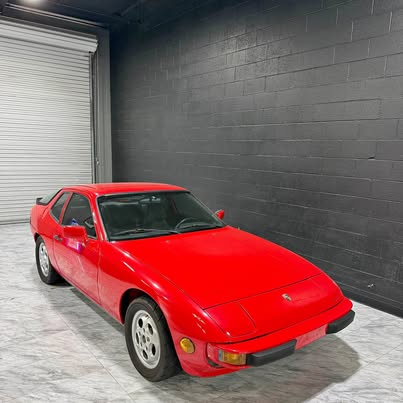
One identity trap deserves its own paragraph here because it catches buyers every year. The 924S looks, to a casual eye, like a plain 944, and the 944 looks, to the same eye, like a wide 924S. Cars get misdescribed in listings in both directions — sometimes innocently, because a previous owner genuinely believed the badge story, and sometimes because a 944 title commands more money. The checks are physical and quick. The 924S has the narrow shell with smooth rear quarters; the 944 has flared arches front and rear. The 924S runs narrower wheels and smaller brakes. The VIN and the build plate name the model unambiguously, and the engine number confirms the 2.5-litre unit is present rather than the 2.0-litre Audi engine of a base 924 wearing an S badge — a swap that is rare, because it makes no economic sense, but a badge swap costs nothing and does exist. Settle identity from the shell, the plate and the engine before you settle anything else.

Engines and gearboxes
The M44 2.5-litre four: what it is and how it works
Every 924S carries the same basic engine, and understanding it properly is most of understanding the car. The M44 is Porsche's own design: a 2,479 cc inline four with a bore of 100 mm and a stroke of 78.9 mm, an aluminium block with cast-in iron liners' worth of bore surface treatment appropriate to its design, a single overhead camshaft driven by a toothed belt, two valves per cylinder, and electronic engine management by Bosch Motronic — Porsche calls its control unit the DME, and the DME controls both fuel injection and ignition from a single box, reading crankshaft position and speed from sensors at the flywheel. It is, in architecture, one half of the 928's V8 thinking applied to a four, and it is a thoroughly Porsche engine in every way that matters to your wallet and your right foot.
The feature that defines the M44, and the one that defines its maintenance, is its pair of balance shafts. A big four-cylinder with a 100 mm bore produces strong secondary vibrations — the inherent imbalance that rises with engine speed and makes large fours feel coarse. Porsche licenses the balance-shaft principle pioneered by Mitsubishi and installs two shafts in the block, driven by their own toothed belt, rotating at twice crankshaft speed in opposite directions, their counterweights cancelling the secondary shake. It works beautifully: a healthy M44 is strikingly smooth for its size, pulling from low revs with a civility the old Audi 2.0 never approaches. But the system gives the engine two belts at the front instead of one — a timing belt for the camshaft and a balance-shaft belt — plus an array of rollers, tensioners and seals behind the front covers, and the discipline those belts demand is the single most important ownership fact in this entire guide. The problem areas section gives that discipline its full treatment; here, simply register that the smoothness you enjoy on the test drive is bought with scheduled rubber, and the schedule is not negotiable.
Budget the engine's known scheduled work honestly when you price a car. A full front-of-engine service — timing belt, balance-shaft belt, the associated rollers and tensioners, the front crankshaft and balance-shaft seals while access is open, and the water pump that the timing belt drives — is the model's signature job. Done by a specialist with quality parts, expect roughly $1,800 to $3,000 for the complete belt, roller and seal service, and add roughly $400 to $700 if the water pump is replaced at the same time, as it usually should be. A clutch replacement, for reasons the next sections explain, is the other big scheduled-adjacent job: expect roughly $2,500 to $4,000 fitted, the bulk of it labour. Neither figure should frighten you. Both should be in your arithmetic before you bid, because a car priced attractively with both jobs due is not attractively priced at all.
The 1988 higher-compression engine
For the final model year Porsche closes the gap to the 944 entirely. The 1988 924S engine raises its compression ratio to 10.2:1 — against the earlier car's lower figure — with pistons to suit and DME mapping revised for the higher compression, and output rises to 160 horsepower, matching the base 944 of the same year. The rest of the engine is the same M44: same block, same balance shafts, same belt architecture, same ancillaries, same maintenance schedule. Nothing about the 1988 car's extra output makes it more fragile, more highly strung in any way that changes how you inspect it, or exempt from any item in the problem areas section.
The transaxle gearboxes: five-speed manual and three-speed automatic
The five-speed manual is the gearbox this car wants. It is a Porsche-developed five-speed transaxle of the family used across the 944 range in its standard-output form, with a cable-and-rod shift linkage running back from the lever to the box. A healthy example shifts cleanly when warm, finds second gear without a crunch once the oil is up to temperature, and holds every gear under load without complaint. Judge it warm, never cold: these gearboxes are characteristically notchy and reluctant in the first minutes on old oil, and a seller who rushes you through a two-minute cold drive is either ignorant or managing what you are allowed to feel. Worn synchromesh on second is the classic wear point, linkage bushings perish and make a good box feel vague, and both are distinguishable — a vague, wandering gate is linkage; a crunch on a deliberate, well-timed change is synchromesh. Fresh gear oil of the correct grade is the cheapest diagnostic you own: a box transformed by an oil change was a neglected box, not a broken one. A transaxle rebuild, if you genuinely need one, runs roughly $2,000 to $3,500 plus the labour of removing and refitting the unit, which is why you test the gears properly rather than discovering them.
The three-speed automatic is a different proposition. It is a conventional torque-converter automatic of Audi lineage, matched to the same rear transaxle arrangement, and it suits the M44's torque better than most period automatics suit a sporting car. It gives you three ratios, unhurried changes and a car that is pleasant in traffic and undistinguished everywhere else. If you are considering one, inspect it as an automatic first and a Porsche second: the fluid should be clean and red-brown rather than dark and burnt-smelling, changes should engage promptly from rest in both drive and reverse, and there should be no flare — a rise in revs without a corresponding rise in road speed — on the change up under load. A service with fresh fluid and filter is modest money, roughly $250 to $450; a rebuild is roughly $1,800 to $3,000, and on an automatic 924S that sum bears much harder on the car's total value than the same sum does on a manual, which is a fact to hold firmly in mind when the asking prices are set out in front of you.

Problem areas
Timing and balance-shaft belts: the discipline that governs everything
Start here, because every other judgement you make about a 924S is secondary to this one. The M44 is an interference engine: if the timing belt fails, the pistons meet the valves, and the resulting damage — bent valves, damaged guides, marked pistons, a head off and rebuilt at minimum — turns a running car into an engine-out project in a single second. A belt failure repair bill of roughly $3,500 to $6,500 is realistic once the head work and the consequential front-of-engine renewal are counted, and on a bad day with piston damage it goes higher. Against that, the belt service itself is scheduled, predictable and comparatively cheap. There is no rational version of 924S ownership that gambles here, and there is no rational purchase of a car whose belt history you cannot establish without pricing the full service into the deal on day one.
The mechanism matters, because it explains the schedule. The timing belt drives the camshaft from the crankshaft; the separate balance-shaft belt drives the two balance shafts at twice crank speed. Both belts live behind covers at the front of the engine alongside a set of idler rollers, tensioning rollers and the water pump pulley. Rubber belts age by time as well as by mileage — they harden, crack at the root of the teeth and lose tension as their cords relax — and the rollers' bearings and the water pump's bearing are on the same clock, sealed units that give little warning before they seize or shed their grease. A seized roller does not merely stop turning; it shreds or throws the belt it serves within seconds. This is why the service is a system service — belts, rollers, tensioners, front seals and usually the pump together — and why a receipt that says only "timing belt" with no rollers named is a receipt for half a job.
The working discipline used by specialists who know these engines is a replacement interval of about 45,000 miles or four to five years, whichever arrives first, with a tension check and re-tension of a new timing belt after its initial settling period — conventionally around 2,000 miles after fitting, because a new belt beds in and its tension changes. Correct tension on this engine is not a thumb-press guess; it is set with a dedicated gauge — Porsche's special tool 9201 is the reference instrument — because the same engine punishes both errors: too loose and the belt can jump a tooth, too tight and it whines, overloads the water pump bearing and wears everything faster. A balance-shaft belt set too tight has its own unmistakable voice, a rising whine or hum with revs that owners mistake for a supercharger the car does not have; too loose or mistimed, and the balance shafts fall out of phase, which does not damage anything immediately but destroys the smoothness that is the system's whole purpose, leaving the engine feeling harsh and coarse in a way sellers blame on engine mounts.
So your inspection of any individual car reduces to documents and to ears. Documents first: you want an invoice, from a named shop, with a date and a mileage, listing the belts and rollers fitted — not a verbal assurance, not a service-book stamp with no detail, and not a receipt for a belt alone from a decade ago. If the newest belt evidence is older than five years, or the mileage since exceeds the interval, or there is no evidence at all, the car needs the service now, at roughly $1,800 to $3,000 for the full front-of-engine job as set out in the engines section, and the price you offer should say so. Ears second: start the engine from cold and listen at the front of the engine for roller rumble, belt whine and the balance-shaft hum described above, then listen again fully warm. A quiet front end proves nothing about belt age — a ten-year-old belt can run silently to the moment it fails — which is why documents, not noises, settle this question. Never let a smooth, quiet test drive talk you out of the paperwork.
Two neighbours of the belts belong in the same conversation. The front crankshaft seal and the balance-shaft seals live behind the same covers and harden with age; an engine that weeps oil at the front is usually asking for seals, and since oil on a timing belt destroys the belt, a front oil leak on this engine is a belt-service trigger, not a cosmetic footnote — the labour to reach the seals is most of the labour of the belt job, roughly $900 to $1,600 done together with belts and rollers, and foolish to pay twice by doing them separately. And the engine's oil cooler, mounted at the front of the block with a housing sealed against both the oil and coolant circuits, has seals that perish with age and heat cycles: the classic failure mixes oil into the coolant or coolant into the oil, showing as mayonnaise-like emulsion in the coolant reservoir or a rising, milky oil level. Distinguish it from head-gasket failure, which is comparatively rare on this engine, by the location and the history — cooler seals are a known, bounded job at roughly $600 to $1,100 including the seals, coolant flush and oil change, while a head gasket is a different and larger conversation. A seller who has been quoted a head gasket for an oil-in-coolant car may be selling you a bargain, if your specialist confirms the cooler seals on inspection.
The clutch, the torque tube and the driveline
The clutch is the M44 driveline's second signature expense, and it earns that status through labour, not parts. The clutch itself sits at the front of the car, at the flywheel, as it should — but the gearbox sits at the back, joined by the torque tube, and reaching the clutch means working through that architecture: exhaust down, torque tube and transaxle moved back or out, and the better part of a working day spent before the worn part is even on the bench. Expect the complete job, with a quality clutch kit, at roughly $2,500 to $4,000 fitted. That figure shapes the whole model market, because a car with a slipping clutch is a car whose price must fall by at least that much before it competes with a car whose clutch is sound.
The original clutch disc has a second, age-related failure that mileage alone does not predict. Porsche fits a rubber-centred disc: the drive is transmitted through a rubber hub that damps driveline shock, and that rubber, after three and a half decades of heat cycles, hardens, cracks and eventually disintegrates. The symptoms arrive as a clunk and snatch on take-up, a judder pulling away, and in the end a sudden loss of clean drive as the centre breaks up. A car can therefore have a clutch with plenty of friction material left and a centre that is finished — which is why you judge the clutch by its behaviour, not by a seller's report of its mileage. The test is simple and is set out in the checklist below: clean take-up from rest without judder, no slip under full throttle in a high gear at low revs, a bite point that is not at the very top of the pedal's travel, and no clunk as drive takes up. Replacement discs are of the later spring-centred design, which does not carry the rubber failure mode, so a car with a documented modern clutch kit fitted has retired this risk entirely — one more reason the paperwork matters as much as the pedal.
Around the clutch, three driveline items complete the picture. The torque tube bearings rumble when worn and cost roughly $1,200 to $2,200 to put right. The constant-velocity joints on the rear driveshafts wear and click or clunk, particularly on take-up and on the overrun; reconditioning or replacing a shaft runs roughly $300 to $600 a side, and perished CV boots found early reduce that to a boot-and-grease job at a fraction of the price, which is why the checklist has you looking under the rear of the car rather than merely driving it. And the clutch hydraulics — master and slave cylinders joined by a hose that ages — fail by weeping and by drawing air, giving a pedal that sinks, a bite point that wanders, or gears that become hard to engage with a healthy box behind them. Cylinders and hose together are roughly $350 to $700 fitted and bled; learn to separate that modest bill from the transaxle rebuild a bad diagnosis can sell you, because the distinguishing test costs nothing: if the engagement problem changes with pumping the pedal, suspect hydraulics before you suspect the gearbox.
Cooling: the system that punishes neglect quietly
Work through the failure modes by mechanism. The water pump is driven by the timing belt and its bearing and seal are life-limited; it is replaced with the belt service for that reason, and a car with a weeping pump, a rumbling pump bearing or coolant staining below the front covers is a car whose belt service is due regardless of what the invoices claim. The thermostat sticks — usually part-closed with age — and produces the classic pattern of a car that runs hotter and hotter in traffic while staying merely warm at speed, or the opposite pattern of a car stuck open that never fully warms and runs rich and cold. The electric fan depends on a thermoswitch in the radiator and on a relay and motor that all age; a fan that never cuts in is usually the switch or the relay, each a modest part — roughly $40 to $120 for the switch — while a fan motor itself is more. The test that separates them is to bridge the thermoswitch connector with the ignition on: if the fan runs, the switch is your culprit; if it does not, test for power at the motor before condemning anything expensive. Radiators silt up internally on cars run on old coolant or hard water, and the header tanks and hose stubs of period radiators crack with heat cycles; a replacement radiator is roughly $350 to $700 plus fitting and coolant. Hoses perish from the inside out and feel deceptively sound while their inner walls collapse — squeeze them cold and look for cracking at the clamps, and budget a full hose set at roughly $250 to $500 in parts on any car whose hoses are of unknown age.
Electrics and fuel: relays, sensors and grounds
The DME relay is the first name on the list. This double relay supplies power to the engine management and the fuel pump, its solder joints crack with decades of heat cycling, and its failure modes range from intermittent cutting-out — classically a car that dies hot and restarts when cool — to a complete no-start with a healthy starter motor. The distinguishing test is famous because it works: a known-good spare relay, carried in the glovebox by every experienced owner of this engine family, swapped in at the roadside. A relay costs roughly $30 to $60. If the car you are inspecting has an undiagnosed intermittent cutting-out problem, price the relay first and the control unit last, whatever you have been told. Closely allied are the crankshaft speed and reference sensors mounted at the flywheel bellhousing: their signals tell the DME that the engine is turning and where it is, their cables harden and crack where heat is greatest, and a failing sensor gives hot no-starts and sudden cut-outs that mimic the relay. The two faults are separated by testing for signal and resistance against specification, a workshop job of an hour's diagnosis rather than a parts lottery; budget roughly $150 to $300 per sensor fitted if one proves faulty.
Grounds are the third leg. The engine and body ground straps corrode, the battery terminals and the main cables age, and the resulting voltage drops produce the haunted-car symptoms — gauges that wander, lights that dim at idle, starters that click on a charged battery — that sellers describe as character. Cleaning and renewing grounds is cheap, roughly $100 to $250 in workshop time to do the principal straps properly, and it cures a remarkable share of these cars' electrical complaints. Beyond those three, expect the ordinary age items: the pop-up headlamp motor and linkage wearing and sticking, window regulators slowing, the rear hatch's electrical contacts for its demister and wiper corroding, and the alternator's voltage regulator brushes wearing to give a charge light that glows faintly at idle — the regulator is a separate, inexpensive part, roughly $40 to $90, and does not require an alternator. On the fuel side, the external fuel pump grows noisy before it fails, the filter clogs on cars that have sat, the flexible fuel lines at the rear of the car perish — a fire risk you treat with complete seriousness, renewing suspect lines at roughly $200 to $450 in parts and labour — and injectors varnish on long-stored cars, giving a lumpy idle that a professional clean, roughly $200 to $400 for the set, usually settles. A car that starts instantly hot and cold, idles evenly and restarts after a heat soak without extended cranking has passed the meaningful electrical and fuel tests in a single demonstration; make sure the seller gives you that demonstration, including the hot restart at the end of the drive, not just the cold start at the beginning.
Body and chassis: galvanised, not immortal
The body is the 924S's quiet strength. Galvanised steel gives these shells a resistance to rot that earlier classics cannot match, and a genuinely rust-free 924S is a realistic expectation rather than a fantasy. But galvanising is a coating, not a spell. Where the coating is broken — stone chips left open for decades, accident repairs made with plain steel and thin paint, seams where water sits — rust takes hold exactly as it does on any other car, and because the model's reputation says "these do not rust," nobody looks. You look. The places that matter are the bottoms of the front wings behind the wheels, the sill ends and jacking points, the battery tray and the floor beneath it where leaked acid does its work, the rear hatch floor and spare-wheel well where hatch seal leaks pool water, the seams around the rear panel, and the edges of the glass hatch's frame. Surface bubbling at a sill end is a negotiation; a jacking point that crumbles or deforms when the car is lifted is a structural conversation, and welding repairs to sills and floor sections on these cars run roughly $800 to $2,000 a side depending on how far the damage has travelled. Accident history shows in the usual ways — uneven panel gaps, overspray on rubbers, a nose panel or wing whose galvanising has long gone because it is a pattern replacement — and matters more than mileage on a car whose mechanicals are this well understood.
The chassis beneath that shell is simple and durable: MacPherson struts at the front, a torsion-bar rear suspension with semi-trailing arms behind, anti-roll bars, and disc brakes all round in the smaller sizes the 924 specification keeps. Wear concentrates in the predictable places. Front ball joints and track-rod ends develop play that shows as vague steering and uneven front tyre wear. Strut inserts and rear dampers tire with age and mileage, and a car that crashes over ridges and floats at speed needs a set — roughly $600 to $1,200 fitted for quality dampers all round. Suspension bushes perish and crack, rear torsion-bar mountings corrode, and brake calipers seize on cars that sit, particularly at the rear; a full caliper and disc refresh is roughly $700 to $1,400 depending on how much proves reusable. The steering on most cars is manual or power-assisted according to original specification — drive the car and judge what is fitted by its weight and honesty rather than by assumption, and treat a power rack that leaks or groans as a roughly $600 to $1,100 repair. None of this is exotic. All of it is cumulative, and a car that needs dampers, brakes and bushes in the same year is asking you for a chassis budget on top of its engine budget, which is why the checklist drives the car over bad surfaces and not just down the smooth road the seller chooses.
How to inspect one
- Settle the identity before anything else. Match the VIN to the title, read the build plate, and confirm the shell is the narrow, unflared 924 shape described in the models section. Confirm the engine is the 2.5-litre M44 and not the 2.0-litre unit of a badged-up base 924, and confirm the model year from the VIN rather than the seller's description — the 1988 premium discussed in the engines section is paid only for a documented 1988 car.
- Read the belt paperwork, not the seller's memory. Ask for the invoice for the last timing and balance-shaft belt service and check its date, its mileage and whether rollers, tensioners and seals are itemised. Evidence older than five years, beyond the mileage interval, itemising a belt alone, or missing entirely means the full front-of-engine service from the problem areas section is due now, and your offer should reflect that before you discuss anything else.
- Walk the shell in raking light. Sight down both flanks for ripples and mismatched sheen, compare panel gaps side to side, and check the glass hatch's fit and frame bonding. Then get low: sill ends, jacking points, wing bottoms behind the front wheels, and — with the hatch open — the spare-wheel well and rear floor for the pooled-water rust the body section describes. Lift the battery and inspect its tray and the floor beneath.
- Start it from stone cold, bonnet up. A car presented already warm is a car whose cold behaviour is being managed. Listen at the front of the engine for roller rumble, belt whine and the rising balance-shaft hum that signals a mistensioned belt. Watch for front-of-engine oil weeping, and note how quickly and evenly it settles to idle.
- Check the coolant before the drive and after it. Cold, the reservoir should hold clean coolant of a recognisable colour. Mayonnaise-like emulsion points to the oil cooler seals covered in the problem areas section; rusty water points to years of neglected coolant changes. After the drive, check the level again and look for fresh staining around the pump, hoses and radiator.
- Test the clutch the way the clutch section prescribes. Pull away deliberately and feel for judder, snatch or a clunk as drive takes up — the signature of the rubber-centred disc breaking down. Then, at low revs in a high gear, use full throttle: revs that rise without road speed mean slip. Note where the bite point sits in the pedal's travel, and pump the pedal to see whether engagement faults change, which separates hydraulics from the box itself.
- Drive it long enough to get everything hot. Twenty minutes minimum, including a stretch at steady cruising speed with the radio off and windows up, listening for the torque tube rumble that tracks road and engine speed together. Judge the gearbox warm, as the engines section insists: a vague gate is linkage, a crunch on a deliberate change into second is synchromesh, and neither verdict is available in a five-minute drive.
- Exercise the cooling system in traffic. Let the car idle in traffic or stationary after the drive. The gauge should settle at its normal mark, the electric fan should cut in and out, and the heater should blow hot. A climbing gauge with a cold heater suggests an air lock or circulation fault; a fan that never arrives sends you to the thermoswitch test described in the cooling section.
- Use bad road on purpose. Drive a rough surface and listen for knocks from tired ball joints, bushes and dampers, and feel for the float and crash that say the dampers are done. Brake firmly from speed more than once: the car should pull straight, and a pedal that improves on the second application or a car that squirms is reporting caliper or hose condition from the chassis section.
- Do the hot restart. Switch off, wait five minutes for heat to soak into the engine bay, and restart. Extended cranking, a hot no-start or an engine that dies and recovers as it cools points at the DME relay and the flywheel sensors from the electrics section — inexpensive parts, but you want the diagnosis before the money moves, not after.
- Work every electrical item, then look underneath. Headlamps up and down, windows, hatch demister and wiper, sunroof if fitted, air conditioning blowing genuinely cold if the car is sold as having it. Then, under the rear, inspect the driveshaft CV boots for splits, the fuel lines for perishing — the fire-risk item from the fuel section — and the exhaust for the blows and corrosion that a quiet test drive on a seller's route can hide.
- Close with the paperwork, a second time. Service history, belt invoices, clutch evidence, title status and the option codes — including any claim of a limited-slip differential, which you accept only from the codes or from testing, never from recollection. Add up what the car needs in its first year from the sections above, in writing, and let that total — not the asking figure, and not the test drive's charm — set the price you offer.

Values
The 924S market rewards homework and punishes badge-thinking, and you read it correctly only when you stop comparing the car to the 944's market and start comparing individual 924S cars to each other. The model's position is distinctive: it is the least numerous of the transaxle Porsches a mainstream buyer is likely to meet, it carries the full-size engine, and for years it sat in the shadow of both the 944 above it and the purists' arguments about its origins. That long period in the shadow kept values modest while the cars were used, neglected and, in too many cases, broken for the value of their engines and gearboxes. The consequence you face today is a market of survivors in wildly different states wearing similar descriptions, which is why the spread between the best and the worst advertised car is far wider, proportionally, than the spread for a 944 — and why a single headline figure for "a 924S" tells you almost nothing worth knowing.
Condition, documented and recent, is the first driver of that spread, and on this model condition has a specific meaning: belt history. A car with a recent, itemised, specialist front-of-engine service is worth a clear premium over an identical car without one, not as a matter of sentiment but of arithmetic, because the buyer of the second car purchases that service immediately whether the price admits it or not. The same logic applies, at one step removed, to the clutch: a documented modern spring-centred clutch retires the model's second signature bill, and the market is slowly learning to pay for that. When you compare two asking prices, adjust both cars to the same mechanical baseline in your head — belts done, clutch sound, cooling system proven — before you decide which is actually the cheaper car. Advertised figures that ignore the baseline are not comparable, and the apparently expensive car is frequently the honest one.
The second driver is the model year, and here you should hold your nerve. The 1988 car, with its higher-compression engine, is the version the market describes first and asks most for, and a genuine premium for a documented 1988 manual car is a durable feature of this market rather than a fashion. But the premium the market can support is a modest one, because the mechanical difference is modest, and you will regularly meet 1988 asking prices that assume a transformation the specification does not contain. Pay for the year when the car is otherwise right; do not pay a transformation price for a ten-horsepower footnote, and do not let a strong 1986 or 1987 car go because of a number on the title when its history file is the better one.
The project-versus-driver gap on this model deserves plain words, because it is where buyers lose money. A neglected 924S is rarely one repair away from being a driver. The deferred items travel together — belts overdue, clutch tired, cooling system scaled, dampers done, hoses perished — because they were all deferred by the same ownership, and their combined cost approaches or exceeds the price difference to a sorted car with a disarming regularity. The market prices projects as if each needed only its most visible fault repaired. Your advantage, armed with the problem areas section of this guide, is that you can price the whole list. Buy a project only when the asking figure leaves room for the full list plus a margin for what you cannot see, and when you genuinely want the process of doing the work; buy the sorted driver when you want the car. Finally, a word on negotiation reality: sellers of these cars are often enthusiasts who know exactly what the belt service costs and have priced a sorted car accordingly, and they respond to a buyer who demonstrates the same knowledge. An offer justified item by item from an inspection carries weight that a generic bid against the asking figure does not, on this model more than most.
Parts and ownership
Ownership of a 924S is a well-mapped country. The model shares its engine and driveline architecture with the 944 in its standard form, which means the mechanical parts supply is deep, competitive and supported by both Porsche's own classic parts programme and a mature independent aftermarket — and that is the single strongest practical argument for the car. Service consumables for the M44 — belts, rollers, filters, plugs, water pumps, clutch kits — are ordinary catalogue items from multiple suppliers, priced as volume parts rather than as exotica: a timing and balance belt kit with rollers sits in the region of $250 to $450 in parts, a water pump at roughly $150 to $300, and a complete clutch kit at roughly $450 to $800, with the labour figures in the earlier sections making up the rest of those jobs' totals. That parts position is not an accident. It is the dividend of buying the Porsche that shares its expensive bits with a car built in far larger numbers.
The 924-specific parts are where you learn the model's real supply character. Body panels, glass, trim and interior pieces unique to the narrow shell are no longer volume items: some remain available through Porsche Classic and the breaker network at prices that reflect scarcity, and some — the glass hatch and its frame above all — you should treat as effectively irreplaceable at short notice and inspect accordingly, as the body section insists. Good used panels circulate because cars were broken during the cheap years, and the owner's clubs and marque forums remain an active market in exactly the trim pieces the catalogues have dropped. None of this blocks ownership. It argues for buying the most complete, least accident-damaged shell you can find, because mechanical completeness can be bought from a catalogue and shell completeness increasingly cannot.
Routine running costs sit where you would expect for a well-supported classic of this size. Budget an annual specialist service with fluids, filters and a proper belt-tension and condition check at roughly $400 to $800 depending on your region and how much you do yourself, and hold the belt interval from the problem areas section as a fixed appointment in the car's life rather than a decision you revisit. Tyres in the car's original sizes are ordinary modern catalogue fitments and modestly priced; brake consumables likewise. Fuel consumption in real road use is respectable for the performance — the tall gearing and the engine's torque let the car cruise economically — and the higher-compression 1988 car asks for premium fuel, which belongs in your running-cost arithmetic as a small but permanent line. Insurance through classic-car policies is generally straightforward for the model, and agreed-value cover is worth arranging once you have money in the car, because the market's spread means a standard settlement and a sorted car's replacement cost are different numbers.

Which one to buy
- The all-rounder: a documented 1988 five-speed manual. The higher-compression engine, the gearbox the car wants, and the year the market will always favour. Buy it when its belt and clutch paperwork is as strong as its specification, and it is the 924S in its most complete form.
- The value buy: a sorted 1986 or 1987 five-speed manual. The same shell, the same balance and nine-tenths of the performance, bought for noticeably less because the market overprices the final year's footnote of extra power. A well-documented early car is the thinking buyer's 924S.
- The relaxed tourer: the three-speed automatic, in either year. Buy it deliberately, at the automatic's lower price, for the shape, the balance and the torque — and only with clean fluid, prompt engagement and no flare on the change up, as the gearbox section prescribes.
- The project: a complete, straight, rust-light car with deferred mechanics. Worth doing only when the shell and glass are genuinely good, the price leaves room for the full deferred list from the problem areas section, and you want the work itself. An incomplete or accident-damaged project is not a cheaper 924S; it is a parts car with ambitions.
The overriding rule: buy the car with the strongest documented belt, clutch and cooling history, in the straightest shell, whatever its model year — a sorted 1987 will reward you more than a neglected 1988 in every mile, and on this model the history file, not the badge or the build year, is the car.

See the 8 924 cars currently listed.
What they sell for: 924 sale prices.